
Nutrition in Toddlers
Dr. Nyi Nyi Kyaw
M.B,B.S (Ygn)
M.Sc (Nutrition & Dietetics) (Bedfordshire, UK)
Member of Nutrition Society (UK)
Introduction
• The toddler (ages 1 to 3) phase can often be challenging when it
comes to feeding.
• Several developmental changes occur at this time.
• Toddlers are striving for independence and control.
• Their growth rate slows down and with this comes a decrease in
appetite.
Calorie Needs
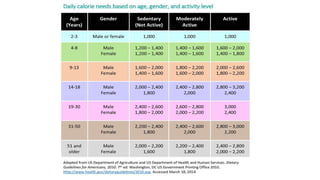
• Depending on their age, size, and activity level, toddlers need about
1,000–1,400 calories a day.
• Calorie Requirement (1989, RDA)
- 1-3 year - 102 kcal/kg
- 4-6 year - 90 kcal/kg
- 7-10 year - 70 kcal/kg
Example - 2 years old child with 10 kg needs 1020 kcal per day.
Method For Calorie Calculation
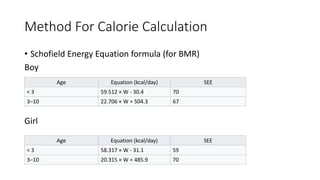
• Schofield Energy Equation formula (for BMR)
Boy
Girl
Age Equation (kcal/day) SEE
< 3 59.512 × W - 30.4 70
3–10 22.706 × W + 504.3 67
Age Equation (kcal/day) SEE
< 3 58.317 × W - 31.1 59
3–10 20.315 × W + 485.9 70
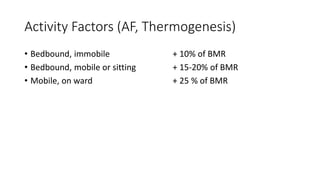
Activity Factors (AF, Thermogenesis)
• Bedbound, immobile + 10% of BMR
• Bedbound, mobile or sitting + 15-20% of BMR
• Mobile, on ward + 25 % of BMR
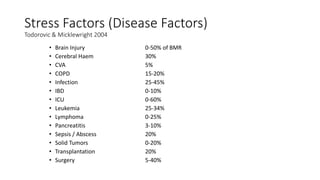
Stress Factors (Disease Factors)
Todorovic & Micklewright 2004
• Brain Injury 0-50% of BMR
• Cerebral Haem 30%
• CVA 5%
• COPD 15-20%
• Infection 25-45%
• IBD 0-10%
• ICU 0-60%
• Leukemia 25-34%
• Lymphoma 0-25%
• Pancreatitis 3-10%
• Sepsis / Abscess 20%
• Solid Tumors 0-20%
• Transplantation 20%
• Surgery 5-40%
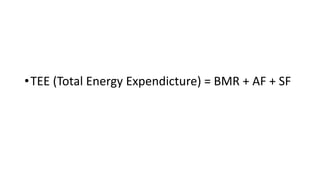
•TEE (Total Energy Expendicture) = BMR + AF + SF
HOLIDAY-SEGAR METHOD
(Fluid Maintenance )
First 10kg = 100ml per kg in 24 hrs
Second 10kg = 50ml per kg in 24hrs
Other kg (or remaining kg) = 20ml per kg in 24 hrs.
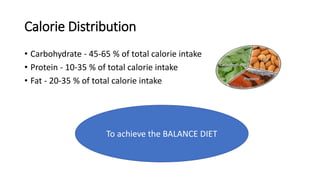
Calorie Distribution
• Carbohydrate - 45-65 % of total calorie intake
• Protein - 10-35 % of total calorie intake
• Fat - 20-35 % of total calorie intake
To achieve the BALANCE DIET
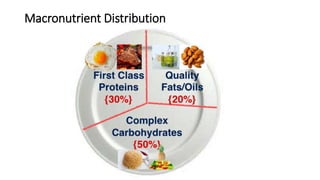
Macronutrient Distribution
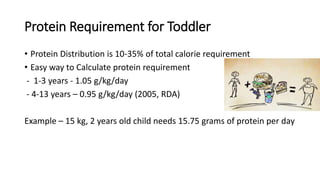
Protein Requirement for Toddler
• Protein Distribution is 10-35% of total calorie requirement
• Easy way to Calculate protein requirement
- 1-3 years - 1.05 g/kg/day
- 4-13 years – 0.95 g/kg/day (2005, RDA)
Example – 15 kg, 2 years old child needs 15.75 grams of protein per day
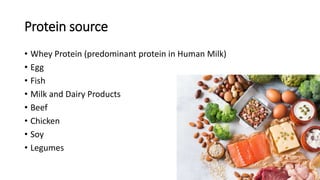
Protein source
• Whey Protein (predominant protein in Human Milk)
• Egg
• Fish
• Milk and Dairy Products
• Beef
• Chicken
• Soy
• Legumes
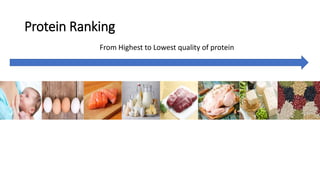
Protein Ranking
From Highest to Lowest quality of protein
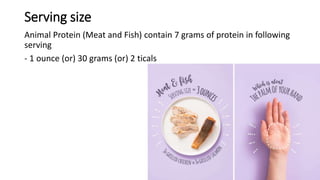
Serving size
Animal Protein (Meat and Fish) contain 7 grams of protein in following
serving
- 1 ounce (or) 30 grams (or) 2 ticals
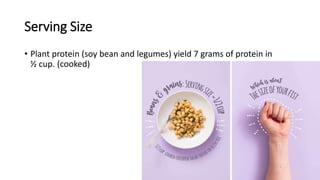
Serving Size
• Plant protein (soy bean and legumes) yield 7 grams of protein in
½ cup. (cooked)
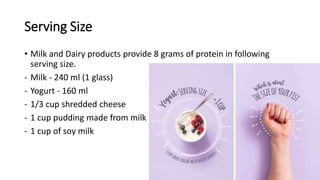
Serving Size
• Milk and Dairy products provide 8 grams of protein in following
serving size.
- Milk - 240 ml (1 glass)
- Yogurt - 160 ml
- 1/3 cup shredded cheese
- 1 cup pudding made from milk
- 1 cup of soy milk
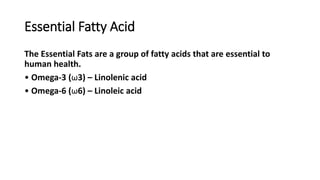
Essential Fatty Acid
The Essential Fats are a group of fatty acids that are essential to
human health.
• Omega-3 (ω3) – Linolenic acid
• Omega-6 (ω6) – Linoleic acid
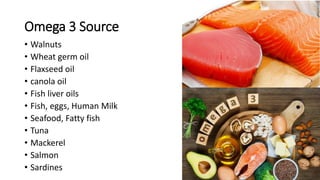
Omega 3 Source
• Walnuts
• Wheat germ oil
• Flaxseed oil
• canola oil
• Fish liver oils
• Fish, eggs, Human Milk
• Seafood, Fatty fish
• Tuna
• Mackerel
• Salmon
• Sardines
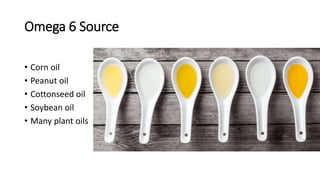
Omega 6 Source
• Corn oil
• Peanut oil
• Cottonseed oil
• Soybean oil
• Many plant oils
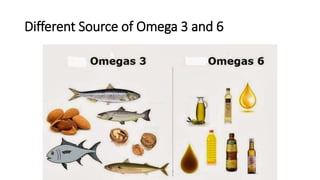
Different Source of Omega 3 and 6
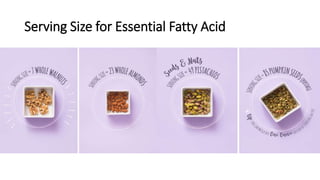
Serving Size for Essential Fatty Acid
DHA
• Docosahexaenoic acid (DHA) is an omega-3 essential fatty acid
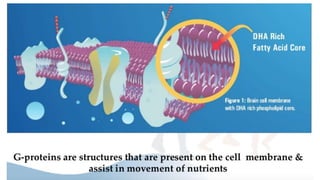
• DHA is an important constituent of the brain cell membrane, which
have a role in neurotransmission
• Benefits in vision and brain function
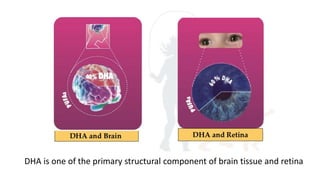
DHA is one of the primary structural component of brain tissue and retina
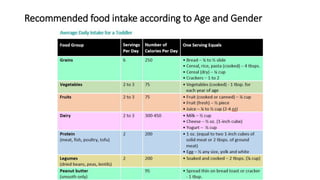
Recommended food intake according to Age and Gender
Micronutrients
• Zinc
• Iron
• Calcium
• Vitamin D
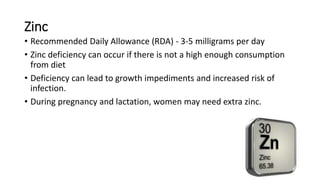
Zinc
• Recommended Daily Allowance (RDA) - 3-5 milligrams per day
• Zinc deficiency can occur if there is not a high enough consumption
from diet
• Deficiency can lead to growth impediments and increased risk of
infection.
• During pregnancy and lactation, women may need extra zinc.
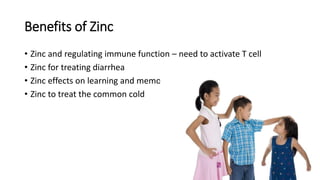
Benefits of Zinc
• Zinc and regulating immune function – need to activate T cell
• Zinc for treating diarrhea
• Zinc effects on learning and memory
• Zinc to treat the common cold
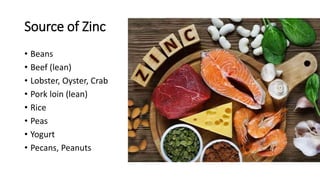
Source of Zinc
• Beans
• Beef (lean)
• Lobster, Oyster, Crab
• Pork loin (lean)
• Rice
• Peas
• Yogurt
• Pecans, Peanuts
Iron
• Recommended Daily Allowance (RDA) – 7-10 mg per day
• In iron deficiency - Slow weight gain.
- Pale skin.
- No appetite.
- Irritability (cranky, fussy).
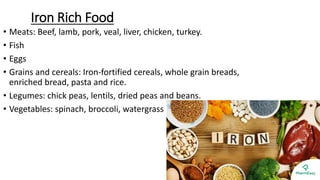
Iron Rich Food
• Meats: Beef, lamb, pork, veal, liver, chicken, turkey.
• Fish
• Eggs
• Grains and cereals: Iron-fortified cereals, whole grain breads,
enriched bread, pasta and rice.
• Legumes: chick peas, lentils, dried peas and beans.
• Vegetables: spinach, broccoli, watergrass
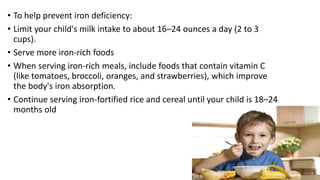
• To help prevent iron deficiency:
• Limit your child's milk intake to about 16–24 ounces a day (2 to 3
cups).
• Serve more iron-rich foods
• When serving iron-rich meals, include foods that contain vitamin C
(like tomatoes, broccoli, oranges, and strawberries), which improve
the body's iron absorption.
• Continue serving iron-fortified rice and cereal until your child is 18–24
months old
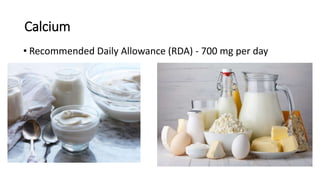
Calcium
• Recommended Daily Allowance (RDA) - 700 mg per day
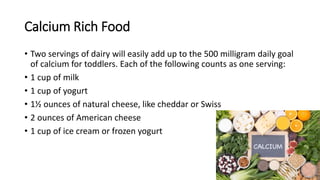
Calcium Rich Food
• Two servings of dairy will easily add up to the 500 milligram daily goal
of calcium for toddlers. Each of the following counts as one serving:
• 1 cup of milk
• 1 cup of yogurt
• 1½ ounces of natural cheese, like cheddar or Swiss
• 2 ounces of American cheese
• 1 cup of ice cream or frozen yogurt
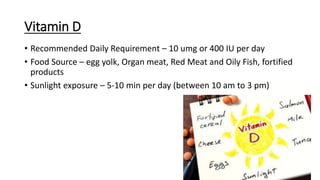
Vitamin D
• Recommended Daily Requirement – 10 umg or 400 IU per day
• Food Source – egg yolk, Organ meat, Red Meat and Oily Fish, fortified
products
• Sunlight exposure – 5-10 min per day (between 10 am to 3 pm)
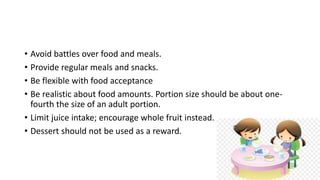
• Avoid battles over food and meals.
• Provide regular meals and snacks.
• Be flexible with food acceptance
• Be realistic about food amounts. Portion size should be about one-
fourth the size of an adult portion.
• Limit juice intake; encourage whole fruit instead.
• Dessert should not be used as a reward.
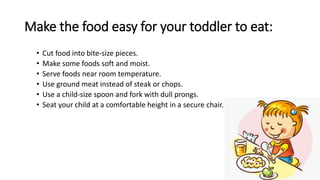
Make the food easy for your toddler to eat:
• Cut food into bite-size pieces.
• Make some foods soft and moist.
• Serve foods near room temperature.
• Use ground meat instead of steak or chops.
• Use a child-size spoon and fork with dull prongs.
• Seat your child at a comfortable height in a secure chair.
Prevent choking by:
• Slowly adding more difficult-to-chew foods.
• Avoiding foods that are hard to chew and/or swallow such as nuts, raw
carrots, gum drops, jelly beans, and peanut butter (by itself).
• Modifying high-risk foods: cut hot dogs in quarters, cut grapes in quarters,
and cook carrots until soft.
• Always supervising your child when he or she is eating.
• Keeping your child seated while eating.
Take Home Message
• Calorie Requirement according to age
• Protein Requirement according to age
• RDA for Zinc - 3-5 mg
• RDA for Iron - 7-10 mg
• RDA for Calcium - 700 mg
• RDA for Vitamin D - 10 umg or 400 IU
• How to prevent choking
Thank You

Nutrition in Toddlers

  • 1.
    Nutrition in Toddlers Dr.Nyi Nyi Kyaw M.B,B.S (Ygn) M.Sc (Nutrition & Dietetics) (Bedfordshire, UK) Member of Nutrition Society (UK)
  • 2.
    Introduction • The toddler(ages 1 to 3) phase can often be challenging when it comes to feeding. • Several developmental changes occur at this time. • Toddlers are striving for independence and control. • Their growth rate slows down and with this comes a decrease in appetite.
  • 3.
    Calorie Needs • Dependingon their age, size, and activity level, toddlers need about 1,000–1,400 calories a day. • Calorie Requirement (1989, RDA) - 1-3 year - 102 kcal/kg - 4-6 year - 90 kcal/kg - 7-10 year - 70 kcal/kg Example - 2 years old child with 10 kg needs 1020 kcal per day.
  • 4.
    Method For CalorieCalculation • Schofield Energy Equation formula (for BMR) Boy Girl Age Equation (kcal/day) SEE < 3 59.512 × W - 30.4 70 3–10 22.706 × W + 504.3 67 Age Equation (kcal/day) SEE < 3 58.317 × W - 31.1 59 3–10 20.315 × W + 485.9 70
  • 5.
    Activity Factors (AF,Thermogenesis) • Bedbound, immobile + 10% of BMR • Bedbound, mobile or sitting + 15-20% of BMR • Mobile, on ward + 25 % of BMR
  • 6.
    Stress Factors (DiseaseFactors) Todorovic & Micklewright 2004 • Brain Injury 0-50% of BMR • Cerebral Haem 30% • CVA 5% • COPD 15-20% • Infection 25-45% • IBD 0-10% • ICU 0-60% • Leukemia 25-34% • Lymphoma 0-25% • Pancreatitis 3-10% • Sepsis / Abscess 20% • Solid Tumors 0-20% • Transplantation 20% • Surgery 5-40%
  • 7.
    •TEE (Total EnergyExpendicture) = BMR + AF + SF
  • 8.
    HOLIDAY-SEGAR METHOD (Fluid Maintenance) First 10kg = 100ml per kg in 24 hrs Second 10kg = 50ml per kg in 24hrs Other kg (or remaining kg) = 20ml per kg in 24 hrs.
  • 10.
    Calorie Distribution • Carbohydrate- 45-65 % of total calorie intake • Protein - 10-35 % of total calorie intake • Fat - 20-35 % of total calorie intake To achieve the BALANCE DIET
  • 11.
  • 12.
    Protein Requirement forToddler • Protein Distribution is 10-35% of total calorie requirement • Easy way to Calculate protein requirement - 1-3 years - 1.05 g/kg/day - 4-13 years – 0.95 g/kg/day (2005, RDA) Example – 15 kg, 2 years old child needs 15.75 grams of protein per day
  • 13.
    Protein source • WheyProtein (predominant protein in Human Milk) • Egg • Fish • Milk and Dairy Products • Beef • Chicken • Soy • Legumes
  • 14.
    Protein Ranking From Highestto Lowest quality of protein
  • 15.
    Serving size Animal Protein(Meat and Fish) contain 7 grams of protein in following serving - 1 ounce (or) 30 grams (or) 2 ticals
  • 16.
    Serving Size • Plantprotein (soy bean and legumes) yield 7 grams of protein in ½ cup. (cooked)
  • 17.
    Serving Size • Milkand Dairy products provide 8 grams of protein in following serving size. - Milk - 240 ml (1 glass) - Yogurt - 160 ml - 1/3 cup shredded cheese - 1 cup pudding made from milk - 1 cup of soy milk
  • 18.
    Essential Fatty Acid TheEssential Fats are a group of fatty acids that are essential to human health. • Omega-3 (ω3) – Linolenic acid • Omega-6 (ω6) – Linoleic acid
  • 19.
    Omega 3 Source •Walnuts • Wheat germ oil • Flaxseed oil • canola oil • Fish liver oils • Fish, eggs, Human Milk • Seafood, Fatty fish • Tuna • Mackerel • Salmon • Sardines
  • 20.
    Omega 6 Source •Corn oil • Peanut oil • Cottonseed oil • Soybean oil • Many plant oils
  • 21.
    Different Source ofOmega 3 and 6
  • 22.
    Serving Size forEssential Fatty Acid
  • 23.
    DHA • Docosahexaenoic acid(DHA) is an omega-3 essential fatty acid • DHA is an important constituent of the brain cell membrane, which have a role in neurotransmission • Benefits in vision and brain function
  • 25.
    DHA is oneof the primary structural component of brain tissue and retina
  • 26.
    Recommended food intakeaccording to Age and Gender
  • 27.
  • 28.
    Zinc • Recommended DailyAllowance (RDA) - 3-5 milligrams per day • Zinc deficiency can occur if there is not a high enough consumption from diet • Deficiency can lead to growth impediments and increased risk of infection. • During pregnancy and lactation, women may need extra zinc.
  • 29.
    Benefits of Zinc •Zinc and regulating immune function – need to activate T cell • Zinc for treating diarrhea • Zinc effects on learning and memory • Zinc to treat the common cold
  • 30.
    Source of Zinc •Beans • Beef (lean) • Lobster, Oyster, Crab • Pork loin (lean) • Rice • Peas • Yogurt • Pecans, Peanuts
  • 31.
    Iron • Recommended DailyAllowance (RDA) – 7-10 mg per day • In iron deficiency - Slow weight gain. - Pale skin. - No appetite. - Irritability (cranky, fussy).
  • 32.
    Iron Rich Food •Meats: Beef, lamb, pork, veal, liver, chicken, turkey. • Fish • Eggs • Grains and cereals: Iron-fortified cereals, whole grain breads, enriched bread, pasta and rice. • Legumes: chick peas, lentils, dried peas and beans. • Vegetables: spinach, broccoli, watergrass
  • 33.
    • To helpprevent iron deficiency: • Limit your child's milk intake to about 16–24 ounces a day (2 to 3 cups). • Serve more iron-rich foods • When serving iron-rich meals, include foods that contain vitamin C (like tomatoes, broccoli, oranges, and strawberries), which improve the body's iron absorption. • Continue serving iron-fortified rice and cereal until your child is 18–24 months old
  • 34.
    Calcium • Recommended DailyAllowance (RDA) - 700 mg per day
  • 35.
    Calcium Rich Food •Two servings of dairy will easily add up to the 500 milligram daily goal of calcium for toddlers. Each of the following counts as one serving: • 1 cup of milk • 1 cup of yogurt • 1½ ounces of natural cheese, like cheddar or Swiss • 2 ounces of American cheese • 1 cup of ice cream or frozen yogurt
  • 36.
    Vitamin D • RecommendedDaily Requirement – 10 umg or 400 IU per day • Food Source – egg yolk, Organ meat, Red Meat and Oily Fish, fortified products • Sunlight exposure – 5-10 min per day (between 10 am to 3 pm)
  • 38.
    • Avoid battlesover food and meals. • Provide regular meals and snacks. • Be flexible with food acceptance • Be realistic about food amounts. Portion size should be about one- fourth the size of an adult portion. • Limit juice intake; encourage whole fruit instead. • Dessert should not be used as a reward.
  • 39.
    Make the foodeasy for your toddler to eat: • Cut food into bite-size pieces. • Make some foods soft and moist. • Serve foods near room temperature. • Use ground meat instead of steak or chops. • Use a child-size spoon and fork with dull prongs. • Seat your child at a comfortable height in a secure chair.
  • 40.
    Prevent choking by: •Slowly adding more difficult-to-chew foods. • Avoiding foods that are hard to chew and/or swallow such as nuts, raw carrots, gum drops, jelly beans, and peanut butter (by itself). • Modifying high-risk foods: cut hot dogs in quarters, cut grapes in quarters, and cook carrots until soft. • Always supervising your child when he or she is eating. • Keeping your child seated while eating.
  • 41.
    Take Home Message •Calorie Requirement according to age • Protein Requirement according to age • RDA for Zinc - 3-5 mg • RDA for Iron - 7-10 mg • RDA for Calcium - 700 mg • RDA for Vitamin D - 10 umg or 400 IU • How to prevent choking
  • 42.

Editor's Notes

  • #3 Mothers are facing such a problem about feeding difficulities.
  • #13 100 gram of meat does not contain 100 gram of protein
  • #30 T cells help the body in two ways: controlling and regulating immune responses attacking infected or cancerous cells 2. 10-day course of zinc tablets is effective at treating diarrhea and also helps prevent future bouts of the condition. 3. Research conducted at the University of Toronto and published in the journal Neuron suggested that zinc has a crucial role in regulating how neurons communicate with one another, affecting how memories are formed and how we learn. 4. Zinc lozenges were found to shorten the duration of common cold episodes by up to 40 percent in a study published in the Open Respiratory Medicine Journal. In addition, a Cochrane review concluded that taking "zinc (lozenges or syrup) is beneficial in reducing the duration and severity of the common cold in healthy people, when taken within 24 hours of onset of symptoms."
  • #35 Babies younger than 6 months old need 200 mg of calcium a day. Babies 6 to 11 months old need 260 mg of calcium a day. he percentage of fat in milk and other dairy foods doesn't affect their calcium content — skim, 1%, 2%, or whole all have about the same amount of calcium. Your health care provider will let you know which type of milk is right for your child.
  • #37 calcium and vitamin D to prevent a disease called rickets. Rickets softens the bones and causes bow legs, stunted growth, and sometimes sore or weak muscles.
  • #39 3. as toddlers are often reluctant to try new things. If your toddler refuses a food, don't make a big deal out of it, and try again in a few days or weeks. 6. Try serving it with the rest of the food.