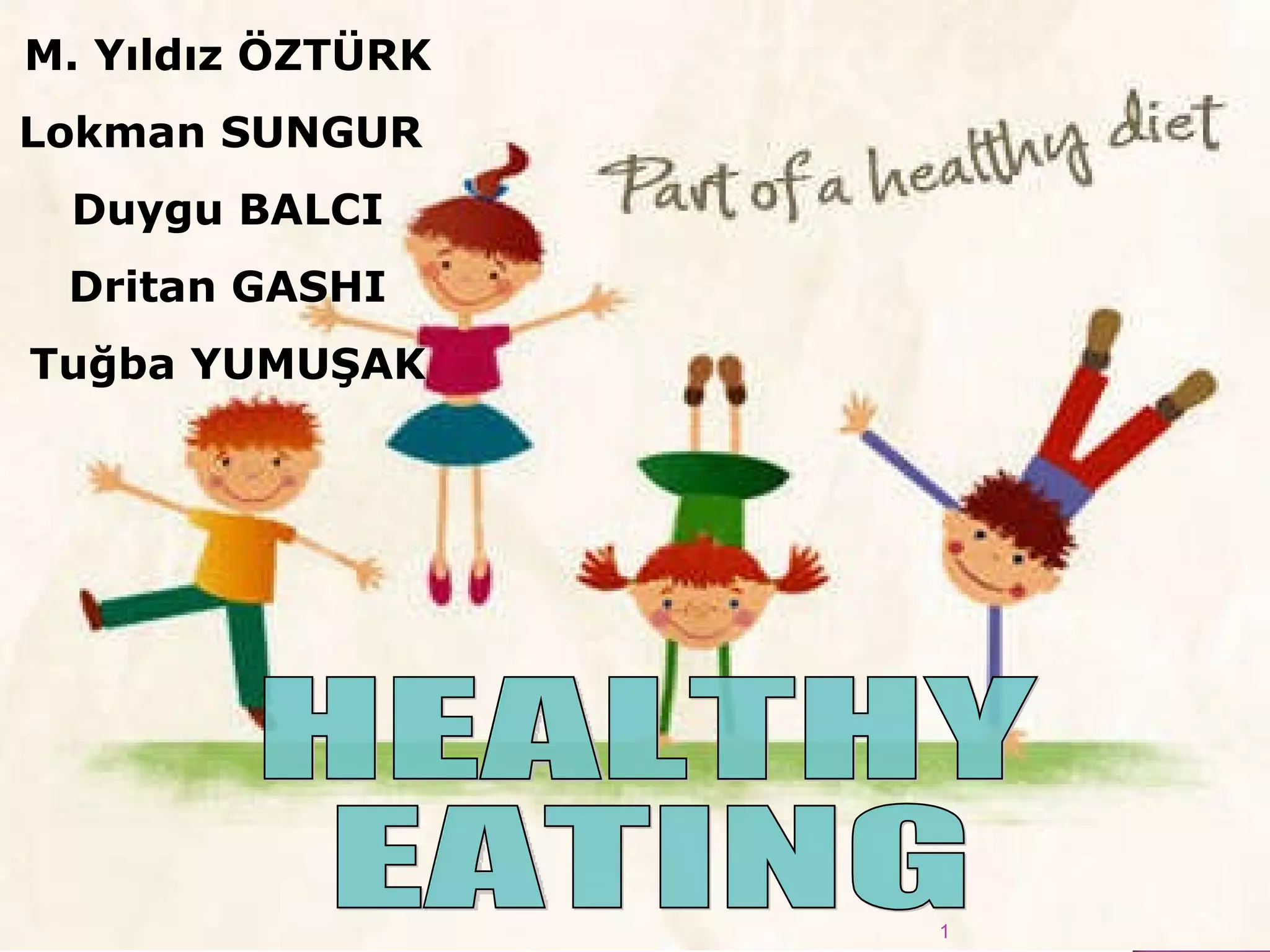
HEALTHY  EATING M. Yıldız ÖZTÜRK Lokman SUNGUR  Duygu BALCI Dritan GASHI Tuğba YUMUŞAK
OUTLINE What is a healthy diet? 2. How do we stay healthy? 3. What are the healthy food? 4. What are the strategies for a healthy eating? What is healthy diet pyramid? 5. How do we eat smartly? 6. How does healthy living contribute our lifes?
What's healthy eating? Improve health Increase happiness Prevention of many chronic health risks.
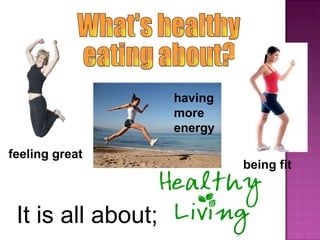
What's healthy  eating about? feeling great having more energy being fit It is all about;
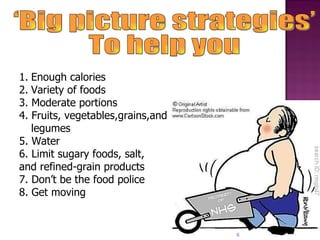
‘Big picture strategies’  To help you Enough calories Variety of foods 3. Moderate portions 4. Fruits, vegetables,grains,and legumes 5. Water 6. Limit sugary foods, salt, and refined-grain products  7. Don’t be the food police 8. Get moving
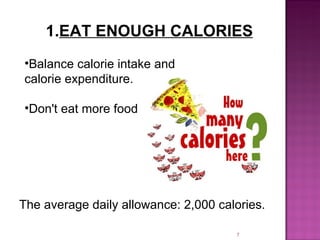
Balance calorie intake and calorie expenditure.  Don't eat more food EAT ENOUGH CALORIES The average daily allowance: 2,000 calories.
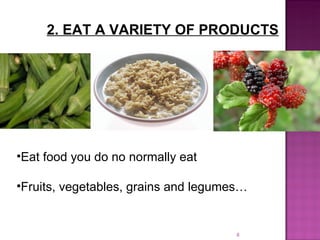
2. EAT A VARIETY OF PRODUCTS Eat food you do no normally eat Fruits, vegetables, grains and legumes…
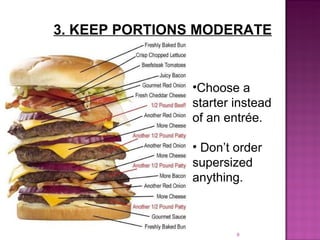
3. KEEP PORTIONS MODERATE Choose a starter instead of an entrée. Don’t order supersized anything.
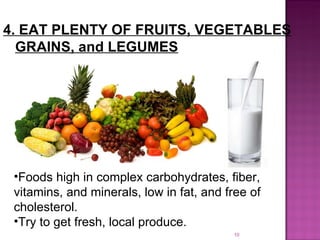
4. EAT PLENTY OF FRUITS, VEGETABLES GRAINS, and LEGUMES   Foods high in complex carbohydrates, fiber, vitamins, and minerals, low in fat, and free of cholesterol. Try to get fresh, local produce.
Flushes our systems; the kidneys and bladder, of waste products and toxins.  A majority of Americans go through life dehydrated.  5. DRINK MORE WATER
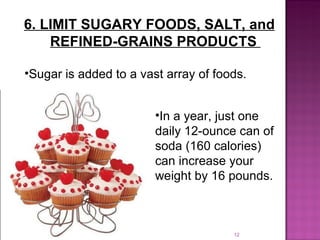
6. LIMIT SUGARY FOODS, SALT, and REFINED-GRAINS PRODUCTS  In a year, just one daily 12-ounce can of soda (160 calories) can increase your weight by 16 pounds.  Sugar is added to a vast array of foods.
7. DON’T BE THE FOOD POLICE Enjoy your favorite foods . Food is a great source of pleasure. Pleasure is good for the heart – even if those French fries aren’t!
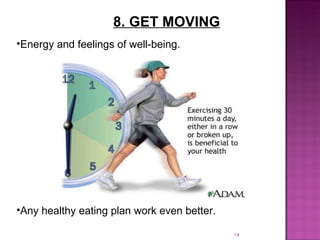
8. GET MOVING Energy and feelings of well-being. Any healthy eating plan work even better.
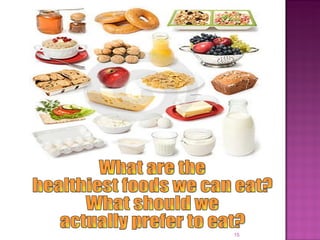
What are the  healthiest foods we can eat?  What should we  actually prefer to eat?
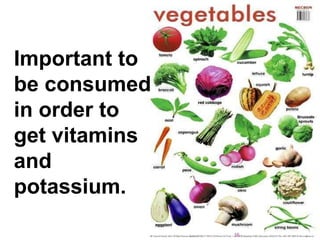
I mportant to be consumed in order to get vitamins and potassium.
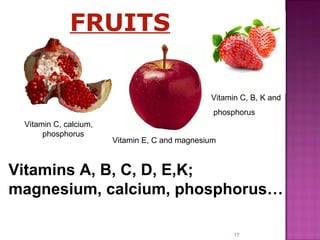
V itamins A, B, C, D, E , K ;  magnesium, calcium, phosphorus… Vitamin C, B, K and phosphorus Vitamin C, calcium,  phosphorus Vitamin E, C and magnesium FRUITS
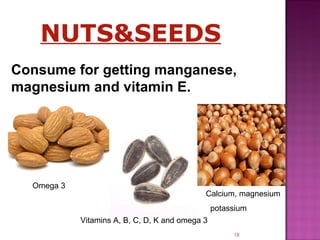
C onsume for getting manganese, magnesium and vitamin E.   NUTS&SEEDS Omega 3 Vitamins A, B, C, D, K and omega 3 Calcium, magnesium potassium
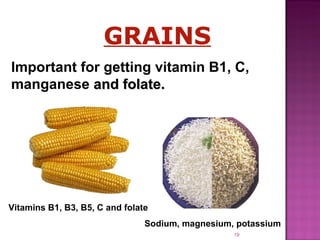
GRAINS I mportant for getting vitamin B1, C, manganese  and folat e. Vitamins B1, B3, B5, C and folate Sodium, magnesium, potassium
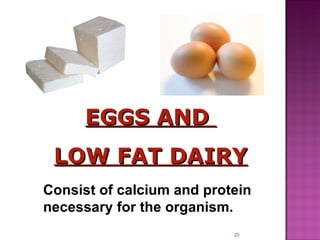
EGGS AND  LOW FAT DAIRY Consist of calcium and protein necessary for the organism.
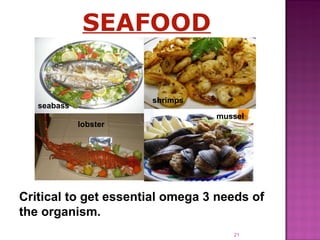
SEAFOOD C ritical to get essential omega 3 needs of the organism.   lobster shrimps mussel seabass
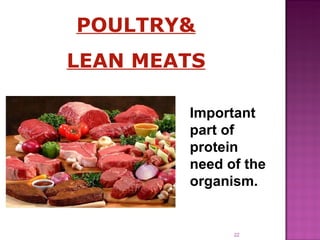
POULTRY& LEAN MEATS I mportant part of protein need of the organism.
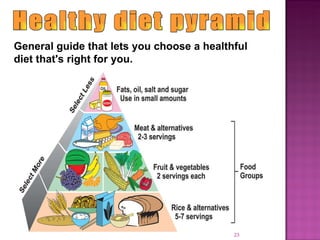
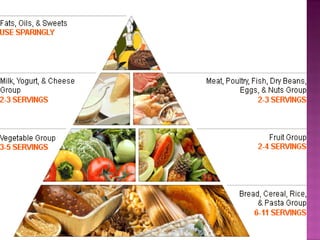
Healthy diet pyramid G eneral guide that lets you choose a healthful diet that's right for you.
N ot just  what  you eat, but  how  you eat.  H elps support an overall healthy diet. HOW DO WE ?
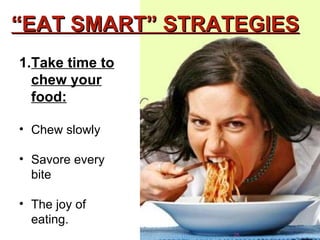
Take time to chew your food: Chew slowly Savore every bite  The joy of eating.  “ EAT SMART” STRATEGIES
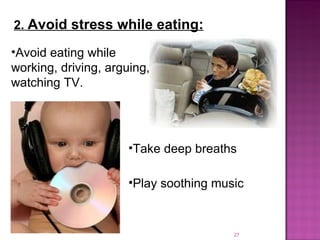
Take deep breaths Avoid eating while working, driving, arguing, watching TV. 2.  Avoid stress while eating:   Play soothing music
3. Listen to your body: You may be thirsty Stop eating before you feel full Eat just enough to satisfy your hunger Eat slowly
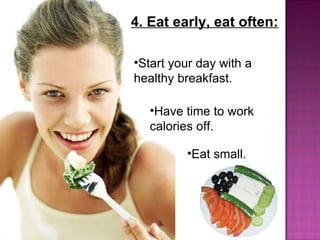
Eat small. 4. Eat early, eat often: Start your day with a healthy breakfast. Have time to work calories off.
CONCLUSION
Thanks for Your Attention!

Presentation on Healthy Eating

  • 1.
    HEALTHY EATINGM. Yıldız ÖZTÜRK Lokman SUNGUR Duygu BALCI Dritan GASHI Tuğba YUMUŞAK
  • 3.
    OUTLINE What isa healthy diet? 2. How do we stay healthy? 3. What are the healthy food? 4. What are the strategies for a healthy eating? What is healthy diet pyramid? 5. How do we eat smartly? 6. How does healthy living contribute our lifes?
  • 4.
    What's healthy eating?Improve health Increase happiness Prevention of many chronic health risks.
  • 5.
    What's healthy eating about? feeling great having more energy being fit It is all about;
  • 6.
    ‘Big picture strategies’ To help you Enough calories Variety of foods 3. Moderate portions 4. Fruits, vegetables,grains,and legumes 5. Water 6. Limit sugary foods, salt, and refined-grain products 7. Don’t be the food police 8. Get moving
  • 7.
    Balance calorie intakeand calorie expenditure. Don't eat more food EAT ENOUGH CALORIES The average daily allowance: 2,000 calories.
  • 8.
    2. EAT AVARIETY OF PRODUCTS Eat food you do no normally eat Fruits, vegetables, grains and legumes…
  • 9.
    3. KEEP PORTIONSMODERATE Choose a starter instead of an entrée. Don’t order supersized anything.
  • 10.
    4. EAT PLENTYOF FRUITS, VEGETABLES GRAINS, and LEGUMES Foods high in complex carbohydrates, fiber, vitamins, and minerals, low in fat, and free of cholesterol. Try to get fresh, local produce.
  • 11.
    Flushes our systems;the kidneys and bladder, of waste products and toxins. A majority of Americans go through life dehydrated. 5. DRINK MORE WATER
  • 12.
    6. LIMIT SUGARYFOODS, SALT, and REFINED-GRAINS PRODUCTS In a year, just one daily 12-ounce can of soda (160 calories) can increase your weight by 16 pounds. Sugar is added to a vast array of foods.
  • 13.
    7. DON’T BETHE FOOD POLICE Enjoy your favorite foods . Food is a great source of pleasure. Pleasure is good for the heart – even if those French fries aren’t!
  • 14.
    8. GET MOVINGEnergy and feelings of well-being. Any healthy eating plan work even better.
  • 15.
    What are the healthiest foods we can eat? What should we actually prefer to eat?
  • 16.
    I mportant tobe consumed in order to get vitamins and potassium.
  • 17.
    V itamins A,B, C, D, E , K ; magnesium, calcium, phosphorus… Vitamin C, B, K and phosphorus Vitamin C, calcium, phosphorus Vitamin E, C and magnesium FRUITS
  • 18.
    C onsume forgetting manganese, magnesium and vitamin E. NUTS&SEEDS Omega 3 Vitamins A, B, C, D, K and omega 3 Calcium, magnesium potassium
  • 19.
    GRAINS I mportantfor getting vitamin B1, C, manganese and folat e. Vitamins B1, B3, B5, C and folate Sodium, magnesium, potassium
  • 20.
    EGGS AND LOW FAT DAIRY Consist of calcium and protein necessary for the organism.
  • 21.
    SEAFOOD C riticalto get essential omega 3 needs of the organism. lobster shrimps mussel seabass
  • 22.
    POULTRY& LEAN MEATSI mportant part of protein need of the organism.
  • 23.
    Healthy diet pyramidG eneral guide that lets you choose a healthful diet that's right for you.
  • 25.
    N ot just what you eat, but how you eat. H elps support an overall healthy diet. HOW DO WE ?
  • 26.
    Take time tochew your food: Chew slowly Savore every bite The joy of eating. “ EAT SMART” STRATEGIES
  • 27.
    Take deep breathsAvoid eating while working, driving, arguing, watching TV. 2. Avoid stress while eating: Play soothing music
  • 28.
    3. Listen toyour body: You may be thirsty Stop eating before you feel full Eat just enough to satisfy your hunger Eat slowly
  • 29.
    Eat small. 4.Eat early, eat often: Start your day with a healthy breakfast. Have time to work calories off.
  • 30.
  • 31.
    Thanks for YourAttention!