HAND HYGIENE
1
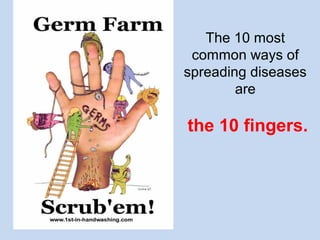
The 10 most
common ways of
spreading diseases
are

the 10 fingers.
Hand Hygiene

Simplest & Most Effective measure
to prevent infection
Skin Flora
Resident organisms
• In deeper layers of skin
• Permanent flora
• If disturbed reestablish
themselves
• Not removed by routine
hand wash
• Usually not associated with
transmission of infection

Transient organisms
• In superficial layers of skin
• Temporary flora
• Usually do not reestablish
themselves
• Easily removed by routine
hand wash
• Usually associated with
transmission of infection
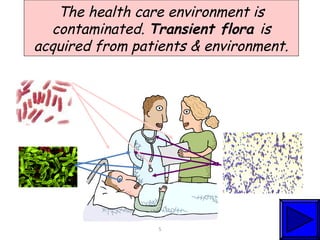
The health care environment is
contaminated. Transient flora is
acquired from patients & environment.

5
WHY ??

Hand Hygiene
Simplest & Most Effective measure
to prevent infection
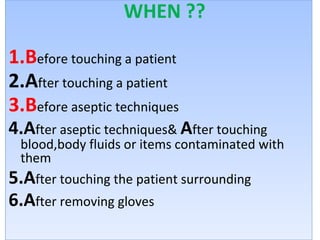
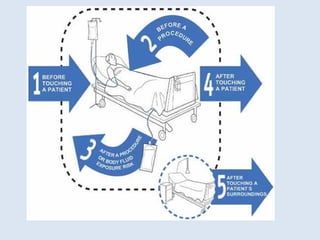
WHEN ??
1.Before touching a patient
2.After touching a patient
3.Before aseptic techniques

4.After aseptic techniques& After touching

blood,body fluids or items contaminated with
them
5.After touching the patient surrounding

6.After removing gloves
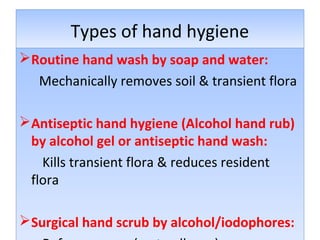
Types of hand hygiene
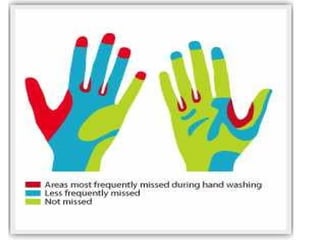
Routine hand wash by soap and water:
Mechanically removes soil & transient flora
Antiseptic hand hygiene (Alcohol hand rub)
by alcohol gel or antiseptic hand wash:
Kills transient flora & reduces resident
flora
Surgical hand scrub by alcohol/iodophores:
HOW ??

Steps of
routine Hand Wash
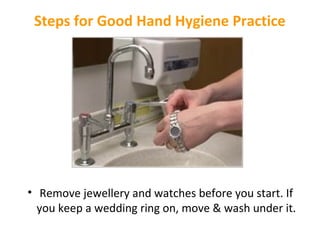
Steps for Good Hand Hygiene Practice

• Remove jewellery and watches before you start. If
you keep a wedding ring on, move & wash under it.
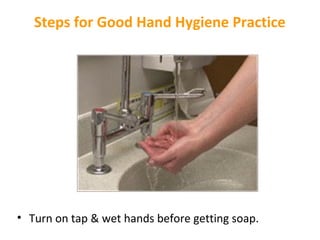
Steps for Good Hand Hygiene Practice

• Turn on tap & wet hands before getting soap.
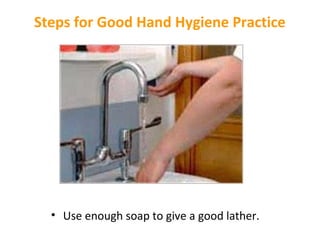
Steps for Good Hand Hygiene Practice

• Use enough soap to give a good lather.
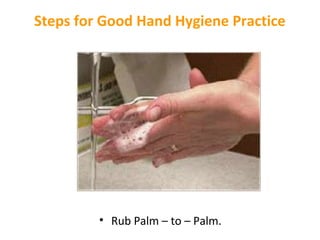
Steps for Good Hand Hygiene Practice

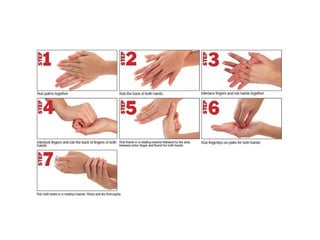
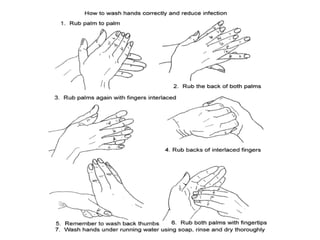
• Rub Palm – to – Palm.
Steps for Good Hand Hygiene Practice

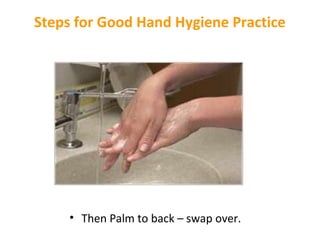
• Then Palm to back – swap over.
Steps for Good Hand Hygiene Practice

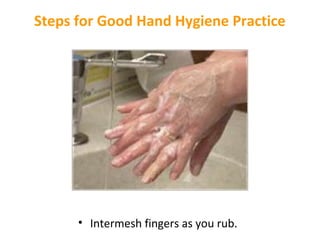
• Intermesh fingers as you rub.
Steps for Good Hand Hygiene Practice

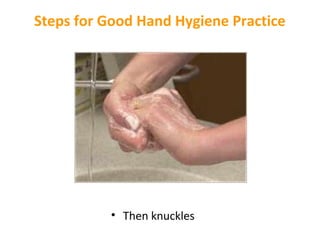
• Then knuckles
Steps for Good Hand Hygiene Practice

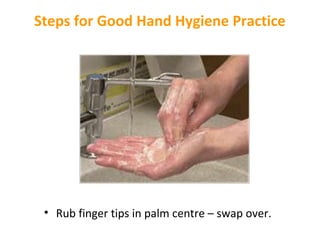
• Rub finger tips in palm centre – swap over.
Steps for Good Hand Hygiene Practice

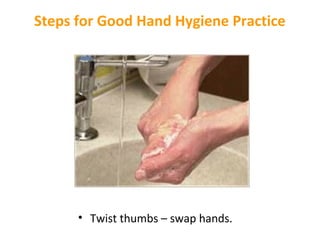
• Twist thumbs – swap hands.
Steps for Good Hand Hygiene Practice

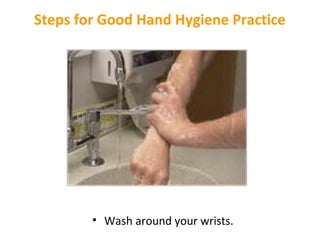
• Wash around your wrists.
Steps for Good Hand Hygiene Practice

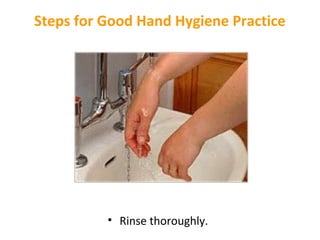
• Rinse thoroughly.
Steps for Good Hand Hygiene Practice

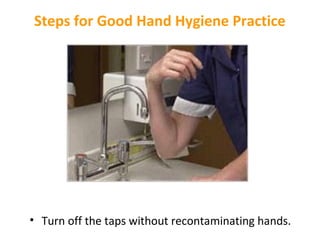
• Turn off the taps without recontaminating hands.
Steps for Good Hand Hygiene Practice

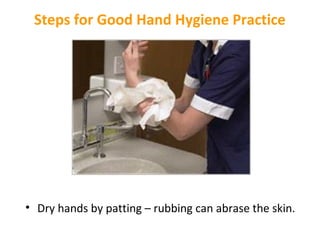
• Dry hands by patting – rubbing can abrase the skin.
Steps for Good Hand Hygiene Practice
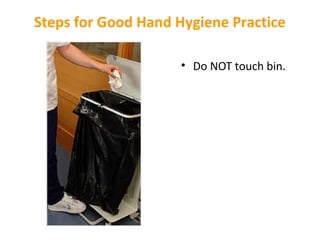
• Do NOT touch bin.
Remember

Clean Hands
=
Healing Hands
Thank
You
MCQs
1. Lab personnel should follow these precautions EXCEPT:
a) They should not wear sandals.
b) They are not allowed to drink.
c) They should put on goggles when expecting splashes.
d) Blood spills should be removed by soap and water.
e) Scalpels should be discarded in a sharps container.
2. Regarding PPE all the following statements are correct EXCEPT:
a) Sterile gloves are used during surgery.
b) N95 masks can prevent airborne infections.
c) Overshoes should be worn before entering operating
rooms.
d) Non-sterile gloves are disposable.
e) PPE are used to protect patients from acquiring infections.
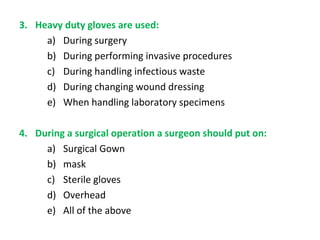
3. Heavy duty gloves are used:
a) During surgery
b) During performing invasive procedures
c) During handling infectious waste
d) During changing wound dressing
e) When handling laboratory specimens
4. During a surgical operation a surgeon should put on:
a) Surgical Gown
b) mask
c) Sterile gloves
d) Overhead
e) All of the above
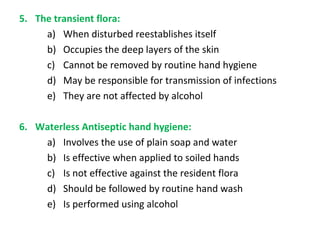
5. The transient flora:
a) When disturbed reestablishes itself
b) Occupies the deep layers of the skin
c) Cannot be removed by routine hand hygiene
d) May be responsible for transmission of infections
e) They are not affected by alcohol
6. Waterless Antiseptic hand hygiene:
a) Involves the use of plain soap and water
b) Is effective when applied to soiled hands
c) Is not effective against the resident flora
d) Should be followed by routine hand wash
e) Is performed using alcohol

Hand Hygiene - Prac. Microbiology

  • 1.
  • 2.
    The 10 most commonways of spreading diseases are the 10 fingers.
  • 3.
    Hand Hygiene Simplest &Most Effective measure to prevent infection
  • 4.
    Skin Flora Resident organisms •In deeper layers of skin • Permanent flora • If disturbed reestablish themselves • Not removed by routine hand wash • Usually not associated with transmission of infection Transient organisms • In superficial layers of skin • Temporary flora • Usually do not reestablish themselves • Easily removed by routine hand wash • Usually associated with transmission of infection
  • 5.
    The health careenvironment is contaminated. Transient flora is acquired from patients & environment. 5
  • 7.
    WHY ?? Hand Hygiene Simplest& Most Effective measure to prevent infection
  • 8.
    WHEN ?? 1.Before touchinga patient 2.After touching a patient 3.Before aseptic techniques 4.After aseptic techniques& After touching blood,body fluids or items contaminated with them 5.After touching the patient surrounding 6.After removing gloves
  • 10.
    Types of handhygiene Routine hand wash by soap and water: Mechanically removes soil & transient flora Antiseptic hand hygiene (Alcohol hand rub) by alcohol gel or antiseptic hand wash: Kills transient flora & reduces resident flora Surgical hand scrub by alcohol/iodophores:
  • 11.
  • 12.
    Steps for GoodHand Hygiene Practice • Remove jewellery and watches before you start. If you keep a wedding ring on, move & wash under it.
  • 13.
    Steps for GoodHand Hygiene Practice • Turn on tap & wet hands before getting soap.
  • 14.
    Steps for GoodHand Hygiene Practice • Use enough soap to give a good lather.
  • 15.
    Steps for GoodHand Hygiene Practice • Rub Palm – to – Palm.
  • 16.
    Steps for GoodHand Hygiene Practice • Then Palm to back – swap over.
  • 17.
    Steps for GoodHand Hygiene Practice • Intermesh fingers as you rub.
  • 18.
    Steps for GoodHand Hygiene Practice • Then knuckles
  • 19.
    Steps for GoodHand Hygiene Practice • Rub finger tips in palm centre – swap over.
  • 20.
    Steps for GoodHand Hygiene Practice • Twist thumbs – swap hands.
  • 21.
    Steps for GoodHand Hygiene Practice • Wash around your wrists.
  • 22.
    Steps for GoodHand Hygiene Practice • Rinse thoroughly.
  • 23.
    Steps for GoodHand Hygiene Practice • Turn off the taps without recontaminating hands.
  • 24.
    Steps for GoodHand Hygiene Practice • Dry hands by patting – rubbing can abrase the skin.
  • 25.
    Steps for GoodHand Hygiene Practice • Do NOT touch bin.
  • 29.
  • 30.
  • 31.
  • 32.
    1. Lab personnelshould follow these precautions EXCEPT: a) They should not wear sandals. b) They are not allowed to drink. c) They should put on goggles when expecting splashes. d) Blood spills should be removed by soap and water. e) Scalpels should be discarded in a sharps container. 2. Regarding PPE all the following statements are correct EXCEPT: a) Sterile gloves are used during surgery. b) N95 masks can prevent airborne infections. c) Overshoes should be worn before entering operating rooms. d) Non-sterile gloves are disposable. e) PPE are used to protect patients from acquiring infections.
  • 33.
    3. Heavy dutygloves are used: a) During surgery b) During performing invasive procedures c) During handling infectious waste d) During changing wound dressing e) When handling laboratory specimens 4. During a surgical operation a surgeon should put on: a) Surgical Gown b) mask c) Sterile gloves d) Overhead e) All of the above
  • 34.
    5. The transientflora: a) When disturbed reestablishes itself b) Occupies the deep layers of the skin c) Cannot be removed by routine hand hygiene d) May be responsible for transmission of infections e) They are not affected by alcohol 6. Waterless Antiseptic hand hygiene: a) Involves the use of plain soap and water b) Is effective when applied to soiled hands c) Is not effective against the resident flora d) Should be followed by routine hand wash e) Is performed using alcohol

Editor's Notes

  • #2 {"10":"antiseptic hand wash: H20 + betadine 7.5% or chlorhexadine 4%\n"}