Gut-brain
axis
By Shama Praveen
Physiology Department
Definition
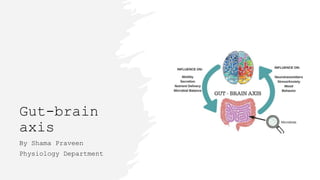
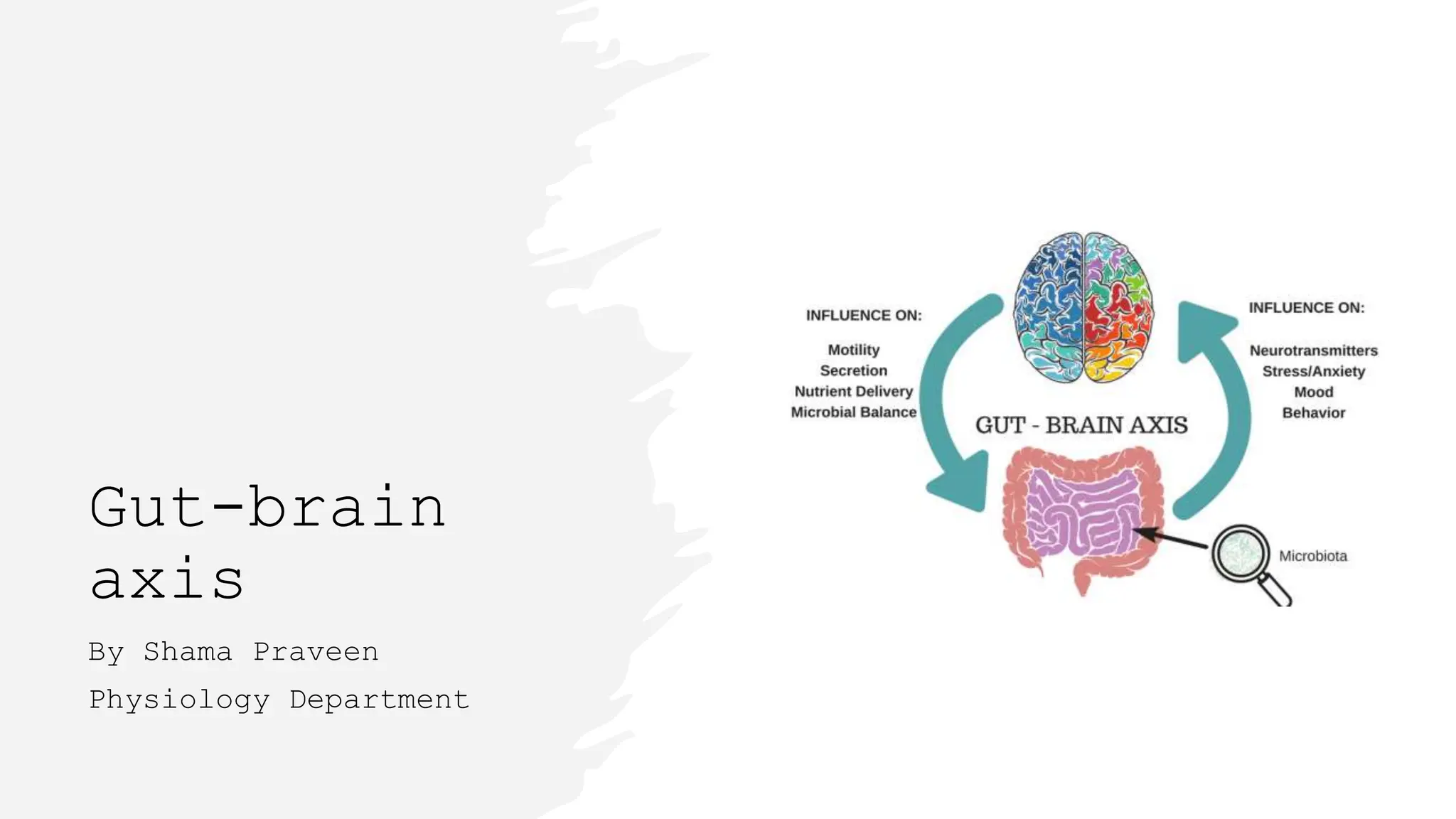
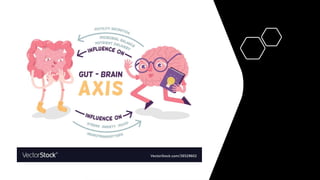
• The gut-brain axis (GBA) consists of bidirectional
communication between the central and the enteric
nervous system, linking emotional and cognitive
centers of the brain with peripheral intestinal
functions.
• Its role is to monitor and integrate gut functions as
well as to link emotional and cognitive centers of the
brain with peripheral intestinal functions and
mechanisms such as immune activation, intestinal
permeability, enteric reflex, and entero-endocrine
signaling. The mechanisms underlying GBA
communications involve neuro-immuno-endocrine
mediators.
GBA &
microbiota
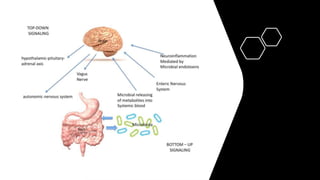
• Microbiota can influence ENS activity by
producing molecules that can act as local
neurotransmitters, such as GABA,
serotonin, melatonin, histamine and
acetylcholine and by generating a
biologically active form of catecholamines
in the lumen of the gut . Lactobacilli also
utilize nitrate and nitrite to generate
nitric oxide and to produce hydrogen
sulfide that modulates gut motility by
interacting with the vanilloid receptor on
capsaicin-sensitive nerve fibers .
GBA
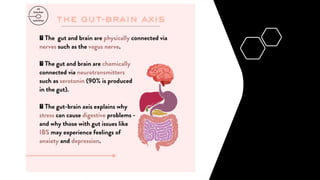
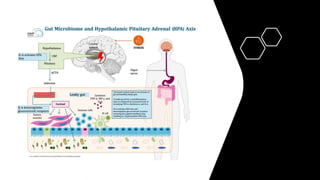
• A troubled intestine can send signals to the brain, just as a troubled brain
can send signals to the gut. Therefore, a person's stomach or intestinal
distress can be the cause or the product of anxiety, stress, or depression.
That's because the brain and the gastrointestinal (GI) system are
intimately connected.
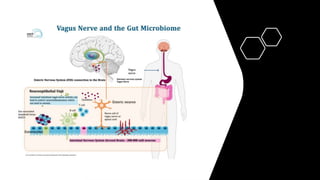
• The ENS communicates back and forth with our central nervous system
(CNS), which includes the brain. This interaction has profound effects on
our overall health.
• Emotional shifts experienced by people with irritable bowel syndrome
(IBS) and functional bowel problems (such as constipation, diarrhea,
bloating, pain, and stomach upset) may be triggered by the ENS.
• Interestingly, irritation in the gastrointestinal system can send signals to
the CNS, leading to mood changes. This finding suggests that the gut-
brain connection is bidirectional, and it’s not just anxiety and depression
affecting gut health; it may also be the other way around
Treatment
implications
• Therapies that help one brain (big brain or
ENS) may benefit the other. For instance:
• Gastroenterologists sometimes prescribe
certain antidepressants for IBS, not
because they believe the problem is all in
the patient’s head, but because these
medications can calm symptoms by acting
on nerve cells in the gut.
• Psychological interventions like cognitive
behavioral therapy (CBT) and medical
hypnotherapy can improve
communication between the big brain and
the gut brain.
• Probiotics, which influence gut microbiota, may
also impact mood and overall well-being
•THANK YOU

Gut-brain axis.pptx bidirectional communication

  • 1.
  • 3.
    Definition • The gut-brainaxis (GBA) consists of bidirectional communication between the central and the enteric nervous system, linking emotional and cognitive centers of the brain with peripheral intestinal functions. • Its role is to monitor and integrate gut functions as well as to link emotional and cognitive centers of the brain with peripheral intestinal functions and mechanisms such as immune activation, intestinal permeability, enteric reflex, and entero-endocrine signaling. The mechanisms underlying GBA communications involve neuro-immuno-endocrine mediators.
  • 8.
    GBA & microbiota • Microbiotacan influence ENS activity by producing molecules that can act as local neurotransmitters, such as GABA, serotonin, melatonin, histamine and acetylcholine and by generating a biologically active form of catecholamines in the lumen of the gut . Lactobacilli also utilize nitrate and nitrite to generate nitric oxide and to produce hydrogen sulfide that modulates gut motility by interacting with the vanilloid receptor on capsaicin-sensitive nerve fibers .
  • 9.
    GBA • A troubledintestine can send signals to the brain, just as a troubled brain can send signals to the gut. Therefore, a person's stomach or intestinal distress can be the cause or the product of anxiety, stress, or depression. That's because the brain and the gastrointestinal (GI) system are intimately connected. • The ENS communicates back and forth with our central nervous system (CNS), which includes the brain. This interaction has profound effects on our overall health. • Emotional shifts experienced by people with irritable bowel syndrome (IBS) and functional bowel problems (such as constipation, diarrhea, bloating, pain, and stomach upset) may be triggered by the ENS. • Interestingly, irritation in the gastrointestinal system can send signals to the CNS, leading to mood changes. This finding suggests that the gut- brain connection is bidirectional, and it’s not just anxiety and depression affecting gut health; it may also be the other way around
  • 10.
    Treatment implications • Therapies thathelp one brain (big brain or ENS) may benefit the other. For instance: • Gastroenterologists sometimes prescribe certain antidepressants for IBS, not because they believe the problem is all in the patient’s head, but because these medications can calm symptoms by acting on nerve cells in the gut. • Psychological interventions like cognitive behavioral therapy (CBT) and medical hypnotherapy can improve communication between the big brain and the gut brain. • Probiotics, which influence gut microbiota, may also impact mood and overall well-being
  • 11.