GSM(GLOBAL SYSTEM FOR MOBILE COMMUNICATION)
Introductionto WirelessCommunication
Wireless communication is the transfer of information and
power between
two or more points that are not connected by an electrical conductor.
The most common wireless technologies use radio.
Cellular concept was a major breakthrough in solving the problem
spectral congestion and user capacity.
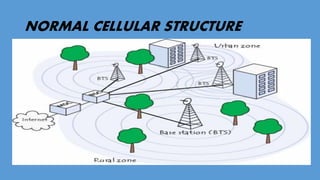
NORMAL CELLULAR STRUCTURE
SOMEPARAMETERS RELATEDTOWIRELESS
COMMUNICATION
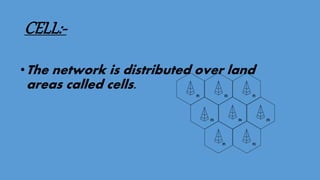
CELL:-
•The network is distributed over land
areas called cells.
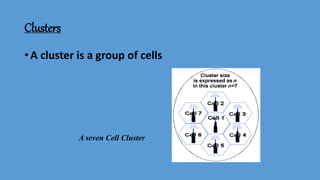
Clusters
• A cluster is a group of cells
A seven Cell Cluster
Handoff:-
• A handoff refers to the process of transferring an active call
or data session from one cell in a cellular network to another
or from one channel in a cell to another.
Handover:-
• In cellular telecommunications, the terms handover or handoff refer
to the process of transferring an ongoing call or data session from
one channel connected to the core network to another channel
OVERVIEWOFTELECOMNETWORKANDEXCESS
TECHNOLOGY
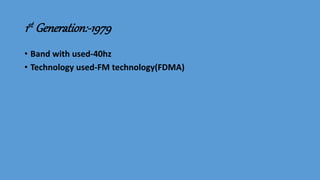
1st Generation:-1979
• Band with used-40hz
• Technology used-FM technology(FDMA)
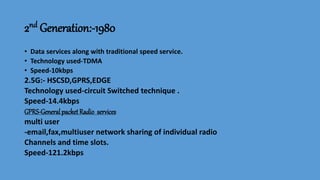
2nd Generation:-1980
• Data services along with traditional speed service.
• Technology used-TDMA
• Speed-10kbps
2.5G:- HSCSD,GPRS,EDGE
Technology used-circuit Switched technique .
Speed-14.4kbps
GPRS-General packet Radio services
multi user
-email,fax,multiuser network sharing of individual radio
Channels and time slots.
Speed-121.2kbps
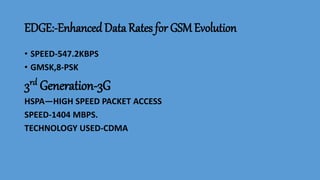
EDGE:-Enhanced Data Rates for GSM Evolution
• SPEED-547.2KBPS
• GMSK,8-PSK
3rd Generation-3G
HSPA—HIGH SPEED PACKET ACCESS
SPEED-1404 MBPS.
TECHNOLOGY USED-CDMA
4th GENERATION
• 4G is the fourth generation of wireless mobile
telecommunications technology, succeeding 3G.
• Wi-fi,bluetooth
• Multi services
• Three times greater speed than 3g..
GSM(GLOBAL SYSTEM FOR MOBILE COMMUNICATION)
• GSM is a second generation cellular system standard that was
developed to solve the fragmentation problems of the first cellular
systems in Europe.
• GSM was the first cellular system to specify digital modulation and
network level architectures and services and is the world most
popular 2G technology.
HISTORY:-
•GSM was first introduced in European market in
1980 by the GSM committee CEPT.
•1992 GSM changed its name under ETSI.
GSM SERVICES AND FEATURES
• GSM services follows ISDN guidelines and are classified as either
teleservices or data services.
Telephoneservices
including emergency calling and facsimile.
• BEARERSERVICES OR DATASERVICES
• limited to layer 1,2 and 3 of the open system interconnection (OSI)
reference model.
• Supported services include packet switched protocols and data rates
from 300 bps to 9.6kbps.
• SUPPLEMENTARY ISDNSERVICES
• digital in nature and include call diversion closed user groups and
caller identification , and are not available in analog mobile
network. It also include the short messing service(SMS).
Features:-
• GSM is the subscriber Identity Module (SIM),which is a memory
device that stores information such as the subscriber’s identification
number the network and countries.
• A subscriber uses the SIM with a four-digit personal ID number to
activate service from any GSM phone.
• Without a SIM installed all GSM mobiles are identical and
nonoperational .It is the SIM that gives GSM subscriber units their
identity.
• GSM is the on-the-air privacy which is provided by the system.
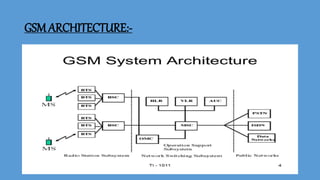
GSM ARCHITECTURE:-
GSM SPECTRUM:-
• For GSM, the spectrum allocation at 900 MHz is categorized into the
primary GSM band.
• The primary GSM band runs from 890 MHz to 915 MHz on the up
link and 935 MHz to 960 MHz as the down link.
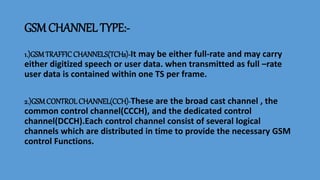
GSM CHANNEL TYPE:-
1.)GSMTRAFFICCHANNELS(TCHs)-It may be either full-rate and may carry
either digitized speech or user data. when transmitted as full –rate
user data is contained within one TS per frame.
2.)GSMCONTROLCHANNEL(CCH)-These are the broad cast channel , the
common control channel(CCCH), and the dedicated control
channel(DCCH).Each control channel consist of several logical
channels which are distributed in time to provide the necessary GSM
control Functions.
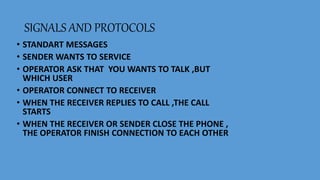
SIGNALS AND PROTOCOLS
• STANDART MESSAGES
• SENDER WANTS TO SERVICE
• OPERATOR ASK THAT YOU WANTS TO TALK ,BUT
WHICH USER
• OPERATOR CONNECT TO RECEIVER
• WHEN THE RECEIVER REPLIES TO CALL ,THE CALL
STARTS
• WHEN THE RECEIVER OR SENDER CLOSE THE PHONE ,
THE OPERATOR FINISH CONNECTION TO EACH OTHER
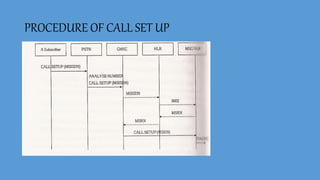
PROCEDURE OF CALL SET UP
CONCLUSSION
THANK YOU
•BY:--
PIYUSH KUMAR AND
ARUNDHATI CHATTOPADHYAY

Gsm(global system for mobile communication) (2)

  • 1.
    GSM(GLOBAL SYSTEM FORMOBILE COMMUNICATION)
  • 2.
    Introductionto WirelessCommunication Wireless communicationis the transfer of information and power between two or more points that are not connected by an electrical conductor. The most common wireless technologies use radio. Cellular concept was a major breakthrough in solving the problem spectral congestion and user capacity.
  • 3.
  • 4.
  • 5.
    CELL:- •The network isdistributed over land areas called cells.
  • 6.
    Clusters • A clusteris a group of cells A seven Cell Cluster
  • 7.
    Handoff:- • A handoffrefers to the process of transferring an active call or data session from one cell in a cellular network to another or from one channel in a cell to another.
  • 8.
    Handover:- • In cellulartelecommunications, the terms handover or handoff refer to the process of transferring an ongoing call or data session from one channel connected to the core network to another channel
  • 9.
  • 10.
    1st Generation:-1979 • Bandwith used-40hz • Technology used-FM technology(FDMA)
  • 11.
    2nd Generation:-1980 • Dataservices along with traditional speed service. • Technology used-TDMA • Speed-10kbps 2.5G:- HSCSD,GPRS,EDGE Technology used-circuit Switched technique . Speed-14.4kbps GPRS-General packet Radio services multi user -email,fax,multiuser network sharing of individual radio Channels and time slots. Speed-121.2kbps
  • 12.
    EDGE:-Enhanced Data Ratesfor GSM Evolution • SPEED-547.2KBPS • GMSK,8-PSK 3rd Generation-3G HSPA—HIGH SPEED PACKET ACCESS SPEED-1404 MBPS. TECHNOLOGY USED-CDMA
  • 13.
    4th GENERATION • 4Gis the fourth generation of wireless mobile telecommunications technology, succeeding 3G. • Wi-fi,bluetooth • Multi services • Three times greater speed than 3g..
  • 14.
    GSM(GLOBAL SYSTEM FORMOBILE COMMUNICATION) • GSM is a second generation cellular system standard that was developed to solve the fragmentation problems of the first cellular systems in Europe. • GSM was the first cellular system to specify digital modulation and network level architectures and services and is the world most popular 2G technology.
  • 15.
    HISTORY:- •GSM was firstintroduced in European market in 1980 by the GSM committee CEPT. •1992 GSM changed its name under ETSI.
  • 16.
    GSM SERVICES ANDFEATURES • GSM services follows ISDN guidelines and are classified as either teleservices or data services.
  • 17.
    Telephoneservices including emergency callingand facsimile. • BEARERSERVICES OR DATASERVICES • limited to layer 1,2 and 3 of the open system interconnection (OSI) reference model. • Supported services include packet switched protocols and data rates from 300 bps to 9.6kbps. • SUPPLEMENTARY ISDNSERVICES • digital in nature and include call diversion closed user groups and caller identification , and are not available in analog mobile network. It also include the short messing service(SMS).
  • 18.
    Features:- • GSM isthe subscriber Identity Module (SIM),which is a memory device that stores information such as the subscriber’s identification number the network and countries. • A subscriber uses the SIM with a four-digit personal ID number to activate service from any GSM phone. • Without a SIM installed all GSM mobiles are identical and nonoperational .It is the SIM that gives GSM subscriber units their identity. • GSM is the on-the-air privacy which is provided by the system.
  • 19.
  • 20.
    GSM SPECTRUM:- • ForGSM, the spectrum allocation at 900 MHz is categorized into the primary GSM band. • The primary GSM band runs from 890 MHz to 915 MHz on the up link and 935 MHz to 960 MHz as the down link.
  • 21.
    GSM CHANNEL TYPE:- 1.)GSMTRAFFICCHANNELS(TCHs)-Itmay be either full-rate and may carry either digitized speech or user data. when transmitted as full –rate user data is contained within one TS per frame. 2.)GSMCONTROLCHANNEL(CCH)-These are the broad cast channel , the common control channel(CCCH), and the dedicated control channel(DCCH).Each control channel consist of several logical channels which are distributed in time to provide the necessary GSM control Functions.
  • 22.
    SIGNALS AND PROTOCOLS •STANDART MESSAGES • SENDER WANTS TO SERVICE • OPERATOR ASK THAT YOU WANTS TO TALK ,BUT WHICH USER • OPERATOR CONNECT TO RECEIVER • WHEN THE RECEIVER REPLIES TO CALL ,THE CALL STARTS • WHEN THE RECEIVER OR SENDER CLOSE THE PHONE , THE OPERATOR FINISH CONNECTION TO EACH OTHER
  • 23.
  • 24.
  • 25.
    THANK YOU •BY:-- PIYUSH KUMARAND ARUNDHATI CHATTOPADHYAY