Why Chlorine is
added in
swimming pool
• Chlorine is added to the
water to kill germs. When
it is added to a
swimming pool, it forms
a weak acid called
hypochlorous acid that
kills bacteria like
salmonella and E. coli, as
well as germs that cause
viruses such as diarrhea
and swimmer's ear.
Write the name of group 7 elements from the
periodic table
• The group 7 elements contains 5 elements and they are :
• Fluorine
• Chlorine
• Bromine
• Iodine
• Astatine
Group 7 elements are non – metals. Suggest
their physical properties
• They do not conduct electricity.
• They are poor conductors of heat.
• They have low melting and boiling point
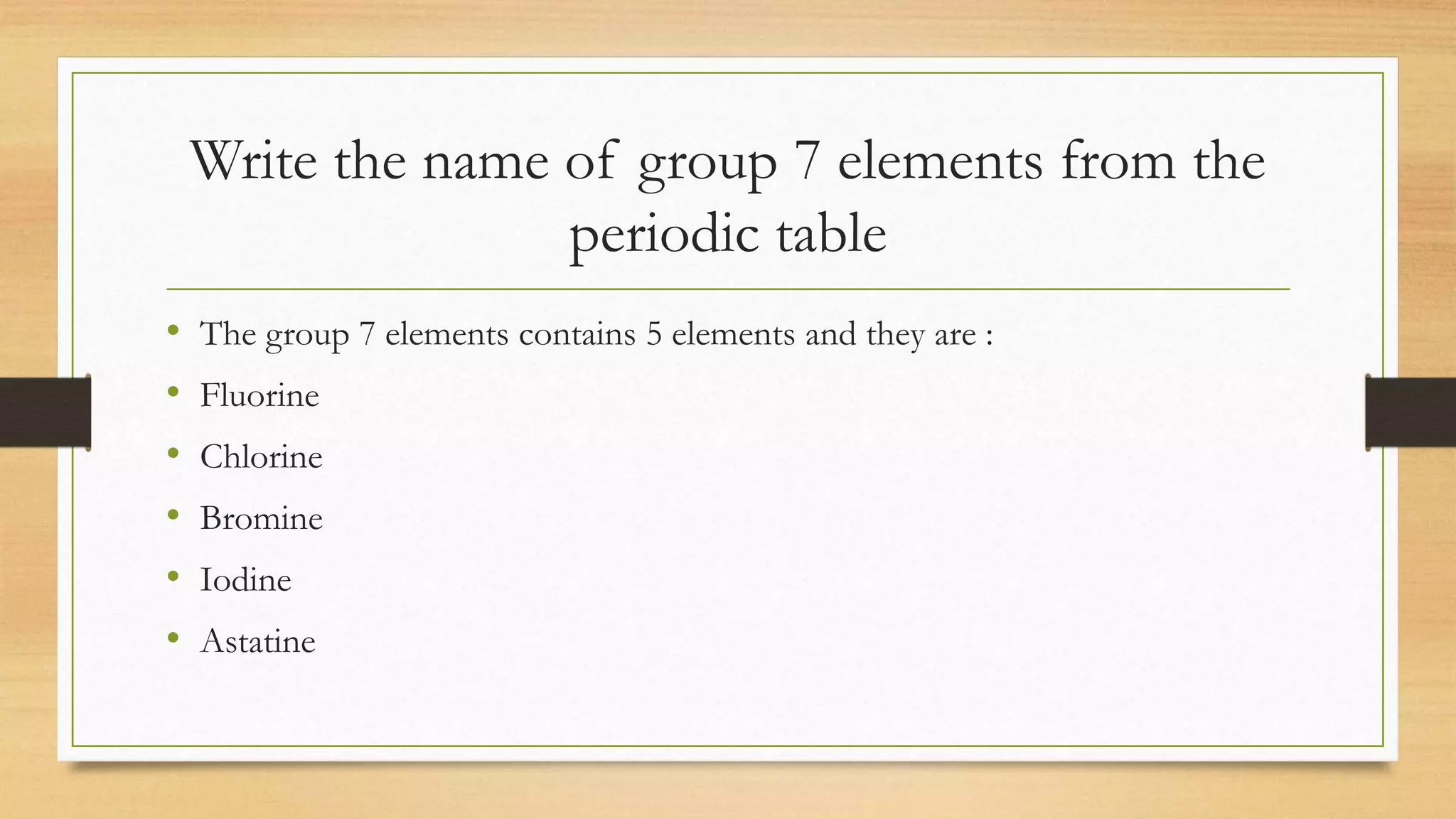
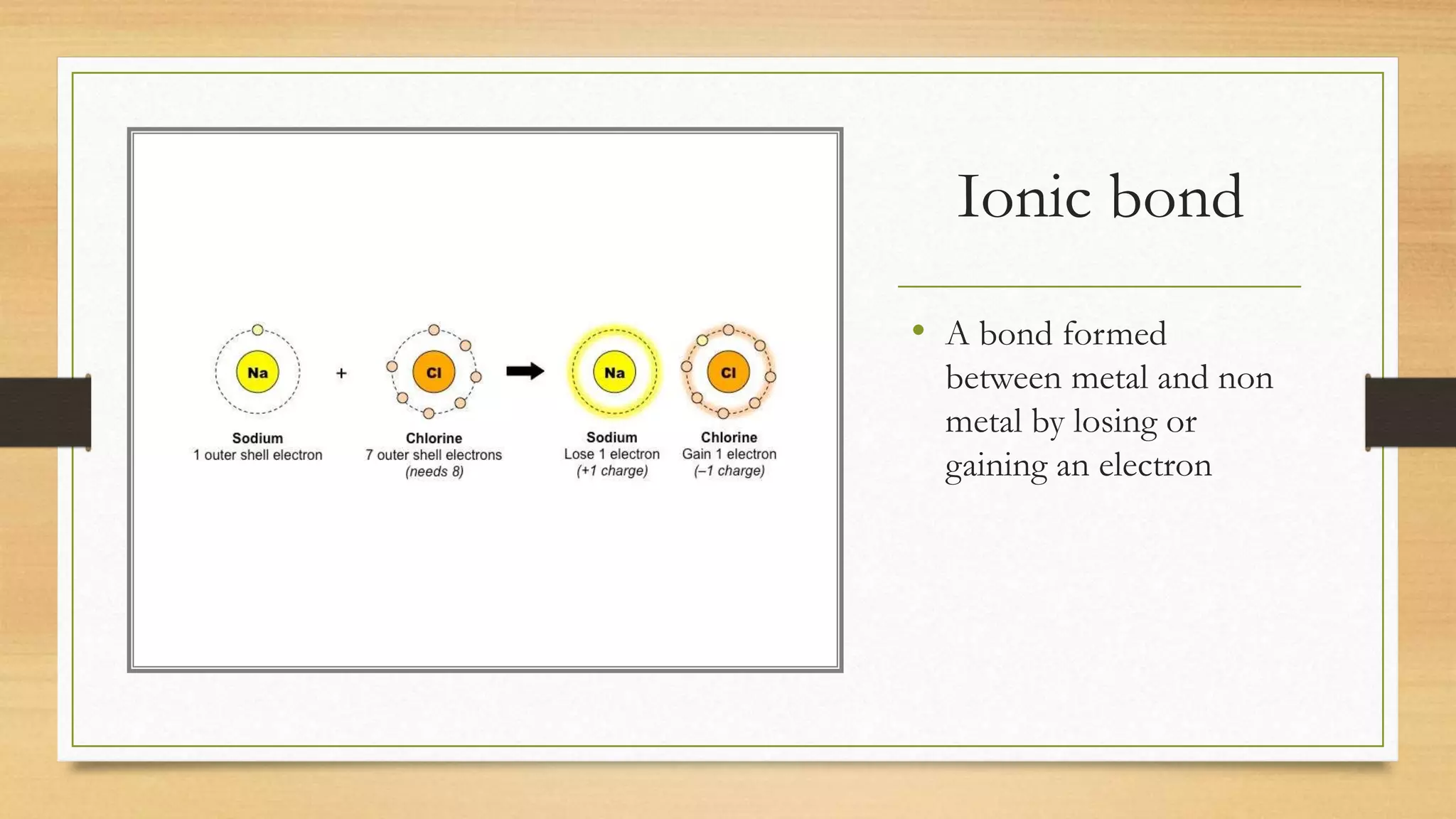
Melting and Boiling Point
Element Melting point
(*C)
Boiling point
(*C)
State at 20 *C Colour
Fluorine -220 -188 Gas Yellow
Chlorine -101 -35 Gas Green
Bromine -7 59 Liquid Dark red
Iodine 114 184 Solid Solid-shiny grey-
black vapour-
purple
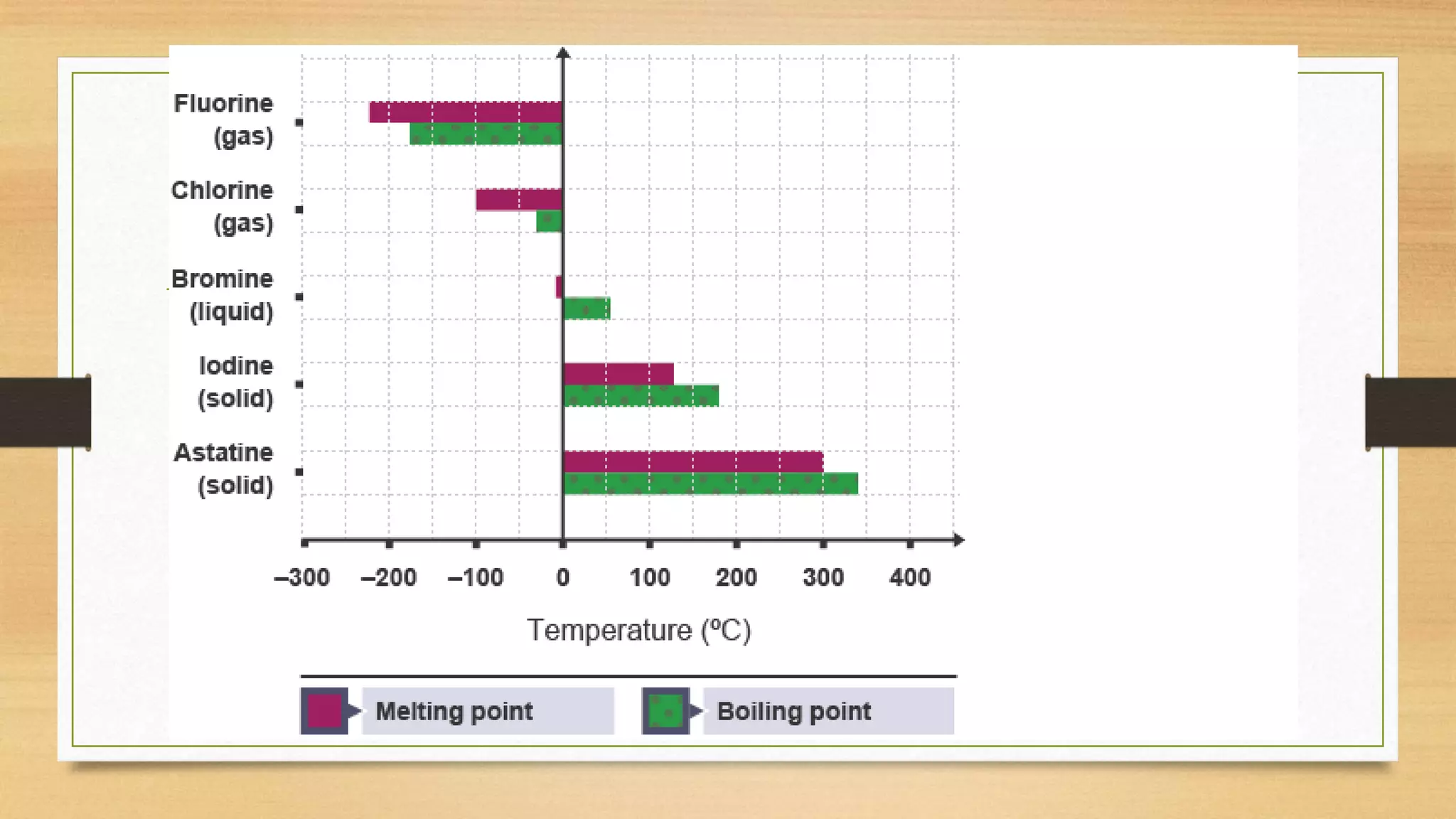
Valence electrons
• How many electrons does fluorine
and chlorine atom have?
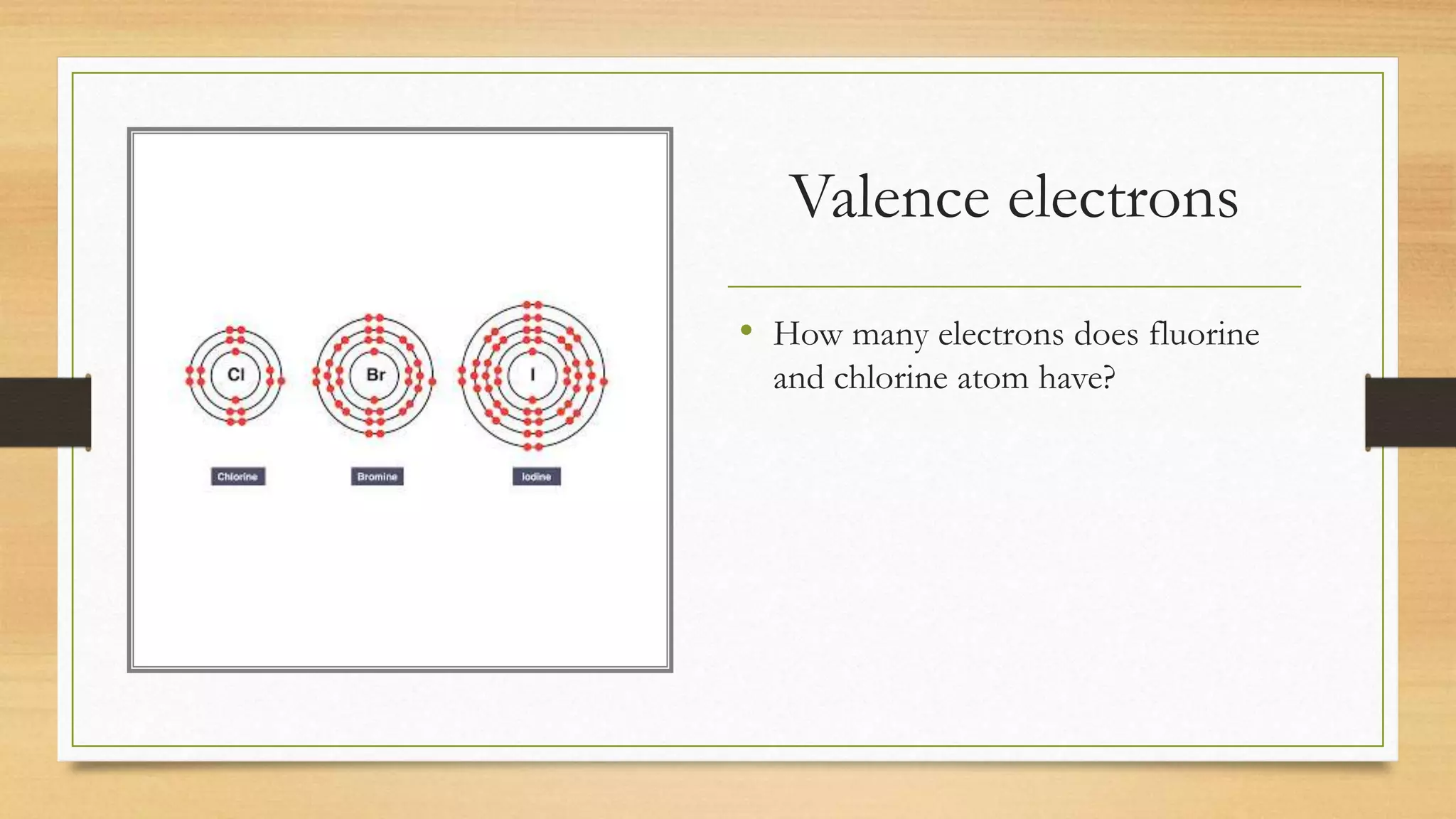
Ionic bond
• A bond formed
between metal and non
metal by losing or
gaining an electron
Ionic bond –
metal halides
• When a metal join with
non metal it gains or
loses electron to form a
compound. Halogens
lose one electron and
form an ionic bond
with a metal to form
metal halides
Metal + halogens – salt
• Example
• Sodium + chlorine ------ sodium chloride
• Potassium + fluorine ----- Potassium fluoride
• Iron + bromine ------- Iron bromide
Task 1:Arrange the group 1 elements with their respective colours
symbols and state of matter
• Task 2:Compare group 7 elements with the property of group 1 elements
and group 2 elements
• Task 3:Draw the ionic bond formation between group 1 element with
fluorine and group 2 elements with fluorine. Write the name of the
compound. Predict the chemical formula if group 1 element or group 2
elements react with group 7 elements.
Group 7 element exist as diatomic
molecules or diatomic compounds.
•Guess why?????
Identify the below chemical formula as
compounds or molecules.
• CH4-
• H2-
• Cl2
• C6H12O6
• NH4
• F2
• Br2
Learning Objectives
• To understand what are diatomic molecules
• To explain why group 7 elements exist as diatomic molecules.
• To know about the intermolecular and intramolecular attraction between
group 7 elements
Why Group 7 elements exist as molecules?
• How many valence electron does group 7 elements have?
• How many electrons does group 7 element need to complete its octet
structure?
• If two group 7 elements combine together can they complete its octet
structure
• Group 7 elements are one of the diatomic molecules.
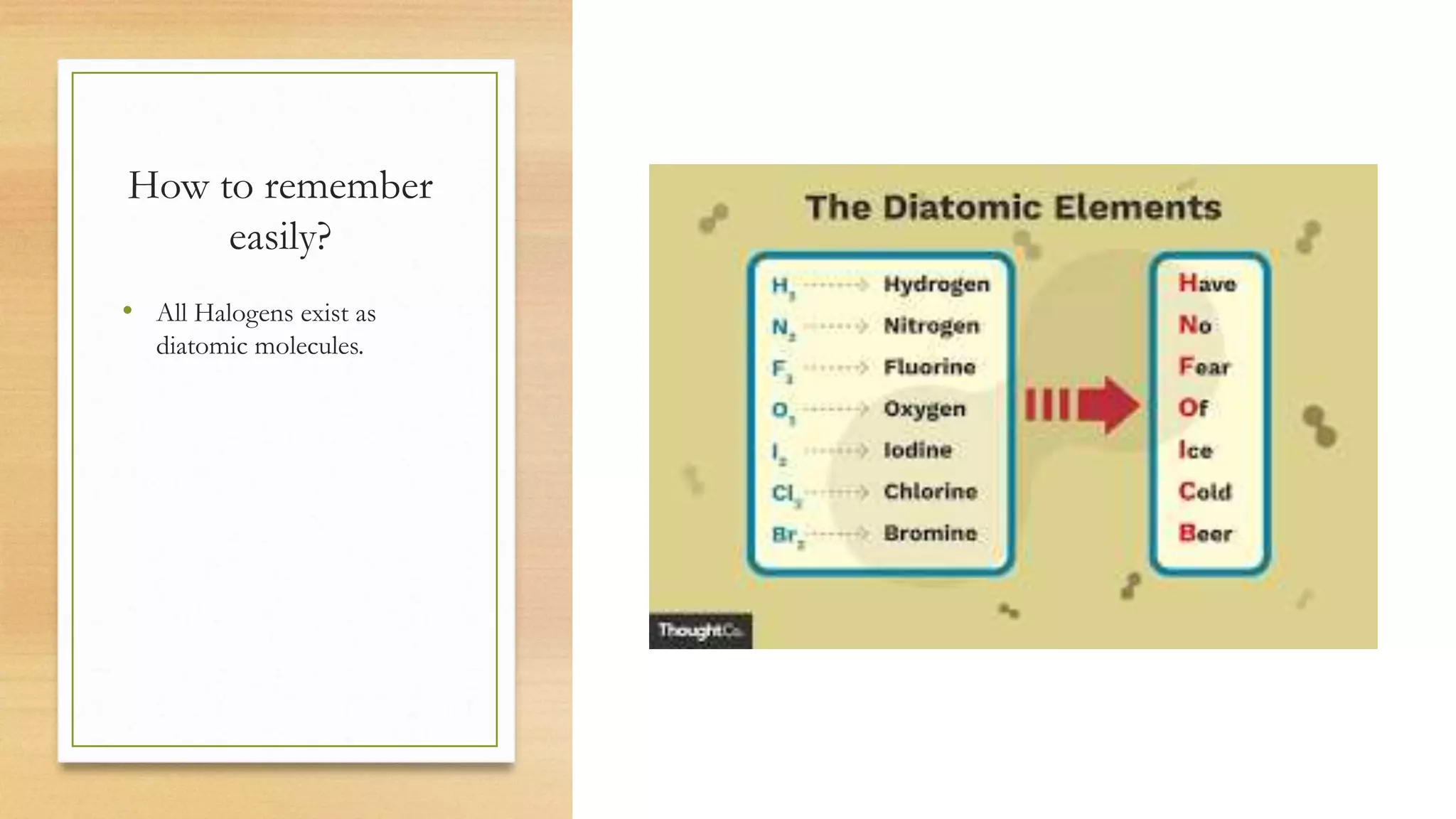
List of diatomic molecules
• Hydrogen (H2)
• Nitrogen (N2)
• Oxygen (O2)
• Fluorine (F2)
• Chlorine (Cl2)
• Iodine (I2)
• Bromine (Br2)
How to remember
easily?
• All Halogens exist as
diatomic molecules.
Task 1:Separate the given chemical formulas as
compounds or molecules
• Task 3:Draw the intra molecular and intermolecular attraction
between fluorine, hydrogen and oxygen.
• Task 2:Draw the bonding of fluorine with another fluorine atom.
Name other elements which also exist as diatomic molecules. Suggest
an easy way to remember them.
The Group 7 Elements
Guess what?
Fluorine bonds with fluorine
Fluorine bonds with Lithium
Fluorine bonds with hydrogen.
What is the difference between each bonding?
Learning Objectives
• To differentiate between ionic and covalent bonding of halogens
• To draw the bonding between fluorine and fluorine atom
• To write a chemical formula and write the name of the compound of ionic
and covalent bonding compounds of halogens
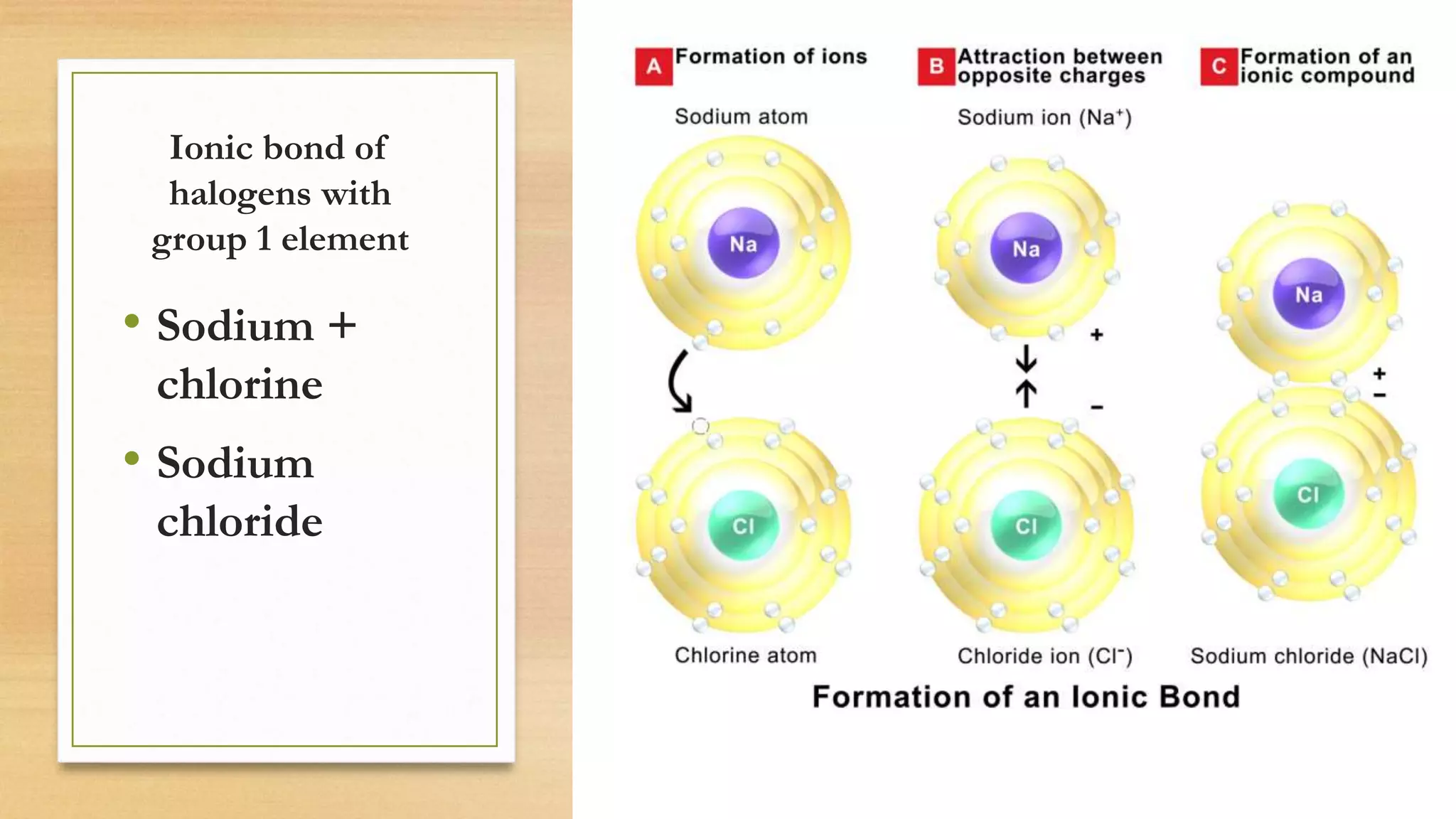
Ionic bond of
halogens with
group 1 element
• Sodium +
chlorine
• Sodium
chloride
Lithium + Fluorine----- Lithium Fluoride
Covalent
bonding
• Chlorine
molecule
Fluorine molecule
Task 1: Sort the given pieces of compounds as
ionic bond and covalent bond.
•Task 2: Draw any two ionic bond between
group 1 elements and halogens.
•Task 3: Draw a Venn diagram representing
the similarities and differences between Ionic
bond and covalent bond
Melting and Boiling Point
• The group 7 element have low melting and boiling points compared to most
metals. This is because they exist as molecules.
• A strong force holds the two atoms of the molecule together. The forces
between a molecules and its neighbours are weak. It is easy to separate the
molecules of chlorine in the liquid state to form a gas.
• The table in the previous page shows a trend in melting and boiling points.
They increase from top to bottom of the group. This is because the atoms
(and molecules) of the elements get bigger.
Covalent Bonding
of group 7
elements
• Group 7 elements
donot exist as single
atoms they are always
found as molecules or
compounds.
• Ex F2 or Cl2
Review
• Group 7 elements are also called as halogens
• It has relatively low melting and boiling point
• Group 7 elements are one of the diatomic molecules and have
intermolecular attraction between the atoms.
• They react with metals to form salt.
• Only group in periodic table which have different states is halogens with
different colours on burning
What do you mean by diatomic molecules?
Other than group 7 elements name some other
diatomic molecules
• Diatomic molecules consist of two atoms bonded together. In contrast,
monatomic elements consist of single atoms (e.g., Ar, He). Many compounds
are diatomic, such as HCl, NaCl, and KBr. Diatomic compounds consist of
two different elements. There are seven pure elements that form diatomic
molecules.
Group 7 elements

Group 7 elements

  • 1.
    Why Chlorine is addedin swimming pool • Chlorine is added to the water to kill germs. When it is added to a swimming pool, it forms a weak acid called hypochlorous acid that kills bacteria like salmonella and E. coli, as well as germs that cause viruses such as diarrhea and swimmer's ear.
  • 2.
    Write the nameof group 7 elements from the periodic table • The group 7 elements contains 5 elements and they are : • Fluorine • Chlorine • Bromine • Iodine • Astatine
  • 3.
    Group 7 elementsare non – metals. Suggest their physical properties • They do not conduct electricity. • They are poor conductors of heat. • They have low melting and boiling point
  • 5.
    Melting and BoilingPoint Element Melting point (*C) Boiling point (*C) State at 20 *C Colour Fluorine -220 -188 Gas Yellow Chlorine -101 -35 Gas Green Bromine -7 59 Liquid Dark red Iodine 114 184 Solid Solid-shiny grey- black vapour- purple
  • 6.
    Valence electrons • Howmany electrons does fluorine and chlorine atom have?
  • 7.
    Ionic bond • Abond formed between metal and non metal by losing or gaining an electron
  • 8.
    Ionic bond – metalhalides • When a metal join with non metal it gains or loses electron to form a compound. Halogens lose one electron and form an ionic bond with a metal to form metal halides
  • 9.
    Metal + halogens– salt • Example • Sodium + chlorine ------ sodium chloride • Potassium + fluorine ----- Potassium fluoride • Iron + bromine ------- Iron bromide
  • 10.
    Task 1:Arrange thegroup 1 elements with their respective colours symbols and state of matter • Task 2:Compare group 7 elements with the property of group 1 elements and group 2 elements • Task 3:Draw the ionic bond formation between group 1 element with fluorine and group 2 elements with fluorine. Write the name of the compound. Predict the chemical formula if group 1 element or group 2 elements react with group 7 elements.
  • 11.
    Group 7 elementexist as diatomic molecules or diatomic compounds. •Guess why?????
  • 12.
    Identify the belowchemical formula as compounds or molecules. • CH4- • H2- • Cl2 • C6H12O6 • NH4 • F2 • Br2
  • 13.
    Learning Objectives • Tounderstand what are diatomic molecules • To explain why group 7 elements exist as diatomic molecules. • To know about the intermolecular and intramolecular attraction between group 7 elements
  • 14.
    Why Group 7elements exist as molecules? • How many valence electron does group 7 elements have? • How many electrons does group 7 element need to complete its octet structure? • If two group 7 elements combine together can they complete its octet structure • Group 7 elements are one of the diatomic molecules.
  • 15.
    List of diatomicmolecules • Hydrogen (H2) • Nitrogen (N2) • Oxygen (O2) • Fluorine (F2) • Chlorine (Cl2) • Iodine (I2) • Bromine (Br2)
  • 16.
    How to remember easily? •All Halogens exist as diatomic molecules.
  • 18.
    Task 1:Separate thegiven chemical formulas as compounds or molecules • Task 3:Draw the intra molecular and intermolecular attraction between fluorine, hydrogen and oxygen. • Task 2:Draw the bonding of fluorine with another fluorine atom. Name other elements which also exist as diatomic molecules. Suggest an easy way to remember them.
  • 19.
    The Group 7Elements
  • 20.
    Guess what? Fluorine bondswith fluorine Fluorine bonds with Lithium Fluorine bonds with hydrogen. What is the difference between each bonding?
  • 21.
    Learning Objectives • Todifferentiate between ionic and covalent bonding of halogens • To draw the bonding between fluorine and fluorine atom • To write a chemical formula and write the name of the compound of ionic and covalent bonding compounds of halogens
  • 22.
    Ionic bond of halogenswith group 1 element • Sodium + chlorine • Sodium chloride
  • 23.
    Lithium + Fluorine-----Lithium Fluoride
  • 24.
  • 25.
  • 26.
    Task 1: Sortthe given pieces of compounds as ionic bond and covalent bond. •Task 2: Draw any two ionic bond between group 1 elements and halogens. •Task 3: Draw a Venn diagram representing the similarities and differences between Ionic bond and covalent bond
  • 27.
    Melting and BoilingPoint • The group 7 element have low melting and boiling points compared to most metals. This is because they exist as molecules. • A strong force holds the two atoms of the molecule together. The forces between a molecules and its neighbours are weak. It is easy to separate the molecules of chlorine in the liquid state to form a gas. • The table in the previous page shows a trend in melting and boiling points. They increase from top to bottom of the group. This is because the atoms (and molecules) of the elements get bigger.
  • 28.
    Covalent Bonding of group7 elements • Group 7 elements donot exist as single atoms they are always found as molecules or compounds. • Ex F2 or Cl2
  • 29.
    Review • Group 7elements are also called as halogens • It has relatively low melting and boiling point • Group 7 elements are one of the diatomic molecules and have intermolecular attraction between the atoms. • They react with metals to form salt. • Only group in periodic table which have different states is halogens with different colours on burning
  • 30.
    What do youmean by diatomic molecules? Other than group 7 elements name some other diatomic molecules • Diatomic molecules consist of two atoms bonded together. In contrast, monatomic elements consist of single atoms (e.g., Ar, He). Many compounds are diatomic, such as HCl, NaCl, and KBr. Diatomic compounds consist of two different elements. There are seven pure elements that form diatomic molecules.