GROSS FEATURES OF
HUMERUS
Dr. Atif Raza
Objectives:
At the end of the session, Students will be able to understand:
• Gross Anatomical Features of Humerus
• Site Determination
• Common Sites of Fractures
• Vessels and Nerves in Intimate Contact with Humerus
• Angle of Torsion
• Carrying Angle
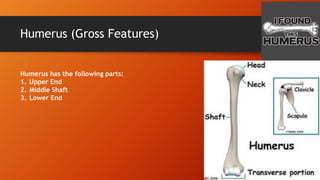
Humerus (Gross Features)
Humerus has the following parts:
1. Upper End
2. Middle Shaft
3. Lower End
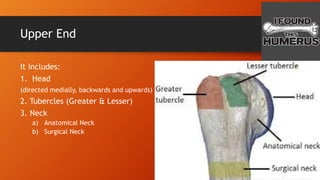
Upper End
It includes:
1. Head
(directed medially, backwards and upwards)
2. Tubercles (Greater & Lesser)
3. Neck
a) Anatomical Neck
b) Surgical Neck
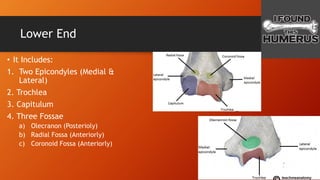
Lower End
• It Includes:
1. Two Epicondyles (Medial &
Lateral)
2. Trochlea
3. Capitulum
4. Three Fossae
a) Olecranon (Posterioly)
b) Radial Fossa (Anteriorly)
c) Coronoid Fossa (Anteriorly)
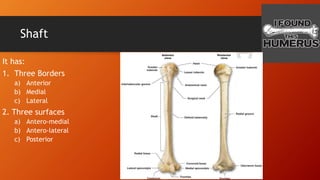
Shaft
It has:
1. Three Borders
a) Anterior
b) Medial
c) Lateral
2. Three surfaces
a) Antero-medial
b) Antero-lateral
c) Posterior
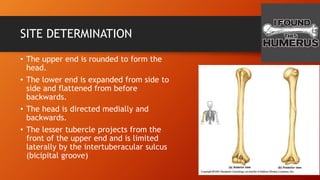
SITE DETERMINATION
• The upper end is rounded to form the
head.
• The lower end is expanded from side to
side and flattened from before
backwards.
• The head is directed medially and
backwards.
• The lesser tubercle projects from the
front of the upper end and is limited
laterally by the intertuberacular sulcus
(bicipital groove)
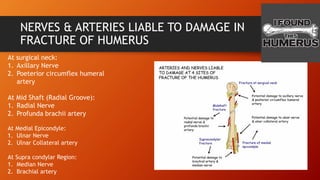
NERVES & ARTERIES LIABLE TO DAMAGE IN
FRACTURE OF HUMERUS
At surgical neck:
1. Axillary Nerve
2. Poeterior circumflex humeral
artery
At Mid Shaft (Radial Groove):
1. Radial Nerve
2. Profunda brachii artery
At Medial Epicondyle:
1. Ulnar Nerve
2. Ulnar Collateral artery
At Supra condylar Region:
1. Median Nerve
2. Brachial artery
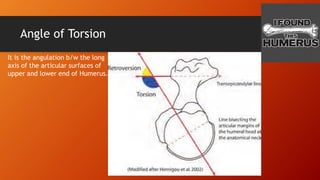
Angle of Torsion
It is the angulation b/w the long
axis of the articular surfaces of
upper and lower end of Humerus.
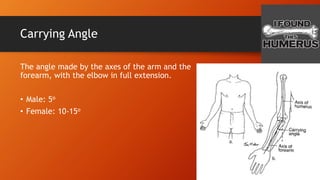
Carrying Angle
The angle made by the axes of the arm and the
forearm, with the elbow in full extension.
• Male: 5o
• Female: 10-15o
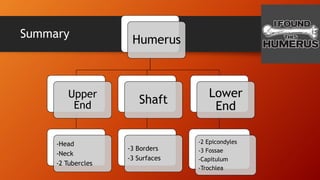
Summary
Humerus
Upper
End
-Head
-Neck
-2 Tubercles
Shaft
-3 Borders
-3 Surfaces
Lower
End
-2 Epicondyles
-3 Fossae
-Capitulum
-Trochlea
THANK YOU

Gross features of humerus

  • 2.
  • 3.
    Objectives: At the endof the session, Students will be able to understand: • Gross Anatomical Features of Humerus • Site Determination • Common Sites of Fractures • Vessels and Nerves in Intimate Contact with Humerus • Angle of Torsion • Carrying Angle
  • 4.
    Humerus (Gross Features) Humerushas the following parts: 1. Upper End 2. Middle Shaft 3. Lower End
  • 5.
    Upper End It includes: 1.Head (directed medially, backwards and upwards) 2. Tubercles (Greater & Lesser) 3. Neck a) Anatomical Neck b) Surgical Neck
  • 6.
    Lower End • ItIncludes: 1. Two Epicondyles (Medial & Lateral) 2. Trochlea 3. Capitulum 4. Three Fossae a) Olecranon (Posterioly) b) Radial Fossa (Anteriorly) c) Coronoid Fossa (Anteriorly)
  • 7.
    Shaft It has: 1. ThreeBorders a) Anterior b) Medial c) Lateral 2. Three surfaces a) Antero-medial b) Antero-lateral c) Posterior
  • 8.
    SITE DETERMINATION • Theupper end is rounded to form the head. • The lower end is expanded from side to side and flattened from before backwards. • The head is directed medially and backwards. • The lesser tubercle projects from the front of the upper end and is limited laterally by the intertuberacular sulcus (bicipital groove)
  • 9.
    NERVES & ARTERIESLIABLE TO DAMAGE IN FRACTURE OF HUMERUS At surgical neck: 1. Axillary Nerve 2. Poeterior circumflex humeral artery At Mid Shaft (Radial Groove): 1. Radial Nerve 2. Profunda brachii artery At Medial Epicondyle: 1. Ulnar Nerve 2. Ulnar Collateral artery At Supra condylar Region: 1. Median Nerve 2. Brachial artery
  • 10.
    Angle of Torsion Itis the angulation b/w the long axis of the articular surfaces of upper and lower end of Humerus.
  • 11.
    Carrying Angle The anglemade by the axes of the arm and the forearm, with the elbow in full extension. • Male: 5o • Female: 10-15o
  • 12.
    Summary Humerus Upper End -Head -Neck -2 Tubercles Shaft -3 Borders -3Surfaces Lower End -2 Epicondyles -3 Fossae -Capitulum -Trochlea
  • 13.