Muhammad
Mudassir
morning
2015-ag-253
Outlines
Introduction
History
Principles
Applications
Benefits of Green Chemistry
Uses
Conclusions
References
Definition
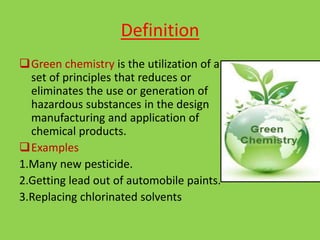
Green chemistry is the utilization of a
set of principles that reduces or
eliminates the use or generation of
hazardous substances in the design
manufacturing and application of
chemical products.
Examples
1.Many new pesticide.
2.Getting lead out of automobile paints.
3.Replacing chlorinated solvents
History
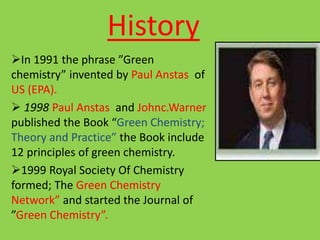
In 1991 the phrase ”Green
chemistry” invented by Paul Anstas of
US (EPA).
 1998 Paul Anstas and Johnc.Warner
published the Book “Green Chemistry;
Theory and Practice” the Book include
12 principles of green chemistry.
1999 Royal Society Of Chemistry
formed; The Green Chemistry
Network” and started the Journal of
”Green Chemistry”.
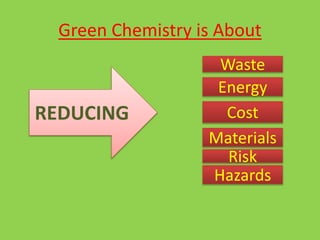
Green Chemistry is About
REDUCING
Waste
Energy
Cost
Materials
Risk
Hazards
Why we need Green Chemistry?
 Green CHEMISTRY is undeniably a very prominent
part of our daily lives.
 Green Chemistry looks at pollution prevention on
the molecular and larger scale.
 Green chemistry program supports the invention of
more environmentally friendly chemical processes
which reduce or even eliminate the generation of
hazardous substances.
• A famous example is the pecticide DDT.
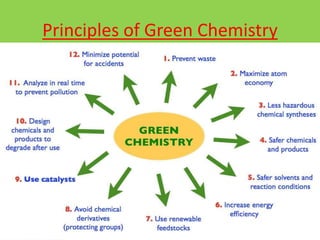
Principles of Green Chemistry
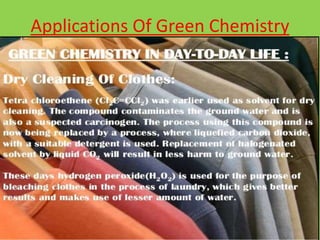
Applications Of Green Chemistry
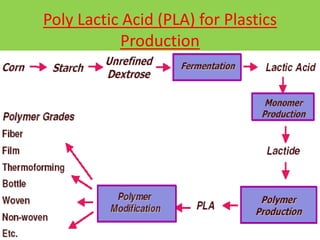
Poly Lactic Acid (PLA) for Plastics
Production
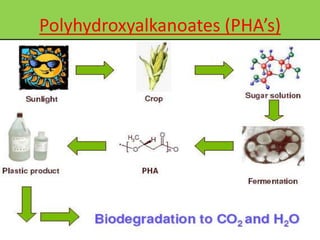
Polyhydroxyalkanoates (PHA’s)
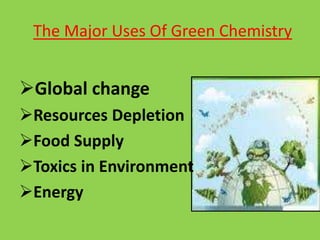
The Major Uses Of Green Chemistry
Global change
Resources Depletion
Food Supply
Toxics in Environment
Energy
Energy
The vast majority of the energy
generated in the world today is from
non-renewable sources that damage
the environment.
 Carbon dioxide
 Depletion of Ozone layer
 Toxics
Energy
Green Chemistry will be essential in
developing the alternatives for energy
generation
1.Photovoltaics cell
2.Fuel Cell
3.Biobassed cell
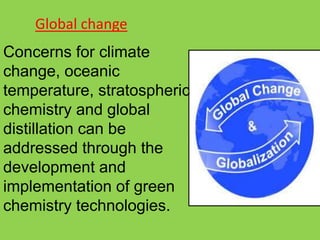
Global change
Concerns for climate
change, oceanic
temperature, stratospheric
chemistry and global
distillation can be
addressed through the
development and
implementation of green
chemistry technologies.
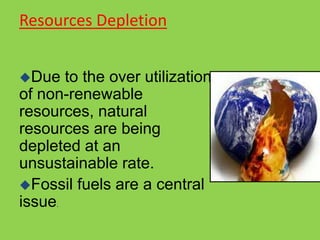
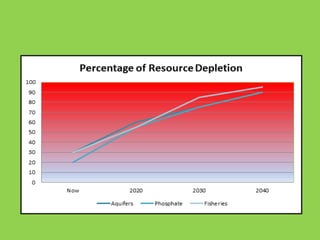
Resources Depletion
Due to the over utilization
of non-renewable
resources, natural
resources are being
depleted at an
unsustainable rate.
Fossil fuels are a central
issue.
Resource Depletion
Renewable resources can be made
increasingly viable technologically and
economically through green chemistry.
 Biomass
 Nanoscience & technology
 Solar
 Waste utilization
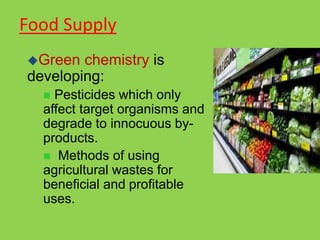
Food Supply
Green chemistry is
developing:
 Pesticides which only
affect target organisms and
degrade to innocuous by-
products.
 Methods of using
agricultural wastes for
beneficial and profitable
uses.
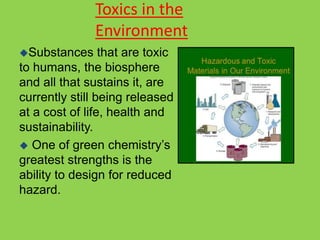
Toxics in the
Environment
Substances that are toxic
to humans, the biosphere
and all that sustains it, are
currently still being released
at a cost of life, health and
sustainability.
 One of green chemistry’s
greatest strengths is the
ability to design for reduced
hazard.
Benefits of Green Chemistry
 business benefits:
1. improved Resources efficiency and lower raw
materials and utility bills.
2. reduced waste treatment and disposal cost.
 environmental benefits:
1. lower levels of chemicals released to
environment.
2. reduced emission and product impacts.
Conclusion
Green chemistry Not a solution to
all environmental problems But the
most fundamental approach to
preventing pollution.
References
a. http://www.epa.gov/greenchemistry/
b. http://www.epa.gov/greenchemistry/pubs/educat.html
c. http://www.epa.gov/greenchemistry/
d. http://www.epa.gov/greenchemistry/pubs/principles.html
e. http://en.wikipedia.org/wiki/Green_chemistry
f. http://portal.acs.org/portal/acs/corg/content?_nfpb=true&_pageLabel=PP_TRANSITIONMAIN&node_id=830&u
se_sec=false&sec_url_var=region1&__uuid=76247a16-94d0-458e-9092-10de1c35f2c6
g. http://books.google.com/books?id=ZMjkTMwO3NkC&dq=green+chemistry&printsec=frontcover&source=bl&ot
s=ZdGD63CxOJ&sig=vM94PxekSEhIX3a9yFOPpDAOXGo&hl=en&ei=mD9RSqSoDqDMjAfJg4mfBQ&sa=X&oi=book
_result&ct=result&resnum=8
h. http://books.google.com/books?id=ZMjkTMwO3NkC&dq=green+chemistry&printsec=frontcover&source=bl&ot
s=ZdGD63CxOJ&sig=vM94PxekSEhIX3a9yFOPpDAOXGo&hl=en&ei=mD9RSqSoDqDMjAfJg4mfBQ&sa=X&oi=book
_result&ct=result&resnum=8
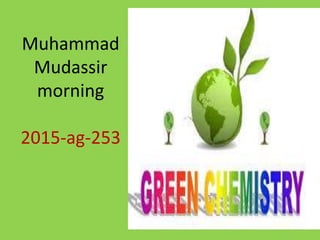
GREEN CHEMISTRY

GREEN CHEMISTRY

  • 2.
  • 3.
  • 4.
    Definition Green chemistry isthe utilization of a set of principles that reduces or eliminates the use or generation of hazardous substances in the design manufacturing and application of chemical products. Examples 1.Many new pesticide. 2.Getting lead out of automobile paints. 3.Replacing chlorinated solvents
  • 5.
    History In 1991 thephrase ”Green chemistry” invented by Paul Anstas of US (EPA).  1998 Paul Anstas and Johnc.Warner published the Book “Green Chemistry; Theory and Practice” the Book include 12 principles of green chemistry. 1999 Royal Society Of Chemistry formed; The Green Chemistry Network” and started the Journal of ”Green Chemistry”.
  • 6.
    Green Chemistry isAbout REDUCING Waste Energy Cost Materials Risk Hazards
  • 7.
    Why we needGreen Chemistry?  Green CHEMISTRY is undeniably a very prominent part of our daily lives.  Green Chemistry looks at pollution prevention on the molecular and larger scale.  Green chemistry program supports the invention of more environmentally friendly chemical processes which reduce or even eliminate the generation of hazardous substances. • A famous example is the pecticide DDT.
  • 8.
  • 9.
  • 10.
    Poly Lactic Acid(PLA) for Plastics Production
  • 11.
  • 12.
    The Major UsesOf Green Chemistry Global change Resources Depletion Food Supply Toxics in Environment Energy
  • 13.
    Energy The vast majorityof the energy generated in the world today is from non-renewable sources that damage the environment.  Carbon dioxide  Depletion of Ozone layer  Toxics
  • 14.
    Energy Green Chemistry willbe essential in developing the alternatives for energy generation 1.Photovoltaics cell 2.Fuel Cell 3.Biobassed cell
  • 15.
    Global change Concerns forclimate change, oceanic temperature, stratospheric chemistry and global distillation can be addressed through the development and implementation of green chemistry technologies.
  • 16.
    Resources Depletion Due tothe over utilization of non-renewable resources, natural resources are being depleted at an unsustainable rate. Fossil fuels are a central issue.
  • 17.
    Resource Depletion Renewable resourcescan be made increasingly viable technologically and economically through green chemistry.  Biomass  Nanoscience & technology  Solar  Waste utilization
  • 19.
    Food Supply Green chemistryis developing:  Pesticides which only affect target organisms and degrade to innocuous by- products.  Methods of using agricultural wastes for beneficial and profitable uses.
  • 20.
    Toxics in the Environment Substancesthat are toxic to humans, the biosphere and all that sustains it, are currently still being released at a cost of life, health and sustainability.  One of green chemistry’s greatest strengths is the ability to design for reduced hazard.
  • 21.
    Benefits of GreenChemistry  business benefits: 1. improved Resources efficiency and lower raw materials and utility bills. 2. reduced waste treatment and disposal cost.  environmental benefits: 1. lower levels of chemicals released to environment. 2. reduced emission and product impacts.
  • 22.
    Conclusion Green chemistry Nota solution to all environmental problems But the most fundamental approach to preventing pollution.
  • 23.
    References a. http://www.epa.gov/greenchemistry/ b. http://www.epa.gov/greenchemistry/pubs/educat.html c.http://www.epa.gov/greenchemistry/ d. http://www.epa.gov/greenchemistry/pubs/principles.html e. http://en.wikipedia.org/wiki/Green_chemistry f. http://portal.acs.org/portal/acs/corg/content?_nfpb=true&_pageLabel=PP_TRANSITIONMAIN&node_id=830&u se_sec=false&sec_url_var=region1&__uuid=76247a16-94d0-458e-9092-10de1c35f2c6 g. http://books.google.com/books?id=ZMjkTMwO3NkC&dq=green+chemistry&printsec=frontcover&source=bl&ot s=ZdGD63CxOJ&sig=vM94PxekSEhIX3a9yFOPpDAOXGo&hl=en&ei=mD9RSqSoDqDMjAfJg4mfBQ&sa=X&oi=book _result&ct=result&resnum=8 h. http://books.google.com/books?id=ZMjkTMwO3NkC&dq=green+chemistry&printsec=frontcover&source=bl&ot s=ZdGD63CxOJ&sig=vM94PxekSEhIX3a9yFOPpDAOXGo&hl=en&ei=mD9RSqSoDqDMjAfJg4mfBQ&sa=X&oi=book _result&ct=result&resnum=8