An Introduction to  Ancient Greece
Greek Influences Birth of Western Civilization - Foundation of European and American ideology built in Greece Contributed to language, science, math, government, medicine, art, architecture, and even history!
Greek Timeline 2800-2000 BCE - Minoans, lived on the island of Crete.  Knossos main city. 2000-1200 BCE - Myceneans, attacked Troy 1200-800 BCE - Greek “Dark Ages.” Dorians invade and settle Greece.
 
Palace at Knossos
 
Greek Timeline 800-500 BCE - Archaic Age Began trading in Mediterranean Ad hoc colonies set up throughout region Why?
Greek Timeline 800-500 BCE - Archaic Age
Classical Age 500-323 BCE Rise city-states/polis, not unified Various government types Sparta - (spartan = simple) military state no social distinctions large class of helots
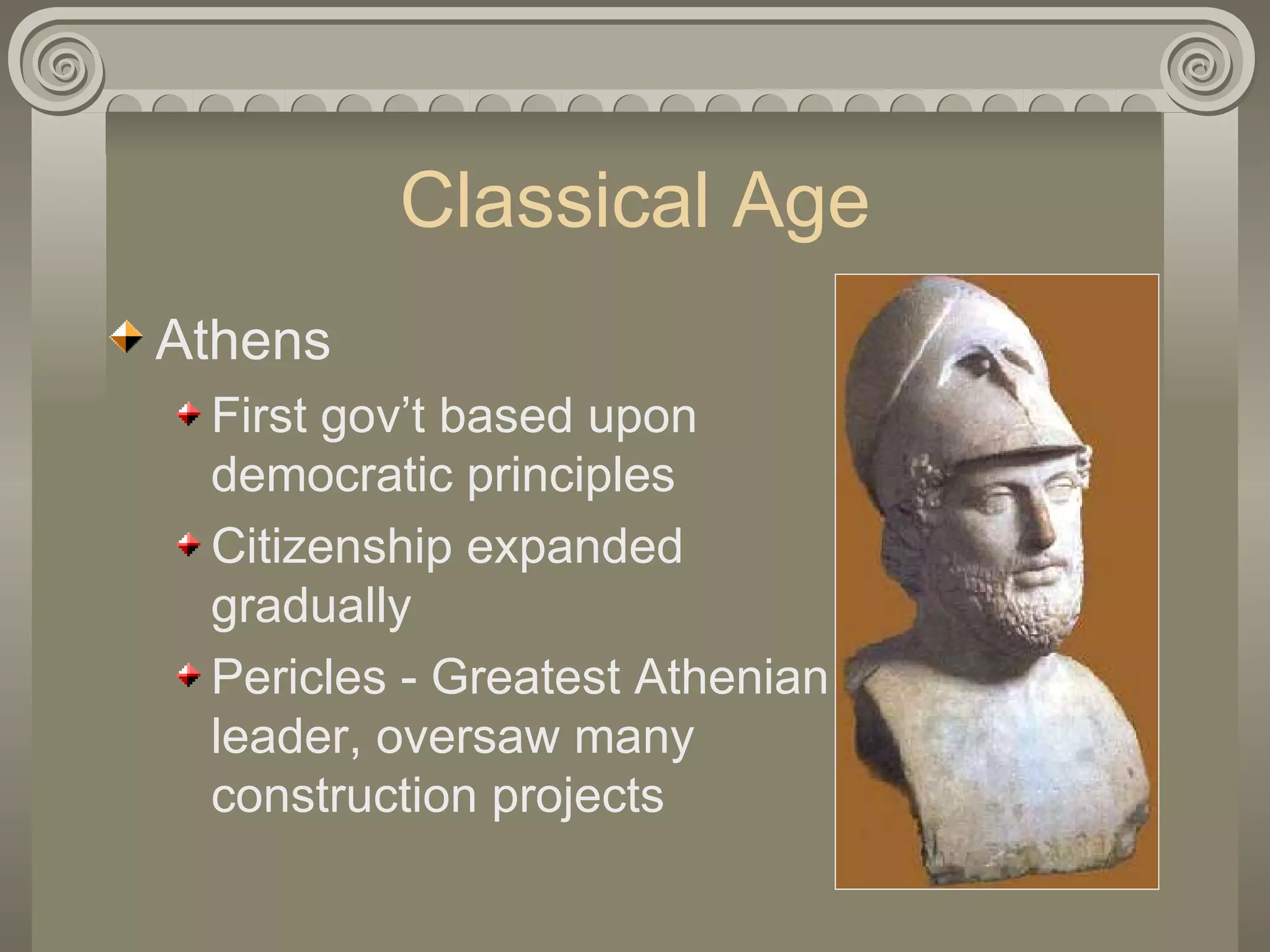
Classical Age Athens First gov’t based upon democratic principles Citizenship expanded gradually Pericles - Greatest Athenian leader, oversaw many construction projects
Conflict in Greece Persian Wars 490 B.C.E. Darius invades, Battle of Marathon 480 B.C.E. Xerxes invades, Athens burned, but defeat by Athenian navy Delian League - controlled by Athens
Peloponnesian War Resentment towards Delian League, Athens builds Athens vs. Sparta 431-404 B.C.E.  Sparta defeats Athens
 
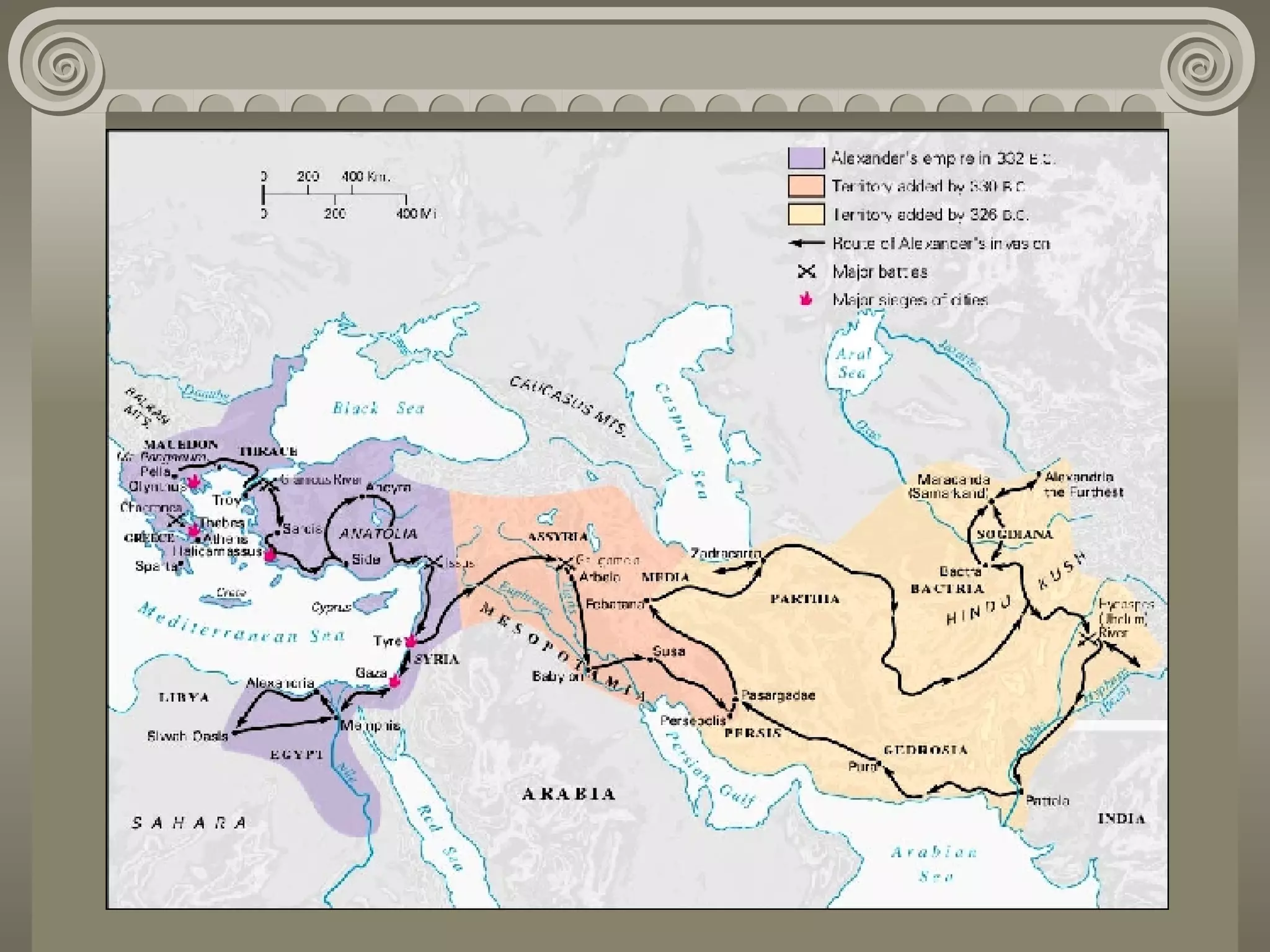
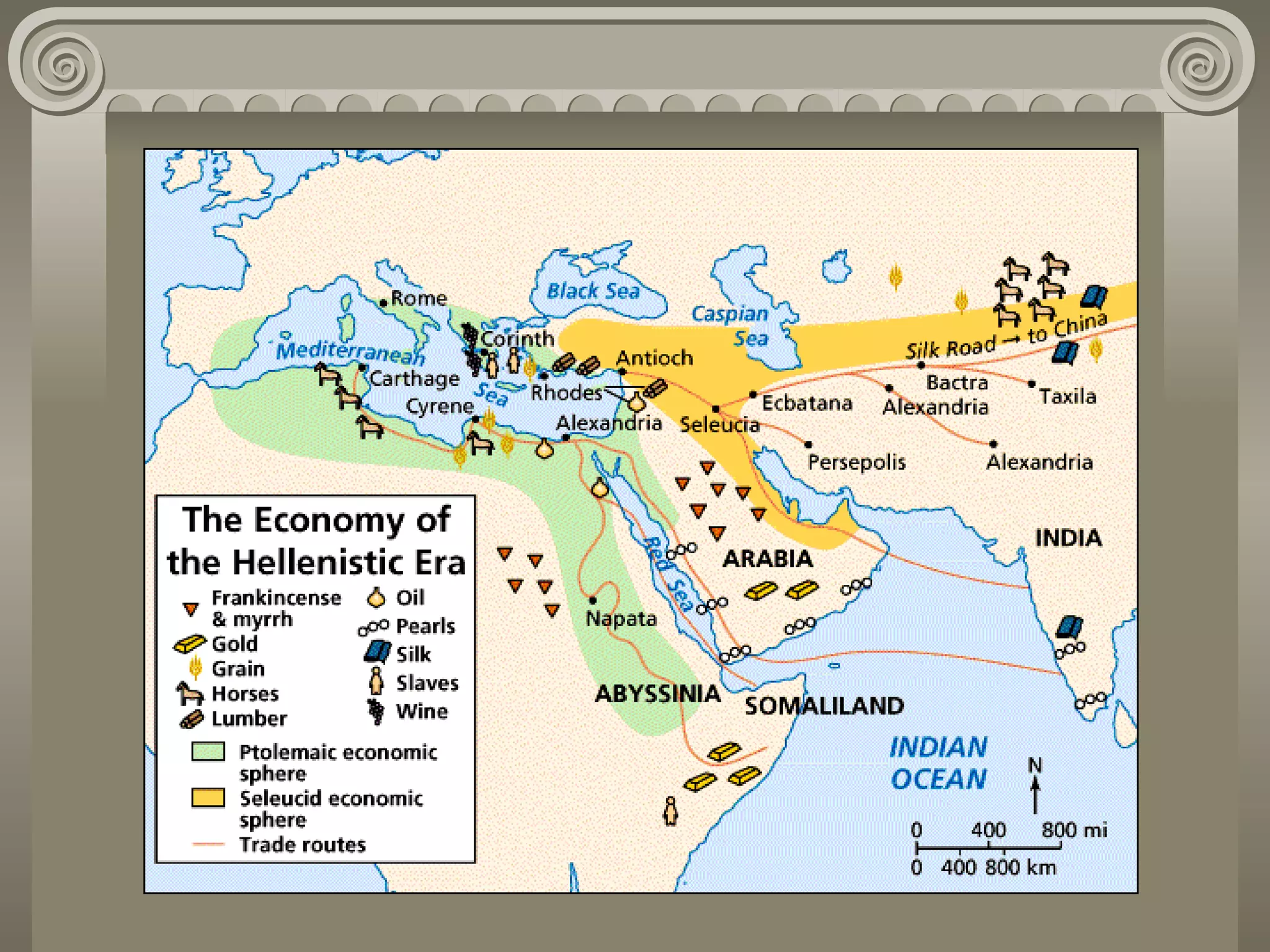
Hellenistic Age 324 - 100 B.C.E. Greek culture spreads throughout world Begins with Phillip of Macedon, takes Greece - little resistance Alexander succeeded Phillip  Begins massive campaign, builds massive empire Connects East to West


Great Athenian Philosophers Socrates  - Know thyself!  - question everything  - only the pursuit of goodness   brings happiness. Plato  - The Academy  - the world of the FORMS  - The Republic à philosopher-king Aristotle  - the Lyceum  - “Golden Mean” [everything in moderation]  - Logic  - Scientific method.
Socrates He used the method of rational debate to seek essential definitions of truth, beauty, justice, goodness, and virtue. Basic views of western philosophy “The unexamined life is not worth living” He was executed by his fellow Athenians for impiety and for corrupting the young.
 
Plato Student of Socrates The Allegory of the Cave & The Republic Disliked democracy (why?) Believed men and women should have equal access to positions.
Aristotle Student of Plato Tutored Alexander the Great Good man-good life Moderation in all things Wrote  Politics  - polis Systemization of knowledge Theories lasted until the 17th century

Greece Overview

  • 1.
    An Introduction to Ancient Greece
  • 2.
    Greek Influences Birthof Western Civilization - Foundation of European and American ideology built in Greece Contributed to language, science, math, government, medicine, art, architecture, and even history!
  • 3.
    Greek Timeline 2800-2000BCE - Minoans, lived on the island of Crete. Knossos main city. 2000-1200 BCE - Myceneans, attacked Troy 1200-800 BCE - Greek “Dark Ages.” Dorians invade and settle Greece.
  • 4.
  • 5.
  • 6.
  • 7.
    Greek Timeline 800-500BCE - Archaic Age Began trading in Mediterranean Ad hoc colonies set up throughout region Why?
  • 8.
    Greek Timeline 800-500BCE - Archaic Age
  • 9.
    Classical Age 500-323BCE Rise city-states/polis, not unified Various government types Sparta - (spartan = simple) military state no social distinctions large class of helots
  • 10.
    Classical Age AthensFirst gov’t based upon democratic principles Citizenship expanded gradually Pericles - Greatest Athenian leader, oversaw many construction projects
  • 11.
    Conflict in GreecePersian Wars 490 B.C.E. Darius invades, Battle of Marathon 480 B.C.E. Xerxes invades, Athens burned, but defeat by Athenian navy Delian League - controlled by Athens
  • 12.
    Peloponnesian War Resentmenttowards Delian League, Athens builds Athens vs. Sparta 431-404 B.C.E. Sparta defeats Athens
  • 13.
  • 14.
    Hellenistic Age 324- 100 B.C.E. Greek culture spreads throughout world Begins with Phillip of Macedon, takes Greece - little resistance Alexander succeeded Phillip Begins massive campaign, builds massive empire Connects East to West
  • 15.
  • 16.
  • 17.
  • 18.
  • 19.
  • 20.
  • 21.
    Great Athenian PhilosophersSocrates - Know thyself! - question everything - only the pursuit of goodness brings happiness. Plato - The Academy - the world of the FORMS - The Republic à philosopher-king Aristotle - the Lyceum - “Golden Mean” [everything in moderation] - Logic - Scientific method.
  • 22.
    Socrates He usedthe method of rational debate to seek essential definitions of truth, beauty, justice, goodness, and virtue. Basic views of western philosophy “The unexamined life is not worth living” He was executed by his fellow Athenians for impiety and for corrupting the young.
  • 23.
  • 24.
    Plato Student ofSocrates The Allegory of the Cave & The Republic Disliked democracy (why?) Believed men and women should have equal access to positions.
  • 25.
    Aristotle Student ofPlato Tutored Alexander the Great Good man-good life Moderation in all things Wrote Politics - polis Systemization of knowledge Theories lasted until the 17th century