T he Great
Depr ession
Causes

 Buying on credit
 Government policies
   Not regulating stock market or businesses
 Weak international economy
   Other countries still recovering from WWI
 The Stock Market Crash
Stock Market Crash

 Buying On Margin
   Making down payments and borrowing the
    rest
 October 29, 1929 – Black Tuesday
   Rapid selling of stocks
     values drop $14 billion
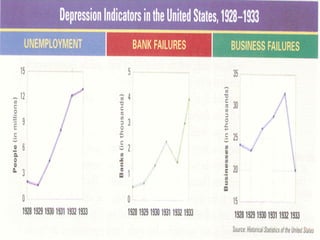
DEPRESSION SPREADS

 Millions of people lost their jobs.
 Banks recalled loans.
 People take money out of banks
 Banks can’t pay back money so they
  close
 People lose money in banks
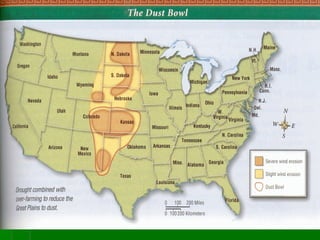
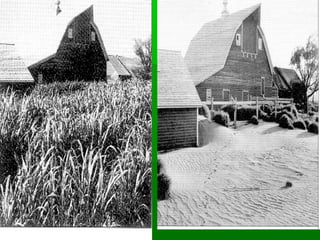
THE DUST BOWL

 Drought and dust storms in the
  Midwest forced many farmers to
  leave their land and migrate west in
  search of jobs.
Impact

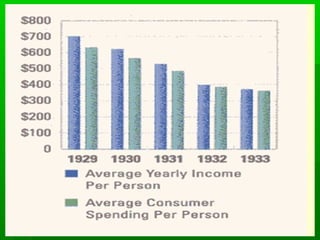
 Unemployment – 25%
 Rural Life
   Farmers Suffer
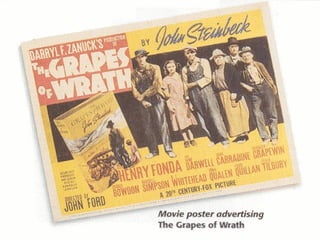
      Dust Bowl – severe drought
      “Okies” – farmers who moved to California
 Less Leisure Activities
   Movies, sports, etc.
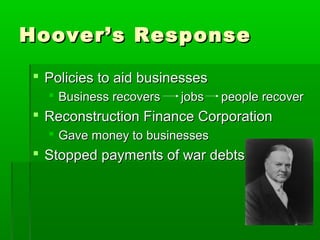
Hoover’s Response

 Policies to aid businesses
   Business recovers   jobs   people recover
 Reconstruction Finance Corporation
   Gave money to businesses
 Stopped payments of war debts
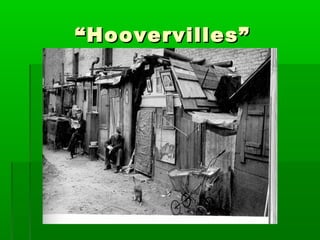
“ Hoovervilles”
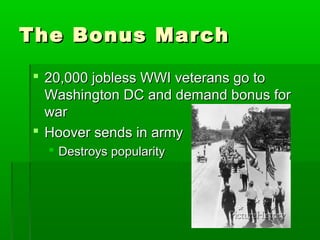
The Bonus March

 20,000 jobless WWI veterans go to
  Washington DC and demand bonus for
  war
 Hoover sends in army
   Destroys popularity
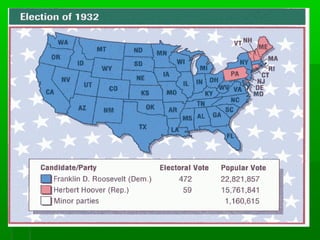
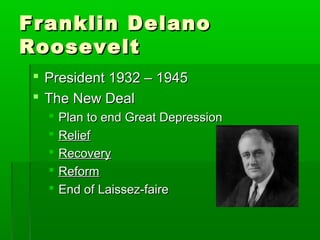
Franklin Delano
Roosevelt
  President 1932 – 1945
  The New Deal
      Plan to end Great Depression
      Relief
      Recovery
      Reform
      End of Laissez-faire
Relief
 1933 Bank Holiday to stop collapse
 Federal Emergency Relief Act (FERA)
   Relief to unemployed
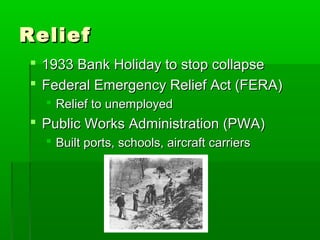
 Public Works Administration (PWA)
   Built ports, schools, aircraft carriers
Relief

  Civilian Conservation Corps (CCC)
    Planted trees, built bridges, parks
  Works Progress Administration (WPA)
    Built hospitals, schools, parks, airports
  Tennessee Valley Authority (TVA)
    Built dams, cheap electric power
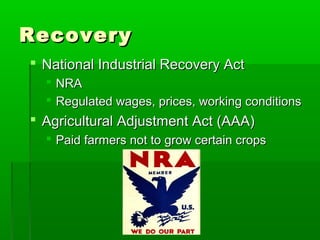
Recovery
 National Industrial Recovery Act
   NRA
   Regulated wages, prices, working conditions
 Agricultural Adjustment Act (AAA)
   Paid farmers not to grow certain crops
Reform
 Federal Deposit Insurance Corporation
   FDIC
   Insured savings accounts
 Securities Exchange Act (SEC)
   Regulated stock exchanges
 Social Security Act (SSA)
   Pensions for elderly, unemployed,
    handicapped
New Deal Effects

  Labor
      Roosevelt takes pro-labor approach
      Unions increase
  Native Americans
    Indian Reorganization Act
         Attempt to restore Native American culture
New Deal Effects

  African Americans
    Little benefit
  Latinos
    Many suffered – worked in agriculture
  Women
    Little help in workplace
Controversy

 Supreme Court finds many laws
  unconstitutional
   National Recovery Act
     Congress can’t regulate intrastate commerce
   Agricultural Adjustment Act
     Agriculture is a local matter not an interstate
      matter
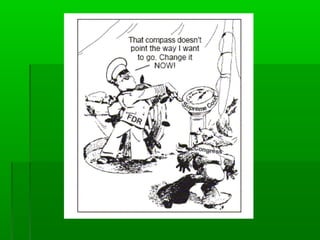
Court-Packing Plan

  Supreme Court continued to veto
   legislation
  FDR asked congress to allow him to
   increase number of justices from 9 to 15
  Not allowed – separation of powers
Political Opposition

  Business
    Claimed FDR and government had too much
     power
  Communists, Socialists gain support
New Deal Evaluation

  Does not end Great Depression
    WWII does
  Did help some people
  Gave more power to president and
   government
    More involvement in business and social life

Great depression ppt presentation

  • 1.
  • 3.
    Causes  Buying oncredit  Government policies  Not regulating stock market or businesses  Weak international economy  Other countries still recovering from WWI  The Stock Market Crash
  • 4.
    Stock Market Crash Buying On Margin  Making down payments and borrowing the rest  October 29, 1929 – Black Tuesday  Rapid selling of stocks  values drop $14 billion
  • 6.
    DEPRESSION SPREADS  Millionsof people lost their jobs.  Banks recalled loans.  People take money out of banks  Banks can’t pay back money so they close  People lose money in banks
  • 7.
    THE DUST BOWL Drought and dust storms in the Midwest forced many farmers to leave their land and migrate west in search of jobs.
  • 11.
    Impact  Unemployment –25%  Rural Life  Farmers Suffer  Dust Bowl – severe drought  “Okies” – farmers who moved to California  Less Leisure Activities  Movies, sports, etc.
  • 12.
    Hoover’s Response  Policiesto aid businesses  Business recovers jobs people recover  Reconstruction Finance Corporation  Gave money to businesses  Stopped payments of war debts
  • 13.
  • 14.
    The Bonus March 20,000 jobless WWI veterans go to Washington DC and demand bonus for war  Hoover sends in army  Destroys popularity
  • 16.
    Franklin Delano Roosevelt President 1932 – 1945  The New Deal  Plan to end Great Depression  Relief  Recovery  Reform  End of Laissez-faire
  • 17.
    Relief  1933 BankHoliday to stop collapse  Federal Emergency Relief Act (FERA)  Relief to unemployed  Public Works Administration (PWA)  Built ports, schools, aircraft carriers
  • 18.
    Relief  CivilianConservation Corps (CCC)  Planted trees, built bridges, parks  Works Progress Administration (WPA)  Built hospitals, schools, parks, airports  Tennessee Valley Authority (TVA)  Built dams, cheap electric power
  • 19.
    Recovery  National IndustrialRecovery Act  NRA  Regulated wages, prices, working conditions  Agricultural Adjustment Act (AAA)  Paid farmers not to grow certain crops
  • 20.
    Reform  Federal DepositInsurance Corporation  FDIC  Insured savings accounts  Securities Exchange Act (SEC)  Regulated stock exchanges  Social Security Act (SSA)  Pensions for elderly, unemployed, handicapped
  • 21.
    New Deal Effects  Labor  Roosevelt takes pro-labor approach  Unions increase  Native Americans  Indian Reorganization Act  Attempt to restore Native American culture
  • 22.
    New Deal Effects  African Americans  Little benefit  Latinos  Many suffered – worked in agriculture  Women  Little help in workplace
  • 23.
    Controversy  Supreme Courtfinds many laws unconstitutional  National Recovery Act  Congress can’t regulate intrastate commerce  Agricultural Adjustment Act  Agriculture is a local matter not an interstate matter
  • 24.
    Court-Packing Plan Supreme Court continued to veto legislation  FDR asked congress to allow him to increase number of justices from 9 to 15  Not allowed – separation of powers
  • 26.
    Political Opposition Business  Claimed FDR and government had too much power  Communists, Socialists gain support
  • 27.
    New Deal Evaluation  Does not end Great Depression  WWII does  Did help some people  Gave more power to president and government  More involvement in business and social life