AMERICA AND WORLD      Chapter 22
WAR II (1941 – 1945)
GOOD NEIGHBOR POLICY

US continued to dominate Latin America
 politically and economically
Beginning to rely less on direct military
 intervention
FDR differs from his predecessors by
 substituting cooperation for coercion
“US would be a good neighbor to Latin
 America”
 ď‚§However, domination of this area would remain
  unchallenged
 ď‚§The Monroe Doctrine still lived on in many ways
U.S. ISOLATIONISM

 Business-minded people in America did not want to give up
  profitable overseas markets like Germany and Japan just
  because Europe was hacked of f
 US refuses to recognize the Soviet Union and quarrels with
  England and France over repayment of loans they had
  received in World War I
U.S. ISOLATIONISM

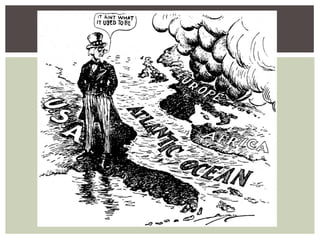
 US was too afraid to get involved in another “meaningless
  war” after World War I
 Neutrality Acts typified the 1930s as the US was gripped with
  depression and scared to commit to its allies in Europe
WAR IN EUROPE

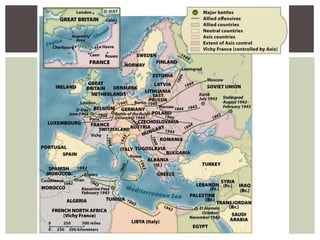
 Germany invaded Poland on 1 September 1939
 For nearly two years, Britain stood virtually alone in fighting
  Germany
 Battle of Britain
  ď‚§   First major campaign in World War II
  ď‚§   Fought entirely by air forces
  ď‚§   Britain prevailed against almost overwhelming odds
     Germany’s loss was the significant and was one of the first turning
      points in the war
 FDR wanted to help Britain, but public support limited him
THE ROAD TO INTERVENTION

FDR runs for an unprecedented third
 term as he pushes the country to “keep
 someone with experience” in office if the
 US gets brought into the war (1940)
Lend Lease Act (1941)
 ď‚§US begins shipments of war material to Great
  Britain
 ď‚§Also freezes Japanese assets
THE ROAD TO INTERVENTION

Atlantic Charter
 ď‚§FDR signs on with his good friend, British
  Prime Minister Winston Churchill
 ď‚§The blueprint for the world after WWII; sets
  the foundation for international treaties and
  organizations that would bring the world back
  to its feet economically
WAR BREAKS OUT IN EUROPE

Germany invades Poland on 1 September
 1939
 ď‚§German Blitzkrieg (Lightning War) appeared
  unstoppable
 It was definitely getting Britain’s attention
For almost two years, Britain is alone in the
 fight against German aggression
FDR wants to help Britain, but public
 opinion in the US greatly limited him during
 this time period
U.S. RELATIONS WITH JAPAN

Japan had long been interested in an
 Asian empire and occupied Korea and
 key parts of Manchuria before 1920
When Japan sought to gain supremacy in
 China, the US protested with the “Open
 Door Policy”
U.S. RELATIONS WITH JAPAN

Open Door Policy
 ď‚§Basically stated that the US and all European
  nations could trade with China, free to use their
  treaty ports
 ď‚§Within the spheres of influence in China
 China’s power as a nation is declining during this
  period
 ď‚§The theory had been that trade was a basic right
  of all nations, even though sovereign countries
  could counter with isolationist attitudes
U.S. RELATIONS WITH JAPAN

Open Door Policy
 ď‚§Isolationism would essentially be unnatural
  for trade and communication; based in the
  arguments of John Locke
 ď‚§Ironic as the US had no problem promoting
  isolationism during the Great Depression
U.S. RELATIONS WITH JAPAN

Japan’s utter disregard of the Open Door
 policy
 ď‚§Leads to the Washington Conference in 1922
 ď‚§The conference again declares the
  independence of China via the Open Door
  Policy; helped through the “Nine Power Treaty”
   ď‚§ Yet the treaty lacked any enforcement regulations
U.S. RELATIONS WITH JAPAN

Japan’s utter disregard of the Open Door
 policy
 ď‚§Japan violated these agreements by seizing
  Manchuria, but the US did not respond
 ď‚§After war breaks out in Europe, the US begins
  to realize where Japan stands…taking sides
  with the fascists
 ď‚§US responds by limiting exports to Japan
   ď‚§ Strategic materials such as oil
U.S. RELATIONS WITH JAPAN

Japan’s utter disregard of the Open Door
 policy
 ď‚§This did not restrain Japan, but make the
  country angry
   ď‚§ So, they side with Germany and Italy
   ď‚§ Push further into Indochina
U.S. RELATIONS WITH JAPAN

The US response – end all trade with
 Japan
 ď‚§Sounds a lot like how we got into the War of
  1812
 ď‚§Japan tries to negotiate with the US
   ď‚§ Plan B was to attack if their demands were not granted
U.S. RELATIONS WITH JAPAN

The US response – end all trade with
 Japan
 ď‚§Japan wanted a large stake in China for
  restoration of normal trade patterns
 ď‚§The US demanded that Japan withdraw its
  troops
 ď‚§Negotiation fails and Japan attacks
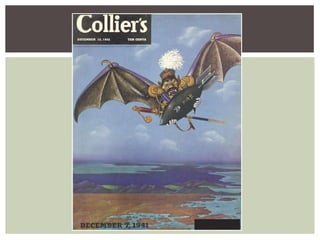
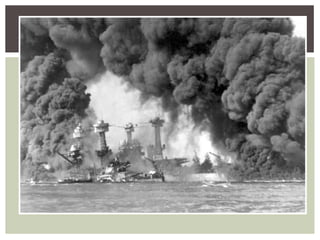
PEARL HARBOR

December 7, 1941
“FDR’s Date that Will Live in Infamy”
This attack in the Pacific greatly changes
 Americans’ minds about neutrality
everyone’s angry and ready to go to war
PEARL HARBOR

FDR finally asks for a declaration of war
The US suffered significant early defeats
 after entering the war because the
 country was unprepared for a naval and
 air war halfway across the world
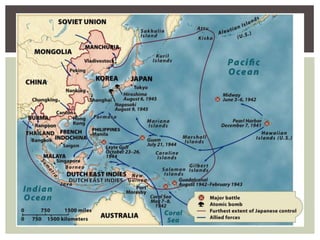
THE WAR IN THE PACIFIC

 The first few months of American involvement witnessed an
  unbroken string of military disasters
 The tide turned with the battles at Coral Sea and Midway
  ď‚§ May and June 1942
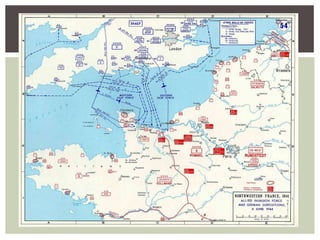
D-DAY

6 June 1944
Allied invasion of Normandy, France
 (Operation Neptune)
2 phases of Allied attack
 ď‚§Air assault by the Americans, British, and
  French shortly after midnight
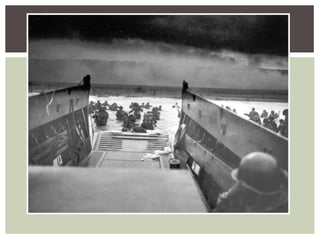
 ď‚§Amphibious landing of Allied infantry and
  armored divisions on the coast of Normandy,
  France at 0630
D-DAY

Significance
 ď‚§The absolute largest amphibious invasion of
  all time (175,000 troops)
 ď‚§195,700 Naval personnel involved overall
 ď‚§Established the much needed second front in
  Western Europe
   ď‚§ A majority of the fighting was fought initially in North Africa and Italy

Wwii

  • 1.
    AMERICA AND WORLD Chapter 22 WAR II (1941 – 1945)
  • 3.
    GOOD NEIGHBOR POLICY UScontinued to dominate Latin America politically and economically Beginning to rely less on direct military intervention FDR differs from his predecessors by substituting cooperation for coercion “US would be a good neighbor to Latin America” However, domination of this area would remain unchallenged The Monroe Doctrine still lived on in many ways
  • 4.
    U.S. ISOLATIONISM  Business-mindedpeople in America did not want to give up profitable overseas markets like Germany and Japan just because Europe was hacked of f  US refuses to recognize the Soviet Union and quarrels with England and France over repayment of loans they had received in World War I
  • 5.
    U.S. ISOLATIONISM  USwas too afraid to get involved in another “meaningless war” after World War I  Neutrality Acts typified the 1930s as the US was gripped with depression and scared to commit to its allies in Europe
  • 6.
    WAR IN EUROPE Germany invaded Poland on 1 September 1939  For nearly two years, Britain stood virtually alone in fighting Germany  Battle of Britain  First major campaign in World War II  Fought entirely by air forces  Britain prevailed against almost overwhelming odds  Germany’s loss was the significant and was one of the first turning points in the war  FDR wanted to help Britain, but public support limited him
  • 7.
    THE ROAD TOINTERVENTION FDR runs for an unprecedented third term as he pushes the country to “keep someone with experience” in office if the US gets brought into the war (1940) Lend Lease Act (1941) US begins shipments of war material to Great Britain Also freezes Japanese assets
  • 8.
    THE ROAD TOINTERVENTION Atlantic Charter FDR signs on with his good friend, British Prime Minister Winston Churchill The blueprint for the world after WWII; sets the foundation for international treaties and organizations that would bring the world back to its feet economically
  • 10.
    WAR BREAKS OUTIN EUROPE Germany invades Poland on 1 September 1939 German Blitzkrieg (Lightning War) appeared unstoppable It was definitely getting Britain’s attention For almost two years, Britain is alone in the fight against German aggression FDR wants to help Britain, but public opinion in the US greatly limited him during this time period
  • 12.
    U.S. RELATIONS WITHJAPAN Japan had long been interested in an Asian empire and occupied Korea and key parts of Manchuria before 1920 When Japan sought to gain supremacy in China, the US protested with the “Open Door Policy”
  • 13.
    U.S. RELATIONS WITHJAPAN Open Door Policy Basically stated that the US and all European nations could trade with China, free to use their treaty ports Within the spheres of influence in China China’s power as a nation is declining during this period The theory had been that trade was a basic right of all nations, even though sovereign countries could counter with isolationist attitudes
  • 14.
    U.S. RELATIONS WITHJAPAN Open Door Policy Isolationism would essentially be unnatural for trade and communication; based in the arguments of John Locke Ironic as the US had no problem promoting isolationism during the Great Depression
  • 15.
    U.S. RELATIONS WITHJAPAN Japan’s utter disregard of the Open Door policy Leads to the Washington Conference in 1922 The conference again declares the independence of China via the Open Door Policy; helped through the “Nine Power Treaty”  Yet the treaty lacked any enforcement regulations
  • 16.
    U.S. RELATIONS WITHJAPAN Japan’s utter disregard of the Open Door policy Japan violated these agreements by seizing Manchuria, but the US did not respond After war breaks out in Europe, the US begins to realize where Japan stands…taking sides with the fascists US responds by limiting exports to Japan  Strategic materials such as oil
  • 17.
    U.S. RELATIONS WITHJAPAN Japan’s utter disregard of the Open Door policy This did not restrain Japan, but make the country angry  So, they side with Germany and Italy  Push further into Indochina
  • 18.
    U.S. RELATIONS WITHJAPAN The US response – end all trade with Japan Sounds a lot like how we got into the War of 1812 Japan tries to negotiate with the US  Plan B was to attack if their demands were not granted
  • 19.
    U.S. RELATIONS WITHJAPAN The US response – end all trade with Japan Japan wanted a large stake in China for restoration of normal trade patterns The US demanded that Japan withdraw its troops Negotiation fails and Japan attacks
  • 21.
    PEARL HARBOR December 7,1941 “FDR’s Date that Will Live in Infamy” This attack in the Pacific greatly changes Americans’ minds about neutrality everyone’s angry and ready to go to war
  • 23.
    PEARL HARBOR FDR finallyasks for a declaration of war The US suffered significant early defeats after entering the war because the country was unprepared for a naval and air war halfway across the world
  • 24.
    THE WAR INTHE PACIFIC  The first few months of American involvement witnessed an unbroken string of military disasters  The tide turned with the battles at Coral Sea and Midway  May and June 1942
  • 26.
    D-DAY 6 June 1944 Alliedinvasion of Normandy, France (Operation Neptune) 2 phases of Allied attack Air assault by the Americans, British, and French shortly after midnight Amphibious landing of Allied infantry and armored divisions on the coast of Normandy, France at 0630
  • 29.
    D-DAY Significance The absolutelargest amphibious invasion of all time (175,000 troops) 195,700 Naval personnel involved overall Established the much needed second front in Western Europe  A majority of the fighting was fought initially in North Africa and Italy