Grammar BookBy: Tabitha Cruickshank
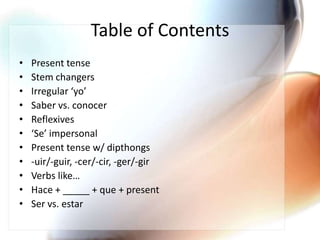
Table of ContentsPresent tenseStem changersIrregular ‘yo’Saber vs. conocerReflexives‘Se’ impersonalPresent tense w/ dipthongs-uir/-guir, -cer/-cir, -ger/-girVerbs like…Hace + _____ + que + presentSer vs. estar
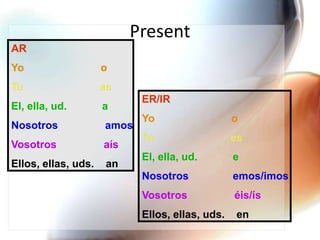
PresentARYo                          oTu                          asEl, ella, ud.            aNosotros                amosVosotros                aísEllos, ellas, uds.    anER/IRYo                          oTu                          esEl, ella, ud.            eNosotros               emos/imosVosotros                éis/ísEllos, ellas, uds.    en
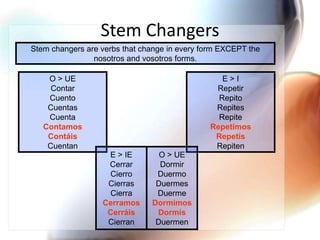
Stem ChangersStem changers are verbs that change in every form EXCEPT the nosotros and vosotros forms.E > IRepetirRepitoRepitesRepiteRepetimosRepetísRepitenO > UEContarCuentoCuentasCuentaContamosContáisCuentanE > IECerrarCierroCierrasCierraCerramosCerráisCierranO > UEDormirDuermoDuermesDuermeDormimosDormísDuermen
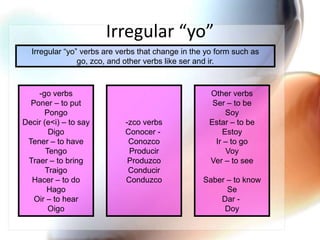
Irregular “yo”Irregular “yo” verbs are verbs that change in the yo form such as go, zco, and other verbs like ser and ir.-go verbsPoner – to putPongoDecir (e<i) – to sayDigoTener – to haveTengoTraer – to bringTraigoHacer – to doHagoOir – to hearOigo-zco verbsConocer - ConozcoProducirProduzcoConducirConduzcoOther verbsSer – to beSoyEstar – to beEstoyIr – to goVoyVer – to seeSaber – to knowSeDar - Doy
Saber vs. Conocer
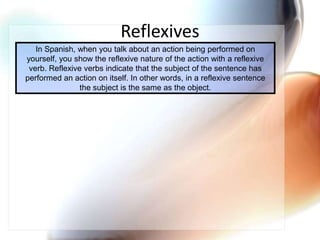
ReflexivesIn Spanish, when you talk about an action being performed on yourself, you show the reflexive nature of the action with a reflexive verb. Reflexive verbs indicate that the subject of the sentence has performed an action on itself. In other words, in a reflexive sentence the subject is the same as the object.
Se impersonal
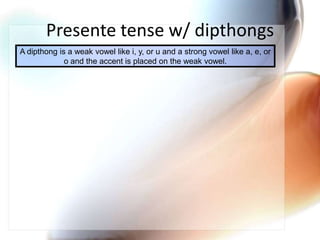
Presente tense w/ dipthongsA dipthong is a weak vowel like i, y, or u and a strong vowel like a, e, or o and the accent is placed on the weak vowel.
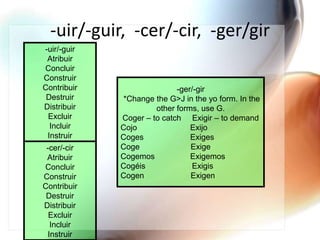
-uir/-guir,  -cer/-cir,  -ger/gir-uir/-guirAtribuir ConcluirConstruirContribuirDestruirDistribuir Excluir Incluir Instruir-ger/-gir *Change the G>J in the yo form. In the other forms, use G.Coger – to catch     Exigir – to demandCojo                        ExijoCoges                     ExigesCoge                       ExigeCogemos                ExigemosCogéis                     ExigisCogen                     Exigen-cer/-cirAtribuir ConcluirConstruirContribuirDestruirDistribuir Excluir Incluir Instruir
verbs like...
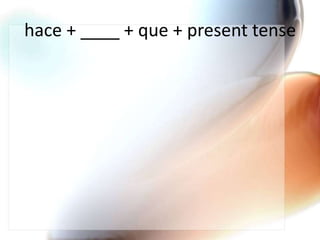
hace + ____ + que + present tense
Ser vs. Estar

Grammar book

  • 1.
  • 2.
    Table of ContentsPresenttenseStem changersIrregular ‘yo’Saber vs. conocerReflexives‘Se’ impersonalPresent tense w/ dipthongs-uir/-guir, -cer/-cir, -ger/-girVerbs like…Hace + _____ + que + presentSer vs. estar
  • 3.
    PresentARYo oTu asEl, ella, ud. aNosotros amosVosotros aísEllos, ellas, uds. anER/IRYo oTu esEl, ella, ud. eNosotros emos/imosVosotros éis/ísEllos, ellas, uds. en
  • 4.
    Stem ChangersStem changersare verbs that change in every form EXCEPT the nosotros and vosotros forms.E > IRepetirRepitoRepitesRepiteRepetimosRepetísRepitenO > UEContarCuentoCuentasCuentaContamosContáisCuentanE > IECerrarCierroCierrasCierraCerramosCerráisCierranO > UEDormirDuermoDuermesDuermeDormimosDormísDuermen
  • 5.
    Irregular “yo”Irregular “yo”verbs are verbs that change in the yo form such as go, zco, and other verbs like ser and ir.-go verbsPoner – to putPongoDecir (e<i) – to sayDigoTener – to haveTengoTraer – to bringTraigoHacer – to doHagoOir – to hearOigo-zco verbsConocer - ConozcoProducirProduzcoConducirConduzcoOther verbsSer – to beSoyEstar – to beEstoyIr – to goVoyVer – to seeSaber – to knowSeDar - Doy
  • 6.
  • 7.
    ReflexivesIn Spanish, whenyou talk about an action being performed on yourself, you show the reflexive nature of the action with a reflexive verb. Reflexive verbs indicate that the subject of the sentence has performed an action on itself. In other words, in a reflexive sentence the subject is the same as the object.
  • 8.
  • 9.
    Presente tense w/dipthongsA dipthong is a weak vowel like i, y, or u and a strong vowel like a, e, or o and the accent is placed on the weak vowel.
  • 10.
    -uir/-guir,  -cer/-cir,  -ger/gir-uir/-guirAtribuirConcluirConstruirContribuirDestruirDistribuir Excluir Incluir Instruir-ger/-gir *Change the G>J in the yo form. In the other forms, use G.Coger – to catch Exigir – to demandCojo ExijoCoges ExigesCoge ExigeCogemos ExigemosCogéis ExigisCogen Exigen-cer/-cirAtribuir ConcluirConstruirContribuirDestruirDistribuir Excluir Incluir Instruir
  • 11.
  • 12.
    hace + ____+ que + present tense
  • 13.