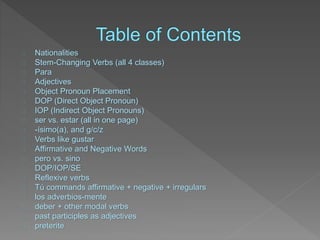
Nationalities 
Stem-Changing Verbs (all 4 classes) 
Para 
Adjectives 
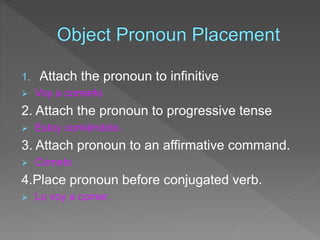
Object Pronoun Placement 
DOP (Direct Object Pronoun) 
IOP (Indirect Object Pronouns) 
ser vs. estar (all in one page) 
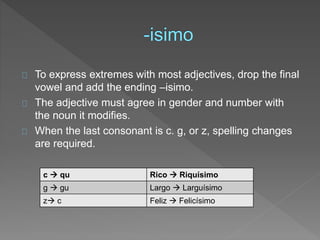
-ísimo(a), and g/c/z 
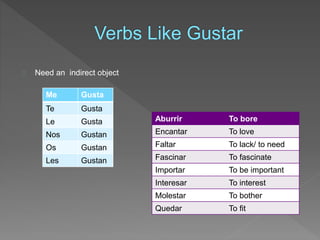
Verbs like gustar 
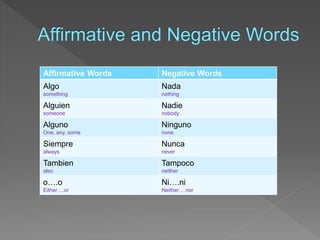
Affirmative and Negative Words 
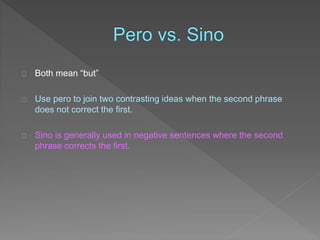
pero vs. sino 
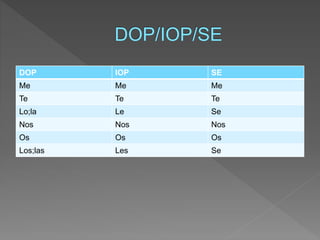
DOP/IOP/SE 
Reflexive verbs 
Tú commands affirmative + negative + irregulars 
los adverbios-mente 
deber + other modal verbs 
past participles as adjectives 
preterite
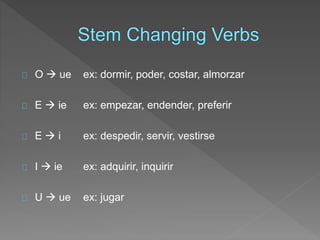
O  ue ex: dormir, poder, costar, almorzar 
E  ie ex: empezar, endender, preferir 
E  i ex: despedir, servir, vestirse 
I  ie ex: adquirir, inquirir 
U  ue ex: jugar
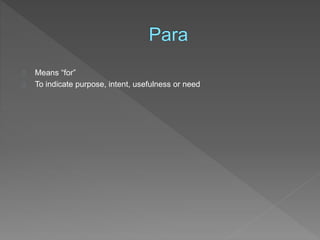
Means “for” 
To indicate purpose, intent, usefulness or need
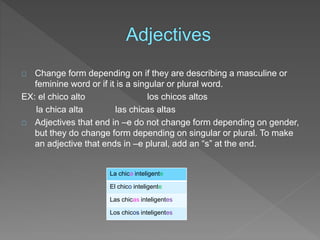
Change form depending on if they are describing a masculine or 
feminine word or if it is a singular or plural word. 
EX: el chico alto los chicos altos 
la chica alta las chicas altas 
Adjectives that end in –e do not change form depending on gender, 
but they do change form depending on singular or plural. To make 
an adjective that ends in –e plural, add an “s” at the end. 
La chica inteligente 
El chico inteligente 
Las chicas inteligentes 
Los chicos inteligentes
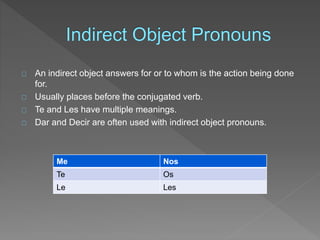
An indirect object answers for or to whom is the action being done 
for. 
Usually places before the conjugated verb. 
Te and Les have multiple meanings. 
Dar and Decir are often used with indirect object pronouns. 
Me Nos 
Te Os 
Le Les
1. Attach the pronoun to infinitive 
 Voy a comerlo. 
2. Attach the pronoun to progressive tense 
 Estoy comiéndolo. 
3. Attach pronoun to an affirmative command. 
 Cómelo 
4.Place pronoun before conjugated verb. 
 Lo voy a comer.
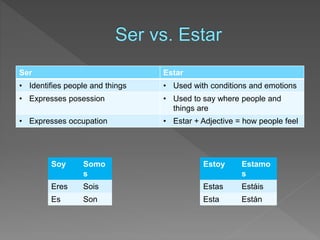
Ser Estar 
• Identifies people and things • Used with conditions and emotions 
• Expresses posession • Used to say where people and 
things are 
• Expresses occupation • Estar + Adjective = how people feel 
Soy Somo 
s 
Eres Sois 
Es Son 
Estoy Estamo 
s 
Estas Estáis 
Esta Están
To express extremes with most adjectives, drop the final 
vowel and add the ending –isimo. 
The adjective must agree in gender and number with 
the noun it modifies. 
When the last consonant is c. g, or z, spelling changes 
are required. 
c  qu Rico  Riquísimo 
g  gu Largo  Larguísimo 
z c Feliz  Felicísimo
Need an indirect object 
Me Gusta 
Te Gusta 
Le Gusta 
Nos Gustan 
Os Gustan 
Les Gustan 
Aburrir To bore 
Encantar To love 
Faltar To lack/ to need 
Fascinar To fascinate 
Importar To be important 
Interesar To interest 
Molestar To bother 
Quedar To fit
Affirmative Words Negative Words 
Algo 
Nada 
something 
nothing 
Alguien 
someone 
Nadie 
nobody 
Alguno 
One, any, some 
Ninguno 
none 
Siempre 
always 
Nunca 
never 
Tambien 
also 
Tampoco 
neither 
o….o 
Either….or 
Ni….ni 
Neither….nor
Both mean “but” 
Use pero to join two contrasting ideas when the second phrase 
does not correct the first. 
Sino is generally used in negative sentences where the second 
phrase corrects the first.
DOP IOP SE 
Me Me Me 
Te Te Te 
Lo;la Le Se 
Nos Nos Nos 
Os Os Os 
Los;las Les Se
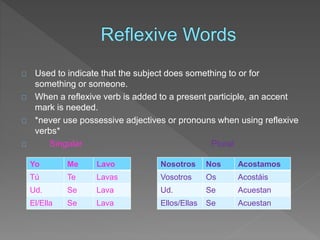
Used to indicate that the subject does something to or for 
something or someone. 
When a reflexive verb is added to a present participle, an accent 
mark is needed. 
*never use possessive adjectives or pronouns when using reflexive 
verbs* 
Singular Plural 
Yo Me Lavo 
Tú Te Lavas 
Ud. Se Lava 
El/Ella Se Lava 
Nosotros Nos Acostamos 
Vosotros Os Acostáis 
Ud. Se Acuestan 
Ellos/Ellas Se Acuestan
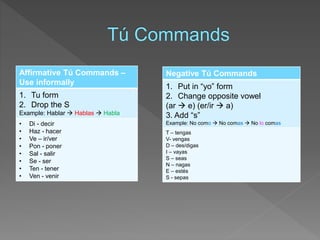
Affirmative Tú Commands – 
Use informally 
1. Tu form 
2. Drop the S 
Example: Hablar  Hablas  Habla 
• Di - decir 
• Haz - hacer 
• Ve – ir/ver 
• Pon - poner 
• Sal - salir 
• Se - ser 
• Ten - tener 
• Ven - venir 
Negative Tú Commands 
1. Put in “yo” form 
2. Change opposite vowel 
(ar  e) (er/ir  a) 
3. Add “s” 
Example: No como  No comas  No lo comas 
T – tengas 
V- vengas 
D – des/digas 
I – vayas 
S – seas 
N – nagas 
E – estés 
S - sepas
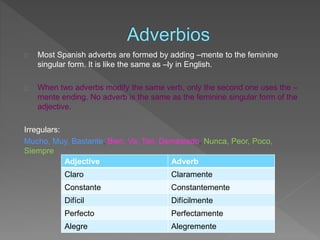
Most Spanish adverbs are formed by adding –mente to the feminine 
singular form. It is like the same as –ly in English. 
When two adverbs modify the same verb, only the second one uses the – 
mente ending. No adverb is the same as the feminine singular form of the 
adjective. 
Irregulars: 
Mucho, Muy, Bastante, Bien, Va, Tan, Demasiado, Nunca, Peor, Poco, 
Siempre 
Adjective Adverb 
Claro Claramente 
Constante Constantemente 
Difícil Difícilmente 
Perfecto Perfectamente 
Alegre Alegremente
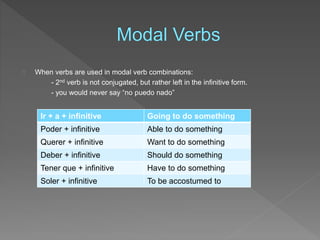
When verbs are used in modal verb combinations: 
- 2nd verb is not conjugated, but rather left in the infinitive form. 
- you would never say “no puedo nado” 
Ir + a + infinitive Going to do something 
Poder + infinitive Able to do something 
Querer + infinitive Want to do something 
Deber + infinitive Should do something 
Tener que + infinitive Have to do something 
Soler + infinitive To be accostumed to
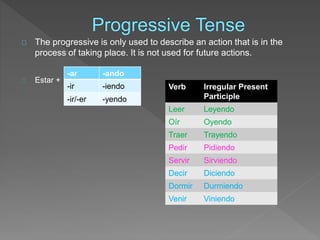
The progressive is only used to describe an action that is in the 
process of taking place. It is not used for future actions. 
Estar + 
-ar -ando 
-ir -iendo 
-ir/-er -yendo 
Verb Irregular Present 
Participle 
Leer Leyendo 
Oír Oyendo 
Traer Trayendo 
Pedir Pidiendo 
Servir Sirviendo 
Decir Diciendo 
Dormir Durmiendo 
Venir Viniendo
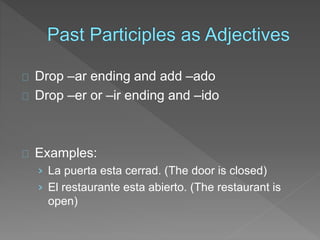
Drop –ar ending and add –ado 
Drop –er or –ir ending and –ido 
Examples: 
› La puerta esta cerrad. (The door is closed) 
› El restaurante esta abierto. (The restaurant is 
open)
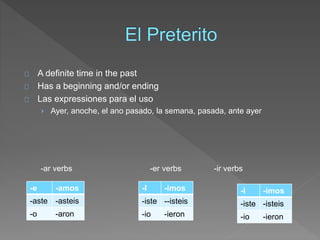
A definite time in the past 
Has a beginning and/or ending 
Las expressiones para el uso 
› Ayer, anoche, el ano pasado, la semana, pasada, ante ayer 
-ar verbs -er verbs -ir verbs 
-e -amos 
-aste -asteis 
-o -aron 
-I -imos 
-iste --isteis 
-io -ieron 
-I -imos 
-iste -isteis 
-io -ieron

Grammar book

  • 2.
    Nationalities Stem-Changing Verbs(all 4 classes) Para Adjectives Object Pronoun Placement DOP (Direct Object Pronoun) IOP (Indirect Object Pronouns) ser vs. estar (all in one page) -ísimo(a), and g/c/z Verbs like gustar Affirmative and Negative Words pero vs. sino DOP/IOP/SE Reflexive verbs Tú commands affirmative + negative + irregulars los adverbios-mente deber + other modal verbs past participles as adjectives preterite
  • 4.
    O  ueex: dormir, poder, costar, almorzar E  ie ex: empezar, endender, preferir E  i ex: despedir, servir, vestirse I  ie ex: adquirir, inquirir U  ue ex: jugar
  • 5.
    Means “for” Toindicate purpose, intent, usefulness or need
  • 6.
    Change form dependingon if they are describing a masculine or feminine word or if it is a singular or plural word. EX: el chico alto los chicos altos la chica alta las chicas altas Adjectives that end in –e do not change form depending on gender, but they do change form depending on singular or plural. To make an adjective that ends in –e plural, add an “s” at the end. La chica inteligente El chico inteligente Las chicas inteligentes Los chicos inteligentes
  • 7.
    An indirect objectanswers for or to whom is the action being done for. Usually places before the conjugated verb. Te and Les have multiple meanings. Dar and Decir are often used with indirect object pronouns. Me Nos Te Os Le Les
  • 8.
    1. Attach thepronoun to infinitive  Voy a comerlo. 2. Attach the pronoun to progressive tense  Estoy comiéndolo. 3. Attach pronoun to an affirmative command.  Cómelo 4.Place pronoun before conjugated verb.  Lo voy a comer.
  • 9.
    Ser Estar •Identifies people and things • Used with conditions and emotions • Expresses posession • Used to say where people and things are • Expresses occupation • Estar + Adjective = how people feel Soy Somo s Eres Sois Es Son Estoy Estamo s Estas Estáis Esta Están
  • 10.
    To express extremeswith most adjectives, drop the final vowel and add the ending –isimo. The adjective must agree in gender and number with the noun it modifies. When the last consonant is c. g, or z, spelling changes are required. c  qu Rico  Riquísimo g  gu Largo  Larguísimo z c Feliz  Felicísimo
  • 11.
    Need an indirectobject Me Gusta Te Gusta Le Gusta Nos Gustan Os Gustan Les Gustan Aburrir To bore Encantar To love Faltar To lack/ to need Fascinar To fascinate Importar To be important Interesar To interest Molestar To bother Quedar To fit
  • 12.
    Affirmative Words NegativeWords Algo Nada something nothing Alguien someone Nadie nobody Alguno One, any, some Ninguno none Siempre always Nunca never Tambien also Tampoco neither o….o Either….or Ni….ni Neither….nor
  • 13.
    Both mean “but” Use pero to join two contrasting ideas when the second phrase does not correct the first. Sino is generally used in negative sentences where the second phrase corrects the first.
  • 14.
    DOP IOP SE Me Me Me Te Te Te Lo;la Le Se Nos Nos Nos Os Os Os Los;las Les Se
  • 15.
    Used to indicatethat the subject does something to or for something or someone. When a reflexive verb is added to a present participle, an accent mark is needed. *never use possessive adjectives or pronouns when using reflexive verbs* Singular Plural Yo Me Lavo Tú Te Lavas Ud. Se Lava El/Ella Se Lava Nosotros Nos Acostamos Vosotros Os Acostáis Ud. Se Acuestan Ellos/Ellas Se Acuestan
  • 16.
    Affirmative Tú Commands– Use informally 1. Tu form 2. Drop the S Example: Hablar  Hablas  Habla • Di - decir • Haz - hacer • Ve – ir/ver • Pon - poner • Sal - salir • Se - ser • Ten - tener • Ven - venir Negative Tú Commands 1. Put in “yo” form 2. Change opposite vowel (ar  e) (er/ir  a) 3. Add “s” Example: No como  No comas  No lo comas T – tengas V- vengas D – des/digas I – vayas S – seas N – nagas E – estés S - sepas
  • 17.
    Most Spanish adverbsare formed by adding –mente to the feminine singular form. It is like the same as –ly in English. When two adverbs modify the same verb, only the second one uses the – mente ending. No adverb is the same as the feminine singular form of the adjective. Irregulars: Mucho, Muy, Bastante, Bien, Va, Tan, Demasiado, Nunca, Peor, Poco, Siempre Adjective Adverb Claro Claramente Constante Constantemente Difícil Difícilmente Perfecto Perfectamente Alegre Alegremente
  • 18.
    When verbs areused in modal verb combinations: - 2nd verb is not conjugated, but rather left in the infinitive form. - you would never say “no puedo nado” Ir + a + infinitive Going to do something Poder + infinitive Able to do something Querer + infinitive Want to do something Deber + infinitive Should do something Tener que + infinitive Have to do something Soler + infinitive To be accostumed to
  • 19.
    The progressive isonly used to describe an action that is in the process of taking place. It is not used for future actions. Estar + -ar -ando -ir -iendo -ir/-er -yendo Verb Irregular Present Participle Leer Leyendo Oír Oyendo Traer Trayendo Pedir Pidiendo Servir Sirviendo Decir Diciendo Dormir Durmiendo Venir Viniendo
  • 20.
    Drop –ar endingand add –ado Drop –er or –ir ending and –ido Examples: › La puerta esta cerrad. (The door is closed) › El restaurante esta abierto. (The restaurant is open)
  • 21.
    A definite timein the past Has a beginning and/or ending Las expressiones para el uso › Ayer, anoche, el ano pasado, la semana, pasada, ante ayer -ar verbs -er verbs -ir verbs -e -amos -aste -asteis -o -aron -I -imos -iste --isteis -io -ieron -I -imos -iste -isteis -io -ieron