All about Verbs!
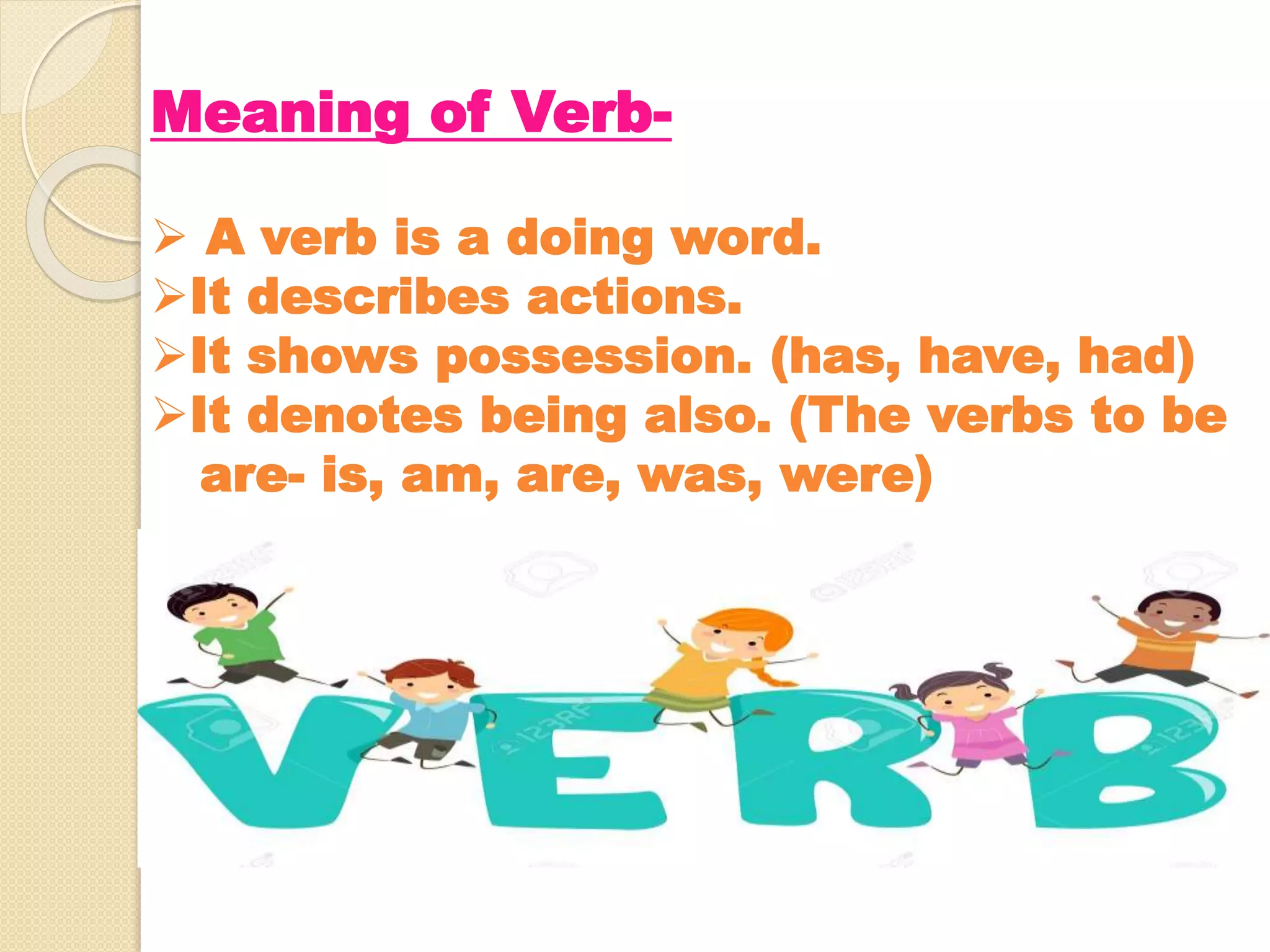
Meaning of Verb-
 A verb is a doing word.
It describes actions.
It shows possession. (has, have, had)
It denotes being also. (The verbs to be
are- is, am, are, was, were)
Kinds of Verbs
1. Transitive Verb- A verb that requires
an object to complete its meaning is
called Transitive Verb.
My mother washes clothes.
Alice made a doll.
2. Intransitive Verb- A verb that doesn’t
require an object to complete its
meaning is called Intransitive Verb.
The baby slept.
The girl smiled.
Transitive Verb and Intransitive Verb
Double Object
Direct Object & Indirect Object
 Some Transitive Verbs take two objects.
 A Direct Object is usually the name of
some thing.
 An Indirect Object is usually the name of
some person.
Eg-
Roshan gave his friend a video game.
IO DO
She gave a rupee to him.
DO IO
Danish told us a funny story.
IO DO
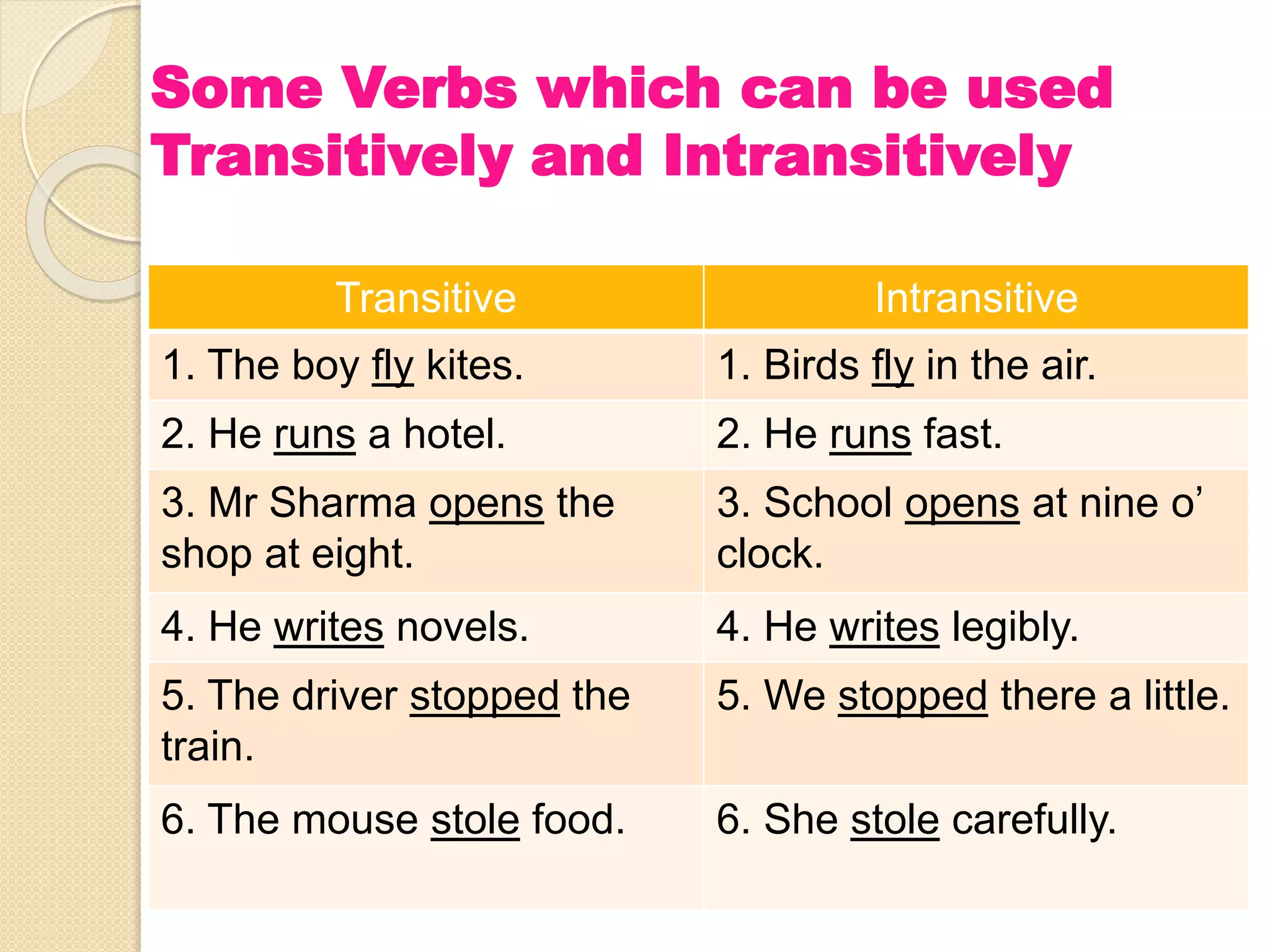
Some Verbs which can be used
Transitively and Intransitively
Transitive Intransitive
1. The boy fly kites. 1. Birds fly in the air.
2. He runs a hotel. 2. He runs fast.
3. Mr Sharma opens the
shop at eight.
3. School opens at nine o’
clock.
4. He writes novels. 4. He writes legibly.
5. The driver stopped the
train.
5. We stopped there a little.
6. The mouse stole food. 6. She stole carefully.
3. Verb to be
 Verb to be (is, am, are, was, were, will be,
shall be, appear, seem and look) are Verbs
of Incomplete Prediction.
 They need other words or a phrase to
complete their meaning. It is called
Complement.
 A Complement completes the Predicate.
Examples-
The dog is (what?) an animal. (c)
The man seems (what?) tired. (c)
He became (what?) a hero. (c)
Main parts of Verb
1. The Present Tense
2. The Past Tense
3. The Future Tense
Examples-
 Present
Ema asks questions all the time.
 Past
Ema asked questions all the time.
 Future
Ema will ask questions all the time.
Forms of Verb
Basic Verb
(V1)
Present
Tense (V1)
Past Tense
(V2)
Past
Participle
(V3)
Present
Participle
(V4)
clean cleans cleaned cleaned cleaning
read reads read read reading
listen listens listened listened listening
try tries tried tried trying
go goes went gone going
see sees saw seen seeing
give gives gave given giving
buy buys bought bought buying
break breaks broke broken breaking
bet bets bet bet betting
cut cuts cut cut cutting
Auxiliary or Helping Verbs
Principal
Auxiliary
Verb
Present
Tense
Past
Tense
Past
Participle
Present
Participle
to be is, am,
are
was, were been being
to have have, has had had having
to do do, does did done doing
He is eating his lunch.
She has bought fruits and
vegetables.
Did you know where he was
going?
Formation of Verbs
From Nouns- From Adjectives-
Bath- Bathe Able- Enable
Breath- Breathe Deep- Deepen
Food- Feed New- Renew
Action- Act Active- Act
Belief- Believe Cheerful- Cheer
Death- Die Hopeful- Hope
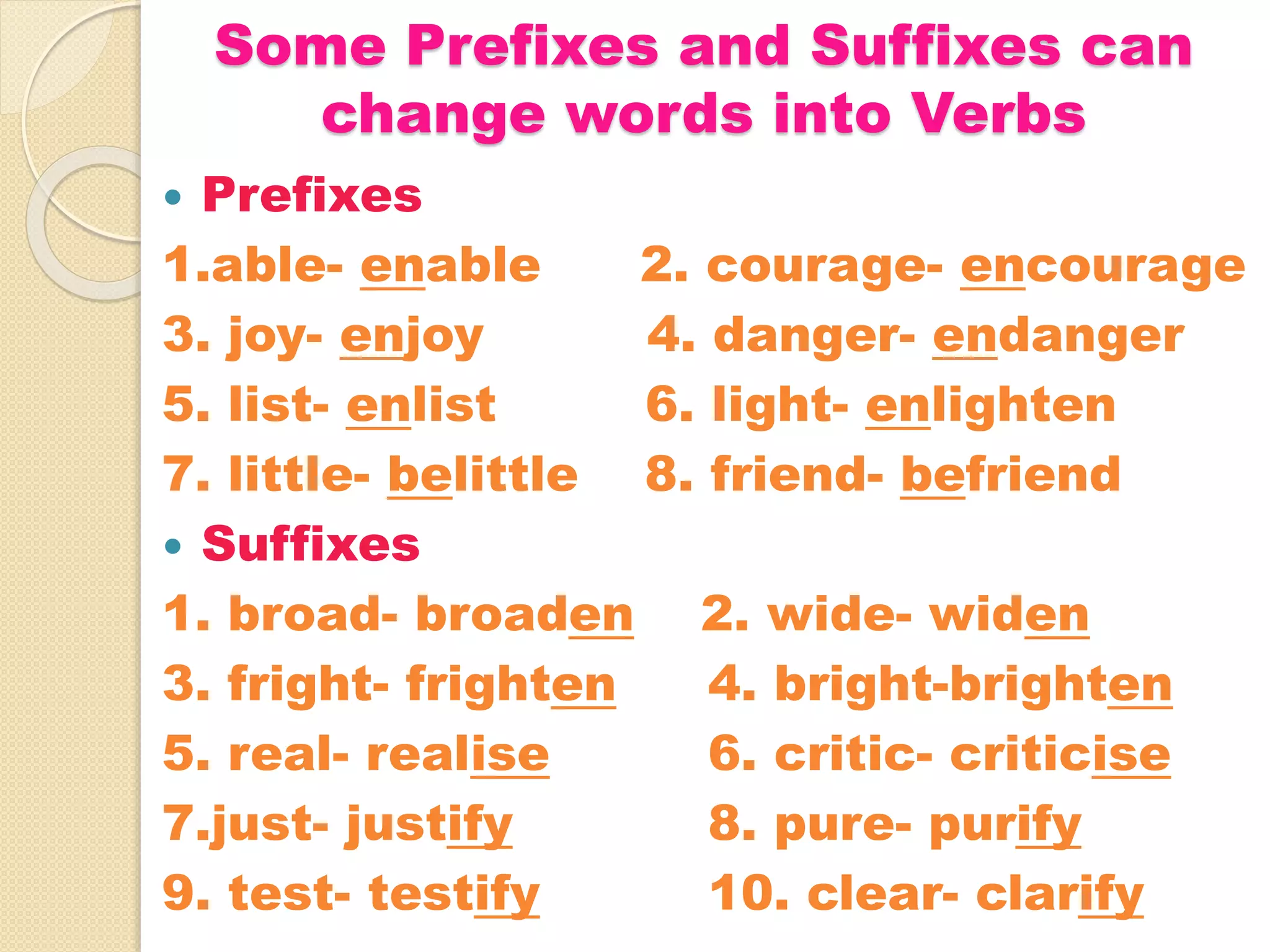
Some Prefixes and Suffixes can
change words into Verbs
 Prefixes
1.able- enable 2. courage- encourage
3. joy- enjoy 4. danger- endanger
5. list- enlist 6. light- enlighten
7. little- belittle 8. friend- befriend
 Suffixes
1. broad- broaden 2. wide- widen
3. fright- frighten 4. bright-brighten
5. real- realise 6. critic- criticise
7.just- justify 8. pure- purify
9. test- testify 10. clear- clarify
Presented By
Ms Swati Hasija

Verbs :Kinds of Verbs

  • 1.
  • 2.
    Meaning of Verb- A verb is a doing word. It describes actions. It shows possession. (has, have, had) It denotes being also. (The verbs to be are- is, am, are, was, were)
  • 3.
    Kinds of Verbs 1.Transitive Verb- A verb that requires an object to complete its meaning is called Transitive Verb. My mother washes clothes. Alice made a doll. 2. Intransitive Verb- A verb that doesn’t require an object to complete its meaning is called Intransitive Verb. The baby slept. The girl smiled.
  • 4.
    Transitive Verb andIntransitive Verb
  • 5.
    Double Object Direct Object& Indirect Object  Some Transitive Verbs take two objects.  A Direct Object is usually the name of some thing.  An Indirect Object is usually the name of some person. Eg- Roshan gave his friend a video game. IO DO She gave a rupee to him. DO IO Danish told us a funny story. IO DO
  • 6.
    Some Verbs whichcan be used Transitively and Intransitively Transitive Intransitive 1. The boy fly kites. 1. Birds fly in the air. 2. He runs a hotel. 2. He runs fast. 3. Mr Sharma opens the shop at eight. 3. School opens at nine o’ clock. 4. He writes novels. 4. He writes legibly. 5. The driver stopped the train. 5. We stopped there a little. 6. The mouse stole food. 6. She stole carefully.
  • 7.
    3. Verb tobe  Verb to be (is, am, are, was, were, will be, shall be, appear, seem and look) are Verbs of Incomplete Prediction.  They need other words or a phrase to complete their meaning. It is called Complement.  A Complement completes the Predicate. Examples- The dog is (what?) an animal. (c) The man seems (what?) tired. (c) He became (what?) a hero. (c)
  • 8.
    Main parts ofVerb 1. The Present Tense 2. The Past Tense 3. The Future Tense Examples-  Present Ema asks questions all the time.  Past Ema asked questions all the time.  Future Ema will ask questions all the time.
  • 9.
    Forms of Verb BasicVerb (V1) Present Tense (V1) Past Tense (V2) Past Participle (V3) Present Participle (V4) clean cleans cleaned cleaned cleaning read reads read read reading listen listens listened listened listening try tries tried tried trying go goes went gone going see sees saw seen seeing give gives gave given giving buy buys bought bought buying break breaks broke broken breaking bet bets bet bet betting cut cuts cut cut cutting
  • 10.
    Auxiliary or HelpingVerbs Principal Auxiliary Verb Present Tense Past Tense Past Participle Present Participle to be is, am, are was, were been being to have have, has had had having to do do, does did done doing He is eating his lunch. She has bought fruits and vegetables. Did you know where he was going?
  • 11.
    Formation of Verbs FromNouns- From Adjectives- Bath- Bathe Able- Enable Breath- Breathe Deep- Deepen Food- Feed New- Renew Action- Act Active- Act Belief- Believe Cheerful- Cheer Death- Die Hopeful- Hope
  • 12.
    Some Prefixes andSuffixes can change words into Verbs  Prefixes 1.able- enable 2. courage- encourage 3. joy- enjoy 4. danger- endanger 5. list- enlist 6. light- enlighten 7. little- belittle 8. friend- befriend  Suffixes 1. broad- broaden 2. wide- widen 3. fright- frighten 4. bright-brighten 5. real- realise 6. critic- criticise 7.just- justify 8. pure- purify 9. test- testify 10. clear- clarify
  • 13.