




PART OF SPEECH
VERB
By: Tira Nur Fitria S.Pd., M.Pd
Email : tiranurfitria@gmail.com
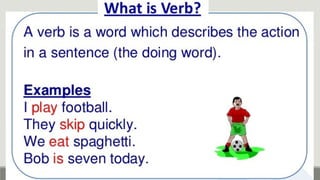
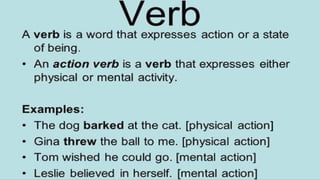
WHAT IS VERB?
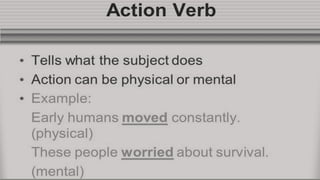
The verb signals an action, an occurrence,
or a state of being. Whether mental,
physical, or mechanical, verbs always
express activity.
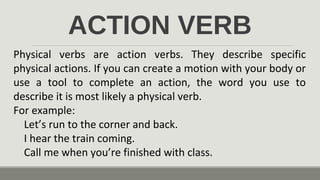
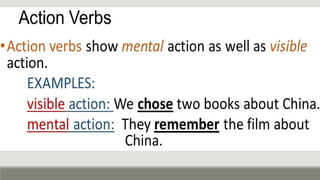
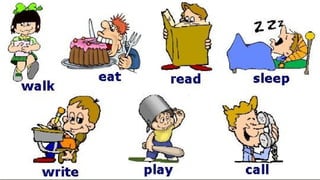
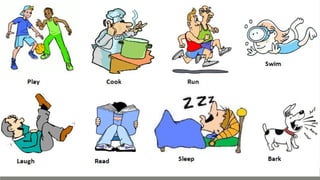
ACTION VERB
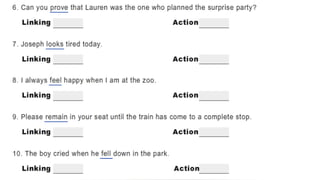
Physical verbs are action verbs. They describe specific
physical actions. If you can create a motion with your body or
use a tool to complete an action, the word you use to
describe it is most likely a physical verb.
For example:
Let’s run to the corner and back.
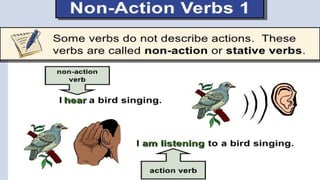
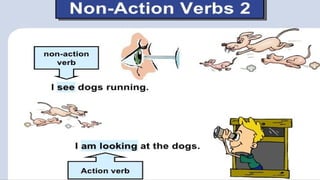
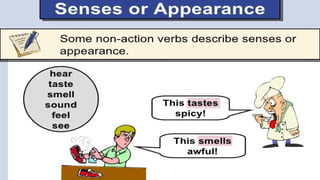
I hear the train coming.
Call me when you’re finished with class.
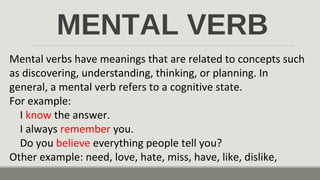
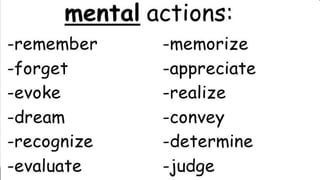
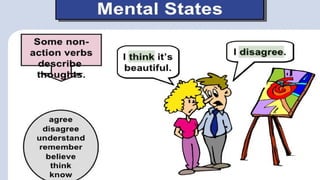
MENTAL VERB
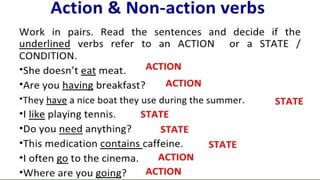
Mental verbs have meanings that are related to concepts such
as discovering, understanding, thinking, or planning. In
general, a mental verb refers to a cognitive state.
For example:
I know the answer.
I always remember you.
Do you believe everything people tell you?
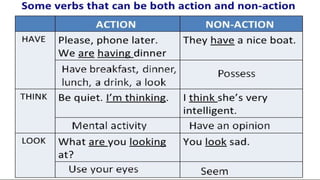
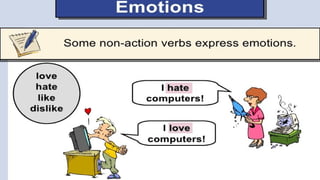
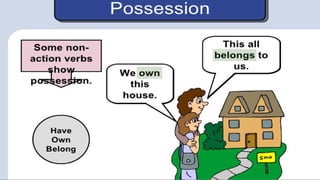
Other example: need, love, hate, miss, have, like, dislike,
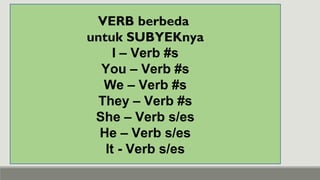
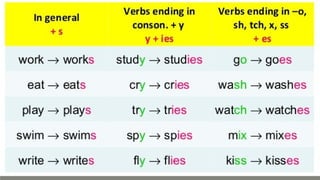
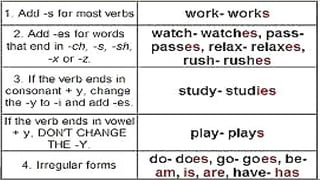
VERB berbeda
untuk SUBYEKnya
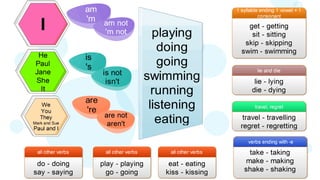
I – Verb #s
You – Verb #s
We – Verb #s
They – Verb #s
She – Verb s/es
He – Verb s/es
It - Verb s/es
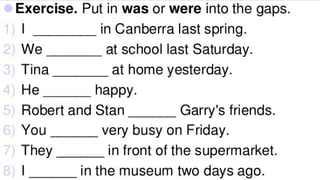
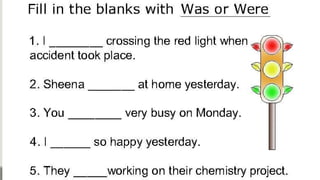
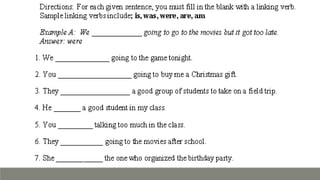
LINKING VERB (States of
Being)
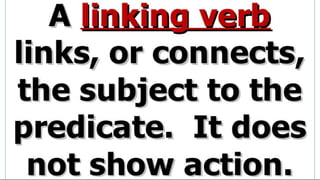
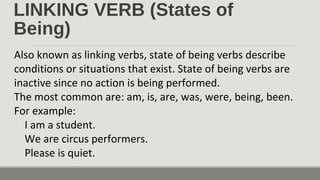
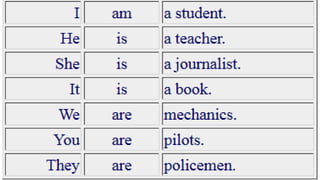
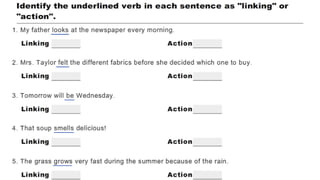
Also known as linking verbs, state of being verbs describe
conditions or situations that exist. State of being verbs are
inactive since no action is being performed.
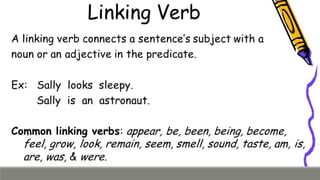
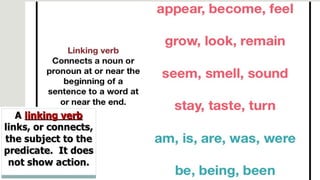
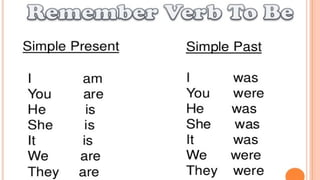
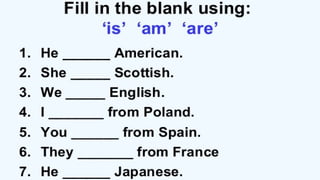
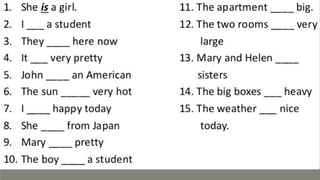
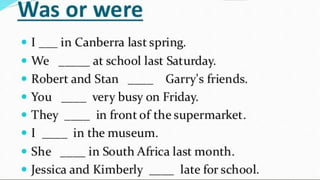
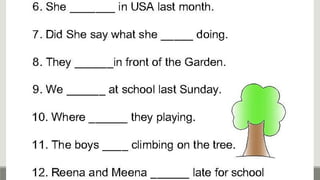
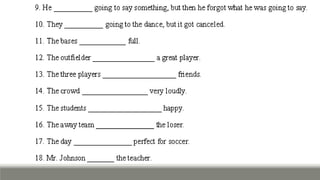
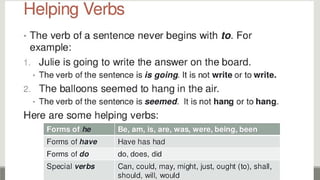
The most common are: am, is, are, was, were, being, been.
For example:
I am a student.
We are circus performers.
Please is quiet.
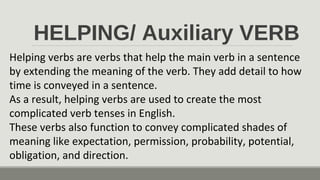
HELPING/ Auxiliary VERB
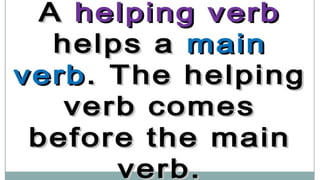
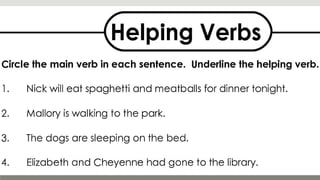
Helping verbs are verbs that help the main verb in a sentence
by extending the meaning of the verb. They add detail to how
time is conveyed in a sentence.
As a result, helping verbs are used to create the most
complicated verb tenses in English.
These verbs also function to convey complicated shades of
meaning like expectation, permission, probability, potential,
obligation, and direction.
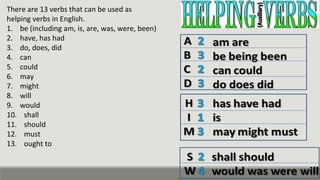
There are 13 verbs that can be used as
helping verbs in English.
1. be (including am, is, are, was, were, been)
2. have, has had
3. do, does, did
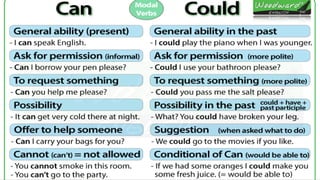
4. can
5. could
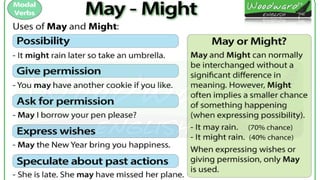
6. may
7. might
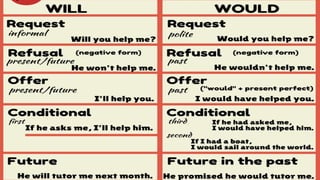
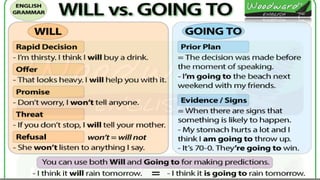
8. will
9. would
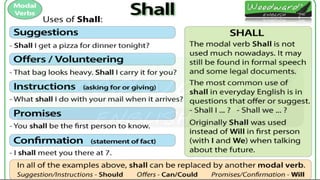
10. shall
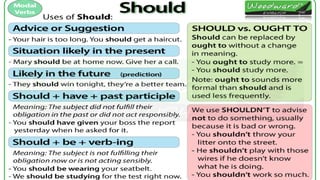
11. should
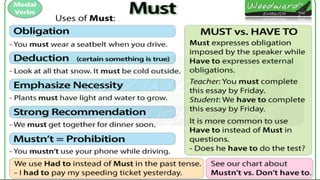
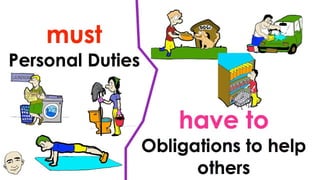
12. must
13. ought to
Verb
Verb
Verb
Verb
Verb
Verb
Verb
Verb
Verb
Verb
Verb
Verb
Verb
Verb
Verb
Verb
Verb

Verb

  • 1.
    PART OF SPEECH VERB By:Tira Nur Fitria S.Pd., M.Pd Email : tiranurfitria@gmail.com
  • 2.
    WHAT IS VERB? Theverb signals an action, an occurrence, or a state of being. Whether mental, physical, or mechanical, verbs always express activity.
  • 6.
    ACTION VERB Physical verbsare action verbs. They describe specific physical actions. If you can create a motion with your body or use a tool to complete an action, the word you use to describe it is most likely a physical verb. For example: Let’s run to the corner and back. I hear the train coming. Call me when you’re finished with class.
  • 14.
    MENTAL VERB Mental verbshave meanings that are related to concepts such as discovering, understanding, thinking, or planning. In general, a mental verb refers to a cognitive state. For example: I know the answer. I always remember you. Do you believe everything people tell you? Other example: need, love, hate, miss, have, like, dislike,
  • 26.
    VERB berbeda untuk SUBYEKnya I– Verb #s You – Verb #s We – Verb #s They – Verb #s She – Verb s/es He – Verb s/es It - Verb s/es
  • 35.
    LINKING VERB (Statesof Being) Also known as linking verbs, state of being verbs describe conditions or situations that exist. State of being verbs are inactive since no action is being performed. The most common are: am, is, are, was, were, being, been. For example: I am a student. We are circus performers. Please is quiet.
  • 51.
    HELPING/ Auxiliary VERB Helpingverbs are verbs that help the main verb in a sentence by extending the meaning of the verb. They add detail to how time is conveyed in a sentence. As a result, helping verbs are used to create the most complicated verb tenses in English. These verbs also function to convey complicated shades of meaning like expectation, permission, probability, potential, obligation, and direction.
  • 53.
    There are 13verbs that can be used as helping verbs in English. 1. be (including am, is, are, was, were, been) 2. have, has had 3. do, does, did 4. can 5. could 6. may 7. might 8. will 9. would 10. shall 11. should 12. must 13. ought to