SPANISH GRAMMAR 
BOOK 
By: Carsyn a.k.a Camelia Taylor
Table of Contents 
1. Nationalities 
2. Stem-Changing Verbs (all 4 classes) 
3. Para 
4. Adjectives 
5. Object Pronoun Placement 
6. DOP (Direct Object Pronoun) 
7. IOP (Indirect Object Pronouns) 
8. ser vs. estar (all in one page) 
9. -ísimo(a), and g/c/z 
10. Verbs like gustar 
11. Affirmative and Negative Words 
12. pero vs. sino 
13. DOP/IOP/SE 
14. Reflexive verbs 
15. Tú commands affirmative + negative + irregulars 
16. los adverbios-mente 
17. deber + other modal verbs 
18. past participles as adjectives 
19. Preterite 
20. Present Progessive
Nationalities
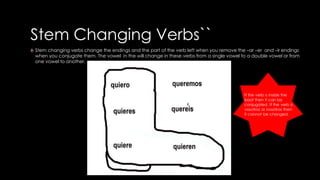
Stem Changing Verbs`` 
Stem changing verbs change the endings and the part of the verb left when you remove the –ar –er and –ir endings 
when you conjugate them. The vowel in the will change in these verbs from a single vowel to a double vowel or from 
one vowel to another. 
If the verb is inside the 
boot then it can be 
conjugated. If the verb is 
vosotros or nosotros then 
it cannot be changed.
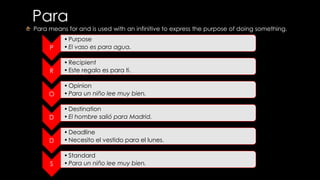
Para 
Para means for and is used with an infinitive to express the purpose of doing something. 
P 
• Purpose 
• El vaso es para agua. 
R 
•Recipient 
• Este regalo es para ti. 
O 
•Opinion 
• Para un niño lee muy bien. 
D 
• Destination 
• El hombre salió para Madrid. 
D 
•Deadline 
•Necesito el vestido para el lunes. 
S 
• Standard 
• Para un niño lee muy bien.
Adjectives 
If it ends in an “e” you 
add an “s” 
Facil=Faciles 
If it ends in a constant 
then you add “es” 
Joven=Jovnes 
A las 
mujeres 
jóvenes les 
gusta este 
café 
Sentence Examples 
Caliente=Calientes Intresante=Intresantes 
Tengo un 
abuelo 
interesante.
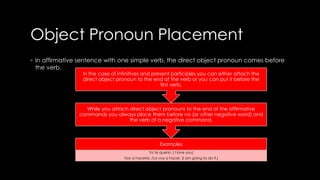
Object Pronoun Placement 
◦ In affirmative sentence with one simple verb, the direct object pronoun comes before 
the verb. 
In the case of infinitives and present participles you can either attach the 
direct object pronoun to the end of the verb or you can put it before the 
first verb, 
While you attach direct object pronouns to the end of the affirmative 
commands you always place them before no (or other negative word) and 
the verb of a negative command. 
Examples 
Yo te querio. ( I love you) 
Voy a hacerla. /La voy a hacer. (I am going to do it.)
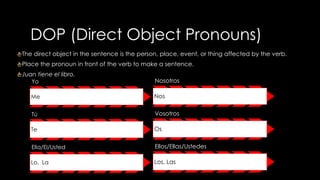
DOP (Direct Object Pronouns) 
The direct object in the sentence is the person, place, event, or thing affected by the verb. 
Place the pronoun in front of the verb to make a sentence. 
Juan tiene el libro. 
Yo 
Me 
Tú 
Te 
Ella/El/Usted 
Lo, La 
Nosotros 
Nos 
Vosotros 
Os 
Ellos/Ellas/Ustedes 
Los, Las
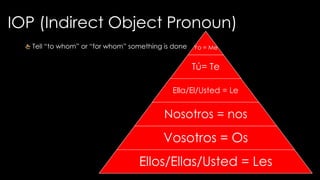
IOP (Indirect Object Pronoun) 
Tell “to whom” or “for whom” something is done Yo = Me 
Tú= Te 
Ella/El/Usted = Le 
Nosotros = nos 
Vosotros = Os 
Ellos/Ellas/Usted = Les
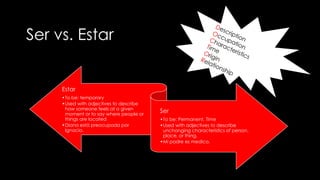
Ser vs. Estar 
Estar 
•To be: temporary 
•Used with adjectives to describe 
how someone feels at a given 
moment or to say where people or 
things are located 
•Diana está preocupada por 
Ignacio. 
Ser 
•To be: Permanent, Time 
•Used with adjectives to describe 
unchanging characteristics of person, 
place, or thing. 
•Mi padre es medico.
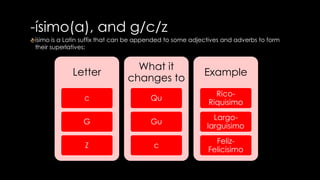
-ísimo(a), and g/c/z 
ísimo is a Latin suffix that can be appended to some adjectives and adverbs to form 
their superlatives: 
Letter 
c 
G 
Z 
What it 
changes to 
Qu 
Gu 
c 
Example 
Rico- 
Riquisimo 
Largo-larguisimo 
Feliz- 
Felicisimo
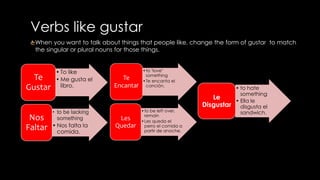
Verbs like gustar 
When you want to talk about things that people like, change the form of gustar to match 
the singular or plural nouns for those things. 
• To like 
•Me gusta el 
libro. 
Te 
Gustar 
• to be lacking 
something 
• Nos falta la 
comida. 
Nos 
Faltar 
• to "love" 
something 
•Te encanta el 
canción. 
Te 
Encantar 
• to be left over, 
remain 
•Les queda el 
perro el comida a 
partir de anoche. 
Les 
Quedar 
• to hate 
something 
• Ella le 
disgusta el 
sandwich. 
Le 
Disgustar
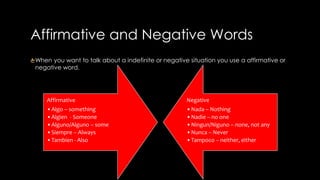
Affirmative and Negative Words 
When you want to talk about a indefinite or negative situation you use a affirmative or 
negative word. 
Affirmative 
•Algo – something 
•Algien - Someone 
•Alguno/Alguno – some 
• Siempre – Always 
•Tambien - Also 
Negative 
•Nada – Nothing 
•Nadie – no one 
•Ningun/Niguno – none, not any 
•Nunca – Never 
•Tampoco – neither, either
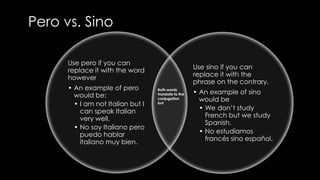
Pero vs. Sino 
Use pero if you can 
replace it with the word 
however 
• An example of pero 
would be: 
• I am not Italian but I 
can speak Italian 
very well. 
• No soy Italiano pero 
puedo hablar 
italiano muy bien. 
Use sino if you can 
replace it with the 
phrase on the contrary. 
• An example of sino 
would be 
• We don’t study 
French but we study 
Spanish. 
• No estudiamos 
francés sino español. 
Both words 
translate to the 
conjugation 
but
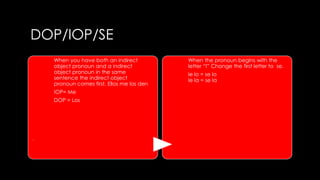
DOP/IOP/SE 
. 
When you have both an indirect 
object pronoun and a indirect 
object pronoun in the same 
sentence the indirect object 
pronoun comes first. Ellos me los den 
IOP= Me 
DOP = Los 
When the pronoun begins with the 
letter “I” Change the first letter to se. 
le lo = se lo 
le la = se la
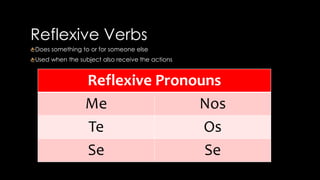
Reflexive Verbs 
Does something to or for someone else 
Used when the subject also receive the actions 
Reflexive Pronouns 
Me Nos 
Te Os 
Se Se
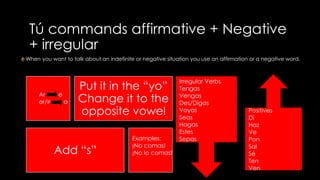
Tú commands affirmative + Negative 
+ irregular 
When you want to talk about an indefinite or negative situation you use an affirmation or a negative word. 
Put it in the “yo” 
Change it to the 
opposite vowel 
Ar e 
er/ir a 
Add “s” 
Examples: 
¡No comas! 
¡No lo comas! 
Irregular Verbs 
Tengas 
Vengas 
Des/Digas 
Vayas 
Seas 
Hagas 
Estes 
Sepas 
Positives 
Di 
Haz 
Ve 
Pon 
Sal 
Sé 
Ten 
Ven
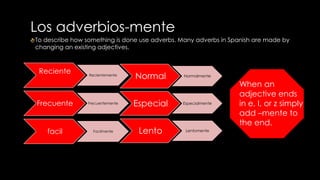
Los adverbios-mente 
To describe how something is done use adverbs. Many adverbs in Spanish are made by 
changing an existing adjectives. 
Reciente 
Recientemente 
Frecuente Frecuentemente 
facil Facilmente 
Normal Normalmente 
Especial Especialmente 
Lento Lentomente 
When an 
adjective ends 
in e, I, or z simply 
add –mente to 
the end.
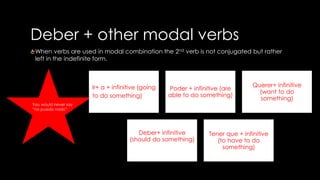
Deber + other modal verbs 
When verbs are used in modal combination the 2nd verb is not conjugated but rather 
left in the indefinite form. 
You would never say 
“no puedo nado” 
Ir+ a + infinitive (going 
to do something) 
Poder + infinitive (are 
able to do something) 
Querer+ infinitive 
(want to do 
something) 
Deber+ infinitive 
(should do something) 
Tener que + infinitive 
(to have to do 
something)
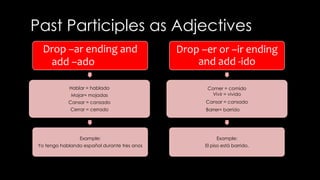
Past Participles as Adjectives 
Drop –ar ending and 
add –ado 
Hablar = hablado 
Mojar= mojadas 
Cansar = cansado 
Cerrar = cerrado 
Example: 
Yo tengo hablando español durante tres anos 
Drop –er or –ir ending 
and add -ido 
Comer = comido 
Vivir = vivido 
Cansar = cansado 
Barrer= barrido 
Example: 
El piso está barrido.
Preterite 
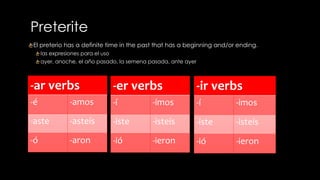
El preterio has a definite time in the past that has a beginning and/or ending. 
las expresiones para el uso 
ayer, anoche, el año pasado, la semena pasada, ante ayer 
-ar verbs 
-é -amos 
-aste -asteís 
-ó -aron 
-er verbs 
-í -ímos 
-iste -isteís 
-ió -ieron 
-ir verbs 
-í -imos 
-iste -isteís 
-ió -ieron
Present progressive 
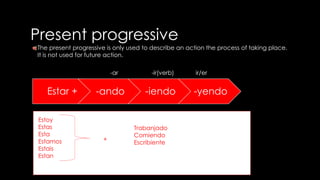
The present progressive is only used to describe an action the process of taking place. 
It is not used for future action. 
-ar -ir(verb) ir/er 
Estar + -ando -iendo -yendo 
Estoy 
Estas 
Esta 
Estamos 
Estais 
Estan 
=+ 
Trabanjado 
Comiendo 
Escribiente
Works Cited 
https://www.youtube.com/watch?v=eilM72E9OPo 
https://www.youtube.com/watch?v=4Axnl5Oeuiw 
https://www.youtube.com/watch?v=HB8jig5hsNk 
http://www.studyspanish.com/lessons/gustar.htm 
http://www.studyspanish.com/lessons/porpara.htm 
http://www.studyspanish.com/lessons/dopro1.htm 
http://spanish.stackexchange.com/questions/767/whats-the-%C3%ADsimo-in-the-following- 
words

Grammer book

  • 1.
    SPANISH GRAMMAR BOOK By: Carsyn a.k.a Camelia Taylor
  • 2.
    Table of Contents 1. Nationalities 2. Stem-Changing Verbs (all 4 classes) 3. Para 4. Adjectives 5. Object Pronoun Placement 6. DOP (Direct Object Pronoun) 7. IOP (Indirect Object Pronouns) 8. ser vs. estar (all in one page) 9. -ísimo(a), and g/c/z 10. Verbs like gustar 11. Affirmative and Negative Words 12. pero vs. sino 13. DOP/IOP/SE 14. Reflexive verbs 15. Tú commands affirmative + negative + irregulars 16. los adverbios-mente 17. deber + other modal verbs 18. past participles as adjectives 19. Preterite 20. Present Progessive
  • 3.
  • 4.
    Stem Changing Verbs`` Stem changing verbs change the endings and the part of the verb left when you remove the –ar –er and –ir endings when you conjugate them. The vowel in the will change in these verbs from a single vowel to a double vowel or from one vowel to another. If the verb is inside the boot then it can be conjugated. If the verb is vosotros or nosotros then it cannot be changed.
  • 5.
    Para Para meansfor and is used with an infinitive to express the purpose of doing something. P • Purpose • El vaso es para agua. R •Recipient • Este regalo es para ti. O •Opinion • Para un niño lee muy bien. D • Destination • El hombre salió para Madrid. D •Deadline •Necesito el vestido para el lunes. S • Standard • Para un niño lee muy bien.
  • 6.
    Adjectives If itends in an “e” you add an “s” Facil=Faciles If it ends in a constant then you add “es” Joven=Jovnes A las mujeres jóvenes les gusta este café Sentence Examples Caliente=Calientes Intresante=Intresantes Tengo un abuelo interesante.
  • 7.
    Object Pronoun Placement ◦ In affirmative sentence with one simple verb, the direct object pronoun comes before the verb. In the case of infinitives and present participles you can either attach the direct object pronoun to the end of the verb or you can put it before the first verb, While you attach direct object pronouns to the end of the affirmative commands you always place them before no (or other negative word) and the verb of a negative command. Examples Yo te querio. ( I love you) Voy a hacerla. /La voy a hacer. (I am going to do it.)
  • 8.
    DOP (Direct ObjectPronouns) The direct object in the sentence is the person, place, event, or thing affected by the verb. Place the pronoun in front of the verb to make a sentence. Juan tiene el libro. Yo Me Tú Te Ella/El/Usted Lo, La Nosotros Nos Vosotros Os Ellos/Ellas/Ustedes Los, Las
  • 9.
    IOP (Indirect ObjectPronoun) Tell “to whom” or “for whom” something is done Yo = Me Tú= Te Ella/El/Usted = Le Nosotros = nos Vosotros = Os Ellos/Ellas/Usted = Les
  • 10.
    Ser vs. Estar Estar •To be: temporary •Used with adjectives to describe how someone feels at a given moment or to say where people or things are located •Diana está preocupada por Ignacio. Ser •To be: Permanent, Time •Used with adjectives to describe unchanging characteristics of person, place, or thing. •Mi padre es medico.
  • 11.
    -ísimo(a), and g/c/z ísimo is a Latin suffix that can be appended to some adjectives and adverbs to form their superlatives: Letter c G Z What it changes to Qu Gu c Example Rico- Riquisimo Largo-larguisimo Feliz- Felicisimo
  • 12.
    Verbs like gustar When you want to talk about things that people like, change the form of gustar to match the singular or plural nouns for those things. • To like •Me gusta el libro. Te Gustar • to be lacking something • Nos falta la comida. Nos Faltar • to "love" something •Te encanta el canción. Te Encantar • to be left over, remain •Les queda el perro el comida a partir de anoche. Les Quedar • to hate something • Ella le disgusta el sandwich. Le Disgustar
  • 13.
    Affirmative and NegativeWords When you want to talk about a indefinite or negative situation you use a affirmative or negative word. Affirmative •Algo – something •Algien - Someone •Alguno/Alguno – some • Siempre – Always •Tambien - Also Negative •Nada – Nothing •Nadie – no one •Ningun/Niguno – none, not any •Nunca – Never •Tampoco – neither, either
  • 14.
    Pero vs. Sino Use pero if you can replace it with the word however • An example of pero would be: • I am not Italian but I can speak Italian very well. • No soy Italiano pero puedo hablar italiano muy bien. Use sino if you can replace it with the phrase on the contrary. • An example of sino would be • We don’t study French but we study Spanish. • No estudiamos francés sino español. Both words translate to the conjugation but
  • 15.
    DOP/IOP/SE . Whenyou have both an indirect object pronoun and a indirect object pronoun in the same sentence the indirect object pronoun comes first. Ellos me los den IOP= Me DOP = Los When the pronoun begins with the letter “I” Change the first letter to se. le lo = se lo le la = se la
  • 16.
    Reflexive Verbs Doessomething to or for someone else Used when the subject also receive the actions Reflexive Pronouns Me Nos Te Os Se Se
  • 17.
    Tú commands affirmative+ Negative + irregular When you want to talk about an indefinite or negative situation you use an affirmation or a negative word. Put it in the “yo” Change it to the opposite vowel Ar e er/ir a Add “s” Examples: ¡No comas! ¡No lo comas! Irregular Verbs Tengas Vengas Des/Digas Vayas Seas Hagas Estes Sepas Positives Di Haz Ve Pon Sal Sé Ten Ven
  • 18.
    Los adverbios-mente Todescribe how something is done use adverbs. Many adverbs in Spanish are made by changing an existing adjectives. Reciente Recientemente Frecuente Frecuentemente facil Facilmente Normal Normalmente Especial Especialmente Lento Lentomente When an adjective ends in e, I, or z simply add –mente to the end.
  • 19.
    Deber + othermodal verbs When verbs are used in modal combination the 2nd verb is not conjugated but rather left in the indefinite form. You would never say “no puedo nado” Ir+ a + infinitive (going to do something) Poder + infinitive (are able to do something) Querer+ infinitive (want to do something) Deber+ infinitive (should do something) Tener que + infinitive (to have to do something)
  • 20.
    Past Participles asAdjectives Drop –ar ending and add –ado Hablar = hablado Mojar= mojadas Cansar = cansado Cerrar = cerrado Example: Yo tengo hablando español durante tres anos Drop –er or –ir ending and add -ido Comer = comido Vivir = vivido Cansar = cansado Barrer= barrido Example: El piso está barrido.
  • 21.
    Preterite El preteriohas a definite time in the past that has a beginning and/or ending. las expresiones para el uso ayer, anoche, el año pasado, la semena pasada, ante ayer -ar verbs -é -amos -aste -asteís -ó -aron -er verbs -í -ímos -iste -isteís -ió -ieron -ir verbs -í -imos -iste -isteís -ió -ieron
  • 22.
    Present progressive Thepresent progressive is only used to describe an action the process of taking place. It is not used for future action. -ar -ir(verb) ir/er Estar + -ando -iendo -yendo Estoy Estas Esta Estamos Estais Estan =+ Trabanjado Comiendo Escribiente
  • 23.
    Works Cited https://www.youtube.com/watch?v=eilM72E9OPo https://www.youtube.com/watch?v=4Axnl5Oeuiw https://www.youtube.com/watch?v=HB8jig5hsNk http://www.studyspanish.com/lessons/gustar.htm http://www.studyspanish.com/lessons/porpara.htm http://www.studyspanish.com/lessons/dopro1.htm http://spanish.stackexchange.com/questions/767/whats-the-%C3%ADsimo-in-the-following- words