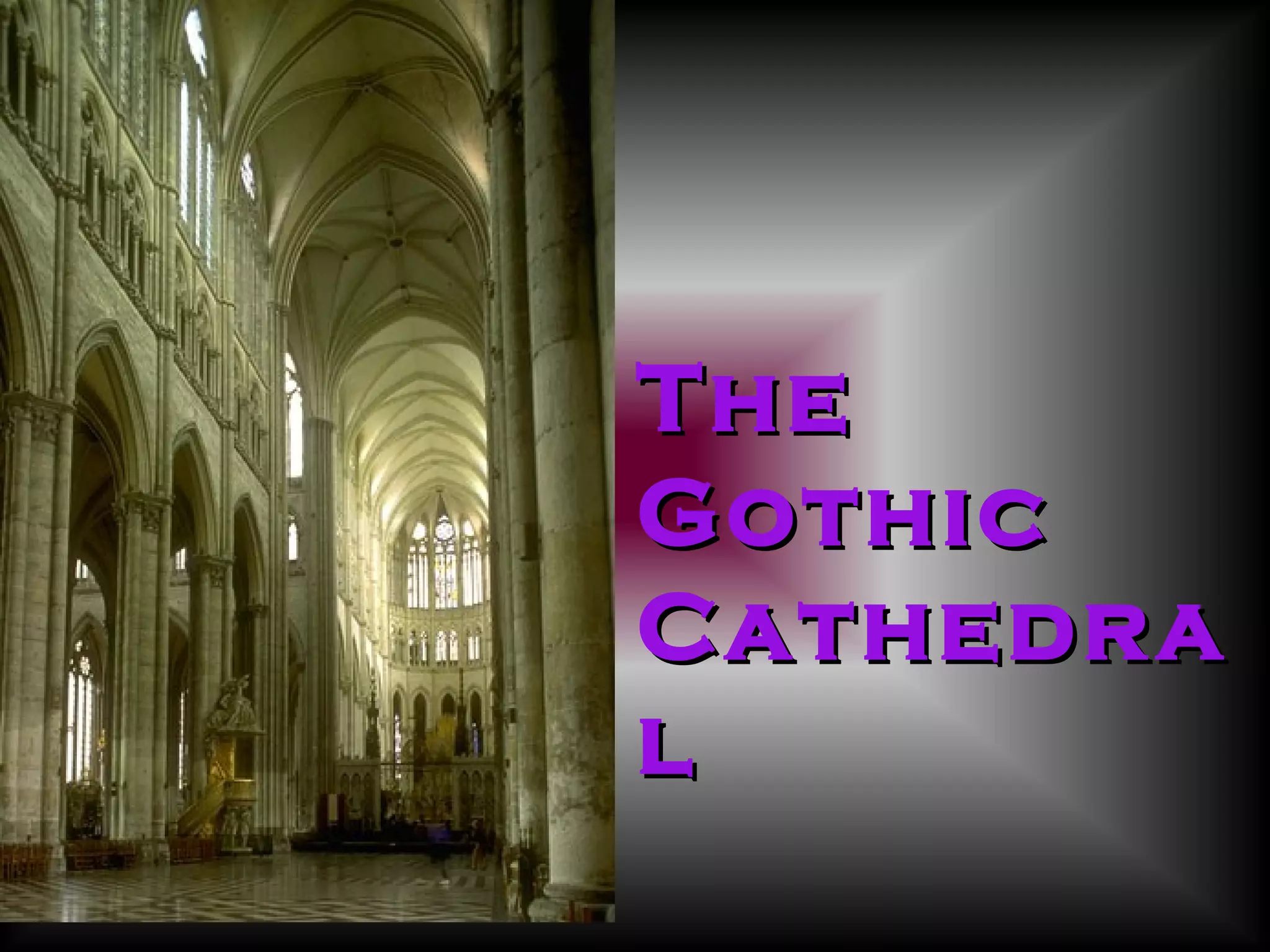
The Gothic Cathedral
THE GOTHIC CATHEDRAL OBJECTIVES Understand the  key structural components  of the Gothic cathedral  Explain the origins of the Gothic style Analyze the cathedral as an  interactive environment  Explain the  symbolic properties  of light and height in the Gothic cathedral
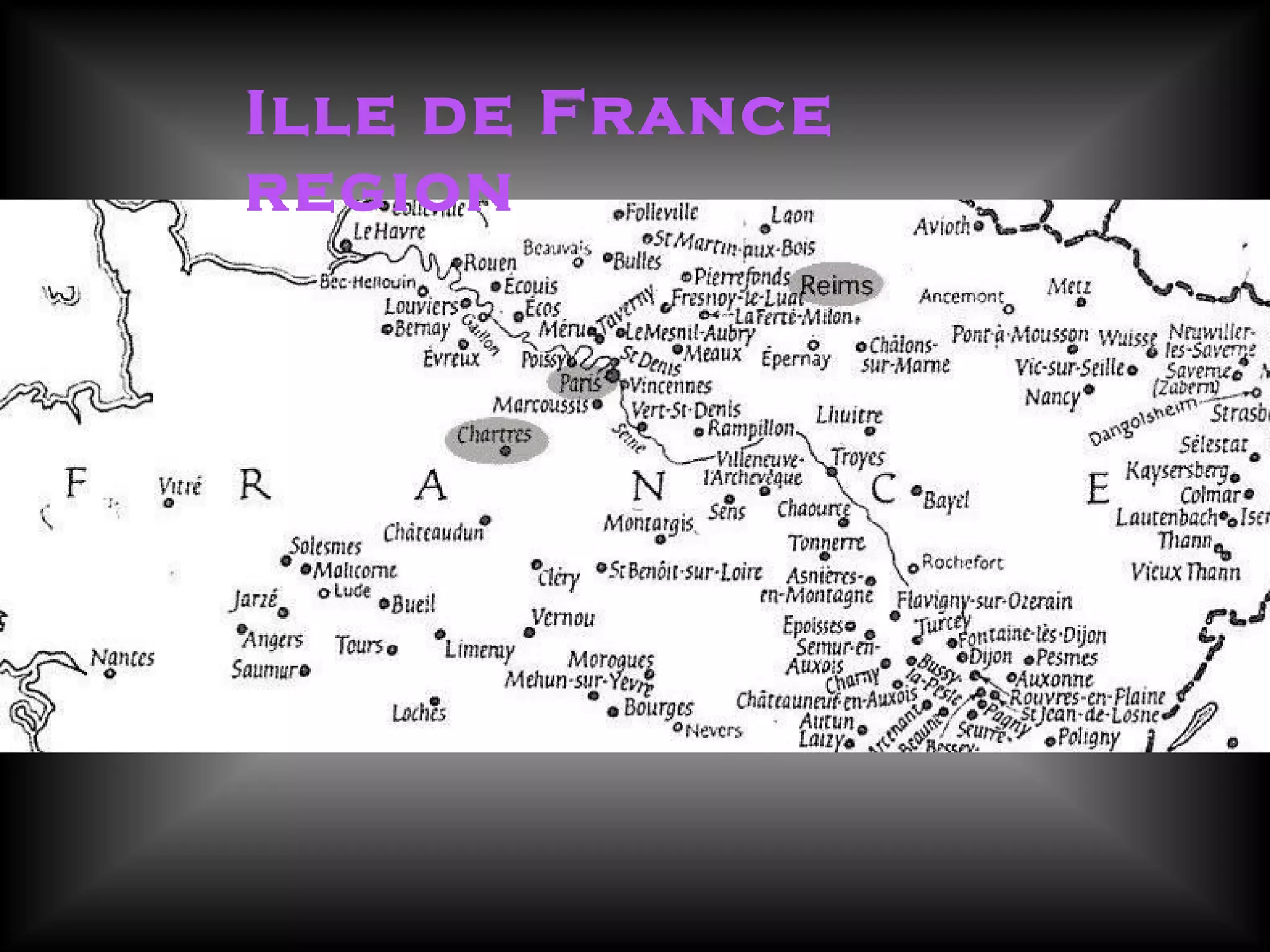
Ille de France region
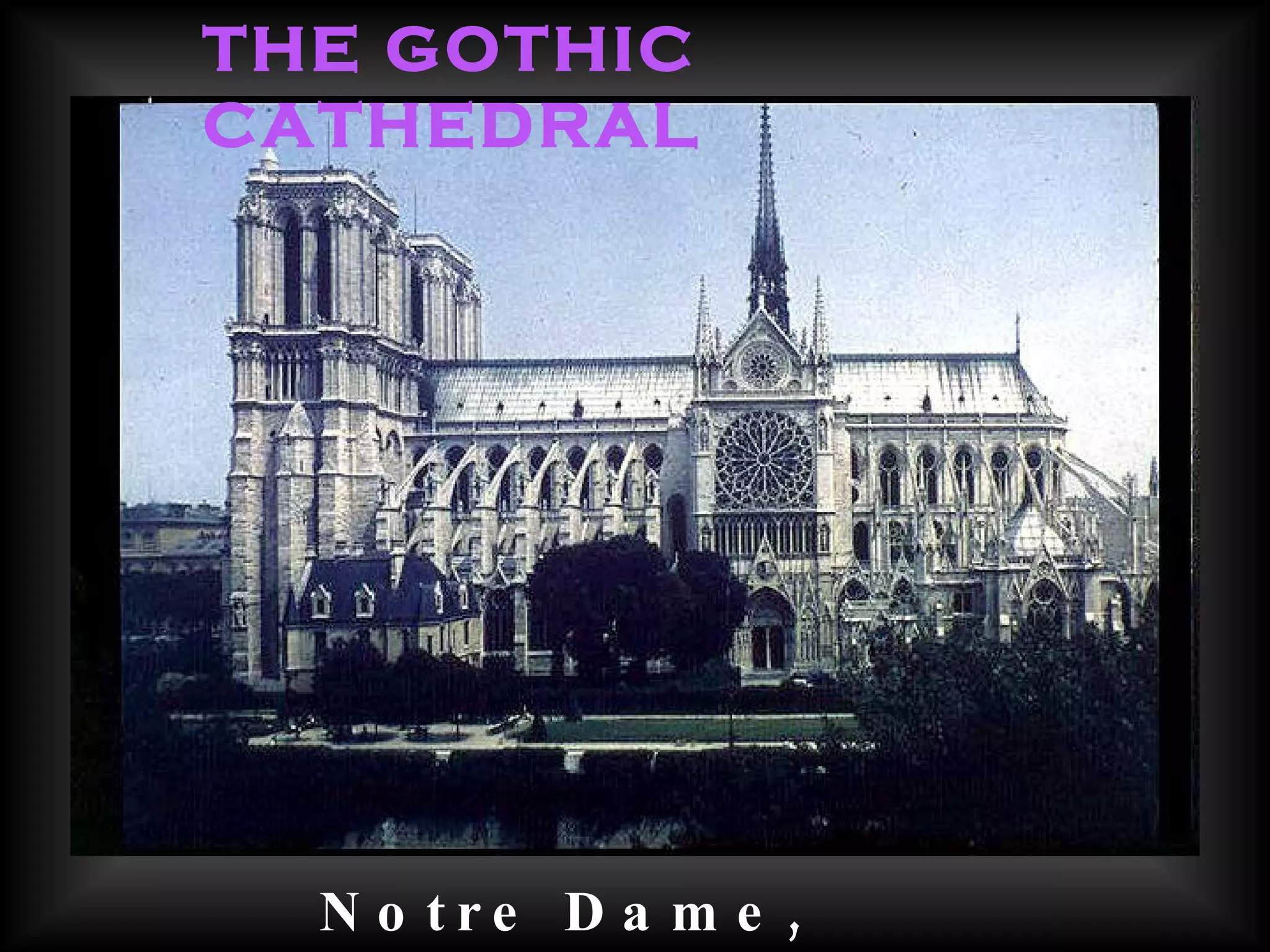
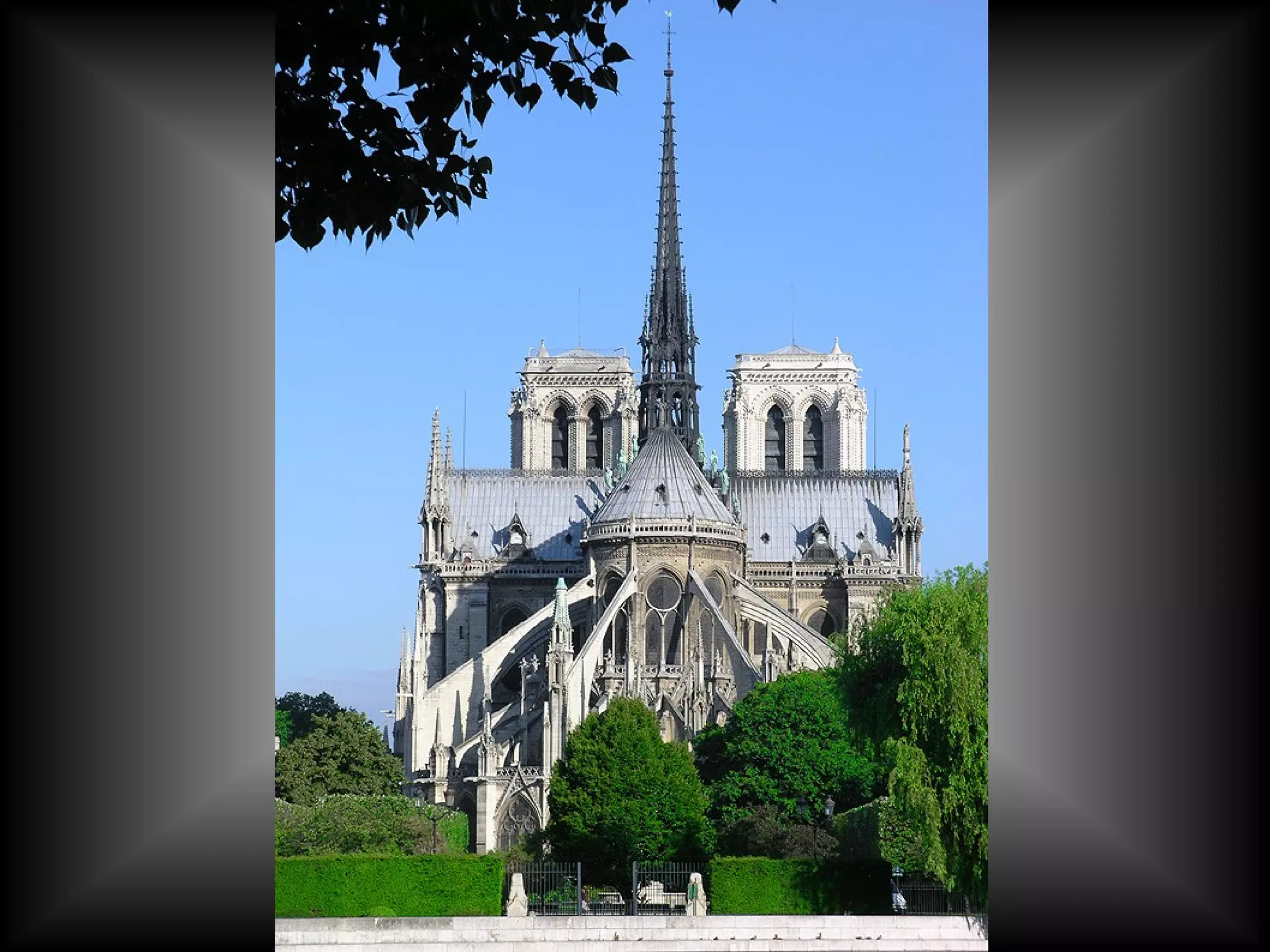
Notre Dame, Paris, 1163-1267   THE GOTHIC CATHEDRAL
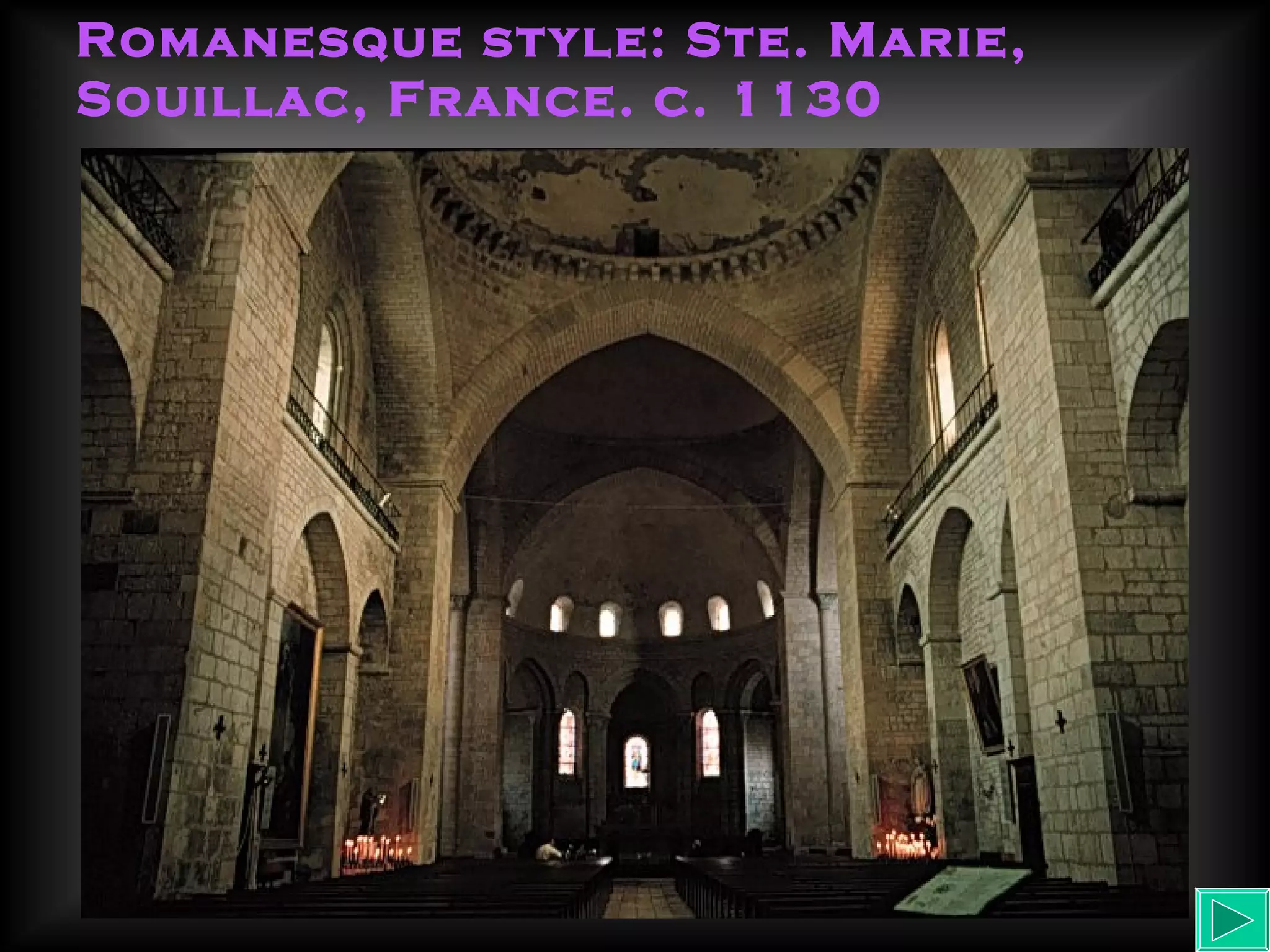
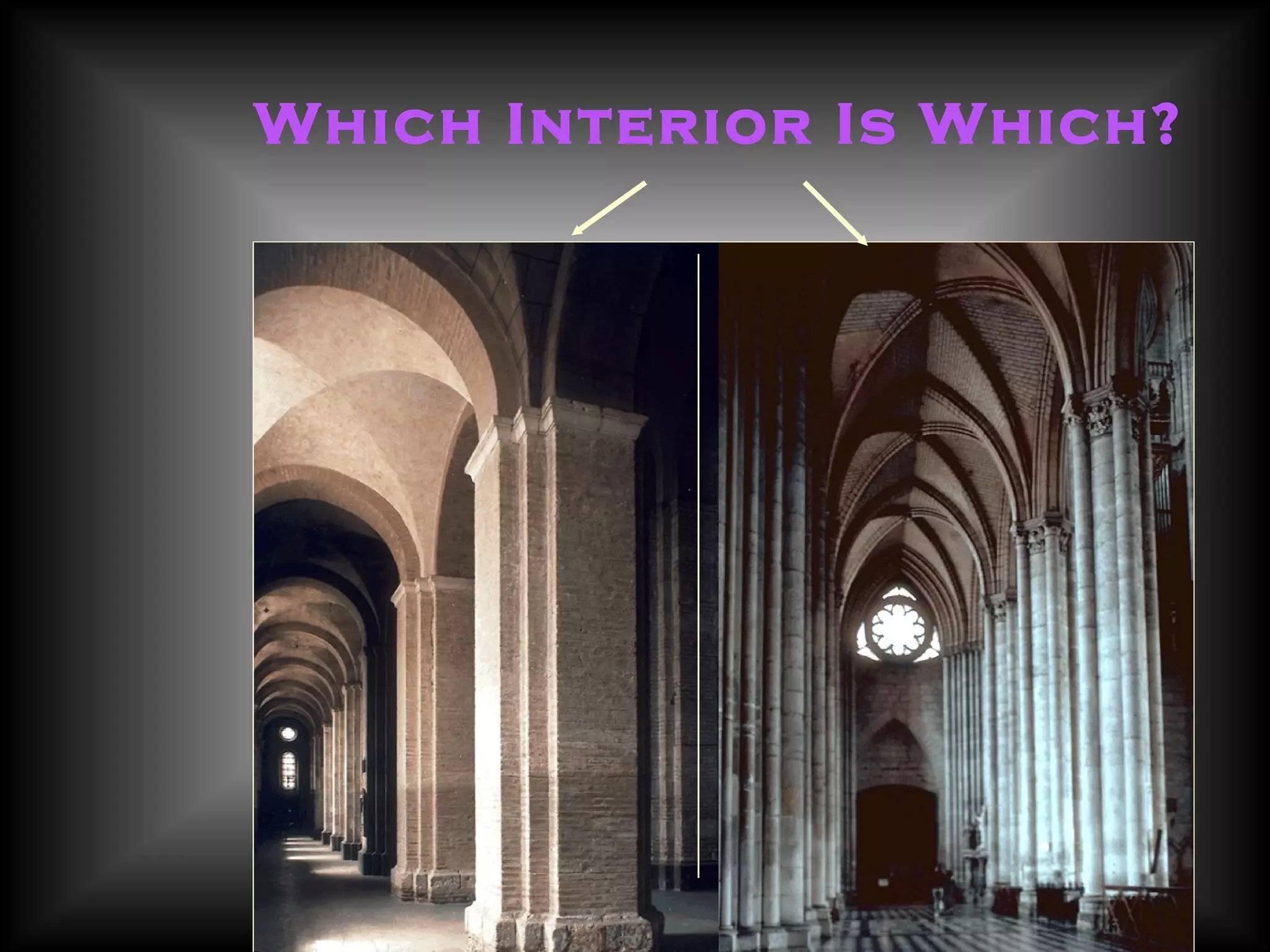
Romanesque style: Ste. Marie, Souillac, France. c. 1130
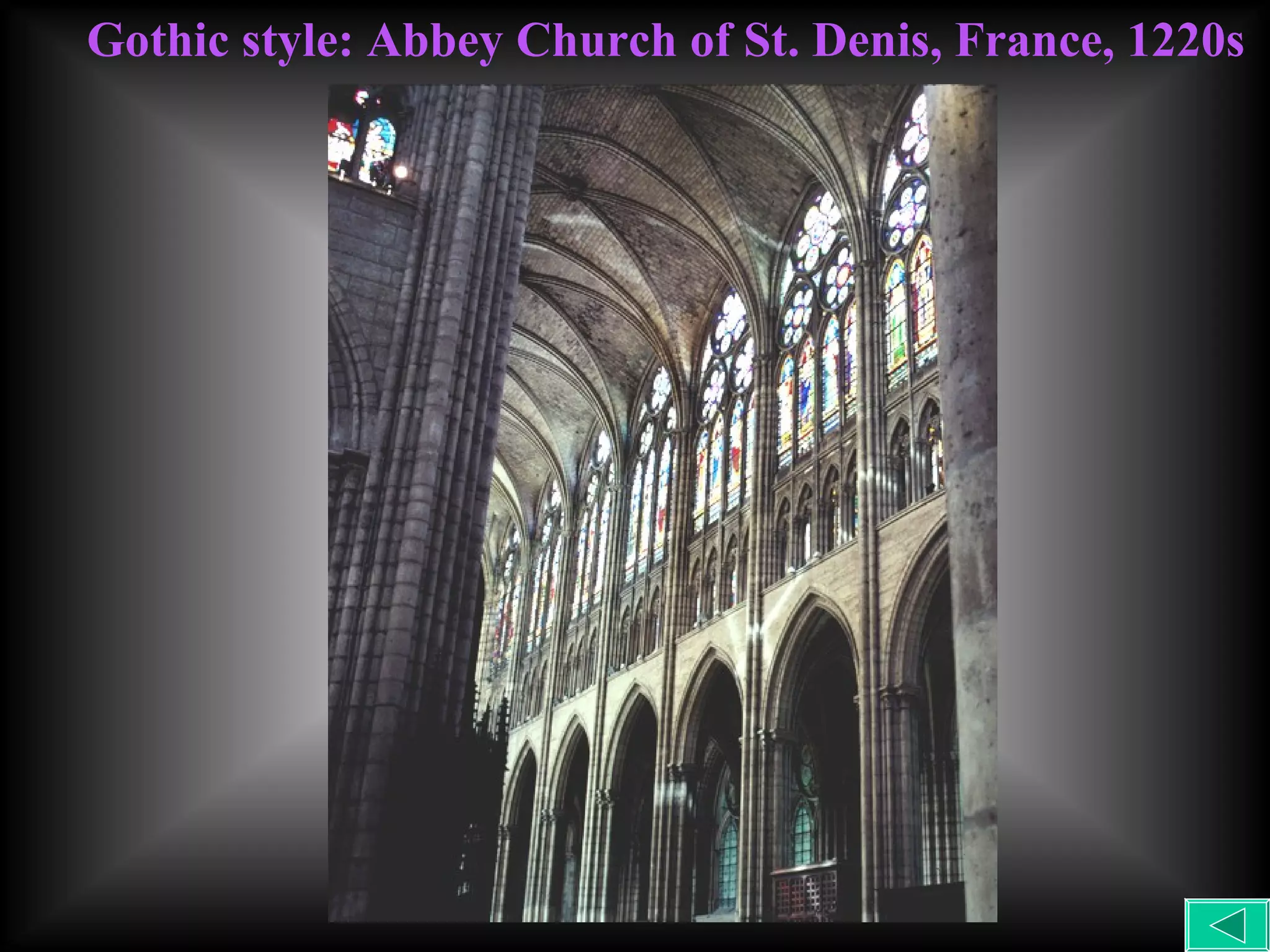
Gothic style: Abbey Church of St. Denis, France, 1220s
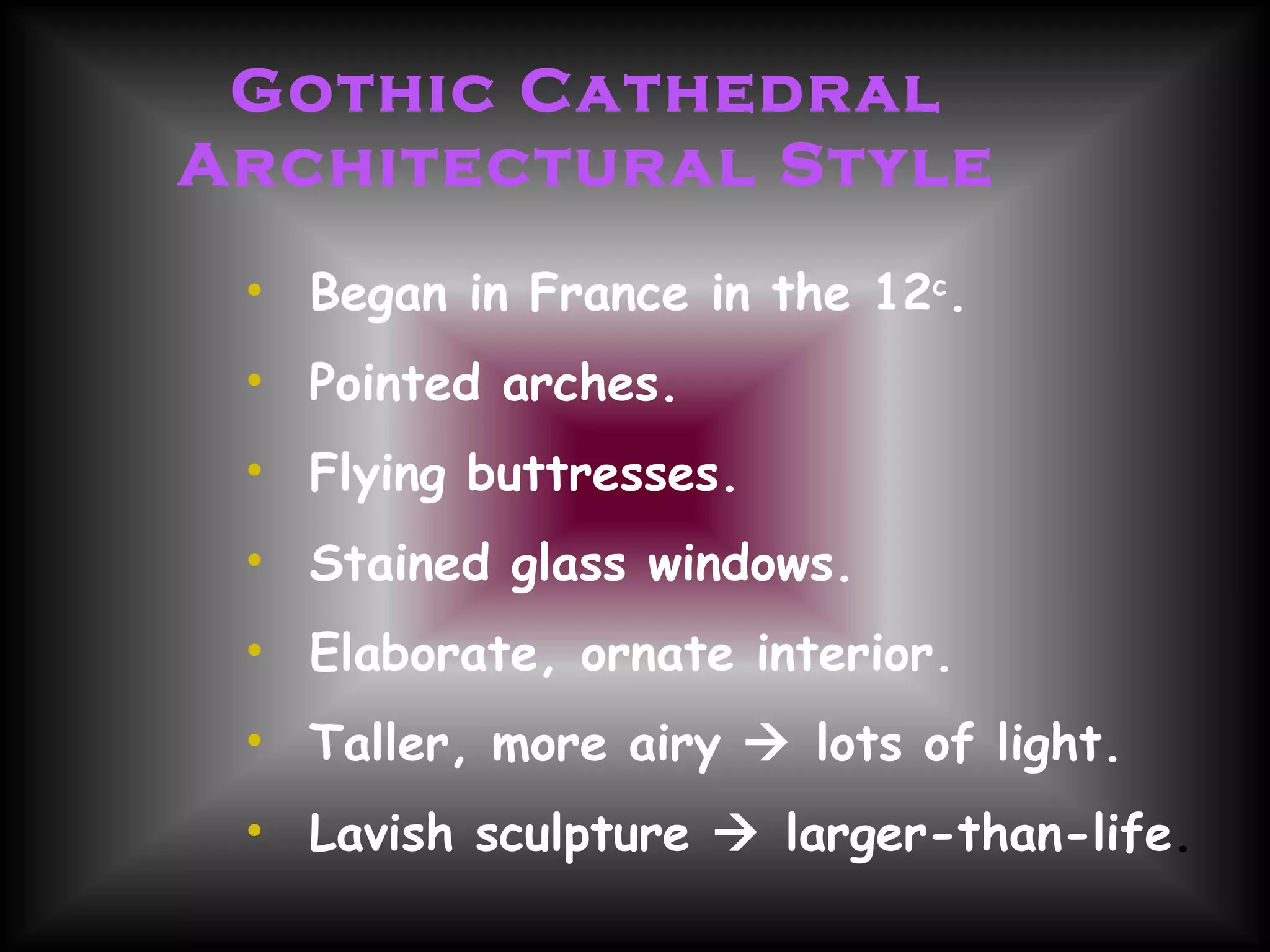
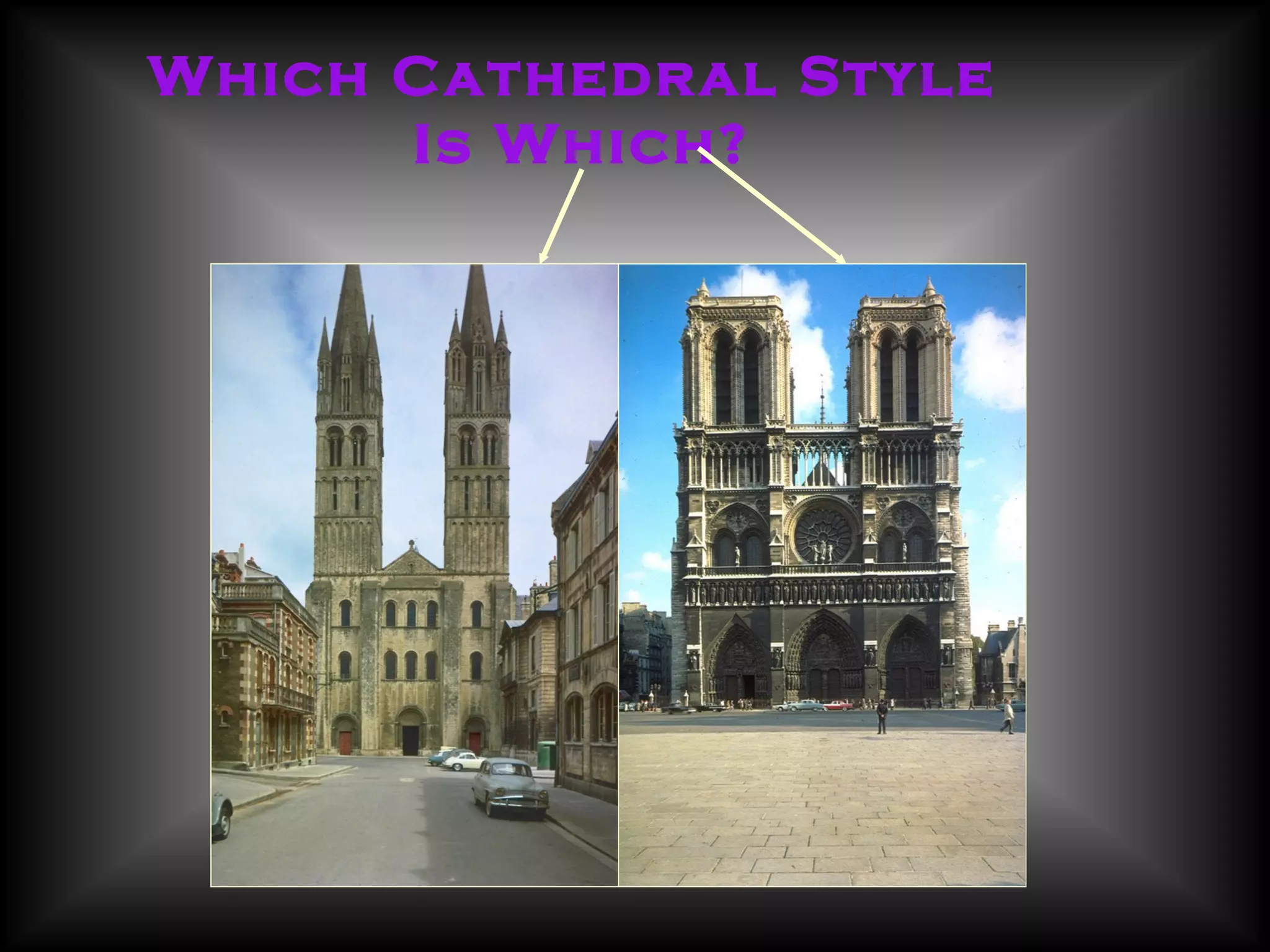
Gothic Cathedral Architectural Style Began in France in the 12 c . Pointed arches. Flying buttresses.  Stained glass windows. Elaborate, ornate interior. Taller, more airy    lots of light. Lavish sculpture    larger-than-life .
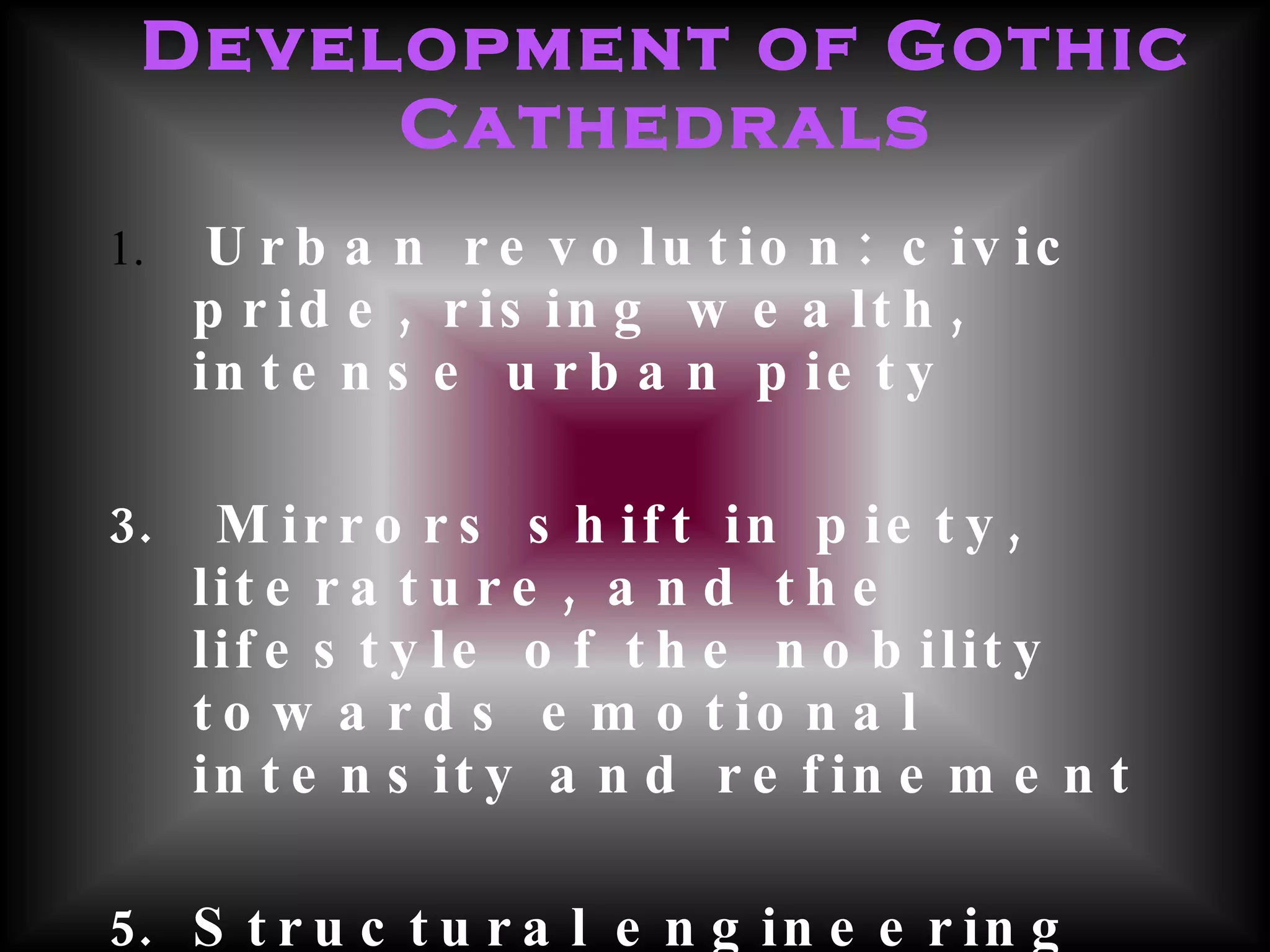
Development of Gothic Cathedrals Urban revolution: civic pride, rising wealth, intense urban piety Mirrors shift in piety, literature, and the lifestyle of the nobility towards emotional intensity and refinement  Structural engineering advances allowed for greater height and took the weight off the walls allowing for the installation of large windows
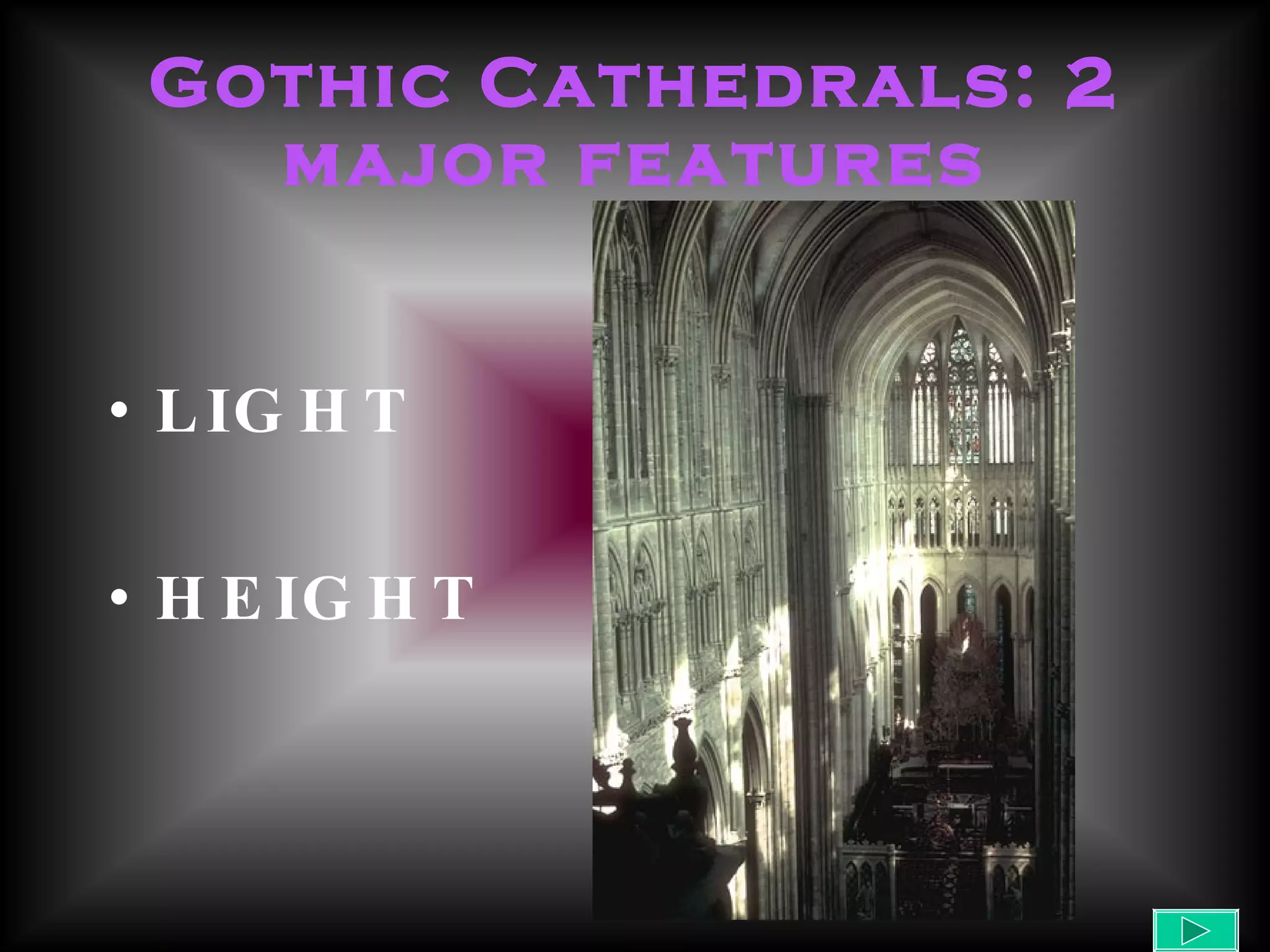
Gothic Cathedrals: 2 major features LIGHT HEIGHT
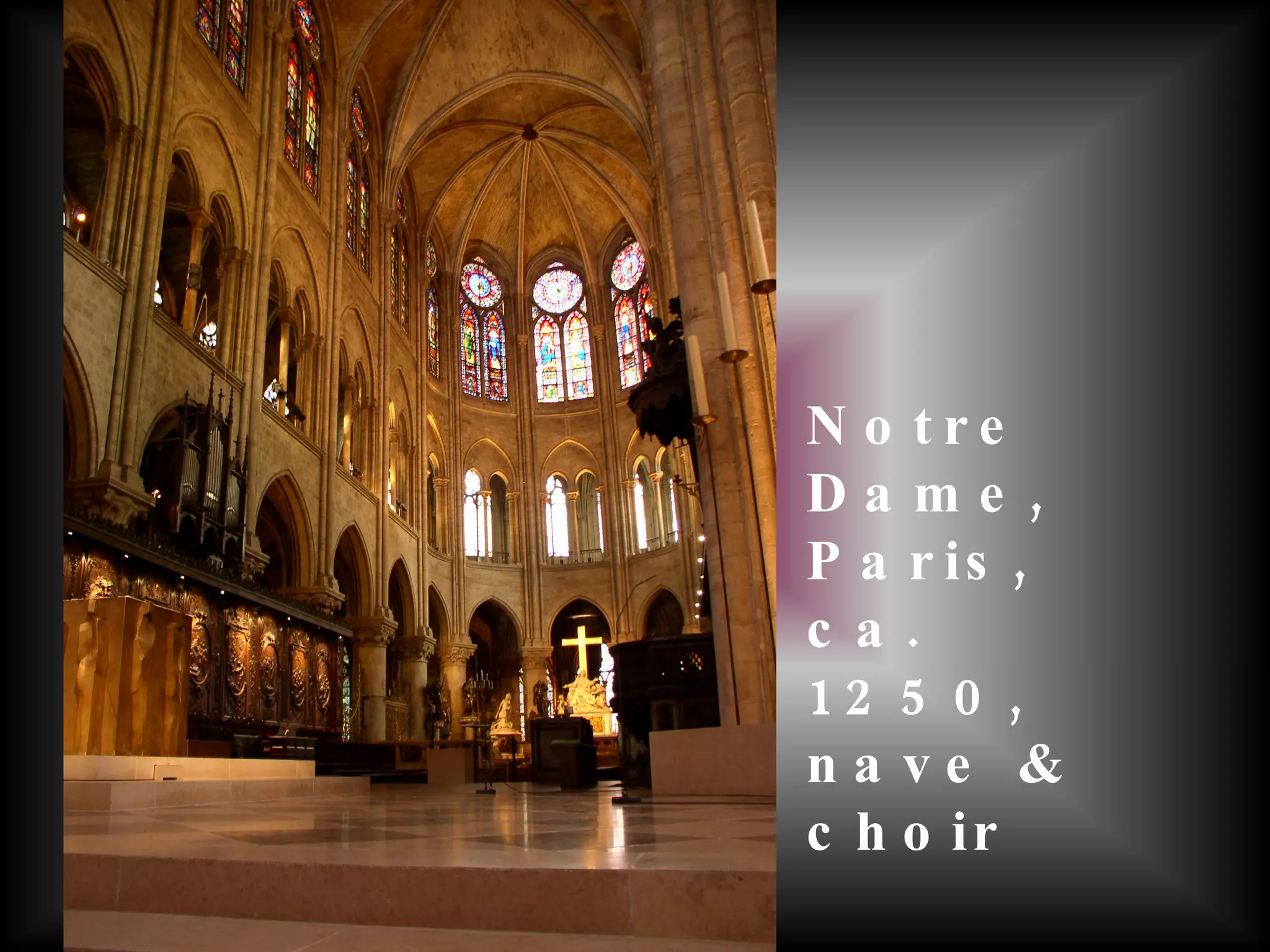
Notre Dame, Paris, ca. 1250, nave & choir
Interactive Elements Educational program   Inspiring mystical, emotional experience using light and height
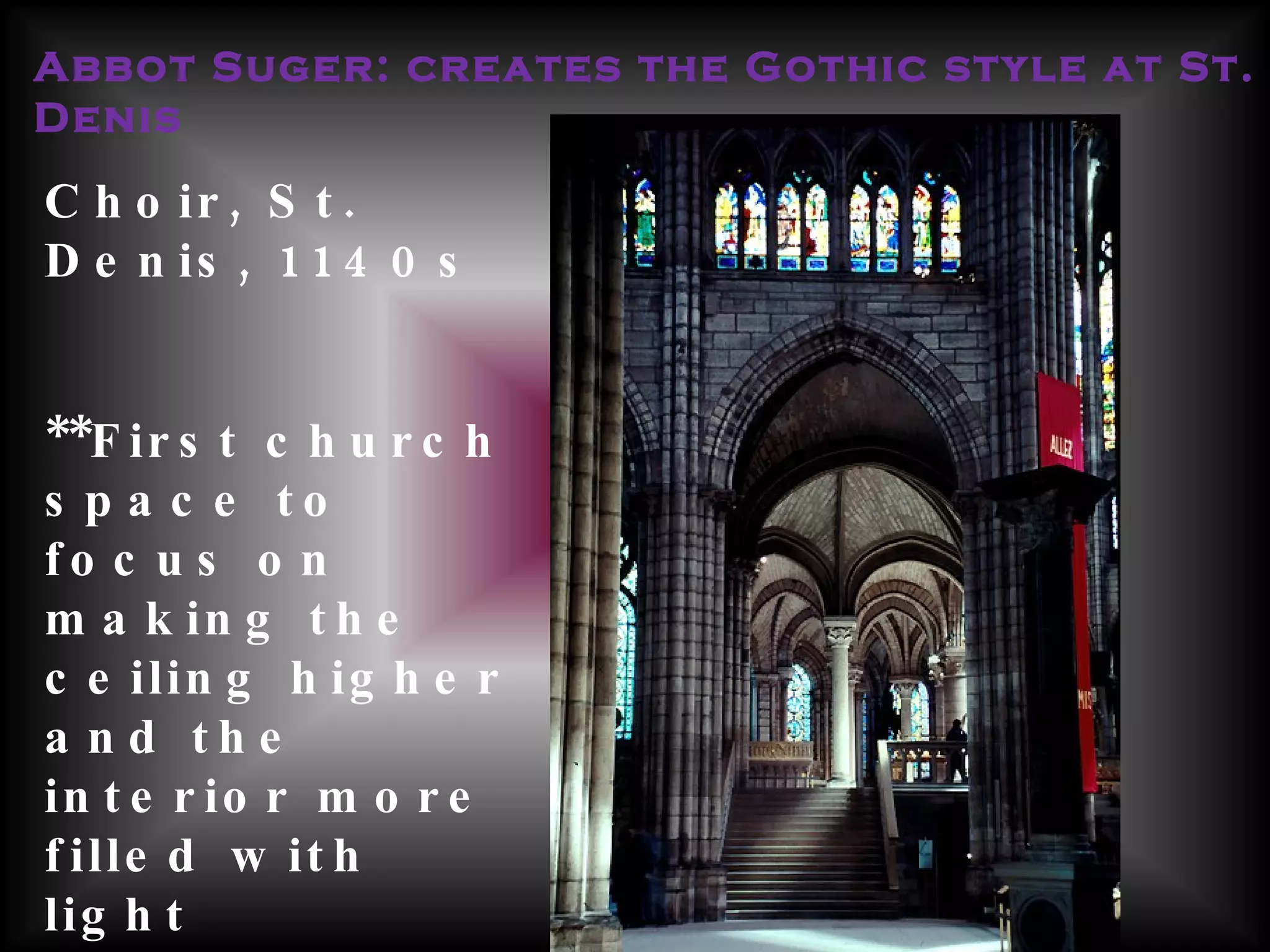
Abbot Suger: creates the Gothic style at St. Denis Choir, St. Denis, 1140s **First church space to focus on making the ceiling higher and the interior more filled with light  **Beginning of new style of church design in France
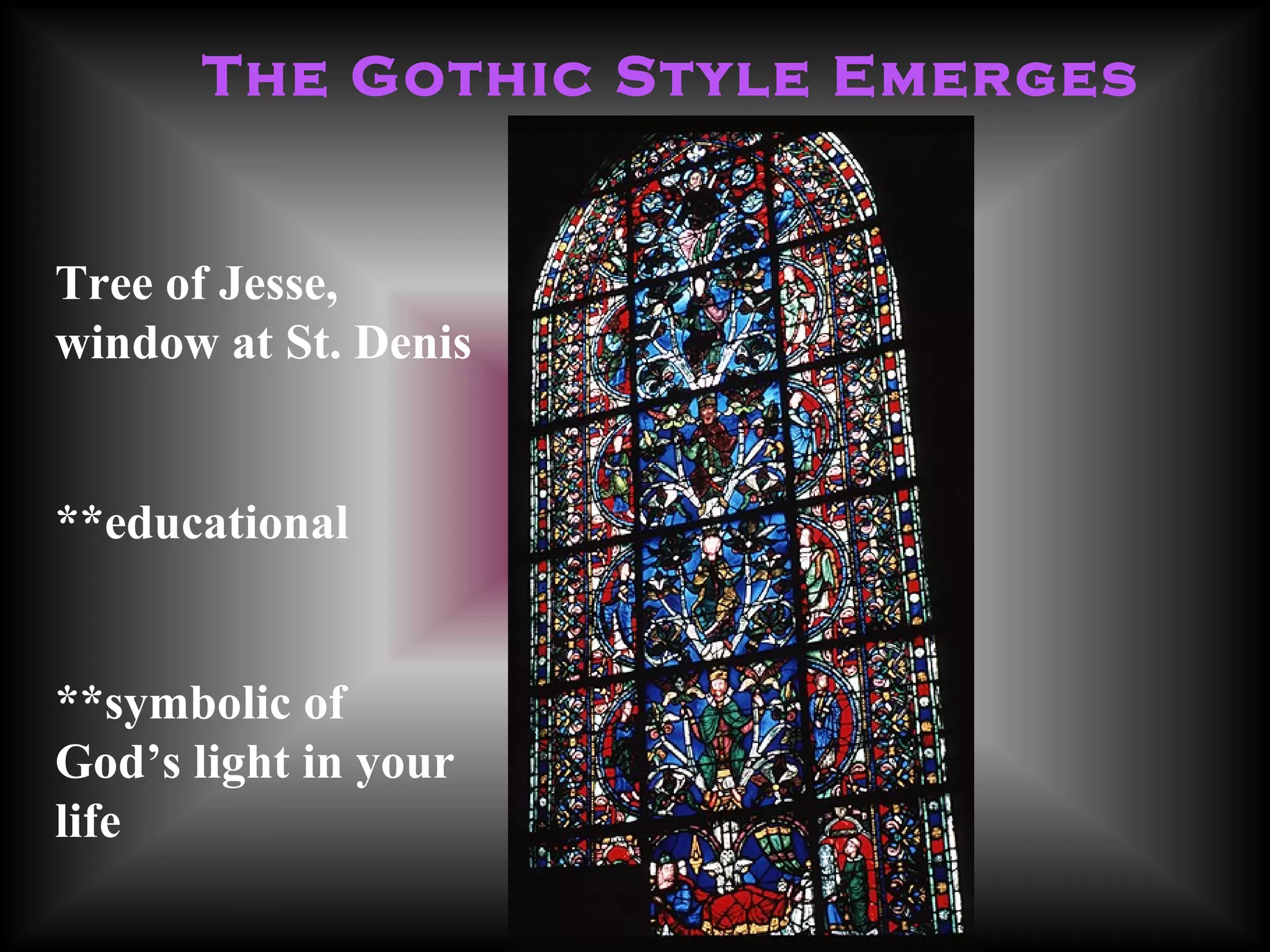
The Gothic Style Emerges Tree of Jesse, window at St. Denis **educational **symbolic of God’s light in your life
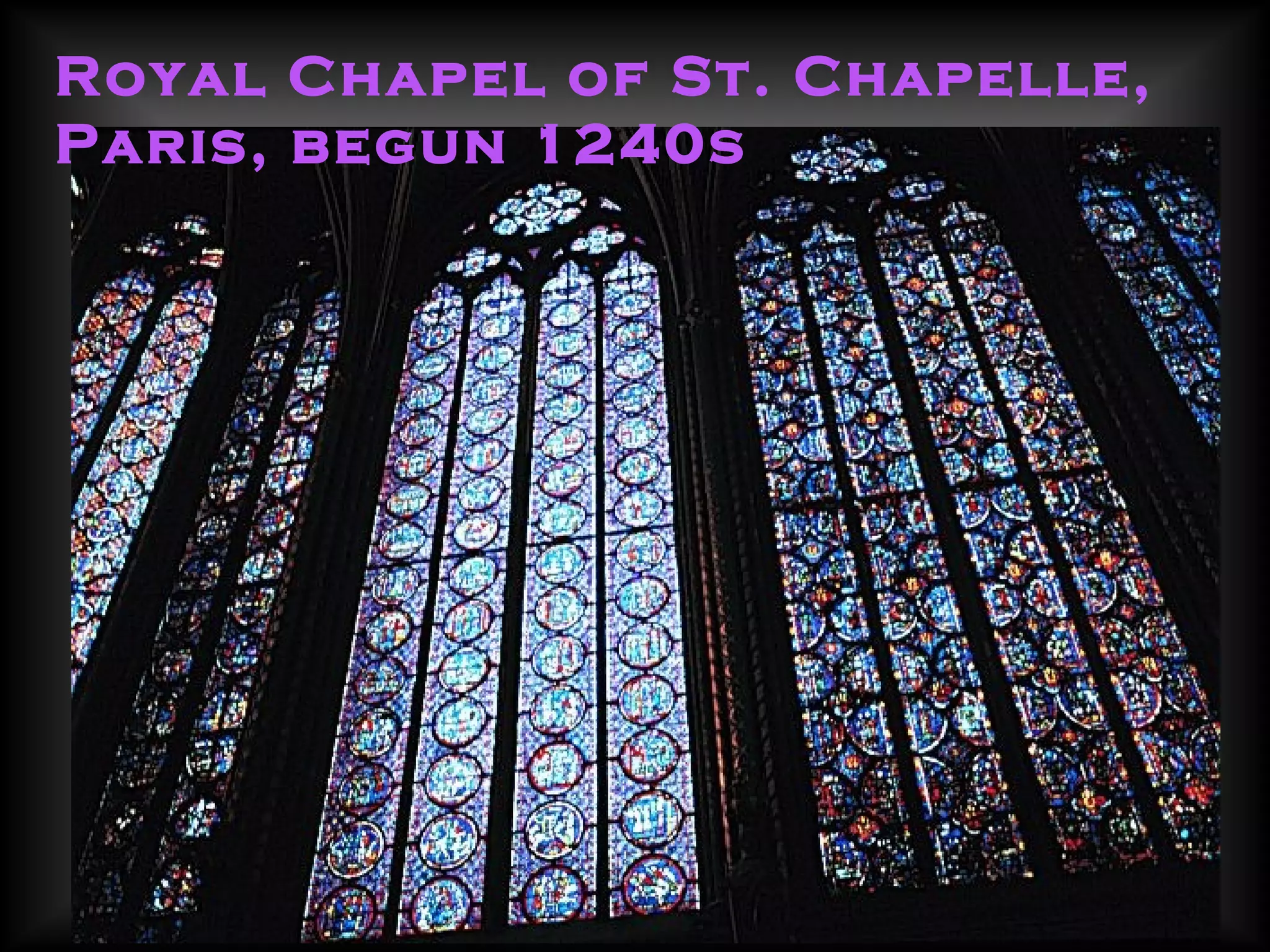
Royal Chapel of St. Chapelle, Paris, begun 1240s
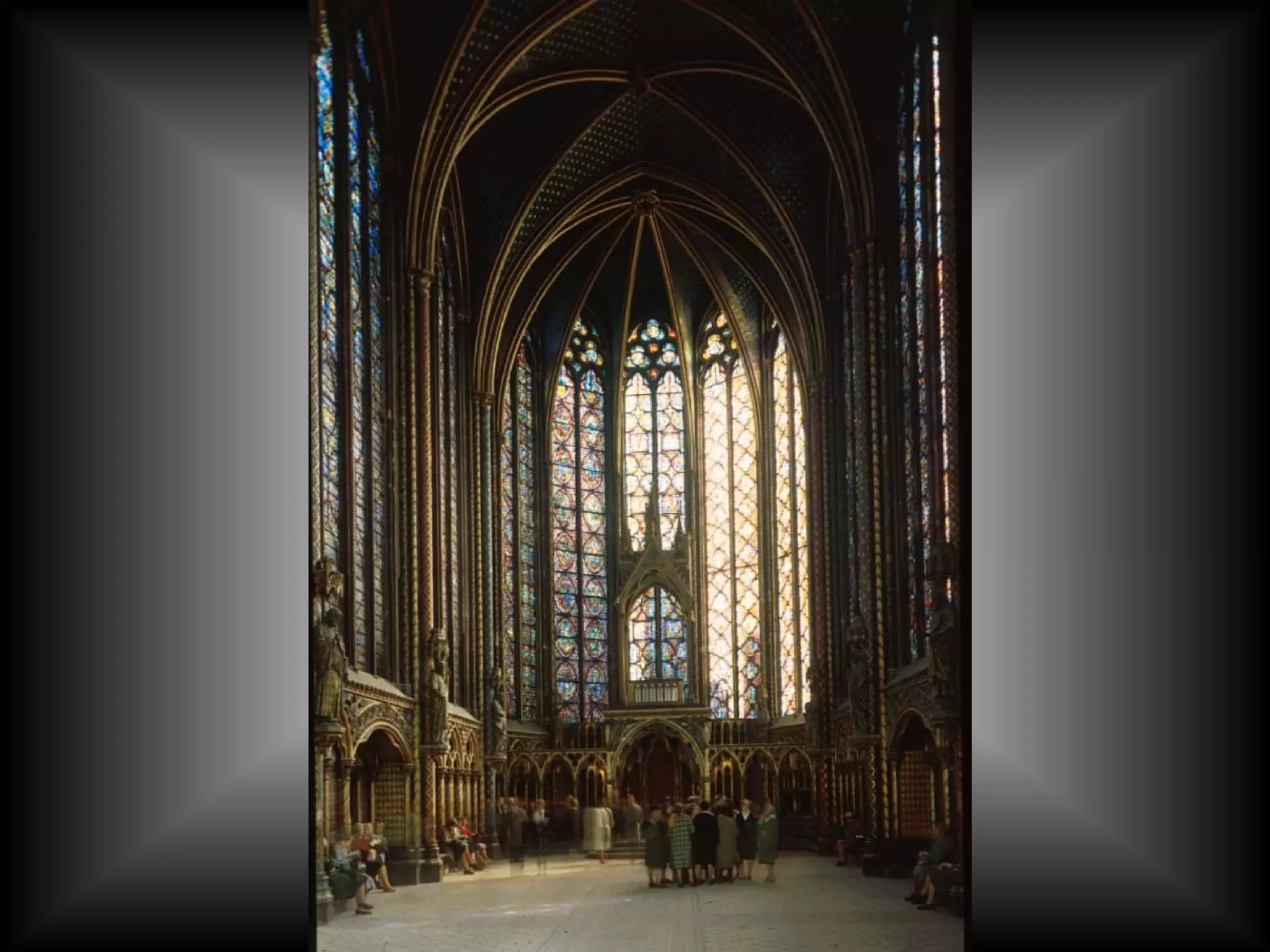
Sainte Chapelle, interior
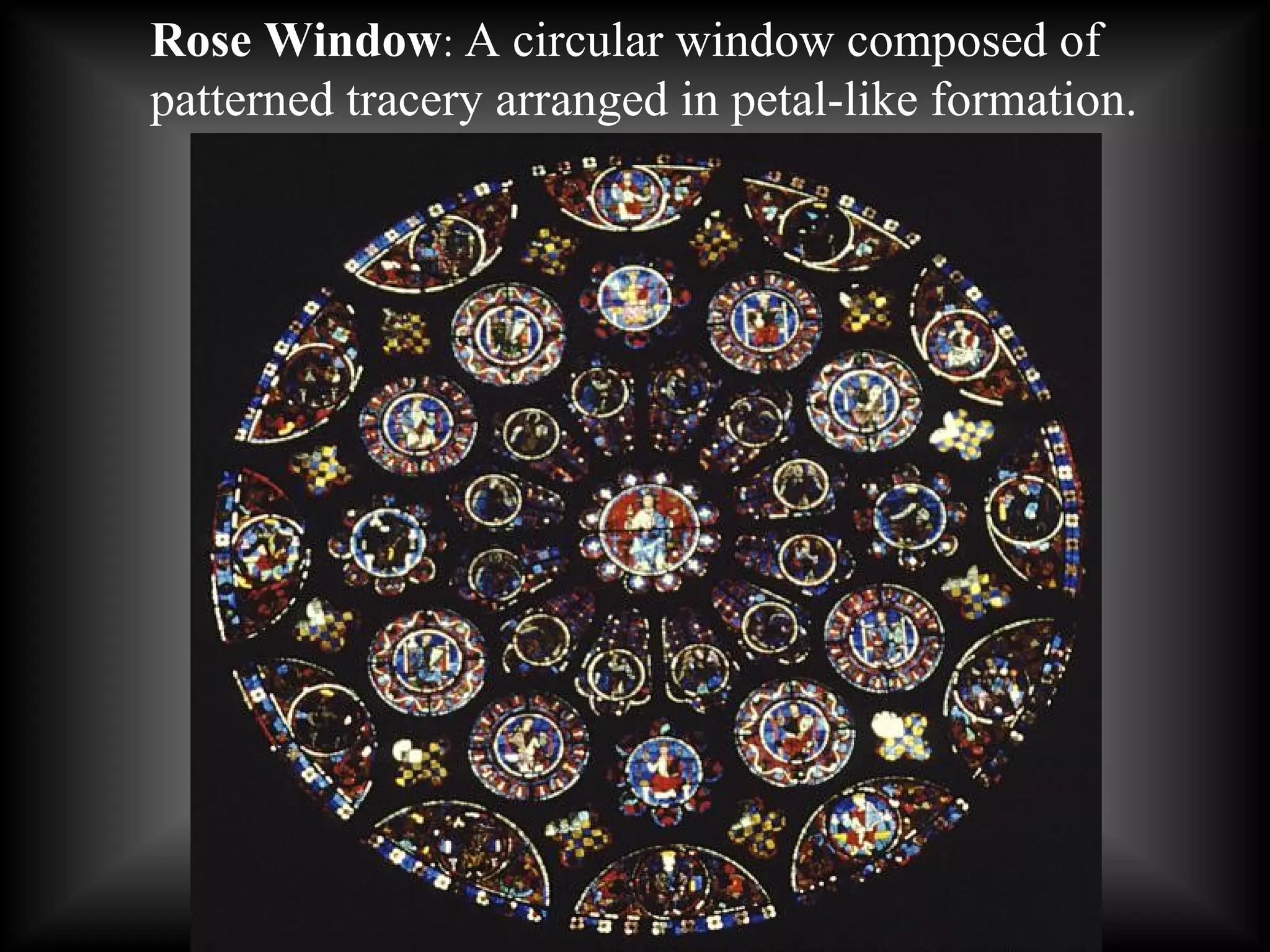
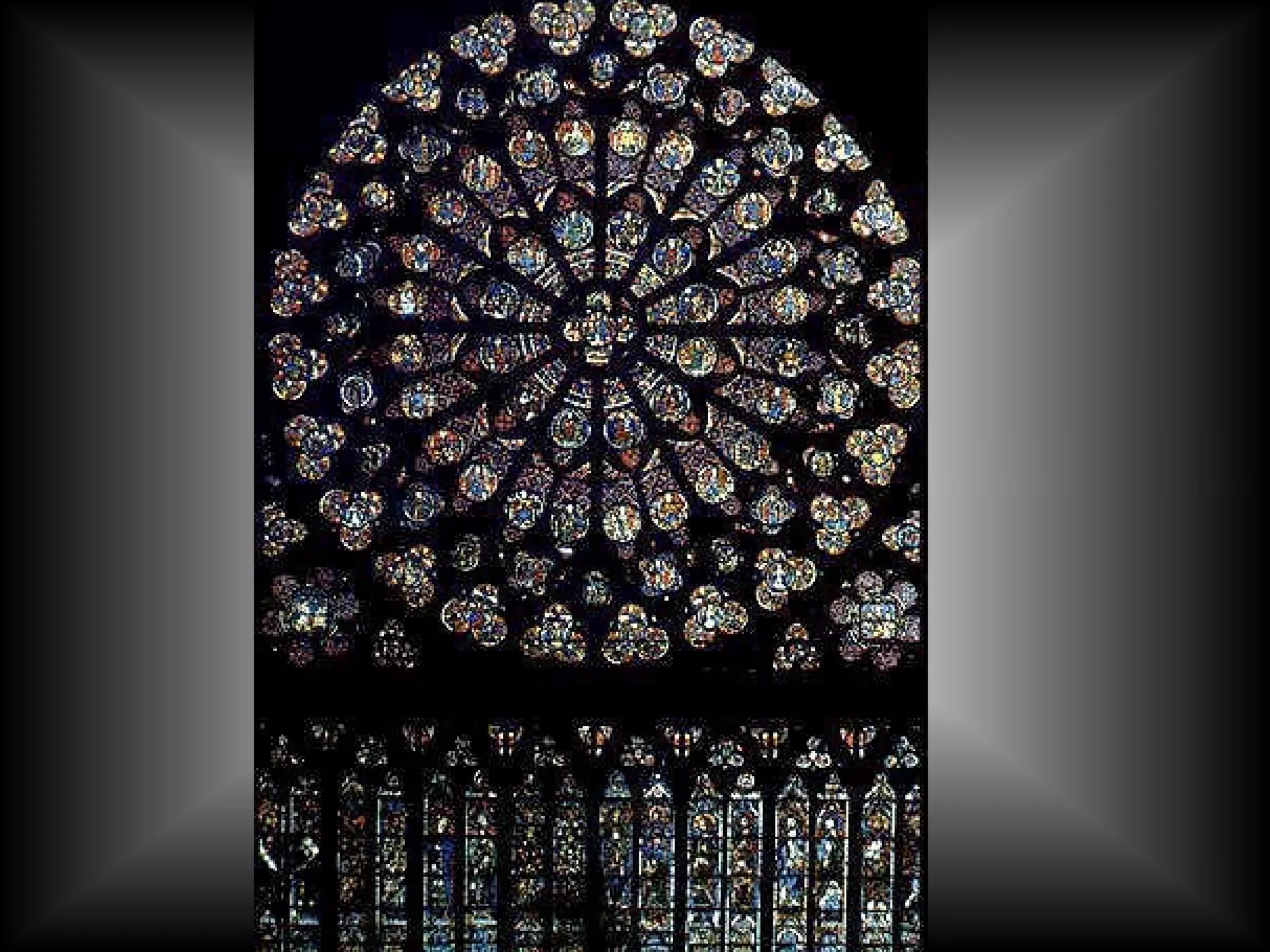
Rose Window :  A circular window composed of patterned tracery arranged in petal-like formation.
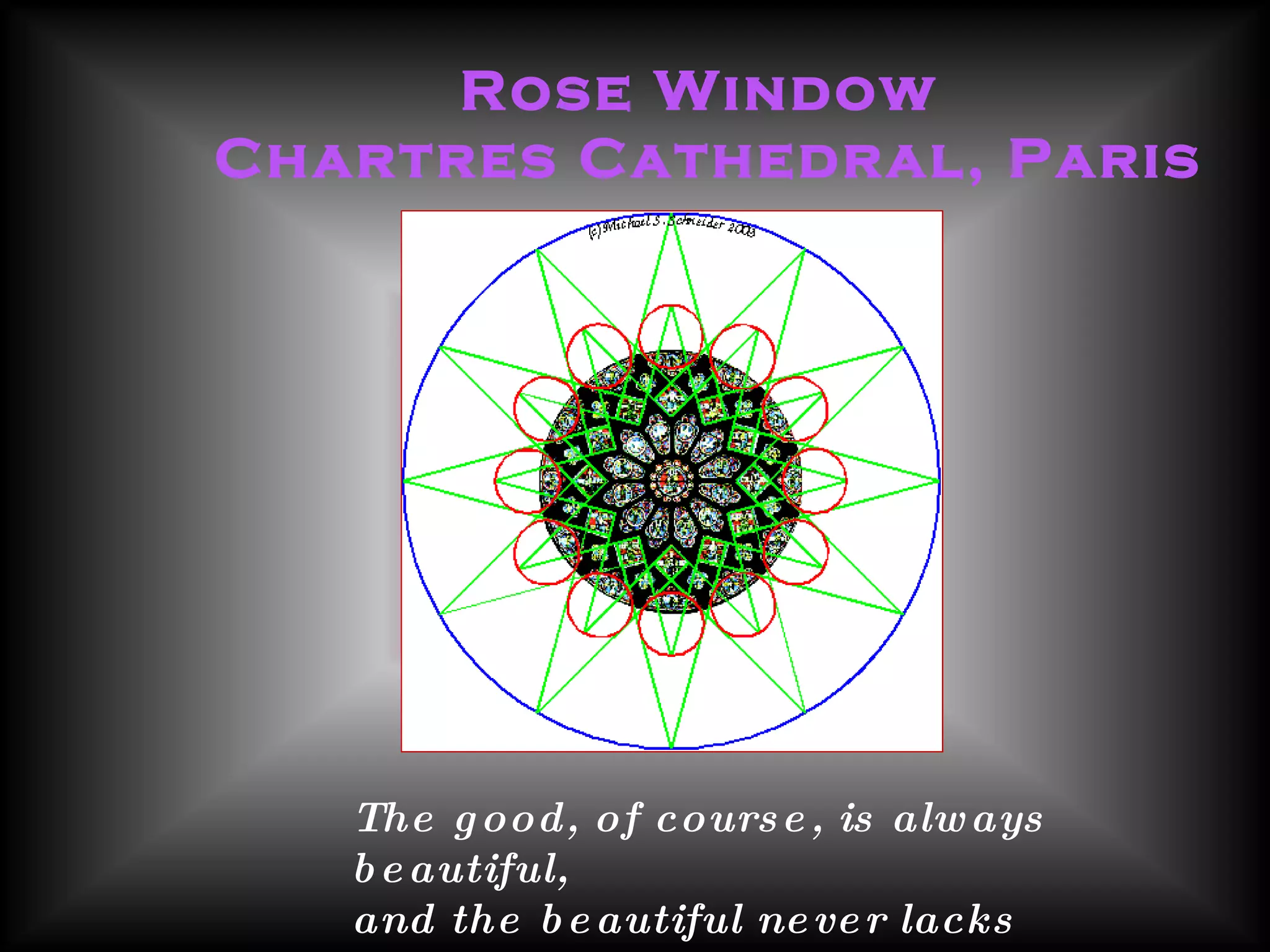
The good, of course, is always beautiful,  and the beautiful never lacks proportion.     --- Plato Rose Window  Chartres Cathedral, Paris
 
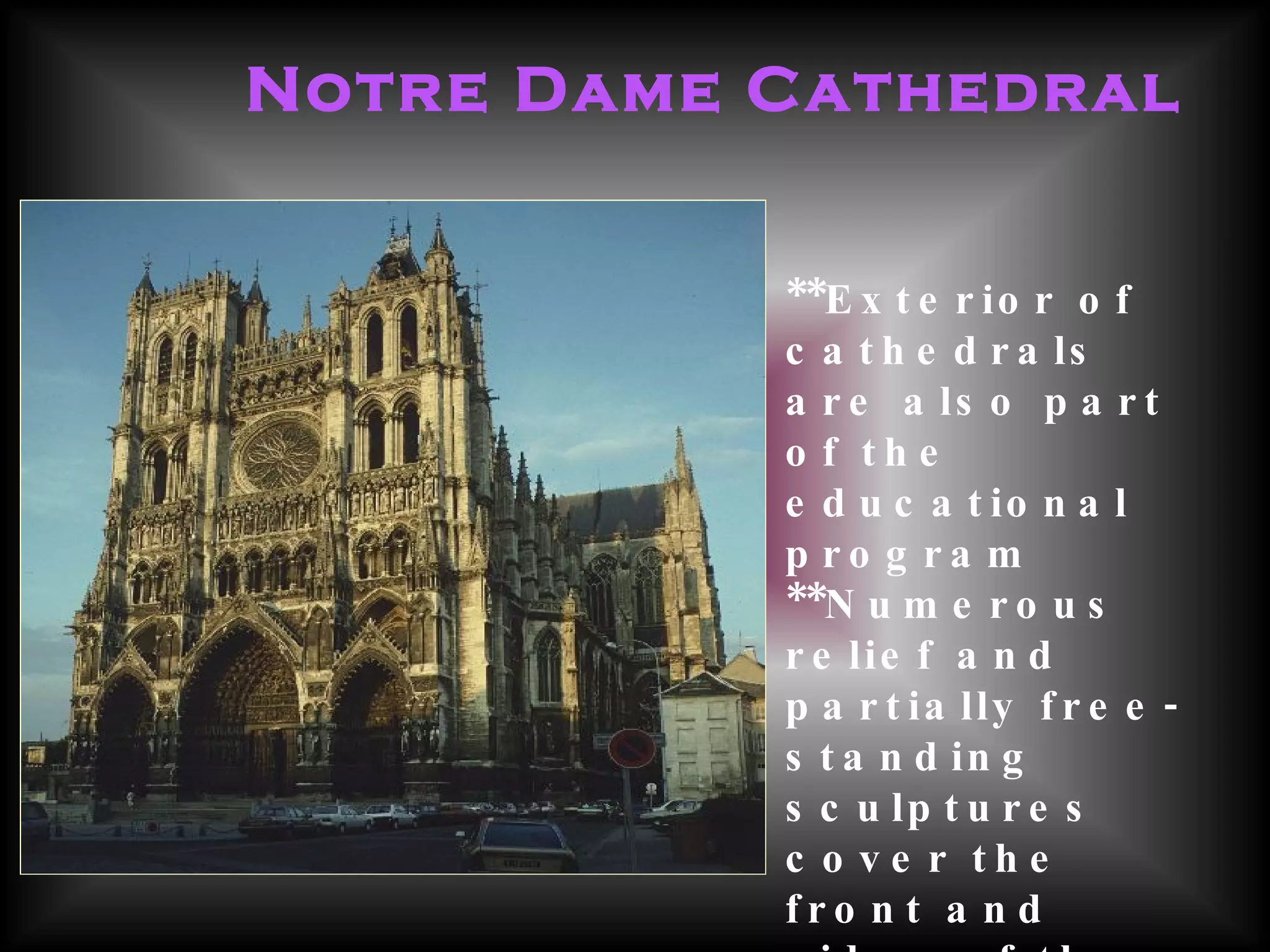
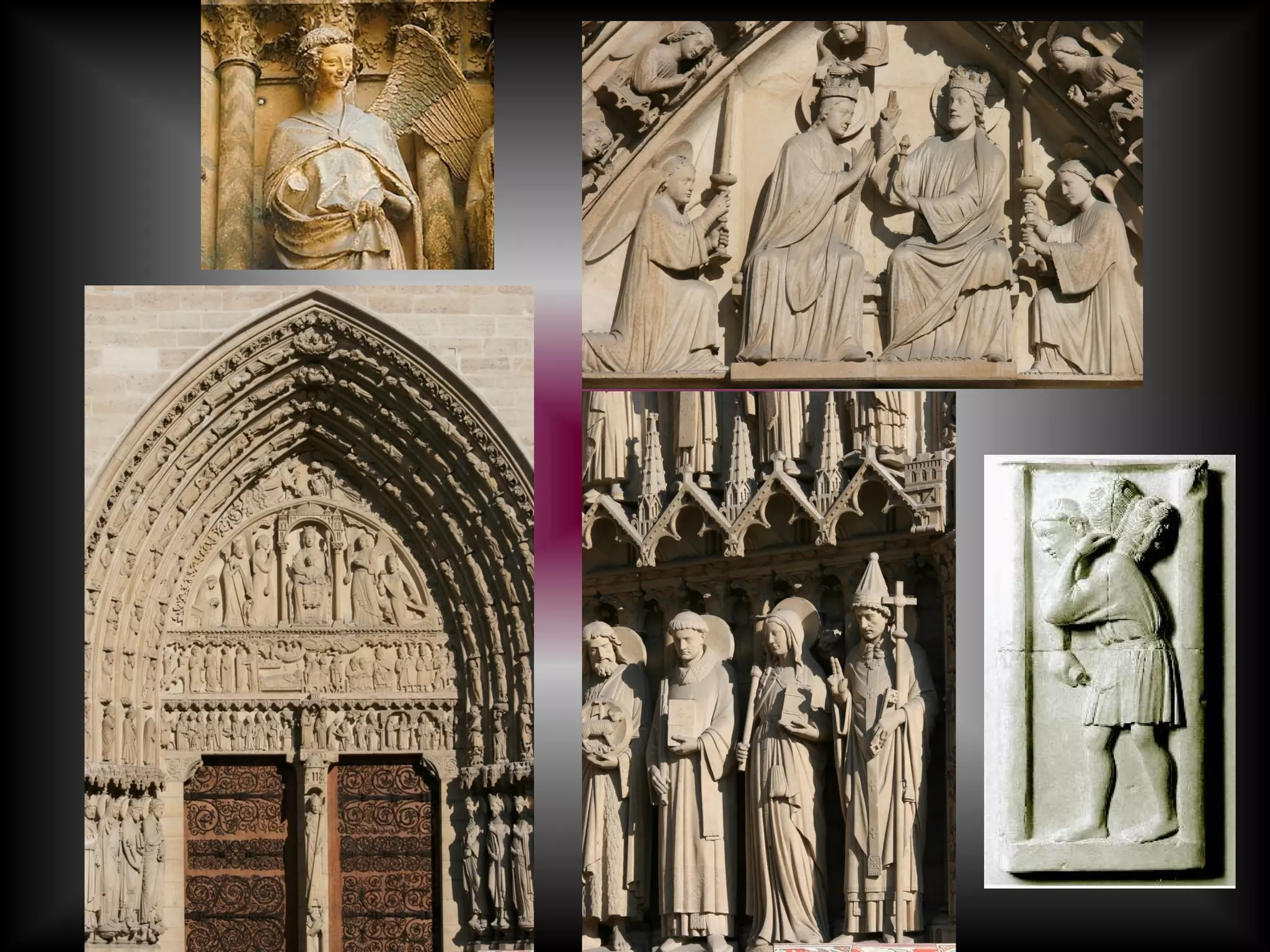
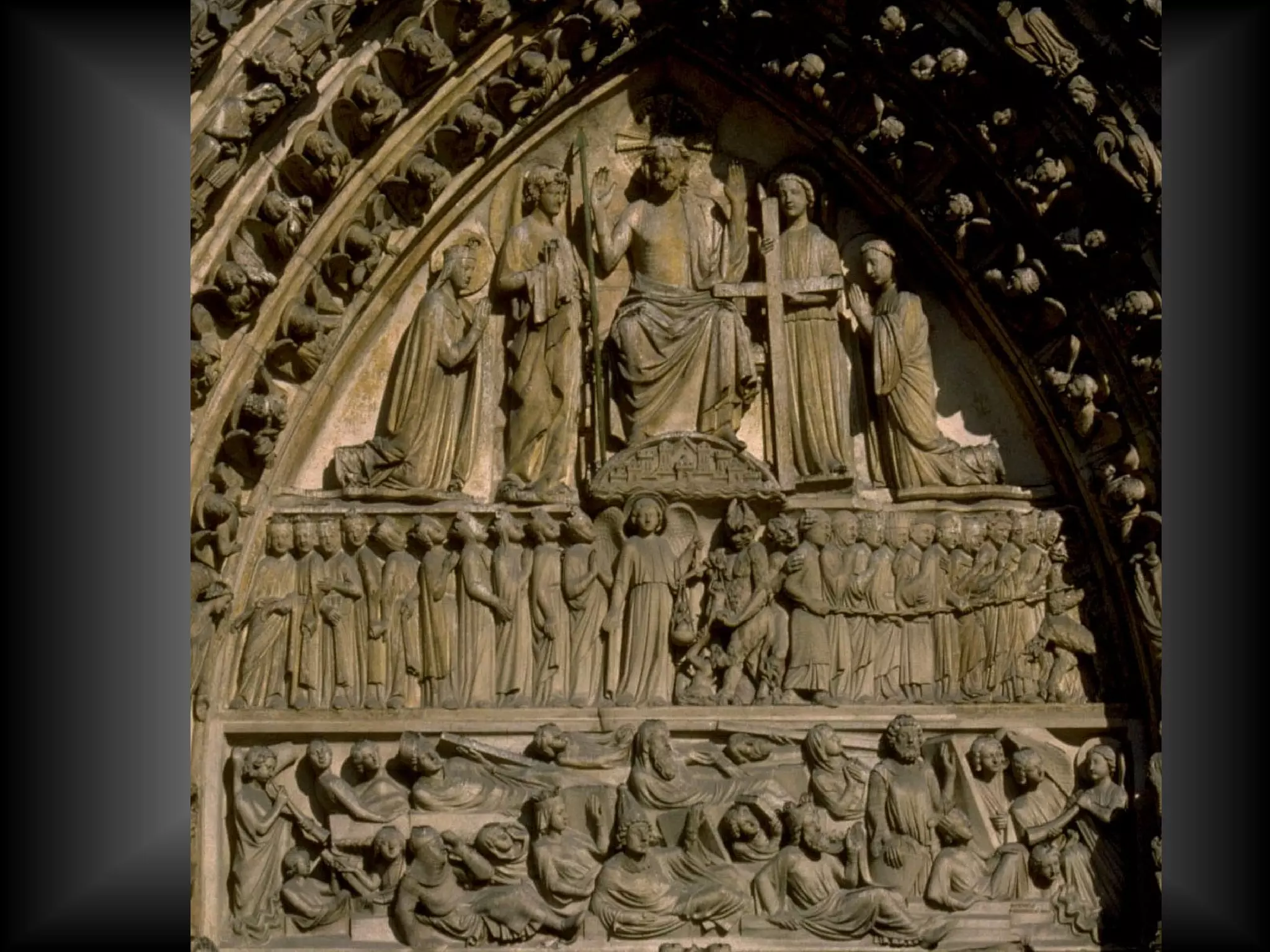
Notre Dame Cathedral **Exterior of cathedrals are also part of the educational program  **Numerous relief and partially free-standing sculptures cover the front and sides of the  structure—all carefully planned to be part of an overall religious program
 
Notre Dame, portal carvings
 
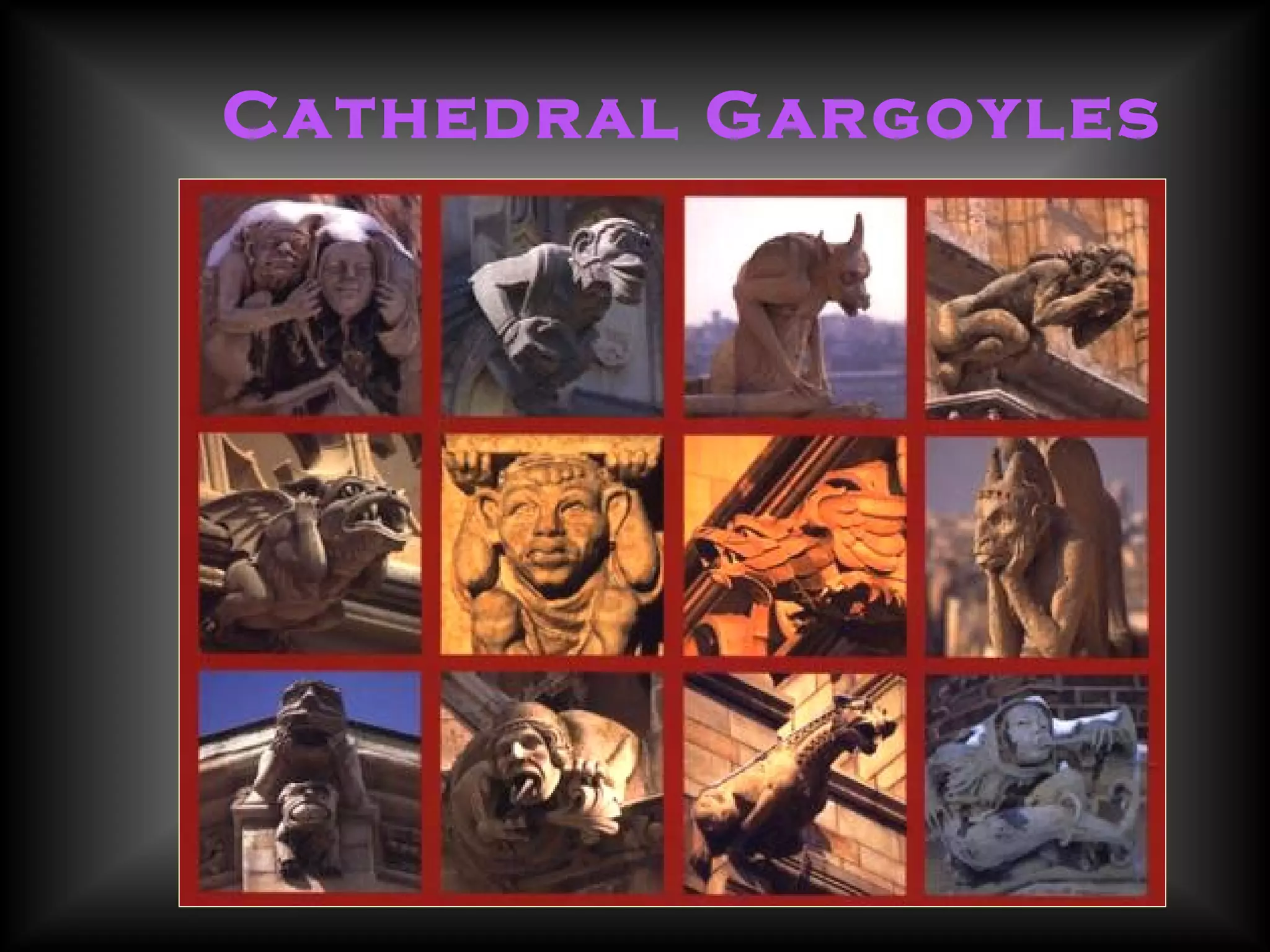
Cathedral Gargoyles
HEIGHT  Structural Elements Rib Vaults Pointed Arches  Flying Buttresses
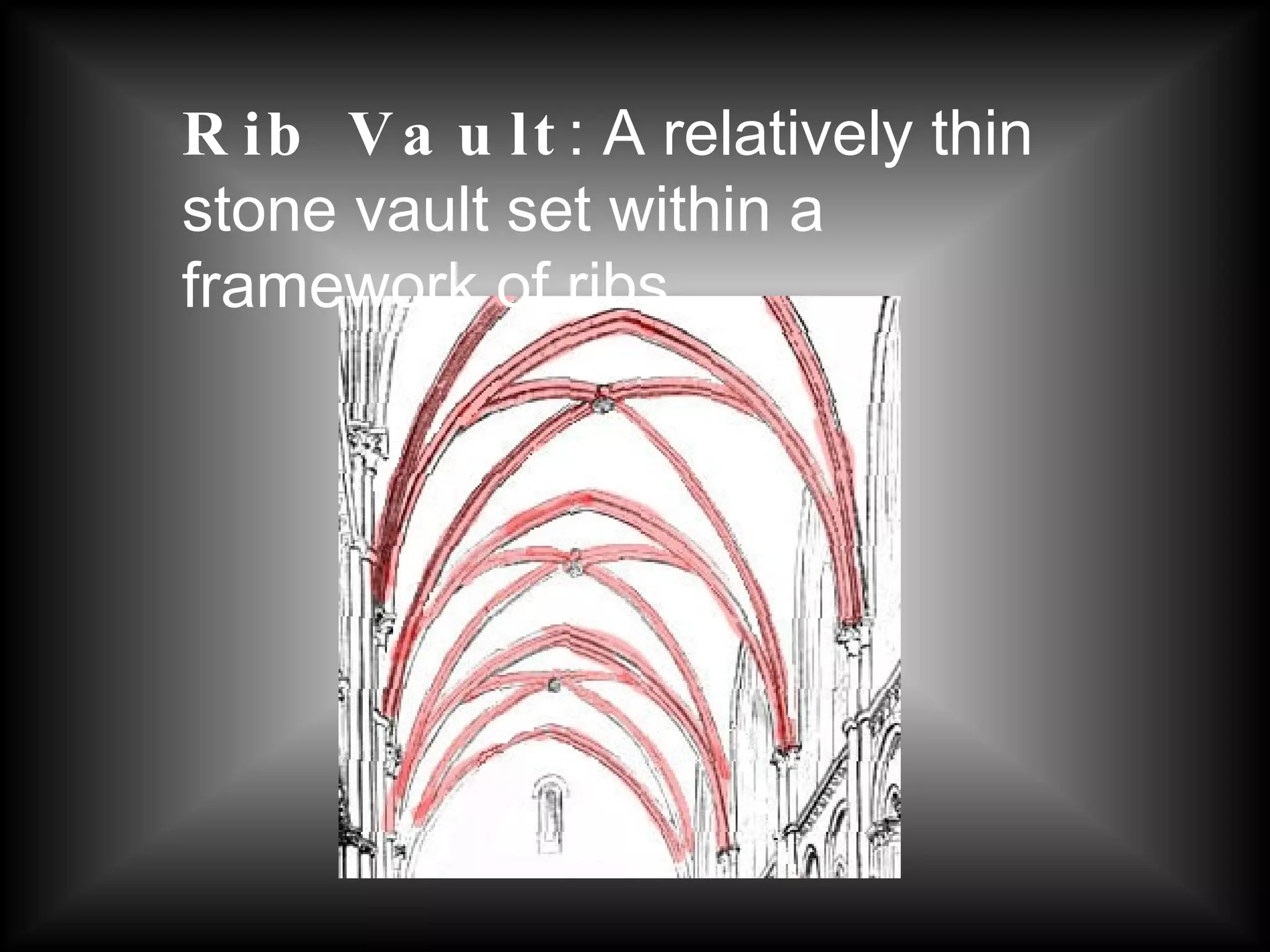
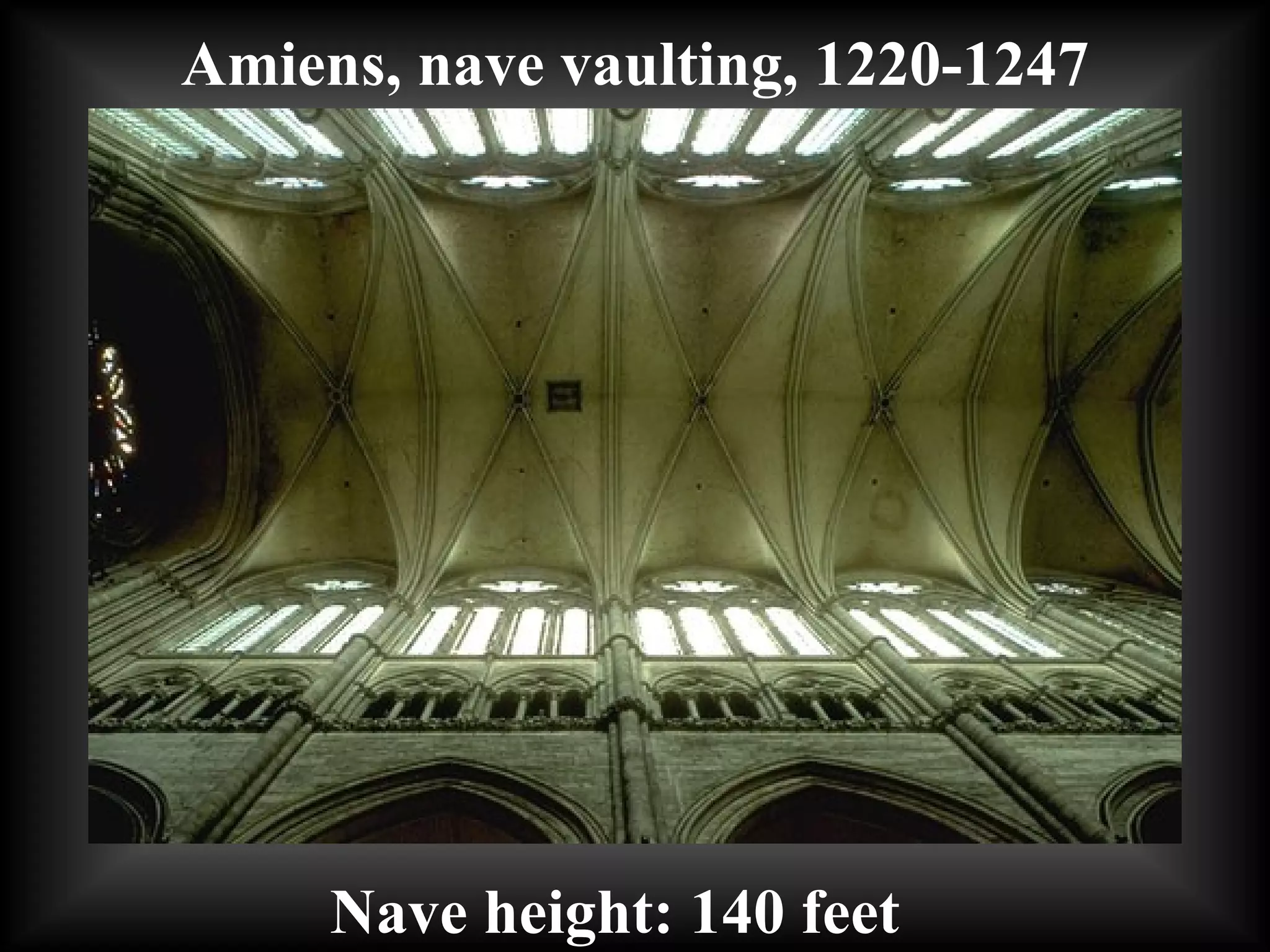
Rib Vault : A relatively thin stone vault set within a framework of ribs.
Amiens, nave vaulting, 1220-1247 Nave height: 140 feet
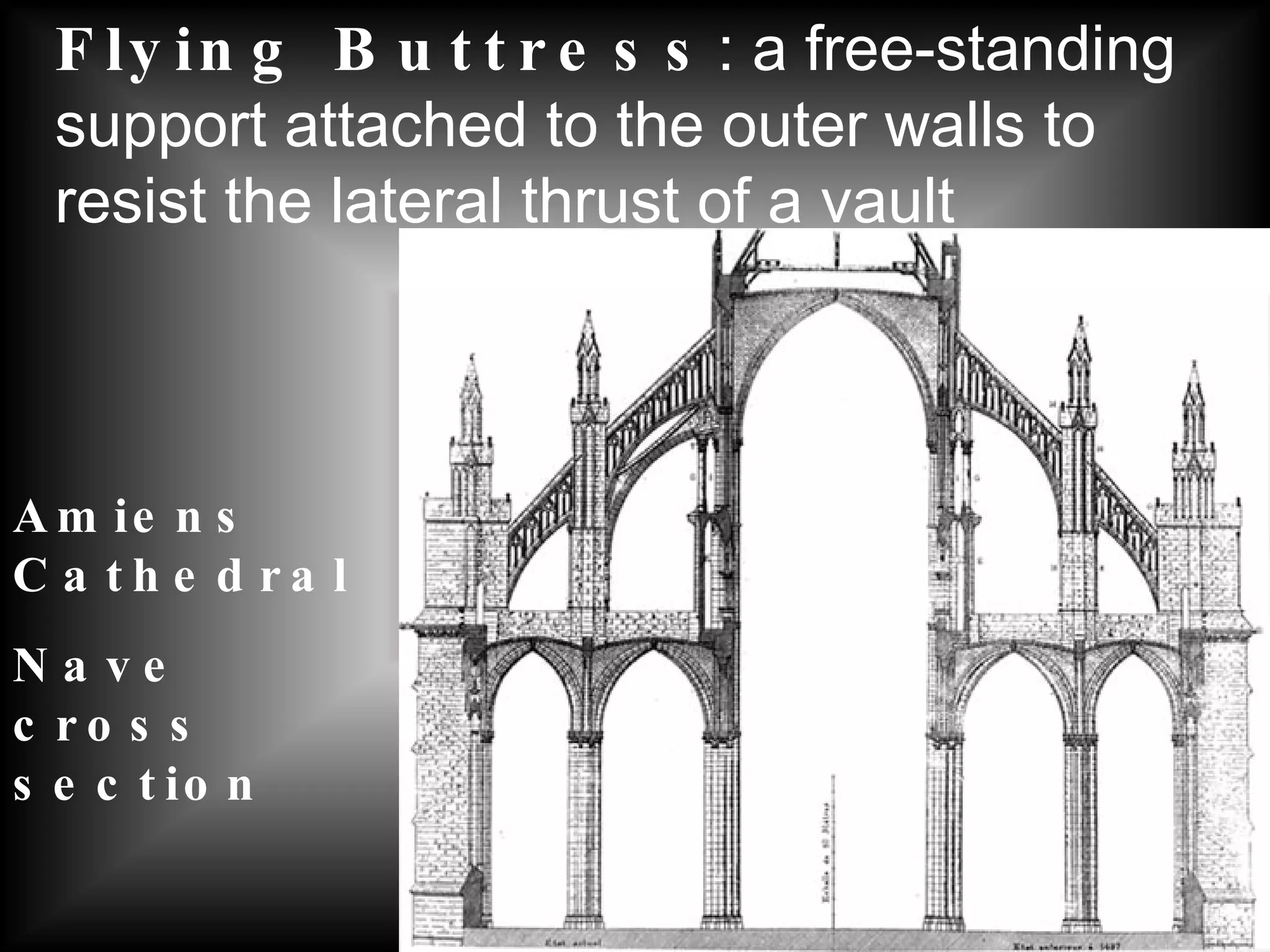
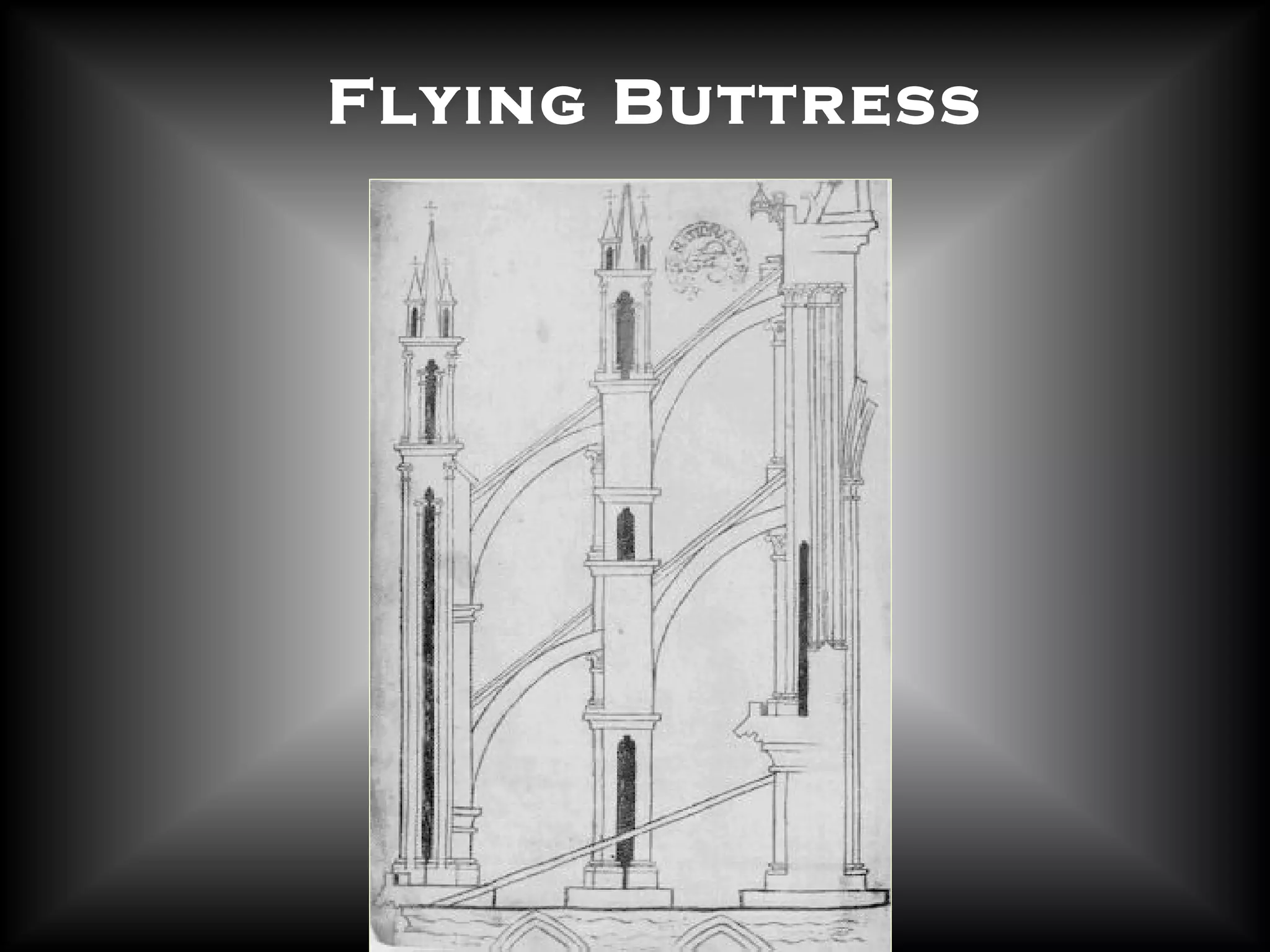
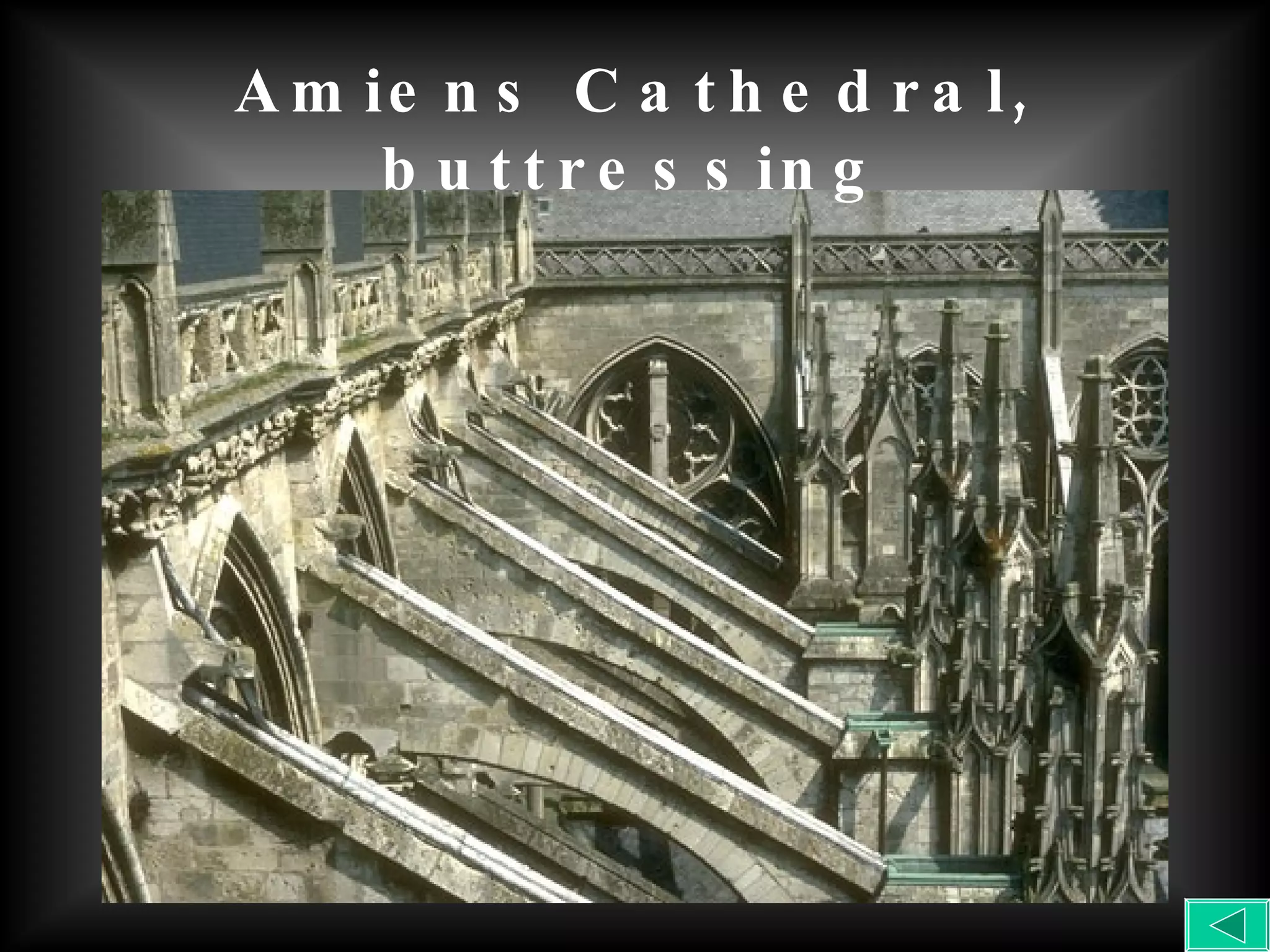
Flying Buttress : a free-standing support attached to the outer walls to resist the lateral thrust of a vault Amiens Cathedral Nave cross section
Flying Buttress
Amiens Cathedral, buttressing
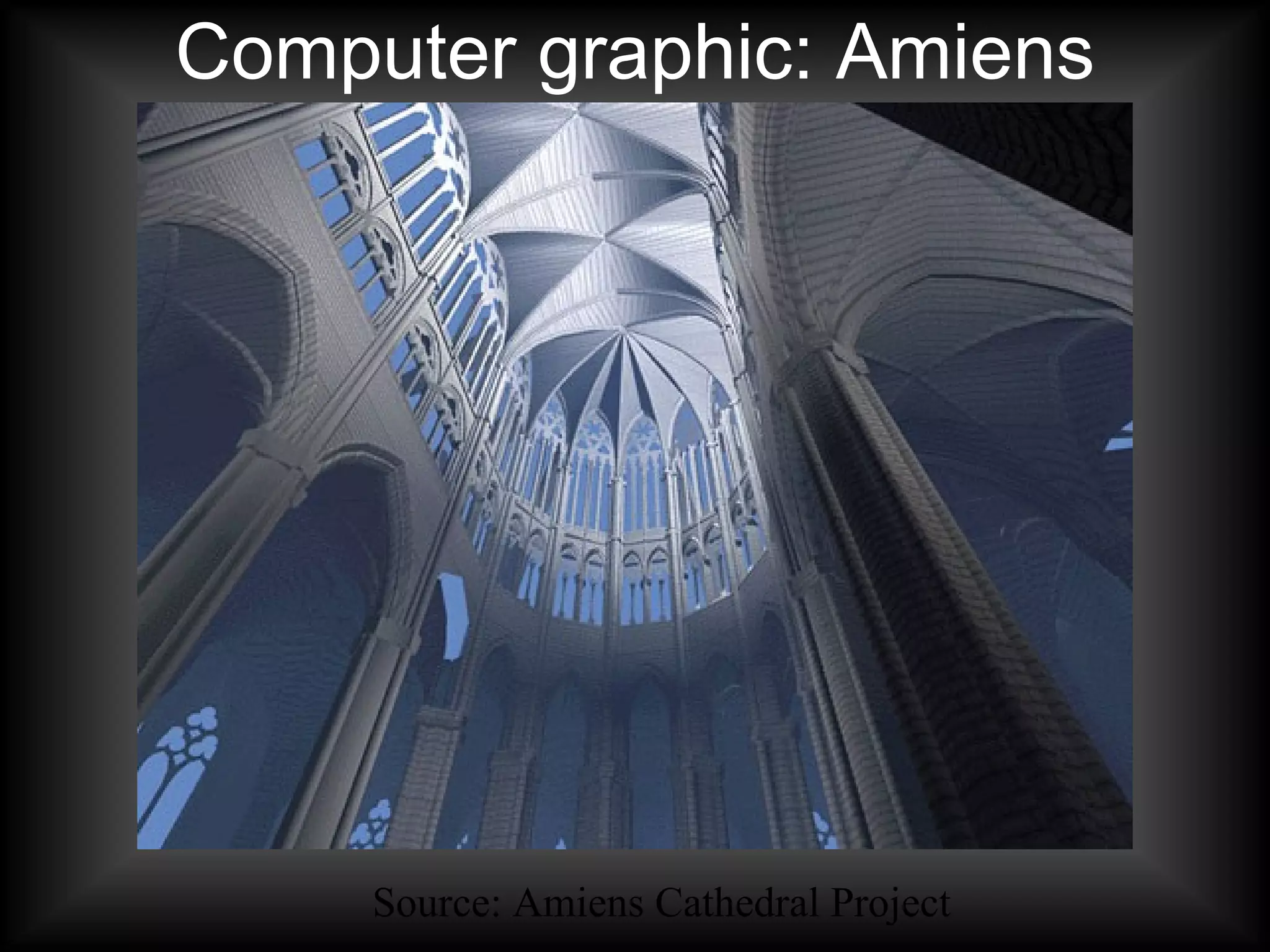
Computer graphic: Amiens Source: Amiens Cathedral Project
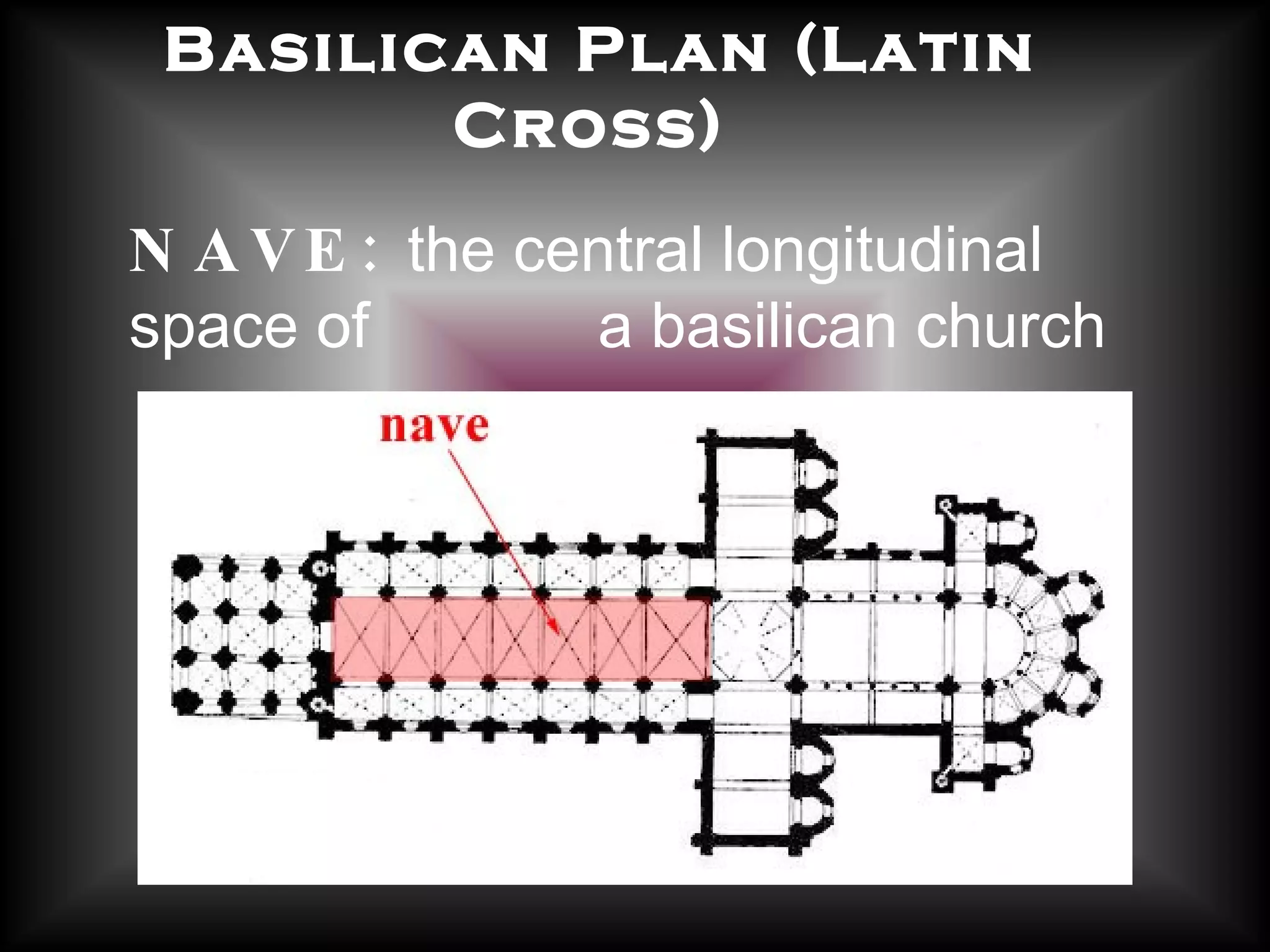
Basilican Floor Plan (Latin Cross)  Cathedrals were usually oriented along an east-west axis.  The main entrance was on the west end while the liturgical stuff (altar, bishop’s throne, etc.) was located in the east end.  They had the shape of a Latin cross.
NAVE:   the central longitudinal space of    a basilican church  Basilican Plan (Latin Cross)
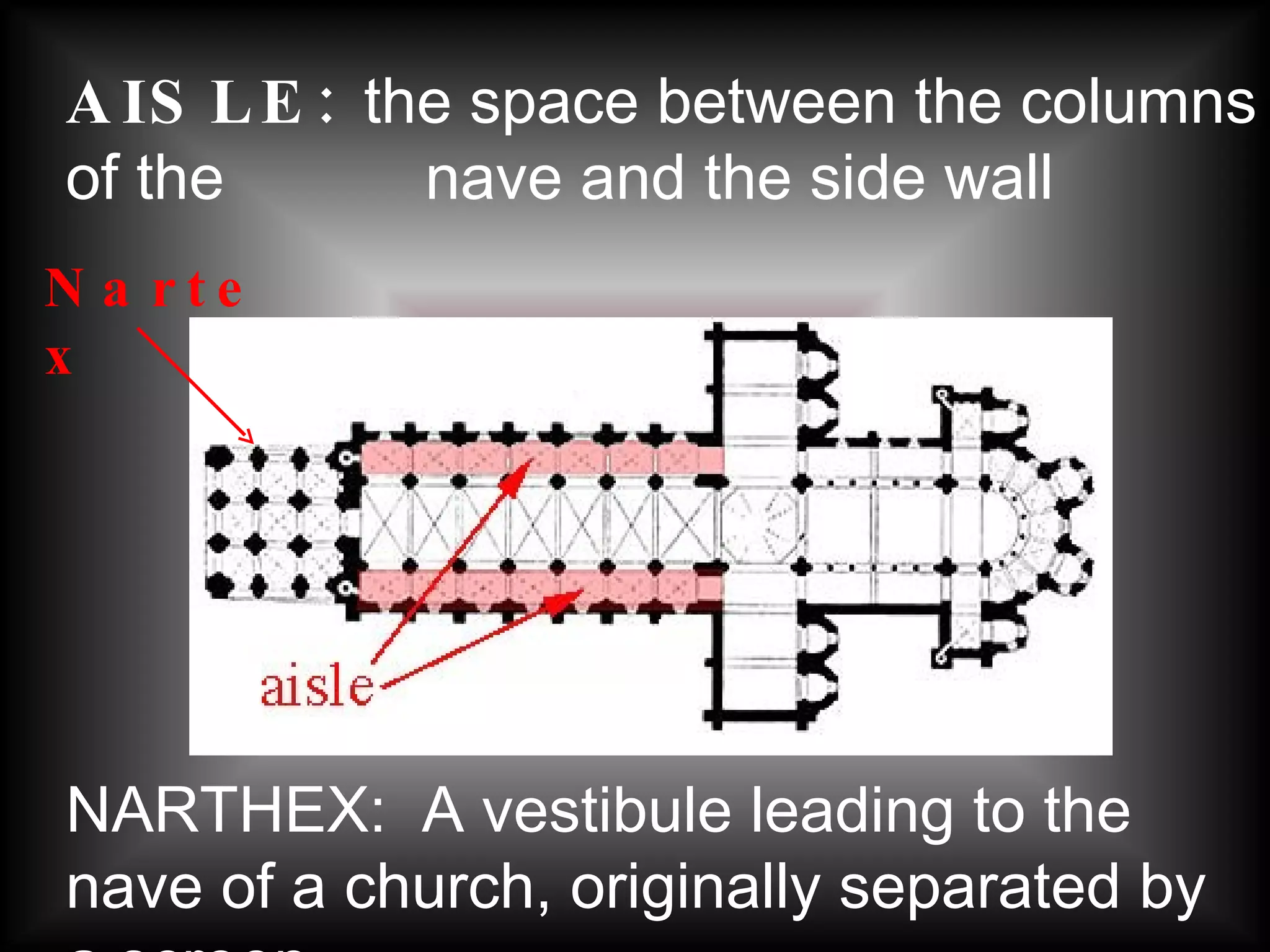
AISLE:   the space between the columns of the    nave and the side wall  Nartex NARTHEX:  A vestibule leading to the nave of a church, originally separated by a screen
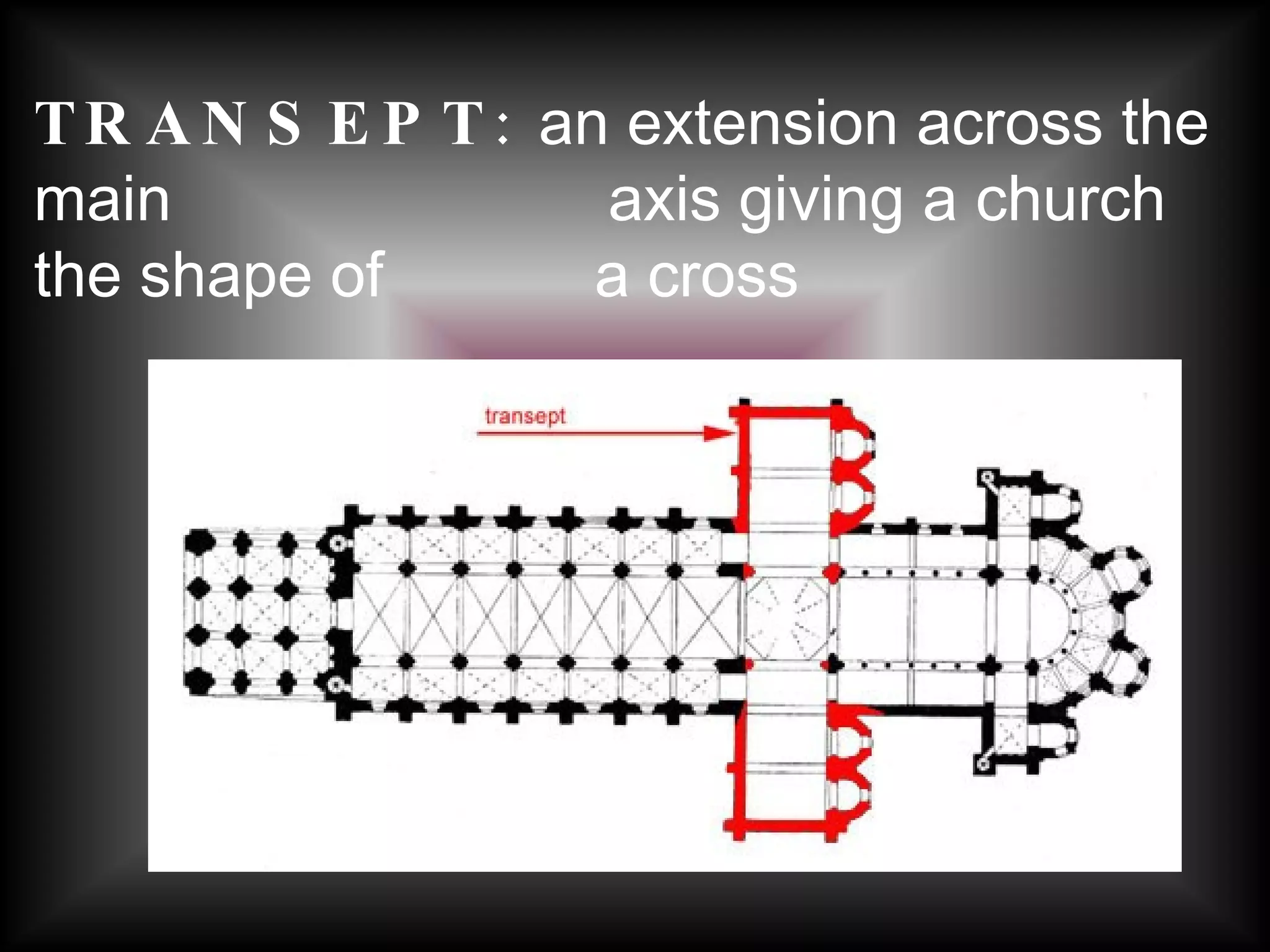
TRANSEPT :  an extension across the main      axis giving a church the shape of    a cross
apse Crossing : area of a church where the nave, choir,     and transept intersect  Choir:   area of the church where the priest        performs the mass  Apse:  vaulted, circular extension or projection at  the eastern end of a church
Which Interior Is Which?
Which Cathedral Style  Is Which?

Gothic Cathedral

  • 1.
  • 2.
    THE GOTHIC CATHEDRALOBJECTIVES Understand the key structural components of the Gothic cathedral Explain the origins of the Gothic style Analyze the cathedral as an interactive environment Explain the symbolic properties of light and height in the Gothic cathedral
  • 3.
  • 4.
    Notre Dame, Paris,1163-1267 THE GOTHIC CATHEDRAL
  • 5.
    Romanesque style: Ste.Marie, Souillac, France. c. 1130
  • 6.
    Gothic style: AbbeyChurch of St. Denis, France, 1220s
  • 7.
    Gothic Cathedral ArchitecturalStyle Began in France in the 12 c . Pointed arches. Flying buttresses. Stained glass windows. Elaborate, ornate interior. Taller, more airy  lots of light. Lavish sculpture  larger-than-life .
  • 8.
    Development of GothicCathedrals Urban revolution: civic pride, rising wealth, intense urban piety Mirrors shift in piety, literature, and the lifestyle of the nobility towards emotional intensity and refinement Structural engineering advances allowed for greater height and took the weight off the walls allowing for the installation of large windows
  • 9.
    Gothic Cathedrals: 2major features LIGHT HEIGHT
  • 10.
    Notre Dame, Paris,ca. 1250, nave & choir
  • 11.
    Interactive Elements Educationalprogram Inspiring mystical, emotional experience using light and height
  • 12.
    Abbot Suger: createsthe Gothic style at St. Denis Choir, St. Denis, 1140s **First church space to focus on making the ceiling higher and the interior more filled with light **Beginning of new style of church design in France
  • 13.
    The Gothic StyleEmerges Tree of Jesse, window at St. Denis **educational **symbolic of God’s light in your life
  • 14.
    Royal Chapel ofSt. Chapelle, Paris, begun 1240s
  • 15.
  • 16.
    Rose Window : A circular window composed of patterned tracery arranged in petal-like formation.
  • 17.
    The good, ofcourse, is always beautiful, and the beautiful never lacks proportion. --- Plato Rose Window Chartres Cathedral, Paris
  • 18.
  • 19.
    Notre Dame Cathedral**Exterior of cathedrals are also part of the educational program **Numerous relief and partially free-standing sculptures cover the front and sides of the structure—all carefully planned to be part of an overall religious program
  • 20.
  • 21.
  • 22.
  • 23.
  • 24.
    HEIGHT StructuralElements Rib Vaults Pointed Arches Flying Buttresses
  • 25.
    Rib Vault :A relatively thin stone vault set within a framework of ribs.
  • 26.
    Amiens, nave vaulting,1220-1247 Nave height: 140 feet
  • 27.
    Flying Buttress :a free-standing support attached to the outer walls to resist the lateral thrust of a vault Amiens Cathedral Nave cross section
  • 28.
  • 29.
  • 30.
    Computer graphic: AmiensSource: Amiens Cathedral Project
  • 31.
    Basilican Floor Plan(Latin Cross) Cathedrals were usually oriented along an east-west axis. The main entrance was on the west end while the liturgical stuff (altar, bishop’s throne, etc.) was located in the east end. They had the shape of a Latin cross.
  • 32.
    NAVE: the central longitudinal space of a basilican church Basilican Plan (Latin Cross)
  • 33.
    AISLE: the space between the columns of the nave and the side wall Nartex NARTHEX: A vestibule leading to the nave of a church, originally separated by a screen
  • 34.
    TRANSEPT : an extension across the main axis giving a church the shape of a cross
  • 35.
    apse Crossing :area of a church where the nave, choir, and transept intersect Choir: area of the church where the priest performs the mass Apse: vaulted, circular extension or projection at the eastern end of a church
  • 36.
  • 37.