Chapter 11 Late Antiquity Gardner’s Art Through the Ages, 13e
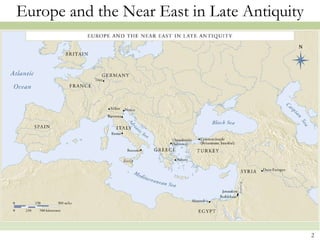
Europe and the Near East in Late Antiquity
Goals Understand the  influence of religion  in the art of the Roman Empire in Late Antiquity. Examine the art forms and architecture of Late Antiquity.   Understand the  different media  used to create Early Christian art.  Find Roman stylistic features that are incorporated into early Christian art . Understand how Roman art and architecture is changed as a result of  Christianity  and the decisions of  Constantine . Know and cite artistic and architectural terminology from the period.  
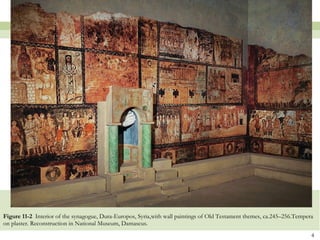
Figure 11-2  Interior of the synagogue, Dura-Europos, Syria,with wall paintings of Old Testament themes, ca.245–256.Tempera on plaster. Reconstruction in National Museum, Damascus.
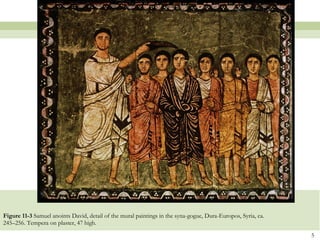
Figure 11-3  Samuel anoints David, detail of the mural paintings in the syna-gogue, Dura-Europos, Syria, ca. 245–256. Tempera on plaster, 47 high.
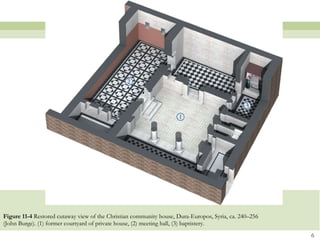
Figure 11-4  Restored cutaway view of the Christian community house, Dura-Europos, Syria, ca. 240–256 (John Burge). (1) former courtyard of private house, (2) meeting hall, (3) baptistery.
Early Christian Images Describe the appearance of Christ in Early Christian art.  Understand the different media used to create early Christian art, particularly frescoes.
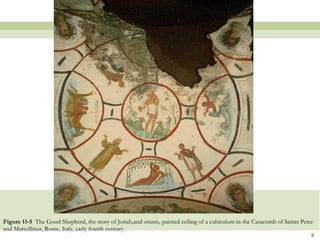
Figure 11-5  The Good Shepherd, the story of Jonah,and orants, painted ceiling of a cubiculum in the Catacomb of Saints Peter and Marcellinus, Rome, Italy, early fourth century.
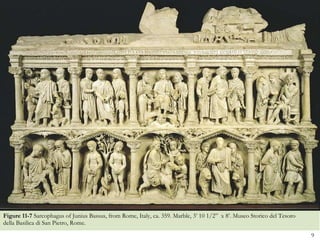
Figure 11-7  Sarcophagus of Junius Bassus, from Rome, Italy, ca. 359. Marble, 3’ 10 1/2”  x 8’. Museo Storico del Tesoro della Basilica di San Pietro, Rome.
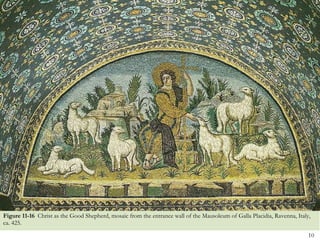
Figure 11-16   Christ as the Good Shepherd, mosaic from the entrance wall of the Mausoleum of Galla Placidia, Ravenna, Italy, ca. 425.
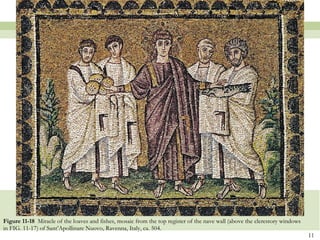
Figure 11-18  Miracle of the loaves and fishes, mosaic from the top register of the nave wall (above the clerestory windows in FIG. 11-17) of Sant’Apollinare Nuovo, Ravenna, Italy, ca. 504.
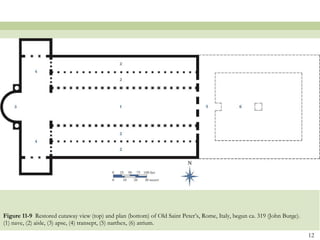
Figure 11-9   Restored cutaway view (top) and plan (bottom) of Old Saint Peter’s, Rome, Italy, begun ca. 319 (John Burge). (1) nave, (2) aisle, (3) apse, (4) transept, (5) narthex, (6) atrium.
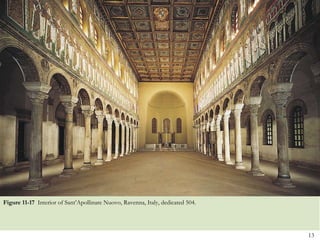
Figure 11-17   Interior of Sant’Apollinare Nuovo, Ravenna, Italy, dedicated 504.
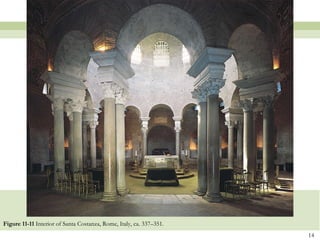
Figure 11-11  Interior of Santa Costanza, Rome, Italy, ca. 337–351.
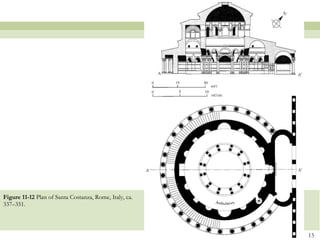
Figure 11-12  Plan of Santa Costanza, Rome, Italy, ca. 337–351.
Rome and Ravenna Examine the  enduring influence of the classical pagan world in the Christian art of Rome . Cite illustrations of  early Church architecture , their origins and development, particularly in Ravenna Understand the  new aesthetic  informing the art and how it is different from the art of the classical period.   Understand the different media and forms used to create early Christian art,  particularly illuminated manuscripts . Know and cite artistic and architectural terminology from the period
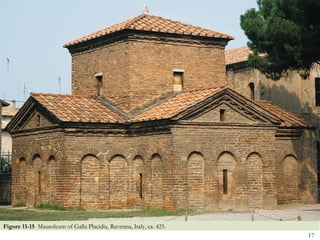
Figure 11-15  Mausoleum of Galla Placidia, Ravenna, Italy, ca. 425.
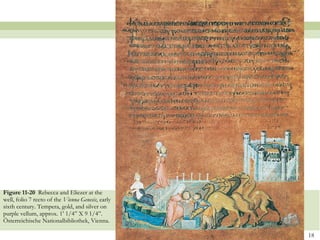
Figure 11-20  Rebecca and Eliezer at the well, folio 7 recto of the  Vienna Genesis , early sixth century. Tempera, gold, and silver on purple vellum, approx. 1’ 1/4” X 9 1/4”. Österreichische Nationalbibliothek, Vienna.
Discussion Questions Why are the wall paintings at Dura Europos important to understanding the art of the Late Antique (Roman) and Early Christian time periods? What visual characteristics of earlier pagan funerary art are seen in Christian art from this period? Does the context change? What might one speculate as reasons for the absence of a crucified Christ in Early Christian art? What was/were the purpose(s) of Early Christian art?

Chapter11

  • 1.
    Chapter 11 LateAntiquity Gardner’s Art Through the Ages, 13e
  • 2.
    Europe and theNear East in Late Antiquity
  • 3.
    Goals Understand the influence of religion in the art of the Roman Empire in Late Antiquity. Examine the art forms and architecture of Late Antiquity. Understand the different media used to create Early Christian art. Find Roman stylistic features that are incorporated into early Christian art . Understand how Roman art and architecture is changed as a result of Christianity and the decisions of Constantine . Know and cite artistic and architectural terminology from the period.  
  • 4.
    Figure 11-2 Interior of the synagogue, Dura-Europos, Syria,with wall paintings of Old Testament themes, ca.245–256.Tempera on plaster. Reconstruction in National Museum, Damascus.
  • 5.
    Figure 11-3 Samuel anoints David, detail of the mural paintings in the syna-gogue, Dura-Europos, Syria, ca. 245–256. Tempera on plaster, 47 high.
  • 6.
    Figure 11-4 Restored cutaway view of the Christian community house, Dura-Europos, Syria, ca. 240–256 (John Burge). (1) former courtyard of private house, (2) meeting hall, (3) baptistery.
  • 7.
    Early Christian ImagesDescribe the appearance of Christ in Early Christian art. Understand the different media used to create early Christian art, particularly frescoes.
  • 8.
    Figure 11-5 The Good Shepherd, the story of Jonah,and orants, painted ceiling of a cubiculum in the Catacomb of Saints Peter and Marcellinus, Rome, Italy, early fourth century.
  • 9.
    Figure 11-7 Sarcophagus of Junius Bassus, from Rome, Italy, ca. 359. Marble, 3’ 10 1/2” x 8’. Museo Storico del Tesoro della Basilica di San Pietro, Rome.
  • 10.
    Figure 11-16 Christ as the Good Shepherd, mosaic from the entrance wall of the Mausoleum of Galla Placidia, Ravenna, Italy, ca. 425.
  • 11.
    Figure 11-18 Miracle of the loaves and fishes, mosaic from the top register of the nave wall (above the clerestory windows in FIG. 11-17) of Sant’Apollinare Nuovo, Ravenna, Italy, ca. 504.
  • 12.
    Figure 11-9 Restored cutaway view (top) and plan (bottom) of Old Saint Peter’s, Rome, Italy, begun ca. 319 (John Burge). (1) nave, (2) aisle, (3) apse, (4) transept, (5) narthex, (6) atrium.
  • 13.
    Figure 11-17 Interior of Sant’Apollinare Nuovo, Ravenna, Italy, dedicated 504.
  • 14.
    Figure 11-11 Interior of Santa Costanza, Rome, Italy, ca. 337–351.
  • 15.
    Figure 11-12 Plan of Santa Costanza, Rome, Italy, ca. 337–351.
  • 16.
    Rome and RavennaExamine the enduring influence of the classical pagan world in the Christian art of Rome . Cite illustrations of early Church architecture , their origins and development, particularly in Ravenna Understand the new aesthetic informing the art and how it is different from the art of the classical period. Understand the different media and forms used to create early Christian art, particularly illuminated manuscripts . Know and cite artistic and architectural terminology from the period
  • 17.
    Figure 11-15 Mausoleum of Galla Placidia, Ravenna, Italy, ca. 425.
  • 18.
    Figure 11-20 Rebecca and Eliezer at the well, folio 7 recto of the Vienna Genesis , early sixth century. Tempera, gold, and silver on purple vellum, approx. 1’ 1/4” X 9 1/4”. Österreichische Nationalbibliothek, Vienna.
  • 19.
    Discussion Questions Whyare the wall paintings at Dura Europos important to understanding the art of the Late Antique (Roman) and Early Christian time periods? What visual characteristics of earlier pagan funerary art are seen in Christian art from this period? Does the context change? What might one speculate as reasons for the absence of a crucified Christ in Early Christian art? What was/were the purpose(s) of Early Christian art?