Gluteal Region:
Clinical Anatomy
Presented by
Dr. Maryna Kornieieva
Asst. of Anatomy Department
Boundaries
Lateral:
along the side of
the greater
trochanter.
Superior: along the side of the iliac crest.
Inferior: along the side of the gluteal folds.
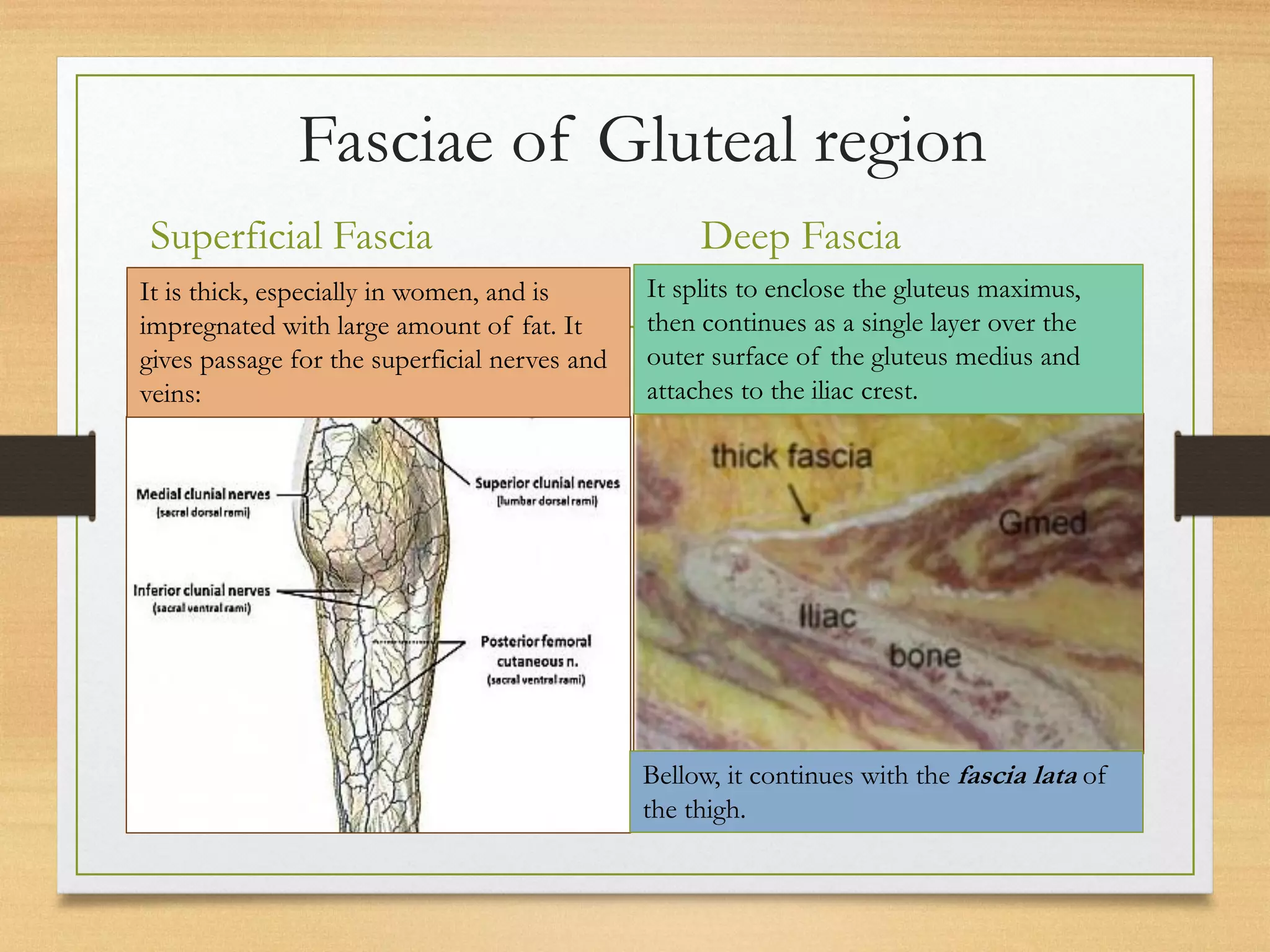
Fasciae of Gluteal region
Superficial Fascia Deep Fascia
It splits to enclose the gluteus maximus,
then continues as a single layer over the
outer surface of the gluteus medius and
attaches to the iliac crest.
Bellow, it continues with the fascia lata of
the thigh.
It is thick, especially in women, and is
impregnated with large amount of fat. It
gives passage for the superficial nerves and
veins:
Iliotibial Tract (Band)
The iliotibial
tract is a
thickness of
fascia latae on the
lateral side of
thigh.
Function: Stabilizes the knee in
extension.
It extends from the
anterior superior iliac
spine to the
anterolateral surface of
the lateral condyle of
the tibia..
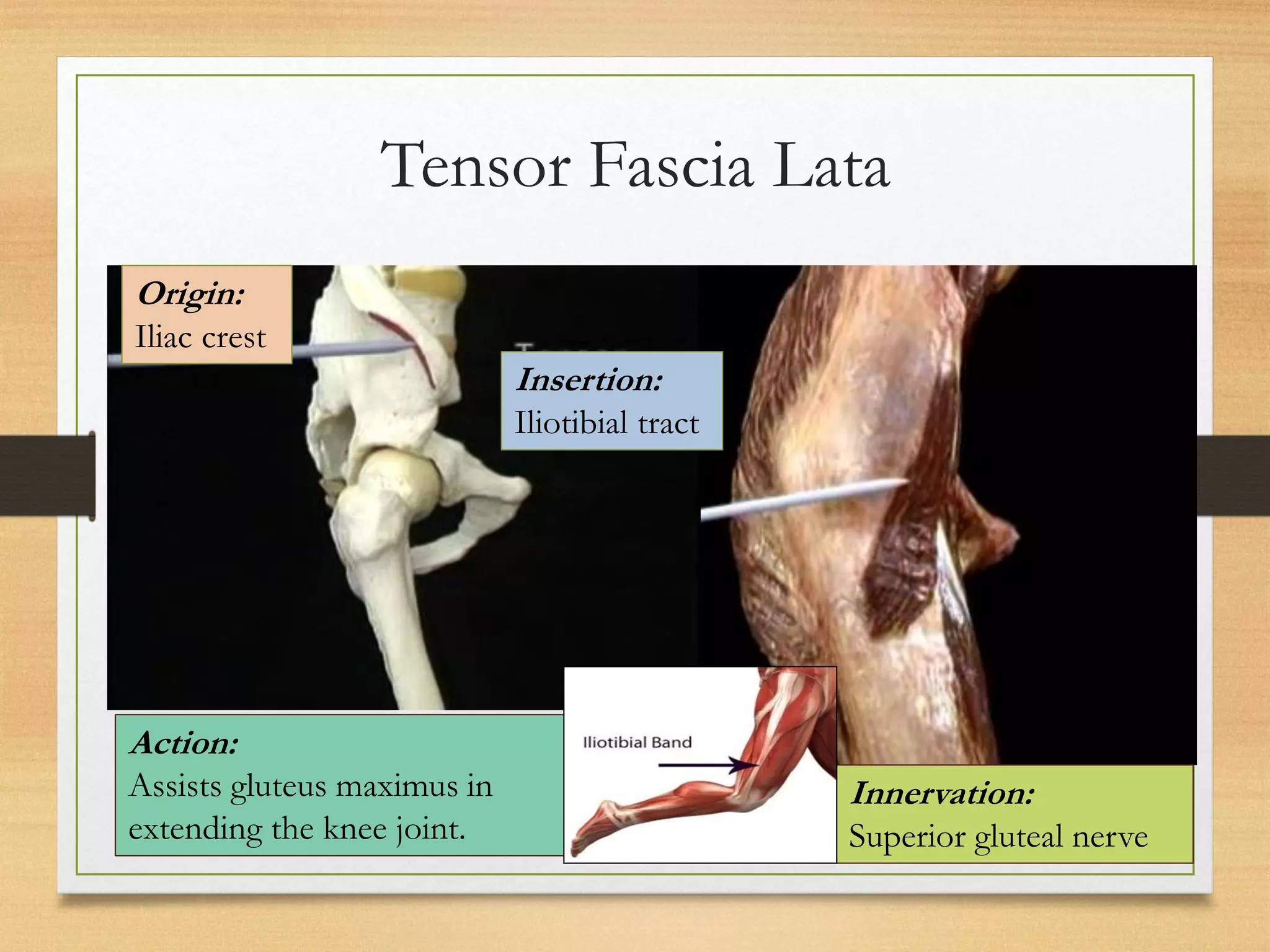
Tensor Fascia Lata
Origin:
Iliac crest
Action:
Assists gluteus maximus in
extending the knee joint.
Innervation:
Superior gluteal nerve
Insertion:
Iliotibial tract
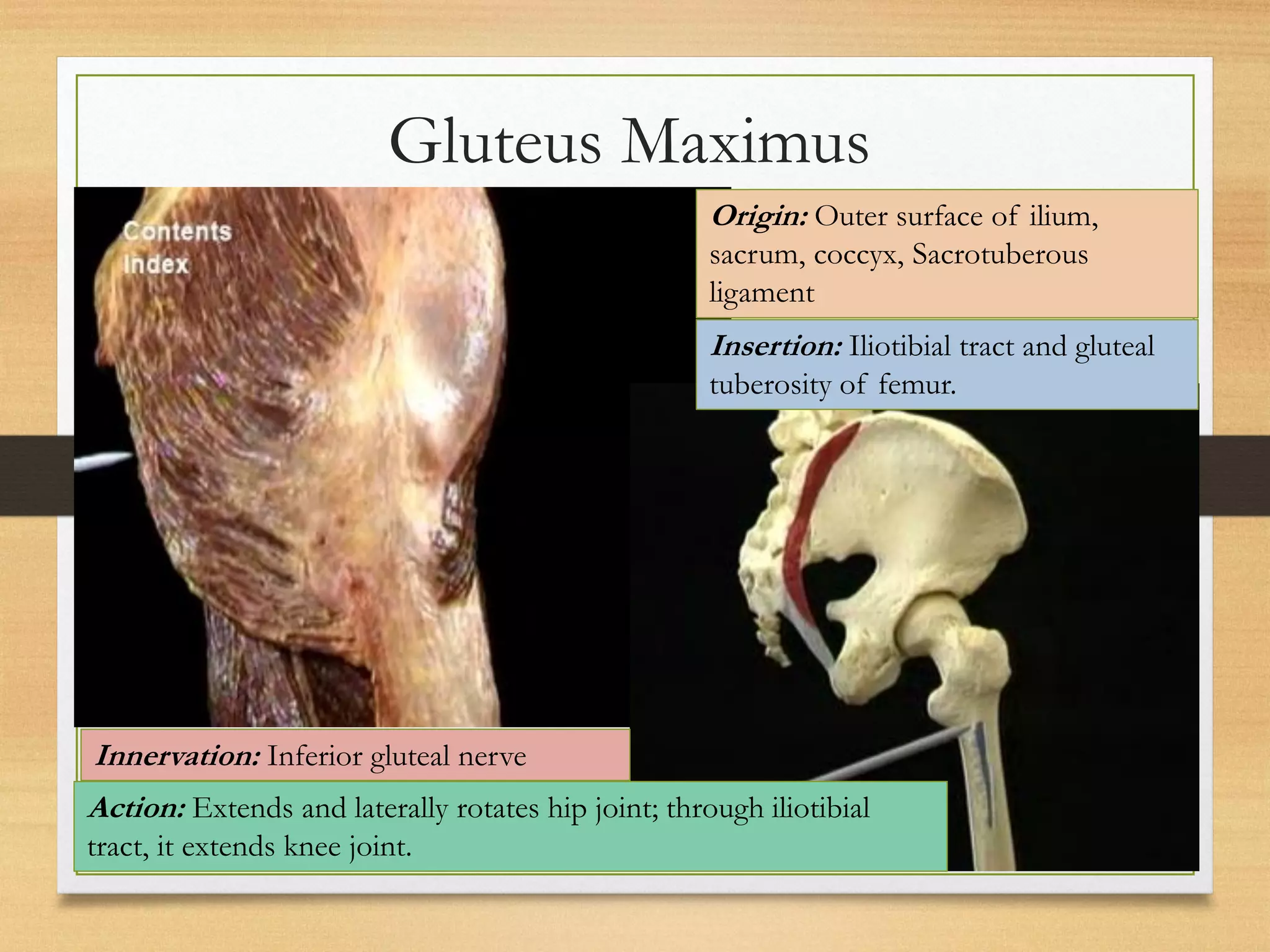
Gluteus Maximus
Origin: Outer surface of ilium,
sacrum, coccyx, Sacrotuberous
ligament
Insertion: Iliotibial tract and gluteal
tuberosity of femur.
Innervation: Inferior gluteal nerve
Action: Extends and laterally rotates hip joint; through iliotibial
tract, it extends knee joint.
Intramuscular injections
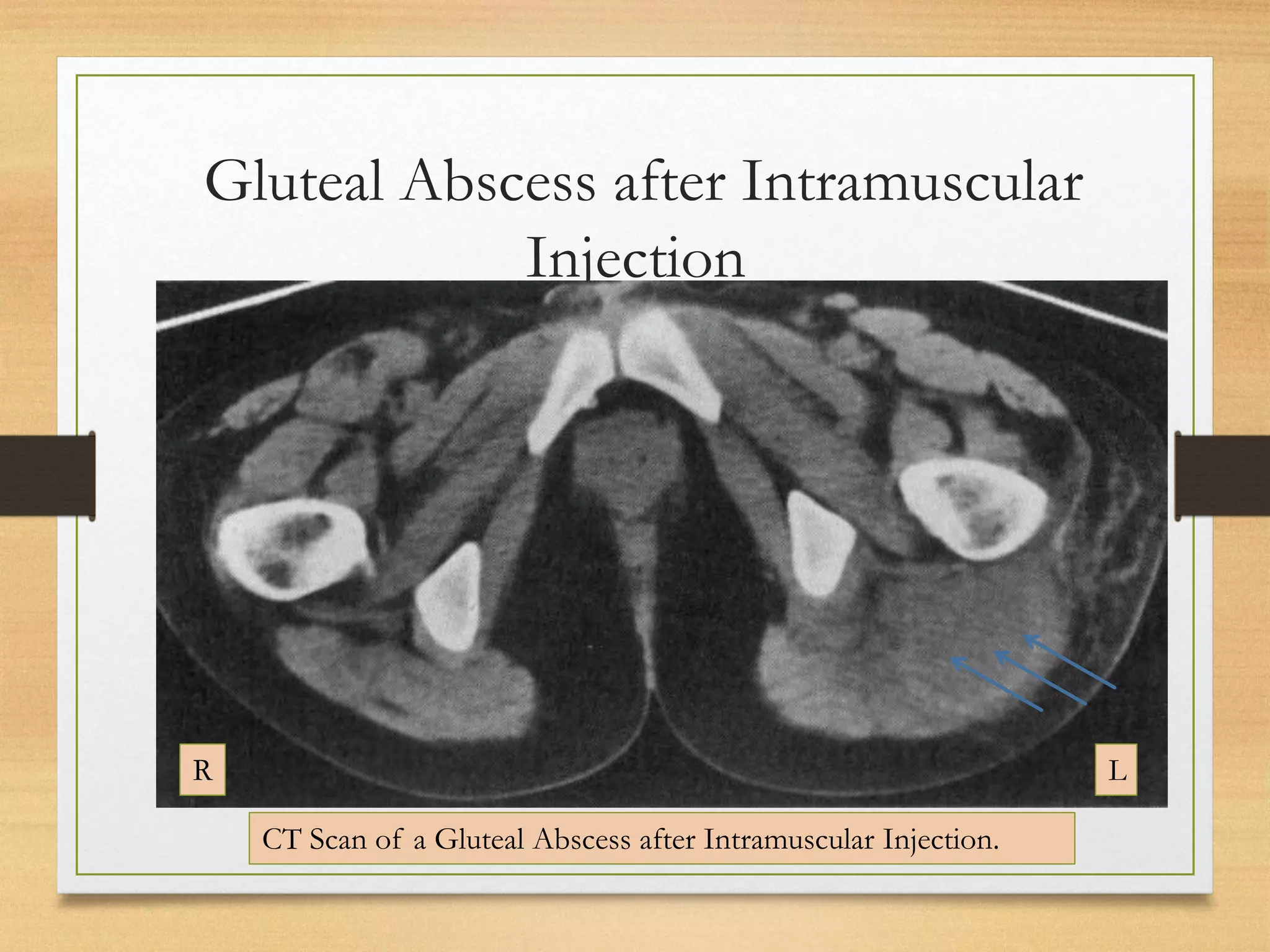
Gluteal Abscess after Intramuscular
Injection
CT Scan of a Gluteal Abscess after Intramuscular Injection.
LR
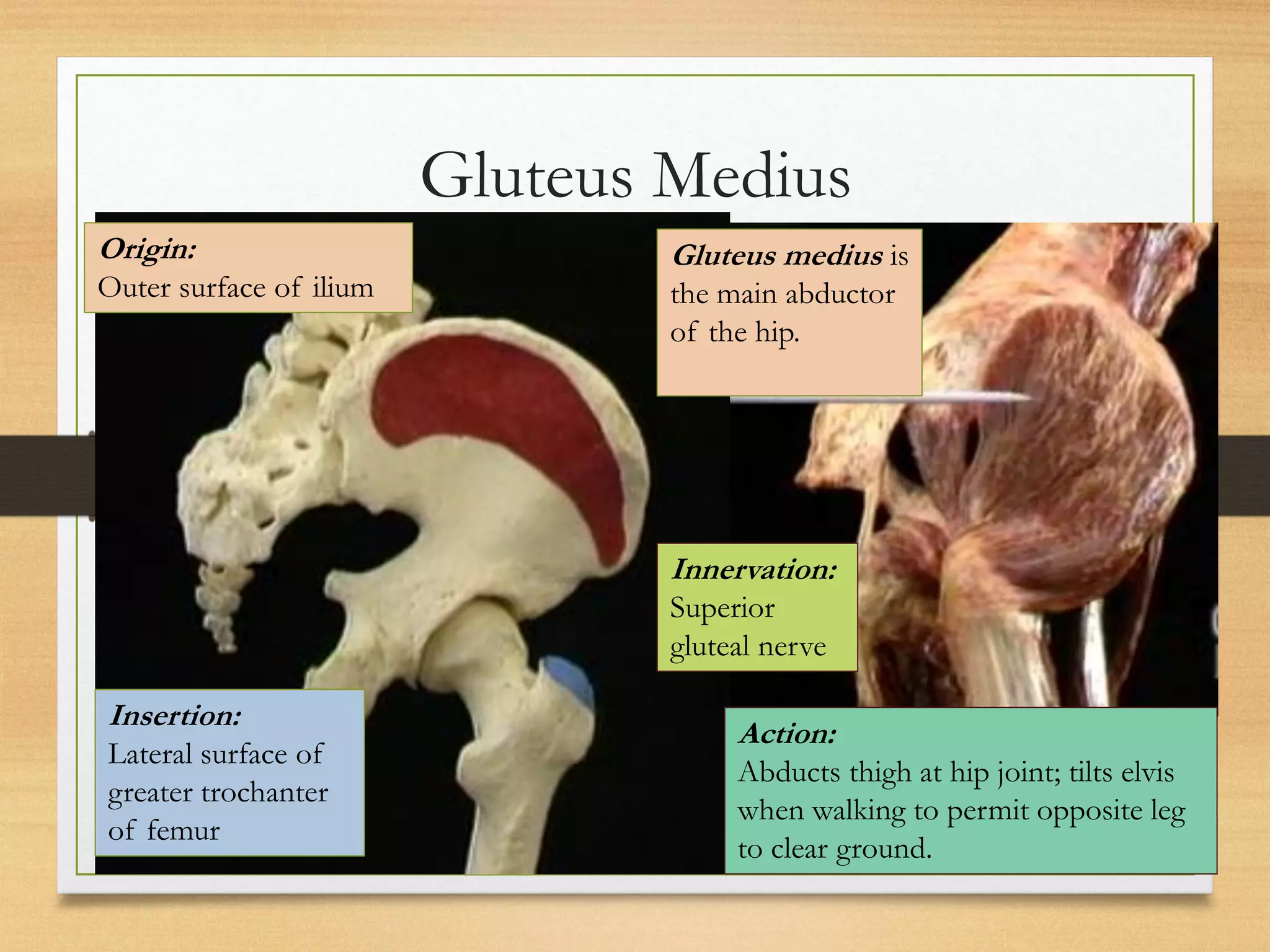
Gluteus Medius
Origin:
Outer surface of ilium
Insertion:
Lateral surface of
greater trochanter
of femur
Action:
Abducts thigh at hip joint; tilts elvis
when walking to permit opposite leg
to clear ground.
Innervation:
Superior
gluteal nerve
Gluteus medius is
the main abductor
of the hip.
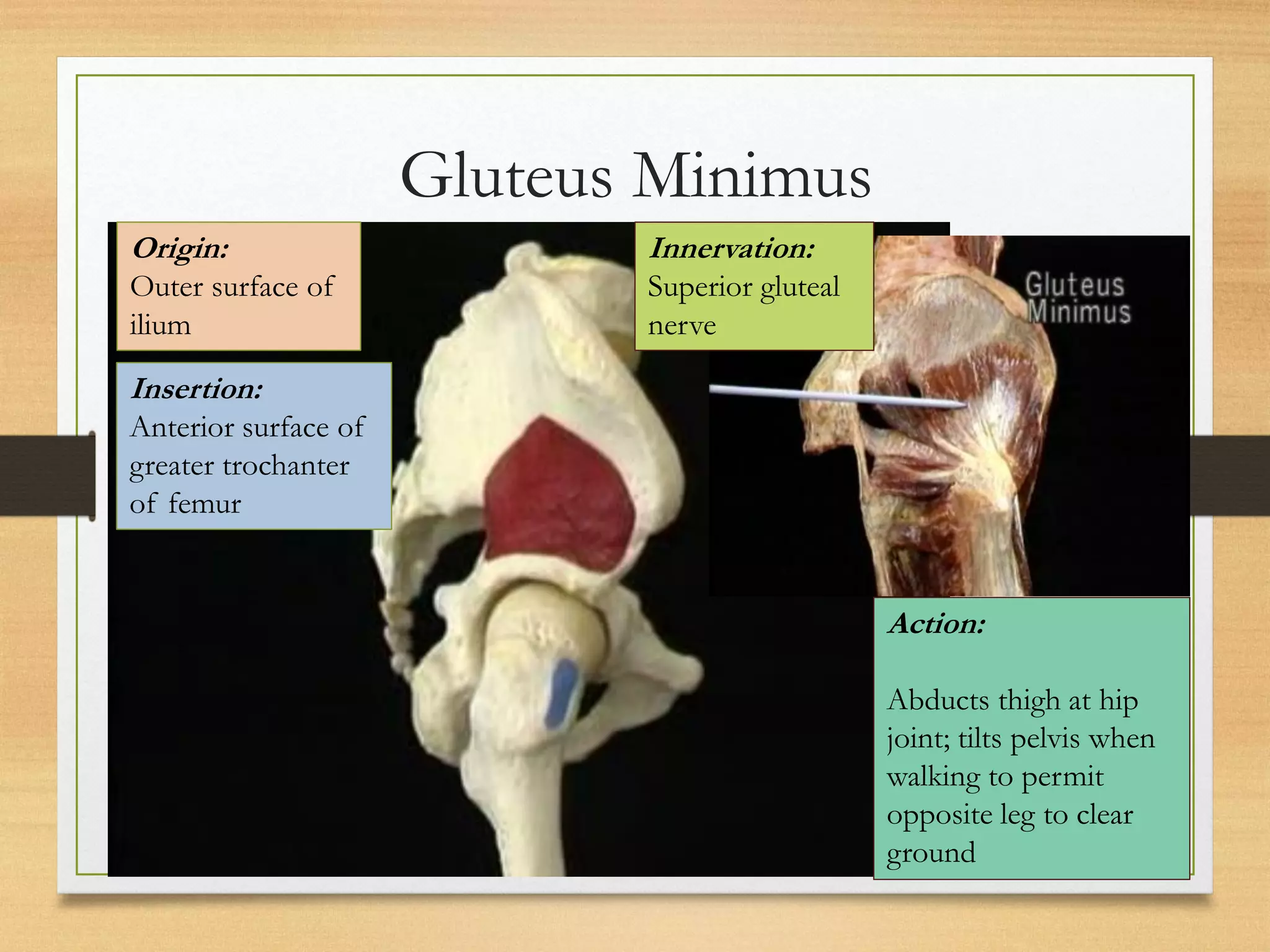
Gluteus Minimus
Origin:
Outer surface of
ilium
Insertion:
Anterior surface of
greater trochanter
of femur
Innervation:
Superior gluteal
nerve
Action:
Abducts thigh at hip
joint; tilts pelvis when
walking to permit
opposite leg to clear
ground
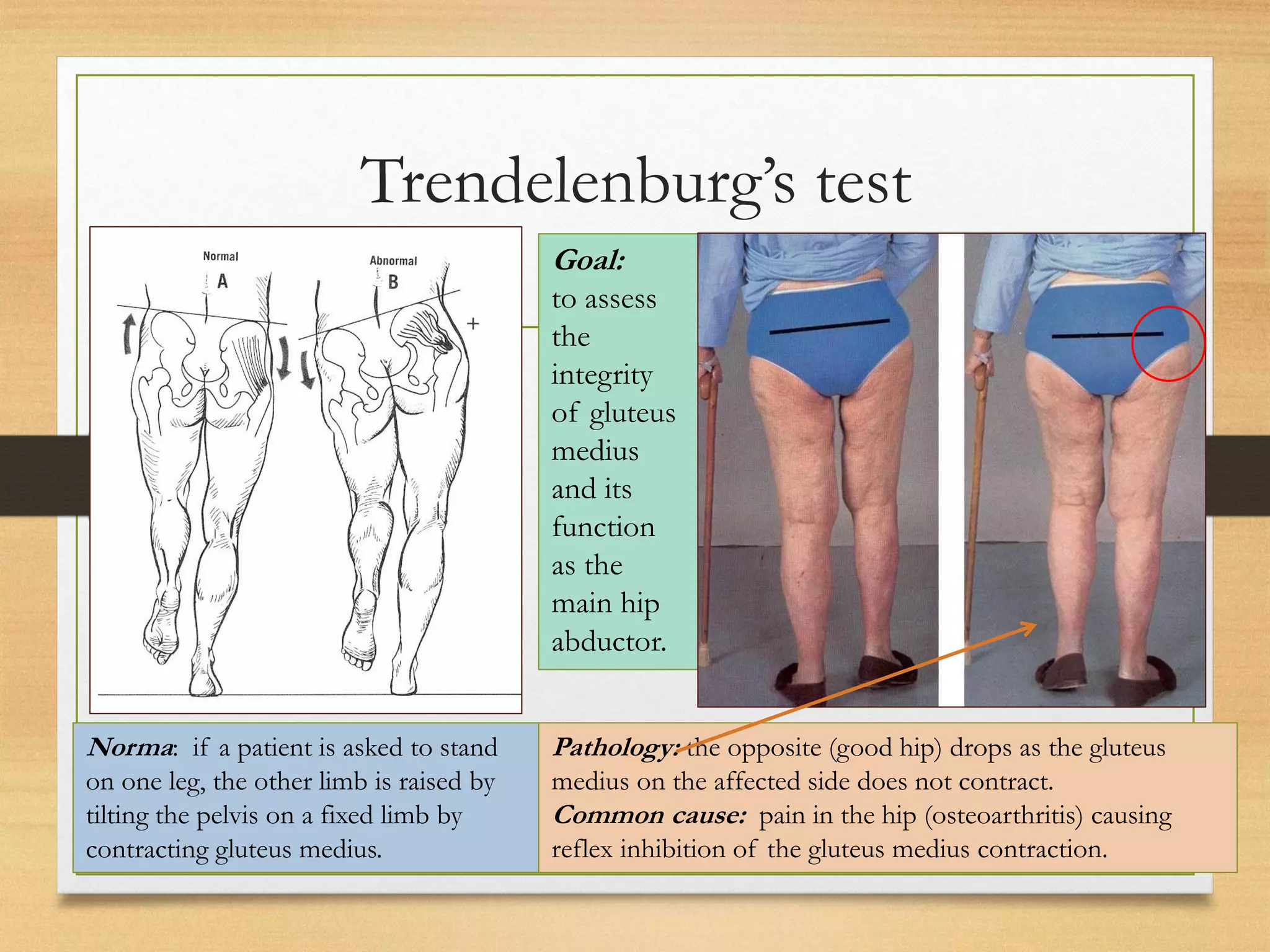
Trendelenburg’s test
Goal:
to assess
the
integrity
of gluteus
medius
and its
function
as the
main hip
abductor.
Norma: if a patient is asked to stand
on one leg, the other limb is raised by
tilting the pelvis on a fixed limb by
contracting gluteus medius.
Pathology: the opposite (good hip) drops as the gluteus
medius on the affected side does not contract.
Common cause: pain in the hip (osteoarthritis) causing
reflex inhibition of the gluteus medius contraction.
Deep muscles: lateral rotators
Piriformis
Origin:
Anterior surface
of sacrum
Action:
Lateral rotator of thigh at hip joint
Innervation:
1st and 2nd sacral nerves
Insertion:
Upper border of
greater trochanter
of femur
It leaves pelvis by way of the
greater sciatic foramen
Piriformis
Piriformis is the key landmark in the gluteal region – above it are the superior gluteal nerve and
vessels and below it are the inferior gluteal nerve and vessels, sciatic nerve, posterior
cutaneous nerve of thigh and the structures running around the ischial spine to the perineum
(pudendal nerve, the nerve to obturator internus and the internal pudendal vessels).
Obturator externus
(belongs to the medial fascial
compartment of thigh)
Origin:
Outer surface of obturator
membrane and pubic
and ischial rami
Insertion:
Medial surface of
greater trochanter
Innervation:
Obturator nerve
Action:
Laterally rotates thigh at hip joint
Obturator internus
Insertion:
Upper border of
greater trochanter
of femur
Origin:
Inner surface
of obturator
membrane
Innervation:
Sacral plexus
Action:
Lateral
rotator of
thigh at hip
joint
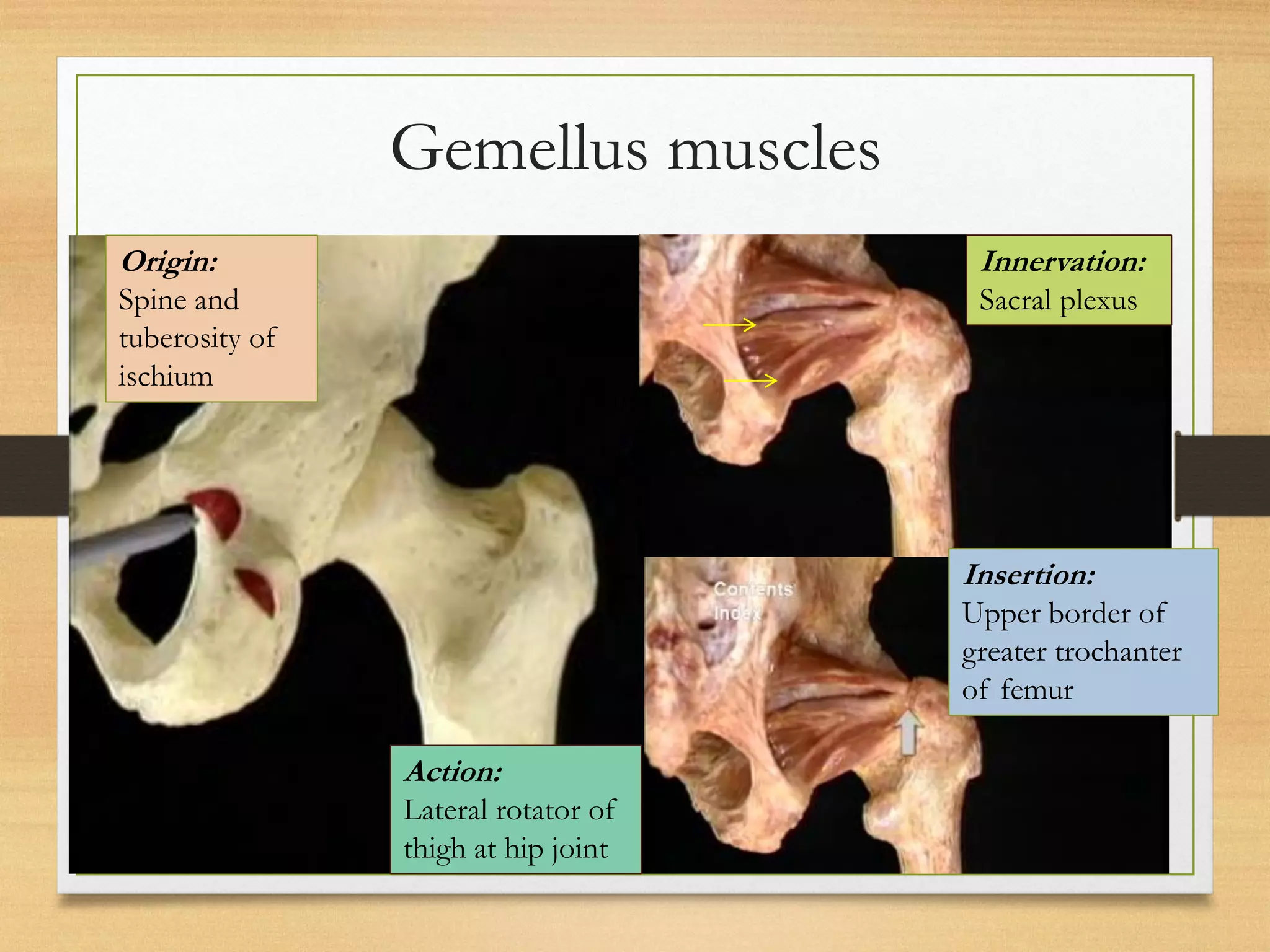
Gemellus muscles
Origin:
Spine and
tuberosity of
ischium
Innervation:
Sacral plexus
Action:
Lateral rotator of
thigh at hip joint
Insertion:
Upper border of
greater trochanter
of femur
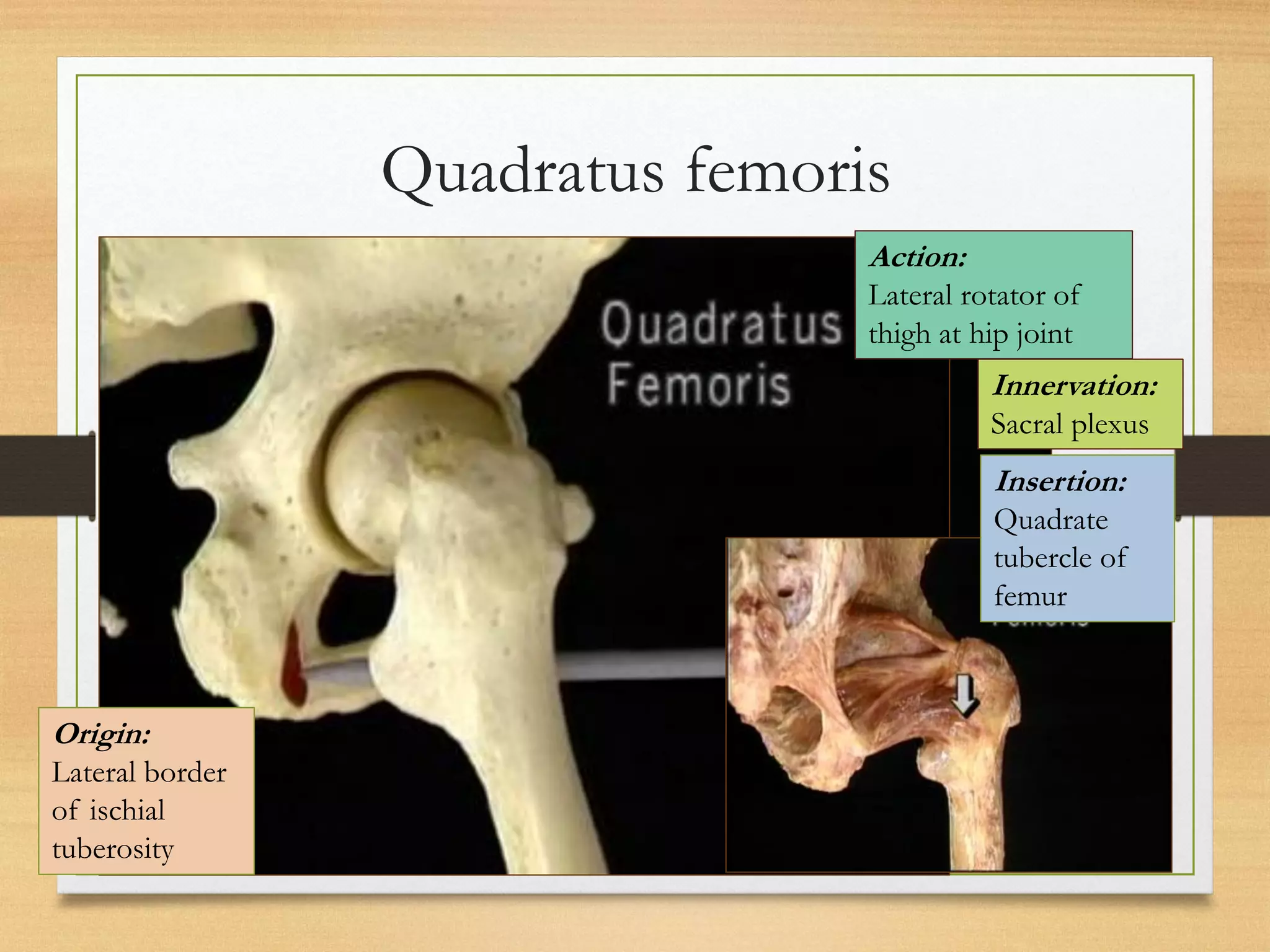
Quadratus femoris
Origin:
Lateral border
of ischial
tuberosity
Action:
Lateral rotator of
thigh at hip joint
Insertion:
Quadrate
tubercle of
femur
Innervation:
Sacral plexus
Posterior approach to the Hip
The gluteal region is a common approach to the hip joint for arthroplasty and the
lateral rotator muscles are used as landmarks and can be dissected off the femur
and rolled medially over the sciatic nerve to protect it.
Kocher-Langenbeck
Suprapiriform foramen
SPF: contents
Superior Gluteal Nerve
Superior Gluteal Artery
• Gluteus minimus
• Gluteus medius
• Tensor fasciae
latae
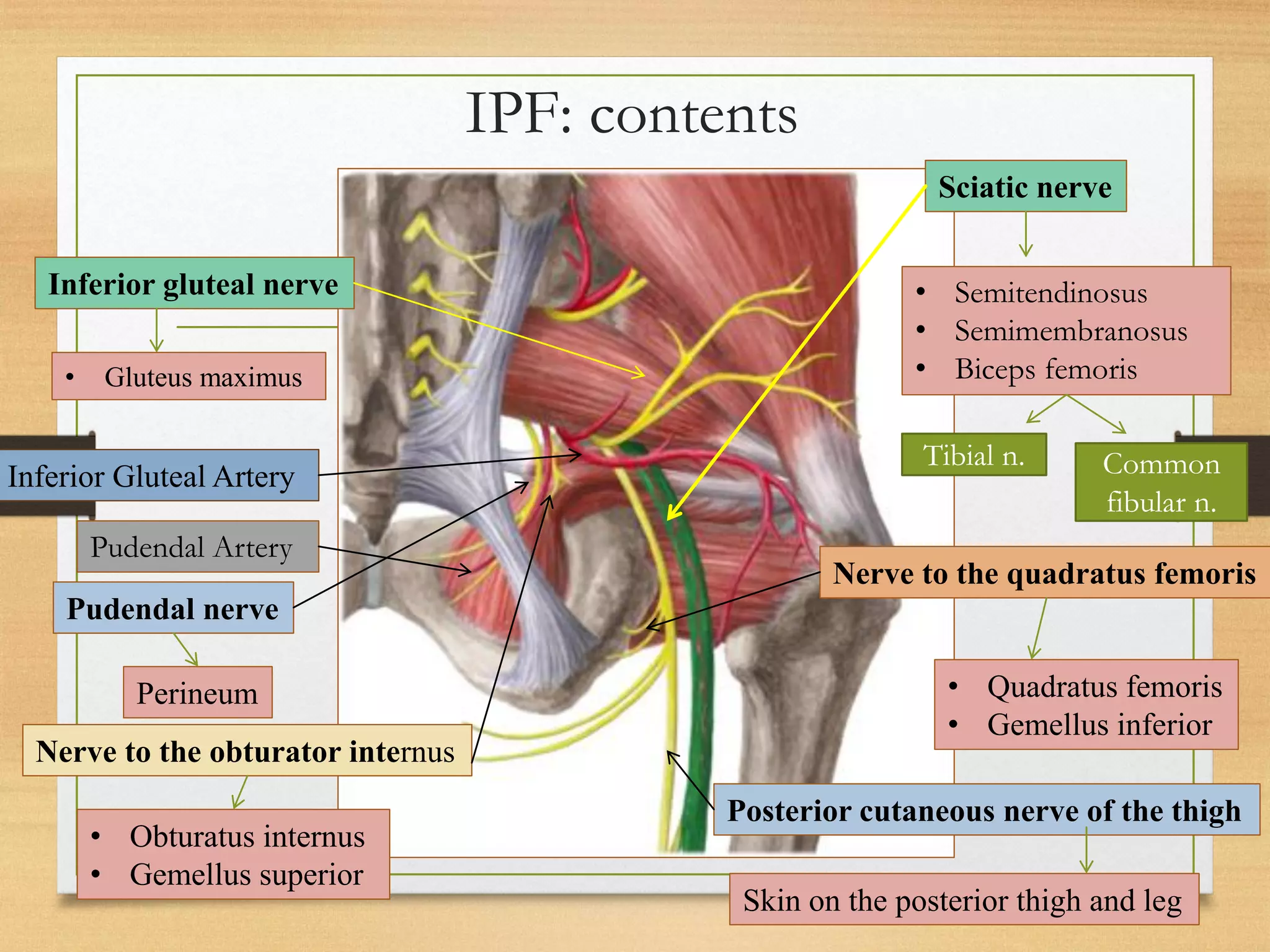
Infrapiriform foramen
IPF: contents
Inferior Gluteal Artery
Pudendal Artery
Sciatic nerve
Nerve to the quadratus femoris
Nerve to the obturator internus
Posterior cutaneous nerve of the thigh
Pudendal nerve
Inferior gluteal nerve
• Gluteus maximus
• Quadratus femoris
• Gemellus inferior
• Obturatus internus
• Gemellus superior
Skin on the posterior thigh and leg
Perineum
• Semitendinosus
• Semimembranosus
• Biceps femoris
Tibial n. Common
fibular n.
Lumbosacral Plexus
Coccygeal plexusLumbar plexus Sacral plexus
(½)T12+(L1-L4)
1/2L4+L5+S1-S4
Coccygeal nerve
(½)S4+S5 + Co1
Sacral plexus
Sciatic nerve
Pudendal nerve
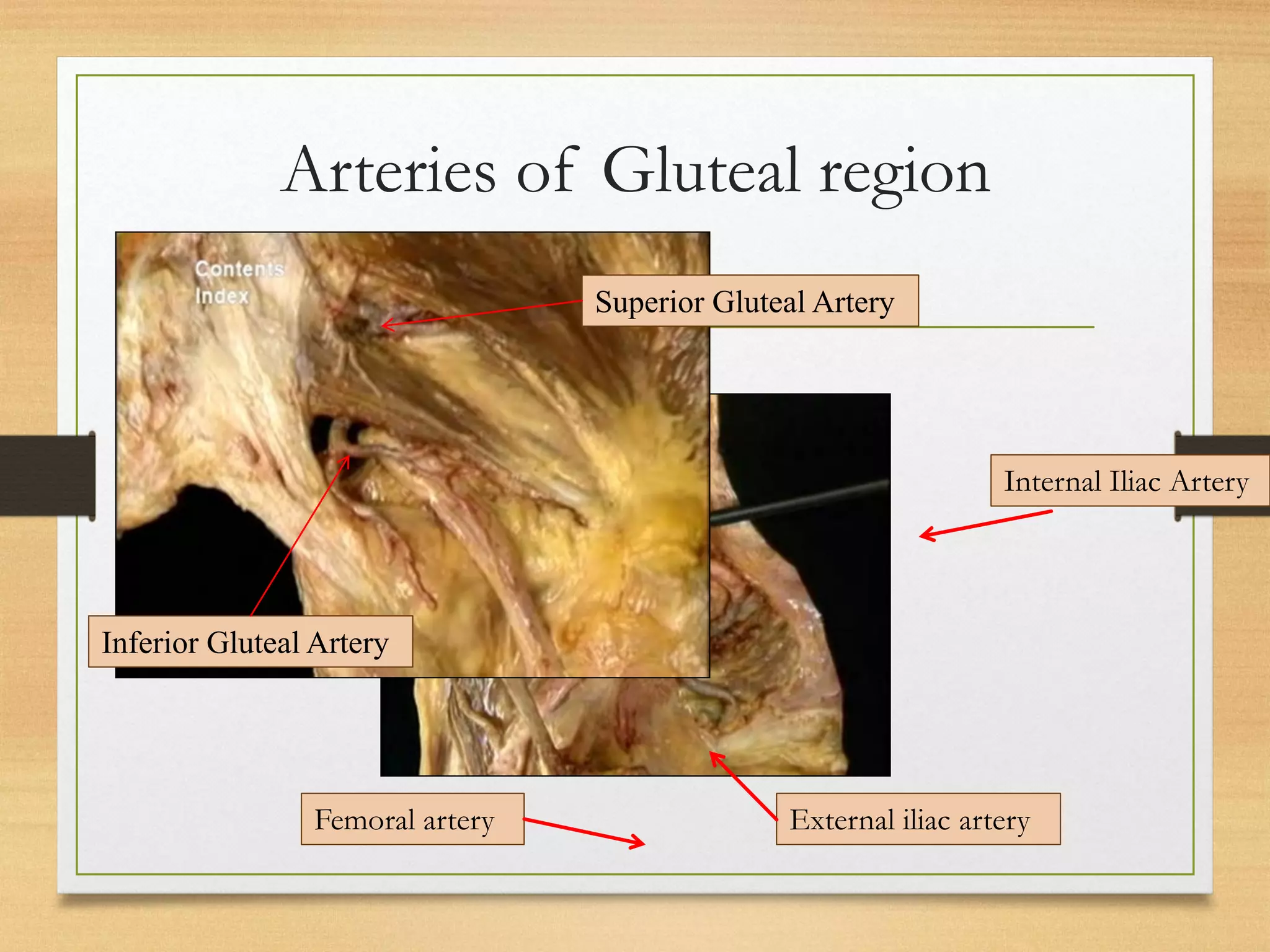
Arteries of Gluteal region
Inferior Gluteal Artery
Superior Gluteal Artery
Internal Iliac Artery
External iliac arteryFemoral artery
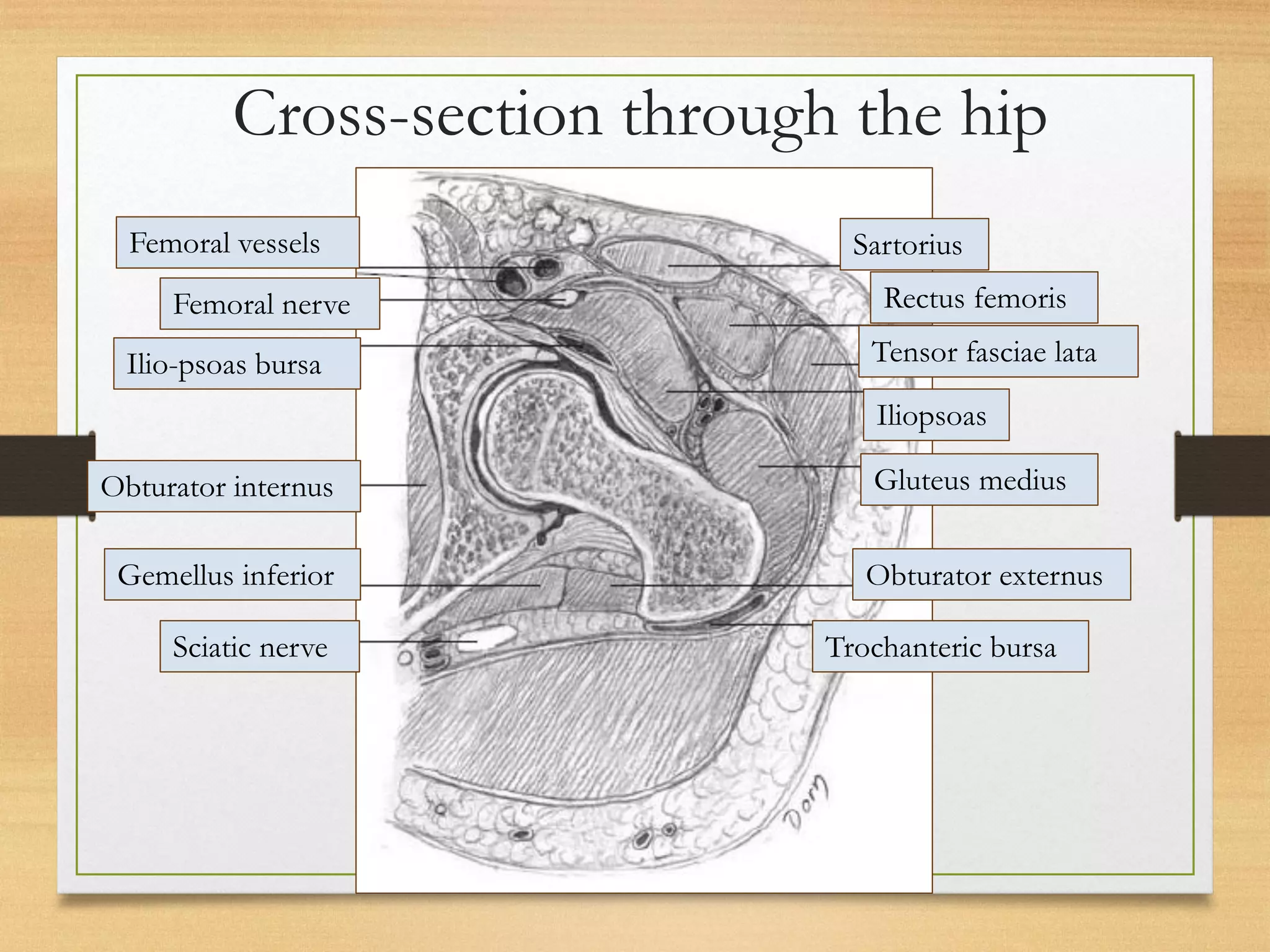
Cross-section through the hip
Trochanteric bursa
Obturator externus
Gluteus medius
Iliopsoas
Tensor fasciae lata
Rectus femoris
SartoriusFemoral vessels
Femoral nerve
Ilio-psoas bursa
Obturator internus
Gemellus inferior
Sciatic nerve
T1FS CORONAL IMAGE OF A NORMAL HIP.
T1FS axial image of a normal hip
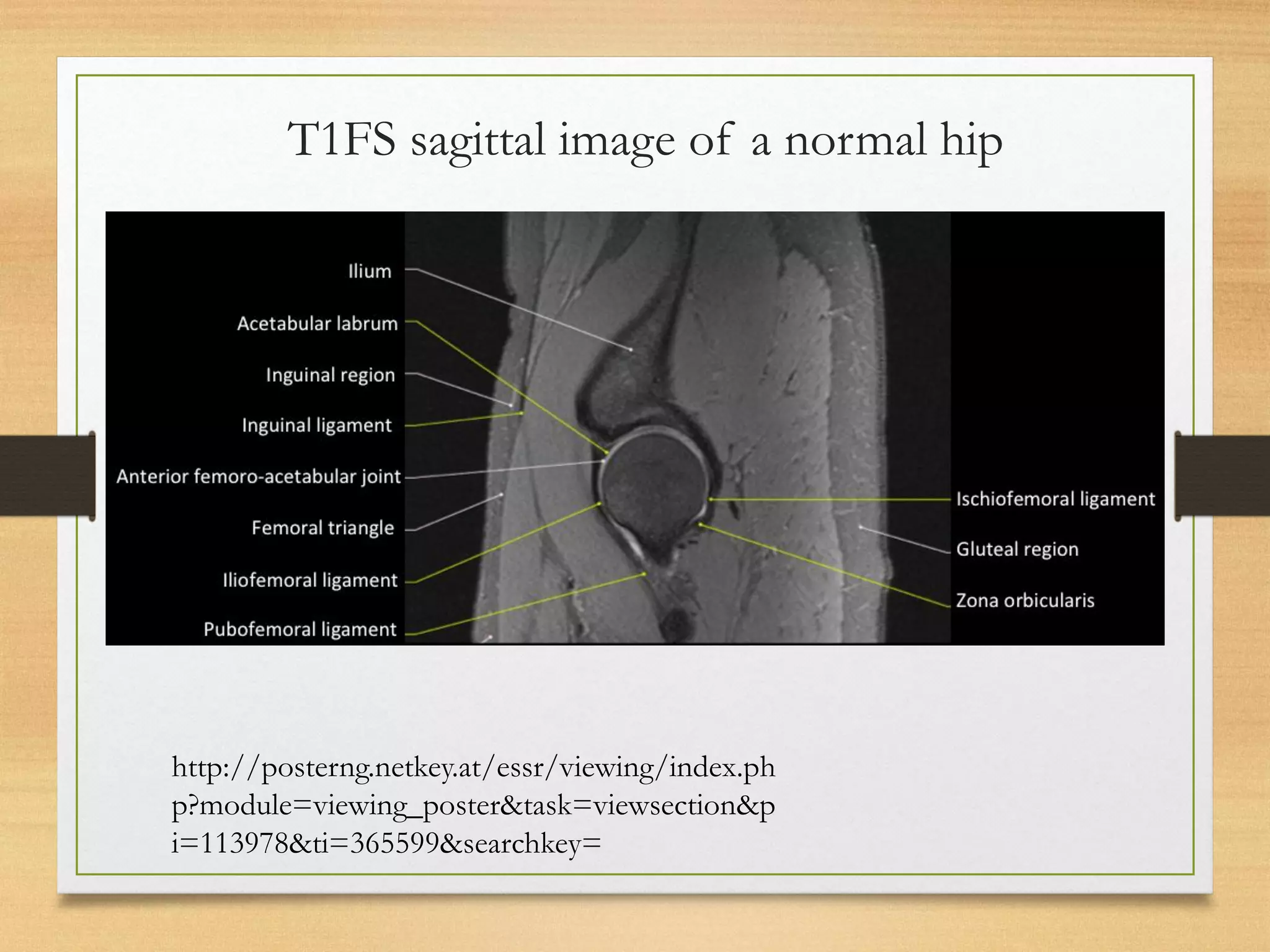
T1FS sagittal image of a normal hip
http://posterng.netkey.at/essr/viewing/index.ph
p?module=viewing_poster&task=viewsection&p
i=113978&ti=365599&searchkey=
Gluteal region clinical anatomy

Gluteal region clinical anatomy

  • 1.
    Gluteal Region: Clinical Anatomy Presentedby Dr. Maryna Kornieieva Asst. of Anatomy Department
  • 2.
    Boundaries Lateral: along the sideof the greater trochanter. Superior: along the side of the iliac crest. Inferior: along the side of the gluteal folds.
  • 3.
    Fasciae of Glutealregion Superficial Fascia Deep Fascia It splits to enclose the gluteus maximus, then continues as a single layer over the outer surface of the gluteus medius and attaches to the iliac crest. Bellow, it continues with the fascia lata of the thigh. It is thick, especially in women, and is impregnated with large amount of fat. It gives passage for the superficial nerves and veins:
  • 4.
    Iliotibial Tract (Band) Theiliotibial tract is a thickness of fascia latae on the lateral side of thigh. Function: Stabilizes the knee in extension. It extends from the anterior superior iliac spine to the anterolateral surface of the lateral condyle of the tibia..
  • 5.
    Tensor Fascia Lata Origin: Iliaccrest Action: Assists gluteus maximus in extending the knee joint. Innervation: Superior gluteal nerve Insertion: Iliotibial tract
  • 6.
    Gluteus Maximus Origin: Outersurface of ilium, sacrum, coccyx, Sacrotuberous ligament Insertion: Iliotibial tract and gluteal tuberosity of femur. Innervation: Inferior gluteal nerve Action: Extends and laterally rotates hip joint; through iliotibial tract, it extends knee joint.
  • 7.
  • 8.
    Gluteal Abscess afterIntramuscular Injection CT Scan of a Gluteal Abscess after Intramuscular Injection. LR
  • 9.
    Gluteus Medius Origin: Outer surfaceof ilium Insertion: Lateral surface of greater trochanter of femur Action: Abducts thigh at hip joint; tilts elvis when walking to permit opposite leg to clear ground. Innervation: Superior gluteal nerve Gluteus medius is the main abductor of the hip.
  • 10.
    Gluteus Minimus Origin: Outer surfaceof ilium Insertion: Anterior surface of greater trochanter of femur Innervation: Superior gluteal nerve Action: Abducts thigh at hip joint; tilts pelvis when walking to permit opposite leg to clear ground
  • 11.
    Trendelenburg’s test Goal: to assess the integrity ofgluteus medius and its function as the main hip abductor. Norma: if a patient is asked to stand on one leg, the other limb is raised by tilting the pelvis on a fixed limb by contracting gluteus medius. Pathology: the opposite (good hip) drops as the gluteus medius on the affected side does not contract. Common cause: pain in the hip (osteoarthritis) causing reflex inhibition of the gluteus medius contraction.
  • 12.
  • 13.
    Piriformis Origin: Anterior surface of sacrum Action: Lateralrotator of thigh at hip joint Innervation: 1st and 2nd sacral nerves Insertion: Upper border of greater trochanter of femur It leaves pelvis by way of the greater sciatic foramen
  • 14.
    Piriformis Piriformis is thekey landmark in the gluteal region – above it are the superior gluteal nerve and vessels and below it are the inferior gluteal nerve and vessels, sciatic nerve, posterior cutaneous nerve of thigh and the structures running around the ischial spine to the perineum (pudendal nerve, the nerve to obturator internus and the internal pudendal vessels).
  • 15.
    Obturator externus (belongs tothe medial fascial compartment of thigh) Origin: Outer surface of obturator membrane and pubic and ischial rami Insertion: Medial surface of greater trochanter Innervation: Obturator nerve Action: Laterally rotates thigh at hip joint
  • 16.
    Obturator internus Insertion: Upper borderof greater trochanter of femur Origin: Inner surface of obturator membrane Innervation: Sacral plexus Action: Lateral rotator of thigh at hip joint
  • 17.
    Gemellus muscles Origin: Spine and tuberosityof ischium Innervation: Sacral plexus Action: Lateral rotator of thigh at hip joint Insertion: Upper border of greater trochanter of femur
  • 18.
    Quadratus femoris Origin: Lateral border ofischial tuberosity Action: Lateral rotator of thigh at hip joint Insertion: Quadrate tubercle of femur Innervation: Sacral plexus
  • 19.
    Posterior approach tothe Hip The gluteal region is a common approach to the hip joint for arthroplasty and the lateral rotator muscles are used as landmarks and can be dissected off the femur and rolled medially over the sciatic nerve to protect it. Kocher-Langenbeck
  • 20.
  • 21.
    SPF: contents Superior GlutealNerve Superior Gluteal Artery • Gluteus minimus • Gluteus medius • Tensor fasciae latae
  • 22.
  • 23.
    IPF: contents Inferior GlutealArtery Pudendal Artery Sciatic nerve Nerve to the quadratus femoris Nerve to the obturator internus Posterior cutaneous nerve of the thigh Pudendal nerve Inferior gluteal nerve • Gluteus maximus • Quadratus femoris • Gemellus inferior • Obturatus internus • Gemellus superior Skin on the posterior thigh and leg Perineum • Semitendinosus • Semimembranosus • Biceps femoris Tibial n. Common fibular n.
  • 24.
    Lumbosacral Plexus Coccygeal plexusLumbarplexus Sacral plexus (½)T12+(L1-L4) 1/2L4+L5+S1-S4 Coccygeal nerve (½)S4+S5 + Co1
  • 25.
  • 26.
    Arteries of Glutealregion Inferior Gluteal Artery Superior Gluteal Artery Internal Iliac Artery External iliac arteryFemoral artery
  • 27.
    Cross-section through thehip Trochanteric bursa Obturator externus Gluteus medius Iliopsoas Tensor fasciae lata Rectus femoris SartoriusFemoral vessels Femoral nerve Ilio-psoas bursa Obturator internus Gemellus inferior Sciatic nerve
  • 28.
    T1FS CORONAL IMAGEOF A NORMAL HIP.
  • 29.
    T1FS axial imageof a normal hip
  • 30.
    T1FS sagittal imageof a normal hip http://posterng.netkey.at/essr/viewing/index.ph p?module=viewing_poster&task=viewsection&p i=113978&ti=365599&searchkey=