Cardiovascular Embryology
Contents:
 1. Heart development
 the horseshoe-shaped pericardial cavity
 formation of the single heart tube
 the convolution of the heart tube
 the primitive 4-chambered heart
 atrial septation
 ventricular septation
 aorticopulmonary septation
 2. Development of arteries
 3. Development of veins
 4. Fetal circulation
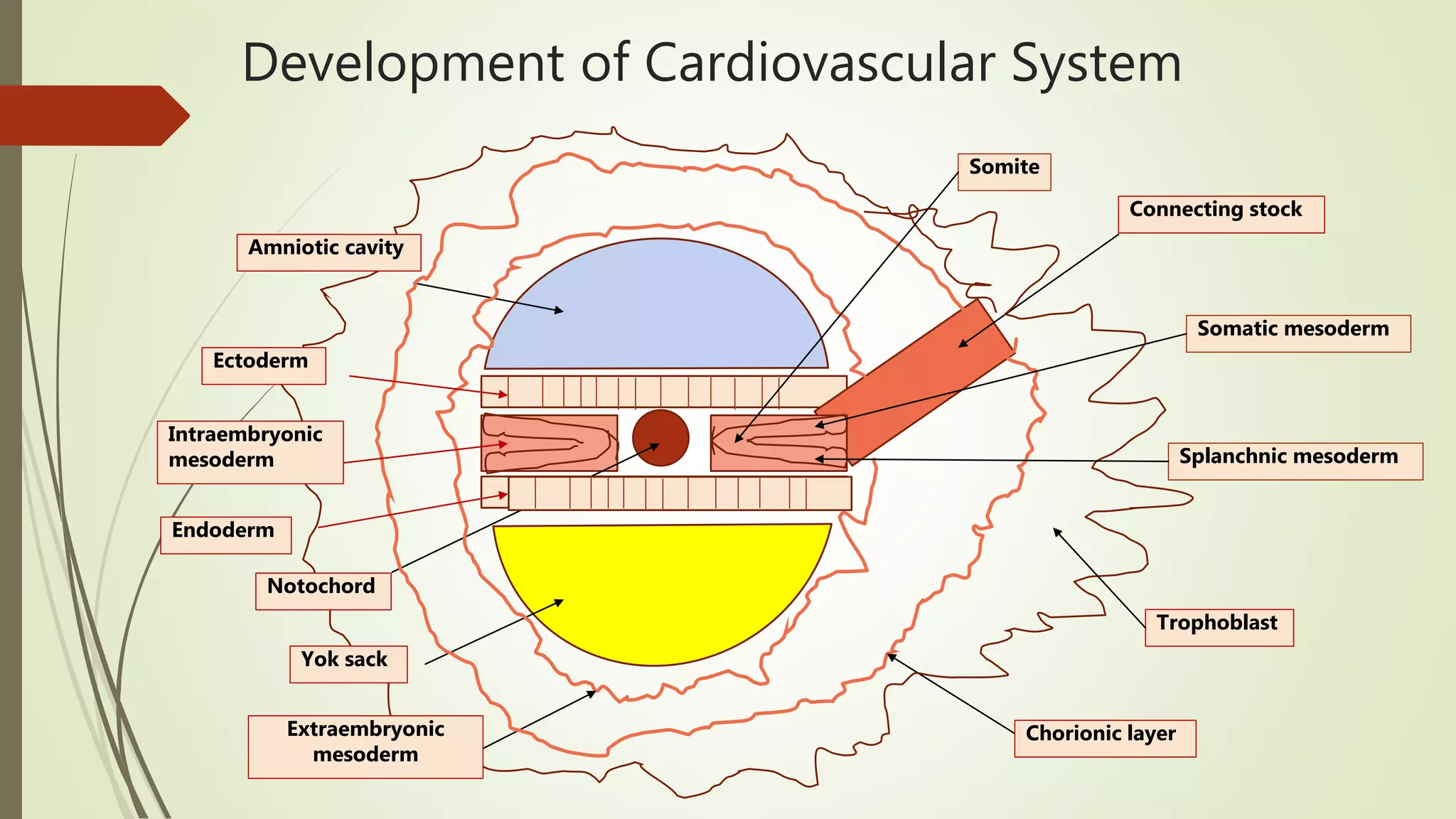
Development of Cardiovascular System
Connecting stock
Chorionic layer
Trophoblast
Notochord
Yok sack
Amniotic cavity
Intraembryonic
mesoderm
Endoderm
Ectoderm
Extraembryonic
mesoderm
Splanchnic mesoderm
Somatic mesoderm
Somite
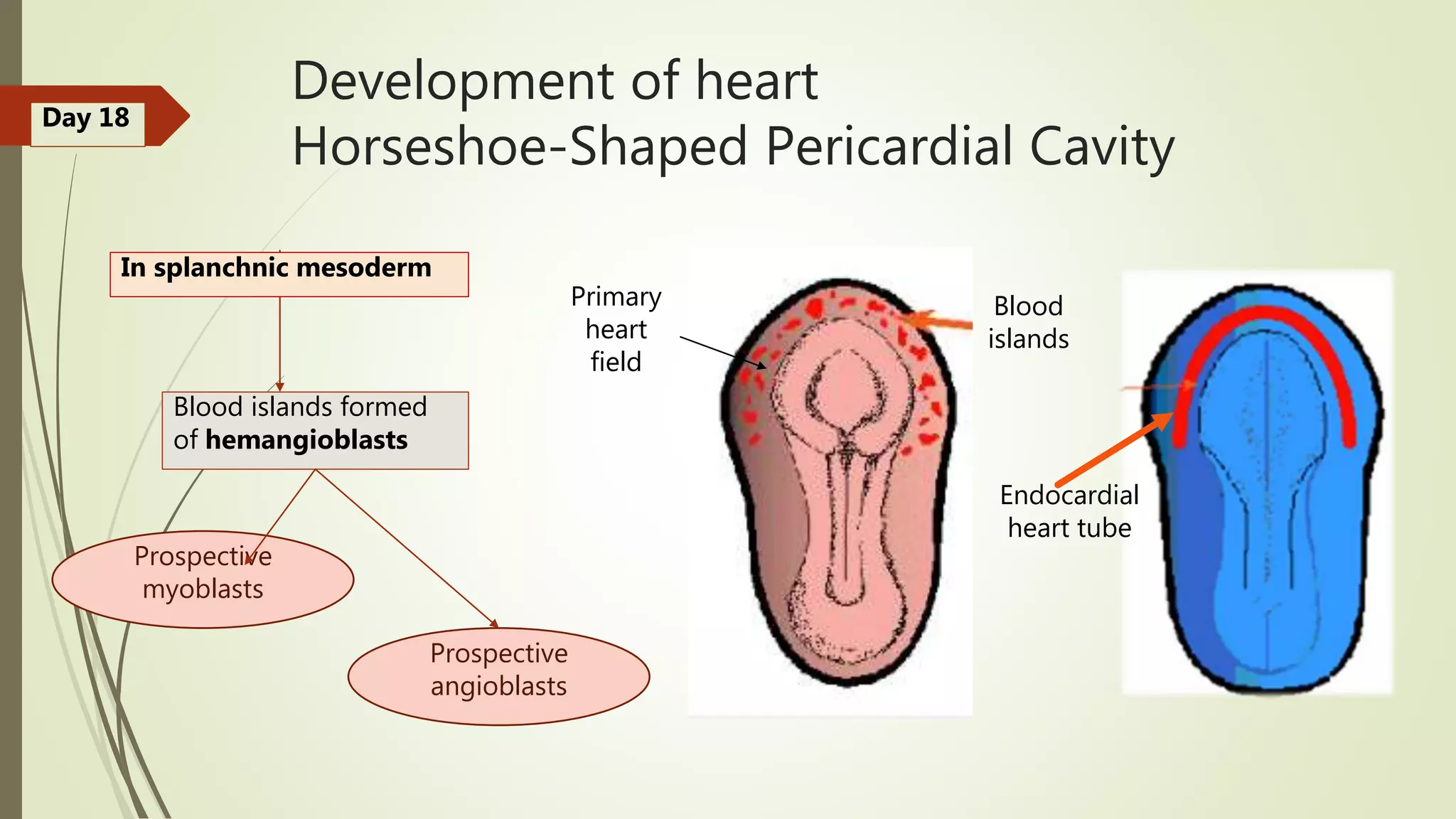
Development of heart
Horseshoe-Shaped Pericardial Cavity
Day 18
Blood islands formed
of hemangioblasts
Prospective
myoblasts
Prospective
angioblasts
Blood
islands
Endocardial
heart tube
In splanchnic mesoderm
Primary
heart
field
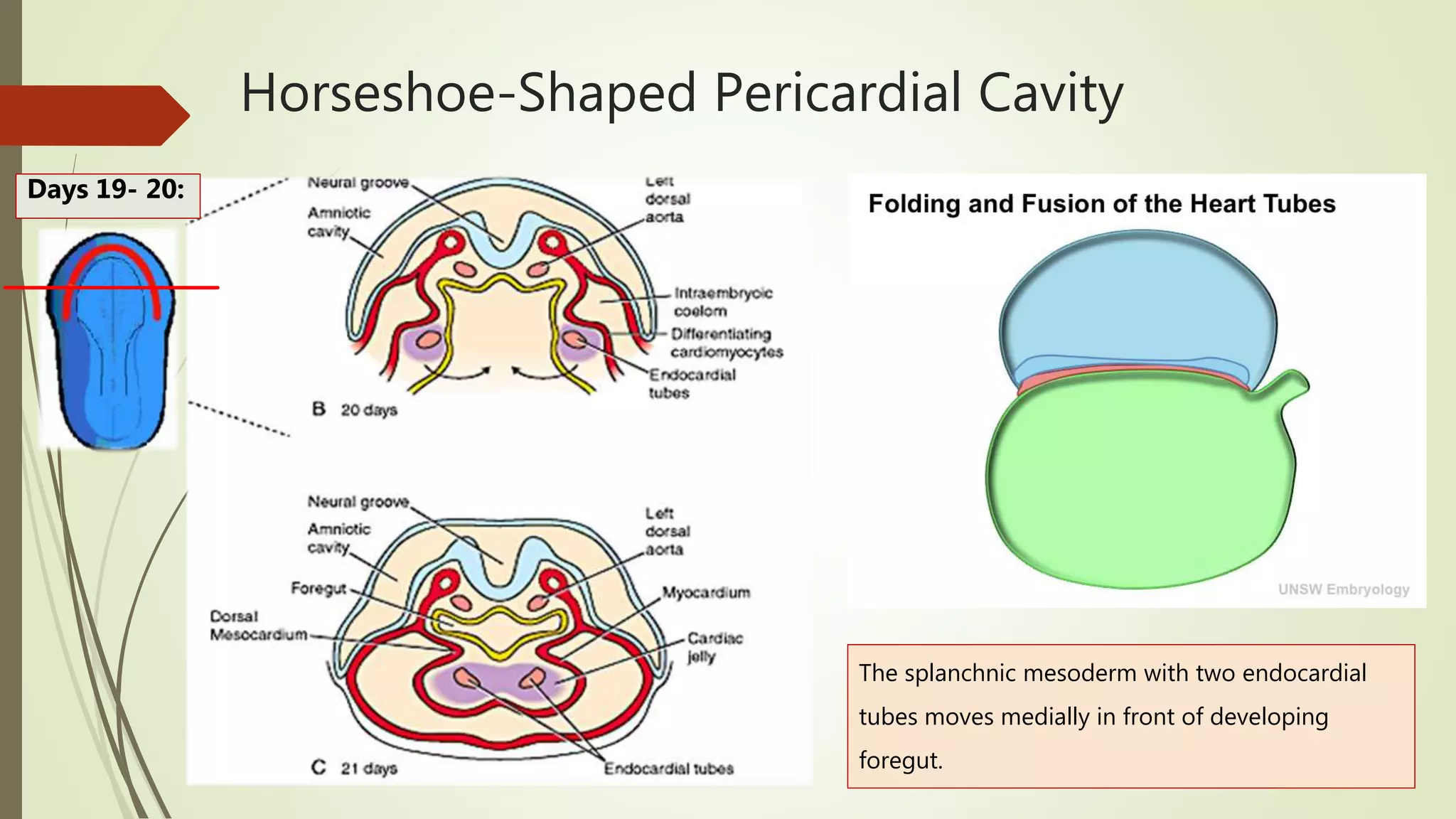
Horseshoe-Shaped Pericardial Cavity
Days 19- 20:
The splanchnic mesoderm with two endocardial
tubes moves medially in front of developing
foregut.
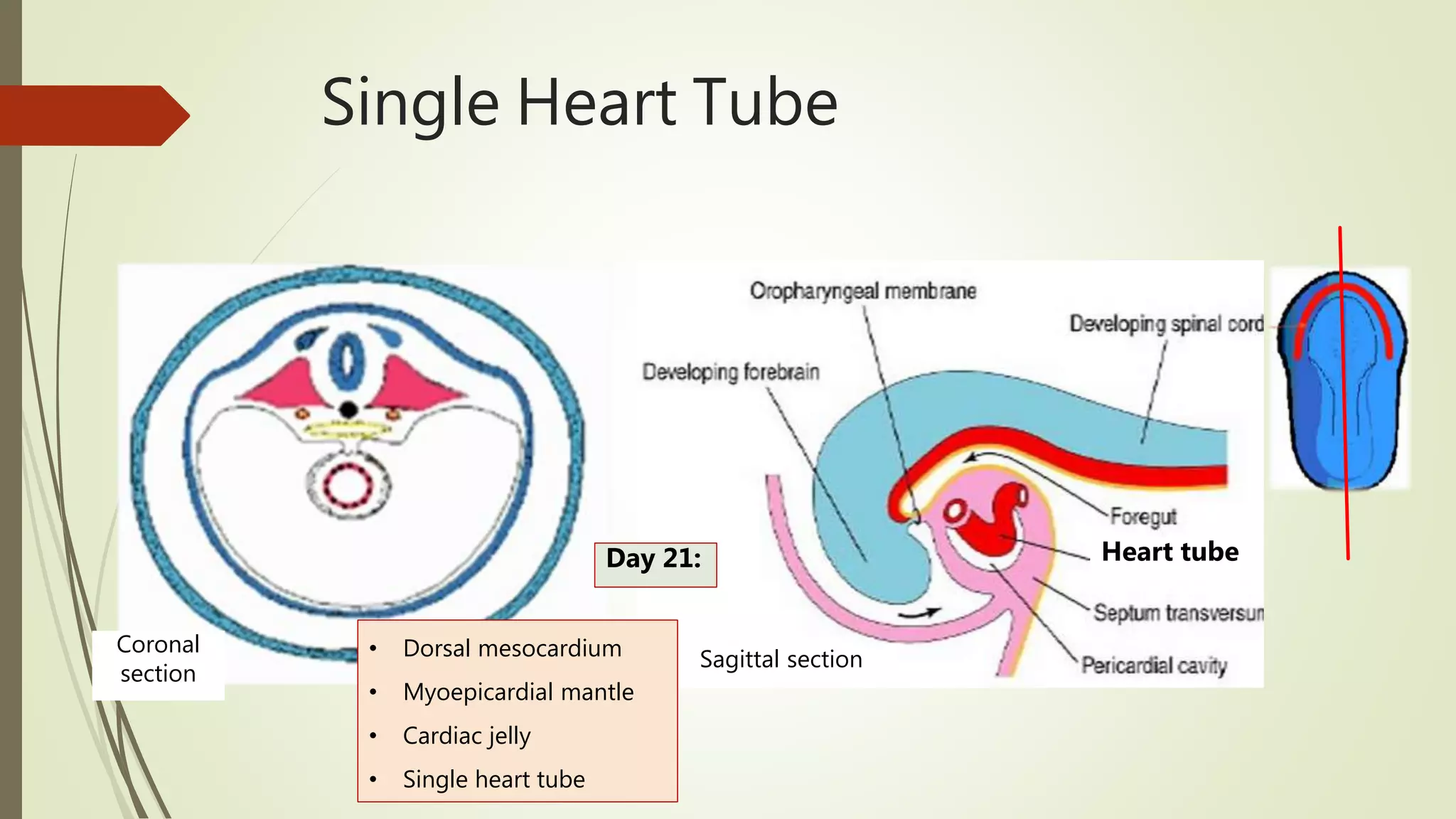
Single Heart Tube
Heart tube
Sagittal section
Coronal
section
Day 21:
• Dorsal mesocardium
• Myoepicardial mantle
• Cardiac jelly
• Single heart tube
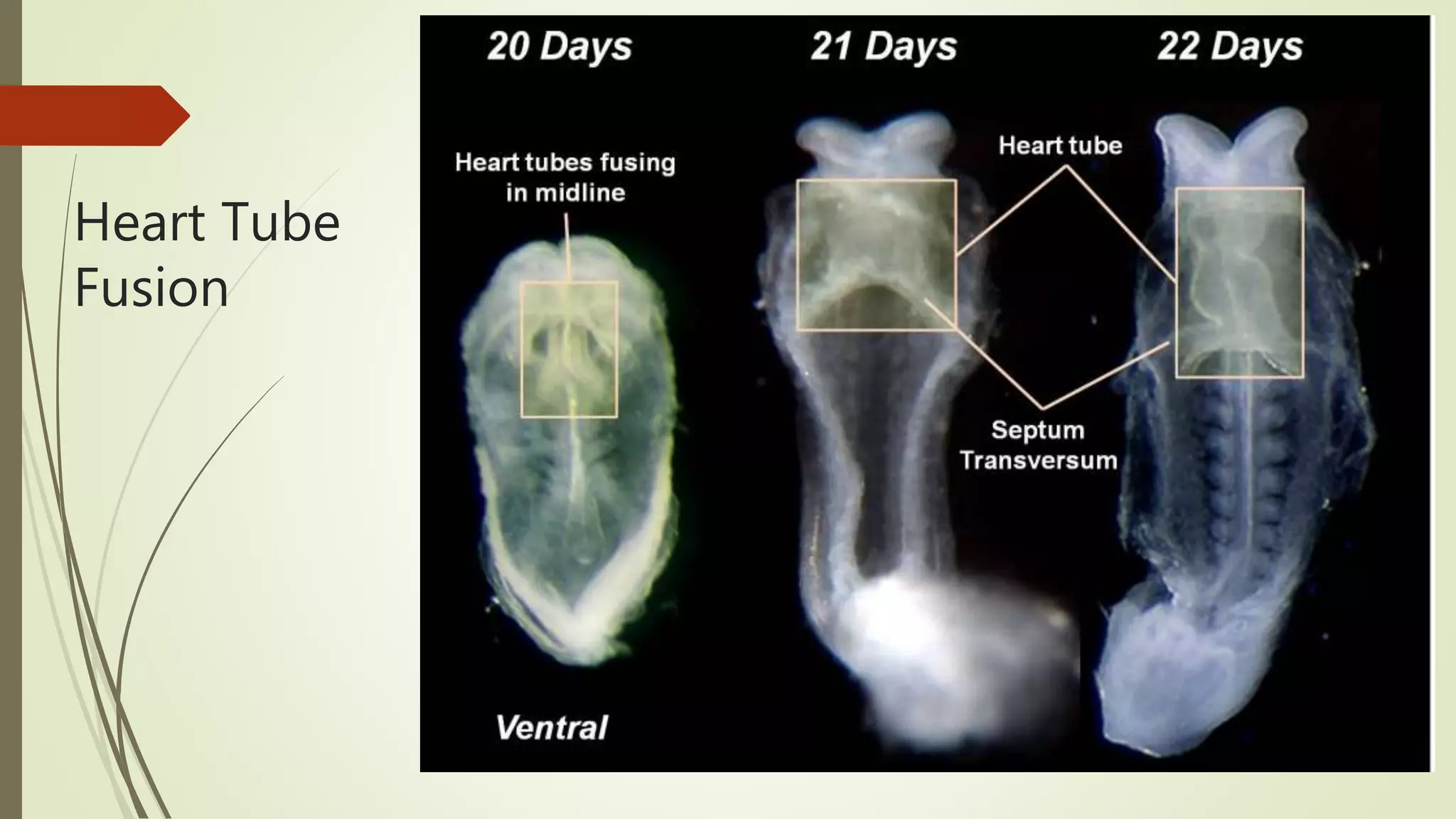
Heart Tube
Fusion
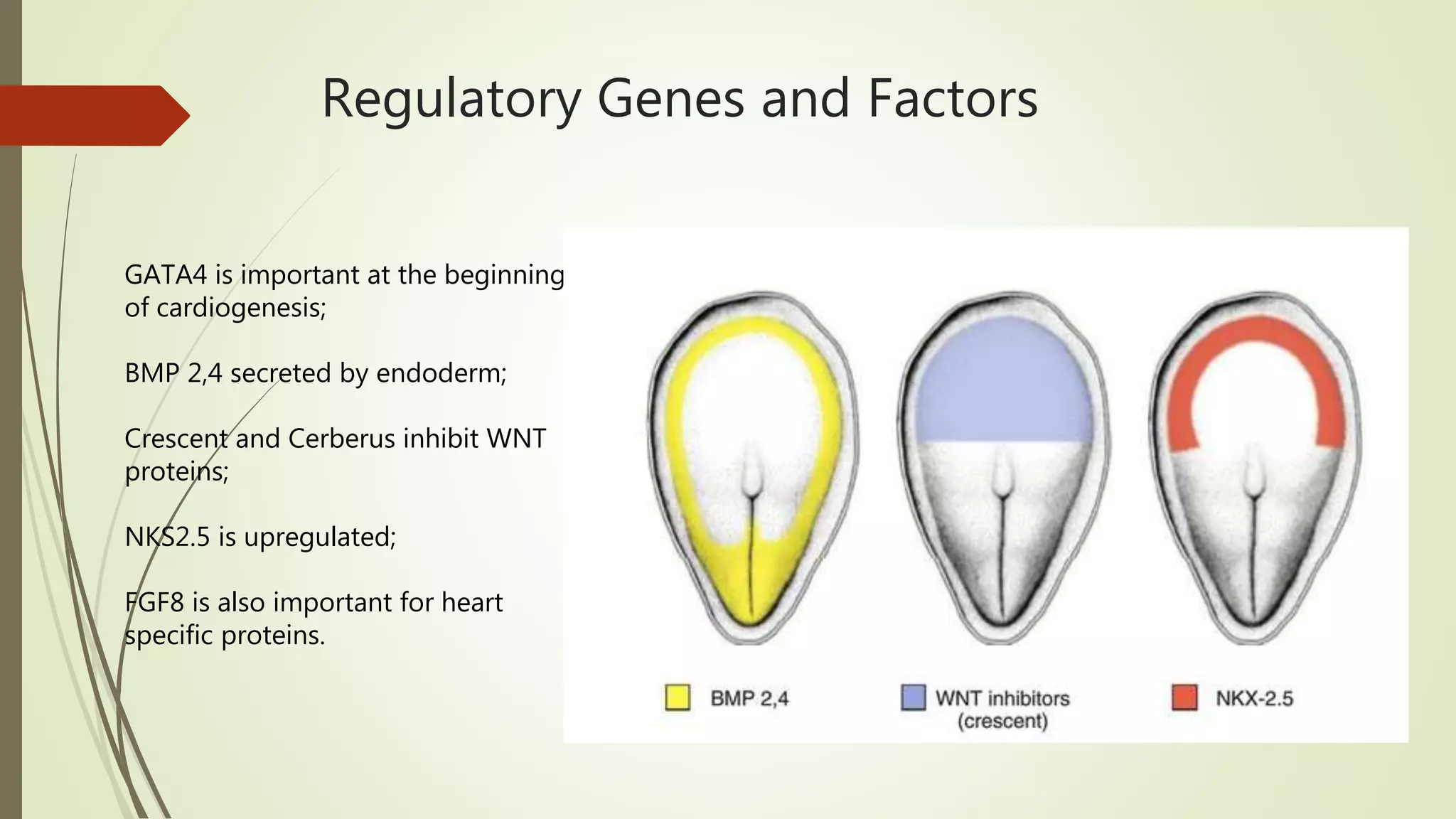
Regulatory Genes and Factors
GATA4 is important at the beginning
of cardiogenesis;
BMP 2,4 secreted by endoderm;
Crescent and Cerberus inhibit WNT
proteins;
NKS2.5 is upregulated;
FGF8 is also important for heart
specific proteins.
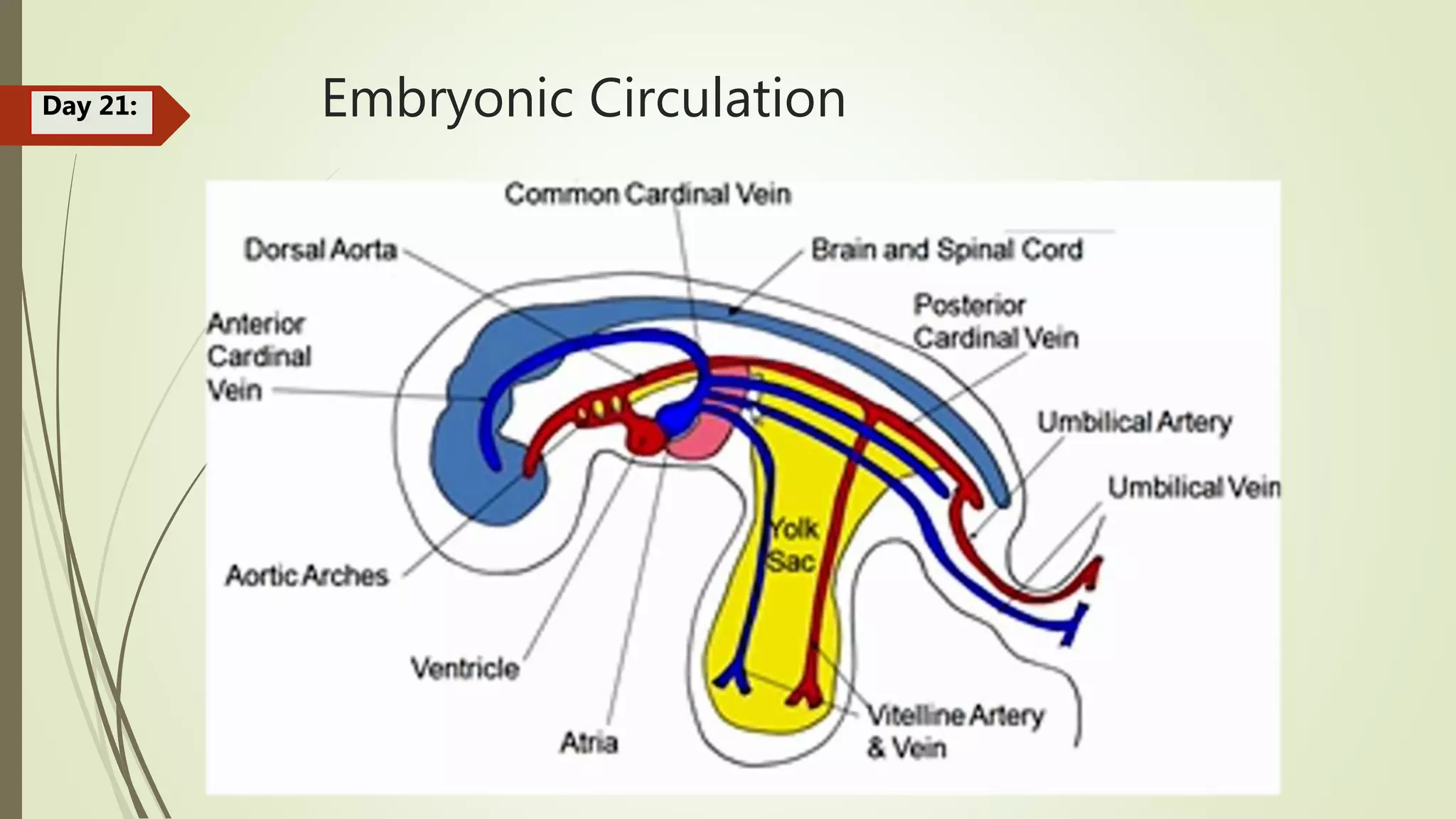
Embryonic CirculationDay 21:
Endocardial Heart Tube
Hand 1
Hand 2
Tbx5
RA
Bulbus
cordis
Primitive ventricle
Atrium
Left sinal horn
Right sinal horn
Aortic arches
Aortic sac
Truncus arteriosus
Conus cordis
I
II
III
VV
UV
CV
Day 21:
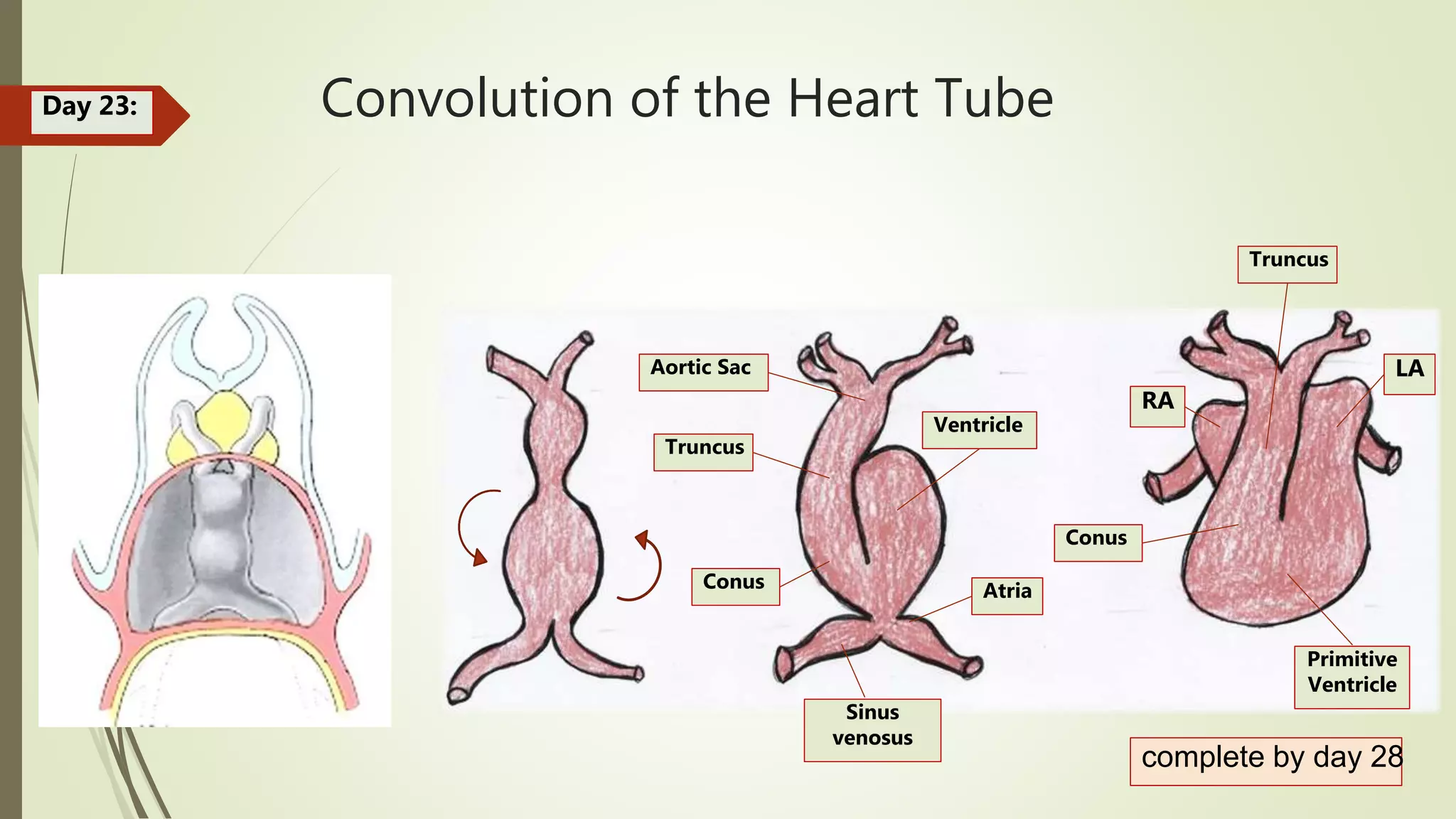
Convolution of the Heart TubeDay 23:
complete by day 28
Aortic Sac
Truncus
Conus
Sinus
venosus
Atria
Ventricle
Truncus
Conus
Primitive
Ventricle
LA
RA
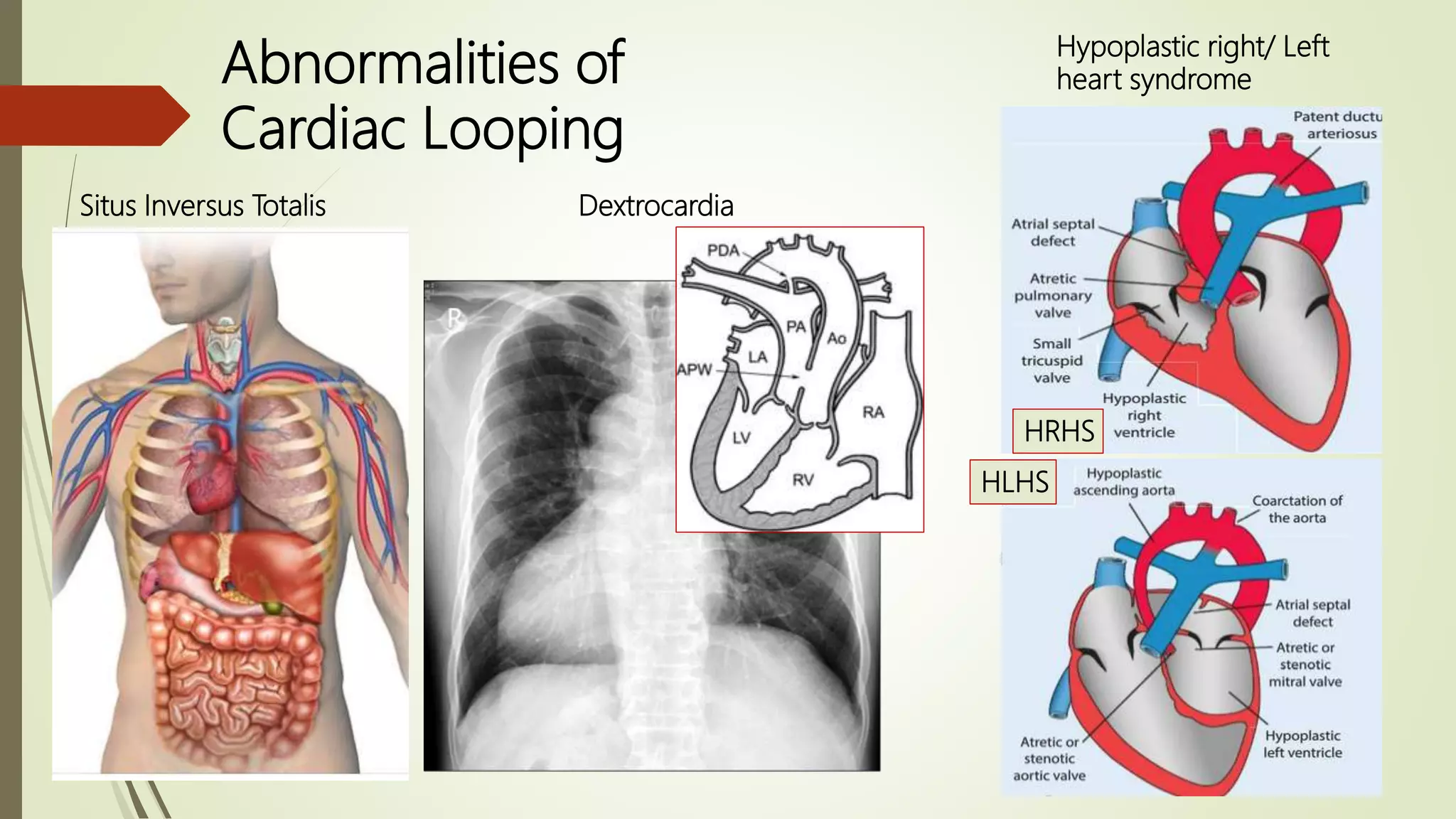
Abnormalities of
Cardiac Looping
Situs Inversus Totalis Dextrocardia
Hypoplastic right/ Left
heart syndrome
HRHS
HLHS
Primitive 4 Chamber HeartDay 27:
Truncus
Conus
Atrium (A)
Ventricle (V)
Bulbo-ventricular flange (BVF)
Atrio-ventricular canal (AV)
LA
RA
AV
BVF
V
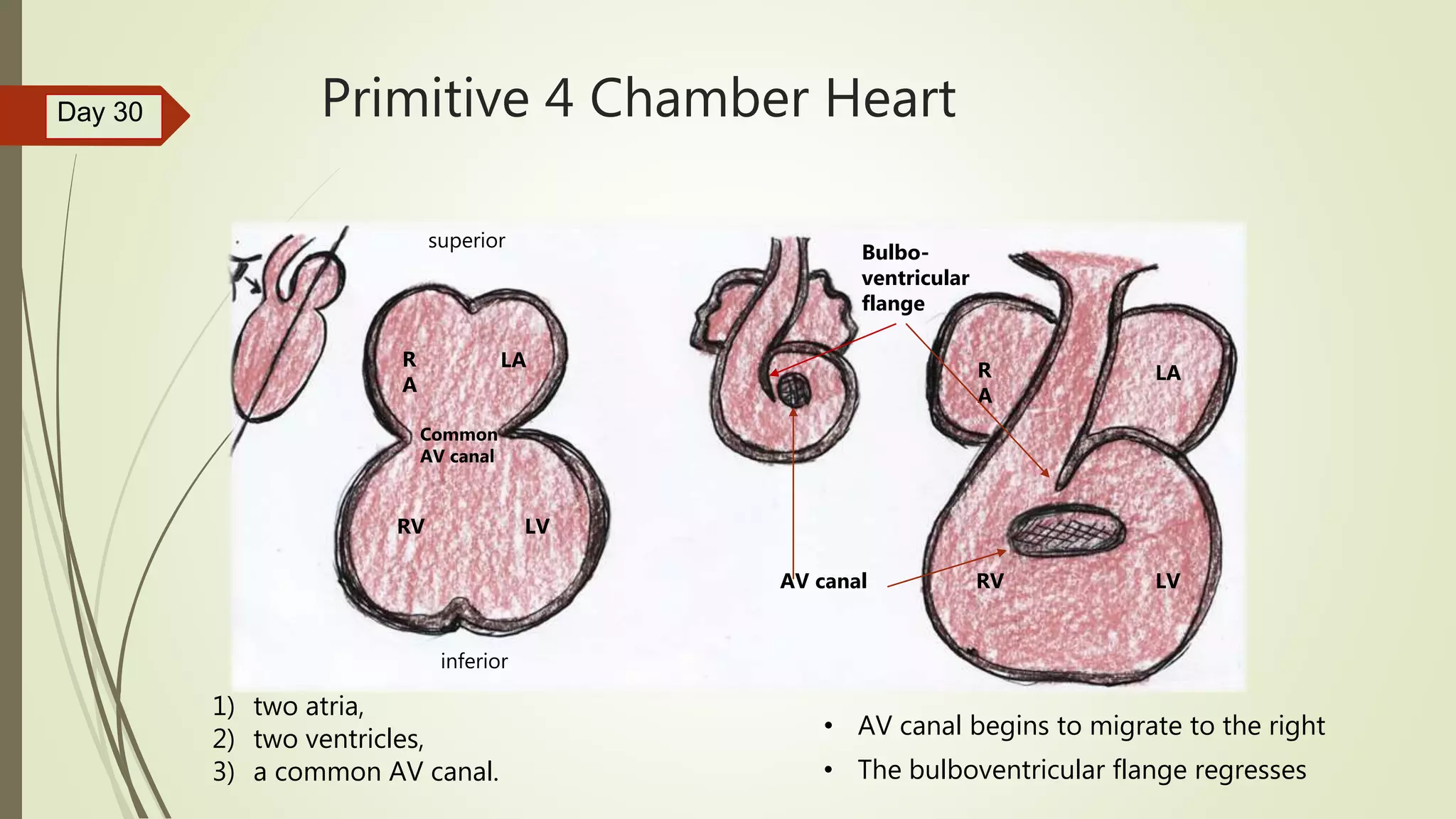
Primitive 4 Chamber Heart
1) two atria,
2) two ventricles,
3) a common AV canal.
• AV canal begins to migrate to the right
• The bulboventricular flange regresses
Day 30
R
A
LA
RV LV
Common
AV canal
superior
inferior
Bulbo-
ventricular
flange
AV canal
R
A
LA
RV LV
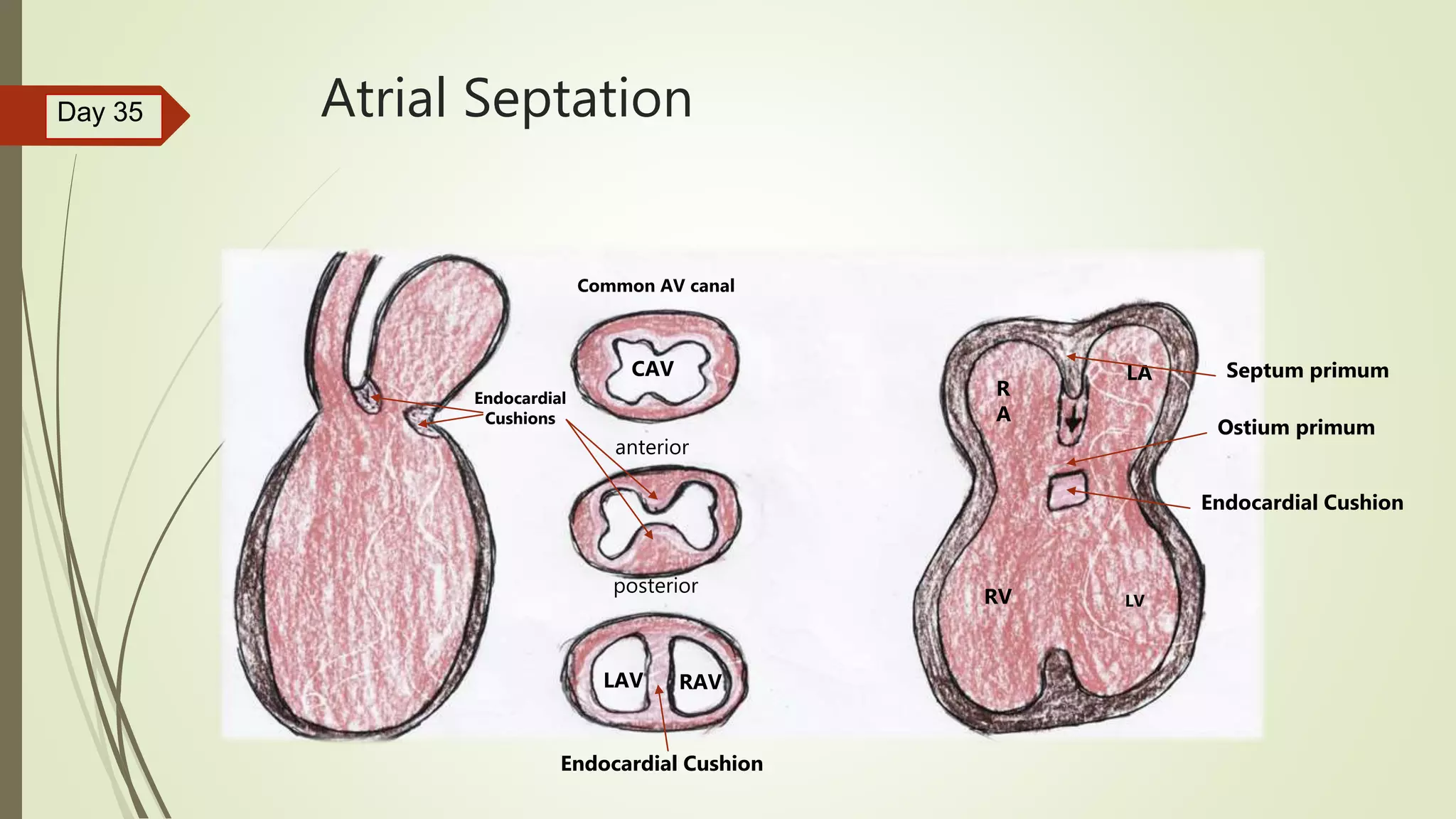
Atrial Septation
Endocardial
cushions
Day 35
R
A
LA
RV LV
Endocardial Cushion
Septum primum
Ostium primum
Endocardial Cushion
anterior
posterior
RAVLAV
CAV
Endocardial
Cushions
Common AV canal
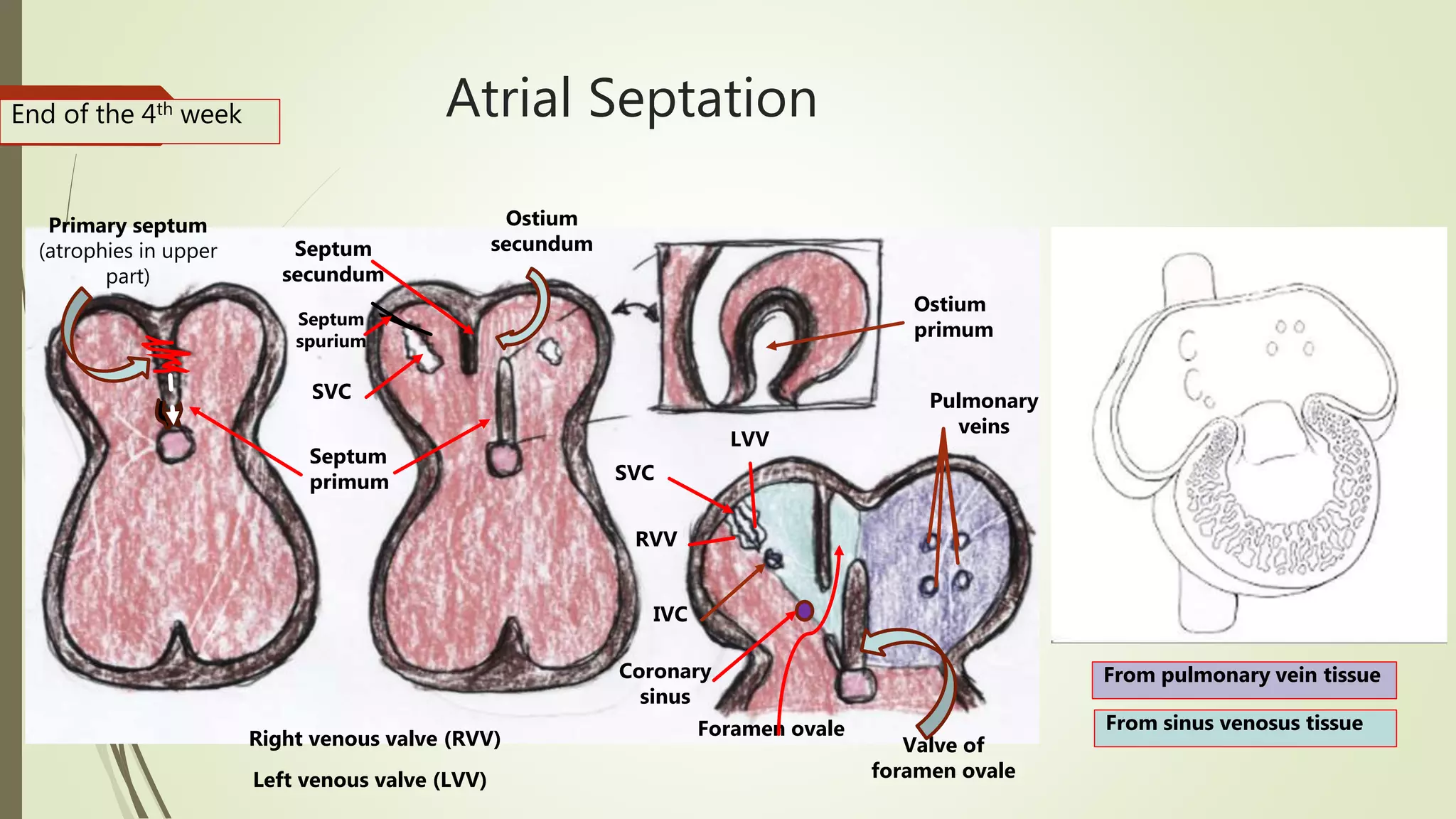
Atrial SeptationEnd of the 4th week
From pulmonary vein tissue
From sinus venosus tissue
Primary septum
(atrophies in upper
part)
Ostium
primum
Ostium
secundumSeptum
secundum
SVC
IVC
Right venous valve (RVV)
Left venous valve (LVV)
Foramen ovale
Valve of
foramen ovale
Pulmonary
veins
Coronary
sinus
Septum
spurium
RVV
LVV
SVC
Septum
primum
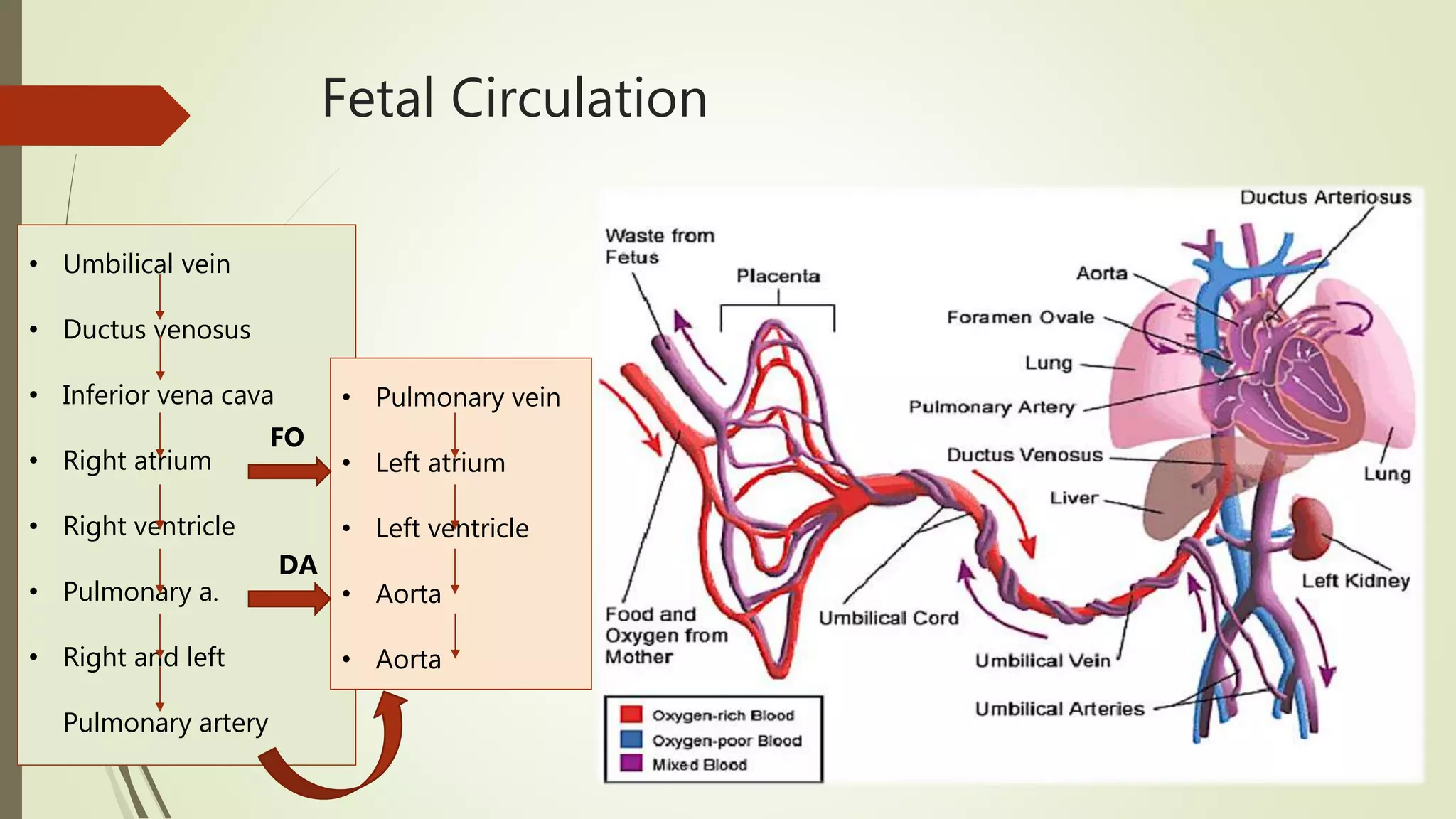
Fetal Circulation
• Umbilical vein
• Ductus venosus
• Inferior vena cava
• Right atrium
• Right ventricle
• Pulmonary a.
• Right and left
Pulmonary artery
• Pulmonary vein
• Left atrium
• Left ventricle
• Aorta
• Aorta
FO
DA
Malformation of Atrial Septum
Probe patent foramen ovale
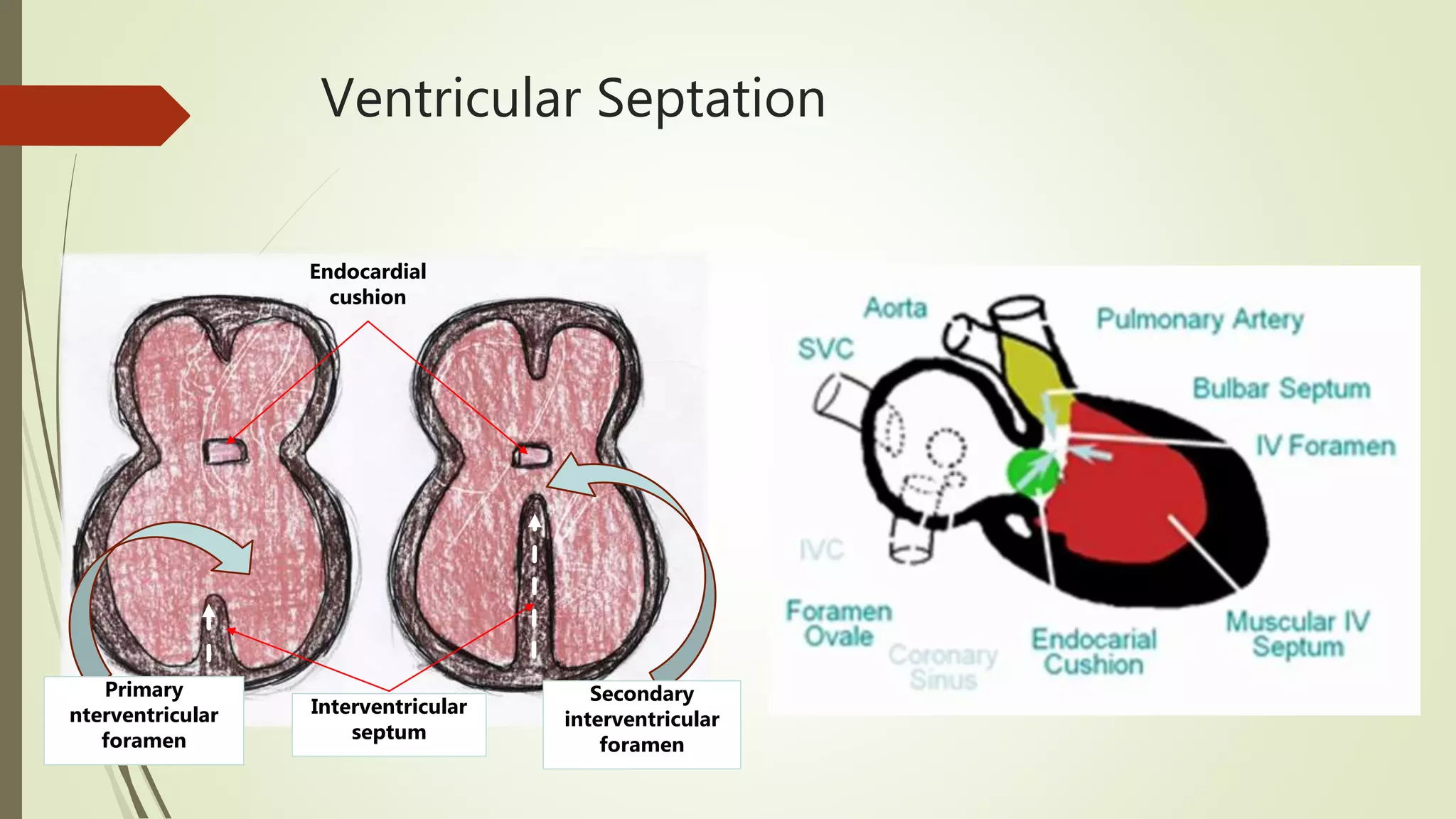
Ventricular Septation
Interventricular
septum
Endocardial
cushion
Primary
nterventricular
foramen
Secondary
interventricular
foramen
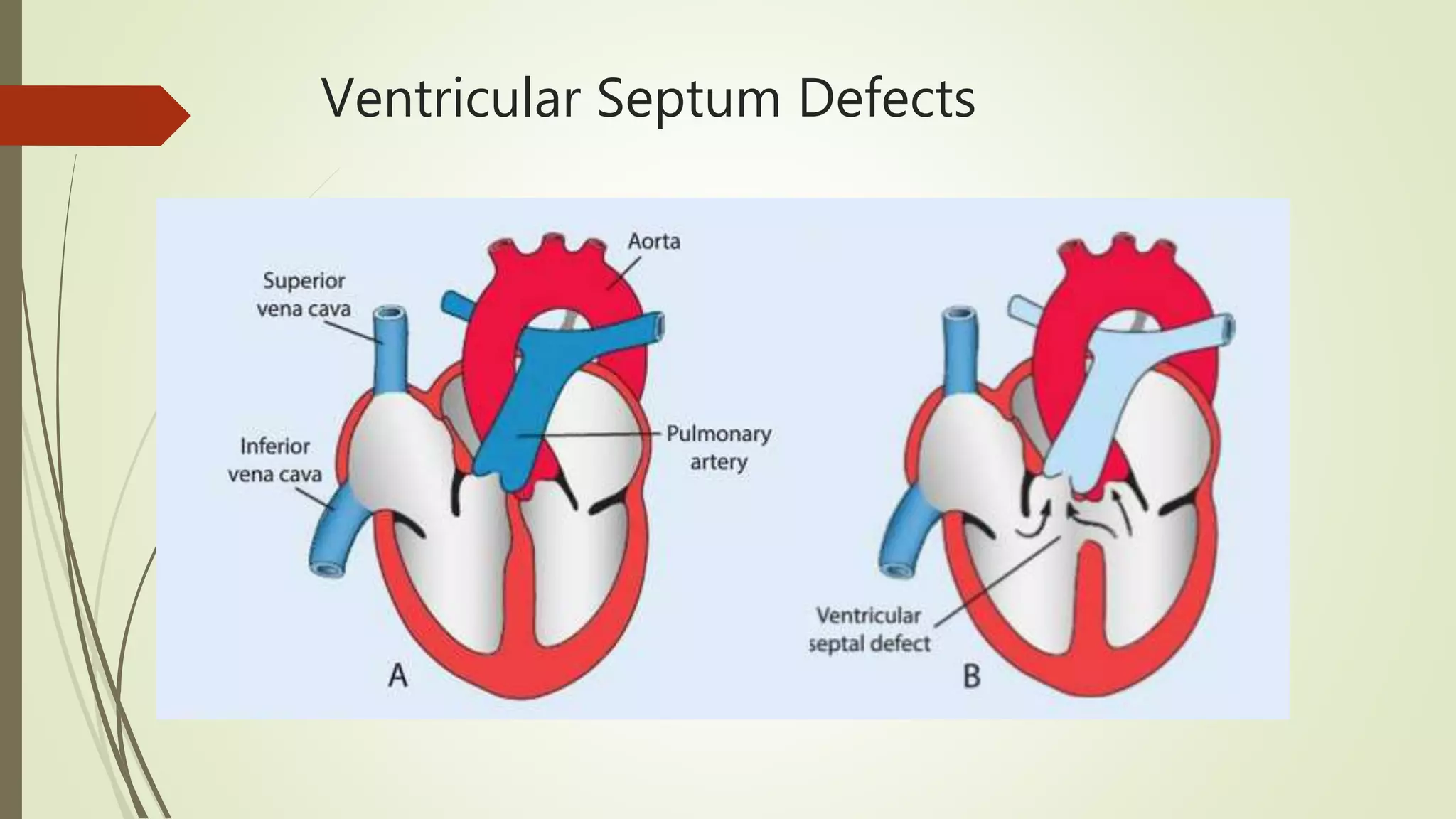
Ventricular Septum Defects
Septation of Bulbus Cordis
1
2
3
1 2 3
Truncal (Conal) swelling
Bulbus Cordis
Aorta Pulmonary
artery
Aorticopulmonary
septum
Anterior
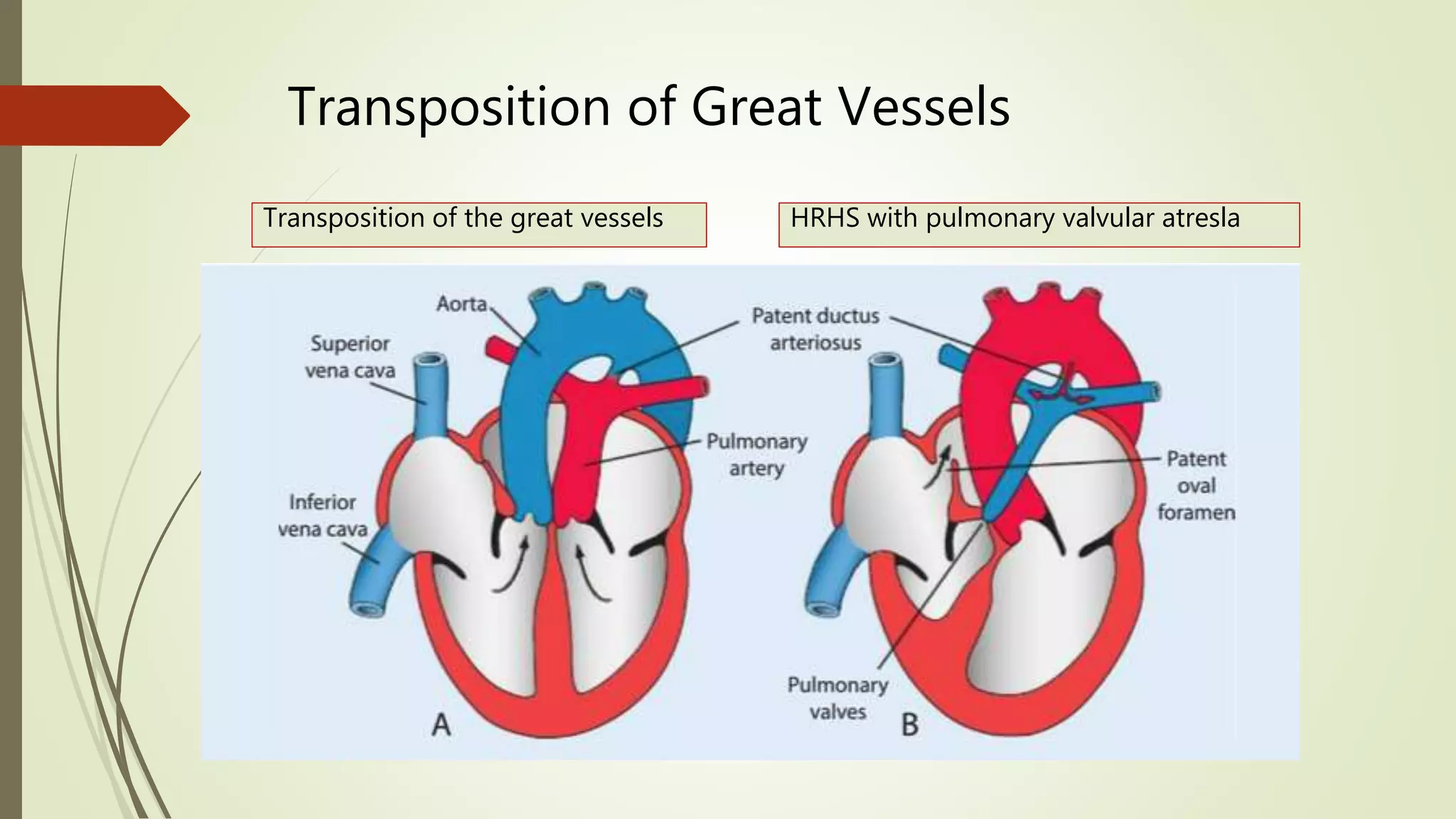
Transposition of Great Vessels
Transposition of the great vessels HRHS with pulmonary valvular atresla
Persistent Truncus Arteriosus
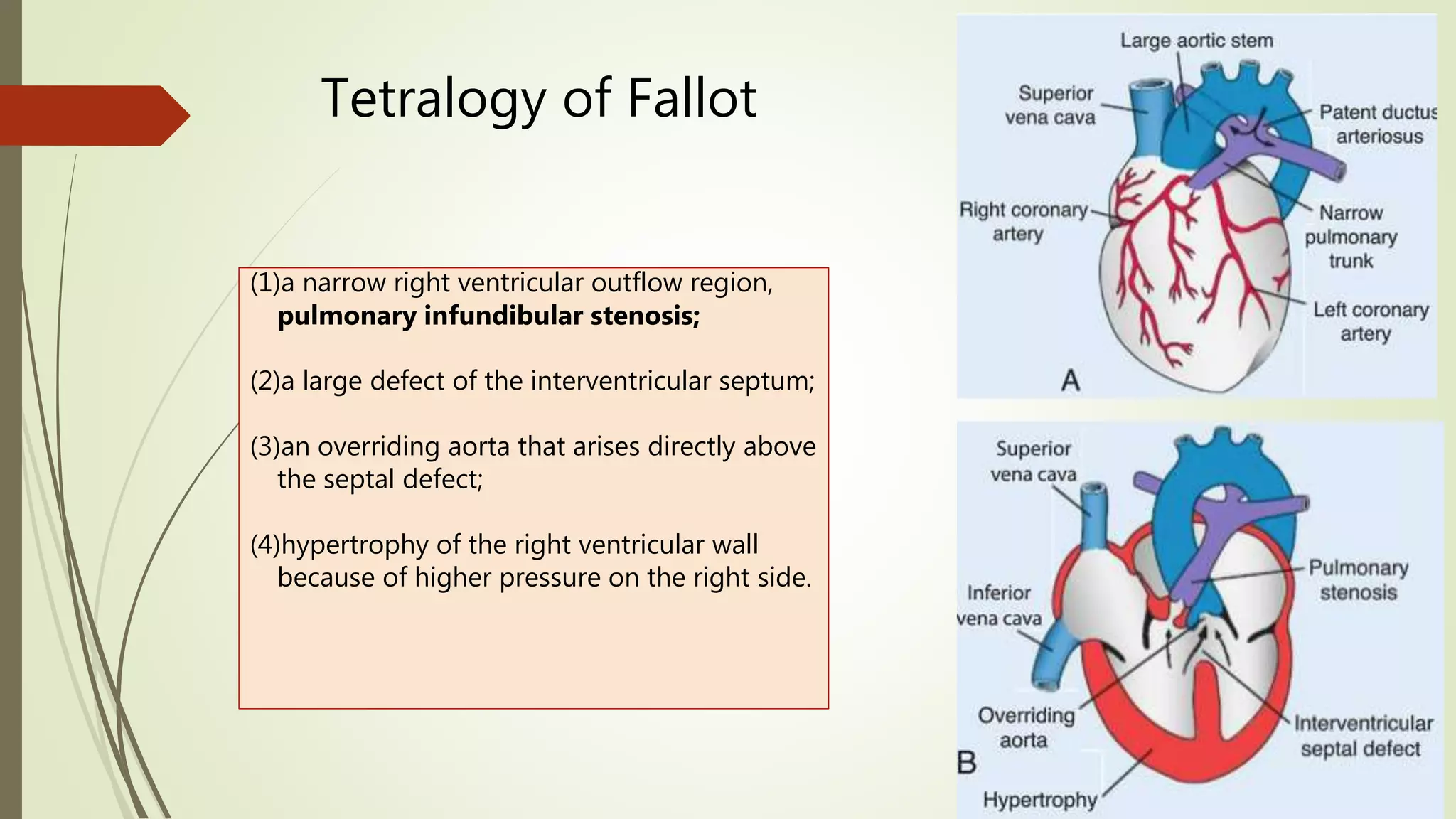
Tetralogy of Fallot
(1)a narrow right ventricular outflow region,
pulmonary infundibular stenosis;
(2)a large defect of the interventricular septum;
(3)an overriding aorta that arises directly above
the septal defect;
(4)hypertrophy of the right ventricular wall
because of higher pressure on the right side.
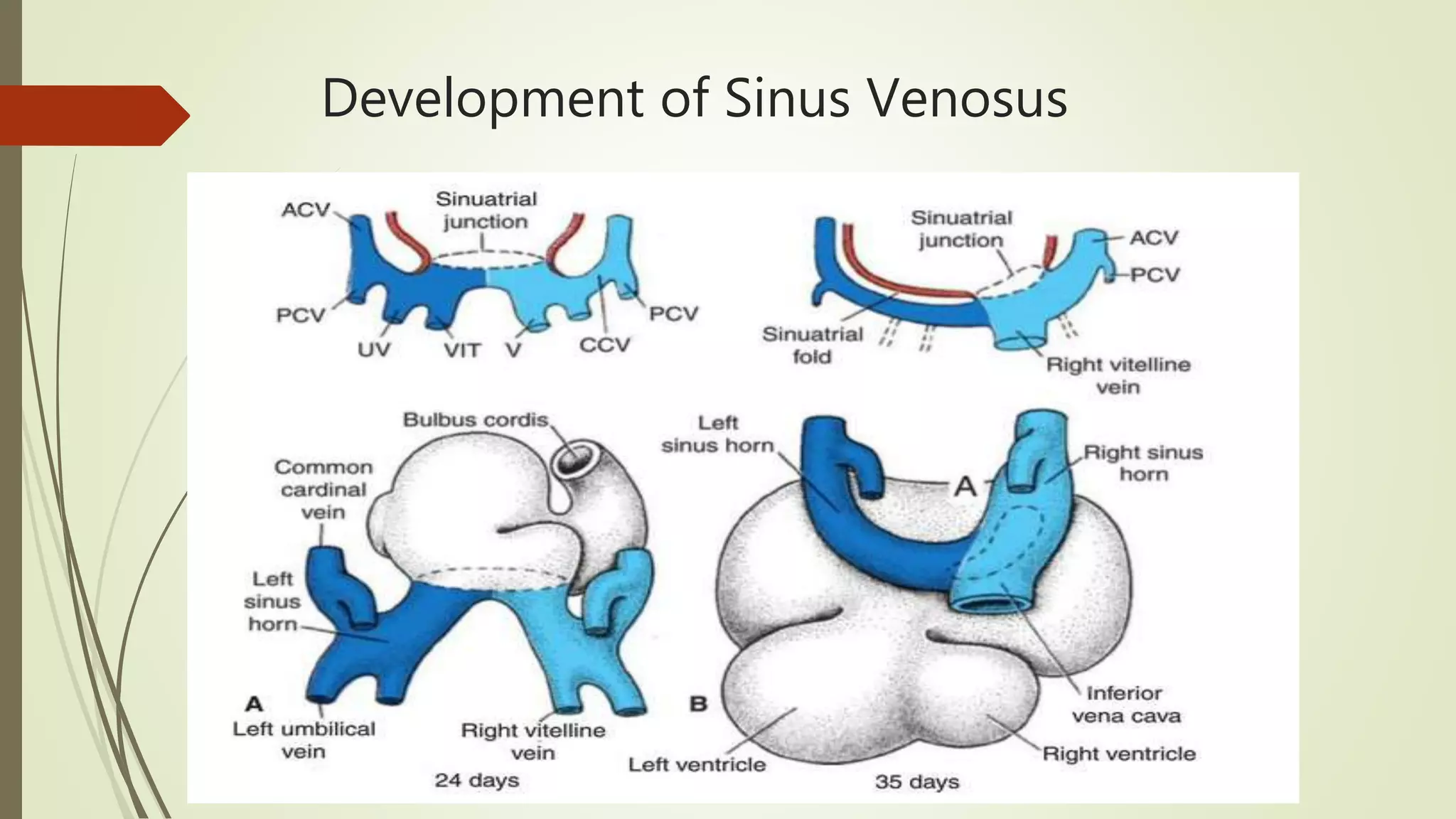
Development of Sinus Venosus
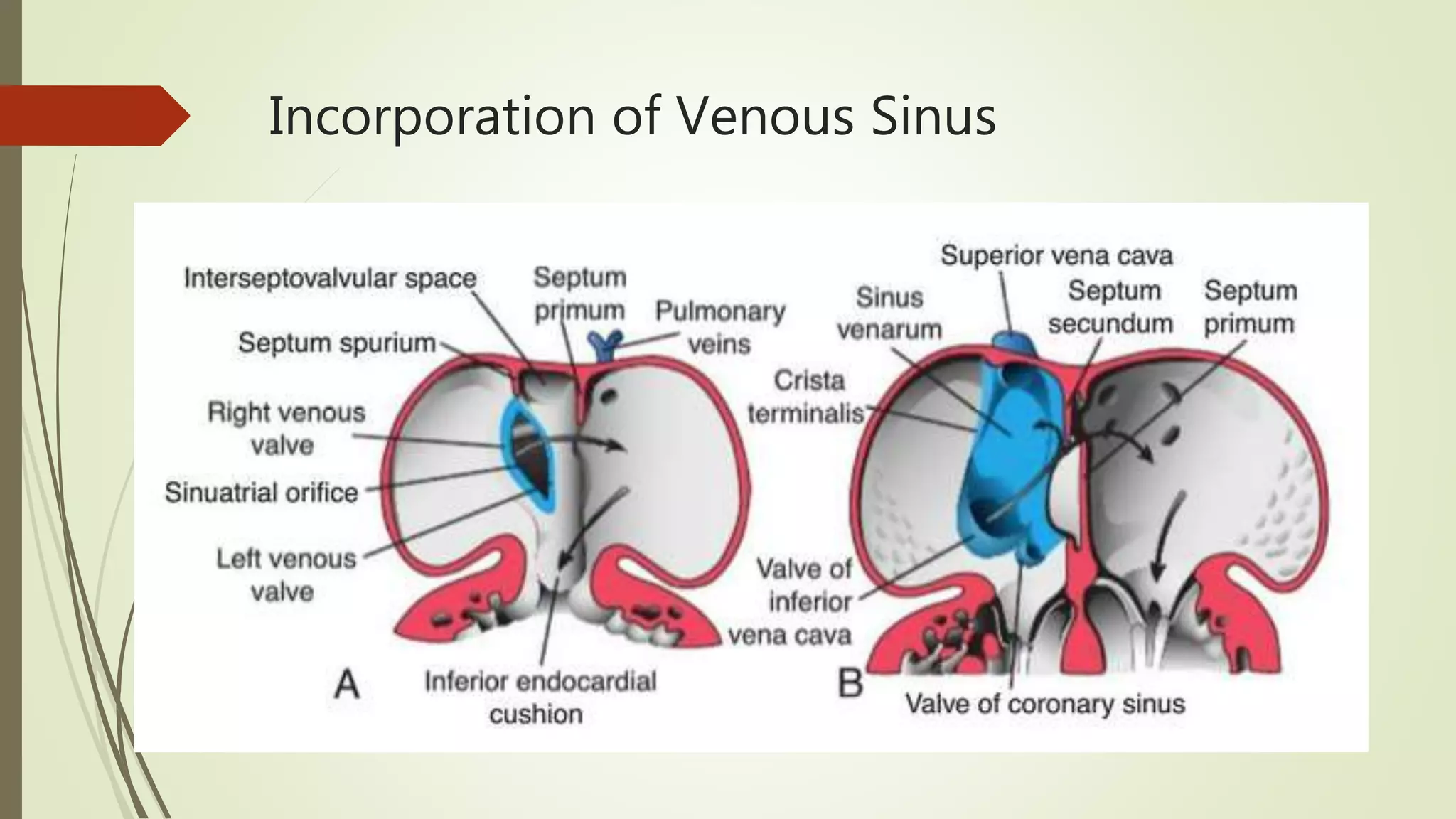
Incorporation of Venous Sinus
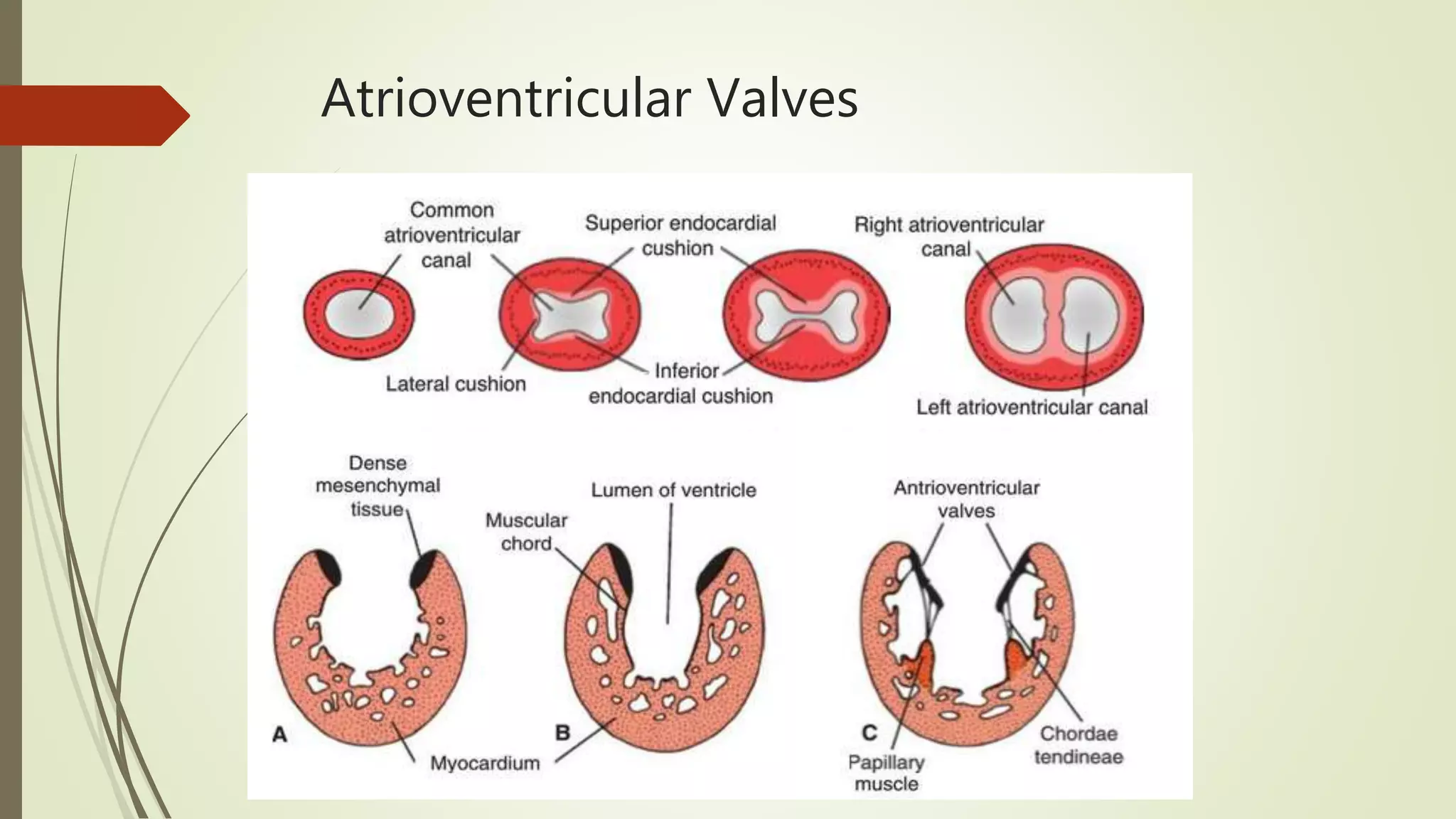
Atrioventricular Valves
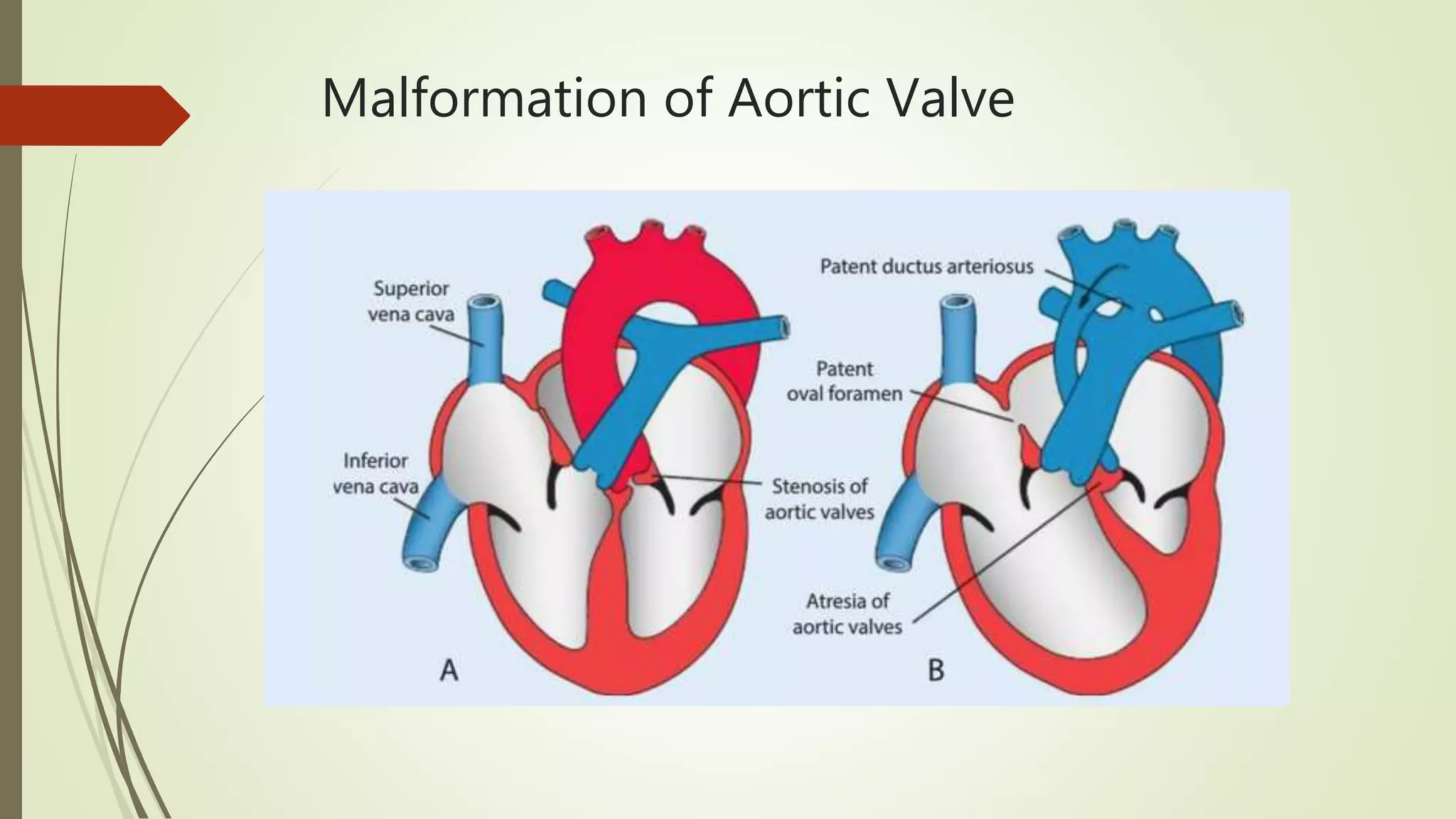
Malformation of Aortic Valve
Tricuspid Atresia Ebstein anomaly
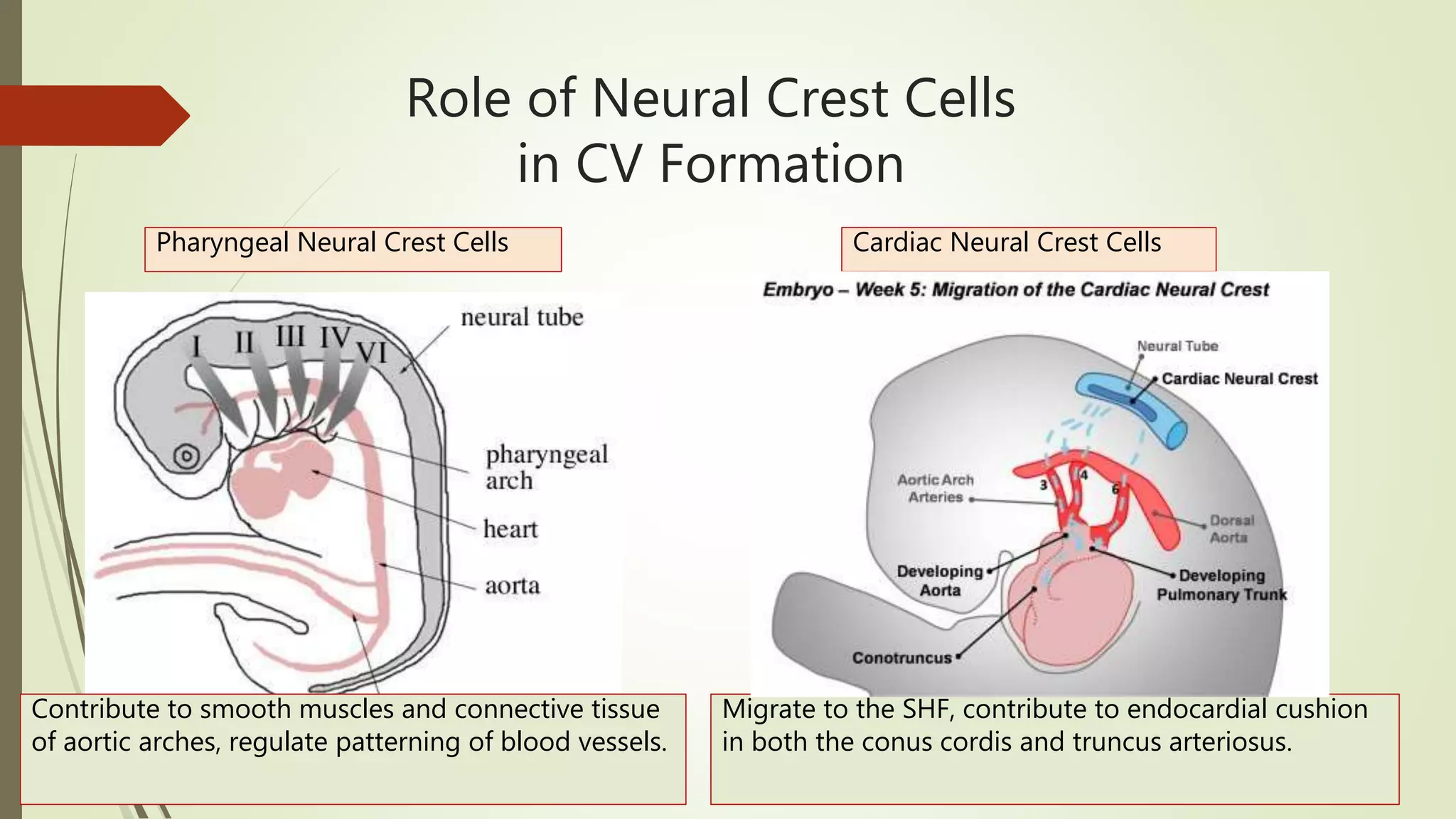
Role of Neural Crest Cells
in CV Formation
Pharyngeal Neural Crest Cells Cardiac Neural Crest Cells
Migrate to the SHF, contribute to endocardial cushion
in both the conus cordis and truncus arteriosus.
Contribute to smooth muscles and connective tissue
of aortic arches, regulate patterning of blood vessels.
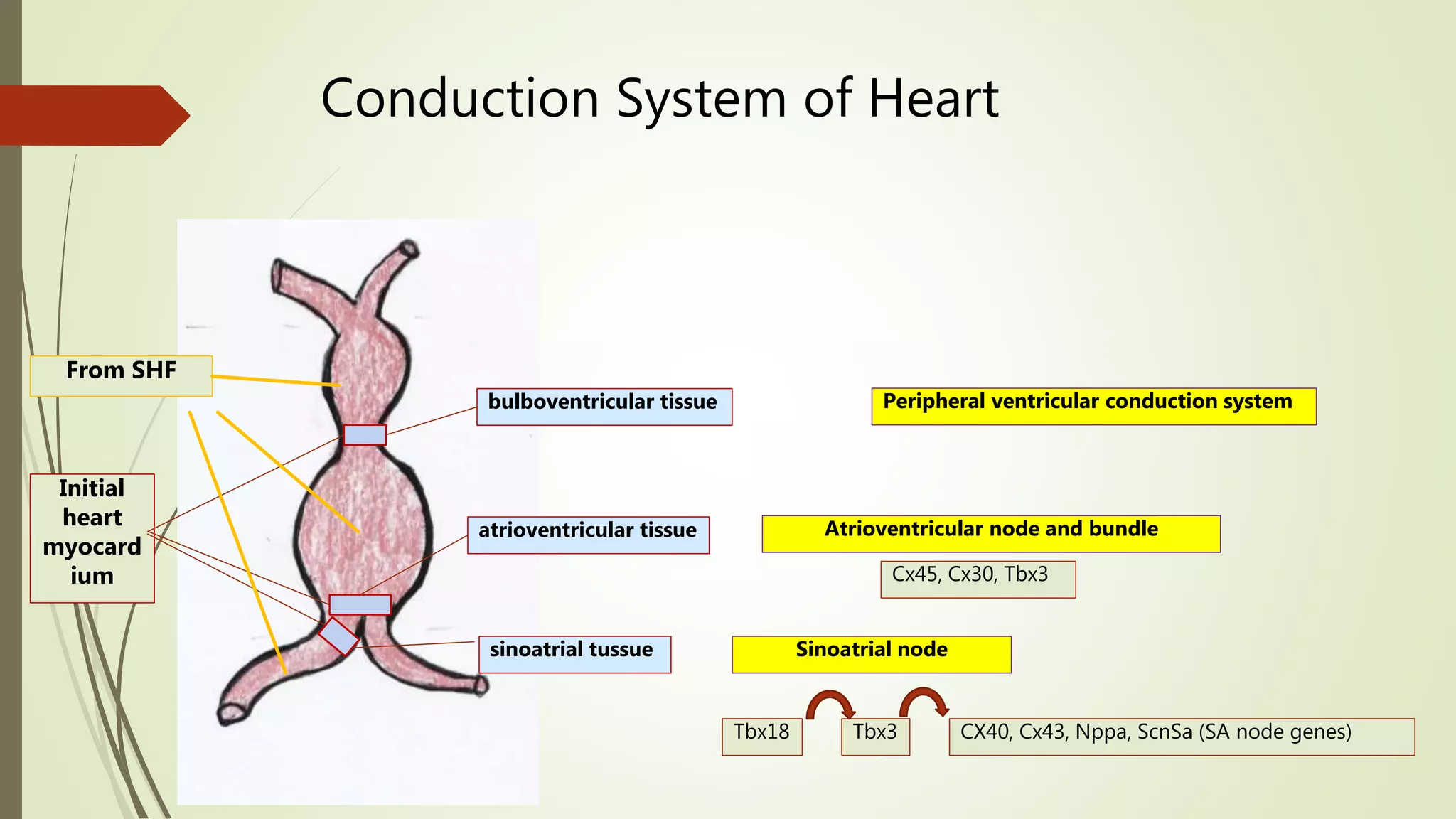
Conduction System of Heart
Sinoatrial node
Atrioventricular node and bundle
Peripheral ventricular conduction system
Initial
heart
myocard
ium
From SHF
bulboventricular tissue
atrioventricular tissue
sinoatrial tussue
Tbx18 Tbx3 CX40, Cx43, Nppa, ScnSa (SA node genes)
Cx45, Cx30, Tbx3
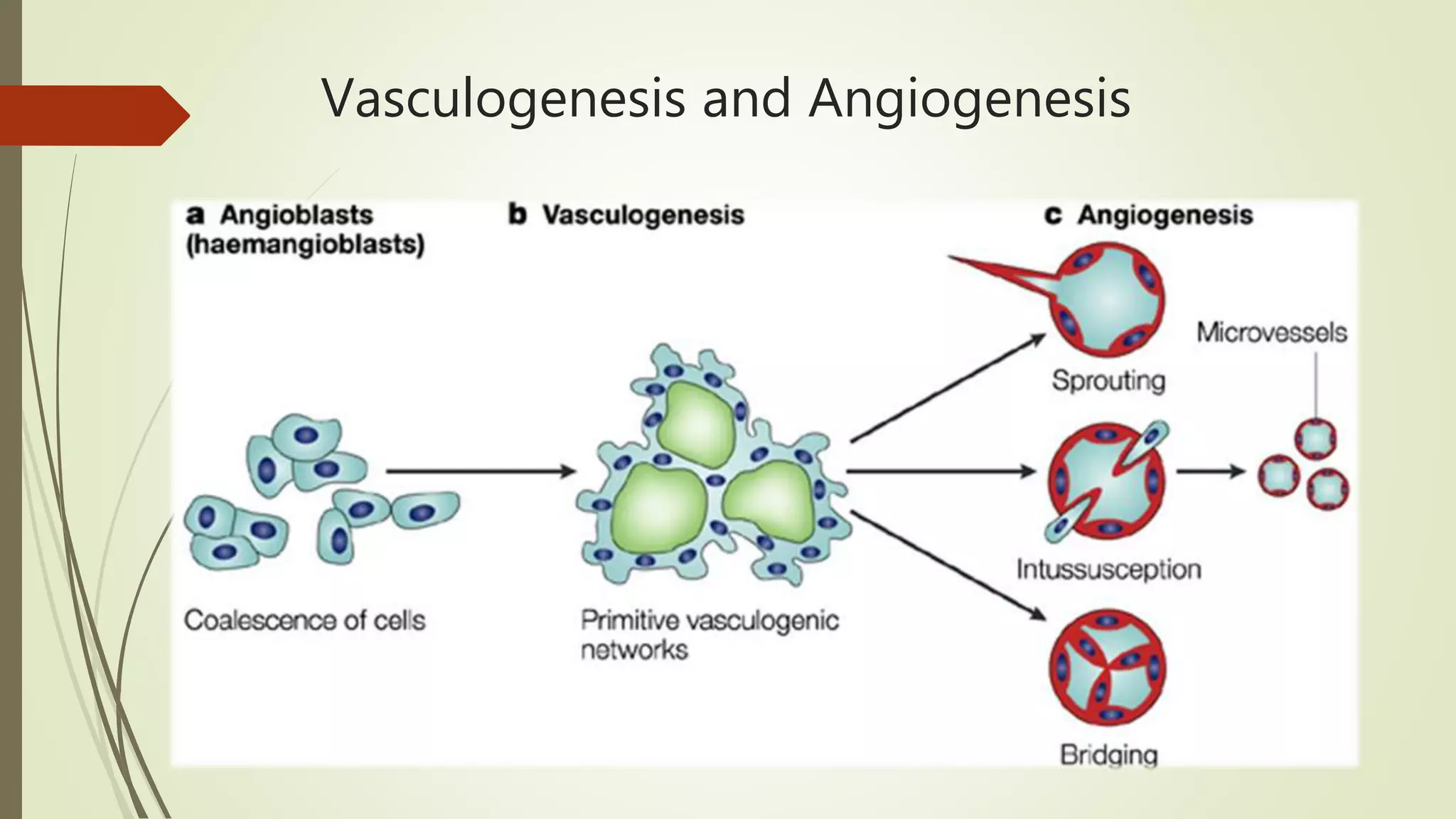
Vasculogenesis and Angiogenesis
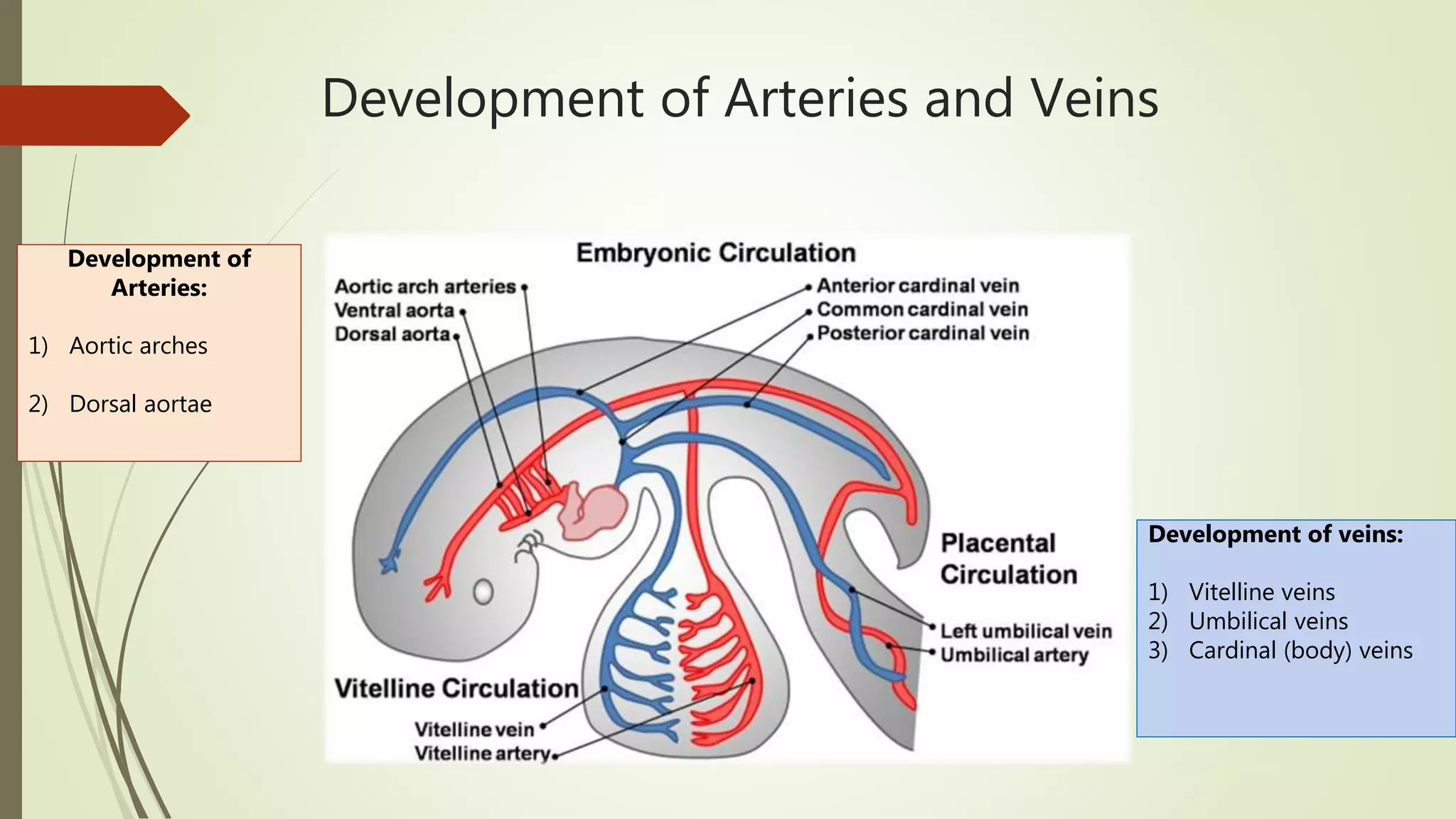
Development of Arteries and Veins
Development of
Arteries:
1) Aortic arches
2) Dorsal aortae
Development of veins:
1) Vitelline veins
2) Umbilical veins
3) Cardinal (body) veins
Aortic Arches
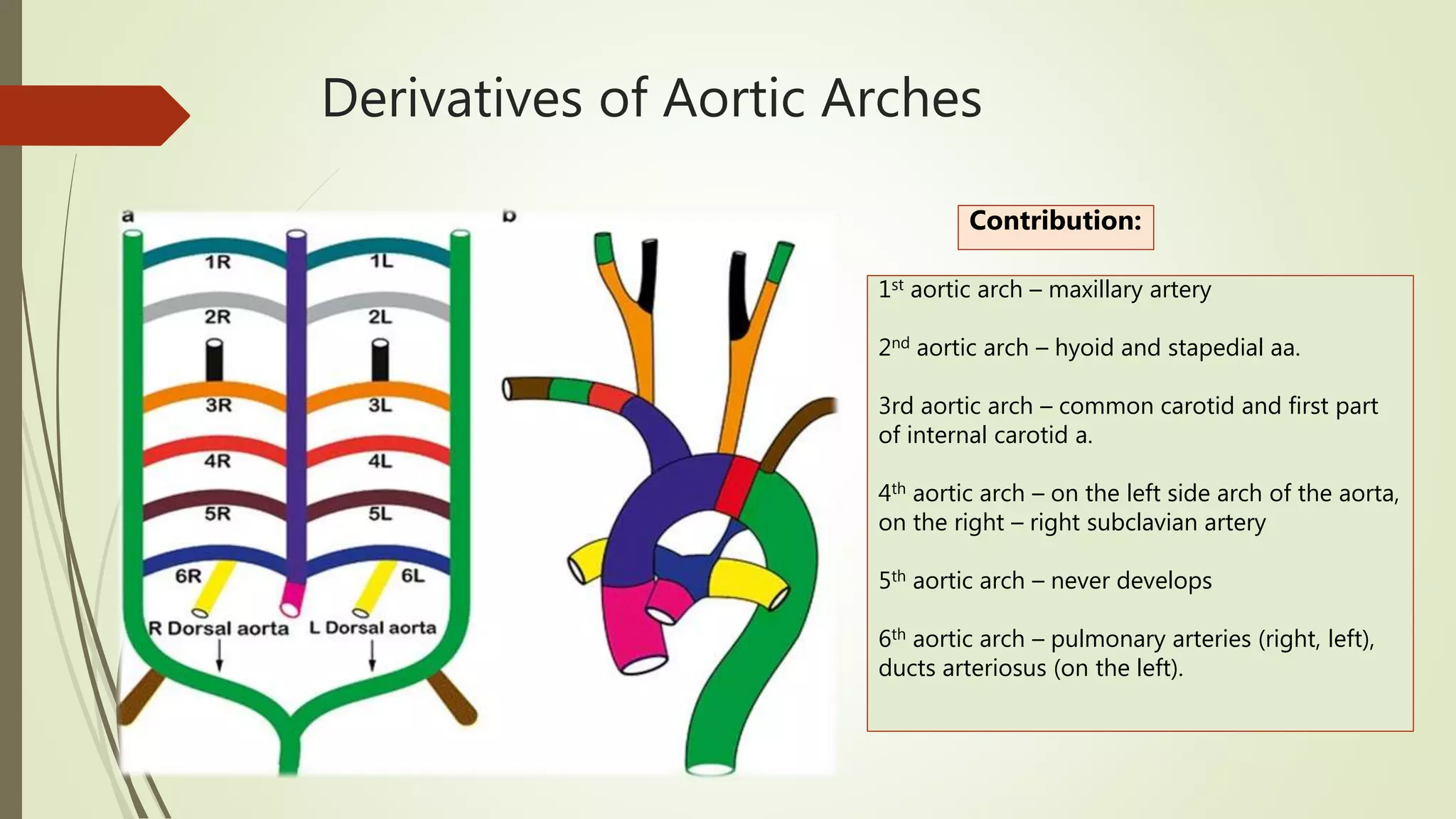
Derivatives of Aortic Arches
1st aortic arch – maxillary artery
2nd aortic arch – hyoid and stapedial aa.
3rd aortic arch – common carotid and first part
of internal carotid a.
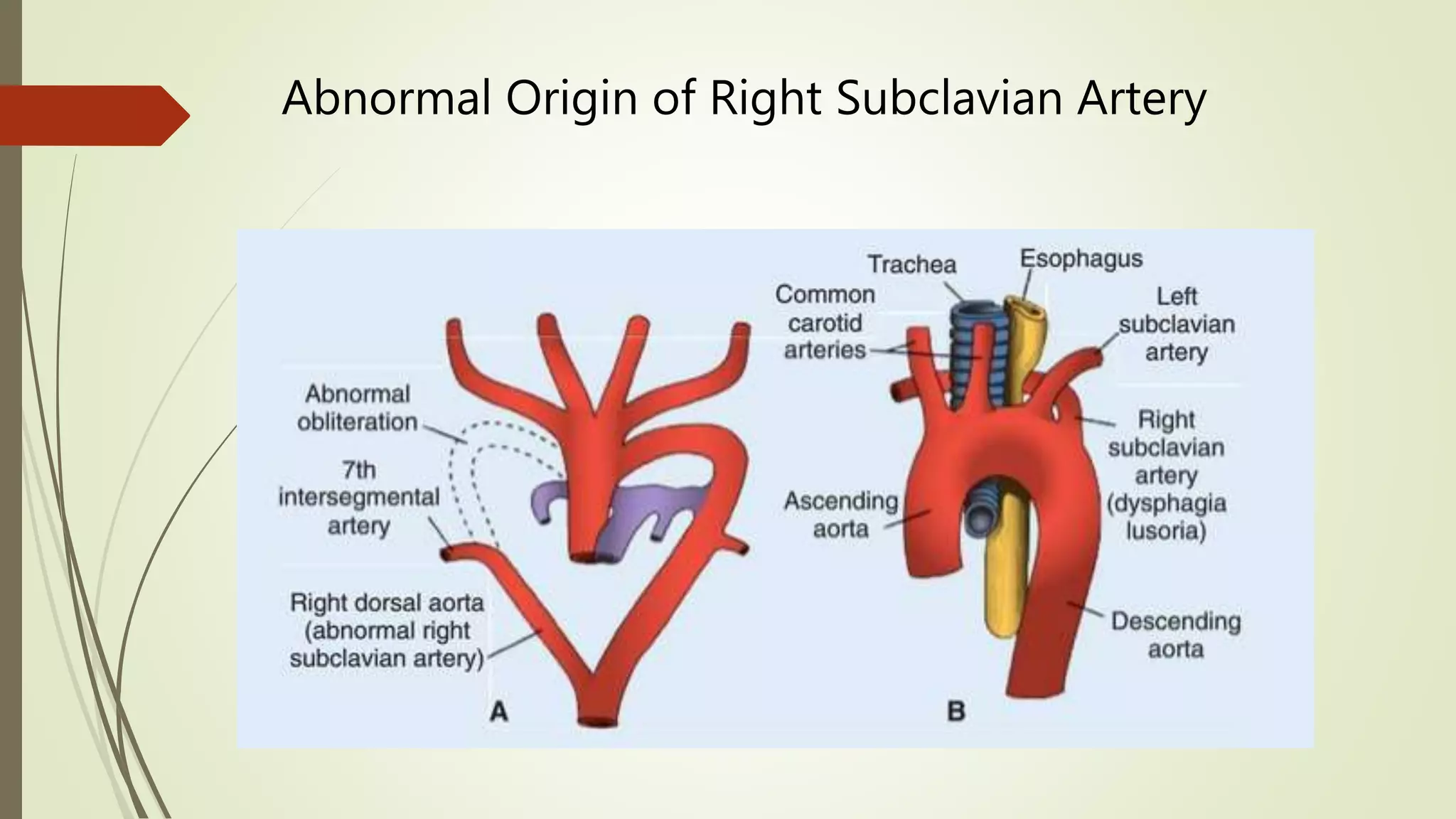
4th aortic arch – on the left side arch of the aorta,
on the right – right subclavian artery
5th aortic arch – never develops
6th aortic arch – pulmonary arteries (right, left),
ducts arteriosus (on the left).
Contribution:
Recurrent Laryngeal Nerves Shift
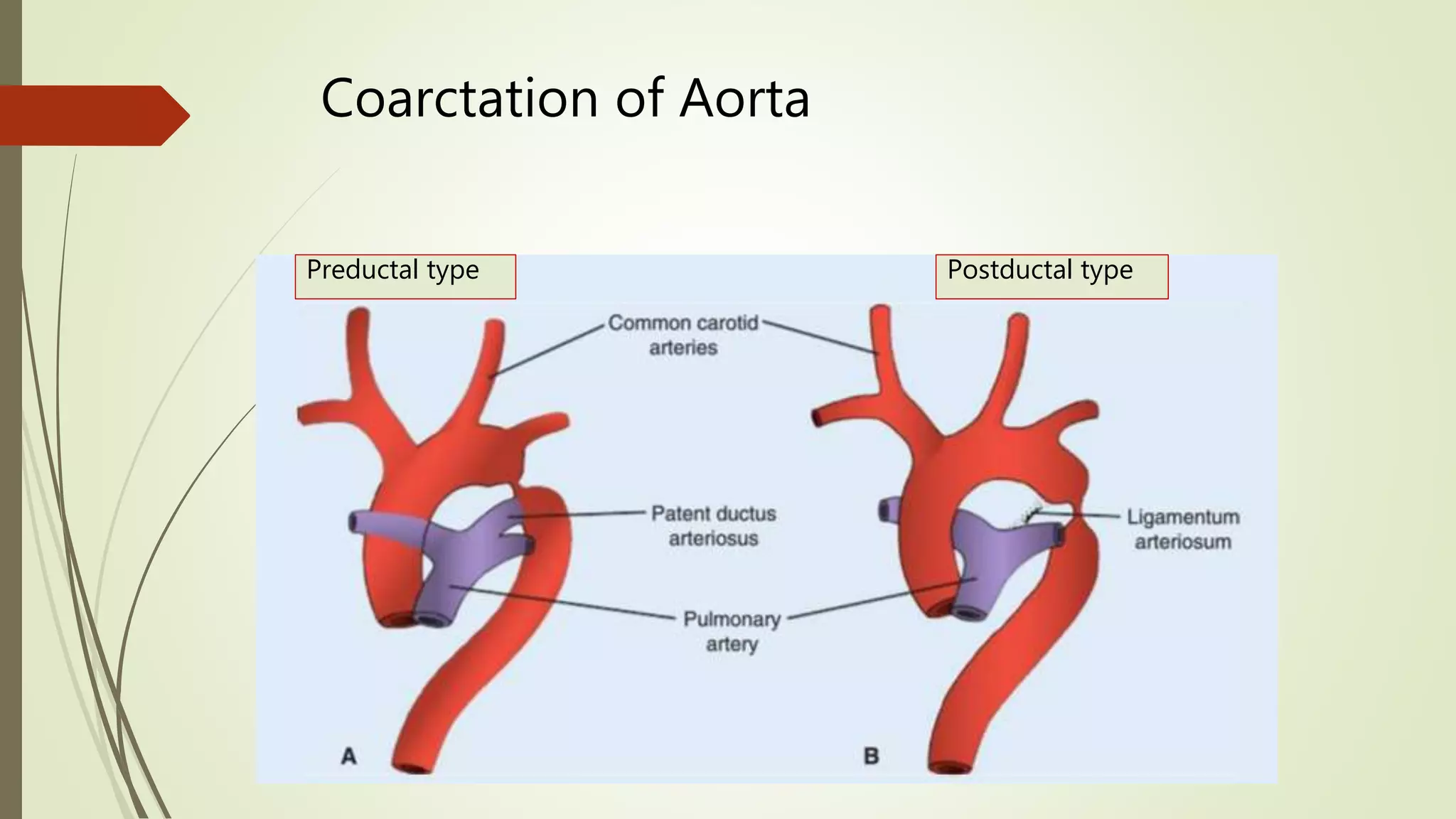
Coarctation of Aorta
Preductal type Postductal type
Abnormal Origin of Right Subclavian Artery
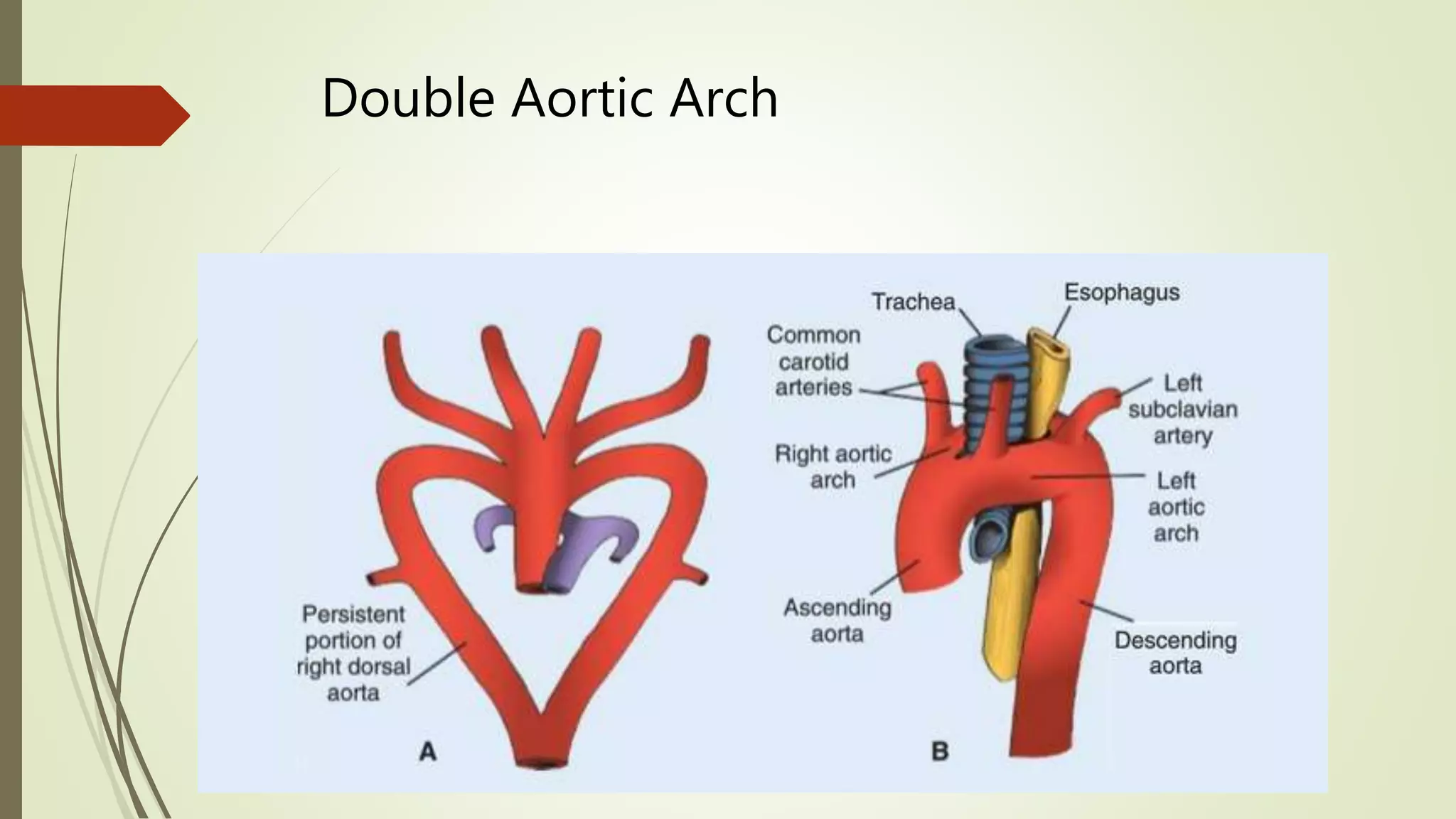
Double Aortic Arch
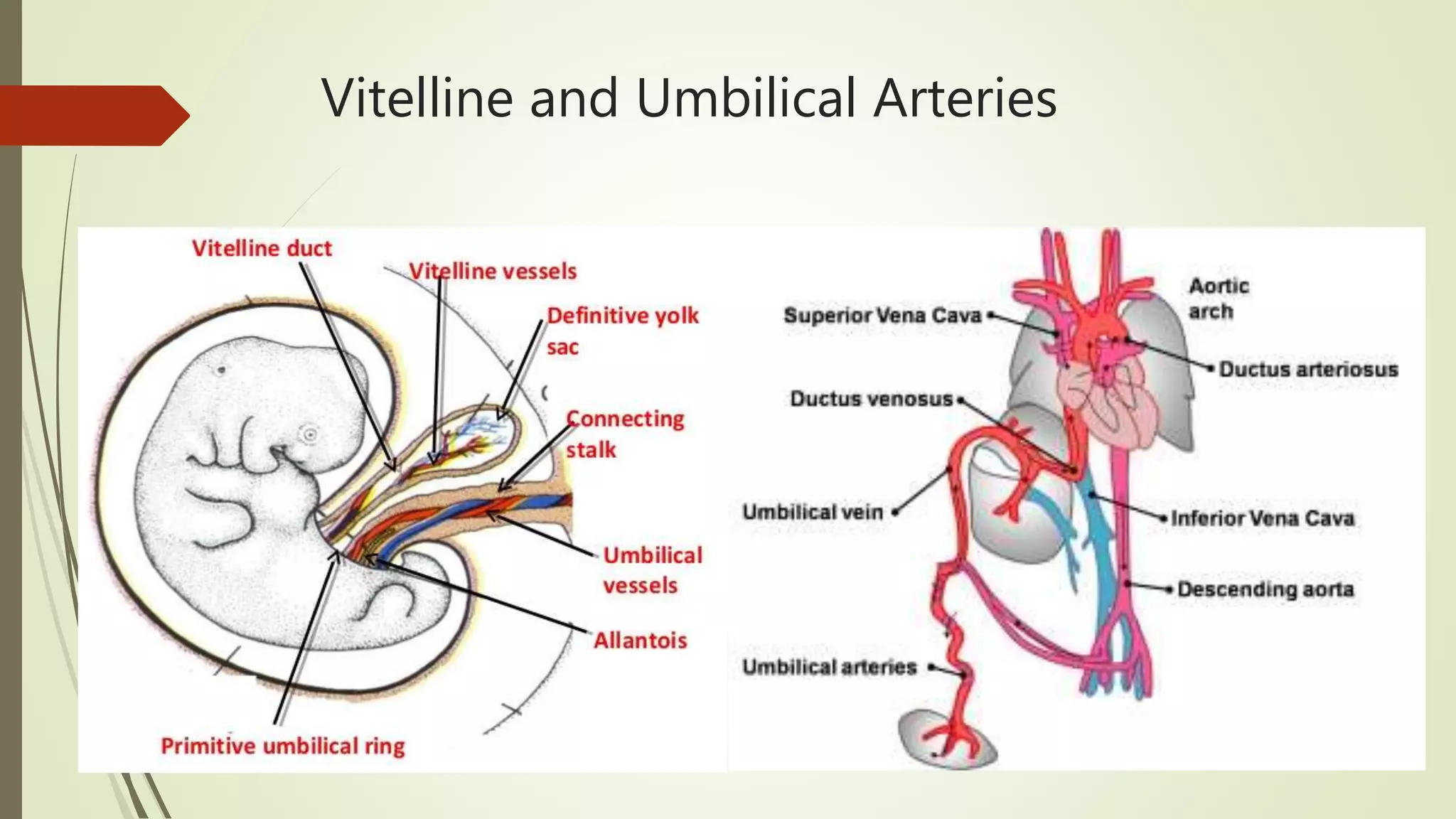
Vitelline and Umbilical Arteries
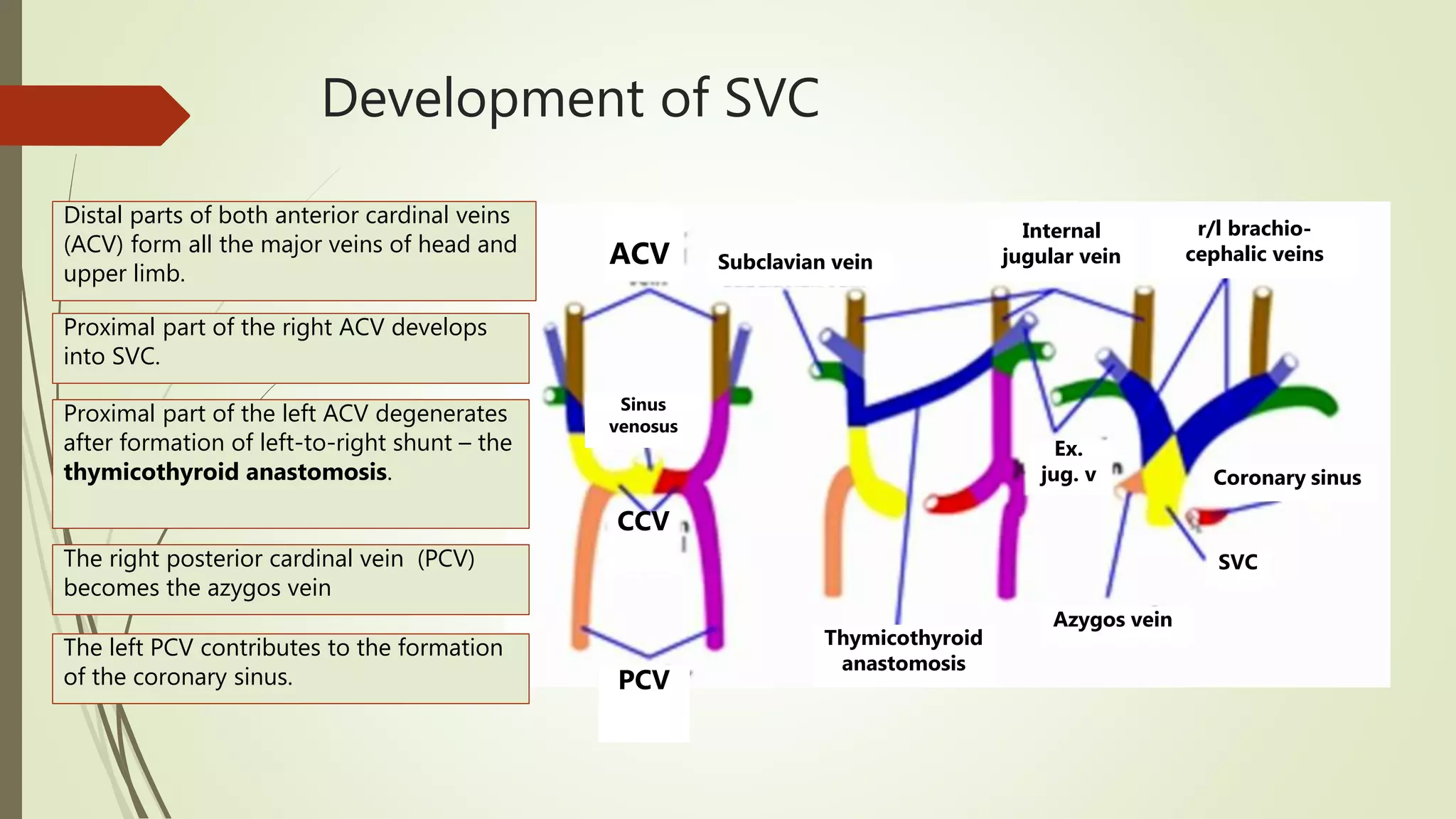
Development of SVC
Proximal part of the right ACV develops
into SVC.
Distal parts of both anterior cardinal veins
(ACV) form all the major veins of head and
upper limb.
Proximal part of the left ACV degenerates
after formation of left-to-right shunt – the
thymicothyroid anastomosis.
The right posterior cardinal vein (PCV)
becomes the azygos vein
The left PCV contributes to the formation
of the coronary sinus.
ACV
PCV
CCV
Sinus
venosus
Subclavian vein
Thymicothyroid
anastomosis
Azygos vein
Internal
jugular vein
Ex.
jug. v
SVC
Coronary sinus
r/l brachio-
cephalic veins
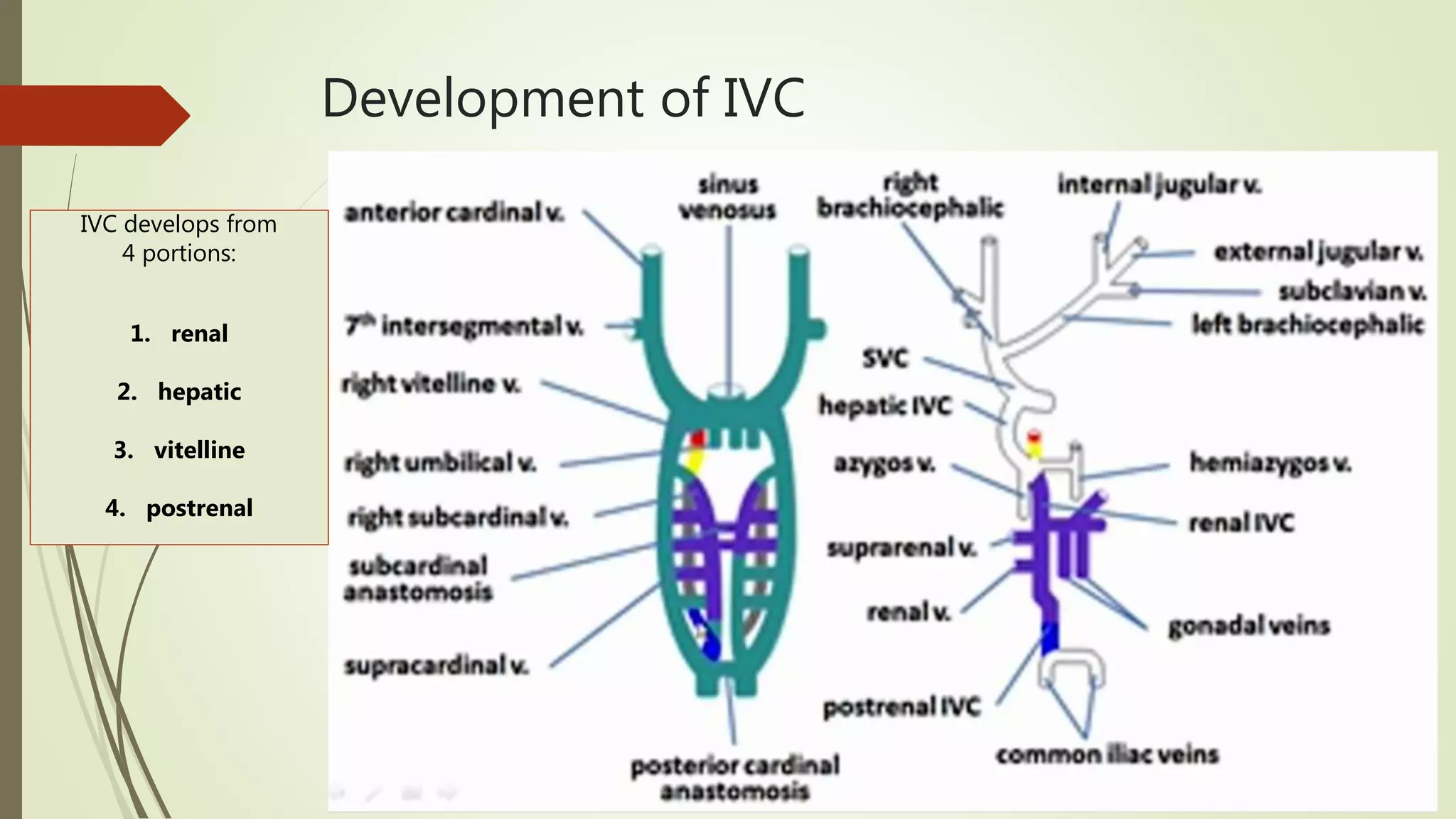
Development of IVC
IVC develops from
4 portions:
1. renal
2. hepatic
3. vitelline
4. postrenal
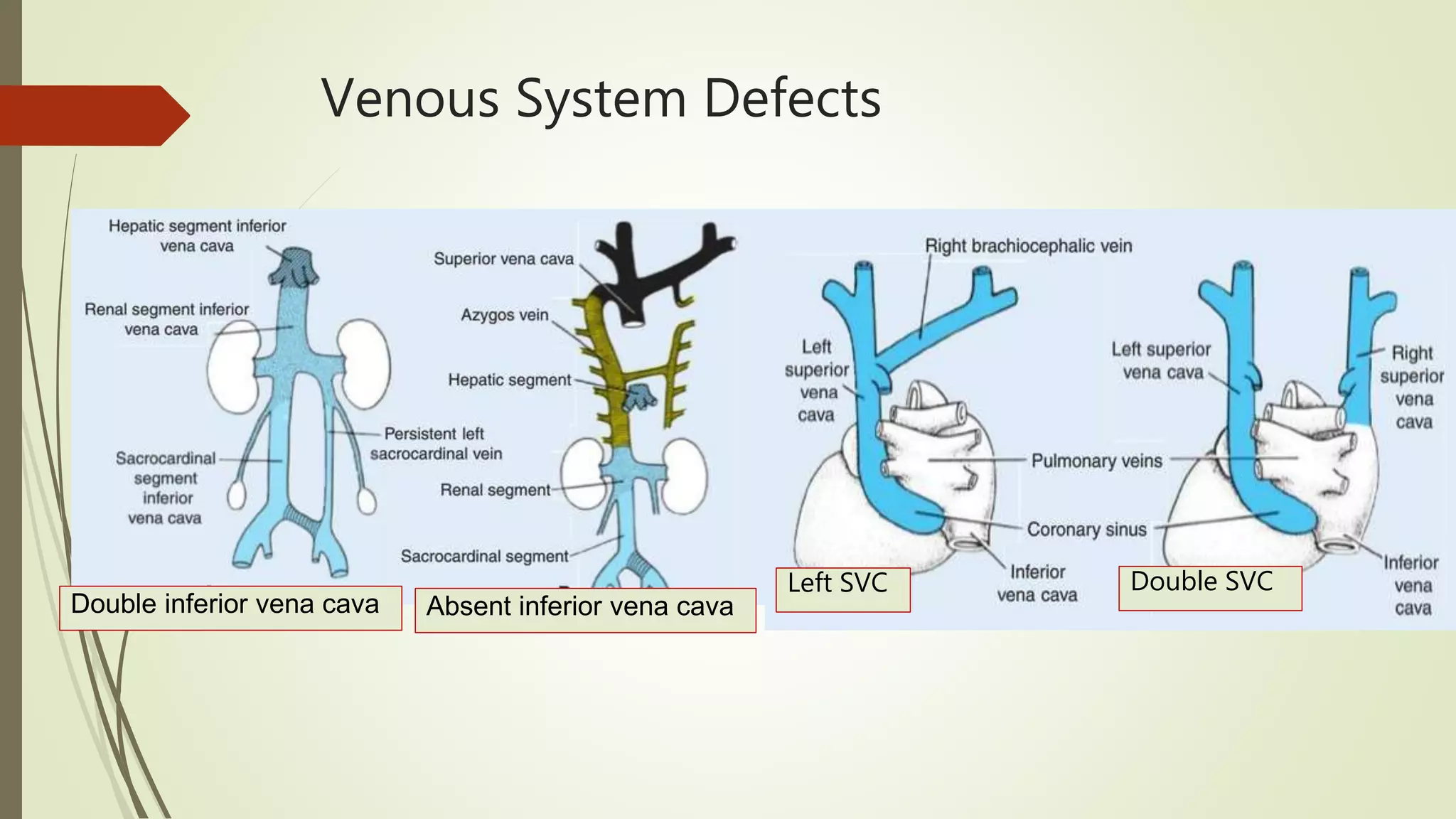
Venous System Defects
Double inferior vena cava Absent inferior vena cava
Left SVC Double SVC
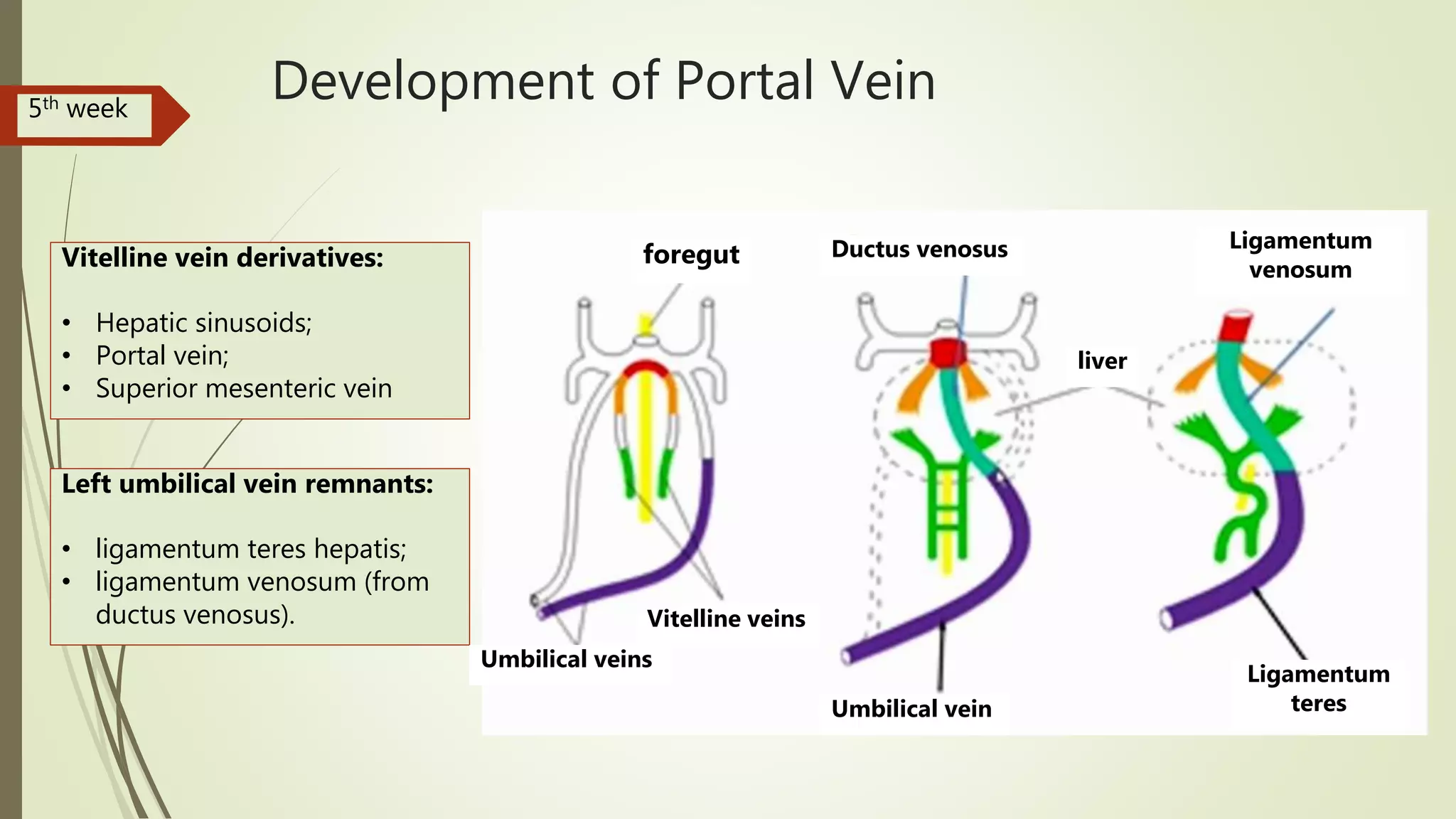
Development of Portal Vein
Vitelline vein derivatives:
• Hepatic sinusoids;
• Portal vein;
• Superior mesenteric vein
Left umbilical vein remnants:
• ligamentum teres hepatis;
• ligamentum venosum (from
ductus venosus).
5th week
foregut
Ligamentum
venosum
Umbilical veins
Vitelline veins
Umbilical vein
Ligamentum
teres
Ductus venosus
liver
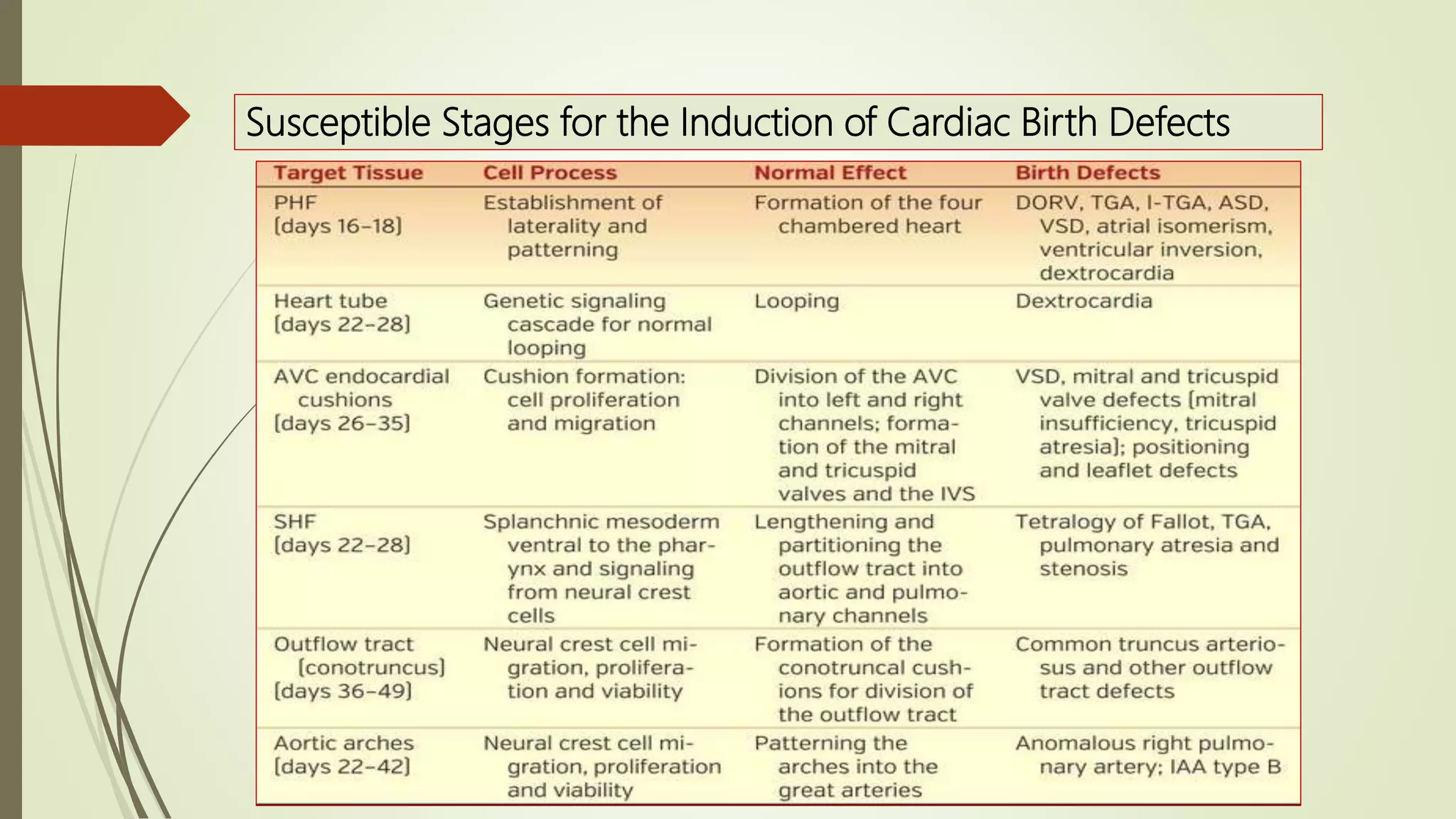
Susceptible Stages for the Induction of Cardiac Birth Defects
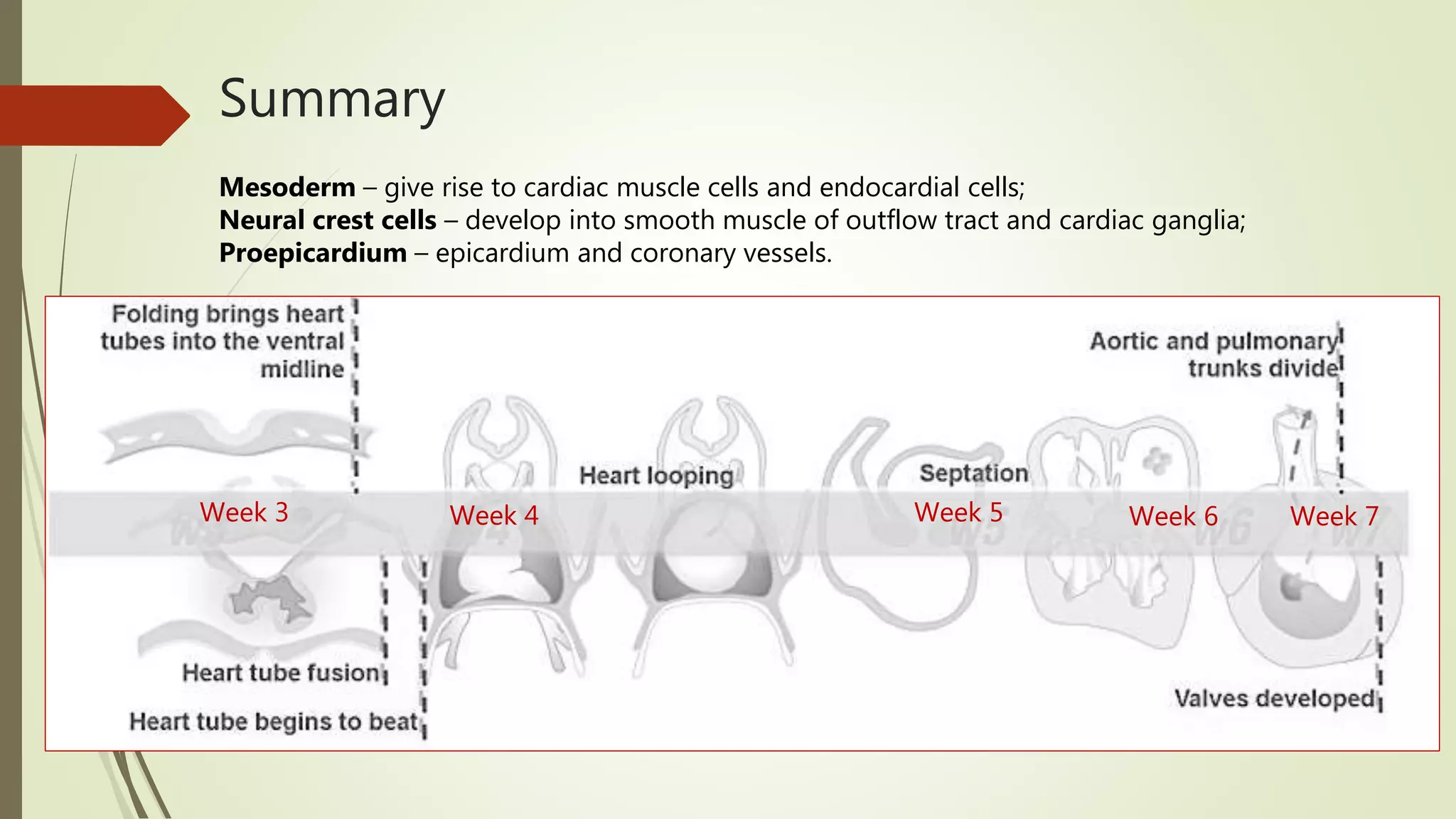
Summary
Week 3 Week 4 Week 5 Week 6 Week 7
Mesoderm – give rise to cardiac muscle cells and endocardial cells;
Neural crest cells – develop into smooth muscle of outflow tract and cardiac ganglia;
Proepicardium – epicardium and coronary vessels.

Cardiovascular System Development

  • 1.
  • 2.
    Contents:  1. Heartdevelopment  the horseshoe-shaped pericardial cavity  formation of the single heart tube  the convolution of the heart tube  the primitive 4-chambered heart  atrial septation  ventricular septation  aorticopulmonary septation  2. Development of arteries  3. Development of veins  4. Fetal circulation
  • 3.
    Development of CardiovascularSystem Connecting stock Chorionic layer Trophoblast Notochord Yok sack Amniotic cavity Intraembryonic mesoderm Endoderm Ectoderm Extraembryonic mesoderm Splanchnic mesoderm Somatic mesoderm Somite
  • 4.
    Development of heart Horseshoe-ShapedPericardial Cavity Day 18 Blood islands formed of hemangioblasts Prospective myoblasts Prospective angioblasts Blood islands Endocardial heart tube In splanchnic mesoderm Primary heart field
  • 5.
    Horseshoe-Shaped Pericardial Cavity Days19- 20: The splanchnic mesoderm with two endocardial tubes moves medially in front of developing foregut.
  • 6.
    Single Heart Tube Hearttube Sagittal section Coronal section Day 21: • Dorsal mesocardium • Myoepicardial mantle • Cardiac jelly • Single heart tube
  • 7.
  • 8.
    Regulatory Genes andFactors GATA4 is important at the beginning of cardiogenesis; BMP 2,4 secreted by endoderm; Crescent and Cerberus inhibit WNT proteins; NKS2.5 is upregulated; FGF8 is also important for heart specific proteins.
  • 9.
  • 10.
    Endocardial Heart Tube Hand1 Hand 2 Tbx5 RA Bulbus cordis Primitive ventricle Atrium Left sinal horn Right sinal horn Aortic arches Aortic sac Truncus arteriosus Conus cordis I II III VV UV CV Day 21:
  • 11.
    Convolution of theHeart TubeDay 23: complete by day 28 Aortic Sac Truncus Conus Sinus venosus Atria Ventricle Truncus Conus Primitive Ventricle LA RA
  • 12.
    Abnormalities of Cardiac Looping SitusInversus Totalis Dextrocardia Hypoplastic right/ Left heart syndrome HRHS HLHS
  • 13.
    Primitive 4 ChamberHeartDay 27: Truncus Conus Atrium (A) Ventricle (V) Bulbo-ventricular flange (BVF) Atrio-ventricular canal (AV) LA RA AV BVF V
  • 14.
    Primitive 4 ChamberHeart 1) two atria, 2) two ventricles, 3) a common AV canal. • AV canal begins to migrate to the right • The bulboventricular flange regresses Day 30 R A LA RV LV Common AV canal superior inferior Bulbo- ventricular flange AV canal R A LA RV LV
  • 15.
    Atrial Septation Endocardial cushions Day 35 R A LA RVLV Endocardial Cushion Septum primum Ostium primum Endocardial Cushion anterior posterior RAVLAV CAV Endocardial Cushions Common AV canal
  • 16.
    Atrial SeptationEnd ofthe 4th week From pulmonary vein tissue From sinus venosus tissue Primary septum (atrophies in upper part) Ostium primum Ostium secundumSeptum secundum SVC IVC Right venous valve (RVV) Left venous valve (LVV) Foramen ovale Valve of foramen ovale Pulmonary veins Coronary sinus Septum spurium RVV LVV SVC Septum primum
  • 17.
    Fetal Circulation • Umbilicalvein • Ductus venosus • Inferior vena cava • Right atrium • Right ventricle • Pulmonary a. • Right and left Pulmonary artery • Pulmonary vein • Left atrium • Left ventricle • Aorta • Aorta FO DA
  • 18.
    Malformation of AtrialSeptum Probe patent foramen ovale
  • 19.
  • 20.
  • 21.
    Septation of BulbusCordis 1 2 3 1 2 3 Truncal (Conal) swelling Bulbus Cordis Aorta Pulmonary artery Aorticopulmonary septum Anterior
  • 22.
    Transposition of GreatVessels Transposition of the great vessels HRHS with pulmonary valvular atresla
  • 23.
  • 24.
    Tetralogy of Fallot (1)anarrow right ventricular outflow region, pulmonary infundibular stenosis; (2)a large defect of the interventricular septum; (3)an overriding aorta that arises directly above the septal defect; (4)hypertrophy of the right ventricular wall because of higher pressure on the right side.
  • 25.
  • 26.
  • 27.
  • 28.
  • 29.
  • 30.
    Role of NeuralCrest Cells in CV Formation Pharyngeal Neural Crest Cells Cardiac Neural Crest Cells Migrate to the SHF, contribute to endocardial cushion in both the conus cordis and truncus arteriosus. Contribute to smooth muscles and connective tissue of aortic arches, regulate patterning of blood vessels.
  • 31.
    Conduction System ofHeart Sinoatrial node Atrioventricular node and bundle Peripheral ventricular conduction system Initial heart myocard ium From SHF bulboventricular tissue atrioventricular tissue sinoatrial tussue Tbx18 Tbx3 CX40, Cx43, Nppa, ScnSa (SA node genes) Cx45, Cx30, Tbx3
  • 32.
  • 33.
    Development of Arteriesand Veins Development of Arteries: 1) Aortic arches 2) Dorsal aortae Development of veins: 1) Vitelline veins 2) Umbilical veins 3) Cardinal (body) veins
  • 34.
  • 35.
    Derivatives of AorticArches 1st aortic arch – maxillary artery 2nd aortic arch – hyoid and stapedial aa. 3rd aortic arch – common carotid and first part of internal carotid a. 4th aortic arch – on the left side arch of the aorta, on the right – right subclavian artery 5th aortic arch – never develops 6th aortic arch – pulmonary arteries (right, left), ducts arteriosus (on the left). Contribution:
  • 36.
  • 37.
    Coarctation of Aorta Preductaltype Postductal type
  • 38.
    Abnormal Origin ofRight Subclavian Artery
  • 39.
  • 40.
  • 41.
    Development of SVC Proximalpart of the right ACV develops into SVC. Distal parts of both anterior cardinal veins (ACV) form all the major veins of head and upper limb. Proximal part of the left ACV degenerates after formation of left-to-right shunt – the thymicothyroid anastomosis. The right posterior cardinal vein (PCV) becomes the azygos vein The left PCV contributes to the formation of the coronary sinus. ACV PCV CCV Sinus venosus Subclavian vein Thymicothyroid anastomosis Azygos vein Internal jugular vein Ex. jug. v SVC Coronary sinus r/l brachio- cephalic veins
  • 42.
    Development of IVC IVCdevelops from 4 portions: 1. renal 2. hepatic 3. vitelline 4. postrenal
  • 43.
    Venous System Defects Doubleinferior vena cava Absent inferior vena cava Left SVC Double SVC
  • 44.
    Development of PortalVein Vitelline vein derivatives: • Hepatic sinusoids; • Portal vein; • Superior mesenteric vein Left umbilical vein remnants: • ligamentum teres hepatis; • ligamentum venosum (from ductus venosus). 5th week foregut Ligamentum venosum Umbilical veins Vitelline veins Umbilical vein Ligamentum teres Ductus venosus liver
  • 45.
    Susceptible Stages forthe Induction of Cardiac Birth Defects
  • 46.
    Summary Week 3 Week4 Week 5 Week 6 Week 7 Mesoderm – give rise to cardiac muscle cells and endocardial cells; Neural crest cells – develop into smooth muscle of outflow tract and cardiac ganglia; Proepicardium – epicardium and coronary vessels.