“Look deep into nature, and then you will understand everything better.”
—Albert Einstein
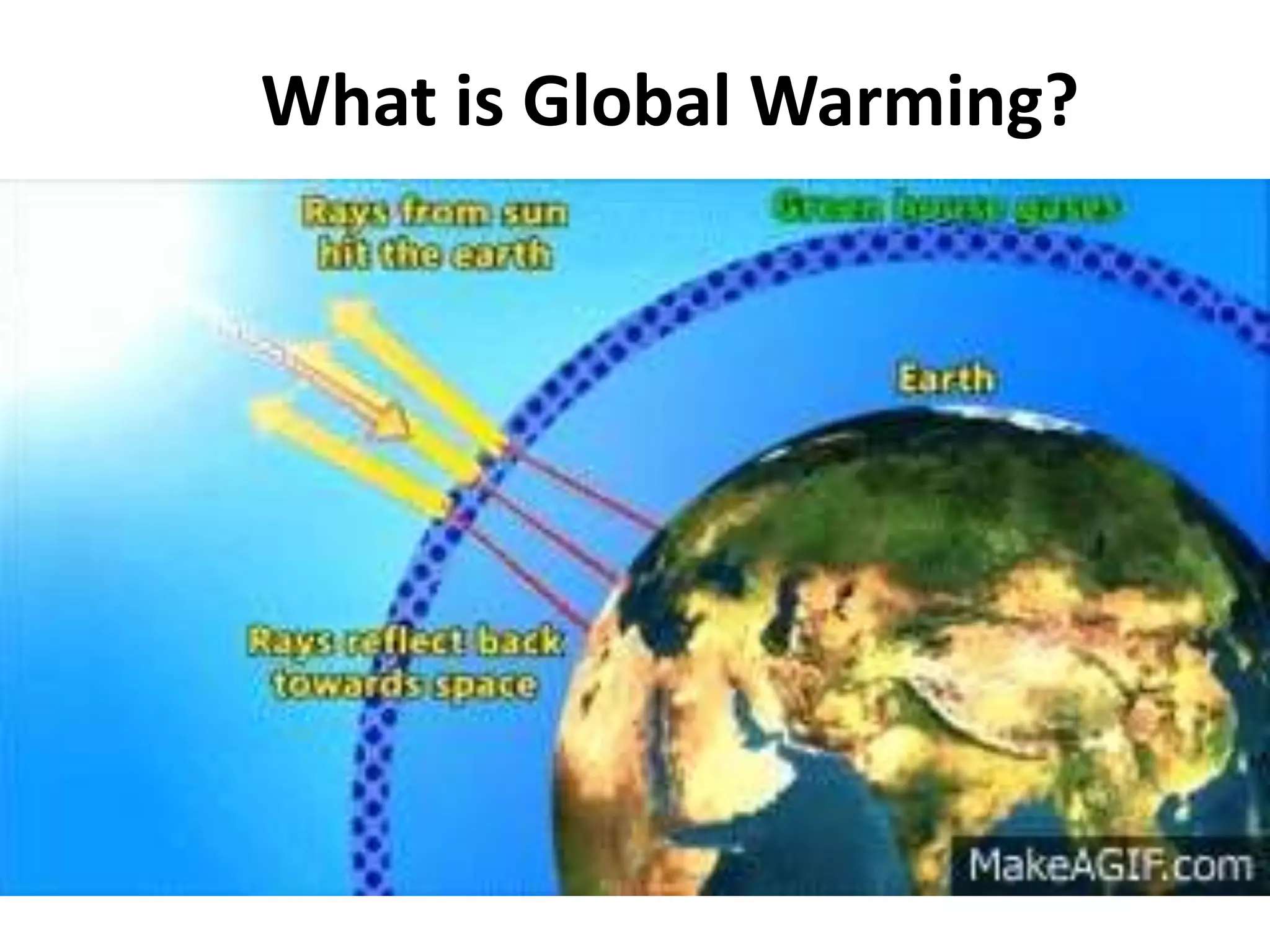
What is Global Warming?
is a gradual increase in the overall
temperature of the earth's atmosphere
generally attributed to the greenhouse
effect caused by increased levels of
carbon dioxide, chlorofluorocarbons,
and other pollutants
Global warming occurs when carbon dioxide
(CO2) and other air pollutants and greenhouse
gases collect in the atmosphere and absorb
sunlight and solar radiation that have bounced off
the earth’s surface.
Normally, this radiation would escape into
space—but these pollutants, which can last for
years to centuries in the atmosphere, trap the
heat and cause the planet to get hotter.
That's what's known as the greenhouse effect.
What causes global warming?
NATURAL CAUSES OF GLOBAL WARMING:
 rotation of the sun that changes the
intensity of sunlight and moving closer
to the earth
 greenhouse gases
 volcanic eruption.
HUMANS AND GLOBAL WARMING
 industrial revolution
 Mining
 Deforestation
EFFECTS OF GLOBAL WARMING:
 heat waves,
 droughts,
 heavy rainfall with floods,
 heavy snowfall ,
 ocean acidification,
 species extinctions due to shifting
 temperature regimes
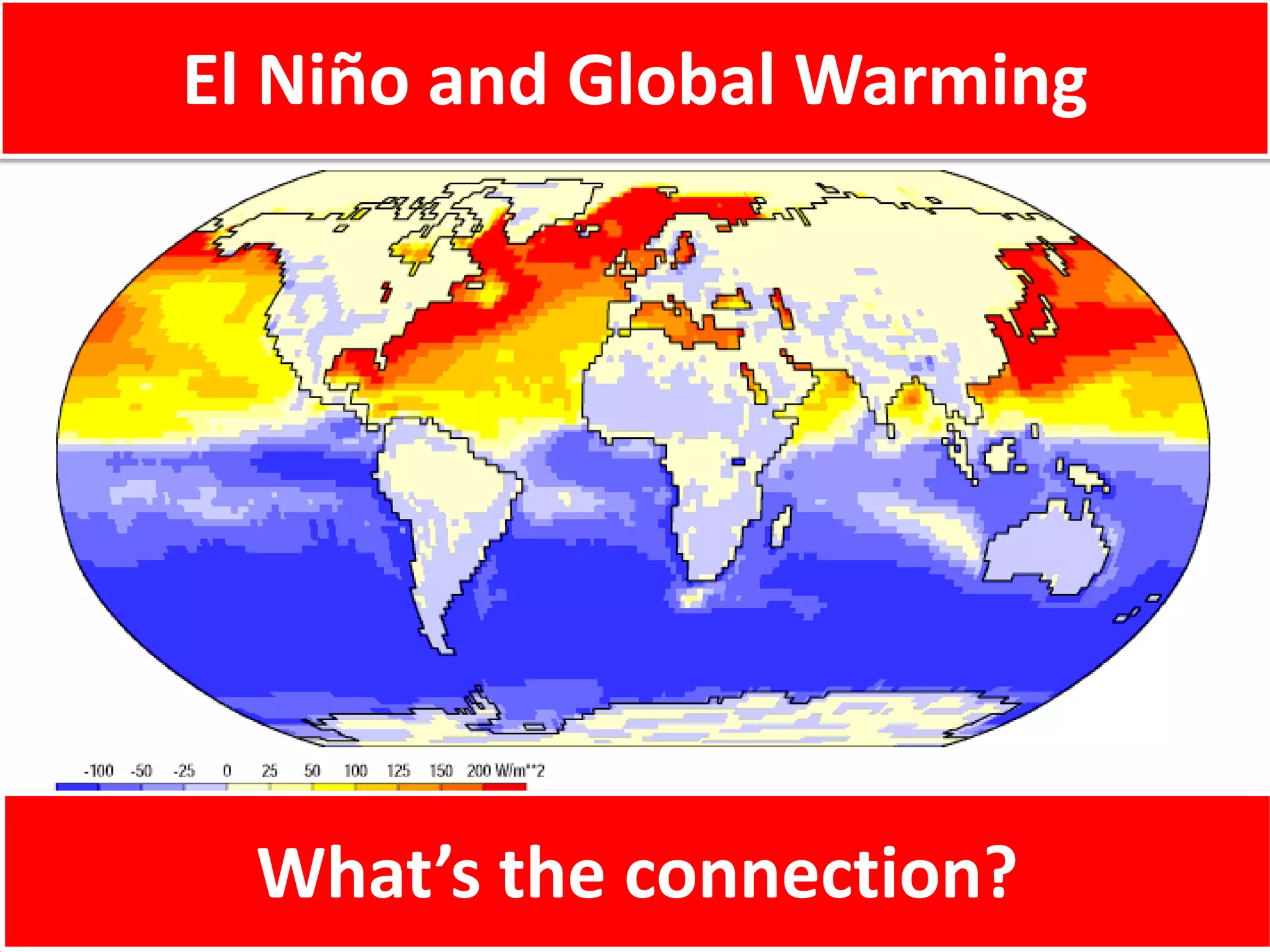
El Niño and Global Warming
What’s the connection?
What is El Niño?
El Niño is a phenomenon that disrupts normal
weather patterns, bringing heavy rains and
drought to different parts of the world.
El Niño is a complex and naturally occurring weather pattern
that results when ocean temperatures in the Pacific Ocean
near the equator vary from the norm. The phenomenon
typically occurs every two to seven years.
The 2015-2016 El Niño, however, is being called a “super” El
Niño, the worst in 15 years. The two previous super El Niños
occurred in 1982-1983 and 1997-1998.
in years when El Niño does not occur, strong trade winds
blow from east to west across the Pacific Ocean around the
equator. The winds push warm surface ocean water from South
America west towards Asia and Australia, and cold water wells up
from below in the east to take its place along South America. This
creates a temperature disparity across the Pacific, which also keeps
the trade winds blowing.
The accumulation of warm water in the west adds heat to
the air, causing it to rise and create unstable weather, which is why
the western Pacific region is warm and rainy. Cool, drier air is
usually found on the eastern side of the Pacific.
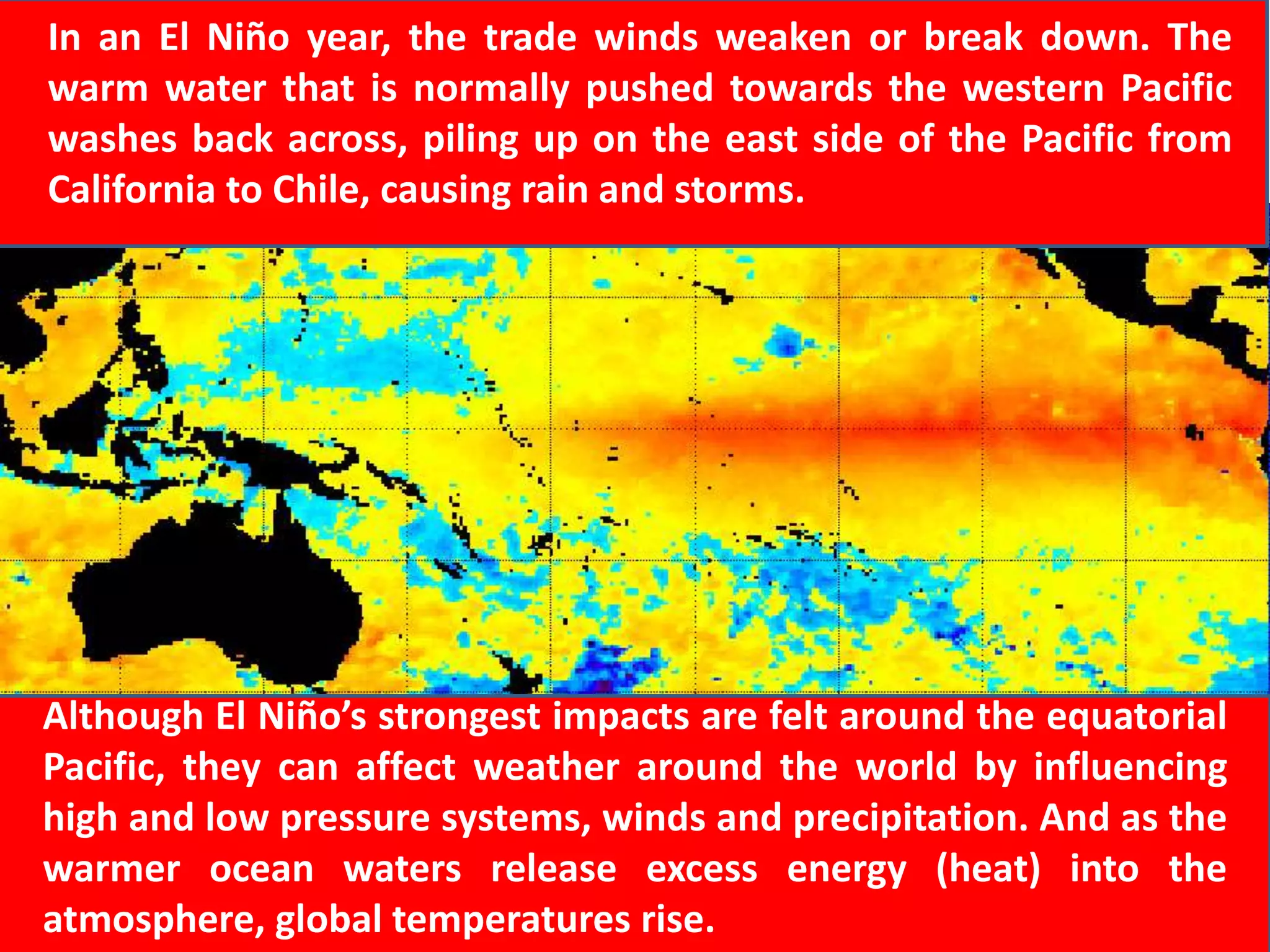
In an El Niño year, the trade winds weaken or break down. The
warm water that is normally pushed towards the western Pacific
washes back across, piling up on the east side of the Pacific from
California to Chile, causing rain and storms.
Although El Niño’s strongest impacts are felt around the equatorial
Pacific, they can affect weather around the world by influencing
high and low pressure systems, winds and precipitation. And as the
warmer ocean waters release excess energy (heat) into the
atmosphere, global temperatures rise.
The changing weather patterns can have damaging
impacts on agriculture, fisheries, ecosystems,
health, energy demand and air quality, and
increase the risks of wildfires around the globe.
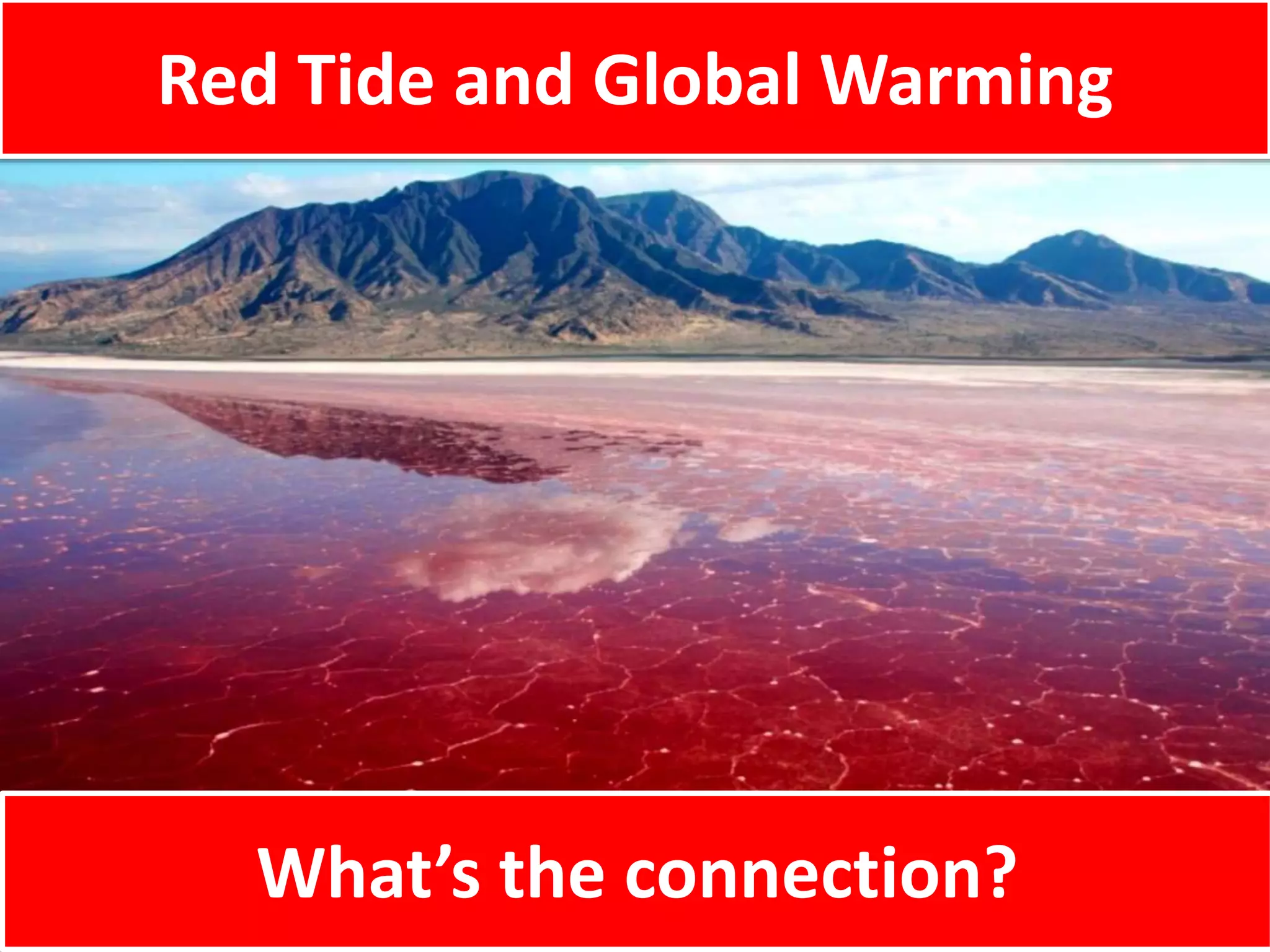
Red Tide and Global Warming
What’s the connection?
Drifting throughout the ocean, invisible to the naked eye, are
innumerable microscopic algae. They come in many shapes and
sizes—some geometrically beautiful, like the diatoms, and others,
like the dinoflagellates, swim in a distinctive whirling pattern.
These tiny algae are essential components to ocean life as they fuel
the food web by harnessing light energy from the sun. But when
supplied with excess nutrients, they can multiply uncontrollably,
becoming an unwanted mass commonly called a “red tide” that
smothers nearby ocean life.
Karenia brevis
When nutrients from inland areas flow down rivers and arrive in
the ocean they supply a nutritious feast for algae, causing them to
rapidly grow.
This can happen naturally as rivers flood and bring nutrient-rich soil
from forests and grasslands, but it can also happen when fertilizer
and excrement from livestock travel down those same waterways,
or when coastal development leads to excess erosion.
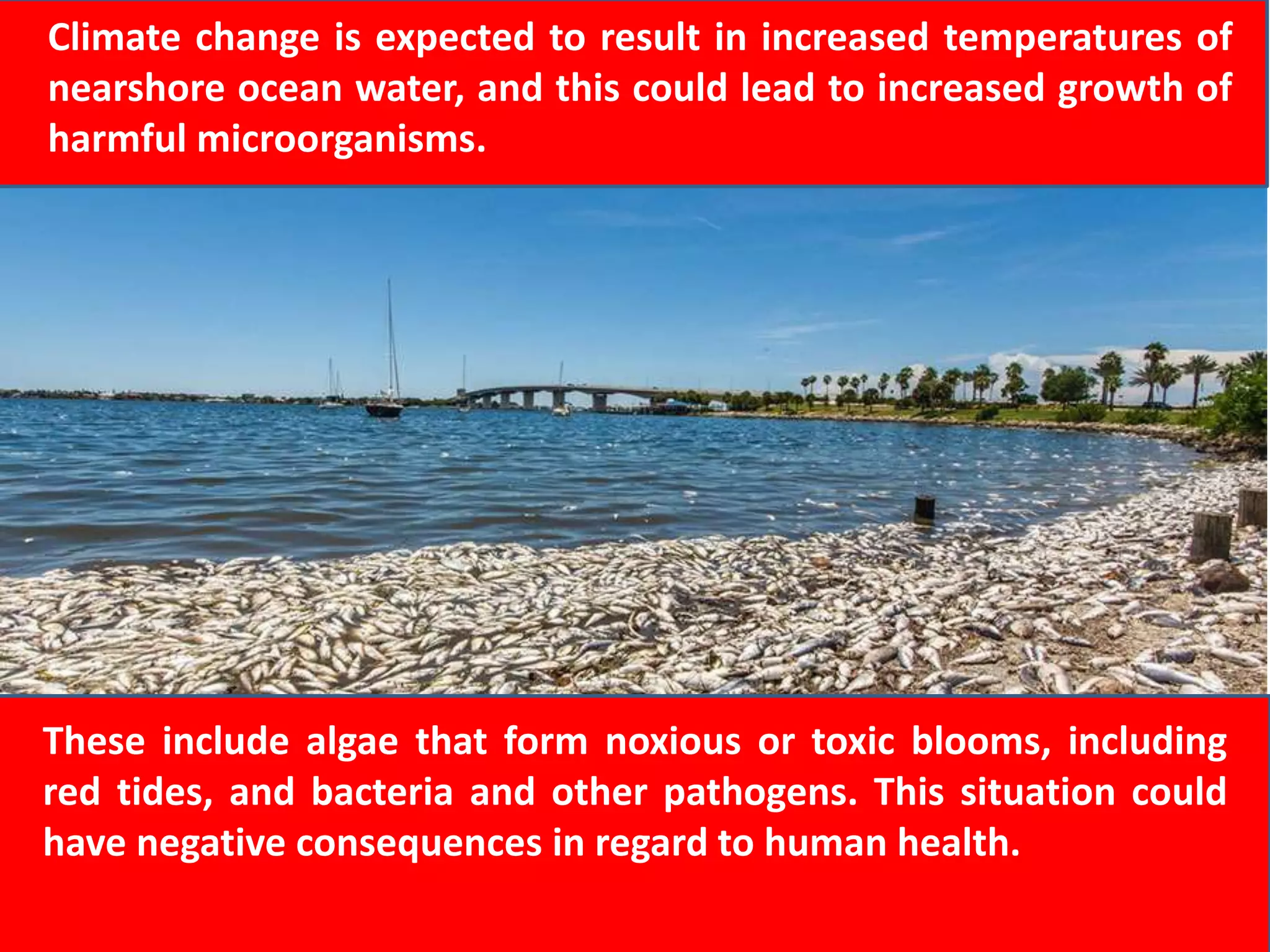
Climate change is expected to result in increased temperatures of
nearshore ocean water, and this could lead to increased growth of
harmful microorganisms.
These include algae that form noxious or toxic blooms, including
red tides, and bacteria and other pathogens. This situation could
have negative consequences in regard to human health.
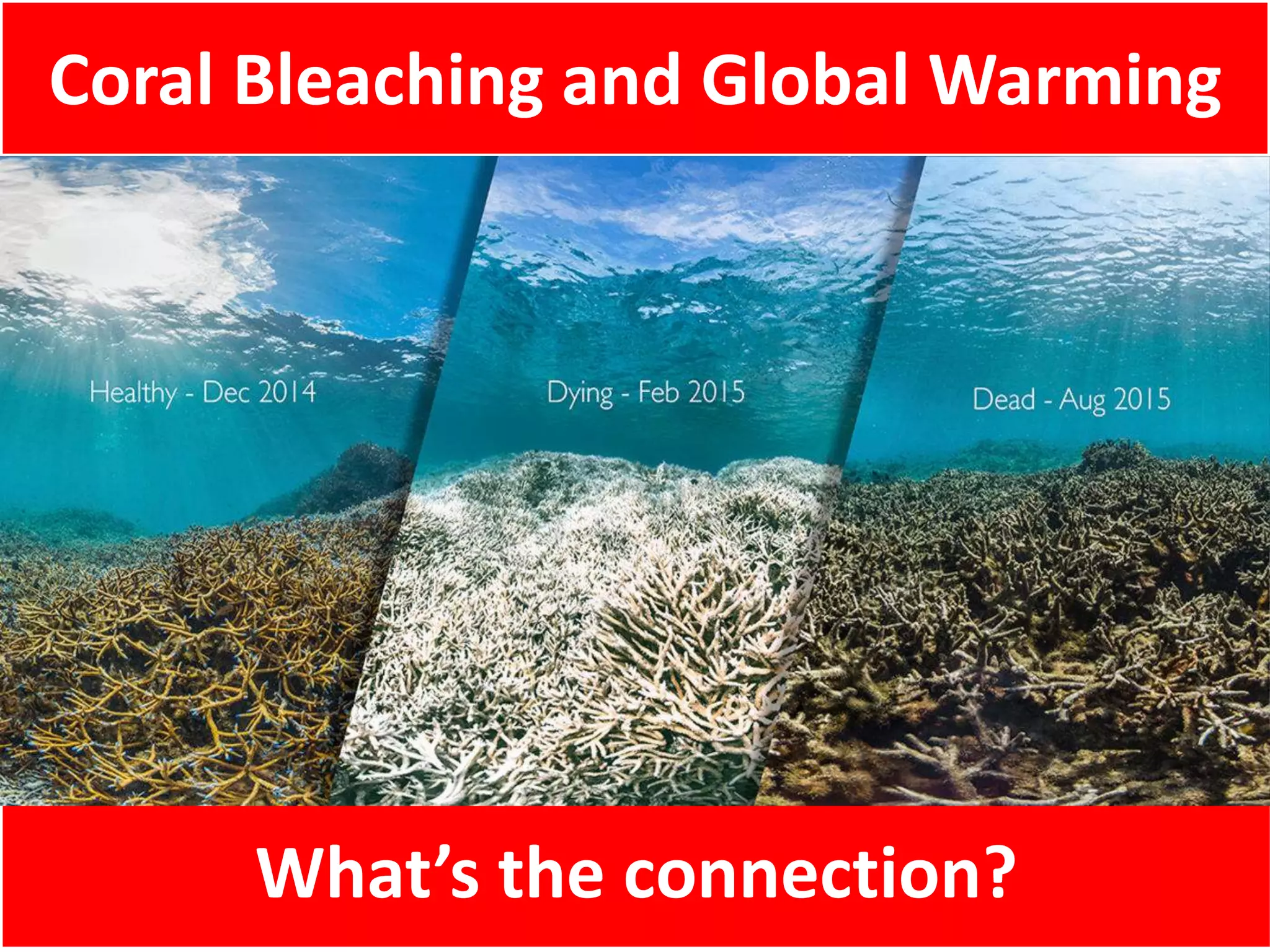
Coral Bleaching and Global Warming
What’s the connection?
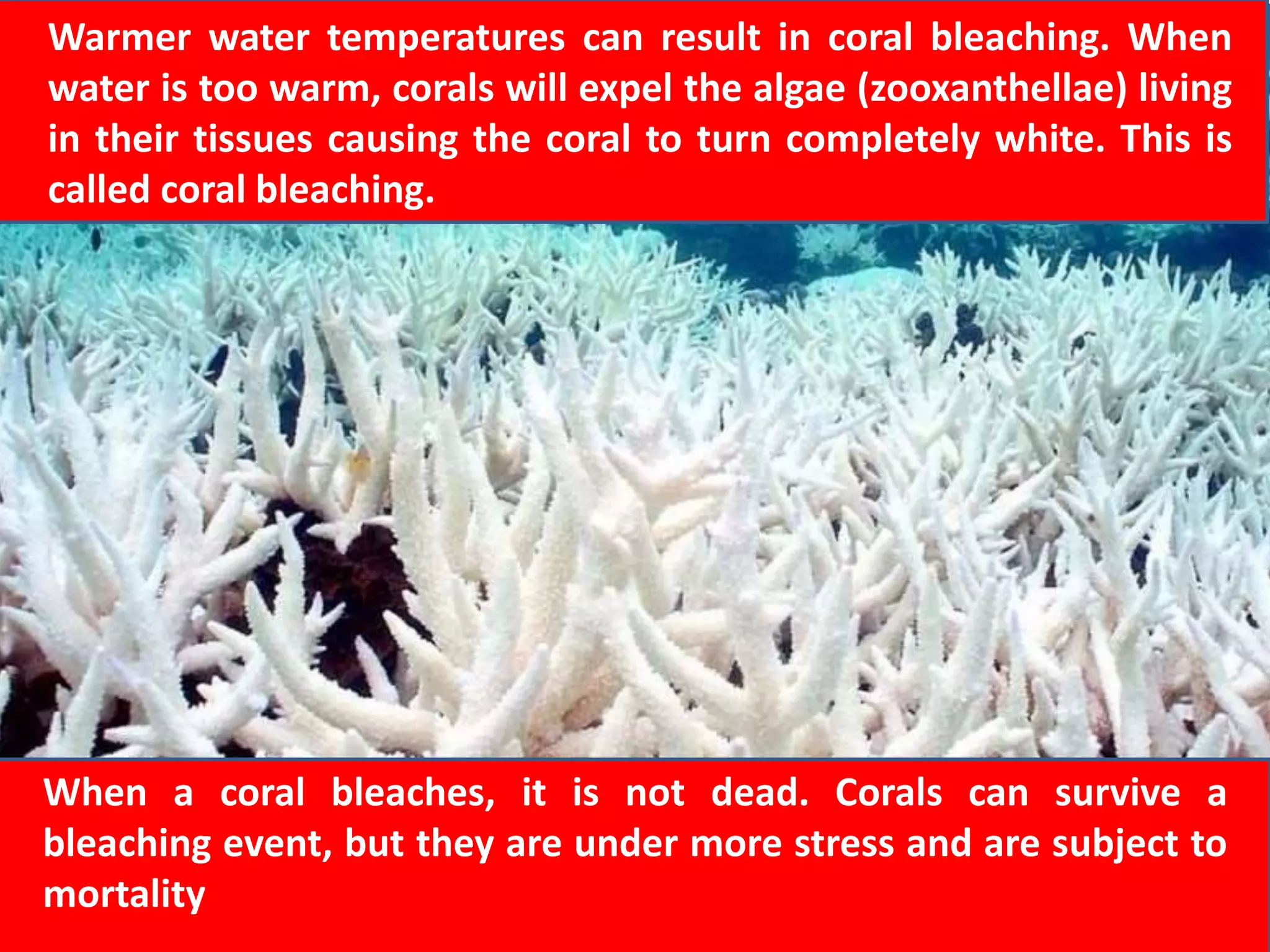
Warmer water temperatures can result in coral bleaching. When
water is too warm, corals will expel the algae (zooxanthellae) living
in their tissues causing the coral to turn completely white. This is
called coral bleaching.
When a coral bleaches, it is not dead. Corals can survive a
bleaching event, but they are under more stress and are subject to
mortality
References
• https://blogs.ei.columbia.edu/2016/02/02/el-
nino-and-global-warming-whats-the-
connection/Earth Institute, Columbia
University
• https://ocean.si.edu/what-exactly-red-tide
• https://oceanservice.noaa.gov/facts/coral_ble
ach.html

Global Warming, Red Tide, El Nino, and Coral Bleaching

  • 1.
    “Look deep intonature, and then you will understand everything better.” —Albert Einstein
  • 6.
  • 7.
    is a gradualincrease in the overall temperature of the earth's atmosphere generally attributed to the greenhouse effect caused by increased levels of carbon dioxide, chlorofluorocarbons, and other pollutants
  • 8.
    Global warming occurswhen carbon dioxide (CO2) and other air pollutants and greenhouse gases collect in the atmosphere and absorb sunlight and solar radiation that have bounced off the earth’s surface. Normally, this radiation would escape into space—but these pollutants, which can last for years to centuries in the atmosphere, trap the heat and cause the planet to get hotter. That's what's known as the greenhouse effect. What causes global warming?
  • 9.
    NATURAL CAUSES OFGLOBAL WARMING:  rotation of the sun that changes the intensity of sunlight and moving closer to the earth  greenhouse gases  volcanic eruption.
  • 10.
    HUMANS AND GLOBALWARMING  industrial revolution  Mining  Deforestation
  • 11.
    EFFECTS OF GLOBALWARMING:  heat waves,  droughts,  heavy rainfall with floods,  heavy snowfall ,  ocean acidification,  species extinctions due to shifting  temperature regimes
  • 14.
    El Niño andGlobal Warming What’s the connection?
  • 15.
    What is ElNiño? El Niño is a phenomenon that disrupts normal weather patterns, bringing heavy rains and drought to different parts of the world.
  • 16.
    El Niño isa complex and naturally occurring weather pattern that results when ocean temperatures in the Pacific Ocean near the equator vary from the norm. The phenomenon typically occurs every two to seven years. The 2015-2016 El Niño, however, is being called a “super” El Niño, the worst in 15 years. The two previous super El Niños occurred in 1982-1983 and 1997-1998.
  • 17.
    in years whenEl Niño does not occur, strong trade winds blow from east to west across the Pacific Ocean around the equator. The winds push warm surface ocean water from South America west towards Asia and Australia, and cold water wells up from below in the east to take its place along South America. This creates a temperature disparity across the Pacific, which also keeps the trade winds blowing. The accumulation of warm water in the west adds heat to the air, causing it to rise and create unstable weather, which is why the western Pacific region is warm and rainy. Cool, drier air is usually found on the eastern side of the Pacific.
  • 18.
    In an ElNiño year, the trade winds weaken or break down. The warm water that is normally pushed towards the western Pacific washes back across, piling up on the east side of the Pacific from California to Chile, causing rain and storms. Although El Niño’s strongest impacts are felt around the equatorial Pacific, they can affect weather around the world by influencing high and low pressure systems, winds and precipitation. And as the warmer ocean waters release excess energy (heat) into the atmosphere, global temperatures rise.
  • 19.
    The changing weatherpatterns can have damaging impacts on agriculture, fisheries, ecosystems, health, energy demand and air quality, and increase the risks of wildfires around the globe.
  • 20.
    Red Tide andGlobal Warming What’s the connection?
  • 21.
    Drifting throughout theocean, invisible to the naked eye, are innumerable microscopic algae. They come in many shapes and sizes—some geometrically beautiful, like the diatoms, and others, like the dinoflagellates, swim in a distinctive whirling pattern. These tiny algae are essential components to ocean life as they fuel the food web by harnessing light energy from the sun. But when supplied with excess nutrients, they can multiply uncontrollably, becoming an unwanted mass commonly called a “red tide” that smothers nearby ocean life. Karenia brevis
  • 22.
    When nutrients frominland areas flow down rivers and arrive in the ocean they supply a nutritious feast for algae, causing them to rapidly grow. This can happen naturally as rivers flood and bring nutrient-rich soil from forests and grasslands, but it can also happen when fertilizer and excrement from livestock travel down those same waterways, or when coastal development leads to excess erosion.
  • 23.
    Climate change isexpected to result in increased temperatures of nearshore ocean water, and this could lead to increased growth of harmful microorganisms. These include algae that form noxious or toxic blooms, including red tides, and bacteria and other pathogens. This situation could have negative consequences in regard to human health.
  • 24.
    Coral Bleaching andGlobal Warming What’s the connection?
  • 25.
    Warmer water temperaturescan result in coral bleaching. When water is too warm, corals will expel the algae (zooxanthellae) living in their tissues causing the coral to turn completely white. This is called coral bleaching. When a coral bleaches, it is not dead. Corals can survive a bleaching event, but they are under more stress and are subject to mortality
  • 28.
    References • https://blogs.ei.columbia.edu/2016/02/02/el- nino-and-global-warming-whats-the- connection/Earth Institute,Columbia University • https://ocean.si.edu/what-exactly-red-tide • https://oceanservice.noaa.gov/facts/coral_ble ach.html