How do Glaciers Form and how
do they shape the land?
Read through the cards and try to work out
what happened to Stardust – you could even try
to organise the cards into chronological order.
WHY did the aircraft disappear and then re-
appear over 50 years later?
The Stardust Mystery
How do Glaciers Form?
• Discuss this with the person next to you
• Watch this video to find out more
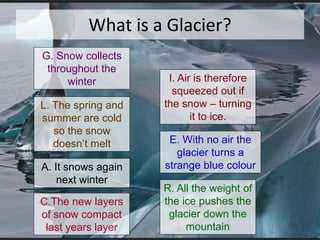
What is a Glacier?
• Put the
boxes in
the
correct
order!
R. All the weight of
the ice pushes the
glacier down the
mountain
C.The new layers
of snow compact
last years layer
A. It snows again
next winter
L. The spring and
summer are cold
so the snow
doesn’t melt
G. Snow collects
throughout the
winter
I. Air is therefore
squeezed out if
the snow – turning
it to ice.
E. With no air the
glacier turns a
strange blue colour
What is a Glacier?
R. All the weight of
the ice pushes the
glacier down the
mountain
C.The new layers
of snow compact
last years layer
A. It snows again
next winter
L. The spring and
summer are cold
so the snow
doesn’t melt
G. Snow collects
throughout the
winter I. Air is therefore
squeezed out if
the snow – turning
it to ice.
E. With no air the
glacier turns a
strange blue colour
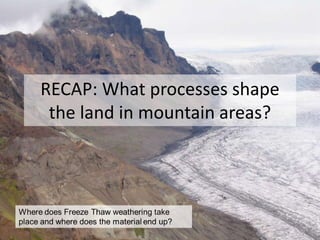
RECAP: What processes shape
the land in mountain areas?
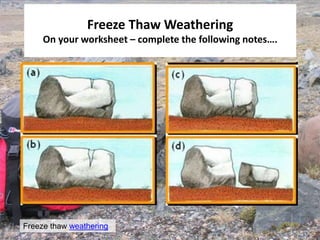
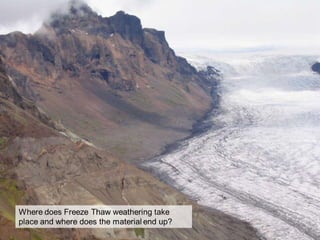
Freeze Thaw Weathering
On your worksheet – complete the following notes….
Freeze thaw weathering
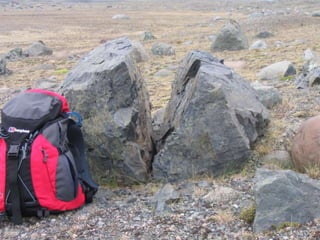
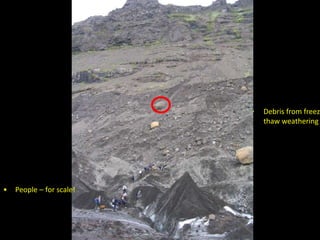
• Debris from freeze
thaw weathering
• People – for scale!
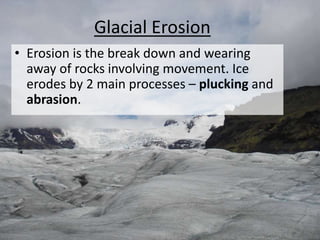
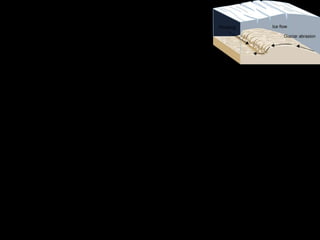
• Erosion is the break down and wearing
away of rocks involving movement. Ice
erodes by 2 main processes – plucking and
abrasion.
Glacial Erosion
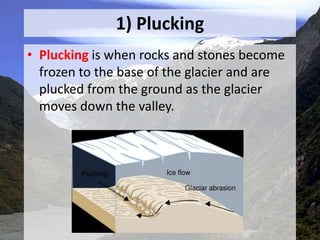
1) Plucking
• Plucking is when rocks and stones become
frozen to the base of the glacier and are
plucked from the ground as the glacier
moves down the valley.
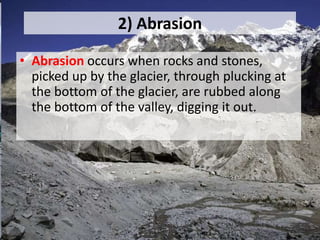
2) Abrasion
• Abrasion occurs when rocks and stones,
picked up by the glacier, through plucking at
the bottom of the glacier, are rubbed along
the bottom of the valley, digging it out.
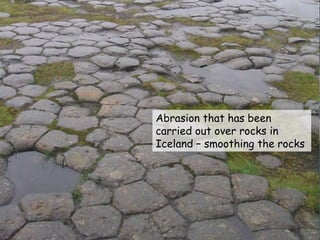
Abrasion that has been
carried out over rocks in
Iceland – smoothing the rocks
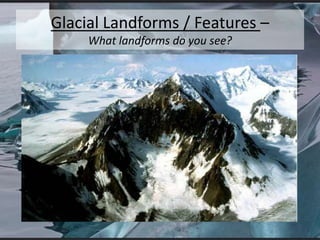
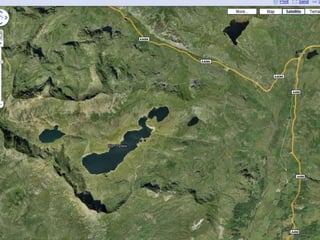
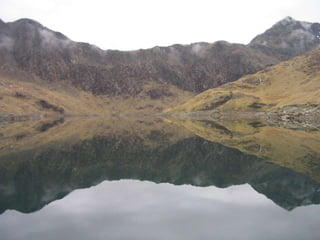
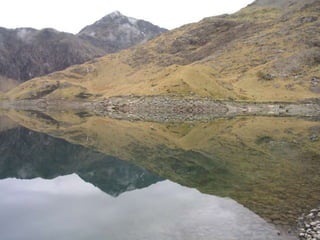
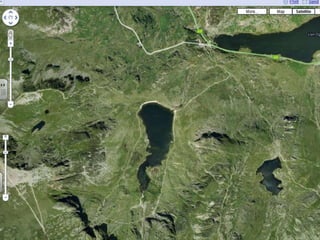
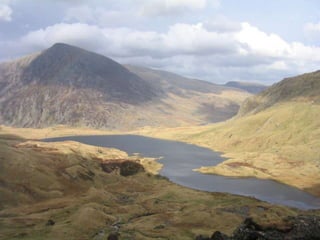
Glacial Landforms / Features –
What landforms do you see?
http://www.kerboodle.com/users/login
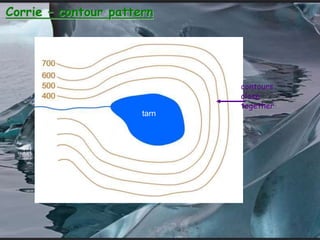
Corrie – contour pattern
tarn
contours
close
together
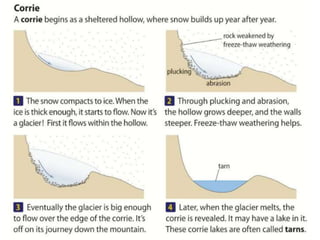
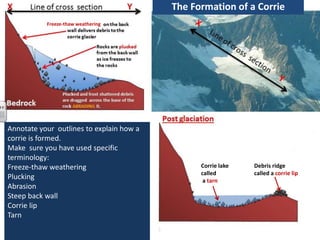
Annotate your outlines to explain how a
corrie is formed.
Make sure you have used specific
terminology:
Freeze-thaw weathering
Plucking
Abrasion
Steep back wall
Corrie lip
Tarn
Corrie lake
called
a tarn
Debris ridge
called a corrie lip
Freeze-thaw weatheringFreeze-thaw weathering
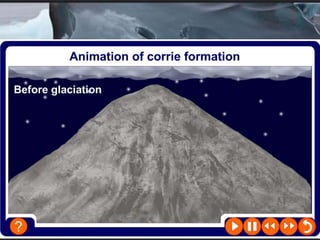
The Formation of a Corrie
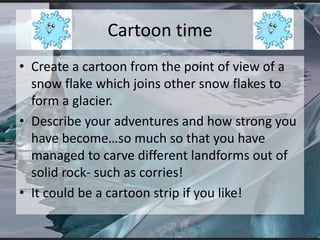
Cartoon time
• Create a cartoon from the point of view of a
snow flake which joins other snow flakes to
form a glacier.
• Describe your adventures and how strong you
have become…so much so that you have
managed to carve different landforms out of
solid rock- such as corries!
• It could be a cartoon strip if you like!
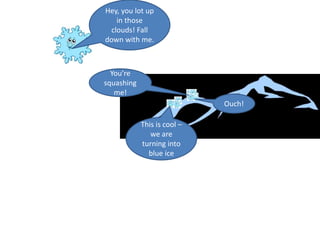
Hey, you lot up
in those
clouds! Fall
down with me.
Ouch!
You’re
squashing
me!
This is cool –
we are
turning into
blue ice
Homework
• Complete your cartoons
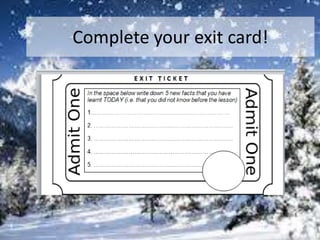
Complete your exit card!

Glacier and corrie formation ap

  • 1.
    How do GlaciersForm and how do they shape the land?
  • 2.
    Read through thecards and try to work out what happened to Stardust – you could even try to organise the cards into chronological order. WHY did the aircraft disappear and then re- appear over 50 years later? The Stardust Mystery
  • 3.
    How do GlaciersForm? • Discuss this with the person next to you • Watch this video to find out more
  • 4.
    What is aGlacier? • Put the boxes in the correct order! R. All the weight of the ice pushes the glacier down the mountain C.The new layers of snow compact last years layer A. It snows again next winter L. The spring and summer are cold so the snow doesn’t melt G. Snow collects throughout the winter I. Air is therefore squeezed out if the snow – turning it to ice. E. With no air the glacier turns a strange blue colour
  • 5.
    What is aGlacier? R. All the weight of the ice pushes the glacier down the mountain C.The new layers of snow compact last years layer A. It snows again next winter L. The spring and summer are cold so the snow doesn’t melt G. Snow collects throughout the winter I. Air is therefore squeezed out if the snow – turning it to ice. E. With no air the glacier turns a strange blue colour
  • 6.
    RECAP: What processesshape the land in mountain areas?
  • 7.
    Freeze Thaw Weathering Onyour worksheet – complete the following notes…. Freeze thaw weathering
  • 10.
    • Debris fromfreeze thaw weathering • People – for scale!
  • 11.
    • Erosion isthe break down and wearing away of rocks involving movement. Ice erodes by 2 main processes – plucking and abrasion. Glacial Erosion
  • 12.
    1) Plucking • Pluckingis when rocks and stones become frozen to the base of the glacier and are plucked from the ground as the glacier moves down the valley.
  • 14.
    2) Abrasion • Abrasionoccurs when rocks and stones, picked up by the glacier, through plucking at the bottom of the glacier, are rubbed along the bottom of the valley, digging it out.
  • 15.
    Abrasion that hasbeen carried out over rocks in Iceland – smoothing the rocks
  • 17.
    Glacial Landforms /Features – What landforms do you see?
  • 18.
  • 25.
    Corrie – contourpattern tarn contours close together
  • 26.
    Annotate your outlinesto explain how a corrie is formed. Make sure you have used specific terminology: Freeze-thaw weathering Plucking Abrasion Steep back wall Corrie lip Tarn Corrie lake called a tarn Debris ridge called a corrie lip Freeze-thaw weatheringFreeze-thaw weathering The Formation of a Corrie
  • 27.
    Cartoon time • Createa cartoon from the point of view of a snow flake which joins other snow flakes to form a glacier. • Describe your adventures and how strong you have become…so much so that you have managed to carve different landforms out of solid rock- such as corries! • It could be a cartoon strip if you like!
  • 28.
    Hey, you lotup in those clouds! Fall down with me. Ouch! You’re squashing me! This is cool – we are turning into blue ice
  • 29.
  • 30.