HOMEWORK
• Complete the A3 sheet
What patterns exist in the global
distribution of Biodiversity?
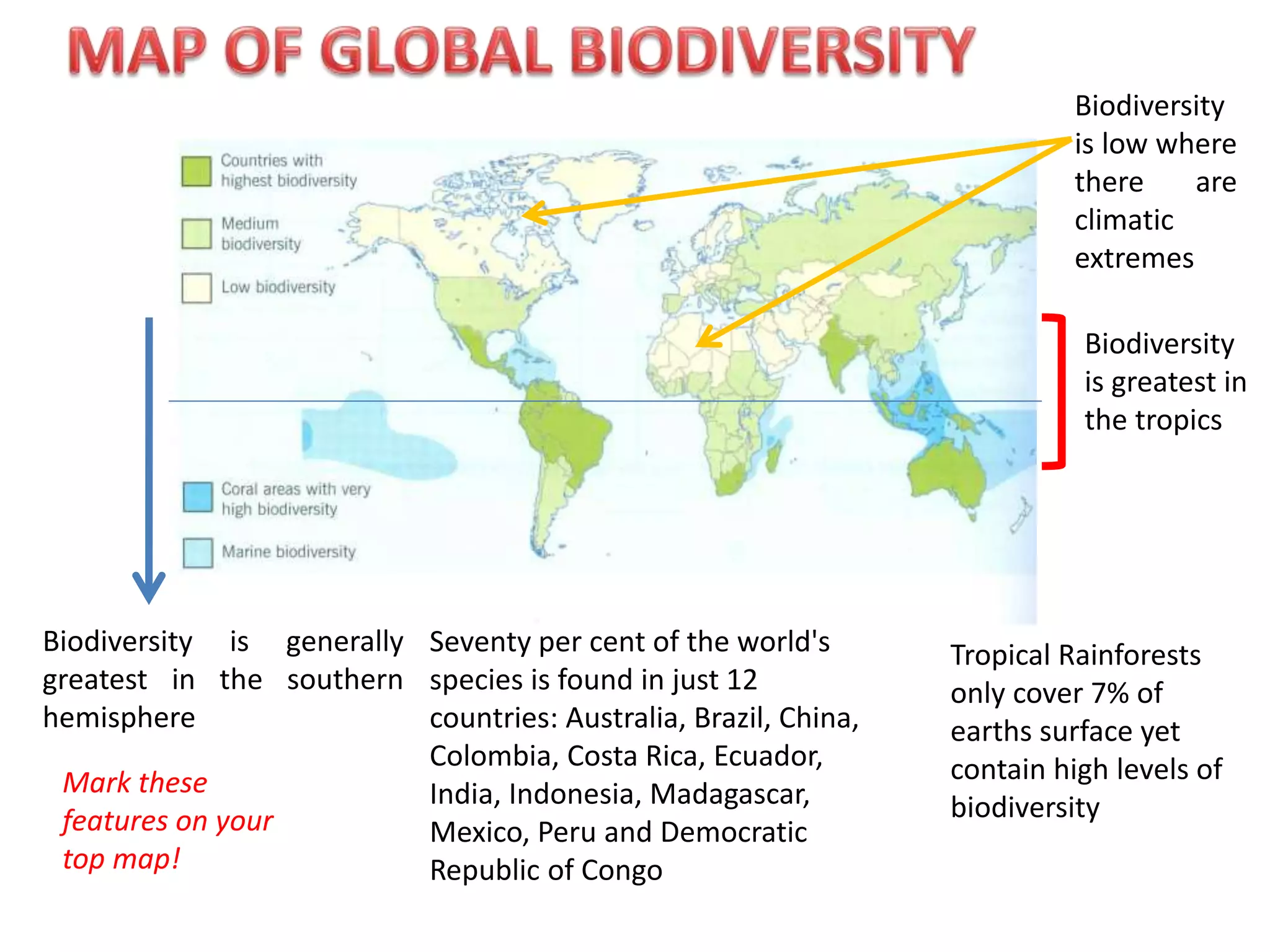
Biodiversity
is greatest in
the tropics
Biodiversity is generally
greatest in the southern
hemisphere
Seventy per cent of the world's
species is found in just 12
countries: Australia, Brazil, China,
Colombia, Costa Rica, Ecuador,
India, Indonesia, Madagascar,
Mexico, Peru and Democratic
Republic of Congo
Biodiversity
is low where
there are
climatic
extremes
Mark these
features on your
top map!
Tropical Rainforests
only cover 7% of
earths surface yet
contain high levels of
biodiversity
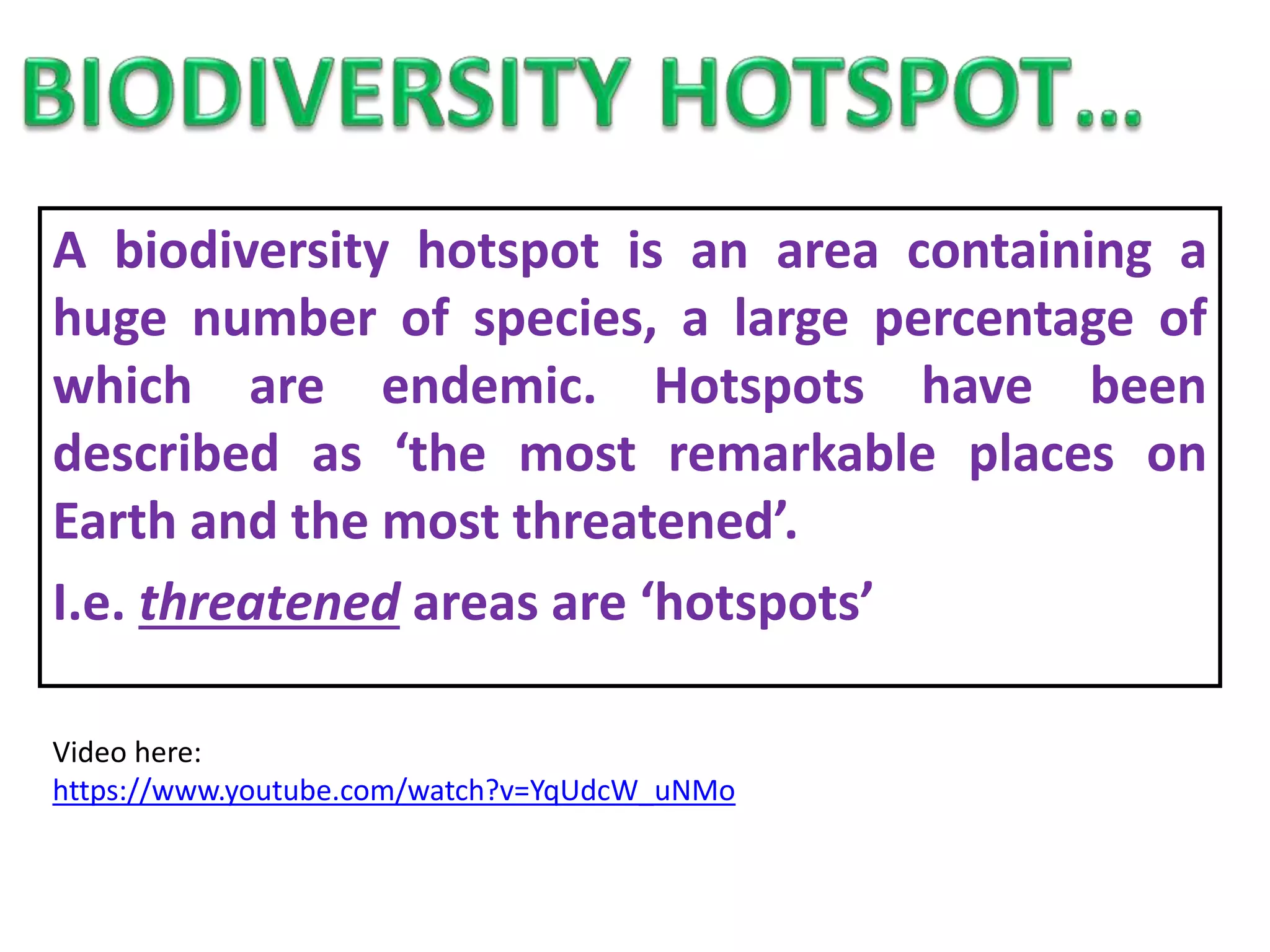
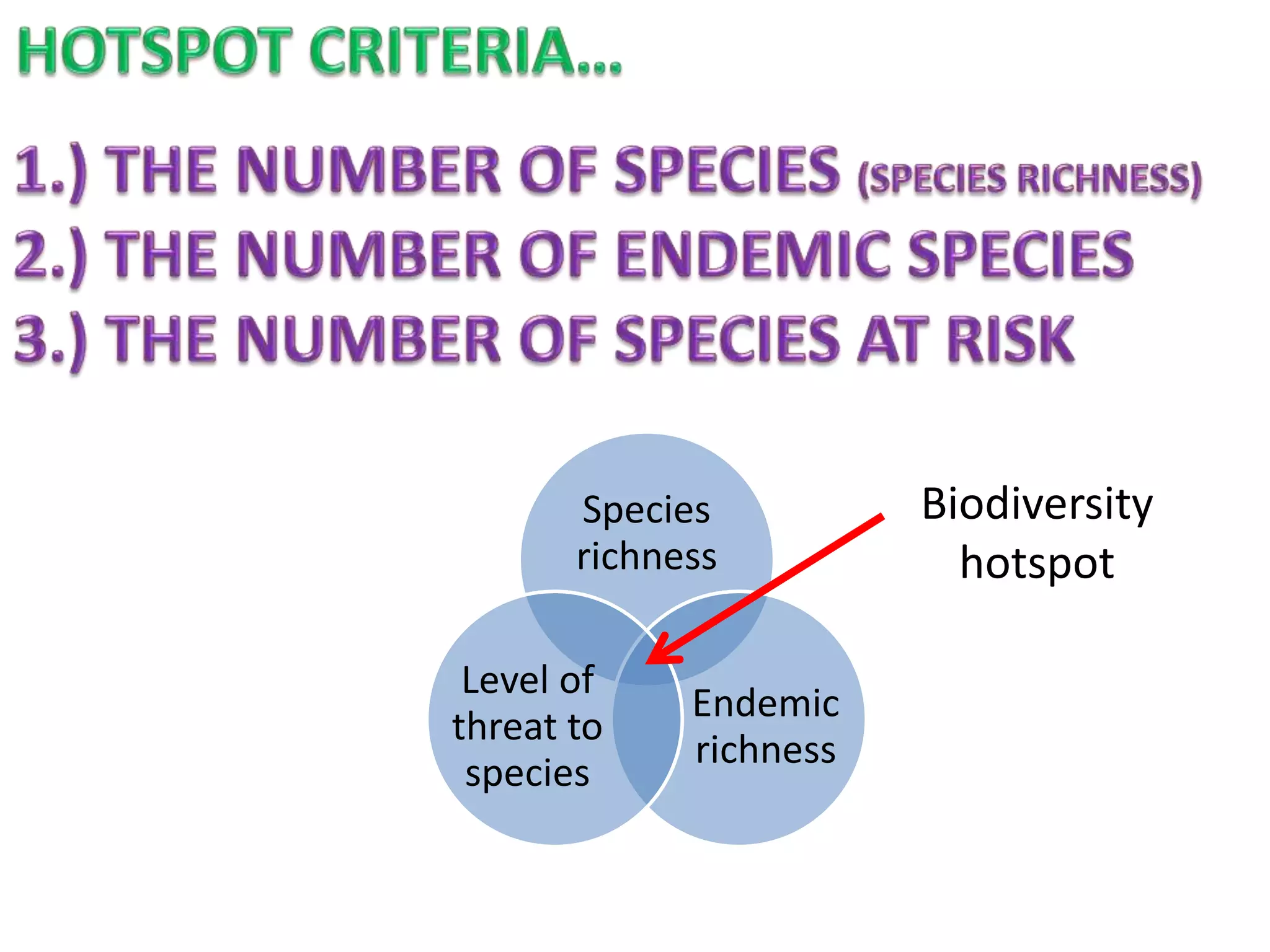
A biodiversity hotspot is an area containing a
huge number of species, a large percentage of
which are endemic. Hotspots have been
described as ‘the most remarkable places on
Earth and the most threatened’.
I.e. threatened areas are ‘hotspots’
Video here:
https://www.youtube.com/watch?v=YqUdcW_uNMo
Species
richness
Endemic
richness
Level of
threat to
species
Biodiversity
hotspot
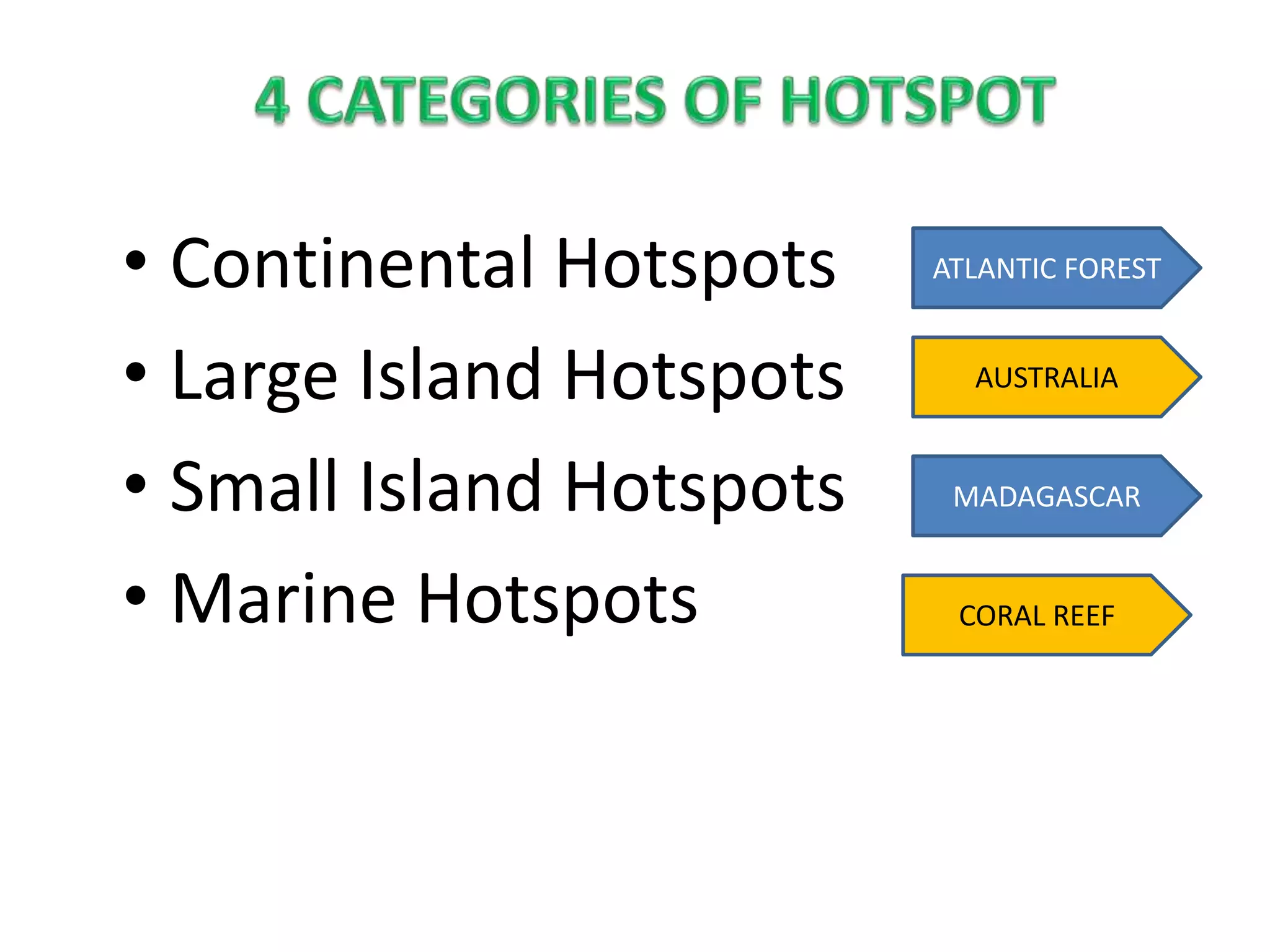
• Continental Hotspots
• Large Island Hotspots
• Small Island Hotspots
• Marine Hotspots
ATLANTIC FOREST
AUSTRALIA
MADAGASCAR
CORAL REEF
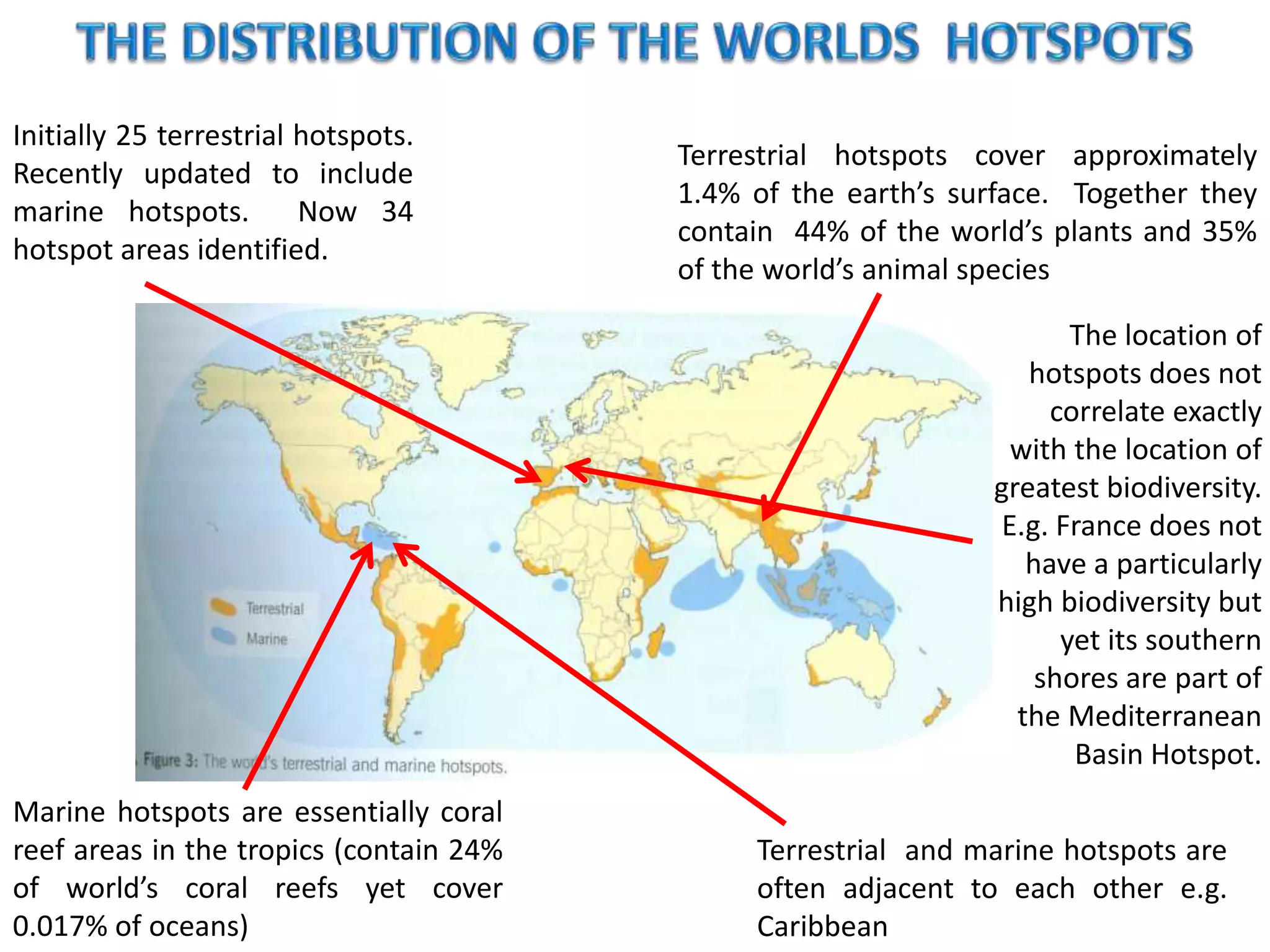
Initially 25 terrestrial hotspots.
Recently updated to include
marine hotspots. Now 34
hotspot areas identified.
Terrestrial hotspots cover approximately
1.4% of the earth’s surface. Together they
contain 44% of the world’s plants and 35%
of the world’s animal species
Marine hotspots are essentially coral
reef areas in the tropics (contain 24%
of world’s coral reefs yet cover
0.017% of oceans)
Terrestrial and marine hotspots are
often adjacent to each other e.g.
Caribbean
The location of
hotspots does not
correlate exactly
with the location of
greatest biodiversity.
E.g. France does not
have a particularly
high biodiversity but
yet its southern
shores are part of
the Mediterranean
Basin Hotspot.
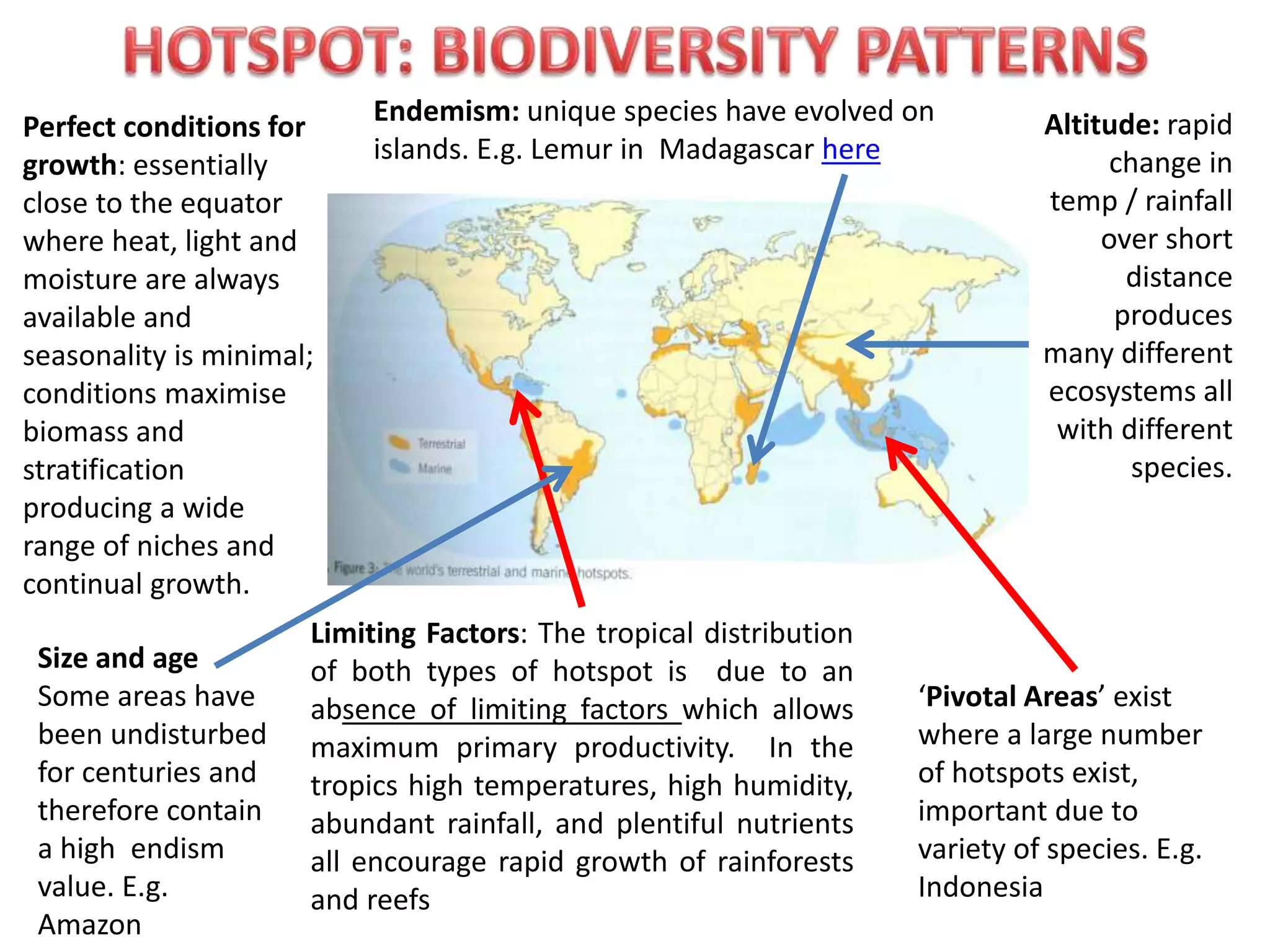
Limiting Factors: The tropical distribution
of both types of hotspot is due to an
absence of limiting factors which allows
maximum primary productivity. In the
tropics high temperatures, high humidity,
abundant rainfall, and plentiful nutrients
all encourage rapid growth of rainforests
and reefs
‘Pivotal Areas’ exist
where a large number
of hotspots exist,
important due to
variety of species. E.g.
Indonesia
Altitude: rapid
change in
temp / rainfall
over short
distance
produces
many different
ecosystems all
with different
species.
Size and age
Some areas have
been undisturbed
for centuries and
therefore contain
a high endism
value. E.g.
Amazon
Endemism: unique species have evolved on
islands. E.g. Lemur in Madagascar here
Perfect conditions for
growth: essentially
close to the equator
where heat, light and
moisture are always
available and
seasonality is minimal;
conditions maximise
biomass and
stratification
producing a wide
range of niches and
continual growth.
1. Has ensured that the ‘best bits’- areas with the highest
levels of biodiversity, substantial levels of endemism
(unique/rare species) are conserved and protected.
2. Areas under threat are commonly in the tropics and in
developing countries where conservation costs are much
lower (cheap labour) – idea of value for money.
3. Hotspots now covers marine area under threats in addition
to terrestrial ecosystems
1. Even with the additions of marine hotspots under 2% of the earth
and 0.017% of oceans are protected by this approach
2. The distribution of areas protected is very uneven. Most
hotspots lie in the tropics e.g. rainforests. Many ecosystems such as
Tundra, Taiga and Temperate Forest are not included.
3. Huge areas of the world are not covered including many areas
under great threat e.g. Arctic Ocean, or many outstanding smaller
regions such as Galapagos . These are not protected because they
do not meet all three criteria to be a hot spot. Polar bears
subsequently face extinction.
4. Hotspots tend to follows protectionist approach. This entails
removing people and their activities from areas under threat. This
has occurred in tropical countries where indigenous people have been
forced off their land in favour of creating big reserves.
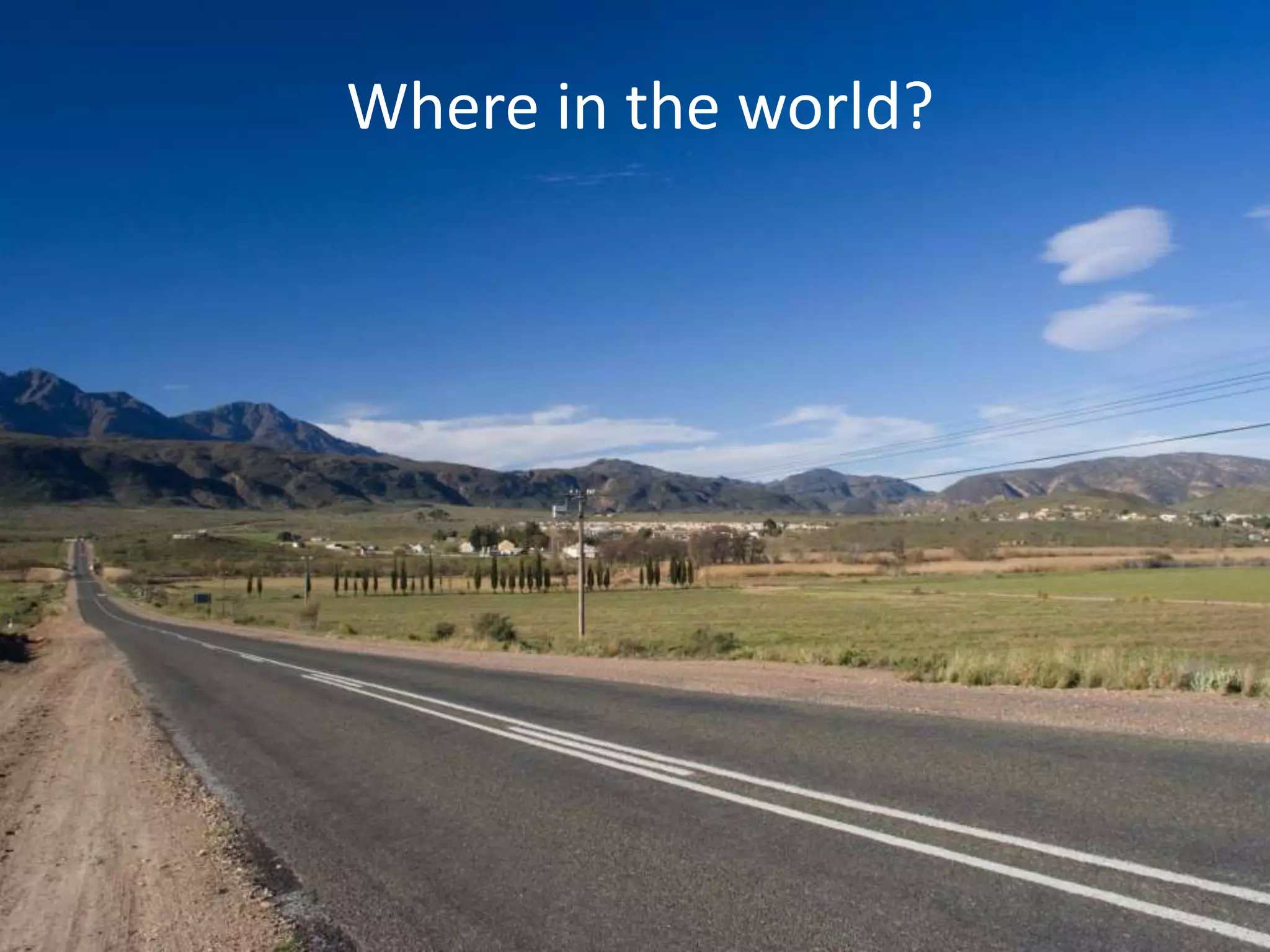
Where in the world?
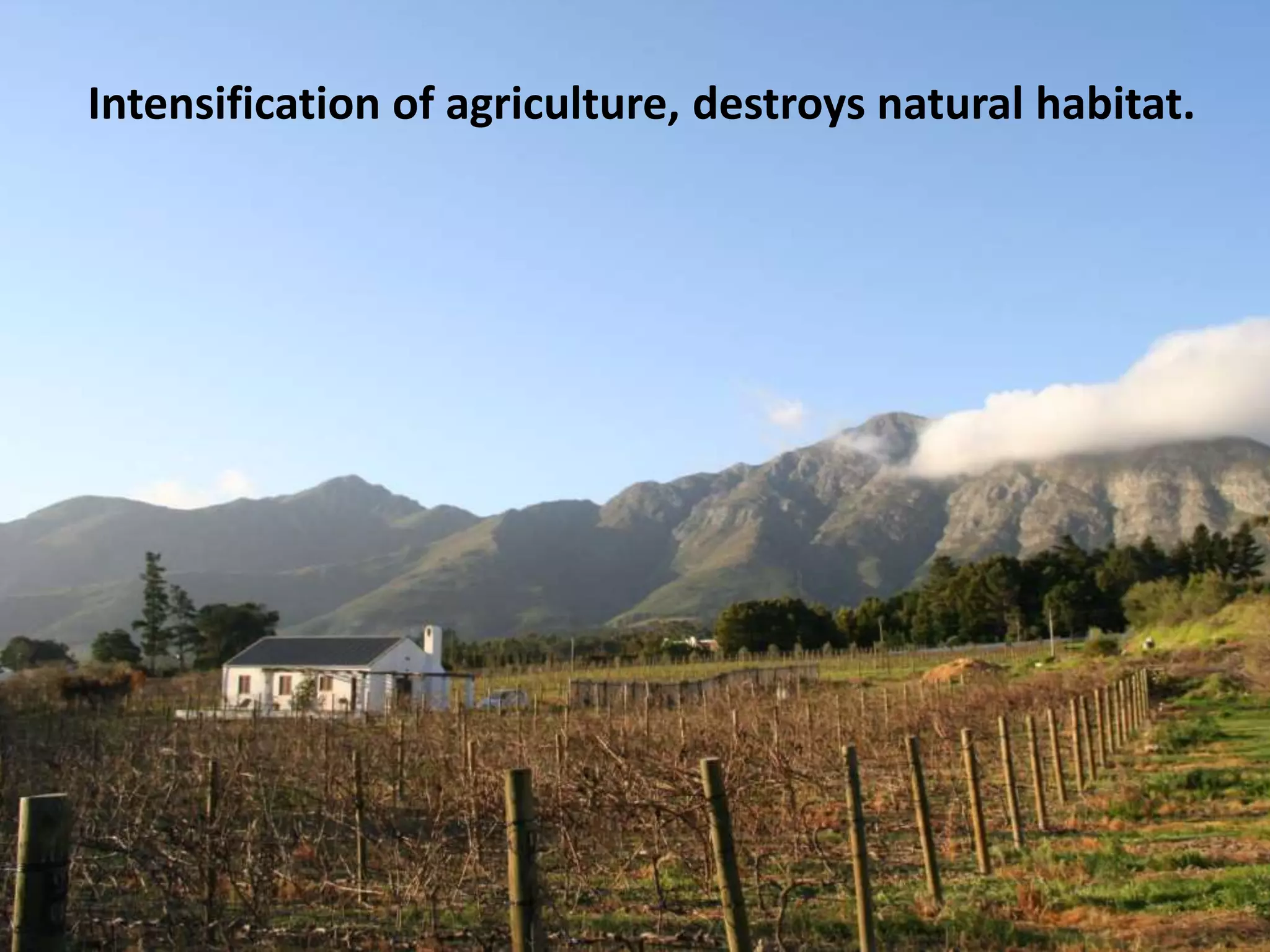
Intensification of agriculture, destroys natural habitat.
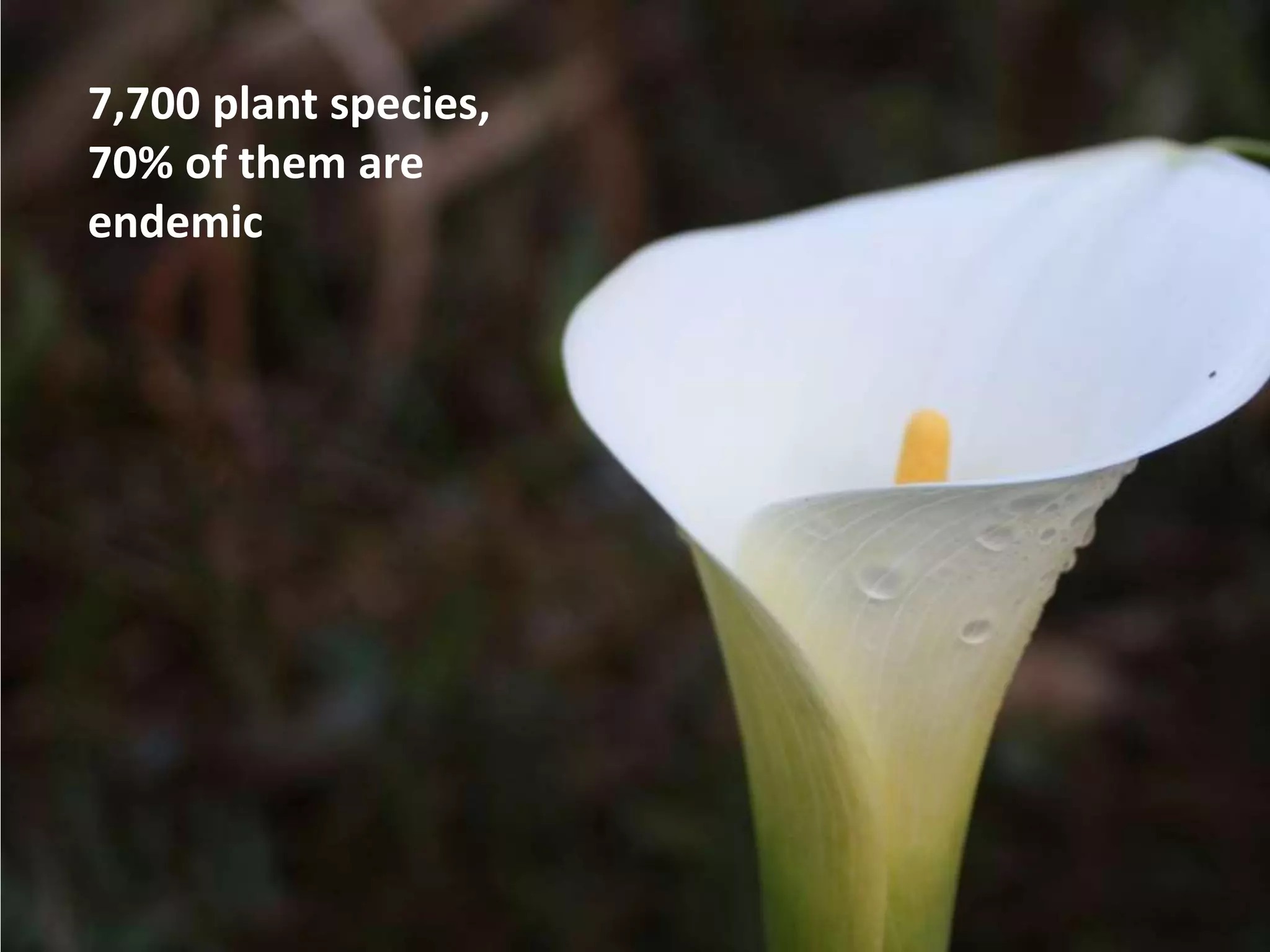
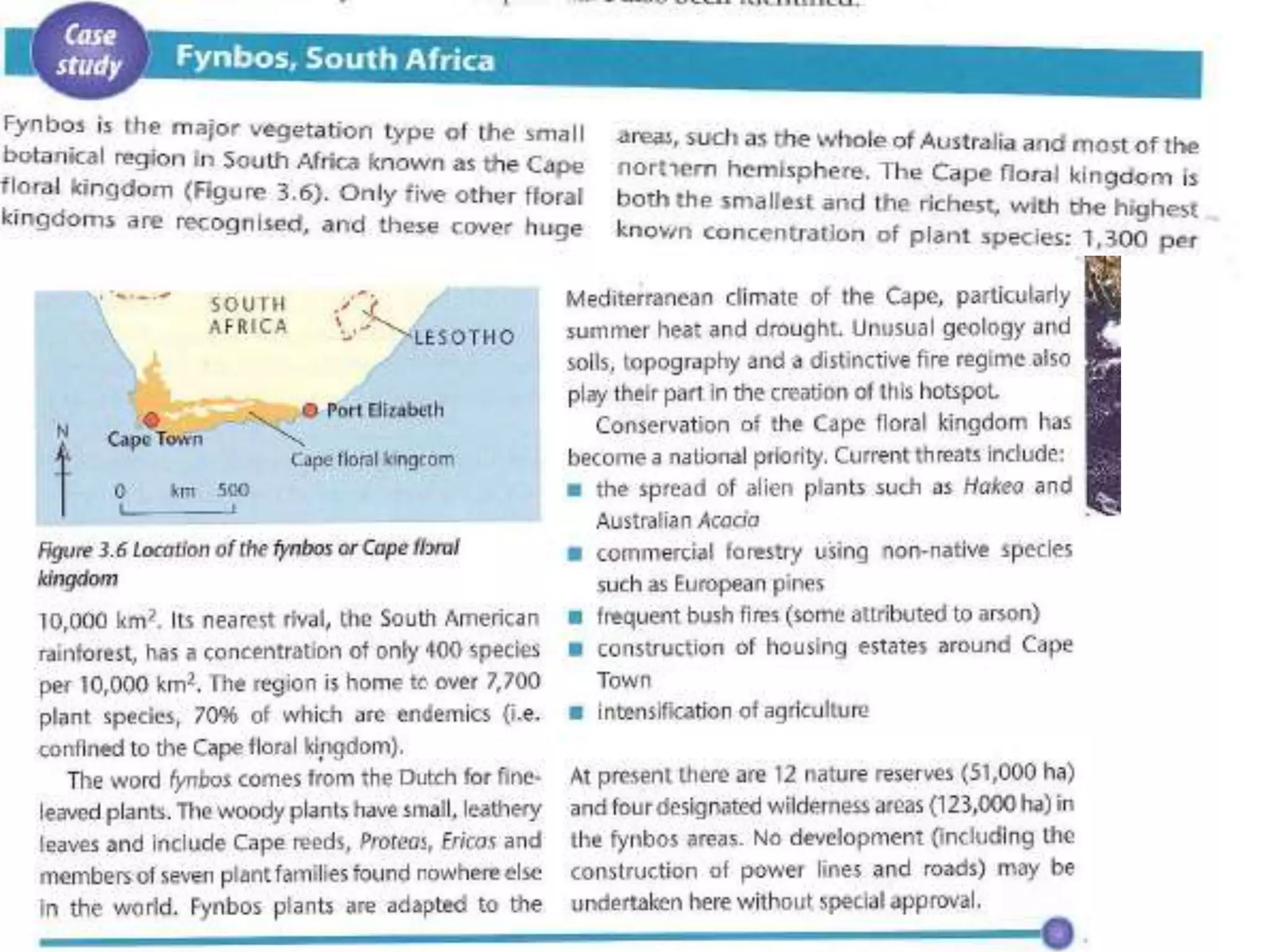
7,700 plant species,
70% of them are
endemic
Plants well suited
to drought and
unusual geology.
Your Turn!
• Create a Dummies Guide to The Location of
Biodiversity Hotspots.
• You will need to
– Define Hotspots
– Assess their merit (i.e. positives and negatives)
– Add in a case study of a hotspot (Cape Floral
Kingdom Hot Spot, South Africa)
Dummies Guide to Hotspots
What is a hotspot?
Where are they in the world?
CASE STUDY: Cape Floral Kingdom Hot Spot
Pros Cons

L2 2015 location of bio and hotspots

  • 1.
  • 2.
    What patterns existin the global distribution of Biodiversity?
  • 3.
    Biodiversity is greatest in thetropics Biodiversity is generally greatest in the southern hemisphere Seventy per cent of the world's species is found in just 12 countries: Australia, Brazil, China, Colombia, Costa Rica, Ecuador, India, Indonesia, Madagascar, Mexico, Peru and Democratic Republic of Congo Biodiversity is low where there are climatic extremes Mark these features on your top map! Tropical Rainforests only cover 7% of earths surface yet contain high levels of biodiversity
  • 4.
    A biodiversity hotspotis an area containing a huge number of species, a large percentage of which are endemic. Hotspots have been described as ‘the most remarkable places on Earth and the most threatened’. I.e. threatened areas are ‘hotspots’ Video here: https://www.youtube.com/watch?v=YqUdcW_uNMo
  • 6.
  • 7.
    • Continental Hotspots •Large Island Hotspots • Small Island Hotspots • Marine Hotspots ATLANTIC FOREST AUSTRALIA MADAGASCAR CORAL REEF
  • 8.
    Initially 25 terrestrialhotspots. Recently updated to include marine hotspots. Now 34 hotspot areas identified. Terrestrial hotspots cover approximately 1.4% of the earth’s surface. Together they contain 44% of the world’s plants and 35% of the world’s animal species Marine hotspots are essentially coral reef areas in the tropics (contain 24% of world’s coral reefs yet cover 0.017% of oceans) Terrestrial and marine hotspots are often adjacent to each other e.g. Caribbean The location of hotspots does not correlate exactly with the location of greatest biodiversity. E.g. France does not have a particularly high biodiversity but yet its southern shores are part of the Mediterranean Basin Hotspot.
  • 9.
    Limiting Factors: Thetropical distribution of both types of hotspot is due to an absence of limiting factors which allows maximum primary productivity. In the tropics high temperatures, high humidity, abundant rainfall, and plentiful nutrients all encourage rapid growth of rainforests and reefs ‘Pivotal Areas’ exist where a large number of hotspots exist, important due to variety of species. E.g. Indonesia Altitude: rapid change in temp / rainfall over short distance produces many different ecosystems all with different species. Size and age Some areas have been undisturbed for centuries and therefore contain a high endism value. E.g. Amazon Endemism: unique species have evolved on islands. E.g. Lemur in Madagascar here Perfect conditions for growth: essentially close to the equator where heat, light and moisture are always available and seasonality is minimal; conditions maximise biomass and stratification producing a wide range of niches and continual growth.
  • 10.
    1. Has ensuredthat the ‘best bits’- areas with the highest levels of biodiversity, substantial levels of endemism (unique/rare species) are conserved and protected. 2. Areas under threat are commonly in the tropics and in developing countries where conservation costs are much lower (cheap labour) – idea of value for money. 3. Hotspots now covers marine area under threats in addition to terrestrial ecosystems
  • 11.
    1. Even withthe additions of marine hotspots under 2% of the earth and 0.017% of oceans are protected by this approach 2. The distribution of areas protected is very uneven. Most hotspots lie in the tropics e.g. rainforests. Many ecosystems such as Tundra, Taiga and Temperate Forest are not included. 3. Huge areas of the world are not covered including many areas under great threat e.g. Arctic Ocean, or many outstanding smaller regions such as Galapagos . These are not protected because they do not meet all three criteria to be a hot spot. Polar bears subsequently face extinction. 4. Hotspots tend to follows protectionist approach. This entails removing people and their activities from areas under threat. This has occurred in tropical countries where indigenous people have been forced off their land in favour of creating big reserves.
  • 12.
  • 16.
    Intensification of agriculture,destroys natural habitat.
  • 17.
    7,700 plant species, 70%of them are endemic
  • 21.
    Plants well suited todrought and unusual geology.
  • 30.
    Your Turn! • Createa Dummies Guide to The Location of Biodiversity Hotspots. • You will need to – Define Hotspots – Assess their merit (i.e. positives and negatives) – Add in a case study of a hotspot (Cape Floral Kingdom Hot Spot, South Africa)
  • 31.
    Dummies Guide toHotspots What is a hotspot? Where are they in the world? CASE STUDY: Cape Floral Kingdom Hot Spot Pros Cons