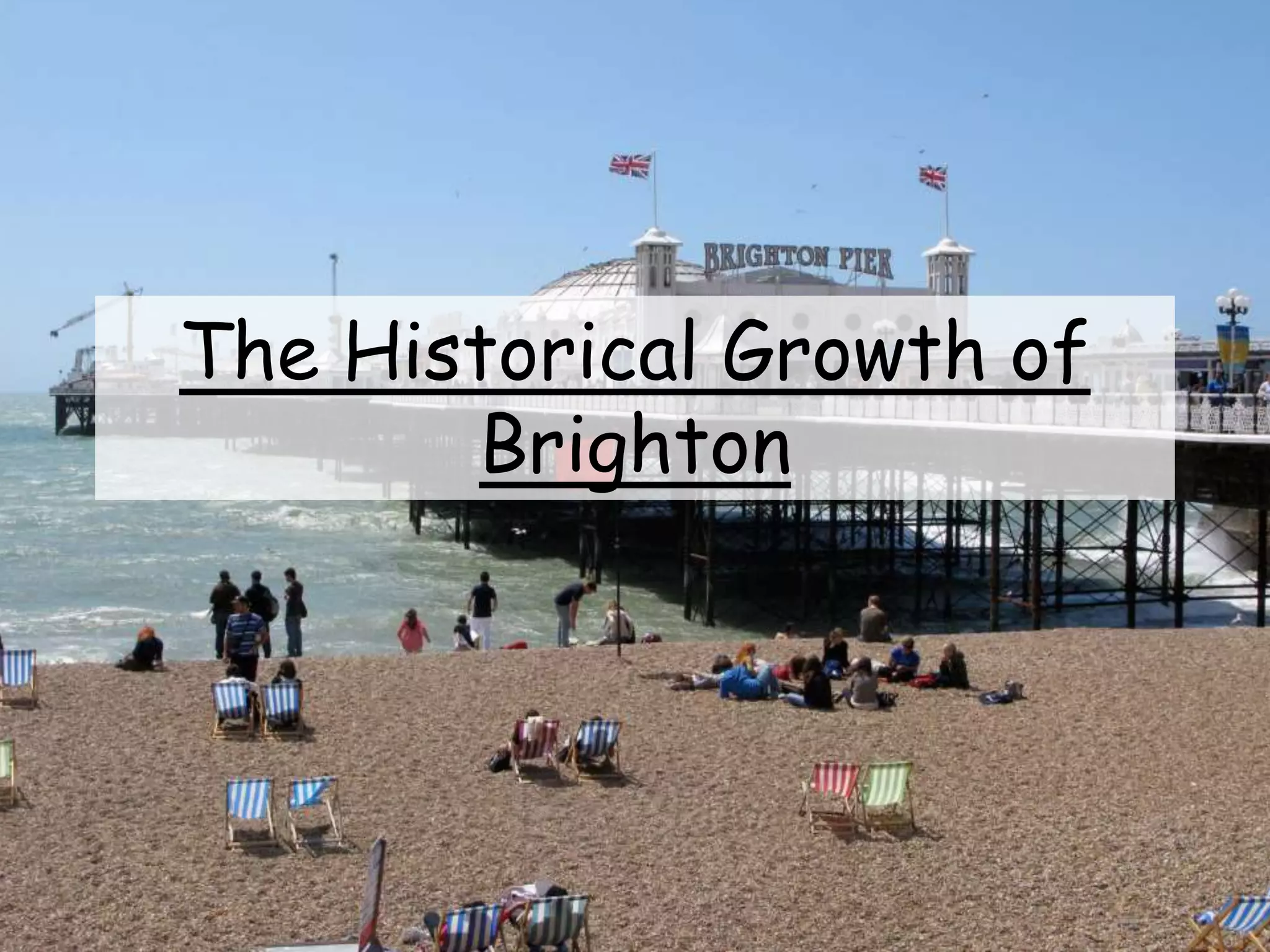
The Historical Growth of
Brighton
Location
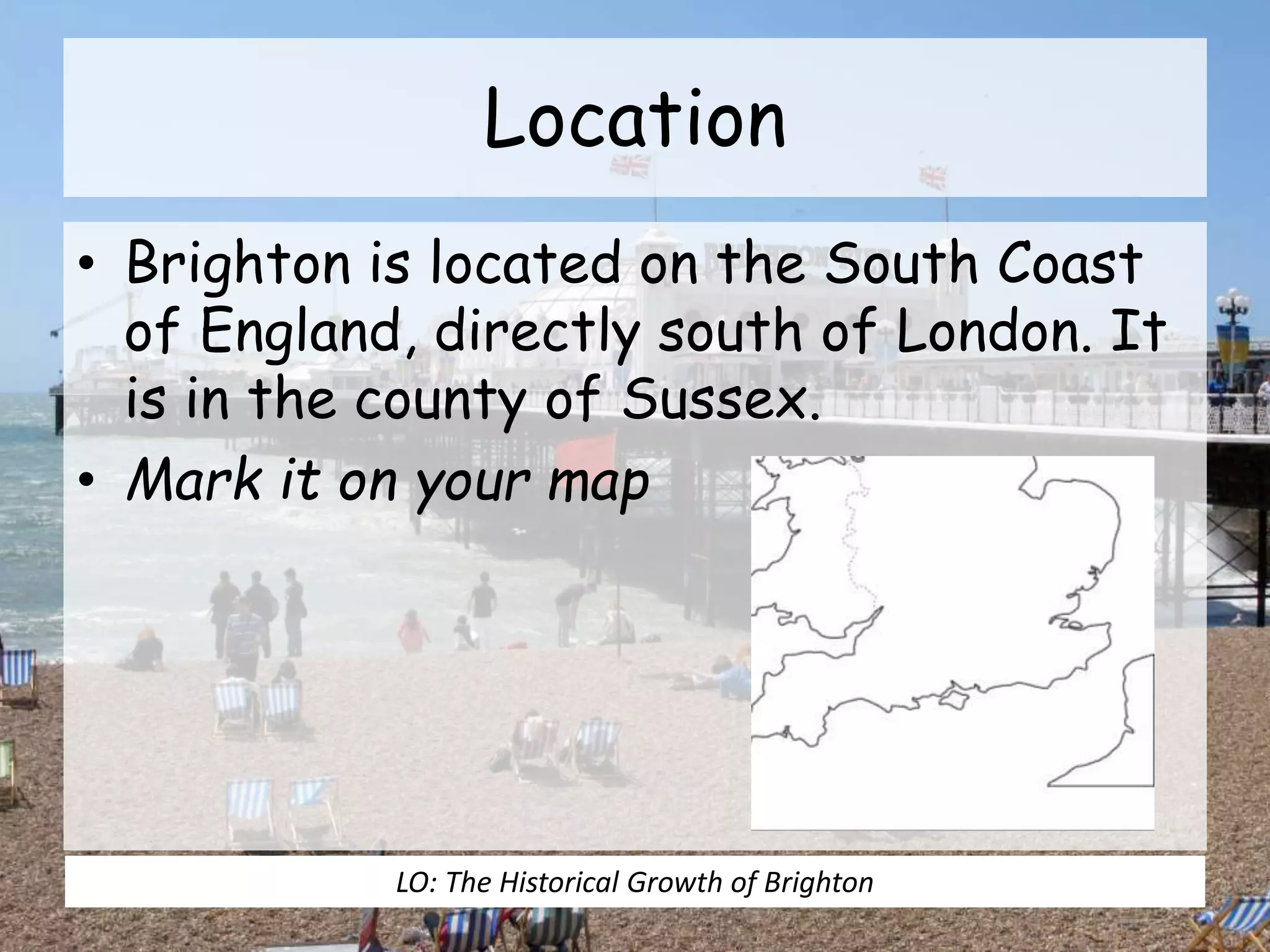
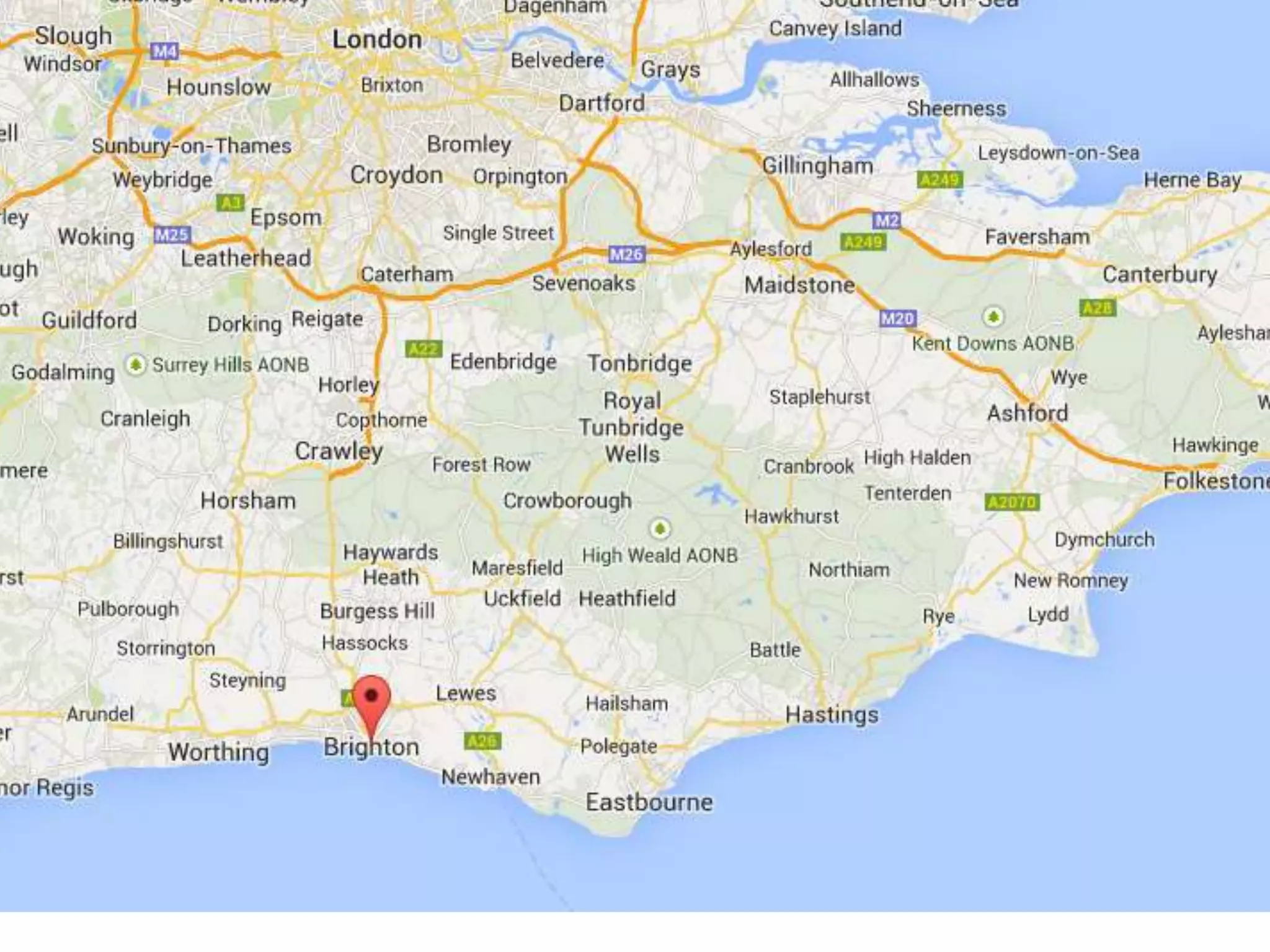
• Brighton is located on the South Coast
of England, directly south of London. It
is in the county of Sussex.
• Mark it on your map
LO: The Historical Growth of Brighton
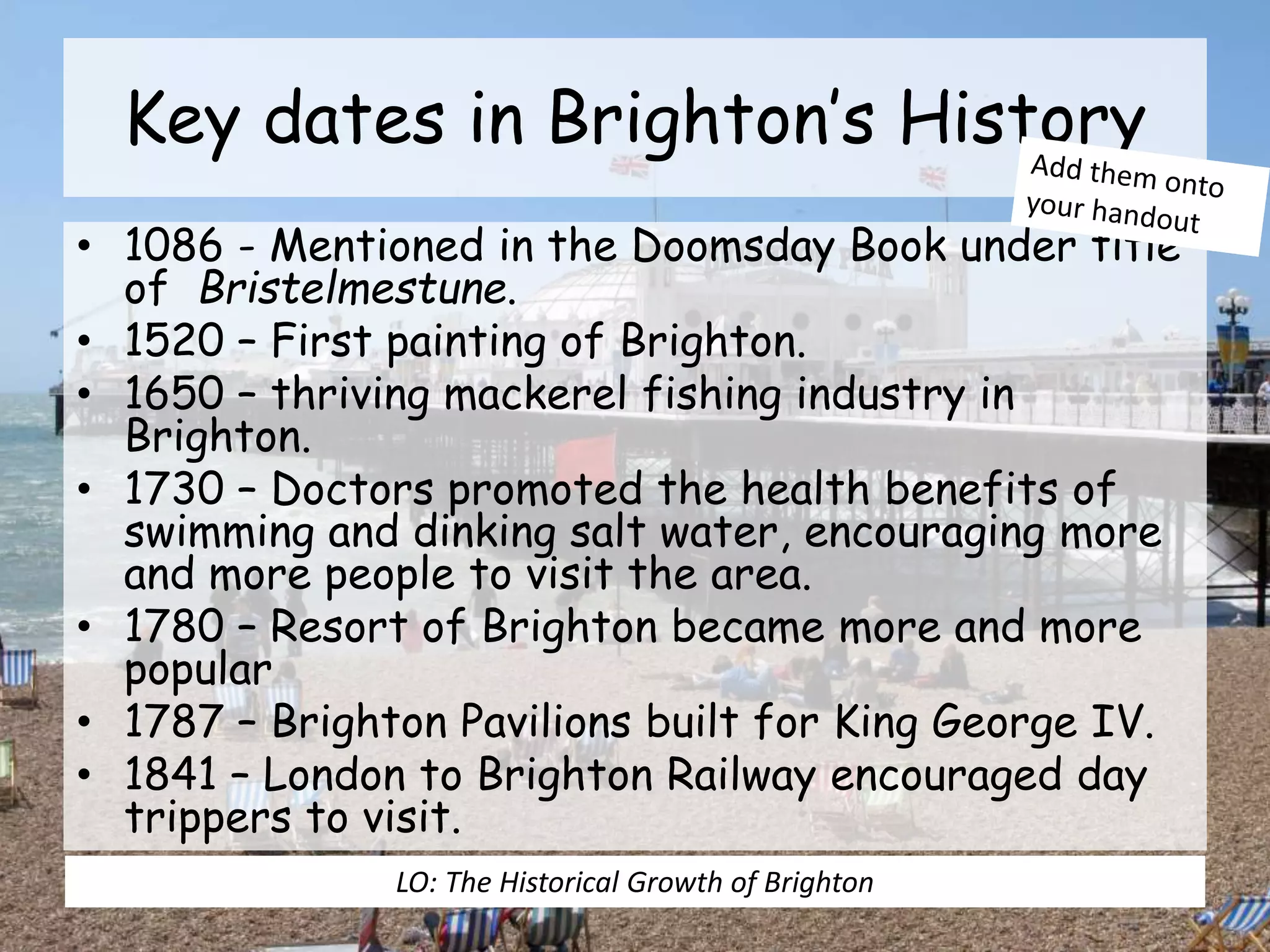
Key dates in Brighton’s History
• 1086 - Mentioned in the Doomsday Book under title
of Bristelmestune.
• 1520 – First painting of Brighton.
• 1650 – thriving mackerel fishing industry in
Brighton.
• 1730 – Doctors promoted the health benefits of
swimming and dinking salt water, encouraging more
and more people to visit the area.
• 1780 – Resort of Brighton became more and more
popular
• 1787 – Brighton Pavilions built for King George IV.
• 1841 – London to Brighton Railway encouraged day
trippers to visit.
LO: The Historical Growth of Brighton
INSERT MAPS FROM OLD-
MAPS
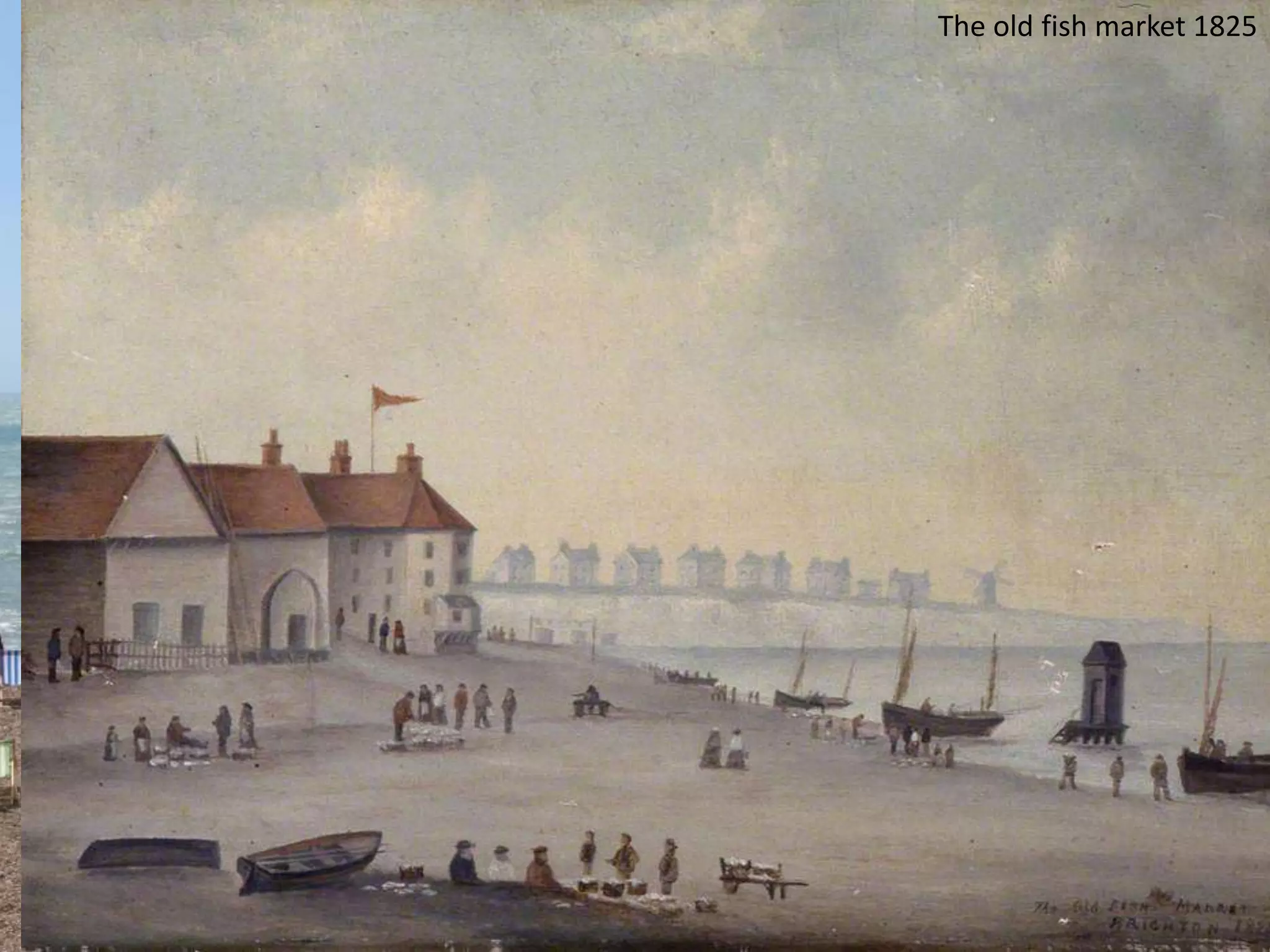
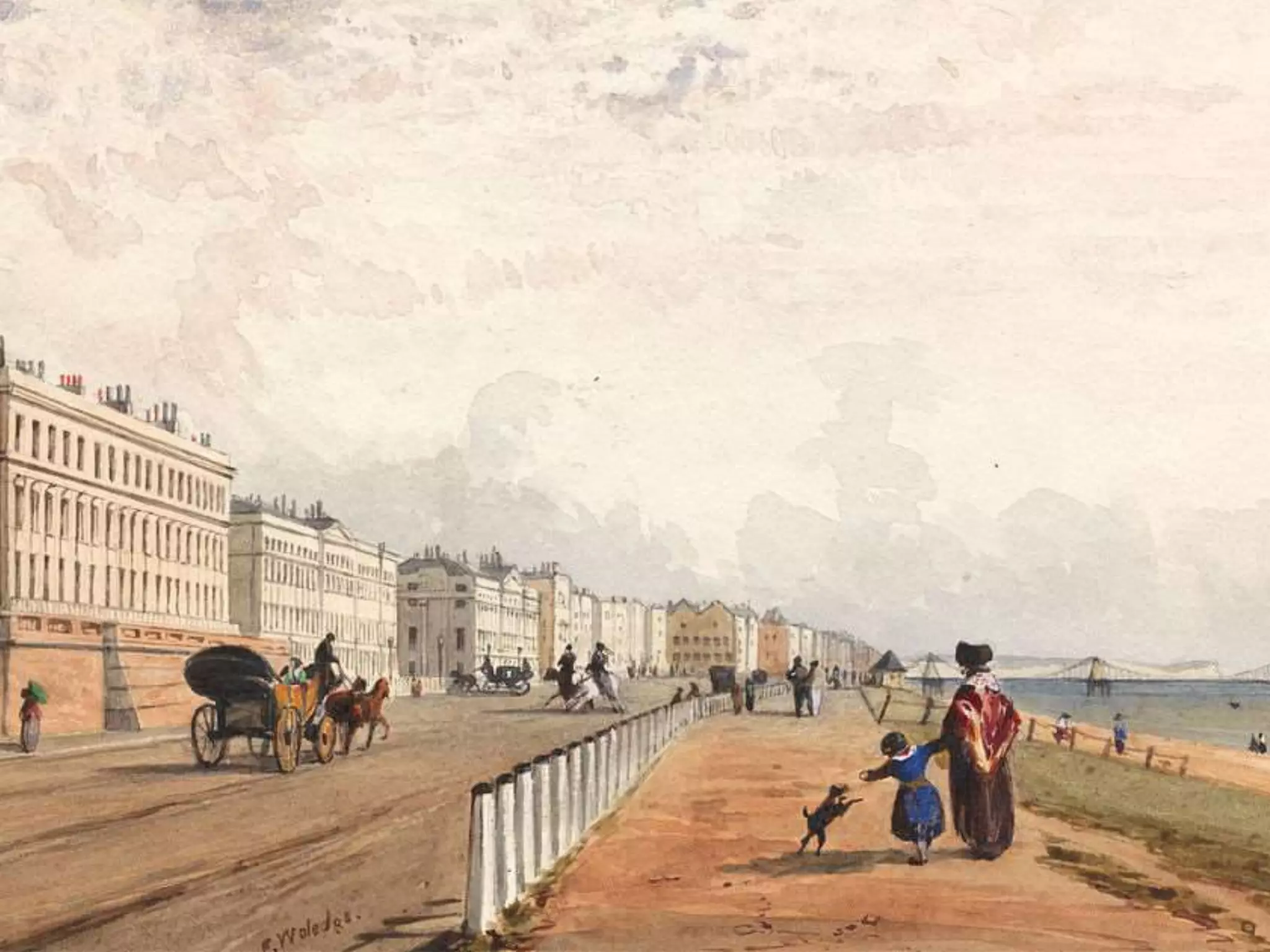
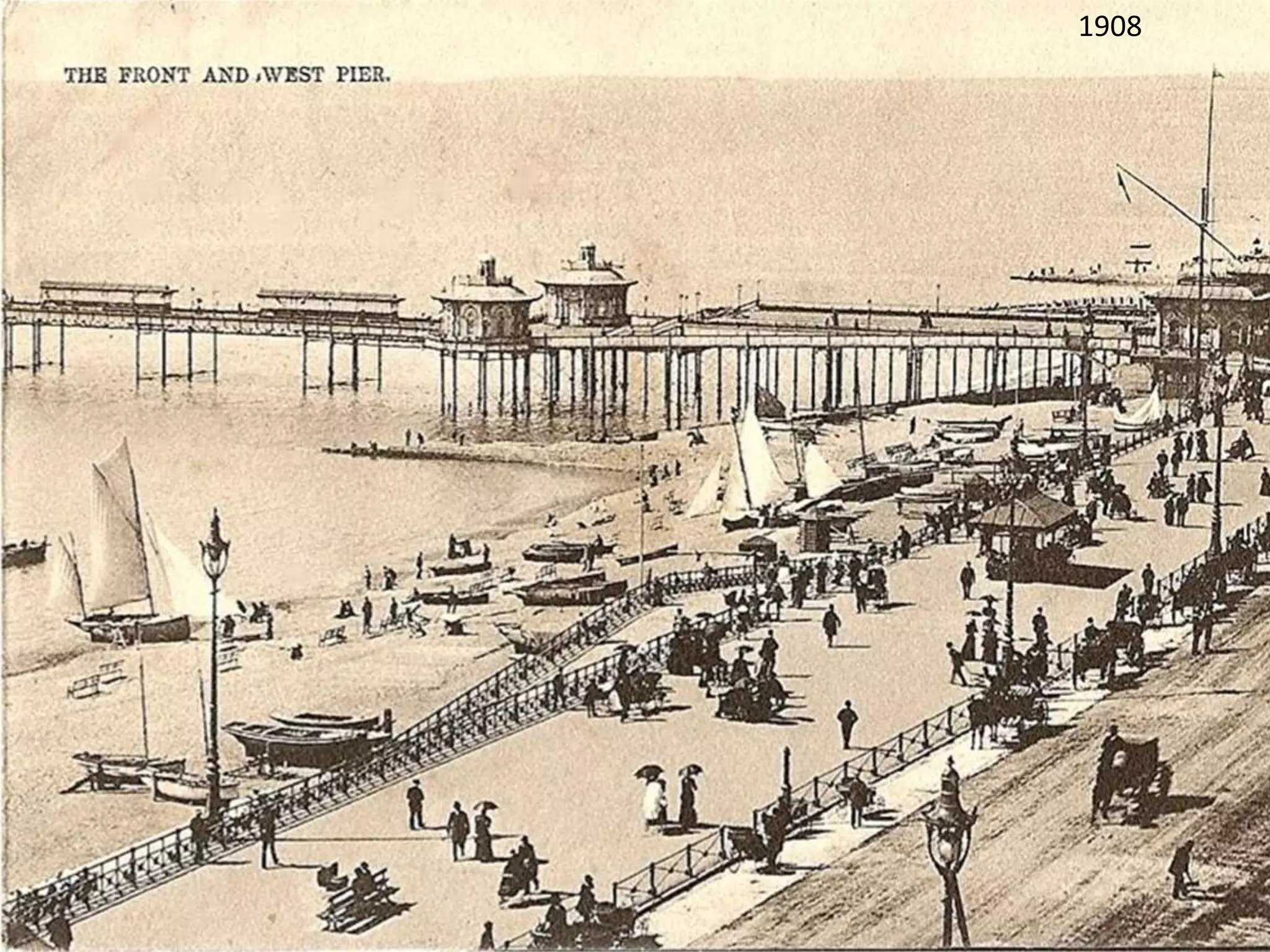
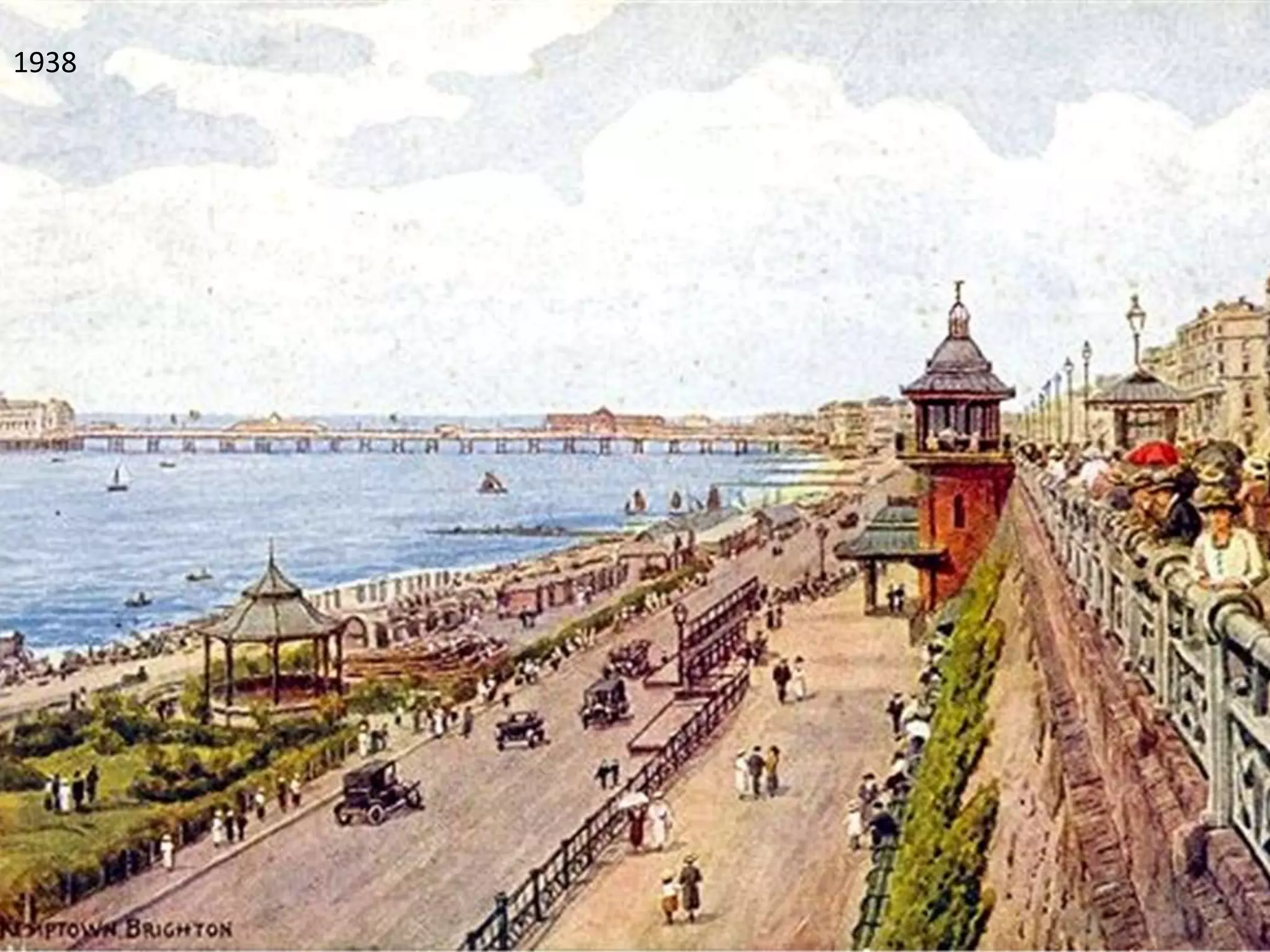
Some historical paintings from
Brighton ...
The old fish market 1825
1908
1938
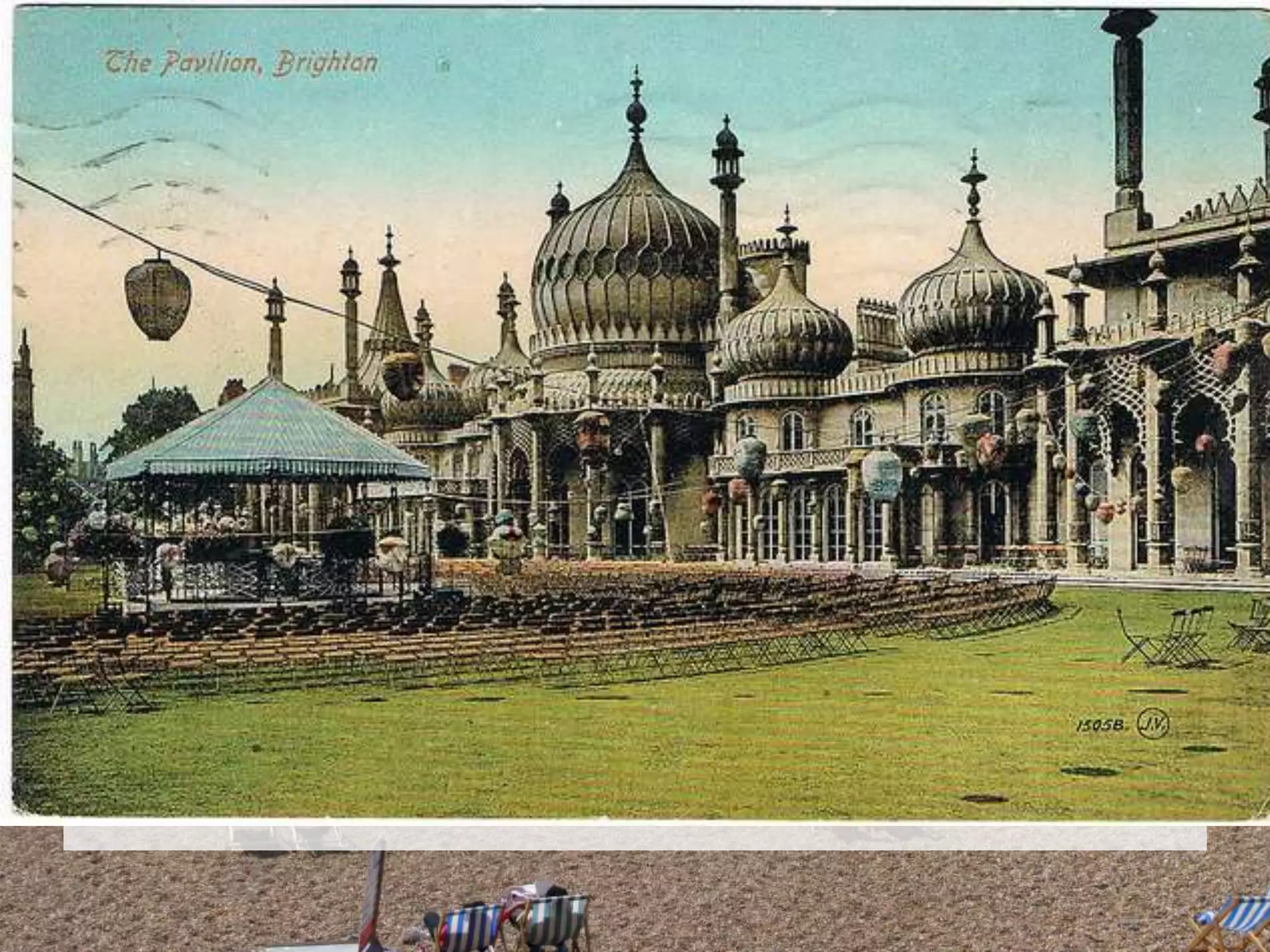
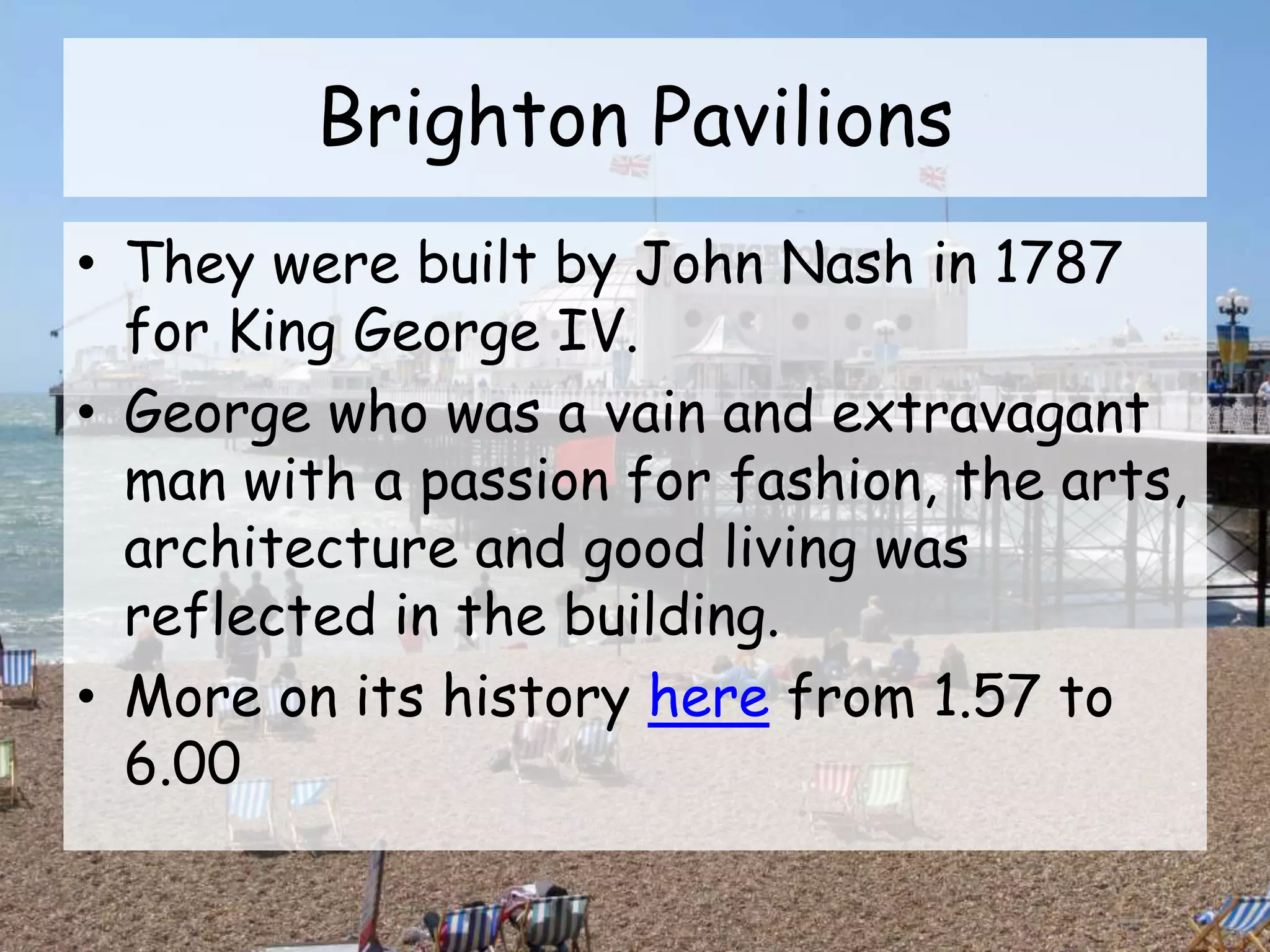
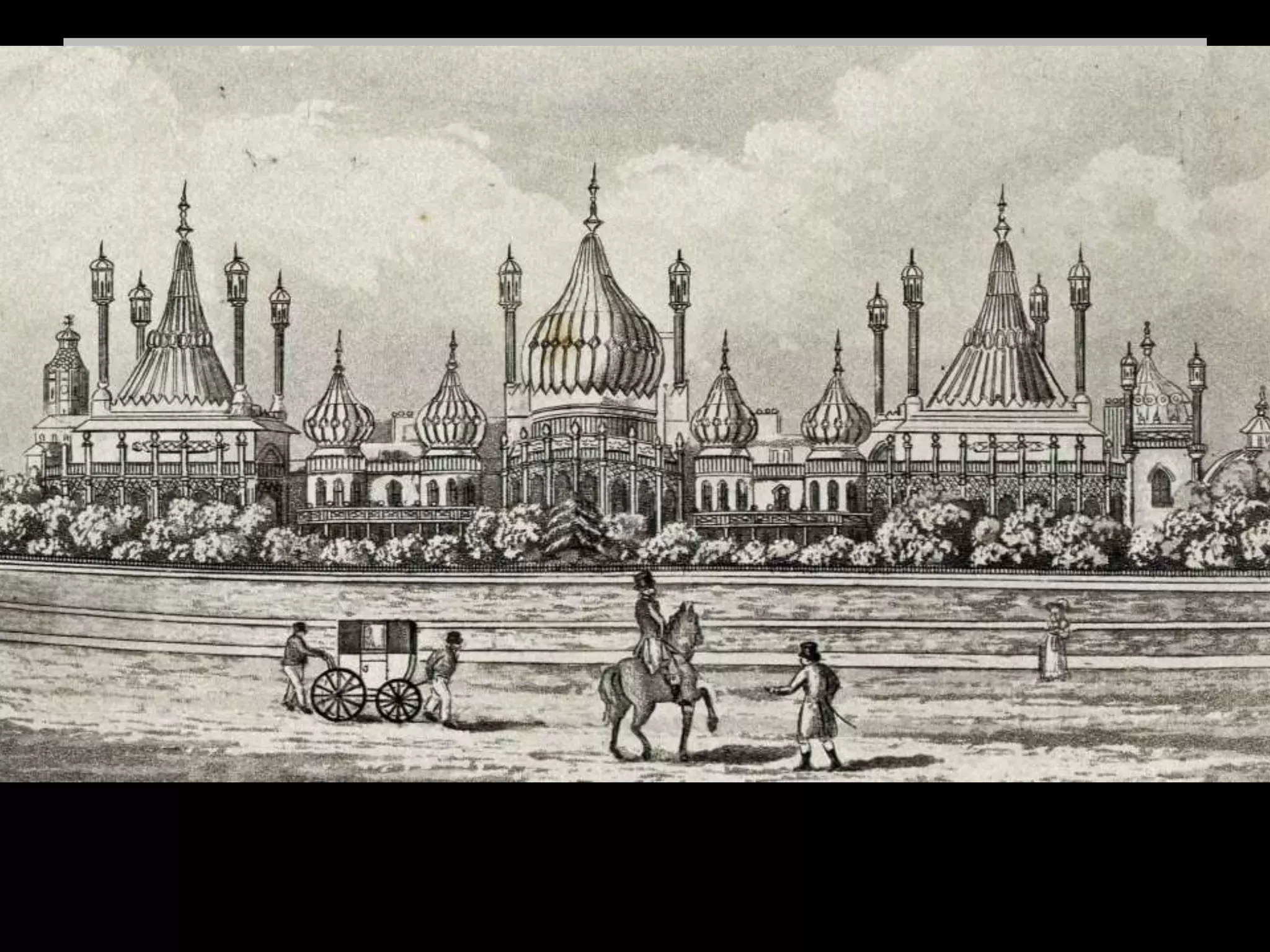
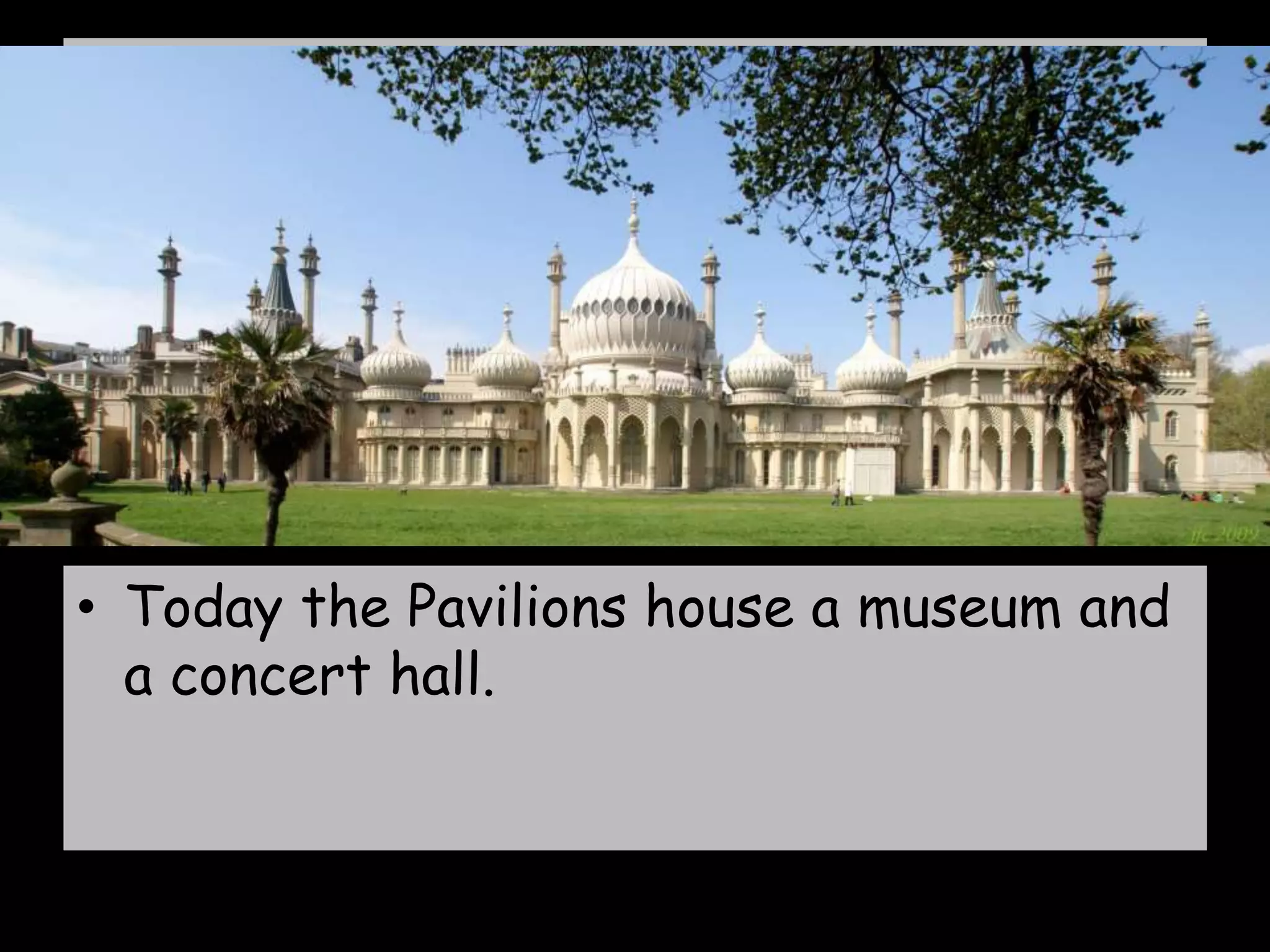
Brighton Pavilions
• They were built by John Nash in 1787
for King George IV.
• George who was a vain and extravagant
man with a passion for fashion, the arts,
architecture and good living was
reflected in the building.
• More on its history here from 1.57 to
6.00
PHOTOS OF PAVILLIONS
• Today the Pavilions house a museum and
a concert hall.
Development of tourism in
Brighton
• Tourism has been growing since
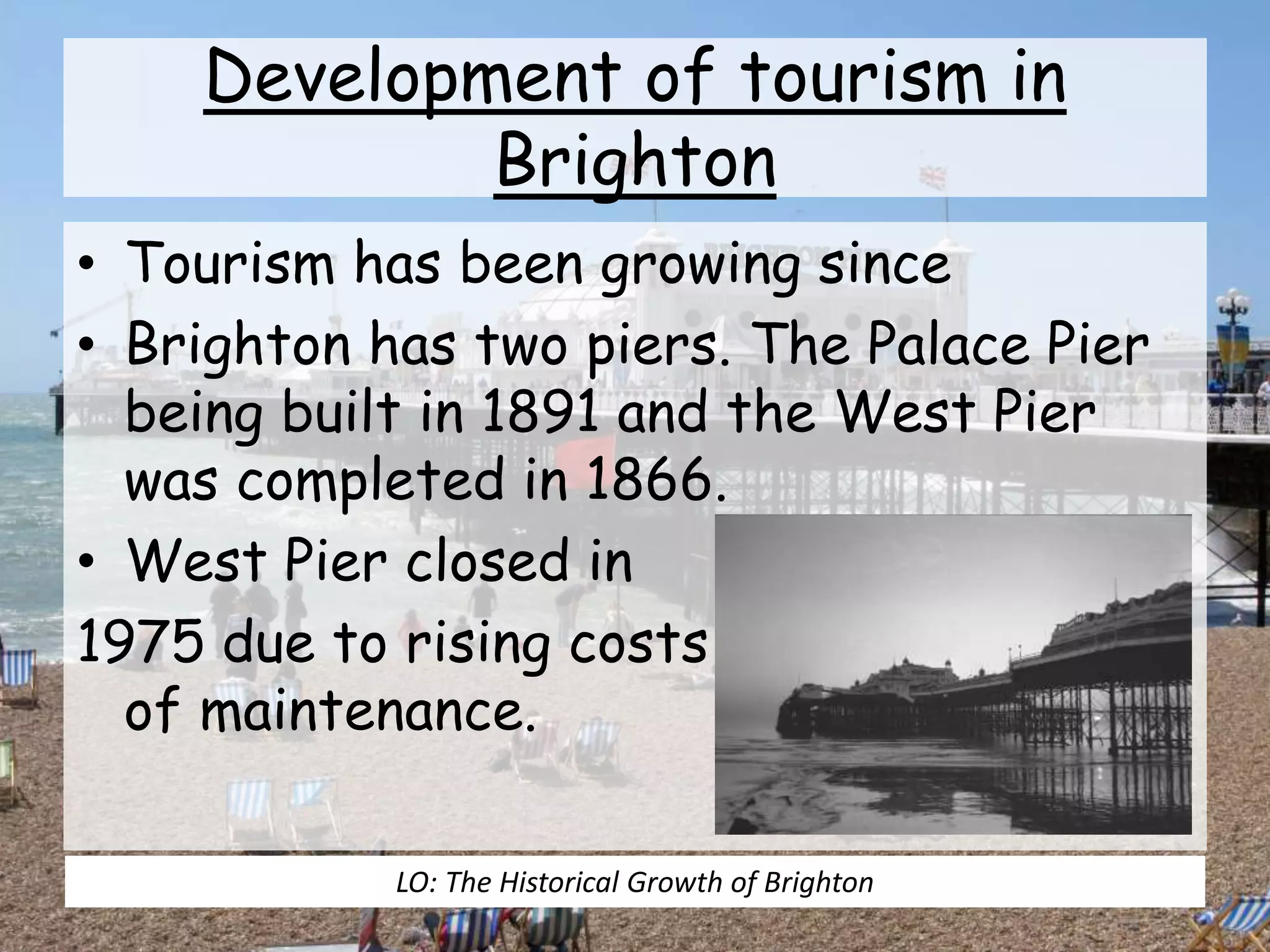
• Brighton has two piers. The Palace Pier
being built in 1891 and the West Pier
was completed in 1866.
• West Pier closed in
1975 due to rising costs
of maintenance.
LO: The Historical Growth of Brighton
Brighton Today
• Watch this video to see why tourism in
Brighton is so important. Make notes as
you watch.
LO: The Historical Growth of Brighton
TASK
• Imagine you have discovered an old photo
reel – it belonged to your great
grandmother. You have been asked by
the museum of Brighton to write an oral
history based on your findings, which will
be displayed in the museum alongside
your great grandmother’s photo reel.
• Include facts like the history of the
town, why it became popular, how
numbers have risen, etc.
LO: The Historical Growth of Brighton
Here is an example …
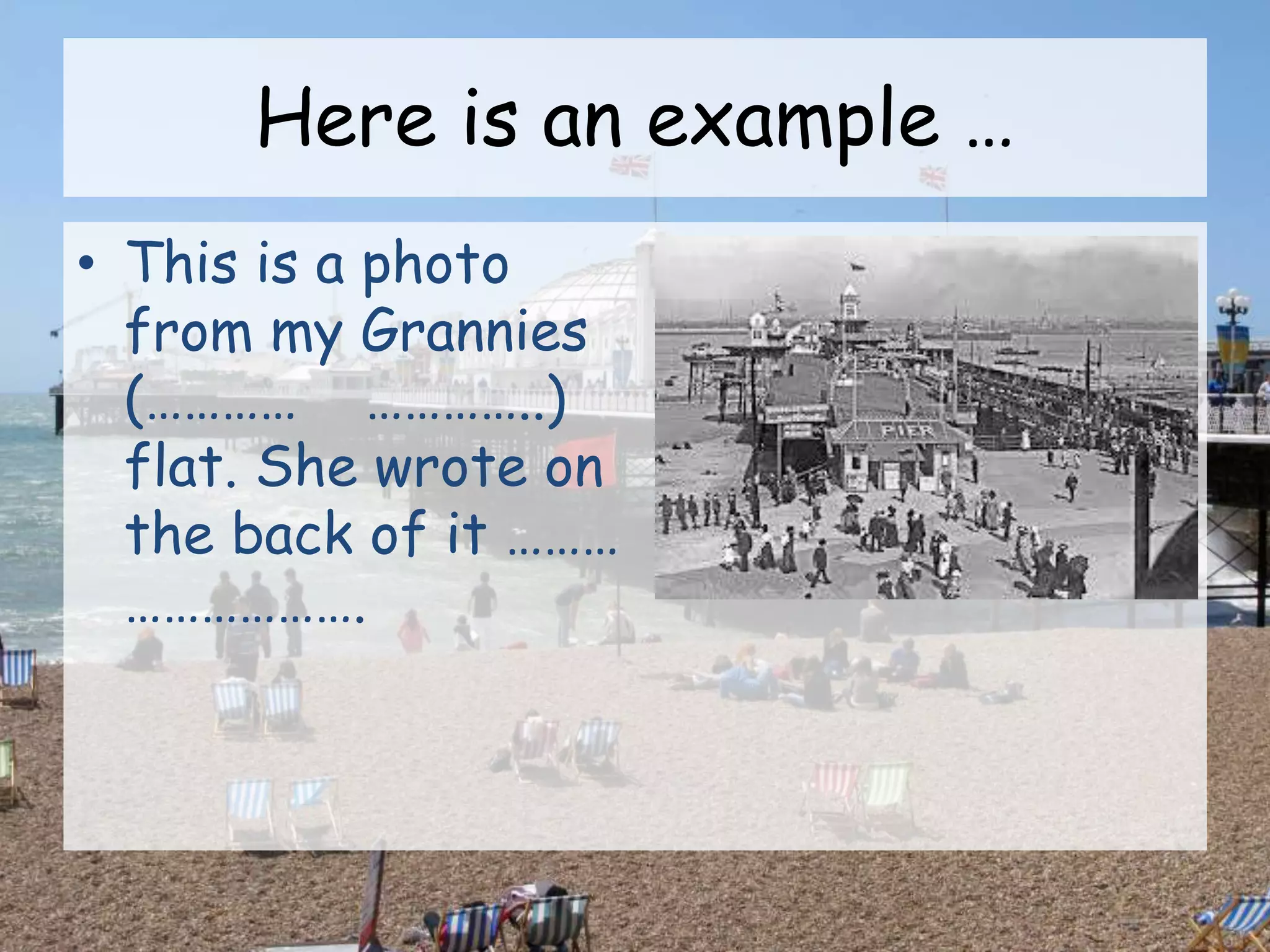
• This is a photo
from my Grannies
(………… …………..)
flat. She wrote on
the back of it ………
……………….
Here is another example
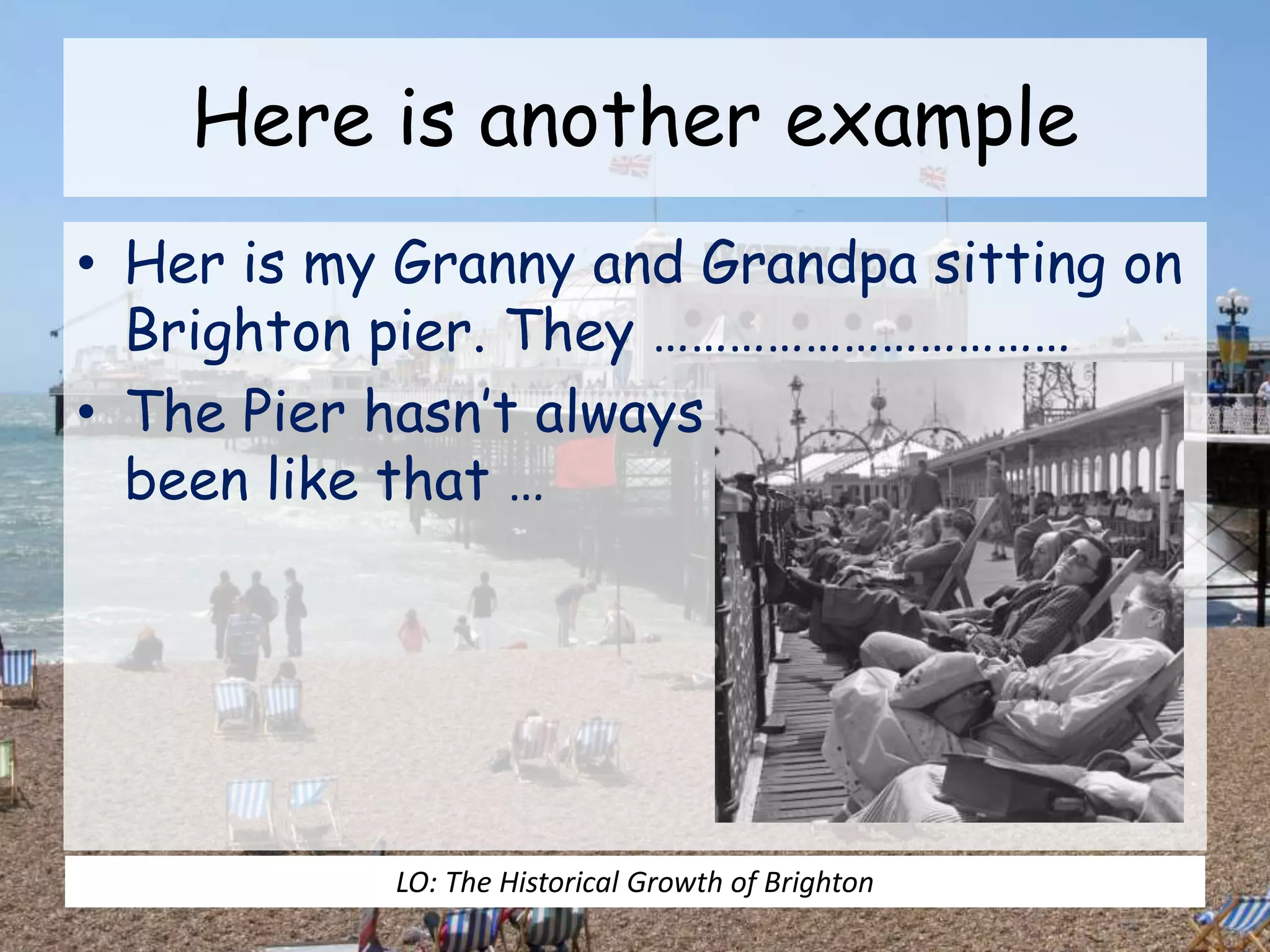
• Her is my Granny and Grandpa sitting on
Brighton pier. They ……………………………
• The Pier hasn’t always
been like that …
LO: The Historical Growth of Brighton
Another example
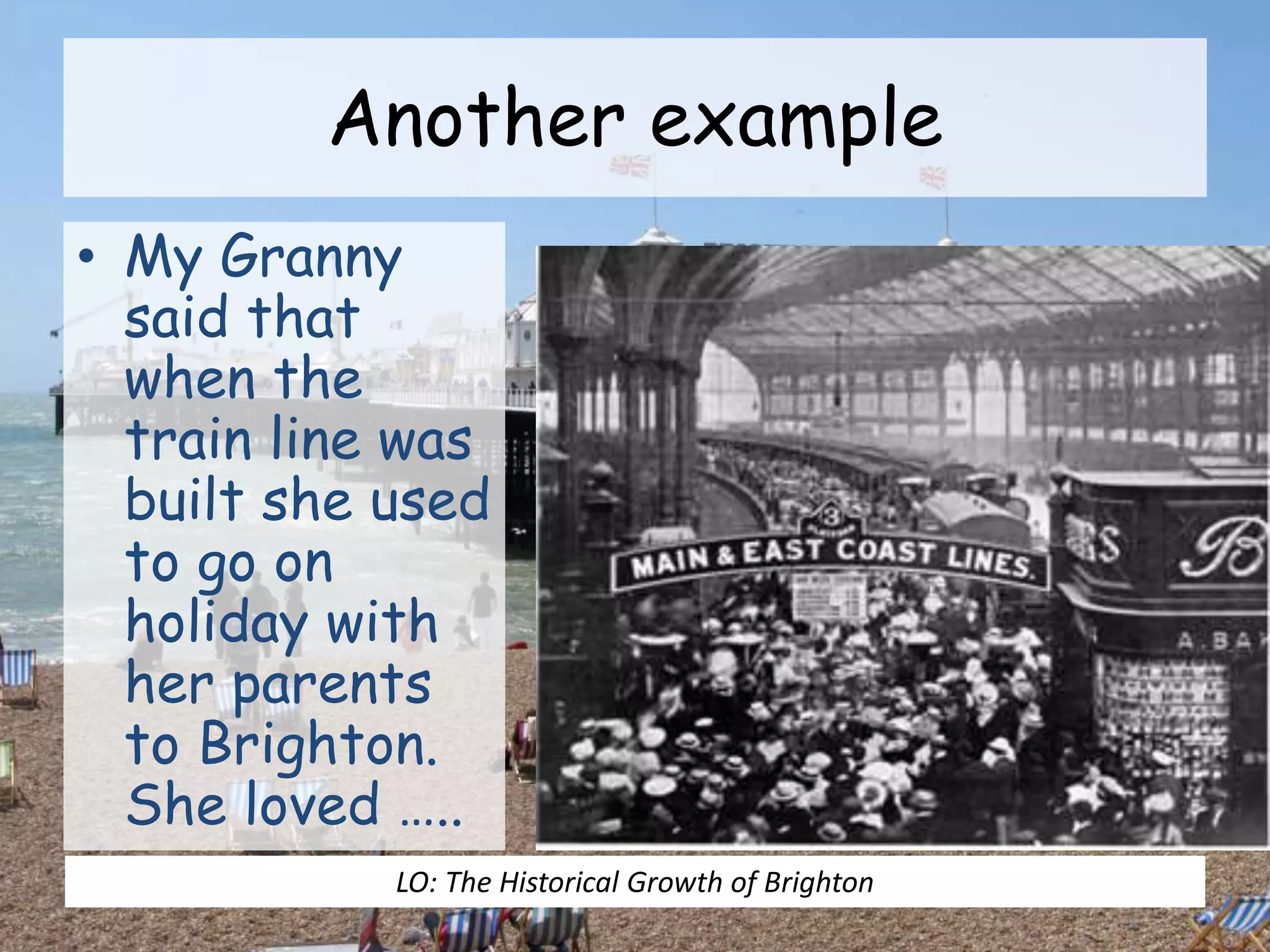
• My Granny
said that
when the
train line was
built she used
to go on
holiday with
her parents
to Brighton.
She loved …..
LO: The Historical Growth of Brighton
TASK
• Imagine you have discovered an old photo
reel – it belonged to your great
grandmother. You have been asked by the
museum of Brighton to write an oral history
based on your findings, which will be
displayed in the museum alongside your
great grandmother’s photo reel.
• Include facts like the history of the town,
why it became popular, how numbers have
risen, etc.
LO: The Historical Growth of Brighton
Plenary
• Read through your work and then swap
with the person next to you.
• Swap facts…….
• Have they got a fact that you would like
to include but haven’t so far.
LO: The Historical Growth of Brighton

L2 growth of brighton ap

  • 1.
  • 2.
    Location • Brighton islocated on the South Coast of England, directly south of London. It is in the county of Sussex. • Mark it on your map LO: The Historical Growth of Brighton
  • 4.
    Key dates inBrighton’s History • 1086 - Mentioned in the Doomsday Book under title of Bristelmestune. • 1520 – First painting of Brighton. • 1650 – thriving mackerel fishing industry in Brighton. • 1730 – Doctors promoted the health benefits of swimming and dinking salt water, encouraging more and more people to visit the area. • 1780 – Resort of Brighton became more and more popular • 1787 – Brighton Pavilions built for King George IV. • 1841 – London to Brighton Railway encouraged day trippers to visit. LO: The Historical Growth of Brighton
  • 5.
  • 6.
    Some historical paintingsfrom Brighton ...
  • 7.
    The old fishmarket 1825
  • 9.
  • 10.
  • 12.
    Brighton Pavilions • Theywere built by John Nash in 1787 for King George IV. • George who was a vain and extravagant man with a passion for fashion, the arts, architecture and good living was reflected in the building. • More on its history here from 1.57 to 6.00
  • 13.
  • 14.
    • Today thePavilions house a museum and a concert hall.
  • 15.
    Development of tourismin Brighton • Tourism has been growing since • Brighton has two piers. The Palace Pier being built in 1891 and the West Pier was completed in 1866. • West Pier closed in 1975 due to rising costs of maintenance. LO: The Historical Growth of Brighton
  • 16.
    Brighton Today • Watchthis video to see why tourism in Brighton is so important. Make notes as you watch. LO: The Historical Growth of Brighton
  • 17.
    TASK • Imagine youhave discovered an old photo reel – it belonged to your great grandmother. You have been asked by the museum of Brighton to write an oral history based on your findings, which will be displayed in the museum alongside your great grandmother’s photo reel. • Include facts like the history of the town, why it became popular, how numbers have risen, etc. LO: The Historical Growth of Brighton
  • 18.
    Here is anexample … • This is a photo from my Grannies (………… …………..) flat. She wrote on the back of it ……… ……………….
  • 19.
    Here is anotherexample • Her is my Granny and Grandpa sitting on Brighton pier. They …………………………… • The Pier hasn’t always been like that … LO: The Historical Growth of Brighton
  • 20.
    Another example • MyGranny said that when the train line was built she used to go on holiday with her parents to Brighton. She loved ….. LO: The Historical Growth of Brighton
  • 21.
    TASK • Imagine youhave discovered an old photo reel – it belonged to your great grandmother. You have been asked by the museum of Brighton to write an oral history based on your findings, which will be displayed in the museum alongside your great grandmother’s photo reel. • Include facts like the history of the town, why it became popular, how numbers have risen, etc. LO: The Historical Growth of Brighton
  • 22.
    Plenary • Read throughyour work and then swap with the person next to you. • Swap facts……. • Have they got a fact that you would like to include but haven’t so far. LO: The Historical Growth of Brighton