Pharmacology of the GIT system
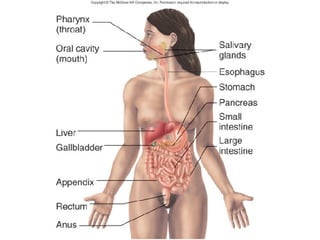
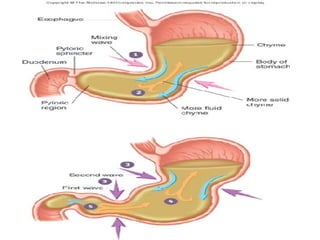
LECTURE Outline REVIEW the Anatomy of the GIT REVIEW the Physiology of the GIT Review common GI drugs in the following categories: 1. Drugs affecting GI secretions 2. Laxatives 3. Anti-diarrheals 4. Emetics and anti-emetics
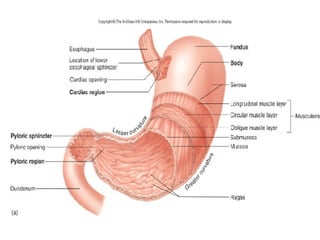
Fig. 16.1
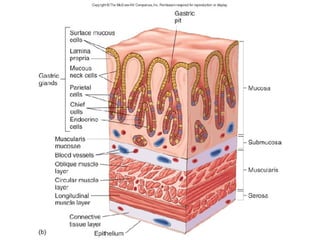
Fig. 16.10a
Fig. 16.10b
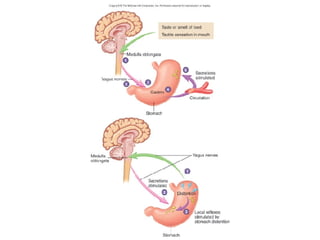
Fig. 16.11a
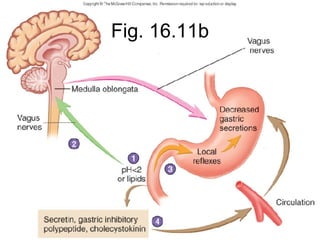
Fig. 16.11b
Fig. 16.12
Drugs affecting GI secretions There are five types of drugs that affect gastric acid secretions and are useful for the treatment of peptic ulcer. Histamine (H2) receptor antagonist/blockers Antacids Proton pump inhibitors Mucosal protectants Prostaglandin analogs
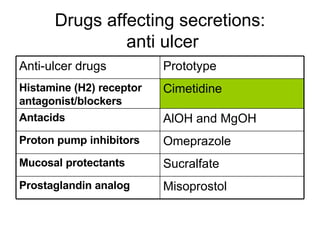
Drugs affecting secretions:  anti ulcer Misoprostol Prostaglandin analog Sucralfate Mucosal protectants Omeprazole Proton pump inhibitors AlOH and MgOH Antacids Cimetidine Histamine (H2) receptor antagonist/blockers Prototype Anti-ulcer drugs
General indication of the drugs affecting gastric acid secretion Peptic ulcer Gastritis Patient on NPO to prevent stress ulcer
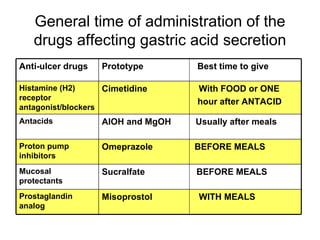
General time of administration of the drugs affecting gastric acid secretion Misoprostol  WITH MEALS Prostaglandin analog Sucralfate  BEFORE MEALS Mucosal protectants Omeprazole  BEFORE MEALS Proton pump inhibitors AlOH and MgOH  Usually after meals Antacids Cimetidine  With FOOD or ONE  hour after ANTACID  Histamine (H2) receptor antagonist/blockers Prototype  Best time to give Anti-ulcer drugs
Pharmacodynamics Histamine (H2) receptor blockers These drugs BLOCK the release of hydrochloric acid in the stomach in response to gastrin
Drugs affecting GI secretions Antacids These drugs interact with the gastric acids at the chemical level to neutralize them
Drugs affecting GI secretions Proton pump inhibitors These drugs suppress the secretion of hydrochloric acid into the lumen of the stomach
Drugs affecting GI secretions Mucosal protectants These are agents that coat any injured area in the stomach to prevent further injury from acid
Drugs affecting GI secretions Prostaglandin analogs These are agents that  inhibit  the secretion of gastrin and  increase   the secretion of mucus lining of the stomach, providing a buffer.
Histamine 2 receptor blockers
The H2 Blockers-  “tidines” Prototype: Cimetidine 1. Ranitidine 2. Famotidine 3. Nizatidine
The H2 Blockers- “tidines” Pharmacodynamics: Drug Action The H2 blockers are antagonists at the receptors in the parietal cells of the stomach.  The blockage results to inhibition of the hormone gastrin.  There will be decreased production of gastric acid from the parietal cells. Also, the chief cells will secrete less pepsinogen.
The H2 Blockers- “tidines” Therapeutic use of the H2 blockers Short-term treatment of active duodenal ulcer or benign gastric ulcer Treatment of hypersecretory conditions like the Zollinger-Ellison syndrome Prevention of stress-induced ulcers and acute GI bleeding Treatment of erosive GERD (reflux disease) Relief of Symptoms of heart burn and  acid indigestion
The H2 Blockers- “tidines” Precautions and Contraindications Any known allergy is a clear contraindication to the use of the agents.  Conditions such as pregnancy, lactation, renal dysfunction and hepatic dysfunction should warrant cautious use.  Nizatidine  can be used in hepatic dysfunction.
The H2 Blockers- “tidines” Dynamics- Side effects/adverse effects GIT= diarrhea or constipation CNS= Dizziness, headache, drowsiness,  confusion  and hallucinations Cardio= arrhythmias,  HYPOTENSION  (related to H2 receptor blockage in the heart) Cimetidine=  Gynecomastia and impotence in males
The H2 Blockers- “tidines” Drug-drug Interactions Cimetidine, Famotidine, Ranitidine are metabolized in the liver-  they can cause slowing of excretion of other drugs leading to their increased concentration .
The H2 Blockers- “tidines” Drug-drug Interactions These drugs can interact with CIMETIDINE   Anticoagulants Phenytoin, Alcohol Antidepressants.
The H2 Blockers- “tidines” Nursing considerations: Administer the drug  WITH  meals at  BEDTIME  to ensure therapeutic level One hour after Antacids Stress the importance of the continued use for the length of time prescribed
The H2 Blockers- “tidines” Nursing considerations Monitor the cardiovascular status especially if the drugs are given IV Warn patient of the potential problems of increased drug concentration if the H2 blockers are used with other drugs or OTC drugs. Advise consultation first!
The H2 Blockers- “tidines” Nursing considerations: Provide comfort measures like analgesics for headache, assistance with ambulation and safety measures because of confusion  Warn the patients taking cimetidine that drowsiness may pose a hazard if driving or operating delicate machines.
The H2 Blockers- “tidines” Nursing considerations: Provide health teaching as to the dose, frequency, comfort measures to initiate when side-effects are intolerable Evaluate the effectiveness Relief of symptoms of ulcer, heart burn and GERD
Antacids
The Antacids These are drugs or inorganic chemicals that have been used for years to neutralize acid in the stomach
The Antacids The following are the common antacids that can be bought OTC: Aluminum salts (hydroxide) Calcium salts (carbonate) Magnesium salts (milk of magnesia) Sodium bicarbonate Magaldrate (aluminum and magnesium combination)
The Antacids Pharmacodynamics: drug action These agents act to neutralize the acidic pH in the stomach.  They do not affect the rate of gastric acid secretion.
The Antacids Pharmacodynamics: drug action The administration of antacid may cause an acid rebound.  Neutralizing the stomach content to an alkaline level stimulates gastrin production to cause an increase in acid production and return the stomach to its normal acidic state.
The Antacids Therapeutic Indications Symptomatic relief of upset stomach associated with hyperacidity  Hyperacidic conditions like peptic ulcer, gastritis, esophagitis and hiatal hernia Special use of AMPHOGEL (aluminum hydroxide): to BIND phosphate
The Antacids Precautions of Antacid Use Known allergy is a clear contraindication Caution should be instituted if used in electrolyte imbalances, GI obstruction and renal dysfunction.  Sodium bicarbonate is rarely used because of potential systemic absorption    metabolic alkalosis!!!
The Antacids Pharmacokinetics These agents are taken orally and act locally in the stomach
The Antacids Pharmacodynamics: Effects of drugs GIT= rebound acidity; alkalosis may occur. Calcium salts may lead to  hypercalcemia   Magnesium salts can cause  DIARRHEA Aluminum salts may cause  CONSTIPATION  and  Hypophosphatemia   by binding with phosphates in the GIT. 2.  Fluid retention  due to the high sodium content of the antacids.
The Antacids Nursing Considerations: Administer the antacids apart from any other medications by  ONE hour before  or  TWO hours after-  to ensure adequate absorption of the other medications Tell the patient to  CHEW  the tablet thoroughly before swallowing.  Follow it with one glass of water Regularly monitor for manifestations of acid-base imbalances as well as electrolyte imbalances
The Antacids Nursing Considerations: Provide comfort measures to alleviate constipation associated with aluminum and diarrhea associated with magnesium salts.  Monitor for the side-effects, effectiveness of the comfort measures, patient’s response to the medication and the effectiveness of the health teachings
The Antacids Nursing Considerations  Evaluate for effectiveness: Decreased symptoms of ulcer and pyrosis Decreased Phosphate level (Amphogel) in patients with chronic renal failure
proton-pump inhibitors
The PPI These are the newer agents for ulcer treatment  The “prazoles” Prototype: Ome prazole Laniso prazole Esome prazole Panto prazole
The PPI Pharmacodynamics: drug action They act at specific secretory surface receptors to prevent the final step of acid production and thus decrease the level of acid in the stomach. The “pump” in the parietal cell is the  H-K  ATPase enzyme system on the secretory surface of the gastric parietal cells
The PPI Clinical use of the PPIs Short-term treatment of active duodenal ulcers, GERD, erosive esophagitis and benign gastric ulcer Long-term- maintenance therapy for healing of erosive disorders.
The PPI Precautions with the use of the PPIs Known allergy is a clear contraindication Caution if patient is pregnant
The PPI Pharmacodynamics: Adverse effects CNS-  dizziness , headache, asthenia (loss of strength),  vertigo , insomnia, apathy GIT-  diarrhea, abdominal pain, nausea, vomiting, dry mouth  and tongue atrophy Respi- cough, stuffy nose, hoarseness and epistaxis.
The PPI Nursing considerations: Administer the drug  BEFORE  meals. Ensure that patient does not open, chew or crush the drug.  Provide safety measures if CNS dysfunction happens.  Arrange for a medical follow-up if symptoms are NOT resolved after 4-8 weeks of therapy.
The PPI Nursing considerations:  Provide health teaching as to drug name, dosages and frequency, safety measures to handle common problems.  Monitor patient response to the drug, the effectiveness of the  teaching plan and the measures to employ
The PPI Nursing considerations:  Evaluate for effectiveness of the drug Healing of peptic ulcer Decreased symptoms of ulcer
Mucosal protectants
The Mucosal Protectant Sucralfate (Caralfate/ Iselpin) This is given to protect the eroded ulcer sites in the GIT from further damage by acid and digestive enzymes
Sucralfate Pharmacodynamics: Action of drug It forms an  ulcer-adherent complex  at duodenal ulcer sites, protecting the sites against acid, pepsin and bile.  This action prevents further breakdown of proteins in the area and promotes healing.
Sucralfate Clinical use of sucralfate Short and long term management of duodenal ulcer. NSAIDs induced gastritis  Prevention of stress ulcer Treatment of oral and esophageal ulcers due to radiation, chemotherapy or sclerotherapy.
Sucralfate Precautions on the use of Sucralfate This agent should NOT be given to any person with known allergy to the drug, and to those patients with renal failure/dialysis because of build-up of aluminum may occur if used with aluminum containing products.
The Mucosal Protectant Pharmacodynamics: Side-effects & adverse reactions Primarily GIT= CONSTIPATION, occasionally diarrhea, nausea, indigestion, gastric discomfort, and dry mouth may also occur CNS= dizziness, drowsiness, vertigo Others= rash and back pain
The Mucosal Protectant Drug-drug interactions If used with aluminum salts= high risk of accumulation of aluminum and toxicity . If used with phenytoin, fluoroquinolones and penicillamines- decreased levels of these drugs when taken with sucralfate
The Mucosal Protectant Nursing Considerations Administer drug  ON AN EMPTY stomach ,  1 hour before meals , or 2 hour after meals and at BEDTIME Monitor for side-effects like constipation and GI upset Encourage intake of high-fiber foods and increased fluid intake Administer antacids  BETWEEN  doses of sucralfate,  NOT WITHIN 30  minutes of sucralfate dose
The Mucosal Protectant Nursing Considerations Provide comfort measures if CNS effects occur Provide health teaching as to drug name, dosages and frequency, safety measures to handle common problems.  Monitor patient response to the drug, the effectiveness of the  teaching plan and the measures employed
The Mucosal Protectant Nursing Considerations Evaluate effectiveness of therapy Healing of ulcer No formation of ulcer
Prostaglandin analogue
Prostaglandin analogue Misoprostol This agent is a synthetic prostaglandin E1 analog that is employed to protect the lining of the mucosa of the stomach
Prostaglandin analogue Misoprostol: Pharmacodynamics Being a prostaglandin analog, it  inhibits  gastric acid secretion to some degree It  INCREASES mucus  production in the stomach lining.
Prostaglandin analogue Misoprostol: Clinical use NSAIDs-induced gastric ulcers  Duodenal ulcers unresponsive to H2 antagonists
Prostaglandin analogue Precautions of Misoprostol Use This drug is CONTRAINDICATED during pregnancy because it is an  abortifacient. Women should be advised to have a  negative pregnancy test within 2 weeks of beginning therapy and should begin the drug on the second or third day of the next menstrual cycle. They should be instructed in the use of contraceptives during therapy.
Prostaglandin analogue Pharmacodynamic effects: drug reactions GIT= Nausea, diarrhea, abdominal pain, flatulence, vomiting, dyspepsia  GU effects= miscarriages,  excessive uterine CRAMPING and bleeding ,  spotting, hyper-menorrhea and menstrual disorders.
Prostaglandin analogue Nursing Considerations Administer to patients at risk for NSAIDs-induced ulcers during the full course of NSAIDs therapy Administer four times daily with meals and at bedtime Obtain pregnancy test within 2 weeks of beginning therapy.  Begin the therapy on second or third day of menstrual period  to ensure that the woman is not pregnant
Prostaglandin analogue Nursing Considerations Provide patient with both written and oral information regarding the associated risks of pregnancy Provide health teaching as to drug name, dosages and frequency, safety measures to handle common problems.  Monitor patient response to the drug, the effectiveness of the  teaching plan and the measures to employ
laxatives
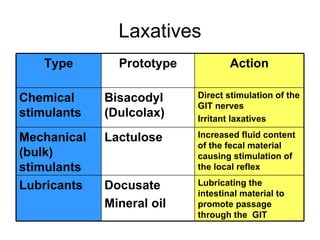
Laxatives Generally used to INCREASE the passage of the colonic contents The general classifications is as follows: 1. Chemical stimulants- irritants 2. Mechanical stimulants- hyperosmotic agents and saline cathartics 3. Lubricants and stool softeners
Laxatives They promote bowel evacuation for various purposes They are classified into their mode of action
Laxatives Lubricating the intestinal material to promote passage through the  GIT Docusate Mineral oil  Lubricants Increased fluid content of the fecal material causing stimulation of the local reflex Lactulose Mechanical (bulk) stimulants Direct stimulation of the GIT nerves  Irritant laxatives Bisacodyl (Dulcolax) Chemical stimulants Action Prototype Type
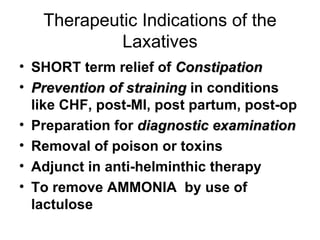
Therapeutic Indications of the Laxatives SHORT term relief of  Constipation Prevention of straining  in conditions like CHF, post-MI, post partum, post-op Preparation for  diagnostic examination Removal of poison or toxins Adjunct in anti-helminthic therapy To remove AMMONIA  by use of lactulose
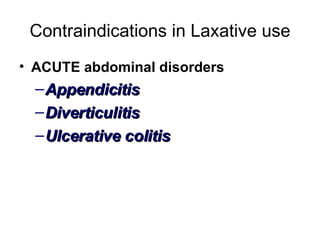
Contraindications in Laxative use ACUTE abdominal disorders Appendicitis Diverticulitis Ulcerative colitis
Chemical Stimulant Cathartics Prototype: Bisacodyl Irritant laxatives: 1. Castor oil 2. Senna 3. Cascara 4. Phenolphthalein
Chemical Stimulant Cathartics Pharmacodynamics These agents DIRECTLY stimulate the nerve plexus in the intestinal wall The result is INCREASED movement or motility of the colon
Mechanical Stimulant Cathartics Prototype: LACTULOSE (Cephulac) Bulk-forming laxatives 1. Magnesium ( citrate , hydroxide, sulfate)- saline cathatic 2. Psyllium 3. Polycarbophil
Mechanical Stimulant Cathartics Pharmacodynamics These agents are rapid-acting laxatives that INCREASE the GI motility by Increasing the fluids in the colonic material Stimulating the local stretch receptors Activating  local defection reflex
Lubricants-Stool softener Prototype: Docusate 1. Glycerin 2. Mineral oil
Lubricants-stool softeners Pharmacodynamics Docusate increases the admixture of fat and water producing a softer stool Glycerin and Mineral oil form  a slippery coat on the colonic contents
Pharmacokinetics:  Common Side-effects of the Laxatives Diarrhea Abdominal cramping Nausea Fluid and electrolyte imbalance Sympathetic reactions- sweating, palpitations, flushing and fainting CATHARTIC dependence
The Nursing Process and Laxative ASSESSMENT Nursing History- elicit allergy to any laxatives, elicit history of conditions like diverticulitis and ulcerative colitis Physical Examination- abdominal assessment Laboratory Test: fecalysis, electrolyte levels
The Nursing Process and Laxative NURSING DIAGNOSIS Alteration in bowel pattern Alteration in comfort: pain Knowledge deficit
The Nursing Process and Laxative IMPLEMENTATION Emphasize that it is use on a  SHORT term basis Provide comfort and safety measures like ready access to the bathroom, side-rails  Administer with a  full glass of water
The Nursing Process and Laxative IMPLEMENTATION 4.  Encourage fluid intake, high fiber diet and daily exercise 5. DO NOT administer if acute abdominal condition like appendicitis is present 6. Advise to change position slowly and avoid hazardous activities because of potential dizziness
The Nursing Process and Laxative IMPLEMENTATION 7. Record intake and output to assess fluid alteration 8. If possible, observe the character of stools 9. Caution the patient that chronic use may promote dependence and use during pregnancy may cause uterine cramping and Vitamin deficiency
The Nursing Process and Laxative EVALUATION of drug effectiveness Evaluate relief of GI symptoms, absence of staining and increased evacuation of GI tract For Lactulose:  decreased ammonia Nomal bowel fucntion is restored
The Anti-diarrheals These are agents used to calm the irritation of the GIT for the symptomatic relief of diarrhea General Classifications 1. Local anti-motility 2. Local reflex inhibition 3. Central action on the CNS
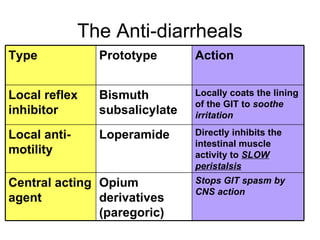
The Anti-diarrheals Stops GIT spasm by CNS action Opium derivatives (paregoric) Central acting agent Directly inhibits the intestinal muscle activity to  SLOW peristalsis Loperamide Local anti-motility Locally coats the lining of the GIT to  soothe irritation Bismuth subsalicylate Local reflex inhibitor Action Prototype Type
Clinical Indications of drug use Relief of symptoms of acute and chronic diarrhea Reduction of fecal volume discharges from ileostomies  Prevention and treatment of traveler's diarrhea
Contraindications of anti-diarrheal Use Poisoning Drug allergy GI obstruction Acute abdominal conditions
Pharmacokinetics: Side effects Constipation Nausea, vomiting Abdominal distention and discomfort  TOXIC MEGACOLON
Nursing process and anti-diarrheals ASSESSMENT Nursing History – Elicit history of drug allergy, conditions like poisoning, GI obstruction and acute abdominal conditions Physical Examination- Abdominal examination Laboratory test- electrolyte levels
Nursing process and anti-diarrheals NURSING DIAGNOSIS Alteration in bowel pattern Alteration in comfort: pain
Nursing process and anti-diarrheals IMPLEMENTATION Monitor patient response within 48 hours. Discontinue drug use if no effect Provide comfort measures for pain Provide teaching regarding its short term use only
Nursing process and anti-diarrheals EVALUATION Monitor effectiveness of drug-  RELIEF of diarrhea Monitor adverse effects, effectiveness of pain measures and effectiveness of teaching plan
Emetic and anti-emetics
Emetics and Anti-emetics Emetic Agent Syrup of Ipecac Anti-emetics 1. Phenothiazines 2. Non-phenothiazines 3. Anticholinergics/Antihistamines 4. Serotonin receptor Blockers 5. Miscellaneous
EMETIC Prototype: Ipecac Syrup
EMETIC Pharmacodynamics Ipecac syrup irritates the GI mucosa locally, resulting to stimulation of the vomiting center It acts within 20 minutes
EMETIC Clinical Use of ipecac To induce vomiting as a treatment for drug overdose and certain poisonings
EMETIC Contraindications of Ipecac use Ingestion of CORROSIVE chemicals Ingestion of petroleum products Unconscious and convulsing patient
EMETIC Pharmacokinetics: side effects of Ipecac Nausea Diarrhea GI upset Mild CNS depression CARDIOTOXICITY if large amounts are absorbed in the body
Nursing process and the EMETIC ASSESSMENT Nursing History- elicit the exact nature of poisoning  Physical Examination- CNS status and abdominal exam
Nursing process and the EMETIC IMPLEMENTATION Administer to  conscious patient only Administer ipecac  as soon as possible Administer with a  large amount of water Vomiting should occur within 20 minutes of the first dose .  Repeat the dose and expect vomiting to occur with 20 minutes
Nursing process and the EMETIC IMPLEMENTATION 5. Provide comfort measures like ready access to bathroom, assistance with ambulation 6. Offer support
Nursing process and the EMETIC EVALUATION Evaluate patient response within 20 minutes of drug ingestion Monitor for adverse effects Evaluate effectiveness of comfort measures and teaching plan
Anti-Emetics
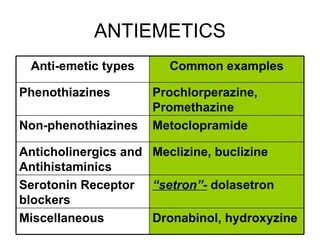
ANTI-EMETICS These are agents used to manage nausea and vomiting They act either locally or centrally In general, they may inhibit the chemoreceptor trigger zone in the medulla by blocking DOPAMINE receptor Others act by decreasing the sensitivity of the vestibular apparatus
ANTIEMETICS Dronabinol, hydroxyzine Miscellaneous “ setron”-  dolasetron Serotonin Receptor blockers Meclizine, buclizine Anticholinergics and Antihistaminics Metoclopramide Non-phenothiazines Prochlorperazine, Promethazine Phenothiazines Common examples Anti-emetic types
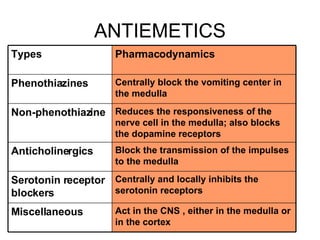
ANTIEMETICS Act in the CNS , either in the medulla or in the cortex Miscellaneous Centrally and locally inhibits the serotonin receptors Serotonin receptor blockers Block the transmission of the impulses to the medulla Anticholinergics Reduces the responsiveness of the nerve cell in the medulla; also blocks the dopamine receptors Non-phenothiazine Centrally block the vomiting center in the medulla  Phenothiazines Pharmacodynamics Types
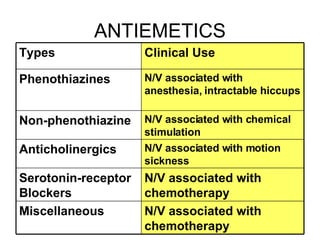
ANTIEMETICS N/V associated with chemotherapy Miscellaneous  N/V associated with chemotherapy Serotonin-receptor Blockers N/V associated with motion sickness Anticholinergics N/V associated with chemical stimulation Non-phenothiazine N/V associated with anesthesia, intractable hiccups Phenothiazines Clinical Use Types
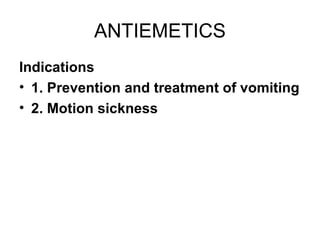
ANTIEMETICS Indications 1. Prevention and treatment of vomiting 2. Motion sickness
ANTIEMETICS Contraindications 1. Severe CNS depression 2. Severe liver dysfunction
ANTIEMETICS Pharmacokinetics: Oral absorption is good if vomiting is not present IV drugs can be given if vomiting is active Most drugs are metabolized in the liver excreted in the kidneys
ANTIEMETICS Pharmacokinetics: Side-effects 1.  PHOTHOSENSITIVITY 2.  Drowsiness, dizziness, weakness and tremors and DEHYDRATON 3.  Phenothiazines = autonomic  anti-cholinergic effects  like dry mouth, nasal congestion and urinary retention Metoclopramide= EPS due to dopamine receptor blockage
Nursing Process and the ANTIEMETICS ASSESSMENT Nursing History- elicit allergy, impaired hepatic function and CNS depression Physical Examination- CNS status and abdominal examination Laboratory test- Liver function studies
Nursing Process and the ANTIEMETICS NURSING DIAGNOSIS Alteration in comfort: pain High risk for injury Knowledge deficit
Nursing Process and the ANTIEMETICS IMPLEMENTATION Assess patient’s intake of other drugs that may cause dangerous drug interaction Emphasize that this is given on a short term basis
Nursing Process and the ANTIEMETICS IMPLEMENTATION 3.  Provide comfort and safety measures Advise to change position slowly Avoid hazardous activities Provide mouth care and ice chips Monitor for dehydration and offer fluids if it occurs
Nursing Process and the ANTIEMETICS IMPLEMENTATION 4. Protect from sun exposure Sunscreens  Protective covering 5. Provide health teaching
Nursing Process and the ANTIEMETICS EVALUATION 1.  Monitor for the drug effectiveness Relief of nausea and vomiting 2. Monitor for adverse effects 3. Evaluate effectiveness of comfort measures and teaching plan
End

NurseReview.Org - Pharmacology Git Drugs

  • 1.
  • 2.
    LECTURE Outline REVIEWthe Anatomy of the GIT REVIEW the Physiology of the GIT Review common GI drugs in the following categories: 1. Drugs affecting GI secretions 2. Laxatives 3. Anti-diarrheals 4. Emetics and anti-emetics
  • 3.
  • 4.
  • 5.
  • 6.
  • 7.
  • 8.
  • 9.
    Drugs affecting GIsecretions There are five types of drugs that affect gastric acid secretions and are useful for the treatment of peptic ulcer. Histamine (H2) receptor antagonist/blockers Antacids Proton pump inhibitors Mucosal protectants Prostaglandin analogs
  • 10.
    Drugs affecting secretions: anti ulcer Misoprostol Prostaglandin analog Sucralfate Mucosal protectants Omeprazole Proton pump inhibitors AlOH and MgOH Antacids Cimetidine Histamine (H2) receptor antagonist/blockers Prototype Anti-ulcer drugs
  • 11.
    General indication ofthe drugs affecting gastric acid secretion Peptic ulcer Gastritis Patient on NPO to prevent stress ulcer
  • 12.
    General time ofadministration of the drugs affecting gastric acid secretion Misoprostol WITH MEALS Prostaglandin analog Sucralfate BEFORE MEALS Mucosal protectants Omeprazole BEFORE MEALS Proton pump inhibitors AlOH and MgOH Usually after meals Antacids Cimetidine With FOOD or ONE hour after ANTACID Histamine (H2) receptor antagonist/blockers Prototype Best time to give Anti-ulcer drugs
  • 13.
    Pharmacodynamics Histamine (H2)receptor blockers These drugs BLOCK the release of hydrochloric acid in the stomach in response to gastrin
  • 14.
    Drugs affecting GIsecretions Antacids These drugs interact with the gastric acids at the chemical level to neutralize them
  • 15.
    Drugs affecting GIsecretions Proton pump inhibitors These drugs suppress the secretion of hydrochloric acid into the lumen of the stomach
  • 16.
    Drugs affecting GIsecretions Mucosal protectants These are agents that coat any injured area in the stomach to prevent further injury from acid
  • 17.
    Drugs affecting GIsecretions Prostaglandin analogs These are agents that inhibit the secretion of gastrin and increase the secretion of mucus lining of the stomach, providing a buffer.
  • 18.
  • 19.
    The H2 Blockers- “tidines” Prototype: Cimetidine 1. Ranitidine 2. Famotidine 3. Nizatidine
  • 20.
    The H2 Blockers-“tidines” Pharmacodynamics: Drug Action The H2 blockers are antagonists at the receptors in the parietal cells of the stomach. The blockage results to inhibition of the hormone gastrin. There will be decreased production of gastric acid from the parietal cells. Also, the chief cells will secrete less pepsinogen.
  • 21.
    The H2 Blockers-“tidines” Therapeutic use of the H2 blockers Short-term treatment of active duodenal ulcer or benign gastric ulcer Treatment of hypersecretory conditions like the Zollinger-Ellison syndrome Prevention of stress-induced ulcers and acute GI bleeding Treatment of erosive GERD (reflux disease) Relief of Symptoms of heart burn and acid indigestion
  • 22.
    The H2 Blockers-“tidines” Precautions and Contraindications Any known allergy is a clear contraindication to the use of the agents. Conditions such as pregnancy, lactation, renal dysfunction and hepatic dysfunction should warrant cautious use. Nizatidine can be used in hepatic dysfunction.
  • 23.
    The H2 Blockers-“tidines” Dynamics- Side effects/adverse effects GIT= diarrhea or constipation CNS= Dizziness, headache, drowsiness, confusion and hallucinations Cardio= arrhythmias, HYPOTENSION (related to H2 receptor blockage in the heart) Cimetidine= Gynecomastia and impotence in males
  • 24.
    The H2 Blockers-“tidines” Drug-drug Interactions Cimetidine, Famotidine, Ranitidine are metabolized in the liver- they can cause slowing of excretion of other drugs leading to their increased concentration .
  • 25.
    The H2 Blockers-“tidines” Drug-drug Interactions These drugs can interact with CIMETIDINE Anticoagulants Phenytoin, Alcohol Antidepressants.
  • 26.
    The H2 Blockers-“tidines” Nursing considerations: Administer the drug WITH meals at BEDTIME to ensure therapeutic level One hour after Antacids Stress the importance of the continued use for the length of time prescribed
  • 27.
    The H2 Blockers-“tidines” Nursing considerations Monitor the cardiovascular status especially if the drugs are given IV Warn patient of the potential problems of increased drug concentration if the H2 blockers are used with other drugs or OTC drugs. Advise consultation first!
  • 28.
    The H2 Blockers-“tidines” Nursing considerations: Provide comfort measures like analgesics for headache, assistance with ambulation and safety measures because of confusion Warn the patients taking cimetidine that drowsiness may pose a hazard if driving or operating delicate machines.
  • 29.
    The H2 Blockers-“tidines” Nursing considerations: Provide health teaching as to the dose, frequency, comfort measures to initiate when side-effects are intolerable Evaluate the effectiveness Relief of symptoms of ulcer, heart burn and GERD
  • 30.
  • 31.
    The Antacids Theseare drugs or inorganic chemicals that have been used for years to neutralize acid in the stomach
  • 32.
    The Antacids Thefollowing are the common antacids that can be bought OTC: Aluminum salts (hydroxide) Calcium salts (carbonate) Magnesium salts (milk of magnesia) Sodium bicarbonate Magaldrate (aluminum and magnesium combination)
  • 33.
    The Antacids Pharmacodynamics:drug action These agents act to neutralize the acidic pH in the stomach. They do not affect the rate of gastric acid secretion.
  • 34.
    The Antacids Pharmacodynamics:drug action The administration of antacid may cause an acid rebound. Neutralizing the stomach content to an alkaline level stimulates gastrin production to cause an increase in acid production and return the stomach to its normal acidic state.
  • 35.
    The Antacids TherapeuticIndications Symptomatic relief of upset stomach associated with hyperacidity Hyperacidic conditions like peptic ulcer, gastritis, esophagitis and hiatal hernia Special use of AMPHOGEL (aluminum hydroxide): to BIND phosphate
  • 36.
    The Antacids Precautionsof Antacid Use Known allergy is a clear contraindication Caution should be instituted if used in electrolyte imbalances, GI obstruction and renal dysfunction. Sodium bicarbonate is rarely used because of potential systemic absorption  metabolic alkalosis!!!
  • 37.
    The Antacids PharmacokineticsThese agents are taken orally and act locally in the stomach
  • 38.
    The Antacids Pharmacodynamics:Effects of drugs GIT= rebound acidity; alkalosis may occur. Calcium salts may lead to hypercalcemia Magnesium salts can cause DIARRHEA Aluminum salts may cause CONSTIPATION and Hypophosphatemia by binding with phosphates in the GIT. 2. Fluid retention due to the high sodium content of the antacids.
  • 39.
    The Antacids NursingConsiderations: Administer the antacids apart from any other medications by ONE hour before or TWO hours after- to ensure adequate absorption of the other medications Tell the patient to CHEW the tablet thoroughly before swallowing. Follow it with one glass of water Regularly monitor for manifestations of acid-base imbalances as well as electrolyte imbalances
  • 40.
    The Antacids NursingConsiderations: Provide comfort measures to alleviate constipation associated with aluminum and diarrhea associated with magnesium salts. Monitor for the side-effects, effectiveness of the comfort measures, patient’s response to the medication and the effectiveness of the health teachings
  • 41.
    The Antacids NursingConsiderations Evaluate for effectiveness: Decreased symptoms of ulcer and pyrosis Decreased Phosphate level (Amphogel) in patients with chronic renal failure
  • 42.
  • 43.
    The PPI Theseare the newer agents for ulcer treatment The “prazoles” Prototype: Ome prazole Laniso prazole Esome prazole Panto prazole
  • 44.
    The PPI Pharmacodynamics:drug action They act at specific secretory surface receptors to prevent the final step of acid production and thus decrease the level of acid in the stomach. The “pump” in the parietal cell is the H-K ATPase enzyme system on the secretory surface of the gastric parietal cells
  • 45.
    The PPI Clinicaluse of the PPIs Short-term treatment of active duodenal ulcers, GERD, erosive esophagitis and benign gastric ulcer Long-term- maintenance therapy for healing of erosive disorders.
  • 46.
    The PPI Precautionswith the use of the PPIs Known allergy is a clear contraindication Caution if patient is pregnant
  • 47.
    The PPI Pharmacodynamics:Adverse effects CNS- dizziness , headache, asthenia (loss of strength), vertigo , insomnia, apathy GIT- diarrhea, abdominal pain, nausea, vomiting, dry mouth and tongue atrophy Respi- cough, stuffy nose, hoarseness and epistaxis.
  • 48.
    The PPI Nursingconsiderations: Administer the drug BEFORE meals. Ensure that patient does not open, chew or crush the drug. Provide safety measures if CNS dysfunction happens. Arrange for a medical follow-up if symptoms are NOT resolved after 4-8 weeks of therapy.
  • 49.
    The PPI Nursingconsiderations: Provide health teaching as to drug name, dosages and frequency, safety measures to handle common problems. Monitor patient response to the drug, the effectiveness of the teaching plan and the measures to employ
  • 50.
    The PPI Nursingconsiderations: Evaluate for effectiveness of the drug Healing of peptic ulcer Decreased symptoms of ulcer
  • 51.
  • 52.
    The Mucosal ProtectantSucralfate (Caralfate/ Iselpin) This is given to protect the eroded ulcer sites in the GIT from further damage by acid and digestive enzymes
  • 53.
    Sucralfate Pharmacodynamics: Actionof drug It forms an ulcer-adherent complex at duodenal ulcer sites, protecting the sites against acid, pepsin and bile. This action prevents further breakdown of proteins in the area and promotes healing.
  • 54.
    Sucralfate Clinical useof sucralfate Short and long term management of duodenal ulcer. NSAIDs induced gastritis Prevention of stress ulcer Treatment of oral and esophageal ulcers due to radiation, chemotherapy or sclerotherapy.
  • 55.
    Sucralfate Precautions onthe use of Sucralfate This agent should NOT be given to any person with known allergy to the drug, and to those patients with renal failure/dialysis because of build-up of aluminum may occur if used with aluminum containing products.
  • 56.
    The Mucosal ProtectantPharmacodynamics: Side-effects & adverse reactions Primarily GIT= CONSTIPATION, occasionally diarrhea, nausea, indigestion, gastric discomfort, and dry mouth may also occur CNS= dizziness, drowsiness, vertigo Others= rash and back pain
  • 57.
    The Mucosal ProtectantDrug-drug interactions If used with aluminum salts= high risk of accumulation of aluminum and toxicity . If used with phenytoin, fluoroquinolones and penicillamines- decreased levels of these drugs when taken with sucralfate
  • 58.
    The Mucosal ProtectantNursing Considerations Administer drug ON AN EMPTY stomach , 1 hour before meals , or 2 hour after meals and at BEDTIME Monitor for side-effects like constipation and GI upset Encourage intake of high-fiber foods and increased fluid intake Administer antacids BETWEEN doses of sucralfate, NOT WITHIN 30 minutes of sucralfate dose
  • 59.
    The Mucosal ProtectantNursing Considerations Provide comfort measures if CNS effects occur Provide health teaching as to drug name, dosages and frequency, safety measures to handle common problems. Monitor patient response to the drug, the effectiveness of the teaching plan and the measures employed
  • 60.
    The Mucosal ProtectantNursing Considerations Evaluate effectiveness of therapy Healing of ulcer No formation of ulcer
  • 61.
  • 62.
    Prostaglandin analogue MisoprostolThis agent is a synthetic prostaglandin E1 analog that is employed to protect the lining of the mucosa of the stomach
  • 63.
    Prostaglandin analogue Misoprostol:Pharmacodynamics Being a prostaglandin analog, it inhibits gastric acid secretion to some degree It INCREASES mucus production in the stomach lining.
  • 64.
    Prostaglandin analogue Misoprostol:Clinical use NSAIDs-induced gastric ulcers Duodenal ulcers unresponsive to H2 antagonists
  • 65.
    Prostaglandin analogue Precautionsof Misoprostol Use This drug is CONTRAINDICATED during pregnancy because it is an abortifacient. Women should be advised to have a negative pregnancy test within 2 weeks of beginning therapy and should begin the drug on the second or third day of the next menstrual cycle. They should be instructed in the use of contraceptives during therapy.

  • 66.
    Prostaglandin analogue Pharmacodynamiceffects: drug reactions GIT= Nausea, diarrhea, abdominal pain, flatulence, vomiting, dyspepsia GU effects= miscarriages, excessive uterine CRAMPING and bleeding , spotting, hyper-menorrhea and menstrual disorders.
  • 67.
    Prostaglandin analogue NursingConsiderations Administer to patients at risk for NSAIDs-induced ulcers during the full course of NSAIDs therapy Administer four times daily with meals and at bedtime Obtain pregnancy test within 2 weeks of beginning therapy. Begin the therapy on second or third day of menstrual period to ensure that the woman is not pregnant
  • 68.
    Prostaglandin analogue NursingConsiderations Provide patient with both written and oral information regarding the associated risks of pregnancy Provide health teaching as to drug name, dosages and frequency, safety measures to handle common problems. Monitor patient response to the drug, the effectiveness of the teaching plan and the measures to employ
  • 69.
  • 70.
    Laxatives Generally usedto INCREASE the passage of the colonic contents The general classifications is as follows: 1. Chemical stimulants- irritants 2. Mechanical stimulants- hyperosmotic agents and saline cathartics 3. Lubricants and stool softeners
  • 71.
    Laxatives They promotebowel evacuation for various purposes They are classified into their mode of action
  • 72.
    Laxatives Lubricating theintestinal material to promote passage through the GIT Docusate Mineral oil Lubricants Increased fluid content of the fecal material causing stimulation of the local reflex Lactulose Mechanical (bulk) stimulants Direct stimulation of the GIT nerves Irritant laxatives Bisacodyl (Dulcolax) Chemical stimulants Action Prototype Type
  • 73.
    Therapeutic Indications ofthe Laxatives SHORT term relief of Constipation Prevention of straining in conditions like CHF, post-MI, post partum, post-op Preparation for diagnostic examination Removal of poison or toxins Adjunct in anti-helminthic therapy To remove AMMONIA by use of lactulose
  • 74.
    Contraindications in Laxativeuse ACUTE abdominal disorders Appendicitis Diverticulitis Ulcerative colitis
  • 75.
    Chemical Stimulant CatharticsPrototype: Bisacodyl Irritant laxatives: 1. Castor oil 2. Senna 3. Cascara 4. Phenolphthalein
  • 76.
    Chemical Stimulant CatharticsPharmacodynamics These agents DIRECTLY stimulate the nerve plexus in the intestinal wall The result is INCREASED movement or motility of the colon
  • 77.
    Mechanical Stimulant CatharticsPrototype: LACTULOSE (Cephulac) Bulk-forming laxatives 1. Magnesium ( citrate , hydroxide, sulfate)- saline cathatic 2. Psyllium 3. Polycarbophil
  • 78.
    Mechanical Stimulant CatharticsPharmacodynamics These agents are rapid-acting laxatives that INCREASE the GI motility by Increasing the fluids in the colonic material Stimulating the local stretch receptors Activating local defection reflex
  • 79.
    Lubricants-Stool softener Prototype:Docusate 1. Glycerin 2. Mineral oil
  • 80.
    Lubricants-stool softeners PharmacodynamicsDocusate increases the admixture of fat and water producing a softer stool Glycerin and Mineral oil form a slippery coat on the colonic contents
  • 81.
    Pharmacokinetics: CommonSide-effects of the Laxatives Diarrhea Abdominal cramping Nausea Fluid and electrolyte imbalance Sympathetic reactions- sweating, palpitations, flushing and fainting CATHARTIC dependence
  • 82.
    The Nursing Processand Laxative ASSESSMENT Nursing History- elicit allergy to any laxatives, elicit history of conditions like diverticulitis and ulcerative colitis Physical Examination- abdominal assessment Laboratory Test: fecalysis, electrolyte levels
  • 83.
    The Nursing Processand Laxative NURSING DIAGNOSIS Alteration in bowel pattern Alteration in comfort: pain Knowledge deficit
  • 84.
    The Nursing Processand Laxative IMPLEMENTATION Emphasize that it is use on a SHORT term basis Provide comfort and safety measures like ready access to the bathroom, side-rails Administer with a full glass of water
  • 85.
    The Nursing Processand Laxative IMPLEMENTATION 4. Encourage fluid intake, high fiber diet and daily exercise 5. DO NOT administer if acute abdominal condition like appendicitis is present 6. Advise to change position slowly and avoid hazardous activities because of potential dizziness
  • 86.
    The Nursing Processand Laxative IMPLEMENTATION 7. Record intake and output to assess fluid alteration 8. If possible, observe the character of stools 9. Caution the patient that chronic use may promote dependence and use during pregnancy may cause uterine cramping and Vitamin deficiency
  • 87.
    The Nursing Processand Laxative EVALUATION of drug effectiveness Evaluate relief of GI symptoms, absence of staining and increased evacuation of GI tract For Lactulose: decreased ammonia Nomal bowel fucntion is restored
  • 88.
    The Anti-diarrheals Theseare agents used to calm the irritation of the GIT for the symptomatic relief of diarrhea General Classifications 1. Local anti-motility 2. Local reflex inhibition 3. Central action on the CNS
  • 89.
    The Anti-diarrheals StopsGIT spasm by CNS action Opium derivatives (paregoric) Central acting agent Directly inhibits the intestinal muscle activity to SLOW peristalsis Loperamide Local anti-motility Locally coats the lining of the GIT to soothe irritation Bismuth subsalicylate Local reflex inhibitor Action Prototype Type
  • 90.
    Clinical Indications ofdrug use Relief of symptoms of acute and chronic diarrhea Reduction of fecal volume discharges from ileostomies Prevention and treatment of traveler's diarrhea
  • 91.
    Contraindications of anti-diarrhealUse Poisoning Drug allergy GI obstruction Acute abdominal conditions
  • 92.
    Pharmacokinetics: Side effectsConstipation Nausea, vomiting Abdominal distention and discomfort TOXIC MEGACOLON
  • 93.
    Nursing process andanti-diarrheals ASSESSMENT Nursing History – Elicit history of drug allergy, conditions like poisoning, GI obstruction and acute abdominal conditions Physical Examination- Abdominal examination Laboratory test- electrolyte levels
  • 94.
    Nursing process andanti-diarrheals NURSING DIAGNOSIS Alteration in bowel pattern Alteration in comfort: pain
  • 95.
    Nursing process andanti-diarrheals IMPLEMENTATION Monitor patient response within 48 hours. Discontinue drug use if no effect Provide comfort measures for pain Provide teaching regarding its short term use only
  • 96.
    Nursing process andanti-diarrheals EVALUATION Monitor effectiveness of drug- RELIEF of diarrhea Monitor adverse effects, effectiveness of pain measures and effectiveness of teaching plan
  • 97.
  • 98.
    Emetics and Anti-emeticsEmetic Agent Syrup of Ipecac Anti-emetics 1. Phenothiazines 2. Non-phenothiazines 3. Anticholinergics/Antihistamines 4. Serotonin receptor Blockers 5. Miscellaneous
  • 99.
  • 100.
    EMETIC Pharmacodynamics Ipecacsyrup irritates the GI mucosa locally, resulting to stimulation of the vomiting center It acts within 20 minutes
  • 101.
    EMETIC Clinical Useof ipecac To induce vomiting as a treatment for drug overdose and certain poisonings
  • 102.
    EMETIC Contraindications ofIpecac use Ingestion of CORROSIVE chemicals Ingestion of petroleum products Unconscious and convulsing patient
  • 103.
    EMETIC Pharmacokinetics: sideeffects of Ipecac Nausea Diarrhea GI upset Mild CNS depression CARDIOTOXICITY if large amounts are absorbed in the body
  • 104.
    Nursing process andthe EMETIC ASSESSMENT Nursing History- elicit the exact nature of poisoning Physical Examination- CNS status and abdominal exam
  • 105.
    Nursing process andthe EMETIC IMPLEMENTATION Administer to conscious patient only Administer ipecac as soon as possible Administer with a large amount of water Vomiting should occur within 20 minutes of the first dose . Repeat the dose and expect vomiting to occur with 20 minutes
  • 106.
    Nursing process andthe EMETIC IMPLEMENTATION 5. Provide comfort measures like ready access to bathroom, assistance with ambulation 6. Offer support
  • 107.
    Nursing process andthe EMETIC EVALUATION Evaluate patient response within 20 minutes of drug ingestion Monitor for adverse effects Evaluate effectiveness of comfort measures and teaching plan
  • 108.
  • 109.
    ANTI-EMETICS These areagents used to manage nausea and vomiting They act either locally or centrally In general, they may inhibit the chemoreceptor trigger zone in the medulla by blocking DOPAMINE receptor Others act by decreasing the sensitivity of the vestibular apparatus
  • 110.
    ANTIEMETICS Dronabinol, hydroxyzineMiscellaneous “ setron”- dolasetron Serotonin Receptor blockers Meclizine, buclizine Anticholinergics and Antihistaminics Metoclopramide Non-phenothiazines Prochlorperazine, Promethazine Phenothiazines Common examples Anti-emetic types
  • 111.
    ANTIEMETICS Act inthe CNS , either in the medulla or in the cortex Miscellaneous Centrally and locally inhibits the serotonin receptors Serotonin receptor blockers Block the transmission of the impulses to the medulla Anticholinergics Reduces the responsiveness of the nerve cell in the medulla; also blocks the dopamine receptors Non-phenothiazine Centrally block the vomiting center in the medulla Phenothiazines Pharmacodynamics Types
  • 112.
    ANTIEMETICS N/V associatedwith chemotherapy Miscellaneous N/V associated with chemotherapy Serotonin-receptor Blockers N/V associated with motion sickness Anticholinergics N/V associated with chemical stimulation Non-phenothiazine N/V associated with anesthesia, intractable hiccups Phenothiazines Clinical Use Types
  • 113.
    ANTIEMETICS Indications 1.Prevention and treatment of vomiting 2. Motion sickness
  • 114.
    ANTIEMETICS Contraindications 1.Severe CNS depression 2. Severe liver dysfunction
  • 115.
    ANTIEMETICS Pharmacokinetics: Oralabsorption is good if vomiting is not present IV drugs can be given if vomiting is active Most drugs are metabolized in the liver excreted in the kidneys
  • 116.
    ANTIEMETICS Pharmacokinetics: Side-effects1. PHOTHOSENSITIVITY 2. Drowsiness, dizziness, weakness and tremors and DEHYDRATON 3. Phenothiazines = autonomic anti-cholinergic effects like dry mouth, nasal congestion and urinary retention Metoclopramide= EPS due to dopamine receptor blockage
  • 117.
    Nursing Process andthe ANTIEMETICS ASSESSMENT Nursing History- elicit allergy, impaired hepatic function and CNS depression Physical Examination- CNS status and abdominal examination Laboratory test- Liver function studies
  • 118.
    Nursing Process andthe ANTIEMETICS NURSING DIAGNOSIS Alteration in comfort: pain High risk for injury Knowledge deficit
  • 119.
    Nursing Process andthe ANTIEMETICS IMPLEMENTATION Assess patient’s intake of other drugs that may cause dangerous drug interaction Emphasize that this is given on a short term basis
  • 120.
    Nursing Process andthe ANTIEMETICS IMPLEMENTATION 3. Provide comfort and safety measures Advise to change position slowly Avoid hazardous activities Provide mouth care and ice chips Monitor for dehydration and offer fluids if it occurs
  • 121.
    Nursing Process andthe ANTIEMETICS IMPLEMENTATION 4. Protect from sun exposure Sunscreens Protective covering 5. Provide health teaching
  • 122.
    Nursing Process andthe ANTIEMETICS EVALUATION 1. Monitor for the drug effectiveness Relief of nausea and vomiting 2. Monitor for adverse effects 3. Evaluate effectiveness of comfort measures and teaching plan
  • 123.