UPPER GASTROINTESTINAL
        DISORDER


Created by :
  Jessica Faye G. Manansala
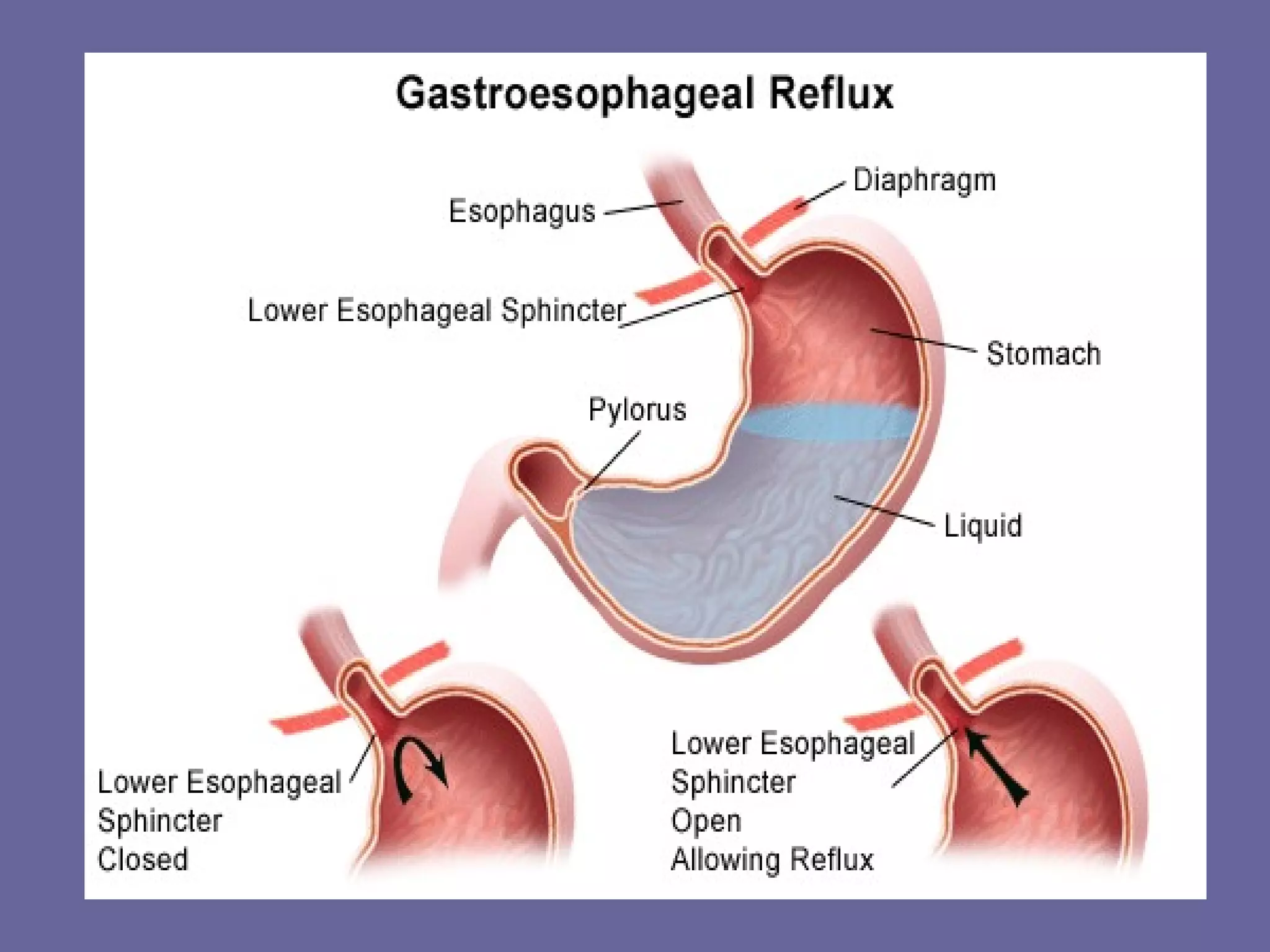
GASTROESOPHAGEAL RELUX DISEASE
           (GERD)


• It is a syndrome resulting from esophageal reflux
Clinical Manifestation

•   Heart burn
•   Odynophagia
•   Dysphagia
•   Acid regurgitation
•   Water brash
•   Eructation
•   Pain (back, neck or jaw)
Risk Factors

•   Obesity & weight gain
•   Pregnancy
•   Chewing tobacco
•   Smoking
•   High fats foods
•   Theophylline
•   Caffeine
•   Chocolate
Diagnosis

•   Barium swallow
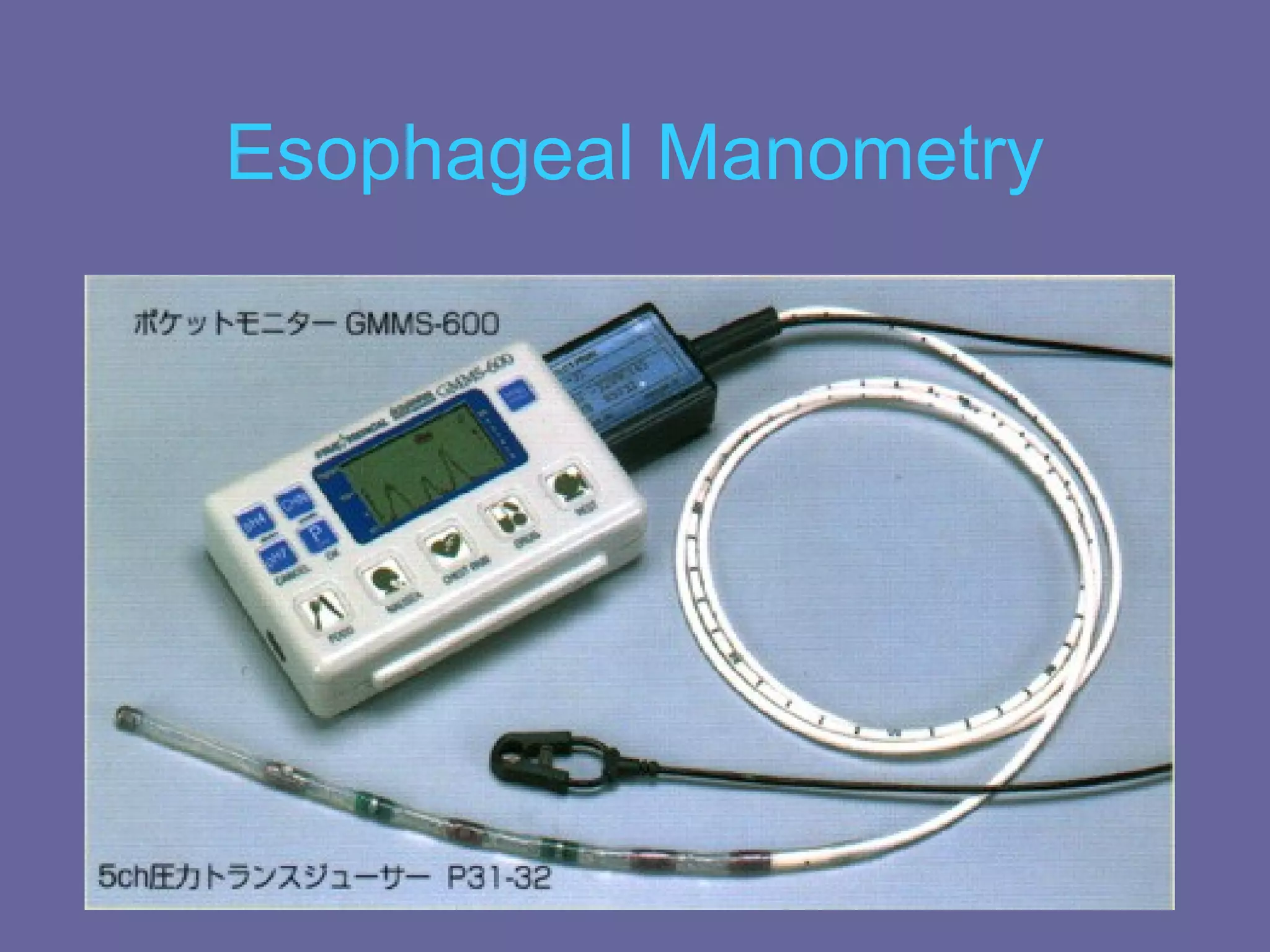
•   Esophageal manometry
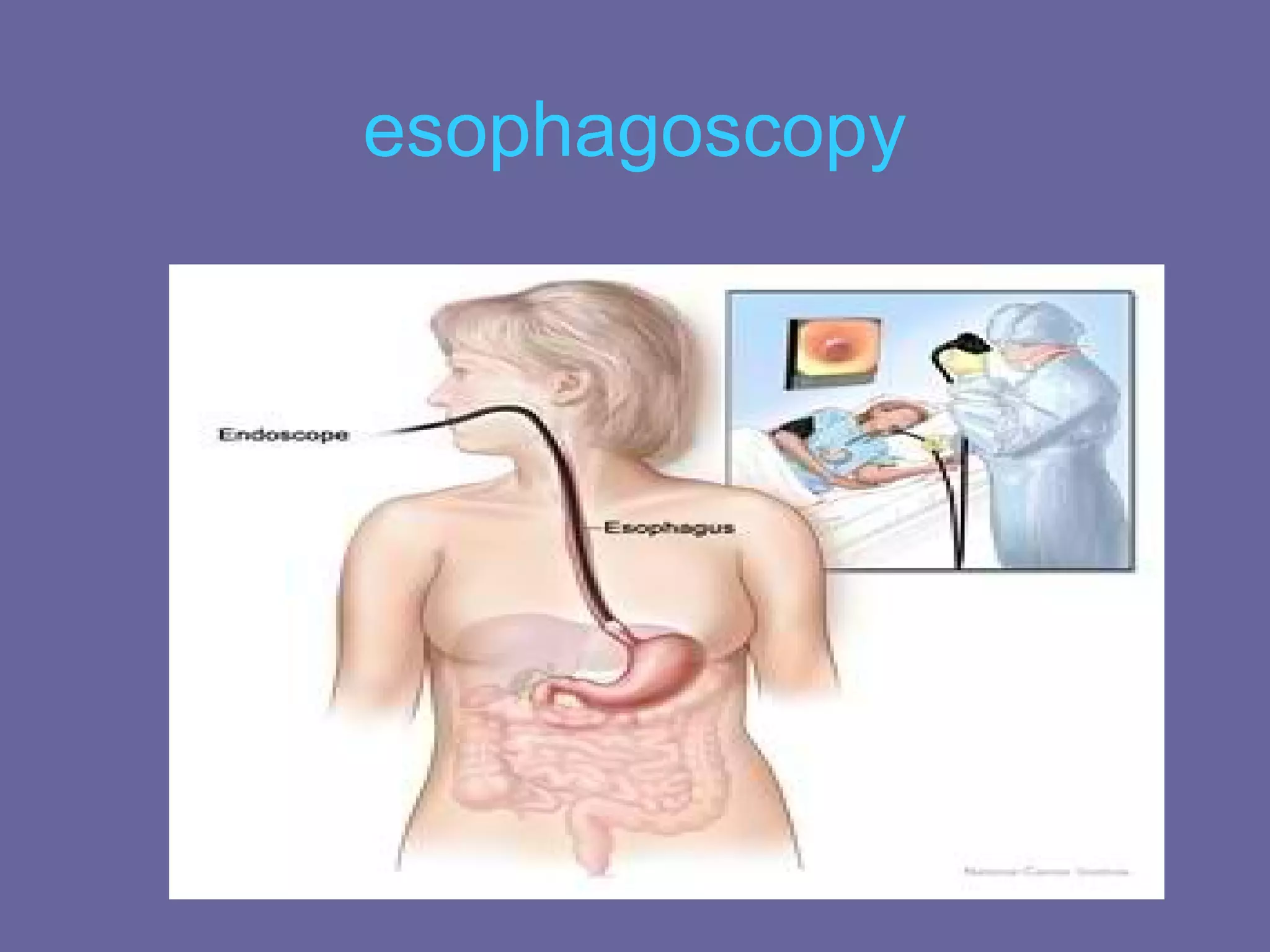
•   Esophagoscopy
•   Esophageal biopsy
•   Cytologic examination
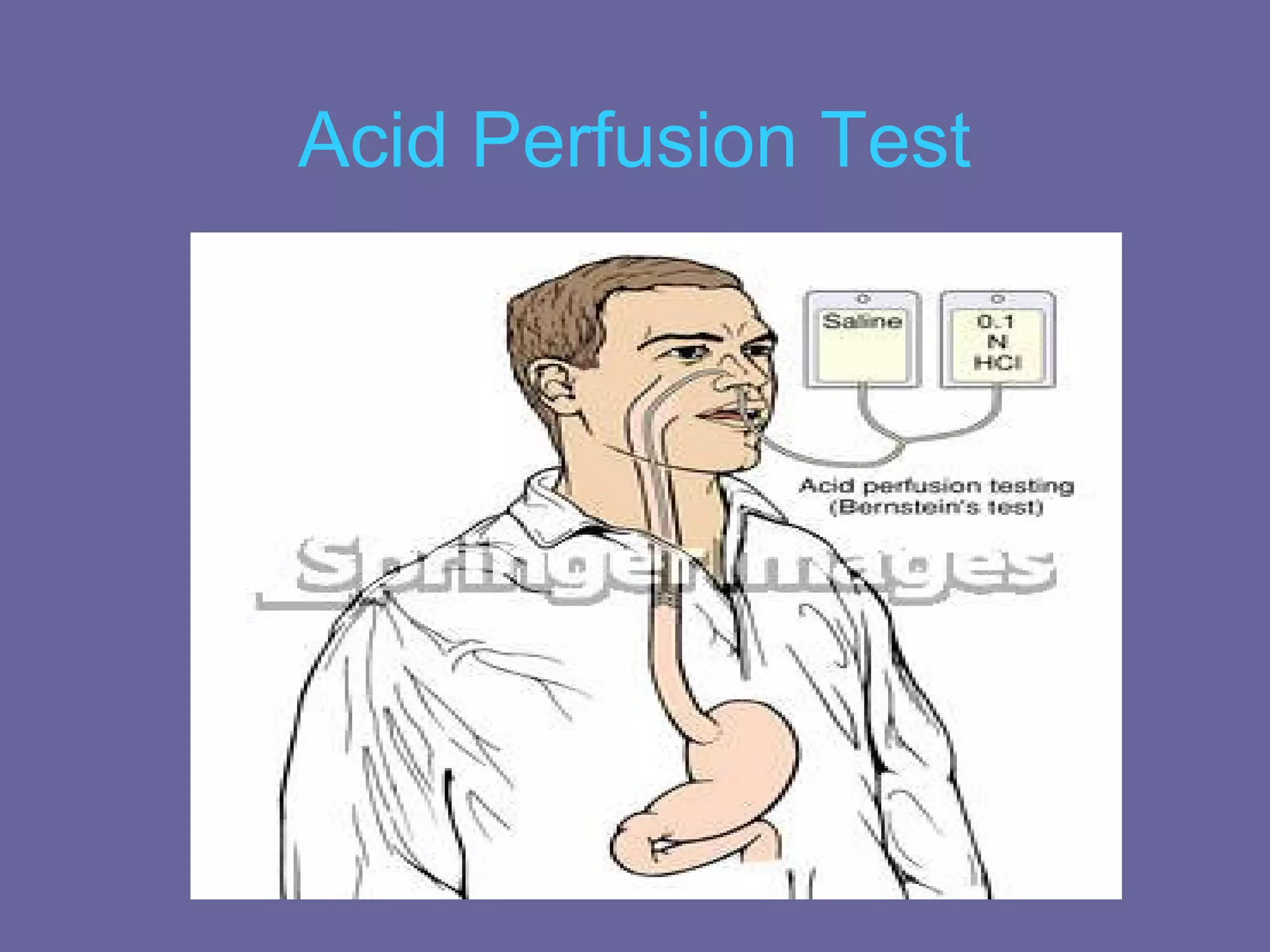
•   Acid perfusion test
Esophageal Manometry
esophagoscopy
Acid Perfusion Test
Treatment
• 1. Restrict diet into small frequent
  feedings.
• 2. Drink adequate fluid at meals to assist
  food passage.
• 3. Eat slowly and chew thoroughly to add
  saliva to the food
• 4. Avoid extremely hot or cold food,
  spices, fats, alcohol, coffee, chocolate &
  citrus juices.
Medications

•   Cytotec- preventing gastric ulcer formation & GERD
    manifestation
•   Antacids (30 ml 1hr before and 2 to 3hrs after meal) it
    helps to neutralize gastric acid secretions.
•   Histamine receptors antagonist
•   (zantac, pepcid) – It decreases gastric secretions.
•   Cholinergic ( bethanechol or urecholine) – for clients
    with severe manifestation it increase LES pressure and
    prevent reflux
•   Metoclopramide (raglan)- increase LES pressure by
    stimulating the smooth muscle of GIT and increase the rate
    of gastric emptying. This medication is taken before meal.
•   Cisapride (propulsid) 15min before meal and at bed time.
•   Proton pump inhibitor (prevacid) – suppresses secretion
    of gastric acid,
Nursing management

•   Identify specific manifestation
•   Document when sign and symptoms started
    ( frequency & severity)
•   Help client to identify risk factors for GERD
•   Instruct clients about lifestyle change
•   Explain the relationship of manifestation to
    food and various product.
PEPTIC ULCER DISEASE
             (PUD)


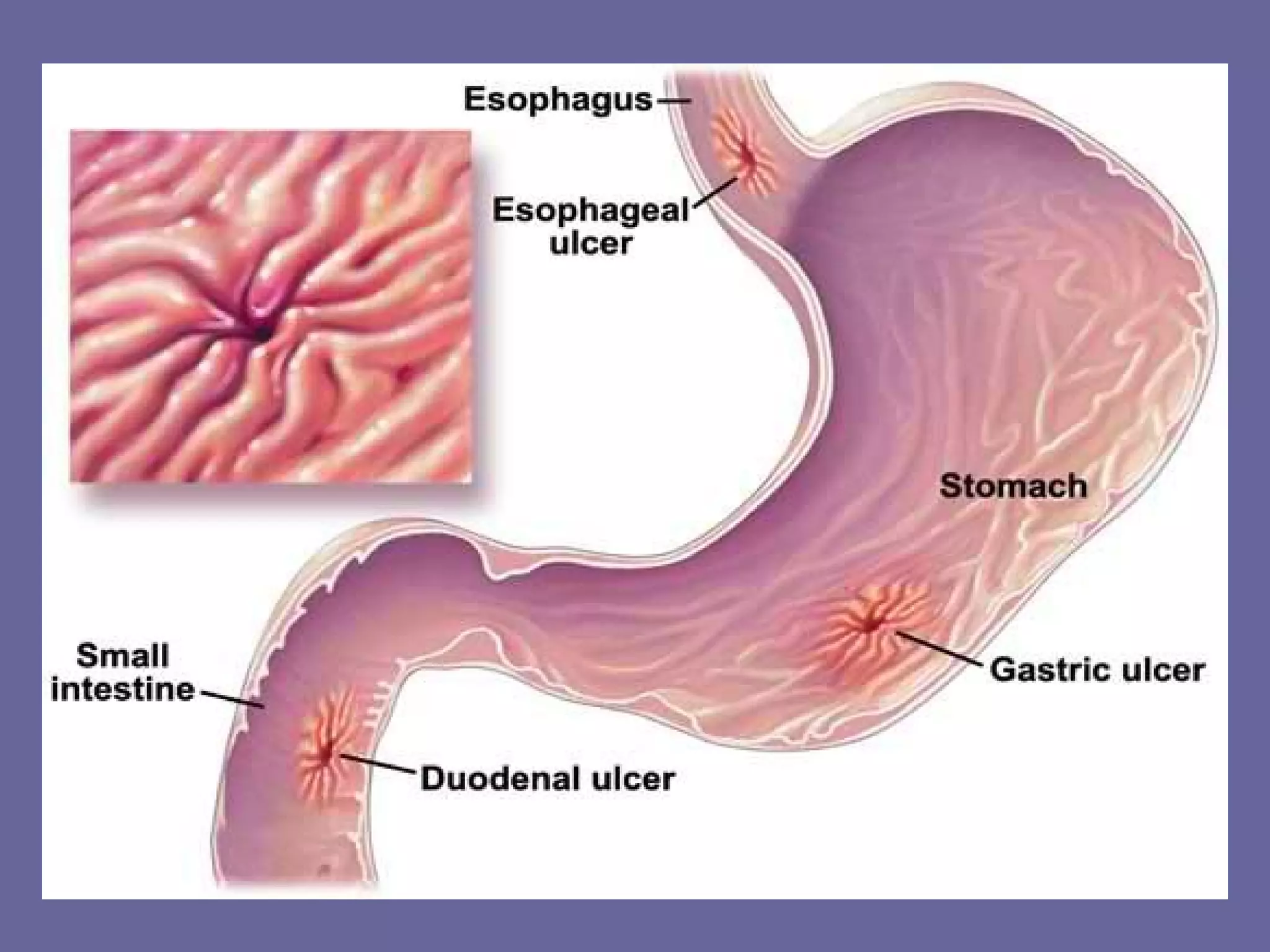
- PUD involves break in continuity of the
esophageal, gastric or duodenal mucosa
DUODENAL ULCER

• Duodenal ulcer has an increase
  incidence than gastric ulcers.
Stimuli Acid Secretion


•   Protein rich meals
•   Alcohol consumption
•   Calcium
•   Vagal stimulation
GASTRIC ULCER

• Cause is the break in of the mucosal barrier.
• Incompetent pylorus into stomach may break
  mucosa barrier.
Risk Factor

•   smoking (nicotine)
•   steroids
•   aspirin
•   NSAID’s
•   Caffeine
•   Alcohol
•   Stress
Clinical Manifestation
•   Pain- aching, burning, cramp, gnawing pain
•   Gastric ulcer - food may cause pain and
    vomiting may relieve it.
•   Duodenal ulcer- empty stomach and ingestion
    of food or antacid may relieve pain.
•   Nausea and Vomiting – vomiting is more often
    in gastric ulcer
•   Gastric ulcer – anorexia, weight loss and
    dysphagia
•   Bleeding
Diagnosis

•   X-ray and Endoscopy
•   CBC
•   Stool testing
•   Urea Breath Test
Treatment

•   Anatacid
•   Cimetidine
•   Rahitidine
•   Pamotiidne
•   Clarithromycin
•   Cytotec
Nursing Management

•   Modify diet
•   Assess bleeding
•   Prevent shock
•   Replace fluids
•   Maintain rest
GASTRIC CANCER


• Gastric cancer refers to the malignant
  neoplasms found in the stomach, usually
  adenocarcinoma. Most stomach cancers occur
  in the pylorus or antrum of the stomach and are
  adenocarcinomas
Clinical Manifestation
•   Early stage – symptoms may be absent
•   indigestion
•   anorexia
•   dyspepsia
•   weight loss
•   abdominal pain
•   constipation
•   anemia
•   nausea & vomiting
Risk Factors

•   chronic atrophic gastritis
•   history of exposure to background radiation or
    trace metal soil
•   people usually eat pickled food, salted fish &
    nitrates
•   metal craft workers, miners, bakers
•   those working in dusty, smoky & sulfur dioxide
    containing environment
Diagnosis

•   X-ray the upper GIT
•   Double contrast barium swallow
•   followed by endoscopy for biopsy
•   cytologic test
•   CT scan
•   Gastroscopy
Treatment

• chemotheraphy
• radiation theraphy
• surgical resection
Nursing Management
•   assess the client history of diet (smoked fish,
    salty food,smoking)
•   family history
•   asked the patient if she/he has a previous
    gastric surgery
•   history of risk factors to the development of
    cancer.
•   chronic gastritis
•   pernicious anemia
•   presence of H.Pylori
THE END

THANKS FOR LISTENING (^.^)!!

Upper git disorder

  • 1.
    UPPER GASTROINTESTINAL DISORDER Created by : Jessica Faye G. Manansala
  • 2.
    GASTROESOPHAGEAL RELUX DISEASE (GERD) • It is a syndrome resulting from esophageal reflux
  • 4.
    Clinical Manifestation • Heart burn • Odynophagia • Dysphagia • Acid regurgitation • Water brash • Eructation • Pain (back, neck or jaw)
  • 5.
    Risk Factors • Obesity & weight gain • Pregnancy • Chewing tobacco • Smoking • High fats foods • Theophylline • Caffeine • Chocolate
  • 6.
    Diagnosis • Barium swallow • Esophageal manometry • Esophagoscopy • Esophageal biopsy • Cytologic examination • Acid perfusion test
  • 7.
  • 8.
  • 9.
  • 10.
    Treatment • 1. Restrictdiet into small frequent feedings. • 2. Drink adequate fluid at meals to assist food passage. • 3. Eat slowly and chew thoroughly to add saliva to the food • 4. Avoid extremely hot or cold food, spices, fats, alcohol, coffee, chocolate & citrus juices.
  • 11.
    Medications • Cytotec- preventing gastric ulcer formation & GERD manifestation • Antacids (30 ml 1hr before and 2 to 3hrs after meal) it helps to neutralize gastric acid secretions. • Histamine receptors antagonist • (zantac, pepcid) – It decreases gastric secretions. • Cholinergic ( bethanechol or urecholine) – for clients with severe manifestation it increase LES pressure and prevent reflux • Metoclopramide (raglan)- increase LES pressure by stimulating the smooth muscle of GIT and increase the rate of gastric emptying. This medication is taken before meal. • Cisapride (propulsid) 15min before meal and at bed time. • Proton pump inhibitor (prevacid) – suppresses secretion of gastric acid,
  • 12.
    Nursing management • Identify specific manifestation • Document when sign and symptoms started ( frequency & severity) • Help client to identify risk factors for GERD • Instruct clients about lifestyle change • Explain the relationship of manifestation to food and various product.
  • 13.
    PEPTIC ULCER DISEASE (PUD) - PUD involves break in continuity of the esophageal, gastric or duodenal mucosa
  • 15.
    DUODENAL ULCER • Duodenalulcer has an increase incidence than gastric ulcers.
  • 16.
    Stimuli Acid Secretion • Protein rich meals • Alcohol consumption • Calcium • Vagal stimulation
  • 17.
    GASTRIC ULCER • Causeis the break in of the mucosal barrier. • Incompetent pylorus into stomach may break mucosa barrier.
  • 18.
    Risk Factor • smoking (nicotine) • steroids • aspirin • NSAID’s • Caffeine • Alcohol • Stress
  • 19.
    Clinical Manifestation • Pain- aching, burning, cramp, gnawing pain • Gastric ulcer - food may cause pain and vomiting may relieve it. • Duodenal ulcer- empty stomach and ingestion of food or antacid may relieve pain. • Nausea and Vomiting – vomiting is more often in gastric ulcer • Gastric ulcer – anorexia, weight loss and dysphagia • Bleeding
  • 20.
    Diagnosis • X-ray and Endoscopy • CBC • Stool testing • Urea Breath Test
  • 21.
    Treatment • Anatacid • Cimetidine • Rahitidine • Pamotiidne • Clarithromycin • Cytotec
  • 22.
    Nursing Management • Modify diet • Assess bleeding • Prevent shock • Replace fluids • Maintain rest
  • 23.
    GASTRIC CANCER • Gastriccancer refers to the malignant neoplasms found in the stomach, usually adenocarcinoma. Most stomach cancers occur in the pylorus or antrum of the stomach and are adenocarcinomas
  • 24.
    Clinical Manifestation • Early stage – symptoms may be absent • indigestion • anorexia • dyspepsia • weight loss • abdominal pain • constipation • anemia • nausea & vomiting
  • 25.
    Risk Factors • chronic atrophic gastritis • history of exposure to background radiation or trace metal soil • people usually eat pickled food, salted fish & nitrates • metal craft workers, miners, bakers • those working in dusty, smoky & sulfur dioxide containing environment
  • 26.
    Diagnosis • X-ray the upper GIT • Double contrast barium swallow • followed by endoscopy for biopsy • cytologic test • CT scan • Gastroscopy
  • 27.
    Treatment • chemotheraphy • radiationtheraphy • surgical resection
  • 28.
    Nursing Management • assess the client history of diet (smoked fish, salty food,smoking) • family history • asked the patient if she/he has a previous gastric surgery • history of risk factors to the development of cancer. • chronic gastritis • pernicious anemia • presence of H.Pylori
  • 29.
    THE END THANKS FORLISTENING (^.^)!!