GASTROINTESTINAL
SYSTEM
NURSING II April 2011
Drugs acting on symptoms manifested in the
GASTROINTESTINAL SYSTEM
PEPTIC ULCERS AND GERD
Physiology - participating cell-types
1. Parietal cells –
2. Peptic cells (chief cells) –
3. Neuroendocrine cells
4. Mucous and bicarbonate secreting cells
5. Prostaglandin-secreting cells
Phases of gastric acid secretion
♦ Basal ,
♦ stimulated and
♦ nocturnal
3 phases of STIMULATED gastric acid
secretion
1. Cephalic –
2. Gastric phase-
3. Intestinal phase –
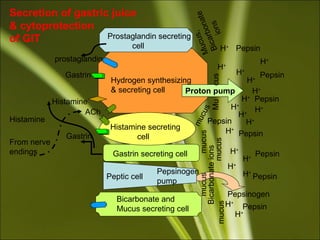
HCL secretion stimulated by
♦ ACh
♦ Gastrin hormone
♦ Histamine
HCL secretion inhibited by prostaglandins
Histamine
♦ Cells
♦ Stimuli
Secretion of gastric juice
& cytoprotection
of GIT
Proton pump
prostaglandin
Histamine
ACh
Gastrin
H+
H+
H+
H+
H+
H+
Pepsin
Pepsin
Pepsin
Pepsinogen
H+
H+
H+
H+
Pepsin
Gastrin secreting cell
Prostaglandin secreting
cell
Hydrogen synthesizing
& secreting cell
Histamine
Histamine secreting
cell
From nerve
endings
Mucus,
Bicarbonate
ions
mucus
Mucus
mucusmucus
mucus
Bicarbonateions
Bicarbonate and
Mucus secreting cell
Gastrin
Pepsinogen
pump
Peptic cell
H+
H+
H+
H+
H+
H+
H+
H+
Pepsin
Pepsin
Pepsin
Pepsinmucus
PEPTIC ULCERS
A breach in the mucosa
Location: Duodenum, stomach etc
♦ Basis:
Imbalance between damaging factors
and mucosal defense mechanisms
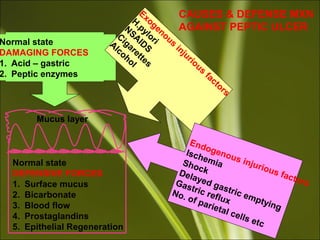
CAUSES & DEFENSE MXN
AGAINST PEPTIC ULCER
Normal state
DAMAGING FORCES
1. Acid – gastric
2. Peptic enzymes
Normal state
DEFENSIVE FORCES
1. Surface mucus
2. Bicarbonate
3. Blood flow
4. Prostaglandins
5. Epithelial Regeneration
Mucus layer
Exogenous
injurious
factors
H.pylori
NSAIDS
Cigarettes
Alcohol
Endogenous injurious factors
IschemiaShockDelayed gastric emptying
Gastric reflux
No. of parietal cells etc
DRUGS FOR PEPTIC ULCERS
Principle/Mxn:
♦ Reduction of gastric acid secretion
1. H2-histamine receptor blockers
2. Proton-pump inhibitors
3. Anticholinergic agents
♦ Neutralization of secreted acid
- Antacids
♦ Promoting mucosal protection (cytoprotectants)
- Prostaglandins
- Bismuth cpds
- Sucralfate
♦ Eradication of H. pylori infection
1. H2-HISTAMINE RECEPTOR ANTAGONISTS
♦ Mxn: competitively bind and block Histamine H2
receptors
• reduce all phases of gastric acid secretion
• No effect on gastric emptying
►E.g. cimetidine, famotidine, ranitidine, nizatidine,
roxatidine
P’kinetics
♦ Rapid oral absorption, Parenteral
♦ Distribution – wide- breast milk, placenta
♦ Elimination – partial metab, urine
Uses of H2-HISTAMINE RECEPTOR
BLOCKERS
1. Duodenal ulcer
2. Gastric ulcer
3. GERD(gastroesophageal reflax desease)
4. Prophylaxis
5. As pre-anesthetic agent
6. Zollinger-Ellison syndrome
7. with oral enzyme supplements
Adverse effects of H2-HISTAMINE RECEPTOR
ANTAGONISTS
• Hypergastrinemia
• CNS effects
• Muscular pains
• Skin rashes
• Cimetidine (only) is a weak anti-androgen –
• Nizatidine – urticaria, somnolence, sweating
• rapid infusion – release of histamine, bradykinin
D/I
• Cimetidine & CYP 450 enzymes
• Cimetidine & tubular secretion
2. PROTON PUMP INHIBITORS
Mxn: are prodrugs,
► Block H+
/K +
ATPase
• acid production reduced by ~95%
• Duration of inhibition:
Omeprazole irreversible, Lansoprazole is reversible
• Specificity due to unique proton pump
• Activation in an acidic environment
• Protonated drug trapped
P’kinetics
• Abs: Rapid, enteric coated, swallow whole;
can be reduced by some drugs e.g. sucralfate
• Metabolized (1st
pass)- rapid
2. PROTON PUMP INHIBITORS
Uses of
1. Zollinger-Ellison syndrome - DOC
2. GERD –2nd
line
3. Peptic ulcers –2nd
line
Adverse effects
• Dry mouth,
• Hypergastrinemia
• CNS effects
• Skin Rashes
• Mild liver damage
• GIT disturbance - diarrhea can be severe
D/I (Omeprazole only)- inhibits microsomal enzymes
3. ANTIMUSCARINIC AGENTS
Mxn: block muscarinic receptors
E.g. Pirenzepine, telezepine more selective for receptors in
stomach mucosal cells
Potency: telezepine more potent than pirezepine
♦ Other antimuscarinicis –
P’kinetics
Abs:
Poor CNS entry
Largely biliary & renal elimination
S/E –
Uses
Duodenal and gastric ulcers
Cytoprotectants
4. PROSTAGLANDIN ANALOGUES E.g. Misoprostol
Effects of PGE2 & PGE1 -
● stimulate secretion of mucus and HCO3
● Increase blood flow
● *Inhibit gastric acid secretion
Uses
1. Prevention/ prophylactic & NSAID(nonsteroidal anti-inflammatory drugs)
2. Peptic ulcers
Adverse effects
Commonest -Diarrhea, abdominal pain
Uterus -, spotting, dysmenorrhoea, arbotifacient (to be taken
after day 1 of menses)
C/I in pregnancy
5. SUCRALFATE (a cytoprotectant)
Mxn: form a viscous, sticky gel in the acidic environment &
coats the mucosa
• Adsorbs onto protein
P’kinetics
• Note on Administration: with food, 1hr or so with antacids
• Partial abs
S/E
Constipation –
High plasma [Al3+
] w/ ↓renal function
D/I –
Chelates some drugs ∟↓absorption e.g. phenytoin, digoxin
Uses
• Peptic ulcers – long term maintenance
• Prophylaxis – stress ulcers
6. BISMUTH COMPOUNDS
Mxn: Chelates w/ proteins of ulcer base thus coats it
• active against H. plylori
S/E
• Encephalopathy w/ ↓renal function
• Blackening of tongue, teeth, stool
Uses:
Peptic ulcers
H. pylori
7. ANTACIDS
Mxn: neutralize HCL
• may inactivate Pepsin (pH 5)
E.g. Are AL3+
, Mg2+
or Na+
hydroxides, carbonates or
bicarbonates, Mg-trisilicates
• Comparison of properties: differ in their capacities, rates,
duration and adverse effects – Often prepared as mixtures
• Na+
salts – most rapid, most potent, most absorbed,
• Mg2+
& Al3+
– slower, more sustained action
• Additive with presence of food
• Ca2+
can cause rebound hyperacidity
• Cations absorbed eliminated by kidney
Uses
• Symptomatic relief of dyspepsia
S/E of ANTACIDS
• On GIT – abdominal distension, belching, flatulence
• Diarrhea (Mg)
• Kidney stones (silica)
• Constipation (Al)
• Encephalopathy, osteoporosis, myopathy (Al)
• Hypophosphotemia (Al)
• Systemic alkalosis (Na)
• Hypercalcemia & milk-alkali syndrome (Ca)
• Bismuth salts - encephalopathy and arthropathy.
D/I
• Change urine pH
• Alter gastric pH
• Chelate or adsorb drug
H. PYLORI ERADICATION
1. Penicillins – Amoxycillin
2. Metronidazole, tinidazole
3. Clarithromycin
4. Tetracycline
5. Bismuth compounds
E.g. Regimens used
• Amoxicillin, metronidazole + omeprozole
• Omeprozole + either amoxycillin or
clarithromycin
• Bismuth + two antibiotics (metronidazole or
tinidazole with amoxicillin or tetracycline)
VOMITING
(EMESIS)
PHYSIOLOGY OF VOMITING
♦ Vomiting - protective mxn
♦ Vomiting center (medulla) –muscarinic M1 and H1-histamine, maybe
5-HT3 and Neurokinin (NK1) receptors - Co-ordinates cpx abdominal muscle
movements
• Efferent pathways - vagus, phrenic and motor nerves to abdominal
muscles
Vomiting center receives stimuli from
1. Chemosensitive trigger zone,(CTZ) – D2- dopamine receptors, opioid
receptors, 5-HT3 receptors, NK1 receptors
2. Vestibular system (Cn VIII) – cholinergic (M1 and histaminergicH1
receptors
3. Higher brainstem – serotonin 5-HT3 receptors
4. Cortical areas – e.g. anticipatory vomiting
5. Periphery – Vagal afferents– various areas e.g.
Pharnyx –
GIT – e.g. serotonin 5-HT3, Dopamine receptors
ANTIEMETIC AGENTS
►Acting at the vomiting centre – e.g.
anticholinergics (prinicipal), antihistamines
prevent vomiting from any source
►Acting at the CTZ - are effective only for
vomiting mediated by CTZ –
►Many drugs act at more than one site
ANTIEMETIC AGENTS
1. Blockers of dopamine D2-receptors at CTZ
(i) PHENOTHIAZINES –
E.g. prochlorperazine, chlorpromazine
Uses
♦Emesis due to cytotoxics
S/E - esp at high doses –
• Extrapyramidal effects
• Sedation, Restlessness
• Hypotension
(ii) METOCHLOPRAMIDE
Mxn: a dopamine D2 receptor antagonist
Some effect on 5HT receptors
• CTZ
• Peripheral on ENS (Enteric Nervous System)
Prokinetic effect – sensitizing myenteric nerves to Ach thus ↑LES tone,
↑ Gastric emptying,
P’kinetics
• Distribution – wide including breast milk, placenta
• Largely liver degradation
S/E
• Extrapyramidal effects e.g. parkinsonian features
• Prolactin release – galactorrhea, gynecomastia, impotence, menstrual
disorders
• Motor restlessness e.g. occulogyric crises
• Diarrhea
Uses
• Nausea and vomiting e.g. due to anticancer drugs
• Prokinetic agent – in gastroparesis, post-op disorders e.g. vagotomy
(iii). BUTYROPHENONES
e.g. Domperidone, haloperidol
Mxn: a dopamine D2 receptor antagonist
P’kinetics
• Crossing BBB –minimal
Uses:
• Nausea and vomiting
• Prokinetic agent
S/E
• Hyperprolactinemia
2. 5-HT3-RECEPTOR BLOCKERS –(central and
peripheral)
E.g. ondansetrom and granisetrom, Tropisetron, Ramosetron
5-HT3 receptors found in the terminals of vagus nerve
Uses:
DOC for Chemotherapy induced N&V (give ½ to one hour
before cancer drug)
Radiotherapy induced nausea and vomiting
Postoperative nausea
S/E
Headache, dizziness, flushing, epigastrin pain and
constipation
3) NEUROKININ RECEPTORS ANTAGONISTS (NK1)
e.g. Aprepitant (oral), fosaprepitant (prodrug, IV)
Mxn: Block NKI receptors in CTZ
P’kinetics
Fatigue, Dizziness, Diarrhea
Interferes with monitoring of warfarin
D/I
Is metabolized by CYP3A4 and thus competes with other
drugs metabolized by same enzymes
Uses:
Acute and delayed N&V from Chemotherapeutic agents
(combined with others)
4. CORTICOSTEROIDS
Mxn; not clear, possibly block prostaglandin synthesis
E.g. Dexamethasone
Uses:
Moderate drug induced nausea and vomiting
S/E
• Hyperglycemia
• Insomnia
• Psychotic rxns
5. ANTIMUSCARINICS
E.g. scopolamine, hyoscine
Uses: motion sickness
6. ANTIHISTAMINES
Mxn: competitively block H1 histamine receptors
• Have sig. anticholinergic & sedative effects
E.g. diphenhydrazine, cinnarizine, cyclizine, dimenhydrinate, promethazine
Uses
• Motion sickness
• Combination
7. BENZODIAZEPINES
Mxn: largely due to their sedative-anxiolytic effect
E.g. lorazepam
Uses: • anticipatory vomiting
• Combination
8. NABILONE, DRONABINOL –
Cannabis class (synthetic) but lacks the euphoric effect of other
cannabinoids
Uses – • cytotoxic drug induced vomiting
S/E - • very many
9. MIRTAZAPINE is a tetracyclic antidepressant
with 5-HT3 antagonist effects and strong anti-
emetic properties.
1. Uses: e.g. chemotherapy-related nausea and
vomiting
2. motility disorder gastroparesis due to its anti-
emetic effects.
10. OLANZAPINE, an atypical antipsychotic with
anti-emetic properties similar to those of
mirtazapine,
Uses:
1. chemotherapy-induced nausea and vomiting
EMETIC agents
Apormorphine- stimulates the CTZ
Ipecac syrup – stimulates both CTZ and GIT
afferent nerves to vomiting center
ADR and C/I: many, use only when necessary
Avoid in unconscious patients, caustic poisons
Uses: to induce vomiting in cases of very specific
poisons ingested by mouth
PROKINETIC AGENTS (Agents promoting
Gastrointestinal motility)
Need to
(i) Increase LES tone – minimize GERD
(ii) Incease gastric emptying – in gastroparesis and post-
surgical gastric emptying
(iii) stimulate small intestine motility in post-op ileus
ENS- players
Serotonin: presynaptically (5HT4)stimulate on interneurons
(of ENS) which release Ach that activates ENS
resulting in ↑peristalsis and secretory activity
Motilin: may stimulate ENS or act directly on smooth
muscles of GIT
Dopamine: is inhibitory - ↓GIT contractions
PROKINETIC AGENTS (Agents promoting Gastrointestinal
motility)
Cisapride
Mxn: a 5-HT4 receptor agonist & increases acetylcholine release in the
enteric nervous system.
P’kinetics
Sig. 1st
pass effect
Uses
Reflux esophagitis
Gastroparesis
S/E
GIT- cramping, diarrhea,
Prolonged QT syndrome - arrhythmias (withdrawn in the USA market)
D/I and C/I co-adm with many drugs -as it results in serious cardiac
arrhythmias
NB. Motilin on motilin receptors prokinetic effect
Macrolides – stimulates motilin receptors
Carminatives (Antiflatulent) (anti-foaming) agents
Defn: preparations that either prevents formation of or
facilitates the expulsion gas in the gastrointestinal tract,
thereby minimize flatulence. Often mixtures of essential
oils and herbal spices
e.g. peppermint, dill water, anise and other herbs
Dimethicone, simethicone lower surface tension and allow
removal of gas in the GIT
Uses:
1. Irritable bowel syndrome in babies
2. Flatulence
ANTIDIARRHEAL AND
ANTICONSTIPATING AGENTS
DIARRHEA
Some causes of diarrhea –
♦ Infection/inflammation
♦ Osmotic/malabsorption
♦ Secretory diarrhea – e.g. carcinoid syndromes
♦ Some Chronic diseases – e.g. thyrotoxicosis
♦ Some drugs
♦ Psychological factors
A number are self-limiting in nature
Effect – increased GIT motility with loss of fluid and
electrolytes
►Aim of anti-diarrheal therapy - reduce discomfort and
inconvenience
ANTI-DIARRHEAL THERAPY AGENTS
(but always find out cause and manage the cause)
A. 1st priority – rehydration e.g. ORAL REHYDRATION SALTS –
B. ANTIMOTILITY DRUGS –
1) Opioid agonists
Mxn: opioid receptors in the myenteric plexus large intestines;
decreases the tone of the longitudinal smooth muscles but increases tone
of anal sphincter, delay transit time for GIT contents
antagonism –by Naloxone
♦E.g. Loperamide (imodium) and diphenoxylate (lomotil) (are syn opioids),
codeine
P’kinetics
Penetration into CSF – poor for loperamide, significant for diphenoxylate
1. ANTIMOTILITY DRUGS –
S/E
Diphenoxylate - Tolerance and dependence
(atropine)
Euphoria & Depression of CNS
C/I
♦ In children with acute diarrhea –
♦ Chronic ulcerative colitis or amoebic dysentery or
acute bacillary dysentery (bloody diarrhea)
Uses
♦ Most types of diarrheal esp Travellers diarrhea
♦ To control colostomies
♦ For AIDS related diarrhea
2. OCTREOTIDE
Mxn: A somatostatin analogue, thus inhibits many hormones,
thus ADR
• parenteral,
Uses:
Intractable Diarrhea due to e.g.Carcinoid syndrome,
VIPomas, HIV, dumping syndrome after vagotomy
(+ other – e.g. Acromegaly)
S/E
• GIT – N/V,
• Cholelithiasis, Steatorrhea
• CVS- Bradycardia, Conduction Disorder of the Heart,
• Injection Site – vasoconstriction
3. ADSORBENTS
E.g. kaolin (activated attapulgite), pectin, methylcellulose,
Mxn: adsorb toxins, microbes, fluid, coat and protect the
intestines
Uses:
Not very effective, may increase bulk
Interfere with a absorption of many drugs
4. AGENTS THAT MODIFY FLUID SECRETION
Bismuth subsalicylate (Pepto-bismol) –
the salicylate component- inhibits PG synthesis thus inhibit
fluid secretion
BILE SALT-BINDING RESINS
Uses: Diarrhea due to diseases of terminal
ileum- that result in ↓bile salt absorption
Mxn; Unabsorbable plant products that absorb
bile salts thus deceasing the osmotic power
of lumen of colon thus decreasing water
content, and diarrhea
E.g. cholestyramine, cholestipol
A/E: Bloating, flatulence, constipation
D/I: Decreased drug absorption
LAXATIVES (PURGATIVES, CARTHATICS,
ANTICONSTIPATING AGENTS)
Goal – To increase movement & facilitate smooth expulsion
of material in the rectum.
Only used if certain conditions ruled out e.g. stenosis, toxic
megacolon, obstruction with parasites
1. BULK FORMING AGENTS
Mxn: increase VOLUME of contents
e.g. Methylcellullose, agar, bran, psyllium seeds, (are
indigestible matter)
Slow acting
Take w/ plenty of fluids
May affect absorption of drugs
Few ADR – flatulence (bacterial digestion)
2. OSMOTIC LAXATIVES
Mxn: osmotically absorb water, effective in about 1-3hr
E.g. MgSO4, lactulose, sorbitol, mannitol, glycerin
Uses:
♦ Colonic lavage
♦ Hepatic encephalopathy
♦ Drug poisoning or overdose
S/E, C/I and precautions
♦ Mg2+
♦ Na+
♦ Phosphate containing laxatives -
♦ those containing sugars - Diabetes
3. SURFACTANT LAXATIVES (stool softeners /stool wetners)
Mxn: emulsify stool
E.g. mineral oil, docusate salts, glycerin, dehydrocholic acid
S/E
♦ Docusates – can increase abs of some drugs, is a weak stimulant
laxative
♦ Mineral oil – many ADR
4. STIMULANT/ IRRITANT LAXATIVES
Mxn: stimulate GIT wall – increased peristalsis, take only (2, 6-12) hrs to act
E.g. Bisacodyl, phenolpthalein, castor oil,
Anthraquinones - Senna, danthron, cascara, rhubarb, aloes –
P’kinetics
♦ Phenolphthalein abs (cardiac toxicity),
♦ Bisacodyl degradation:
♦ Castor oil –degradation
S/E - general
♦ water and electrolyte loss
♦ enterocytes damage
♦ Allergic reactions
♦ Abdominal cramps
Anthraquinones S/E
♦ Synthetic Danthron cpds associated /tumors
♦ Long term use – pigmentation of colon
Castor oil S/E
♦ reduce absorption of nutrients, water, etc – due to enterocyte damage
♦ uterine contraction
►ENEMA – largely osmotic or soapywater laxatives delivered thro’
rectum, increase volume, stretches wall of rectum
Goal- rapid evacuation
Uses:
♦ Pre- surgery
♦ Rectal exam
♦ Pre-delivery
♦ Fecal impaction
Therapeutic principals of use of antidiarrheal agents
1. Treat underlying pathology
2. Start w/ high fiber, fluids & exercise
3. Then start w/ bulk forming, use stimulants as last resort
4. Use lowest effective doses first
5. Discontinue use as soon as reasonable
Gallstones
Bile acids e.g. Chenodeoxycholic acid –
reduces cholesterol stones by altering
properties of bile thus prevent precipitation
of cholesterol
IBD
1. Corticosteroids e.g. budesonide
2. Immunosuppressants e.g. azathioprine
3. Aminosalycilates e.g.sulphasalazine
INFLAMMATORY BOWEL DSE (UC & CD)
1) For Rx and maintainance
• Aminosalicylates (5-ASA derivatives)
• E.g. mesalazine, sulphasalazine (Salazopyrin),
olsalazine,balsalazide
• Maintenance therapy with 5-ASA drugs may reduce the
risk of colorectal cancer esp w/UC than CD
• Adverse effects of 5-ASA32–34
Most common, Dose-dependent. : Headache nausea,
epigastric pain, and diarrhoea are
Rare, Serious idiosyncratic: including Stevens Johnson
syndrome, pancreatitis,agranulocytosis, or alveolitis,
renal impairment)
Mesalazine intolerance
Corticosteroids
• (Oral, intravenous, Topical, suppositories, enemas
e.g. prednisolone, prednisone, budesonide ( poorly abs from GIT),
hydrocortisone, betamethasone, budesonide).
• attempt to maximise topical effects while limiting systemic side effects of
steroids.
Uses: moderate to severe relapses of both UC and CD but not maintenance for
either disease.
Adverse effects of steroids
a)Early effects due to supraphysiological doses include cosmetic (acne, moon
face,
oedema), sleep and mood disturbance, dyspepsia, or glucose intolerance.
b) Effects associated with prolonged use (>12 weeks)
posterior subcapsular, cataracts, osteoporosis, osteonecrosis of the femoral
head,
myopathy, and susceptibility to infection.
c) Effects during withdrawal: acute adrenal insufficiency (if sudden), myalgia,
malaise, arthralgia, raised intracranial pressure
3)Thiopurines
E.g. Azathioprine (prodrug), and mercaptopurine
(unlicensed)
Mxn: inducing T cell apoptosis by modulating cell
signalling.
Uses: active disease and maintaining remission in
CD and UC.
A/E
Most common : flu-like symptoms (myalgia,
headache, diarrhoea) that
Rare: Profound leucopenia, Hepatotoxicity and
pancreatitis, Small risk of lymphoma
4) Methotrexate (unlicensed)
Mxn: probable Inhibition of cytokine and
eicosanoid synthesis + usual
Uses: treatment of active or relapsing CD in those
refractory to / intolerant of AZA or MP
Monitoring therapy: FBH & liver function tests
A/E
Early : GIT disturbance, Minimized by co-
prescription of folic acid
Serious: hepatotoxicity and pneumonitis.

GIT pharmacology

  • 1.
  • 2.
    Drugs acting onsymptoms manifested in the GASTROINTESTINAL SYSTEM PEPTIC ULCERS AND GERD Physiology - participating cell-types 1. Parietal cells – 2. Peptic cells (chief cells) – 3. Neuroendocrine cells 4. Mucous and bicarbonate secreting cells 5. Prostaglandin-secreting cells
  • 3.
    Phases of gastricacid secretion ♦ Basal , ♦ stimulated and ♦ nocturnal 3 phases of STIMULATED gastric acid secretion 1. Cephalic – 2. Gastric phase- 3. Intestinal phase –
  • 4.
    HCL secretion stimulatedby ♦ ACh ♦ Gastrin hormone ♦ Histamine HCL secretion inhibited by prostaglandins Histamine ♦ Cells ♦ Stimuli
  • 5.
    Secretion of gastricjuice & cytoprotection of GIT Proton pump prostaglandin Histamine ACh Gastrin H+ H+ H+ H+ H+ H+ Pepsin Pepsin Pepsin Pepsinogen H+ H+ H+ H+ Pepsin Gastrin secreting cell Prostaglandin secreting cell Hydrogen synthesizing & secreting cell Histamine Histamine secreting cell From nerve endings Mucus, Bicarbonate ions mucus Mucus mucusmucus mucus Bicarbonateions Bicarbonate and Mucus secreting cell Gastrin Pepsinogen pump Peptic cell H+ H+ H+ H+ H+ H+ H+ H+ Pepsin Pepsin Pepsin Pepsinmucus
  • 6.
    PEPTIC ULCERS A breachin the mucosa Location: Duodenum, stomach etc ♦ Basis: Imbalance between damaging factors and mucosal defense mechanisms
  • 7.
    CAUSES & DEFENSEMXN AGAINST PEPTIC ULCER Normal state DAMAGING FORCES 1. Acid – gastric 2. Peptic enzymes Normal state DEFENSIVE FORCES 1. Surface mucus 2. Bicarbonate 3. Blood flow 4. Prostaglandins 5. Epithelial Regeneration Mucus layer Exogenous injurious factors H.pylori NSAIDS Cigarettes Alcohol Endogenous injurious factors IschemiaShockDelayed gastric emptying Gastric reflux No. of parietal cells etc
  • 8.
    DRUGS FOR PEPTICULCERS Principle/Mxn: ♦ Reduction of gastric acid secretion 1. H2-histamine receptor blockers 2. Proton-pump inhibitors 3. Anticholinergic agents ♦ Neutralization of secreted acid - Antacids ♦ Promoting mucosal protection (cytoprotectants) - Prostaglandins - Bismuth cpds - Sucralfate ♦ Eradication of H. pylori infection
  • 9.
    1. H2-HISTAMINE RECEPTORANTAGONISTS ♦ Mxn: competitively bind and block Histamine H2 receptors • reduce all phases of gastric acid secretion • No effect on gastric emptying ►E.g. cimetidine, famotidine, ranitidine, nizatidine, roxatidine P’kinetics ♦ Rapid oral absorption, Parenteral ♦ Distribution – wide- breast milk, placenta ♦ Elimination – partial metab, urine
  • 10.
    Uses of H2-HISTAMINERECEPTOR BLOCKERS 1. Duodenal ulcer 2. Gastric ulcer 3. GERD(gastroesophageal reflax desease) 4. Prophylaxis 5. As pre-anesthetic agent 6. Zollinger-Ellison syndrome 7. with oral enzyme supplements
  • 11.
    Adverse effects ofH2-HISTAMINE RECEPTOR ANTAGONISTS • Hypergastrinemia • CNS effects • Muscular pains • Skin rashes • Cimetidine (only) is a weak anti-androgen – • Nizatidine – urticaria, somnolence, sweating • rapid infusion – release of histamine, bradykinin D/I • Cimetidine & CYP 450 enzymes • Cimetidine & tubular secretion
  • 12.
    2. PROTON PUMPINHIBITORS Mxn: are prodrugs, ► Block H+ /K + ATPase • acid production reduced by ~95% • Duration of inhibition: Omeprazole irreversible, Lansoprazole is reversible • Specificity due to unique proton pump • Activation in an acidic environment • Protonated drug trapped P’kinetics • Abs: Rapid, enteric coated, swallow whole; can be reduced by some drugs e.g. sucralfate • Metabolized (1st pass)- rapid
  • 13.
    2. PROTON PUMPINHIBITORS Uses of 1. Zollinger-Ellison syndrome - DOC 2. GERD –2nd line 3. Peptic ulcers –2nd line Adverse effects • Dry mouth, • Hypergastrinemia • CNS effects • Skin Rashes • Mild liver damage • GIT disturbance - diarrhea can be severe D/I (Omeprazole only)- inhibits microsomal enzymes
  • 14.
    3. ANTIMUSCARINIC AGENTS Mxn:block muscarinic receptors E.g. Pirenzepine, telezepine more selective for receptors in stomach mucosal cells Potency: telezepine more potent than pirezepine ♦ Other antimuscarinicis – P’kinetics Abs: Poor CNS entry Largely biliary & renal elimination S/E – Uses Duodenal and gastric ulcers
  • 15.
    Cytoprotectants 4. PROSTAGLANDIN ANALOGUESE.g. Misoprostol Effects of PGE2 & PGE1 - ● stimulate secretion of mucus and HCO3 ● Increase blood flow ● *Inhibit gastric acid secretion Uses 1. Prevention/ prophylactic & NSAID(nonsteroidal anti-inflammatory drugs) 2. Peptic ulcers Adverse effects Commonest -Diarrhea, abdominal pain Uterus -, spotting, dysmenorrhoea, arbotifacient (to be taken after day 1 of menses) C/I in pregnancy
  • 16.
    5. SUCRALFATE (acytoprotectant) Mxn: form a viscous, sticky gel in the acidic environment & coats the mucosa • Adsorbs onto protein P’kinetics • Note on Administration: with food, 1hr or so with antacids • Partial abs S/E Constipation – High plasma [Al3+ ] w/ ↓renal function D/I – Chelates some drugs ∟↓absorption e.g. phenytoin, digoxin Uses • Peptic ulcers – long term maintenance • Prophylaxis – stress ulcers
  • 17.
    6. BISMUTH COMPOUNDS Mxn:Chelates w/ proteins of ulcer base thus coats it • active against H. plylori S/E • Encephalopathy w/ ↓renal function • Blackening of tongue, teeth, stool Uses: Peptic ulcers H. pylori
  • 18.
    7. ANTACIDS Mxn: neutralizeHCL • may inactivate Pepsin (pH 5) E.g. Are AL3+ , Mg2+ or Na+ hydroxides, carbonates or bicarbonates, Mg-trisilicates • Comparison of properties: differ in their capacities, rates, duration and adverse effects – Often prepared as mixtures • Na+ salts – most rapid, most potent, most absorbed, • Mg2+ & Al3+ – slower, more sustained action • Additive with presence of food • Ca2+ can cause rebound hyperacidity • Cations absorbed eliminated by kidney Uses • Symptomatic relief of dyspepsia
  • 19.
    S/E of ANTACIDS •On GIT – abdominal distension, belching, flatulence • Diarrhea (Mg) • Kidney stones (silica) • Constipation (Al) • Encephalopathy, osteoporosis, myopathy (Al) • Hypophosphotemia (Al) • Systemic alkalosis (Na) • Hypercalcemia & milk-alkali syndrome (Ca) • Bismuth salts - encephalopathy and arthropathy. D/I • Change urine pH • Alter gastric pH • Chelate or adsorb drug
  • 20.
    H. PYLORI ERADICATION 1.Penicillins – Amoxycillin 2. Metronidazole, tinidazole 3. Clarithromycin 4. Tetracycline 5. Bismuth compounds E.g. Regimens used • Amoxicillin, metronidazole + omeprozole • Omeprozole + either amoxycillin or clarithromycin • Bismuth + two antibiotics (metronidazole or tinidazole with amoxicillin or tetracycline)
  • 21.
  • 22.
    PHYSIOLOGY OF VOMITING ♦Vomiting - protective mxn ♦ Vomiting center (medulla) –muscarinic M1 and H1-histamine, maybe 5-HT3 and Neurokinin (NK1) receptors - Co-ordinates cpx abdominal muscle movements • Efferent pathways - vagus, phrenic and motor nerves to abdominal muscles Vomiting center receives stimuli from 1. Chemosensitive trigger zone,(CTZ) – D2- dopamine receptors, opioid receptors, 5-HT3 receptors, NK1 receptors 2. Vestibular system (Cn VIII) – cholinergic (M1 and histaminergicH1 receptors 3. Higher brainstem – serotonin 5-HT3 receptors 4. Cortical areas – e.g. anticipatory vomiting 5. Periphery – Vagal afferents– various areas e.g. Pharnyx – GIT – e.g. serotonin 5-HT3, Dopamine receptors
  • 23.
    ANTIEMETIC AGENTS ►Acting atthe vomiting centre – e.g. anticholinergics (prinicipal), antihistamines prevent vomiting from any source ►Acting at the CTZ - are effective only for vomiting mediated by CTZ – ►Many drugs act at more than one site
  • 24.
    ANTIEMETIC AGENTS 1. Blockersof dopamine D2-receptors at CTZ (i) PHENOTHIAZINES – E.g. prochlorperazine, chlorpromazine Uses ♦Emesis due to cytotoxics S/E - esp at high doses – • Extrapyramidal effects • Sedation, Restlessness • Hypotension
  • 25.
    (ii) METOCHLOPRAMIDE Mxn: adopamine D2 receptor antagonist Some effect on 5HT receptors • CTZ • Peripheral on ENS (Enteric Nervous System) Prokinetic effect – sensitizing myenteric nerves to Ach thus ↑LES tone, ↑ Gastric emptying, P’kinetics • Distribution – wide including breast milk, placenta • Largely liver degradation S/E • Extrapyramidal effects e.g. parkinsonian features • Prolactin release – galactorrhea, gynecomastia, impotence, menstrual disorders • Motor restlessness e.g. occulogyric crises • Diarrhea Uses • Nausea and vomiting e.g. due to anticancer drugs • Prokinetic agent – in gastroparesis, post-op disorders e.g. vagotomy
  • 26.
    (iii). BUTYROPHENONES e.g. Domperidone,haloperidol Mxn: a dopamine D2 receptor antagonist P’kinetics • Crossing BBB –minimal Uses: • Nausea and vomiting • Prokinetic agent S/E • Hyperprolactinemia
  • 27.
    2. 5-HT3-RECEPTOR BLOCKERS–(central and peripheral) E.g. ondansetrom and granisetrom, Tropisetron, Ramosetron 5-HT3 receptors found in the terminals of vagus nerve Uses: DOC for Chemotherapy induced N&V (give ½ to one hour before cancer drug) Radiotherapy induced nausea and vomiting Postoperative nausea S/E Headache, dizziness, flushing, epigastrin pain and constipation
  • 28.
    3) NEUROKININ RECEPTORSANTAGONISTS (NK1) e.g. Aprepitant (oral), fosaprepitant (prodrug, IV) Mxn: Block NKI receptors in CTZ P’kinetics Fatigue, Dizziness, Diarrhea Interferes with monitoring of warfarin D/I Is metabolized by CYP3A4 and thus competes with other drugs metabolized by same enzymes Uses: Acute and delayed N&V from Chemotherapeutic agents (combined with others)
  • 29.
    4. CORTICOSTEROIDS Mxn; notclear, possibly block prostaglandin synthesis E.g. Dexamethasone Uses: Moderate drug induced nausea and vomiting S/E • Hyperglycemia • Insomnia • Psychotic rxns 5. ANTIMUSCARINICS E.g. scopolamine, hyoscine Uses: motion sickness
  • 30.
    6. ANTIHISTAMINES Mxn: competitivelyblock H1 histamine receptors • Have sig. anticholinergic & sedative effects E.g. diphenhydrazine, cinnarizine, cyclizine, dimenhydrinate, promethazine Uses • Motion sickness • Combination 7. BENZODIAZEPINES Mxn: largely due to their sedative-anxiolytic effect E.g. lorazepam Uses: • anticipatory vomiting • Combination 8. NABILONE, DRONABINOL – Cannabis class (synthetic) but lacks the euphoric effect of other cannabinoids Uses – • cytotoxic drug induced vomiting S/E - • very many
  • 31.
    9. MIRTAZAPINE isa tetracyclic antidepressant with 5-HT3 antagonist effects and strong anti- emetic properties. 1. Uses: e.g. chemotherapy-related nausea and vomiting 2. motility disorder gastroparesis due to its anti- emetic effects. 10. OLANZAPINE, an atypical antipsychotic with anti-emetic properties similar to those of mirtazapine, Uses: 1. chemotherapy-induced nausea and vomiting
  • 32.
    EMETIC agents Apormorphine- stimulatesthe CTZ Ipecac syrup – stimulates both CTZ and GIT afferent nerves to vomiting center ADR and C/I: many, use only when necessary Avoid in unconscious patients, caustic poisons Uses: to induce vomiting in cases of very specific poisons ingested by mouth
  • 33.
    PROKINETIC AGENTS (Agentspromoting Gastrointestinal motility) Need to (i) Increase LES tone – minimize GERD (ii) Incease gastric emptying – in gastroparesis and post- surgical gastric emptying (iii) stimulate small intestine motility in post-op ileus ENS- players Serotonin: presynaptically (5HT4)stimulate on interneurons (of ENS) which release Ach that activates ENS resulting in ↑peristalsis and secretory activity Motilin: may stimulate ENS or act directly on smooth muscles of GIT Dopamine: is inhibitory - ↓GIT contractions
  • 34.
    PROKINETIC AGENTS (Agentspromoting Gastrointestinal motility) Cisapride Mxn: a 5-HT4 receptor agonist & increases acetylcholine release in the enteric nervous system. P’kinetics Sig. 1st pass effect Uses Reflux esophagitis Gastroparesis S/E GIT- cramping, diarrhea, Prolonged QT syndrome - arrhythmias (withdrawn in the USA market) D/I and C/I co-adm with many drugs -as it results in serious cardiac arrhythmias
  • 35.
    NB. Motilin onmotilin receptors prokinetic effect Macrolides – stimulates motilin receptors Carminatives (Antiflatulent) (anti-foaming) agents Defn: preparations that either prevents formation of or facilitates the expulsion gas in the gastrointestinal tract, thereby minimize flatulence. Often mixtures of essential oils and herbal spices e.g. peppermint, dill water, anise and other herbs Dimethicone, simethicone lower surface tension and allow removal of gas in the GIT Uses: 1. Irritable bowel syndrome in babies 2. Flatulence
  • 36.
  • 37.
    DIARRHEA Some causes ofdiarrhea – ♦ Infection/inflammation ♦ Osmotic/malabsorption ♦ Secretory diarrhea – e.g. carcinoid syndromes ♦ Some Chronic diseases – e.g. thyrotoxicosis ♦ Some drugs ♦ Psychological factors A number are self-limiting in nature Effect – increased GIT motility with loss of fluid and electrolytes ►Aim of anti-diarrheal therapy - reduce discomfort and inconvenience
  • 38.
    ANTI-DIARRHEAL THERAPY AGENTS (butalways find out cause and manage the cause) A. 1st priority – rehydration e.g. ORAL REHYDRATION SALTS – B. ANTIMOTILITY DRUGS – 1) Opioid agonists Mxn: opioid receptors in the myenteric plexus large intestines; decreases the tone of the longitudinal smooth muscles but increases tone of anal sphincter, delay transit time for GIT contents antagonism –by Naloxone ♦E.g. Loperamide (imodium) and diphenoxylate (lomotil) (are syn opioids), codeine P’kinetics Penetration into CSF – poor for loperamide, significant for diphenoxylate
  • 39.
    1. ANTIMOTILITY DRUGS– S/E Diphenoxylate - Tolerance and dependence (atropine) Euphoria & Depression of CNS C/I ♦ In children with acute diarrhea – ♦ Chronic ulcerative colitis or amoebic dysentery or acute bacillary dysentery (bloody diarrhea) Uses ♦ Most types of diarrheal esp Travellers diarrhea ♦ To control colostomies ♦ For AIDS related diarrhea
  • 40.
    2. OCTREOTIDE Mxn: Asomatostatin analogue, thus inhibits many hormones, thus ADR • parenteral, Uses: Intractable Diarrhea due to e.g.Carcinoid syndrome, VIPomas, HIV, dumping syndrome after vagotomy (+ other – e.g. Acromegaly) S/E • GIT – N/V, • Cholelithiasis, Steatorrhea • CVS- Bradycardia, Conduction Disorder of the Heart, • Injection Site – vasoconstriction
  • 41.
    3. ADSORBENTS E.g. kaolin(activated attapulgite), pectin, methylcellulose, Mxn: adsorb toxins, microbes, fluid, coat and protect the intestines Uses: Not very effective, may increase bulk Interfere with a absorption of many drugs 4. AGENTS THAT MODIFY FLUID SECRETION Bismuth subsalicylate (Pepto-bismol) – the salicylate component- inhibits PG synthesis thus inhibit fluid secretion
  • 42.
    BILE SALT-BINDING RESINS Uses:Diarrhea due to diseases of terminal ileum- that result in ↓bile salt absorption Mxn; Unabsorbable plant products that absorb bile salts thus deceasing the osmotic power of lumen of colon thus decreasing water content, and diarrhea E.g. cholestyramine, cholestipol A/E: Bloating, flatulence, constipation D/I: Decreased drug absorption
  • 43.
    LAXATIVES (PURGATIVES, CARTHATICS, ANTICONSTIPATINGAGENTS) Goal – To increase movement & facilitate smooth expulsion of material in the rectum. Only used if certain conditions ruled out e.g. stenosis, toxic megacolon, obstruction with parasites 1. BULK FORMING AGENTS Mxn: increase VOLUME of contents e.g. Methylcellullose, agar, bran, psyllium seeds, (are indigestible matter) Slow acting Take w/ plenty of fluids May affect absorption of drugs Few ADR – flatulence (bacterial digestion)
  • 44.
    2. OSMOTIC LAXATIVES Mxn:osmotically absorb water, effective in about 1-3hr E.g. MgSO4, lactulose, sorbitol, mannitol, glycerin Uses: ♦ Colonic lavage ♦ Hepatic encephalopathy ♦ Drug poisoning or overdose S/E, C/I and precautions ♦ Mg2+ ♦ Na+ ♦ Phosphate containing laxatives - ♦ those containing sugars - Diabetes 3. SURFACTANT LAXATIVES (stool softeners /stool wetners) Mxn: emulsify stool E.g. mineral oil, docusate salts, glycerin, dehydrocholic acid S/E ♦ Docusates – can increase abs of some drugs, is a weak stimulant laxative ♦ Mineral oil – many ADR
  • 45.
    4. STIMULANT/ IRRITANTLAXATIVES Mxn: stimulate GIT wall – increased peristalsis, take only (2, 6-12) hrs to act E.g. Bisacodyl, phenolpthalein, castor oil, Anthraquinones - Senna, danthron, cascara, rhubarb, aloes – P’kinetics ♦ Phenolphthalein abs (cardiac toxicity), ♦ Bisacodyl degradation: ♦ Castor oil –degradation S/E - general ♦ water and electrolyte loss ♦ enterocytes damage ♦ Allergic reactions ♦ Abdominal cramps Anthraquinones S/E ♦ Synthetic Danthron cpds associated /tumors ♦ Long term use – pigmentation of colon Castor oil S/E ♦ reduce absorption of nutrients, water, etc – due to enterocyte damage ♦ uterine contraction
  • 46.
    ►ENEMA – largelyosmotic or soapywater laxatives delivered thro’ rectum, increase volume, stretches wall of rectum Goal- rapid evacuation Uses: ♦ Pre- surgery ♦ Rectal exam ♦ Pre-delivery ♦ Fecal impaction Therapeutic principals of use of antidiarrheal agents 1. Treat underlying pathology 2. Start w/ high fiber, fluids & exercise 3. Then start w/ bulk forming, use stimulants as last resort 4. Use lowest effective doses first 5. Discontinue use as soon as reasonable
  • 47.
    Gallstones Bile acids e.g.Chenodeoxycholic acid – reduces cholesterol stones by altering properties of bile thus prevent precipitation of cholesterol IBD 1. Corticosteroids e.g. budesonide 2. Immunosuppressants e.g. azathioprine 3. Aminosalycilates e.g.sulphasalazine
  • 48.
    INFLAMMATORY BOWEL DSE(UC & CD) 1) For Rx and maintainance • Aminosalicylates (5-ASA derivatives) • E.g. mesalazine, sulphasalazine (Salazopyrin), olsalazine,balsalazide • Maintenance therapy with 5-ASA drugs may reduce the risk of colorectal cancer esp w/UC than CD • Adverse effects of 5-ASA32–34 Most common, Dose-dependent. : Headache nausea, epigastric pain, and diarrhoea are Rare, Serious idiosyncratic: including Stevens Johnson syndrome, pancreatitis,agranulocytosis, or alveolitis, renal impairment) Mesalazine intolerance
  • 49.
    Corticosteroids • (Oral, intravenous,Topical, suppositories, enemas e.g. prednisolone, prednisone, budesonide ( poorly abs from GIT), hydrocortisone, betamethasone, budesonide). • attempt to maximise topical effects while limiting systemic side effects of steroids. Uses: moderate to severe relapses of both UC and CD but not maintenance for either disease. Adverse effects of steroids a)Early effects due to supraphysiological doses include cosmetic (acne, moon face, oedema), sleep and mood disturbance, dyspepsia, or glucose intolerance. b) Effects associated with prolonged use (>12 weeks) posterior subcapsular, cataracts, osteoporosis, osteonecrosis of the femoral head, myopathy, and susceptibility to infection. c) Effects during withdrawal: acute adrenal insufficiency (if sudden), myalgia, malaise, arthralgia, raised intracranial pressure
  • 50.
    3)Thiopurines E.g. Azathioprine (prodrug),and mercaptopurine (unlicensed) Mxn: inducing T cell apoptosis by modulating cell signalling. Uses: active disease and maintaining remission in CD and UC. A/E Most common : flu-like symptoms (myalgia, headache, diarrhoea) that Rare: Profound leucopenia, Hepatotoxicity and pancreatitis, Small risk of lymphoma
  • 51.
    4) Methotrexate (unlicensed) Mxn:probable Inhibition of cytokine and eicosanoid synthesis + usual Uses: treatment of active or relapsing CD in those refractory to / intolerant of AZA or MP Monitoring therapy: FBH & liver function tests A/E Early : GIT disturbance, Minimized by co- prescription of folic acid Serious: hepatotoxicity and pneumonitis.