GIB
Dr. Mohamed Alshekhani
Professor in Medicine.
MBChB-CABM-FRCP-EBGH.
2015
Download from:http://www.slideshare.net/shaikhani/gib-
2015-for-4th-year
1
Overview:
• Common.
• Hospitalizations decreased by 4%.
• Inpatient death decreased by 23%, from treatment of H pylori & use
of PPIs.
• Mortality is dependent on:
• Age.
• Comorbid illness.
• Source of bleeding.
2
Overview:
• Severe GIB:
• Orthostatic hypotension, shock, Hb decreased >2 g/dL (Hct>6%)
from baseline or the need for >2 units of PRBCs.
• Hematemesis:
• Vomiting of fresh blood or coffee-ground ; most commonly from the
esophagus,stomach, or duodenum
• Melena (black,tarry stool):
• Occurs when as litle as 50-100 mL of blood enters GIT; source is
from eso, stomach, SI, or proximal colon.
• Hematochezia (bright red blood per rectum):
• Most commonly caused by a LGIB & if from UGI source often leads
to hemodynamic instability, but distal colon or rectal bleeding rarely
cause that.
3
UGIB:
• The most common type of GIB.
• It is proximal to the ligament of Treitz.
• Mortality 5-10%.
• 80% stop spontaneously
• Adverse prognostic indicators are:
• Advanced age Variceal bleeding
• Comorbid conditions (organ failure or disseminated malignancy),
• Shock Hematemesis
• Increasing number of erythrocyte transfusions
• Active bleeding or rebleeding
• Visible vessel or clot in an ulcer on endoscopy.
• The goal: identify patients at highest risk of mortality so that the
adequate in-hospital care can be provided & early discharge low risk
ones. 4
UGIB: Causes
• 1.NVUGIB:
• PUD(38%)
• Eso varices (16%)
• Esophagitis (13%)
• Malignancy (7%)
• Angioectasia (6%)
• Mallory-Weiss tear (4%)
• Dieulafoy (2%): submucosal arterioles intermittently protrude
through the mucosa & cause hemorrhage.
• Other rare causes.
• 2.Varicceal UGIB:
5
UGIB: Causes
• Other important but less common lesions are:
• Cameron lesions: erosion in hiatusn hernia, 5% of HH.
• Proximal Crohn’s disease.
• UGI cancers rarely result in severe bleeding (1%) include; eso or
gastric cancer or GIST.
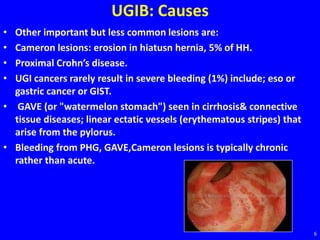
• GAVE (or "watermelon stomach") seen in cirrhosis& connective
tissue diseases; linear ectatic vessels (erythematous stripes) that
arise from the pylorus.
• Bleeding from PHG, GAVE,Cameron lesions is typically chronic
rather than acute.
6
UGIB: Causes
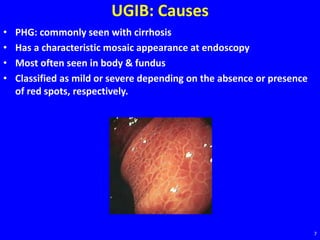
• PHG: commonly seen with cirrhosis
• Has a characteristic mosaic appearance at endoscopy
• Most often seen in body & fundus
• Classified as mild or severe depending on the absence or presence
of red spots, respectively.
7
UGIB: Causes
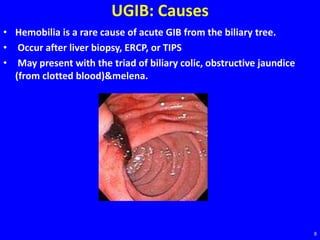
• Hemobilia is a rare cause of acute GIB from the biliary tree.
• Occur after liver biopsy, ERCP, or TIPS
• May present with the triad of biliary colic, obstructive jaundice
(from clotted blood)&melena.
8
UGIB: Causes
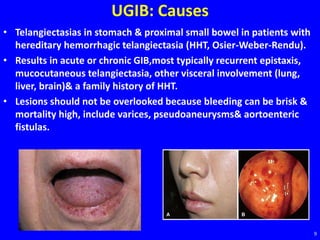
• Telangiectasias in stomach & proximal small bowel in patients with
hereditary hemorrhagic telangiectasia (HHT, Osier-Weber-Rendu).
• Results in acute or chronic GIB,most typically recurrent epistaxis,
mucocutaneous telangiectasia, other visceral involvement (lung,
liver, brain)& a family history of HHT.
• Lesions should not be overlooked because bleeding can be brisk &
mortality high, include varices, pseudoaneurysms& aortoenteric
fistulas.
9
UGIB: Causes
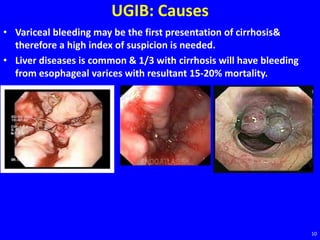
• Variceal bleeding may be the first presentation of cirrhosis&
therefore a high index of suspicion is needed.
• Liver diseases is common & 1/3 with cirrhosis will have bleeding
from esophageal varices with resultant 15-20% mortality.
10
UGIB: Causes
• Acute or chronic pancreatitis can be associated with pseudocyst
formation, erode an adjacent artery (pseudoaneurysm) &rarely,
cause very brisk GIB (hemosuccus pancreaticus).
• A repaired abdominal aortic aneurysm (especially endovascular
repair) lead to the rare complication of an aortoenteric fistula, often
as a result of graft infection or inflammation.
• An aortoenteric fistula can present with a minor herald bleed,
followed by a torrential, life-threatening GIB.
11
Evaluation:
• History
• Physical exam clues to the cause of bleeding.
• Attention to hemodynamic status to quantify amount of blood loss.
• Stratification of risk for ongoing or recurrent GIB (Rockal& Balchford
scores).
12
Evaluation:History
• Type of blood loss—hematemesis, coffee grounds,melena, or
hematochezia—can suggest the origin.
• Slow or intermittent UGIB usually presents with IDA.
• Brisk UGIB presents with hematemesis or coffee-ground emesis.
• Fresh Hematemesis may indicate variceal bleeding.
• Coffee-ground emesis is more typical of gastritis or PUD.
• H/O PUD or NSAID use, chronic alcohol consumption or liver
disease, recent history of pancreatitis, or chronic GERD symptoms
can point to PUD, variceal bleeding, pseudoaneurysmal bleeding, or
esophagitis, respectively.
• H/O aortic endovascular stent placement, biliary manipulation, or
radiation therapy may indicate bleeding from an aortoenteric
fistula, hemobilia, or radiation-related, respectively.
13
Evaluation: PE
• The most important components of Physical Exam are:
• Routine & orthostatic vital signs.
• Tachycardia indicates a 15-30% blood loss
• Hypotension indicates >30% blood loss.
• Orthostasis alone indicates large-volume bleeding even when
routine vital signs are normal.
• Signs of chronic liver disease such as scleral icterus, spider
angiomata, gynecomastia, ascites.
14
Evaluation:Lab tests
• A complete blood count, INR, BUN, serum creatinine.
• The hemoglobin&hematocrit are not accurate measurements of
blood loss during the acute phase of bleeding but may aid decisions
on erythrocyte transfusion requirements.
• Macrocytosis & an elevated INR are clues for underlying liver
disease.
• Microcytosis can indicate chronic bleeding.
• An elevated BUN to creatinine ratio suggests an UGI source.
15
Evaluation: prognostic stratification
• Several prognostic scoring systems (Rokal & Blatchford) to
quantitate the risk of needing endoscopic intervention, but these
are not widely used in clinical practice.
• Blatchford Score can be used to predict patients with signs of UGIB
who can be managed as outpatients if all of the following are
present:
• BUN <18 mg/dL; normal hemoglobin; systolic blood pressure>109
mm Hg; PR<100/min;absence of melena, syncope, , hepatic
&cardiac disease.
16
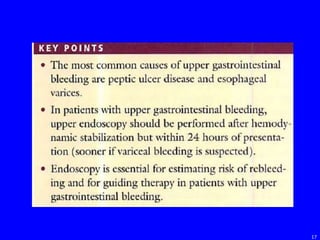
17
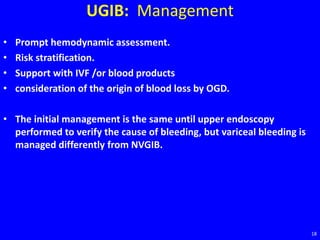
UGIB: Management
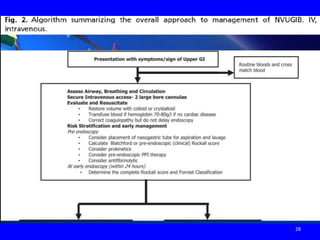
• Prompt hemodynamic assessment.
• Risk stratification.
• Support with IVF /or blood products
• consideration of the origin of blood loss by OGD.
• The initial management is the same until upper endoscopy
performed to verify the cause of bleeding, but variceal bleeding is
managed differently from NVGIB.
18
UGIB: Management
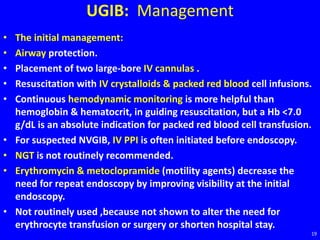
• The initial management:
• Airway protection.
• Placement of two large-bore IV cannulas .
• Resuscitation with IV crystalloids & packed red blood cell infusions.
• Continuous hemodynamic monitoring is more helpful than
hemoglobin & hematocrit, in guiding resuscitation, but a Hb <7.0
g/dL is an absolute indication for packed red blood cell transfusion.
• For suspected NVGIB, IV PPI is often initiated before endoscopy.
• NGT is not routinely recommended.
• Erythromycin & metoclopramide (motility agents) decrease the
need for repeat endoscopy by improving visibility at the initial
endoscopy.
• Not routinely used ,because not shown to alter the need for
erythrocyte transfusion or surgery or shorten hospital stay.
19
UGIB: Management
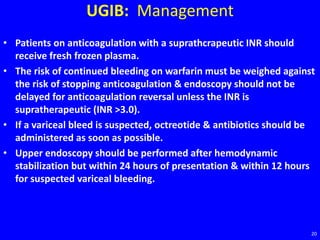
• Patients on anticoagulation with a suprathcrapeutic INR should
receive fresh frozen plasma.
• The risk of continued bleeding on warfarin must be weighed against
the risk of stopping anticoagulation & endoscopy should not be
delayed for anticoagulation reversal unless the INR is
supratherapeutic (INR >3.0).
• If a variceal bleed is suspected, octreotide & antibiotics should be
administered as soon as possible.
• Upper endoscopy should be performed after hemodynamic
stabilization but within 24 hours of presentation & within 12 hours
for suspected variceal bleeding.
20
UGIB: Management
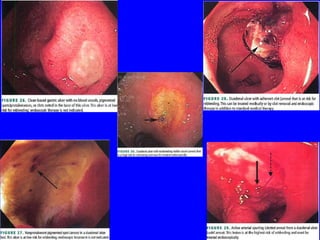
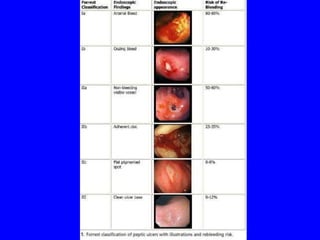
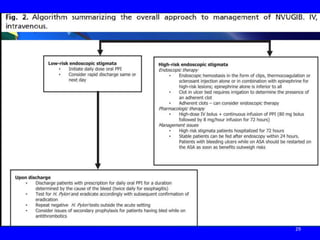
• Endoscopic trt of a bleeding ulcer depends on the ulcer
characteristics, an important predictors of recurrent bleeding.
• Low-risk stigmata: (a clean-based ulcer [rebleeding risk with
medical therapy 3-5%] or a nonprotuberant pigmented spot in an
ulcer bed [rebleeding risk with medical therapy 5-10%]) can be fed
within 24 hours,should receive oral PPI therapy& can undergo early
hospital discharge.
21
UGIB: Management
• High risk stigmata:
• Ulcers with adherent clots (rebleeding risk with medical trt 25-30%)
can be irrigated to disrupt the clot& endoscopic trt provided after.
• Patients with high-risk stigmata (active arterial spurting [rebleeding
risk with medical therapy 80-90%] or a nonbleeding visible vessel in
an ulcer base [rebleeding risk with medical therapy 40-50%]) should
be treated with epinephrine injection+ one of" the following:
• Hemoclips, thermocoagulation, or a sclerosant .
• Duration of PPI depends on the underlying cause of the ulcer
&future need for NSAIDs.
22
23
UGIB: Management
• Bolus + maintenance IV PPI for 72 hs is recommended for patients
at high risk to decrease risk of rebleeding, followed by oral PPI.
• Patients at high risk require hospitalization for at least 72 hours
after intervention.
• Surgery or interventional radiology (for embolization) is reserved
for refractory bleeding or rebleeding despite 2 endoscopic therapies
• Routine second-look endoscopy (within 24 hs) is not recommended,
but it should be performed if visualization or endoscopic treatment
during the initial examination was suboptimal.
• A repeat endoscopy should be performed for rebleeding prior to
considering surgery or interventional radiology.
25
UGIB: Management
• Surveillance endoscopy for gastric ulcers to rule out malignancy (6-8
weeks later) is recommended when biopsies of the ulcer were not
performed during the initial endoscopy, which is generally the case
in the context of a bleeding event.
•
26
UGIB: Management
• Further management of PUD should focus on the cause, with
treatment & confirmation of eradication of Helicobacter pylori
when present & counseling regarding cessation of NSAIDs when
they are causative.
• For patients who require aspirin for cardiovascular prophylaxis,
aspirin should be restarted while continuing PPI therapy when the
benefit outweighs the risk of bleeding.
27
28
29
LGIB:
• Bleeding distal to the ligament of Treitz, typically from the colon or
anorectum.
• Presents with bright red blood per rectum or red/maroon-colored
stool (hematochezia) that is acute in onset, usually without
significant abdominal pain.
• Patients typically have evidence of anemia but less commonly have
hemodynamic instability.
• Although significant hypotension can result from LGIB, it should
prompt consideration of a briskly UGI source.
• The risk increases with age; typically 7th or 8th decade of life.
30
LGIB: Causes
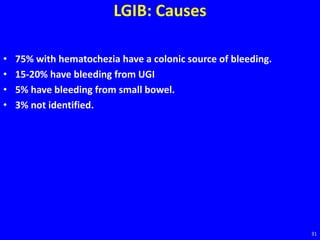
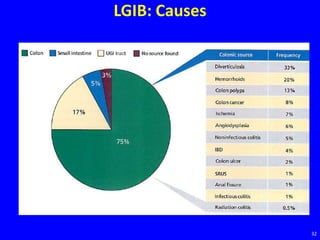
• 75% with hematochezia have a colonic source of bleeding.
• 15-20% have bleeding from UGI
• 5% have bleeding from small bowel.
• 3% not identified.
31
LGIB: Causes
32
33
LGIB Causes: colonic diverticuli
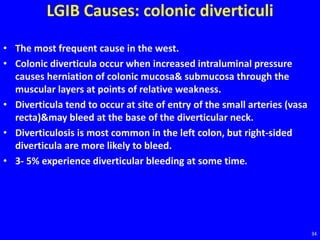
• The most frequent cause in the west.
• Colonic diverticula occur when increased intraluminal pressure
causes herniation of colonic mucosa& submucosa through the
muscular layers at points of relative weakness.
• Diverticula tend to occur at site of entry of the small arteries (vasa
recta)&may bleed at the base of the diverticular neck.
• Diverticulosis is most common in the left colon, but right-sided
diverticula are more likely to bleed.
• 3- 5% experience diverticular bleeding at some time.
34
LGIB: Int hemmorrhoids
• The second most common colonic cause of LGIB( 1st here).
• Characterized by bright red blood on the outside of the stool, on the
toilet paper, or in the toilet bowl.
• Occasionally, large amount of fresh blood & some can pass clots.
35
LGIB: Postpolypectomy
• 13% of LGIB.
• May occur immediately following polyp removal ,typically caused
by vascular injury at the base of the polyp stalk
• bleeding may also be delayed for several days, resulting from
ulceration of colon from electrocautery used for polyp removal.
36
LGIB: Angioectasias
• Angiodysplasia( often incorrectly called AVM) occur less frequently
than diverticular or hemorrhoidal bleeding but are an important
cause & frequency increases with age.
• Can be numerous yet subtle & can be easily missed on colonoscopy
if not actively bleeding.
• Associated with AS & LVAD.
37
LGIB: Evaluation
• Consider whether the bleeding source could be from UGI.
• UGIB typically presents with melena; but may present with
hematochezia when brisk & can be life threatening if not treated
early.
• NGT (even if bile-stained aspirate) can miss 15% of actively bleeding
lesions.
• NGT aspirate cannot rule out a postpyloric bleeding source&can be
incorrect up to 50% of the time.
• if UGI source is suspected, OGD is the most appropriate.
• If an upper source is not a consideration or the patient has had a
negative upper endoscopy, next step colonoscopy.
• Anoscopy or sigmoidoscopy could be considered as alternatives if
there is a high suspicion of hemorrhoids or left-sided bleeding,
respectively, but majority will require a complete colonoscopy.
38
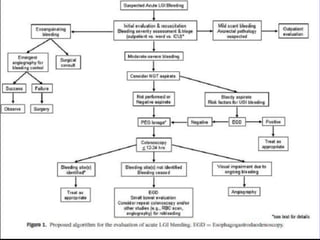
LGIB: Evaluation
• Colonoscopy identifies presumed or definite cause of LGIB 2/3 of
the time.
• The sooner the colonoscopy is performed, the more likely it is to
identify a source; but typically performed on the second day of
hospitalization to allow for resuscitation &proper bowel prep.
• If OGD/colonoscopy do not identify site of bleeding &there is
ongoing bleeding, the next step is to evaluate for obscure GIB.
• If the patient is in shock or severe bleeding causing visual
impairment during colonoscopy ,surgical conslutation should be
done parralel with angiography for emobotherapy / or RBC scan to
identfy bleeding source to guide surgery if embolotherapy was not
successful or not available.
39
LGIB: management
• Patients should be medically resuscitated.
• Two large-bore IV lines should be operational at all times.
• Patients should be hospitalized if they have predictors of severe
bleeding (orthostatic vital signs, bleeding in the first 4 hours of
evaluation, use of anticoagulants including aspirin, or multiple
comorbidities).
• Most LGIB stops without direct intervention within 24 hours, but
early rebleeding is common
40
LGIB: management
• Major complications (such as bowel ischemia, femoral artery
thrombosis, contrast dye reactions& acute kidney failure) occur in
3% of angiographic interventions.
• For patients at significant risk with angiography or who have
persistent bleeding despite radiographic intervention, surgery may
be required to identify & treat the bleeding site.
• Mortality rate is low (<5%), but highest in hospitalized for another
indication.
41
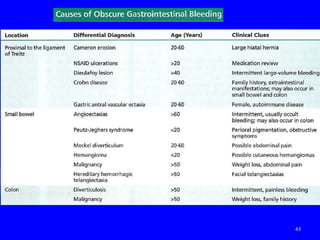
42
43
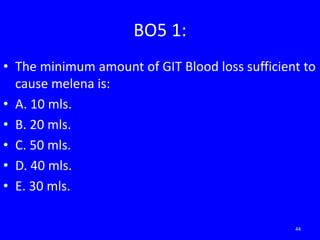
BO5 1:
• The minimum amount of GIT Blood loss sufficient to
cause melena is:
• A. 10 mls.
• B. 20 mls.
• C. 50 mls.
• D. 40 mls.
• E. 30 mls.
44
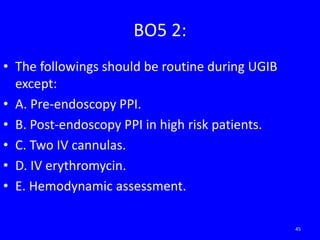
BO5 2:
• The followings should be routine during UGIB
except:
• A. Pre-endoscopy PPI.
• B. Post-endoscopy PPI in high risk patients.
• C. Two IV cannulas.
• D. IV erythromycin.
• E. Hemodynamic assessment.
45
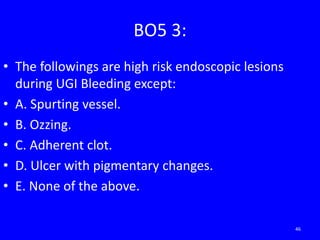
BO5 3:
• The followings are high risk endoscopic lesions
during UGI Bleeding except:
• A. Spurting vessel.
• B. Ozzing.
• C. Adherent clot.
• D. Ulcer with pigmentary changes.
• E. None of the above.
46
BO5 4:
• The best endoscopic hemostatic intervention for
high risk lesions is:
• A. Dual therapy.
• B. Single therapy.
• C. Adrenaline injection alone.
• D. APC alone.
• E. Sclerotherapy.
47
BO5 5:
• Therapeutic interventional radiology can be used
when endoscopic hemostasis fails in:
• A. UGI Bleeding.
• B. lower GI bleeding.
• C. Both.
• D. Neither.
• E. Only for UGI Bleeding.
48
BO5 6:
• The best indication for NGI in GI Bleeding is in:
• A. UGI Bleeding routinely.
• B. lower GI bleeding routinely.
• C. In severe lower GI bleeding with shock.
• D. It can surely exclude upper GI source of bleeding
.
• E. None of the above.
49
BO5 7:
• IV erythromycin in UGI bleeding can:
• A. Improve survival.
• B. Can improve visualization during endoscopy &
reduce the need for re-endoscopy.
• C. Reduce the need for blood transfusions.
• D. Reduces the need for surgery.
• E. Reduce hospital stay.
50
BO5 8:
• Angioectasias as a cause of lower GIB is associated
with:
• A. Aortic stenosis.
• B. Vasculitis.
• C. Hemophilias.
• D. Female gender.
• E. None of the above.
51
BO5 9:
• Endoscopy for significant upper compared with
lower GI Bleeding is usually performed:
• A. Earlier.
• B. Later.
• C. At the same time from the onset.
• D. The second day from the onset.
• E. The 3rd day from the onset.
52
BO5 10:
• Testing for H Pylori during UGI bleeding is
frequently:
• A. Positive.
• B. False positive.
• C. False negative.
• D. Negative.
• E. None.
53
BO5 11:
• Patients with high risk endoscopic upper GI
bleeding lesions should be monitored in the
hospital for:
• A. 12 hours.
• B. 24 hours.
• C. 36 hourd.
• D. 72 hours.
• E. 96 hours.
54
Thanks for attention
55

GIT Bleeding for 4th year.

  • 1.
    GIB Dr. Mohamed Alshekhani Professorin Medicine. MBChB-CABM-FRCP-EBGH. 2015 Download from:http://www.slideshare.net/shaikhani/gib- 2015-for-4th-year 1
  • 2.
    Overview: • Common. • Hospitalizationsdecreased by 4%. • Inpatient death decreased by 23%, from treatment of H pylori & use of PPIs. • Mortality is dependent on: • Age. • Comorbid illness. • Source of bleeding. 2
  • 3.
    Overview: • Severe GIB: •Orthostatic hypotension, shock, Hb decreased >2 g/dL (Hct>6%) from baseline or the need for >2 units of PRBCs. • Hematemesis: • Vomiting of fresh blood or coffee-ground ; most commonly from the esophagus,stomach, or duodenum • Melena (black,tarry stool): • Occurs when as litle as 50-100 mL of blood enters GIT; source is from eso, stomach, SI, or proximal colon. • Hematochezia (bright red blood per rectum): • Most commonly caused by a LGIB & if from UGI source often leads to hemodynamic instability, but distal colon or rectal bleeding rarely cause that. 3
  • 4.
    UGIB: • The mostcommon type of GIB. • It is proximal to the ligament of Treitz. • Mortality 5-10%. • 80% stop spontaneously • Adverse prognostic indicators are: • Advanced age Variceal bleeding • Comorbid conditions (organ failure or disseminated malignancy), • Shock Hematemesis • Increasing number of erythrocyte transfusions • Active bleeding or rebleeding • Visible vessel or clot in an ulcer on endoscopy. • The goal: identify patients at highest risk of mortality so that the adequate in-hospital care can be provided & early discharge low risk ones. 4
  • 5.
    UGIB: Causes • 1.NVUGIB: •PUD(38%) • Eso varices (16%) • Esophagitis (13%) • Malignancy (7%) • Angioectasia (6%) • Mallory-Weiss tear (4%) • Dieulafoy (2%): submucosal arterioles intermittently protrude through the mucosa & cause hemorrhage. • Other rare causes. • 2.Varicceal UGIB: 5
  • 6.
    UGIB: Causes • Otherimportant but less common lesions are: • Cameron lesions: erosion in hiatusn hernia, 5% of HH. • Proximal Crohn’s disease. • UGI cancers rarely result in severe bleeding (1%) include; eso or gastric cancer or GIST. • GAVE (or "watermelon stomach") seen in cirrhosis& connective tissue diseases; linear ectatic vessels (erythematous stripes) that arise from the pylorus. • Bleeding from PHG, GAVE,Cameron lesions is typically chronic rather than acute. 6
  • 7.
    UGIB: Causes • PHG:commonly seen with cirrhosis • Has a characteristic mosaic appearance at endoscopy • Most often seen in body & fundus • Classified as mild or severe depending on the absence or presence of red spots, respectively. 7
  • 8.
    UGIB: Causes • Hemobiliais a rare cause of acute GIB from the biliary tree. • Occur after liver biopsy, ERCP, or TIPS • May present with the triad of biliary colic, obstructive jaundice (from clotted blood)&melena. 8
  • 9.
    UGIB: Causes • Telangiectasiasin stomach & proximal small bowel in patients with hereditary hemorrhagic telangiectasia (HHT, Osier-Weber-Rendu). • Results in acute or chronic GIB,most typically recurrent epistaxis, mucocutaneous telangiectasia, other visceral involvement (lung, liver, brain)& a family history of HHT. • Lesions should not be overlooked because bleeding can be brisk & mortality high, include varices, pseudoaneurysms& aortoenteric fistulas. 9
  • 10.
    UGIB: Causes • Varicealbleeding may be the first presentation of cirrhosis& therefore a high index of suspicion is needed. • Liver diseases is common & 1/3 with cirrhosis will have bleeding from esophageal varices with resultant 15-20% mortality. 10
  • 11.
    UGIB: Causes • Acuteor chronic pancreatitis can be associated with pseudocyst formation, erode an adjacent artery (pseudoaneurysm) &rarely, cause very brisk GIB (hemosuccus pancreaticus). • A repaired abdominal aortic aneurysm (especially endovascular repair) lead to the rare complication of an aortoenteric fistula, often as a result of graft infection or inflammation. • An aortoenteric fistula can present with a minor herald bleed, followed by a torrential, life-threatening GIB. 11
  • 12.
    Evaluation: • History • Physicalexam clues to the cause of bleeding. • Attention to hemodynamic status to quantify amount of blood loss. • Stratification of risk for ongoing or recurrent GIB (Rockal& Balchford scores). 12
  • 13.
    Evaluation:History • Type ofblood loss—hematemesis, coffee grounds,melena, or hematochezia—can suggest the origin. • Slow or intermittent UGIB usually presents with IDA. • Brisk UGIB presents with hematemesis or coffee-ground emesis. • Fresh Hematemesis may indicate variceal bleeding. • Coffee-ground emesis is more typical of gastritis or PUD. • H/O PUD or NSAID use, chronic alcohol consumption or liver disease, recent history of pancreatitis, or chronic GERD symptoms can point to PUD, variceal bleeding, pseudoaneurysmal bleeding, or esophagitis, respectively. • H/O aortic endovascular stent placement, biliary manipulation, or radiation therapy may indicate bleeding from an aortoenteric fistula, hemobilia, or radiation-related, respectively. 13
  • 14.
    Evaluation: PE • Themost important components of Physical Exam are: • Routine & orthostatic vital signs. • Tachycardia indicates a 15-30% blood loss • Hypotension indicates >30% blood loss. • Orthostasis alone indicates large-volume bleeding even when routine vital signs are normal. • Signs of chronic liver disease such as scleral icterus, spider angiomata, gynecomastia, ascites. 14
  • 15.
    Evaluation:Lab tests • Acomplete blood count, INR, BUN, serum creatinine. • The hemoglobin&hematocrit are not accurate measurements of blood loss during the acute phase of bleeding but may aid decisions on erythrocyte transfusion requirements. • Macrocytosis & an elevated INR are clues for underlying liver disease. • Microcytosis can indicate chronic bleeding. • An elevated BUN to creatinine ratio suggests an UGI source. 15
  • 16.
    Evaluation: prognostic stratification •Several prognostic scoring systems (Rokal & Blatchford) to quantitate the risk of needing endoscopic intervention, but these are not widely used in clinical practice. • Blatchford Score can be used to predict patients with signs of UGIB who can be managed as outpatients if all of the following are present: • BUN <18 mg/dL; normal hemoglobin; systolic blood pressure>109 mm Hg; PR<100/min;absence of melena, syncope, , hepatic &cardiac disease. 16
  • 17.
  • 18.
    UGIB: Management • Prompthemodynamic assessment. • Risk stratification. • Support with IVF /or blood products • consideration of the origin of blood loss by OGD. • The initial management is the same until upper endoscopy performed to verify the cause of bleeding, but variceal bleeding is managed differently from NVGIB. 18
  • 19.
    UGIB: Management • Theinitial management: • Airway protection. • Placement of two large-bore IV cannulas . • Resuscitation with IV crystalloids & packed red blood cell infusions. • Continuous hemodynamic monitoring is more helpful than hemoglobin & hematocrit, in guiding resuscitation, but a Hb <7.0 g/dL is an absolute indication for packed red blood cell transfusion. • For suspected NVGIB, IV PPI is often initiated before endoscopy. • NGT is not routinely recommended. • Erythromycin & metoclopramide (motility agents) decrease the need for repeat endoscopy by improving visibility at the initial endoscopy. • Not routinely used ,because not shown to alter the need for erythrocyte transfusion or surgery or shorten hospital stay. 19
  • 20.
    UGIB: Management • Patientson anticoagulation with a suprathcrapeutic INR should receive fresh frozen plasma. • The risk of continued bleeding on warfarin must be weighed against the risk of stopping anticoagulation & endoscopy should not be delayed for anticoagulation reversal unless the INR is supratherapeutic (INR >3.0). • If a variceal bleed is suspected, octreotide & antibiotics should be administered as soon as possible. • Upper endoscopy should be performed after hemodynamic stabilization but within 24 hours of presentation & within 12 hours for suspected variceal bleeding. 20
  • 21.
    UGIB: Management • Endoscopictrt of a bleeding ulcer depends on the ulcer characteristics, an important predictors of recurrent bleeding. • Low-risk stigmata: (a clean-based ulcer [rebleeding risk with medical therapy 3-5%] or a nonprotuberant pigmented spot in an ulcer bed [rebleeding risk with medical therapy 5-10%]) can be fed within 24 hours,should receive oral PPI therapy& can undergo early hospital discharge. 21
  • 22.
    UGIB: Management • Highrisk stigmata: • Ulcers with adherent clots (rebleeding risk with medical trt 25-30%) can be irrigated to disrupt the clot& endoscopic trt provided after. • Patients with high-risk stigmata (active arterial spurting [rebleeding risk with medical therapy 80-90%] or a nonbleeding visible vessel in an ulcer base [rebleeding risk with medical therapy 40-50%]) should be treated with epinephrine injection+ one of" the following: • Hemoclips, thermocoagulation, or a sclerosant . • Duration of PPI depends on the underlying cause of the ulcer &future need for NSAIDs. 22
  • 23.
  • 25.
    UGIB: Management • Bolus+ maintenance IV PPI for 72 hs is recommended for patients at high risk to decrease risk of rebleeding, followed by oral PPI. • Patients at high risk require hospitalization for at least 72 hours after intervention. • Surgery or interventional radiology (for embolization) is reserved for refractory bleeding or rebleeding despite 2 endoscopic therapies • Routine second-look endoscopy (within 24 hs) is not recommended, but it should be performed if visualization or endoscopic treatment during the initial examination was suboptimal. • A repeat endoscopy should be performed for rebleeding prior to considering surgery or interventional radiology. 25
  • 26.
    UGIB: Management • Surveillanceendoscopy for gastric ulcers to rule out malignancy (6-8 weeks later) is recommended when biopsies of the ulcer were not performed during the initial endoscopy, which is generally the case in the context of a bleeding event. • 26
  • 27.
    UGIB: Management • Furthermanagement of PUD should focus on the cause, with treatment & confirmation of eradication of Helicobacter pylori when present & counseling regarding cessation of NSAIDs when they are causative. • For patients who require aspirin for cardiovascular prophylaxis, aspirin should be restarted while continuing PPI therapy when the benefit outweighs the risk of bleeding. 27
  • 28.
  • 29.
  • 30.
    LGIB: • Bleeding distalto the ligament of Treitz, typically from the colon or anorectum. • Presents with bright red blood per rectum or red/maroon-colored stool (hematochezia) that is acute in onset, usually without significant abdominal pain. • Patients typically have evidence of anemia but less commonly have hemodynamic instability. • Although significant hypotension can result from LGIB, it should prompt consideration of a briskly UGI source. • The risk increases with age; typically 7th or 8th decade of life. 30
  • 31.
    LGIB: Causes • 75%with hematochezia have a colonic source of bleeding. • 15-20% have bleeding from UGI • 5% have bleeding from small bowel. • 3% not identified. 31
  • 32.
  • 33.
  • 34.
    LGIB Causes: colonicdiverticuli • The most frequent cause in the west. • Colonic diverticula occur when increased intraluminal pressure causes herniation of colonic mucosa& submucosa through the muscular layers at points of relative weakness. • Diverticula tend to occur at site of entry of the small arteries (vasa recta)&may bleed at the base of the diverticular neck. • Diverticulosis is most common in the left colon, but right-sided diverticula are more likely to bleed. • 3- 5% experience diverticular bleeding at some time. 34
  • 35.
    LGIB: Int hemmorrhoids •The second most common colonic cause of LGIB( 1st here). • Characterized by bright red blood on the outside of the stool, on the toilet paper, or in the toilet bowl. • Occasionally, large amount of fresh blood & some can pass clots. 35
  • 36.
    LGIB: Postpolypectomy • 13%of LGIB. • May occur immediately following polyp removal ,typically caused by vascular injury at the base of the polyp stalk • bleeding may also be delayed for several days, resulting from ulceration of colon from electrocautery used for polyp removal. 36
  • 37.
    LGIB: Angioectasias • Angiodysplasia(often incorrectly called AVM) occur less frequently than diverticular or hemorrhoidal bleeding but are an important cause & frequency increases with age. • Can be numerous yet subtle & can be easily missed on colonoscopy if not actively bleeding. • Associated with AS & LVAD. 37
  • 38.
    LGIB: Evaluation • Considerwhether the bleeding source could be from UGI. • UGIB typically presents with melena; but may present with hematochezia when brisk & can be life threatening if not treated early. • NGT (even if bile-stained aspirate) can miss 15% of actively bleeding lesions. • NGT aspirate cannot rule out a postpyloric bleeding source&can be incorrect up to 50% of the time. • if UGI source is suspected, OGD is the most appropriate. • If an upper source is not a consideration or the patient has had a negative upper endoscopy, next step colonoscopy. • Anoscopy or sigmoidoscopy could be considered as alternatives if there is a high suspicion of hemorrhoids or left-sided bleeding, respectively, but majority will require a complete colonoscopy. 38
  • 39.
    LGIB: Evaluation • Colonoscopyidentifies presumed or definite cause of LGIB 2/3 of the time. • The sooner the colonoscopy is performed, the more likely it is to identify a source; but typically performed on the second day of hospitalization to allow for resuscitation &proper bowel prep. • If OGD/colonoscopy do not identify site of bleeding &there is ongoing bleeding, the next step is to evaluate for obscure GIB. • If the patient is in shock or severe bleeding causing visual impairment during colonoscopy ,surgical conslutation should be done parralel with angiography for emobotherapy / or RBC scan to identfy bleeding source to guide surgery if embolotherapy was not successful or not available. 39
  • 40.
    LGIB: management • Patientsshould be medically resuscitated. • Two large-bore IV lines should be operational at all times. • Patients should be hospitalized if they have predictors of severe bleeding (orthostatic vital signs, bleeding in the first 4 hours of evaluation, use of anticoagulants including aspirin, or multiple comorbidities). • Most LGIB stops without direct intervention within 24 hours, but early rebleeding is common 40
  • 41.
    LGIB: management • Majorcomplications (such as bowel ischemia, femoral artery thrombosis, contrast dye reactions& acute kidney failure) occur in 3% of angiographic interventions. • For patients at significant risk with angiography or who have persistent bleeding despite radiographic intervention, surgery may be required to identify & treat the bleeding site. • Mortality rate is low (<5%), but highest in hospitalized for another indication. 41
  • 42.
  • 43.
  • 44.
    BO5 1: • Theminimum amount of GIT Blood loss sufficient to cause melena is: • A. 10 mls. • B. 20 mls. • C. 50 mls. • D. 40 mls. • E. 30 mls. 44
  • 45.
    BO5 2: • Thefollowings should be routine during UGIB except: • A. Pre-endoscopy PPI. • B. Post-endoscopy PPI in high risk patients. • C. Two IV cannulas. • D. IV erythromycin. • E. Hemodynamic assessment. 45
  • 46.
    BO5 3: • Thefollowings are high risk endoscopic lesions during UGI Bleeding except: • A. Spurting vessel. • B. Ozzing. • C. Adherent clot. • D. Ulcer with pigmentary changes. • E. None of the above. 46
  • 47.
    BO5 4: • Thebest endoscopic hemostatic intervention for high risk lesions is: • A. Dual therapy. • B. Single therapy. • C. Adrenaline injection alone. • D. APC alone. • E. Sclerotherapy. 47
  • 48.
    BO5 5: • Therapeuticinterventional radiology can be used when endoscopic hemostasis fails in: • A. UGI Bleeding. • B. lower GI bleeding. • C. Both. • D. Neither. • E. Only for UGI Bleeding. 48
  • 49.
    BO5 6: • Thebest indication for NGI in GI Bleeding is in: • A. UGI Bleeding routinely. • B. lower GI bleeding routinely. • C. In severe lower GI bleeding with shock. • D. It can surely exclude upper GI source of bleeding . • E. None of the above. 49
  • 50.
    BO5 7: • IVerythromycin in UGI bleeding can: • A. Improve survival. • B. Can improve visualization during endoscopy & reduce the need for re-endoscopy. • C. Reduce the need for blood transfusions. • D. Reduces the need for surgery. • E. Reduce hospital stay. 50
  • 51.
    BO5 8: • Angioectasiasas a cause of lower GIB is associated with: • A. Aortic stenosis. • B. Vasculitis. • C. Hemophilias. • D. Female gender. • E. None of the above. 51
  • 52.
    BO5 9: • Endoscopyfor significant upper compared with lower GI Bleeding is usually performed: • A. Earlier. • B. Later. • C. At the same time from the onset. • D. The second day from the onset. • E. The 3rd day from the onset. 52
  • 53.
    BO5 10: • Testingfor H Pylori during UGI bleeding is frequently: • A. Positive. • B. False positive. • C. False negative. • D. Negative. • E. None. 53
  • 54.
    BO5 11: • Patientswith high risk endoscopic upper GI bleeding lesions should be monitored in the hospital for: • A. 12 hours. • B. 24 hours. • C. 36 hourd. • D. 72 hours. • E. 96 hours. 54
  • 55.