Approach & management
Acute lower Gastrointestinal
Bleeding
DR ABDUL RUB
PGY3 MEM
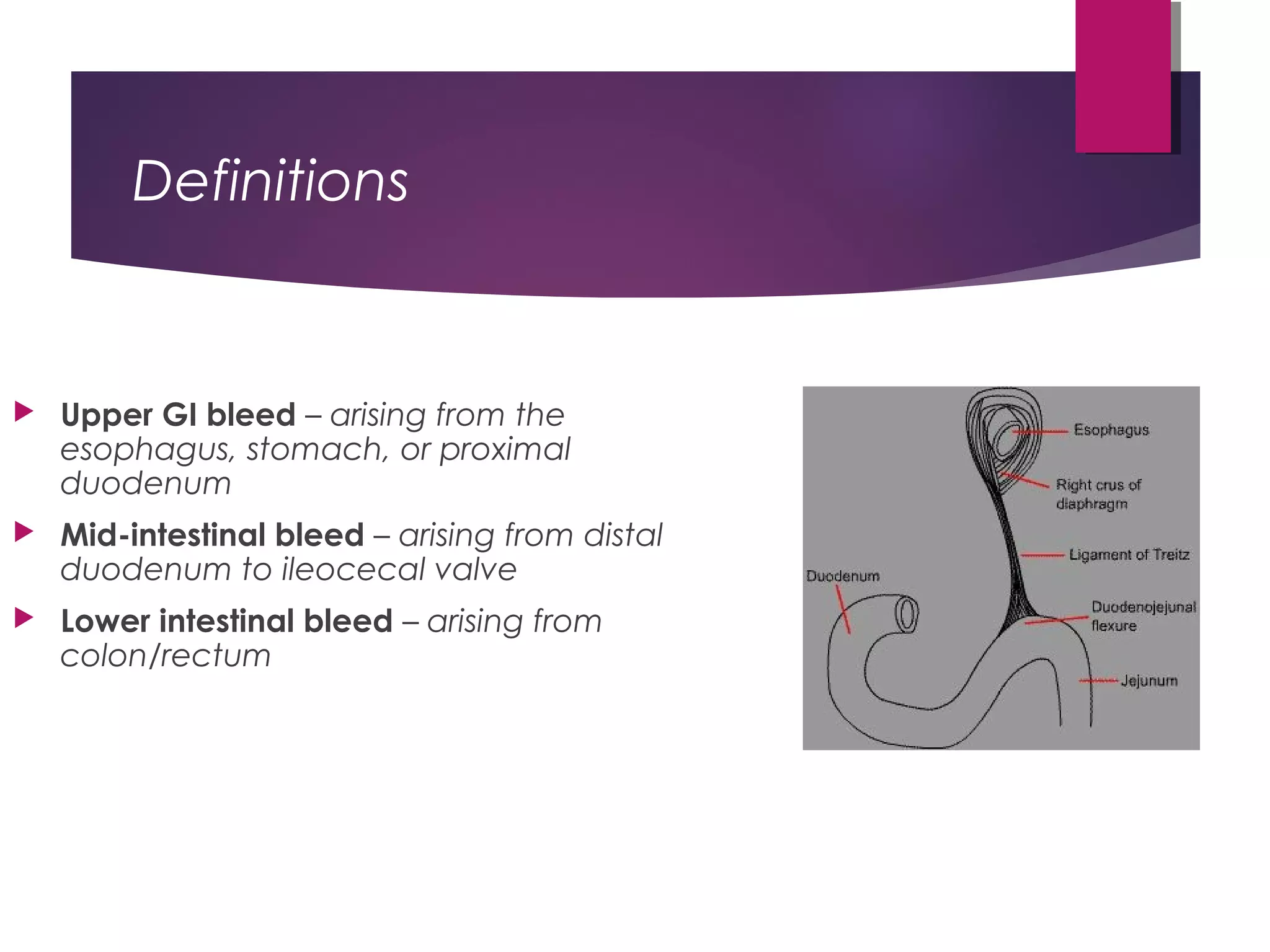
Definitions
 Upper GI bleed – arising from the
esophagus, stomach, or proximal
duodenum
 Mid-intestinal bleed – arising from distal
duodenum to ileocecal valve
 Lower intestinal bleed – arising from
colon/rectum
Stool color and origin/pace of
bleeding
• Guaiac positive stool
– Occult blood in stool
– Does not provide any localizing information
– Indicates slow pace, usually low volume bleeding
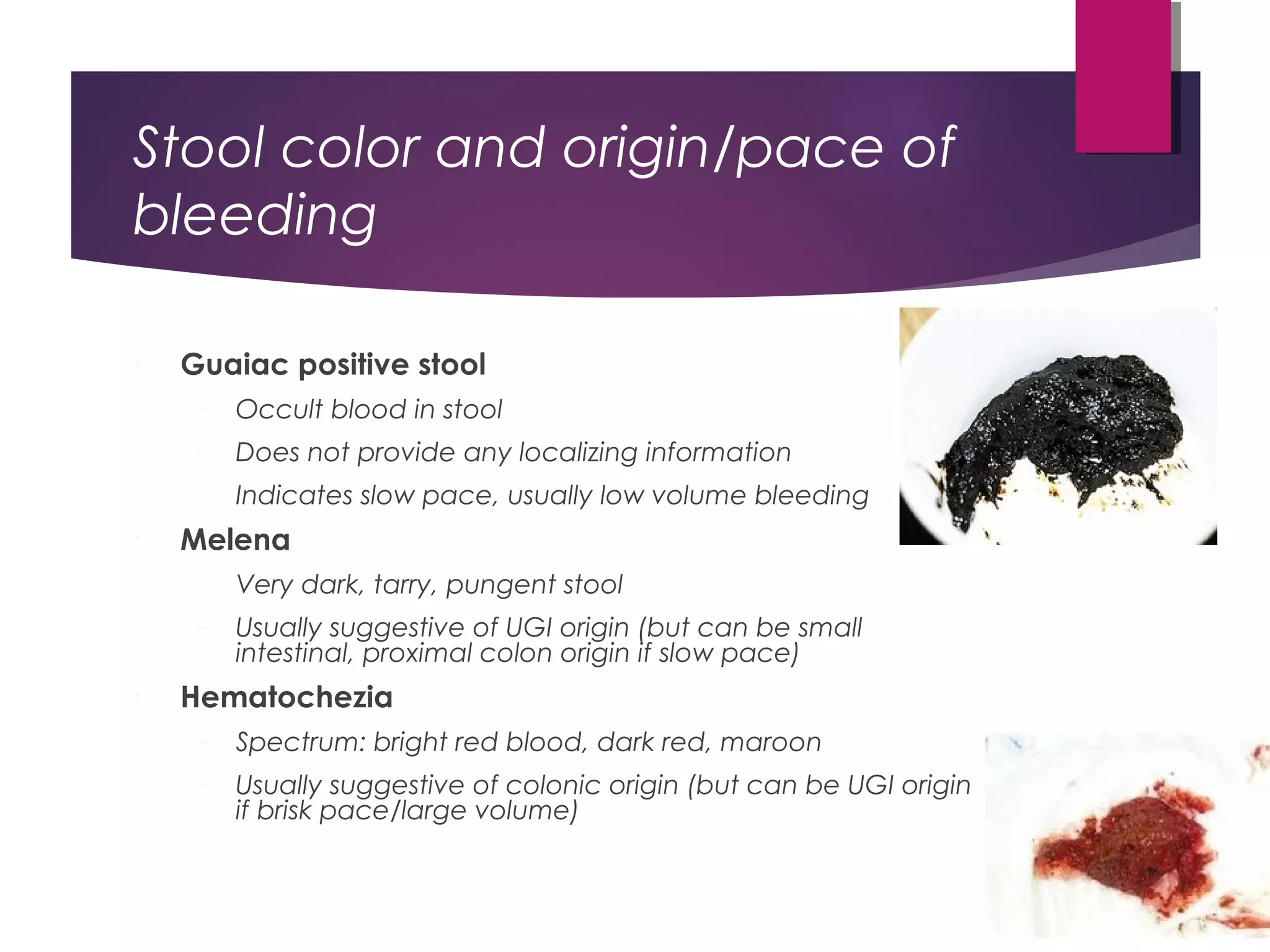
• Melena
– Very dark, tarry, pungent stool
– Usually suggestive of UGI origin (but can be small
intestinal, proximal colon origin if slow pace)
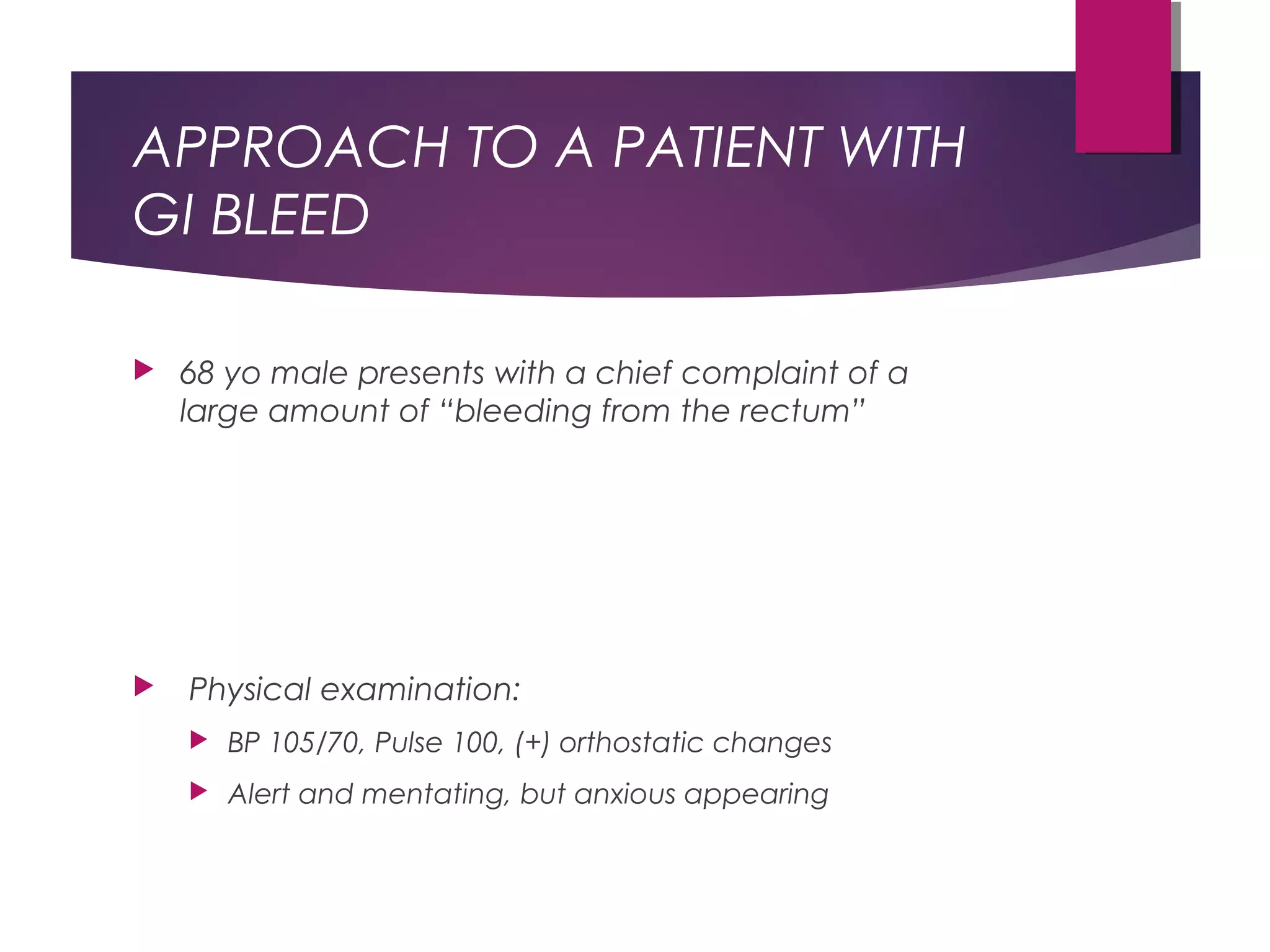
• Hematochezia
– Spectrum: bright red blood, dark red, maroon
– Usually suggestive of colonic origin (but can be UGI origin
if brisk pace/large volume)
APPROACH TO A PATIENT WITH
GI BLEED
 68 yo male presents with a chief complaint of a
large amount of “bleeding from the rectum”
 Physical examination:
 BP 105/70, Pulse 100, (+) orthostatic changes
 Alert and mentating, but anxious appearing
Case – Physical Exam
 HOPI: Describes bleeding as large volume, very dark
maroon colored stool
 Has occurred 4 times over past 3 hours
 He felt light headed and nearly passed out upon
trying to get up to go the bathroom
Case - HPI
 Denies abdominal pain, nausea, vomiting,
antecedent retching
 No history of heartburn, dysphagia, weight loss
 No history of diarrhea or constipation/hard stools
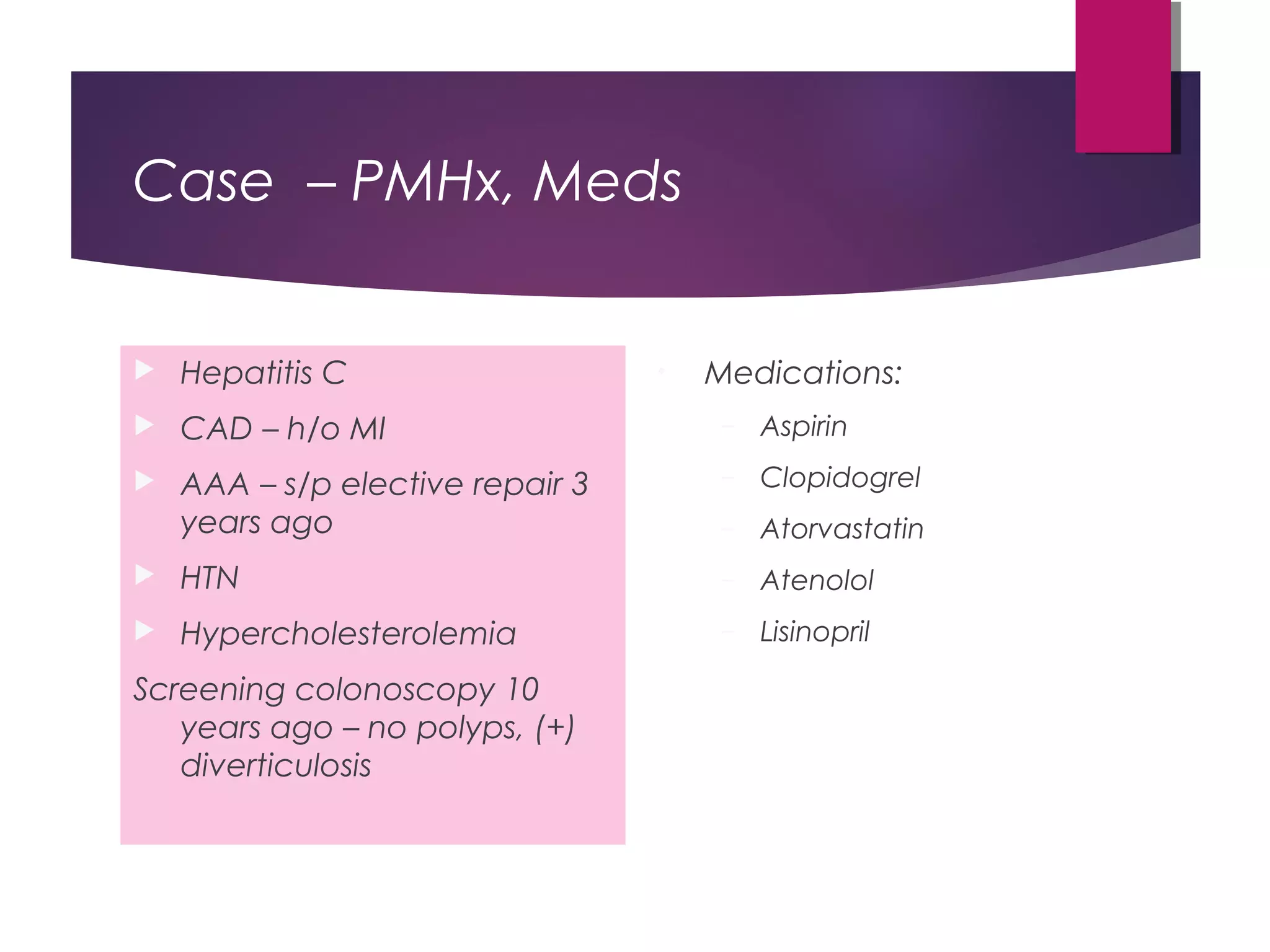
Case – PMHx, Meds
 Hepatitis C
 CAD – h/o MI
 AAA – s/p elective repair 3
years ago
 HTN
 Hypercholesterolemia
Screening colonoscopy 10
years ago – no polyps, (+)
diverticulosis
• Medications:
– Aspirin
– Clopidogrel
– Atorvastatin
– Atenolol
– Lisinopril
examination
 Anicteric
 Mid line scar, benign abdomen, no tender liver edge
palpable in epigastrium, no splenomegaly
 Rectal examination – no masses, dark maroon blood
APPROACH STARTS FROM
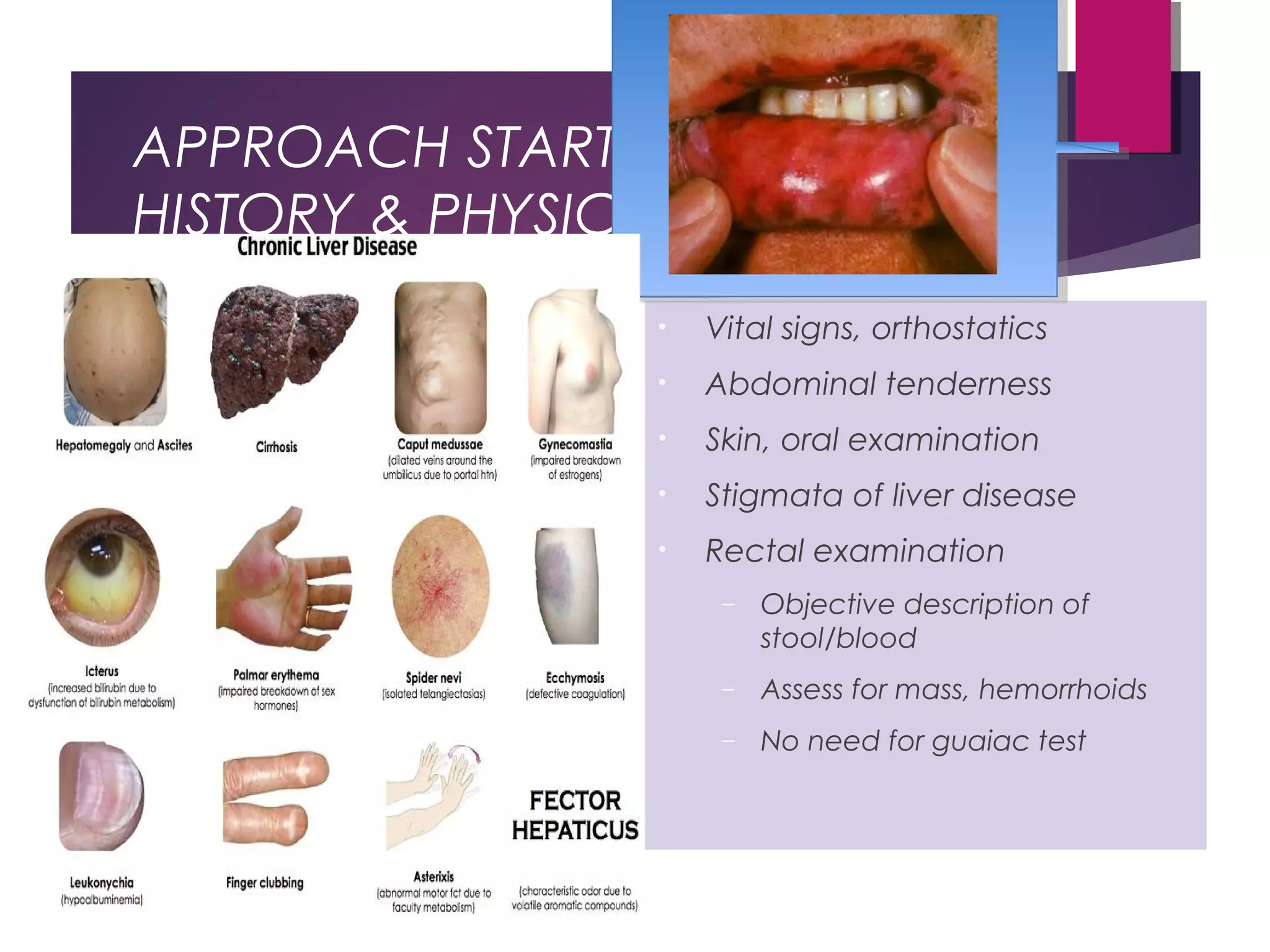
HISTORY & PHYSICAL EXAM
History
 Localizing symptoms
 History of prior GIB
 NSAID/aspirin use
 Liver disease/cirrhosis
 Vascular disease
 Aortic valvular disease, chronic
renal failure
 AAA repair
 Radiation exposure
 Family history of GIB
Physical
Examination
• Vital signs, orthostatics
• Abdominal tenderness
• Skin, oral examination
• Stigmata of liver disease
• Rectal examination
– Objective description of
stool/blood
– Assess for mass, hemorrhoids
– No need for guaiac test
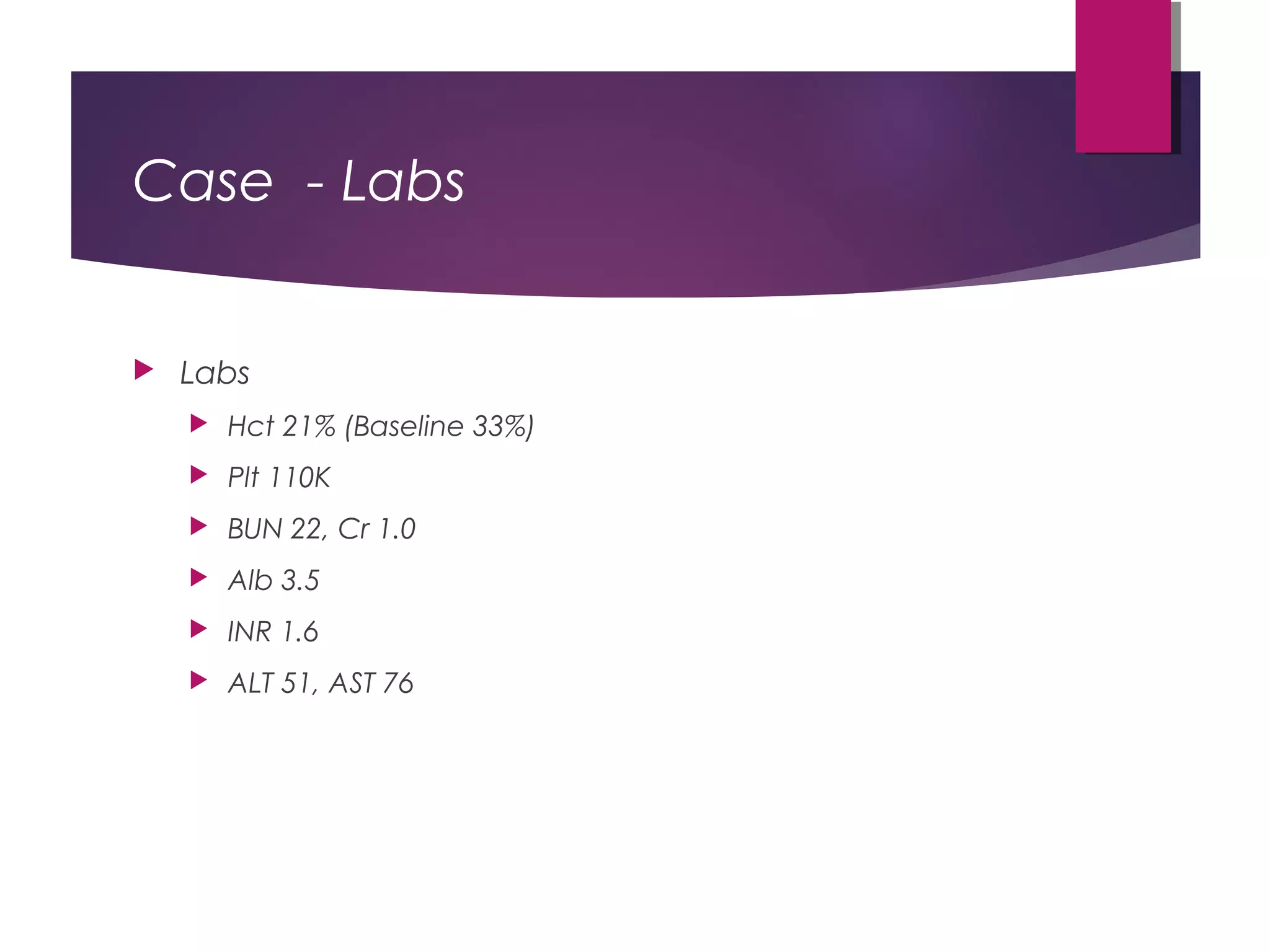
Case - Labs
 Labs
 Hct 21% (Baseline 33%)
 Plt 110K
 BUN 22, Cr 1.0
 Alb 3.5
 INR 1.6
 ALT 51, AST 76
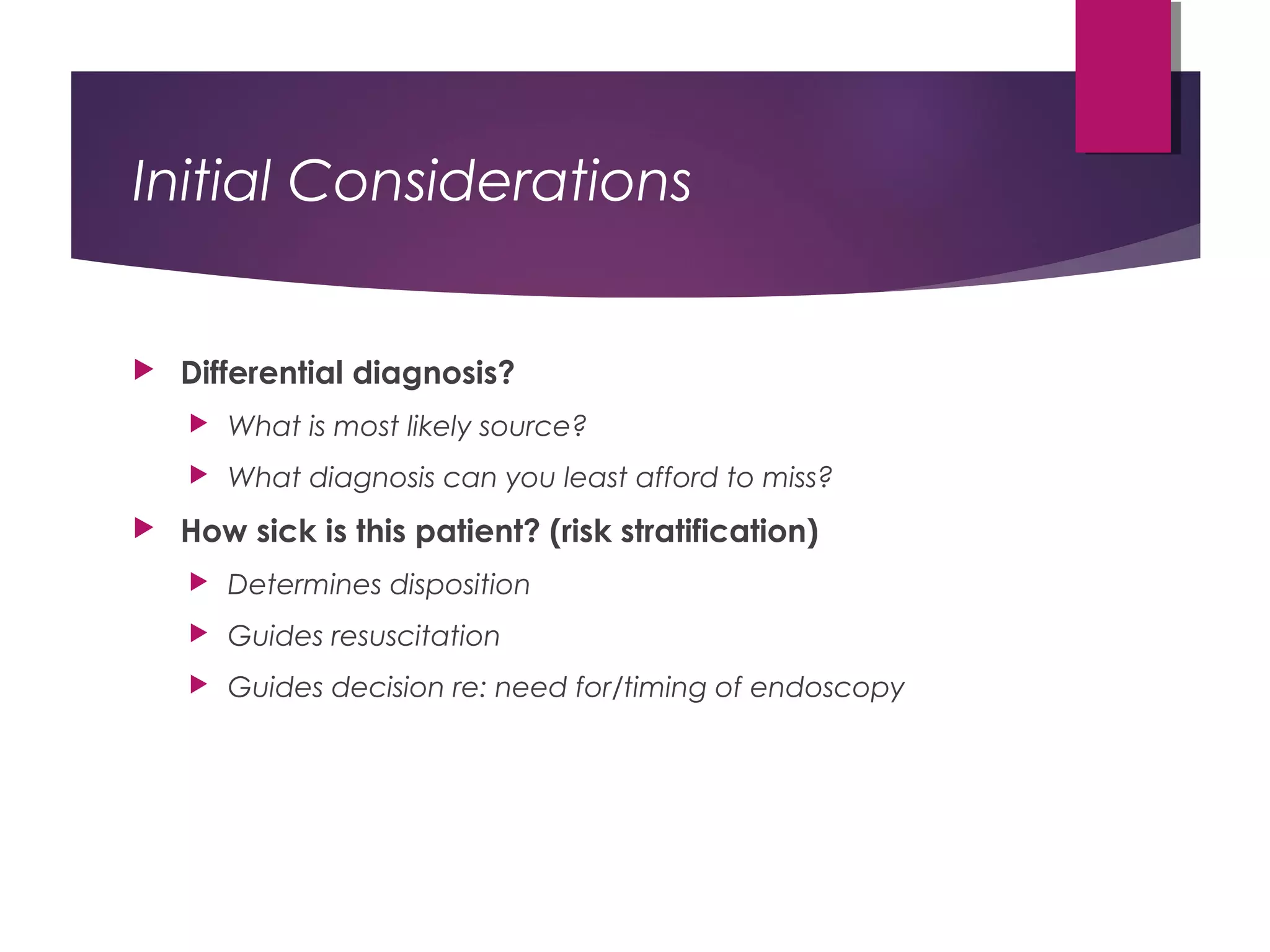
Initial Considerations
 Differential diagnosis?
 What is most likely source?
 What diagnosis can you least afford to miss?
 How sick is this patient? (risk stratification)
 Determines disposition
 Guides resuscitation
 Guides decision re: need for/timing of endoscopy
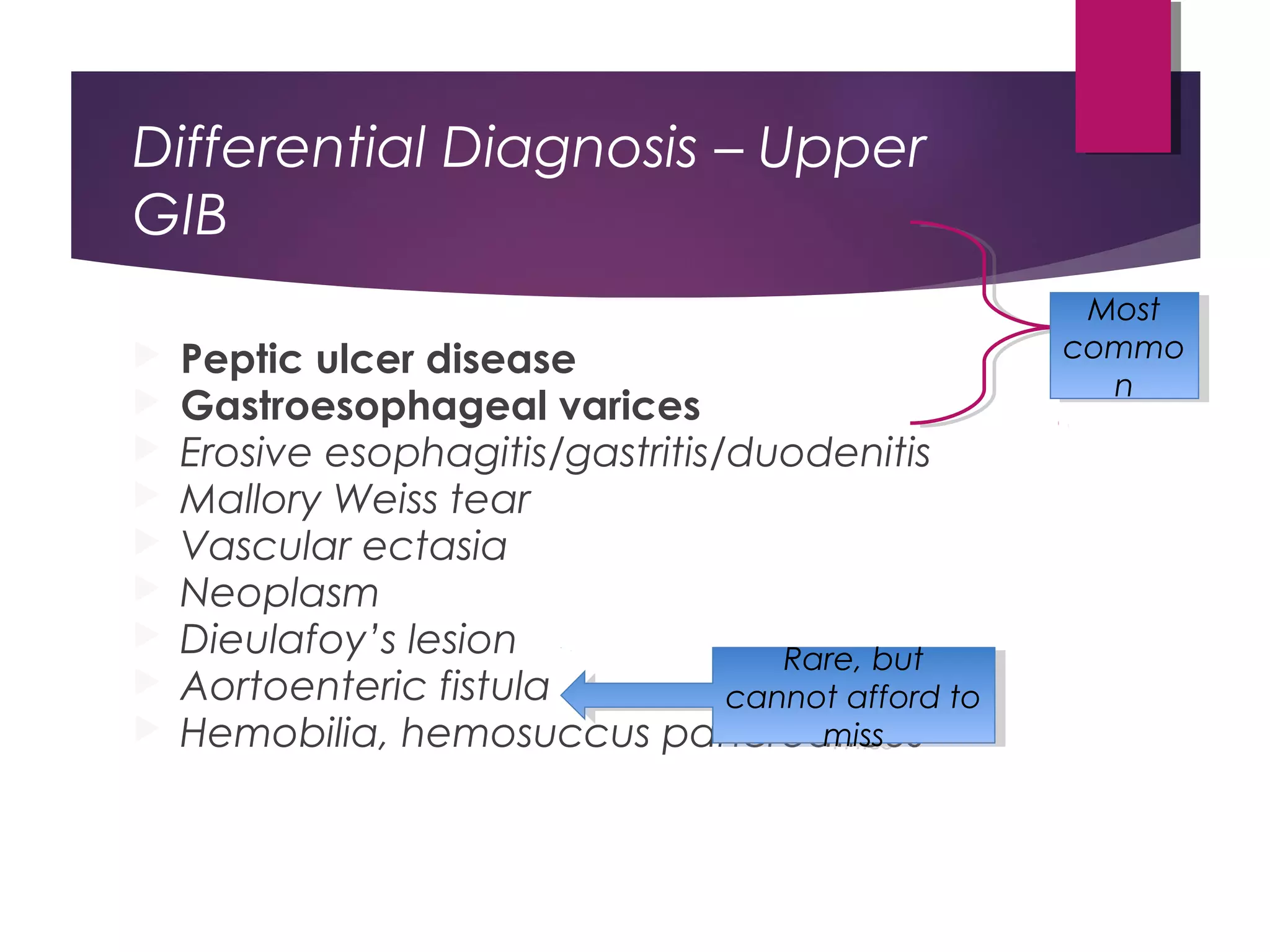
Differential Diagnosis – Upper
GIB
 Peptic ulcer disease
 Gastroesophageal varices
 Erosive esophagitis/gastritis/duodenitis
 Mallory Weiss tear
 Vascular ectasia
 Neoplasm
 Dieulafoy’s lesion
 Aortoenteric fistula
 Hemobilia, hemosuccus pancreaticus
Rare, but
cannot afford to
miss
Rare, but
cannot afford to
miss
Most
commo
n
Most
commo
n
Differential Diagnosis – Lower
GIB
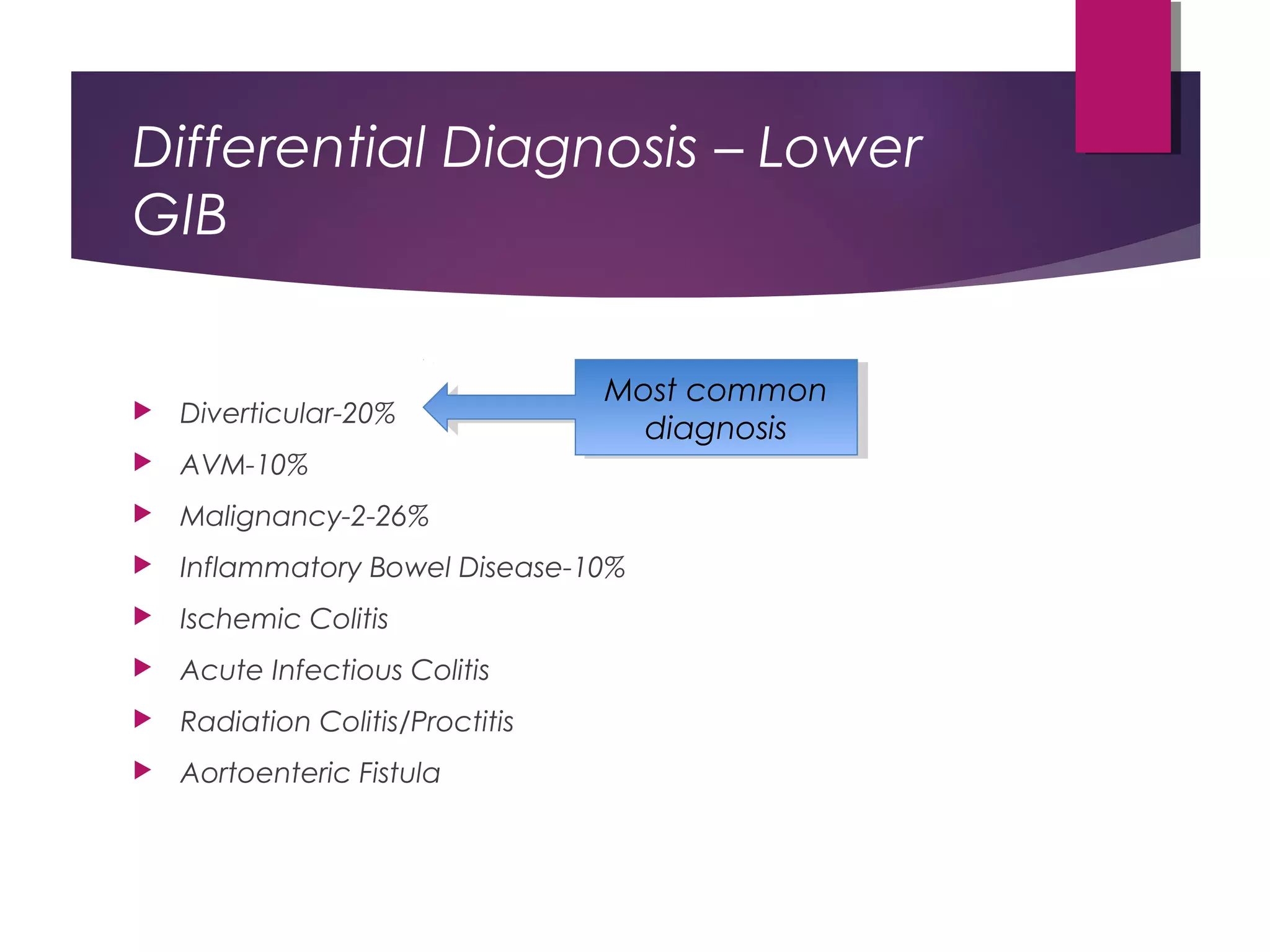
 Diverticular-20%
 AVM-10%
 Malignancy-2-26%
 Inflammatory Bowel Disease-10%
 Ischemic Colitis
 Acute Infectious Colitis
 Radiation Colitis/Proctitis
 Aortoenteric Fistula
Most common
diagnosis
Most common
diagnosis
Narrowing the DDx: Upper or
Lower Source?
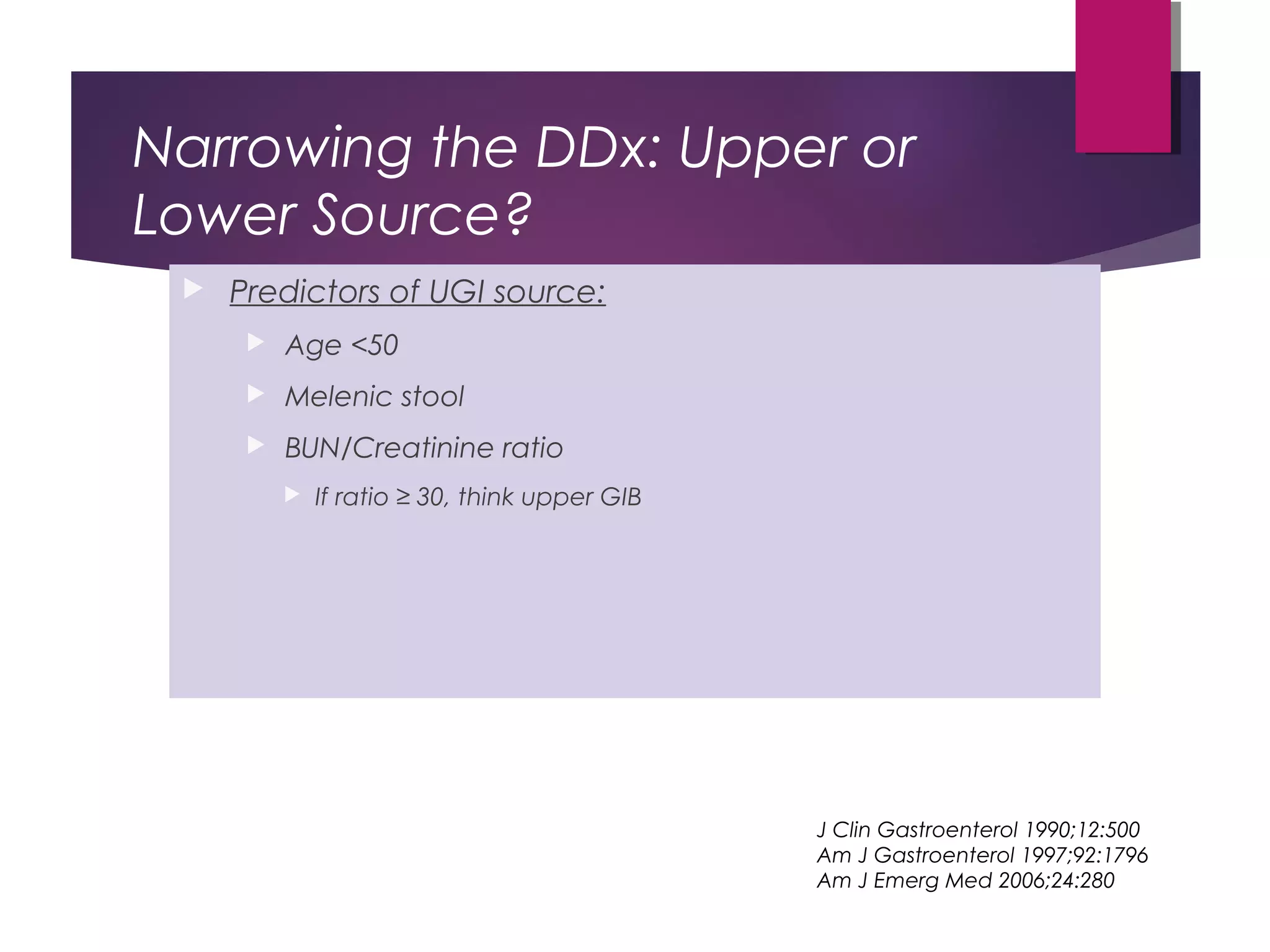
 Predictors of UGI source:
 Age <50
 Melenic stool
 BUN/Creatinine ratio
 If ratio ≥ 30, think upper GIB
J Clin Gastroenterol 1990;12:500
Am J Gastroenterol 1997;92:1796
Am J Emerg Med 2006;24:280
Utility of NG Tube
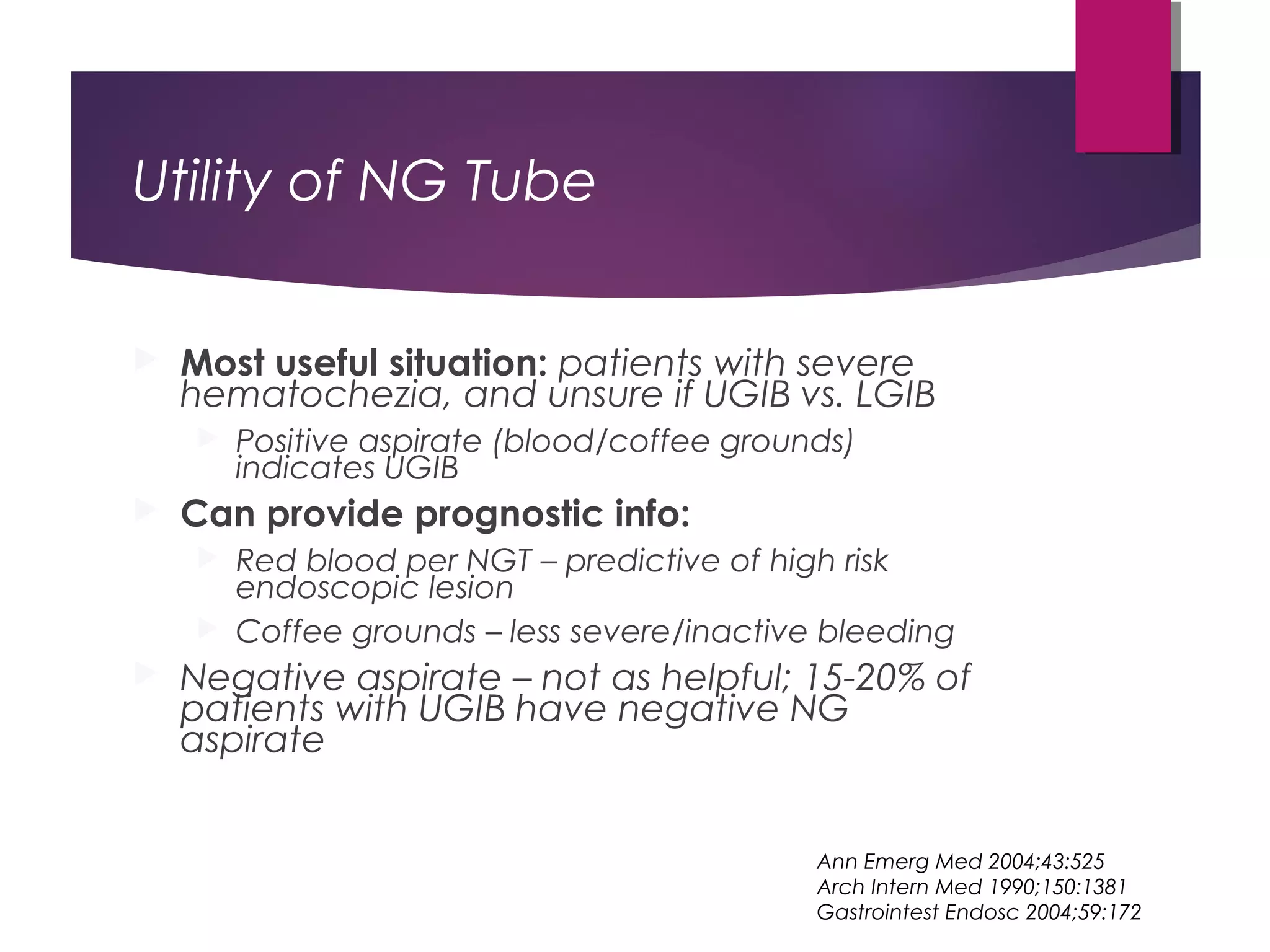
 Most useful situation: patients with severe
hematochezia, and unsure if UGIB vs. LGIB
 Positive aspirate (blood/coffee grounds)
indicates UGIB
 Can provide prognostic info:
 Red blood per NGT – predictive of high risk
endoscopic lesion
 Coffee grounds – less severe/inactive bleeding
 Negative aspirate – not as helpful; 15-20% of
patients with UGIB have negative NG
aspirate
Ann Emerg Med 2004;43:525
Arch Intern Med 1990;150:1381
Gastrointest Endosc 2004;59:172
Initial Assessment
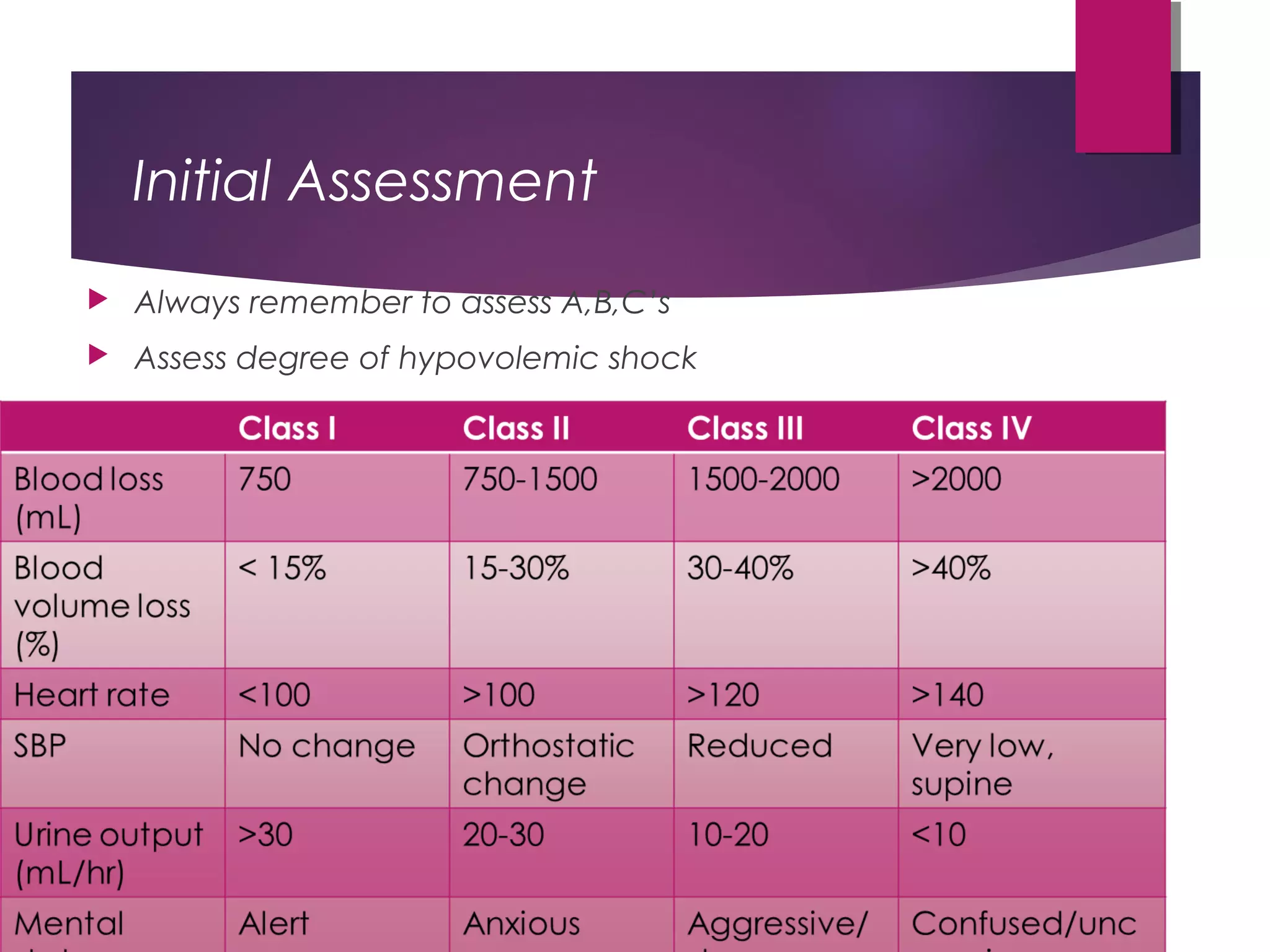
 Always remember to assess A,B,C’s
 Assess degree of hypovolemic shock
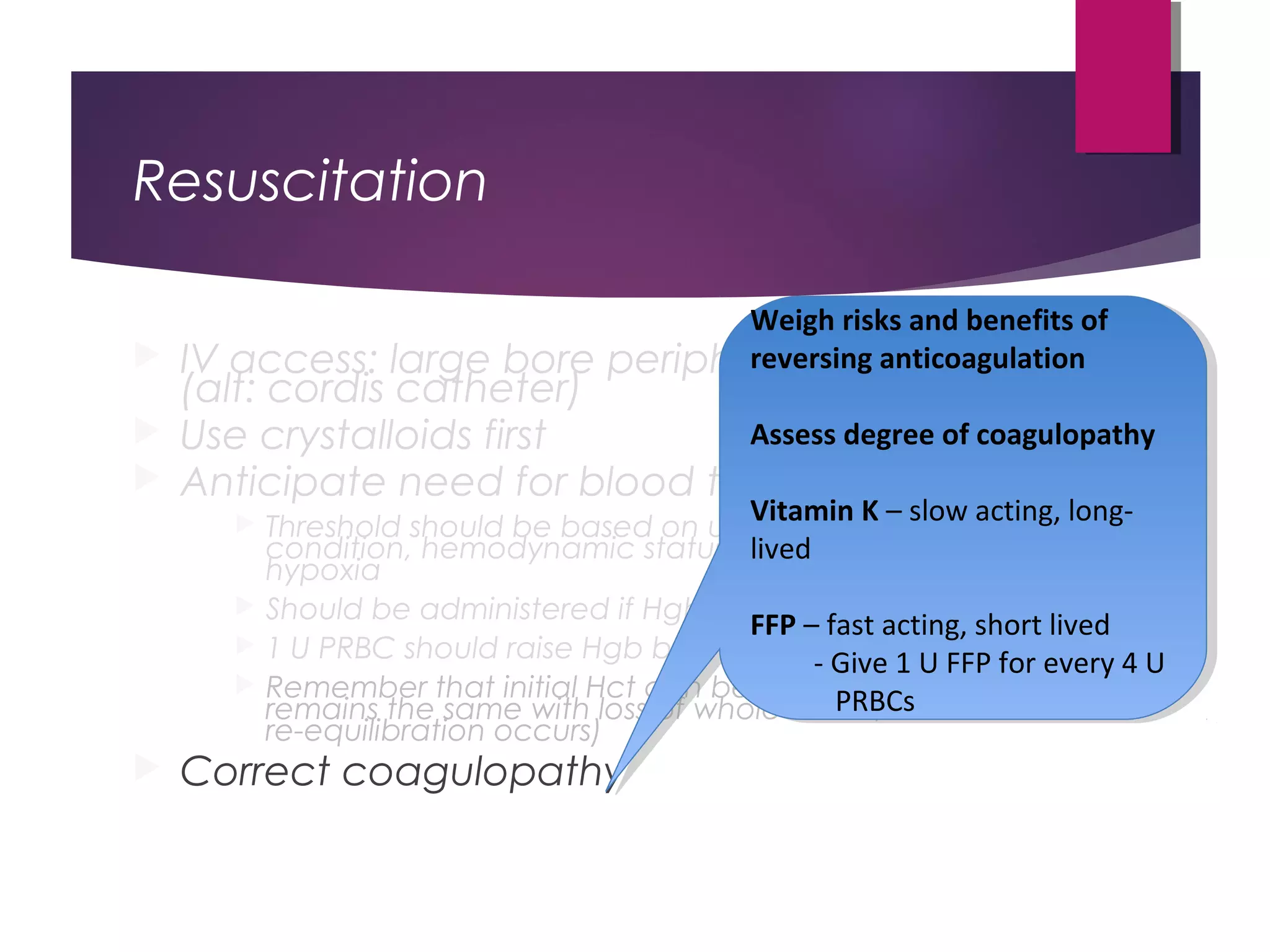
Resuscitation
 IV access: large bore peripheral IVs best
 (alt: cordis catheter)
 Use crystalloids first
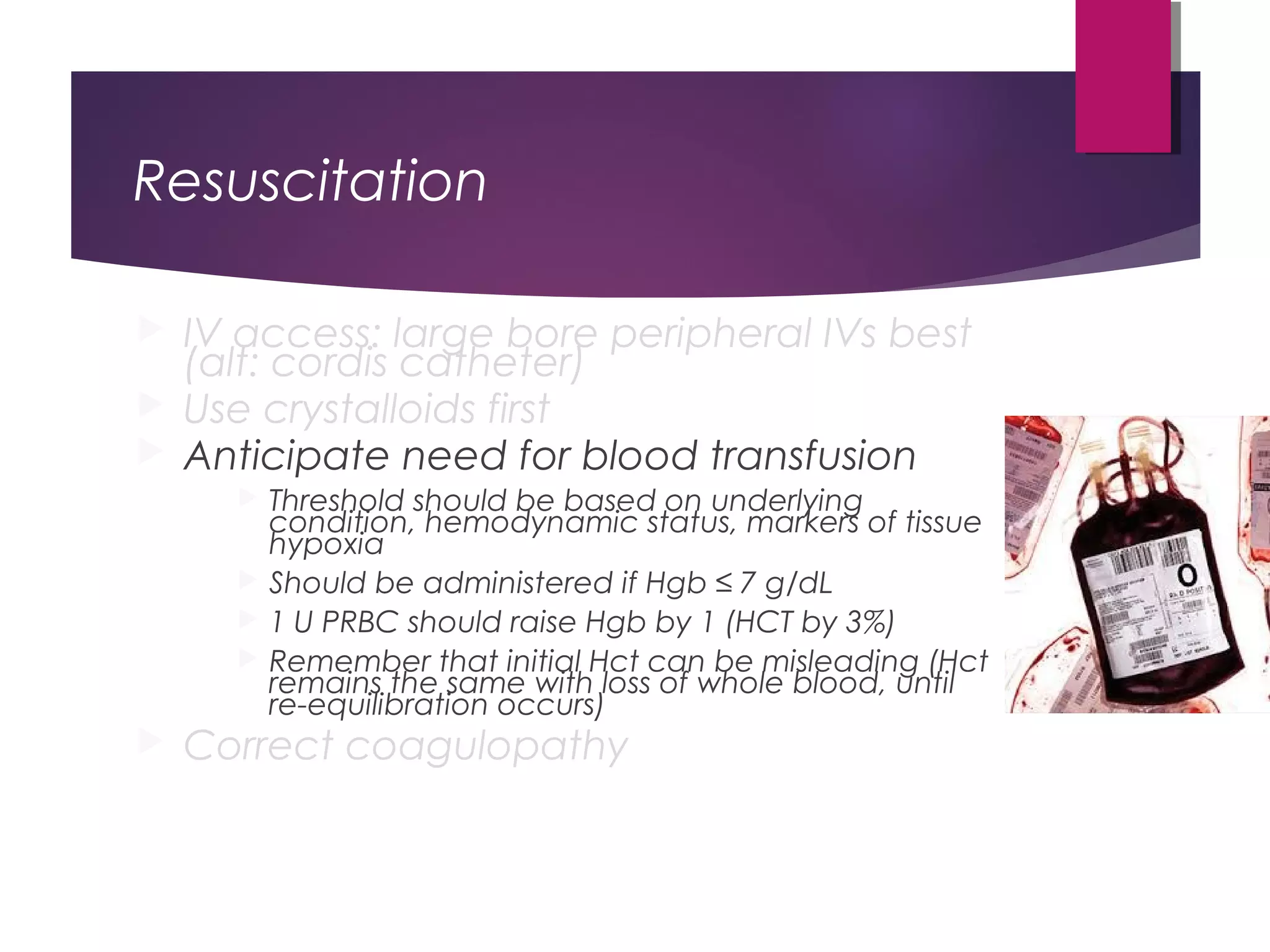
 Anticipate need for blood transfusion
 Threshold should be based on underlying
condition, hemodynamic status, markers of tissue
hypoxia
 Should be administered if Hgb ≤ 7 g/dL
 1 U PRBC should raise Hgb by 1 (HCT by 3%)
 Remember that initial Hct can be misleading (Hct
remains the same with loss of whole blood, until
re-equilibration occurs)
 Correct coagulopathy
Resuscitation
 IV access: large bore peripheral IVs best
(alt: cordis catheter)
 Use crystalloids first
 Anticipate need for blood transfusion
 Threshold should be based on underlying
condition, hemodynamic status, markers of tissue
hypoxia
 Should be administered if Hgb ≤ 7 g/dL
 1 U PRBC should raise Hgb by 1 (HCT by 3%)
 Remember that initial Hct can be misleading (Hct
remains the same with loss of whole blood, until
re-equilibration occurs)
 Correct coagulopathy
Transfusion Strategy
 Randomized trial:
 921 subjects with severe acute GIB
 Restrictive (tx when Hgb<7; target 7-9) vs. Liberal (tx
when Hgb<9; target 9-11)
 Primary outcome: all cause mortality rate within 45 days
NEJM 2013;368;11-21
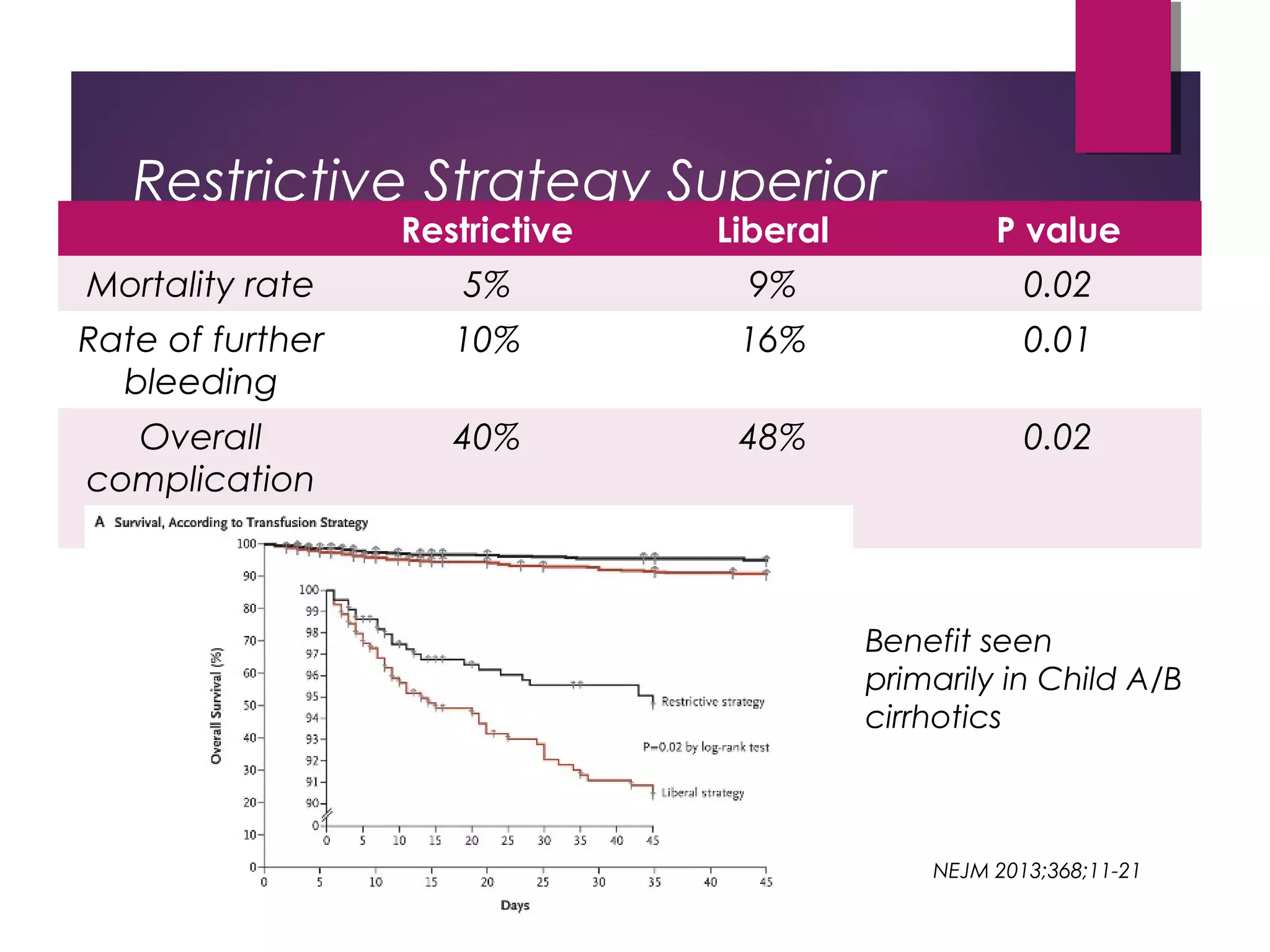
Restrictive Strategy Superior
Restrictive Liberal P value
Mortality rate 5% 9% 0.02
Rate of further
bleeding
10% 16% 0.01
Overall
complication
rate
40% 48% 0.02
NEJM 2013;368;11-21
Benefit seen
primarily in Child A/B
cirrhotics
Resuscitation
 IV access: large bore peripheral IVs best
(alt: cordis catheter)
 Use crystalloids first
 Anticipate need for blood transfusion
 Threshold should be based on underlying
condition, hemodynamic status, markers of tissue
hypoxia
 Should be administered if Hgb ≤ 7 g/dL
 1 U PRBC should raise Hgb by 1 (HCT by 3%)
 Remember that initial Hct can be misleading (Hct
remains the same with loss of whole blood, until
re-equilibration occurs)
 Correct coagulopathy
Weigh risks and benefits of
reversing anticoagulation
Assess degree of coagulopathy
Vitamin K – slow acting, long-
lived
FFP – fast acting, short lived
- Give 1 U FFP for every 4 U
PRBCs
Weigh risks and benefits of
reversing anticoagulation
Assess degree of coagulopathy
Vitamin K – slow acting, long-
lived
FFP – fast acting, short lived
- Give 1 U FFP for every 4 U
PRBCs
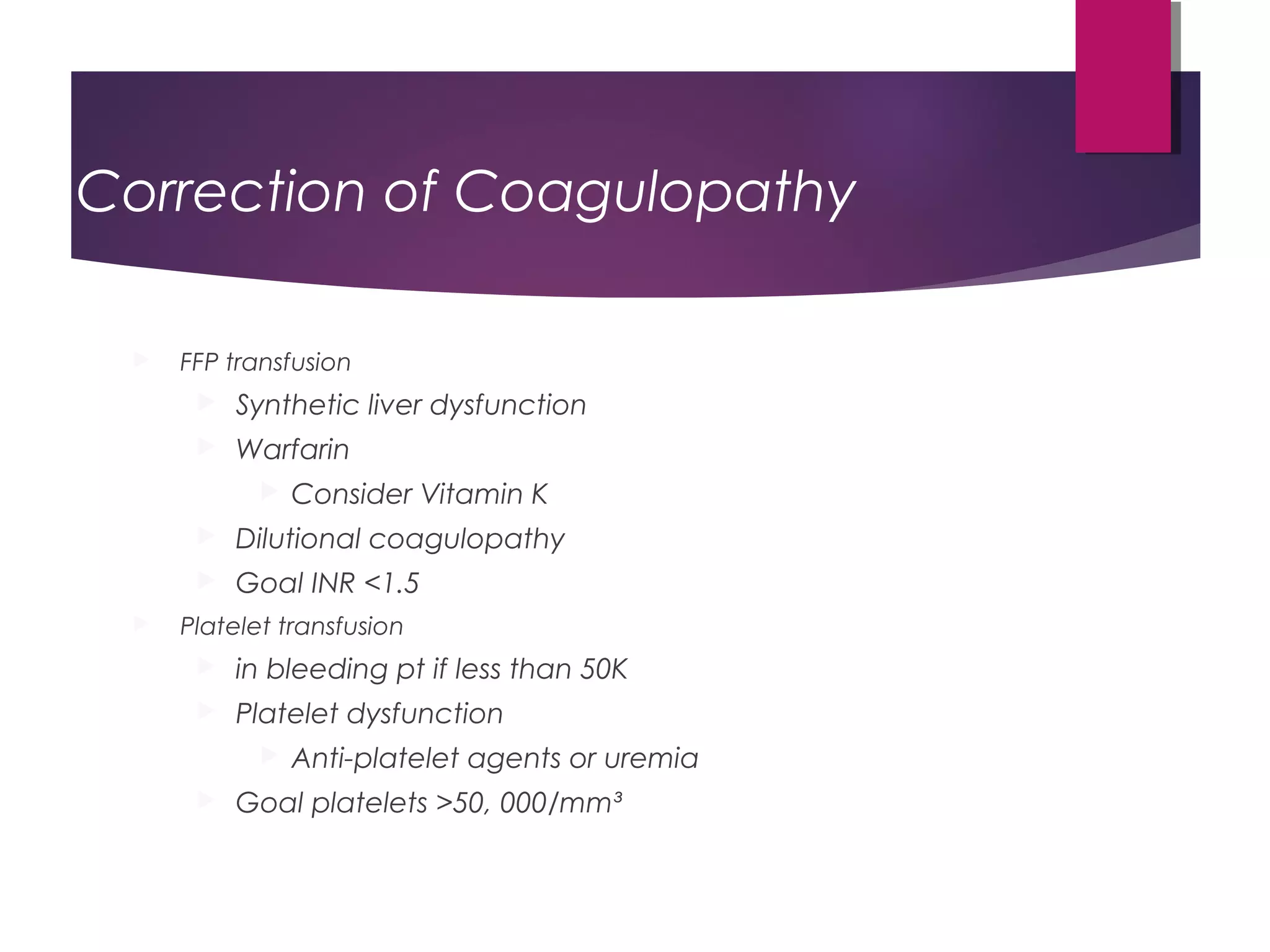
Correction of Coagulopathy
 FFP transfusion
 Synthetic liver dysfunction
 Warfarin
 Consider Vitamin K
 Dilutional coagulopathy
 Goal INR <1.5
 Platelet transfusion
 in bleeding pt if less than 50K
 Platelet dysfunction
 Anti-platelet agents or uremia
 Goal platelets >50, 000/mm³
action
Early resuscitation and
supportive measures are critical
to reduce mortality from GIB
Early resuscitation and
supportive measures are critical
to reduce mortality from GIB
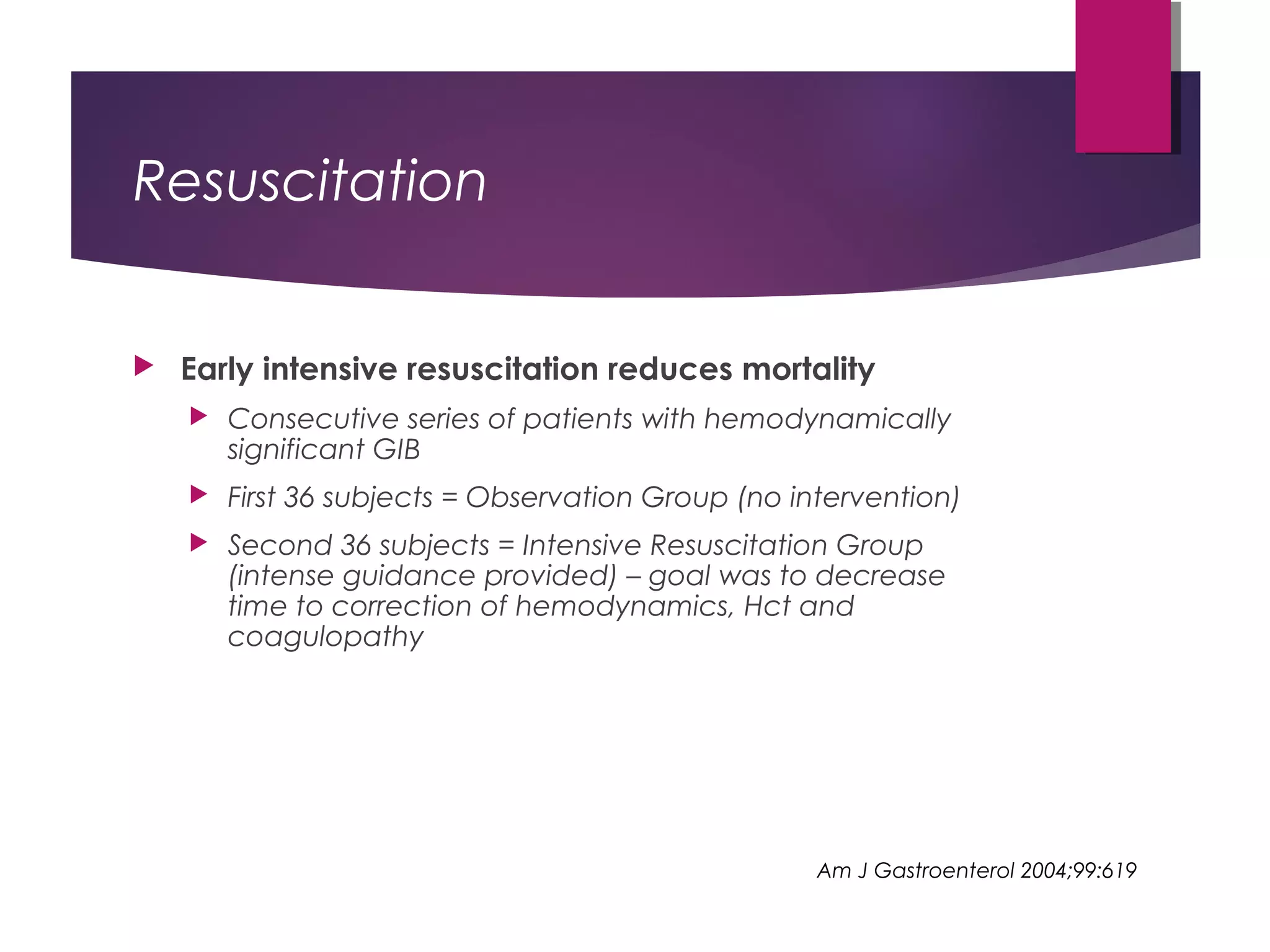
Resuscitation
 Early intensive resuscitation reduces mortality
 Consecutive series of patients with hemodynamically
significant GIB
 First 36 subjects = Observation Group (no intervention)
 Second 36 subjects = Intensive Resuscitation Group
(intense guidance provided) – goal was to decrease
time to correction of hemodynamics, Hct and
coagulopathy
Am J Gastroenterol 2004;99:619
Risk Stratification
 Identify patients at high risk for adverse outcomes
 Helps determine disposition (ICU vs. floor vs.
outpatient)
 May help guide appropriate timing of endoscopy
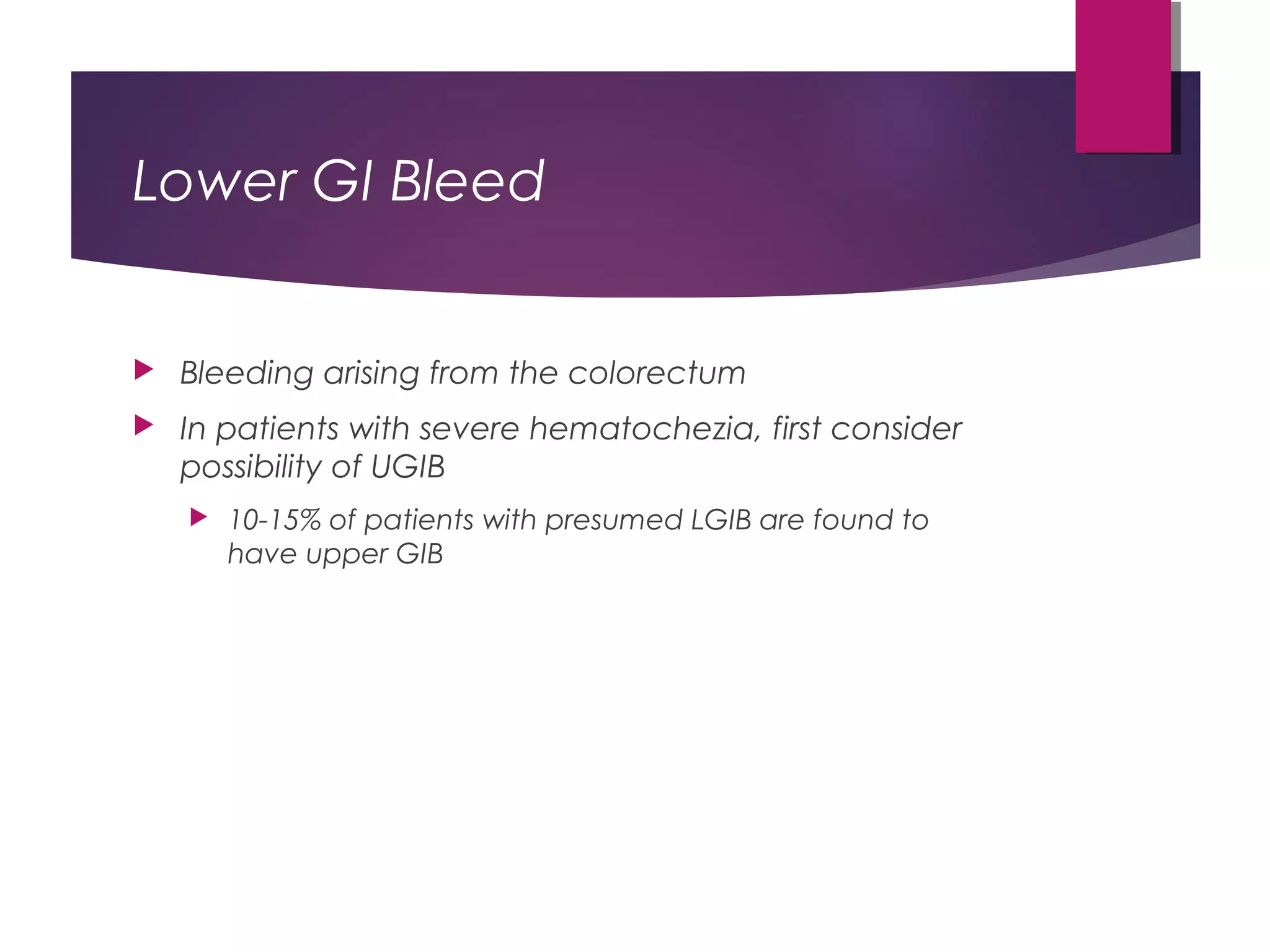
Lower GI Bleed
 Bleeding arising from the colorectum
 In patients with severe hematochezia, first consider
possibility of UGIB
 10-15% of patients with presumed LGIB are found to
have upper GIB
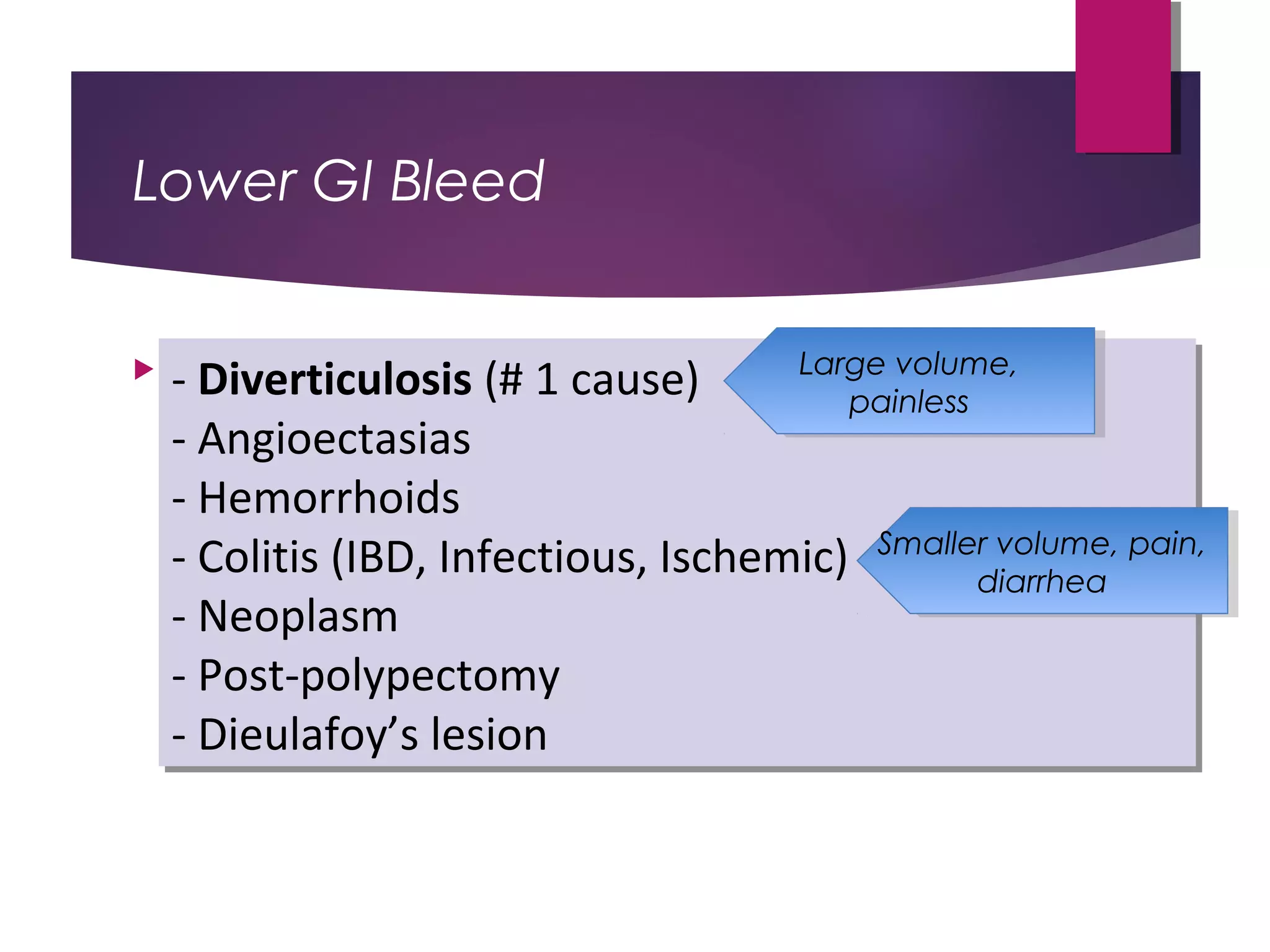
Lower GI Bleed
 Differential Diagnosis
- Diverticulosis (# 1 cause)
- Angioectasias
- Hemorrhoids
- Colitis (IBD, Infectious, Ischemic)
- Neoplasm
- Post-polypectomy
- Dieulafoy’s lesion
- Diverticulosis (# 1 cause)
- Angioectasias
- Hemorrhoids
- Colitis (IBD, Infectious, Ischemic)
- Neoplasm
- Post-polypectomy
- Dieulafoy’s lesion
Large volume,
painless
Large volume,
painless
Smaller volume, pain,
diarrhea
Smaller volume, pain,
diarrhea
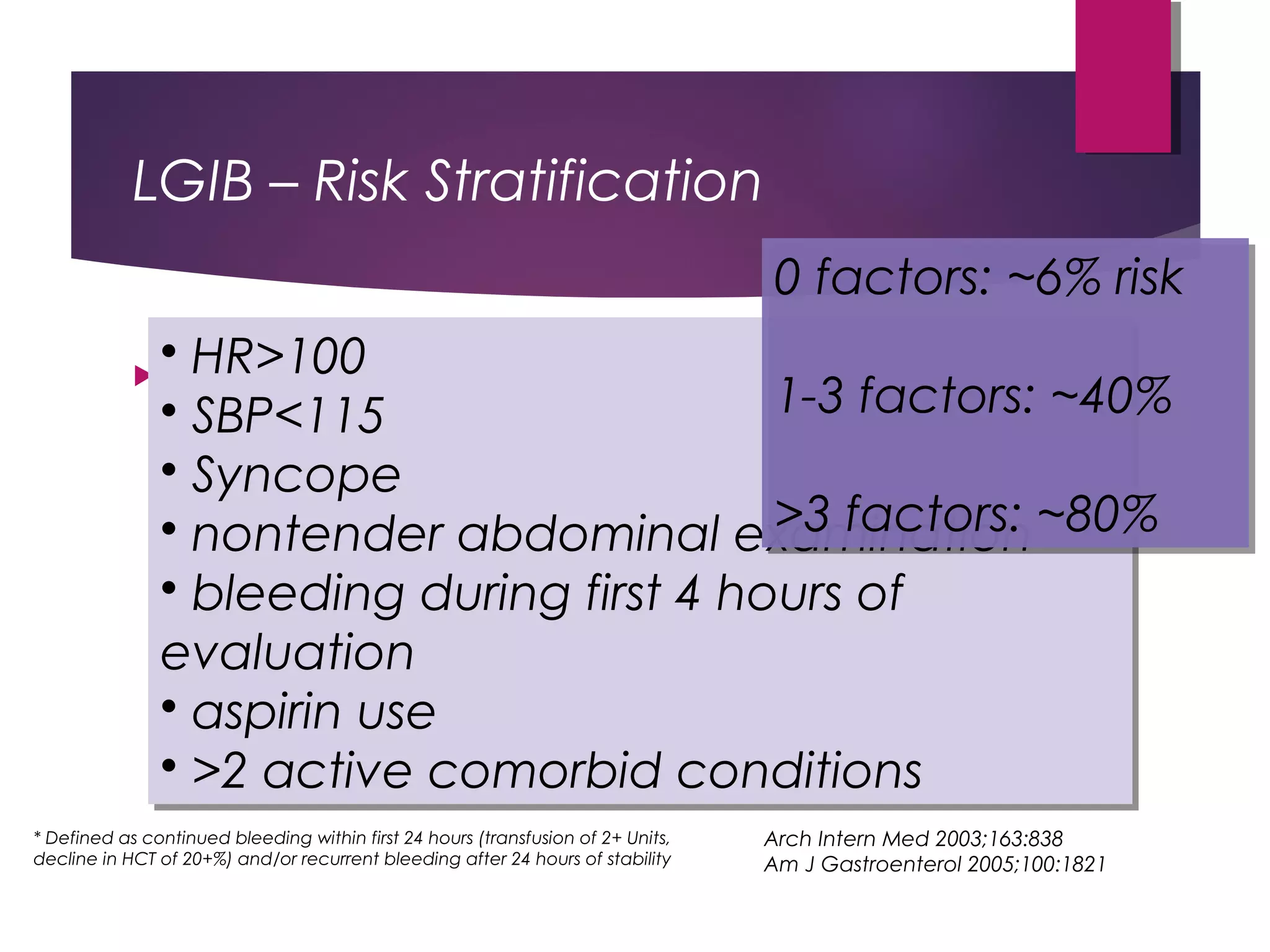
LGIB – Risk Stratification
 Predictors of severe* LGIB:
 HR>100
 SBP<115
 Syncope
 nontender abdominal examination
 bleeding during first 4 hours of
evaluation
 aspirin use
 >2 active comorbid conditions
 HR>100
 SBP<115
 Syncope
 nontender abdominal examination
 bleeding during first 4 hours of
evaluation
 aspirin use
 >2 active comorbid conditions
0 factors: ~6% risk
1-3 factors: ~40%
>3 factors: ~80%
0 factors: ~6% risk
1-3 factors: ~40%
>3 factors: ~80%
Arch Intern Med 2003;163:838
Am J Gastroenterol 2005;100:1821
* Defined as continued bleeding within first 24 hours (transfusion of 2+ Units,
decline in HCT of 20+%) and/or recurrent bleeding after 24 hours of stability
LGIB – Risk Factors for Mortality
• Age
• Intestinal ischemia
• Comorbid illnesses
• Secondary bleeding (developed during admission for a
separate problem)
• Coagulopathy
• Hypovolemia
• Transfusion requirement
• Male gender
Clinical Gastro Hepatol 2008;6:1004
Role of Colonoscopy
 Like UGIB, ~80% of LGIBs will resolve
spontaneously; of these, ~30% will
rebleed
 Lack of standardized approach
 Traditional approach:
 elective colonoscopy after resolution of
bleeding, bowel prep – low therapeutic benefit
 Angiography for massive bleeding,
hemodynamically unstable patient
 Urgent colonoscopy approach
 Similar to UGIB – identify stigmata of hemorrhage,
perform therapy
Radiographic Studies
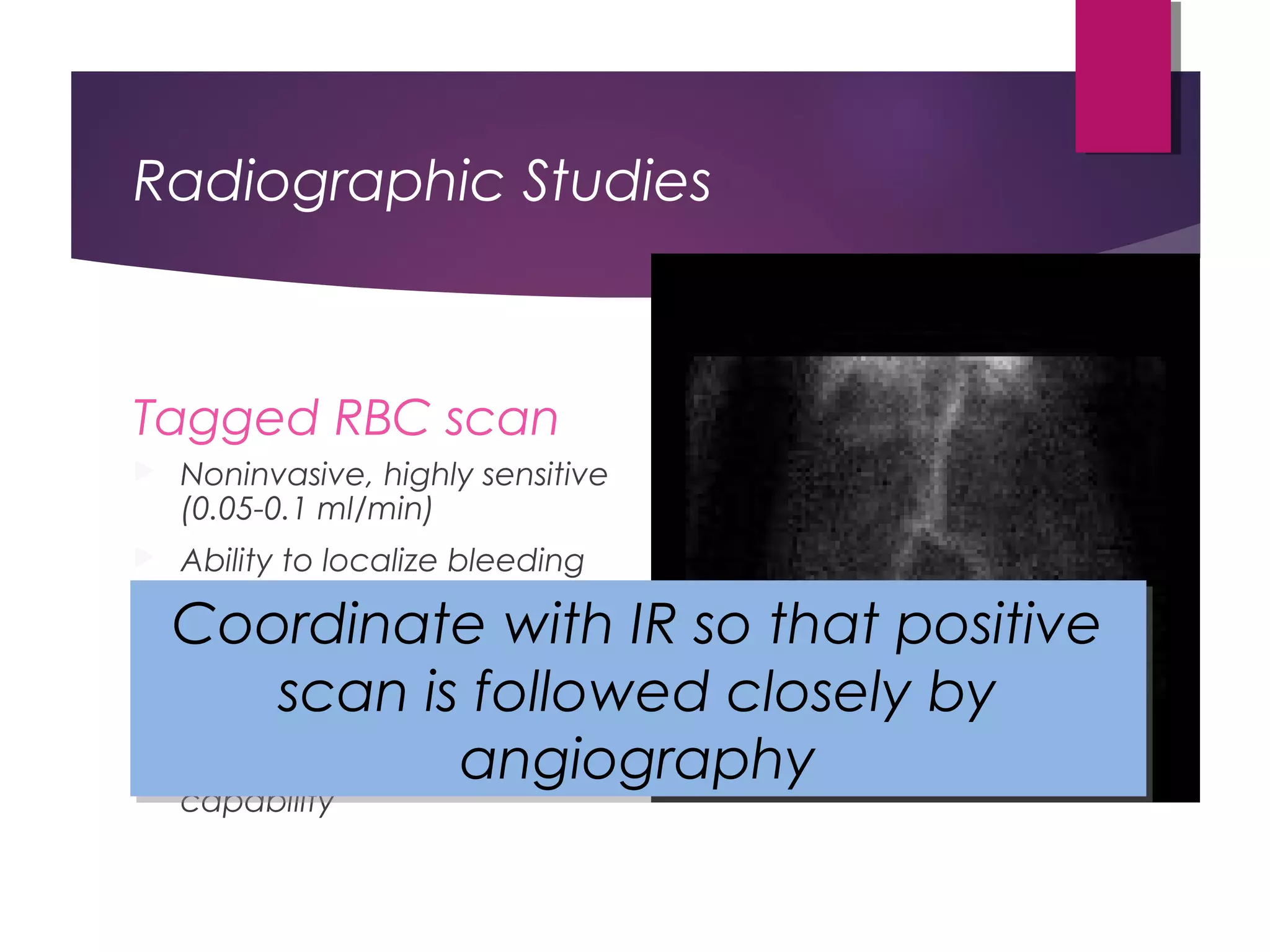
Tagged RBC scan
 Noninvasive, highly sensitive
(0.05-0.1 ml/min)
 Ability to localize bleeding
source correctly only ~66%
 More accurate when
positive within 2 hours (95-
100%)
 Lacks therapeutic
capability
Coordinate with IR so that positive
scan is followed closely by
angiography
Coordinate with IR so that positive
scan is followed closely by
angiography
Role of Surgery
 Reserved for patients with life-threatening bleed
who have failed other options
 General indications: hypotension/shock despite
resuscitation, >6 U PRBCs transfused
 Preoperative localization of bleeding source
important
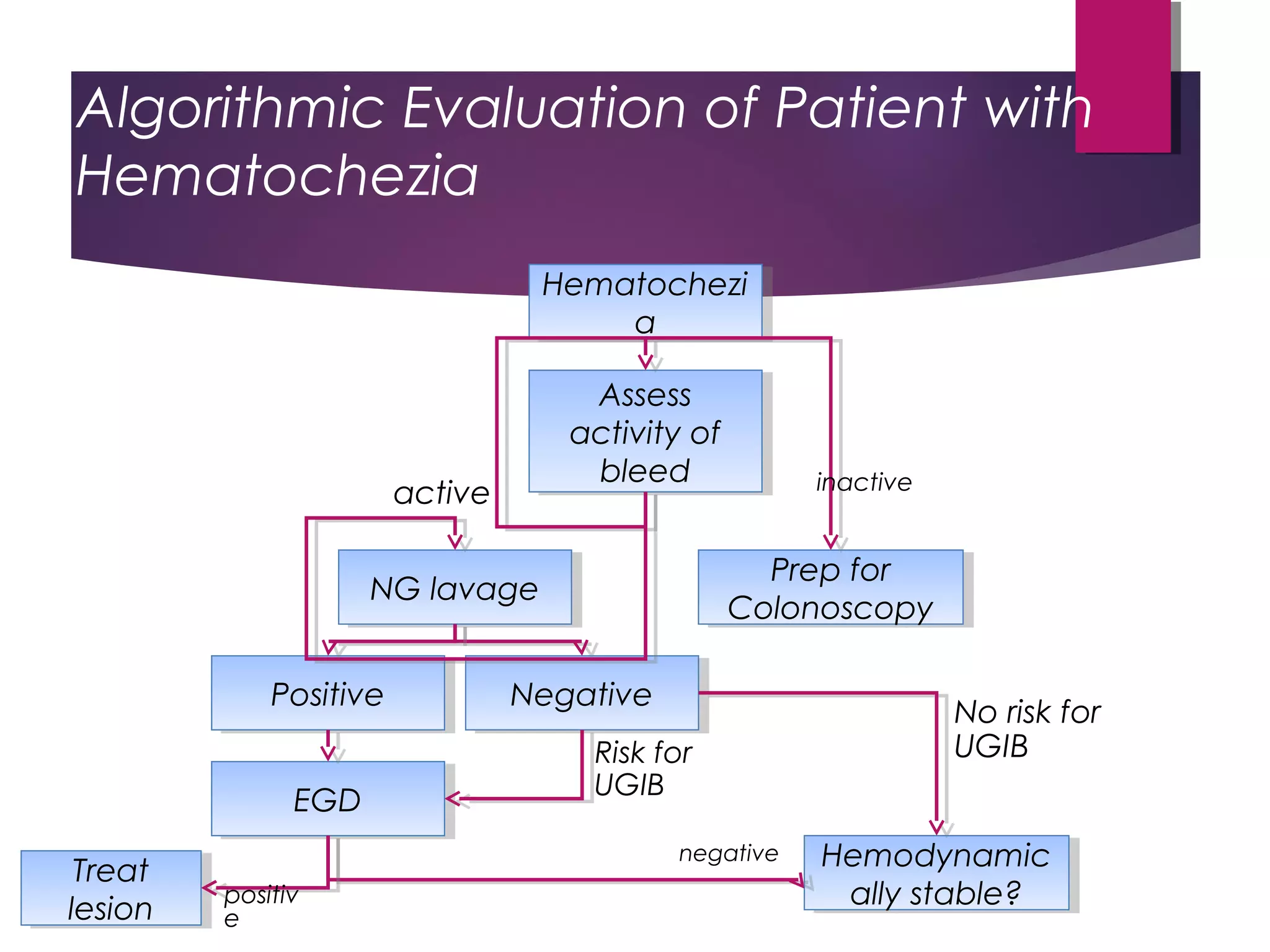
Algorithmic Evaluation of Patient with
Hematochezia
Hematochezi
a
Hematochezi
a
Assess
activity of
bleed
Assess
activity of
bleed
NG lavageNG lavage
Prep for
Colonoscopy
Prep for
Colonoscopy
PositivePositive
EGDEGD
NegativeNegative
active inactive
Risk for
UGIB
Hemodynamic
ally stable?
Hemodynamic
ally stable?
No risk for
UGIB
negative
Treat
lesion
Treat
lesion
positiv
e
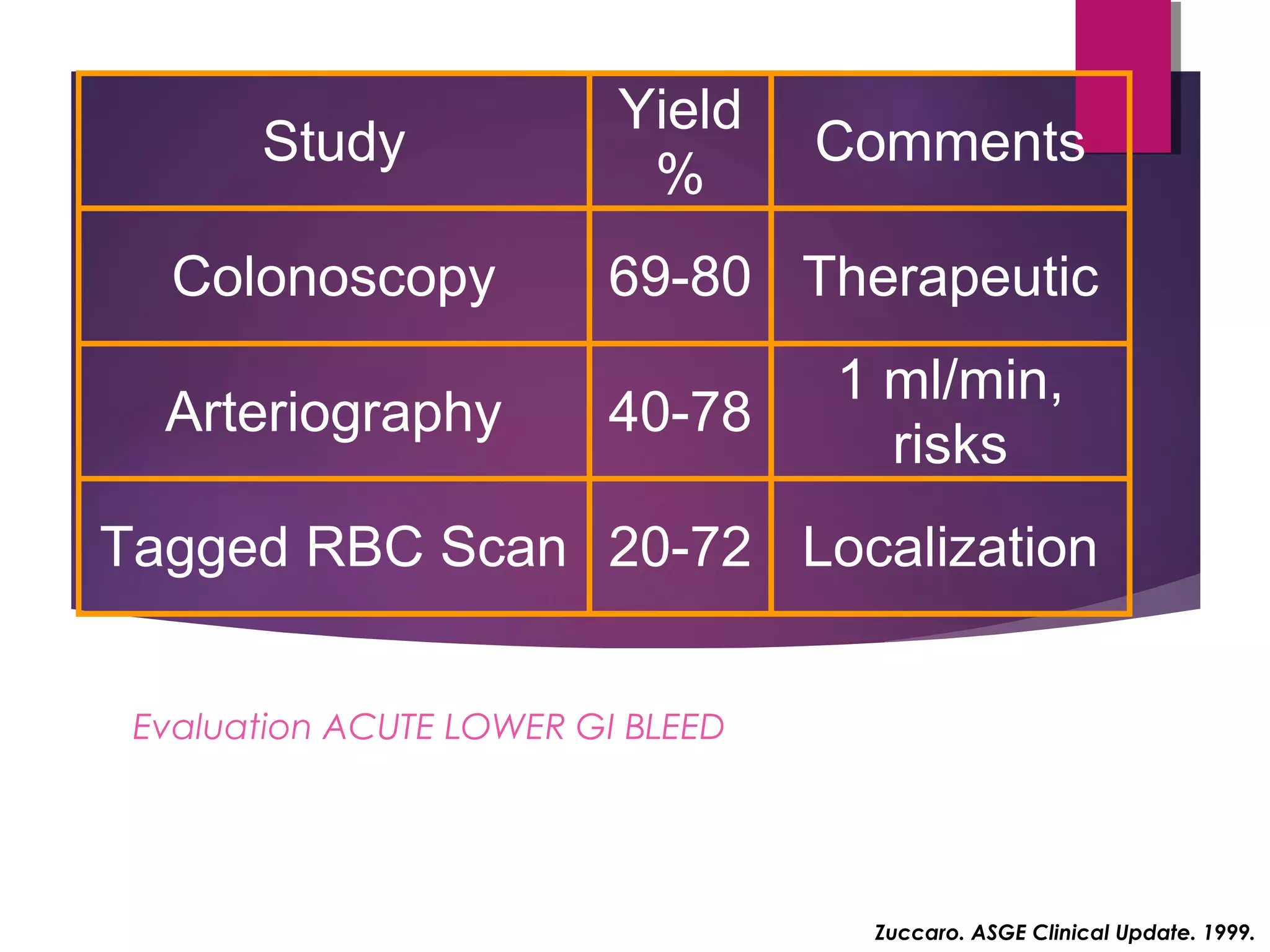
Evaluation ACUTE LOWER GI BLEED
Study
Yield
%
Comments
Colonoscopy 69-80 Therapeutic
Arteriography 40-78
1 ml/min,
risks
Tagged RBC Scan 20-72 Localization
Zuccaro. ASGE Clinical Update. 1999.
Take Home Points
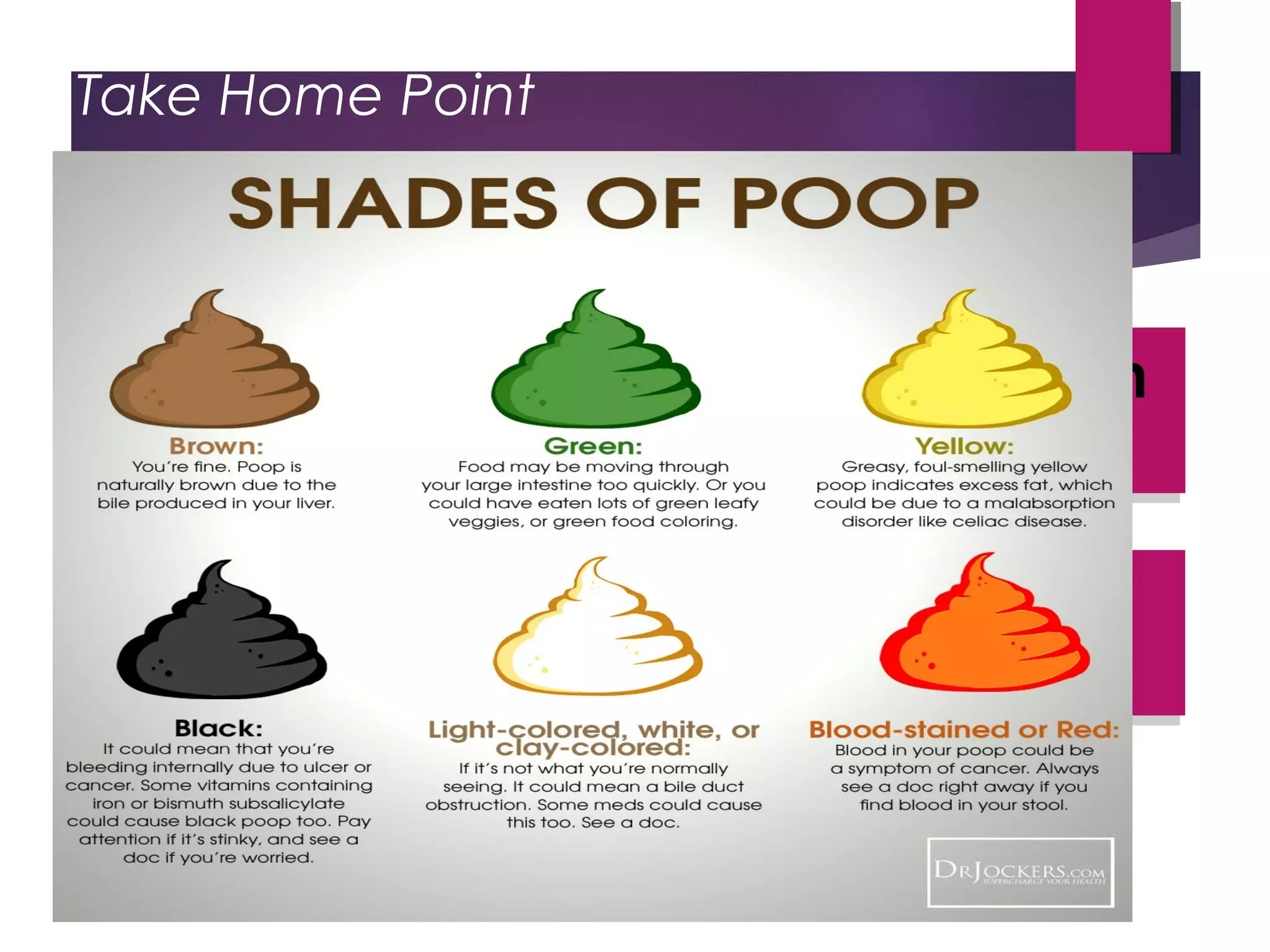
 Always get objective description of stool color (best
way – examine it yourself)
 Don’t order guaiac tests on inpatients
 Severe hematochezia can be from UGIB, even if NG
lavage is negative
Take Home Points
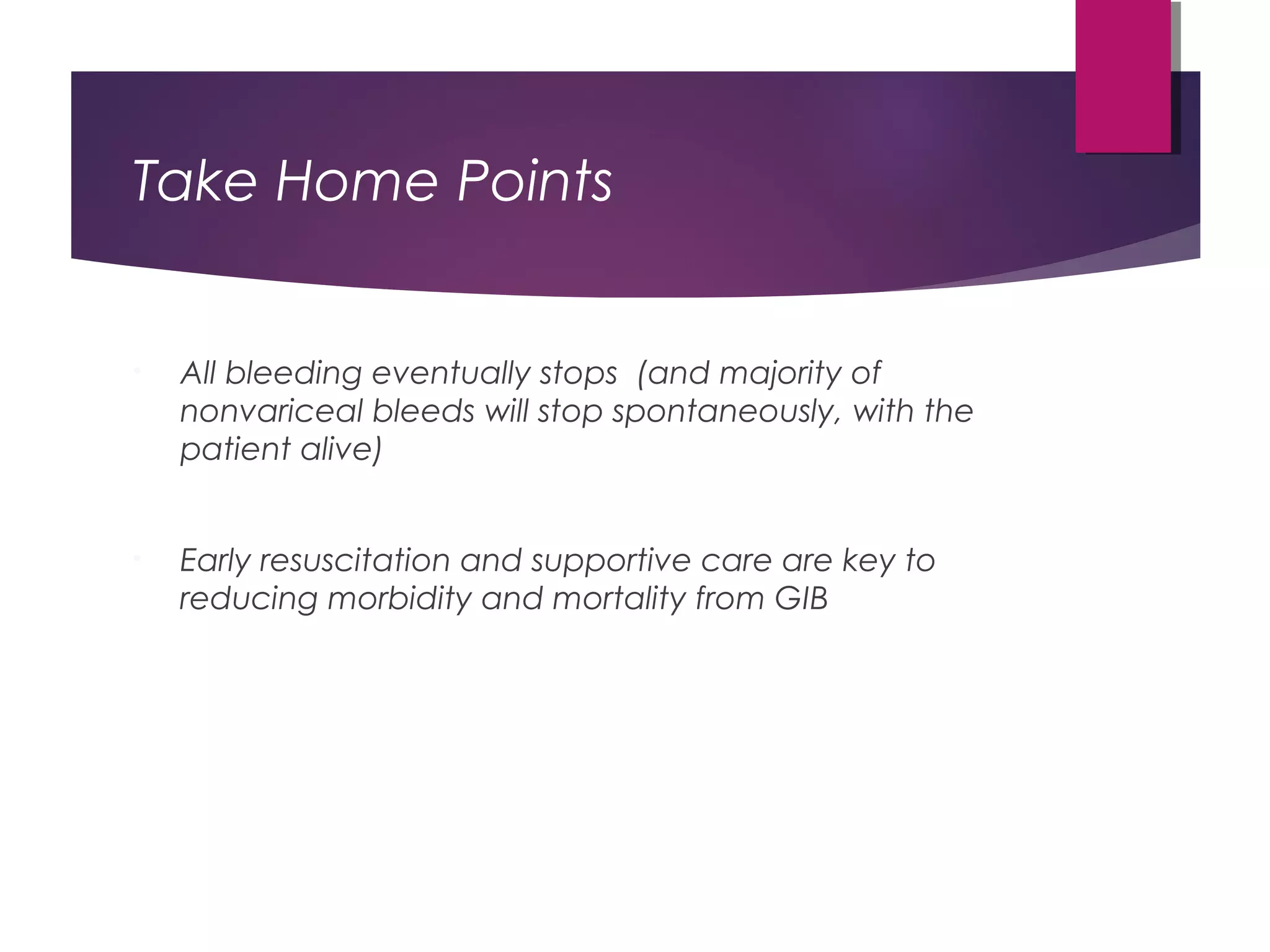
• All bleeding eventually stops (and majority of
nonvariceal bleeds will stop spontaneously, with the
patient alive)
• Early resuscitation and supportive care are key to
reducing morbidity and mortality from GIB
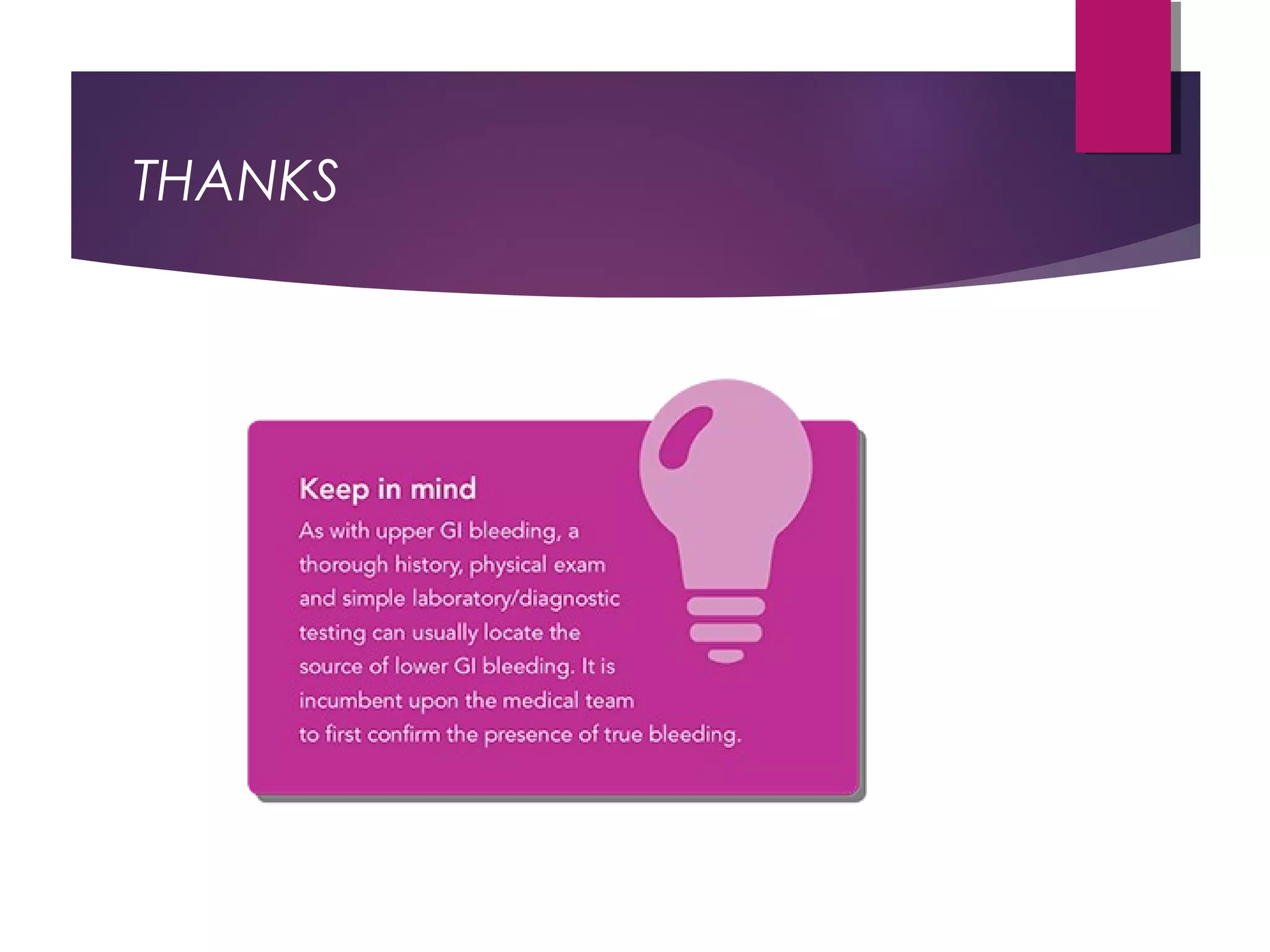
Always get objective description
of stool
Always get objective description
of stool
Take Home Point
Avoid noninformative terms such as
“grossly guaiac positive”
Avoid noninformative terms such as
“grossly guaiac positive”
If you need a card to tell you whether
there’s blood in the stool, it’s NOT an
acute GIB
If you need a card to tell you whether
there’s blood in the stool, it’s NOT an
acute GIB
Take Home Point
Take Home Point
Upper GI bleed must still be
considered in patients with
severe hematochezia, even if
NG aspirate negative
Upper GI bleed must still be
considered in patients with
severe hematochezia, even if
NG aspirate negative
THANKS

emergency approach & management of lower gastrointestinal bleed

  • 1.
    Approach & management Acutelower Gastrointestinal Bleeding DR ABDUL RUB PGY3 MEM
  • 2.
    Definitions  Upper GIbleed – arising from the esophagus, stomach, or proximal duodenum  Mid-intestinal bleed – arising from distal duodenum to ileocecal valve  Lower intestinal bleed – arising from colon/rectum
  • 3.
    Stool color andorigin/pace of bleeding • Guaiac positive stool – Occult blood in stool – Does not provide any localizing information – Indicates slow pace, usually low volume bleeding • Melena – Very dark, tarry, pungent stool – Usually suggestive of UGI origin (but can be small intestinal, proximal colon origin if slow pace) • Hematochezia – Spectrum: bright red blood, dark red, maroon – Usually suggestive of colonic origin (but can be UGI origin if brisk pace/large volume)
  • 4.
    APPROACH TO APATIENT WITH GI BLEED  68 yo male presents with a chief complaint of a large amount of “bleeding from the rectum”  Physical examination:  BP 105/70, Pulse 100, (+) orthostatic changes  Alert and mentating, but anxious appearing
  • 5.
    Case – PhysicalExam  HOPI: Describes bleeding as large volume, very dark maroon colored stool  Has occurred 4 times over past 3 hours  He felt light headed and nearly passed out upon trying to get up to go the bathroom
  • 6.
    Case - HPI Denies abdominal pain, nausea, vomiting, antecedent retching  No history of heartburn, dysphagia, weight loss  No history of diarrhea or constipation/hard stools
  • 7.
    Case – PMHx,Meds  Hepatitis C  CAD – h/o MI  AAA – s/p elective repair 3 years ago  HTN  Hypercholesterolemia Screening colonoscopy 10 years ago – no polyps, (+) diverticulosis • Medications: – Aspirin – Clopidogrel – Atorvastatin – Atenolol – Lisinopril
  • 8.
    examination  Anicteric  Midline scar, benign abdomen, no tender liver edge palpable in epigastrium, no splenomegaly  Rectal examination – no masses, dark maroon blood
  • 9.
    APPROACH STARTS FROM HISTORY& PHYSICAL EXAM History  Localizing symptoms  History of prior GIB  NSAID/aspirin use  Liver disease/cirrhosis  Vascular disease  Aortic valvular disease, chronic renal failure  AAA repair  Radiation exposure  Family history of GIB Physical Examination • Vital signs, orthostatics • Abdominal tenderness • Skin, oral examination • Stigmata of liver disease • Rectal examination – Objective description of stool/blood – Assess for mass, hemorrhoids – No need for guaiac test
  • 10.
    Case - Labs Labs  Hct 21% (Baseline 33%)  Plt 110K  BUN 22, Cr 1.0  Alb 3.5  INR 1.6  ALT 51, AST 76
  • 11.
    Initial Considerations  Differentialdiagnosis?  What is most likely source?  What diagnosis can you least afford to miss?  How sick is this patient? (risk stratification)  Determines disposition  Guides resuscitation  Guides decision re: need for/timing of endoscopy
  • 12.
    Differential Diagnosis –Upper GIB  Peptic ulcer disease  Gastroesophageal varices  Erosive esophagitis/gastritis/duodenitis  Mallory Weiss tear  Vascular ectasia  Neoplasm  Dieulafoy’s lesion  Aortoenteric fistula  Hemobilia, hemosuccus pancreaticus Rare, but cannot afford to miss Rare, but cannot afford to miss Most commo n Most commo n
  • 13.
    Differential Diagnosis –Lower GIB  Diverticular-20%  AVM-10%  Malignancy-2-26%  Inflammatory Bowel Disease-10%  Ischemic Colitis  Acute Infectious Colitis  Radiation Colitis/Proctitis  Aortoenteric Fistula Most common diagnosis Most common diagnosis
  • 14.
    Narrowing the DDx:Upper or Lower Source?  Predictors of UGI source:  Age <50  Melenic stool  BUN/Creatinine ratio  If ratio ≥ 30, think upper GIB J Clin Gastroenterol 1990;12:500 Am J Gastroenterol 1997;92:1796 Am J Emerg Med 2006;24:280
  • 15.
    Utility of NGTube  Most useful situation: patients with severe hematochezia, and unsure if UGIB vs. LGIB  Positive aspirate (blood/coffee grounds) indicates UGIB  Can provide prognostic info:  Red blood per NGT – predictive of high risk endoscopic lesion  Coffee grounds – less severe/inactive bleeding  Negative aspirate – not as helpful; 15-20% of patients with UGIB have negative NG aspirate Ann Emerg Med 2004;43:525 Arch Intern Med 1990;150:1381 Gastrointest Endosc 2004;59:172
  • 16.
    Initial Assessment  Alwaysremember to assess A,B,C’s  Assess degree of hypovolemic shock
  • 17.
    Resuscitation  IV access:large bore peripheral IVs best  (alt: cordis catheter)  Use crystalloids first  Anticipate need for blood transfusion  Threshold should be based on underlying condition, hemodynamic status, markers of tissue hypoxia  Should be administered if Hgb ≤ 7 g/dL  1 U PRBC should raise Hgb by 1 (HCT by 3%)  Remember that initial Hct can be misleading (Hct remains the same with loss of whole blood, until re-equilibration occurs)  Correct coagulopathy
  • 18.
    Resuscitation  IV access:large bore peripheral IVs best (alt: cordis catheter)  Use crystalloids first  Anticipate need for blood transfusion  Threshold should be based on underlying condition, hemodynamic status, markers of tissue hypoxia  Should be administered if Hgb ≤ 7 g/dL  1 U PRBC should raise Hgb by 1 (HCT by 3%)  Remember that initial Hct can be misleading (Hct remains the same with loss of whole blood, until re-equilibration occurs)  Correct coagulopathy
  • 19.
    Transfusion Strategy  Randomizedtrial:  921 subjects with severe acute GIB  Restrictive (tx when Hgb<7; target 7-9) vs. Liberal (tx when Hgb<9; target 9-11)  Primary outcome: all cause mortality rate within 45 days NEJM 2013;368;11-21
  • 20.
    Restrictive Strategy Superior RestrictiveLiberal P value Mortality rate 5% 9% 0.02 Rate of further bleeding 10% 16% 0.01 Overall complication rate 40% 48% 0.02 NEJM 2013;368;11-21 Benefit seen primarily in Child A/B cirrhotics
  • 21.
    Resuscitation  IV access:large bore peripheral IVs best (alt: cordis catheter)  Use crystalloids first  Anticipate need for blood transfusion  Threshold should be based on underlying condition, hemodynamic status, markers of tissue hypoxia  Should be administered if Hgb ≤ 7 g/dL  1 U PRBC should raise Hgb by 1 (HCT by 3%)  Remember that initial Hct can be misleading (Hct remains the same with loss of whole blood, until re-equilibration occurs)  Correct coagulopathy Weigh risks and benefits of reversing anticoagulation Assess degree of coagulopathy Vitamin K – slow acting, long- lived FFP – fast acting, short lived - Give 1 U FFP for every 4 U PRBCs Weigh risks and benefits of reversing anticoagulation Assess degree of coagulopathy Vitamin K – slow acting, long- lived FFP – fast acting, short lived - Give 1 U FFP for every 4 U PRBCs
  • 22.
    Correction of Coagulopathy FFP transfusion  Synthetic liver dysfunction  Warfarin  Consider Vitamin K  Dilutional coagulopathy  Goal INR <1.5  Platelet transfusion  in bleeding pt if less than 50K  Platelet dysfunction  Anti-platelet agents or uremia  Goal platelets >50, 000/mm³
  • 23.
    action Early resuscitation and supportivemeasures are critical to reduce mortality from GIB Early resuscitation and supportive measures are critical to reduce mortality from GIB
  • 24.
    Resuscitation  Early intensiveresuscitation reduces mortality  Consecutive series of patients with hemodynamically significant GIB  First 36 subjects = Observation Group (no intervention)  Second 36 subjects = Intensive Resuscitation Group (intense guidance provided) – goal was to decrease time to correction of hemodynamics, Hct and coagulopathy Am J Gastroenterol 2004;99:619
  • 25.
    Risk Stratification  Identifypatients at high risk for adverse outcomes  Helps determine disposition (ICU vs. floor vs. outpatient)  May help guide appropriate timing of endoscopy
  • 26.
    Lower GI Bleed Bleeding arising from the colorectum  In patients with severe hematochezia, first consider possibility of UGIB  10-15% of patients with presumed LGIB are found to have upper GIB
  • 27.
    Lower GI Bleed Differential Diagnosis - Diverticulosis (# 1 cause) - Angioectasias - Hemorrhoids - Colitis (IBD, Infectious, Ischemic) - Neoplasm - Post-polypectomy - Dieulafoy’s lesion - Diverticulosis (# 1 cause) - Angioectasias - Hemorrhoids - Colitis (IBD, Infectious, Ischemic) - Neoplasm - Post-polypectomy - Dieulafoy’s lesion Large volume, painless Large volume, painless Smaller volume, pain, diarrhea Smaller volume, pain, diarrhea
  • 28.
    LGIB – RiskStratification  Predictors of severe* LGIB:  HR>100  SBP<115  Syncope  nontender abdominal examination  bleeding during first 4 hours of evaluation  aspirin use  >2 active comorbid conditions  HR>100  SBP<115  Syncope  nontender abdominal examination  bleeding during first 4 hours of evaluation  aspirin use  >2 active comorbid conditions 0 factors: ~6% risk 1-3 factors: ~40% >3 factors: ~80% 0 factors: ~6% risk 1-3 factors: ~40% >3 factors: ~80% Arch Intern Med 2003;163:838 Am J Gastroenterol 2005;100:1821 * Defined as continued bleeding within first 24 hours (transfusion of 2+ Units, decline in HCT of 20+%) and/or recurrent bleeding after 24 hours of stability
  • 29.
    LGIB – RiskFactors for Mortality • Age • Intestinal ischemia • Comorbid illnesses • Secondary bleeding (developed during admission for a separate problem) • Coagulopathy • Hypovolemia • Transfusion requirement • Male gender Clinical Gastro Hepatol 2008;6:1004
  • 30.
    Role of Colonoscopy Like UGIB, ~80% of LGIBs will resolve spontaneously; of these, ~30% will rebleed  Lack of standardized approach  Traditional approach:  elective colonoscopy after resolution of bleeding, bowel prep – low therapeutic benefit  Angiography for massive bleeding, hemodynamically unstable patient  Urgent colonoscopy approach  Similar to UGIB – identify stigmata of hemorrhage, perform therapy
  • 31.
    Radiographic Studies Tagged RBCscan  Noninvasive, highly sensitive (0.05-0.1 ml/min)  Ability to localize bleeding source correctly only ~66%  More accurate when positive within 2 hours (95- 100%)  Lacks therapeutic capability Coordinate with IR so that positive scan is followed closely by angiography Coordinate with IR so that positive scan is followed closely by angiography
  • 32.
    Role of Surgery Reserved for patients with life-threatening bleed who have failed other options  General indications: hypotension/shock despite resuscitation, >6 U PRBCs transfused  Preoperative localization of bleeding source important
  • 33.
    Algorithmic Evaluation ofPatient with Hematochezia Hematochezi a Hematochezi a Assess activity of bleed Assess activity of bleed NG lavageNG lavage Prep for Colonoscopy Prep for Colonoscopy PositivePositive EGDEGD NegativeNegative active inactive Risk for UGIB Hemodynamic ally stable? Hemodynamic ally stable? No risk for UGIB negative Treat lesion Treat lesion positiv e
  • 34.
    Evaluation ACUTE LOWERGI BLEED Study Yield % Comments Colonoscopy 69-80 Therapeutic Arteriography 40-78 1 ml/min, risks Tagged RBC Scan 20-72 Localization Zuccaro. ASGE Clinical Update. 1999.
  • 35.
    Take Home Points Always get objective description of stool color (best way – examine it yourself)  Don’t order guaiac tests on inpatients  Severe hematochezia can be from UGIB, even if NG lavage is negative
  • 36.
    Take Home Points •All bleeding eventually stops (and majority of nonvariceal bleeds will stop spontaneously, with the patient alive) • Early resuscitation and supportive care are key to reducing morbidity and mortality from GIB
  • 37.
    Always get objectivedescription of stool Always get objective description of stool Take Home Point Avoid noninformative terms such as “grossly guaiac positive” Avoid noninformative terms such as “grossly guaiac positive”
  • 38.
    If you needa card to tell you whether there’s blood in the stool, it’s NOT an acute GIB If you need a card to tell you whether there’s blood in the stool, it’s NOT an acute GIB Take Home Point
  • 39.
    Take Home Point UpperGI bleed must still be considered in patients with severe hematochezia, even if NG aspirate negative Upper GI bleed must still be considered in patients with severe hematochezia, even if NG aspirate negative
  • 40.

Editor's Notes

  • #3 Ligament of trietz connects diaphragm to 4th portion of duodenum
  • #4 Guaiac :stool mixed with hydrogenperoxide on guaiac paper ..if heam present then paper turns blue
  • #6 Orthostatic hypotention:fall in systolic of &amp;gt;20&amp;diastolic &amp;gt;10..causes low blood,vasodilators,dehydration,diabetes ,pheochromocytoma
  • #8 Acute hep 80%---75%cld-----20%cirrhosis----1to5% death due to liver cancer
  • #10 Symptoms of gi bleed.fatigue,weakness,syncope,epigastric pain,heamatemesis,malena,haematochezia,…vital signs for assessment of hypovolemic shock
  • #11 Haematocrit is % rbc in blood 40-50% in Asian population..bun7-20..urea production occurs in liver &amp; excreted by kidney. Elevated BUN to creatinine ration &amp;gt;20 indicates prerenal injury or hypo perfusion.warfarin treatment…1st dose omission 2nd iv vitamin k 3rd FFP
  • #23 Each pack of platelets will increase count by 15K