Kurdistan Board GEH/GIT Surgery J Club 2020
Supervised by Professor Dr. Mohamed Alshekhani.
Introduction:
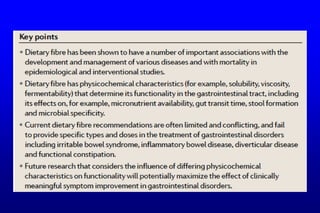
 The benefits of dietary fibre on GIT health demonstrated from
consumption of unrefined whole foods containing fibers, as whole
grains,legumes, vegetables&fruits.
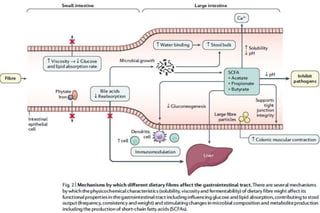
 Isolated & extracted fibres have demonstrated promising regulatory
effects on the gut (for example, digestion,absorption, transit time, stool
formation) & microbial effects (changes in gut microbiota composition &
fermentation metabolites) with important implications for GIT disorders.
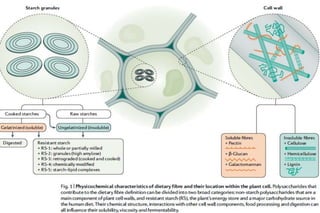
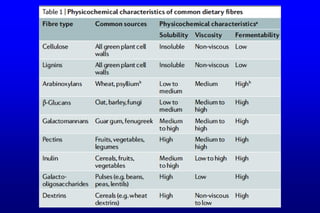
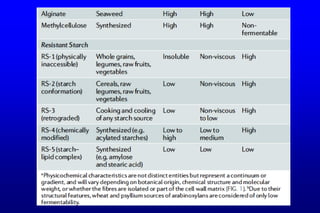
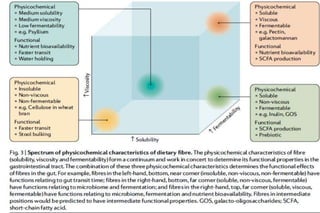
 The physicochemical properties of different dietary fibres (solubility,
viscosity,fermentability) vary greatly depending on the origin- processing
&are important of the functional characteristics&clinical utility
Conclusion:
 Manipulating &/or increasing fibre intake is a promising therapeutic
strategy in the prevention / management of many GIT disorders.
 Physicochemical characteristics; solubility, viscosity & fermentability drive
different functionalities in GIT dis underpining their therapeutic potential.
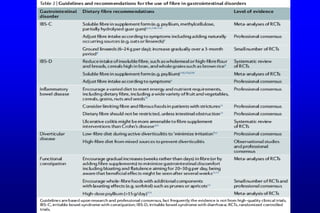
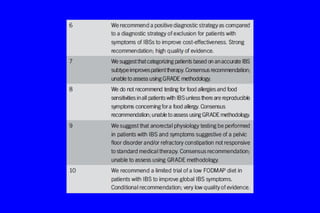
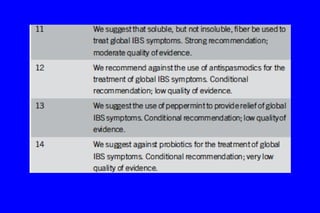
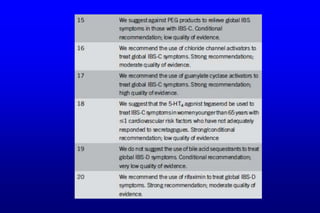
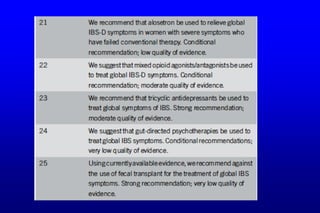
 Current guidelines/recommendations reflect earlier studies using wide
range of dietary fibres with diff physicochem&functional characteristics.
 The lack of consistenc& reporting of these characteristics in studies to date
has limited the clinical utility of dietary fibre for managing GIT disorders.
 There is an urgent need for well- designed RCTs to determine which
physicochemical characteristics, fibre source,what doses & durations are
optimal for clinically meaningful GIT health benefits.
 Co- administration of different fibres with differing physiological effects,
or novel, naturally occurring dietary fibres with dual physiological
properties has yet to be explored&holds promise as a therapeutic strategy
across several gastrointestinal disorders.

Git j club fiber in git20

  • 1.
    Kurdistan Board GEH/GITSurgery J Club 2020 Supervised by Professor Dr. Mohamed Alshekhani.
  • 2.
    Introduction:  The benefitsof dietary fibre on GIT health demonstrated from consumption of unrefined whole foods containing fibers, as whole grains,legumes, vegetables&fruits.  Isolated & extracted fibres have demonstrated promising regulatory effects on the gut (for example, digestion,absorption, transit time, stool formation) & microbial effects (changes in gut microbiota composition & fermentation metabolites) with important implications for GIT disorders.  The physicochemical properties of different dietary fibres (solubility, viscosity,fermentability) vary greatly depending on the origin- processing &are important of the functional characteristics&clinical utility
  • 19.
    Conclusion:  Manipulating &/orincreasing fibre intake is a promising therapeutic strategy in the prevention / management of many GIT disorders.  Physicochemical characteristics; solubility, viscosity & fermentability drive different functionalities in GIT dis underpining their therapeutic potential.  Current guidelines/recommendations reflect earlier studies using wide range of dietary fibres with diff physicochem&functional characteristics.  The lack of consistenc& reporting of these characteristics in studies to date has limited the clinical utility of dietary fibre for managing GIT disorders.  There is an urgent need for well- designed RCTs to determine which physicochemical characteristics, fibre source,what doses & durations are optimal for clinically meaningful GIT health benefits.  Co- administration of different fibres with differing physiological effects, or novel, naturally occurring dietary fibres with dual physiological properties has yet to be explored&holds promise as a therapeutic strategy across several gastrointestinal disorders.