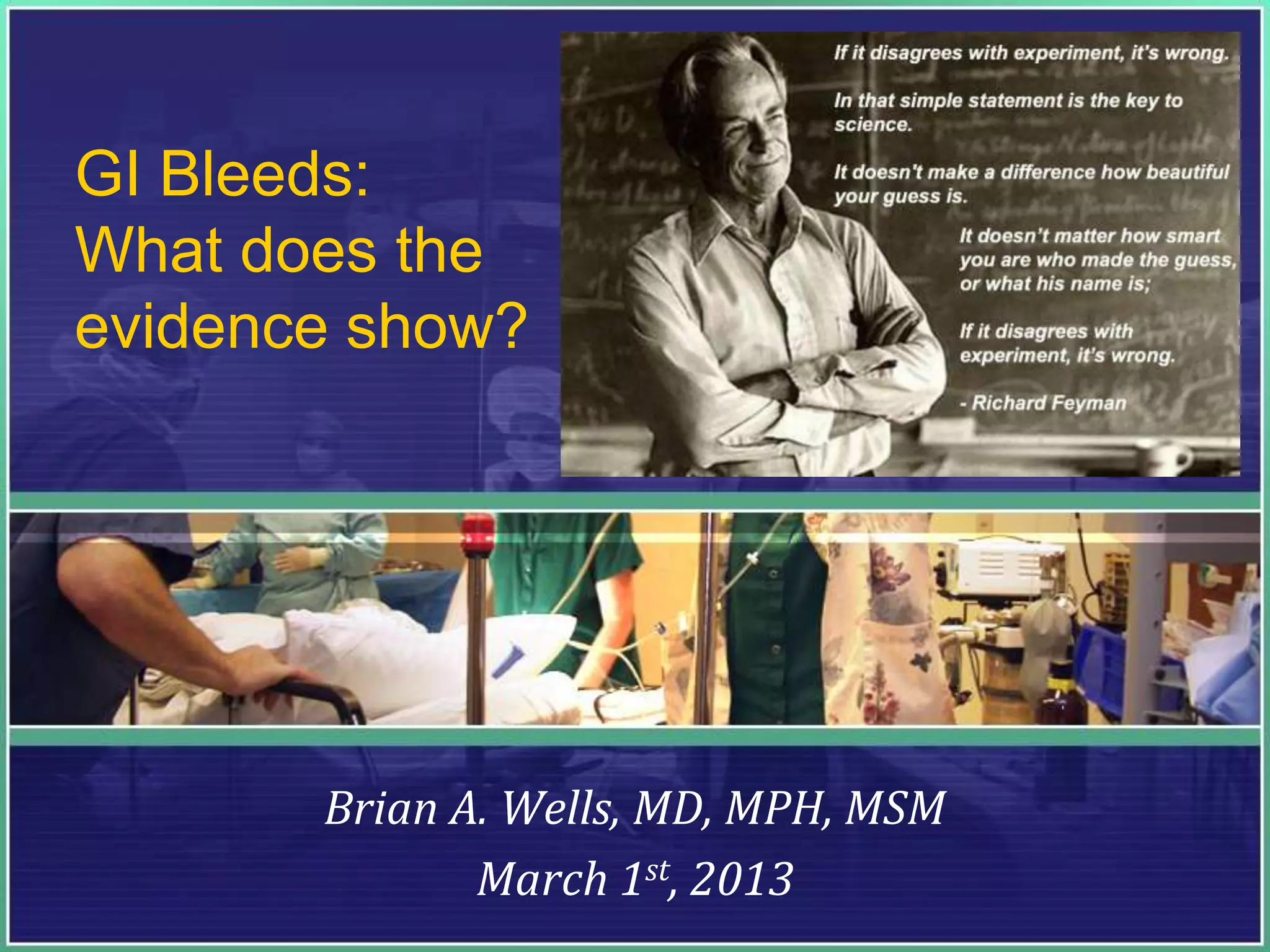
GI Bleeds:
What does the
evidence show?


       Brian A. Wells, MD, MPH, MSM
              March 1st, 2013
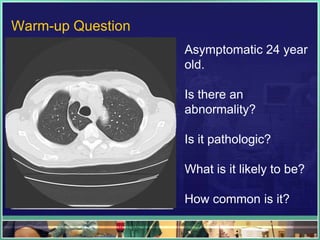
Warm-up Question
                   Asymptomatic 24 year
                   old.

                   Is there an
                   abnormality?

                   Is it pathologic?

                   What is it likely to be?

                   How common is it?
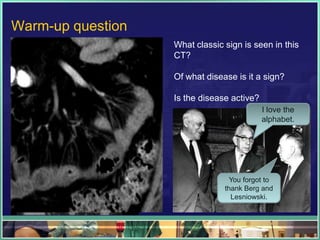
Warm-up question
                   What classic sign is seen in this
                   CT?

                   Of what disease is it a sign?

                   Is the disease active?
                                            I love the
                                            alphabet.


                                  You forgot to
                                thank Berg and
                                  Lesniowski.
GI bleeds:
What does the evidence show?
              There seems to be no study too
              fragmented, no hypothesis too trivial, no
              literature too biased or too egotistical, no
              design too warped, no methodology too
              bungled, no presentation of results too
              inaccurate, too obscure, and too
              contradictory, no analysis too self-
              serving, no argument too circular, no
              conclusions too trifling or too unjustified,
              and no grammar and syntax too
              offensive for a paper to end up in print.

              - Drummond Rennie, MD, Deputy Editor
              of JAMA
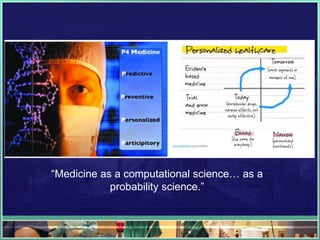
―Medicine as a computational science… as a
            probability science.‖
Why talk about GI bleeds?
 • Frequent cause of hospitalization
 • Upper GI Bleeding accounts for approximately 350,000 hospitalizations
   per year.
 • In a study, patients with UGI bleeds experienced significantly higher 12-
   month health-resource utilization and costs than patients without UGI
   bleeds.
 • UGI-related healthcare utilization and total healthcare, medical, and
   pharmacy costs incurred by the UGI-bleed cohort were significantly
   greater (p< 0.0001) than those incurred by the general population cohort
   (mean of $20,405 vs. 3,652), even after excluding the initial
   hospitalization costs (mean of $11,228 vs. 3,652).


The economics of upper gastrointestinal bleeding in a US managed-care setting: a retrospective, claims-based analysis.
J Med Econ. 2010 Mar;13(1):70-7. doi: 10.3111/13696990903526676. http://www.ncbi.nlm.nih.gov/pubmed/20047365
GI Bleed – Trends and Economics
 • From 1998 to 2006
    – For patients with either a principal or secondary GI bleed
      diagnosis, the number of hospitalizations for upper GI bleeding per
      100,000 people decreased by 14%. However, hospitalizations for
      lower GI bleeding increased 8%, yielding a 4% overall decrease in
      the hospitalization rate per 100,000 people for GI bleeding.
    – Possible reasons for the decrease in upper GI bleeding may include
      the increased use of proton pump inhibitors to decrease gastric acid
      secretion, antibiotic treatment of gastric ulcers caused by
      Helicobacter pylori bacteria, and increased use of selective COX-2
      inhibitors for arthritis or other pain.


Agency for Healthcare Research and Quality. Hospitalizations for Gastrointestinal Bleeding in 1998 and 2006.
HCUP Statistical Brief #65. Published online December 2008.
GI Bleed – Trends and Economics
  • From 1998 to 2006
     – The largest decreases in the rate of hospital stays for GI bleeding
       were for upper GI ulcers (25% decrease) and gastritis/duodenitis
       (31% decrease).
     – The largest increases in the rate of hospital stays for GI bleeding
       were for angiodysplasia, which is a relatively infrequent cause of GI
       bleeding (38% increase), and hemorrhage of the rectum and anus
       (41% increase).
     – For patients with a principal diagnosis of GI bleeding, the number of
       inpatient deaths decreased from 20,013 in 1998 to 16,344 in
       2006, with a 23% decrease in inpatient death rate from 3.9% to
       3.0%.
     – For patients aged 30 to 44 years, the inpatient death rate for
       gastrointestinal bleeding decreased by 31%, from 1.6% in 1998 to
       1.1% in 2006.
Agency for Healthcare Research and Quality. Hospitalizations for Gastrointestinal Bleeding in 1998 and 2006.
HCUP Statistical Brief #65. Published online December 2008.
GI Bleeds

• Unfortunately, far too extensive to cover everything
  in the time we have
• Will attempt to give an overview of upper and lower
• Will talk about
  – Classification
  – Etiology
  – Management
Types of GI Bleeds (i.e. our agreed-upon
definitions)
• Upper v. Lower
• Divided by the ligament of Treitz
   – The suspensory muscle of duodenum, also known as the ligament of
      Treitz (named for Vaclav Treitz), connects the duodenum to
      the diaphragm.
   – It arises from the right crus as it passes around the
      esophagus, continues as connective tissue around the stems of
      the celiac trunk and SMA and inserts into the third and fourth
      portions of the duodenum and frequently into the duodenojejunal
      flexure as well.
• Upper
   – 70% of GI bleeds (some variation in this data, will also find values
      like 60/40 in the literature)
• Lower
   – 30% of GI bleeds
Fun Slide!

• An abnormally low and fixed position of the
  ligament of Treitz is a known cause of ______?
Upper GI Bleed
• Upper gastrointestinal bleeding is a common
  medical condition that results in high patient
  morbidity and medical care costs.
• In a study, the annual incidence of hospitalization
  for acute upper gastrointestinal bleeding was
  approximately 100 per 100,000 adults; the
  incidence was twice as common in males as in
  females and increased with age

 Longstreth, GF. Epidemiology of hospitalization for acute upper gastrointestinal hemorrhage: a population-based study.
 Am J Gastroenterol. 1995;90(2):206.
Upper GI Bleed
• The most common causes of upper gastrointestinal
  bleeding include the following:
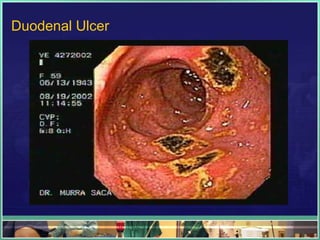
  – Gastric and/or duodenal ulcers (20% - 30%)
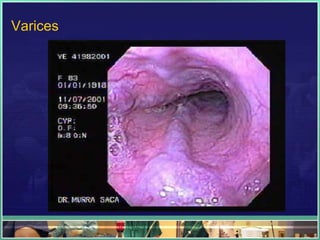
  – Esophagogastric varices with or without portal
    hypertensive gastropathy (10%)
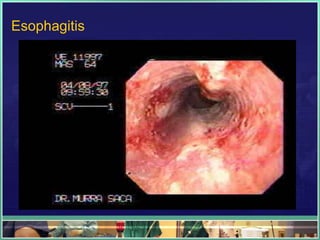
  – Esophagitis (5%)
  – Erosive gastritis/duodenitis (5 – 10%)
  – Mallory-Weiss syndrome (3%)
  – Angiodysplasia
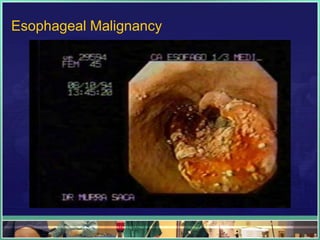
  – Mass lesions (polyps/cancers) (1%)
  – Dieulafoy's lesion
Upper GI Bleed
• Less common causes of upper gastrointestinal bleeding
  include:
   – Hemobilia
   – Hemosuccus pancreaticus
   – Aortoenteric fistula
   – Cameron lesions
• Because of the overall incidence of upper gastrointestinal
  bleeding is high, the less common causes of upper
  gastrointestinal bleeding are still frequently encountered,
  and as such their recognition and appropriate management
  are important.
Duodenal Ulcer
Varices
Esophagitis
Esophageal Malignancy
Upper GI Bleed
•   50% present with hematemesis
•   NGT with positive blood on aspirate
•   11% of brisk bleeds have hematochezia
•   Melena (black tarry stools)—this develops with
    approximately 150-200cc of blood in the upper GI
    tract.
     – Stool turns black after 8 hours of sitting within the
       GI tract.
Lower GI Bleed

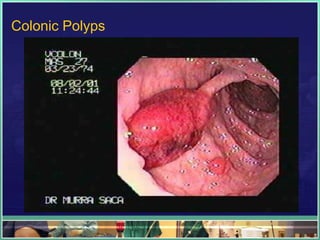
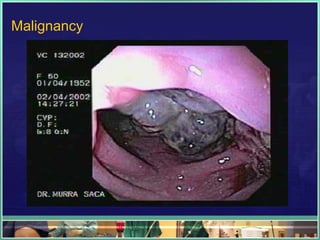
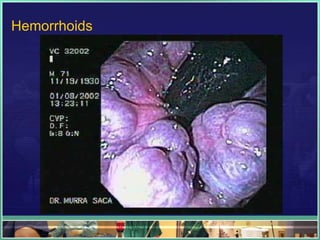
• The causes of lower gastrointestinal bleeding
  (LGIB) may be grouped into several categories:
    –   Anatomic (diverticulosis)
    –   Vascular (angiodysplasia, ischemic, radiation-induced)
    –   Inflammatory (IBD, infectious)
    –   Neoplastic (polyp, carcinoma)
    –   Other (hemorrhoid, ulcer, post-biopsy or polypectomy)


Strate, LL. Lower GI bleeding: epidemiology and diagnosis. Gastroenterol Clin North Am. 2005;34(4):643.
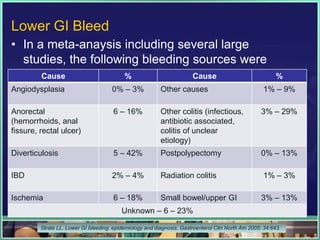
Lower GI Bleed
• In a meta-anaysis including several large
  studies, the following bleeding sources were
  identified:
      Cause           %           Cause                                                                   %
Angiodysplasia                        0% – 3%             Other causes                              1% – 9%

Anorectal                              6 – 16%            Other colitis (infectious,                3% – 29%
(hemorrhoids, anal                                        antibiotic associated,
fissure, rectal ulcer)                                    colitis of unclear
                                                          etiology)
Diverticulosis                         5 – 42%            Postpolypectomy                           0% – 13%

IBD                                   2% – 4%             Radiation colitis                         1% – 3%

Ischemia                               6 – 18%            Small bowel/upper GI                      3% – 13%
                                          Unknown – 6 – 23%

         Strate LL. Lower GI bleeding: epidemiology and diagnosis. Gastroenterol Clin North Am 2005; 34:643.
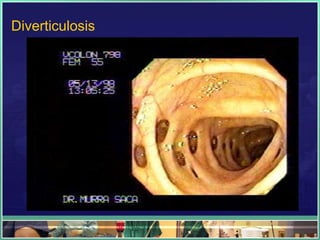
Diverticulosis
Colonic Polyps
Malignancy
Hemorrhoids
Lower GI Bleed
• Blood originating from the left colon typically is bright red.
• By comparison, bleeding from the right side of the colon usually appears
  dark or maroon-colored and may be mixed with stool.
• However, rapid transit of blood from the right side of the colon or
  massive upper GI bleeding can appear red, and bleeding from the
  cecum may rarely present with melena.
• Thus, although helpful, the distinctions based upon stool color are not
  absolute.
• Patients with high-risk features including hemodynamic instability
  (shock, orthostatic hypotension), persistent bleeding, and/or significant
  comorbid illnesses should be admitted to an intensive care unit for
  resuscitation, close observation, and possible therapeutic interventions.
Lower GI Bleed
• In patients with severe hematochezia, it is important to
  exclude upper GI bleeding, particularly if the bleeding is
  associated with orthostatic hypotension.
• Patients suspected of having an upper GI bleed should
  undergo an upper endoscopy once appropriately
  resuscitated.
• Nasogastric lavage may be carried out if there is doubt as to
  whether a bleed originates from the upper GI tract. A
  nasogastric lavage that yields blood- or coffee ground-like
  material confirms upper GI bleeding.
• However, false negative aspirates can occur if bleeding has
  ceased or arises beyond a closed pylorus.
Lower GI Bleed
•  Acute LGIB: <3d
•  Chronic LGIB: > several days
•  Hematochezia
•  Blood in Toilet
•  Clear NGT aspirate
•  Normal Renal Function
•  Usually Hemodynamically stable
    – <200ml : no effect on HR**
    – >800ml: SBP drops by 10mmHg, Hr increases by 10
    – >1500ml: possible shock
    OR
    – 10% Hct: tachycardia
    – 20% Hct: orthostatic hypotension
    – 30% Hct: shock
Stops spontaneously (80 - 85% of the time)

       **Barnet J and H Messmann H. Nat Rev Gastroenterol Hepatol 6, 637-646 (2009).
Obscure GI Bleed
•   Obscure gastrointestinal bleeding accounts for approximately 5% of
    patients with gastrointestinal bleeding.
•   In approximately 75% of these patients, the source is in the small bowel.
    The remainder of cases are due to missed lesions in either the upper or
    lower gastrointestinal tract.
•   Most common presentation is iron deficiency anemia
•   Etiology:
      – Younger than 40
          • Tumors
          • Meckel’s diverticulum
          • Dieulafoy’s lesion
          • Crohn’s Disease
          • Celiac Disease
      – Greater than 40
          • Angioectasia
          • NSAID enteropathy
          • Celiac


                Gerson LB. Clin Gastroenterol & Hepatol 2009;7:828-833.
Localization of Bleeding
•   History
•   NG Tube
•   EGD
•   Colonoscopy
•   Radionuclide imaging
     – Bleeding at a rate of 0.1 to 0.5 mL/minute
     – Most sensitive radiographic test for GI bleeding
     – Can only localize bleeding to a general area of the abdomen (accuracy 24 –
        91%)
•   Angiography
     – Bleeding at a rate of 0.3 to 0.5 mL/minute can be detected with CT
        angiography (Sn/Sp/Acc 82%/95%/100%)
     – Requires active blood loss of 1 to 1.5 mL/minute for normal angiography
     – No bowel preparation; accurate anatomic localization
     – Superselective embolization is feasible in 80 percent, and bleeding is
        successfully controlled in 97 percent; however, risk of intestinal infarct.
Management of Upper GI Bleed

• Assess the severity of the bleed
• Identify potential sources of the bleed
• Determine if there are conditions present that may
  affect subsequent management.
• Patients should be asked about prior episodes of
  upper GI bleeding, since up to 60 percent of
  patients with a history of an upper GI bleed are
  bleeding from the same lesion
• Medication and symptom review
  (NSAIDS, anticoagulants, pain
  location, tachycardia, etc.)
Management of Upper GI Bleed

• Medications
  – Acid suppression with intravenous PPI at presentation
    until confirmation of the cause of bleeding
  – Prokinetics like erythromycin to improve gastric
    visualization prior to endoscopy
  – Somatostatin or octreotide for variceal bleeding
  – Antibiotics for patient with cirrhosis (20% have infections;
    50% develop an infection while hospitalized)
Management of Upper GI Bleed

• Risk scoring
  – Rockall score is based upon age, the presence of
    shock, comorbidity, diagnosis, and endoscopic stigmata
    of recent hemorrhage
  – Modified Glasgow Blatchford score (used on first
    presentation), is calculated using only the blood urea
    nitrogen, hemoglobin, systolic blood pressure, and pulse
    (assess likelihood of the need for urgent endoscopic
    intervention).
  – AIMS65 - high accuracy for predicting inpatient mortality
     • Albumin < 3, INR >1.5, AMS, SBP < 90, Age > 65
Management of Upper GI Bleed

• Provision of supplemental oxygen by nasal cannula
• Nothing per mouth
• Two large caliber (16 gauge or larger) peripheral
  catheters or a central venous line
• Placement of a pulmonary artery catheter should
  be considered in patients with hemodynamic
  instability or who need close monitoring during
  resuscitation
Evidence for Transfusion
• Withholding transfusions until hemoglobin levels
  are lower than 7%, rather than 9%, improves
  overall survival by 45% in patients with acute upper
  gastrointestinal (GI) bleeding, according to a study
  published in the January 3 issue of the New
  England Journal of Medicine.


Transfusion Strategies for Acute Upper Gastrointestinal Bleeding. N Engl J Med. 2013;368:11-21, 75-76.
Management of Lower GI Bleed
• Patients with high-risk features, particularly those with hemodynamic
  instability, ongoing active bleeding, and significant comorbid illnesses
  should be managed in the intensive care unit with aggressive
  resuscitation and early interventions.
• A gastroenterologist, a general surgeon, and possibly an interventional
  radiologist should be involved early in the hospital course of high-risk
  individuals.
• Two large caliber (18 gauge or larger) peripheral catheters or a central
  venous line should be inserted for intravenous access.
• Patients with heart failure or valvular disease may benefit from
  pulmonary catheter monitoring to minimize the risk of fluid overload.
Management of GI Bleed
• Oxygen
• IV Access-central line or two large bore
  peripheral IV sites
• Isotonic saline for volume resuscitation
• Start transfusing blood products if the patient
  remains unstable despite fluid boluses.
• Airway Protection
• Altered Mental Status and increased risk of
  aspiration with massive upper GI bleed.
Management of GI Bleed
• ICU admit indications
   – Significant bleeding (>2u pRBC) with hemodynamic instability
• Transfusion
   – Brisk Bleed, transfusing should be based on hemodynamic status,
     not lab value of Hgb.
   – Cardiopulmonary symptoms-cardiac ischemia or shortness of breath,
     decreased pulse ox

• 1 unit PRBC increases Hgb by 1mg/dL and increase Hct by 3%
• FFP for INR greater than 1.5
• Platelets for platelet count less than 50K
Obscure GI Bleed

• Work Up
  –   EGD, Colonoscopy both negative
  –   Repeat
  –   Proximal jejunum? Distal ileum?
  –   Angiography


  AGA Institute. AGA Institute Medical Position Statement on Obscure Gastrointestinal Bleeding.
  Gastroenterology 2007;133:1694-1696
Basic Admission Orders

•   Admit to ICU/intermediate care/telemetry s/o …
•   Dx: Upper/Lower G.I. Bleed
•   Condition:
•   VS:
•   Allergies:
•   Activity: Bedrest
•   Nursing: Is/Os, ? Foley
•   Diet: NPO
Basic Admission Orders (Cont.)

• IVF: NSS @ ?cc/h
• Medications: I.V. Protonix, convert medications to
  i.v., hold anti-hypertensives
• Labs: serial H/H, type and cross, coags, Chem 7,
  LFTs
• Consults: GI, +/- Surgery
Thank you!

GI Bleeds

  • 1.
    GI Bleeds: What doesthe evidence show? Brian A. Wells, MD, MPH, MSM March 1st, 2013
  • 2.
    Warm-up Question Asymptomatic 24 year old. Is there an abnormality? Is it pathologic? What is it likely to be? How common is it?
  • 3.
    Warm-up question What classic sign is seen in this CT? Of what disease is it a sign? Is the disease active? I love the alphabet. You forgot to thank Berg and Lesniowski.
  • 4.
    GI bleeds: What doesthe evidence show? There seems to be no study too fragmented, no hypothesis too trivial, no literature too biased or too egotistical, no design too warped, no methodology too bungled, no presentation of results too inaccurate, too obscure, and too contradictory, no analysis too self- serving, no argument too circular, no conclusions too trifling or too unjustified, and no grammar and syntax too offensive for a paper to end up in print. - Drummond Rennie, MD, Deputy Editor of JAMA
  • 5.
    ―Medicine as acomputational science… as a probability science.‖
  • 9.
    Why talk aboutGI bleeds? • Frequent cause of hospitalization • Upper GI Bleeding accounts for approximately 350,000 hospitalizations per year. • In a study, patients with UGI bleeds experienced significantly higher 12- month health-resource utilization and costs than patients without UGI bleeds. • UGI-related healthcare utilization and total healthcare, medical, and pharmacy costs incurred by the UGI-bleed cohort were significantly greater (p< 0.0001) than those incurred by the general population cohort (mean of $20,405 vs. 3,652), even after excluding the initial hospitalization costs (mean of $11,228 vs. 3,652). The economics of upper gastrointestinal bleeding in a US managed-care setting: a retrospective, claims-based analysis. J Med Econ. 2010 Mar;13(1):70-7. doi: 10.3111/13696990903526676. http://www.ncbi.nlm.nih.gov/pubmed/20047365
  • 10.
    GI Bleed –Trends and Economics • From 1998 to 2006 – For patients with either a principal or secondary GI bleed diagnosis, the number of hospitalizations for upper GI bleeding per 100,000 people decreased by 14%. However, hospitalizations for lower GI bleeding increased 8%, yielding a 4% overall decrease in the hospitalization rate per 100,000 people for GI bleeding. – Possible reasons for the decrease in upper GI bleeding may include the increased use of proton pump inhibitors to decrease gastric acid secretion, antibiotic treatment of gastric ulcers caused by Helicobacter pylori bacteria, and increased use of selective COX-2 inhibitors for arthritis or other pain. Agency for Healthcare Research and Quality. Hospitalizations for Gastrointestinal Bleeding in 1998 and 2006. HCUP Statistical Brief #65. Published online December 2008.
  • 11.
    GI Bleed –Trends and Economics • From 1998 to 2006 – The largest decreases in the rate of hospital stays for GI bleeding were for upper GI ulcers (25% decrease) and gastritis/duodenitis (31% decrease). – The largest increases in the rate of hospital stays for GI bleeding were for angiodysplasia, which is a relatively infrequent cause of GI bleeding (38% increase), and hemorrhage of the rectum and anus (41% increase). – For patients with a principal diagnosis of GI bleeding, the number of inpatient deaths decreased from 20,013 in 1998 to 16,344 in 2006, with a 23% decrease in inpatient death rate from 3.9% to 3.0%. – For patients aged 30 to 44 years, the inpatient death rate for gastrointestinal bleeding decreased by 31%, from 1.6% in 1998 to 1.1% in 2006. Agency for Healthcare Research and Quality. Hospitalizations for Gastrointestinal Bleeding in 1998 and 2006. HCUP Statistical Brief #65. Published online December 2008.
  • 12.
    GI Bleeds • Unfortunately,far too extensive to cover everything in the time we have • Will attempt to give an overview of upper and lower • Will talk about – Classification – Etiology – Management
  • 13.
    Types of GIBleeds (i.e. our agreed-upon definitions) • Upper v. Lower • Divided by the ligament of Treitz – The suspensory muscle of duodenum, also known as the ligament of Treitz (named for Vaclav Treitz), connects the duodenum to the diaphragm. – It arises from the right crus as it passes around the esophagus, continues as connective tissue around the stems of the celiac trunk and SMA and inserts into the third and fourth portions of the duodenum and frequently into the duodenojejunal flexure as well. • Upper – 70% of GI bleeds (some variation in this data, will also find values like 60/40 in the literature) • Lower – 30% of GI bleeds
  • 14.
    Fun Slide! • Anabnormally low and fixed position of the ligament of Treitz is a known cause of ______?
  • 15.
    Upper GI Bleed •Upper gastrointestinal bleeding is a common medical condition that results in high patient morbidity and medical care costs. • In a study, the annual incidence of hospitalization for acute upper gastrointestinal bleeding was approximately 100 per 100,000 adults; the incidence was twice as common in males as in females and increased with age Longstreth, GF. Epidemiology of hospitalization for acute upper gastrointestinal hemorrhage: a population-based study. Am J Gastroenterol. 1995;90(2):206.
  • 16.
    Upper GI Bleed •The most common causes of upper gastrointestinal bleeding include the following: – Gastric and/or duodenal ulcers (20% - 30%) – Esophagogastric varices with or without portal hypertensive gastropathy (10%) – Esophagitis (5%) – Erosive gastritis/duodenitis (5 – 10%) – Mallory-Weiss syndrome (3%) – Angiodysplasia – Mass lesions (polyps/cancers) (1%) – Dieulafoy's lesion
  • 17.
    Upper GI Bleed •Less common causes of upper gastrointestinal bleeding include: – Hemobilia – Hemosuccus pancreaticus – Aortoenteric fistula – Cameron lesions • Because of the overall incidence of upper gastrointestinal bleeding is high, the less common causes of upper gastrointestinal bleeding are still frequently encountered, and as such their recognition and appropriate management are important.
  • 18.
  • 19.
  • 20.
  • 21.
  • 22.
    Upper GI Bleed • 50% present with hematemesis • NGT with positive blood on aspirate • 11% of brisk bleeds have hematochezia • Melena (black tarry stools)—this develops with approximately 150-200cc of blood in the upper GI tract. – Stool turns black after 8 hours of sitting within the GI tract.
  • 23.
    Lower GI Bleed •The causes of lower gastrointestinal bleeding (LGIB) may be grouped into several categories: – Anatomic (diverticulosis) – Vascular (angiodysplasia, ischemic, radiation-induced) – Inflammatory (IBD, infectious) – Neoplastic (polyp, carcinoma) – Other (hemorrhoid, ulcer, post-biopsy or polypectomy) Strate, LL. Lower GI bleeding: epidemiology and diagnosis. Gastroenterol Clin North Am. 2005;34(4):643.
  • 24.
    Lower GI Bleed •In a meta-anaysis including several large studies, the following bleeding sources were identified: Cause % Cause % Angiodysplasia 0% – 3% Other causes 1% – 9% Anorectal 6 – 16% Other colitis (infectious, 3% – 29% (hemorrhoids, anal antibiotic associated, fissure, rectal ulcer) colitis of unclear etiology) Diverticulosis 5 – 42% Postpolypectomy 0% – 13% IBD 2% – 4% Radiation colitis 1% – 3% Ischemia 6 – 18% Small bowel/upper GI 3% – 13% Unknown – 6 – 23% Strate LL. Lower GI bleeding: epidemiology and diagnosis. Gastroenterol Clin North Am 2005; 34:643.
  • 25.
  • 26.
  • 27.
  • 28.
  • 29.
    Lower GI Bleed •Blood originating from the left colon typically is bright red. • By comparison, bleeding from the right side of the colon usually appears dark or maroon-colored and may be mixed with stool. • However, rapid transit of blood from the right side of the colon or massive upper GI bleeding can appear red, and bleeding from the cecum may rarely present with melena. • Thus, although helpful, the distinctions based upon stool color are not absolute. • Patients with high-risk features including hemodynamic instability (shock, orthostatic hypotension), persistent bleeding, and/or significant comorbid illnesses should be admitted to an intensive care unit for resuscitation, close observation, and possible therapeutic interventions.
  • 30.
    Lower GI Bleed •In patients with severe hematochezia, it is important to exclude upper GI bleeding, particularly if the bleeding is associated with orthostatic hypotension. • Patients suspected of having an upper GI bleed should undergo an upper endoscopy once appropriately resuscitated. • Nasogastric lavage may be carried out if there is doubt as to whether a bleed originates from the upper GI tract. A nasogastric lavage that yields blood- or coffee ground-like material confirms upper GI bleeding. • However, false negative aspirates can occur if bleeding has ceased or arises beyond a closed pylorus.
  • 31.
    Lower GI Bleed • Acute LGIB: <3d • Chronic LGIB: > several days • Hematochezia • Blood in Toilet • Clear NGT aspirate • Normal Renal Function • Usually Hemodynamically stable – <200ml : no effect on HR** – >800ml: SBP drops by 10mmHg, Hr increases by 10 – >1500ml: possible shock OR – 10% Hct: tachycardia – 20% Hct: orthostatic hypotension – 30% Hct: shock Stops spontaneously (80 - 85% of the time) **Barnet J and H Messmann H. Nat Rev Gastroenterol Hepatol 6, 637-646 (2009).
  • 32.
    Obscure GI Bleed • Obscure gastrointestinal bleeding accounts for approximately 5% of patients with gastrointestinal bleeding. • In approximately 75% of these patients, the source is in the small bowel. The remainder of cases are due to missed lesions in either the upper or lower gastrointestinal tract. • Most common presentation is iron deficiency anemia • Etiology: – Younger than 40 • Tumors • Meckel’s diverticulum • Dieulafoy’s lesion • Crohn’s Disease • Celiac Disease – Greater than 40 • Angioectasia • NSAID enteropathy • Celiac Gerson LB. Clin Gastroenterol & Hepatol 2009;7:828-833.
  • 33.
    Localization of Bleeding • History • NG Tube • EGD • Colonoscopy • Radionuclide imaging – Bleeding at a rate of 0.1 to 0.5 mL/minute – Most sensitive radiographic test for GI bleeding – Can only localize bleeding to a general area of the abdomen (accuracy 24 – 91%) • Angiography – Bleeding at a rate of 0.3 to 0.5 mL/minute can be detected with CT angiography (Sn/Sp/Acc 82%/95%/100%) – Requires active blood loss of 1 to 1.5 mL/minute for normal angiography – No bowel preparation; accurate anatomic localization – Superselective embolization is feasible in 80 percent, and bleeding is successfully controlled in 97 percent; however, risk of intestinal infarct.
  • 34.
    Management of UpperGI Bleed • Assess the severity of the bleed • Identify potential sources of the bleed • Determine if there are conditions present that may affect subsequent management. • Patients should be asked about prior episodes of upper GI bleeding, since up to 60 percent of patients with a history of an upper GI bleed are bleeding from the same lesion • Medication and symptom review (NSAIDS, anticoagulants, pain location, tachycardia, etc.)
  • 35.
    Management of UpperGI Bleed • Medications – Acid suppression with intravenous PPI at presentation until confirmation of the cause of bleeding – Prokinetics like erythromycin to improve gastric visualization prior to endoscopy – Somatostatin or octreotide for variceal bleeding – Antibiotics for patient with cirrhosis (20% have infections; 50% develop an infection while hospitalized)
  • 36.
    Management of UpperGI Bleed • Risk scoring – Rockall score is based upon age, the presence of shock, comorbidity, diagnosis, and endoscopic stigmata of recent hemorrhage – Modified Glasgow Blatchford score (used on first presentation), is calculated using only the blood urea nitrogen, hemoglobin, systolic blood pressure, and pulse (assess likelihood of the need for urgent endoscopic intervention). – AIMS65 - high accuracy for predicting inpatient mortality • Albumin < 3, INR >1.5, AMS, SBP < 90, Age > 65
  • 37.
    Management of UpperGI Bleed • Provision of supplemental oxygen by nasal cannula • Nothing per mouth • Two large caliber (16 gauge or larger) peripheral catheters or a central venous line • Placement of a pulmonary artery catheter should be considered in patients with hemodynamic instability or who need close monitoring during resuscitation
  • 38.
    Evidence for Transfusion •Withholding transfusions until hemoglobin levels are lower than 7%, rather than 9%, improves overall survival by 45% in patients with acute upper gastrointestinal (GI) bleeding, according to a study published in the January 3 issue of the New England Journal of Medicine. Transfusion Strategies for Acute Upper Gastrointestinal Bleeding. N Engl J Med. 2013;368:11-21, 75-76.
  • 39.
    Management of LowerGI Bleed • Patients with high-risk features, particularly those with hemodynamic instability, ongoing active bleeding, and significant comorbid illnesses should be managed in the intensive care unit with aggressive resuscitation and early interventions. • A gastroenterologist, a general surgeon, and possibly an interventional radiologist should be involved early in the hospital course of high-risk individuals. • Two large caliber (18 gauge or larger) peripheral catheters or a central venous line should be inserted for intravenous access. • Patients with heart failure or valvular disease may benefit from pulmonary catheter monitoring to minimize the risk of fluid overload.
  • 40.
    Management of GIBleed • Oxygen • IV Access-central line or two large bore peripheral IV sites • Isotonic saline for volume resuscitation • Start transfusing blood products if the patient remains unstable despite fluid boluses. • Airway Protection • Altered Mental Status and increased risk of aspiration with massive upper GI bleed.
  • 41.
    Management of GIBleed • ICU admit indications – Significant bleeding (>2u pRBC) with hemodynamic instability • Transfusion – Brisk Bleed, transfusing should be based on hemodynamic status, not lab value of Hgb. – Cardiopulmonary symptoms-cardiac ischemia or shortness of breath, decreased pulse ox • 1 unit PRBC increases Hgb by 1mg/dL and increase Hct by 3% • FFP for INR greater than 1.5 • Platelets for platelet count less than 50K
  • 42.
    Obscure GI Bleed •Work Up – EGD, Colonoscopy both negative – Repeat – Proximal jejunum? Distal ileum? – Angiography AGA Institute. AGA Institute Medical Position Statement on Obscure Gastrointestinal Bleeding. Gastroenterology 2007;133:1694-1696
  • 43.
    Basic Admission Orders • Admit to ICU/intermediate care/telemetry s/o … • Dx: Upper/Lower G.I. Bleed • Condition: • VS: • Allergies: • Activity: Bedrest • Nursing: Is/Os, ? Foley • Diet: NPO
  • 44.
    Basic Admission Orders(Cont.) • IVF: NSS @ ?cc/h • Medications: I.V. Protonix, convert medications to i.v., hold anti-hypertensives • Labs: serial H/H, type and cross, coags, Chem 7, LFTs • Consults: GI, +/- Surgery
  • 45.

Editor's Notes

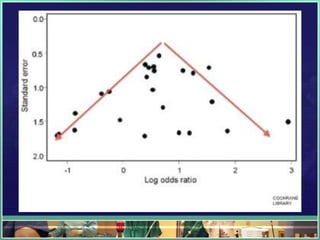
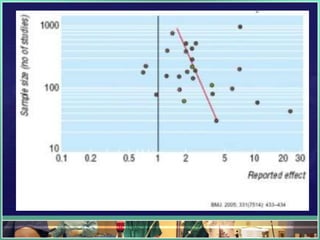
  • #7 Funnel plot – way of spotting if small negative trials have gone missing in actionLeft – spurious false negative; right – spurious false positive
  • #25 AngiodysAnorectalDiverticIBDIschemiaOther causesOther colitisPostpolyRadioUpper GI