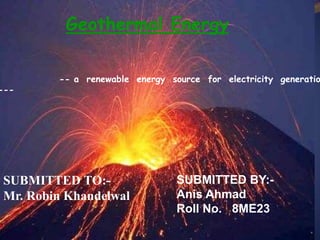
Geothermal Energy
-- a renewable energy source for electricity generatio
---
SUBMITTED BY:-
Anis Ahmad
Roll No. 8ME23
SUBMITTED TO:-
Mr. Robin Khandelwal
Outlines
 Introduction
 Geothermal Reservoirs
 Extraction & Uses of Geothermal Energy
 Electricity Generation
 Conclusion
Introduction
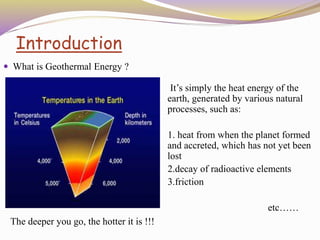
 What is Geothermal Energy ?
The deeper you go, the hotter it is !!!
It’s simply the heat energy of the
earth, generated by various natural
processes, such as:
1. heat from when the planet formed
and accreted, which has not yet been
lost
2.decay of radioactive elements
3.friction
etc……
Geothermal Reservoirs
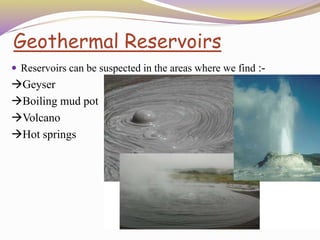
 Reservoirs can be suspected in the areas where we find :-
Geyser
Boiling mud pot
Volcano
Hot springs
Geothermal Reservoirs (cont.)
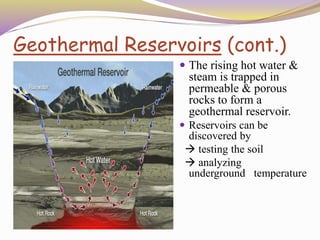
 The rising hot water &
steam is trapped in
permeable & porous
rocks to form a
geothermal reservoir.
 Reservoirs can be
discovered by
 testing the soil
 analyzing
underground temperature
Extraction & uses
 The heat energy can be brought to earth surface by
following ways..
 directly from hot springs/ geysers
 geothermal heat pump
 Uses are broadly classified as:-
direct use
indirect use
Direct use of Geothermal Energy
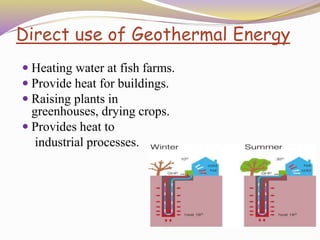
 Heating water at fish farms.
 Provide heat for buildings.
 Raising plants in
greenhouses, drying crops.
 Provides heat to
industrial processes.
Indirect use of Geothermal Energy
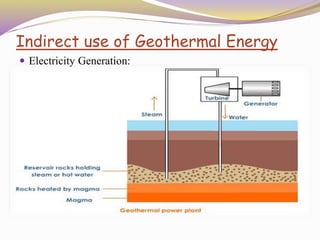
 Electricity Generation:
Electricity Generation (cont.)
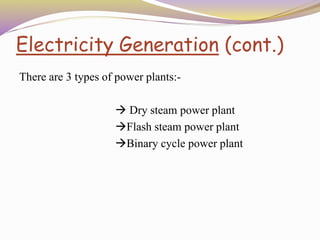
There are 3 types of power plants:-
 Dry steam power plant
Flash steam power plant
Binary cycle power plant
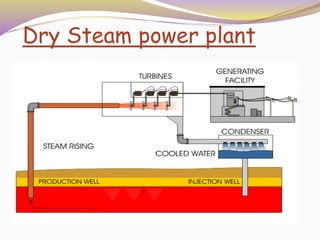
Dry Steam power plant
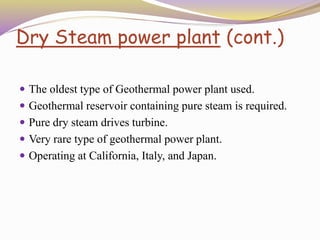
Dry Steam power plant (cont.)
 The oldest type of Geothermal power plant used.
 Geothermal reservoir containing pure steam is required.
 Pure dry steam drives turbine.
 Very rare type of geothermal power plant.
 Operating at California, Italy, and Japan.
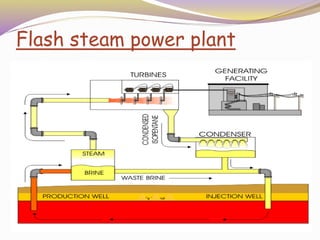
Flash steam power plant
Flash steam power plant (cont.)
 Commonly used geothermal power plant.
 Geothermal reservoirs containing both hot water & steam
is required.
 Pressure changing system is required.
 Operating at Hawaii, Nevada, Utah & some other places
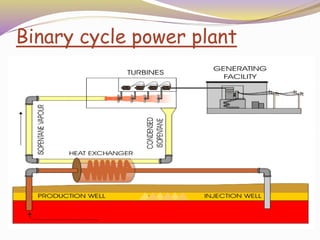
Binary cycle power plant
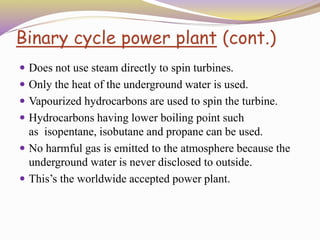
Binary cycle power plant (cont.)
 Does not use steam directly to spin turbines.
 Only the heat of the underground water is used.
 Vapourized hydrocarbons are used to spin the turbine.
 Hydrocarbons having lower boiling point such
as isopentane, isobutane and propane can be used.
 No harmful gas is emitted to the atmosphere because the
underground water is never disclosed to outside.
 This’s the worldwide accepted power plant.
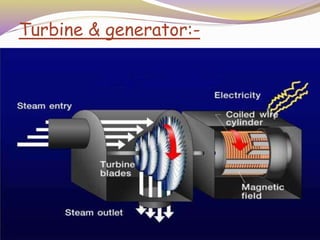
Turbine & generator:-
Advantages
 Available all the year around.
 Does not involve any combustion of fuel.
 Independent of weather
 Clean Resource – Very little emissions or
overall environmental impact.
 Economically Sound Alternative – The fuel is
free, rate / KWh likely to be competitive
 Overall, geothermal energy is a sustainable
resource.
Disadvantages
 Not widespread source of energy
 High installation costs
 Can run out of steam
 May release harmful gases
 Transportation
 Earthquakes
Geothermal energy
Geothermal energy

Geothermal energy

  • 1.
    Geothermal Energy -- arenewable energy source for electricity generatio --- SUBMITTED BY:- Anis Ahmad Roll No. 8ME23 SUBMITTED TO:- Mr. Robin Khandelwal
  • 2.
    Outlines  Introduction  GeothermalReservoirs  Extraction & Uses of Geothermal Energy  Electricity Generation  Conclusion
  • 3.
    Introduction  What isGeothermal Energy ? The deeper you go, the hotter it is !!! It’s simply the heat energy of the earth, generated by various natural processes, such as: 1. heat from when the planet formed and accreted, which has not yet been lost 2.decay of radioactive elements 3.friction etc……
  • 4.
    Geothermal Reservoirs  Reservoirscan be suspected in the areas where we find :- Geyser Boiling mud pot Volcano Hot springs
  • 5.
    Geothermal Reservoirs (cont.) The rising hot water & steam is trapped in permeable & porous rocks to form a geothermal reservoir.  Reservoirs can be discovered by  testing the soil  analyzing underground temperature
  • 6.
    Extraction & uses The heat energy can be brought to earth surface by following ways..  directly from hot springs/ geysers  geothermal heat pump  Uses are broadly classified as:- direct use indirect use
  • 7.
    Direct use ofGeothermal Energy  Heating water at fish farms.  Provide heat for buildings.  Raising plants in greenhouses, drying crops.  Provides heat to industrial processes.
  • 8.
    Indirect use ofGeothermal Energy  Electricity Generation:
  • 9.
    Electricity Generation (cont.) Thereare 3 types of power plants:-  Dry steam power plant Flash steam power plant Binary cycle power plant
  • 10.
  • 11.
    Dry Steam powerplant (cont.)  The oldest type of Geothermal power plant used.  Geothermal reservoir containing pure steam is required.  Pure dry steam drives turbine.  Very rare type of geothermal power plant.  Operating at California, Italy, and Japan.
  • 12.
  • 13.
    Flash steam powerplant (cont.)  Commonly used geothermal power plant.  Geothermal reservoirs containing both hot water & steam is required.  Pressure changing system is required.  Operating at Hawaii, Nevada, Utah & some other places
  • 14.
  • 15.
    Binary cycle powerplant (cont.)  Does not use steam directly to spin turbines.  Only the heat of the underground water is used.  Vapourized hydrocarbons are used to spin the turbine.  Hydrocarbons having lower boiling point such as isopentane, isobutane and propane can be used.  No harmful gas is emitted to the atmosphere because the underground water is never disclosed to outside.  This’s the worldwide accepted power plant.
  • 16.
  • 17.
    Advantages  Available allthe year around.  Does not involve any combustion of fuel.  Independent of weather  Clean Resource – Very little emissions or overall environmental impact.  Economically Sound Alternative – The fuel is free, rate / KWh likely to be competitive  Overall, geothermal energy is a sustainable resource.
  • 18.
    Disadvantages  Not widespreadsource of energy  High installation costs  Can run out of steam  May release harmful gases  Transportation  Earthquakes