GEOTHERMAL ENERGY


                                             Umashankar Mali
                                             Sem-I
                                             Branch-ME


3 1 / 10 / 2011   VNS institute of technology, Bhopal
Introduction


Geo=Earth

Thermal=Heat
Introduction

   Geothermal Energy is heat (thermal)
    derived from earth (geo)

   Contained in rock and fluid in the earths
    crust

   Source of geothermal         energy    is
    radioactive decay
Geothermal energy

   Geothermal power is generated wherever water comes in
    contact with hot rocks below the earth’s surface.
   The rocks give off heat that makes the water hot enough to
    turn in to steam.
   Power companies can drill wells and pump the hot water or
    steam to the surface, where it can be used to generate
    energy.
   in areas where no underground water or steam exists
    naturally, engineers can pump water into the ground to be
    heated by hot rocks.
   Bolivia, Iceland, New Zealand, and the united states have
    developed geothermal power plants.
Types       and       Application             of
 Geothermal Energy

1.Direct use
  Involves using the heat in water directly

   Temperature: 38 C-149 C

   e.g. heating of buildings, industrial processes,
     greenhouses , aquaculture and resource
Types and Application                      of
Geothermal Energy

2. Ground-source heat pumps
  use the earth or groundwater as a heat source in
   winter and sink in summer

   Temperatures: 4˚C to 38˚C

   Heat pump transfers heat from the soil to the
    house in winter and from the house to the soil in
    summer
Types and Application                       of
Geothermal Energy

3.Power generation
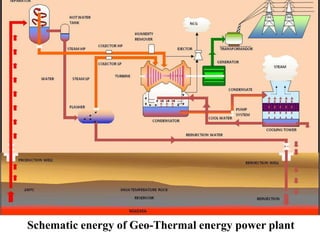
 geothermal power plant taps the natural supplies of

  heat energy that have accumulated inside the earth.
Schematic energy of Geo-Thermal energy power plant
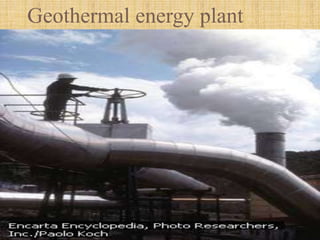
Geothermal energy plant
Indian Scenario

 Puga Valley (J&K)
 Godavari Basin Manikara (Himachal
 Pradesh)
 Bakreshwar (West Bengal)
 Tuwa (Gujarat)
 Jalgaon (Maharashtra)
Demerits of Geothermal
    Energy
 Heated water may give out after a while-
  hotspot moves or aquifer pressure drops.
 Geo thermal hot spots are sparsely distributed.

 Geothermal energy is quite low grade because

  the temperature of steam is only between 150
  to 200 c(at 100 psi).
 salts in water can corrode equipment, shorten

  lifespan.
 Limited    to geographic areas            where
  geothermal heating naturally occurs.
Merits of Geothermal Energy
 Power source during construction
 Renewable as long as water is heated
  naturally
 Much lower greenhouse gas emissions than
  fossil fuels
 Meet the needs of electricity demand in
  limited area
 An experimental unit as a pilot plant for a


    larger size installation   .

Geothermal energy

  • 1.
    GEOTHERMAL ENERGY Umashankar Mali Sem-I Branch-ME 3 1 / 10 / 2011 VNS institute of technology, Bhopal
  • 2.
  • 3.
    Introduction  Geothermal Energy is heat (thermal) derived from earth (geo)  Contained in rock and fluid in the earths crust  Source of geothermal energy is radioactive decay
  • 4.
    Geothermal energy  Geothermal power is generated wherever water comes in contact with hot rocks below the earth’s surface.  The rocks give off heat that makes the water hot enough to turn in to steam.  Power companies can drill wells and pump the hot water or steam to the surface, where it can be used to generate energy.  in areas where no underground water or steam exists naturally, engineers can pump water into the ground to be heated by hot rocks.  Bolivia, Iceland, New Zealand, and the united states have developed geothermal power plants.
  • 5.
    Types and Application of Geothermal Energy 1.Direct use  Involves using the heat in water directly  Temperature: 38 C-149 C  e.g. heating of buildings, industrial processes, greenhouses , aquaculture and resource
  • 6.
    Types and Application of Geothermal Energy 2. Ground-source heat pumps  use the earth or groundwater as a heat source in winter and sink in summer  Temperatures: 4˚C to 38˚C  Heat pump transfers heat from the soil to the house in winter and from the house to the soil in summer
  • 7.
    Types and Application of Geothermal Energy 3.Power generation  geothermal power plant taps the natural supplies of heat energy that have accumulated inside the earth.
  • 8.
    Schematic energy ofGeo-Thermal energy power plant
  • 9.
  • 10.
    Indian Scenario  PugaValley (J&K)  Godavari Basin Manikara (Himachal Pradesh)  Bakreshwar (West Bengal)  Tuwa (Gujarat)  Jalgaon (Maharashtra)
  • 11.
    Demerits of Geothermal Energy  Heated water may give out after a while- hotspot moves or aquifer pressure drops.  Geo thermal hot spots are sparsely distributed.  Geothermal energy is quite low grade because the temperature of steam is only between 150 to 200 c(at 100 psi).  salts in water can corrode equipment, shorten lifespan.  Limited to geographic areas where geothermal heating naturally occurs.
  • 12.
    Merits of GeothermalEnergy  Power source during construction  Renewable as long as water is heated naturally  Much lower greenhouse gas emissions than fossil fuels  Meet the needs of electricity demand in limited area  An experimental unit as a pilot plant for a larger size installation .