Downloaded 124 times
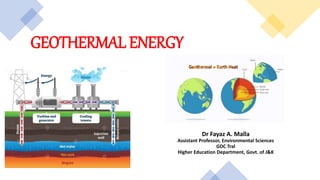
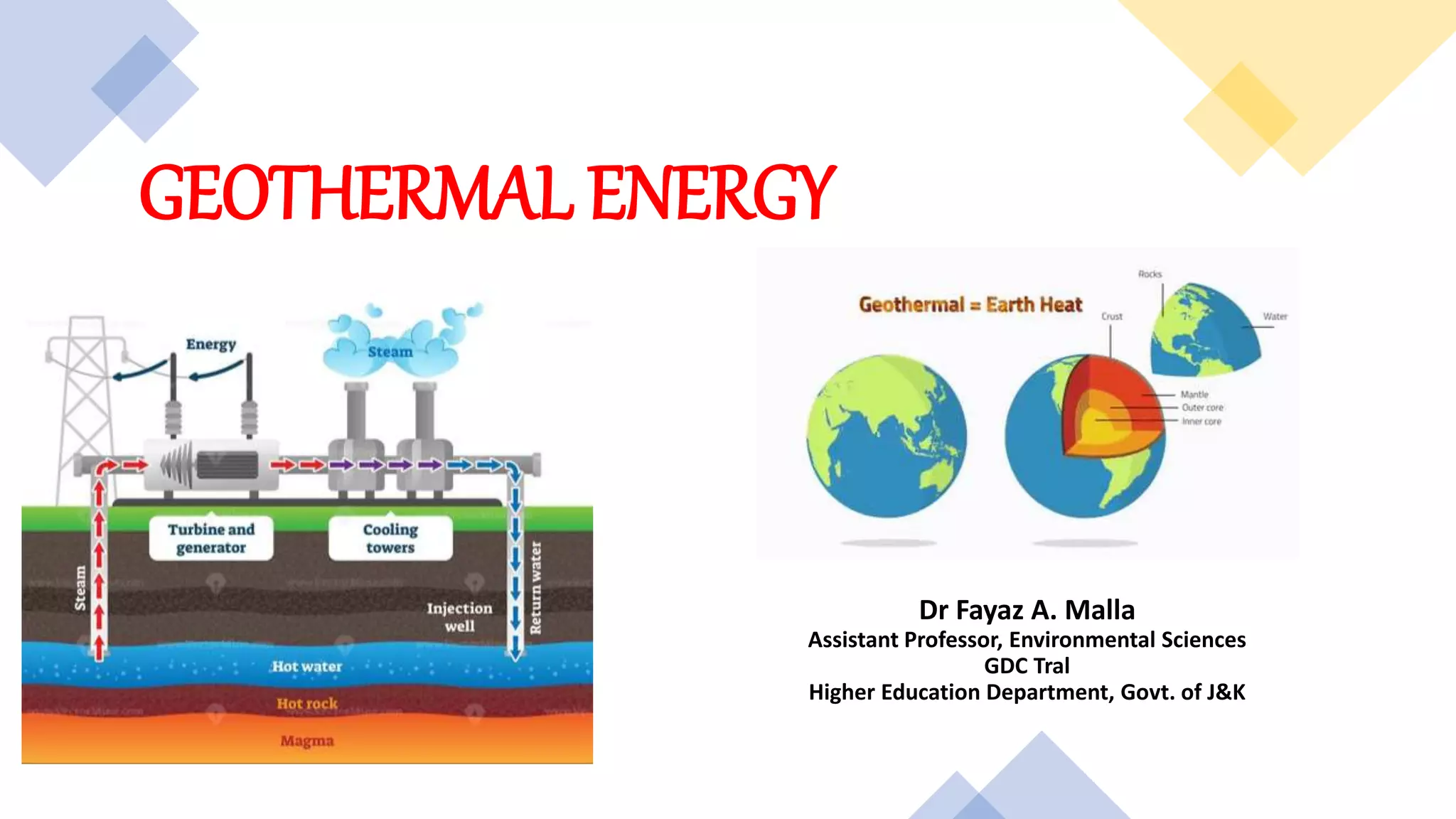
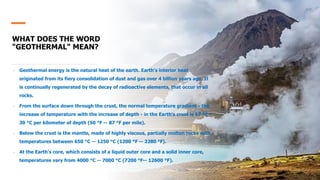
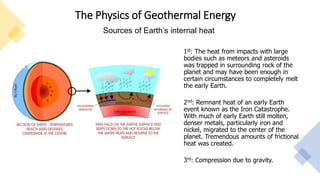
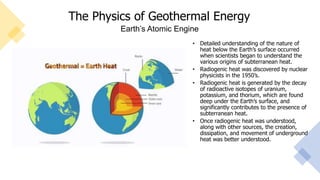
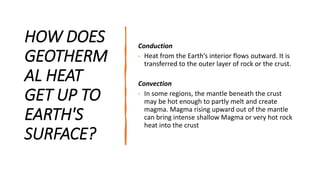
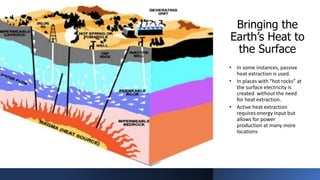
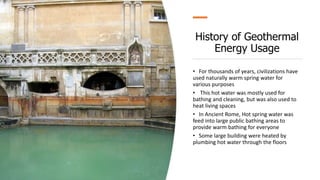
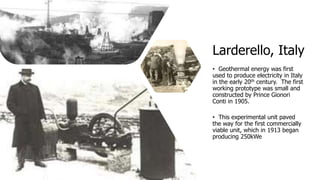
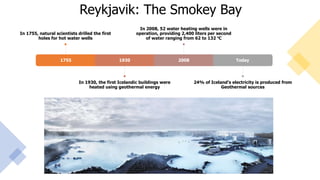
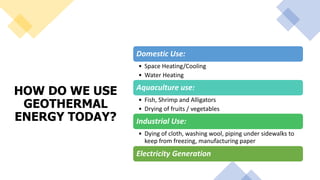
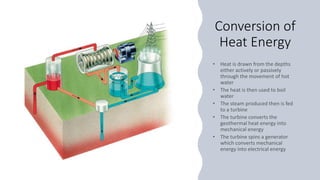
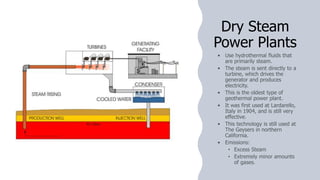
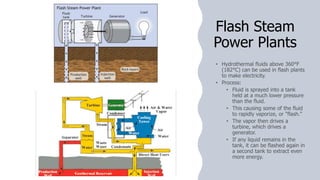
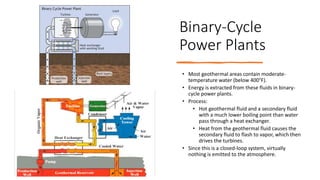
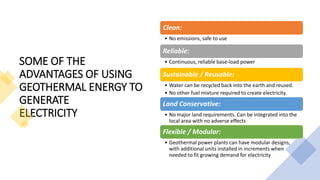
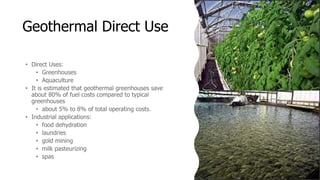
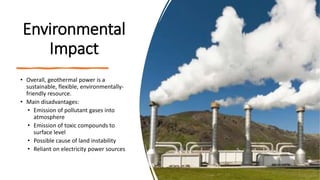
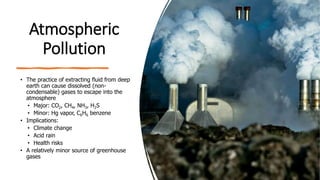
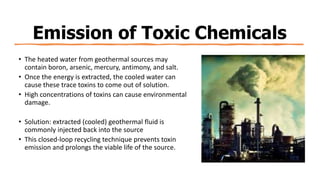
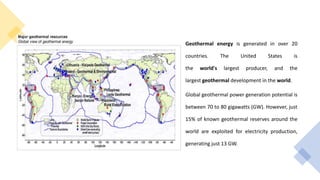


Geothermal energy harnesses the natural heat from within the Earth. Heat from the Earth's core radiates outward through conduction and convection, and in some areas reaches the surface in the form of hot springs, geysers, or shallow magma. This heat can be used directly for applications like heating buildings and greenhouses or generating electricity. The main types of geothermal power plants are dry steam, flash steam, and binary cycle plants. Geothermal energy has advantages of being renewable, continuous, and emitting fewer emissions than fossil fuels. Potential challenges include localized air pollution from gases and possible ground instability from fluid extraction. Globally, geothermal energy accounts for a small percentage of electricity but has significant unt


