- a renewable energy and source for electricity generation ,
Outlines
 Introduction
 Geothermal Reservoirs
 Extraction & Uses of Geothermal Energy
 Electricity Generation
 Cost
 Geothermal Energy in India
 Pros and Cons
 Conclusion
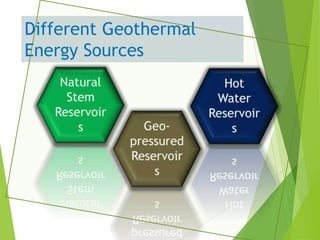
Different Geothermal
Energy Sources
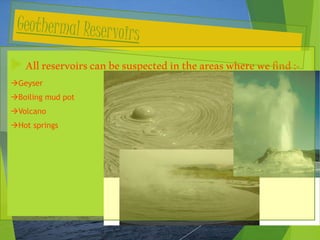
 Allreservoirscanbesuspectedintheareaswherewefind:-
Geyser
Boiling mud pot
Volcano
Hot springs
Geothermal Reservoirs
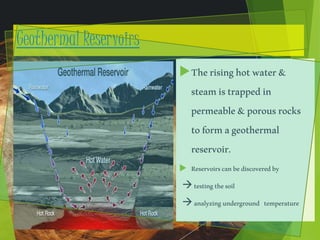
Therisinghotwater&
steamistrappedin
permeable&porousrocks
toformageothermal
reservoir.
 Reservoirscanbediscoveredby
testingthesoil
analyzingunderground temperature
Extraction & uses
 The heat energy can be brought to earth surface by following ways..
 directly from hot springs/ geysers
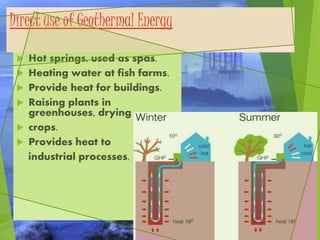
 geothermal heat pump
 Uses are broadly classified as:-
direct use
indirect use
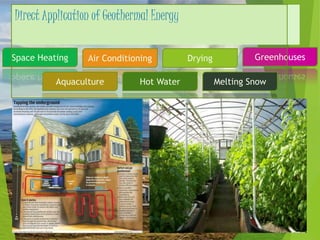
Direct Application of Geothermal Energy
Space Heating Air Conditioning Drying
Hot Water
Greenhouses
Melting SnowAquaculture
Direct use of Geothermal Energy
 Hot springs, used as spas.
 Heating water at fish farms.
 Provide heat for buildings.
 Raising plants in
greenhouses, drying
 crops.
 Provides heat to
industrial processes.
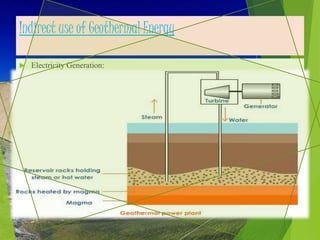
Indirect use of Geothermal Energy
 Electricity Generation:
Electricity Generation
There are 3 types of power plants:-
 Dry steam power plant
Flash steam power plant
Binary cycle power plant
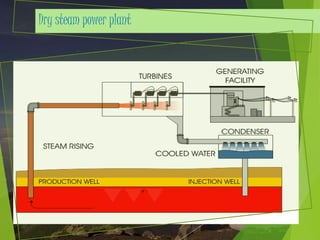
Dry steam power plant
Dry Steam power plant
 The oldest type of Geothermal power plant used.
 Geothermal reservoir containing pure steam is required.
 Pure dry steam drives turbine.
 Very rare type of geothermal power plant.
 Operating at California, Italy, and Japan.
Flash steam power plant
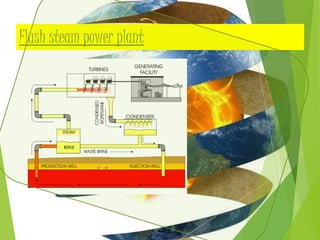
 Commonly used geothermal power plant.
 Geothermal reservoirs containing both hot water & steam is required.
 Pressure changing system is required.
 Operating at Hawaii, Nevada, Utah & some other places
Binary cycle power plant
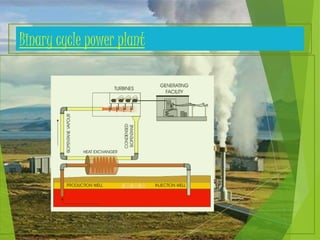
 Does not use steam directly to spin turbines.
 Only the heat of the underground water is used.
 Vaporized hydrocarbons are used to spin the turbine.
 Hydrocarbons having lower boiling point such as isopentane, isobutene
and propane can be used.
 No harmful gas is emitted to the atmosphere because the underground
water is never disclosed to outside.
 This’s the worldwide accepted power plant.
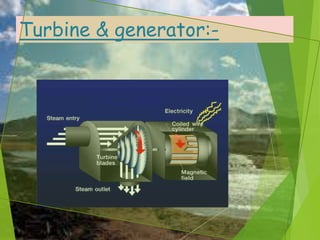
Turbine & generator:-
Cost
 Direct use of geothermal energy is absolutely
cheaper than other energy sources.
 Cost of electricity generation depends upon
certain factors:
Temperature and depth of resource
Type of resource (steam, liquid, mix)
Available volume of resource
Size and technology of plant
Cost
 The initial investment is high.
 But after certain time period, the cost of electricity becomes comparable
to other resources of energy.
 US $0.05 to $0.08 (Rs. 2.772 to Rs. 4.4352) per kWh
 Once the capital cost is recovered, the price can decrease to below US
$0.05 (Rs 2.2772) per kWh
Geothermal Energy in India
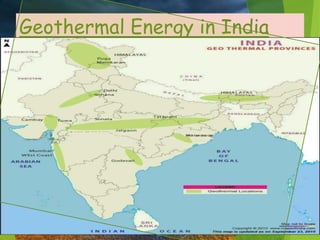
 Geothermal provinces are estimated to produce 10,600 MW of power (experts
are confident only to the extent of 100 MW)
 Geothermal provinces in India: the Himalayas, Sohana, West coast, Cambay,
Son-Narmada-Tapi , Godavari, and Mahanadi
 Reykjavík Geothermal will assist Thermax to set up a pilot project in Puga
Valley, Ladakh (Jammu & Kashmir)
 First operational commercial geothermal power plant is likely to come up in AP
with a capacity of 25 MW by Geosyndicate Pvt Ltd.
Advantages
 Available all the year around.
 Does not involve any combustion of fuel.
 Independent of weather
 Clean Resource – Very little emissions or overall
environmental impact.
 Economically Sound Alternative – The fuel is free, rate /
KWh likely to be competitive
 Overall, geothermal energy is a sustainable resource.
Disadvantages
 Not widespread source of energy
 High installation costs
 Can run out of steam
 May release harmful gases
 Transportation
 Earthquakes
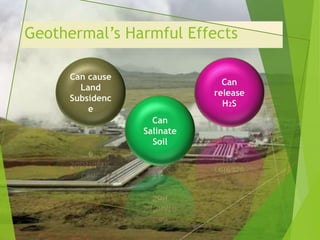
Geothermal’s Harmful Effects
Can
release
H2S
Can cause
Land
Subsidenc
e
Can
Salinate
Soil
Conclusion
 Geothermal heating system can replace fossil fuel heating system in a
particular area.
 Annual costs for common heating purposes can be reduced by more than
60%.
 Continued energy shortages have created added interest in geothermal
energy for power generation.
 Potential exists to provide all energy requirements in the U.S
 Geothermal energy appears to be a partial solution to our energy needs.
Energy ppt
Energy ppt

Energy ppt

  • 2.
    - a renewableenergy and source for electricity generation ,
  • 3.
    Outlines  Introduction  GeothermalReservoirs  Extraction & Uses of Geothermal Energy  Electricity Generation  Cost  Geothermal Energy in India  Pros and Cons  Conclusion
  • 5.
  • 6.
  • 7.
  • 8.
    Extraction & uses The heat energy can be brought to earth surface by following ways..  directly from hot springs/ geysers  geothermal heat pump  Uses are broadly classified as:- direct use indirect use
  • 9.
    Direct Application ofGeothermal Energy Space Heating Air Conditioning Drying Hot Water Greenhouses Melting SnowAquaculture
  • 10.
    Direct use ofGeothermal Energy  Hot springs, used as spas.  Heating water at fish farms.  Provide heat for buildings.  Raising plants in greenhouses, drying  crops.  Provides heat to industrial processes.
  • 11.
    Indirect use ofGeothermal Energy  Electricity Generation:
  • 12.
    Electricity Generation There are3 types of power plants:-  Dry steam power plant Flash steam power plant Binary cycle power plant
  • 13.
  • 14.
    Dry Steam powerplant  The oldest type of Geothermal power plant used.  Geothermal reservoir containing pure steam is required.  Pure dry steam drives turbine.  Very rare type of geothermal power plant.  Operating at California, Italy, and Japan.
  • 15.
  • 16.
    Flash steam powerplant  Commonly used geothermal power plant.  Geothermal reservoirs containing both hot water & steam is required.  Pressure changing system is required.  Operating at Hawaii, Nevada, Utah & some other places
  • 17.
  • 18.
    Binary cycle powerplant  Does not use steam directly to spin turbines.  Only the heat of the underground water is used.  Vaporized hydrocarbons are used to spin the turbine.  Hydrocarbons having lower boiling point such as isopentane, isobutene and propane can be used.  No harmful gas is emitted to the atmosphere because the underground water is never disclosed to outside.  This’s the worldwide accepted power plant.
  • 19.
  • 20.
    Cost  Direct useof geothermal energy is absolutely cheaper than other energy sources.  Cost of electricity generation depends upon certain factors: Temperature and depth of resource Type of resource (steam, liquid, mix) Available volume of resource Size and technology of plant
  • 21.
    Cost  The initialinvestment is high.  But after certain time period, the cost of electricity becomes comparable to other resources of energy.  US $0.05 to $0.08 (Rs. 2.772 to Rs. 4.4352) per kWh  Once the capital cost is recovered, the price can decrease to below US $0.05 (Rs 2.2772) per kWh
  • 22.
  • 23.
    Geothermal Energy inIndia  Geothermal provinces are estimated to produce 10,600 MW of power (experts are confident only to the extent of 100 MW)  Geothermal provinces in India: the Himalayas, Sohana, West coast, Cambay, Son-Narmada-Tapi , Godavari, and Mahanadi  Reykjavík Geothermal will assist Thermax to set up a pilot project in Puga Valley, Ladakh (Jammu & Kashmir)  First operational commercial geothermal power plant is likely to come up in AP with a capacity of 25 MW by Geosyndicate Pvt Ltd.
  • 24.
    Advantages  Available allthe year around.  Does not involve any combustion of fuel.  Independent of weather  Clean Resource – Very little emissions or overall environmental impact.  Economically Sound Alternative – The fuel is free, rate / KWh likely to be competitive  Overall, geothermal energy is a sustainable resource.
  • 25.
    Disadvantages  Not widespreadsource of energy  High installation costs  Can run out of steam  May release harmful gases  Transportation  Earthquakes
  • 26.
    Geothermal’s Harmful Effects Can release H2S Cancause Land Subsidenc e Can Salinate Soil
  • 27.
    Conclusion  Geothermal heatingsystem can replace fossil fuel heating system in a particular area.  Annual costs for common heating purposes can be reduced by more than 60%.  Continued energy shortages have created added interest in geothermal energy for power generation.  Potential exists to provide all energy requirements in the U.S  Geothermal energy appears to be a partial solution to our energy needs.