

Geothermal Energy
--- a renewable energy source for electricity generation ---
Submitted by-
Abhijeet Agarwal
M.Tech 2nd Year
1704301
Outlines
Introduction
Geothermal Reservoirs
Extraction & Uses of Geothermal Energy
Electricity Generation
Cost
Geothermal Energy in India
Pros and Cons
Conclusion
Introduction
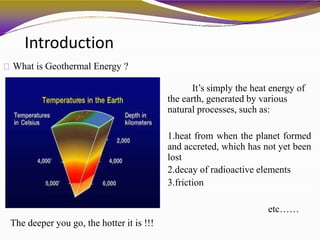
What is Geothermal Energy ?
It’s simply the heat energy of
the earth, generated by various
natural processes, such as:
1.heat from when the planet formed
and accreted, which has not yet been
lost
2.decay of radioactive elements
3.friction
etc……
The deeper you go, the hotter it is !!!
Geothermal Reservoirs
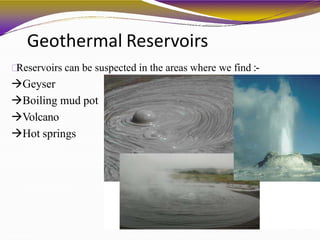
Reservoirs can be suspected in the areas where we find :-
Geyser
Boiling mud pot
Volcano
Hot springs
Geothermal Reservoirs (cont.)
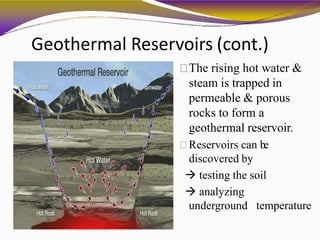
The rising hot water &
steam is trapped in
permeable & porous
rocks to form a
geothermal reservoir.
Reservoirs can be
discovered by
 testing the soil
 analyzing
underground temperature
Extraction & uses
The heat energy can be brought to earth surface by
following ways..
 directly from hot springs/ geysers
 geothermal heat pump
Uses are broadly classified as:-
direct use
indirect use
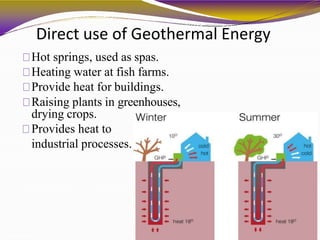
Direct use of Geothermal Energy
Hot springs, used as spas.
Heating water at fish farms.
Provide heat for buildings.
Raising plants in greenhouses,
drying crops.
Provides heat to
industrial processes.
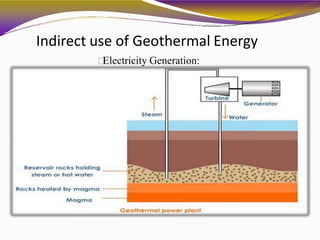
Indirect use of Geothermal Energy
Electricity Generation:
Electricity Generation (cont.)
There are 3 types of power plants:-
 Dry steam power plant
Flash steam power plant
Binary cycle power plant
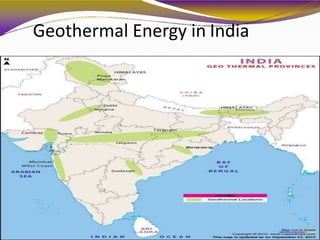
Geothermal Energy in India
Geothermal Energy in India (cont)
Geothermal provinces are estimated to produce 10,600 MW
of power (experts are confident only to the extent of 100
MW)
Geothermal provinces in India: the Himalayas, Sohana, West
coast, Cambay, Son-Narmada-Tapi , Godavari, and Mahanadi
Reykjavík Geothermal will assist Thermax to set up a pilot
project in Puga Valley, Ladakh (Jammu & Kashmir)
First operational commercial geothermal power plant is likely
to come up in AP with a capacity of 25 MW by Geosyndicate
Pvt Ltd.
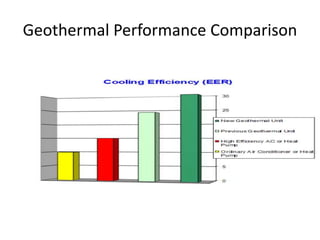
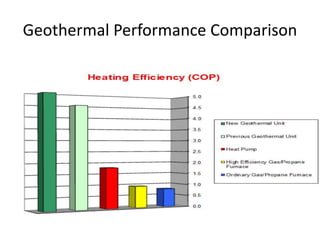
Geothermal Performance Comparison
Advantages
Available all the year around.
Does not involve any combustion of fuel.
Independent of weather
Clean Resource – Very little emissions or
overall environmental impact.
Economically Sound Alternative – The fuelis
free, rate / KWh likely to be competitive
Overall, geothermal energy is a sustainable
resource.
Disadvantages
Not widespread source of energy
High installation costs
Can run out of steam
May release harmful gases
Transportation
Earthquakes
Conclusion
Geothermal heating system can replace fossil fuel heating
system in a particular area.
Annual costs for common heating purposes can be reducedby
more than 60%.
Continued energy shortages have created added interest in
geothermal energy for power generation.
Potential exists to provide all energy requirements in the
U.S
Geothermal energy appears to be a partial solution to our
energy needs.
Geo thermal
Geo thermal

Geo thermal

  • 1.
    Geothermal Energy --- arenewable energy source for electricity generation --- Submitted by- Abhijeet Agarwal M.Tech 2nd Year 1704301
  • 2.
    Outlines Introduction Geothermal Reservoirs Extraction &Uses of Geothermal Energy Electricity Generation Cost Geothermal Energy in India Pros and Cons Conclusion
  • 3.
    Introduction What is GeothermalEnergy ? It’s simply the heat energy of the earth, generated by various natural processes, such as: 1.heat from when the planet formed and accreted, which has not yet been lost 2.decay of radioactive elements 3.friction etc…… The deeper you go, the hotter it is !!!
  • 4.
    Geothermal Reservoirs Reservoirs canbe suspected in the areas where we find :- Geyser Boiling mud pot Volcano Hot springs
  • 5.
    Geothermal Reservoirs (cont.) Therising hot water & steam is trapped in permeable & porous rocks to form a geothermal reservoir. Reservoirs can be discovered by  testing the soil  analyzing underground temperature
  • 6.
    Extraction & uses Theheat energy can be brought to earth surface by following ways..  directly from hot springs/ geysers  geothermal heat pump Uses are broadly classified as:- direct use indirect use
  • 7.
    Direct use ofGeothermal Energy Hot springs, used as spas. Heating water at fish farms. Provide heat for buildings. Raising plants in greenhouses, drying crops. Provides heat to industrial processes.
  • 8.
    Indirect use ofGeothermal Energy Electricity Generation:
  • 9.
    Electricity Generation (cont.) Thereare 3 types of power plants:-  Dry steam power plant Flash steam power plant Binary cycle power plant
  • 10.
  • 11.
    Geothermal Energy inIndia (cont) Geothermal provinces are estimated to produce 10,600 MW of power (experts are confident only to the extent of 100 MW) Geothermal provinces in India: the Himalayas, Sohana, West coast, Cambay, Son-Narmada-Tapi , Godavari, and Mahanadi Reykjavík Geothermal will assist Thermax to set up a pilot project in Puga Valley, Ladakh (Jammu & Kashmir) First operational commercial geothermal power plant is likely to come up in AP with a capacity of 25 MW by Geosyndicate Pvt Ltd.
  • 12.
  • 13.
  • 14.
    Advantages Available all theyear around. Does not involve any combustion of fuel. Independent of weather Clean Resource – Very little emissions or overall environmental impact. Economically Sound Alternative – The fuelis free, rate / KWh likely to be competitive Overall, geothermal energy is a sustainable resource.
  • 15.
    Disadvantages Not widespread sourceof energy High installation costs Can run out of steam May release harmful gases Transportation Earthquakes
  • 16.
    Conclusion Geothermal heating systemcan replace fossil fuel heating system in a particular area. Annual costs for common heating purposes can be reducedby more than 60%. Continued energy shortages have created added interest in geothermal energy for power generation. Potential exists to provide all energy requirements in the U.S Geothermal energy appears to be a partial solution to our energy needs.