GENES AND QUANTITATIVE
CHARACTERS
PRESENTED BY:-
VAGHELA BHAVUBHA A
MSc SEM-1 (BOTANY)
PAPER :- CBO-403
DEPARTMENT OF LIFE SCIENCES,
H.N.G.U., PATAN
CONTENT
 INTRODUCTION
 TYPES OF QUANTITATIVE TRAITS
 REFERENCES
INTRODUCTION
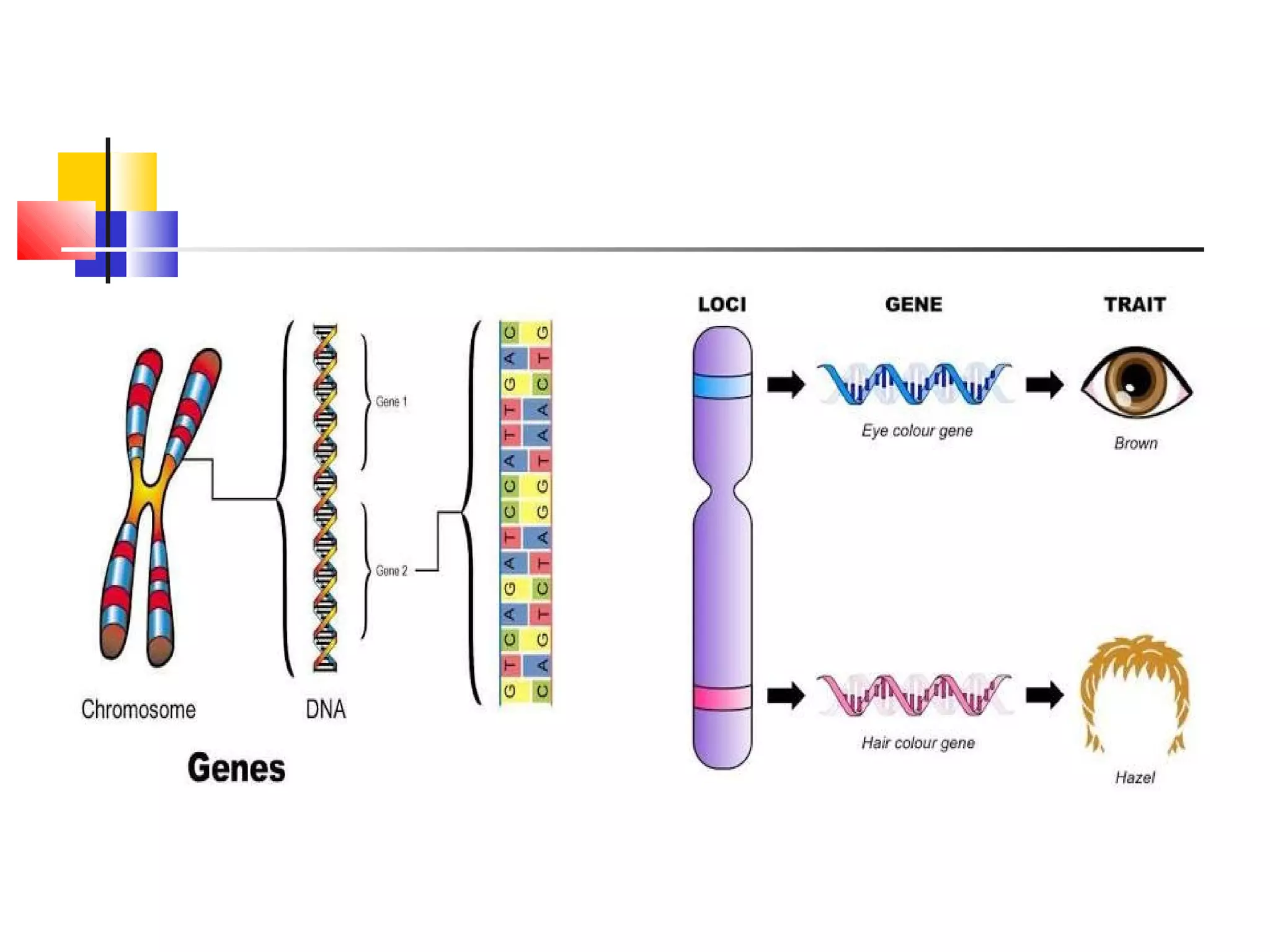
 We know that the heredity units are genes.
 The separate forms of a gene that mendel
called factors = alleles
 If an offspring carring 2 dominant or one
dominant and one recessive allele, the
offspring will appear to have the dominant
trait.
 If an offspring carries 2 recessive allels, it will
appear to have the ressesive trait.
TYPES OF QUANTITATIVE
TRAITS
 Quantitative traits are of the following
three main types:-
(1) Continuous Traits
(2) Meristic Traits
(3) Thresold Traits
(1) CONTINUOUS TRAITS
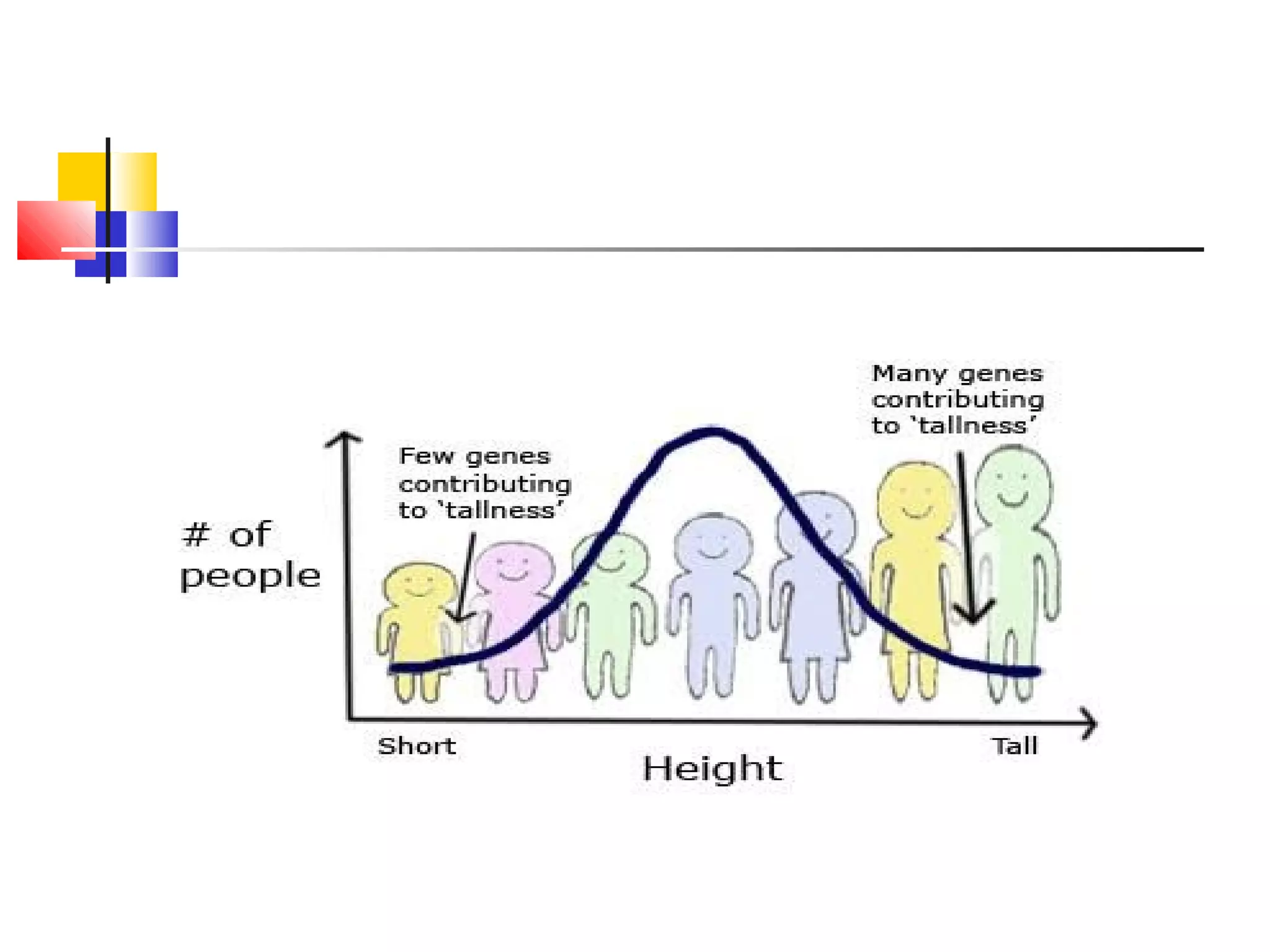
 Most phenotypic variation in populations is
not manifested in a few easily distinguished
categories.
 Instead, the traits vary continuously from one
phenotypic extreme to the other, with no
clear-cut breakes in between.
 Human height is a prime example of such a
trait.
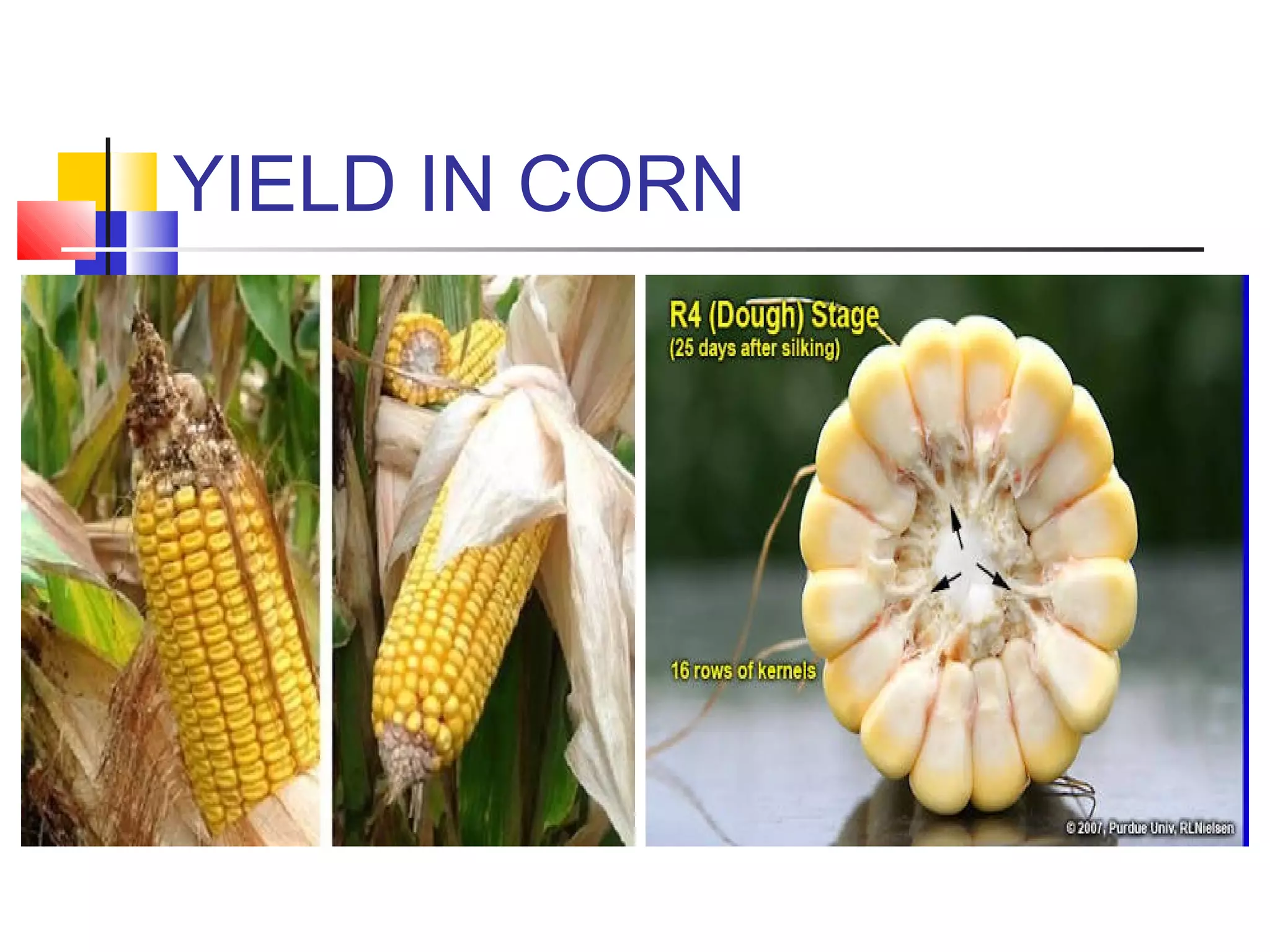
 Other examples milk production in cattle,
growth rate in poultry, yield in corn and
blood pressure in human beings.
 Such traits are called continuous traits
because there is a continuous gradation
from one phenotype to the next.
YIELD IN CORN
(2) MERISTEMIC TRAITS
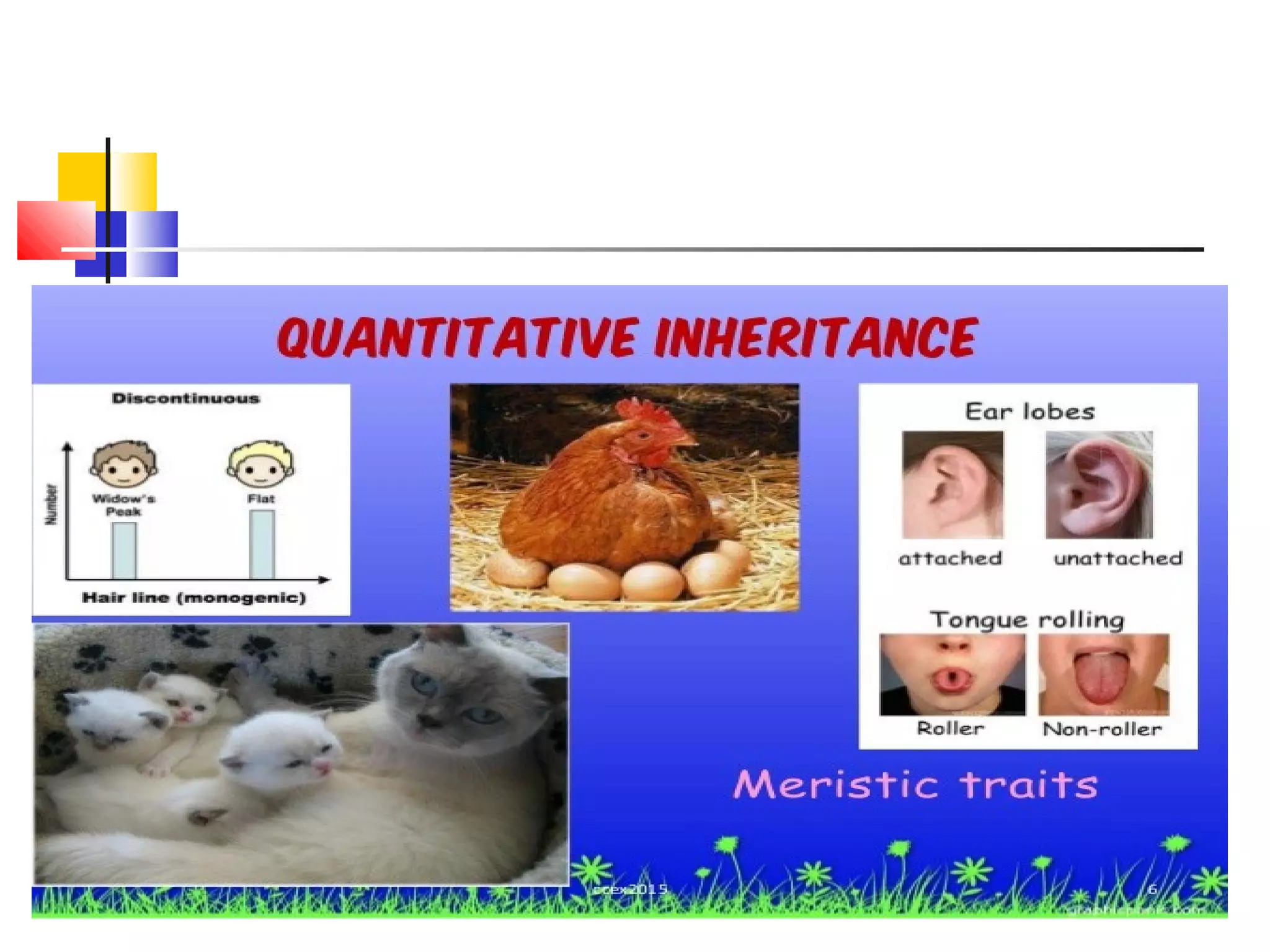
 In such type of quantitative traits, the
phenotype is determined by counting.
 Some examples are number of skin
ridges forming the fingerprints, number
of kernels on an ear of corn, number of
eggs laid by a hen, number of bristles
on the abdomen of a fly and number of
puppies in a litter.
 An examples of a meristic traits is the
number of ears on a stalk of corn, which
typically has a value 1,2,3 or 4 ears on a
given stalk.
(3) THRESOLD TRAITS
 These are those quantitative traits that have
only two, or a few, phenotypic classes, but
their inheritance is determined by effects of
multiple genes together with the environment.
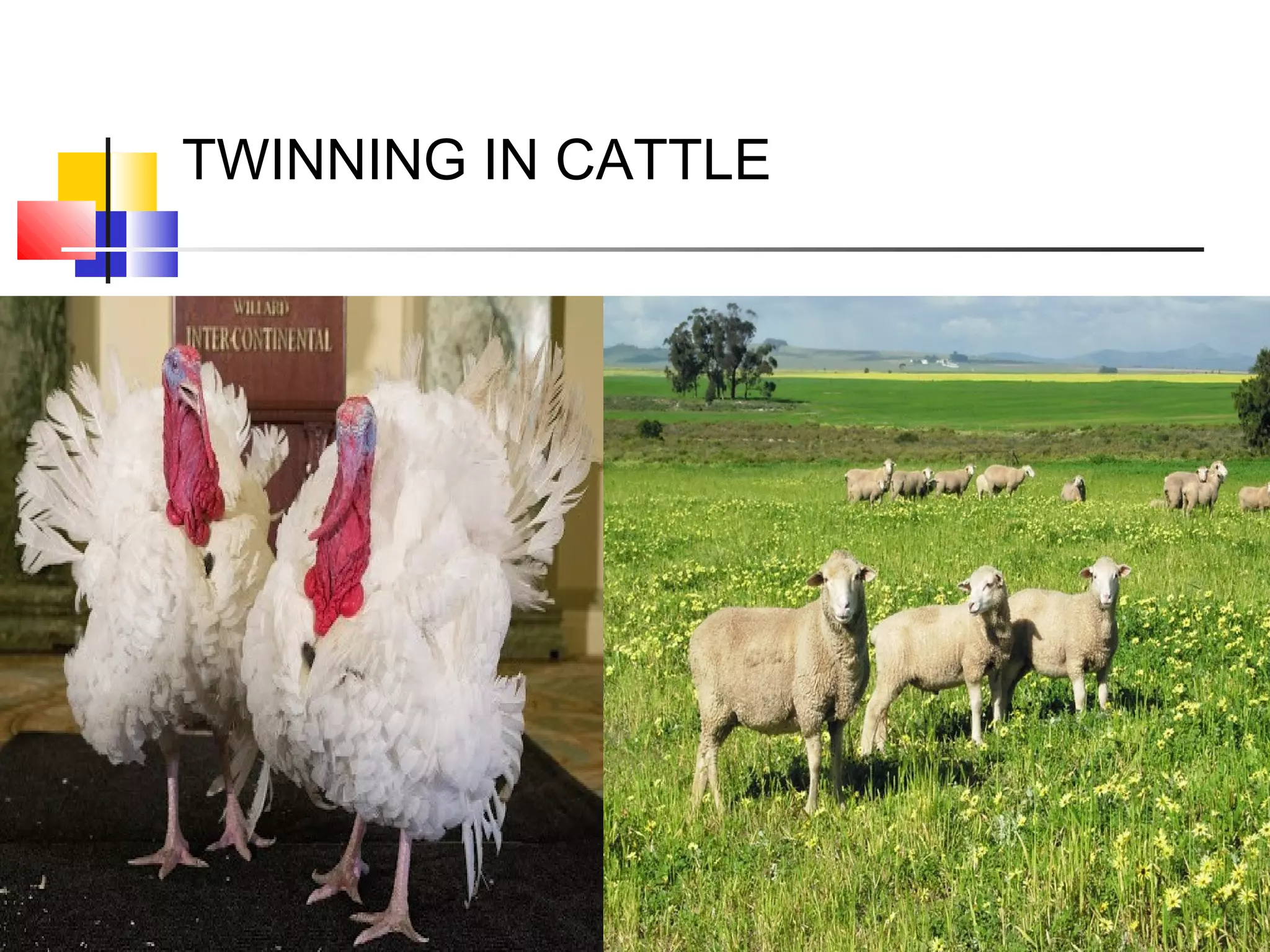
 Examples of thresold include twinning in
cattle as well as parthenogenesis (i.e.,
development of unfertilized eggs ) in turkeys.
TWINNING IN CATTLE
 In many thresold traits disorders, the
phenotypic classes are “affected” versus
“not affected”.
 Examples of thresold traits disorders in
human beings include adult diabetes,
schizophrenia and many congenital
abnormalities such as spina bifida.
REFERENCES
 https :// en.wikipedia.org/wiki/genes
 www.google.com –for images
 Genetics – Gupta p.k
Genes and quantitative characters

Genes and quantitative characters

  • 1.
    GENES AND QUANTITATIVE CHARACTERS PRESENTEDBY:- VAGHELA BHAVUBHA A MSc SEM-1 (BOTANY) PAPER :- CBO-403 DEPARTMENT OF LIFE SCIENCES, H.N.G.U., PATAN
  • 2.
    CONTENT  INTRODUCTION  TYPESOF QUANTITATIVE TRAITS  REFERENCES
  • 3.
    INTRODUCTION  We knowthat the heredity units are genes.  The separate forms of a gene that mendel called factors = alleles  If an offspring carring 2 dominant or one dominant and one recessive allele, the offspring will appear to have the dominant trait.  If an offspring carries 2 recessive allels, it will appear to have the ressesive trait.
  • 5.
    TYPES OF QUANTITATIVE TRAITS Quantitative traits are of the following three main types:- (1) Continuous Traits (2) Meristic Traits (3) Thresold Traits
  • 6.
    (1) CONTINUOUS TRAITS Most phenotypic variation in populations is not manifested in a few easily distinguished categories.  Instead, the traits vary continuously from one phenotypic extreme to the other, with no clear-cut breakes in between.  Human height is a prime example of such a trait.
  • 8.
     Other examplesmilk production in cattle, growth rate in poultry, yield in corn and blood pressure in human beings.  Such traits are called continuous traits because there is a continuous gradation from one phenotype to the next.
  • 9.
  • 10.
    (2) MERISTEMIC TRAITS In such type of quantitative traits, the phenotype is determined by counting.  Some examples are number of skin ridges forming the fingerprints, number of kernels on an ear of corn, number of eggs laid by a hen, number of bristles on the abdomen of a fly and number of puppies in a litter.
  • 12.
     An examplesof a meristic traits is the number of ears on a stalk of corn, which typically has a value 1,2,3 or 4 ears on a given stalk.
  • 13.
    (3) THRESOLD TRAITS These are those quantitative traits that have only two, or a few, phenotypic classes, but their inheritance is determined by effects of multiple genes together with the environment.  Examples of thresold include twinning in cattle as well as parthenogenesis (i.e., development of unfertilized eggs ) in turkeys.
  • 14.
  • 15.
     In manythresold traits disorders, the phenotypic classes are “affected” versus “not affected”.  Examples of thresold traits disorders in human beings include adult diabetes, schizophrenia and many congenital abnormalities such as spina bifida.
  • 16.
    REFERENCES  https ://en.wikipedia.org/wiki/genes  www.google.com –for images  Genetics – Gupta p.k