Downloaded 24 times

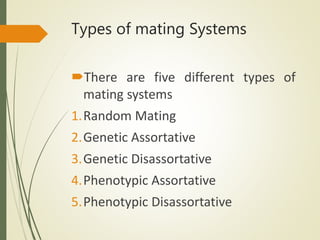

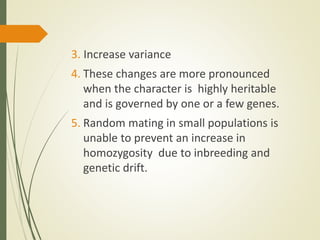
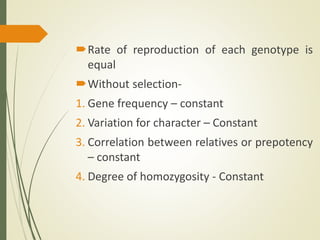
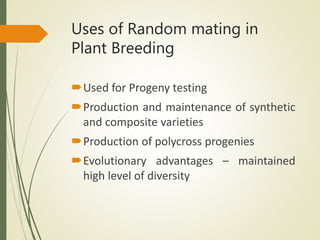
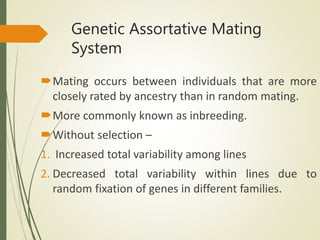
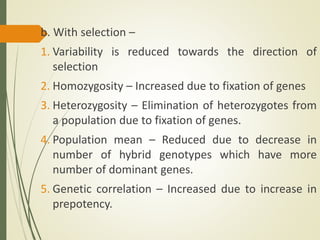
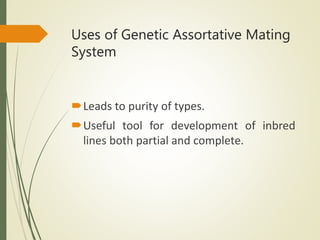
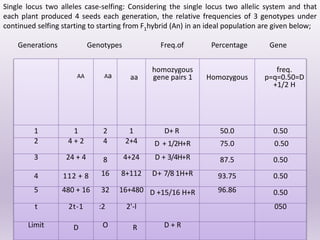
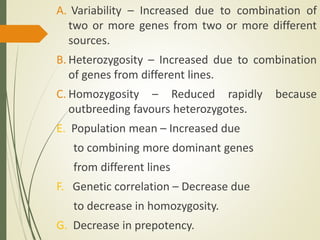
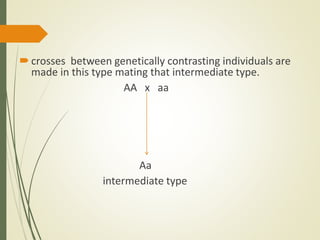
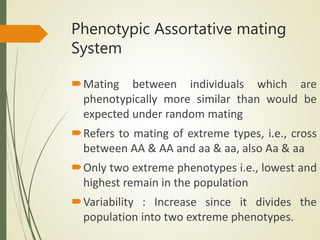
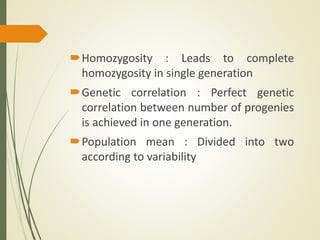


1. There are two main types of mating systems - random mating and non-random mating. Random mating involves each gamete having an equal chance to unite with any other gamete. Non-random mating includes assortative mating, where similar individuals mate, and disassortative mating, where dissimilar individuals mate. 2. Sewall Wright first proposed five mating systems in 1921 - random mating, genetic assortative mating, genetic disassortative mating, phenotypic assortative mating, and phenotypic disassortative mating. These systems influence the variation, homozygosity, and other genetic characteristics of populations over generations. 3. Random mating maintains diversity but can increase homozygosity in small populations.


