
GENERATIONS OFGENERATIONS OF
COMPUTERCOMPUTER
SUMIT SINGH
Assistant Professor
IT
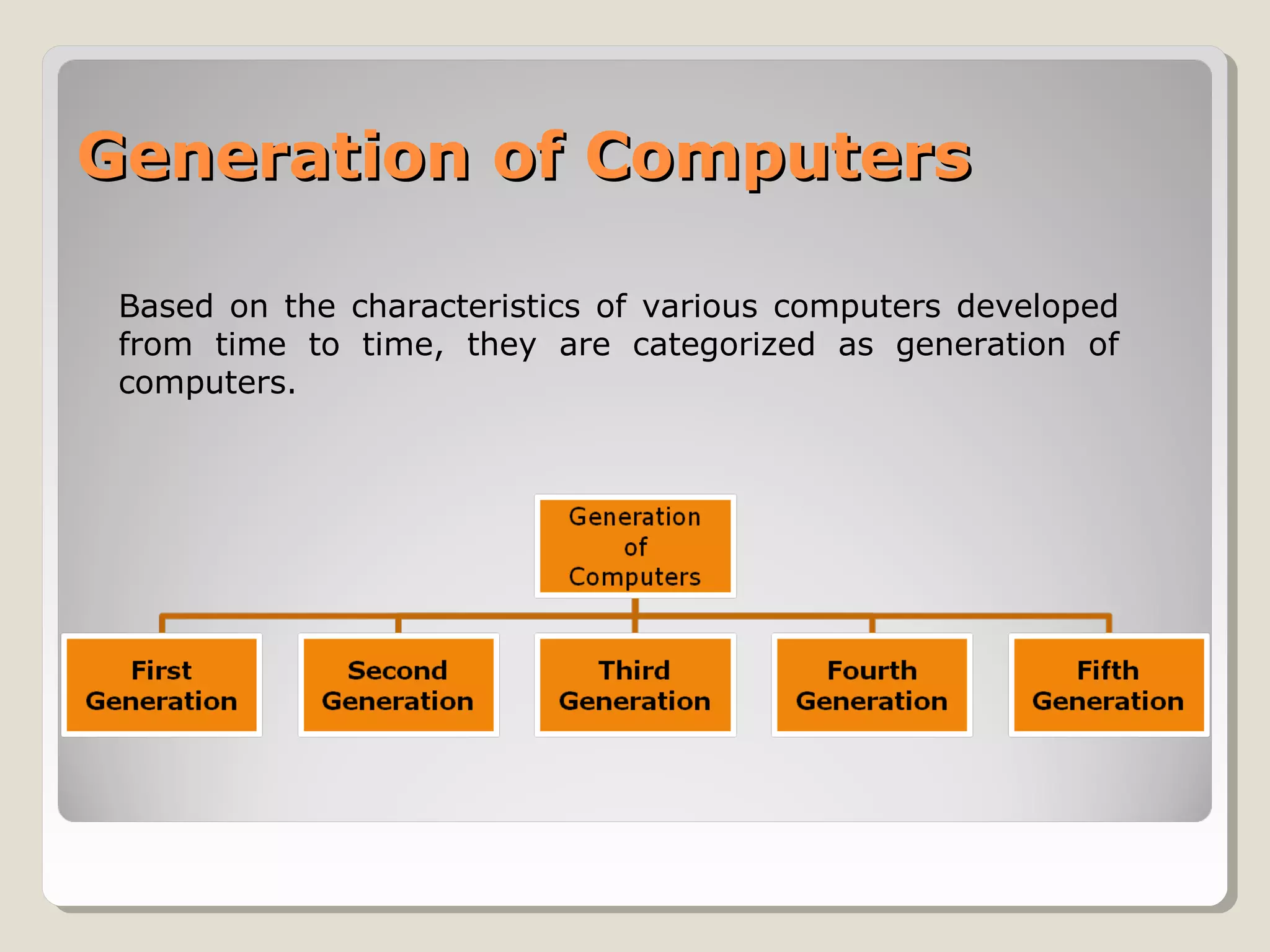
Generation of ComputersGeneration of Computers
Based on the characteristics of various computers developed
from time to time, they are categorized as generation of
computers.
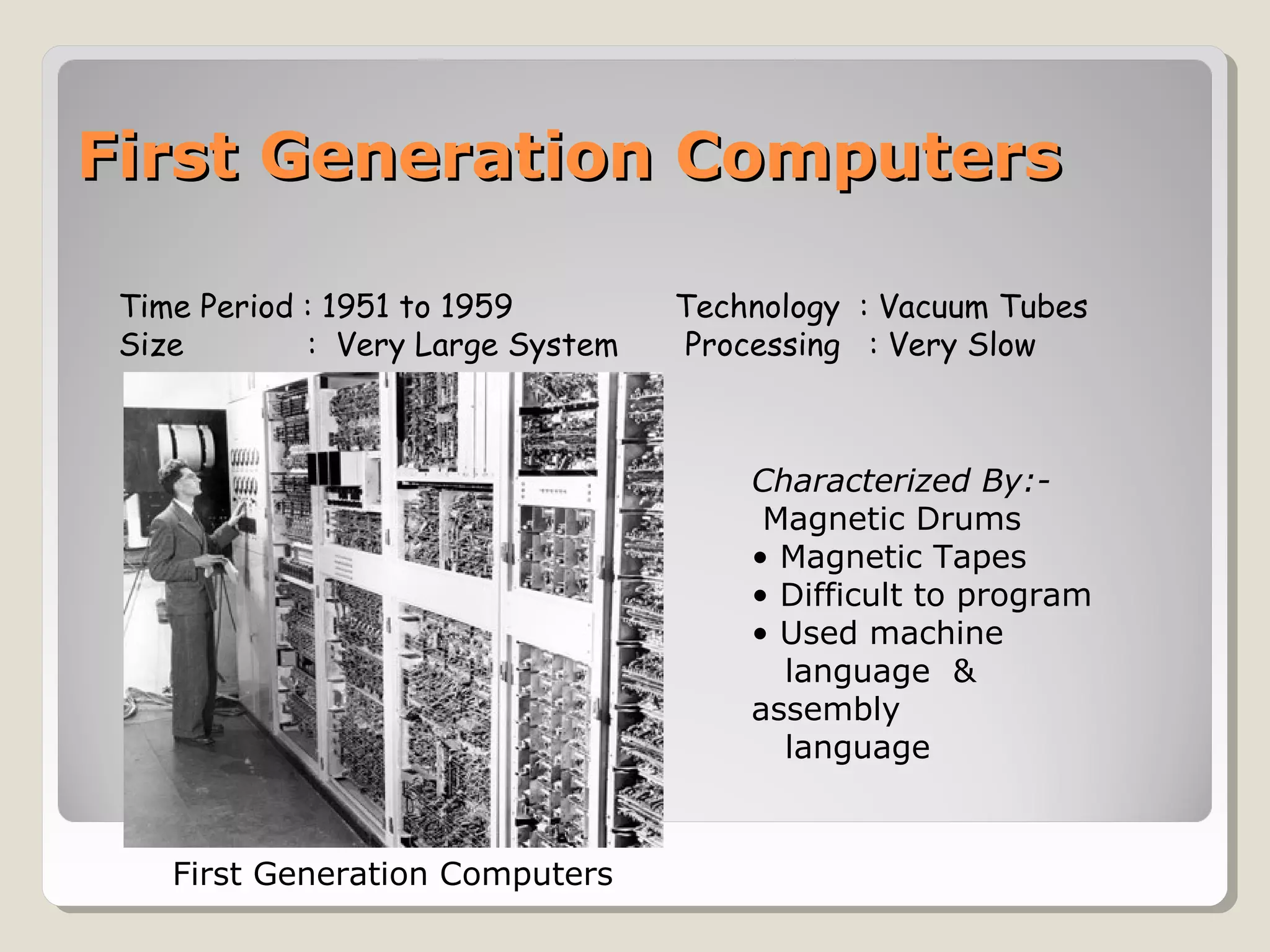
First Generation ComputersFirst Generation Computers
Time Period : 1951 to 1959 Technology : Vacuum Tubes
Size : Very Large System Processing : Very Slow
Characterized By:-
Magnetic Drums
• Magnetic Tapes
• Difficult to program
• Used machine
language &
assembly
language
First Generation Computers
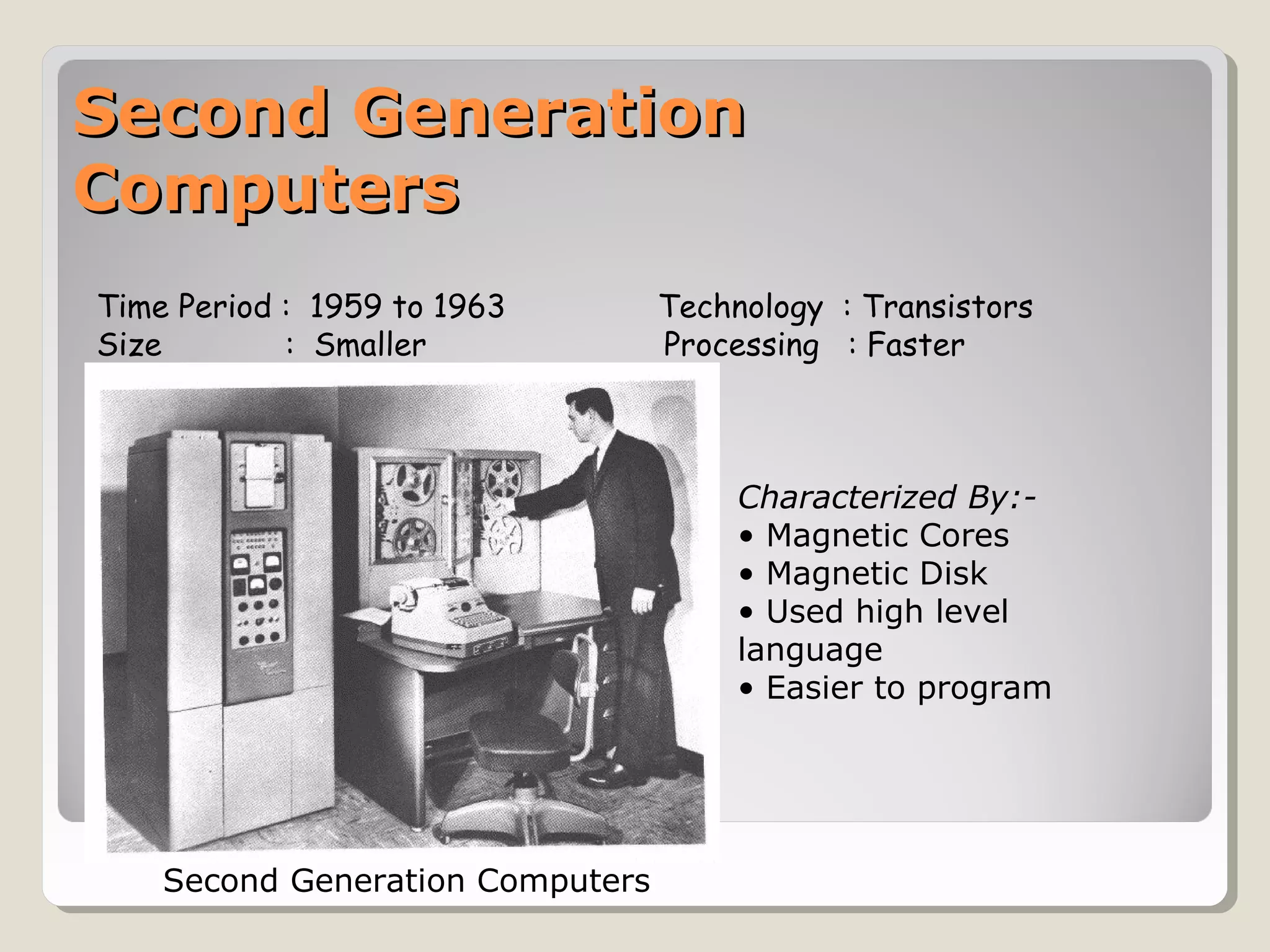
Second GenerationSecond Generation
ComputersComputers
Time Period : 1959 to 1963 Technology : Transistors
Size : Smaller Processing : Faster
Characterized By:-
• Magnetic Cores
• Magnetic Disk
• Used high level
language
• Easier to program
Second Generation Computers
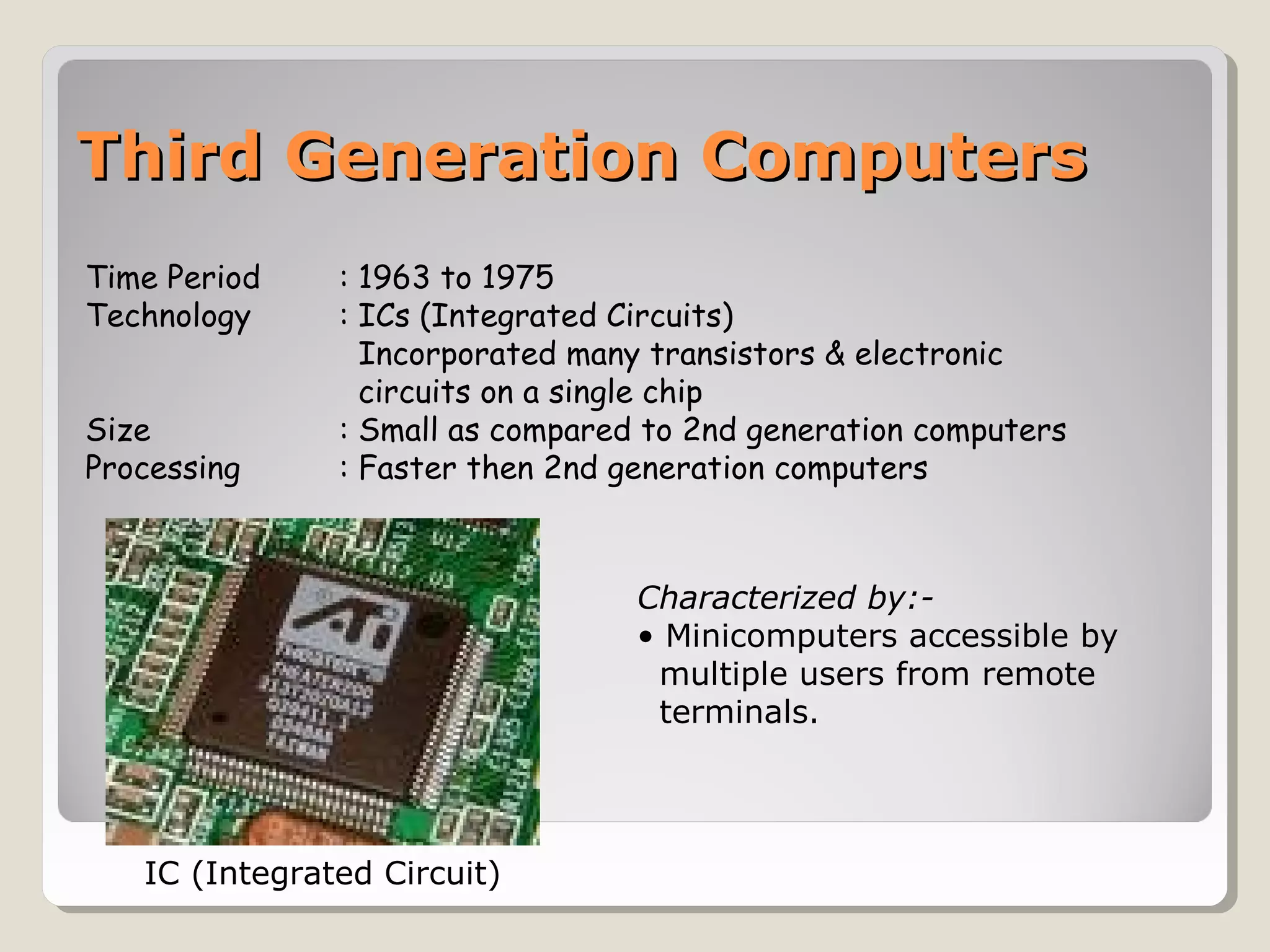
Third Generation ComputersThird Generation Computers
Time Period : 1963 to 1975
Technology : ICs (Integrated Circuits)
Incorporated many transistors & electronic
circuits on a single chip
Size : Small as compared to 2nd generation computers
Processing : Faster then 2nd generation computers
Characterized by:-
• Minicomputers accessible by
multiple users from remote
terminals.
IC (Integrated Circuit)
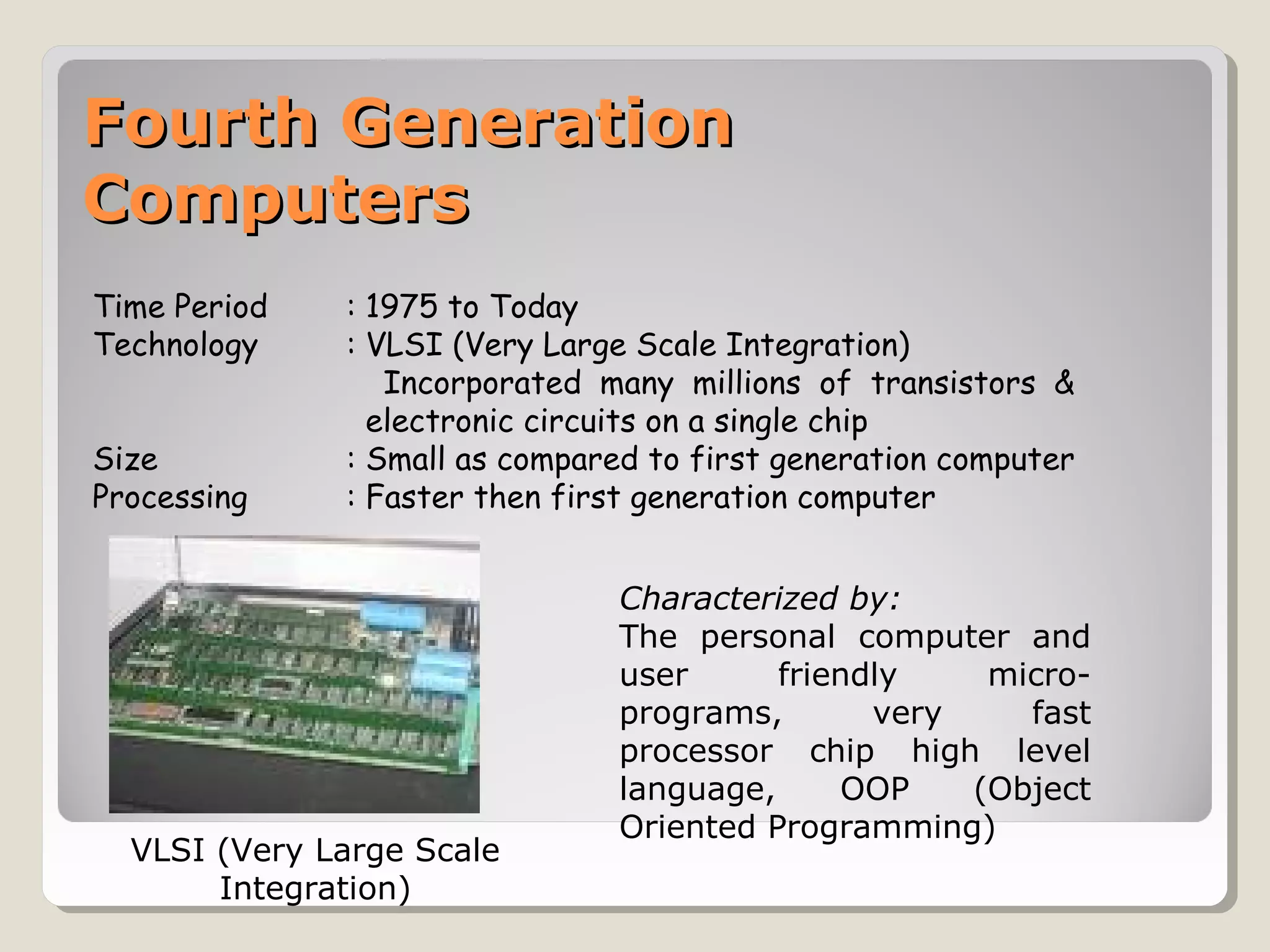
Fourth GenerationFourth Generation
ComputersComputers
Time Period : 1975 to Today
Technology : VLSI (Very Large Scale Integration)
Incorporated many millions of transistors &
electronic circuits on a single chip
Size : Small as compared to first generation computer
Processing : Faster then first generation computer
Characterized by:
The personal computer and
user friendly micro-
programs, very fast
processor chip high level
language, OOP (Object
Oriented Programming)
VLSI (Very Large Scale
Integration)
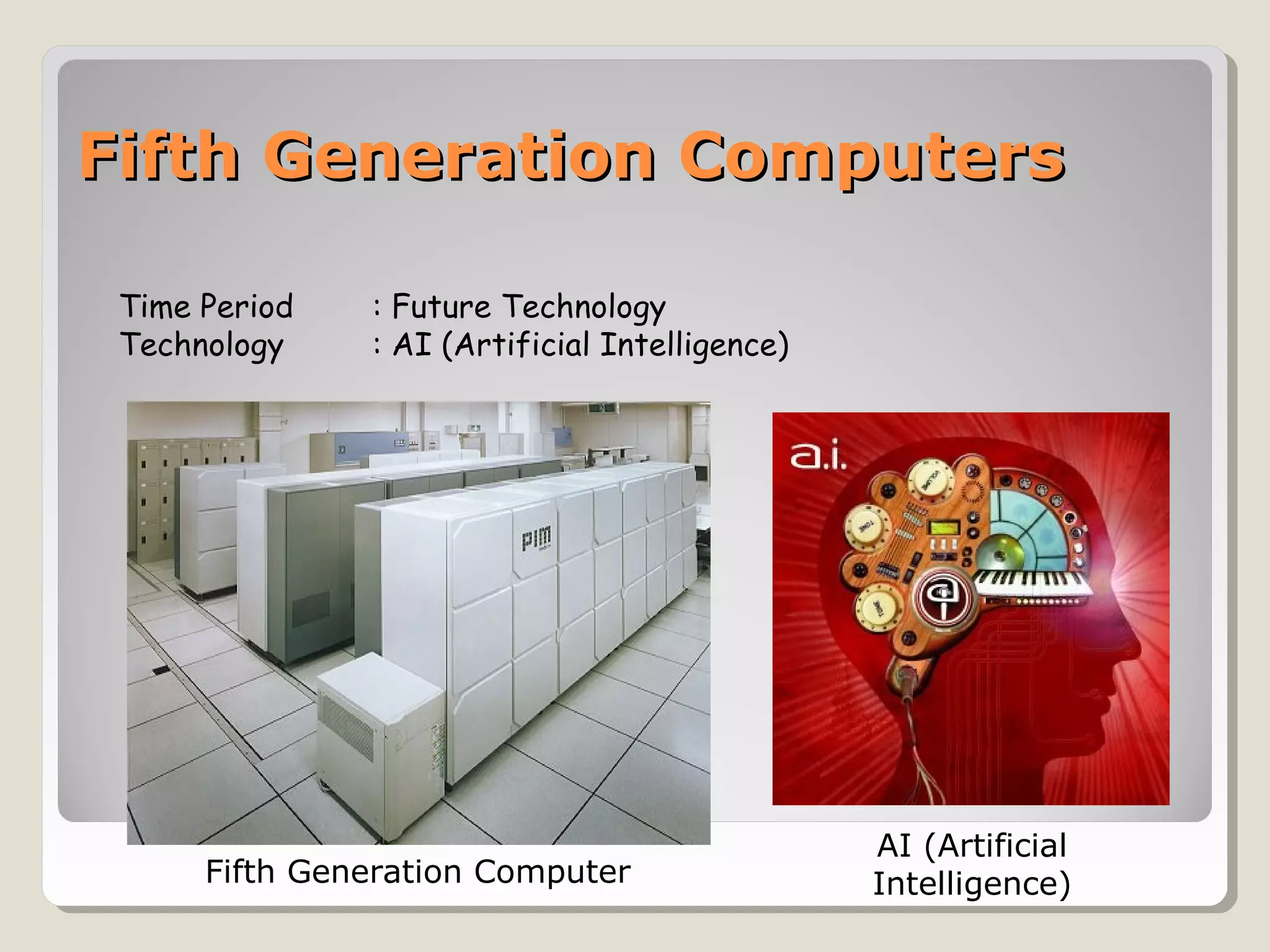
Fifth Generation ComputersFifth Generation Computers
Time Period : Future Technology
Technology : AI (Artificial Intelligence)
Fifth Generation Computer
AI (Artificial
Intelligence)
Next Generation OpticalNext Generation Optical
DiskDisk
The following formats go beyond the current third-generation
discs and have the potential to hold more than one terabyte
(1TB) of data:
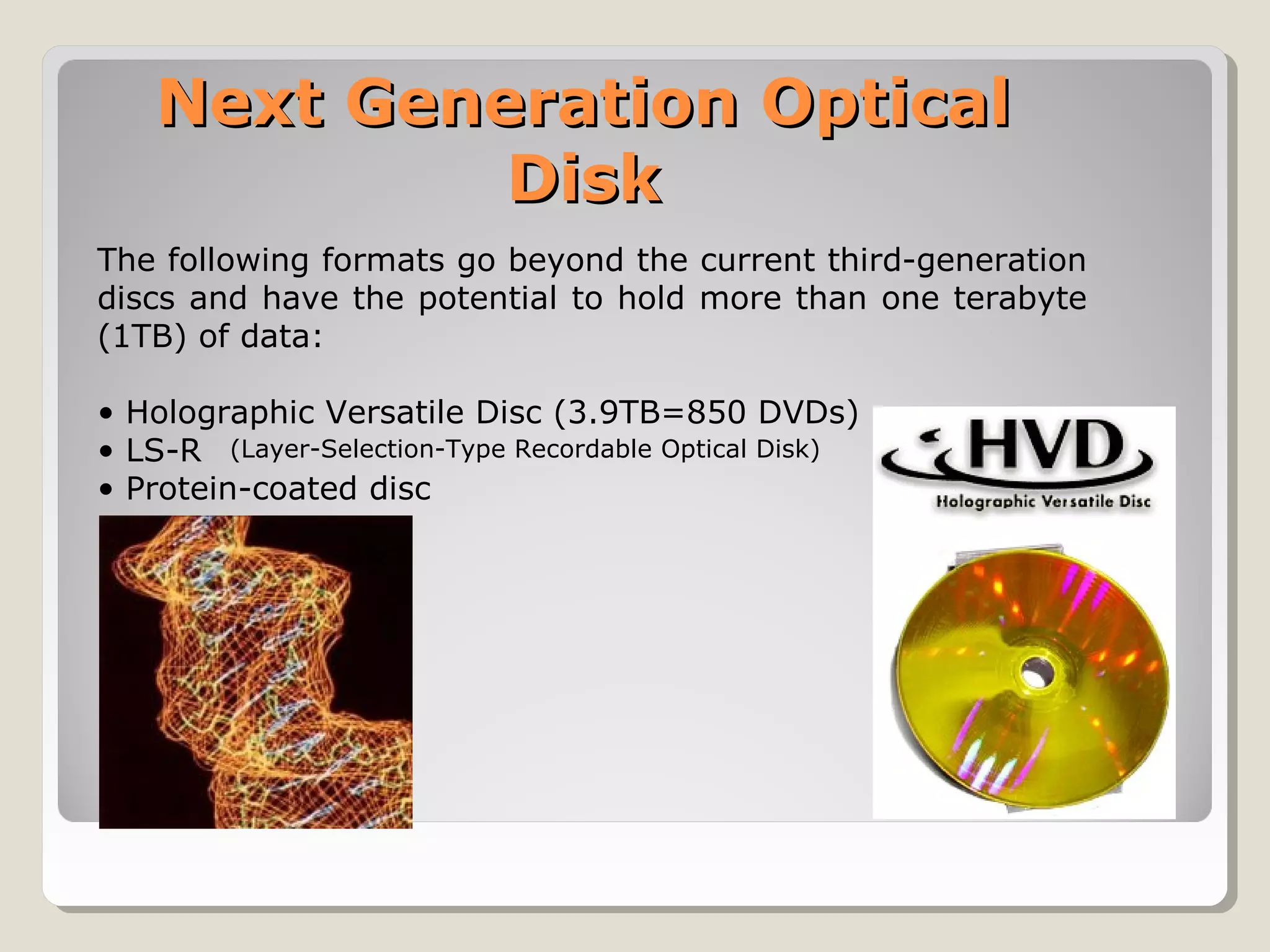
• Holographic Versatile Disc (3.9TB=850 DVDs)
• LS-R
• Protein-coated disc
(Layer-Selection-Type Recordable Optical Disk)
Holographic Versatile DiscHolographic Versatile Disc
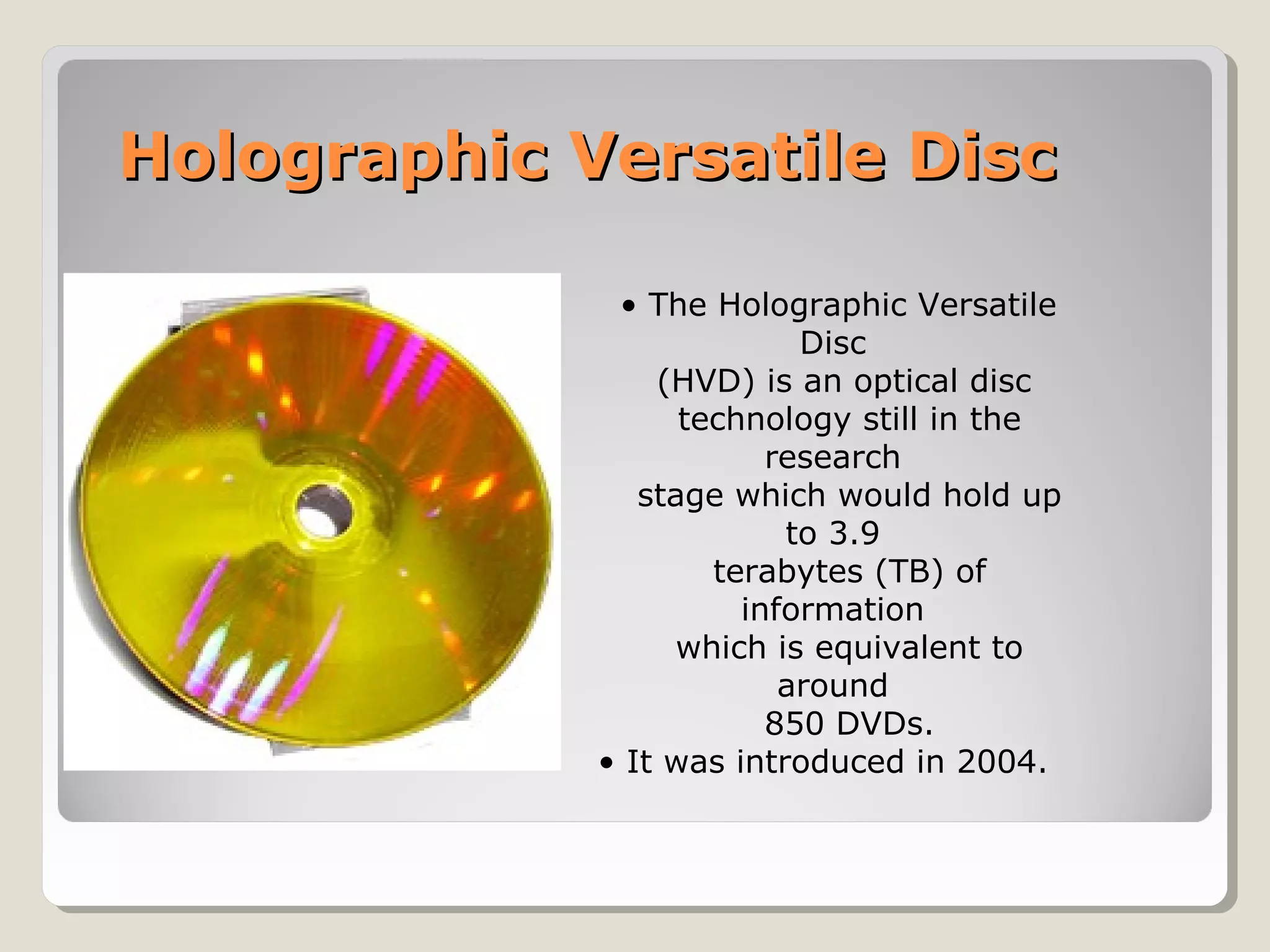
• The Holographic Versatile
Disc
(HVD) is an optical disc
technology still in the
research
stage which would hold up
to 3.9
terabytes (TB) of
information
which is equivalent to
around
850 DVDs.
• It was introduced in 2004.
Future of Touch ScreenFuture of Touch Screen
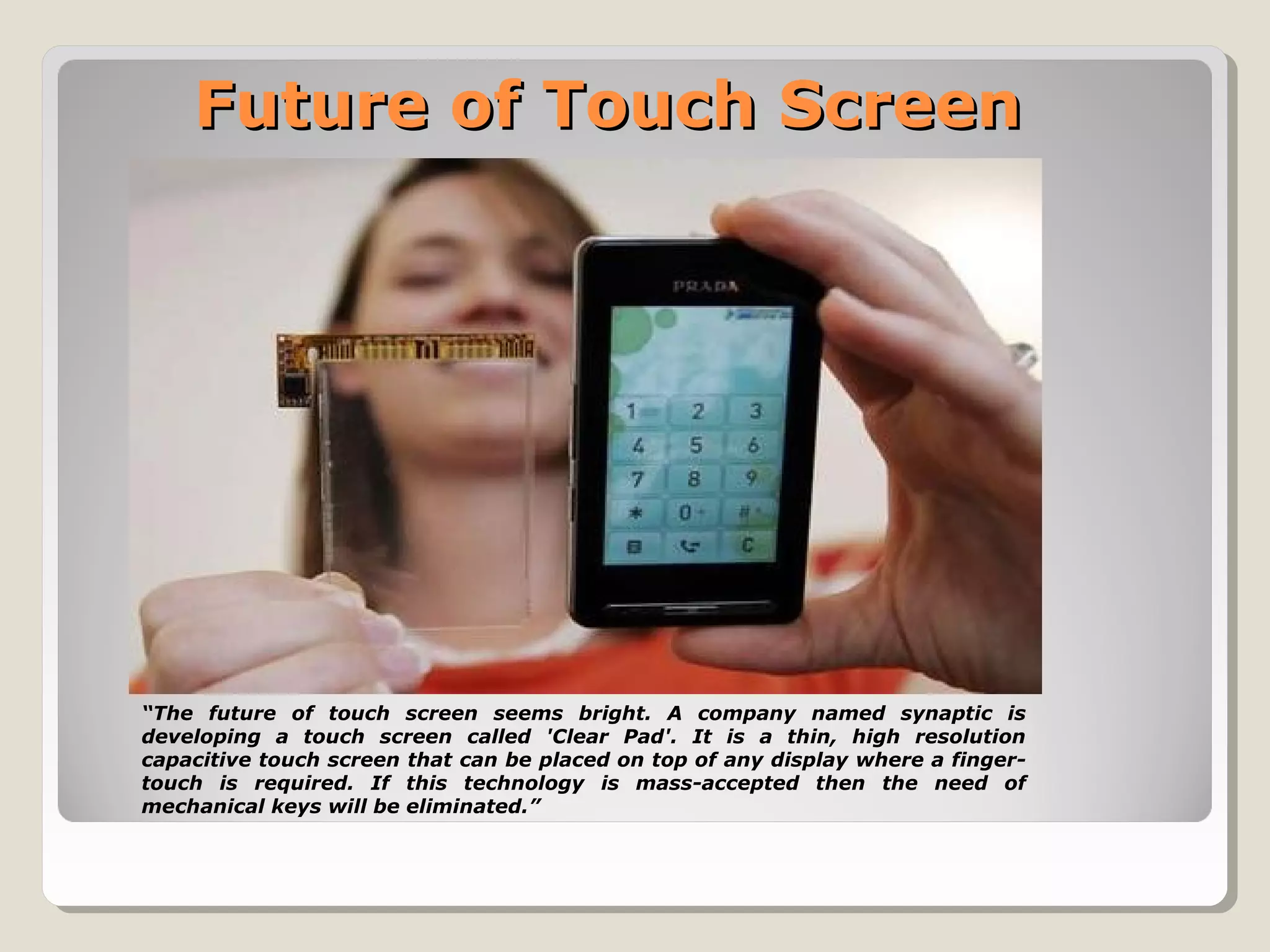
“The future of touch screen seems bright. A company named synaptic is
developing a touch screen called 'Clear Pad'. It is a thin, high resolution
capacitive touch screen that can be placed on top of any display where a finger-
touch is required. If this technology is mass-accepted then the need of
mechanical keys will be eliminated.”
THANK YOUTHANK YOU

Generation of computers

  • 1.
  • 2.
    Generation of ComputersGenerationof Computers Based on the characteristics of various computers developed from time to time, they are categorized as generation of computers.
  • 3.
    First Generation ComputersFirstGeneration Computers Time Period : 1951 to 1959 Technology : Vacuum Tubes Size : Very Large System Processing : Very Slow Characterized By:- Magnetic Drums • Magnetic Tapes • Difficult to program • Used machine language & assembly language First Generation Computers
  • 4.
    Second GenerationSecond Generation ComputersComputers TimePeriod : 1959 to 1963 Technology : Transistors Size : Smaller Processing : Faster Characterized By:- • Magnetic Cores • Magnetic Disk • Used high level language • Easier to program Second Generation Computers
  • 5.
    Third Generation ComputersThirdGeneration Computers Time Period : 1963 to 1975 Technology : ICs (Integrated Circuits) Incorporated many transistors & electronic circuits on a single chip Size : Small as compared to 2nd generation computers Processing : Faster then 2nd generation computers Characterized by:- • Minicomputers accessible by multiple users from remote terminals. IC (Integrated Circuit)
  • 6.
    Fourth GenerationFourth Generation ComputersComputers TimePeriod : 1975 to Today Technology : VLSI (Very Large Scale Integration) Incorporated many millions of transistors & electronic circuits on a single chip Size : Small as compared to first generation computer Processing : Faster then first generation computer Characterized by: The personal computer and user friendly micro- programs, very fast processor chip high level language, OOP (Object Oriented Programming) VLSI (Very Large Scale Integration)
  • 7.
    Fifth Generation ComputersFifthGeneration Computers Time Period : Future Technology Technology : AI (Artificial Intelligence) Fifth Generation Computer AI (Artificial Intelligence)
  • 8.
    Next Generation OpticalNextGeneration Optical DiskDisk The following formats go beyond the current third-generation discs and have the potential to hold more than one terabyte (1TB) of data: • Holographic Versatile Disc (3.9TB=850 DVDs) • LS-R • Protein-coated disc (Layer-Selection-Type Recordable Optical Disk)
  • 9.
    Holographic Versatile DiscHolographicVersatile Disc • The Holographic Versatile Disc (HVD) is an optical disc technology still in the research stage which would hold up to 3.9 terabytes (TB) of information which is equivalent to around 850 DVDs. • It was introduced in 2004.
  • 10.
    Future of TouchScreenFuture of Touch Screen “The future of touch screen seems bright. A company named synaptic is developing a touch screen called 'Clear Pad'. It is a thin, high resolution capacitive touch screen that can be placed on top of any display where a finger- touch is required. If this technology is mass-accepted then the need of mechanical keys will be eliminated.”
  • 11.