M.G. COLLEGE ARMORI
DIST. GADCHIROLI
Class: B.Sc. I Sem II
Paper: I Unit: II
Topic : General characteristics of Phylum
Mollusca
By: Pro. S.B. Kumre
( Dept. Of Zoology )
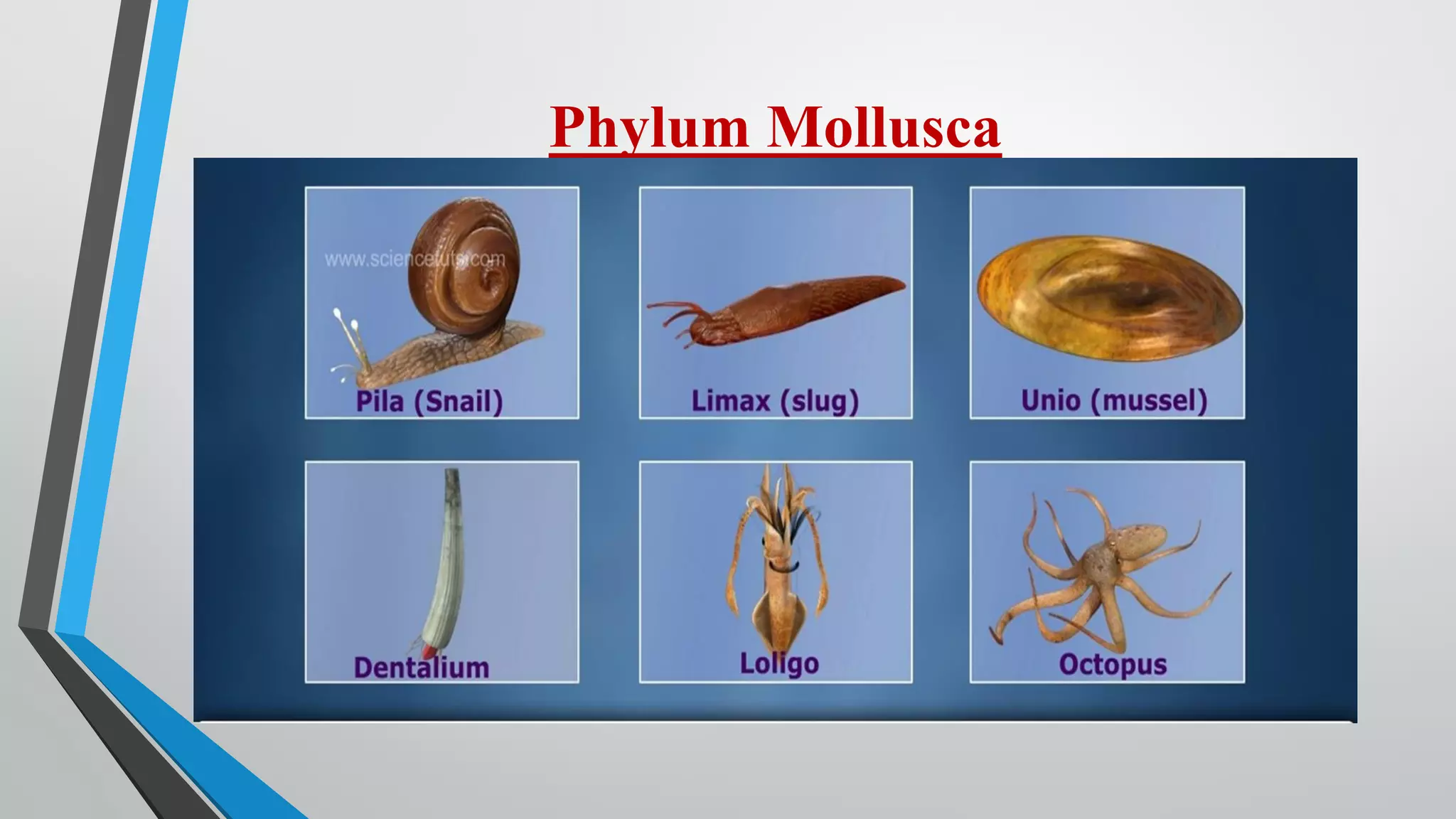
Phylum Mollusca
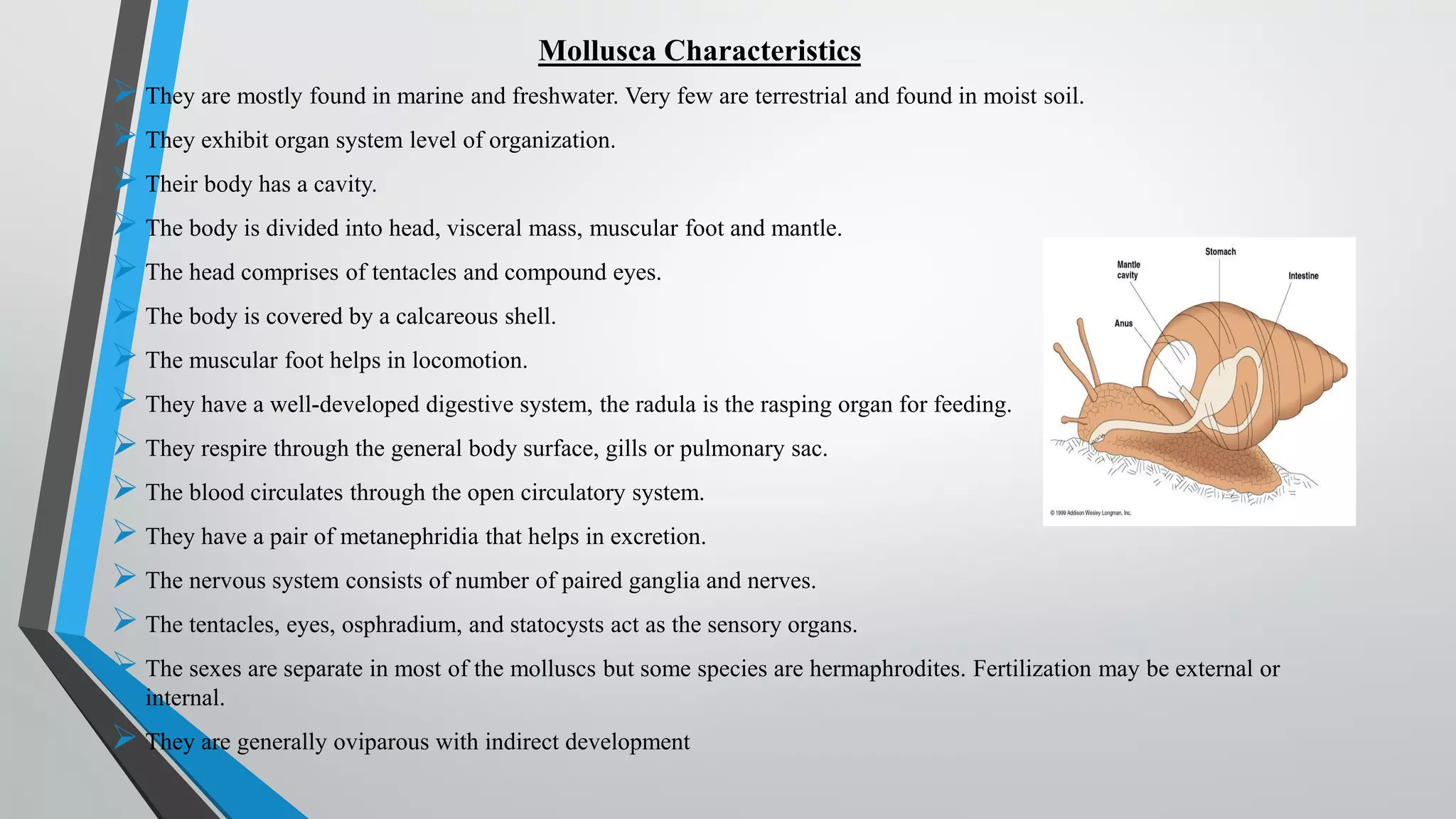
Mollusca Characteristics
➢ They are mostly found in marine and freshwater. Very few are terrestrial and found in moist soil.
➢ They exhibit organ system level of organization.
➢ Their body has a cavity.
➢ The body is divided into head, visceral mass, muscular foot and mantle.
➢ The head comprises of tentacles and compound eyes.
➢ The body is covered by a calcareous shell.
➢ The muscular foot helps in locomotion.
➢ They have a well-developed digestive system, the radula is the rasping organ for feeding.
➢ They respire through the general body surface, gills or pulmonary sac.
➢ The blood circulates through the open circulatory system.
➢ They have a pair of metanephridia that helps in excretion.
➢ The nervous system consists of number of paired ganglia and nerves.
➢ The tentacles, eyes, osphradium, and statocysts act as the sensory organs.
➢ The sexes are separate in most of the molluscs but some species are hermaphrodites. Fertilization may be external or
internal.
➢ They are generally oviparous with indirect development
Classification of Mollusca
❖Aplacophora or Solenogasters
✓ The body is cylindrical or bilaterally symmetrical.
✓ These are devoid of the head, shell, mantel, nephridia, and foot.
✓ The digestive ceca is absent.
✓ Spicule-bearing cuticle covers the body.
✓ It contains a dorsal longitudinal keel or crest.
E.g. Neomenia, Chaetoderma
❖Monoplacophora
✓ The body is bilaterally symmetrical.
✓ The head is devoid of eyes and tentacles.
✓ Respiration occurs through gills which are externally located.
✓ The nitrogenous waste is excreted out through nephridia.
E.g. Neopilina
❖Polyplacophora
✓ . Their body is dorsoventrally flattened like a leaf, and are bilaterally symmetrical.
✓ The shell is composed of 8 longitudinal plates.
✓ They have a well-developed radula.
✓ The ventral foot is flat.
E.g. Chiton, Cryptochiton
❖Gastropoda
✓ They are found either on land or in fresh and marine water.
✓ The head bears tentacles, eyes, and a mouth.
✓ The shell is spiral in shape.
✓ The foot is flat and large.
E.g. Haliotis, Pila
❖ Scaphopoda
✓ Found in the marine environment.
✓ The eyes and tentacles are absent.
✓ The foot is reduced.
✓ The body is bilaterally symmetrical.
E.g. Dentalium, Cadulus
❖ Pelecypoda
✓ They reside in aquatic habitats.
✓ The body is bilaterally symmetrical and compressed laterally.
✓ The body has no distinct head.
✓ They usually burrow in mud and sand.
E.g. Mussels, Unio
❖ Cephalopoda
✓ They are mostly found in the marine environment.
✓ The shell is either external, internal, or not present at all.
✓ They have separate sexes.
✓ The development is direct.
E.g. Octopus, Spirula

General characteristics of Phylum Mollusca

  • 1.
    M.G. COLLEGE ARMORI DIST.GADCHIROLI Class: B.Sc. I Sem II Paper: I Unit: II Topic : General characteristics of Phylum Mollusca By: Pro. S.B. Kumre ( Dept. Of Zoology )
  • 2.
  • 3.
    Mollusca Characteristics ➢ Theyare mostly found in marine and freshwater. Very few are terrestrial and found in moist soil. ➢ They exhibit organ system level of organization. ➢ Their body has a cavity. ➢ The body is divided into head, visceral mass, muscular foot and mantle. ➢ The head comprises of tentacles and compound eyes. ➢ The body is covered by a calcareous shell. ➢ The muscular foot helps in locomotion. ➢ They have a well-developed digestive system, the radula is the rasping organ for feeding. ➢ They respire through the general body surface, gills or pulmonary sac. ➢ The blood circulates through the open circulatory system. ➢ They have a pair of metanephridia that helps in excretion. ➢ The nervous system consists of number of paired ganglia and nerves. ➢ The tentacles, eyes, osphradium, and statocysts act as the sensory organs. ➢ The sexes are separate in most of the molluscs but some species are hermaphrodites. Fertilization may be external or internal. ➢ They are generally oviparous with indirect development
  • 4.
    Classification of Mollusca ❖Aplacophoraor Solenogasters ✓ The body is cylindrical or bilaterally symmetrical. ✓ These are devoid of the head, shell, mantel, nephridia, and foot. ✓ The digestive ceca is absent. ✓ Spicule-bearing cuticle covers the body. ✓ It contains a dorsal longitudinal keel or crest. E.g. Neomenia, Chaetoderma ❖Monoplacophora ✓ The body is bilaterally symmetrical. ✓ The head is devoid of eyes and tentacles. ✓ Respiration occurs through gills which are externally located. ✓ The nitrogenous waste is excreted out through nephridia. E.g. Neopilina
  • 5.
    ❖Polyplacophora ✓ . Theirbody is dorsoventrally flattened like a leaf, and are bilaterally symmetrical. ✓ The shell is composed of 8 longitudinal plates. ✓ They have a well-developed radula. ✓ The ventral foot is flat. E.g. Chiton, Cryptochiton ❖Gastropoda ✓ They are found either on land or in fresh and marine water. ✓ The head bears tentacles, eyes, and a mouth. ✓ The shell is spiral in shape. ✓ The foot is flat and large. E.g. Haliotis, Pila
  • 6.
    ❖ Scaphopoda ✓ Foundin the marine environment. ✓ The eyes and tentacles are absent. ✓ The foot is reduced. ✓ The body is bilaterally symmetrical. E.g. Dentalium, Cadulus ❖ Pelecypoda ✓ They reside in aquatic habitats. ✓ The body is bilaterally symmetrical and compressed laterally. ✓ The body has no distinct head. ✓ They usually burrow in mud and sand. E.g. Mussels, Unio ❖ Cephalopoda ✓ They are mostly found in the marine environment. ✓ The shell is either external, internal, or not present at all. ✓ They have separate sexes. ✓ The development is direct. E.g. Octopus, Spirula