Biotech’s Biggest Breakthrough-
“Gene Silencing” & Its application
in Crop Improvement.
Credit Seminar on
Presented By- Jhilick Banerjee
Enrollment No- 190116005
M.Sc. 3rd Sem
DEPARTMENT OF PLANT BREEDING AND GENETICS
JAWAHARLAL NEHRU KRISHI VISHWAVIDYALAYA,
JABALPUR,(M.P)
Contents
 Central Dogma
 Gene Silencing
 Features of Gene Silencing
 Types of Gene Silencing
 Transcriptional gene Silencing
 Types of Transcriptional gene silencing
 Post Transcriptional Gene silencing
 RNA interference- History
 Mechanism
 Components
 Applications
 Antisense RNA technology – Mechanism
 Target sites
 Applications
 Case study
 CRISPR CAS9- Mode of Action
 Difference between RNAi vs CRISPR
 RNAi vs Antisense technology
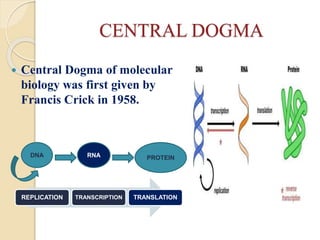
CENTRAL DOGMA
 Central Dogma of molecular
biology was first given by
Francis Crick in 1958.
PROTEIN
DNA RNA
REPLICATION TRANSCRIPTION TRANSLATION
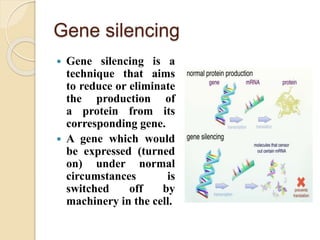
Gene silencing
 Gene silencing is a
technique that aims
to reduce or eliminate
the production of
a protein from its
corresponding gene.
 A gene which would
be expressed (turned
on) under normal
circumstances is
switched off by
machinery in the cell.
Features of Gene silencing
 Gene silencing is the regulation of gene expression in a
cell.
 Gene silencing can occur during either transcription or
translation.
 Gene silencing is often considered as “Gene knockdown’
i.e their expression is reduced. In contrast , when genes
are knocked out they are completely erased from the
organism’s genome and thus have no expression.
 Methods used to silence genes include RNAi, CRISPR or
siRNA, these reduce the expression of the gene by 70%
but do not completely eliminate it.
Types of Gene Silencing
Gene silencing
Transcriptional
Post
Transcriptional
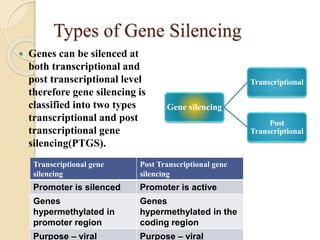
 Genes can be silenced at
both transcriptional and
post transcriptional level
therefore gene silencing is
classified into two types
transcriptional and post
transcriptional gene
silencing(PTGS).
Transcriptional gene
silencing
Post Transcriptional gene
silencing
Promoter is silenced Promoter is active
Genes
hypermethylated in
promoter region
Genes
hypermethylated in the
coding region
Purpose – viral Purpose – viral
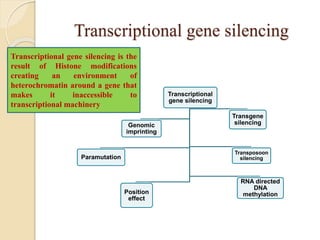
Transcriptional gene silencing
Transcriptional
gene silencing
Paramutation
Position
effect
Genomic
imprinting
Transgene
silencing
Transposoon
silencing
RNA directed
DNA
methylation
Transcriptional gene silencing is the
result of Histone modifications
creating an environment of
heterochromatin around a gene that
makes it inaccessible to
transcriptional machinery
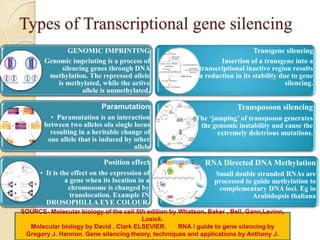
Types of Transcriptional gene silencing
GENOMIC IMPRINTING
• Genomic imprinting is a process of
silencing genes through DNA
methylation. The repressed allele
is methylated, while the active
allele is unmethylated.
Paramutation
• Paramutation is an interaction
between two alleles ofa single locus
resulting in a heritable change of
one allele that is induced by other
allele
Position effect
• It is the effect on the expression of
a gene when its location in a
chromosome is changed by
translocation. Example IN
DROSOPHILLA EYE COLOUR.
Transgene silencing
Insertion of a transgene into a
transcriptional inactive region results
in reduction in its stability due to gene
silencing.
Transposoon silencing
The ‘jumping’ of transposon generates
the genomic instability and cause the
extremely deletrious mutations.
RNA Directed DNA Methylation
Small double stranded RNAs are
processed to guide methylation to
complementary DNA loci. Eg in
Arabidopsis thaliana
SOURCE- Molecular biology of the cell 5th edition by Whatson, Baker , Bell, Gann,Levinn,
Losick.
Molecular biology by David . Clark ELSEVIER. RNA i guide to gene silencing by
Gregory J. Hannon. Gene silencing theory, techniques and applications by Anthony J.
Post Transcriptional gene
silencing
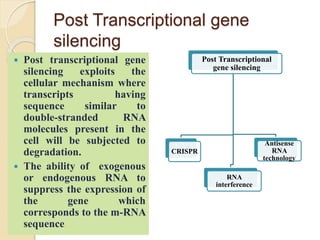
 Post transcriptional gene
silencing exploits the
cellular mechanism where
transcripts having
sequence similar to
double-stranded RNA
molecules present in the
cell will be subjected to
degradation.
 The ability of exogenous
or endogenous RNA to
suppress the expression of
the gene which
corresponds to the m-RNA
sequence.
Post Transcriptional
gene silencing
CRISPR
RNA
interference
Antisense
RNA
technology
RNA Interference (RNAi)
technology
 RNA interference (RNAi) is a method of blocking gene
function by inserting short sequences of ribonucleic acid
(RNA) that match part of the target gene’s sequence,
thus no proteins are produced.
 RNAi has provided a way to control pests and diseases,
introduce novel plant traits and increase crop yield.
Using RNAi, scientists have developed novel crops such
as nicotine-free tobacco, non-allergenic peanuts,
decaffeinated coffee, and nutrient fortified maize among
many others.
History behind RNA interference
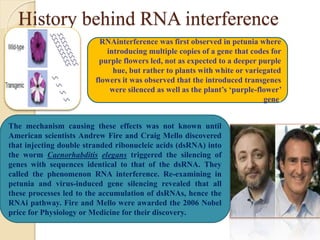
RNAinterference was first observed in petunia where
introducing multiple copies of a gene that codes for
purple flowers led, not as expected to a deeper purple
hue, but rather to plants with white or variegated
flowers it was observed that the introduced transgenes
were silenced as well as the plant’s ‘purple-flower’
gene.
The mechanism causing these effects was not known until
American scientists Andrew Fire and Craig Mello discovered
that injecting double stranded ribonucleic acids (dsRNA) into
the worm Caenorhabditis elegans triggered the silencing of
genes with sequences identical to that of the dsRNA. They
called the phenomenon RNA interference. Re-examining in
petunia and virus-induced gene silencing revealed that all
these processes led to the accumulation of dsRNAs, hence the
RNAi pathway. Fire and Mello were awarded the 2006 Nobel
price for Physiology or Medicine for their discovery.
How does RNAi work?

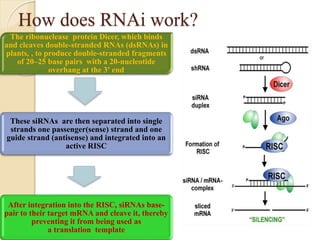
The ribonuclease protein Dicer, which binds
and cleaves double-stranded RNAs (dsRNAs) in
plants, , to produce double-stranded fragments
of 20–25 base pairs with a 20-nucleotide
overhang at the 3' end
After integration into the RISC, siRNAs base-
pair to their target mRNA and cleave it, thereby
preventing it from being used as
a translation template
These siRNAs are then separated into single
strands one passenger(sense) strand and one
guide strand (antisense) and integrated into an
active RISC
Components of RNAi
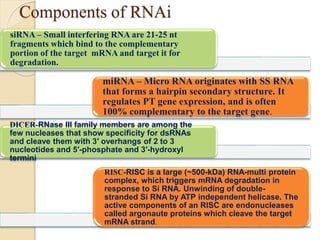
siRNA – Small interfering RNA are 21-25 nt
fragments which bind to the complementary
portion of the target mRNA and target it for
degradation.
miRNA – Micro RNA originates with SS RNA
that forms a hairpin secondary structure. It
regulates PT gene expression, and is often
100% complementary to the target gene.
DICER-RNase III family members are among the
few nucleases that show specificity for dsRNAs
and cleave them with 3′ overhangs of 2 to 3
nucleotides and 5′-phosphate and 3′-hydroxyl
termini
RISC-RISC is a large (~500-kDa) RNA-multi protein
complex, which triggers mRNA degradation in
response to Si RNA. Unwinding of double-
stranded Si RNA by ATP independent helicase. The
active components of an RISC are endonucleases
called argonaute proteins which cleave the target
mRNA strand.
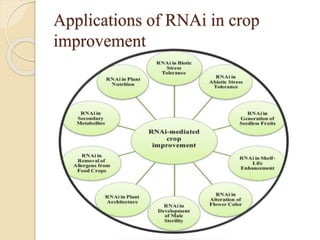
Applications of RNAi in crop
improvement
RNAi for male sterility
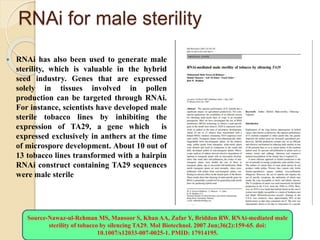
 RNAi has also been used to generate male
sterility, which is valuable in the hybrid
seed industry. Genes that are expressed
solely in tissues involved in pollen
production can be targeted through RNAi.
For instance, scientists have developed male
sterile tobacco lines by inhibiting the
expression of TA29, a gene which is
expressed exclusively in anthers at the time
of microspore development. About 10 out of
13 tobacco lines transformed with a hairpin
RNAi construct containing TA29 sequences
were male sterile
Source-Nawaz-ul-Rehman MS, Mansoor S, Khan AA, Zafar Y, Briddon RW. RNAi-mediated male
sterility of tobacco by silencing TA29. Mol Biotechnol. 2007 Jun;36(2):159-65. doi:
10.1007/s12033-007-0025-1. PMID: 17914195.
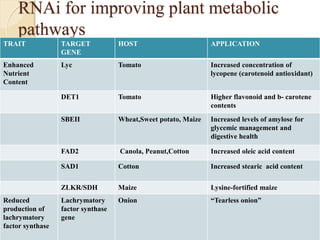
RNAi for improving plant metabolic
pathways
TRAIT TARGET
GENE
HOST APPLICATION
Enhanced
Nutrient
Content
Lyc Tomato Increased concentration of
lycopene (carotenoid antioxidant)
DET1 Tomato Higher flavonoid and b- carotene
contents
SBEII Wheat,Sweet potato, Maize Increased levels of amylose for
glycemic management and
digestive health
FAD2 Canola, Peanut,Cotton Increased oleic acid content
SAD1 Cotton Increased stearic acid content
ZLKR/SDH Maize Lysine-fortified maize
Reduced
production of
lachrymatory
factor synthase
Lachrymatory
factor synthase
gene
Onion “Tearless onion”
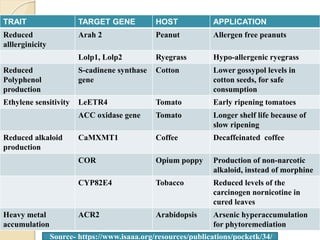
TRAIT TARGET GENE HOST APPLICATION
Reduced
alllerginicity
Arah 2 Peanut Allergen free peanuts
Lolp1, Lolp2 Ryegrass Hypo-allergenic ryegrass
Reduced
Polyphenol
production
S-cadinene synthase
gene
Cotton Lower gossypol levels in
cotton seeds, for safe
consumption
Ethylene sensitivity LeETR4 Tomato Early ripening tomatoes
ACC oxidase gene Tomato Longer shelf life because of
slow ripening
Reduced alkaloid
production
CaMXMT1 Coffee Decaffeinated coffee
COR Opium poppy Production of non-narcotic
alkaloid, instead of morphine
CYP82E4 Tobacco Reduced levels of the
carcinogen nornicotine in
cured leaves
Heavy metal
accumulation
ACR2 Arabidopsis Arsenic hyperaccumulation
for phytoremediation
Source- https://www.isaaa.org/resources/publications/pocketk/34/
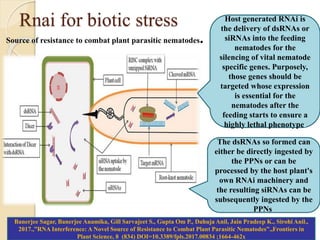
Rnai for biotic stress
Source of resistance to combat plant parasitic nematodes.
Host generated RNAi is
the delivery of dsRNAs or
siRNAs into the feeding
nematodes for the
silencing of vital nematode
specific genes. Purposely,
those genes should be
targeted whose expression
is essential for the
nematodes after the
feeding starts to ensure a
highly lethal phenotype.
The dsRNAs so formed can
either be directly ingested by
the PPNs or can be
processed by the host plant's
own RNAi machinery and
the resulting siRNAs can be
subsequently ingested by the
PPNs
Banerjee Sagar, Banerjee Anamika, Gill Sarvajeet S., Gupta Om P., Dahuja Anil, Jain Pradeep K., Sirohi Anil.,
2017.,”RNA Interference: A Novel Source of Resistance to Combat Plant Parasitic Nematodes”.,Frontiers in
Plant Science, 8 (834) DOI=10.3389/fpls.2017.00834 ;1664-462x
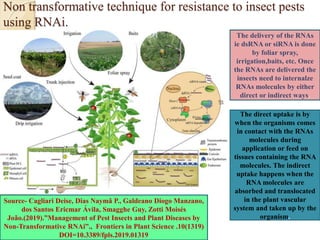
Non transformative technique for resistance to insect pests
using RNAi.
The delivery of the RNAs
ie dsRNA or siRNA is done
by foliar spray,
irrigation,baits, etc. Once
the RNAs are delivered the
insects need to internalze
RNAs molecules by either
direct or indirect ways.
The direct uptake is by
when the organisms comes
in contact with the RNAs
molecules during
application or feed on
tissues containing the RNA
molecules. The indirect
uptake happens when the
RNA molecules are
absorbed and translocated
in the plant vascular
system and taken up by the
organism.
Source- Cagliari Deise, Dias Naymã P., Galdeano Diogo Manzano,
dos Santos Ericmar Ávila, Smagghe Guy, Zotti Moisés
João.(2019).”Management of Pest Insects and Plant Diseases by
Non-Transformative RNAi”., Frontiers in Plant Science .10(1319)
DOI=10.3389/fpls.2019.01319
Abiotic stress tolerance
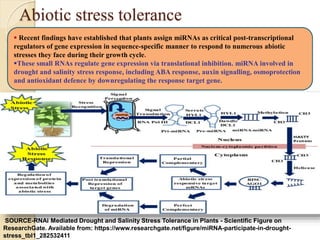
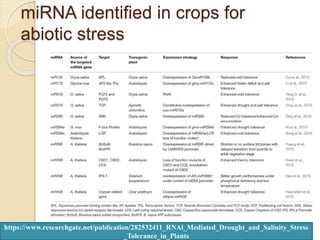
 Recent findings have established that plants assign miRNAs as critical post-transcriptional
regulators of gene expression in sequence-specific manner to respond to numerous abiotic
stresses they face during their growth cycle.
These small RNAs regulate gene expression via translational inhibition. miRNA involved in
drought and salinity stress response, including ABA response, auxin signalling, osmoprotection
and antioxidant defence by downregulating the response target gene.
SOURCE-RNAi Mediated Drought and Salinity Stress Tolerance in Plants - Scientific Figure on
ResearchGate. Available from: https://www.researchgate.net/figure/miRNA-participate-in-drought-
stress_tbl1_282532411
RNAi for Abiotic Stress Tolerance in Crops
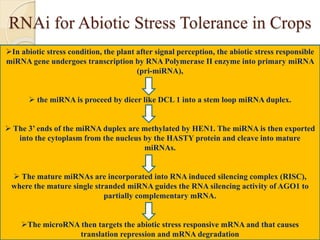
In abiotic stress condition, the plant after signal perception, the abiotic stress responsible
miRNA gene undergoes transcription by RNA Polymerase II enzyme into primary miRNA
(pri-miRNA),
 the miRNA is proceed by dicer like DCL 1 into a stem loop miRNA duplex.
 The 3’ ends of the miRNA duplex are methylated by HEN1. The miRNA is then exported
into the cytoplasm from the nucleus by the HASTY protein and cleave into mature
miRNAs.
 The mature miRNAs are incorporated into RNA induced silencing complex (RISC),
where the mature single stranded miRNA guides the RNA silencing activity of AGO1 to
partially complementary mRNA.
The microRNA then targets the abiotic stress responsive mRNA and that causes
translation repression and mRNA degradation
miRNA identified in crops for
abiotic stress
https://www.researchgate.net/publication/282532411_RNAi_Mediated_Drought_and_Salinity_Stress
_Tolerance_in_Plants
Other applications of RNAi
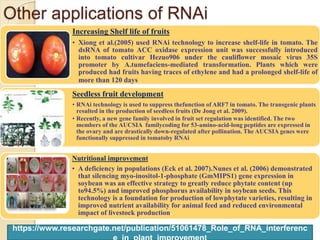
Increasing Shelf life of fruits
• Xiong et al.(2005) used RNAi technology to increase shelf-life in tomato. The
dsRNA of tomato ACC oxidase expression unit was successfully introduced
into tomato cultivar Hezuo906 under the cauliflower mosaic virus 35S
promoter by A.tumefaciens-mediated transformation. Plants which were
produced had fruits having traces of ethylene and had a prolonged shelf-life of
more than 120 days .
Seedless fruit development
• RNAi technology is used to suppress thefunction of ARF7 in tomato. The transgenic plants
resulted in the production of seedless fruits (De Jong et al. 2009).
• Recently, a new gene family involved in fruit set regulation was identified. The two
members of the AUCSIA familycoding for 53-amino-acid-long peptides are expressed in
the ovary and are drastically down-regulated after pollination. The AUCSIA genes were
functionally suppressed in tomatoby RNAi
Nutritional improvement
• A deficiency in populations (Eck et al. 2007).Nunes et al. (2006) demonstrated
that silencing myo-inositol-1-phosphate (GmMIPS1) gene expression in
soybean was an effective strategy to greatly reduce phytate content (up
to94.5%) and improved phosphorus availability in soybean seeds. This
technology is a foundation for production of lowphytate varieties, resulting in
improved nutrient availability for animal feed and reduced environmental
impact of livestock production.
https://www.researchgate.net/publication/51061478_Role_of_RNA_interferenc
Case Study
RNAi mediated resistance in cotton
against Cotton Leaf Curl Virus
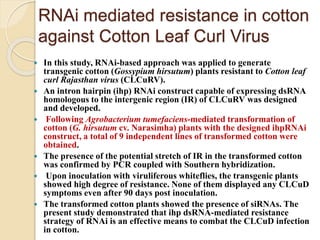
 In this study, RNAi-based approach was applied to generate
transgenic cotton (Gossypium hirsutum) plants resistant to Cotton leaf
curl Rajasthan virus (CLCuRV).
 An intron hairpin (ihp) RNAi construct capable of expressing dsRNA
homologous to the intergenic region (IR) of CLCuRV was designed
and developed.
 Following Agrobacterium tumefaciens-mediated transformation of
cotton (G. hirsutum cv. Narasimha) plants with the designed ihpRNAi
construct, a total of 9 independent lines of transformed cotton were
obtained.
 The presence of the potential stretch of IR in the transformed cotton
was confirmed by PCR coupled with Southern hybridization.
 Upon inoculation with viruliferous whiteflies, the transgenic plants
showed high degree of resistance. None of them displayed any CLCuD
symptoms even after 90 days post inoculation.
 The transformed cotton plants showed the presence of siRNAs. The
present study demonstrated that ihp dsRNA-mediated resistance
strategy of RNAi is an effective means to combat the CLCuD infection
in cotton.
Generation of transgenic cotton
(Gossypium hirsutum cv.
Narasimha) plants expressing
intergenic region [Cotton leaf curl
Rajasthan virus genome
(GQ220850)]-derived ihpRNAi
construct. Germination of seed of
cotton (G. hirsutum cv. Narasimha)
(a, b); explants on co-cultivation medium (c);
explants on selection medium (d–f);
hardening and acclimatization of plantlets in
Hoagland medium, agropeat and
glasshouse, respectively (g–i)
Whitefly (Bemisia
tabaci)-mediated
inoculation of
transgenic cotton
(Gossypium hirsutum
cv. Narasimha) plants
with Cotton leaf curl
virus. Transformed plants did
not show disease symptoms
(a); symptom development on
non-transformed cotton
showing vein thickening and
leaf curling (b)
Source - Khatoon, Sameena et al (2016).
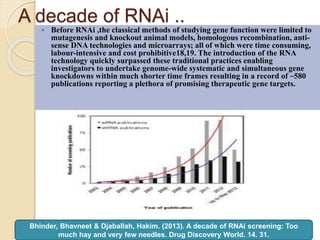
A decade of RNAi ..
 Before RNAi ,the classical methods of studying gene function were limited to
mutagenesis and knockout animal models, homologous recombination, anti-
sense DNA technologies and microarrays; all of which were time consuming,
labour-intensive and cost prohibitive18,19. The introduction of the RNA
technology quickly surpassed these traditional practices enabling
investigators to undertake genome-wide systematic and simultaneous gene
knockdowns within much shorter time frames resulting in a record of ~580
publications reporting a plethora of promising therapeutic gene targets.
Bhinder, Bhavneet & Djaballah, Hakim. (2013). A decade of RNAi screening: Too
much hay and very few needles. Drug Discovery World. 14. 31.
Antisense RNA technology
 Antisense RNA (asRNA), also referred to as antisense
transcript or antisense oligonucleotide, is a single
stranded RNA that is complementary to a protein
coding messenger RNA(mRNA) with which it hybridizes,
and thereby blocks its translation into protein.
 asRNAs (which occur naturally) have been found in
both prokaryotes and eukaryotes, antisense transcripts can
be classified into short (<200 nucleotides) and long (>200
nucleotides) non-coding RNAs (ncRNAs).
 The primary function of asRNA is regulating gene
expression.
 asRNAs may also be produced synthetically and have found
wide spread use as research tools for gene knockdown
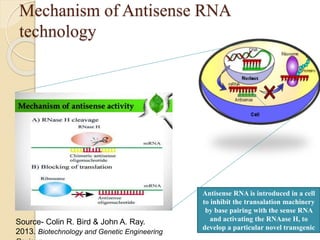
Mechanism of Antisense RNA
technology
Antisense RNA is introduced in a cell
to inhibit the transalation machinery
by base pairing with the sense RNA
and activating the RNAase H, to
develop a particular novel transgenic
Source- Colin R. Bird & John A. Ray.
2013. Biotechnology and Genetic Engineering
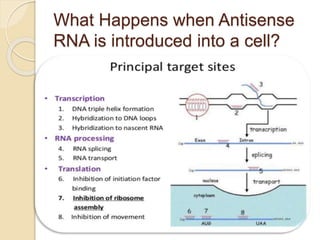
What Happens when Antisense
RNA is introduced into a cell?
Applications of Antisense RNA in crop
improvement
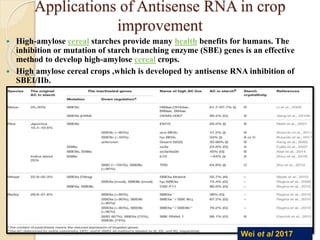
 High-amylose cereal starches provide many health benefits for humans. The
inhibition or mutation of starch branching enzyme (SBE) genes is an effective
method to develop high-amylose cereal crops.
 High amylose cereal crops ,which is developed by antisense RNA inhibition of
SBEI/IIb.
Wei et al 2017
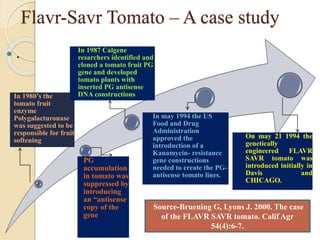
Flavr-Savr Tomato – A case study
 .
In 1980’s the
tomato fruit
enzyme
Polygalacturonase
was suggested to be
responsible for fruit
softening
PG
accumulation
in tomato was
suppressed by
introducing
an “antisense
copy of the
gene
In 1987 Calgene
resarchers identified and
cloned a tomato fruit PG
gene and developed
tomato plants with
inserted PG antisense
DNA constructions
In may 1994 the US
Food and Drug
Administration
approved the
introduction of a
Kanamycin- resistance
gene constructions
needed to create the PG-
antisense tomato lines.
On may 21 1994 the
genetically
engineered FLAVR
SAVR tomato was
introduced initially in
Davis and
CHICAGO..
Source-Bruening G, Lyons J. 2000. The case
of the FLAVR SAVR tomato. Calif Agr
54(4):6-7.
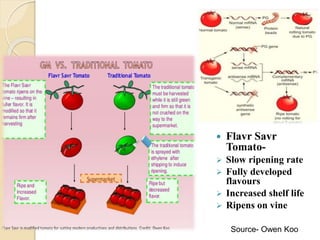
 Flavr Savr
Tomato-
 Slow ripening rate
 Fully developed
flavours
 Increased shelf life
 Ripens on vine
Source- Owen Koo
Crispr Cas9
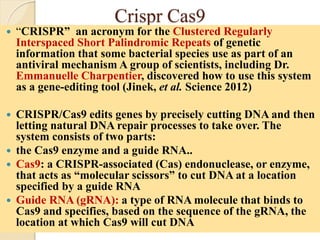
 “CRISPR” an acronym for the Clustered Regularly
Interspaced Short Palindromic Repeats of genetic
information that some bacterial species use as part of an
antiviral mechanism A group of scientists, including Dr.
Emmanuelle Charpentier, discovered how to use this system
as a gene-editing tool (Jinek, et al. Science 2012)
 CRISPR/Cas9 edits genes by precisely cutting DNA and then
letting natural DNA repair processes to take over. The
system consists of two parts:
 the Cas9 enzyme and a guide RNA..
 Cas9: a CRISPR-associated (Cas) endonuclease, or enzyme,
that acts as “molecular scissors” to cut DNA at a location
specified by a guide RNA
 Guide RNA (gRNA): a type of RNA molecule that binds to
Cas9 and specifies, based on the sequence of the gRNA, the
location at which Cas9 will cut DNA
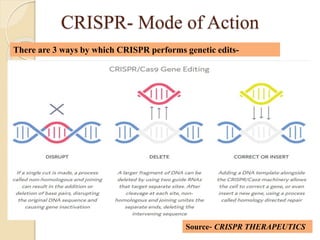
CRISPR- Mode of Action
There are 3 ways by which CRISPR performs genetic edits-
Source- CRISPR THERAPEUTICS
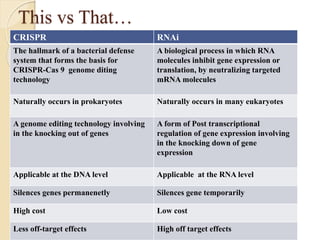
This vs That…
CRISPR RNAi
The hallmark of a bacterial defense
system that forms the basis for
CRISPR-Cas 9 genome diting
technology
A biological process in which RNA
molecules inhibit gene expression or
translation, by neutralizing targeted
mRNA molecules
Naturally occurs in prokaryotes Naturally occurs in many eukaryotes
A genome editing technology involving
in the knocking out of genes
A form of Post transcriptional
regulation of gene expression involving
in the knocking down of gene
expression
Applicable at the DNA level Applicable at the RNA level
Silences genes permanenetly Silences gene temporarily
High cost Low cost
Less off-target effects High off target effects
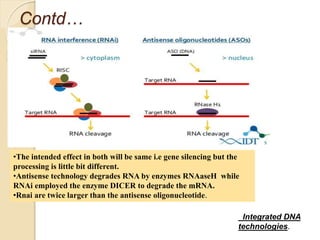
Contd…
•The intended effect in both will be same i.e gene silencing but the
processing is little bit different.
•Antisense technology degrades RNA by enzymes RNAaseH while
RNAi employed the enzyme DICER to degrade the mRNA.
•Rnai are twice larger than the antisense oligonucleotide.
Integrated DNA
technologies.
Future Prospects
 With RNAi, it would be possible to target
multiple genes for silencing using a
thoroughly-designed single transformation
construct.
 Reduction of Toxins produced in various
commercial crops like jute (Lignin), lathyrus(
BOAA) etc.
 Combat post harvest losses due to mycotoxin
by initiating the RNAi pathway of Transgenic
seeds while storage.
 Use of RNAi in hybrid seed production.
Conclusion
 Thus gene silencing can be considered as an eco-
friendly, biosafe and ever green technology as it
eliminates even certain risks associated with
development of transgenic. RNAi triggers the
formation of dsRNA molecules that target and
facilitate the degradation of the gene of interest as
well as non coding regions of gene, thus limiting
undesirable recombination events.
THANKYOU

Gene silencing techniques for crop improvement

  • 1.
    Biotech’s Biggest Breakthrough- “GeneSilencing” & Its application in Crop Improvement. Credit Seminar on Presented By- Jhilick Banerjee Enrollment No- 190116005 M.Sc. 3rd Sem DEPARTMENT OF PLANT BREEDING AND GENETICS JAWAHARLAL NEHRU KRISHI VISHWAVIDYALAYA, JABALPUR,(M.P)
  • 2.
    Contents  Central Dogma Gene Silencing  Features of Gene Silencing  Types of Gene Silencing  Transcriptional gene Silencing  Types of Transcriptional gene silencing  Post Transcriptional Gene silencing  RNA interference- History  Mechanism  Components  Applications  Antisense RNA technology – Mechanism  Target sites  Applications  Case study  CRISPR CAS9- Mode of Action  Difference between RNAi vs CRISPR  RNAi vs Antisense technology
  • 3.
    CENTRAL DOGMA  CentralDogma of molecular biology was first given by Francis Crick in 1958. PROTEIN DNA RNA REPLICATION TRANSCRIPTION TRANSLATION
  • 4.
    Gene silencing  Genesilencing is a technique that aims to reduce or eliminate the production of a protein from its corresponding gene.  A gene which would be expressed (turned on) under normal circumstances is switched off by machinery in the cell.
  • 5.
    Features of Genesilencing  Gene silencing is the regulation of gene expression in a cell.  Gene silencing can occur during either transcription or translation.  Gene silencing is often considered as “Gene knockdown’ i.e their expression is reduced. In contrast , when genes are knocked out they are completely erased from the organism’s genome and thus have no expression.  Methods used to silence genes include RNAi, CRISPR or siRNA, these reduce the expression of the gene by 70% but do not completely eliminate it.
  • 6.
    Types of GeneSilencing Gene silencing Transcriptional Post Transcriptional  Genes can be silenced at both transcriptional and post transcriptional level therefore gene silencing is classified into two types transcriptional and post transcriptional gene silencing(PTGS). Transcriptional gene silencing Post Transcriptional gene silencing Promoter is silenced Promoter is active Genes hypermethylated in promoter region Genes hypermethylated in the coding region Purpose – viral Purpose – viral
  • 7.
    Transcriptional gene silencing Transcriptional genesilencing Paramutation Position effect Genomic imprinting Transgene silencing Transposoon silencing RNA directed DNA methylation Transcriptional gene silencing is the result of Histone modifications creating an environment of heterochromatin around a gene that makes it inaccessible to transcriptional machinery
  • 8.
    Types of Transcriptionalgene silencing GENOMIC IMPRINTING • Genomic imprinting is a process of silencing genes through DNA methylation. The repressed allele is methylated, while the active allele is unmethylated. Paramutation • Paramutation is an interaction between two alleles ofa single locus resulting in a heritable change of one allele that is induced by other allele Position effect • It is the effect on the expression of a gene when its location in a chromosome is changed by translocation. Example IN DROSOPHILLA EYE COLOUR. Transgene silencing Insertion of a transgene into a transcriptional inactive region results in reduction in its stability due to gene silencing. Transposoon silencing The ‘jumping’ of transposon generates the genomic instability and cause the extremely deletrious mutations. RNA Directed DNA Methylation Small double stranded RNAs are processed to guide methylation to complementary DNA loci. Eg in Arabidopsis thaliana SOURCE- Molecular biology of the cell 5th edition by Whatson, Baker , Bell, Gann,Levinn, Losick. Molecular biology by David . Clark ELSEVIER. RNA i guide to gene silencing by Gregory J. Hannon. Gene silencing theory, techniques and applications by Anthony J.
  • 9.
    Post Transcriptional gene silencing Post transcriptional gene silencing exploits the cellular mechanism where transcripts having sequence similar to double-stranded RNA molecules present in the cell will be subjected to degradation.  The ability of exogenous or endogenous RNA to suppress the expression of the gene which corresponds to the m-RNA sequence. Post Transcriptional gene silencing CRISPR RNA interference Antisense RNA technology
  • 10.
    RNA Interference (RNAi) technology RNA interference (RNAi) is a method of blocking gene function by inserting short sequences of ribonucleic acid (RNA) that match part of the target gene’s sequence, thus no proteins are produced.  RNAi has provided a way to control pests and diseases, introduce novel plant traits and increase crop yield. Using RNAi, scientists have developed novel crops such as nicotine-free tobacco, non-allergenic peanuts, decaffeinated coffee, and nutrient fortified maize among many others.
  • 11.
    History behind RNAinterference RNAinterference was first observed in petunia where introducing multiple copies of a gene that codes for purple flowers led, not as expected to a deeper purple hue, but rather to plants with white or variegated flowers it was observed that the introduced transgenes were silenced as well as the plant’s ‘purple-flower’ gene. The mechanism causing these effects was not known until American scientists Andrew Fire and Craig Mello discovered that injecting double stranded ribonucleic acids (dsRNA) into the worm Caenorhabditis elegans triggered the silencing of genes with sequences identical to that of the dsRNA. They called the phenomenon RNA interference. Re-examining in petunia and virus-induced gene silencing revealed that all these processes led to the accumulation of dsRNAs, hence the RNAi pathway. Fire and Mello were awarded the 2006 Nobel price for Physiology or Medicine for their discovery.
  • 12.
    How does RNAiwork?  The ribonuclease protein Dicer, which binds and cleaves double-stranded RNAs (dsRNAs) in plants, , to produce double-stranded fragments of 20–25 base pairs with a 20-nucleotide overhang at the 3' end After integration into the RISC, siRNAs base- pair to their target mRNA and cleave it, thereby preventing it from being used as a translation template These siRNAs are then separated into single strands one passenger(sense) strand and one guide strand (antisense) and integrated into an active RISC
  • 13.
    Components of RNAi siRNA– Small interfering RNA are 21-25 nt fragments which bind to the complementary portion of the target mRNA and target it for degradation. miRNA – Micro RNA originates with SS RNA that forms a hairpin secondary structure. It regulates PT gene expression, and is often 100% complementary to the target gene. DICER-RNase III family members are among the few nucleases that show specificity for dsRNAs and cleave them with 3′ overhangs of 2 to 3 nucleotides and 5′-phosphate and 3′-hydroxyl termini RISC-RISC is a large (~500-kDa) RNA-multi protein complex, which triggers mRNA degradation in response to Si RNA. Unwinding of double- stranded Si RNA by ATP independent helicase. The active components of an RISC are endonucleases called argonaute proteins which cleave the target mRNA strand.
  • 14.
    Applications of RNAiin crop improvement
  • 15.
    RNAi for malesterility  RNAi has also been used to generate male sterility, which is valuable in the hybrid seed industry. Genes that are expressed solely in tissues involved in pollen production can be targeted through RNAi. For instance, scientists have developed male sterile tobacco lines by inhibiting the expression of TA29, a gene which is expressed exclusively in anthers at the time of microspore development. About 10 out of 13 tobacco lines transformed with a hairpin RNAi construct containing TA29 sequences were male sterile Source-Nawaz-ul-Rehman MS, Mansoor S, Khan AA, Zafar Y, Briddon RW. RNAi-mediated male sterility of tobacco by silencing TA29. Mol Biotechnol. 2007 Jun;36(2):159-65. doi: 10.1007/s12033-007-0025-1. PMID: 17914195.
  • 16.
    RNAi for improvingplant metabolic pathways TRAIT TARGET GENE HOST APPLICATION Enhanced Nutrient Content Lyc Tomato Increased concentration of lycopene (carotenoid antioxidant) DET1 Tomato Higher flavonoid and b- carotene contents SBEII Wheat,Sweet potato, Maize Increased levels of amylose for glycemic management and digestive health FAD2 Canola, Peanut,Cotton Increased oleic acid content SAD1 Cotton Increased stearic acid content ZLKR/SDH Maize Lysine-fortified maize Reduced production of lachrymatory factor synthase Lachrymatory factor synthase gene Onion “Tearless onion”
  • 17.
    TRAIT TARGET GENEHOST APPLICATION Reduced alllerginicity Arah 2 Peanut Allergen free peanuts Lolp1, Lolp2 Ryegrass Hypo-allergenic ryegrass Reduced Polyphenol production S-cadinene synthase gene Cotton Lower gossypol levels in cotton seeds, for safe consumption Ethylene sensitivity LeETR4 Tomato Early ripening tomatoes ACC oxidase gene Tomato Longer shelf life because of slow ripening Reduced alkaloid production CaMXMT1 Coffee Decaffeinated coffee COR Opium poppy Production of non-narcotic alkaloid, instead of morphine CYP82E4 Tobacco Reduced levels of the carcinogen nornicotine in cured leaves Heavy metal accumulation ACR2 Arabidopsis Arsenic hyperaccumulation for phytoremediation Source- https://www.isaaa.org/resources/publications/pocketk/34/
  • 18.
    Rnai for bioticstress Source of resistance to combat plant parasitic nematodes. Host generated RNAi is the delivery of dsRNAs or siRNAs into the feeding nematodes for the silencing of vital nematode specific genes. Purposely, those genes should be targeted whose expression is essential for the nematodes after the feeding starts to ensure a highly lethal phenotype. The dsRNAs so formed can either be directly ingested by the PPNs or can be processed by the host plant's own RNAi machinery and the resulting siRNAs can be subsequently ingested by the PPNs Banerjee Sagar, Banerjee Anamika, Gill Sarvajeet S., Gupta Om P., Dahuja Anil, Jain Pradeep K., Sirohi Anil., 2017.,”RNA Interference: A Novel Source of Resistance to Combat Plant Parasitic Nematodes”.,Frontiers in Plant Science, 8 (834) DOI=10.3389/fpls.2017.00834 ;1664-462x
  • 19.
    Non transformative techniquefor resistance to insect pests using RNAi. The delivery of the RNAs ie dsRNA or siRNA is done by foliar spray, irrigation,baits, etc. Once the RNAs are delivered the insects need to internalze RNAs molecules by either direct or indirect ways. The direct uptake is by when the organisms comes in contact with the RNAs molecules during application or feed on tissues containing the RNA molecules. The indirect uptake happens when the RNA molecules are absorbed and translocated in the plant vascular system and taken up by the organism. Source- Cagliari Deise, Dias Naymã P., Galdeano Diogo Manzano, dos Santos Ericmar Ávila, Smagghe Guy, Zotti Moisés João.(2019).”Management of Pest Insects and Plant Diseases by Non-Transformative RNAi”., Frontiers in Plant Science .10(1319) DOI=10.3389/fpls.2019.01319
  • 20.
    Abiotic stress tolerance Recent findings have established that plants assign miRNAs as critical post-transcriptional regulators of gene expression in sequence-specific manner to respond to numerous abiotic stresses they face during their growth cycle. These small RNAs regulate gene expression via translational inhibition. miRNA involved in drought and salinity stress response, including ABA response, auxin signalling, osmoprotection and antioxidant defence by downregulating the response target gene. SOURCE-RNAi Mediated Drought and Salinity Stress Tolerance in Plants - Scientific Figure on ResearchGate. Available from: https://www.researchgate.net/figure/miRNA-participate-in-drought- stress_tbl1_282532411
  • 21.
    RNAi for AbioticStress Tolerance in Crops In abiotic stress condition, the plant after signal perception, the abiotic stress responsible miRNA gene undergoes transcription by RNA Polymerase II enzyme into primary miRNA (pri-miRNA),  the miRNA is proceed by dicer like DCL 1 into a stem loop miRNA duplex.  The 3’ ends of the miRNA duplex are methylated by HEN1. The miRNA is then exported into the cytoplasm from the nucleus by the HASTY protein and cleave into mature miRNAs.  The mature miRNAs are incorporated into RNA induced silencing complex (RISC), where the mature single stranded miRNA guides the RNA silencing activity of AGO1 to partially complementary mRNA. The microRNA then targets the abiotic stress responsive mRNA and that causes translation repression and mRNA degradation
  • 22.
    miRNA identified incrops for abiotic stress https://www.researchgate.net/publication/282532411_RNAi_Mediated_Drought_and_Salinity_Stress _Tolerance_in_Plants
  • 23.
    Other applications ofRNAi Increasing Shelf life of fruits • Xiong et al.(2005) used RNAi technology to increase shelf-life in tomato. The dsRNA of tomato ACC oxidase expression unit was successfully introduced into tomato cultivar Hezuo906 under the cauliflower mosaic virus 35S promoter by A.tumefaciens-mediated transformation. Plants which were produced had fruits having traces of ethylene and had a prolonged shelf-life of more than 120 days . Seedless fruit development • RNAi technology is used to suppress thefunction of ARF7 in tomato. The transgenic plants resulted in the production of seedless fruits (De Jong et al. 2009). • Recently, a new gene family involved in fruit set regulation was identified. The two members of the AUCSIA familycoding for 53-amino-acid-long peptides are expressed in the ovary and are drastically down-regulated after pollination. The AUCSIA genes were functionally suppressed in tomatoby RNAi Nutritional improvement • A deficiency in populations (Eck et al. 2007).Nunes et al. (2006) demonstrated that silencing myo-inositol-1-phosphate (GmMIPS1) gene expression in soybean was an effective strategy to greatly reduce phytate content (up to94.5%) and improved phosphorus availability in soybean seeds. This technology is a foundation for production of lowphytate varieties, resulting in improved nutrient availability for animal feed and reduced environmental impact of livestock production. https://www.researchgate.net/publication/51061478_Role_of_RNA_interferenc
  • 24.
  • 25.
    RNAi mediated resistancein cotton against Cotton Leaf Curl Virus  In this study, RNAi-based approach was applied to generate transgenic cotton (Gossypium hirsutum) plants resistant to Cotton leaf curl Rajasthan virus (CLCuRV).  An intron hairpin (ihp) RNAi construct capable of expressing dsRNA homologous to the intergenic region (IR) of CLCuRV was designed and developed.  Following Agrobacterium tumefaciens-mediated transformation of cotton (G. hirsutum cv. Narasimha) plants with the designed ihpRNAi construct, a total of 9 independent lines of transformed cotton were obtained.  The presence of the potential stretch of IR in the transformed cotton was confirmed by PCR coupled with Southern hybridization.  Upon inoculation with viruliferous whiteflies, the transgenic plants showed high degree of resistance. None of them displayed any CLCuD symptoms even after 90 days post inoculation.  The transformed cotton plants showed the presence of siRNAs. The present study demonstrated that ihp dsRNA-mediated resistance strategy of RNAi is an effective means to combat the CLCuD infection in cotton.
  • 26.
    Generation of transgeniccotton (Gossypium hirsutum cv. Narasimha) plants expressing intergenic region [Cotton leaf curl Rajasthan virus genome (GQ220850)]-derived ihpRNAi construct. Germination of seed of cotton (G. hirsutum cv. Narasimha) (a, b); explants on co-cultivation medium (c); explants on selection medium (d–f); hardening and acclimatization of plantlets in Hoagland medium, agropeat and glasshouse, respectively (g–i) Whitefly (Bemisia tabaci)-mediated inoculation of transgenic cotton (Gossypium hirsutum cv. Narasimha) plants with Cotton leaf curl virus. Transformed plants did not show disease symptoms (a); symptom development on non-transformed cotton showing vein thickening and leaf curling (b) Source - Khatoon, Sameena et al (2016).
  • 27.
    A decade ofRNAi ..  Before RNAi ,the classical methods of studying gene function were limited to mutagenesis and knockout animal models, homologous recombination, anti- sense DNA technologies and microarrays; all of which were time consuming, labour-intensive and cost prohibitive18,19. The introduction of the RNA technology quickly surpassed these traditional practices enabling investigators to undertake genome-wide systematic and simultaneous gene knockdowns within much shorter time frames resulting in a record of ~580 publications reporting a plethora of promising therapeutic gene targets. Bhinder, Bhavneet & Djaballah, Hakim. (2013). A decade of RNAi screening: Too much hay and very few needles. Drug Discovery World. 14. 31.
  • 28.
    Antisense RNA technology Antisense RNA (asRNA), also referred to as antisense transcript or antisense oligonucleotide, is a single stranded RNA that is complementary to a protein coding messenger RNA(mRNA) with which it hybridizes, and thereby blocks its translation into protein.  asRNAs (which occur naturally) have been found in both prokaryotes and eukaryotes, antisense transcripts can be classified into short (<200 nucleotides) and long (>200 nucleotides) non-coding RNAs (ncRNAs).  The primary function of asRNA is regulating gene expression.  asRNAs may also be produced synthetically and have found wide spread use as research tools for gene knockdown
  • 29.
    Mechanism of AntisenseRNA technology Antisense RNA is introduced in a cell to inhibit the transalation machinery by base pairing with the sense RNA and activating the RNAase H, to develop a particular novel transgenic Source- Colin R. Bird & John A. Ray. 2013. Biotechnology and Genetic Engineering
  • 30.
    What Happens whenAntisense RNA is introduced into a cell?
  • 31.
    Applications of AntisenseRNA in crop improvement  High-amylose cereal starches provide many health benefits for humans. The inhibition or mutation of starch branching enzyme (SBE) genes is an effective method to develop high-amylose cereal crops.  High amylose cereal crops ,which is developed by antisense RNA inhibition of SBEI/IIb. Wei et al 2017
  • 32.
    Flavr-Savr Tomato –A case study  . In 1980’s the tomato fruit enzyme Polygalacturonase was suggested to be responsible for fruit softening PG accumulation in tomato was suppressed by introducing an “antisense copy of the gene In 1987 Calgene resarchers identified and cloned a tomato fruit PG gene and developed tomato plants with inserted PG antisense DNA constructions In may 1994 the US Food and Drug Administration approved the introduction of a Kanamycin- resistance gene constructions needed to create the PG- antisense tomato lines. On may 21 1994 the genetically engineered FLAVR SAVR tomato was introduced initially in Davis and CHICAGO.. Source-Bruening G, Lyons J. 2000. The case of the FLAVR SAVR tomato. Calif Agr 54(4):6-7.
  • 33.
     Flavr Savr Tomato- Slow ripening rate  Fully developed flavours  Increased shelf life  Ripens on vine Source- Owen Koo
  • 34.
    Crispr Cas9  “CRISPR”an acronym for the Clustered Regularly Interspaced Short Palindromic Repeats of genetic information that some bacterial species use as part of an antiviral mechanism A group of scientists, including Dr. Emmanuelle Charpentier, discovered how to use this system as a gene-editing tool (Jinek, et al. Science 2012)  CRISPR/Cas9 edits genes by precisely cutting DNA and then letting natural DNA repair processes to take over. The system consists of two parts:  the Cas9 enzyme and a guide RNA..  Cas9: a CRISPR-associated (Cas) endonuclease, or enzyme, that acts as “molecular scissors” to cut DNA at a location specified by a guide RNA  Guide RNA (gRNA): a type of RNA molecule that binds to Cas9 and specifies, based on the sequence of the gRNA, the location at which Cas9 will cut DNA
  • 35.
    CRISPR- Mode ofAction There are 3 ways by which CRISPR performs genetic edits- Source- CRISPR THERAPEUTICS
  • 36.
    This vs That… CRISPRRNAi The hallmark of a bacterial defense system that forms the basis for CRISPR-Cas 9 genome diting technology A biological process in which RNA molecules inhibit gene expression or translation, by neutralizing targeted mRNA molecules Naturally occurs in prokaryotes Naturally occurs in many eukaryotes A genome editing technology involving in the knocking out of genes A form of Post transcriptional regulation of gene expression involving in the knocking down of gene expression Applicable at the DNA level Applicable at the RNA level Silences genes permanenetly Silences gene temporarily High cost Low cost Less off-target effects High off target effects
  • 37.
    Contd… •The intended effectin both will be same i.e gene silencing but the processing is little bit different. •Antisense technology degrades RNA by enzymes RNAaseH while RNAi employed the enzyme DICER to degrade the mRNA. •Rnai are twice larger than the antisense oligonucleotide. Integrated DNA technologies.
  • 38.
    Future Prospects  WithRNAi, it would be possible to target multiple genes for silencing using a thoroughly-designed single transformation construct.  Reduction of Toxins produced in various commercial crops like jute (Lignin), lathyrus( BOAA) etc.  Combat post harvest losses due to mycotoxin by initiating the RNAi pathway of Transgenic seeds while storage.  Use of RNAi in hybrid seed production.
  • 39.
    Conclusion  Thus genesilencing can be considered as an eco- friendly, biosafe and ever green technology as it eliminates even certain risks associated with development of transgenic. RNAi triggers the formation of dsRNA molecules that target and facilitate the degradation of the gene of interest as well as non coding regions of gene, thus limiting undesirable recombination events.
  • 40.