RNA interference
and its Applications
By-
Nitin Kumar Singh
1314354023
Overview
Introduction to RNAi
Discovery
Mechanism of Action
Applications
INTRODUCTION
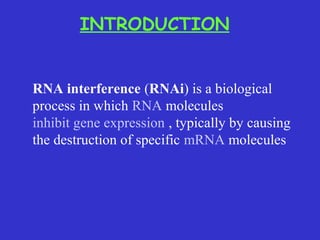
RNA interference (RNAi) is a biological
process in which RNA molecules
inhibit gene expression , typically by causing
the destruction of specific mRNA molecules
Other names of post-transcriptional gene
silencing (PTGS) :
– gene silencing
– RNA silencing
– RNA interference
– In certain fungi: quelling
RNAi can spread throughout certain organisms
(C. elegans, plants).
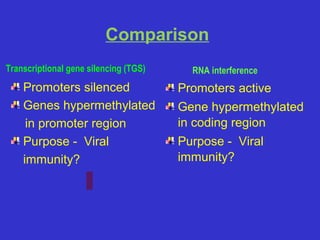
Comparison
Promoters active
Gene hypermethylated
in coding region
Purpose - Viral
immunity?
Transcriptional gene silencing (TGS) RNA interference
Promoters silenced
Genes hypermethylated
in promoter region
Purpose - Viral
immunity?
Short history of post-transcriptional
gene silencing
1990 Jorgensen :
Introduction of transgenes homologous to
endogenous genes often resulted in plants with both
genes suppressed!
Called Co-suppression
Resulted in degradation of the endogenous and the
transgene mRNA
1995 Guo and Kemphues:
-injection of either antisense or sense RNAs in the
germline of C. elegans was equally effective at
silencing homologous target genes
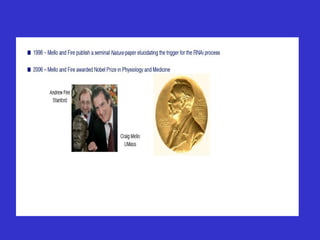
1998 Mello and Fire:
-extension of above experiments, combination of
sense and antisense RNA (= dsRNA) was 10
times more effective than single strand RNA
Contd….
double-stranded RNAs are produced by:
– transcription of inverted repeats
– viral replication
– transcription of RNA by RNA-dependent RNA-
polymerases (RdRP)
double-stranded RNA triggers cleavage of
homologous mRNA
RNAi defective plants are more sensitive to infection
by RNA viruses
in RNAi defective nematodes, transposons are much
more active
RNAi can be induced by:
Different classes of small RNA
molecules
During dsRNA cleavage, different RNA classes
are produced:
– siRNA ie. Small interfering RNA
– miRNA ie. Micro RNA
Overview of small RNA molecules
MEM MEM
)
Why is PTGS important?
Most widely held view is that RNAi evolved to
protect the genome from viruses (or other invading
DNAs or RNAs)
Recently, very small (micro) RNAs have been
discovered in several eukaryotes that regulate
developmentally other large RNAs
–May be a new use for the RNAi mechanism
besides defense
Recent applications of RNAi
Modulation of HIV-1 replication by RNA interference.
Hannon(2002).
Potent and specific inhibition of human immunodeficiency
virus type 1 replication by RNA interference.
An et al.(1999)
Selective silencing of viral gene expression in HPV-positive
human cervical carcinoma cells treated with siRNA, a primer
of RNA interference.
Jung et al. 2002.
RNA interference in adult mice.
Mccaffrey et al.2002
Successful inactivation of endogenous Oct-3/4 and c-mos
genes in mouse pre implantation embryos and oocytes using
short interfering RNAs.
Le Bon et al.2002
Application in Disease Treatment
Cont.
Possible future improvements of RNAi
applications
Already developed:
in vitro synthesis of siRNAs using T7 RNA Polymerase
U6 RNA promoter based plasmids
Digestion of longer dsRNA by E. coli Rnase III
Potentially useful:
creation of siRNA vectors with resistances cassettes
establishment of an inducible siRNA system
establishment of retroviral siRNA vectors (higher efficiencies,
Conclusions
• RNAi is a powerful and attractive genetic approach
because of the diversity of its applications. The potential
uses currently in progress include the identification of
specific gene functions in living systems and creation of
genome wide screens. Development of antiviral and
anticancer therapies are broadening the horizons of the
therapeutic arena.
• Another value of RNAi screens is in combining it with
other functional genomic assays enabling mapping of
biochemical pathways. Impact of RNAi is also being
extended to the field of agriculture for example by
increasing disease resistance in plants.
Cont.
• Many potential obstacles in the path of RNAi therapeutics
can be overcome, but further insight into the non-coding
functions of RNA in vivo will provide better
understanding of mechanisms underlying RNAi. Future
applications of RNAi technology will revolutionize
genetic, genomic and proteomic aspects of biology and
will take the field of medicine into new scientific realms.
References
• Catalanotto, Azzalin, Macino, and Cogoni, C. 2000. Gene silencing in worms
and fungi.Nature
• Cogoni, C. and Macino, G. 1999. Homology- dependent gene silencing in
plants and fungi: A number of variations on the same theme. Curr. Opin.
Microbiol
• Archana Thakur. RNA interference revolution. Electronic Journal of
Biotechnology 6. April 15, 2003
• Hamilton, A.J. and Baulcombe, D.C. 1999. A species of small antisense RNA
in post transcriptional gene silencing in plants. Science
• Vavilov NI (1926) Studies on the origin of cultivated plants. Bulletin of
Applied Botany and Plant Breeding
Rna interference

Rna interference

  • 1.
    RNA interference and itsApplications By- Nitin Kumar Singh 1314354023
  • 2.
  • 3.
    INTRODUCTION RNA interference (RNAi)is a biological process in which RNA molecules inhibit gene expression , typically by causing the destruction of specific mRNA molecules
  • 4.
    Other names ofpost-transcriptional gene silencing (PTGS) : – gene silencing – RNA silencing – RNA interference – In certain fungi: quelling RNAi can spread throughout certain organisms (C. elegans, plants).
  • 5.
    Comparison Promoters active Gene hypermethylated incoding region Purpose - Viral immunity? Transcriptional gene silencing (TGS) RNA interference Promoters silenced Genes hypermethylated in promoter region Purpose - Viral immunity?
  • 6.
    Short history ofpost-transcriptional gene silencing 1990 Jorgensen : Introduction of transgenes homologous to endogenous genes often resulted in plants with both genes suppressed! Called Co-suppression Resulted in degradation of the endogenous and the transgene mRNA
  • 7.
    1995 Guo andKemphues: -injection of either antisense or sense RNAs in the germline of C. elegans was equally effective at silencing homologous target genes 1998 Mello and Fire: -extension of above experiments, combination of sense and antisense RNA (= dsRNA) was 10 times more effective than single strand RNA Contd….
  • 9.
    double-stranded RNAs areproduced by: – transcription of inverted repeats – viral replication – transcription of RNA by RNA-dependent RNA- polymerases (RdRP) double-stranded RNA triggers cleavage of homologous mRNA RNAi defective plants are more sensitive to infection by RNA viruses in RNAi defective nematodes, transposons are much more active
  • 10.
    RNAi can beinduced by:
  • 14.
    Different classes ofsmall RNA molecules During dsRNA cleavage, different RNA classes are produced: – siRNA ie. Small interfering RNA – miRNA ie. Micro RNA
  • 15.
    Overview of smallRNA molecules
  • 16.
  • 17.
    Why is PTGSimportant? Most widely held view is that RNAi evolved to protect the genome from viruses (or other invading DNAs or RNAs) Recently, very small (micro) RNAs have been discovered in several eukaryotes that regulate developmentally other large RNAs –May be a new use for the RNAi mechanism besides defense
  • 18.
    Recent applications ofRNAi Modulation of HIV-1 replication by RNA interference. Hannon(2002). Potent and specific inhibition of human immunodeficiency virus type 1 replication by RNA interference. An et al.(1999) Selective silencing of viral gene expression in HPV-positive human cervical carcinoma cells treated with siRNA, a primer of RNA interference. Jung et al. 2002. RNA interference in adult mice. Mccaffrey et al.2002 Successful inactivation of endogenous Oct-3/4 and c-mos genes in mouse pre implantation embryos and oocytes using short interfering RNAs. Le Bon et al.2002
  • 19.
  • 20.
  • 21.
    Possible future improvementsof RNAi applications Already developed: in vitro synthesis of siRNAs using T7 RNA Polymerase U6 RNA promoter based plasmids Digestion of longer dsRNA by E. coli Rnase III Potentially useful: creation of siRNA vectors with resistances cassettes establishment of an inducible siRNA system establishment of retroviral siRNA vectors (higher efficiencies,
  • 22.
    Conclusions • RNAi isa powerful and attractive genetic approach because of the diversity of its applications. The potential uses currently in progress include the identification of specific gene functions in living systems and creation of genome wide screens. Development of antiviral and anticancer therapies are broadening the horizons of the therapeutic arena. • Another value of RNAi screens is in combining it with other functional genomic assays enabling mapping of biochemical pathways. Impact of RNAi is also being extended to the field of agriculture for example by increasing disease resistance in plants.
  • 23.
    Cont. • Many potentialobstacles in the path of RNAi therapeutics can be overcome, but further insight into the non-coding functions of RNA in vivo will provide better understanding of mechanisms underlying RNAi. Future applications of RNAi technology will revolutionize genetic, genomic and proteomic aspects of biology and will take the field of medicine into new scientific realms.
  • 24.
    References • Catalanotto, Azzalin,Macino, and Cogoni, C. 2000. Gene silencing in worms and fungi.Nature • Cogoni, C. and Macino, G. 1999. Homology- dependent gene silencing in plants and fungi: A number of variations on the same theme. Curr. Opin. Microbiol • Archana Thakur. RNA interference revolution. Electronic Journal of Biotechnology 6. April 15, 2003 • Hamilton, A.J. and Baulcombe, D.C. 1999. A species of small antisense RNA in post transcriptional gene silencing in plants. Science • Vavilov NI (1926) Studies on the origin of cultivated plants. Bulletin of Applied Botany and Plant Breeding