Mr. Hemant Toppo
Asst. Prof. GPB
IGKV Raipur
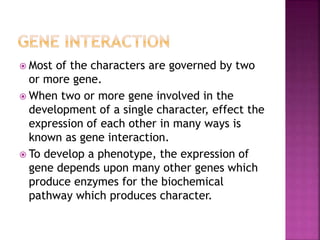
 Most of the characters are governed by two
or more gene.
 When two or more gene involved in the
development of a single character, effect the
expression of each other in many ways is
known as gene interaction.
 To develop a phenotype, the expression of
gene depends upon many other genes which
produce enzymes for the biochemical
pathway which produces character.
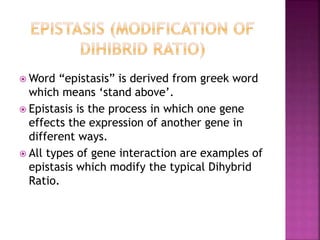
 Word “epistasis” is derived from greek word
which means ‘stand above’.
 Epistasis is the process in which one gene
effects the expression of another gene in
different ways.
 All types of gene interaction are examples of
epistasis which modify the typical Dihybrid
Ratio.
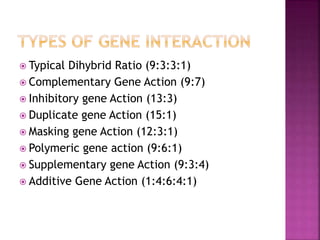
 Typical Dihybrid Ratio (9:3:3:1)
 Complementary Gene Action (9:7)
 Inhibitory gene Action (13:3)
 Duplicate gene Action (15:1)
 Masking gene Action (12:3:1)
 Polymeric gene action (9:6:1)
 Supplementary gene Action (9:3:4)
 Additive Gene Action (1:4:6:4:1)
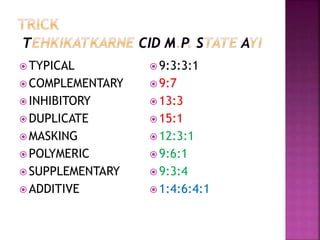
 TYPICAL
 COMPLEMENTARY
 INHIBITORY
 DUPLICATE
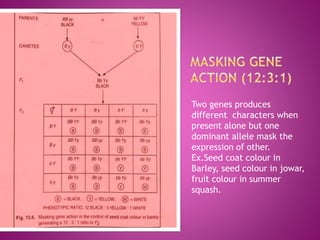
 MASKING
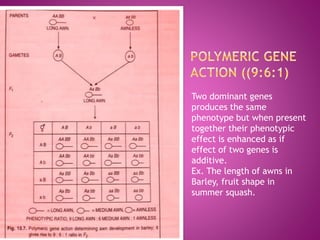
 POLYMERIC
 SUPPLEMENTARY
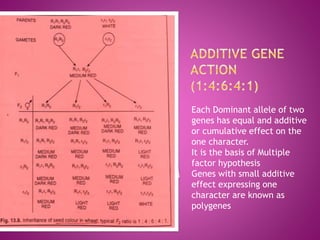
 ADDITIVE
 9:3:3:1
 9:7
 13:3
 15:1
 12:3:1
 9:6:1
 9:3:4
 1:4:6:4:1
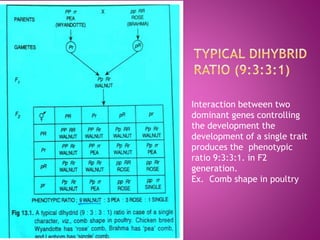
Interaction between two
dominant genes controlling
the development the
development of a single trait
produces the phenotypic
ratio 9:3:3:1. in F2
generation.
Ex. Comb shape in poultry
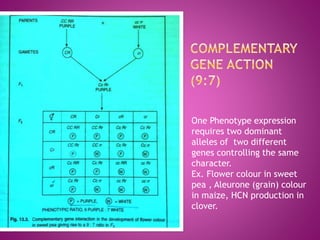
One Phenotype expression
requires two dominant
alleles of two different
genes controlling the same
character.
Ex. Flower colour in sweet
pea , Aleurone (grain) colour
in maize, HCN production in
clover.
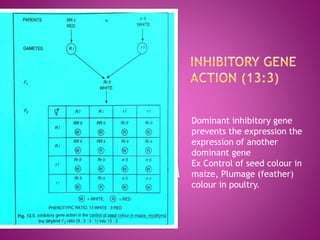
Dominant inhibitory gene
prevents the expression the
expression of another
dominant gene
Ex Control of seed colour in
maize, Plumage (feather)
colour in poultry.
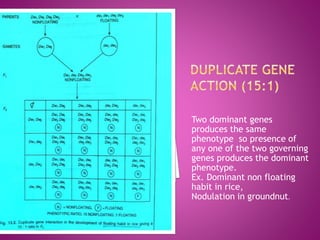
Two dominant genes
produces the same
phenotype so presence of
any one of the two governing
genes produces the dominant
phenotype.
Ex. Dominant non floating
habit in rice,
Nodulation in groundnut.
Two genes produces
different characters when
present alone but one
dominant allele mask the
expression of other.
Ex.Seed coat colour in
Barley, seed colour in jowar,
fruit colour in summer
squash.
Two dominant genes
produces the same
phenotype but when present
together their phenotypic
effect is enhanced as if
effect of two genes is
additive.
Ex. The length of awns in
Barley, fruit shape in
summer squash.
Two genes are present but
one gene produces
phenotype and other does
not produces phenotype of
its own but dominant allele
modifies other genes
dominant allele
Ex. grain (aleurone) colour in
maize, development of
agouty (gray) coat colour in
mice.
Each Dominant allele of two
genes has equal and additive
or cumulative effect on the
one character.
It is the basis of Multiple
factor hypothesis
Genes with small additive
effect expressing one
character are known as
polygenes
Reference:-
 B.D. Singh, Book- Fundamentals of Genetics.

Gene interaction epistasis

  • 1.
    Mr. Hemant Toppo Asst.Prof. GPB IGKV Raipur
  • 2.
     Most ofthe characters are governed by two or more gene.  When two or more gene involved in the development of a single character, effect the expression of each other in many ways is known as gene interaction.  To develop a phenotype, the expression of gene depends upon many other genes which produce enzymes for the biochemical pathway which produces character.
  • 3.
     Word “epistasis”is derived from greek word which means ‘stand above’.  Epistasis is the process in which one gene effects the expression of another gene in different ways.  All types of gene interaction are examples of epistasis which modify the typical Dihybrid Ratio.
  • 4.
     Typical DihybridRatio (9:3:3:1)  Complementary Gene Action (9:7)  Inhibitory gene Action (13:3)  Duplicate gene Action (15:1)  Masking gene Action (12:3:1)  Polymeric gene action (9:6:1)  Supplementary gene Action (9:3:4)  Additive Gene Action (1:4:6:4:1)
  • 5.
     TYPICAL  COMPLEMENTARY INHIBITORY  DUPLICATE  MASKING  POLYMERIC  SUPPLEMENTARY  ADDITIVE  9:3:3:1  9:7  13:3  15:1  12:3:1  9:6:1  9:3:4  1:4:6:4:1
  • 6.
    Interaction between two dominantgenes controlling the development the development of a single trait produces the phenotypic ratio 9:3:3:1. in F2 generation. Ex. Comb shape in poultry
  • 7.
    One Phenotype expression requirestwo dominant alleles of two different genes controlling the same character. Ex. Flower colour in sweet pea , Aleurone (grain) colour in maize, HCN production in clover.
  • 8.
    Dominant inhibitory gene preventsthe expression the expression of another dominant gene Ex Control of seed colour in maize, Plumage (feather) colour in poultry.
  • 9.
    Two dominant genes producesthe same phenotype so presence of any one of the two governing genes produces the dominant phenotype. Ex. Dominant non floating habit in rice, Nodulation in groundnut.
  • 10.
    Two genes produces differentcharacters when present alone but one dominant allele mask the expression of other. Ex.Seed coat colour in Barley, seed colour in jowar, fruit colour in summer squash.
  • 11.
    Two dominant genes producesthe same phenotype but when present together their phenotypic effect is enhanced as if effect of two genes is additive. Ex. The length of awns in Barley, fruit shape in summer squash.
  • 12.
    Two genes arepresent but one gene produces phenotype and other does not produces phenotype of its own but dominant allele modifies other genes dominant allele Ex. grain (aleurone) colour in maize, development of agouty (gray) coat colour in mice.
  • 13.
    Each Dominant alleleof two genes has equal and additive or cumulative effect on the one character. It is the basis of Multiple factor hypothesis Genes with small additive effect expressing one character are known as polygenes
  • 14.
    Reference:-  B.D. Singh,Book- Fundamentals of Genetics.