201 
Gemba ! 
Observe, Engage, Improve 
- An effective lean method 
The leaders in visual safety.
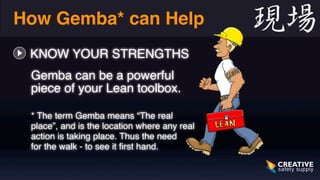
How Gemba* can Help 
KNOW YOUR STRENGTHS 
Gemba can be a powerful 
piece of your Lean toolbox. 
* The term Gemba means “The real 
place”, and is the location where any real 
action is taking place. Thus the need 
for the walk - to see it first hand.
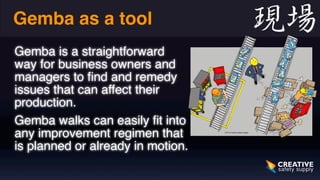
Gemba as a tool 
Gemba is a straightforward 
way for business owners and 
managers to find and remedy 
issues that can affect their 
production. 
Gemba walks can easily fit into 
any improvement regimen that 
is planned or already in motion.
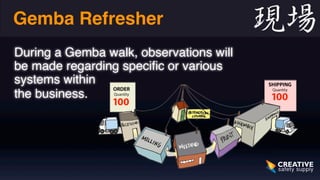
Gemba Refresher 
During a Gemba walk, observations will 
be made regarding specific or various 
systems within 
the business.
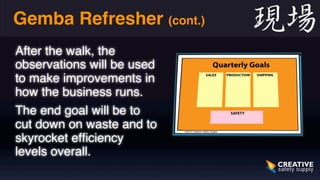
Gemba Refresher (cont.) 
After the walk, the 
observations will be used 
to make improvements in 
how the business runs. 
The end goal will be to 
cut down on waste and to 
skyrocket efficiency 
levels overall.
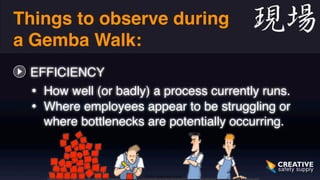
Things to observe during 
a Gemba Walk: 
EFFICIENCY 
• How well (or badly) a process currently runs. 
• Where employees appear to be struggling or 
where bottlenecks are potentially occurring.
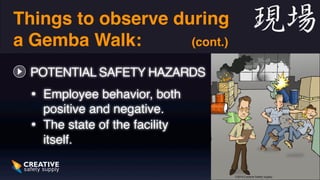
Things to observe during 
a Gemba Walk: (cont.) 
POTENTIAL SAFETY HAZARDS 
• Employee behavior, both 
positive and negative. 
• The state of the facility 
itself.
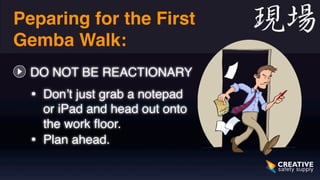
Preparing for the First 
Gemba Walk: 
DO NOT BE REACTIONARY 
• Don’t just grab a notepad 
or iPad and head out onto 
the work floor. 
• Plan ahead.
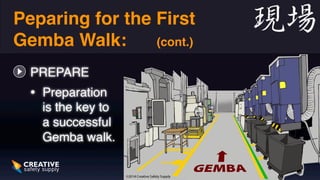
Preparing for the First 
Gemba Walk: (cont.) 
PREPARE 
• Preparation 
is the key to 
a successful 
Gemba walk.
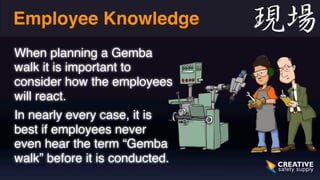
Employee Knowledge 
When planning a Gemba 
walk it is important to 
consider how the employees 
will react. 
In nearly every case, it is 
best if employees never 
even hear the term “Gemba 
walk” before it is conducted.
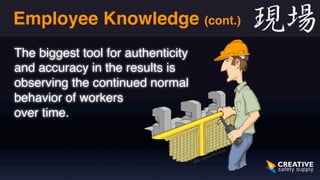
Employee Knowledge (cont.) 
The biggest tool for authenticity 
and accuracy in the results is 
observing the continued normal 
behavior of workers 
over time.
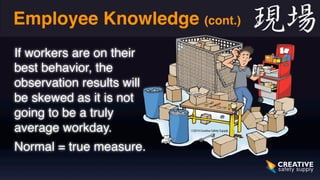
Employee Knowledge (cont.) 
If workers are on their 
best behavior, the 
observation results will 
be skewed as it is not 
going to be a truly 
average workday. 
Normal = true measure.
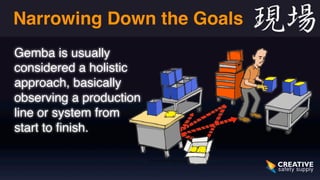
Narrowing Down the Goals 
Gemba is usually 
considered a holistic 
approach, basically 
observing a production 
line or system from 
start to finish.
Narrowing Down the Goals 
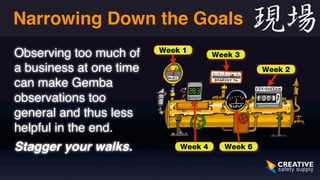
Observing too much of 
a business at one time 
can make Gemba 
observations too 
general and thus less 
helpful in the end. 
Stagger your walks. 
Week 1 Week 3 
Week 4 
Week 2 
Week 6
Narrowing Down the Goals 
(cont.) 
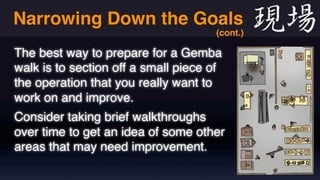
The best way to prepare for a Gemba 
walk is to section off a small piece of 
the operation that you really want to 
work on and improve. 
Consider taking brief walkthroughs 
over time to get an idea of some other 
areas that may need improvement.
Narrowing Down the Goals 
Once an area has been chosen to focus on, stop! 
Take a step back. Don’t formulate theories about 
why things are or aren’t working from a distance. 
A big part of Gemba is objective observations, this 
means not entering the scene with any pre-conceived 
assumptions. 
(cont.)
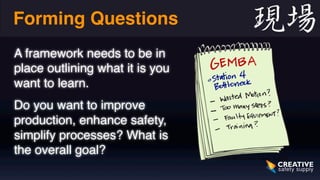
Forming Questions 
A framework needs to be in 
place outlining what it is you 
want to learn. 
Do you want to improve 
production, enhance safety, 
simplify processes? What is 
the overall goal?
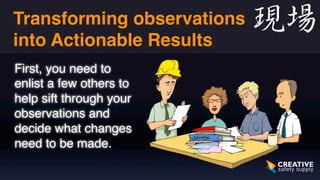
Transforming observations 
into Actionable Results 
First, you need to 
enlist a few others to 
help sift through your 
observations and 
decide what changes 
need to be made.
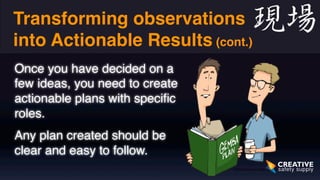
Transforming observations 
into Actionable Results (cont.) 
Once you have decided on a 
few ideas, you need to create 
actionable plans with specific 
roles. 
Any plan created should be 
clear and easy to follow.
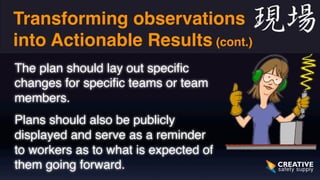
Transforming observations 
into Actionable Results (cont.) 
The plan should lay out specific 
changes for specific teams or team 
members. 
Plans should also be publicly 
displayed and serve as a reminder 
to workers as to what is expected of 
them going forward.
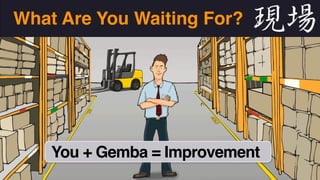
What Are You Waiting For? 
GET TO THE GEMBA!! 
• Observe the Gemba 
• Engage with Employees 
• Continue to Improve Operations 
• Sustain your Lean Practices 
• Strengthen your Culture
What Are You Waiting For? 
You + Gemba = Improvement
Gemba Walk 201
Gemba Walk 201
Gemba Walk 201
Gemba Walk 201
Gemba Walk 201

Gemba Walk 201

  • 1.
    201 Gemba ! Observe, Engage, Improve - An effective lean method The leaders in visual safety.
  • 2.
    How Gemba* canHelp KNOW YOUR STRENGTHS Gemba can be a powerful piece of your Lean toolbox. * The term Gemba means “The real place”, and is the location where any real action is taking place. Thus the need for the walk - to see it first hand.
  • 3.
    Gemba as atool Gemba is a straightforward way for business owners and managers to find and remedy issues that can affect their production. Gemba walks can easily fit into any improvement regimen that is planned or already in motion.
  • 4.
    Gemba Refresher Duringa Gemba walk, observations will be made regarding specific or various systems within the business.
  • 5.
    Gemba Refresher (cont.) After the walk, the observations will be used to make improvements in how the business runs. The end goal will be to cut down on waste and to skyrocket efficiency levels overall.
  • 6.
    Things to observeduring a Gemba Walk: EFFICIENCY • How well (or badly) a process currently runs. • Where employees appear to be struggling or where bottlenecks are potentially occurring.
  • 7.
    Things to observeduring a Gemba Walk: (cont.) POTENTIAL SAFETY HAZARDS • Employee behavior, both positive and negative. • The state of the facility itself.
  • 8.
    Preparing for theFirst Gemba Walk: DO NOT BE REACTIONARY • Don’t just grab a notepad or iPad and head out onto the work floor. • Plan ahead.
  • 9.
    Preparing for theFirst Gemba Walk: (cont.) PREPARE • Preparation is the key to a successful Gemba walk.
  • 10.
    Employee Knowledge Whenplanning a Gemba walk it is important to consider how the employees will react. In nearly every case, it is best if employees never even hear the term “Gemba walk” before it is conducted.
  • 11.
    Employee Knowledge (cont.) The biggest tool for authenticity and accuracy in the results is observing the continued normal behavior of workers over time.
  • 12.
    Employee Knowledge (cont.) If workers are on their best behavior, the observation results will be skewed as it is not going to be a truly average workday. Normal = true measure.
  • 13.
    Narrowing Down theGoals Gemba is usually considered a holistic approach, basically observing a production line or system from start to finish.
  • 14.
    Narrowing Down theGoals Observing too much of a business at one time can make Gemba observations too general and thus less helpful in the end. Stagger your walks. Week 1 Week 3 Week 4 Week 2 Week 6
  • 15.
    Narrowing Down theGoals (cont.) The best way to prepare for a Gemba walk is to section off a small piece of the operation that you really want to work on and improve. Consider taking brief walkthroughs over time to get an idea of some other areas that may need improvement.
  • 16.
    Narrowing Down theGoals Once an area has been chosen to focus on, stop! Take a step back. Don’t formulate theories about why things are or aren’t working from a distance. A big part of Gemba is objective observations, this means not entering the scene with any pre-conceived assumptions. (cont.)
  • 17.
    Forming Questions Aframework needs to be in place outlining what it is you want to learn. Do you want to improve production, enhance safety, simplify processes? What is the overall goal?
  • 18.
    Transforming observations intoActionable Results First, you need to enlist a few others to help sift through your observations and decide what changes need to be made.
  • 19.
    Transforming observations intoActionable Results (cont.) Once you have decided on a few ideas, you need to create actionable plans with specific roles. Any plan created should be clear and easy to follow.
  • 20.
    Transforming observations intoActionable Results (cont.) The plan should lay out specific changes for specific teams or team members. Plans should also be publicly displayed and serve as a reminder to workers as to what is expected of them going forward.
  • 21.
    What Are YouWaiting For? GET TO THE GEMBA!! • Observe the Gemba • Engage with Employees • Continue to Improve Operations • Sustain your Lean Practices • Strengthen your Culture
  • 22.
    What Are YouWaiting For? You + Gemba = Improvement