Accounting
Introduction
 Human beings are social beings.
 We live in a society
 Society exists due to mutual give and take.
 This give and take i.e. exchange is termed as
“transaction”
 Accounting has been widely and
rightly termed as “the language of the
business”
 Language is the means of the
communication.
Book Keeping
Science and art of recording the
transactions in money or money’s
worth so accurately and systematically
that the true state of businessman’s
affairs can be correctly ascertained.
Characteristics Of Book
Keeping
 Fundamental activity for recording business
transactions.
 Every transaction is properly analyzed
before recording.
 Transactions recorded relates to transfer of
money or money’s worth.
 Systematic method of recording.
 Science as well as an art.
 Provides enough information about the
position of various accounts.
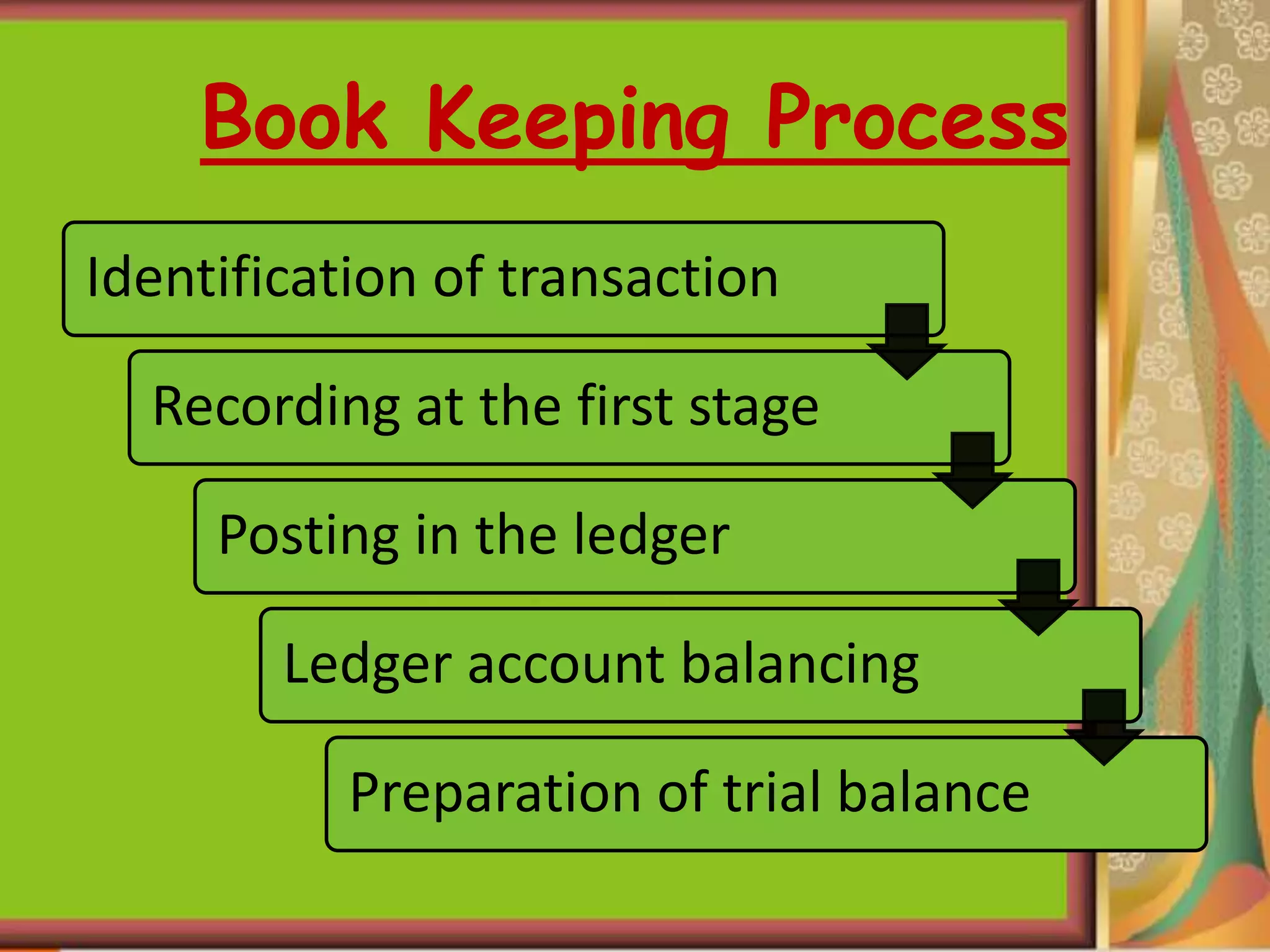
Book Keeping Process
Identification of transaction
Recording at the first stage
Posting in the ledger
Ledger account balancing
Preparation of trial balance
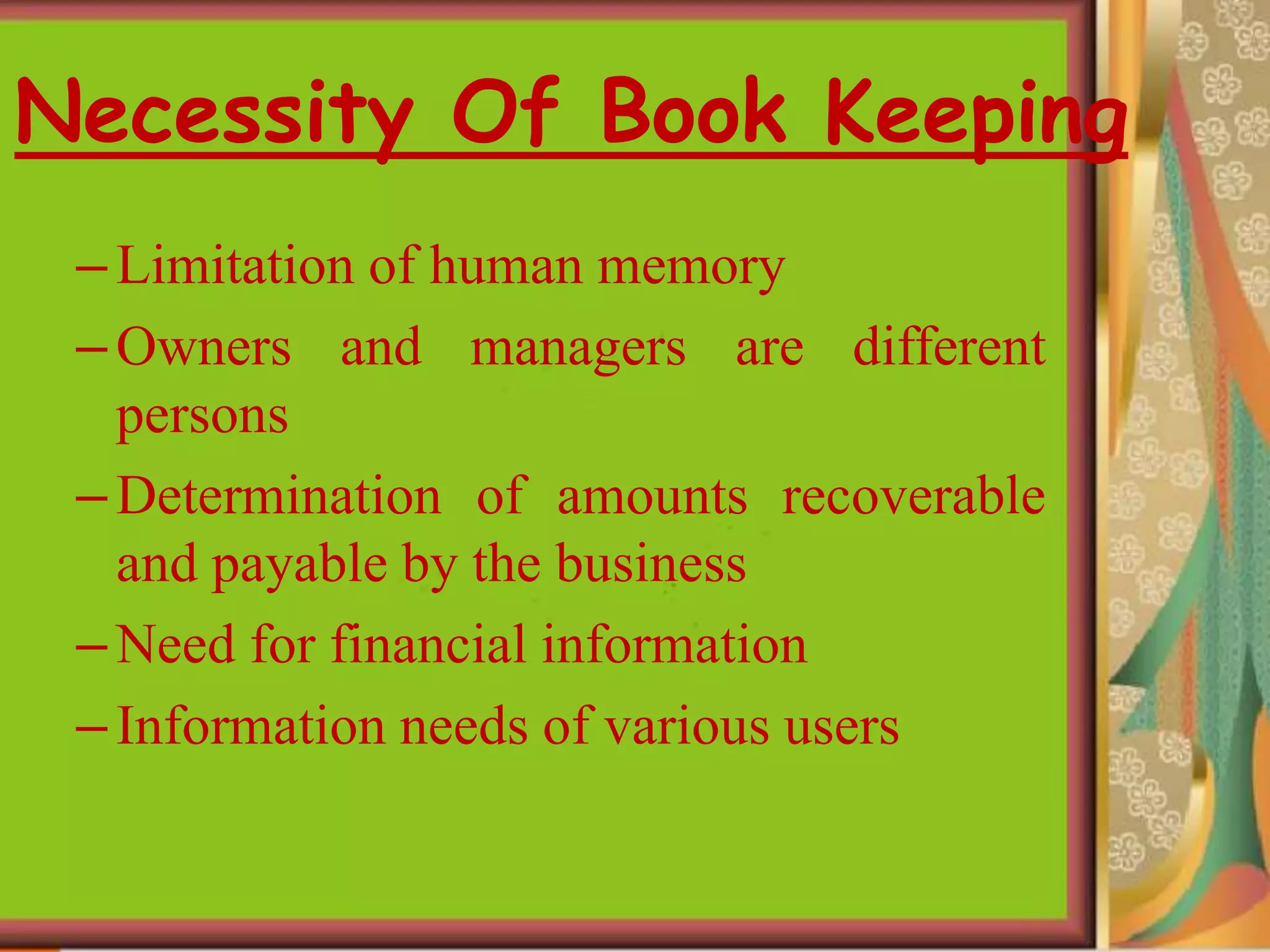
Necessity Of Book Keeping
–Limitation of human memory
–Owners and managers are different
persons
–Determination of amounts recoverable
and payable by the business
–Need for financial information
–Information needs of various users
Accounting starts
where book keeping
ends
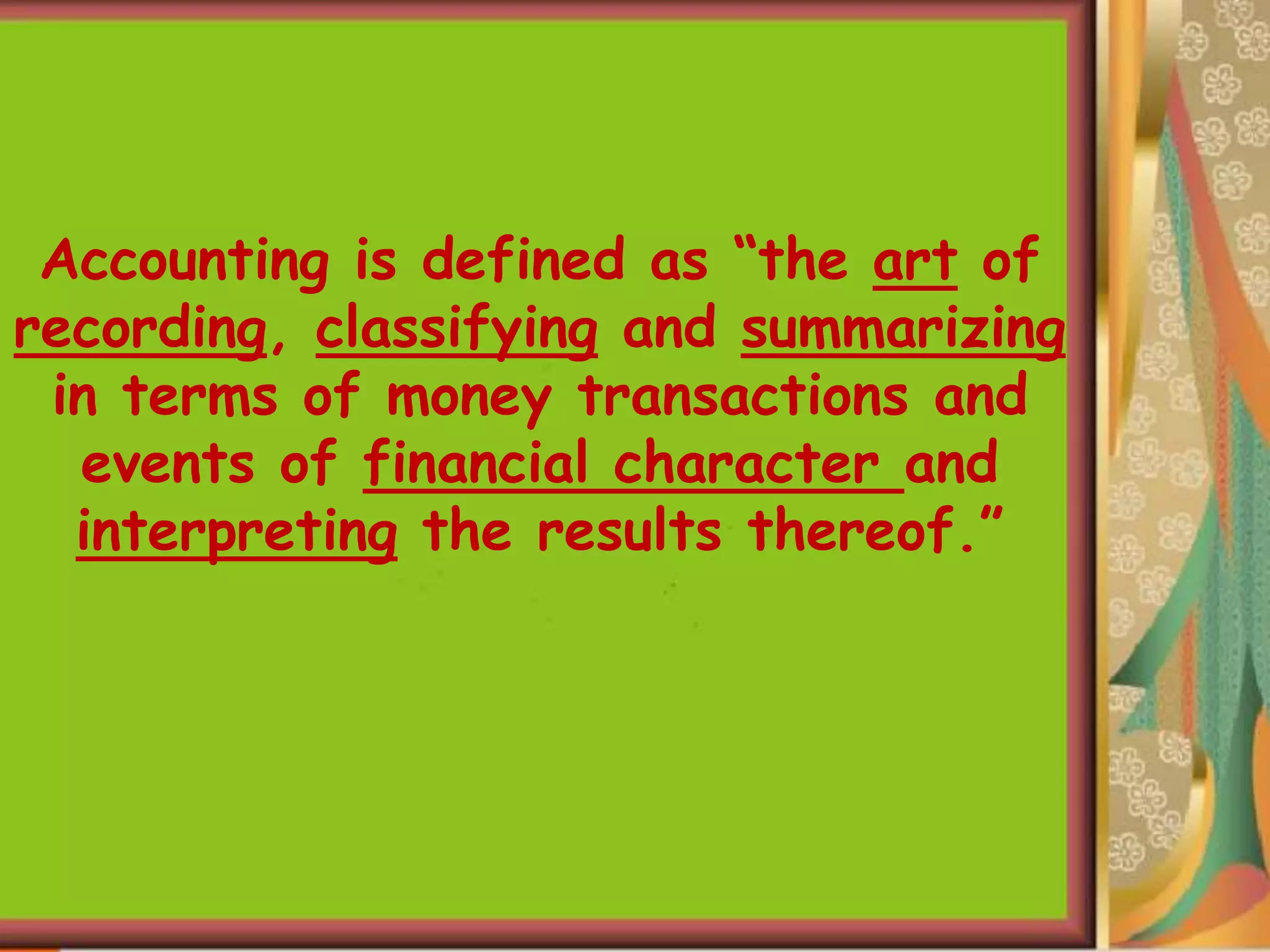
Accounting is defined as “the art of
recording, classifying and summarizing
in terms of money transactions and
events of financial character and
interpreting the results thereof.”
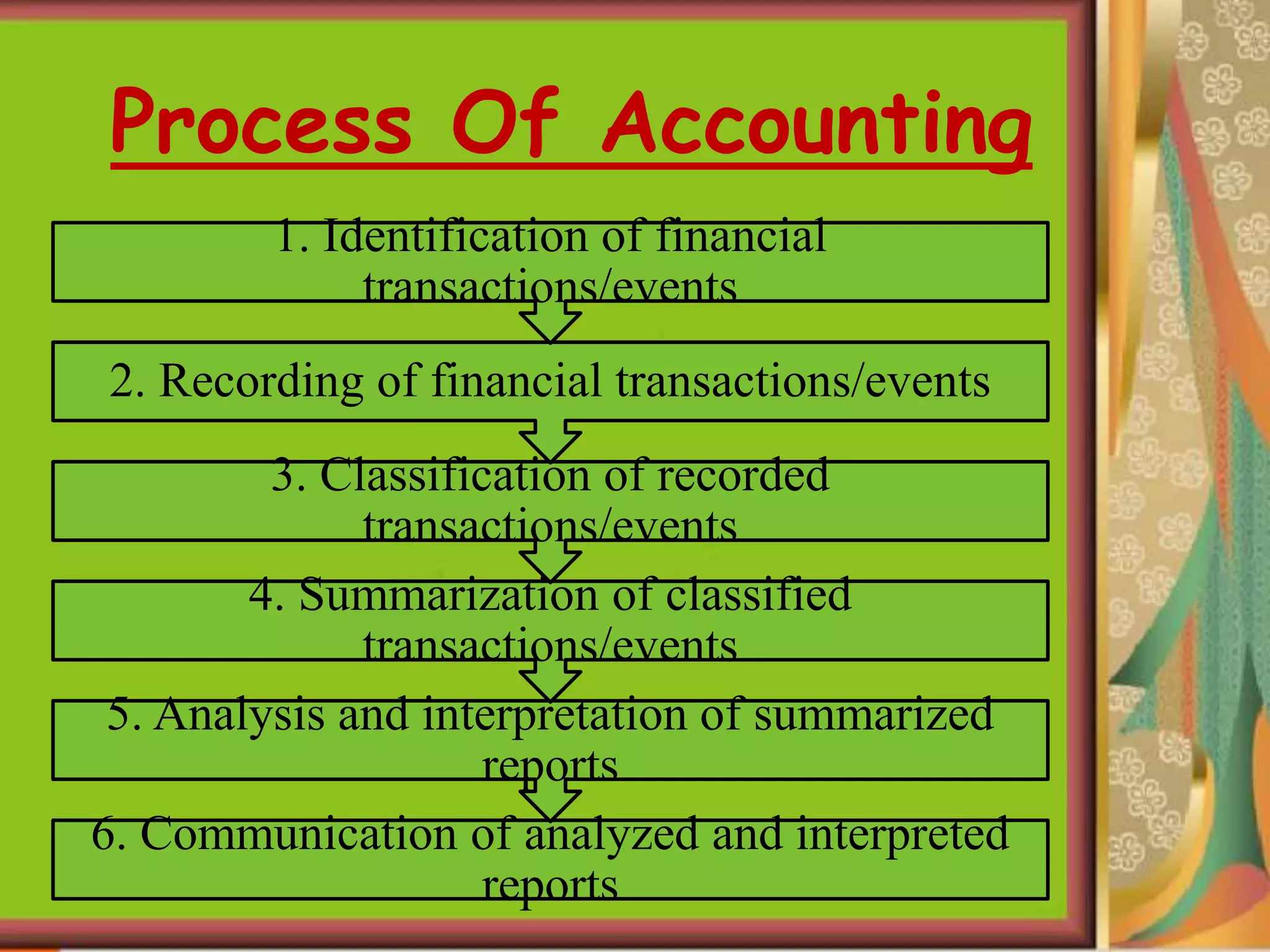
Process Of Accounting
6. Communication of analyzed and interpreted
reports
5. Analysis and interpretation of summarized
reports
4. Summarization of classified
transactions/events
3. Classification of recorded
transactions/events
2. Recording of financial transactions/events
1. Identification of financial
transactions/events
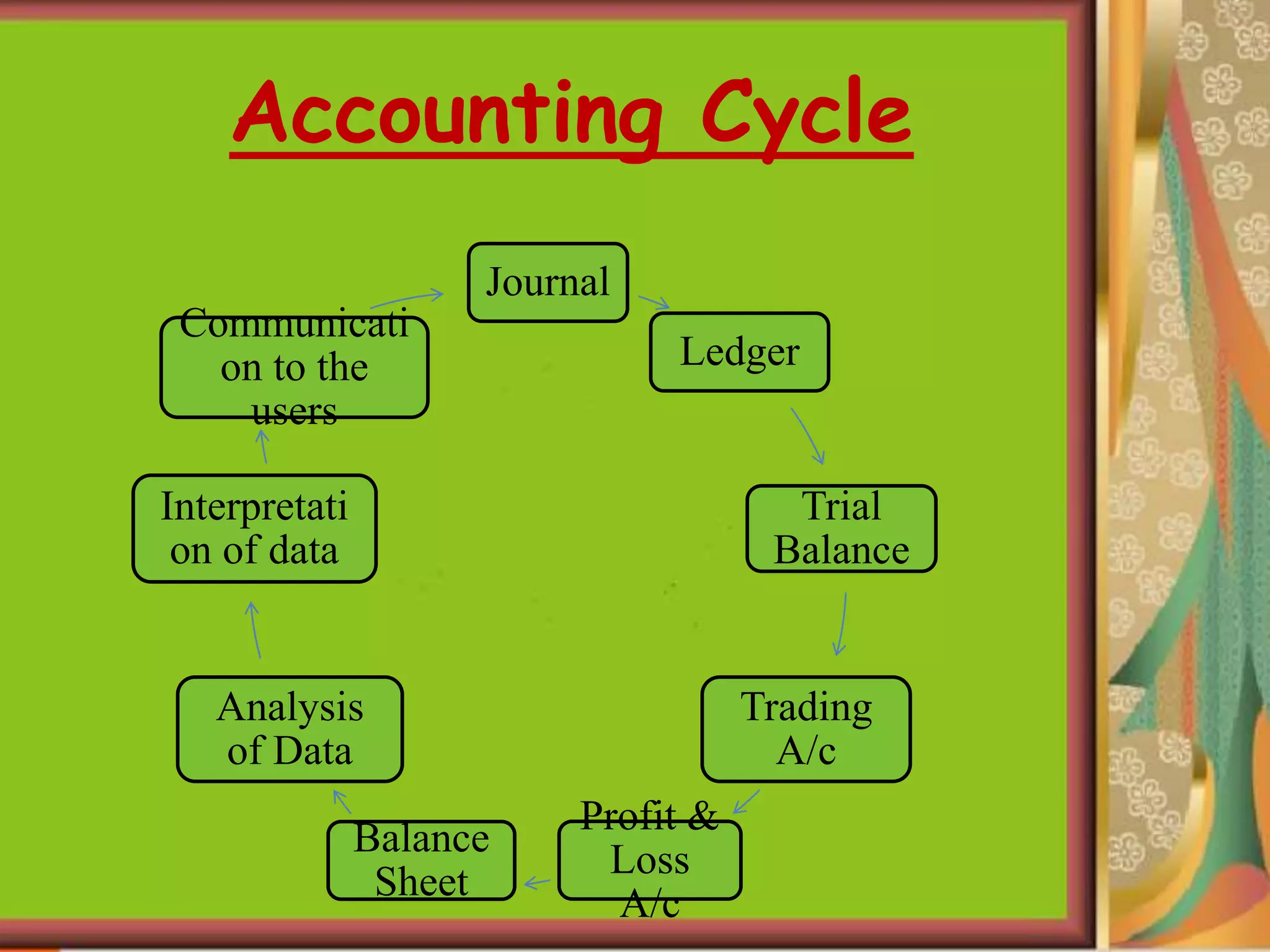
Accounting Cycle
Journal
Ledger
Trial
Balance
Trading
A/c
Profit &
Loss
A/c
Balance
Sheet
Analysis
of Data
Interpretati
on of data
Communicati
on to the
users
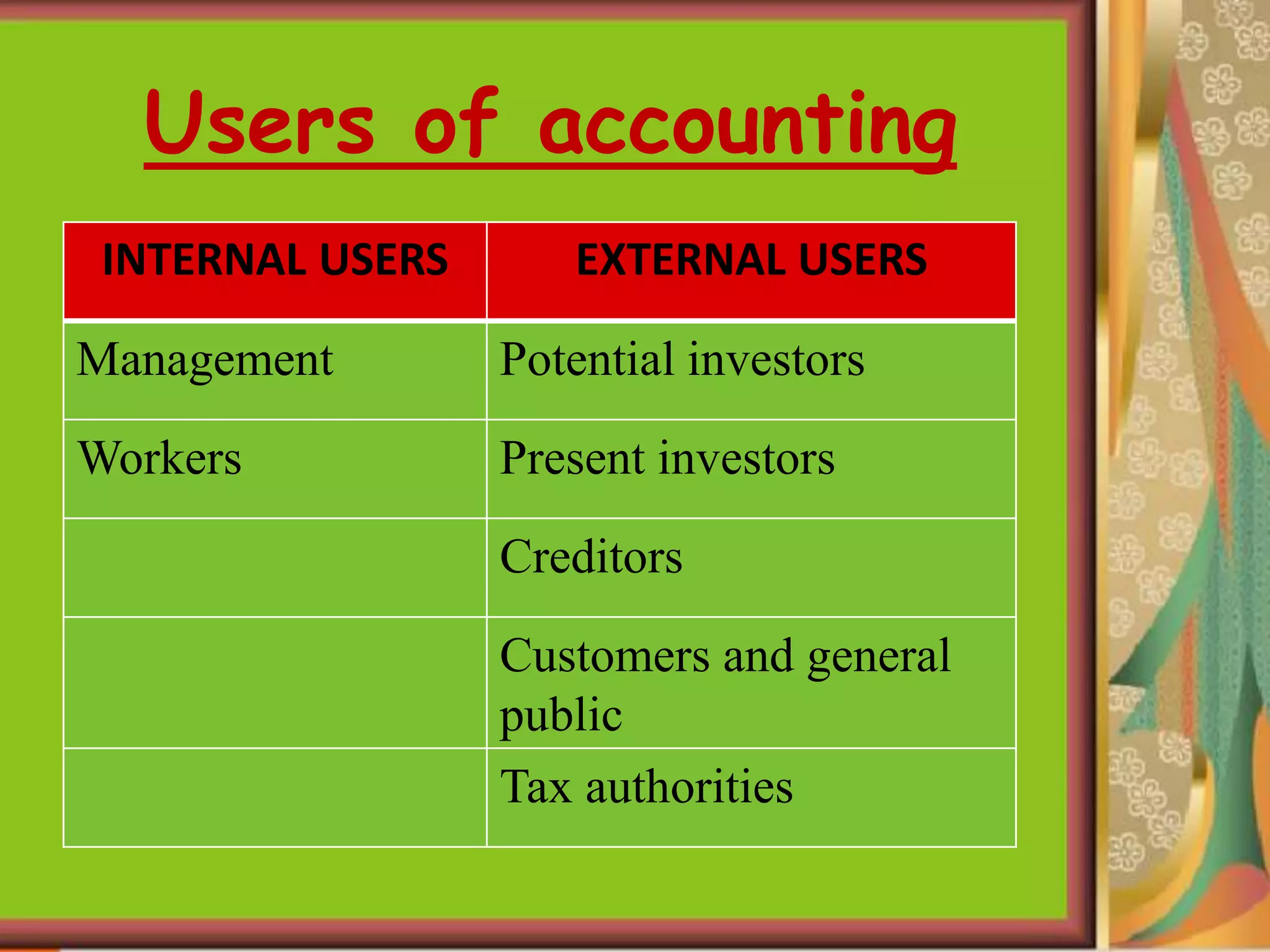
Users of accounting
INTERNAL USERS EXTERNAL USERS
Management Potential investors
Workers Present investors
Creditors
Customers and general
public
Tax authorities
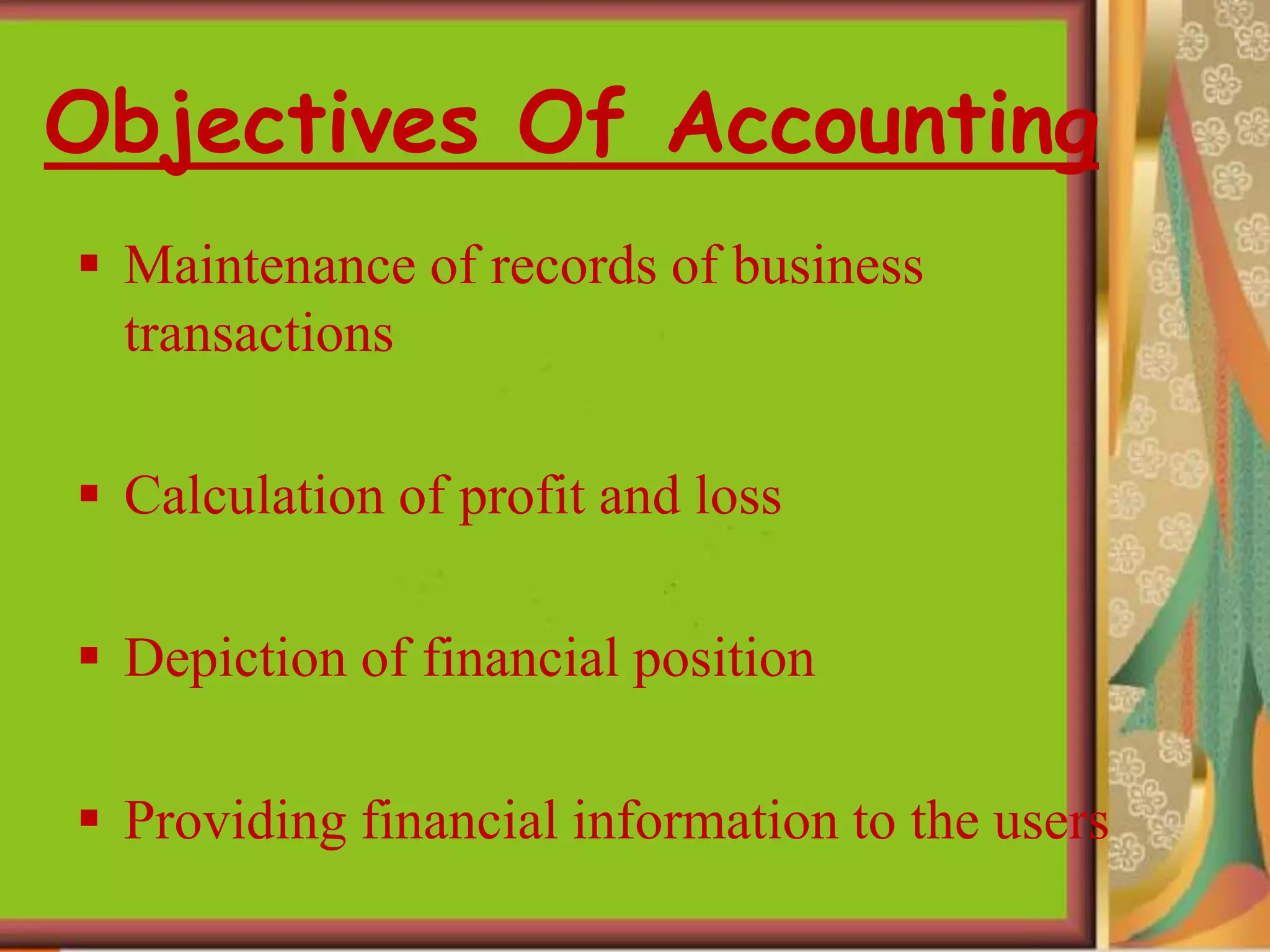
Objectives Of Accounting
 Maintenance of records of business
transactions
 Calculation of profit and loss
 Depiction of financial position
 Providing financial information to the users
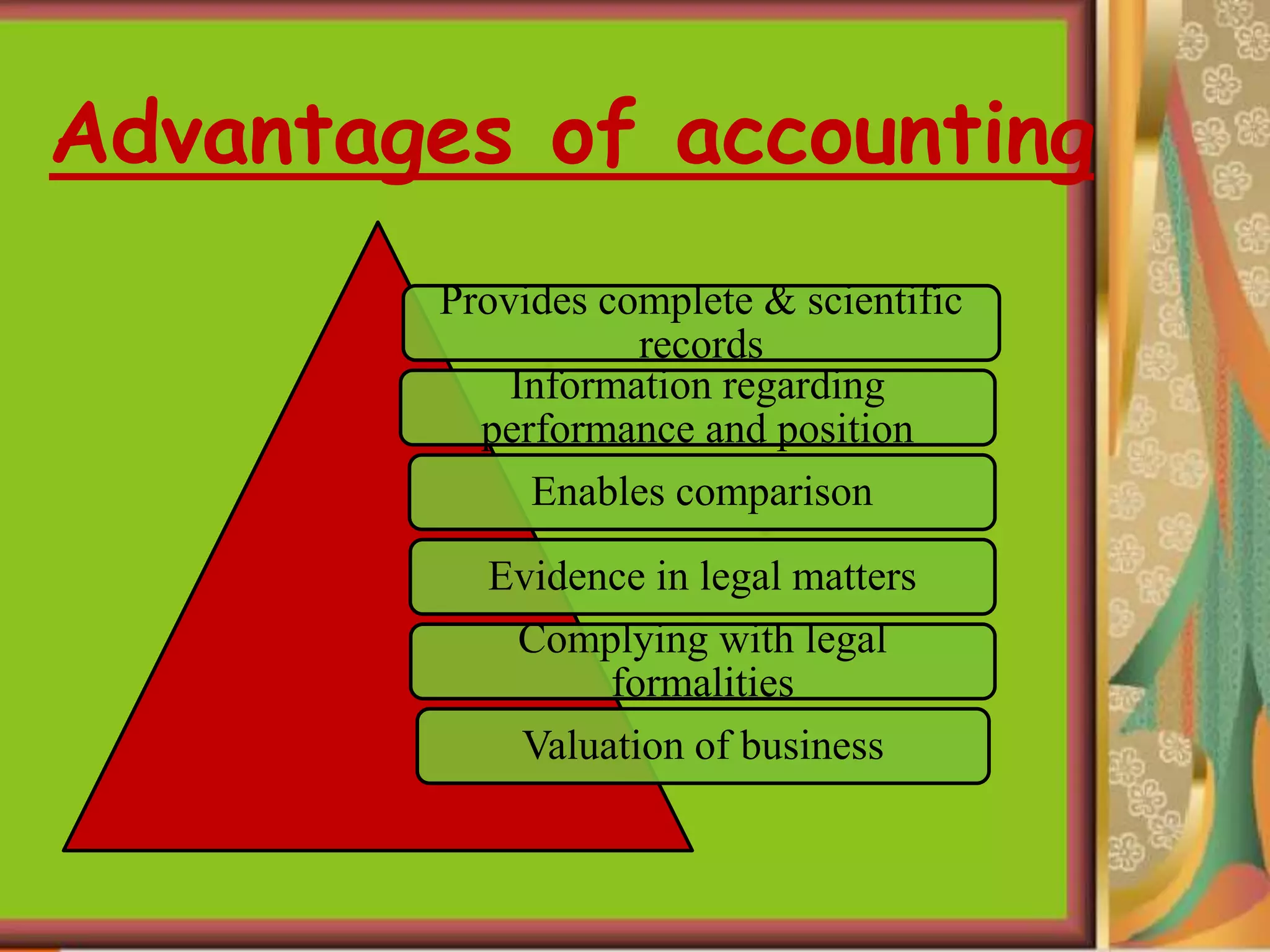
Advantages of accounting
Provides complete & scientific
records
Information regarding
performance and position
Enables comparison
Evidence in legal matters
Complying with legal
formalities
Valuation of business
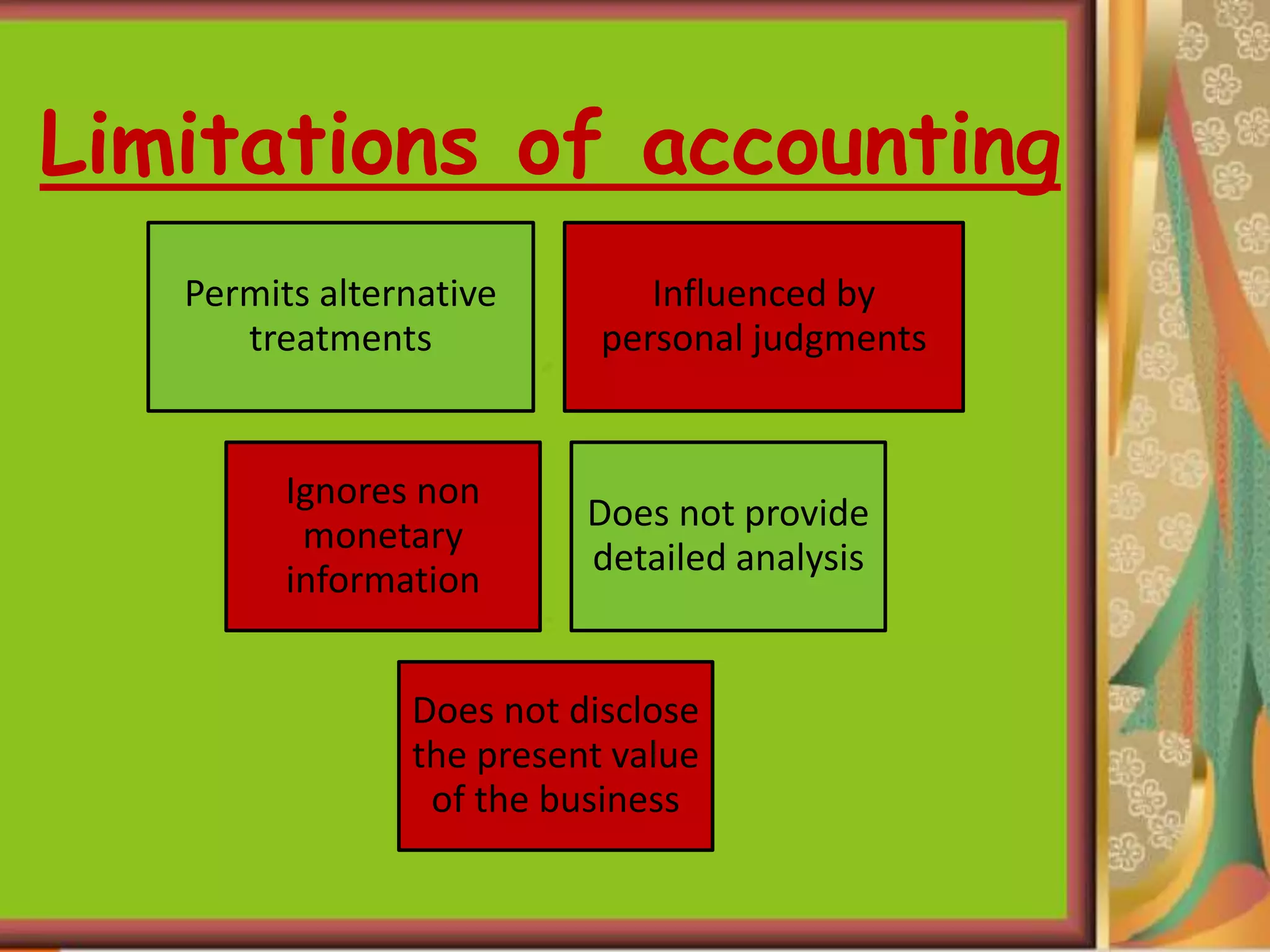
Limitations of accounting
Permits alternative
treatments
Influenced by
personal judgments
Ignores non
monetary
information
Does not provide
detailed analysis
Does not disclose
the present value
of the business
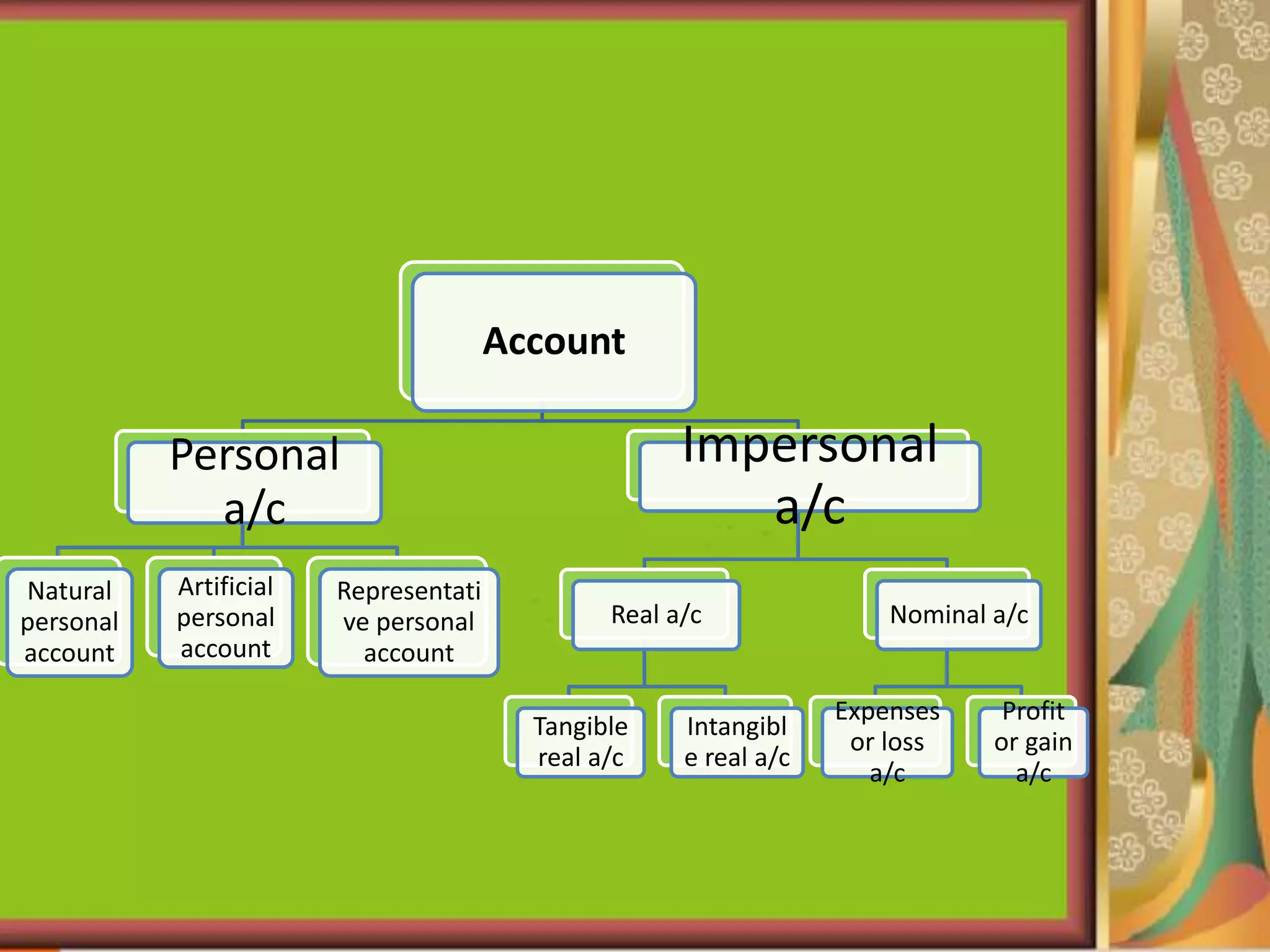
Account
Personal
a/c
Natural
personal
account
Artificial
personal
account
Representati
ve personal
account
Impersonal
a/c
Real a/c
Tangible
real a/c
Intangibl
e real a/c
Nominal a/c
Expenses
or loss
a/c
Profit
or gain
a/c
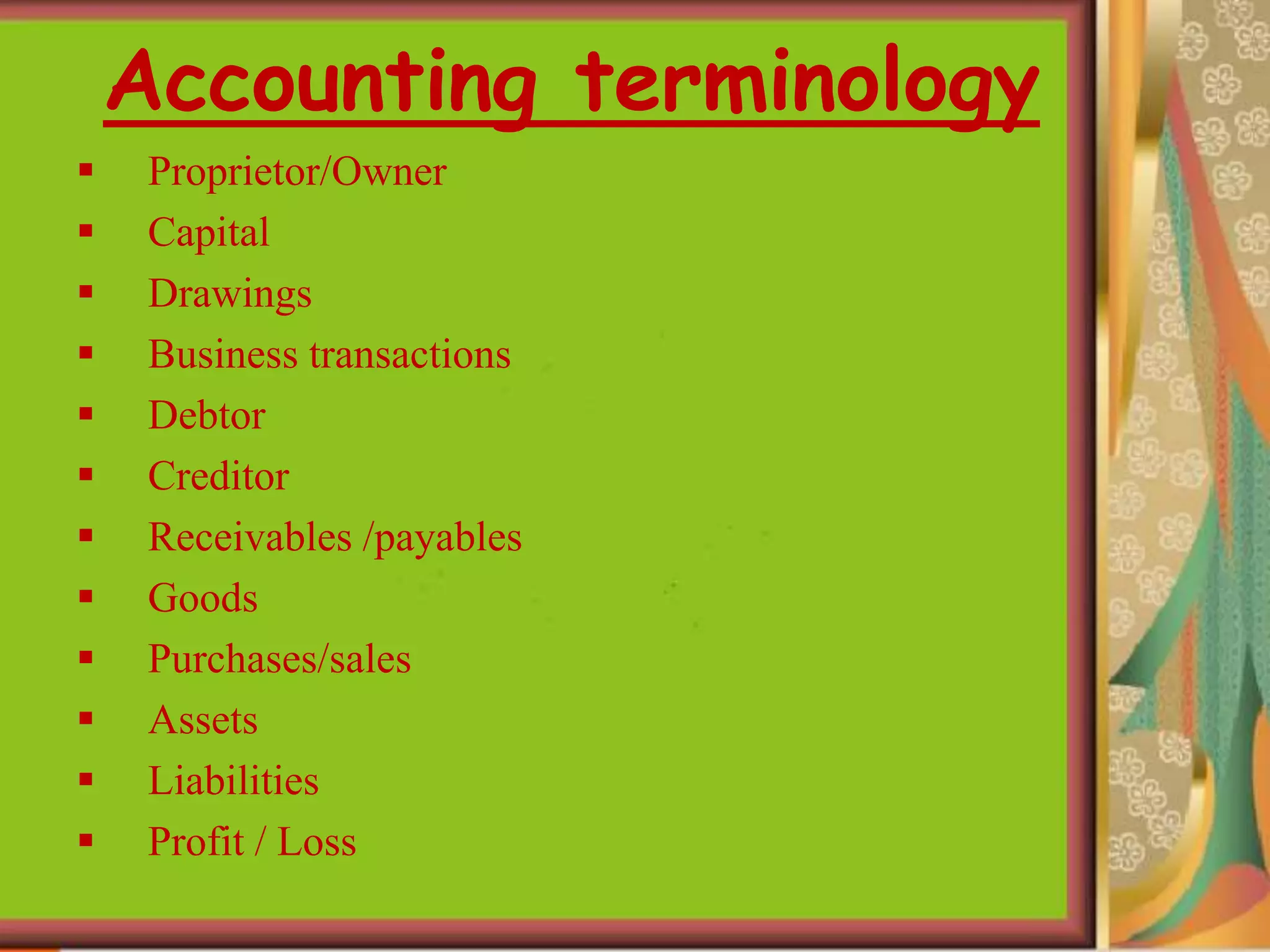
Accounting terminology
 Proprietor/Owner
 Capital
 Drawings
 Business transactions
 Debtor
 Creditor
 Receivables /payables
 Goods
 Purchases/sales
 Assets
 Liabilities
 Profit / Loss

Accounting conceptual framework ppt