Fungal Keratitis
Presentation By:
Kartik Kumar Gupta
B.Optom- 2nd year
BV(DU)MC school of optometry- Pune
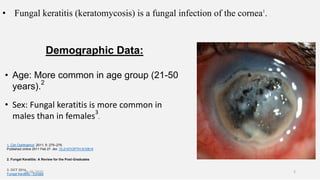
• Fungal keratitis (keratomycosis) is a fungal infection of the cornea1
.
1. Clin Ophthalmol. 2011; 5: 275–279.
Published online 2011 Feb 27. doi: 10.2147/OPTH.S10819
Demographic Data:
• Age: More common in age group (21-50
years).
2
• Sex: Fungal keratitis is more common in
males than in females
3
.
2. Fungal Keratitis: A Review for the Post-Graduates
3. OCT 2014
Fungal Keratitis - Europe
26-06-2020 2
 EPIDEMIOLOGY
 Fungal keratitis is a common cause of corneal ulcers in developing
nations, accounting for 44% of corneal ulcers in South India, 36% in
Bangladesh, 37.6% in Ghana, and 17% in Nepal
1
.
 The approximate annual incidence of fungal keratitis in India is said to be
11.3/10,000 population.2
 Frequently it is caused by filamentous fungi (Aspergillus, Fusarium,
Curvularia) in the tropical areas, while in temperate regions it is
predominantly caused by Candida species (C. albicans, C. Parapsilosis).
2
2. OCT 2014
Fungal Keratitis - Europe
1. Fungal Keratitis: A Review for the Post-Graduates
26-06-2020 3
PATHOPHYSIOLOGY
• The fungal pathogens gains access to the host stroma through breached epithelium,
where its hyphae germinates. This leads to activation of host immune defense through
release of various chemical factors1
.
• Once in the cornea, fungi can penetrate through an intact Descemet membrane
and into the anterior chamber via proteolytic enzymes2
.
• Non-filamentous yeasts (Candida species) typically cause keratitis in eyes with
preexisting ocular surface disease or eyes that have recently been treated with
topical steroids2
.
1. Fungal Keratitis: A Review for the Post-Graduates
2. OCT 2014
Fungal Keratitis - Europe
26-06-2020 4
Risk Factor:
• Corneal injury, especially with the vegetative matter, has been found to be
the most important risk factor in developing world1
.
• Use of topical steroids drops, especially causes Candida keratitis1,2
.
• Diabetes mellitus1
.
• Co-existing other microbial keratitis (polymicrobial keratitis) 1
.
• Contact lens use and contact lens solution (in developed world) 1
.
In 2006, an outbreak of 130 cases of Fusarium keratitis in the United States was linked to Bausch & Lomb
ReNu contact solution2
.
1. Fungal Keratitis: A Review for the Post-
Graduates
2. OCT 2014
Fungal Keratitis - Europe
26-06-2020 5
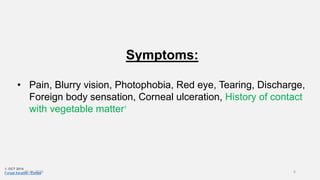
Symptoms:
• Pain, Blurry vision, Photophobia, Red eye, Tearing, Discharge,
Foreign body sensation, Corneal ulceration, History of contact
with vegetable matter1
1. OCT 2014
Fungal Keratitis - Europe26-06-2020 6
OCT 2014
Fungal Keratitis - Europe
26-06-2020 7
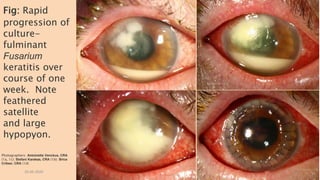
Fig: Rapid
progression of
culture-
fulminant
Fusarium
keratitis over
course of one
week. Note
feathered
satellite
and large
hypopyon.
Photographers: Antoinette Venckus, CRA
(1a, 1c); Stefani Karakas, CRA (1b); Brice
Critser, CRA (1d)
26-06-2020 8
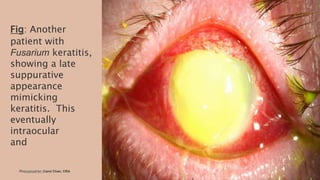
Fig: Another
patient with
Fusarium keratitis,
showing a late
suppurative
appearance
mimicking
keratitis. This
eventually
intraocular
and
Photographer: Carol Chan, CRA26-06-2020 9
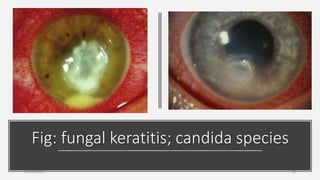
Fig: fungal keratitis; candida species
26-06-2020 10
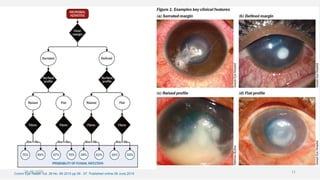
Comm Eye Health Vol. 28 No. 89 2015 pp 06 - 07. Published online 08 June 2015
26-06-2020 11
26-06-2020 12
OCT 2014
Fungal Keratitis - Europe26-06-2020 13
aration
OCT 2014
Fungal Keratitis - Europe26-06-2020 14
OCT 2014
Fungal Keratitis - Europe
26-06-2020 15
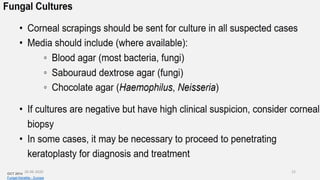
Fungal culture cont’d…
• In one study, corneal scraping of 141 patients with microbial keratitis were smeared and
cultured in India. Blood Agar (BA), Chocolate Agar(CA), and Sabouraud Dextrose Agar (SDA)
were evaluated for time taken for growth and cost. They found that fungal elements grew on
BA in 22/39 (56 %), on CA in 18/39 (46 %), and on SDA in 17/39 (43 %) of patients.
• They concluded that BA and CA, which are less expensive media than SDA,
support the growth of bacterial and fungal elements involved in infectious
keratitis.
• They also added that SDA is unnecessary in the diagnosis of fungal keratitis, as
fungal species that can be grown on SDA, such as Histoplasma, are not known
to be causative agents of fungal keratitis.
Ref. Curr Fungal Infect Rep. 2013 Sep 1; 7(3): 209–218.
Published online 2013 Jul 11. doi: 10.1007/s12281-013-0150-110.1007/s12281-013-0150-1
26-06-2020 16
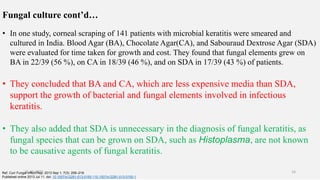
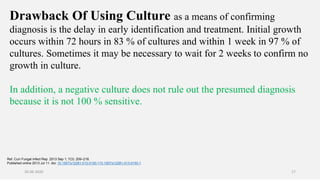
Drawback Of Using Culture as a means of confirming
diagnosis is the delay in early identification and treatment. Initial growth
occurs within 72 hours in 83 % of cultures and within 1 week in 97 % of
cultures. Sometimes it may be necessary to wait for 2 weeks to confirm no
growth in culture.
In addition, a negative culture does not rule out the presumed diagnosis
because it is not 100 % sensitive.
Ref. Curr Fungal Infect Rep. 2013 Sep 1; 7(3): 209–218.
Published online 2013 Jul 11. doi: 10.1007/s12281-013-0150-110.1007/s12281-013-0150-1
26-06-2020 17
Polymerase Chain Reaction (PCR)
• It has also emerged as a rapid sensitive and specific test for the
diagnosis of fungal keratitis.
• PCR is also time efficient; the time taken for PCR assay was 4–8 hours
whereas positive fungal cultures took 1–35 days.
• However, it is important to note that PCR remains a sophisticated, and
more importantly, an expensive utility.
• It is not the standard of clinical practice to use PCR in the diagnosis of
mycotic keratitis and is currently relegated to research purposes.
Ref. Curr Fungal Infect Rep. 2013 Sep 1; 7(3): 209–218.
Published online 2013 Jul 11. doi: 10.1007/s12281-013-0150-110.1007/s12281-013-0150-1
26-06-2020 18
MANAGEMENT
26-06-2020 19
General Concerns
• Fungal keratitis is difficult to treat and often has a long, protracted
course.
• Even with appropriate treatment, fungal keratitis may take weeks or
months to resolve.
• Daily exams are required until clinical improvement or stabilization
is observed.
• Close follow-up is essential and hospital admission may be
necessary.
• Corneal transplant may be required for severe or recalcitrant
cases.
OCT 2014
Fungal Keratitis - Europe
26-06-2020 20
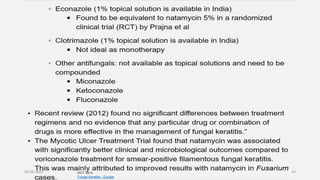
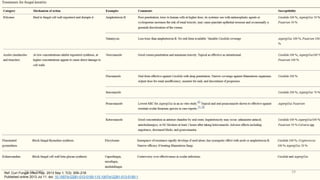
 The mainstays of treatment for keratomycosis are
topical antifungal agents.
1. Natamycin (5% topical solution) initially q1-2h, then
tapered over 4-6 weeks
 FDA-approved for fungal keratitis; available as
ophthalmic drops
 Drug of choice for filamentous fungi
 Poor penetration limits use in deep or severe infections
 Expensive and not widely available in developing
countries
OCT 2014
Fungal Keratitis - Europe
26-06-2020 21
2.Amphotericin B (0.15-0.5% topical solution) initially q1-
2h, then tapered over 4-6 weeks
• Good activity against Aspergillus and Candida
• Not available as a topical solution – must be compounded for
intravenous (IV) formulation. (50 mg of amphotericin B diluted
in sterile water = 0.166%)
• Inexpensive, widely available in IV form
• Can be used via the topical, subconjunctival, intracameral,
intravitreal, or intravenous route
OCT 2014
Fungal Keratitis - Europe
26-06-2020 22
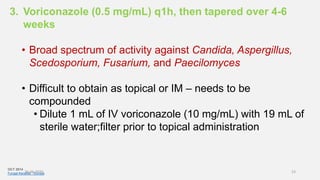
3. Voriconazole (0.5 mg/mL) q1h, then tapered over 4-6
weeks
• Broad spectrum of activity against Candida, Aspergillus,
Scedosporium, Fusarium, and Paecilomyces
• Difficult to obtain as topical or IM – needs to be
compounded
• Dilute 1 mL of IV voriconazole (10 mg/mL) with 19 mL of
sterile water;filter prior to topical administration
OCT 2014
Fungal Keratitis - Europe26-06-2020 23
OCT 2014
Fungal Keratitis - Europe
26-06-2020 24
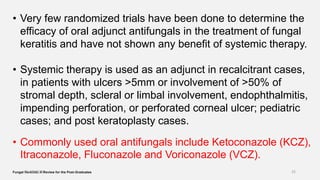
• Very few randomized trials have been done to determine the
efficacy of oral adjunct antifungals in the treatment of fungal
keratitis and have not shown any benefit of systemic therapy.
• Systemic therapy is used as an adjunct in recalcitrant cases,
in patients with ulcers >5mm or involvement of >50% of
stromal depth, scleral or limbal involvement, endophthalmitis,
impending perforation, or perforated corneal ulcer; pediatric
cases; and post keratoplasty cases.
• Commonly used oral antifungals include Ketoconazole (KCZ),
Itraconazole, Fluconazole and Voriconazole (VCZ).
Fungal Keratitis: A Review for the Post-Graduates26-06-2020 25
OCT 2014
Fungal Keratitis - Europe
26-06-2020 26
OCT 2014
Fungal Keratitis - Europe
26-06-2020 27
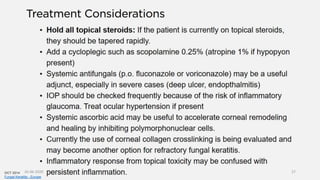
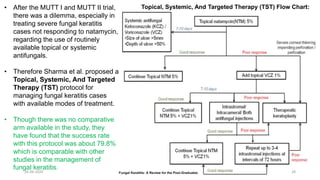
• After the MUTT I and MUTT II trial,
there was a dilemma, especially in
treating severe fungal keratitis
cases not responding to natamycin,
regarding the use of routinely
available topical or systemic
antifungals.
• Therefore Sharma et al. proposed a
Topical, Systemic, And Targeted
Therapy (TST) protocol for
managing fungal keratitis cases
with available modes of treatment.
• Though there was no comparative
arm available in the study, they
have found that the success rate
with this protocol was about 79.8%
which is comparable with other
studies in the management of
fungal keratitis.
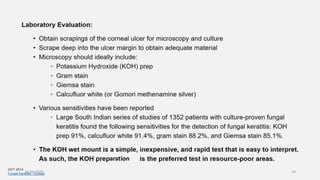
Topical, Systemic, And Targeted Therapy (TST) Flow Chart:
Fungal Keratitis: A Review for the Post-Graduates26-06-2020 28
Ref. Curr Fungal Infect Rep. 2013 Sep 1; 7(3): 209–218.
Published online 2013 Jul 11. doi: 10.1007/s12281-013-0150-110.1007/s12281-013-0150-1
26-06-2020 29
Prognosis
• Prompt diagnosis and correct treatment of fungal keratitis are
important prognostic factors.
• One study showed that 9 out of 10 cases of advanced Fusarium
keratitis failed to respond to the combination therapy with oral
fluconazole or ketoconazole, topical natamycin and intravitreal
amphotericin B injections and the authors concluded that early
diagnosis is important for response to medical treatment.
• In another study, a delay in diagnosis of fungal keratitis in contact
lens wearers (greater than 2 weeks), increased the odds of surgery.
Curr Fungal Infect Rep. 2013 Sep 1; 7(3): 209–218.
Published online 2013 Jul 11. doi: 10.1007/s12281-013-0150-110.1007/s12281-013-0150-1
26-06-2020 30
26-06-2020 31

Fungal keratitis

  • 1.
    Fungal Keratitis Presentation By: KartikKumar Gupta B.Optom- 2nd year BV(DU)MC school of optometry- Pune
  • 2.
    • Fungal keratitis(keratomycosis) is a fungal infection of the cornea1 . 1. Clin Ophthalmol. 2011; 5: 275–279. Published online 2011 Feb 27. doi: 10.2147/OPTH.S10819 Demographic Data: • Age: More common in age group (21-50 years). 2 • Sex: Fungal keratitis is more common in males than in females 3 . 2. Fungal Keratitis: A Review for the Post-Graduates 3. OCT 2014 Fungal Keratitis - Europe 26-06-2020 2
  • 3.
     EPIDEMIOLOGY  Fungalkeratitis is a common cause of corneal ulcers in developing nations, accounting for 44% of corneal ulcers in South India, 36% in Bangladesh, 37.6% in Ghana, and 17% in Nepal 1 .  The approximate annual incidence of fungal keratitis in India is said to be 11.3/10,000 population.2  Frequently it is caused by filamentous fungi (Aspergillus, Fusarium, Curvularia) in the tropical areas, while in temperate regions it is predominantly caused by Candida species (C. albicans, C. Parapsilosis). 2 2. OCT 2014 Fungal Keratitis - Europe 1. Fungal Keratitis: A Review for the Post-Graduates 26-06-2020 3
  • 4.
    PATHOPHYSIOLOGY • The fungalpathogens gains access to the host stroma through breached epithelium, where its hyphae germinates. This leads to activation of host immune defense through release of various chemical factors1 . • Once in the cornea, fungi can penetrate through an intact Descemet membrane and into the anterior chamber via proteolytic enzymes2 . • Non-filamentous yeasts (Candida species) typically cause keratitis in eyes with preexisting ocular surface disease or eyes that have recently been treated with topical steroids2 . 1. Fungal Keratitis: A Review for the Post-Graduates 2. OCT 2014 Fungal Keratitis - Europe 26-06-2020 4
  • 5.
    Risk Factor: • Cornealinjury, especially with the vegetative matter, has been found to be the most important risk factor in developing world1 . • Use of topical steroids drops, especially causes Candida keratitis1,2 . • Diabetes mellitus1 . • Co-existing other microbial keratitis (polymicrobial keratitis) 1 . • Contact lens use and contact lens solution (in developed world) 1 . In 2006, an outbreak of 130 cases of Fusarium keratitis in the United States was linked to Bausch & Lomb ReNu contact solution2 . 1. Fungal Keratitis: A Review for the Post- Graduates 2. OCT 2014 Fungal Keratitis - Europe 26-06-2020 5
  • 6.
    Symptoms: • Pain, Blurryvision, Photophobia, Red eye, Tearing, Discharge, Foreign body sensation, Corneal ulceration, History of contact with vegetable matter1 1. OCT 2014 Fungal Keratitis - Europe26-06-2020 6
  • 7.
    OCT 2014 Fungal Keratitis- Europe 26-06-2020 7
  • 8.
    Fig: Rapid progression of culture- fulminant Fusarium keratitisover course of one week. Note feathered satellite and large hypopyon. Photographers: Antoinette Venckus, CRA (1a, 1c); Stefani Karakas, CRA (1b); Brice Critser, CRA (1d) 26-06-2020 8
  • 9.
    Fig: Another patient with Fusariumkeratitis, showing a late suppurative appearance mimicking keratitis. This eventually intraocular and Photographer: Carol Chan, CRA26-06-2020 9
  • 10.
    Fig: fungal keratitis;candida species 26-06-2020 10
  • 11.
    Comm Eye HealthVol. 28 No. 89 2015 pp 06 - 07. Published online 08 June 2015 26-06-2020 11
  • 12.
  • 13.
    OCT 2014 Fungal Keratitis- Europe26-06-2020 13
  • 14.
    aration OCT 2014 Fungal Keratitis- Europe26-06-2020 14
  • 15.
    OCT 2014 Fungal Keratitis- Europe 26-06-2020 15
  • 16.
    Fungal culture cont’d… •In one study, corneal scraping of 141 patients with microbial keratitis were smeared and cultured in India. Blood Agar (BA), Chocolate Agar(CA), and Sabouraud Dextrose Agar (SDA) were evaluated for time taken for growth and cost. They found that fungal elements grew on BA in 22/39 (56 %), on CA in 18/39 (46 %), and on SDA in 17/39 (43 %) of patients. • They concluded that BA and CA, which are less expensive media than SDA, support the growth of bacterial and fungal elements involved in infectious keratitis. • They also added that SDA is unnecessary in the diagnosis of fungal keratitis, as fungal species that can be grown on SDA, such as Histoplasma, are not known to be causative agents of fungal keratitis. Ref. Curr Fungal Infect Rep. 2013 Sep 1; 7(3): 209–218. Published online 2013 Jul 11. doi: 10.1007/s12281-013-0150-110.1007/s12281-013-0150-1 26-06-2020 16
  • 17.
    Drawback Of UsingCulture as a means of confirming diagnosis is the delay in early identification and treatment. Initial growth occurs within 72 hours in 83 % of cultures and within 1 week in 97 % of cultures. Sometimes it may be necessary to wait for 2 weeks to confirm no growth in culture. In addition, a negative culture does not rule out the presumed diagnosis because it is not 100 % sensitive. Ref. Curr Fungal Infect Rep. 2013 Sep 1; 7(3): 209–218. Published online 2013 Jul 11. doi: 10.1007/s12281-013-0150-110.1007/s12281-013-0150-1 26-06-2020 17
  • 18.
    Polymerase Chain Reaction(PCR) • It has also emerged as a rapid sensitive and specific test for the diagnosis of fungal keratitis. • PCR is also time efficient; the time taken for PCR assay was 4–8 hours whereas positive fungal cultures took 1–35 days. • However, it is important to note that PCR remains a sophisticated, and more importantly, an expensive utility. • It is not the standard of clinical practice to use PCR in the diagnosis of mycotic keratitis and is currently relegated to research purposes. Ref. Curr Fungal Infect Rep. 2013 Sep 1; 7(3): 209–218. Published online 2013 Jul 11. doi: 10.1007/s12281-013-0150-110.1007/s12281-013-0150-1 26-06-2020 18
  • 19.
  • 20.
    General Concerns • Fungalkeratitis is difficult to treat and often has a long, protracted course. • Even with appropriate treatment, fungal keratitis may take weeks or months to resolve. • Daily exams are required until clinical improvement or stabilization is observed. • Close follow-up is essential and hospital admission may be necessary. • Corneal transplant may be required for severe or recalcitrant cases. OCT 2014 Fungal Keratitis - Europe 26-06-2020 20
  • 21.
     The mainstaysof treatment for keratomycosis are topical antifungal agents. 1. Natamycin (5% topical solution) initially q1-2h, then tapered over 4-6 weeks  FDA-approved for fungal keratitis; available as ophthalmic drops  Drug of choice for filamentous fungi  Poor penetration limits use in deep or severe infections  Expensive and not widely available in developing countries OCT 2014 Fungal Keratitis - Europe 26-06-2020 21
  • 22.
    2.Amphotericin B (0.15-0.5%topical solution) initially q1- 2h, then tapered over 4-6 weeks • Good activity against Aspergillus and Candida • Not available as a topical solution – must be compounded for intravenous (IV) formulation. (50 mg of amphotericin B diluted in sterile water = 0.166%) • Inexpensive, widely available in IV form • Can be used via the topical, subconjunctival, intracameral, intravitreal, or intravenous route OCT 2014 Fungal Keratitis - Europe 26-06-2020 22
  • 23.
    3. Voriconazole (0.5mg/mL) q1h, then tapered over 4-6 weeks • Broad spectrum of activity against Candida, Aspergillus, Scedosporium, Fusarium, and Paecilomyces • Difficult to obtain as topical or IM – needs to be compounded • Dilute 1 mL of IV voriconazole (10 mg/mL) with 19 mL of sterile water;filter prior to topical administration OCT 2014 Fungal Keratitis - Europe26-06-2020 23
  • 24.
    OCT 2014 Fungal Keratitis- Europe 26-06-2020 24
  • 25.
    • Very fewrandomized trials have been done to determine the efficacy of oral adjunct antifungals in the treatment of fungal keratitis and have not shown any benefit of systemic therapy. • Systemic therapy is used as an adjunct in recalcitrant cases, in patients with ulcers >5mm or involvement of >50% of stromal depth, scleral or limbal involvement, endophthalmitis, impending perforation, or perforated corneal ulcer; pediatric cases; and post keratoplasty cases. • Commonly used oral antifungals include Ketoconazole (KCZ), Itraconazole, Fluconazole and Voriconazole (VCZ). Fungal Keratitis: A Review for the Post-Graduates26-06-2020 25
  • 26.
    OCT 2014 Fungal Keratitis- Europe 26-06-2020 26
  • 27.
    OCT 2014 Fungal Keratitis- Europe 26-06-2020 27
  • 28.
    • After theMUTT I and MUTT II trial, there was a dilemma, especially in treating severe fungal keratitis cases not responding to natamycin, regarding the use of routinely available topical or systemic antifungals. • Therefore Sharma et al. proposed a Topical, Systemic, And Targeted Therapy (TST) protocol for managing fungal keratitis cases with available modes of treatment. • Though there was no comparative arm available in the study, they have found that the success rate with this protocol was about 79.8% which is comparable with other studies in the management of fungal keratitis. Topical, Systemic, And Targeted Therapy (TST) Flow Chart: Fungal Keratitis: A Review for the Post-Graduates26-06-2020 28
  • 29.
    Ref. Curr FungalInfect Rep. 2013 Sep 1; 7(3): 209–218. Published online 2013 Jul 11. doi: 10.1007/s12281-013-0150-110.1007/s12281-013-0150-1 26-06-2020 29
  • 30.
    Prognosis • Prompt diagnosisand correct treatment of fungal keratitis are important prognostic factors. • One study showed that 9 out of 10 cases of advanced Fusarium keratitis failed to respond to the combination therapy with oral fluconazole or ketoconazole, topical natamycin and intravitreal amphotericin B injections and the authors concluded that early diagnosis is important for response to medical treatment. • In another study, a delay in diagnosis of fungal keratitis in contact lens wearers (greater than 2 weeks), increased the odds of surgery. Curr Fungal Infect Rep. 2013 Sep 1; 7(3): 209–218. Published online 2013 Jul 11. doi: 10.1007/s12281-013-0150-110.1007/s12281-013-0150-1 26-06-2020 30
  • 31.