


PHYSICS
BASIC CONCEPTS
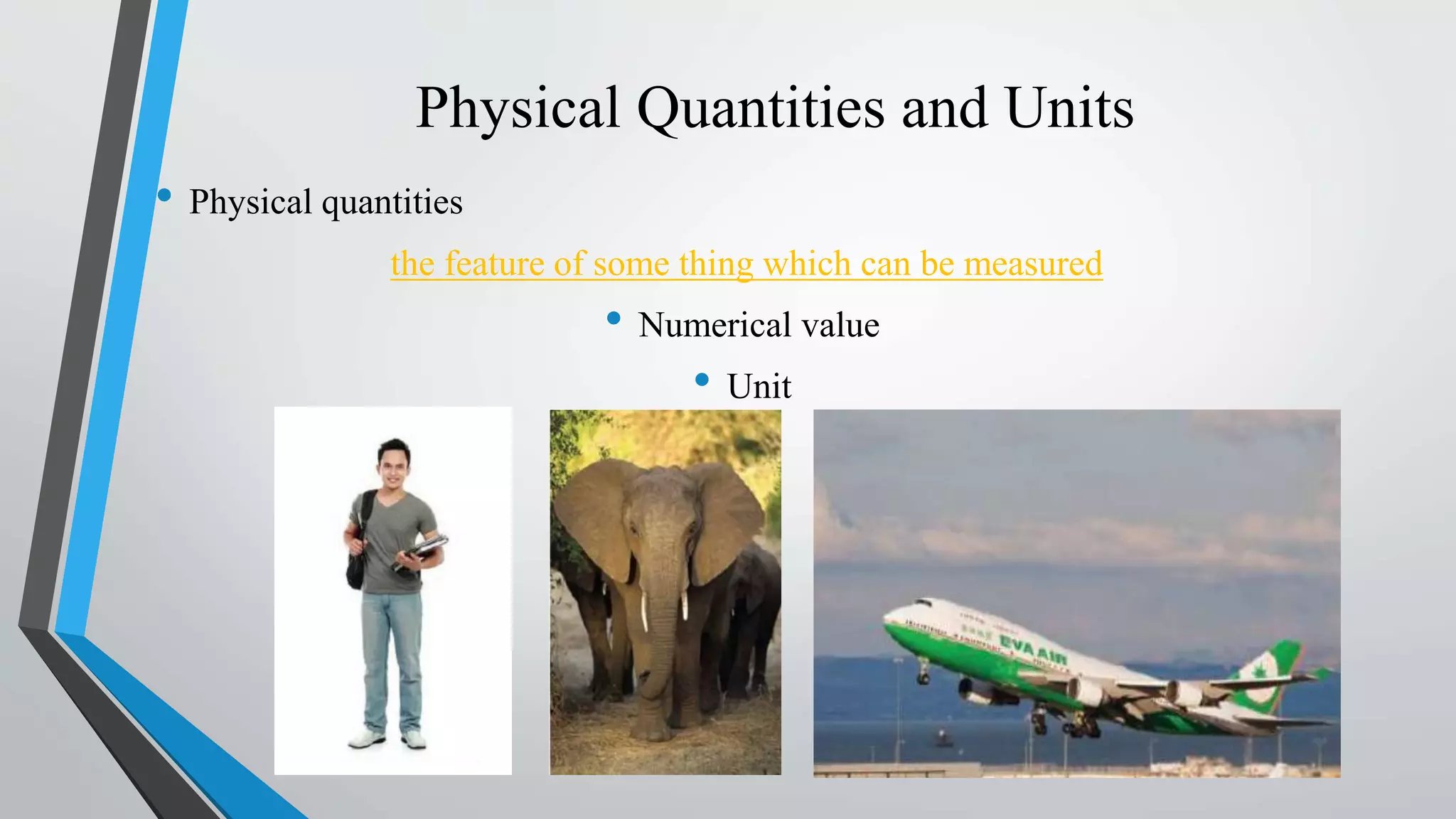
Physical Quantities and Units
• Physical quantities
the feature of some thing which can be measured
• Numerical value
• Unit
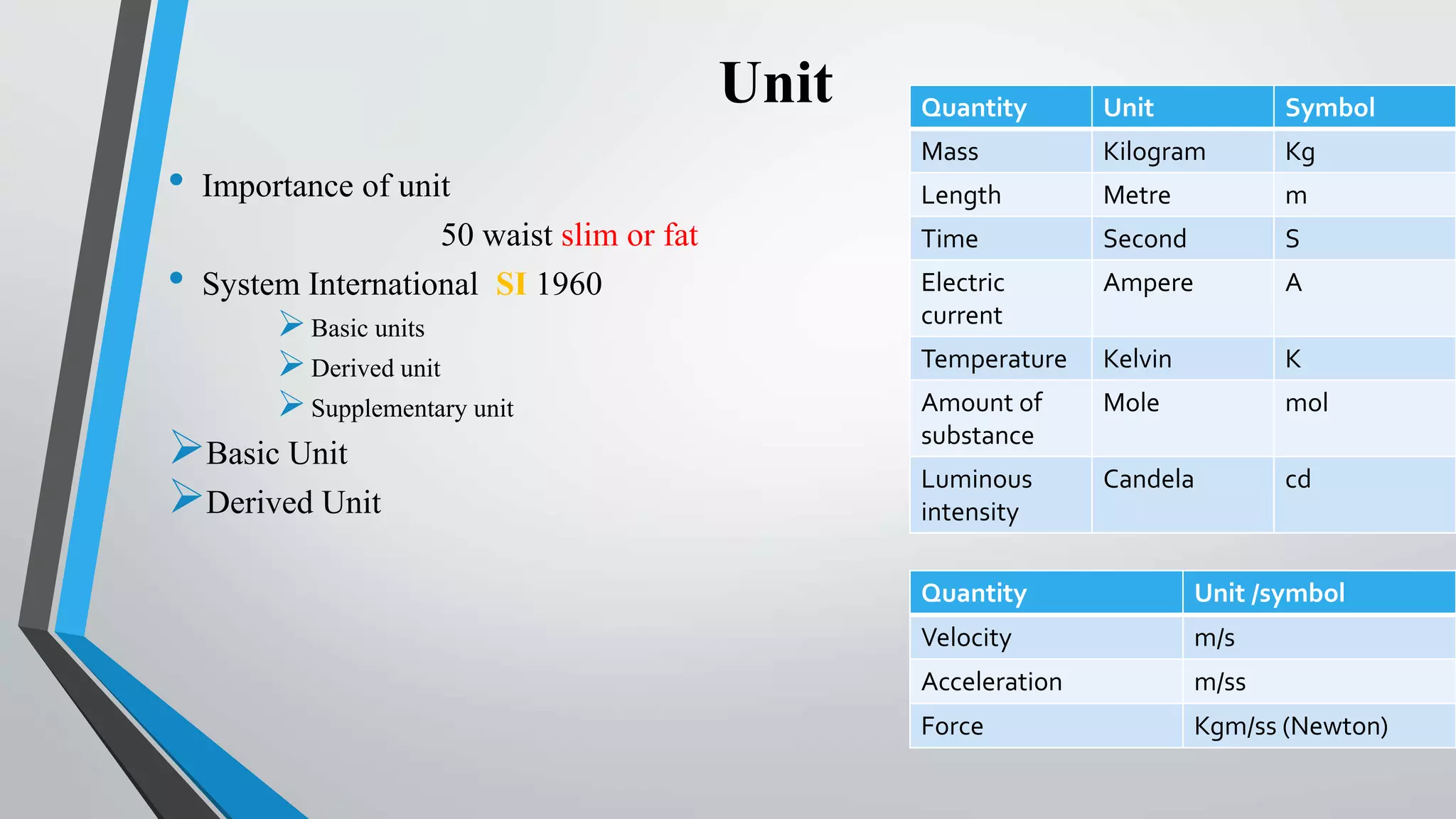
Unit
• Importance of unit
50 waist slim or fat
• System International SI 1960
Basic units
Derived unit
Supplementary unit
Basic Unit
Derived Unit
Quantity Unit Symbol
Mass Kilogram Kg
Length Metre m
Time Second S
Electric
current
Ampere A
Temperature Kelvin K
Amount of
substance
Mole mol
Luminous
intensity
Candela cd
Quantity Unit /symbol
Velocity m/s
Acceleration m/ss
Force Kgm/ss (Newton)
Question to Audience
Light year is the unit of ??????
Distance
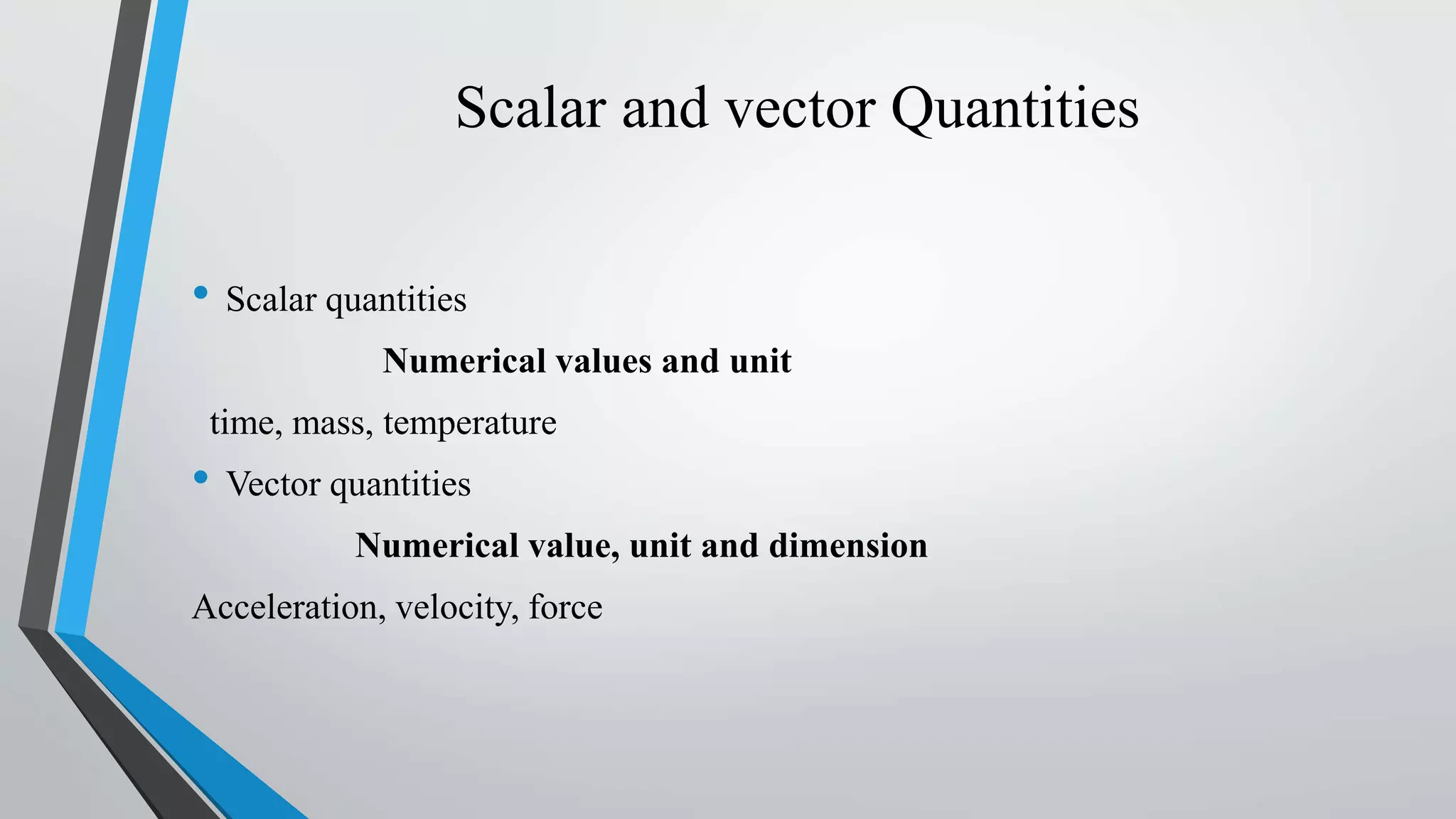
Scalar and vector Quantities
• Scalar quantities
Numerical values and unit
time, mass, temperature
• Vector quantities
Numerical value, unit and dimension
Acceleration, velocity, force
Question to audience
• Difference between
• Speed and velocity
• Mass and weight
• Distance and displacement
Kinematics
the features or properties of motion in an object
Rest and Motion w.r.t frame of reference
Motion
Describe in term of quantities position, velocity, acceleration
• Speed
• Velocity
• Acceleration
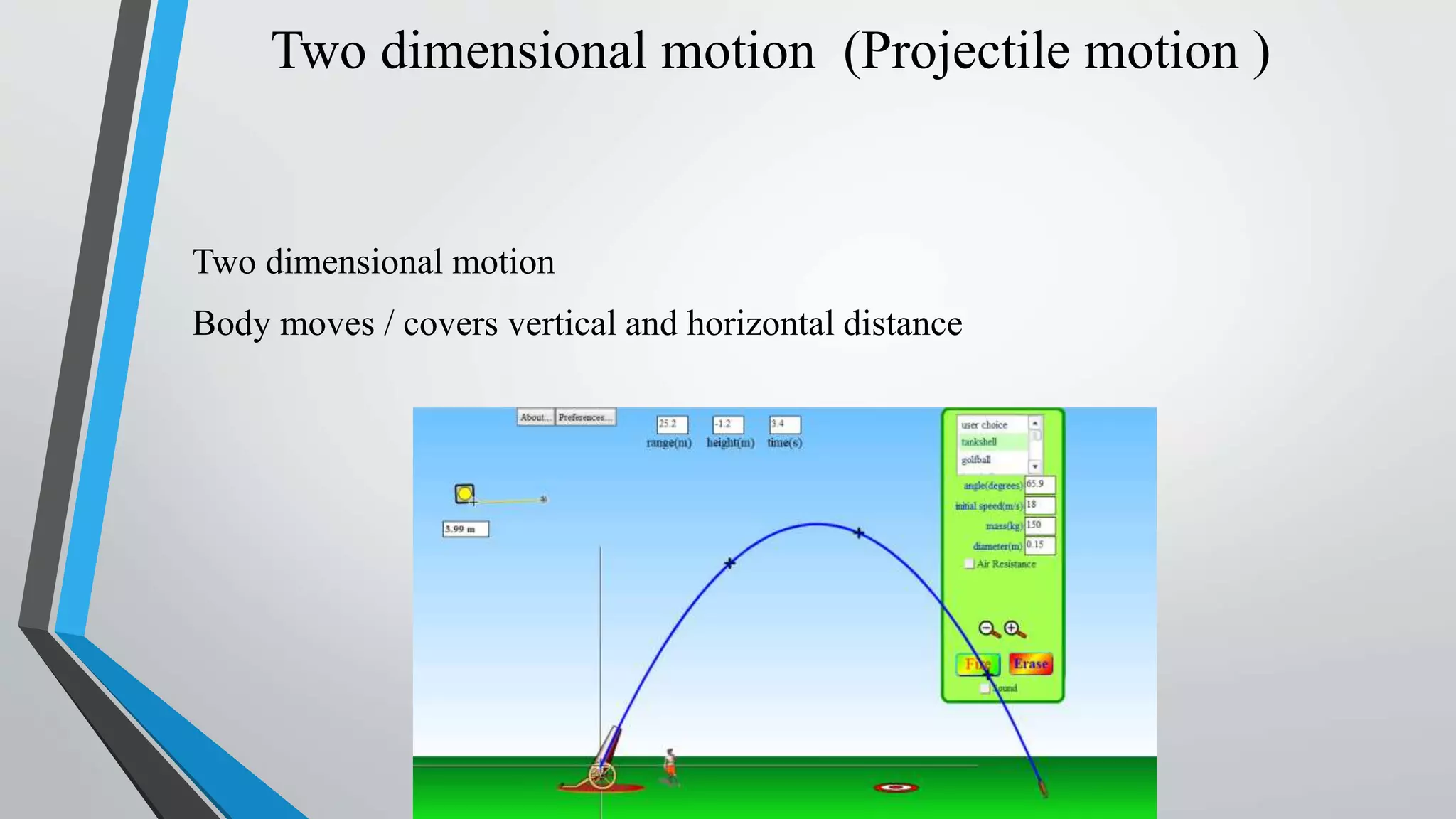
Two dimensional motion (Projectile motion )
Two dimensional motion
Body moves / covers vertical and horizontal distance
Force and motion (dynamics)
the branch which is concerned with the motion of bodies under the action of
forces
• Newton’s laws of motion
1) 1st law of motion (law of inertia)
2) 2nd law of motion (description of force)
3) 3rd law of motion
• How we can measure
INERTIA
Momentum
• Linear momentum
• Law of conservation of momentum
Initial momentum = final momentum
• Elastic and inelastic collision
Work and Energy
• Work
applied force x distance covered
Question to audience
Can we use displacement rather distance in Work formulae
Energy
• ability to do work
• Different forms of Energies
• Law of conservation of energy
Converted from one form to another
Energy Notes
Potential energy Due to position
Kinetic energy Due to motion
Solar energy Energy from solar
Chemical energy Due to chemical energy
Nuclear
Simple Harmonic Motion
to-and-fro motion
• Pendulum Mass attached to a spring
Static Charges
Nuclear Reaction
Fission Reaction
A big atom splits into small atoms.
• Nuclear reactor
• Disease
• Destruction purpose
Fusion Reaction
Small atoms combined to form a big atom
• Difficult to control
• A large amount of energy is required
Q & A

Fundamental Physics

  • 1.
  • 2.
    Physical Quantities andUnits • Physical quantities the feature of some thing which can be measured • Numerical value • Unit
  • 3.
    Unit • Importance ofunit 50 waist slim or fat • System International SI 1960 Basic units Derived unit Supplementary unit Basic Unit Derived Unit Quantity Unit Symbol Mass Kilogram Kg Length Metre m Time Second S Electric current Ampere A Temperature Kelvin K Amount of substance Mole mol Luminous intensity Candela cd Quantity Unit /symbol Velocity m/s Acceleration m/ss Force Kgm/ss (Newton)
  • 4.
    Question to Audience Lightyear is the unit of ?????? Distance
  • 5.
    Scalar and vectorQuantities • Scalar quantities Numerical values and unit time, mass, temperature • Vector quantities Numerical value, unit and dimension Acceleration, velocity, force
  • 6.
    Question to audience •Difference between • Speed and velocity • Mass and weight • Distance and displacement
  • 7.
    Kinematics the features orproperties of motion in an object Rest and Motion w.r.t frame of reference Motion Describe in term of quantities position, velocity, acceleration • Speed • Velocity • Acceleration
  • 8.
    Two dimensional motion(Projectile motion ) Two dimensional motion Body moves / covers vertical and horizontal distance
  • 10.
    Force and motion(dynamics) the branch which is concerned with the motion of bodies under the action of forces • Newton’s laws of motion 1) 1st law of motion (law of inertia) 2) 2nd law of motion (description of force) 3) 3rd law of motion
  • 11.
    • How wecan measure INERTIA
  • 12.
    Momentum • Linear momentum •Law of conservation of momentum Initial momentum = final momentum • Elastic and inelastic collision
  • 13.
    Work and Energy •Work applied force x distance covered Question to audience Can we use displacement rather distance in Work formulae
  • 14.
    Energy • ability todo work • Different forms of Energies • Law of conservation of energy Converted from one form to another Energy Notes Potential energy Due to position Kinetic energy Due to motion Solar energy Energy from solar Chemical energy Due to chemical energy Nuclear
  • 15.
    Simple Harmonic Motion to-and-fromotion • Pendulum Mass attached to a spring
  • 16.
  • 17.
    Nuclear Reaction Fission Reaction Abig atom splits into small atoms. • Nuclear reactor • Disease • Destruction purpose Fusion Reaction Small atoms combined to form a big atom • Difficult to control • A large amount of energy is required
  • 18.