WEB APPLICATIONS AND
SECURITY
Understand Networking Fundamentals
INFORMATION TECHNOLOGY(402)
CLASS: X
NETWORK
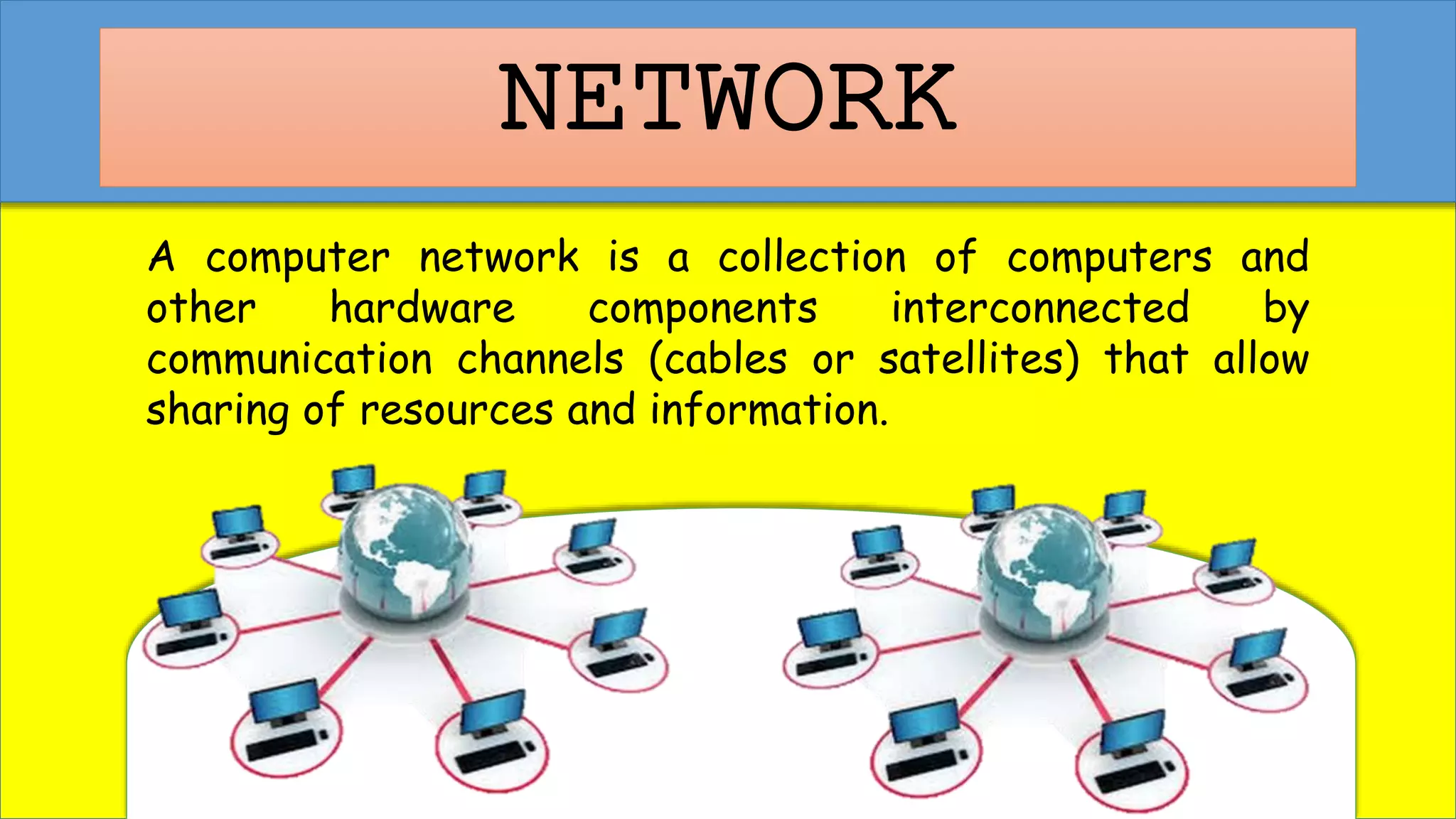
A computer network is a collection of computers and
other hardware components interconnected by
communication channels (cables or satellites) that allow
sharing of resources and information.
INDEX
Peer-to-peer (P2P) Architecture
Client-Server Architecture
Types of networks
Internet World Wide Web
Advantages associated with networking
Internet Service ProviderModem
Data transfer on the Internet
Peer-to-peer (P2P) Architecture
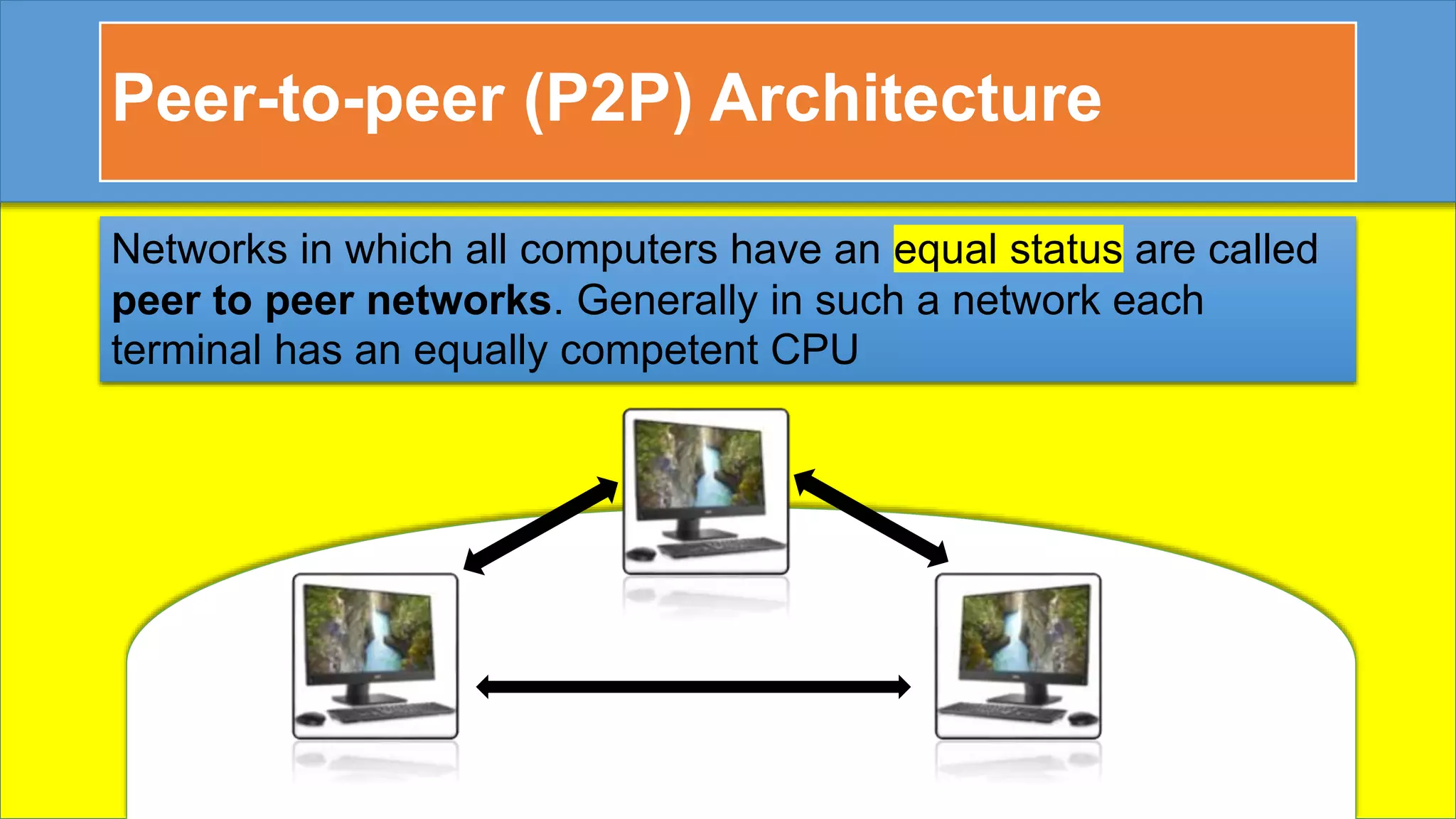
Networks in which all computers have an equal status are called
peer to peer networks. Generally in such a network each
terminal has an equally competent CPU
Client-Server Architecture
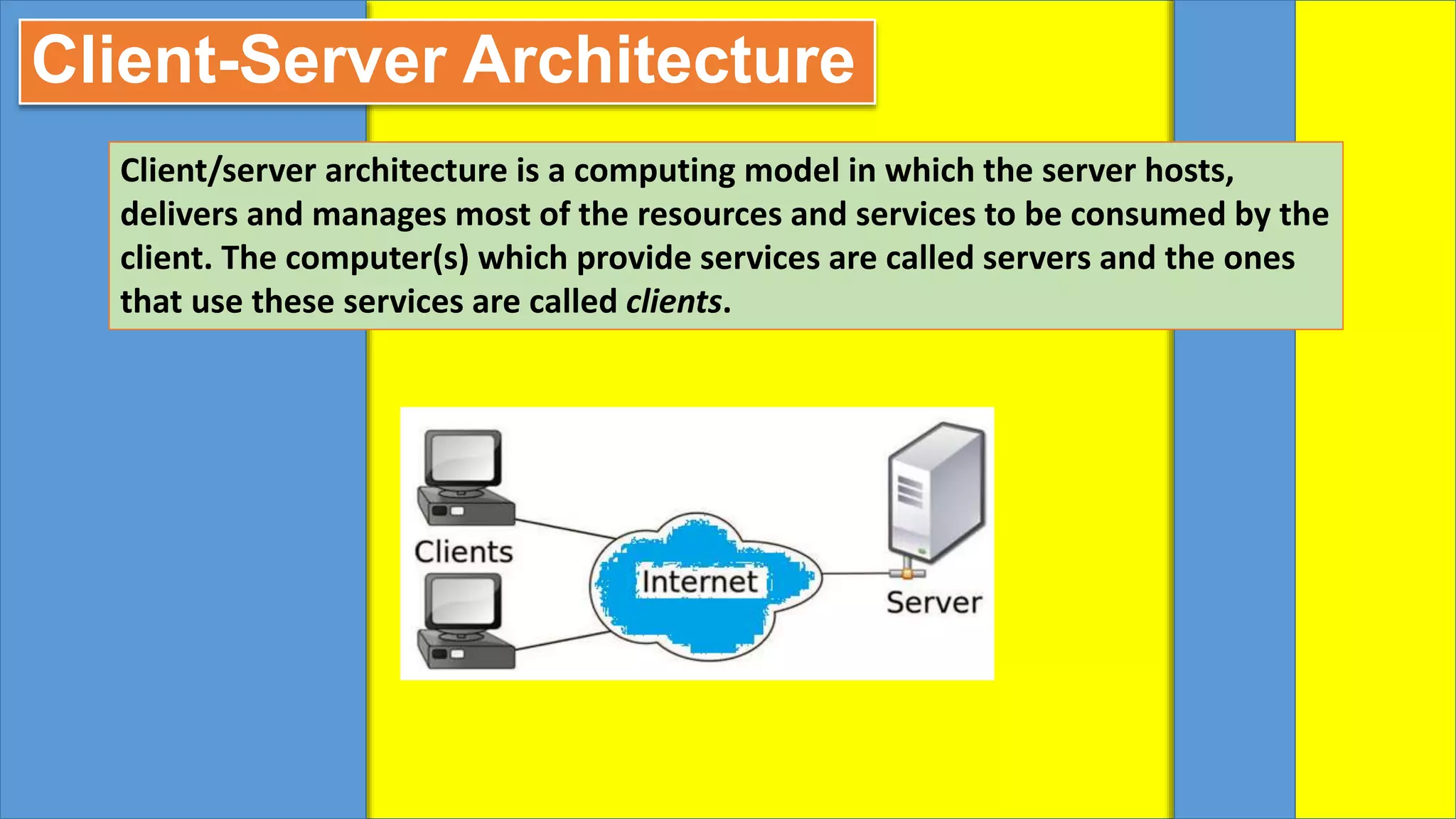
Client/server architecture is a computing model in which the server hosts,
delivers and manages most of the resources and services to be consumed by the
client. The computer(s) which provide services are called servers and the ones
that use these services are called clients.
Types of networks
Local Area Network
Metropolitan Area Network
Wide Area Network
Personal Area Network
Local Area Network
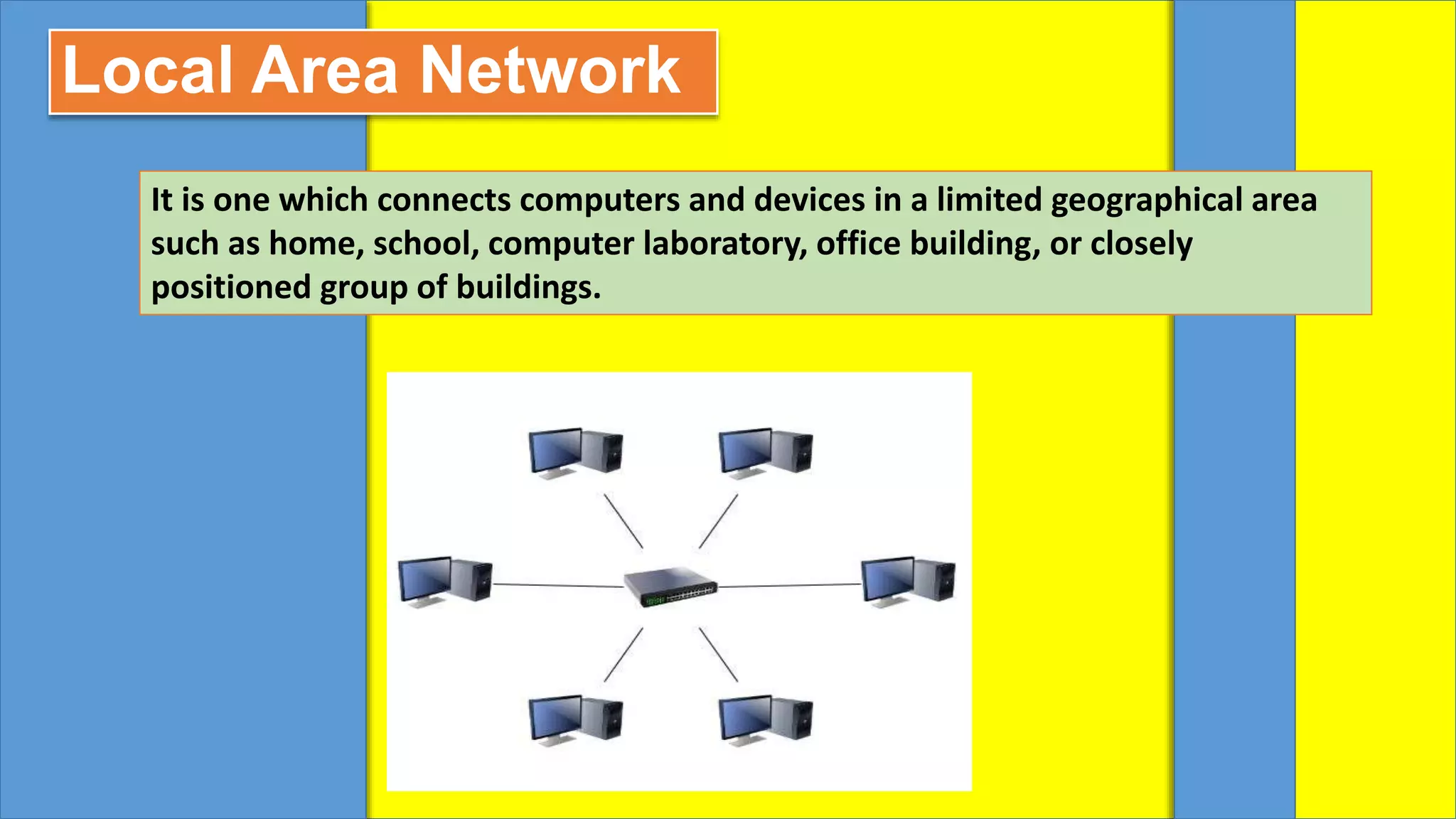
It is one which connects computers and devices in a limited geographical area
such as home, school, computer laboratory, office building, or closely
positioned group of buildings.
Metropolitan Area Network
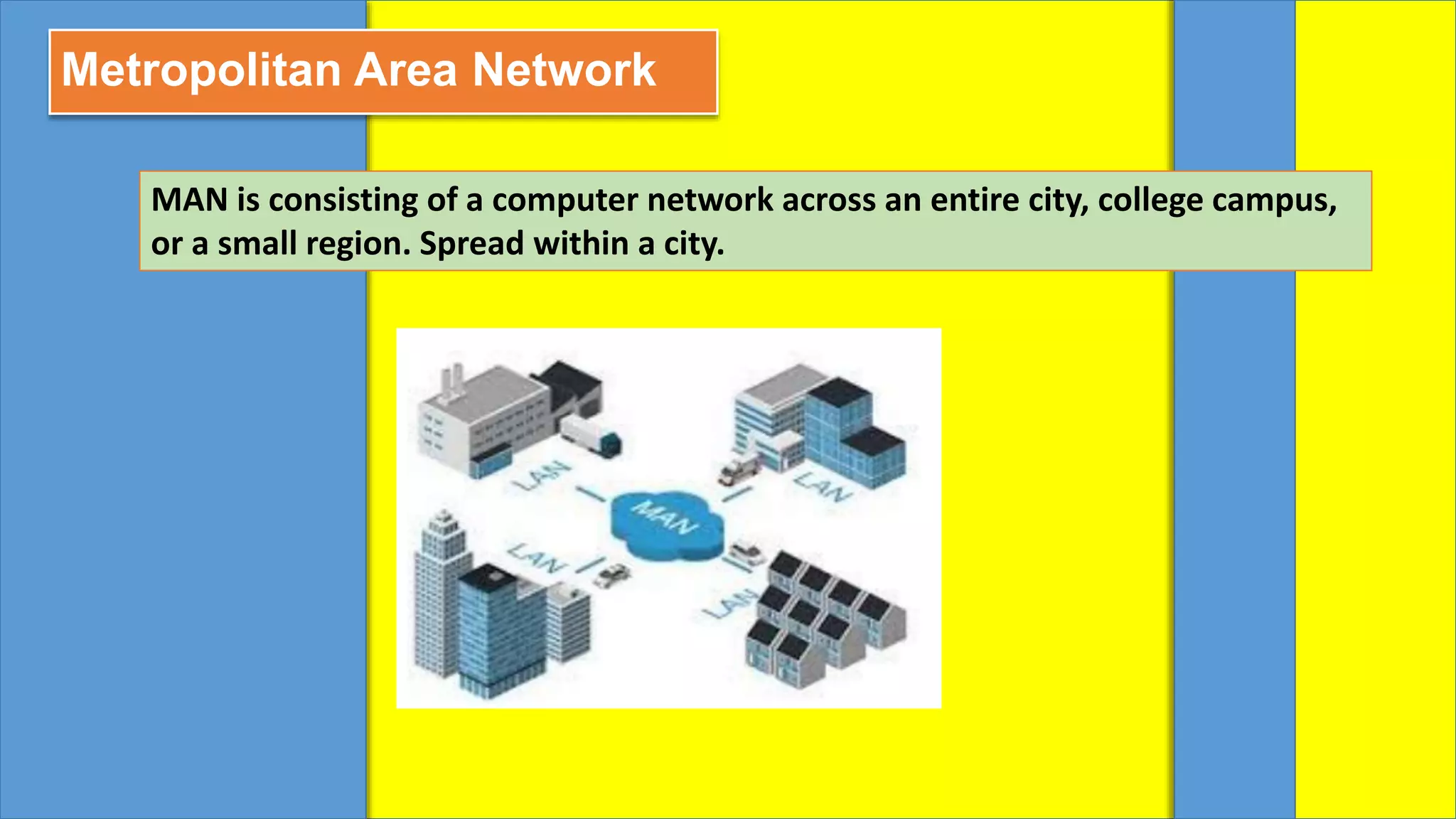
MAN is consisting of a computer network across an entire city, college campus,
or a small region. Spread within a city.
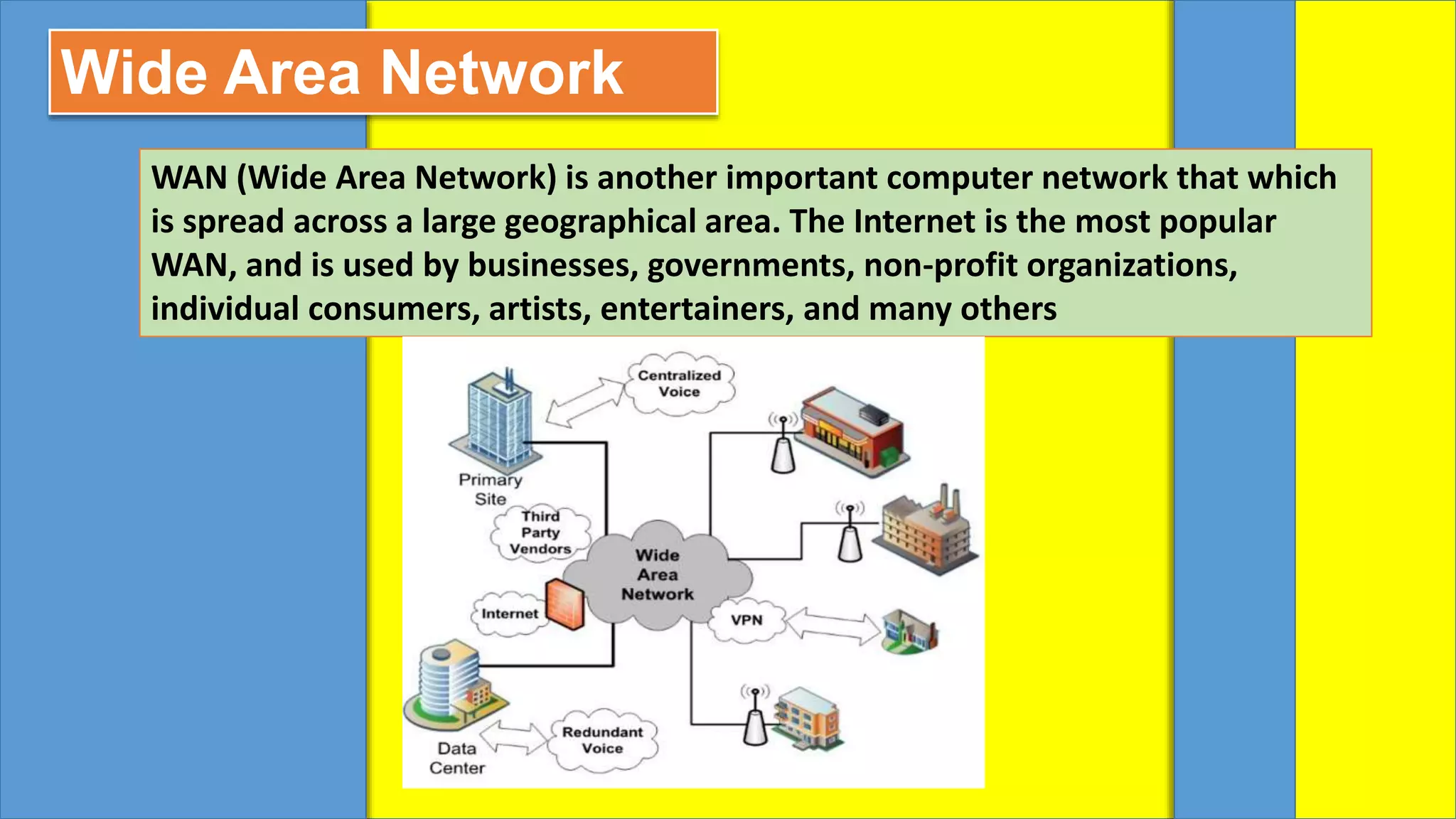
Wide Area Network
WAN (Wide Area Network) is another important computer network that which
is spread across a large geographical area. The Internet is the most popular
WAN, and is used by businesses, governments, non-profit organizations,
individual consumers, artists, entertainers, and many others
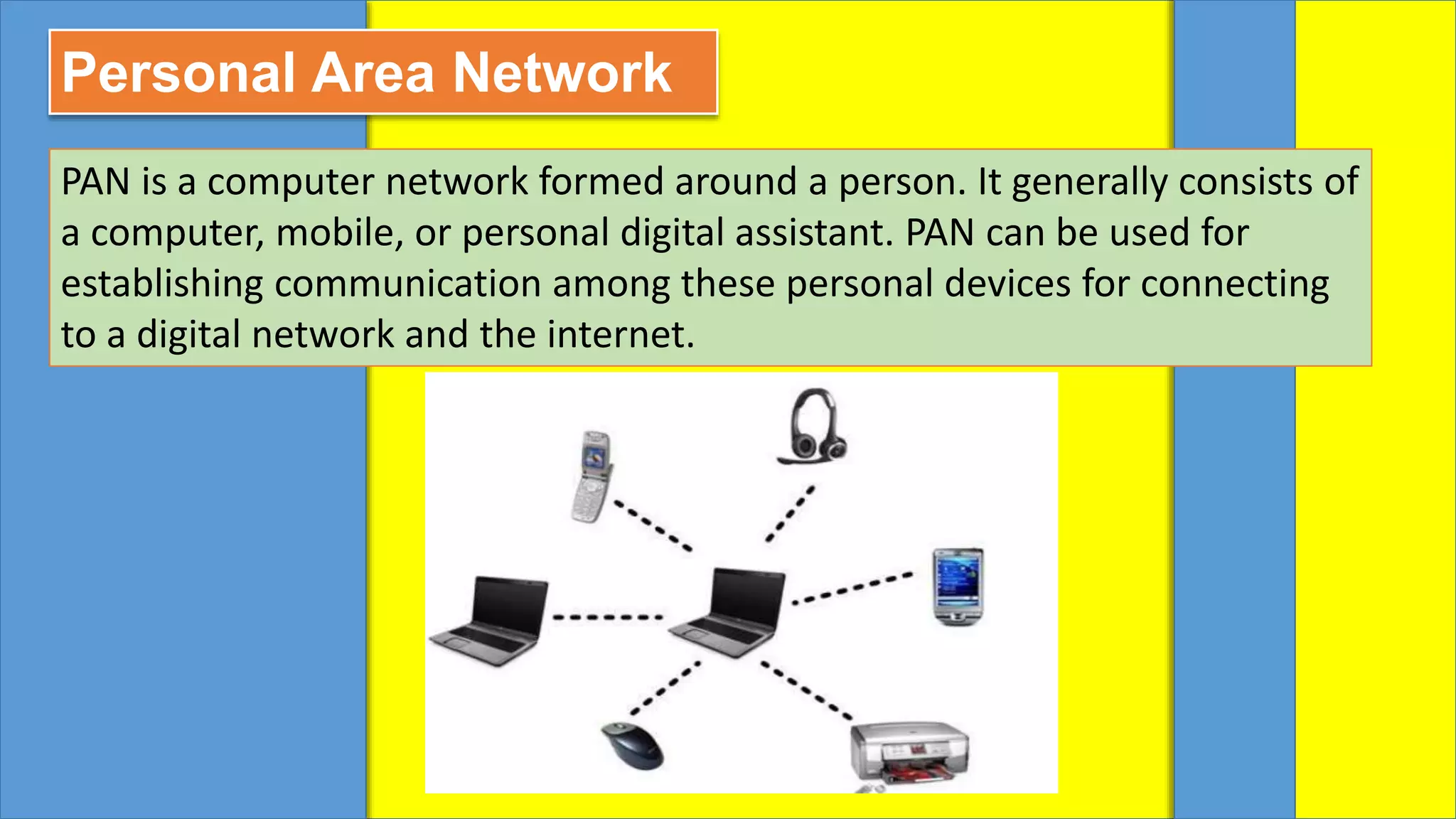
Personal Area Network
PAN is a computer network formed around a person. It generally consists of
a computer, mobile, or personal digital assistant. PAN can be used for
establishing communication among these personal devices for connecting
to a digital network and the internet.
Advantages of networking
Internet Access Sharing
You can purchase a single Internet connection and share it among other
computers in a network instead of purchasing multiple Internet connection for
each computer.
Cost factors
The main advantage of using networking is to reduce the cost of network by
means of resource sharing.
Advantages of networking
Data Sharing
One of the most important uses of networking is to allow the sharing of
data. Users can send text files, spread sheets, documents, presentations,
audio files, video files, etc. to other users
Hardware Sharing
Hardware components such as printers, scanners, etc. can also be shared
Internet
The Internet, sometimes called simply "the Net" is a worldwide system of
computer networks -- a network of networks in which users at any one computer
can, if they have permission, get information from any other computer.
World Wide Web
World Wide Web (abbreviated as WWW or W3, commonly known as the Web), is
a system of interlinked hypertext documents accessed via the Internet. With a
web browser, one can view web pages that may contain text, images, videos, and
other multimedia, and navigate between them via hyperlinks
Modem
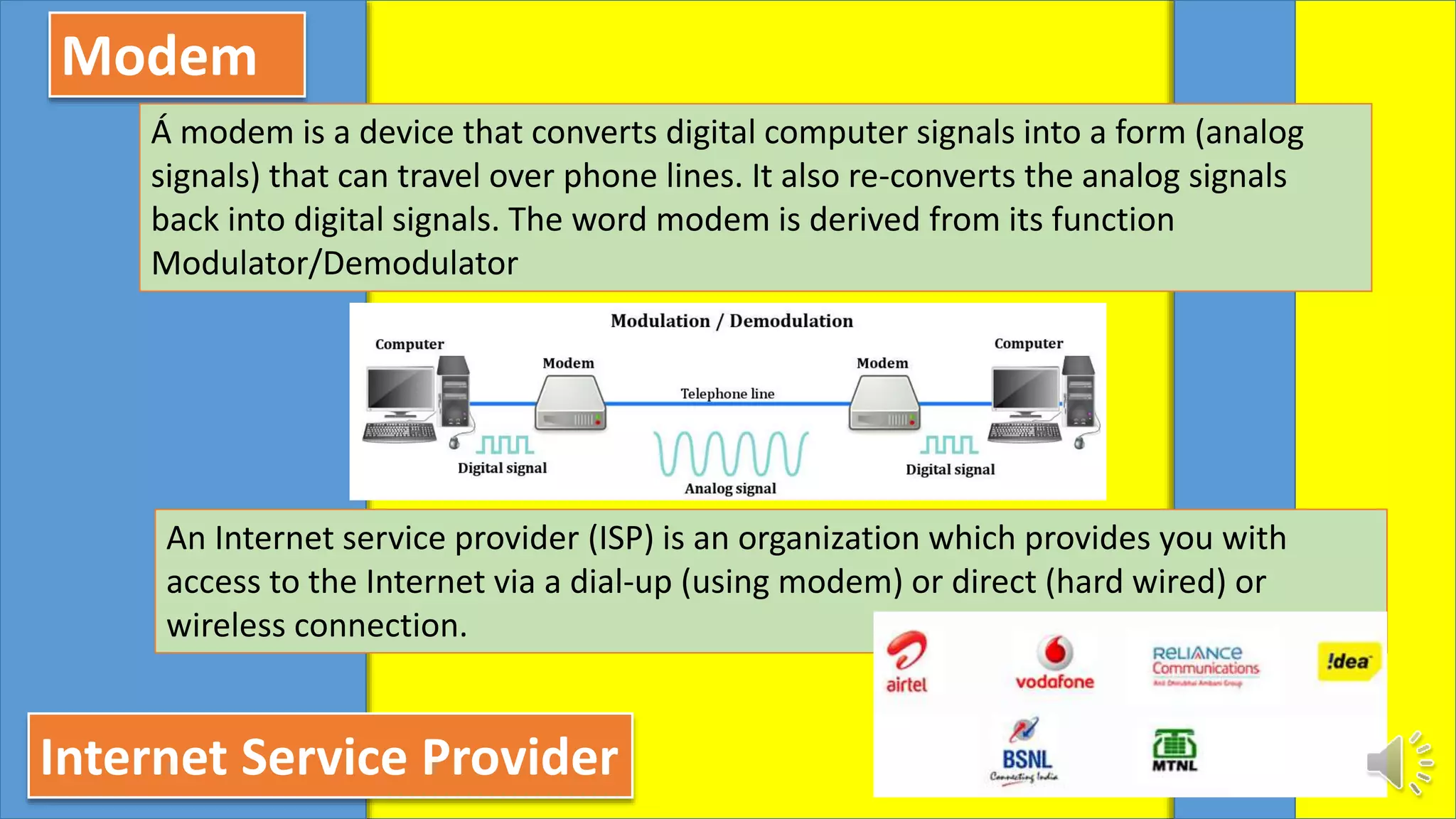
Á modem is a device that converts digital computer signals into a form (analog
signals) that can travel over phone lines. It also re-converts the analog signals
back into digital signals. The word modem is derived from its function
Modulator/Demodulator
Internet Service Provider
An Internet service provider (ISP) is an organization which provides you with
access to the Internet via a dial-up (using modem) or direct (hard wired) or
wireless connection.
Dial-up
Dial-up Internet access is a form of Internet access that uses the facilities of the
public switched telephone network (PSTN) to establish a connection to an
Internet service provider (ISP) via telephone lines using a device called MODEM.
Cable Internet Access
It is a form of broadband Internet access that uses the cable television
infrastructure. Cable Internet Access is provided through existing cable TV
networks; this is similar to DSL that is provided over existing telephone lines.
Data transfer on the Internet
In very simple language, let’s see what happens to a piece of data, say a Web page,
when it is transferred over the Internet:
The data is broken up into bits of same sized pieces called packets.
A header is added to each packet explaining where the data has come from,
where it should end up and where it fits in with the rest of the packets.
Each packet is sent from computer to computer until it finds its destination.
At the destination, the packets are examined. If any packets are missing or
damaged, a message is sent asking for them to be re-sent.
The packets are now reassembled into their original form.

FUNDAMENTAL OF NETWORK

  • 1.
    WEB APPLICATIONS AND SECURITY UnderstandNetworking Fundamentals INFORMATION TECHNOLOGY(402) CLASS: X
  • 2.
    NETWORK A computer networkis a collection of computers and other hardware components interconnected by communication channels (cables or satellites) that allow sharing of resources and information.
  • 3.
    INDEX Peer-to-peer (P2P) Architecture Client-ServerArchitecture Types of networks Internet World Wide Web Advantages associated with networking Internet Service ProviderModem Data transfer on the Internet
  • 4.
    Peer-to-peer (P2P) Architecture Networksin which all computers have an equal status are called peer to peer networks. Generally in such a network each terminal has an equally competent CPU
  • 5.
    Client-Server Architecture Client/server architectureis a computing model in which the server hosts, delivers and manages most of the resources and services to be consumed by the client. The computer(s) which provide services are called servers and the ones that use these services are called clients.
  • 6.
    Types of networks LocalArea Network Metropolitan Area Network Wide Area Network Personal Area Network
  • 7.
    Local Area Network Itis one which connects computers and devices in a limited geographical area such as home, school, computer laboratory, office building, or closely positioned group of buildings.
  • 8.
    Metropolitan Area Network MANis consisting of a computer network across an entire city, college campus, or a small region. Spread within a city.
  • 9.
    Wide Area Network WAN(Wide Area Network) is another important computer network that which is spread across a large geographical area. The Internet is the most popular WAN, and is used by businesses, governments, non-profit organizations, individual consumers, artists, entertainers, and many others
  • 10.
    Personal Area Network PANis a computer network formed around a person. It generally consists of a computer, mobile, or personal digital assistant. PAN can be used for establishing communication among these personal devices for connecting to a digital network and the internet.
  • 11.
    Advantages of networking InternetAccess Sharing You can purchase a single Internet connection and share it among other computers in a network instead of purchasing multiple Internet connection for each computer. Cost factors The main advantage of using networking is to reduce the cost of network by means of resource sharing.
  • 12.
    Advantages of networking DataSharing One of the most important uses of networking is to allow the sharing of data. Users can send text files, spread sheets, documents, presentations, audio files, video files, etc. to other users Hardware Sharing Hardware components such as printers, scanners, etc. can also be shared
  • 13.
    Internet The Internet, sometimescalled simply "the Net" is a worldwide system of computer networks -- a network of networks in which users at any one computer can, if they have permission, get information from any other computer. World Wide Web World Wide Web (abbreviated as WWW or W3, commonly known as the Web), is a system of interlinked hypertext documents accessed via the Internet. With a web browser, one can view web pages that may contain text, images, videos, and other multimedia, and navigate between them via hyperlinks
  • 14.
    Modem Á modem isa device that converts digital computer signals into a form (analog signals) that can travel over phone lines. It also re-converts the analog signals back into digital signals. The word modem is derived from its function Modulator/Demodulator Internet Service Provider An Internet service provider (ISP) is an organization which provides you with access to the Internet via a dial-up (using modem) or direct (hard wired) or wireless connection.
  • 15.
    Dial-up Dial-up Internet accessis a form of Internet access that uses the facilities of the public switched telephone network (PSTN) to establish a connection to an Internet service provider (ISP) via telephone lines using a device called MODEM. Cable Internet Access It is a form of broadband Internet access that uses the cable television infrastructure. Cable Internet Access is provided through existing cable TV networks; this is similar to DSL that is provided over existing telephone lines.
  • 16.
    Data transfer onthe Internet In very simple language, let’s see what happens to a piece of data, say a Web page, when it is transferred over the Internet: The data is broken up into bits of same sized pieces called packets. A header is added to each packet explaining where the data has come from, where it should end up and where it fits in with the rest of the packets. Each packet is sent from computer to computer until it finds its destination. At the destination, the packets are examined. If any packets are missing or damaged, a message is sent asking for them to be re-sent. The packets are now reassembled into their original form.