FUNCTIONAL ANATOMY OF
PROKARYOTES AND EUKARYOTES
BY
DR JAWAD NAZIR
ASSISTANT PROFESSOR
DEPARTMENT OF MICROBIOLOGY
UNIVERSITY OF VETERINARY AND ANIMAL SCIENCES, LAHORE
Functional anatomy of prokaryotes
Prokaryotes vs Eukaryotes
 Prokaryote comes from the Greek words for
pre-nucleus
 Eukaryote comes from the Greek words for
true nucleus.
Functional anatomy of prokaryotes
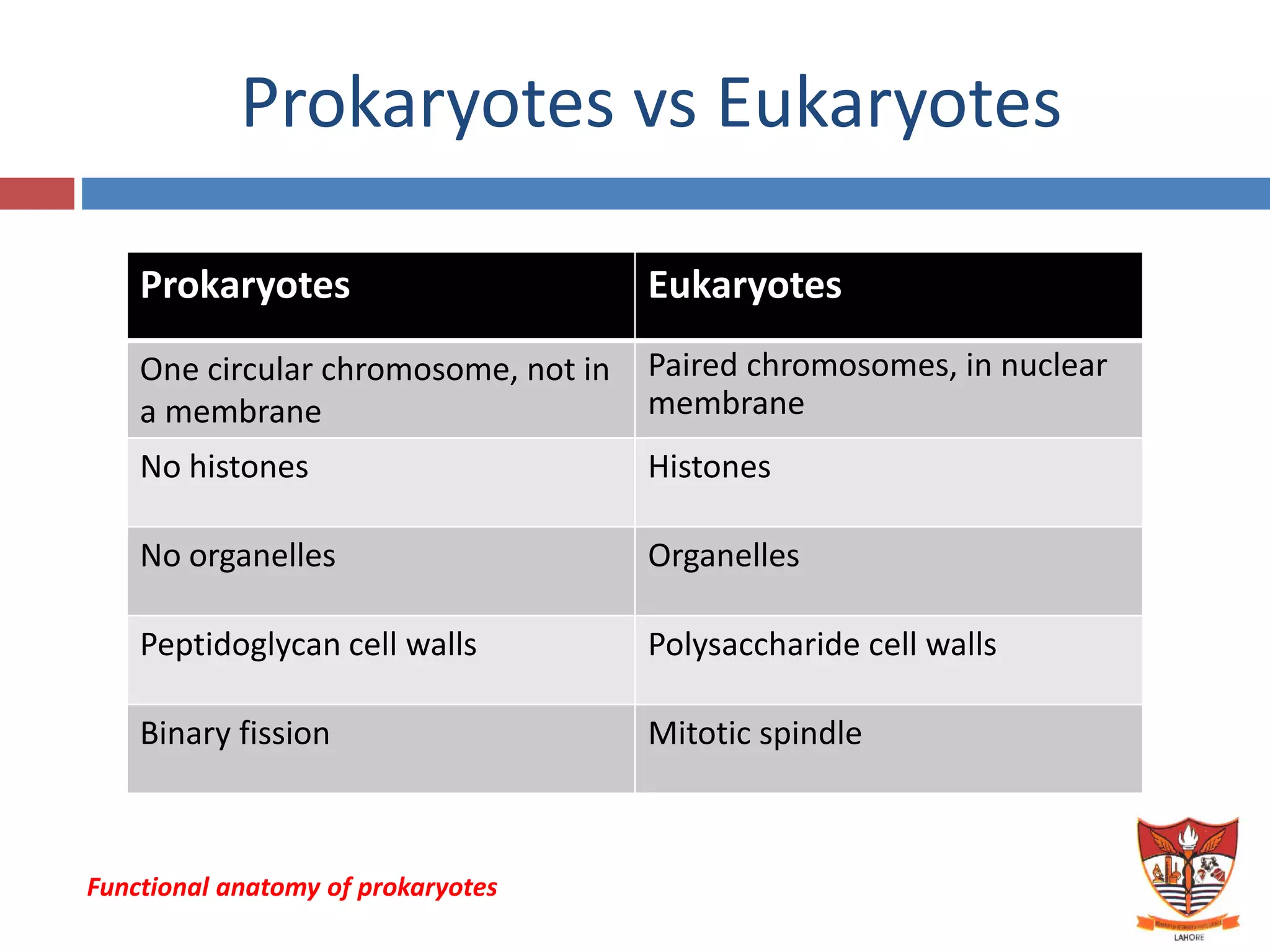
Prokaryotes Eukaryotes
One circular chromosome, not in
a membrane
Paired chromosomes, in nuclear
membrane
No histones Histones
No organelles Organelles
Peptidoglycan cell walls Polysaccharide cell walls
Binary fission Mitotic spindle
Prokaryotes vs Eukaryotes
Functional anatomy of prokaryotes
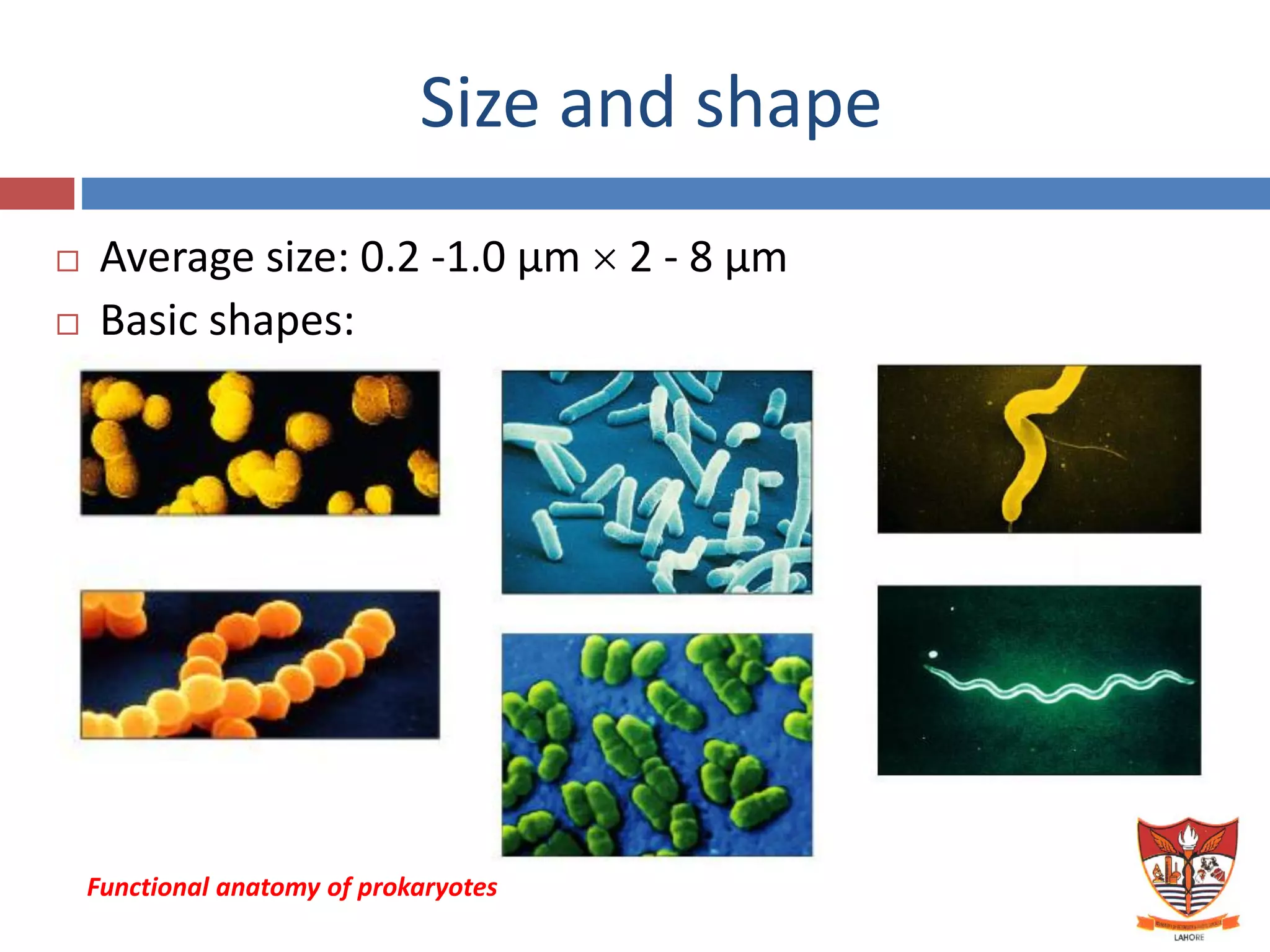
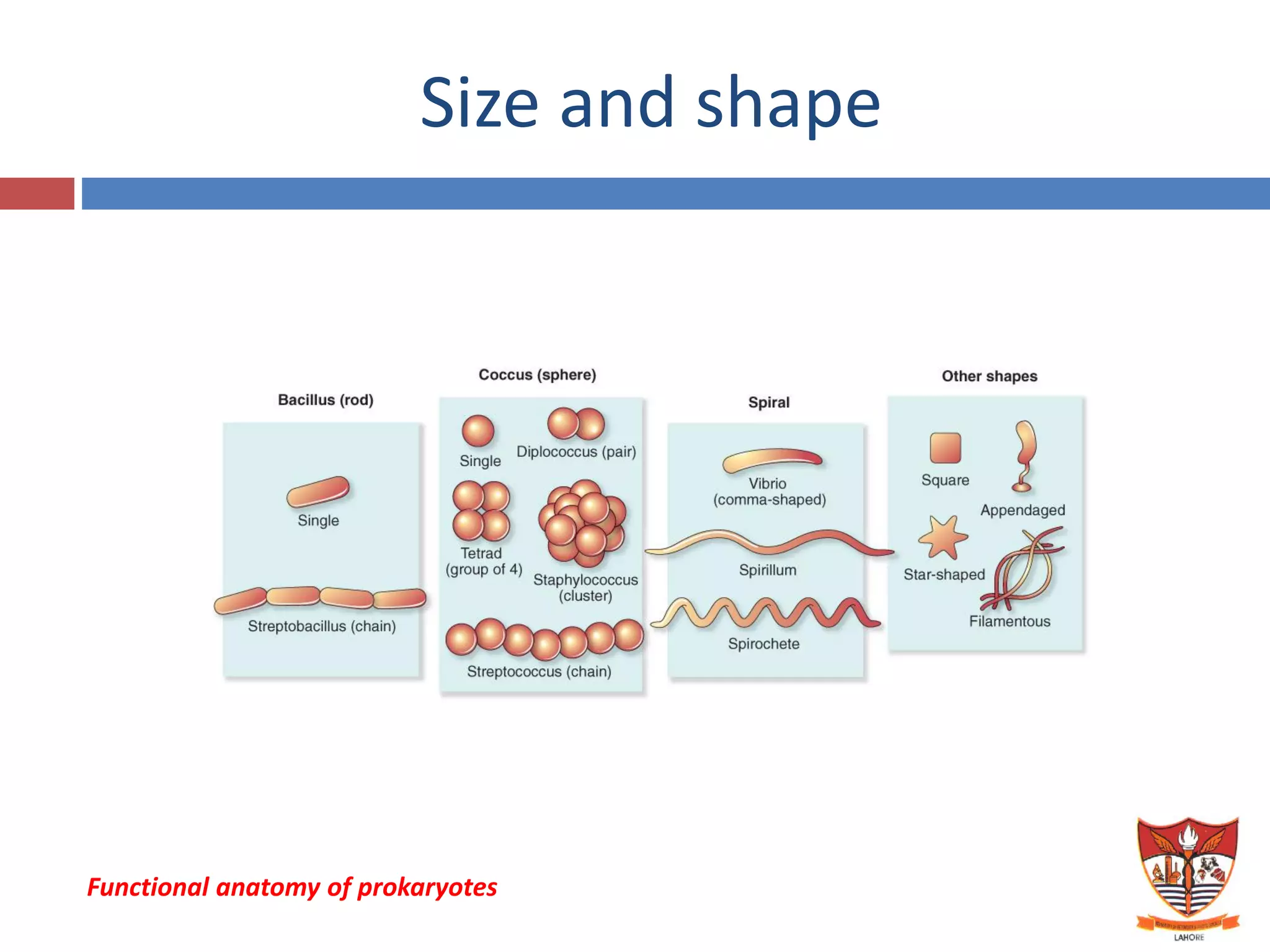
 Average size: 0.2 -1.0 µm  2 - 8 µm
 Basic shapes:
Size and shape
Functional anatomy of prokaryotes
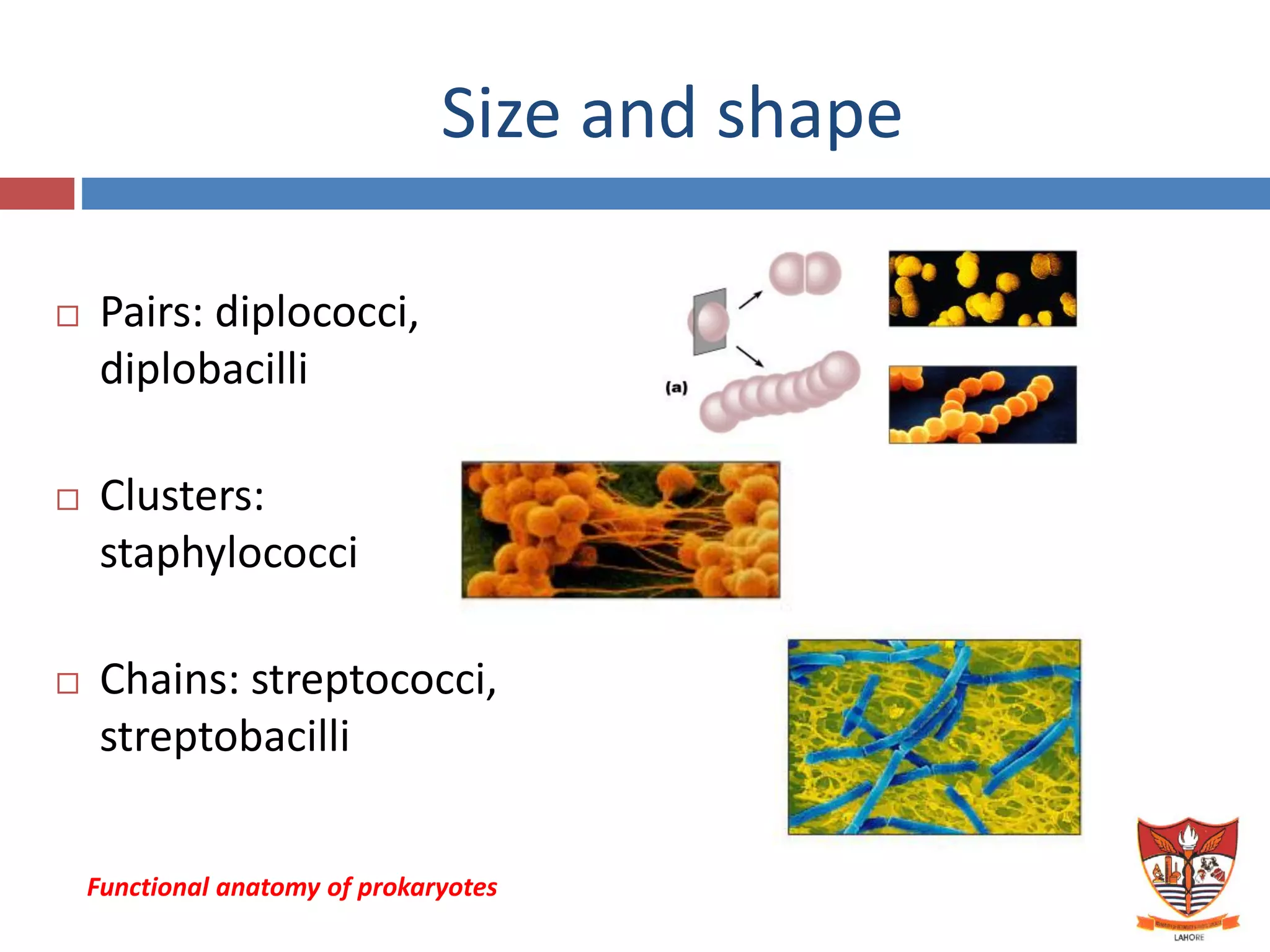
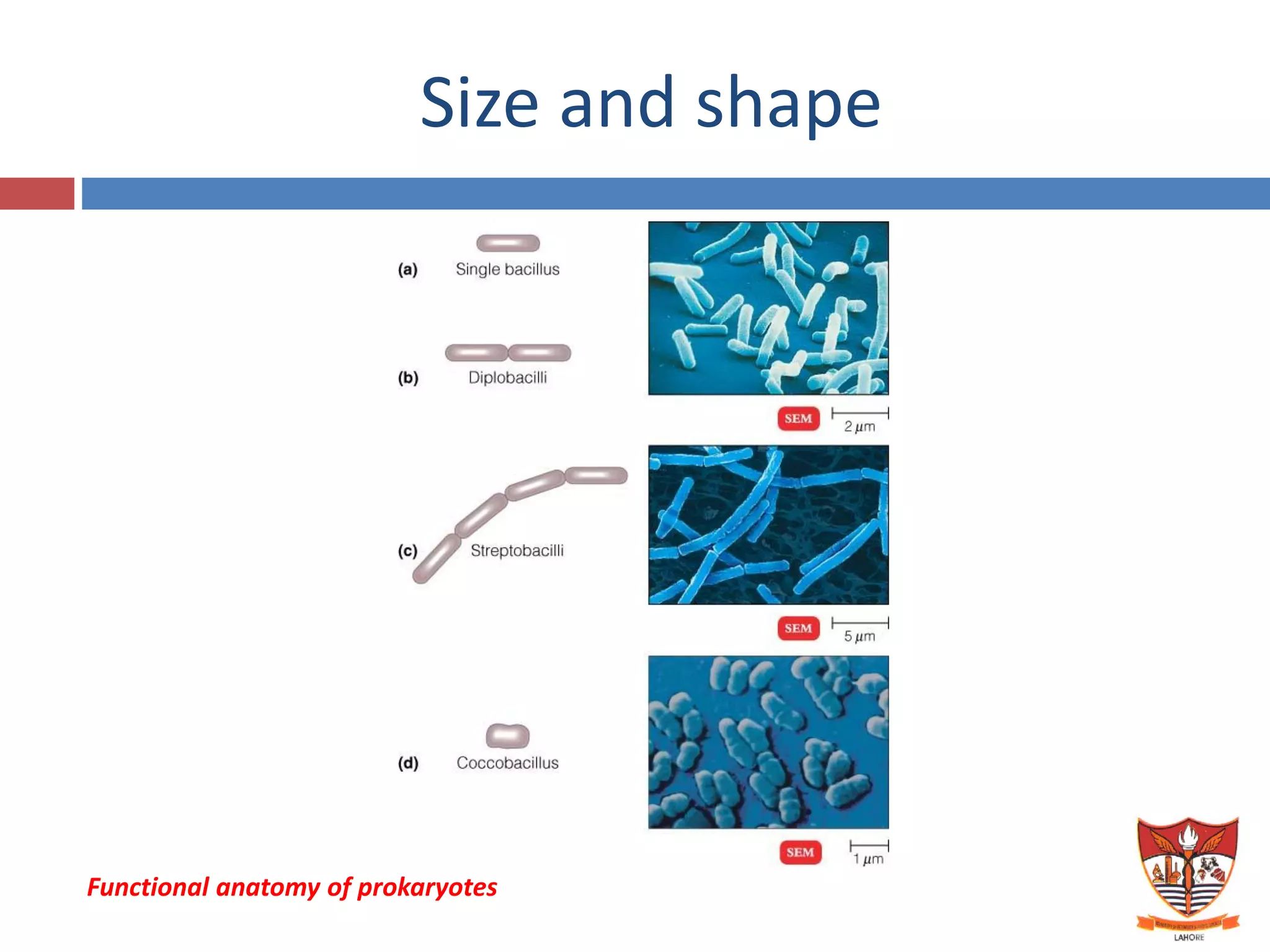
 Pairs: diplococci,
diplobacilli
 Clusters:
staphylococci
 Chains: streptococci,
streptobacilli
Size and shape
Functional anatomy of prokaryotes
Size and shape
Functional anatomy of prokaryotes
Size and shape
Functional anatomy of prokaryotes
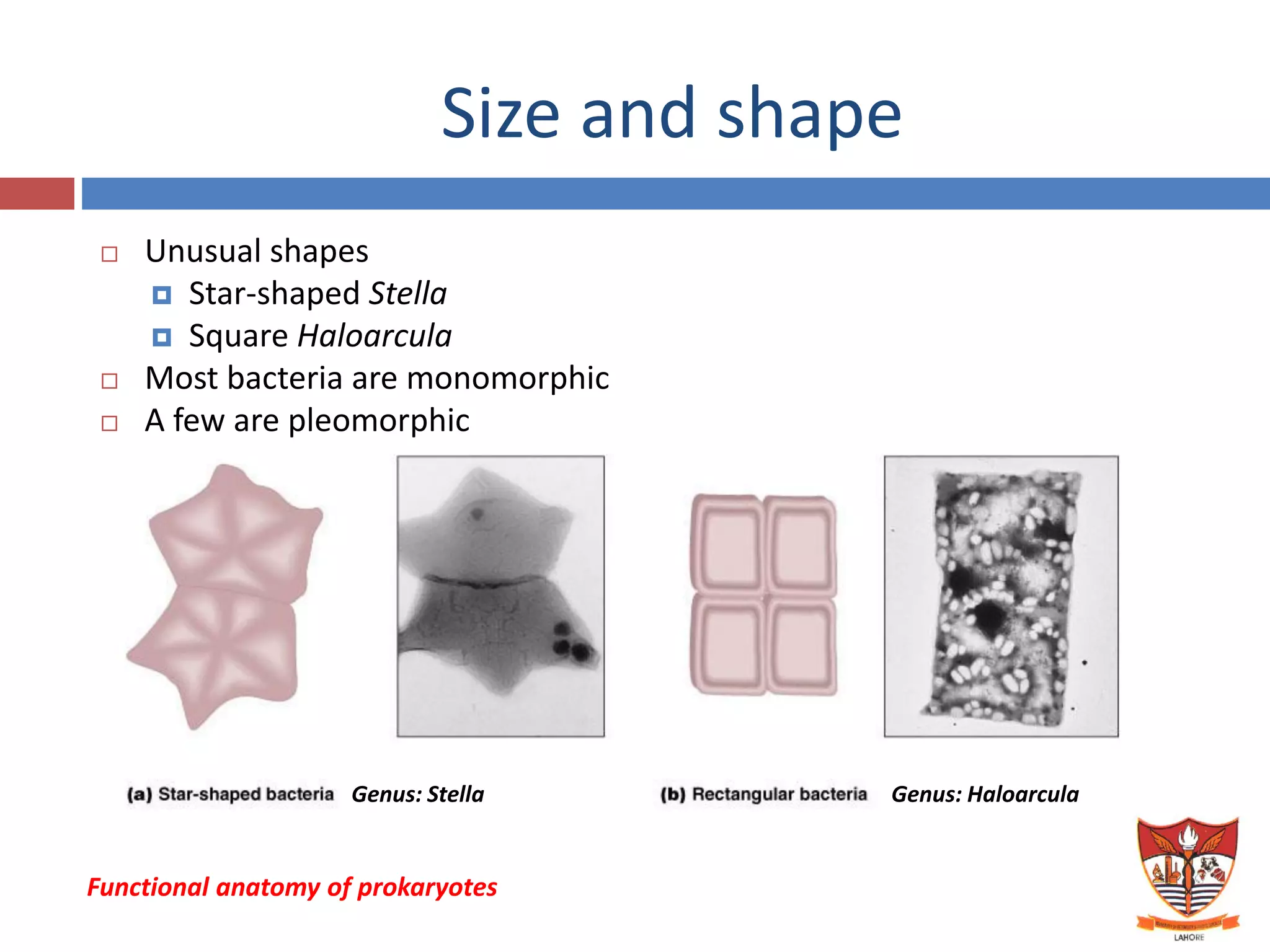
 Unusual shapes
 Star-shaped Stella
 Square Haloarcula
 Most bacteria are monomorphic
 A few are pleomorphic
Size and shape
Genus: Stella Genus: Haloarcula
Functional anatomy of prokaryotes
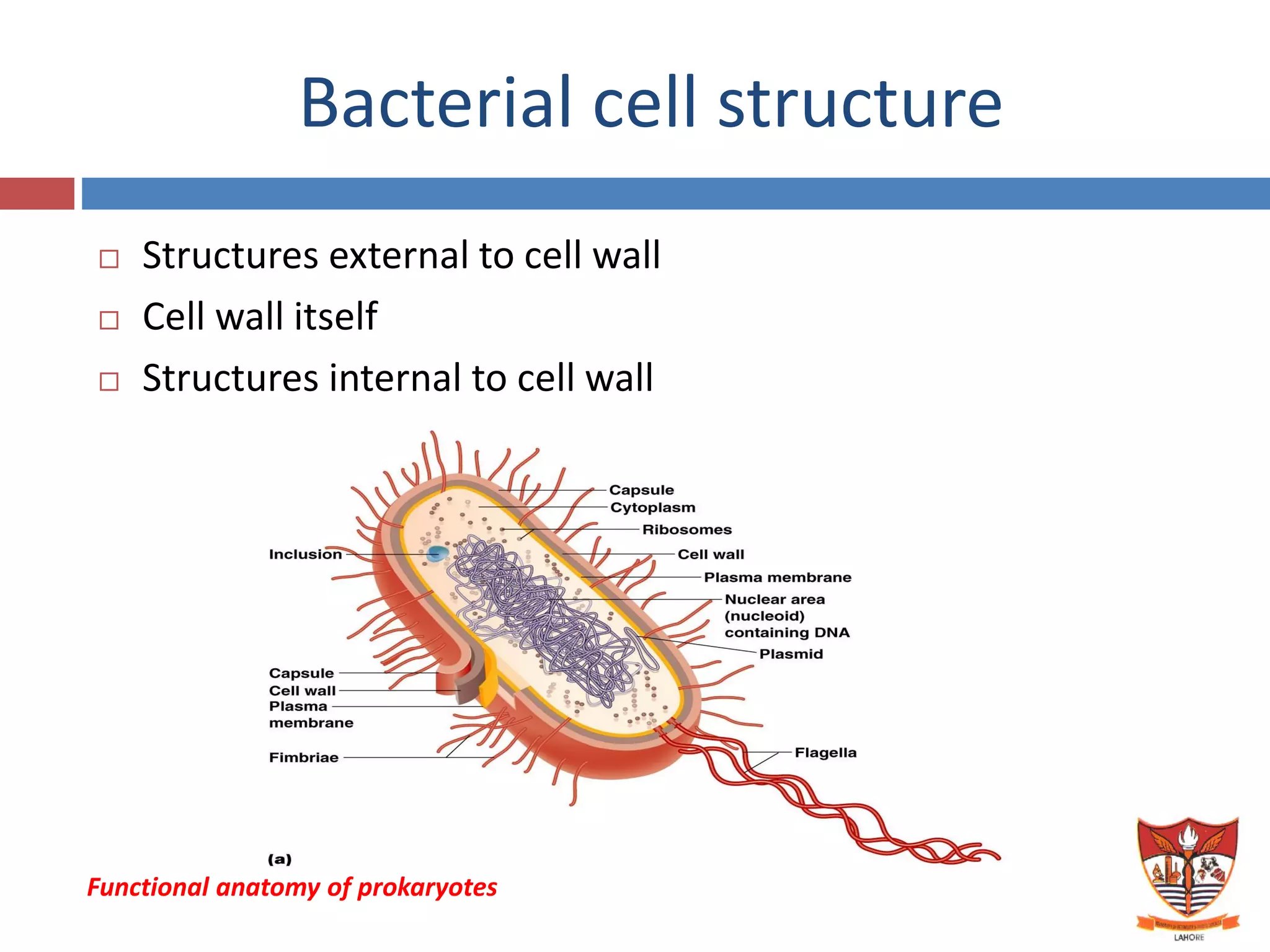
Bacterial cell structure
 Structures external to cell wall
 Cell wall itself
 Structures internal to cell wall
Functional anatomy of prokaryotes
 Outside cell wall
 Usually sticky
 A capsule is neatly organized
 A slime layer is unorganized & loose
 Extracellular polysaccharide allows
cell to attach
 Capsules prevent phagocytosis
 Association with diseases
 B. anthracis
 S. pneumoniae
Glycocalyx
Functional anatomy of prokaryotes
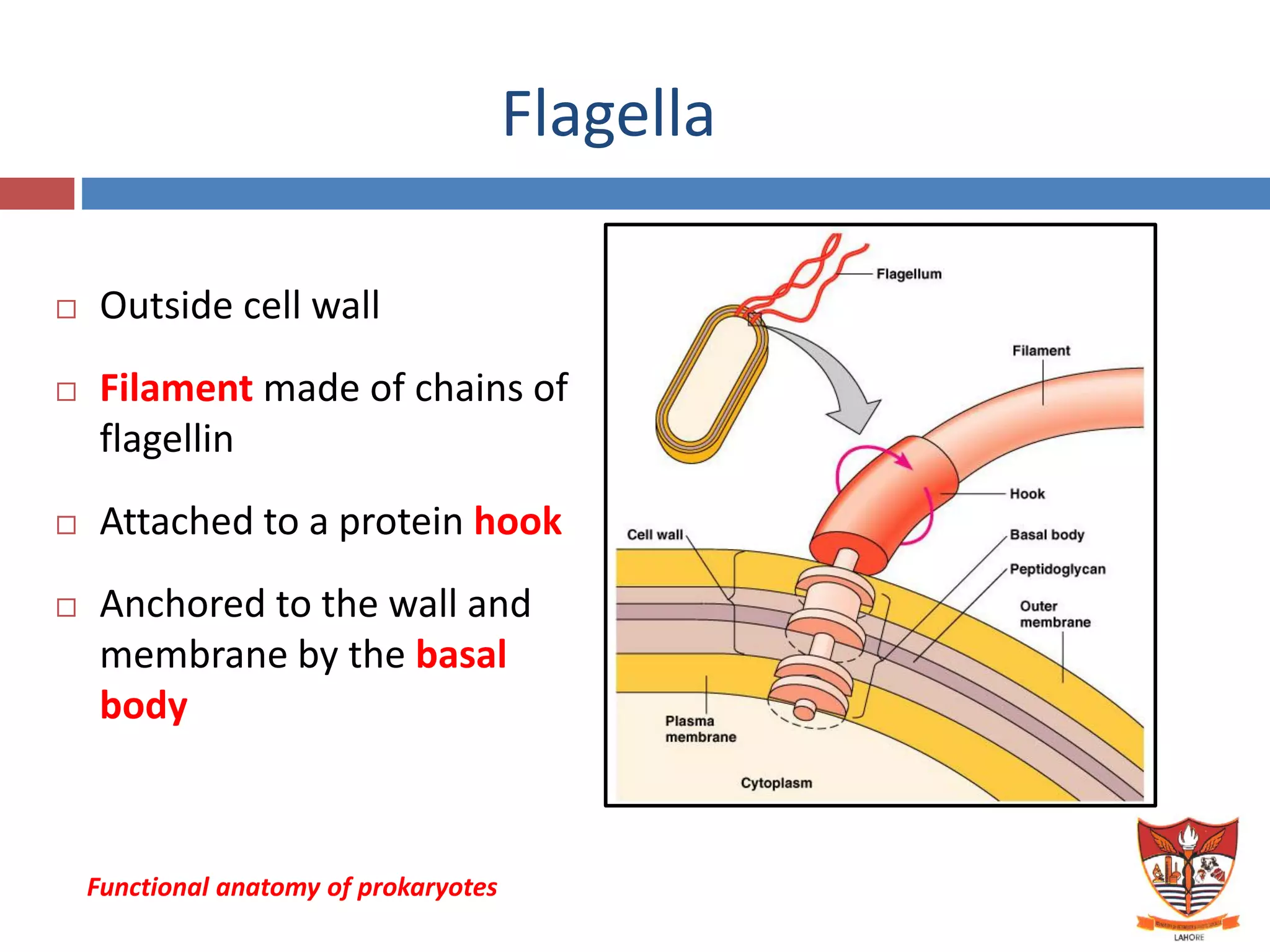
 Outside cell wall
 Filament made of chains of
flagellin
 Attached to a protein hook
 Anchored to the wall and
membrane by the basal
body
Flagella
Functional anatomy of prokaryotes
Flagella Arrangement
Functional anatomy of prokaryotes
 Rotate flagella to run or tumble
 Move toward or away from stimuli (taxis)
 Flagella proteins are H antigens
(e.g., E. coli O157:H7)
Bacterial motility
Functional anatomy of prokaryotes
Bacterial motility
Functional anatomy of prokaryotes
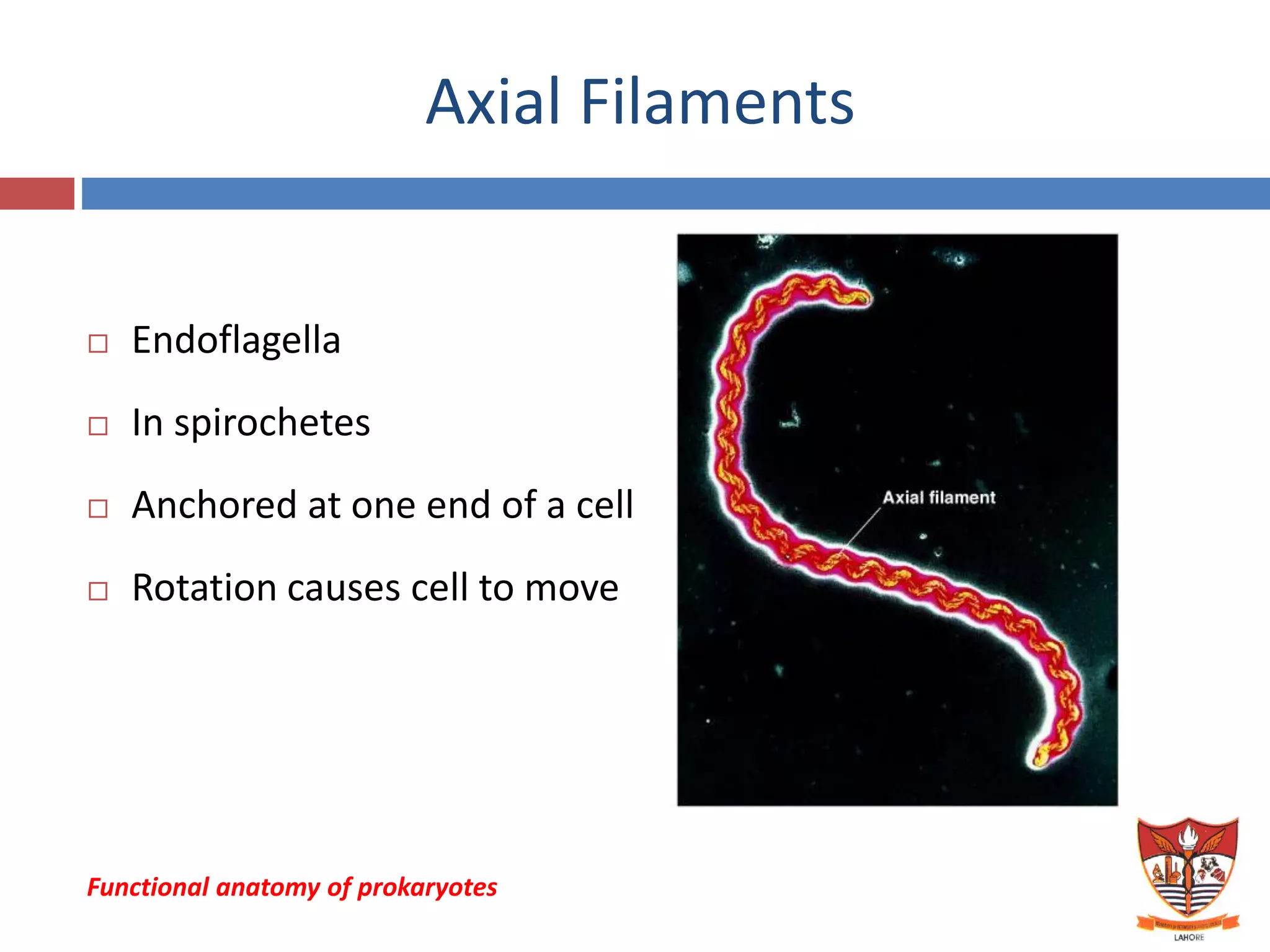
 Endoflagella
 In spirochetes
 Anchored at one end of a cell
 Rotation causes cell to move
Axial Filaments
Functional anatomy of prokaryotes
 Fimbriae may be several hundred in number
 Distributed on poles or entire surface
 Allow attachment
Fimbriae
Functional anatomy of prokaryotes
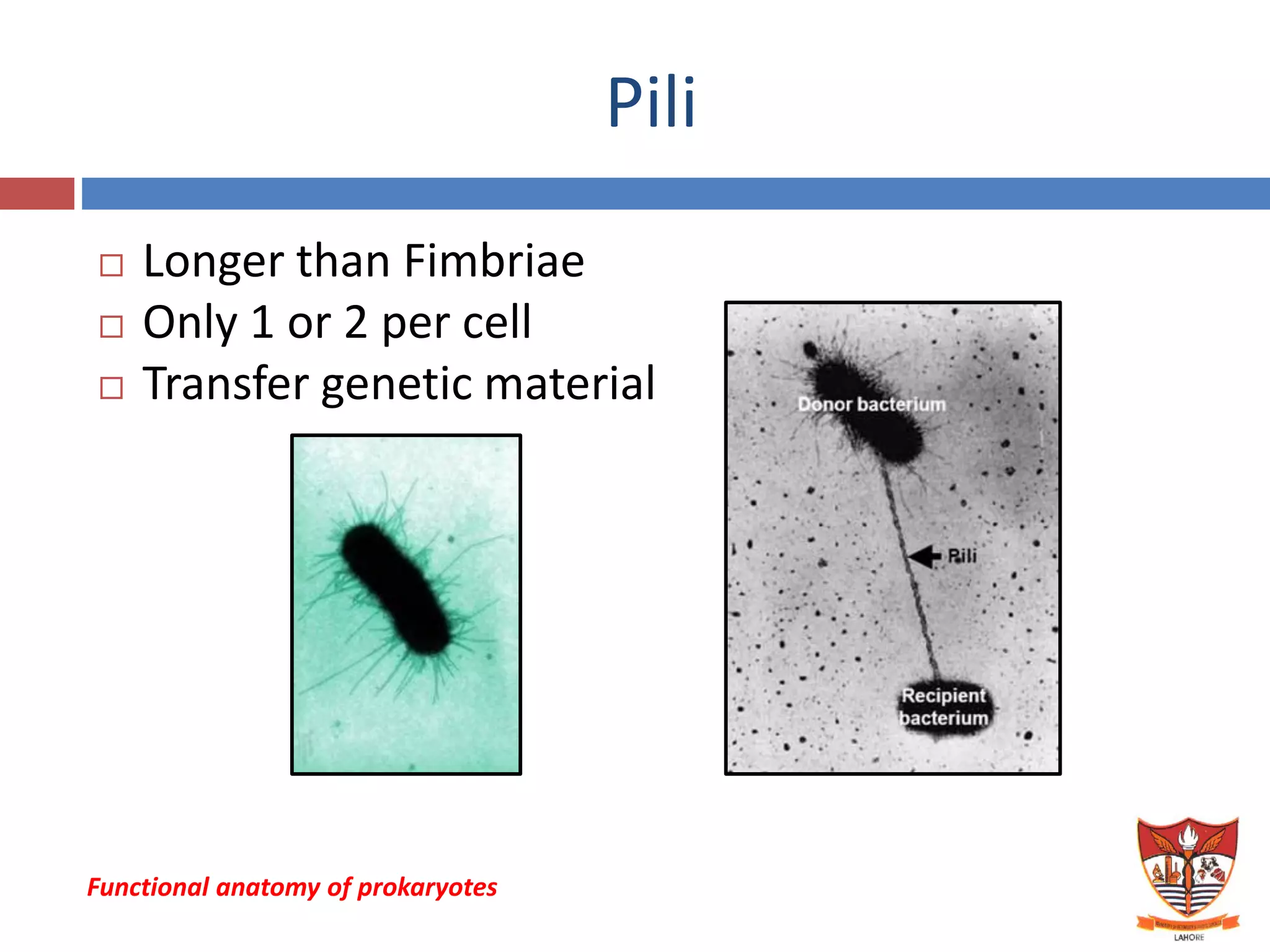
Pili
 Longer than Fimbriae
 Only 1 or 2 per cell
 Transfer genetic material
Functional anatomy of prokaryotes
 Prevents osmotic lysis
 Made of peptidoglycan (in bacteria)
Cell Wall
Functional anatomy of prokaryotes
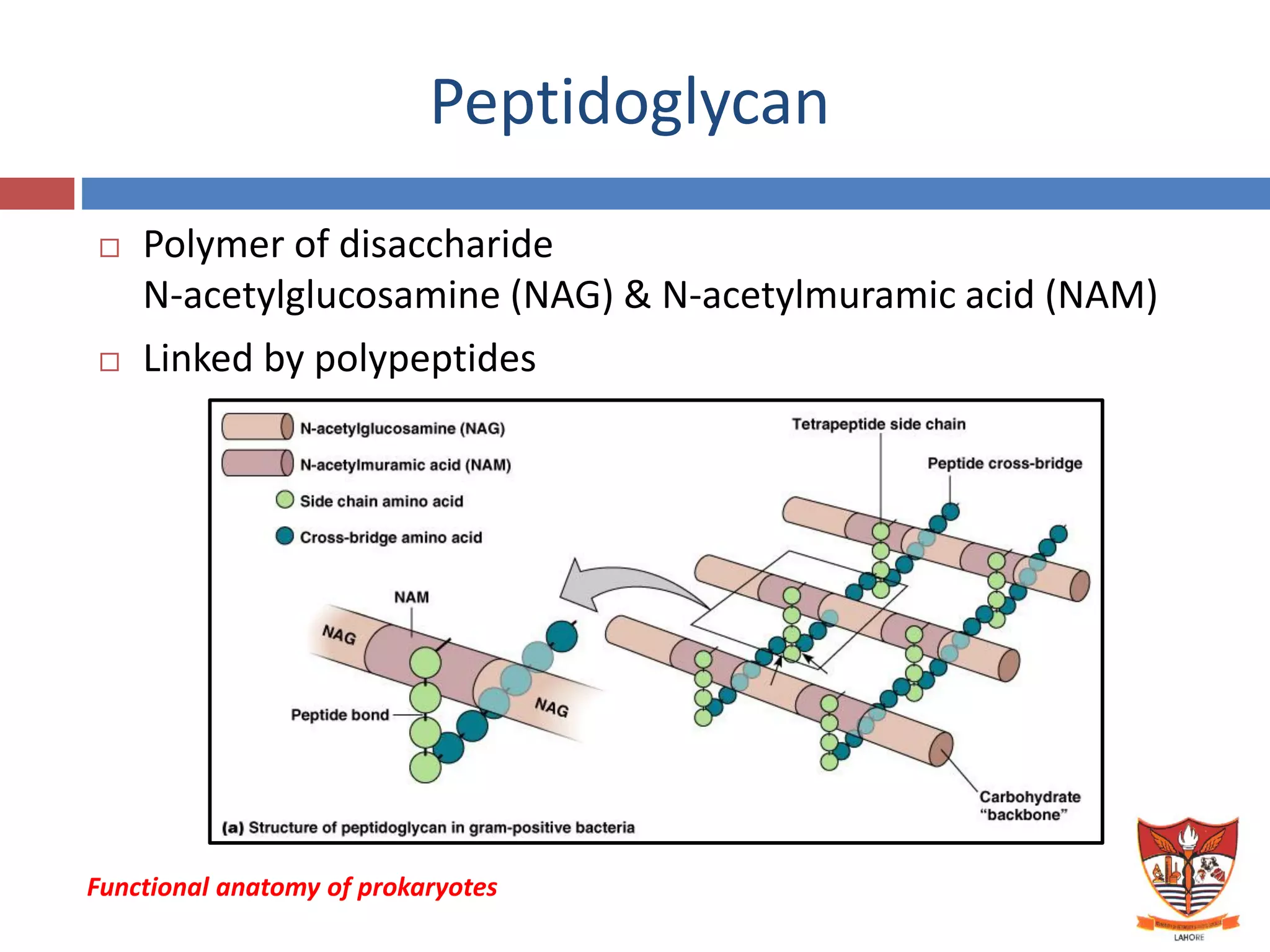
 Polymer of disaccharide
N-acetylglucosamine (NAG) & N-acetylmuramic acid (NAM)
 Linked by polypeptides
Peptidoglycan
Functional anatomy of prokaryotes
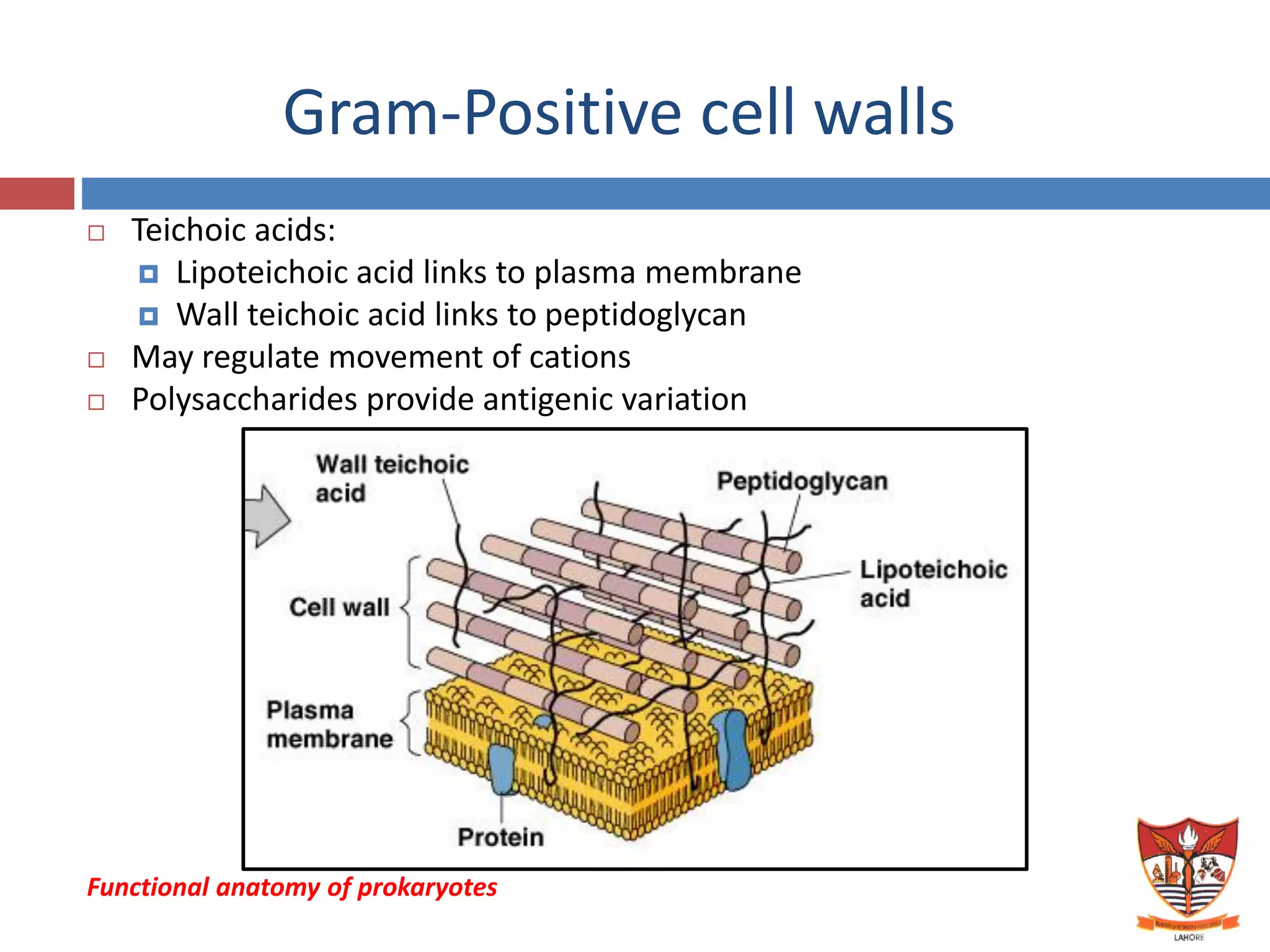
 Teichoic acids:
 Lipoteichoic acid links to plasma membrane
 Wall teichoic acid links to peptidoglycan
 May regulate movement of cations
 Polysaccharides provide antigenic variation
Gram-Positive cell walls
Functional anatomy of prokaryotes
 Lipopolysaccharides, lipoproteins, phospholipids.
 Forms the periplasm between the outer membrane
and the plasma membrane.
 Protection from phagocytes, complement, antibiotics.
 O polysaccharide antigen, e.g., E. coli O157:H7
 Lipid A is an endotoxin.
 Porins (proteins) form channels through membrane
Gram-Negative Outer Membrane
Functional anatomy of prokaryotes
Gram-Negative Outer Membrane
Figure 4.13c
Gram positive and Gram negative cell wall
Gram staining mechanism
Functional anatomy of prokaryotes
 Crystal violet-iodine crystals form in cell
 Gram-positive
 Alcohol dehydrates peptidoglycan
 CV-I crystals do not leave
 Gram-negative
 Alcohol dissolves outer membrane and leaves holes in
peptidoglycan
 CV-I washes out
Gram Stain Mechanism
Functional anatomy of prokaryotes
Gram positive VS gram negative
Characteristics Gram positive Gram negative
Gram reaction Blue stain Red/pink stain
Peptidoglycan Thick / multilayer Thin / single layer
Teichoic acid Present Absent
Periplasmic space Absent Present
Outer membrane Absent Present
LPS contents None High
Toxins production Exotoxins Endotoxins
Susceptibility to penicillin High Low
Flagellar structure 2 rings 4 rings
Functional anatomy of prokaryotes
 Mycoplasmas
 Lack cell walls
 Sterols in plasma membrane
 Archaea
 Wall-less, or
 Walls of pseudomurein (lack NAM and D amino acids)
 N-acetyltalosaminuronic acid
Atypical Cell Walls
Functional anatomy of prokaryotes
 Lysozyme digests disaccharide in peptidoglycan.
 Penicillin inhibits peptide bridges in peptidoglycan.
 Protoplast is a wall-less gram positive cell.
 Spheroplast is a wall-less gram-negative cell.
 L forms are wall-less cells that swell into irregular
shapes.
 Protoplasts and spheroplasts are susceptible to
osmotic lysis.
Damage to Cell Walls
Functional anatomy of prokaryotes
Plasma Membrane
Figure 4.14a
Functional anatomy of prokaryotes
Plasma Membrane
 Phospholipid bilayer
 Peripheral proteins
 Integral proteins
 Transmembrane
proteins
Figure 4.14b
Functional anatomy of prokaryotes
 Membrane is as viscous as olive oil.
 Proteins move to function
 Phospholipids rotate and move laterally
Fluid Mosaic Model
Functional anatomy of prokaryotes
 Selective permeability allows passage of some
molecules
 Enzymes for ATP production
 Photosynthetic pigments on foldings called
chromatophores or thylakoids
 Damage to the membrane by alcohols, quaternary
ammonium (detergents) and polymyxin antibiotics
causes leakage of cell contents
Plasma Membrane
Functional anatomy of prokaryotes
 Simple diffusion: Movement of a solute from an
area of high concentration to an area of low
concentration.
 Facilitative diffusion: Solute combines with a
transporter protein in the membrane.
Movement Across Membranes
Facilitated diffusion
Functional anatomy of prokaryotes
 Osmosis
 Movement of water across a
selectively permeable
membrane from an area of
high water concentration to
an area of lower water.
 Osmotic pressure
 The pressure needed to stop
the movement of water
across the membrane.
Movement Across Membranes
Osmosis
Functional anatomy of prokaryotes
 Active transport of substances requires a
transporter protein and ATP.
 Group translocation of substances requires a
transporter protein and the structure of protein is
altered
 Energy supplied by phosphoenolpyruvic acid
 Addition of phosphate to internalized glucose to
form phosphorylated glucose
Movement Across Membranes
Functional anatomy of prokaryotes
 Cytoplasm is the substance inside the plasma
membrane
 Thick, aqueous, semitransparent, and elastic
 80 % water
 Contain proteins, CHO, lipids, inorganic ions
Cytoplasm
Functional anatomy of prokaryotes
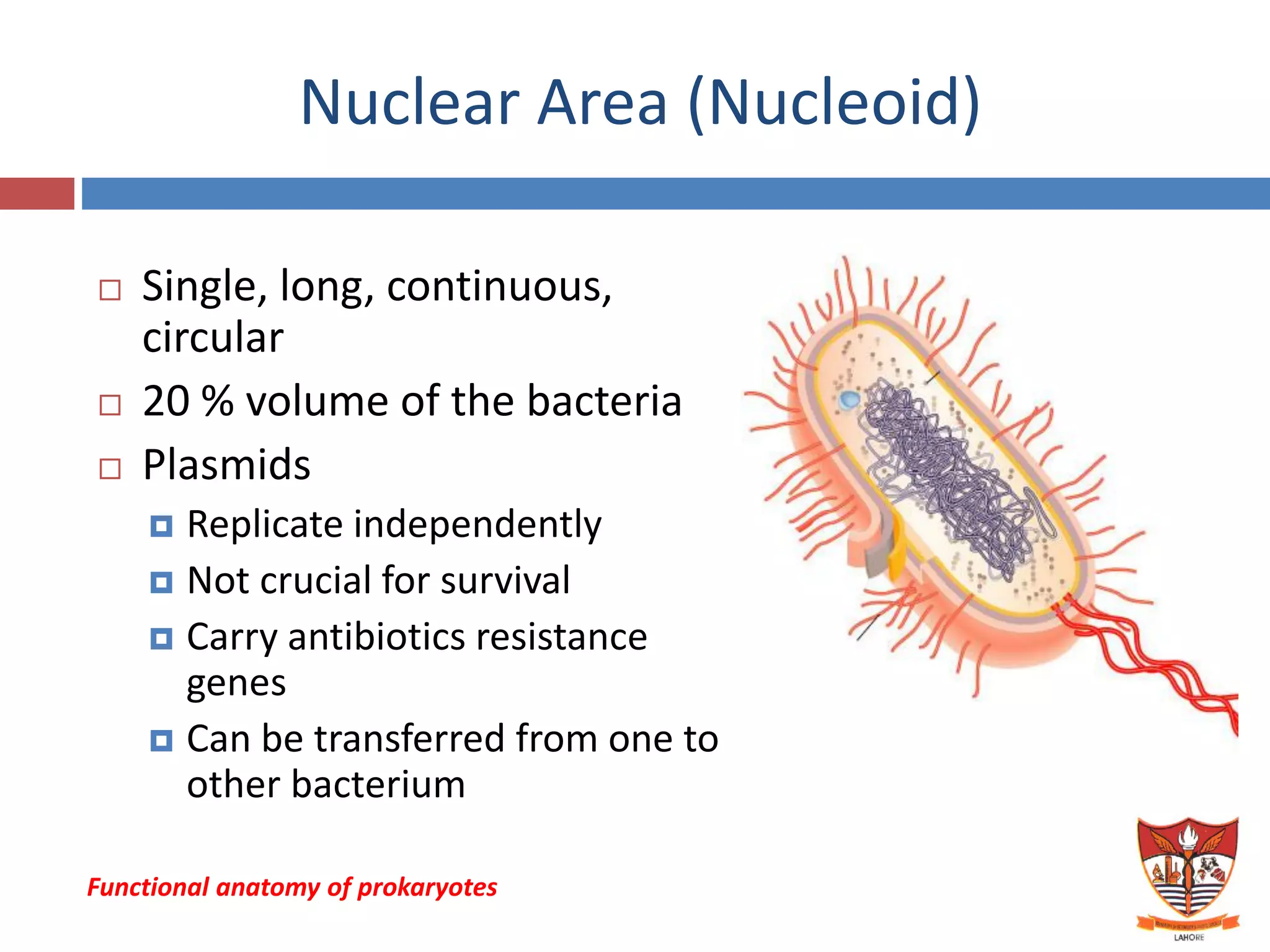
 Single, long, continuous,
circular
 20 % volume of the bacteria
 Plasmids
 Replicate independently
 Not crucial for survival
 Carry antibiotics resistance
genes
 Can be transferred from one to
other bacterium
Nuclear Area (Nucleoid)
Functional anatomy of prokaryotes
Ribosomes
Figure 4.19
Functional anatomy of prokaryotes
 Metachromatic granules
(volutin)
 Polysaccharide granules
 Lipid inclusions
 Sulfur granules
 Carboxysomes
 Gas vacuoles
 Magnetosomes
Inclusions
•Phosphate reserves
•Energy reserves
•Energy reserves
•Energy reserves
•Ribulose 1,5-diphosphate
carboxylase for CO2 fixation
•Protein covered cylinders
•Iron oxide (destroys H2O2)
Functional anatomy of prokaryotes
 Resting cells
 Resistant to desiccation, heat, chemicals
 Bacillus, Clostridium
 Sporulation: Endospore formation
 Germination: Return to vegetative state
Endospores
Functional anatomy of prokaryotes
Figure 4.21a
Endospores
Endospore formation
Eukaryotic cell
Functional anatomy of prokaryotes
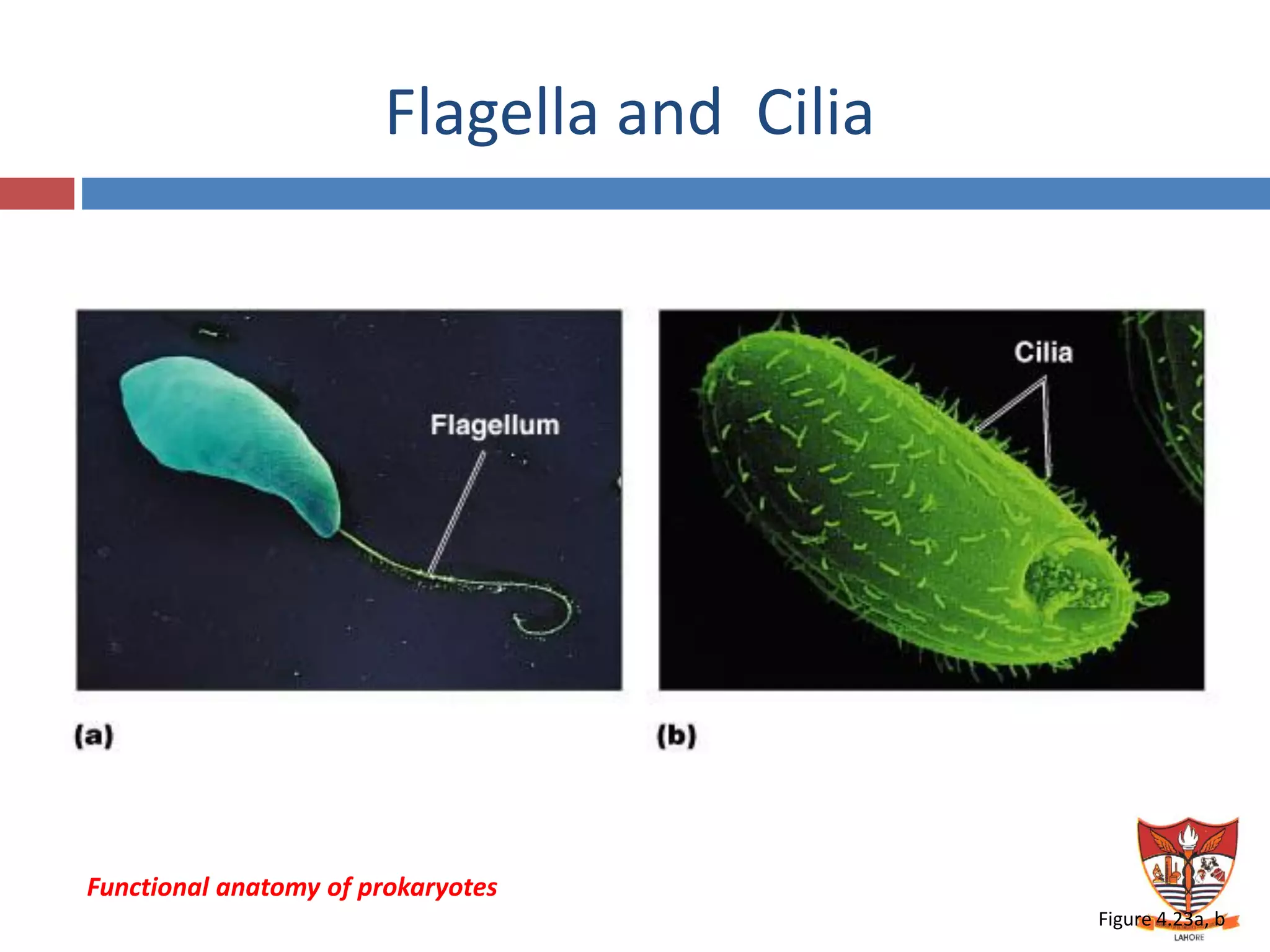
Flagella and Cilia
Figure 4.23a, b
Functional anatomy of prokaryotes
 Microtubules
 Tubulin
 9 pairs + 2 arrangements
Figure 4.23c
Flagella
Functional anatomy of prokaryotes
 Cell wall
 Plants and algae cellulose
 Fungi chitin (NAG)
 Yeast (glucan, mannan)
 Glycocalyx
 Carbohydrates extending from animal plasma
membrane
 Bonded to proteins and lipids in membrane
Cell Wall
Functional anatomy of prokaryotes
 Phospholipid bilayer
 Peripheral proteins
 Integral proteins
 Transmembrane proteins
 Sterols
 Glycocalyx carbohydrates
Plasma Membrane
Functional anatomy of prokaryotes
 Selective permeability
 Simple diffusion
 Facilitative diffusion
 Osmosis
 Active transport
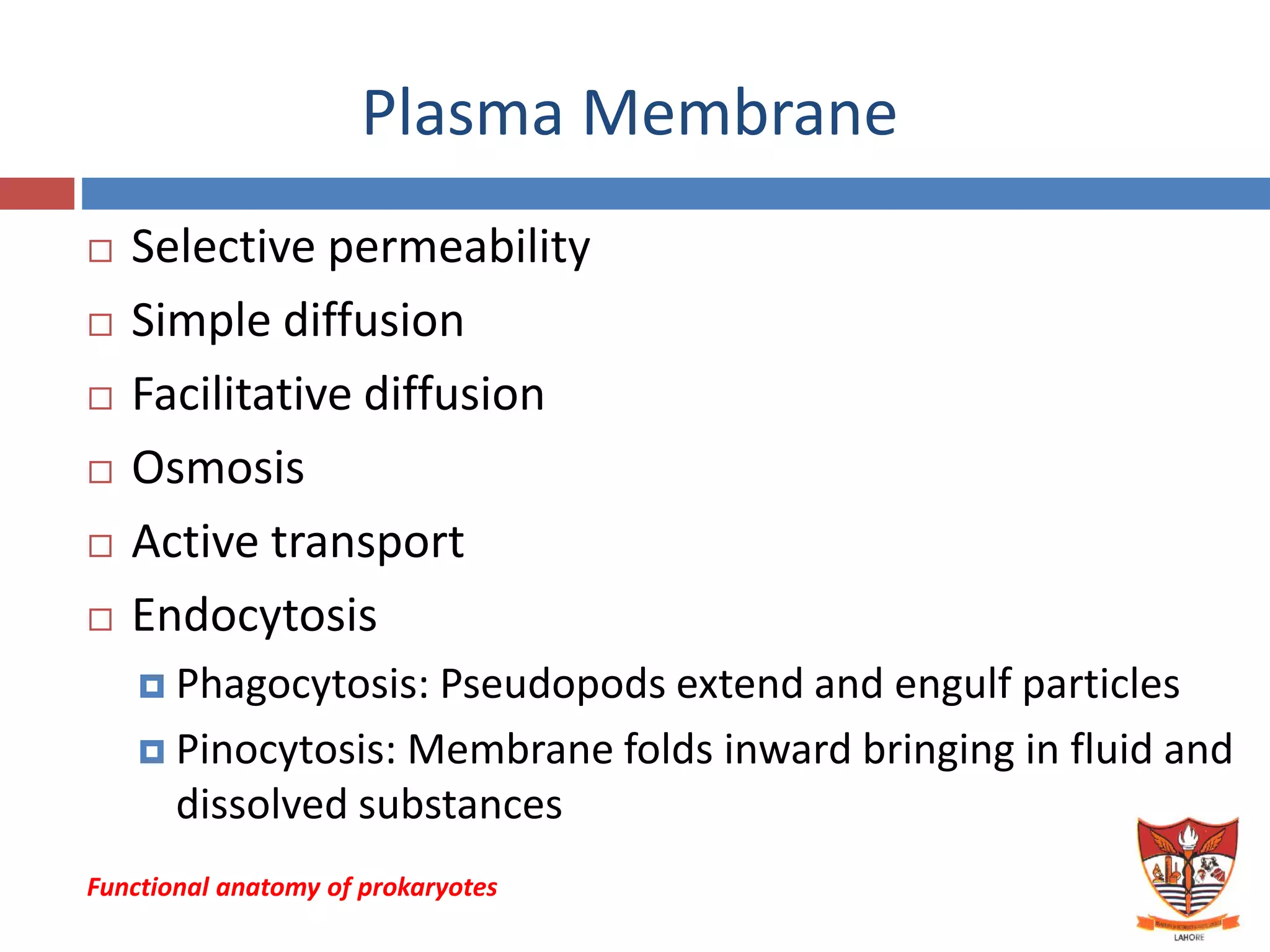
 Endocytosis
 Phagocytosis: Pseudopods extend and engulf particles
 Pinocytosis: Membrane folds inward bringing in fluid and
dissolved substances
Plasma Membrane
Functional anatomy of prokaryotes
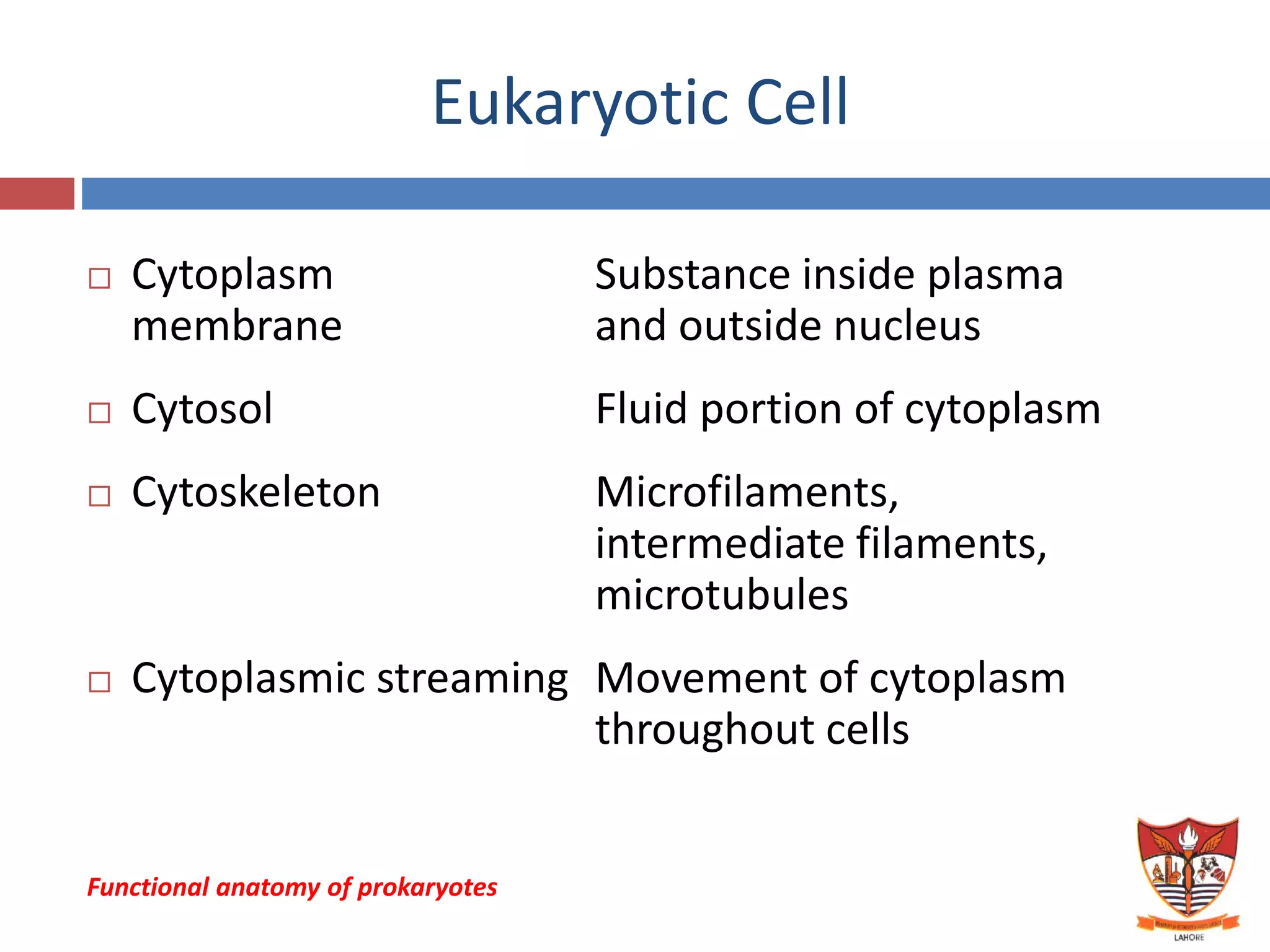
 Cytoplasm Substance inside plasma
membrane and outside nucleus
 Cytosol Fluid portion of cytoplasm
 Cytoskeleton Microfilaments,
intermediate filaments,
microtubules
 Cytoplasmic streaming Movement of cytoplasm
throughout cells
Eukaryotic Cell
Functional anatomy of prokaryotes
Membrane-bound structures:
 Nucleus Contains chromosomes
 ER Transport network
 Golgi complex Membrane formation and secretion
 Lysosome Digestive enzymes
 Vacuole Brings food into cells and provides support
 Mitochondria Cellular respiration
 Chloroplast Photosynthesis
 Peroxisome Oxidation of fatty acids, destroys H2O2
Organelles
Nucleus
Endoplasmic Reticulum
Functional anatomy of prokaryotes
 80S
 Membrane-bound Attached to ER
 Free In cytoplasm
 70S
 In chloroplasts and mitochondria
Ribosomes
Functional anatomy of prokaryotes
Golgi Complex
Figure 4.26
Lysosomes
Vacuoles
Mitochondrion
Chloroplast
Endosymbiotic Theory
THANK YOU

functional anatomy of prokaryotes and eukaryotes

  • 1.
    FUNCTIONAL ANATOMY OF PROKARYOTESAND EUKARYOTES BY DR JAWAD NAZIR ASSISTANT PROFESSOR DEPARTMENT OF MICROBIOLOGY UNIVERSITY OF VETERINARY AND ANIMAL SCIENCES, LAHORE
  • 2.
    Functional anatomy ofprokaryotes Prokaryotes vs Eukaryotes  Prokaryote comes from the Greek words for pre-nucleus  Eukaryote comes from the Greek words for true nucleus.
  • 3.
    Functional anatomy ofprokaryotes Prokaryotes Eukaryotes One circular chromosome, not in a membrane Paired chromosomes, in nuclear membrane No histones Histones No organelles Organelles Peptidoglycan cell walls Polysaccharide cell walls Binary fission Mitotic spindle Prokaryotes vs Eukaryotes
  • 4.
    Functional anatomy ofprokaryotes  Average size: 0.2 -1.0 µm  2 - 8 µm  Basic shapes: Size and shape
  • 5.
    Functional anatomy ofprokaryotes  Pairs: diplococci, diplobacilli  Clusters: staphylococci  Chains: streptococci, streptobacilli Size and shape
  • 6.
    Functional anatomy ofprokaryotes Size and shape
  • 7.
    Functional anatomy ofprokaryotes Size and shape
  • 8.
    Functional anatomy ofprokaryotes  Unusual shapes  Star-shaped Stella  Square Haloarcula  Most bacteria are monomorphic  A few are pleomorphic Size and shape Genus: Stella Genus: Haloarcula
  • 9.
    Functional anatomy ofprokaryotes Bacterial cell structure  Structures external to cell wall  Cell wall itself  Structures internal to cell wall
  • 10.
    Functional anatomy ofprokaryotes  Outside cell wall  Usually sticky  A capsule is neatly organized  A slime layer is unorganized & loose  Extracellular polysaccharide allows cell to attach  Capsules prevent phagocytosis  Association with diseases  B. anthracis  S. pneumoniae Glycocalyx
  • 11.
    Functional anatomy ofprokaryotes  Outside cell wall  Filament made of chains of flagellin  Attached to a protein hook  Anchored to the wall and membrane by the basal body Flagella
  • 12.
    Functional anatomy ofprokaryotes Flagella Arrangement
  • 13.
    Functional anatomy ofprokaryotes  Rotate flagella to run or tumble  Move toward or away from stimuli (taxis)  Flagella proteins are H antigens (e.g., E. coli O157:H7) Bacterial motility
  • 14.
    Functional anatomy ofprokaryotes Bacterial motility
  • 15.
    Functional anatomy ofprokaryotes  Endoflagella  In spirochetes  Anchored at one end of a cell  Rotation causes cell to move Axial Filaments
  • 16.
    Functional anatomy ofprokaryotes  Fimbriae may be several hundred in number  Distributed on poles or entire surface  Allow attachment Fimbriae
  • 17.
    Functional anatomy ofprokaryotes Pili  Longer than Fimbriae  Only 1 or 2 per cell  Transfer genetic material
  • 18.
    Functional anatomy ofprokaryotes  Prevents osmotic lysis  Made of peptidoglycan (in bacteria) Cell Wall
  • 19.
    Functional anatomy ofprokaryotes  Polymer of disaccharide N-acetylglucosamine (NAG) & N-acetylmuramic acid (NAM)  Linked by polypeptides Peptidoglycan
  • 20.
    Functional anatomy ofprokaryotes  Teichoic acids:  Lipoteichoic acid links to plasma membrane  Wall teichoic acid links to peptidoglycan  May regulate movement of cations  Polysaccharides provide antigenic variation Gram-Positive cell walls
  • 21.
    Functional anatomy ofprokaryotes  Lipopolysaccharides, lipoproteins, phospholipids.  Forms the periplasm between the outer membrane and the plasma membrane.  Protection from phagocytes, complement, antibiotics.  O polysaccharide antigen, e.g., E. coli O157:H7  Lipid A is an endotoxin.  Porins (proteins) form channels through membrane Gram-Negative Outer Membrane
  • 22.
    Functional anatomy ofprokaryotes Gram-Negative Outer Membrane Figure 4.13c
  • 23.
    Gram positive andGram negative cell wall
  • 24.
  • 25.
    Functional anatomy ofprokaryotes  Crystal violet-iodine crystals form in cell  Gram-positive  Alcohol dehydrates peptidoglycan  CV-I crystals do not leave  Gram-negative  Alcohol dissolves outer membrane and leaves holes in peptidoglycan  CV-I washes out Gram Stain Mechanism
  • 26.
    Functional anatomy ofprokaryotes Gram positive VS gram negative Characteristics Gram positive Gram negative Gram reaction Blue stain Red/pink stain Peptidoglycan Thick / multilayer Thin / single layer Teichoic acid Present Absent Periplasmic space Absent Present Outer membrane Absent Present LPS contents None High Toxins production Exotoxins Endotoxins Susceptibility to penicillin High Low Flagellar structure 2 rings 4 rings
  • 27.
    Functional anatomy ofprokaryotes  Mycoplasmas  Lack cell walls  Sterols in plasma membrane  Archaea  Wall-less, or  Walls of pseudomurein (lack NAM and D amino acids)  N-acetyltalosaminuronic acid Atypical Cell Walls
  • 28.
    Functional anatomy ofprokaryotes  Lysozyme digests disaccharide in peptidoglycan.  Penicillin inhibits peptide bridges in peptidoglycan.  Protoplast is a wall-less gram positive cell.  Spheroplast is a wall-less gram-negative cell.  L forms are wall-less cells that swell into irregular shapes.  Protoplasts and spheroplasts are susceptible to osmotic lysis. Damage to Cell Walls
  • 29.
    Functional anatomy ofprokaryotes Plasma Membrane Figure 4.14a
  • 30.
    Functional anatomy ofprokaryotes Plasma Membrane  Phospholipid bilayer  Peripheral proteins  Integral proteins  Transmembrane proteins Figure 4.14b
  • 31.
    Functional anatomy ofprokaryotes  Membrane is as viscous as olive oil.  Proteins move to function  Phospholipids rotate and move laterally Fluid Mosaic Model
  • 32.
    Functional anatomy ofprokaryotes  Selective permeability allows passage of some molecules  Enzymes for ATP production  Photosynthetic pigments on foldings called chromatophores or thylakoids  Damage to the membrane by alcohols, quaternary ammonium (detergents) and polymyxin antibiotics causes leakage of cell contents Plasma Membrane
  • 33.
    Functional anatomy ofprokaryotes  Simple diffusion: Movement of a solute from an area of high concentration to an area of low concentration.  Facilitative diffusion: Solute combines with a transporter protein in the membrane. Movement Across Membranes
  • 34.
  • 35.
    Functional anatomy ofprokaryotes  Osmosis  Movement of water across a selectively permeable membrane from an area of high water concentration to an area of lower water.  Osmotic pressure  The pressure needed to stop the movement of water across the membrane. Movement Across Membranes
  • 36.
  • 37.
    Functional anatomy ofprokaryotes  Active transport of substances requires a transporter protein and ATP.  Group translocation of substances requires a transporter protein and the structure of protein is altered  Energy supplied by phosphoenolpyruvic acid  Addition of phosphate to internalized glucose to form phosphorylated glucose Movement Across Membranes
  • 38.
    Functional anatomy ofprokaryotes  Cytoplasm is the substance inside the plasma membrane  Thick, aqueous, semitransparent, and elastic  80 % water  Contain proteins, CHO, lipids, inorganic ions Cytoplasm
  • 39.
    Functional anatomy ofprokaryotes  Single, long, continuous, circular  20 % volume of the bacteria  Plasmids  Replicate independently  Not crucial for survival  Carry antibiotics resistance genes  Can be transferred from one to other bacterium Nuclear Area (Nucleoid)
  • 40.
    Functional anatomy ofprokaryotes Ribosomes Figure 4.19
  • 41.
    Functional anatomy ofprokaryotes  Metachromatic granules (volutin)  Polysaccharide granules  Lipid inclusions  Sulfur granules  Carboxysomes  Gas vacuoles  Magnetosomes Inclusions •Phosphate reserves •Energy reserves •Energy reserves •Energy reserves •Ribulose 1,5-diphosphate carboxylase for CO2 fixation •Protein covered cylinders •Iron oxide (destroys H2O2)
  • 42.
    Functional anatomy ofprokaryotes  Resting cells  Resistant to desiccation, heat, chemicals  Bacillus, Clostridium  Sporulation: Endospore formation  Germination: Return to vegetative state Endospores
  • 43.
    Functional anatomy ofprokaryotes Figure 4.21a Endospores
  • 44.
  • 45.
  • 46.
    Functional anatomy ofprokaryotes Flagella and Cilia Figure 4.23a, b
  • 47.
    Functional anatomy ofprokaryotes  Microtubules  Tubulin  9 pairs + 2 arrangements Figure 4.23c Flagella
  • 48.
    Functional anatomy ofprokaryotes  Cell wall  Plants and algae cellulose  Fungi chitin (NAG)  Yeast (glucan, mannan)  Glycocalyx  Carbohydrates extending from animal plasma membrane  Bonded to proteins and lipids in membrane Cell Wall
  • 49.
    Functional anatomy ofprokaryotes  Phospholipid bilayer  Peripheral proteins  Integral proteins  Transmembrane proteins  Sterols  Glycocalyx carbohydrates Plasma Membrane
  • 50.
    Functional anatomy ofprokaryotes  Selective permeability  Simple diffusion  Facilitative diffusion  Osmosis  Active transport  Endocytosis  Phagocytosis: Pseudopods extend and engulf particles  Pinocytosis: Membrane folds inward bringing in fluid and dissolved substances Plasma Membrane
  • 51.
    Functional anatomy ofprokaryotes  Cytoplasm Substance inside plasma membrane and outside nucleus  Cytosol Fluid portion of cytoplasm  Cytoskeleton Microfilaments, intermediate filaments, microtubules  Cytoplasmic streaming Movement of cytoplasm throughout cells Eukaryotic Cell
  • 52.
    Functional anatomy ofprokaryotes Membrane-bound structures:  Nucleus Contains chromosomes  ER Transport network  Golgi complex Membrane formation and secretion  Lysosome Digestive enzymes  Vacuole Brings food into cells and provides support  Mitochondria Cellular respiration  Chloroplast Photosynthesis  Peroxisome Oxidation of fatty acids, destroys H2O2 Organelles
  • 53.
  • 54.
  • 55.
    Functional anatomy ofprokaryotes  80S  Membrane-bound Attached to ER  Free In cytoplasm  70S  In chloroplasts and mitochondria Ribosomes
  • 56.
    Functional anatomy ofprokaryotes Golgi Complex Figure 4.26
  • 57.
  • 58.
  • 59.
  • 60.
  • 61.
  • 62.