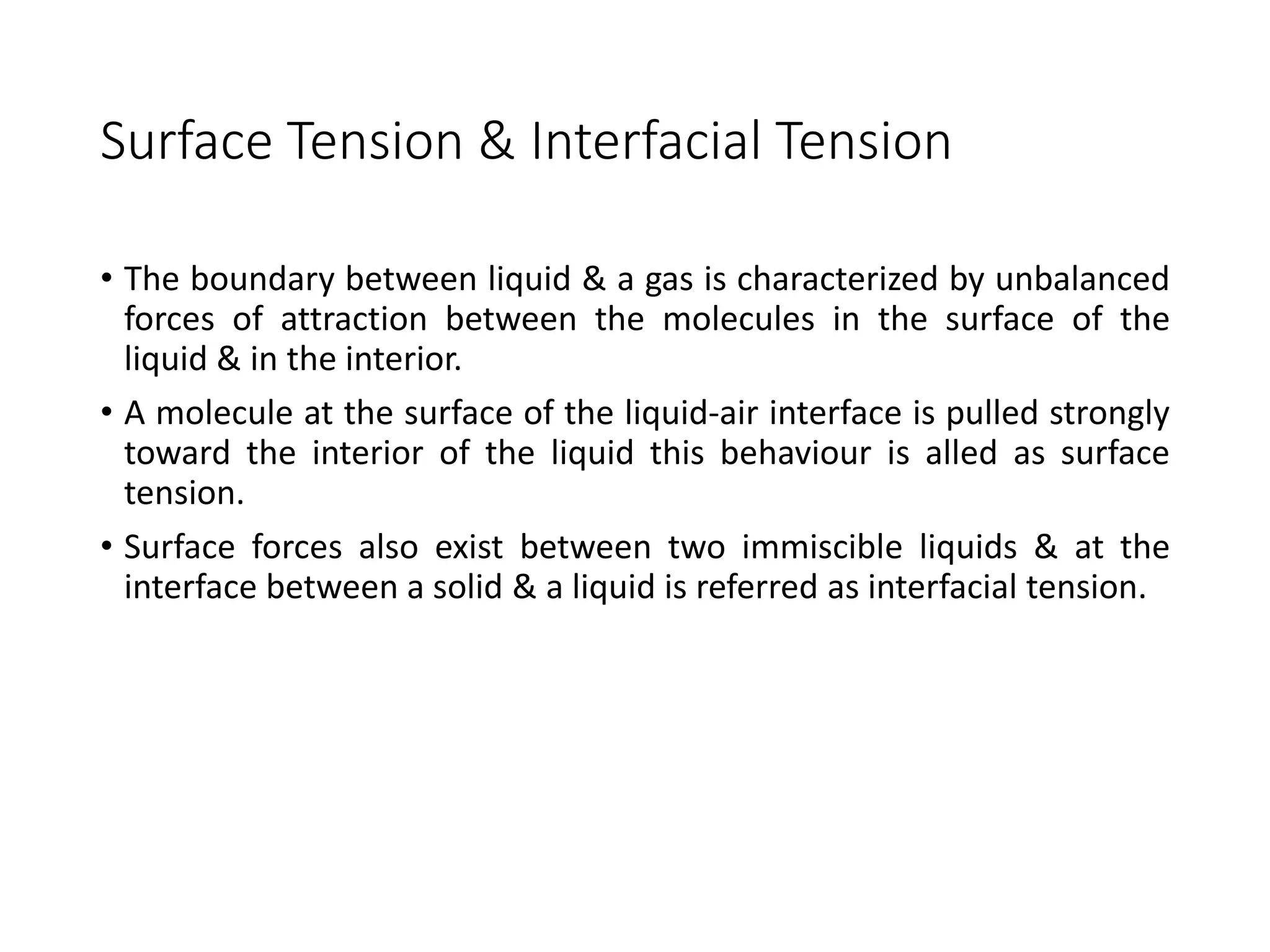
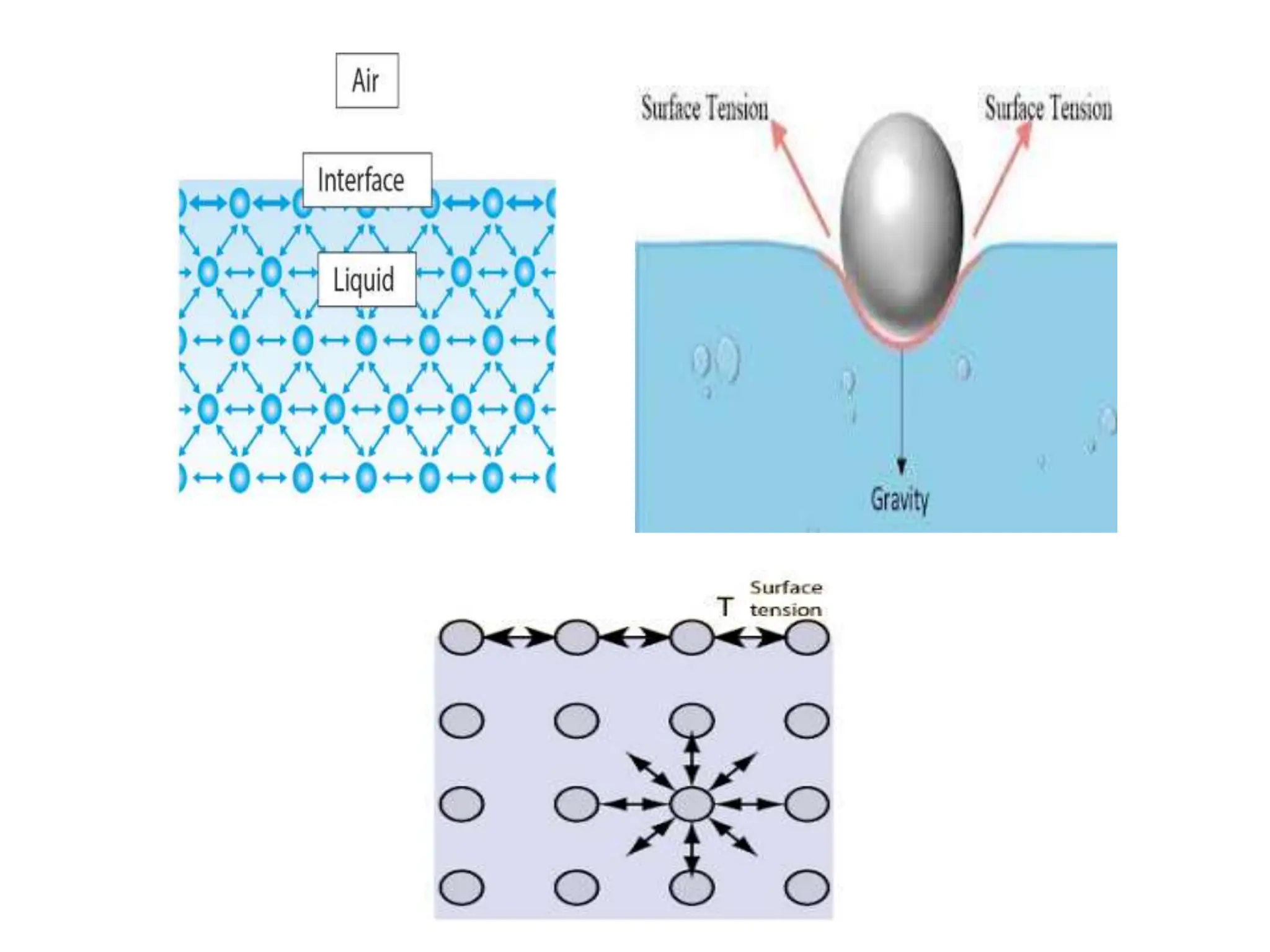
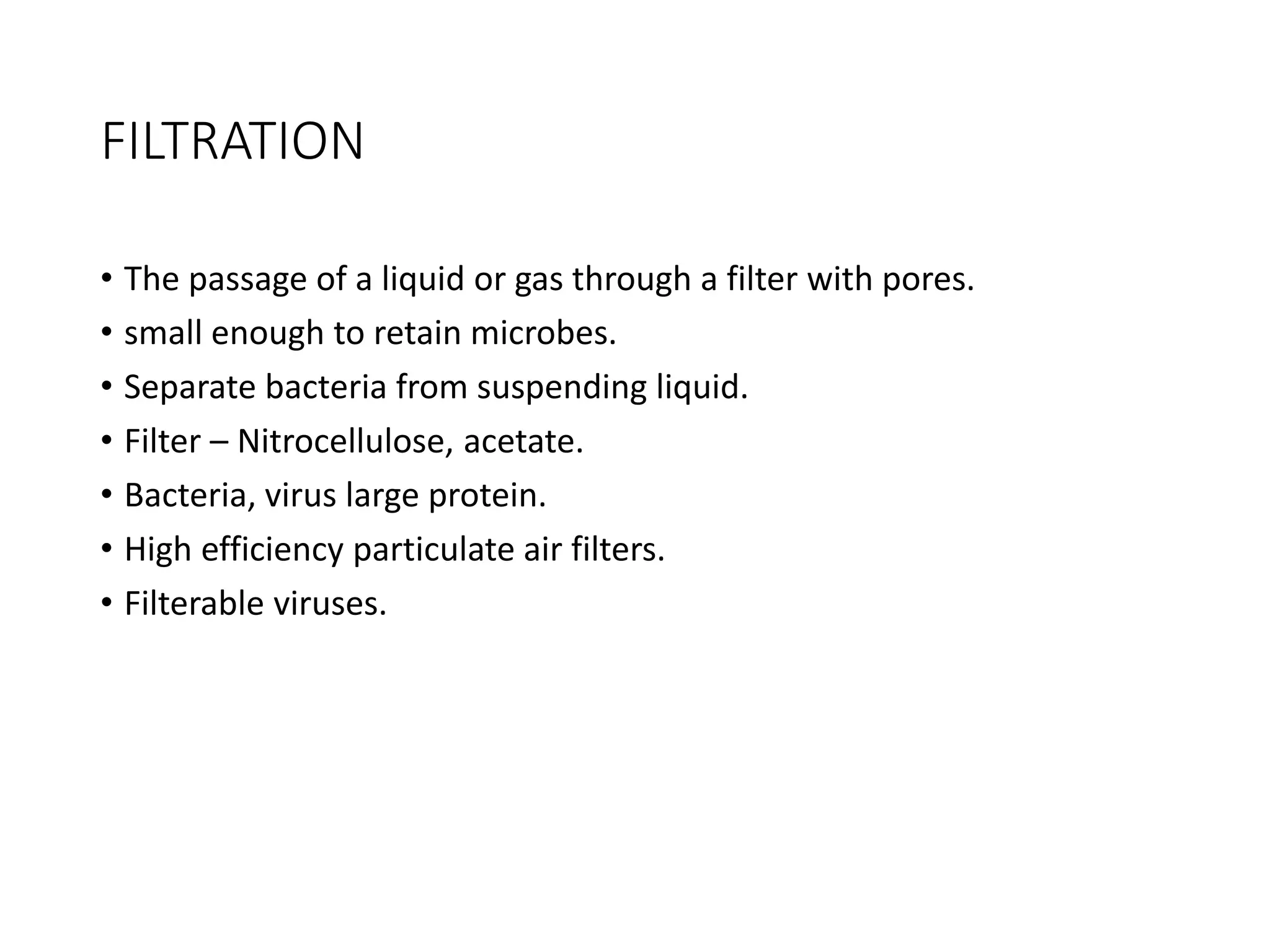
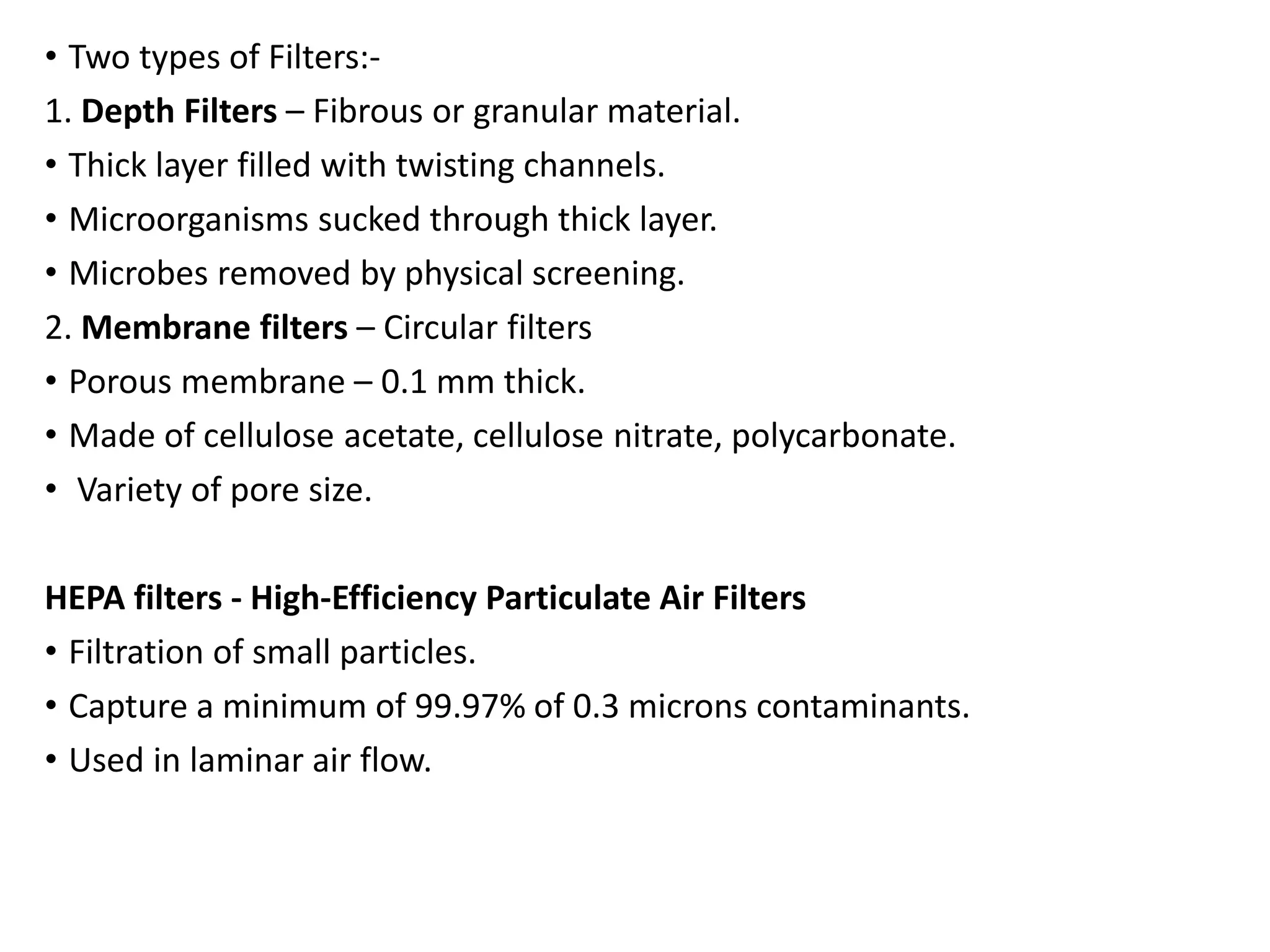
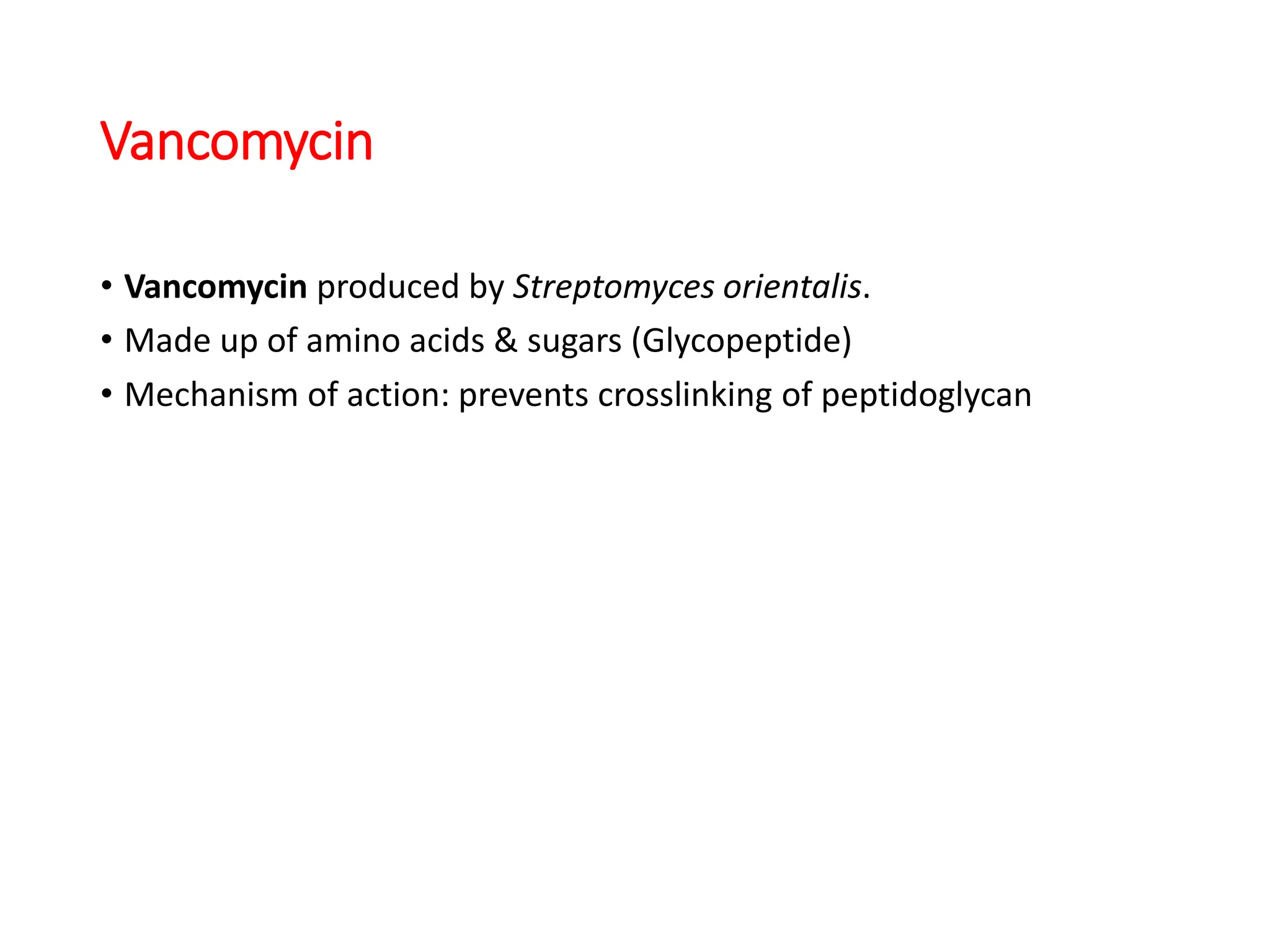
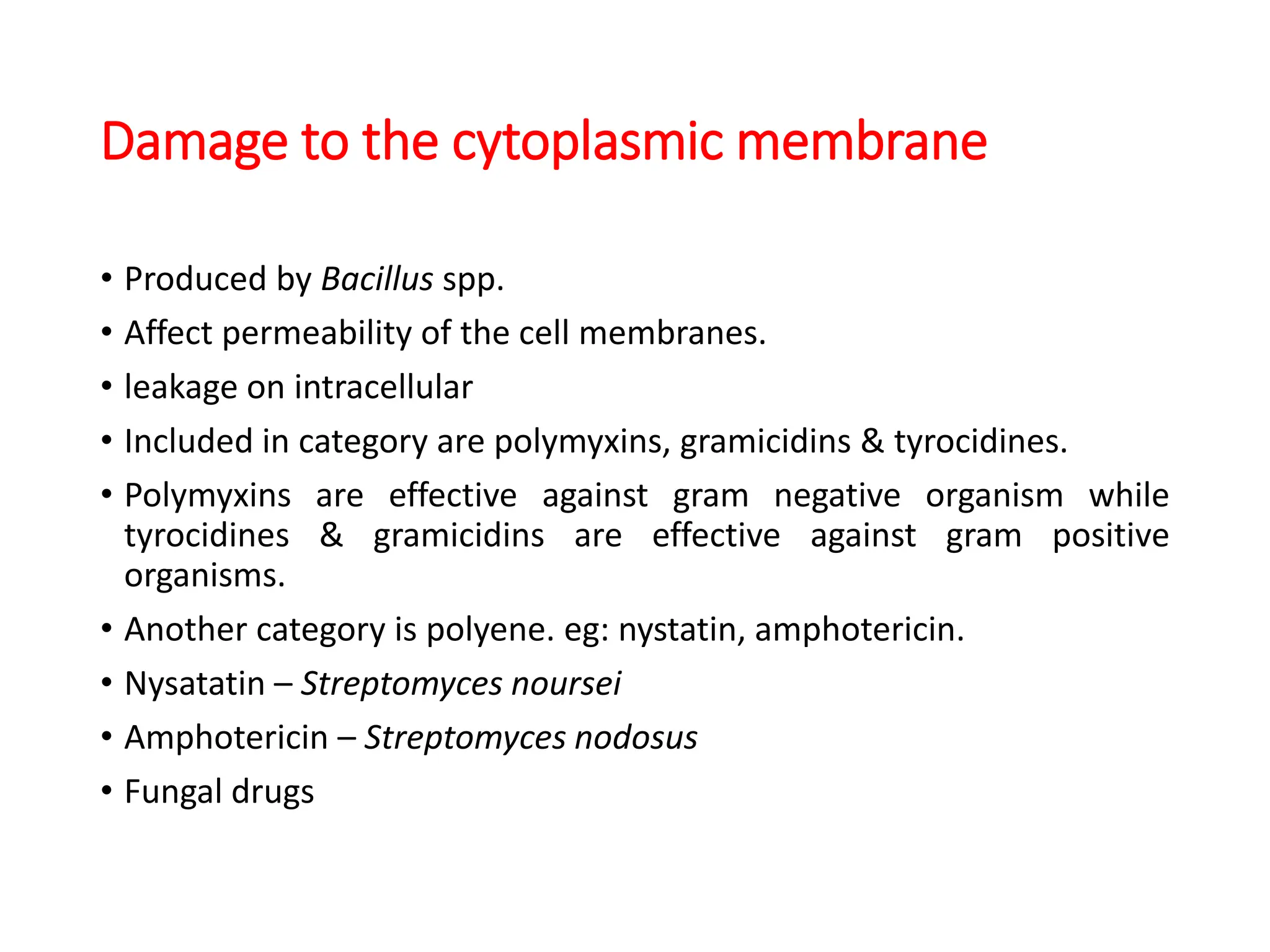
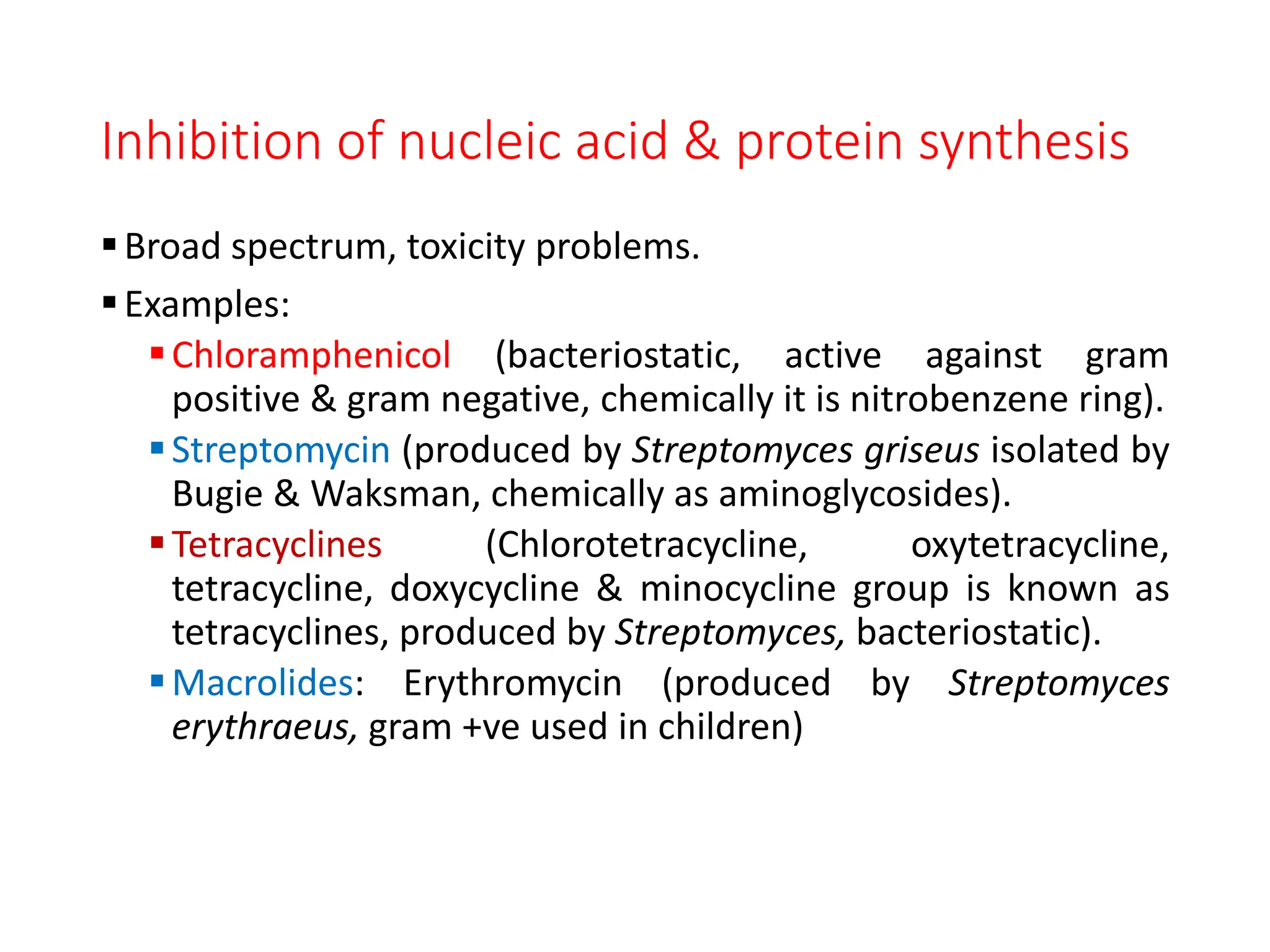
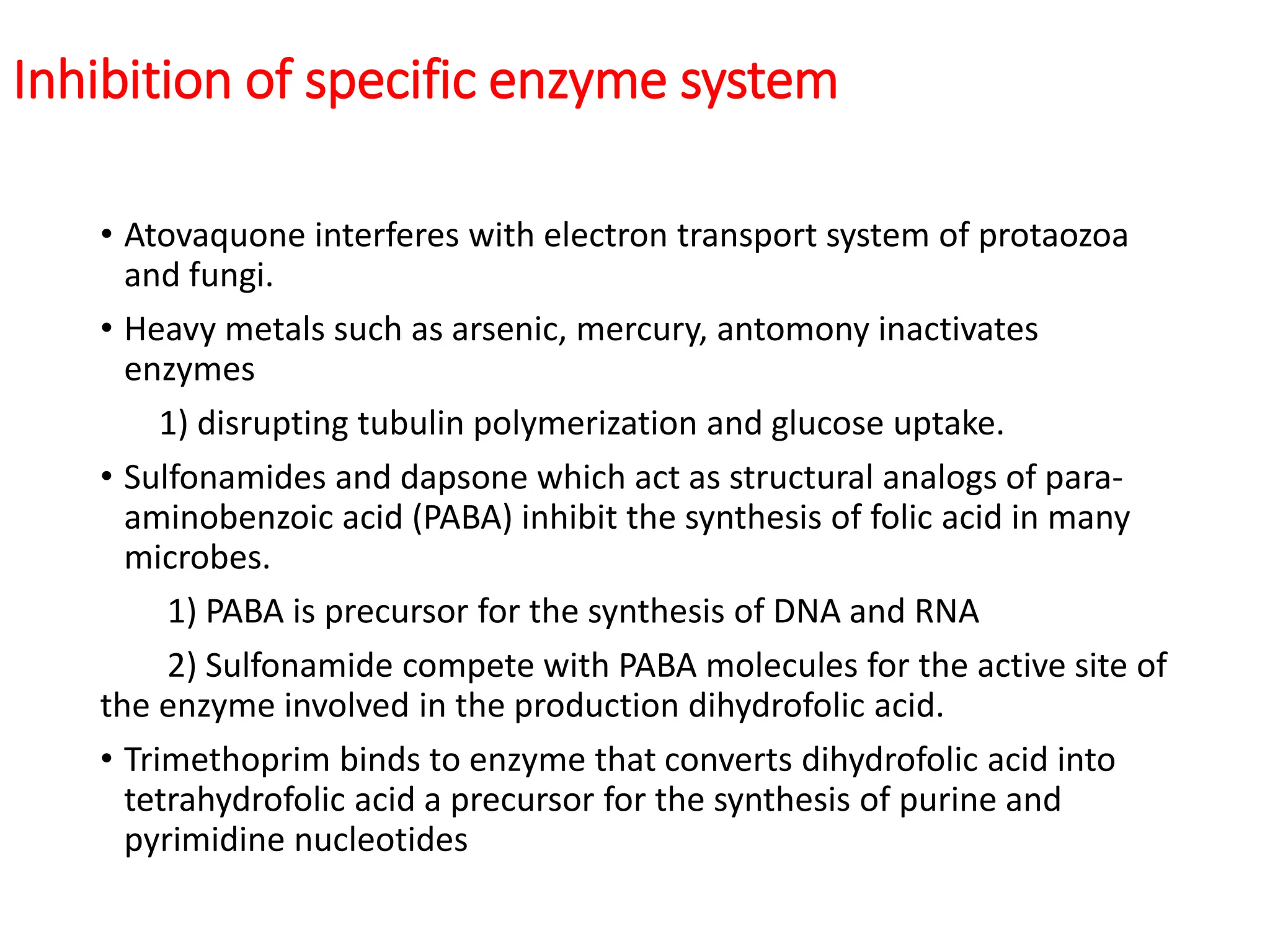
SHRAMSHAKTI COLLEGE OF FOOD TECHNOLOGY, MALDAD
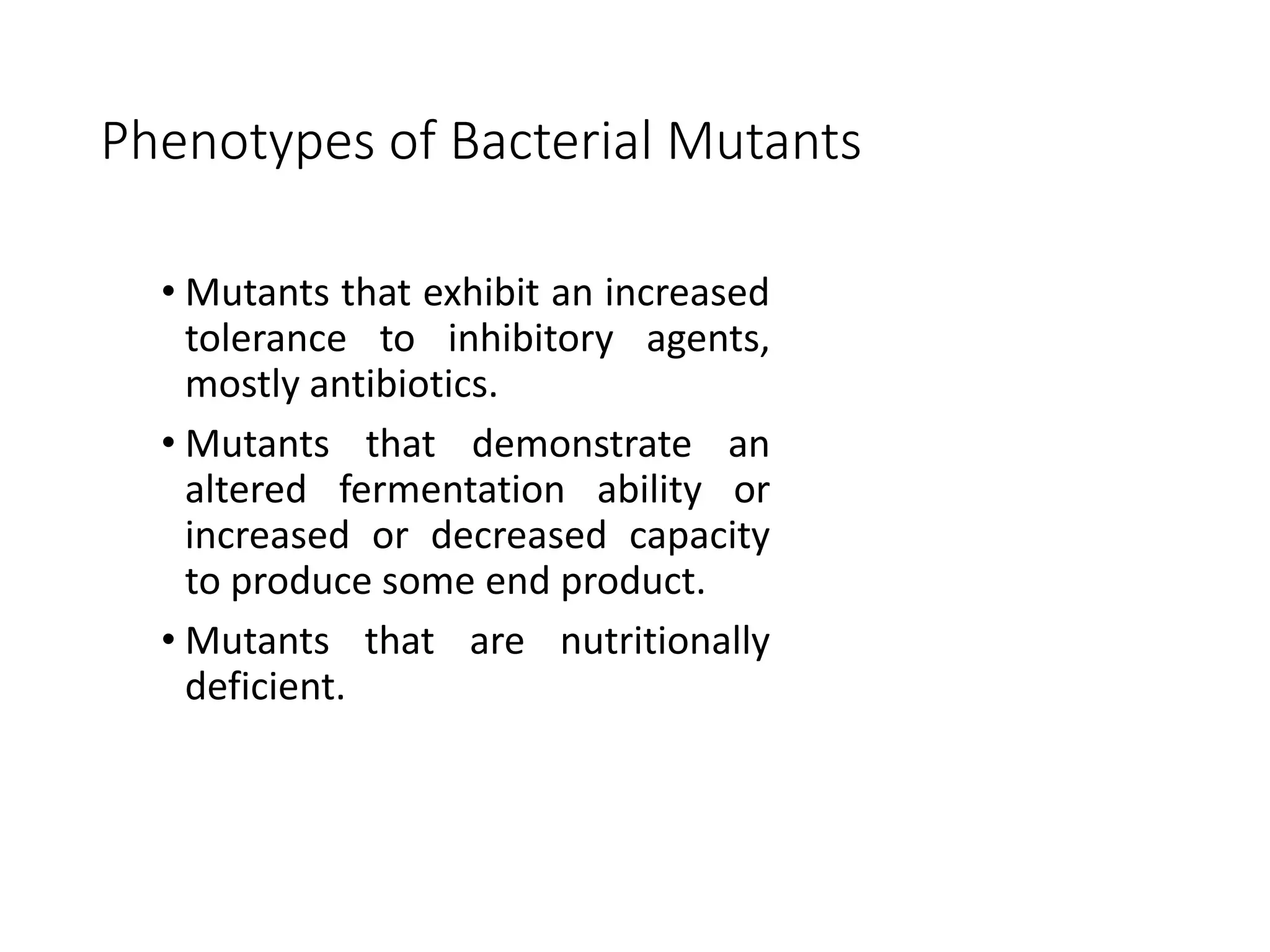
FMS-111
GENERAL MICROBIOLOGY
Presented by
SAIGAONKAR CHIRANTAN SANDIP
(FTS/2020/41)
Introduction & Scope of
Microbiology
Microbiology
• Microbiology is the study of microorganisms / microbes which is
visible only with a microscope.
• Includes- Bacteria, fungi, algae, protozoa & viruses (act as infectious
agents).
• Most of the microorganisms are harmless.
Spontaneous generation
• Aristotle and others believed that living organisms could develop
from non-living materials.
• Rogen Bacon described that the disease caused by a minute “seed” or
“germ”.
• Antony Van Leeuwenhoek (1632 – 1723)
• Descriptions of Protozoa, basic types of bacteria, yeasts and algae.
• Father of Bacteriology and protozoology.
• In 1676, he observed and described microorganisms such as bacteria and
protozoa as “Animalcules”.
• The term microbe is used by Sedillot in 1878.
• Single lens microscope.
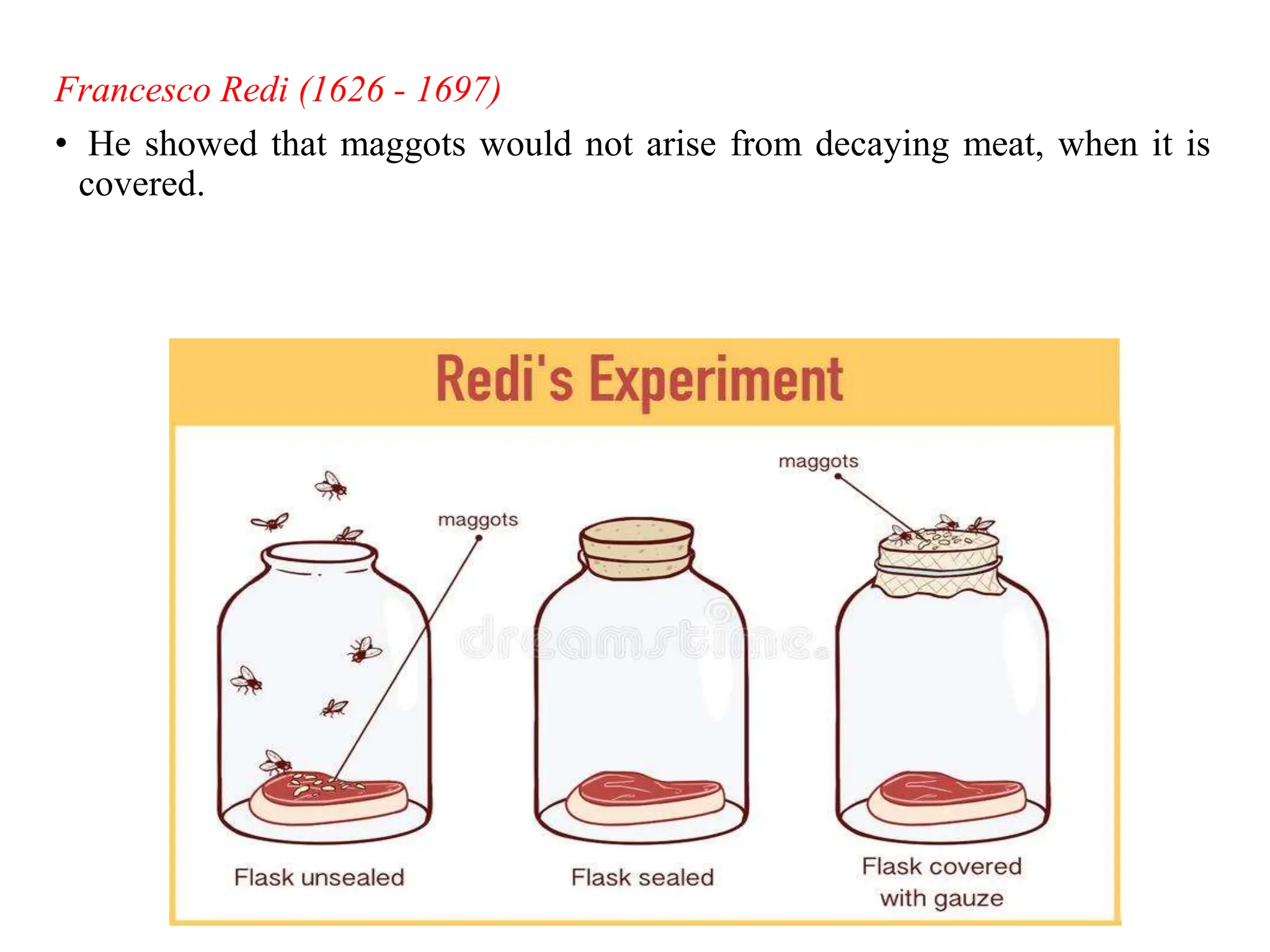
Francesco Redi (1626 - 1697)
• He showed that maggots would not arise from decaying meat, when it is
covered.
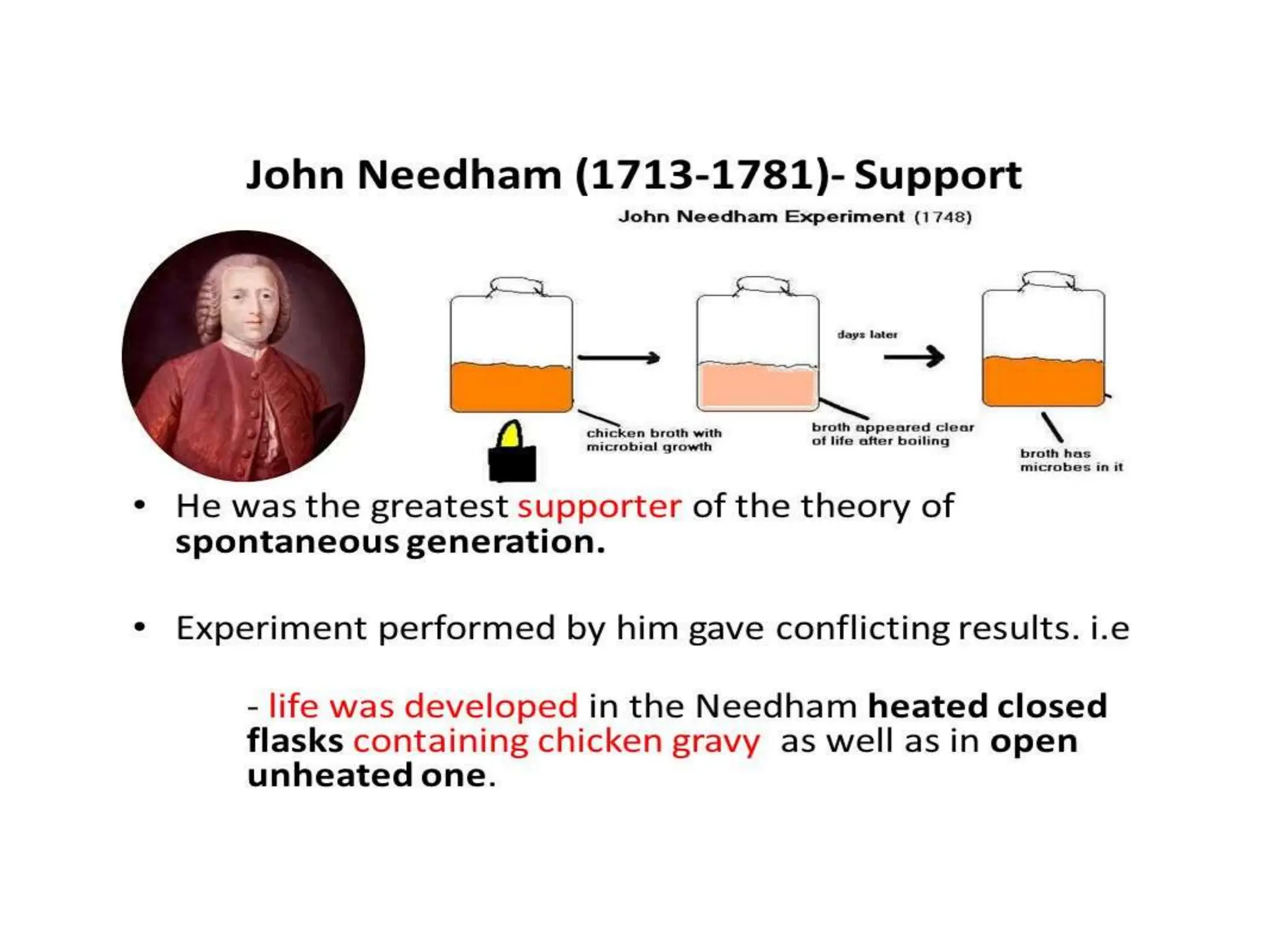
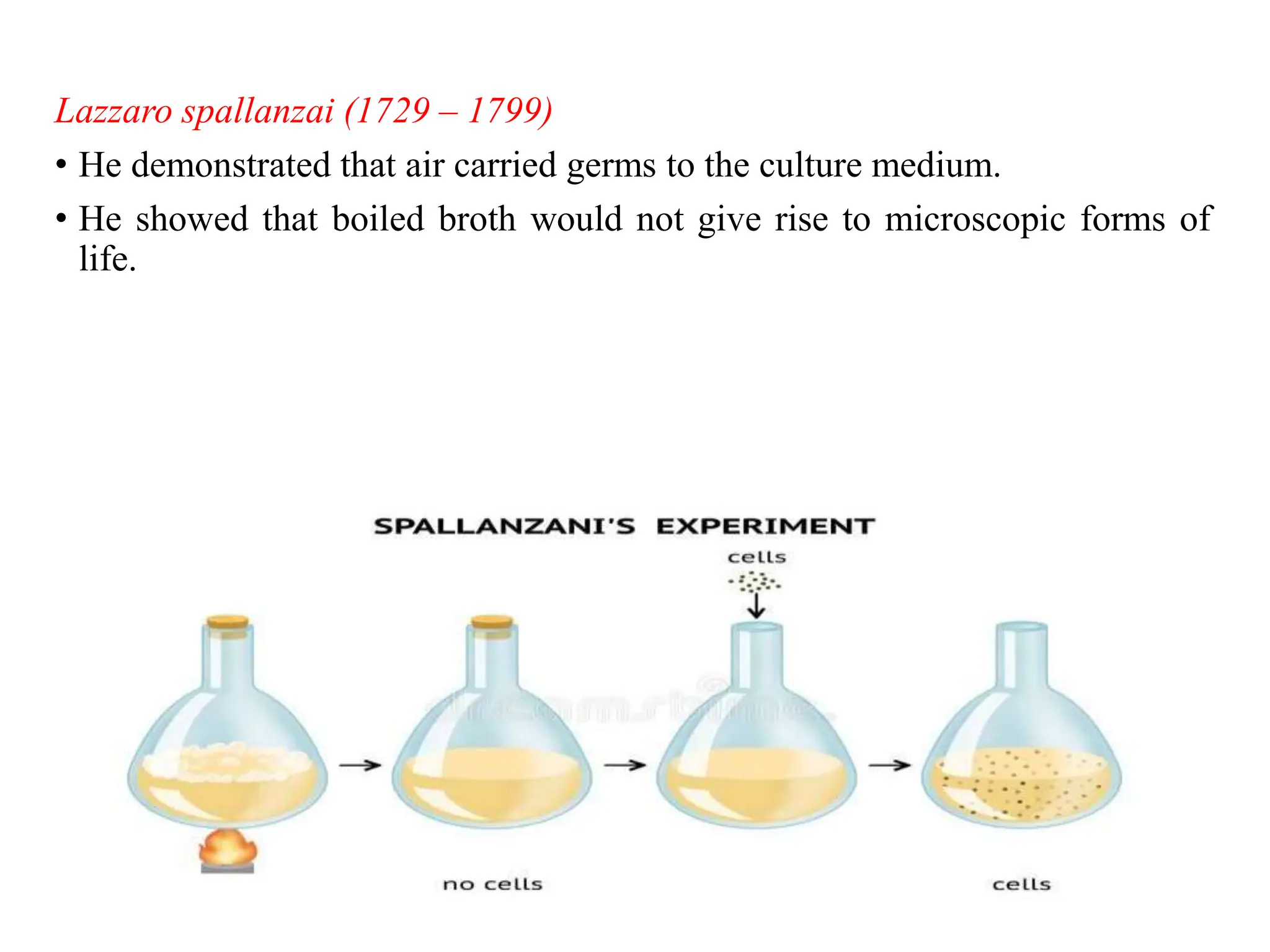
Lazzaro spallanzai (1729 – 1799)
• He demonstrated that air carried germs to the culture medium.
• He showed that boiled broth would not give rise to microscopic forms of
life.
Louis Pasteur
• He is the father of Medical Microbiology.
• He pointed that no growth took place in swan neck shaped tubes because dust and
germs had been trapped on the walls of the curved necks but if the necks were broken
off so that dust fell directly down into the flask, microbial growth commenced
immediately.
• Pasteur in 1897 suggested that mild heating at 62.8°C (145°F) for 30 minutes rather
than boiling was enough to destroy the undesirable organisms without ruining the
taste of the product, the process was called Pasteurization.
• He invented the processes of pasteurization, fermentation and the development of
effective vaccines ( rabies and anthrax).
• Pasteur demonstrated diseases of silkworm was due to a protozoan parasite.
• He coined the term “microbiology”, aerobic, anaerobic.
• He disproved the theory of spontaneous germination.
• He demonstrated that anthrax was caused by bacteria and also produced the vaccine
for the disease.
• He developed live attenuated vaccine for the disease.
Lord Joseph Lister (1827-1912)
• He is the father of antiseptic surgery.
• Lister concluded that wound infections too were due to
microorganisms.
• He also devised a method to destroy microorganisms in the operation
theatre by spraying a fine mist of carbolic acid into the air.
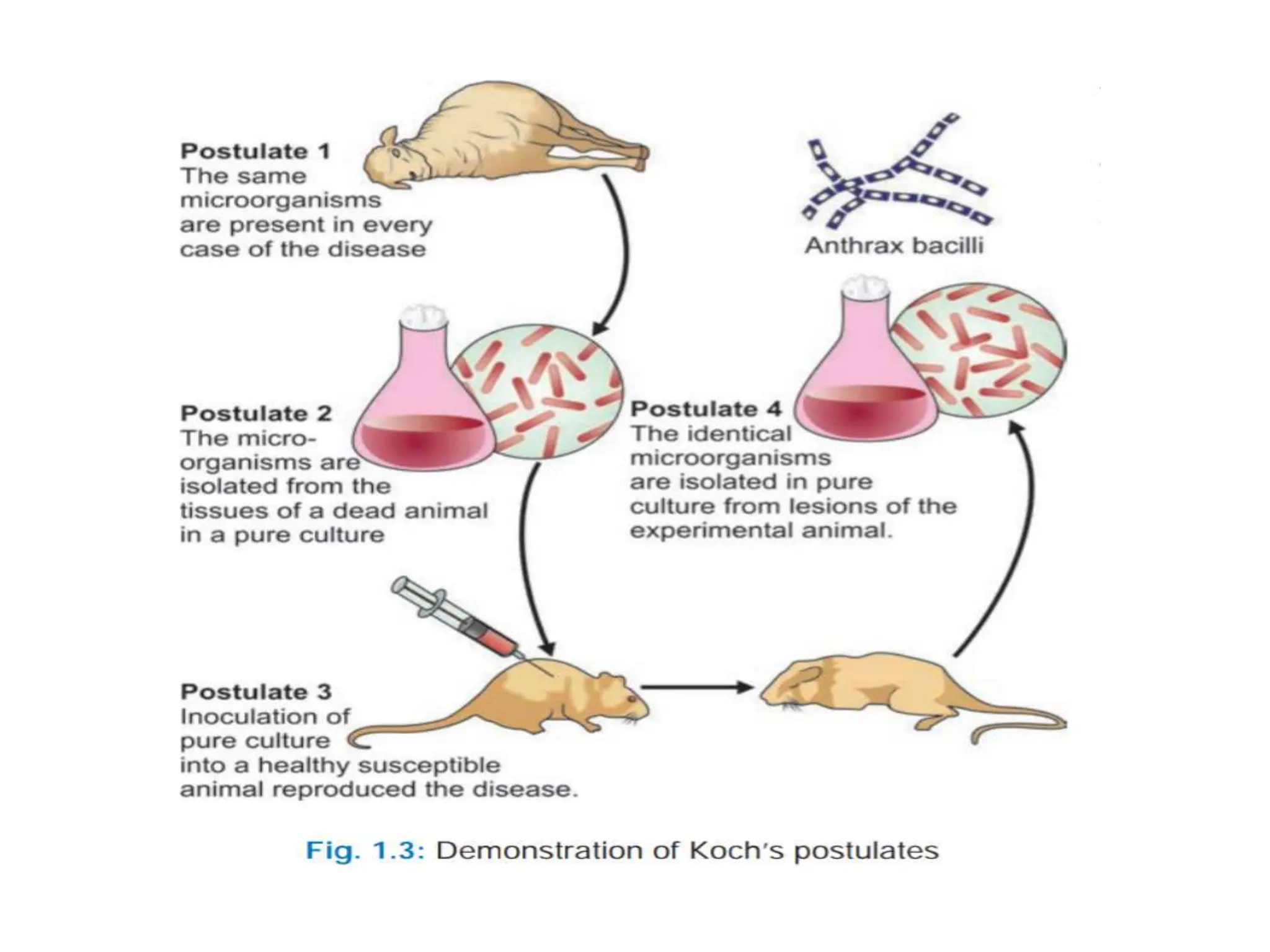
Robert Koch (1893-1910)
• He demonstrated the role of bacteria in causing disease.
• He perfected the technique of isolating bacteria in pure culture.
• Robert Koch used gelatin to prepare solid media but it was not an ideal because
• Since gelatin is a protein, it is digested by many bacteria capable of producing a proteolytic
exoenzyme gelatinase that hydrolyses the protein to amino acids.
• It melts when the temperature rises above 25°C.
Alexander Flemming
• He discovered the penicillin from penicillium notatum that destroy several
pathogenic bacteria.
Paul Erlich (1920)
• He discovered the treatment of syphilis by using arsenic .
• He Studied toxins and antitoxins in quantitative terms & laid foundation of
biological standardization.
Edward Jenner (1749-1823)
• First to prevent small pox.
• He discovered the technique of vaccination.
Fanne Eilshemius Hesse (1850 - 1934)
• One of Koch's assistant first proposed the use of agar in culture media.
• It was not attacked by most bacteria.
• Agar is better than gelatin because of its higher melting pointing (96°c) and
solidifying (40 – 45°c)points.
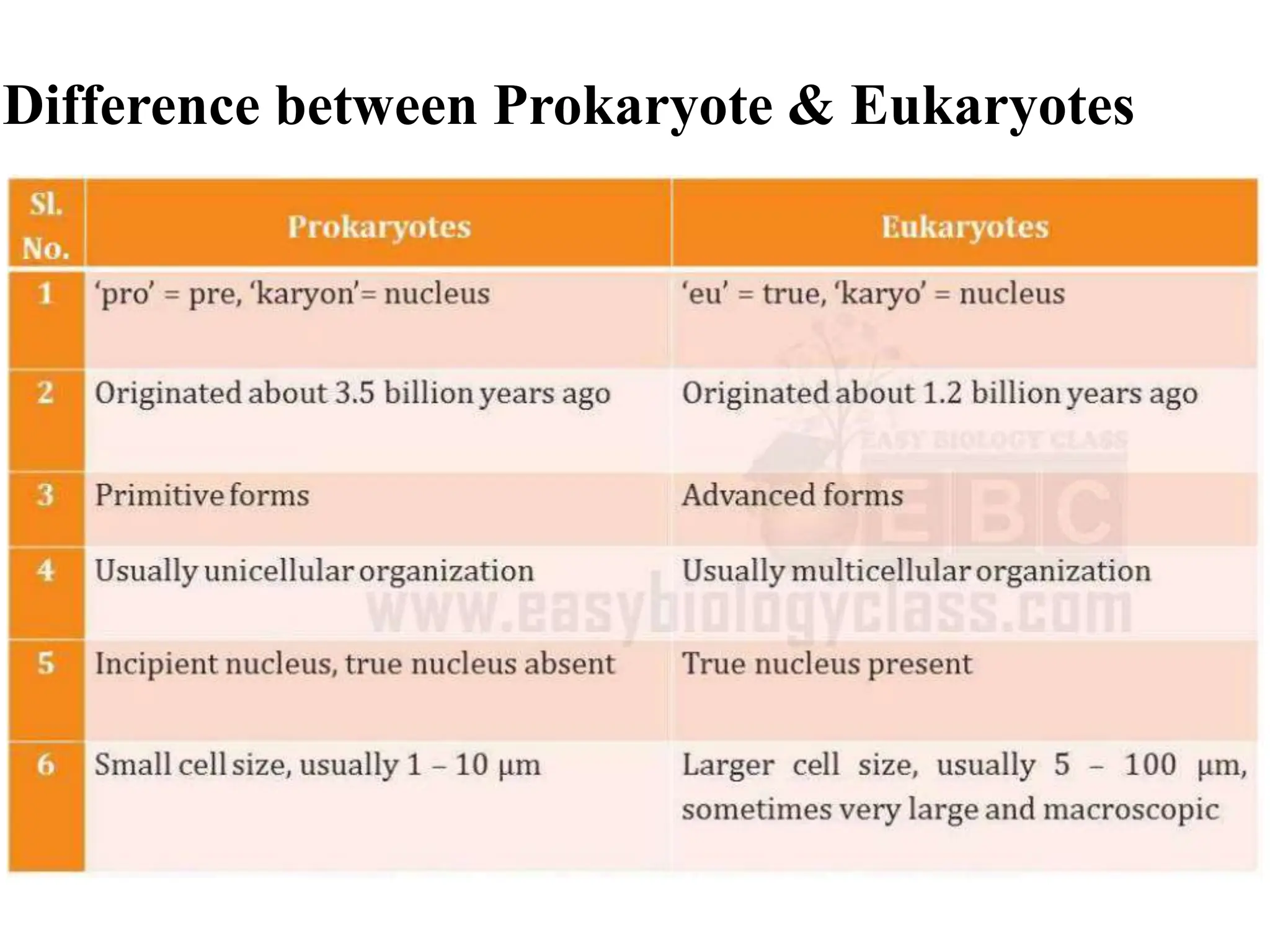
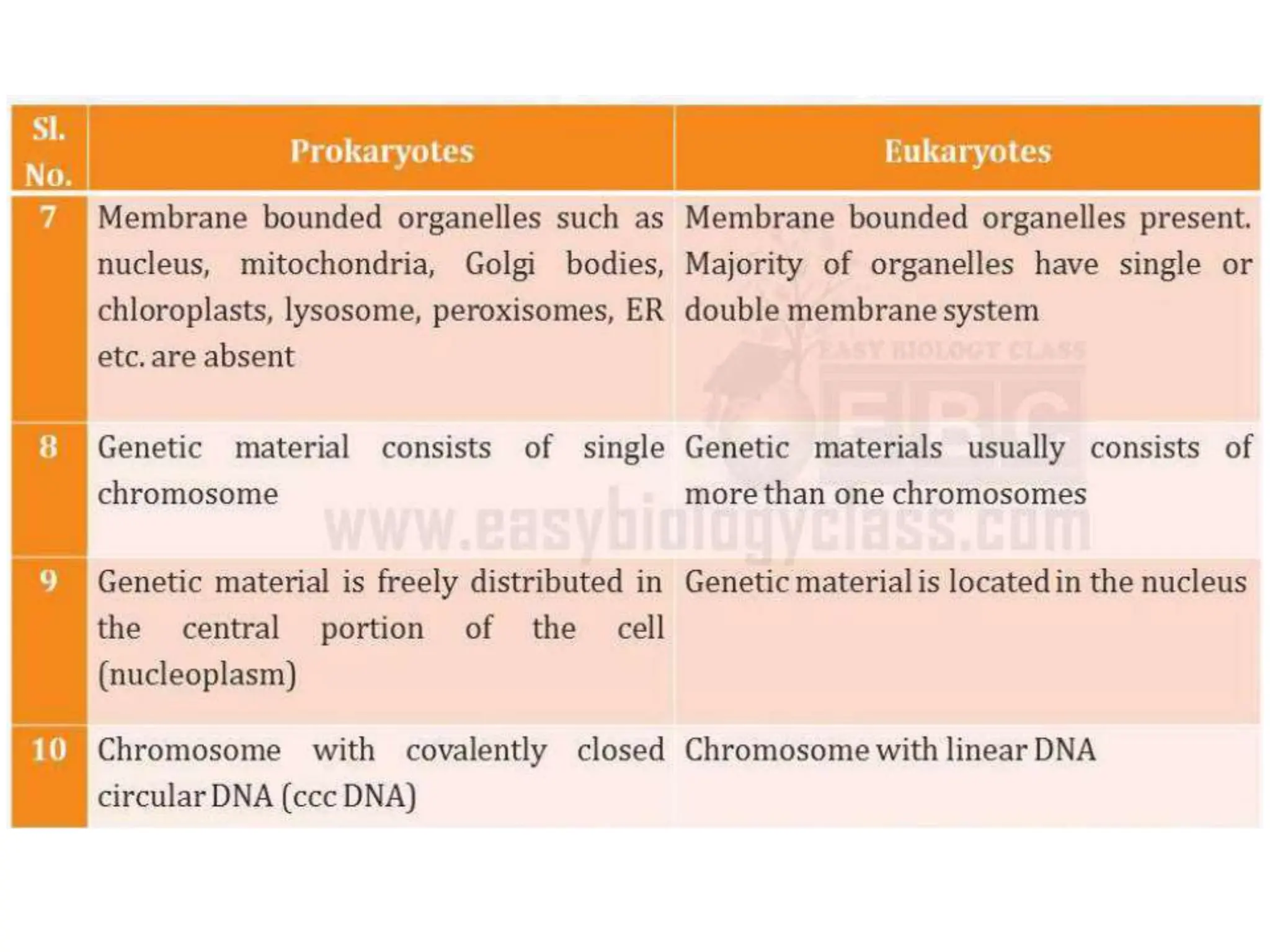
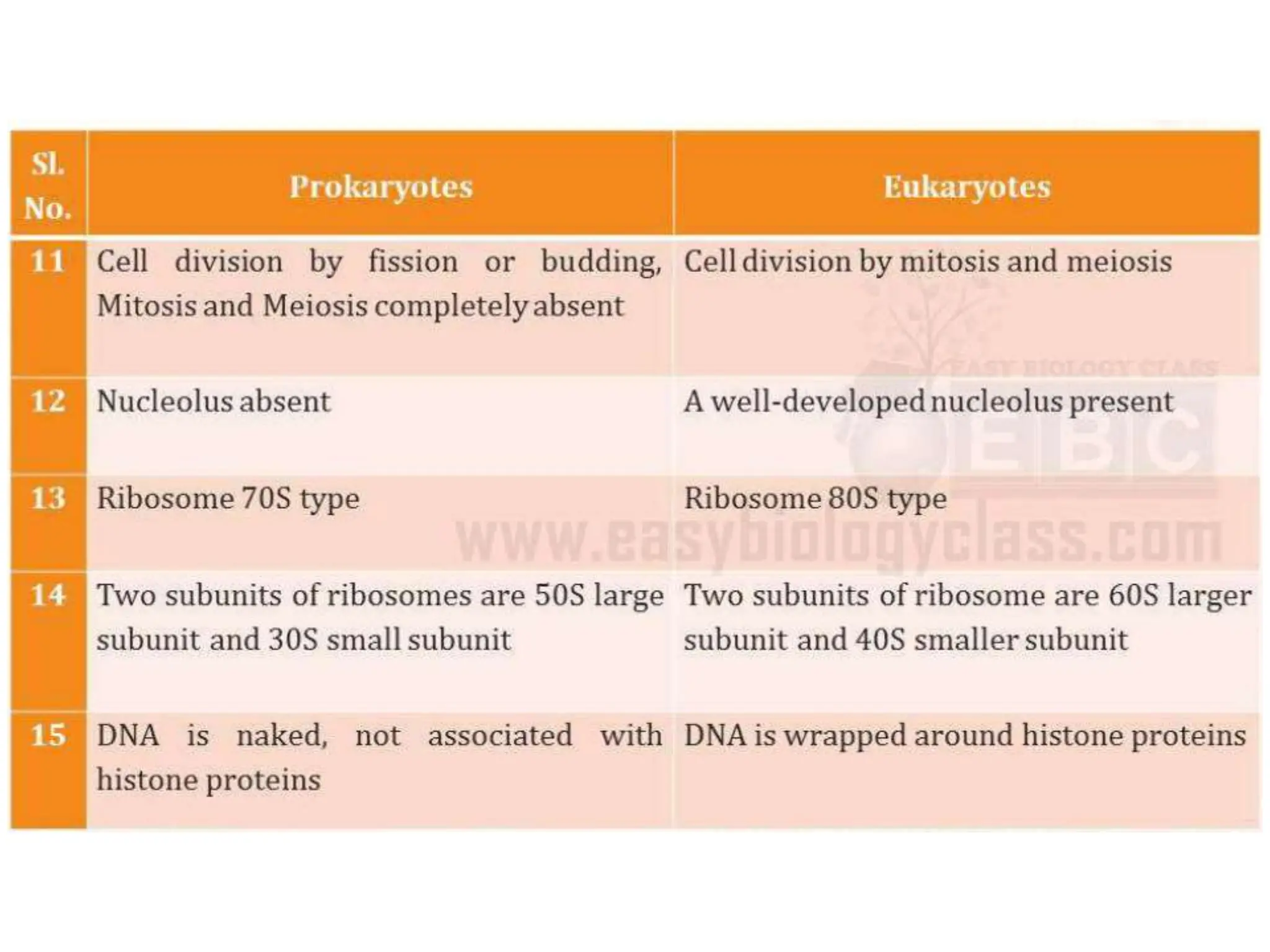
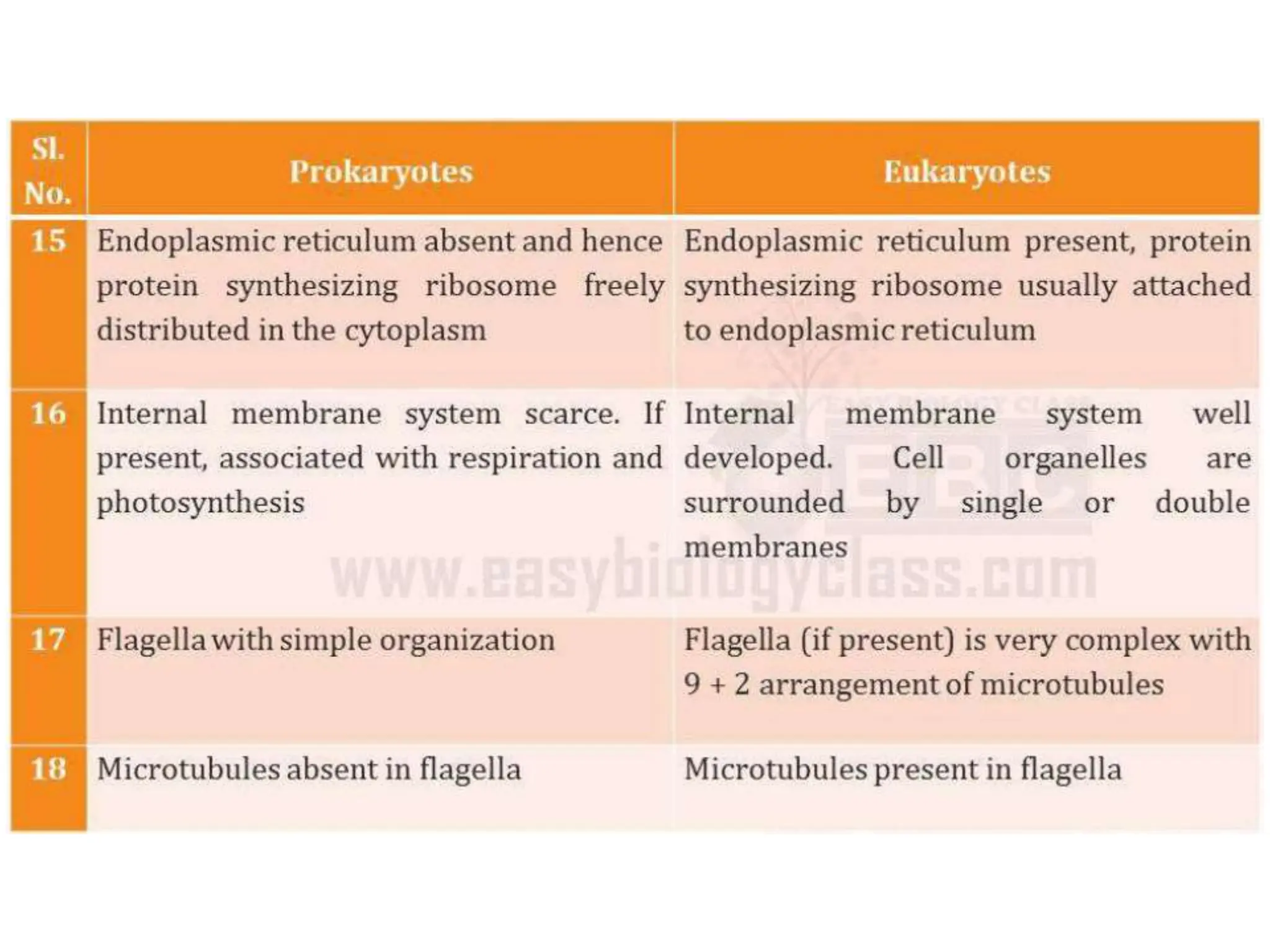
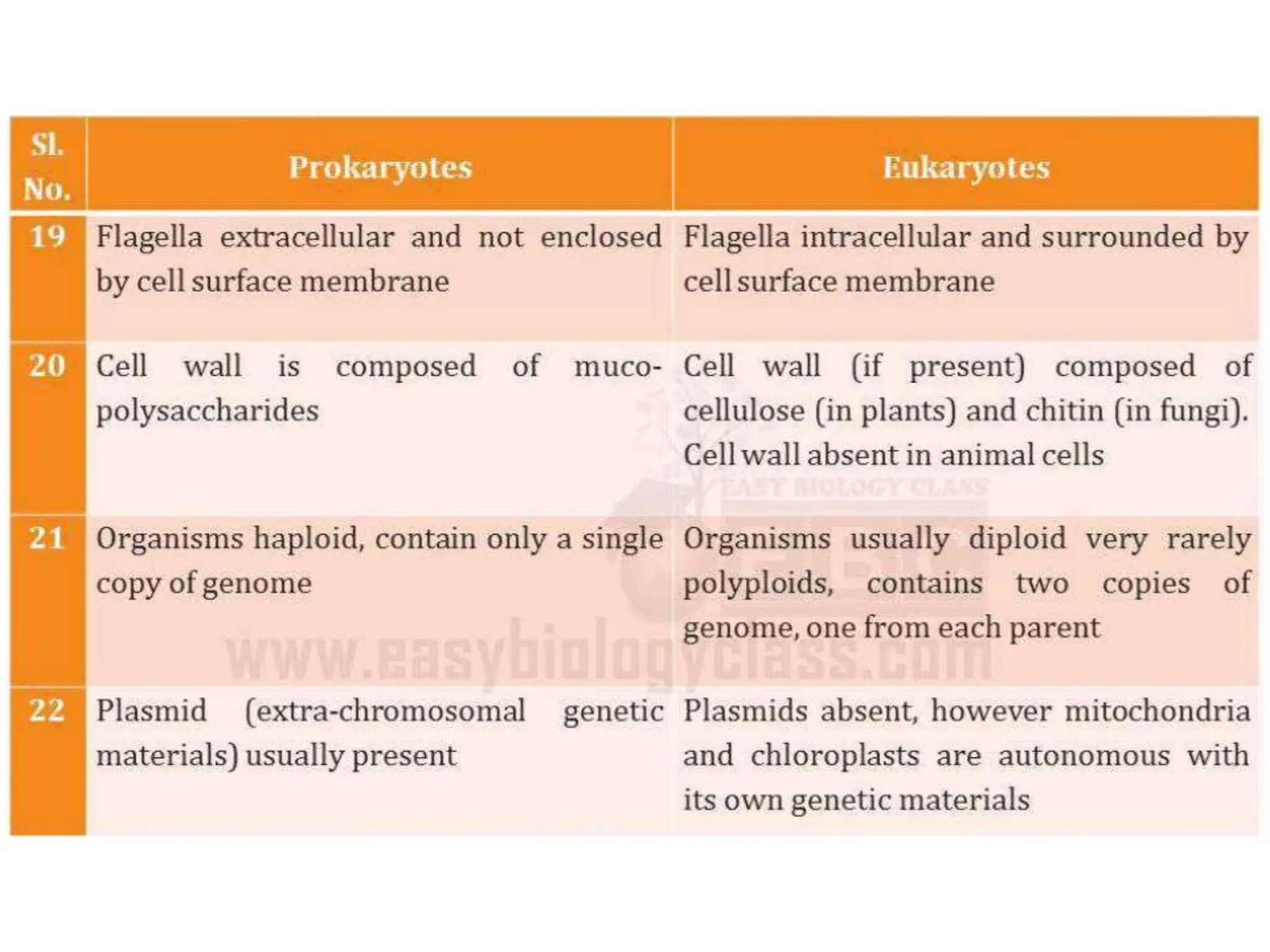
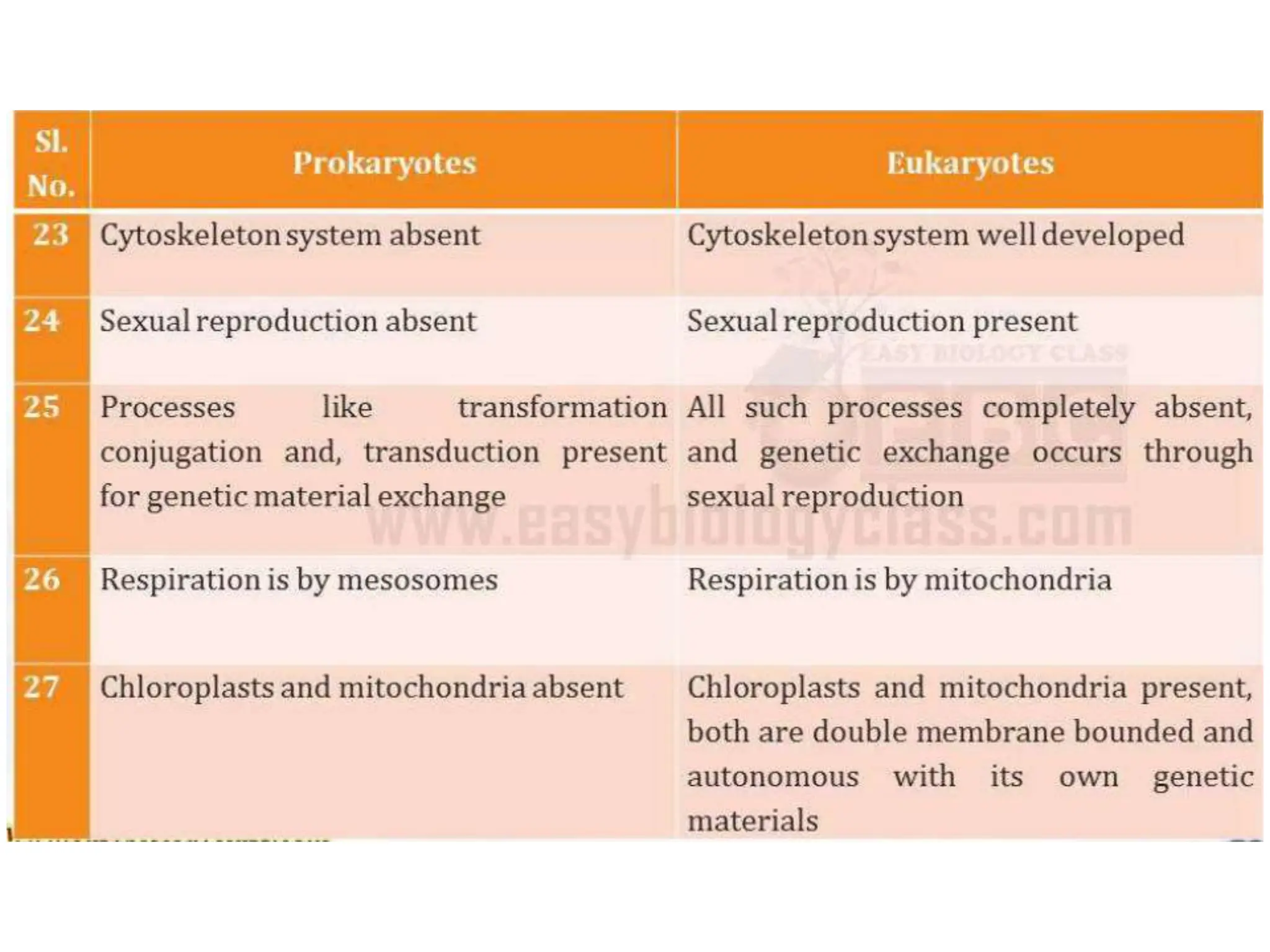
Difference between Prokaryote & Eukaryotes
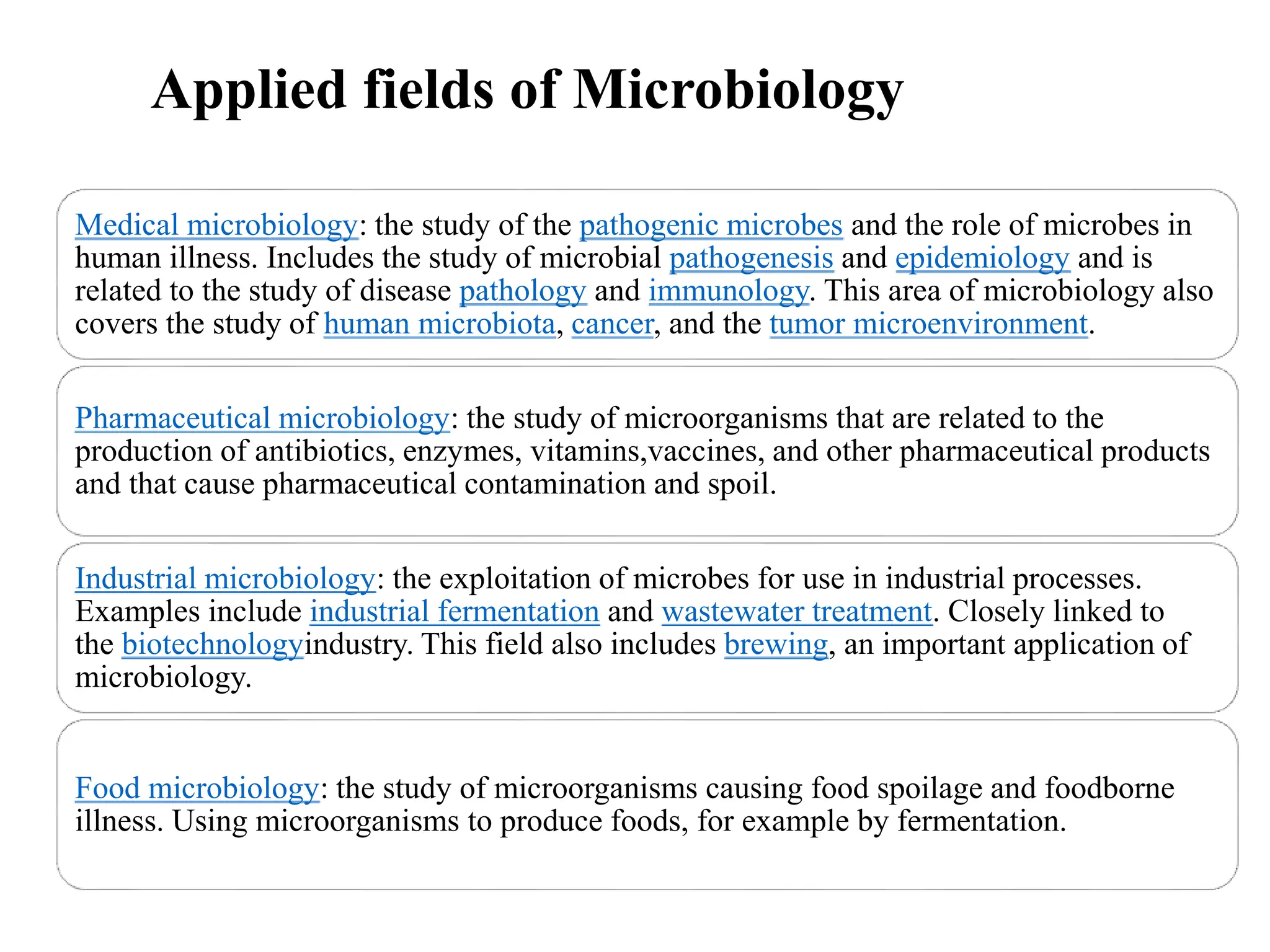
Applied fields of Microbiology
Medical microbiology: the study of the pathogenic microbes and the role of microbes in
human illness. Includes the study of microbial pathogenesis and epidemiology and is
related to the study of disease pathology and immunology. This area of microbiology also
covers the study of human microbiota, cancer, and the tumor microenvironment.
Pharmaceutical microbiology: the study of microorganisms that are related to the
production of antibiotics, enzymes, vitamins,vaccines, and other pharmaceutical products
and that cause pharmaceutical contamination and spoil.
Industrial microbiology: the exploitation of microbes for use in industrial processes.
Examples include industrial fermentation and wastewater treatment. Closely linked to
the biotechnologyindustry. This field also includes brewing, an important application of
microbiology.
Food microbiology: the study of microorganisms causing food spoilage and foodborne
illness. Using microorganisms to produce foods, for example by fermentation.
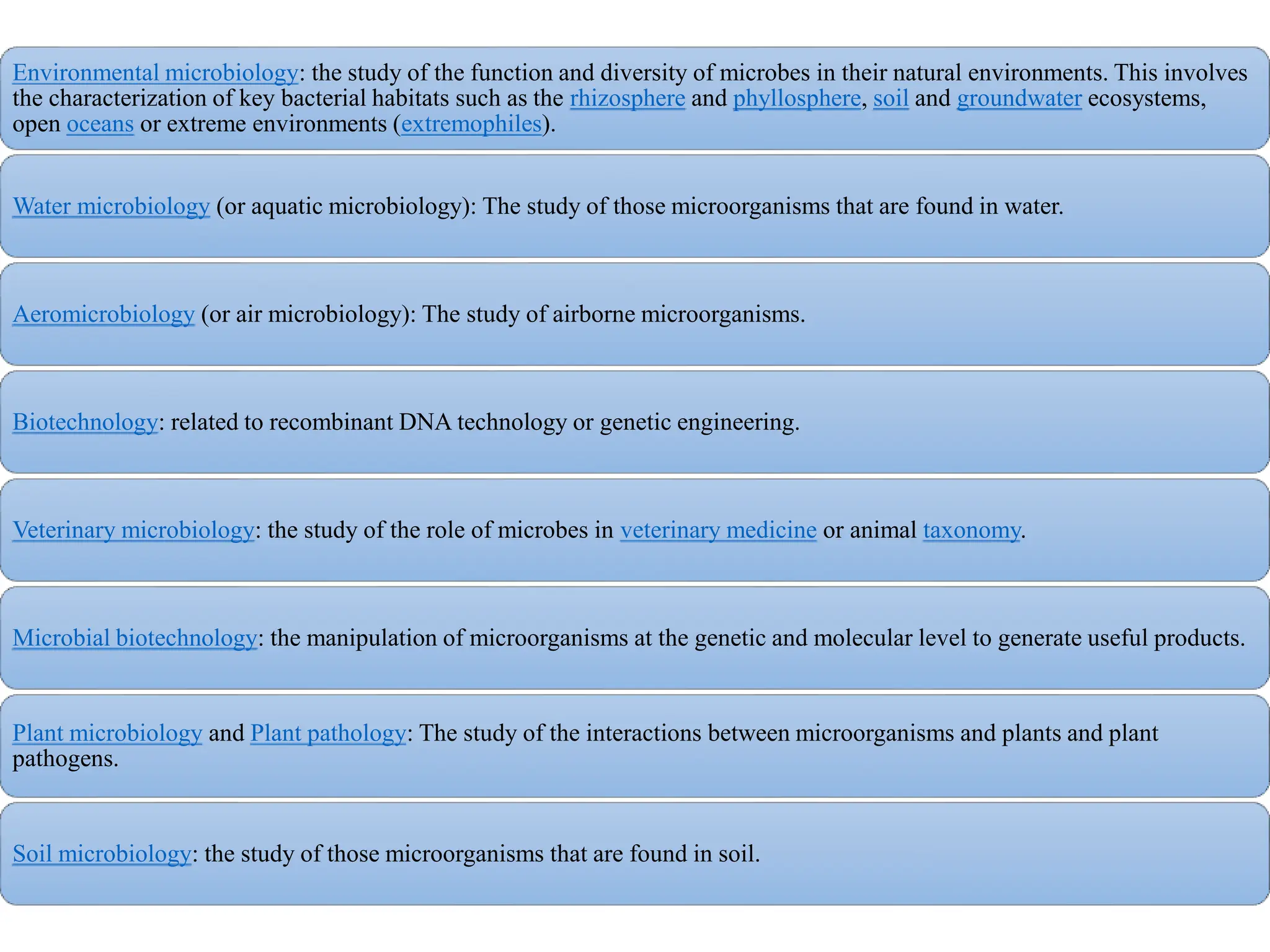
Environmental microbiology: the study of the function and diversity of microbes in their natural environments. This involves
the characterization of key bacterial habitats such as the rhizosphere and phyllosphere, soil and groundwater ecosystems,
open oceans or extreme environments (extremophiles).
Water microbiology (or aquatic microbiology): The study of those microorganisms that are found in water.
Aeromicrobiology (or air microbiology): The study of airborne microorganisms.
Biotechnology: related to recombinant DNA technology or genetic engineering.
Veterinary microbiology: the study of the role of microbes in veterinary medicine or animal taxonomy.
Microbial biotechnology: the manipulation of microorganisms at the genetic and molecular level to generate useful products.
Plant microbiology and Plant pathology: The study of the interactions between microorganisms and plants and plant
pathogens.
Soil microbiology: the study of those microorganisms that are found in soil.
Microbial Classification,
nomenclature &
identification
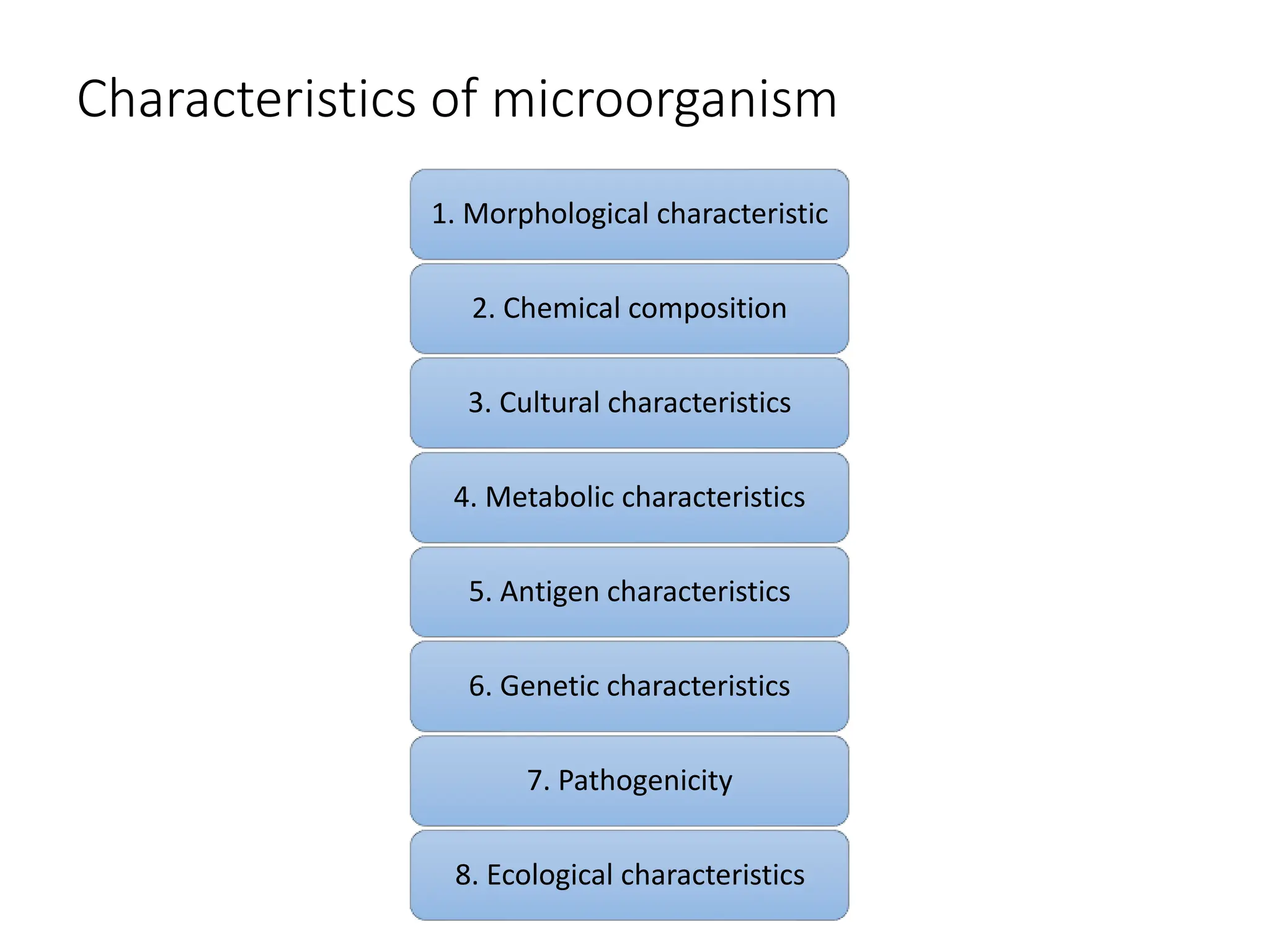
Characteristics of microorganism
1. Morphological characteristic
2. Chemical composition
3. Cultural characteristics
4. Metabolic characteristics
5. Antigen characteristics
6. Genetic characteristics
7. Pathogenicity
8. Ecological characteristics
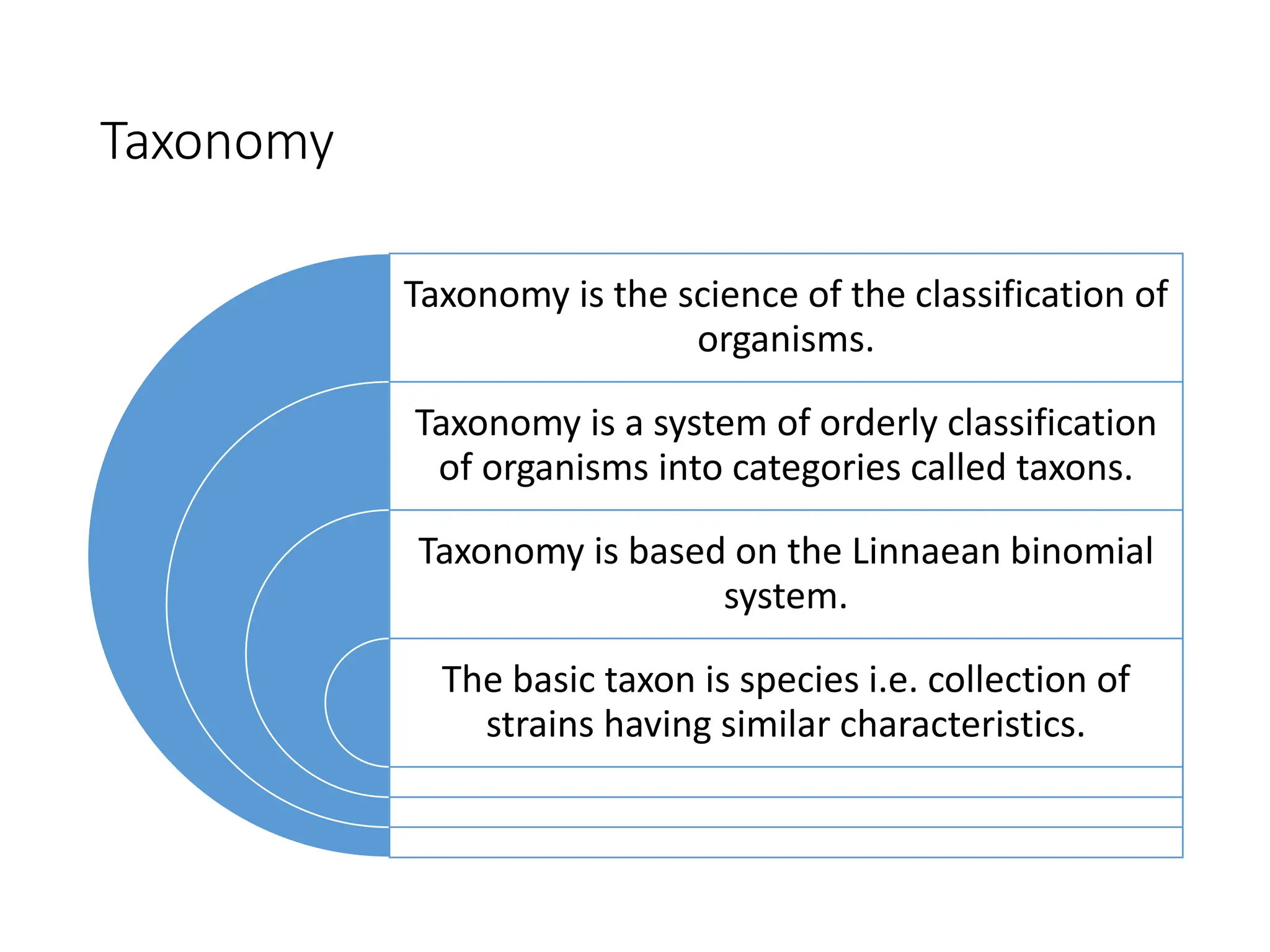
Taxonomy
Taxonomy is the science of the classification of
organisms.
Taxonomy is a system of orderly classification
of organisms into categories called taxons.
Taxonomy is based on the Linnaean binomial
system.
The basic taxon is species i.e. collection of
strains having similar characteristics.
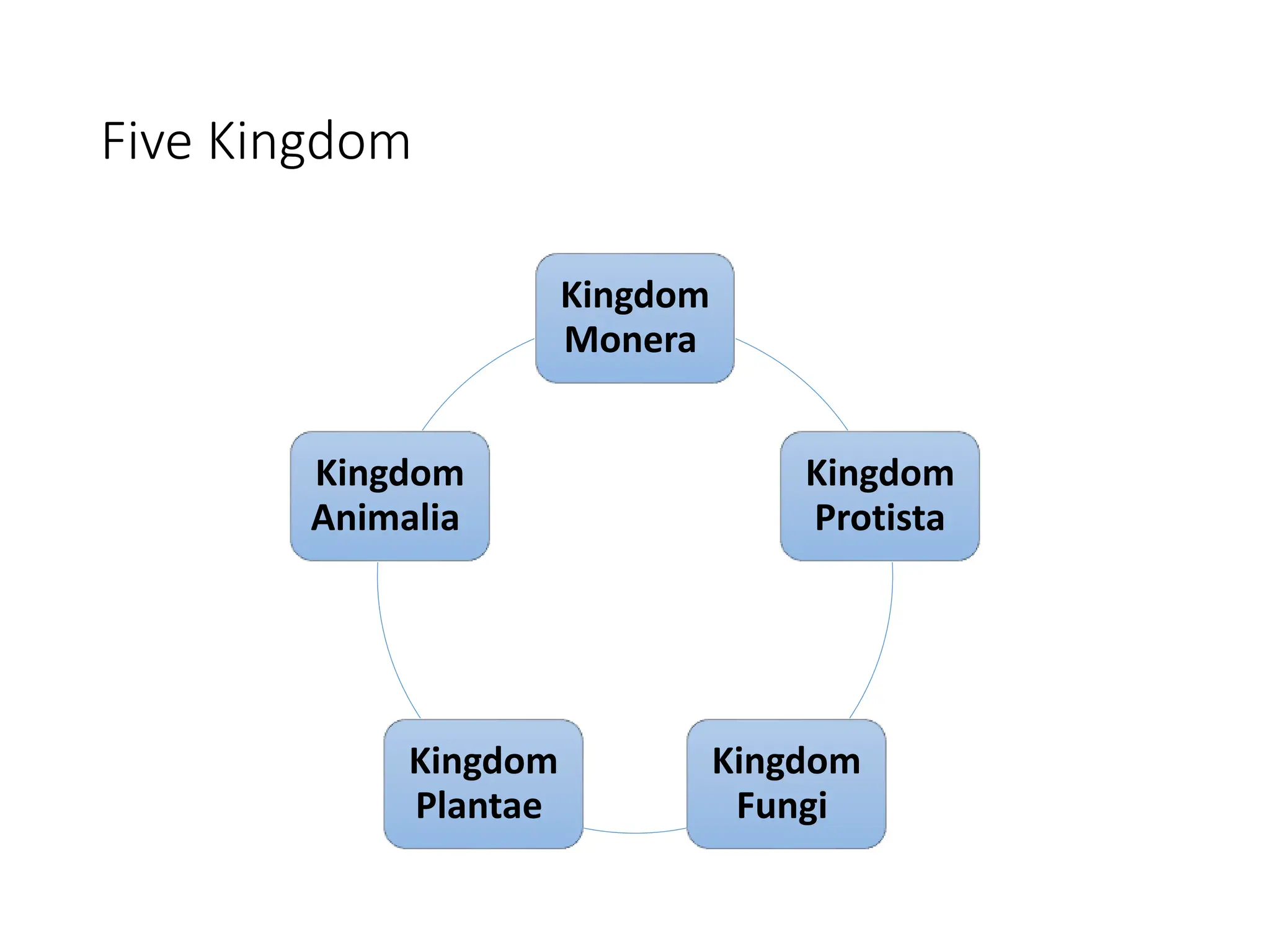
Five Kingdom
Kingdom
Monera
Kingdom
Protista
Kingdom
Fungi
Kingdom
Plantae
Kingdom
Animalia
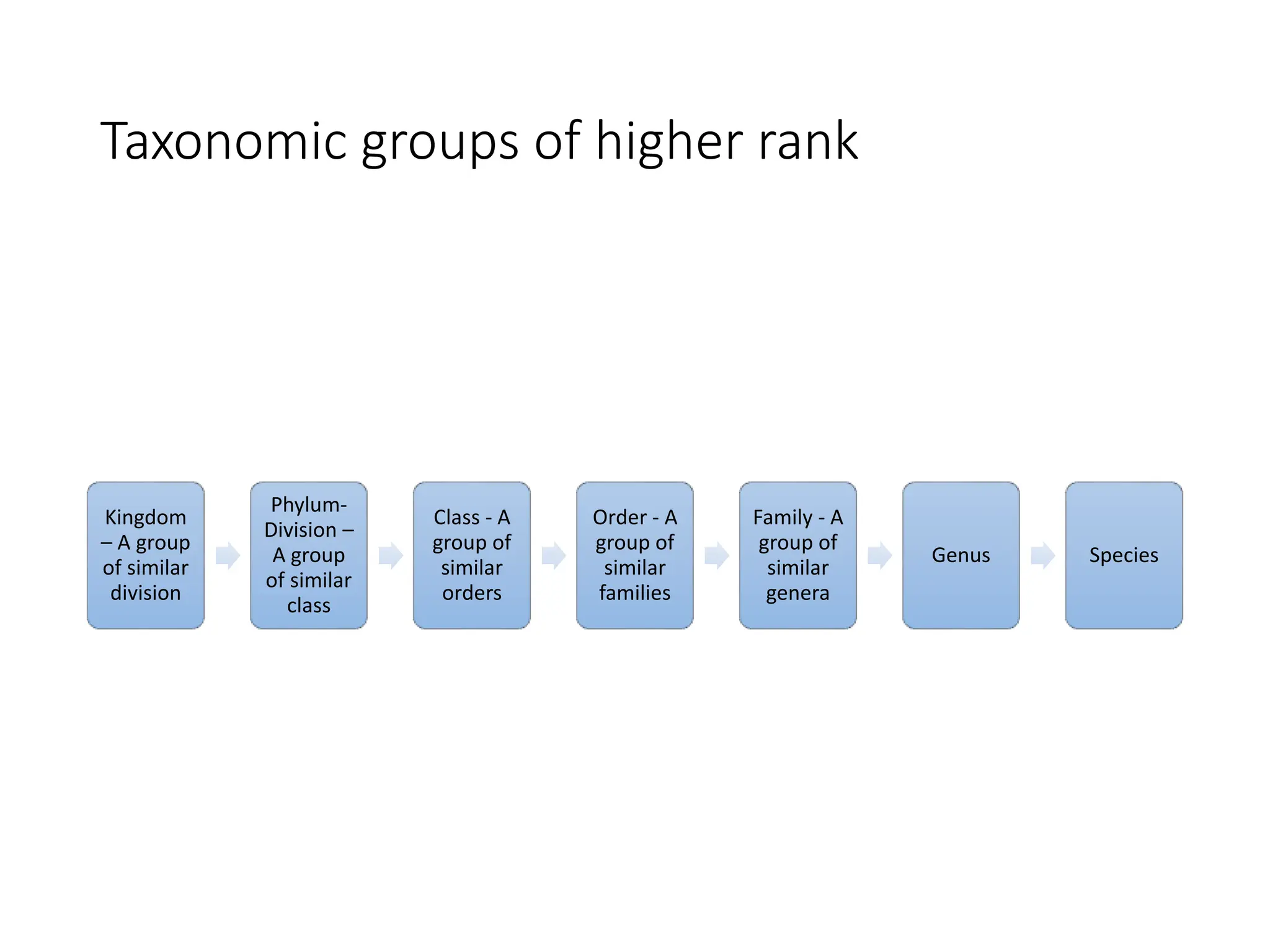
Taxonomic groups of higher rank
Kingdom
– A group
of similar
division
Phylum-
Division –
A group
of similar
class
Class - A
group of
similar
orders
Order - A
group of
similar
families
Family - A
group of
similar
genera
Genus Species
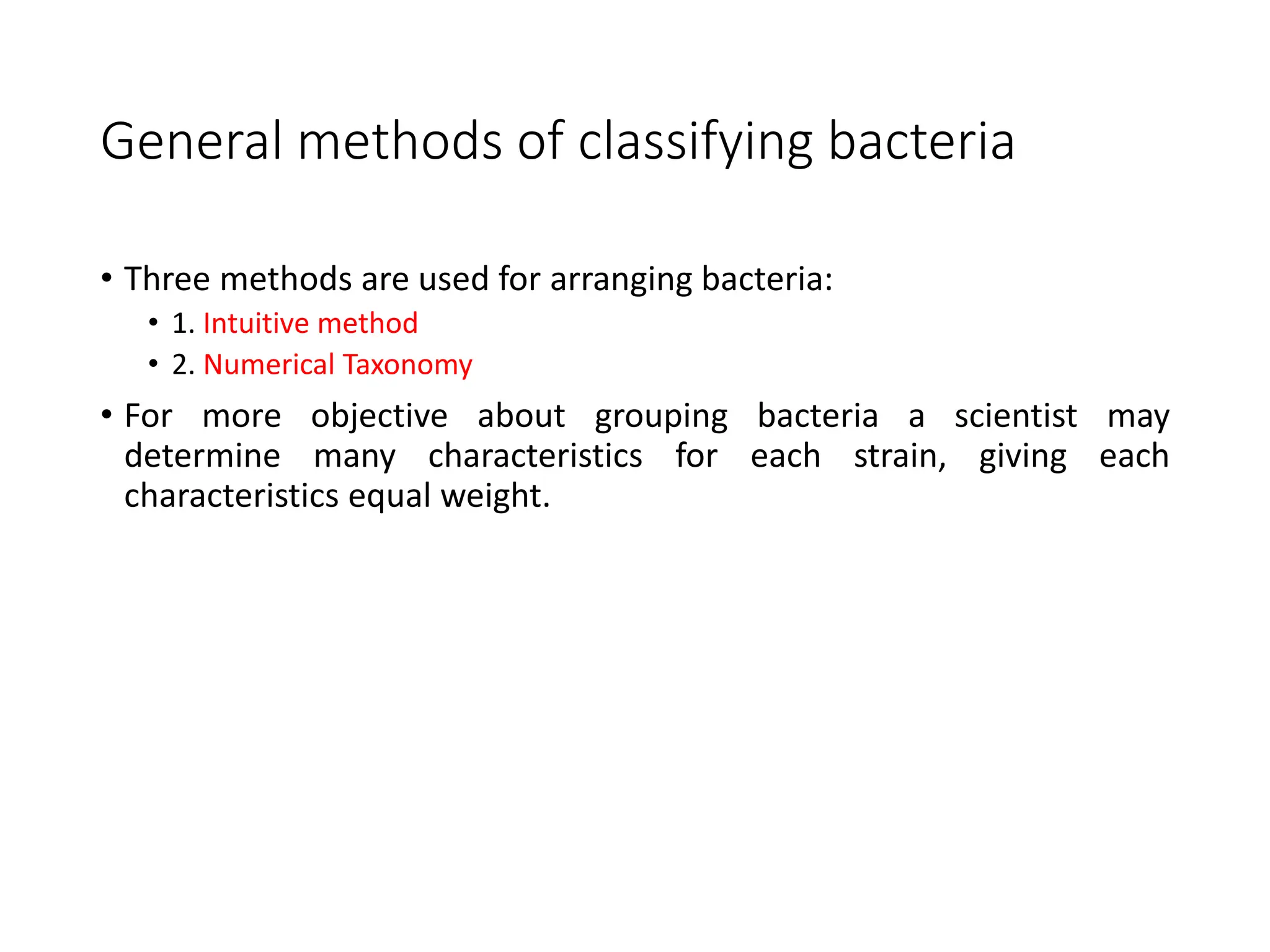
General methods of classifying bacteria
• Three methods are used for arranging bacteria:
• 1. Intuitive method
• 2. Numerical Taxonomy
• For more objective about grouping bacteria a scientist may
determine many characteristics for each strain, giving each
characteristics equal weight.
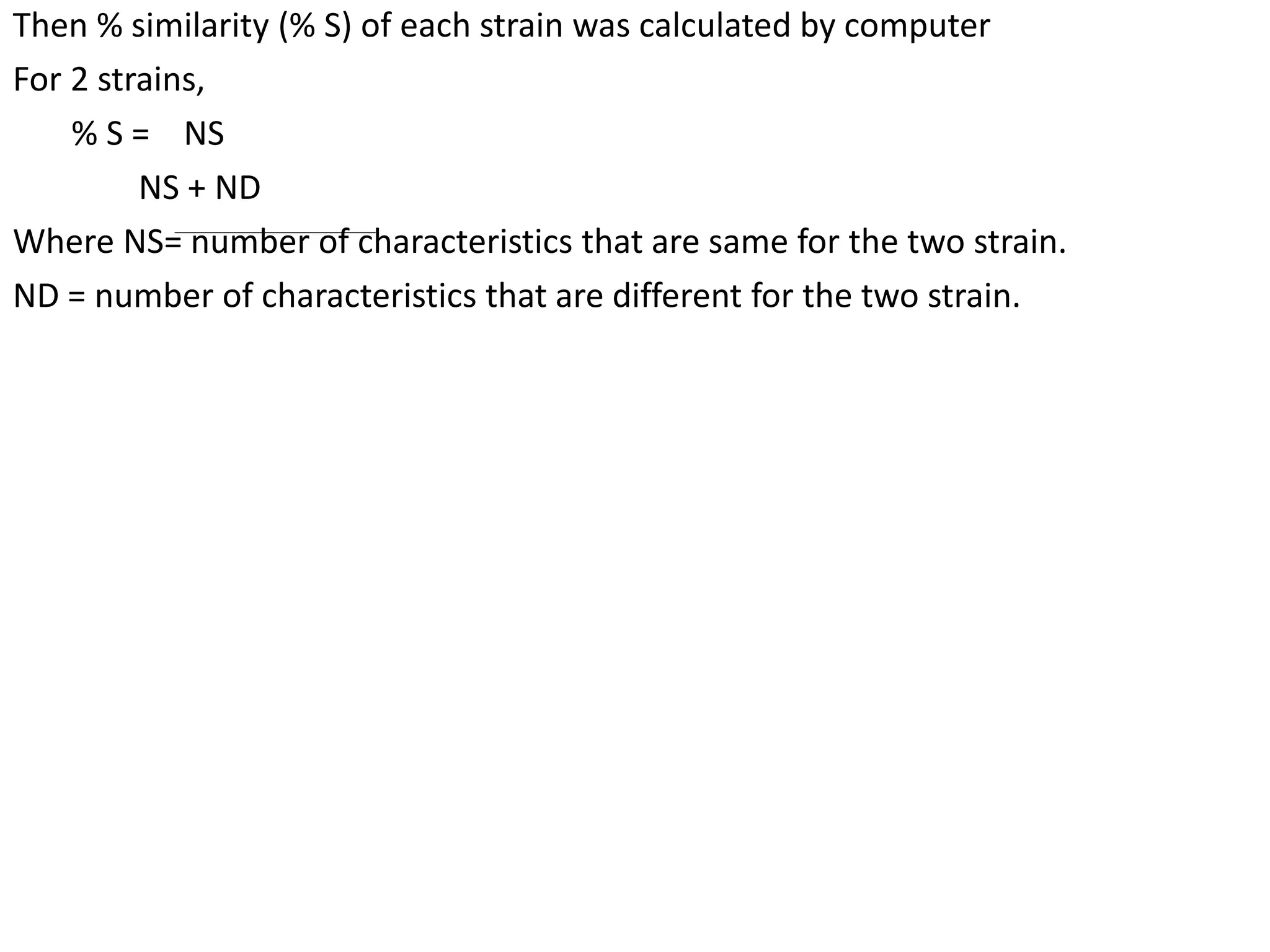
Then % similarity (% S) of each strain was calculated by computer
For 2 strains,
% S = NS
NS + ND
Where NS= number of characteristics that are same for the two strain.
ND = number of characteristics that are different for the two strain.
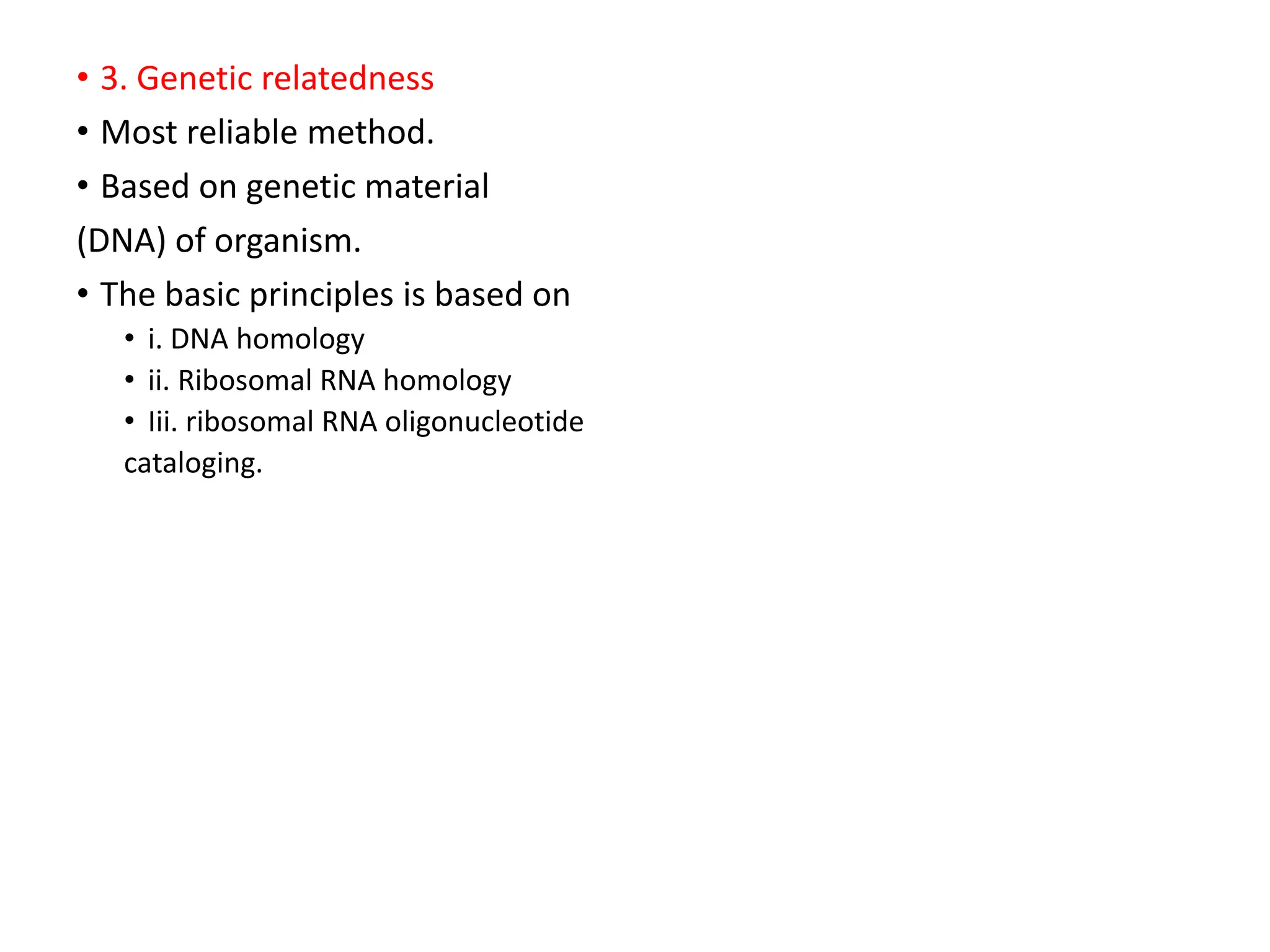
• 3. Genetic relatedness
• Most reliable method.
• Based on genetic material
(DNA) of organism.
• The basic principles is based on
• i. DNA homology
• ii. Ribosomal RNA homology
• Iii. ribosomal RNA oligonucleotide
cataloging.
Nomenclature
• The current system of nomenclature (naming) has been in use since
the 18thcentury.
• every type of organism is referred by its genus name followed by its
specific epithet(i.e., species name)
Homo sapiens(H. sapiens) Escherichia coli (E. coli)
• names are Latin (or “Latinized” Greek) with the genus being a noun
and the specific epithet an adjective i.e., binomial (two words).
• The first word is genus name & is always capitalized whereas second
word is the specific epithet and never capitalized.
• Both genus & specific epithet are given in italics (or underlined)
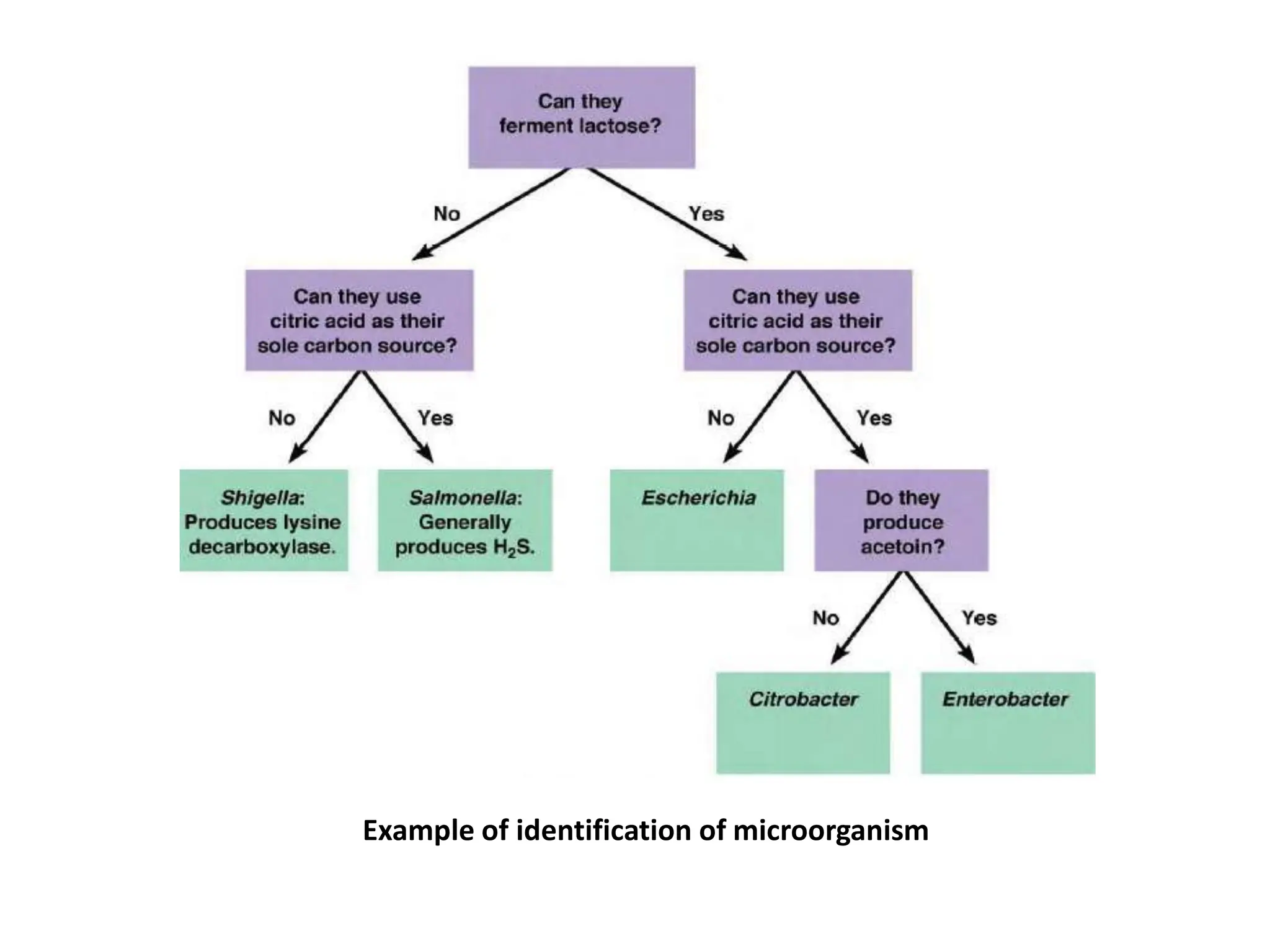
Identification
1. Biochemical testing (morphology, differential staining, media required).
2. On basis of type of fermentation of sugar.
3. Serological (specific antibodies required).
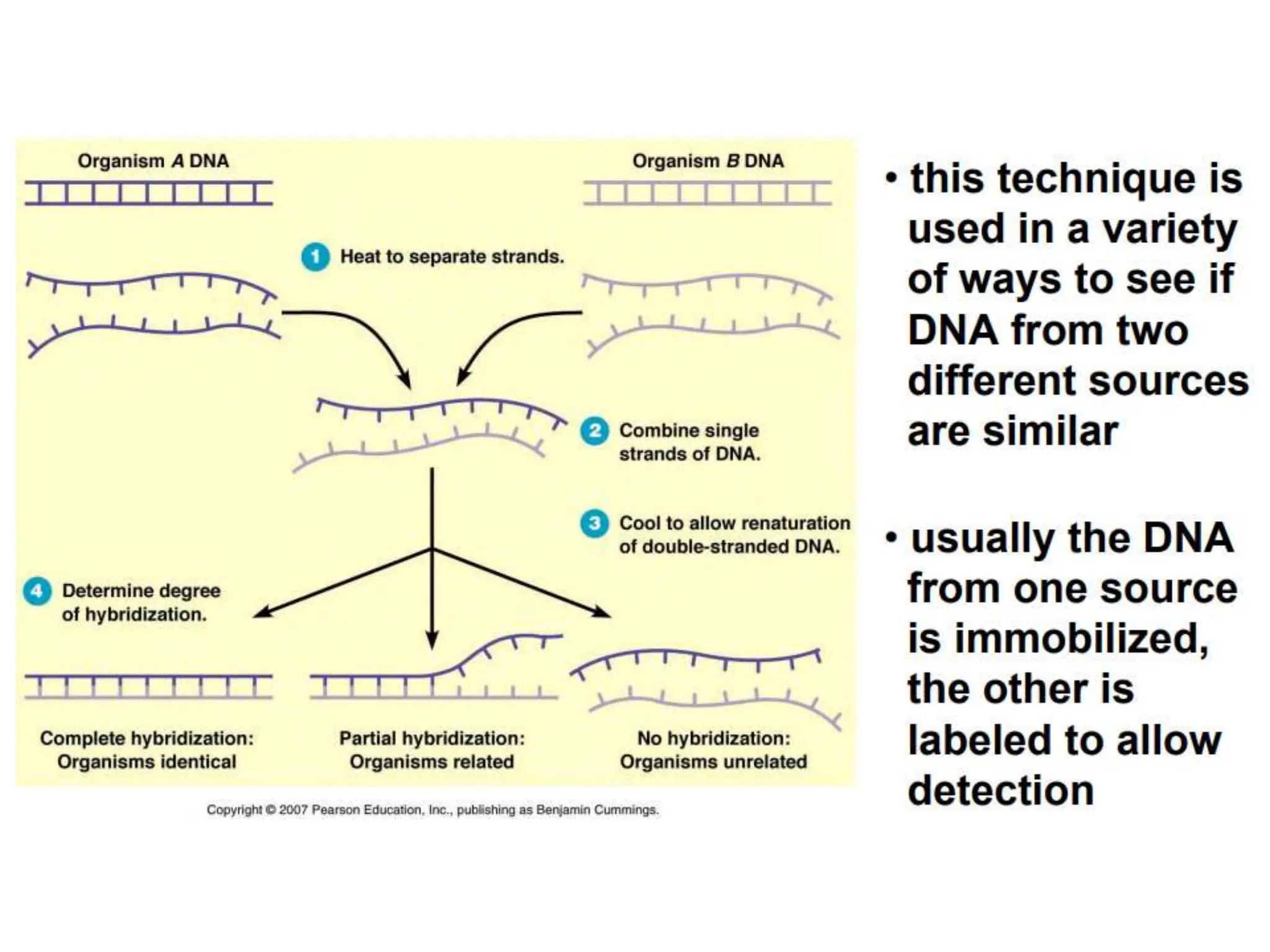
4. DNA base composition
5. DNA hybridization
6. Polymerase Chain Reaction (PCR).
Biochemical Testing
Example of identification of microorganism
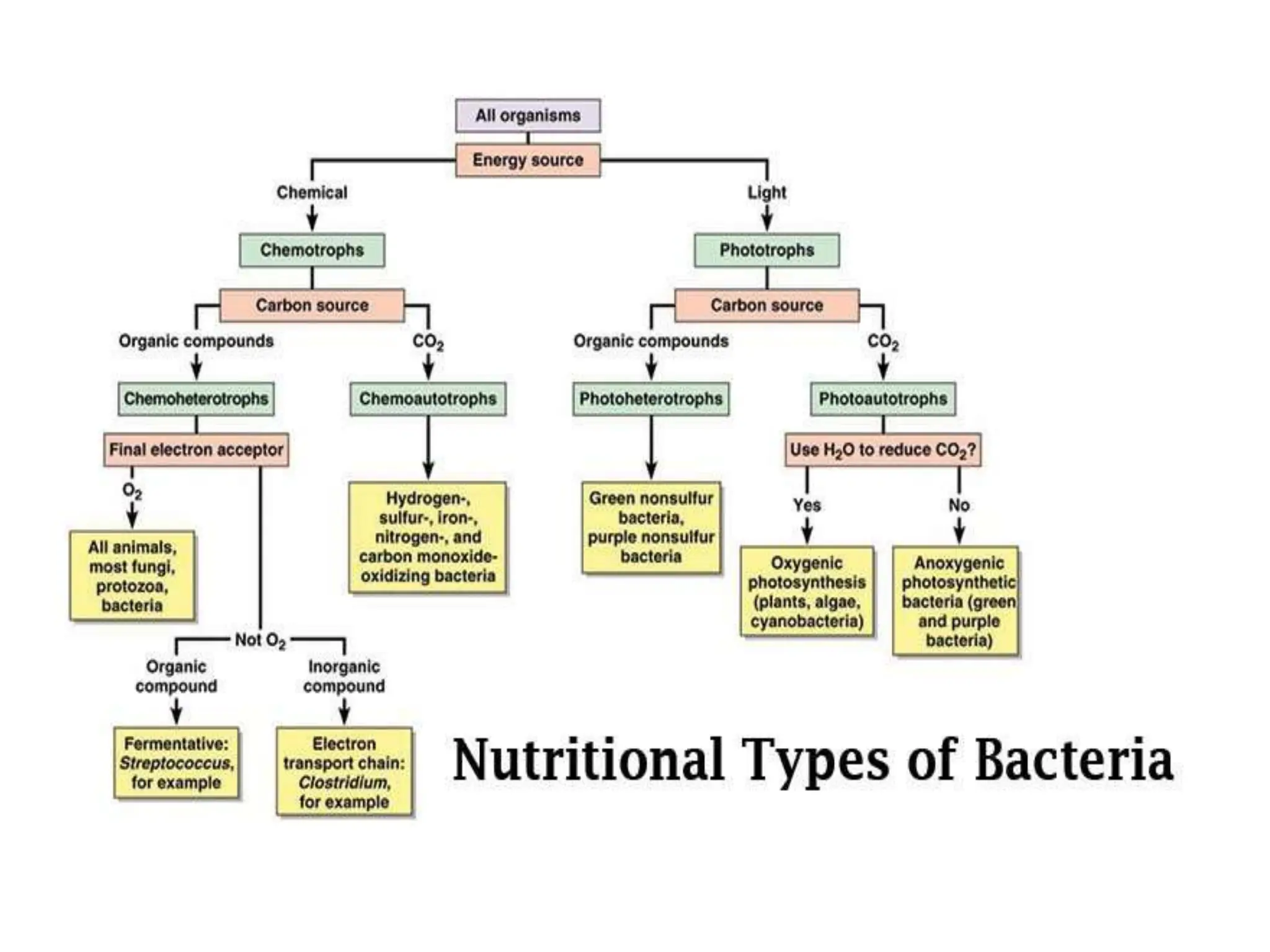
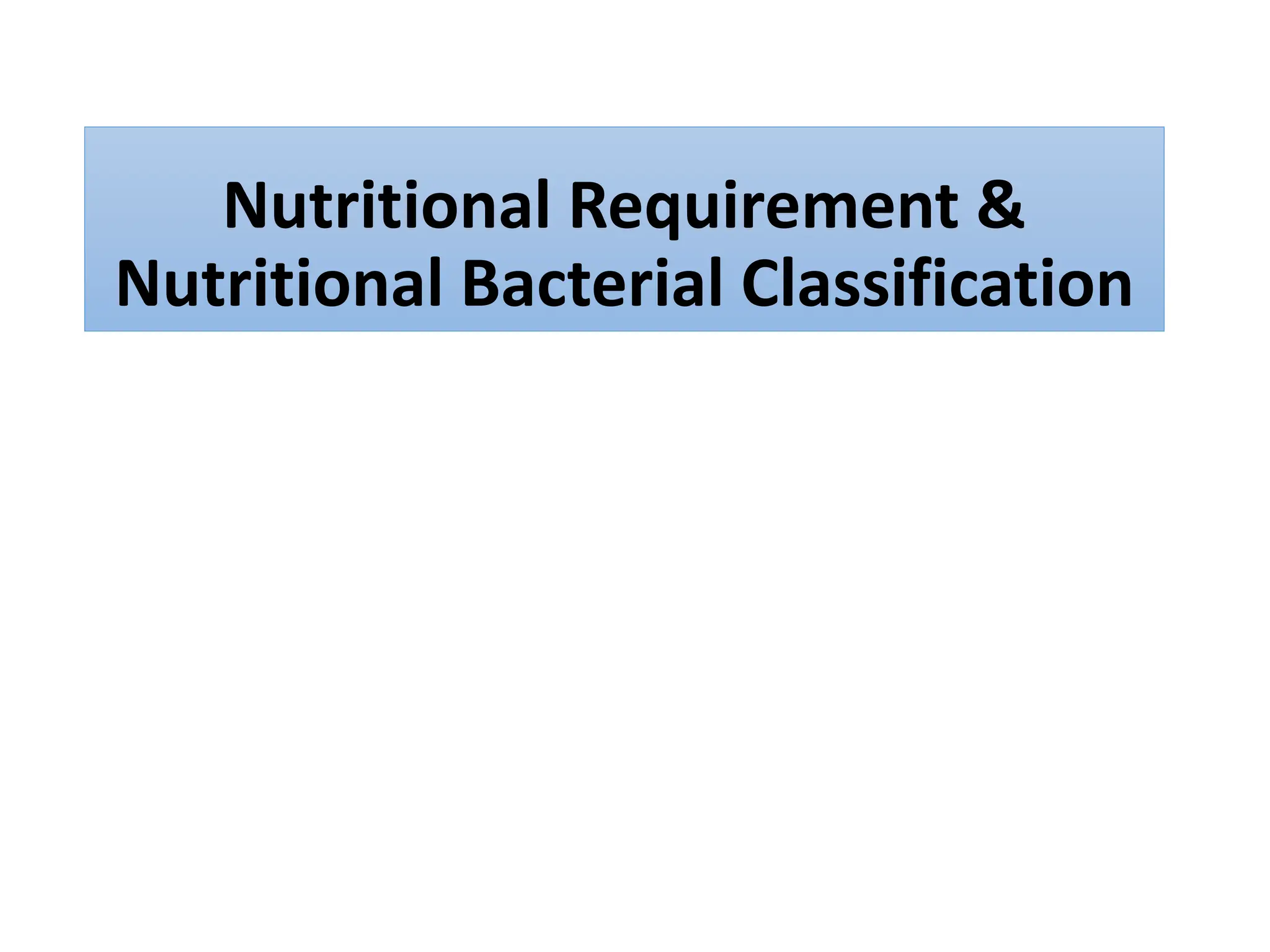
Nutritional Requirement &
Nutritional Bacterial Classification
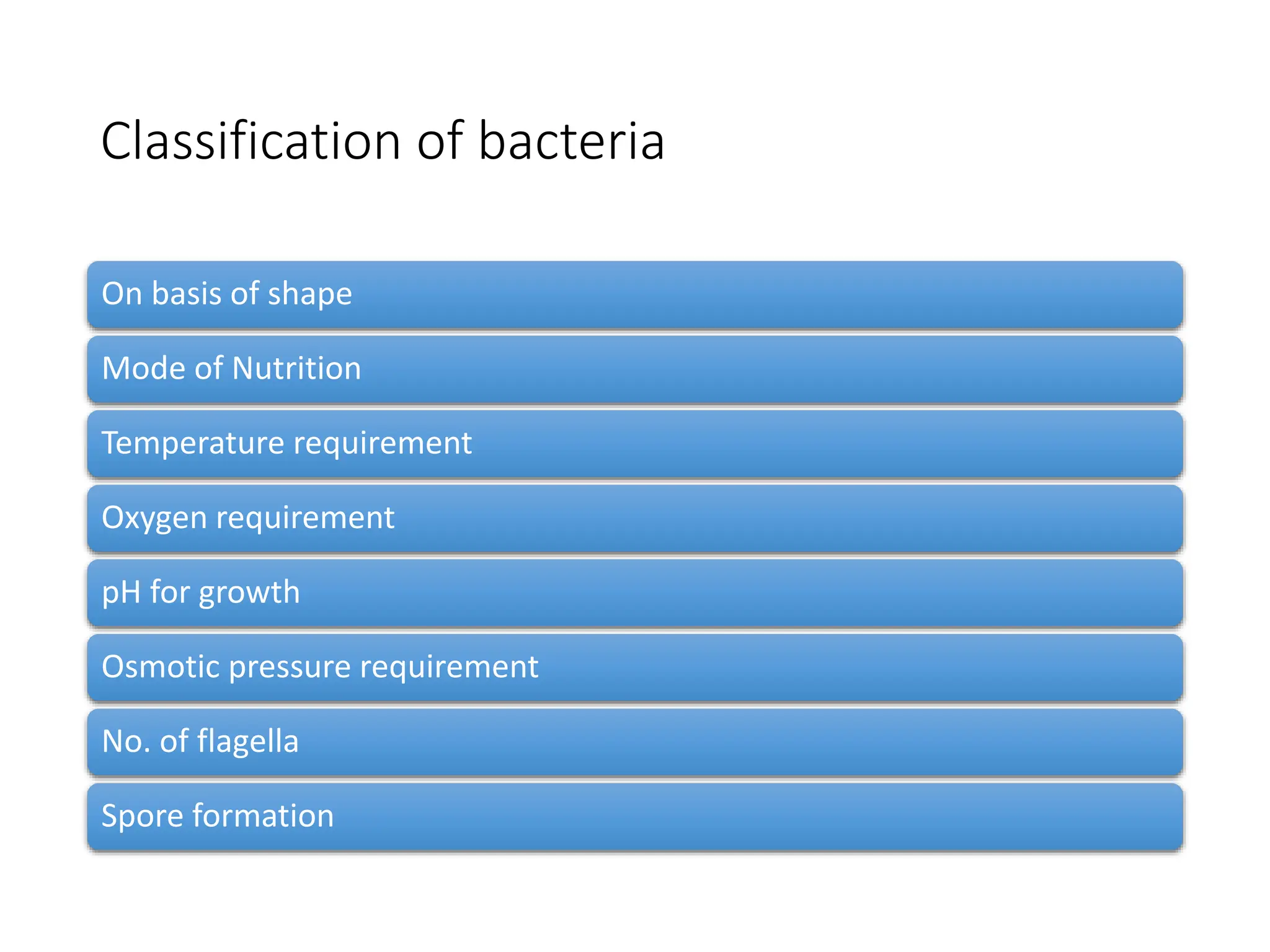
Classification of bacteria
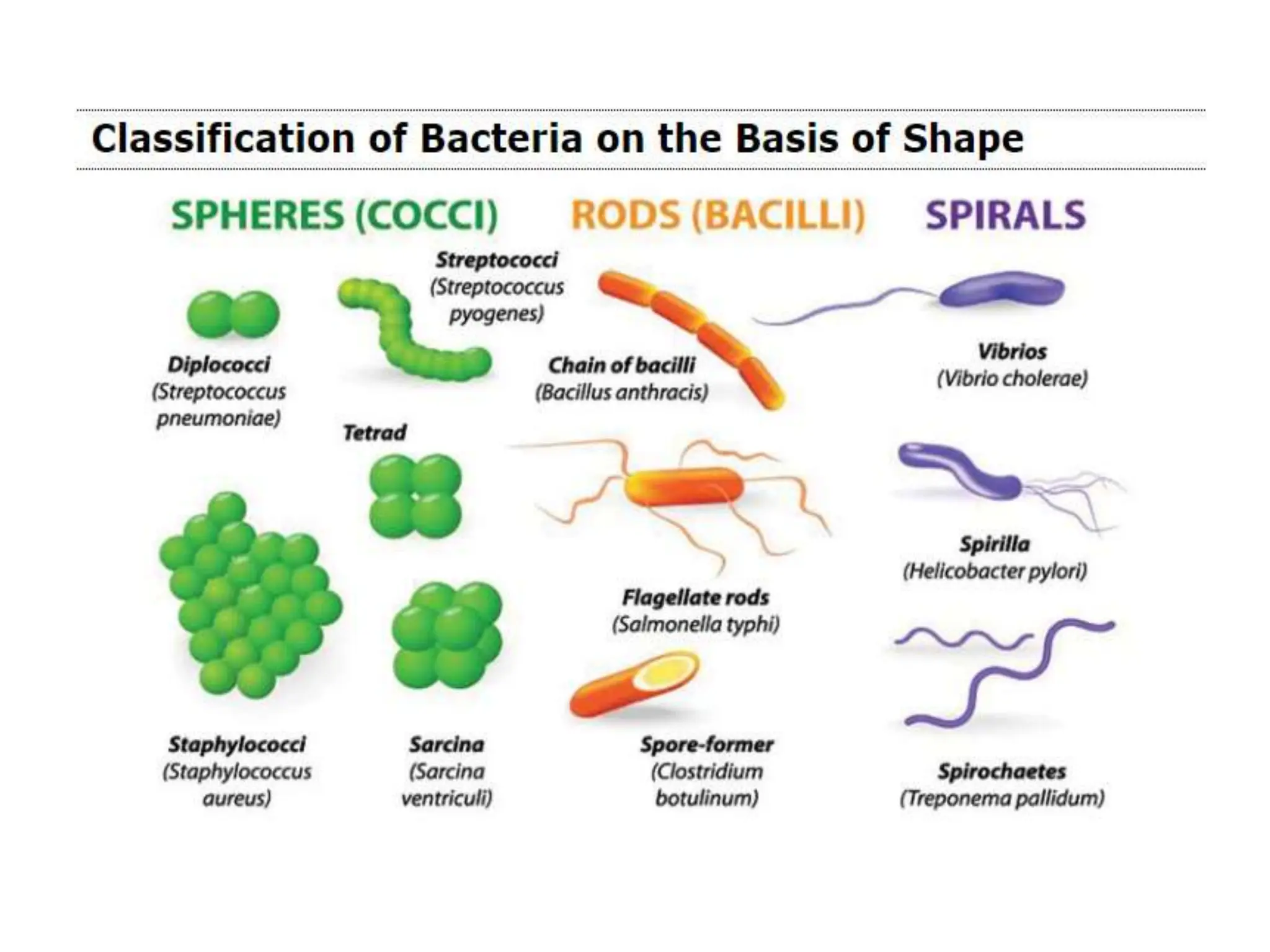
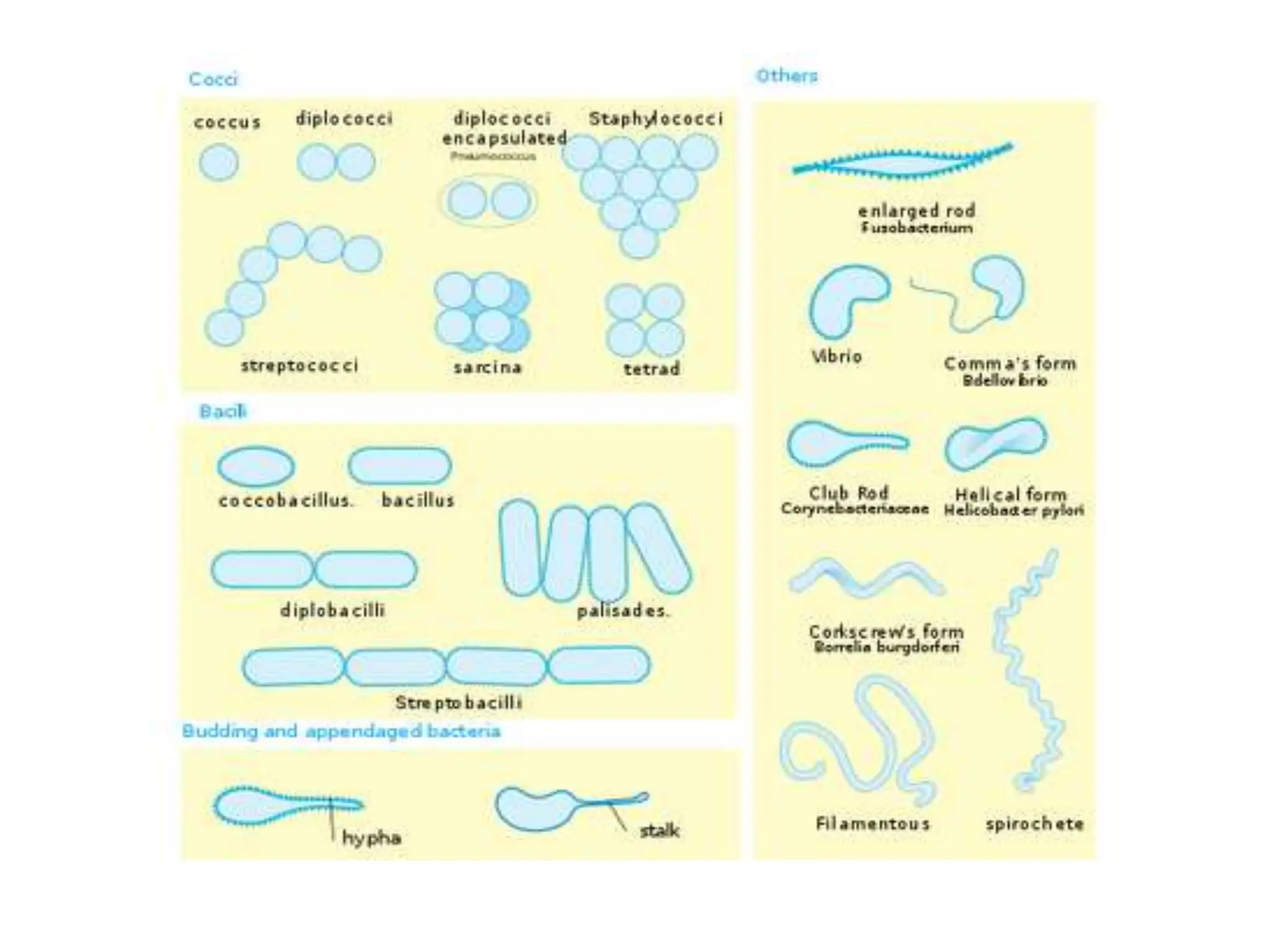
On basis of shape
Mode of Nutrition
Temperature requirement
Oxygen requirement
pH for growth
Osmotic pressure requirement
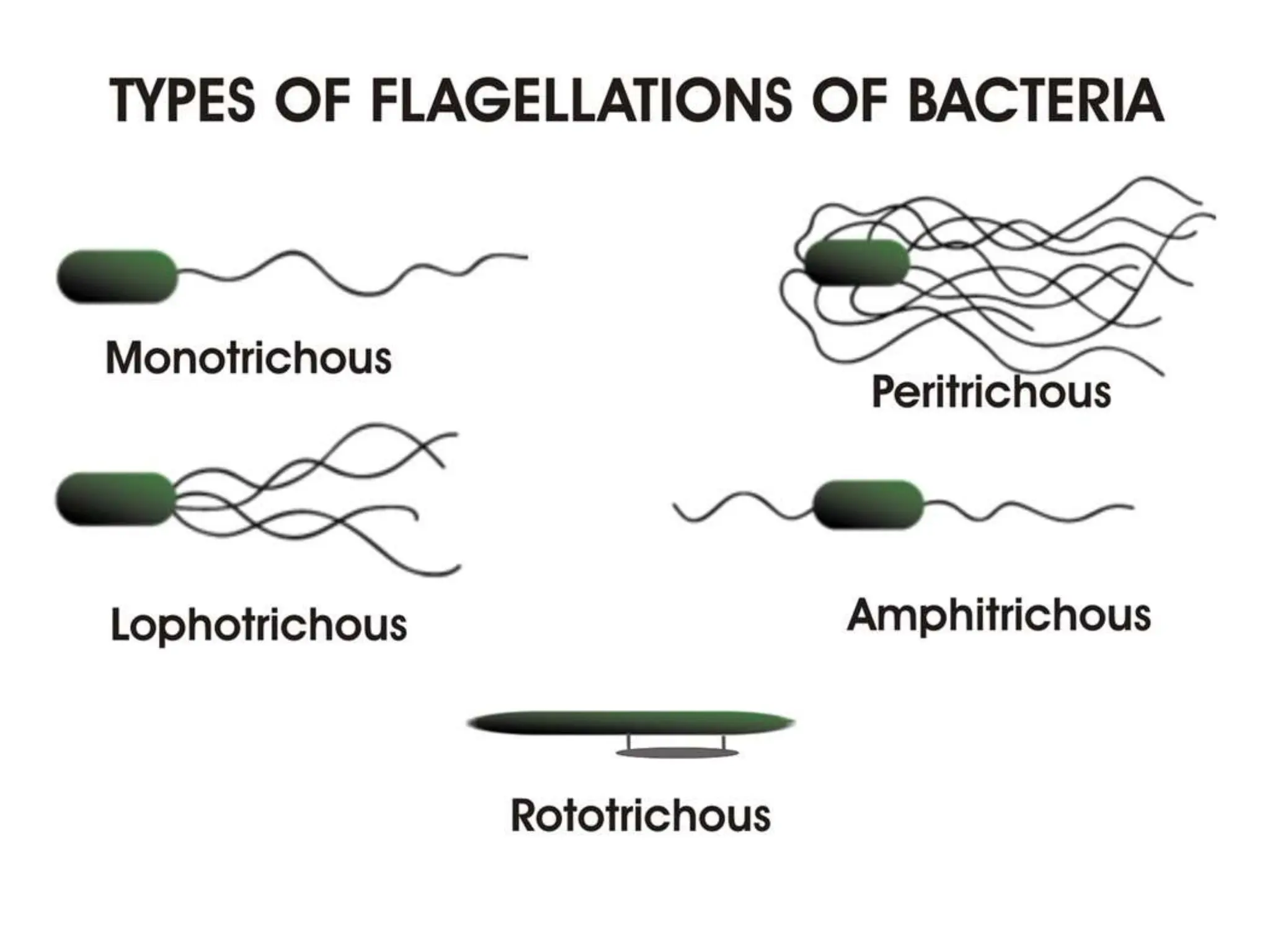
No. of flagella
Spore formation
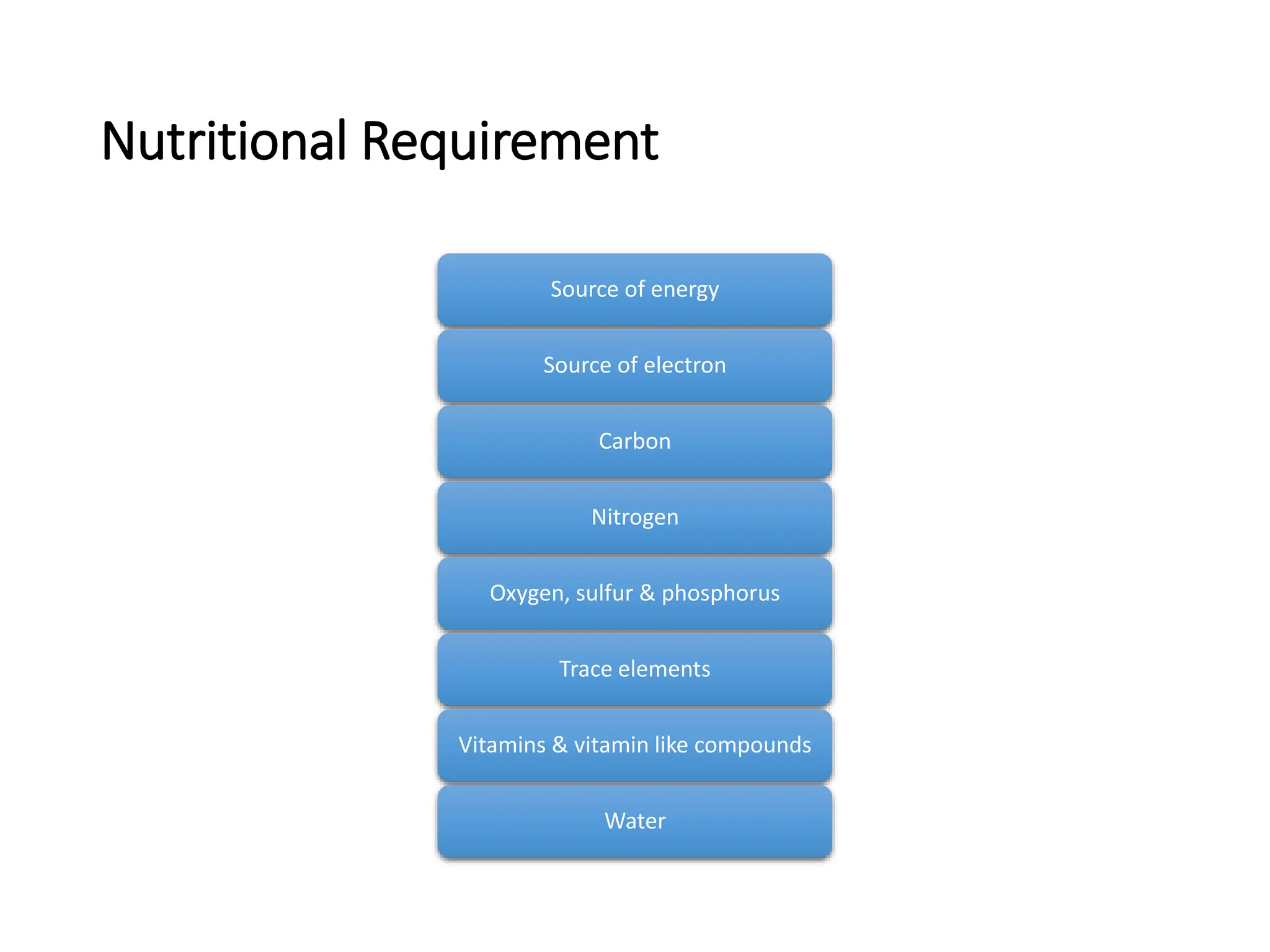
Nutritional Requirement
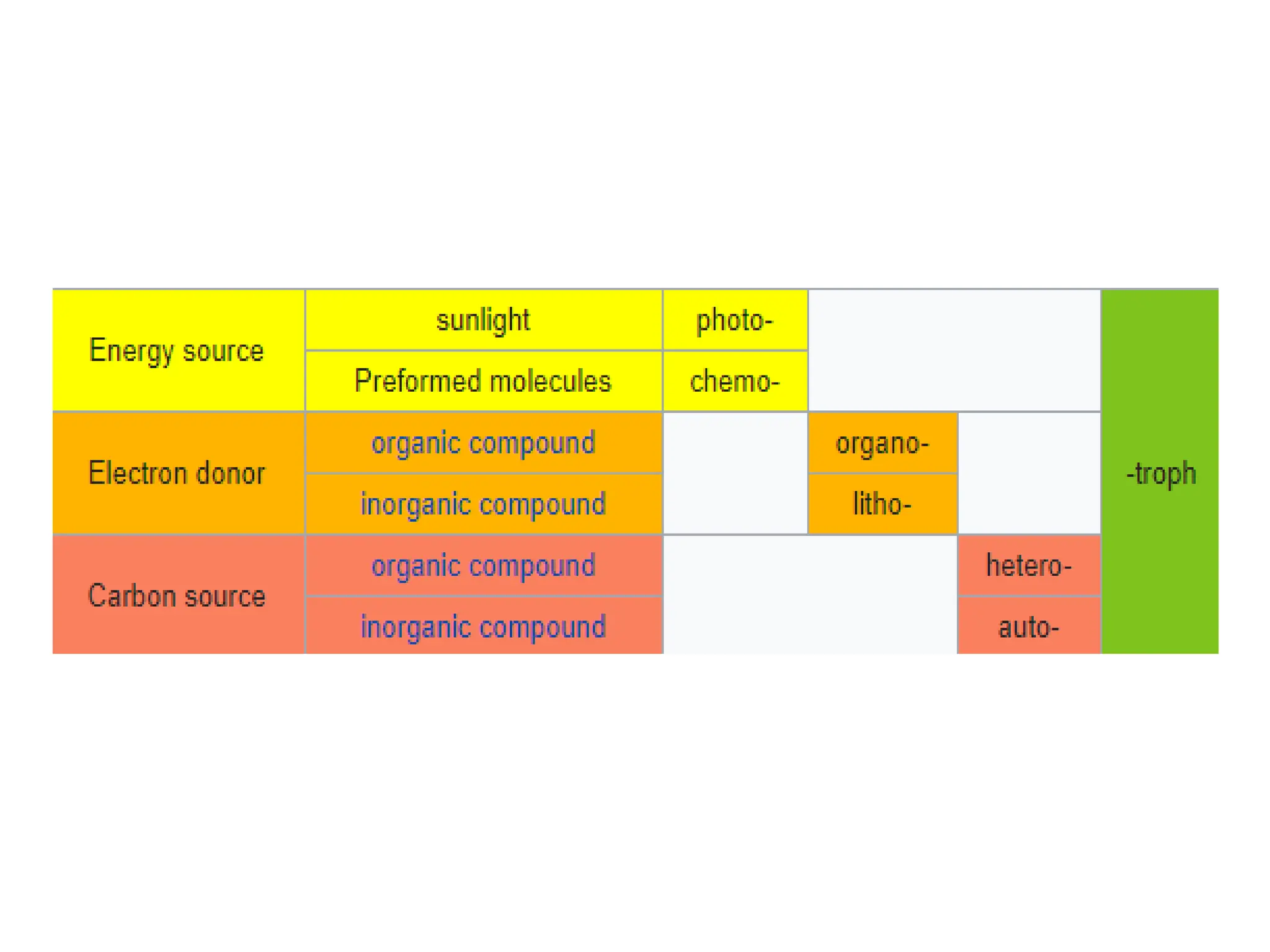
Source of energy
Source of electron
Carbon
Nitrogen
Oxygen, sulfur & phosphorus
Trace elements
Vitamins & vitamin like compounds
Water
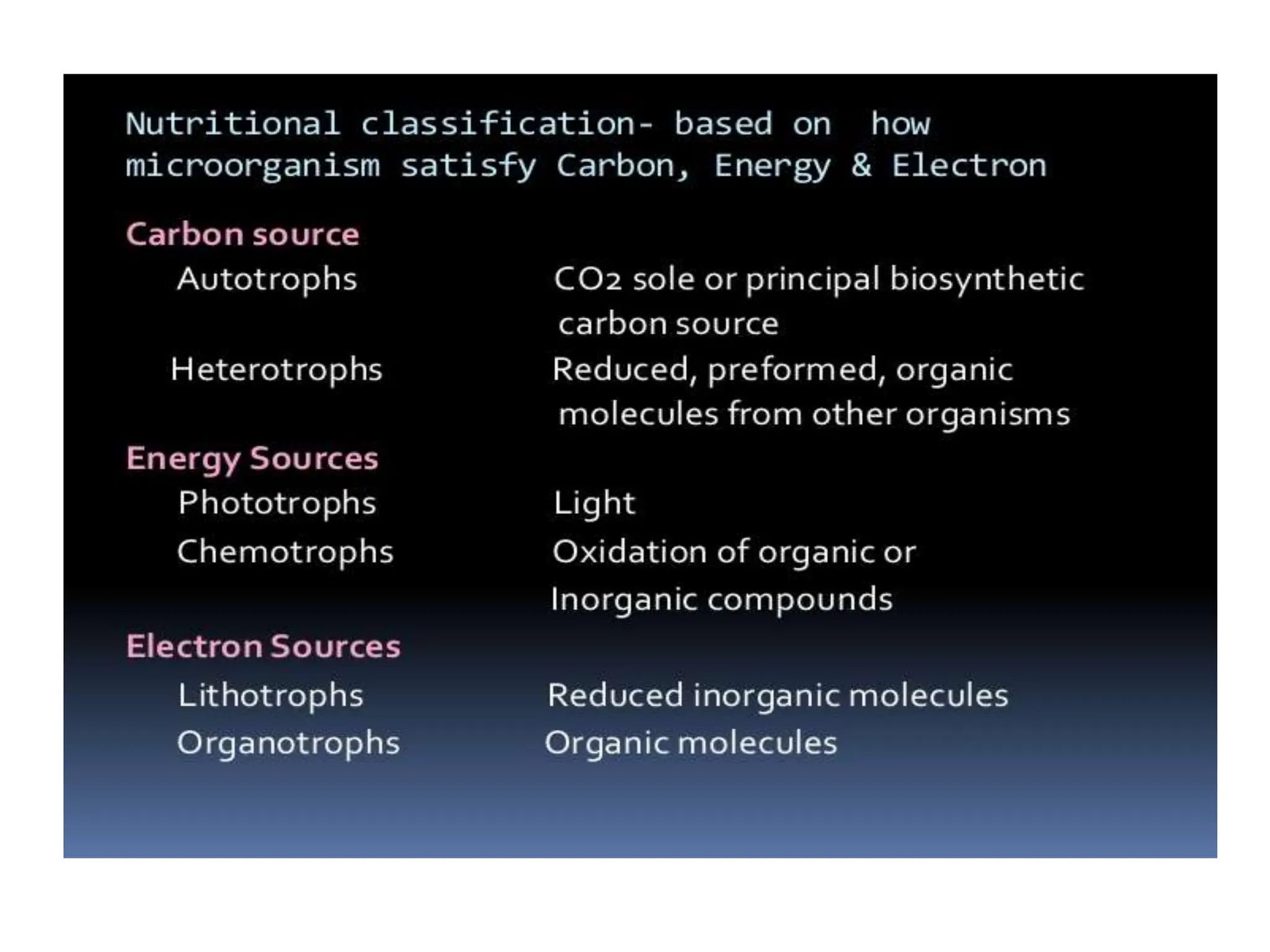
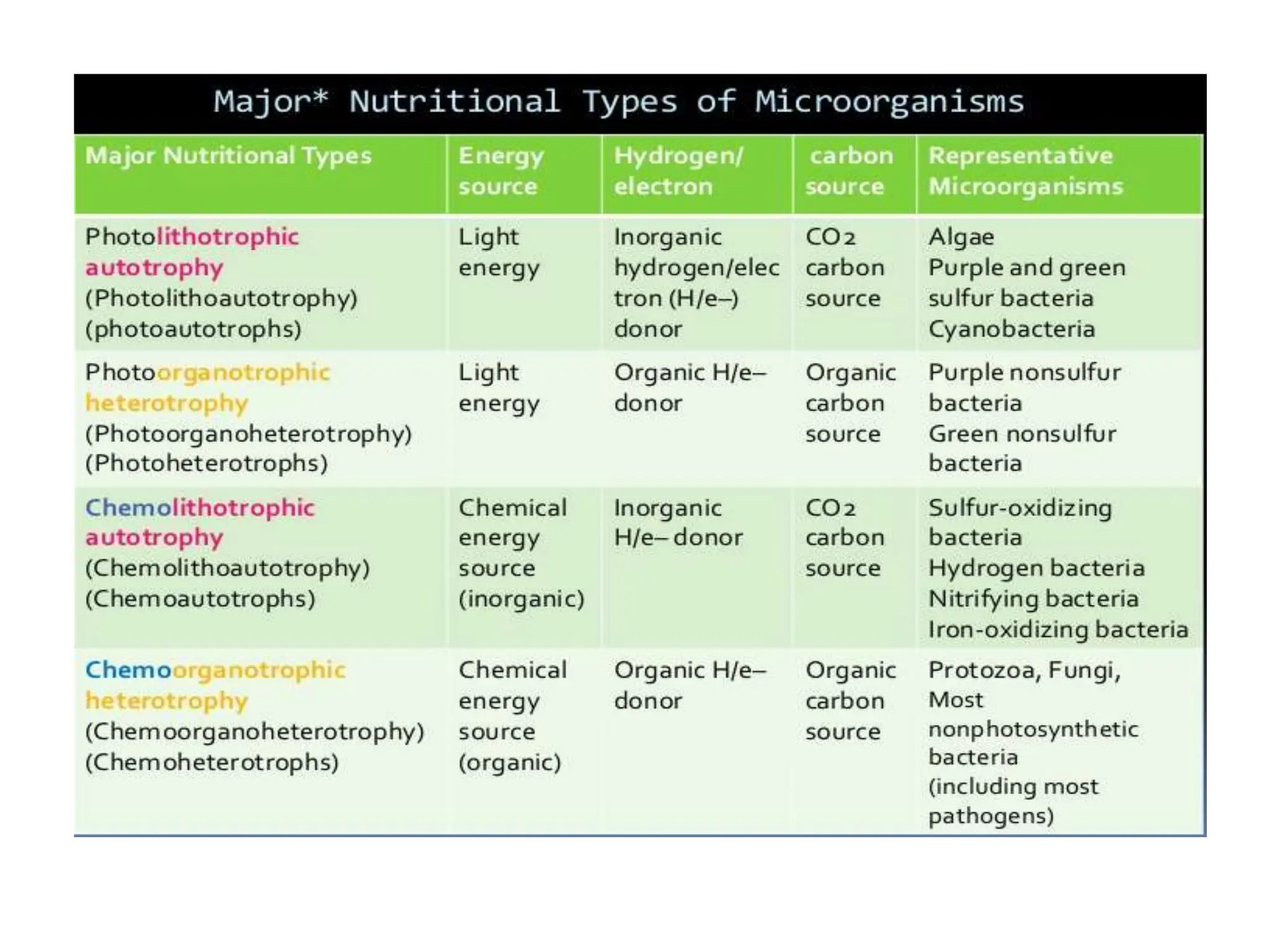
Classification of bacteria on the basis of mode of nutrition:
1. Phototrophs
2. Chemotrophs
3. Autotrophs
4. Heterotrophs
5. Obligate parasites
Phototrophs
• Those bacteria which gain energy from light.
• Phototrophs are further divided into two groups on the basis of
source of electron.
• Photolithotrophs: these bacteria gain energy from light and uses reduced
inorganic compounds such as H2S as electron source. Eg. Chromatium okenii.
• Photoorganotrophs: these bacteria gain energy from light and uses organic
compounds such as succinate as electron source.
Chemotrophs
• Those bacteria gain energy from chemical compounds.
• They cannot carry out photosynthesis.
• Chemotrophs are further divided into two groups on the basis of
source of electron.
• Chemolithotrophs: they gain energy from oxidation of chemical compound
and reduces inorganic compounds such as NH3 as electron source. eg.
Nitrosomonas
• Chemoorganotrophs: they gain energy from chemical compounds and uses
organic compound such as glucose and amino acids as source of electron.
eg. Pseudomonas pseudoflava
Autotrophs
• Those bacteria which uses carbon dioxide as sole source of carbon to
prepare its own food.
• Autotrophs are divide into two types on the basis of energy utilized
to assimilate carbondioxide. ie., Photoautotrophs and
chemoautotrophs
• Photoautotrophs: they utilized light to assimilate CO2. They are further
divided into two group on the basis of electron sources. i.e. Photolithotropic
autotrophs and Photoorganotropic autotrophs.
• Chemoautotrophs: they utilize chemical energy for assimilation of CO2.
Heterotrophs
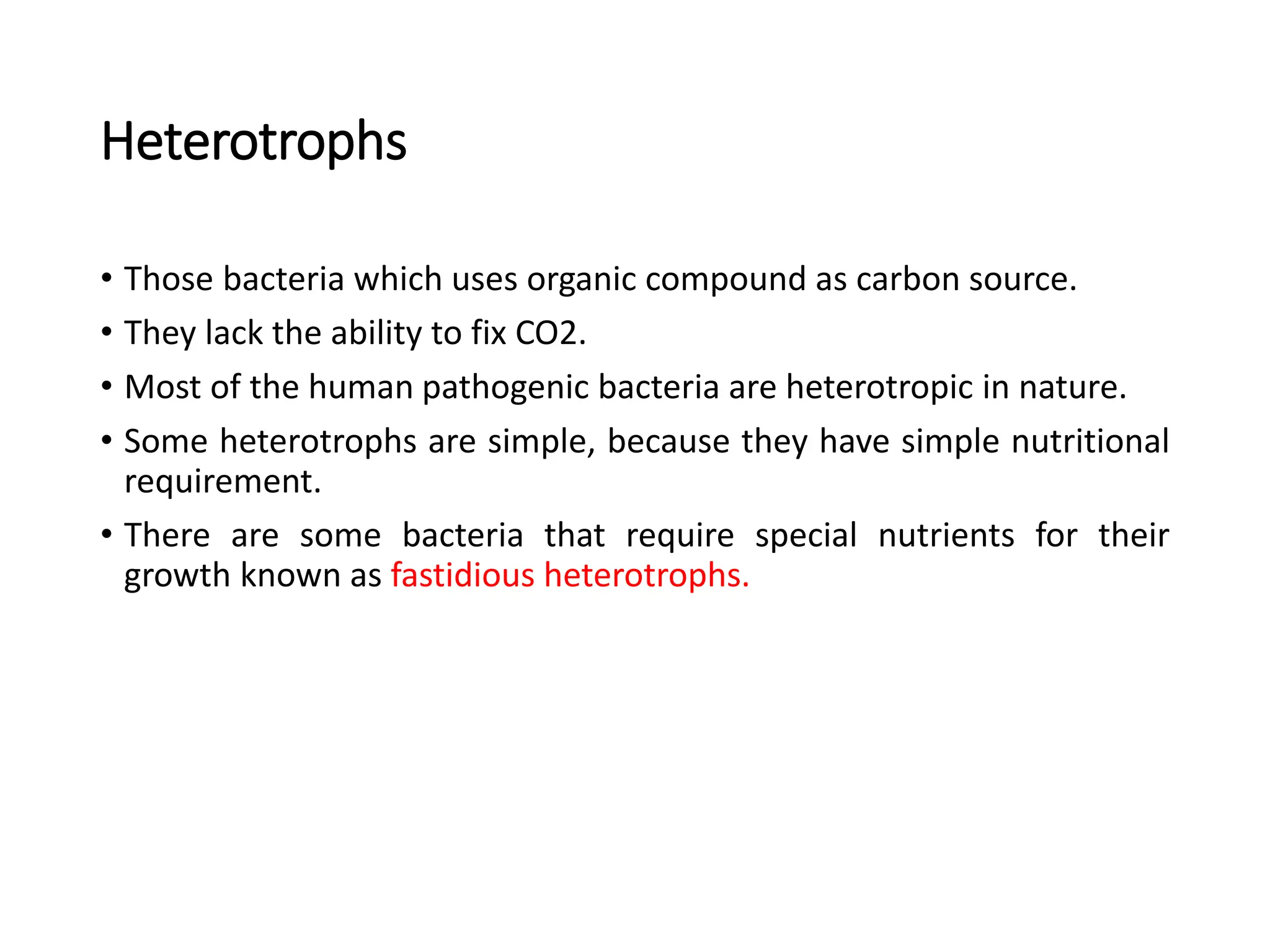
• Those bacteria which uses organic compound as carbon source.
• They lack the ability to fix CO2.
• Most of the human pathogenic bacteria are heterotropic in nature.
• Some heterotrophs are simple, because they have simple nutritional
requirement.
• There are some bacteria that require special nutrients for their
growth known as fastidious heterotrophs.
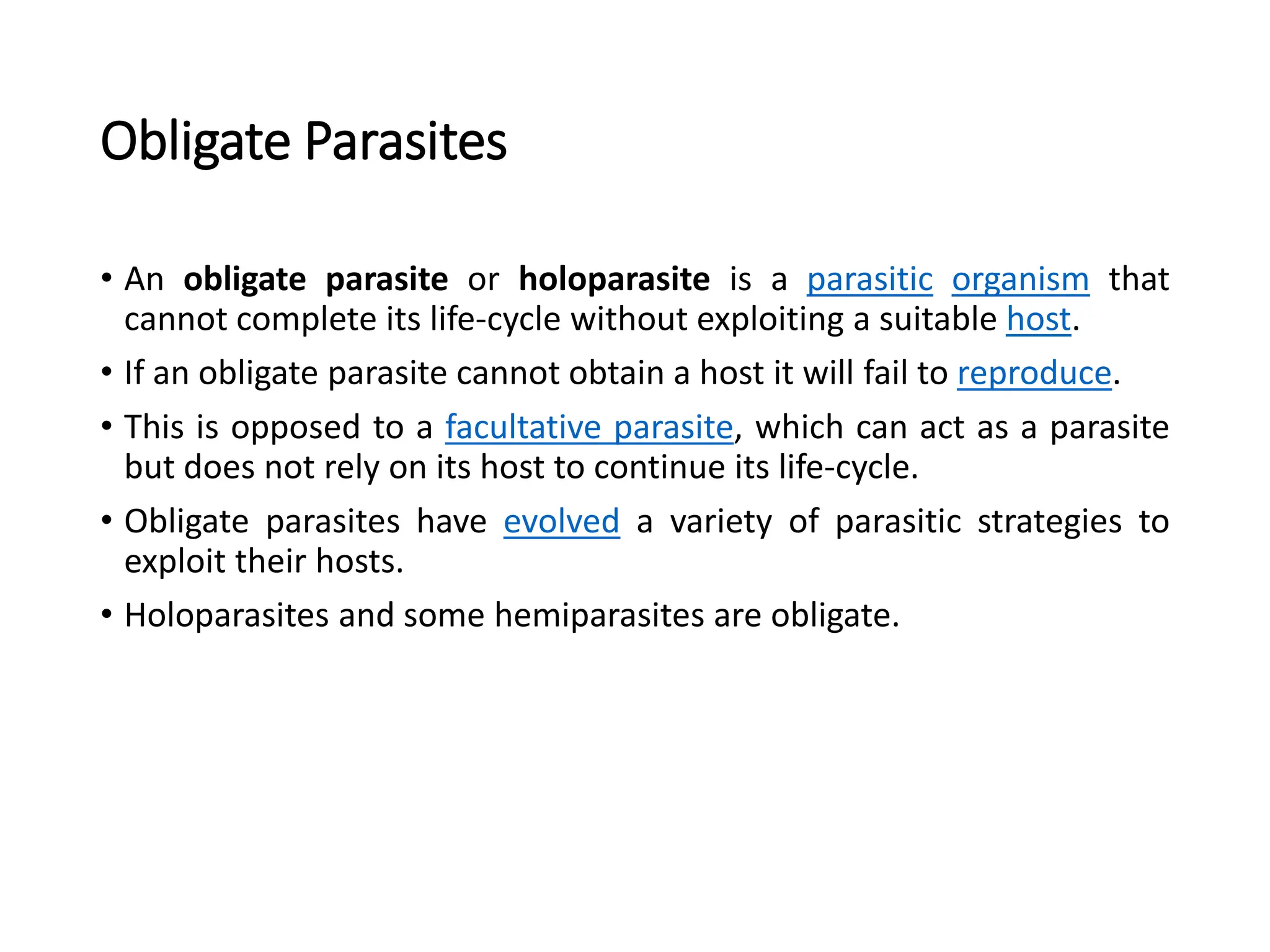
Obligate Parasites
• An obligate parasite or holoparasite is a parasitic organism that
cannot complete its life-cycle without exploiting a suitable host.
• If an obligate parasite cannot obtain a host it will fail to reproduce.
• This is opposed to a facultative parasite, which can act as a parasite
but does not rely on its host to continue its life-cycle.
• Obligate parasites have evolved a variety of parasitic strategies to
exploit their hosts.
• Holoparasites and some hemiparasites are obligate.
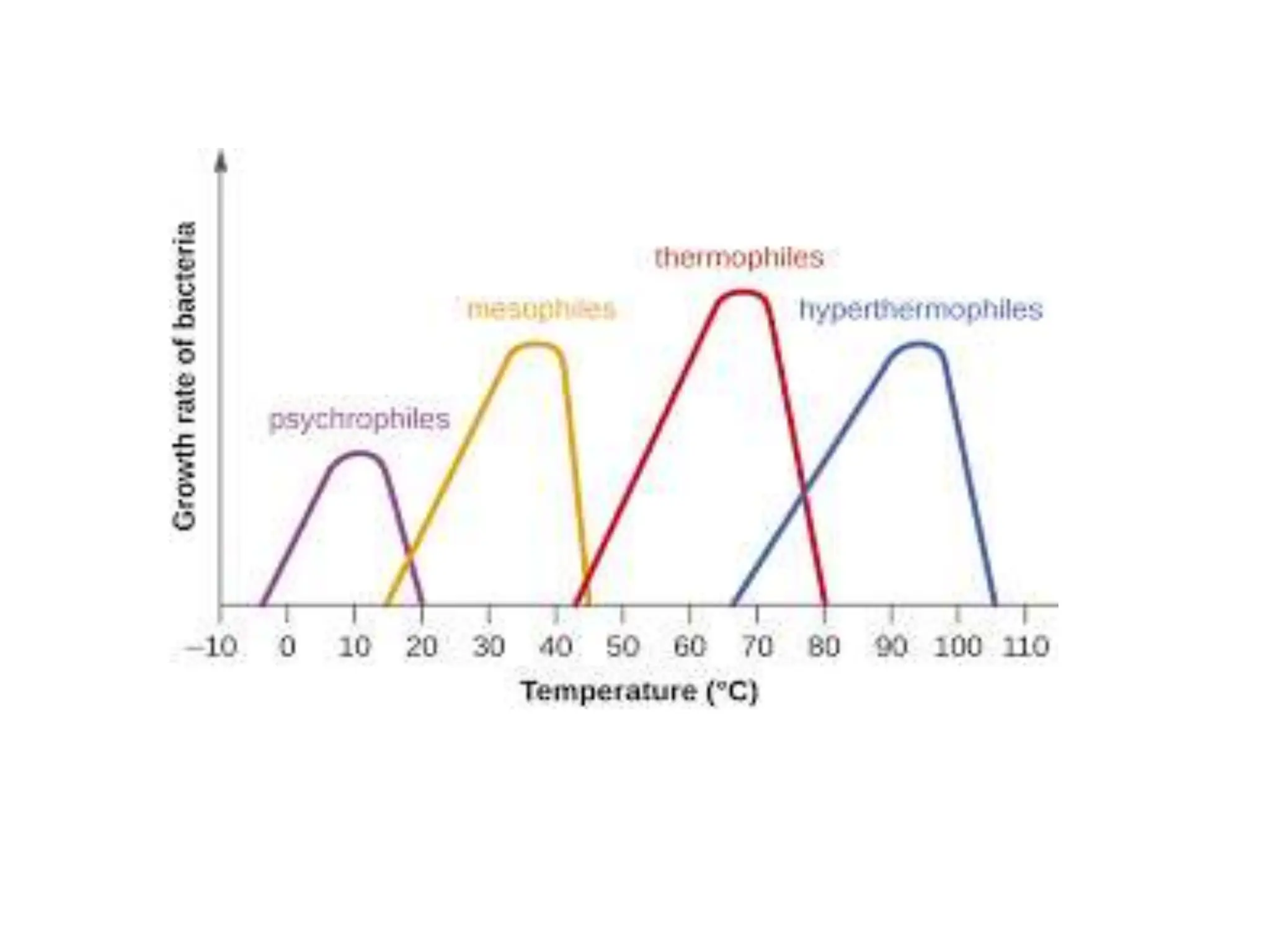
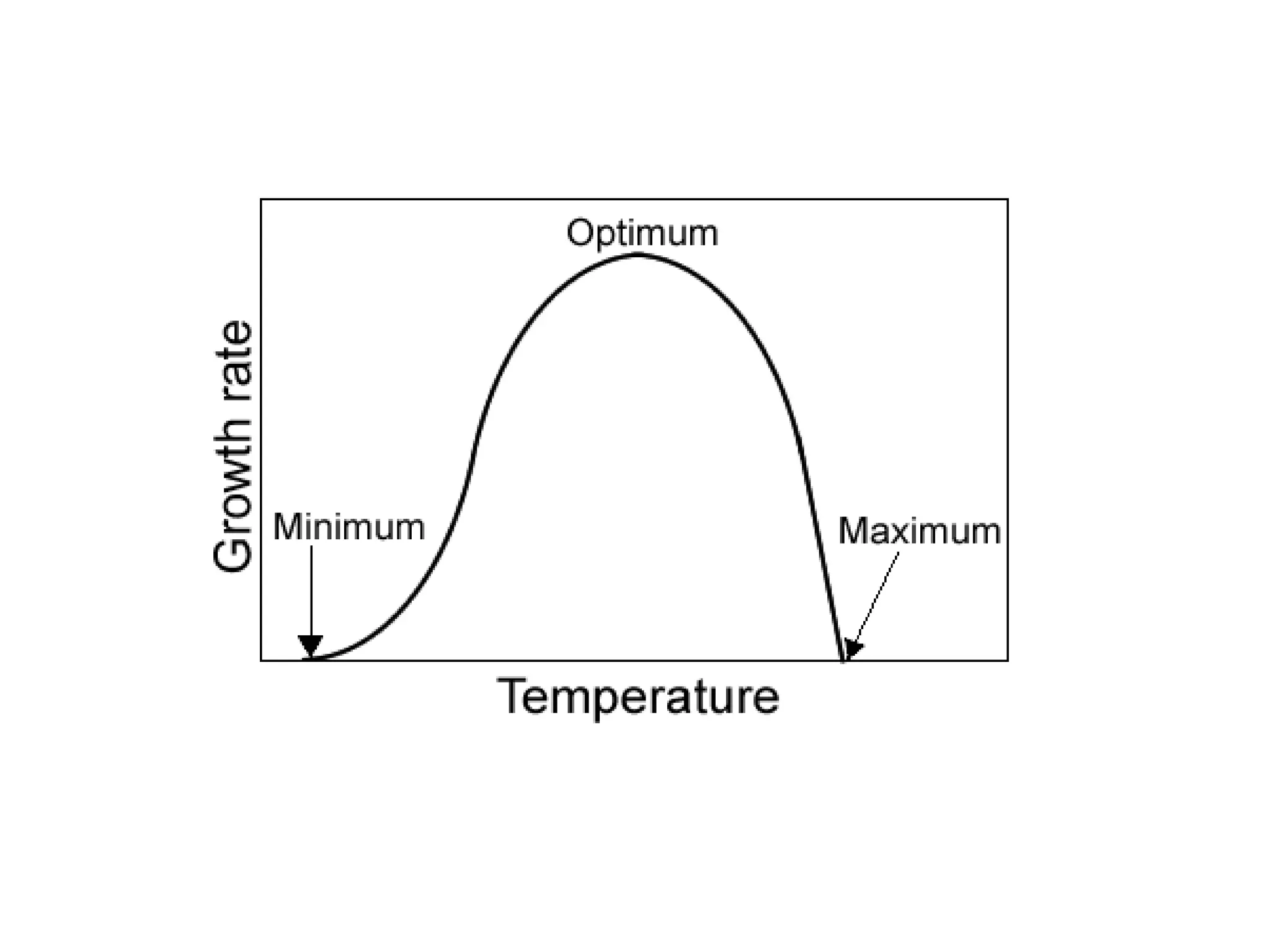
Classification of bacteria on the basis of optimum
temperature of growth
1. Psychrophiles:
• Bacteria that can grow at 0°C or below but the optimum temperature of
growth is 15 °C or below and maximum temperature is 20°C are called
psychrophiles
• Examples: Vibrio psychroerythrus, vibrio marinus, Polaromonas vaculata,
Psychroflexus
2. Psychrotrophs (facultative psychrophiles):
• Those bacteria that can grow even at 0°C but optimum temperature for
growth is (20-30)°C
3. Mesophiles:
• Those bacteria that can grow best between (25-40)C but optimum
temperature for growth is 37C
• Examples: coli, Salmonella, Klebsiella, Staphulococci
4. Thermophiles:
• Those bacteria that can best grow above 45C.
• Thermophiles capable of growing in mesophilic range are called facultative
thermophiles.
• Examples: Streptococcus thermophiles, Bacillus stearothermophilus, Thermus
aquaticus,
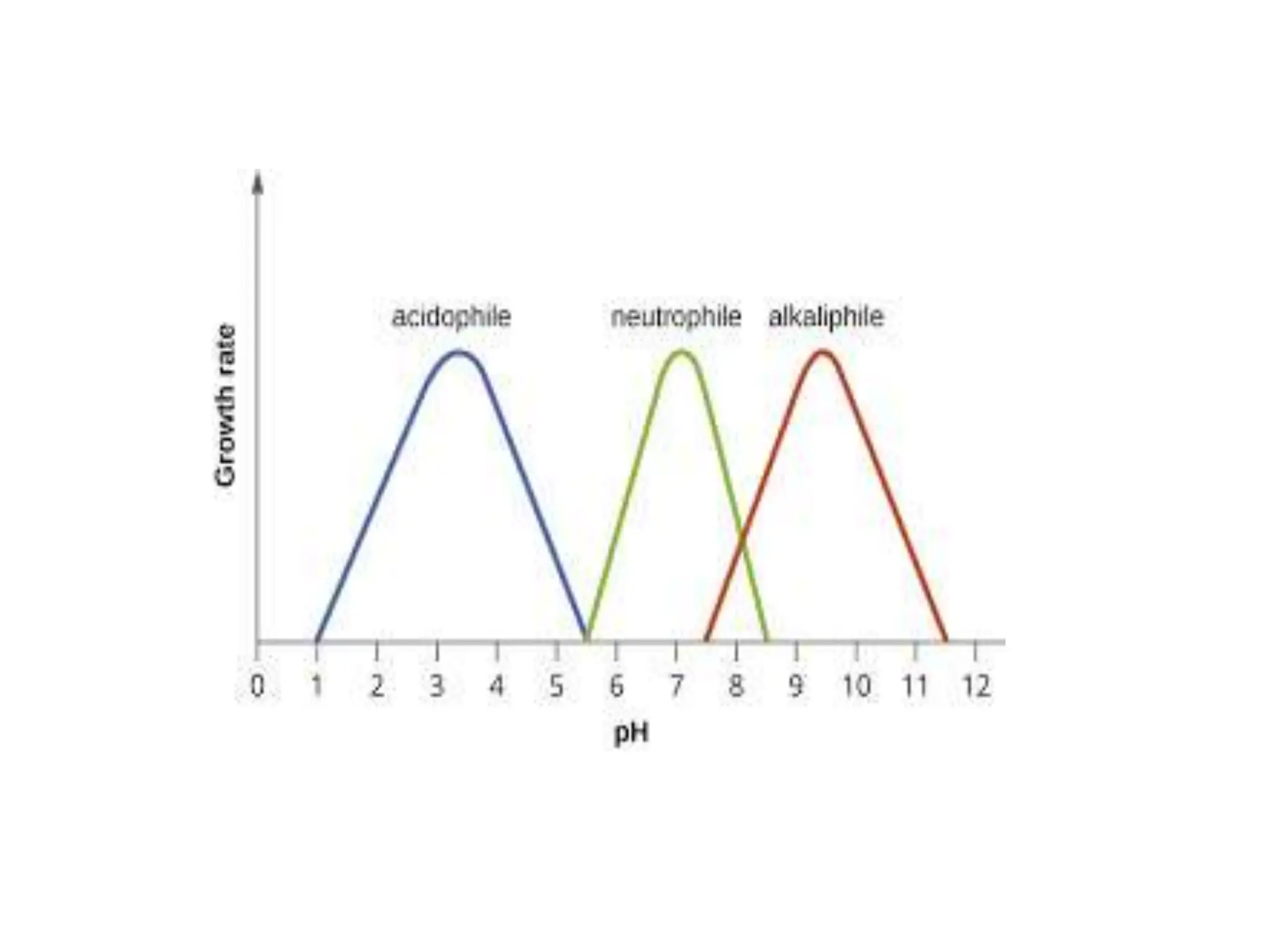
Classification of bacteria on the basis of optimum pH of
growth
1. Acidophiles:
• Those bacteria that grow best at acidic pH
• The cytoplasm of these bacteria are acidic in nature.
• Some acidopiles are thermophilic in nature, such bacteria are called
Thermoacidophiles.
• Examples: Thiobacillus thioxidans, Thiobacillus, ferroxidans,
Thermoplasma, Sulfolobus
2. Alkaliphiles:
• Those bacteria that grow best at alkaline pH
• Example: vibrio cholerae: oprimum pH of growth is 8.2
3. Neutriphiles:
• Those bacteria that grow best at neutral pH (6.5-7.5)
• Most of the bacteria grow at neutral pH
• Example: E. coli
Classification of bacteria on the basis of salt
requirement
1. Halophiles:
• Those bacteria that require high concentration of NaCl for growth.
• Example: Archeobacteria, Halobacterium, Halococcus
2. Halotolerant:
• Most of the bacteria do not require NaCl but can tolerate low
concentration of NaCl in growth media are called halotolerant
Classification of bacteria on the basis of gaseous
requirement
1. Obligate aerobes:
• Those bacteria that require oxygen and cannot grow in the absence of O2 & carryout only oxidative type of metabolism.
• Examples; Mycobacterium, Bacillus
2. Facultative anaerobes:
• Those bacteria that do not require O2 but can use it if available.
• Growth of these bacteria become batter in presence of O2
• These bacteria carryout both oxidative and fermentative type of metabolism
• Examples: coli, Klebsiella, Salmonella
3. Microaerophiles:
• Those bacteria that do not require O2 for growth but can tolerate low concentration of O2.
• At atmospheric level of Oxygen growth of these bacteria is inhibited.
• These bacteria only have oxidative type of metabolism
• Example: Campylobacter
4. Obligate anaerobes:
• Those bacteria that can grow only in absence of Oxygen.
• Oxygen is harmful to obligate anaerobes
• These bacteria have only fermentative type of metabolism
• Examples: Peptococcus, Peptostreptococcus, Slostridium, methanococcus
5. Capnophiles:
• Those bacteria that require carbondioxide for growth.
• They are CO2 loving organism
• Most of the microaerophiles are capnophilic in nature.
• Example: Campylobacter, Helicobacter pylori, Brucella abortus
Classification of bacteria on the basis of Spore
1. Spore forming bacteria:
Those bacteria that produce spore during unfavorable condition.
These are further divided into two group
i) Endospore forming bacteria:
Spore produced within the bacterial cell.
Bacillus, Clostridium, Sporosarcina etc
ii) Exospore forming bacteria:
Spore produced outside the cell
Methylosinus
2. Non sporing bacteria:
those bacteria which do not produce spore.
Eg. E. coli, Salmonella
MICROSCOPES &
MICROSCOPY
MICROSCOPE
• A microscope is an instrument used to see objects that are too small
to be seen by the naked eye.
• Microscopy is the science of investigating small objects and
structures using such an instrument.
• Microscopic means invisible to the eye unless aided by a microscope.
• Two categories: Light (optical) & Electron.
Light Microscopy
• In which magnification is obtained by a system of optical lenses using
light waves.
• Types-
1. Bright field
2. Dark field
3. Fluorescence
4. Phase contrast
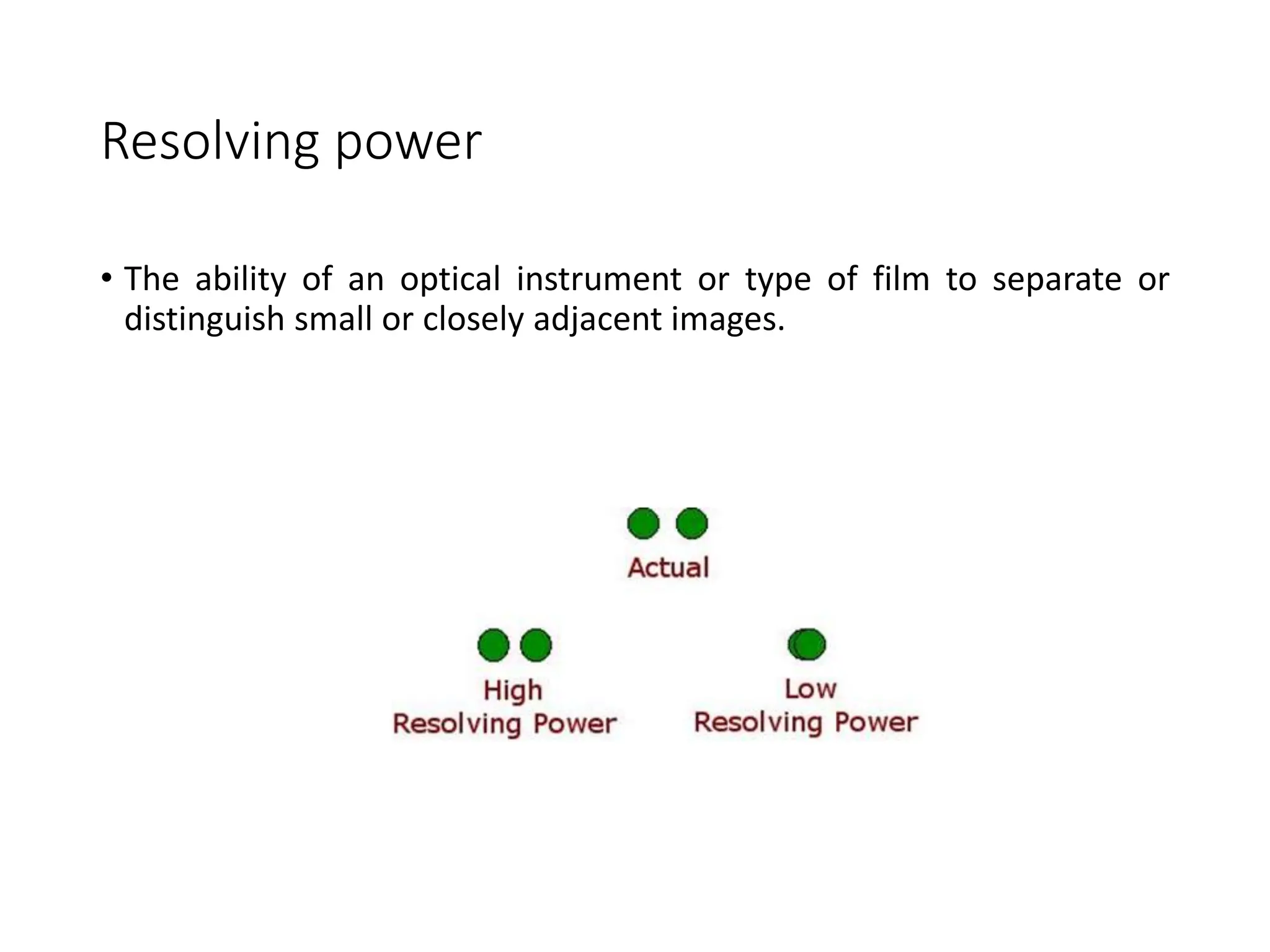
Resolving power
• The ability of an optical instrument or type of film to separate or
distinguish small or closely adjacent images.
Magnification
• Magnification is the ability to make small objects seem larger, such
as making a microscopic organism visible.
• Magnification is measured by multiples, such as 2x, 4x and 10x,
indicating that the object is enlarged to twice as big, four times as
big or 10 times as big, respectively
Bright-field microscopy
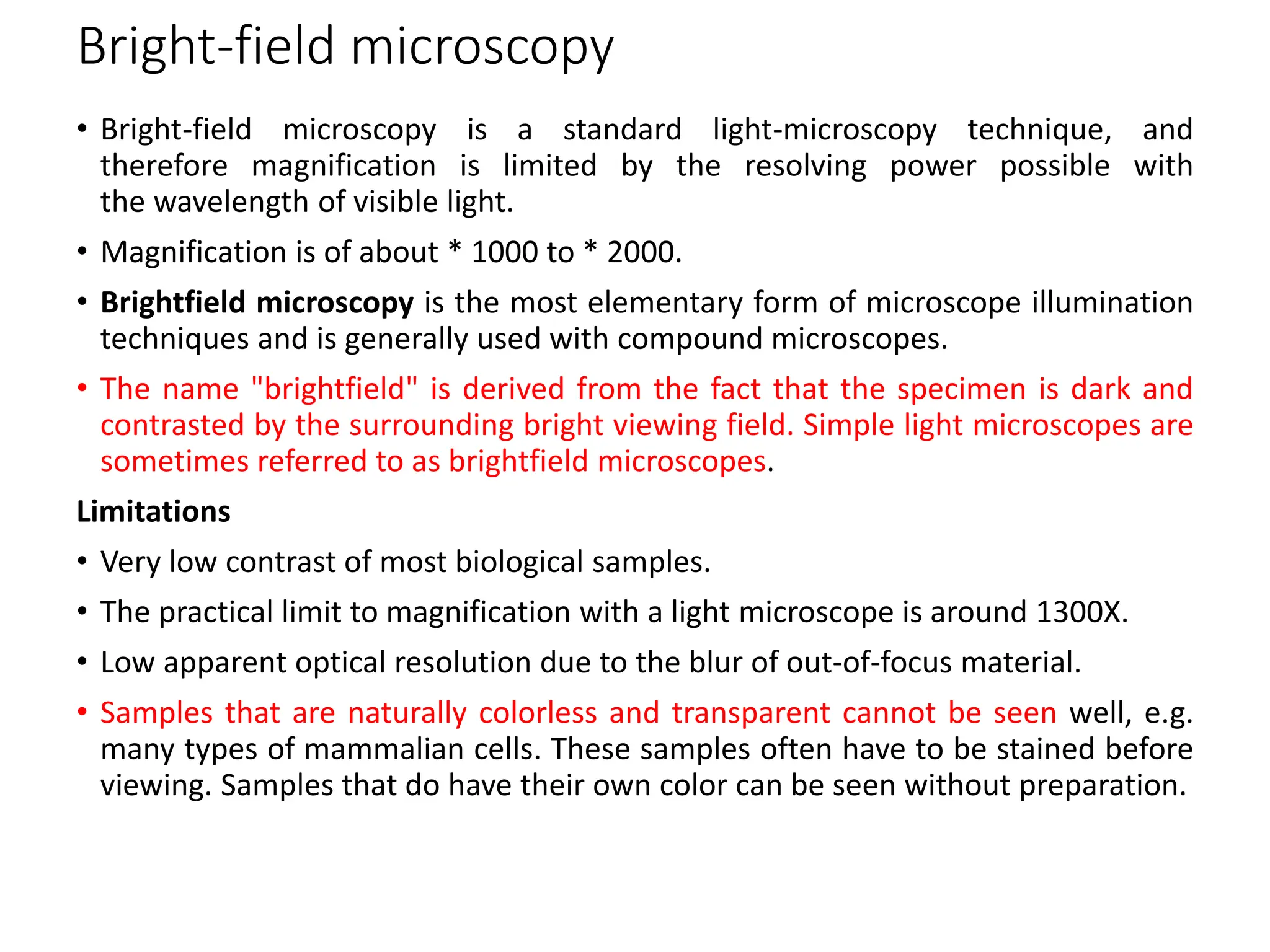
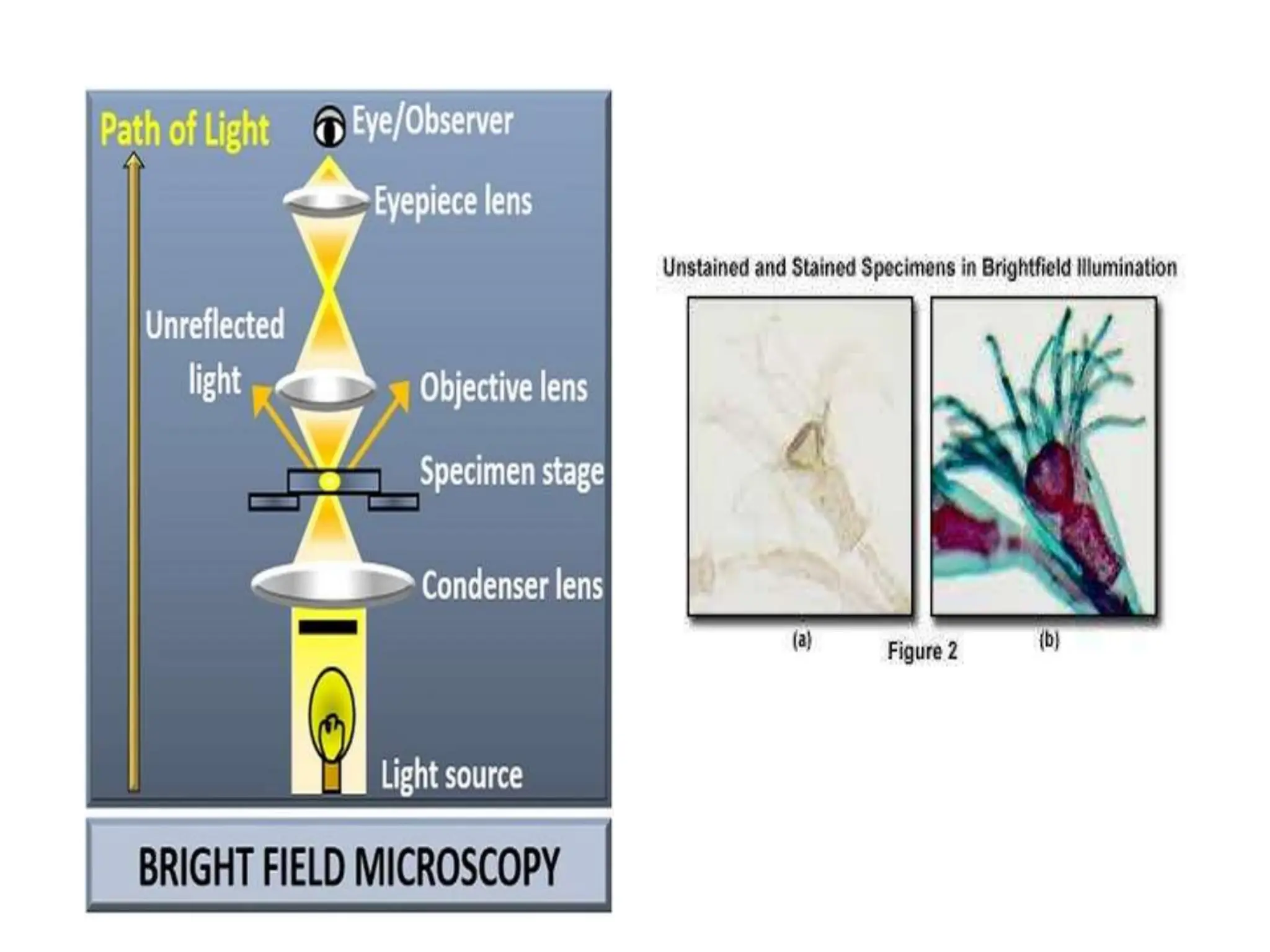
• Bright-field microscopy is a standard light-microscopy technique, and
therefore magnification is limited by the resolving power possible with
the wavelength of visible light.
• Magnification is of about * 1000 to * 2000.
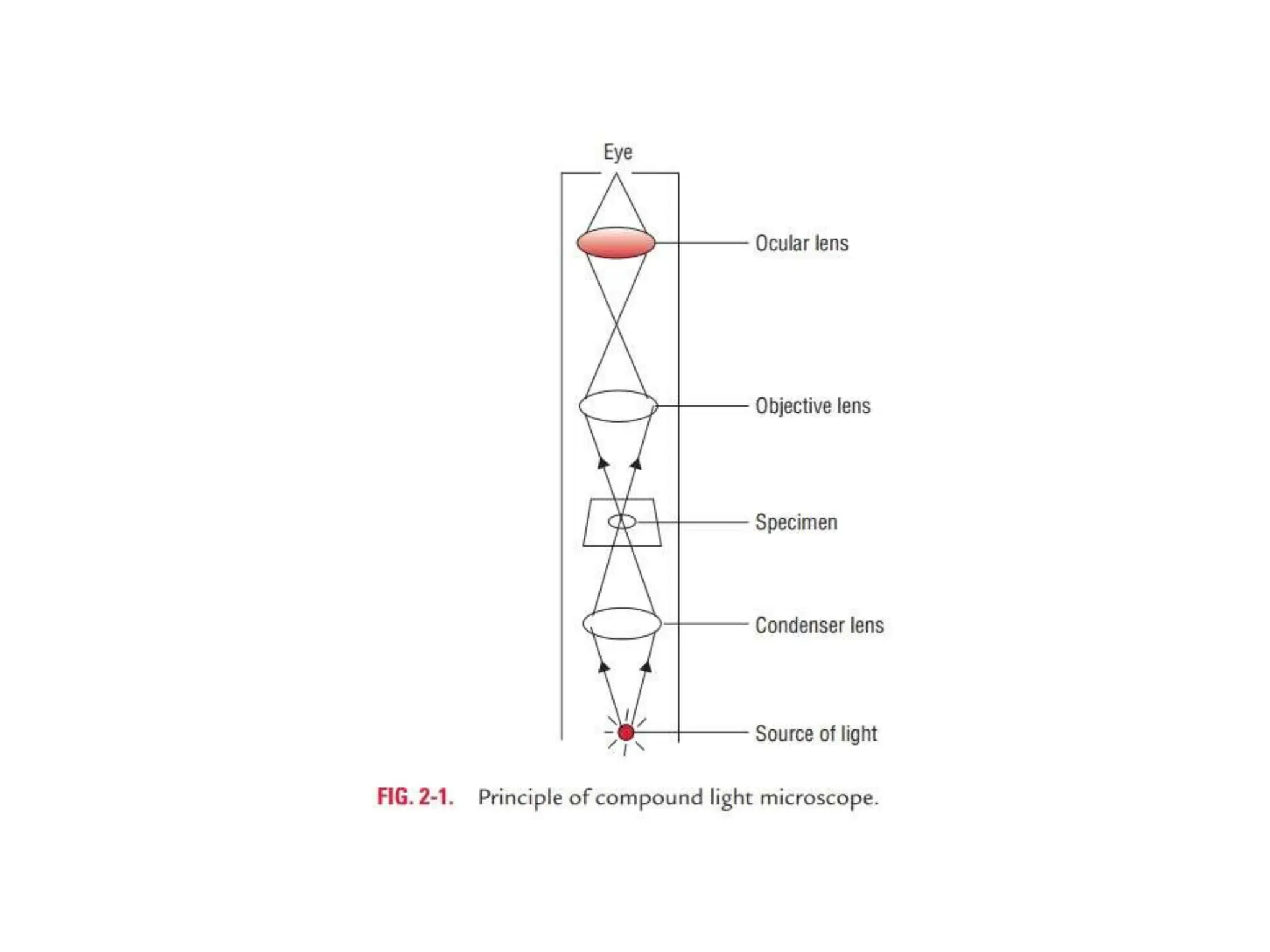
• Brightfield microscopy is the most elementary form of microscope illumination
techniques and is generally used with compound microscopes.
• The name "brightfield" is derived from the fact that the specimen is dark and
contrasted by the surrounding bright viewing field. Simple light microscopes are
sometimes referred to as brightfield microscopes.
Limitations
• Very low contrast of most biological samples.
• The practical limit to magnification with a light microscope is around 1300X.
• Low apparent optical resolution due to the blur of out-of-focus material.
• Samples that are naturally colorless and transparent cannot be seen well, e.g.
many types of mammalian cells. These samples often have to be stained before
viewing. Samples that do have their own color can be seen without preparation.
Principle
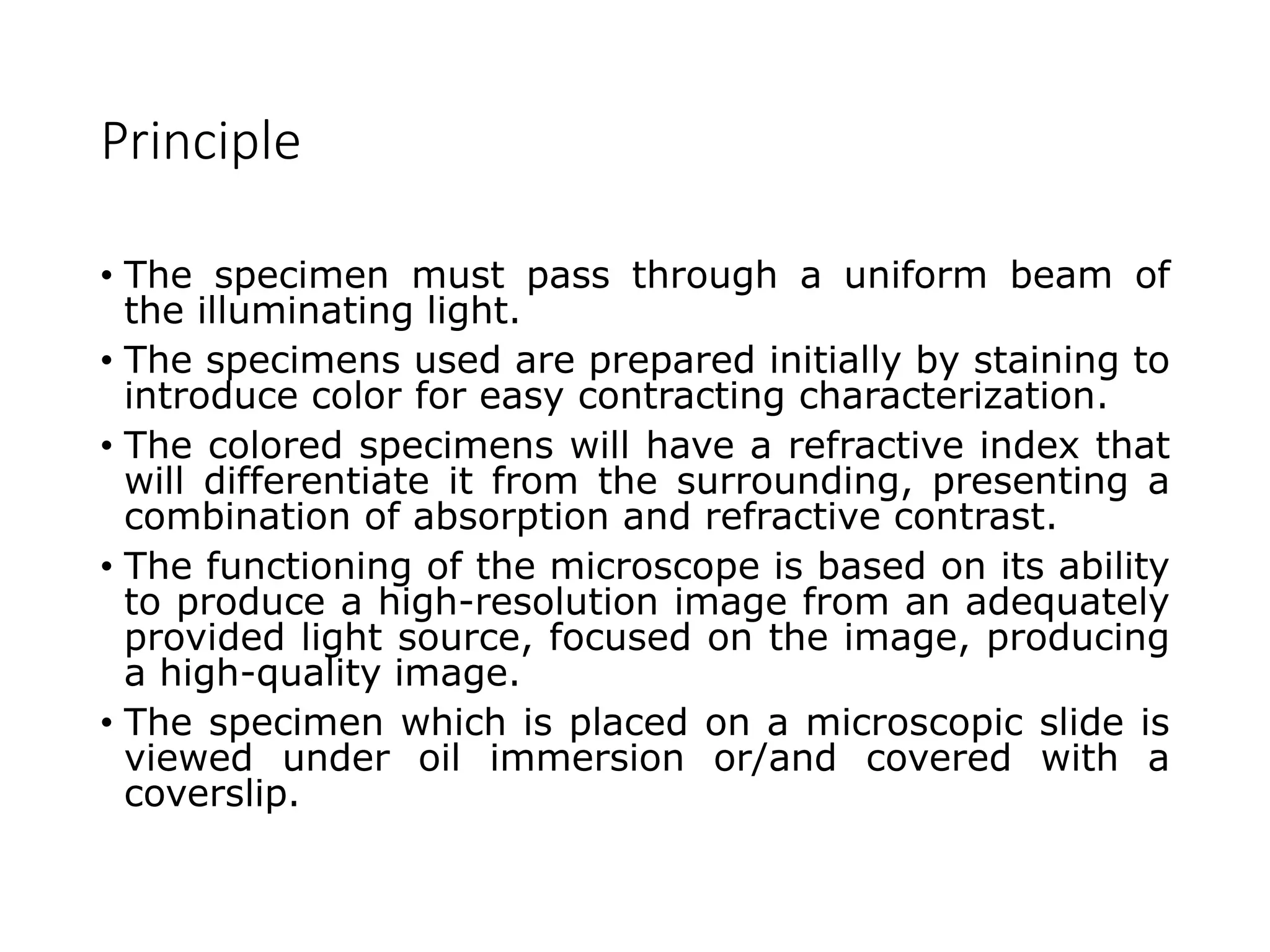
• The specimen must pass through a uniform beam of
the illuminating light.
• The specimens used are prepared initially by staining to
introduce color for easy contracting characterization.
• The colored specimens will have a refractive index that
will differentiate it from the surrounding, presenting a
combination of absorption and refractive contrast.
• The functioning of the microscope is based on its ability
to produce a high-resolution image from an adequately
provided light source, focused on the image, producing
a high-quality image.
• The specimen which is placed on a microscopic slide is
viewed under oil immersion or/and covered with a
coverslip.
Advantages
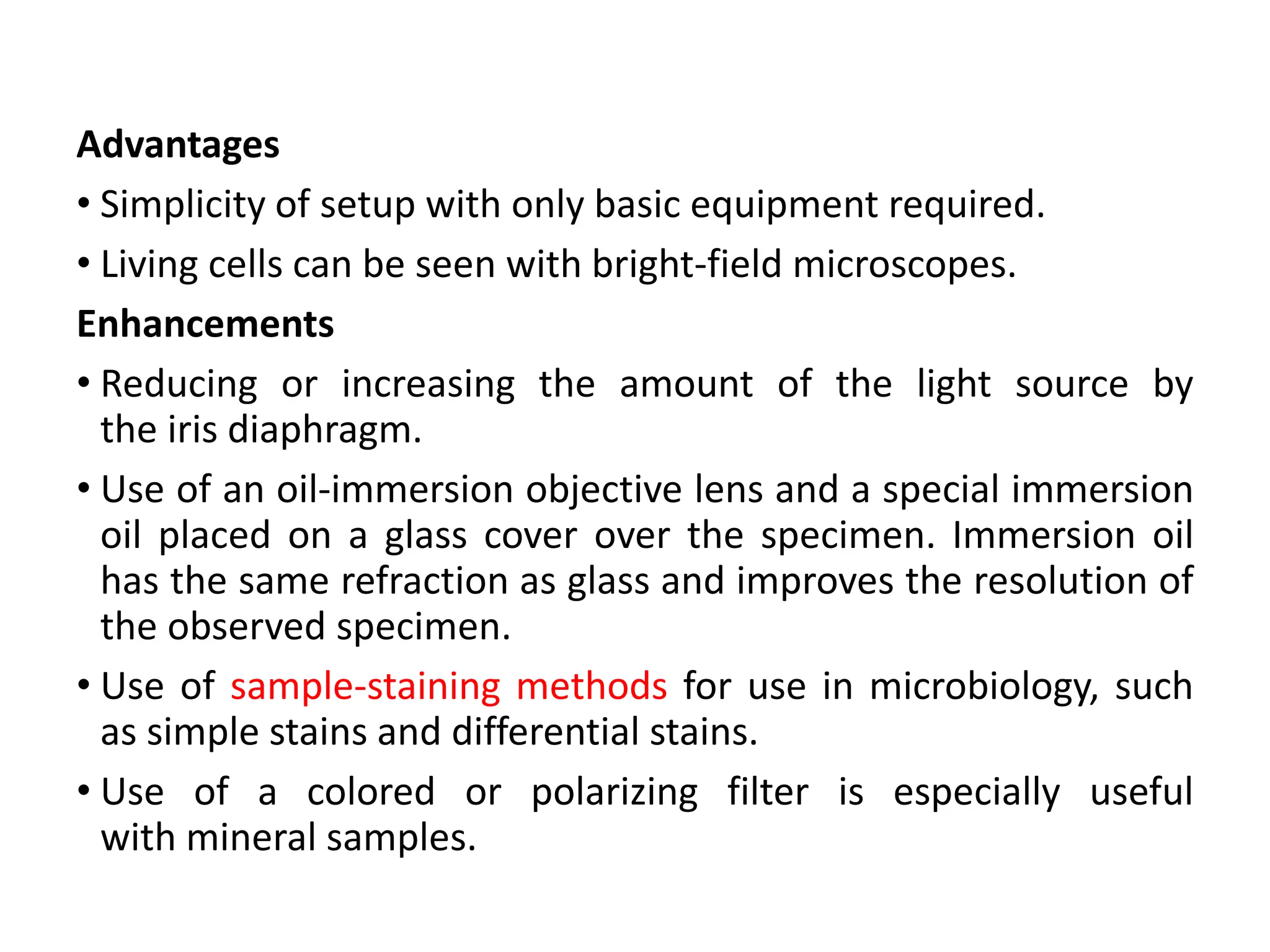
• Simplicity of setup with only basic equipment required.
• Living cells can be seen with bright-field microscopes.
Enhancements
• Reducing or increasing the amount of the light source by
the iris diaphragm.
• Use of an oil-immersion objective lens and a special immersion
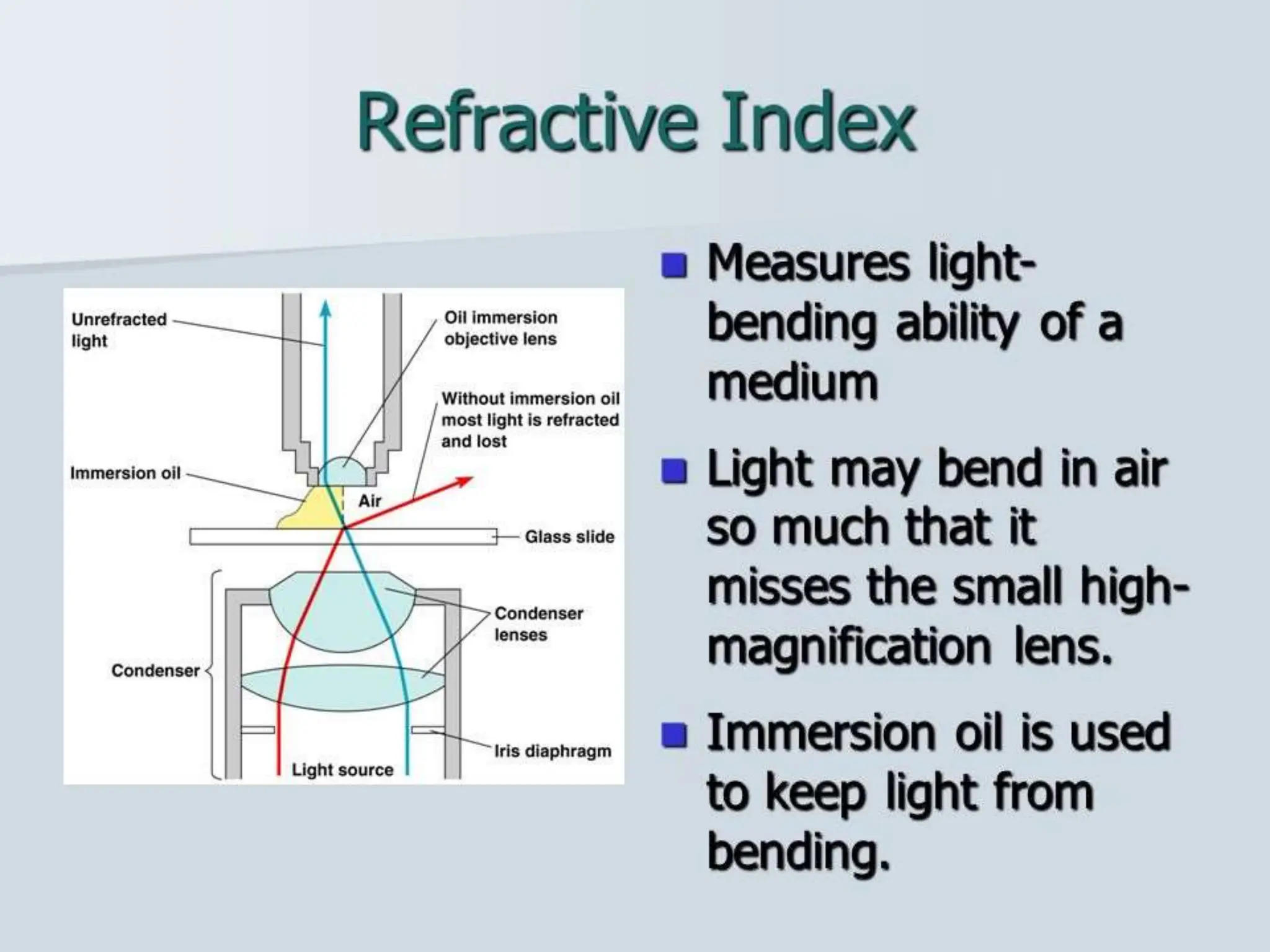
oil placed on a glass cover over the specimen. Immersion oil
has the same refraction as glass and improves the resolution of
the observed specimen.
• Use of sample-staining methods for use in microbiology, such
as simple stains and differential stains.
• Use of a colored or polarizing filter is especially useful
with mineral samples.
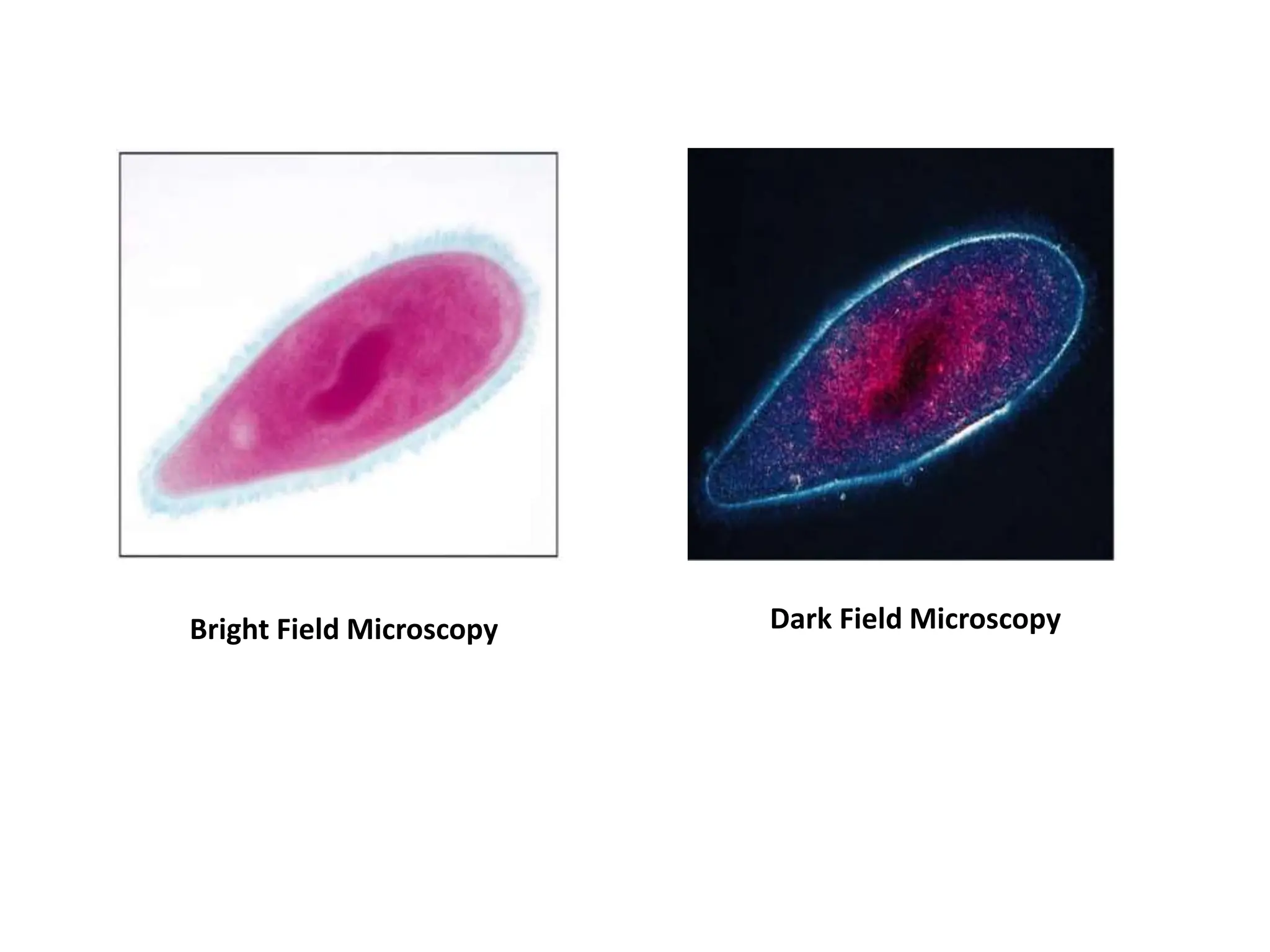
Dark field Microscopy
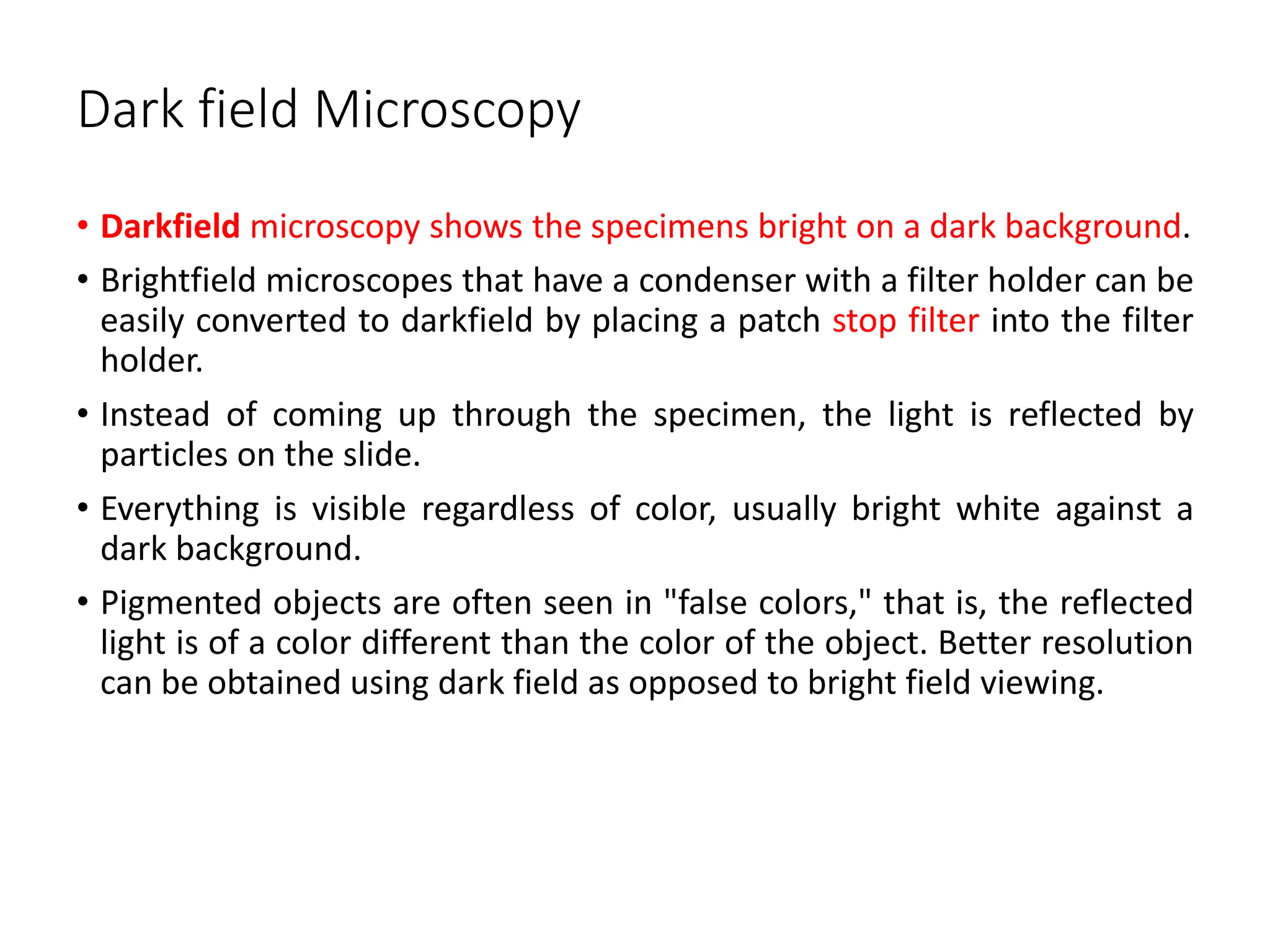
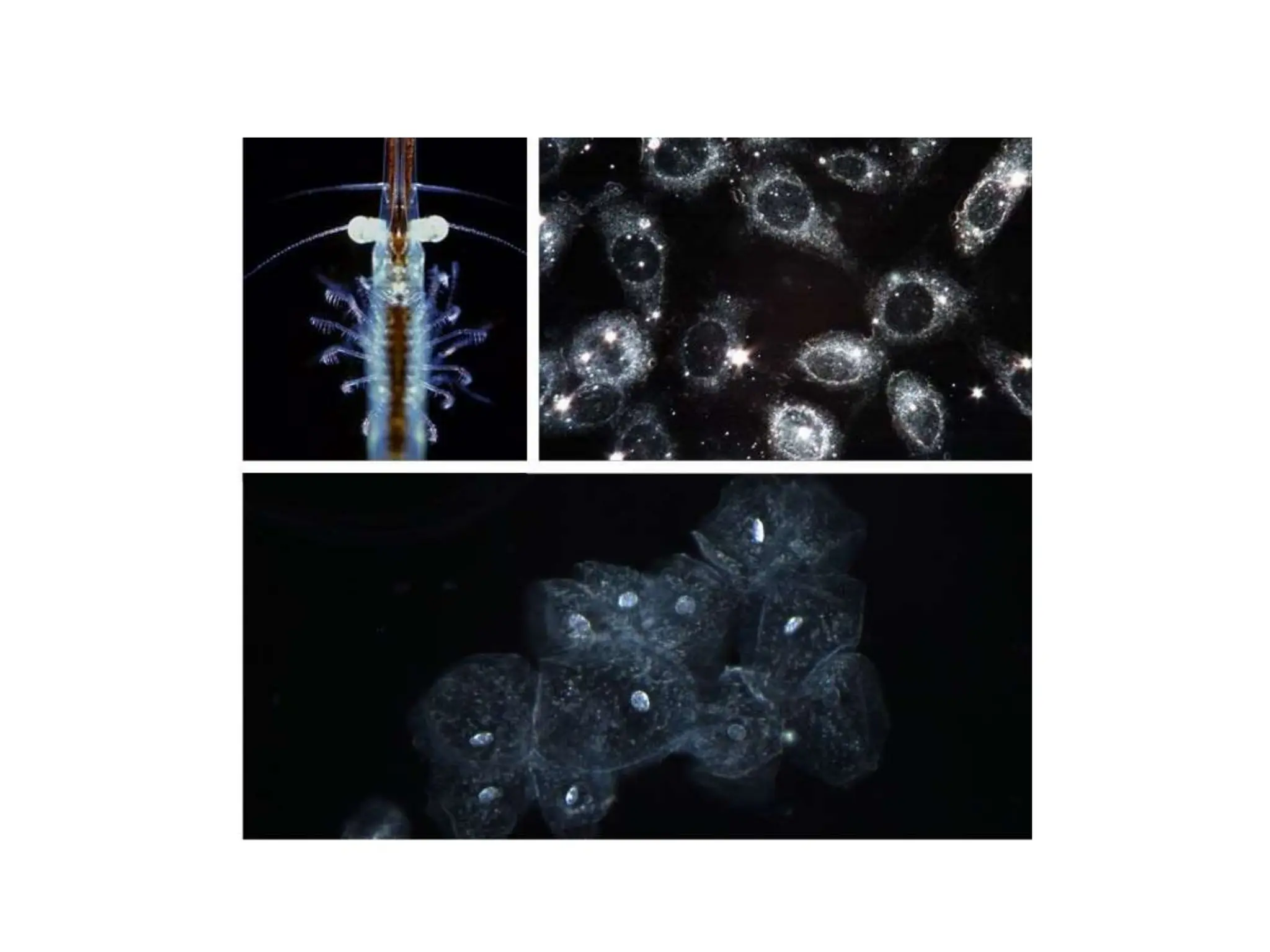
• Darkfield microscopy shows the specimens bright on a dark background.
• Brightfield microscopes that have a condenser with a filter holder can be
easily converted to darkfield by placing a patch stop filter into the filter
holder.
• Instead of coming up through the specimen, the light is reflected by
particles on the slide.
• Everything is visible regardless of color, usually bright white against a
dark background.
• Pigmented objects are often seen in "false colors," that is, the reflected
light is of a color different than the color of the object. Better resolution
can be obtained using dark field as opposed to bright field viewing.
Principle
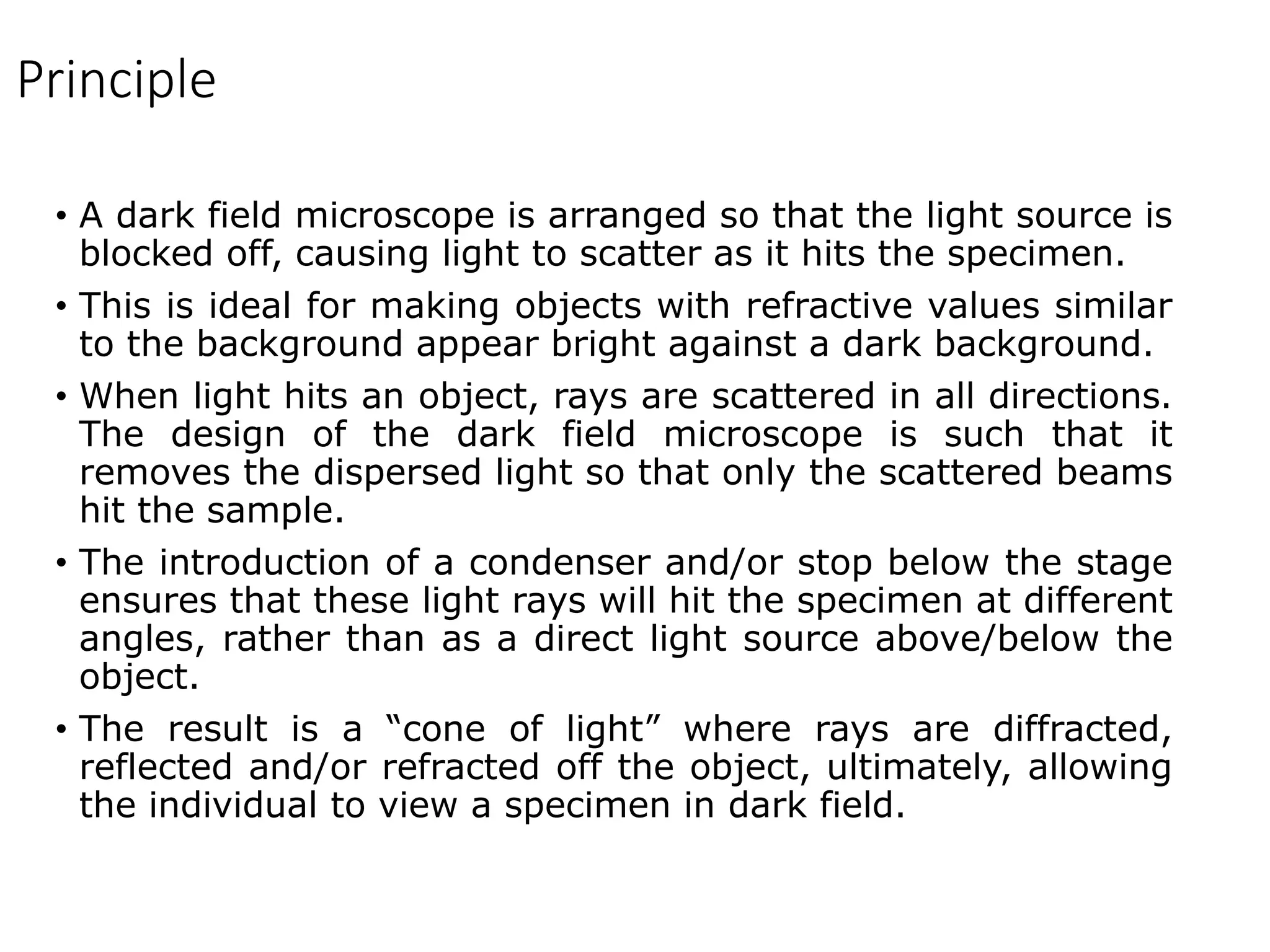
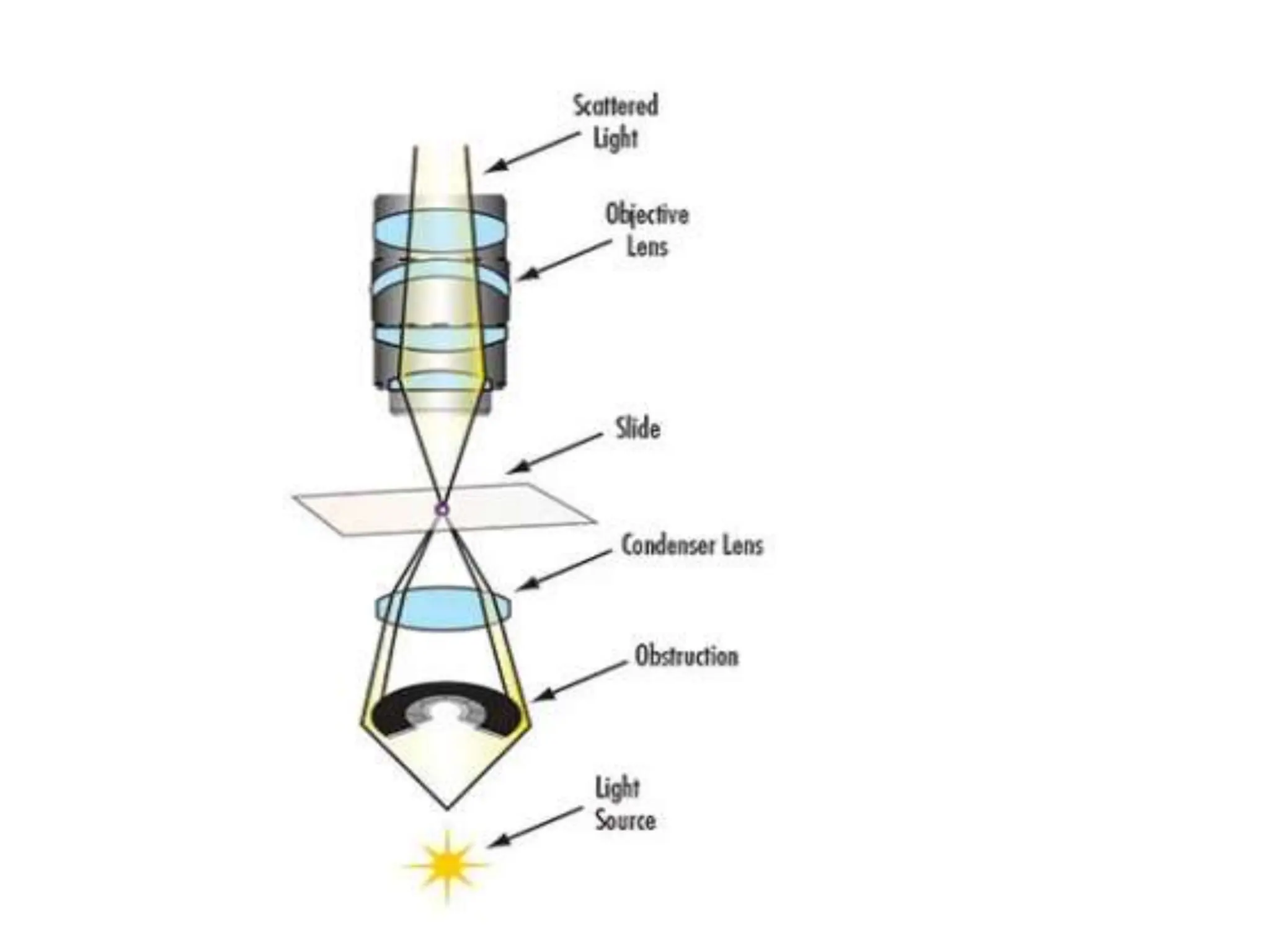
• A dark field microscope is arranged so that the light source is
blocked off, causing light to scatter as it hits the specimen.
• This is ideal for making objects with refractive values similar
to the background appear bright against a dark background.
• When light hits an object, rays are scattered in all directions.
The design of the dark field microscope is such that it
removes the dispersed light so that only the scattered beams
hit the sample.
• The introduction of a condenser and/or stop below the stage
ensures that these light rays will hit the specimen at different
angles, rather than as a direct light source above/below the
object.
• The result is a “cone of light” where rays are diffracted,
reflected and/or refracted off the object, ultimately, allowing
the individual to view a specimen in dark field.
Advantages
• Dark-field microscopy produces an image with a dark background
• Dark-field microscopy is a very simple yet effective technique and well suited for
uses involving live and unstained biological samples, such as a smear from a
tissue culture or individual, water-borne, single-celled organisms.
• Considering the simplicity of the setup, the quality of images obtained from this
technique is impressive.
Disadvantages
• The main limitation of dark-field microscopy is the low light levels seen
in the final image.
• This means that the sample must be very strongly illuminated, which can
cause damage to the sample.
• However, the interpretation of dark-field images must be done with
great care, as common dark features of bright-field microscopy images
may be invisible, and vice versa.
Bright Field Microscopy Dark Field Microscopy
Fluorescence Microscopy
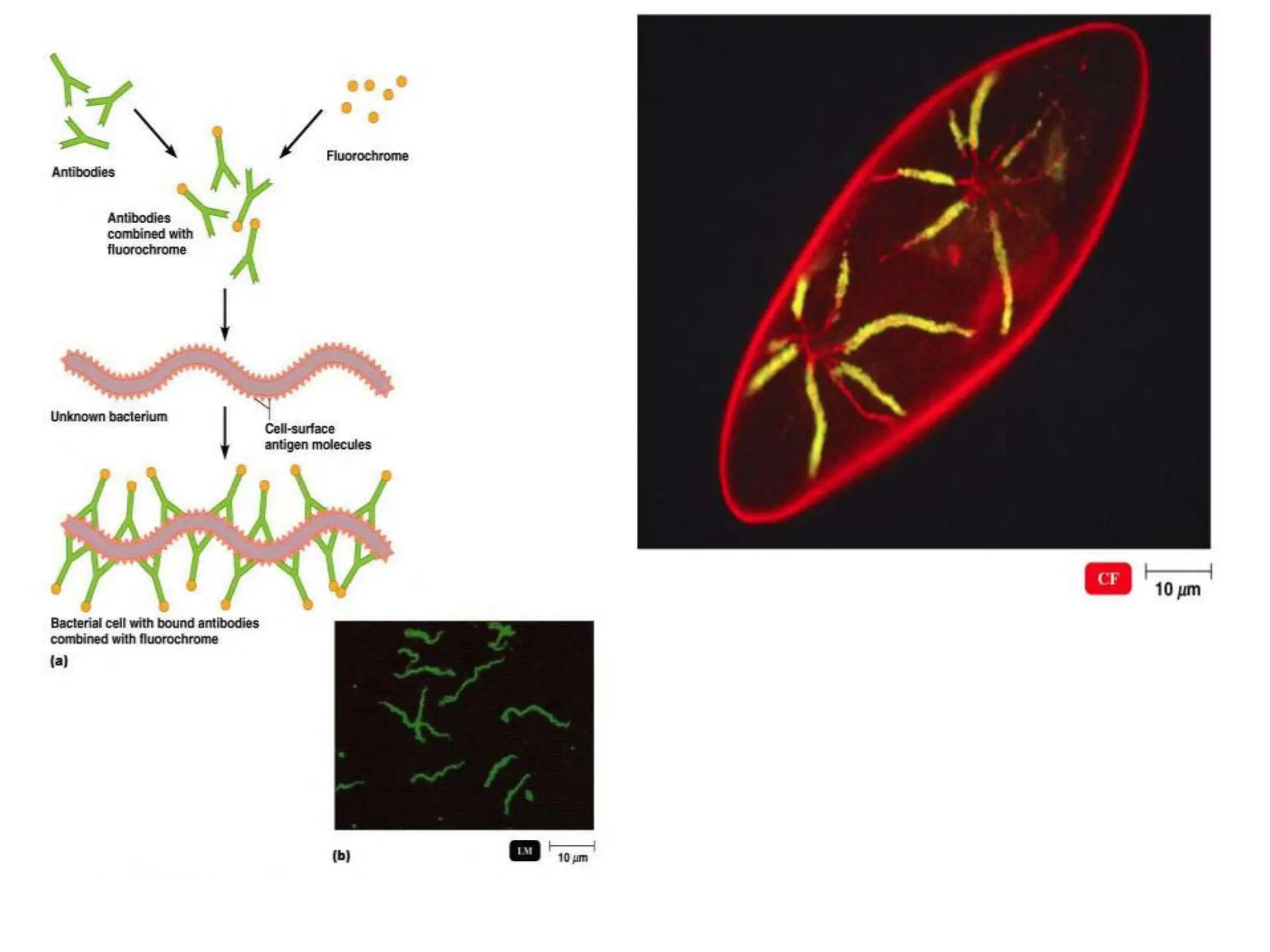
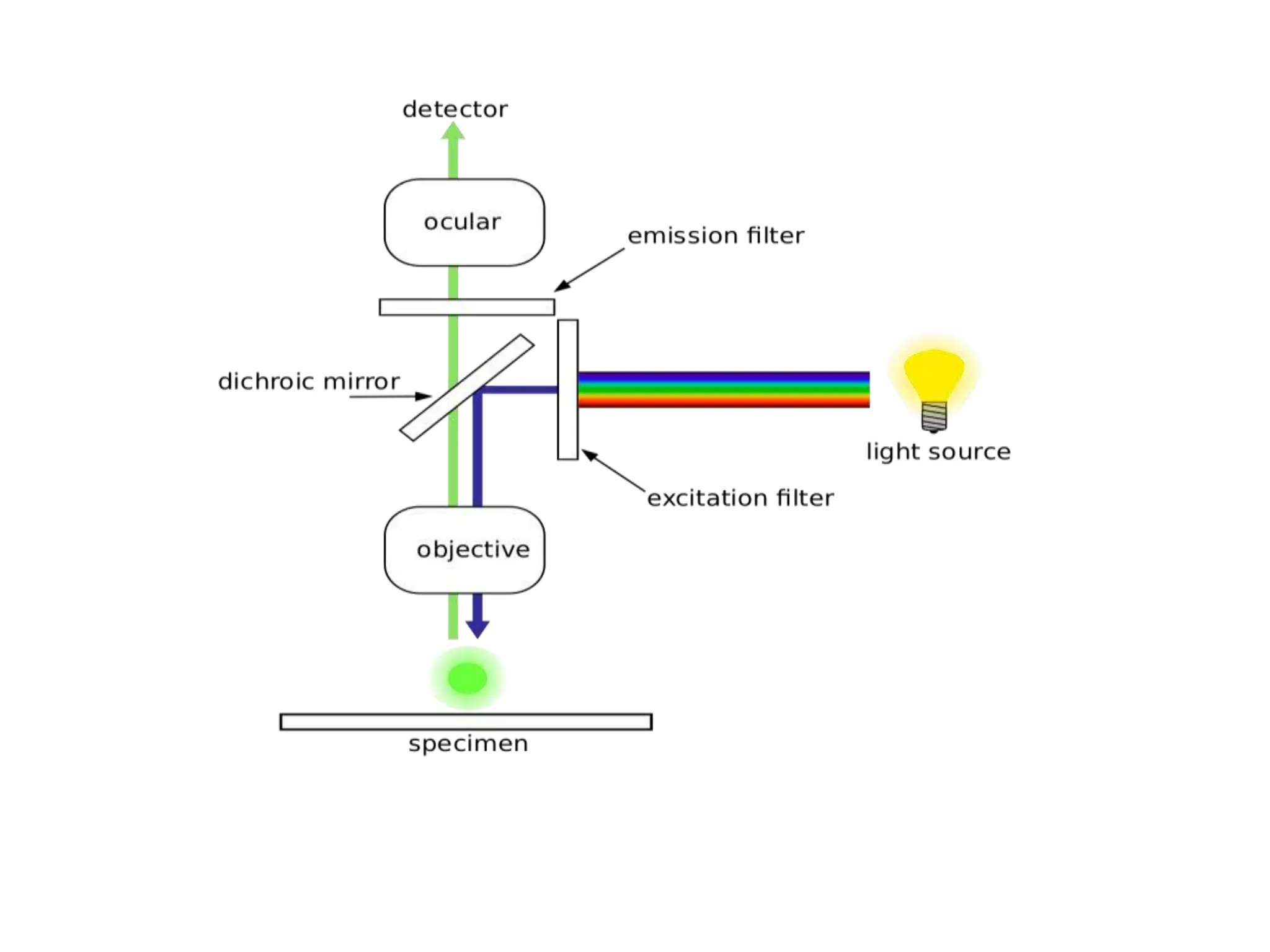
• A fluorescence microscope is an optical microscope that
uses fluorescence and phosphorescence instead of, or in addition
to, reflection and absorption to study properties of organic
or inorganic substances.
• The specimen is illuminated with light of a specific wavelength (or
wavelengths) which is absorbed by the fluorophores, causing them to
emit light of longer wavelengths (i.e., of a different color than the
absorbed light) and lesser energy.
• Under UV light, dye fluoresces, only labeled cells or structures are
seen
Components
• Fluorescent dyes
• A light source: Xenon arc lamp or mercury-vapor lamp are
common; power LED and lasers are used in more advanced forms.
• The excitation filter: selects the wavelengths to excite a
particular dye within the specimen.
• The dichroic mirror: used to selectively pass
light of a small range of colors while reflecting
other colors.
• The emission filter: serves as a kind of quality control by
letting only the wavelengths of interest emitted by the fluorophore pass
through.
• Darkfield condenser: It provides a black background against
which the fluorescent objects glow.
Principle of Fluorescence
Microscopy
• Higher energy light shorter wavelength of lights (UV rays or blue
light) generated from mercury vapor arc lamp passes through
the excitation filter which allows only the short wavelength of light
to pass through and removes all other non-specific wavelengths of
light.
• The filtered light is reflected by the dichroic filter and falls on
the sample (i.e. fluorophore-labeled).
• The fluorochrome absorbs shorter wavelength rays and emits rays
of longer wavelength (lower energy) that passes through
the emission filter.
• The emission filter blocks (suppresses) any residual excitation light
and passes the desired longer emission wavelengths to
the detector.
• Thus the microscope forms glowing images of the fluorochrome-
labeled microorganisms against a dark background.
Application
• To identify structures in fixed and live biological samples.
• Fluorescence microscopy is a common tool for today’s life
science research because it allows the use of multicolor
staining, labeling of structures within cells, and the
measurement of the physiological state of a cell.
Advantages
1.Fluorescence microscopy is the most popular method
for studying the dynamic behavior exhibited in live-cell
imaging.
2.This stems from its ability to isolate individual proteins
with a high degree of specificity amidst non-fluorescing
material.
3.The sensitivity is high enough to detect as few as 50
molecules per cubic micrometer.
4.Different molecules can now be stained with different
colors, allowing multiple types of the molecule to be
tracked simultaneously.
5.These factors combine to give fluorescence microscopy
a clear advantage over other optical imaging
techniques, for both in vitro and in vivo imaging.
Disadvantages
• Fluorophores lose their ability to fluoresce as they are
illuminated in a process called photobleaching.
Photobleaching occurs as the fluorescent molecules
accumulate chemical damage from the electrons excited
during fluorescence.
• Cells are susceptible to phototoxicity, particularly with short-
wavelength light. Furthermore, fluorescent molecules have a
tendency to generate reactive chemical species when under
illumination which enhances the phototoxic effect.
• Unlike transmitted and reflected light microscopy techniques
fluorescence microscopy only allows observation of the
specific structures which have been labeled for fluorescence.
Phase contrast microscopy
• Frits Zernike, a Dutch physicist and mathematician, built the first phase
contrast microscope in 1938.
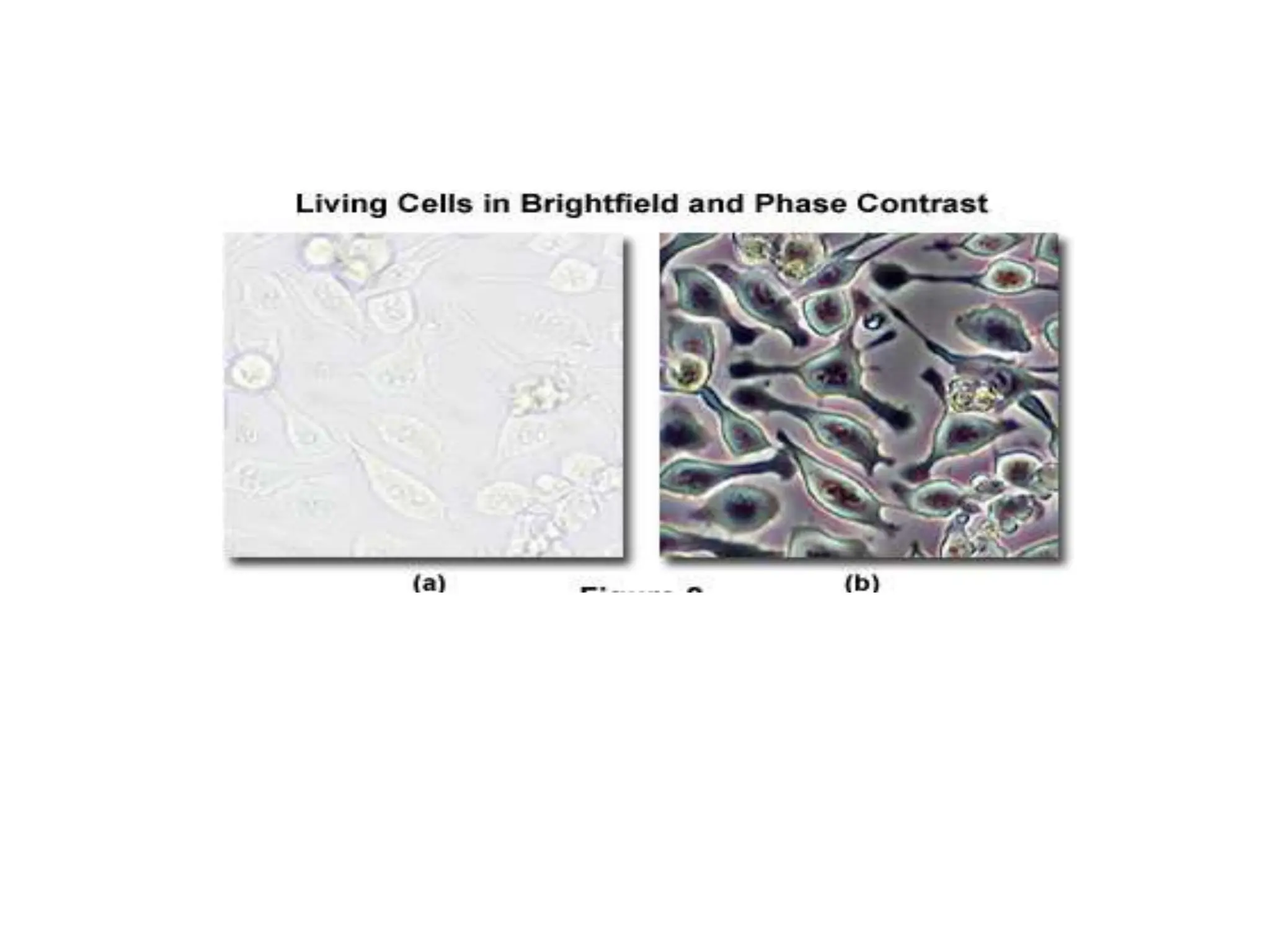
• Unstained living cells absorb practically no light. Poor light absorption
results in extremely small differences in the intensity distribution in the
image. This makes the cells barely, or not at all, visible in a brightfield
microscope. When light passes through cells, small phase shifts occur,
which are invisible to the human eye.
• This technique is based on fact that light passing through one material &
into another material of a slightly different refractive index or thickness
will undergo a change in phase.
• These differences in phase or wavefront irregularities, are translated
into variations in brightness of the structure so they are detectable
by eyes.
• It uses a conventional light microscope fitted with a phase contrast
objective & phase contrast condenser.
• This special optical system helps to distinguish unstained structures
within cell which differ only slightly in their refractive indices or
thickness.
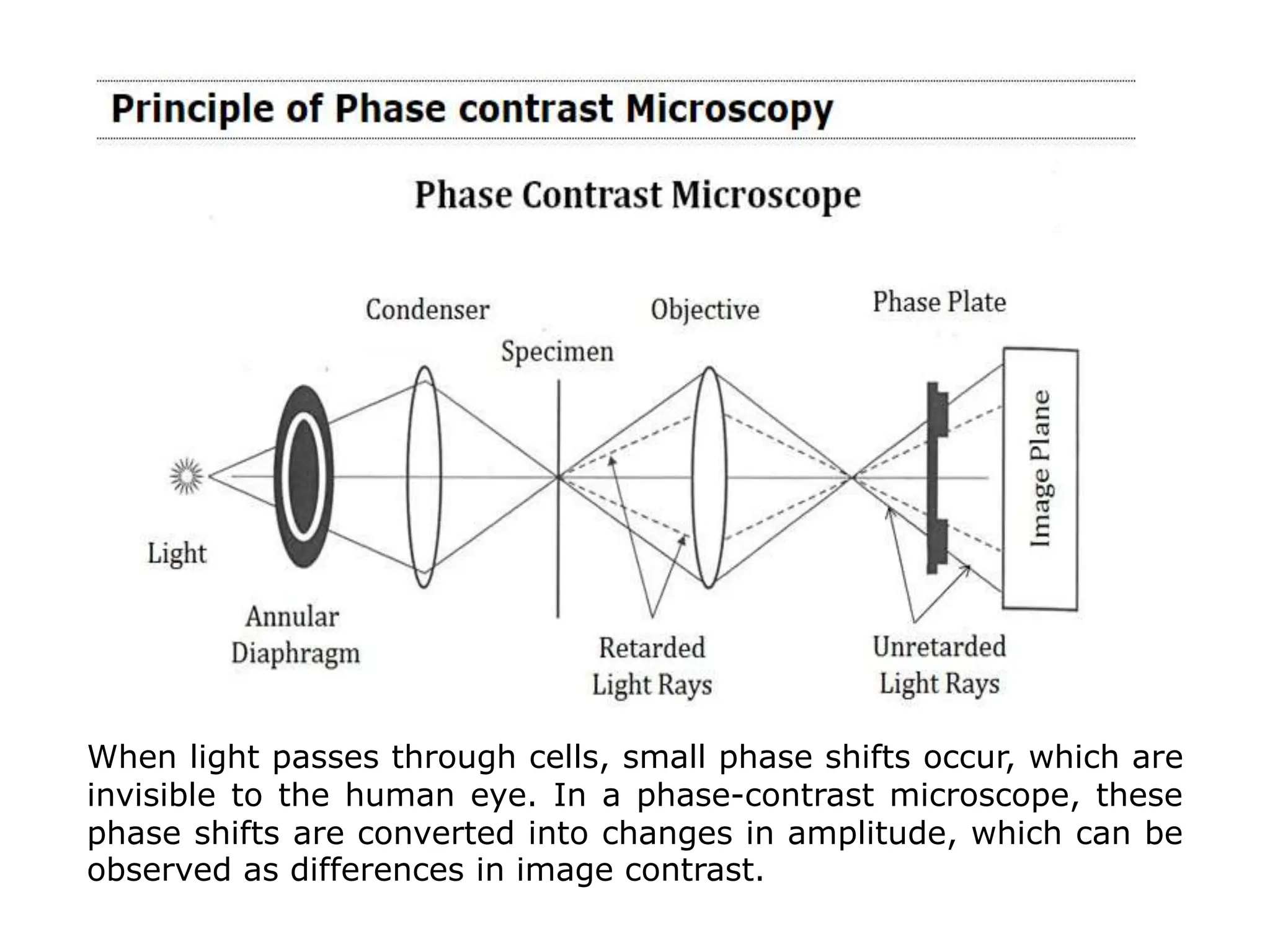
When light passes through cells, small phase shifts occur, which are
invisible to the human eye. In a phase-contrast microscope, these
phase shifts are converted into changes in amplitude, which can be
observed as differences in image contrast.
Components
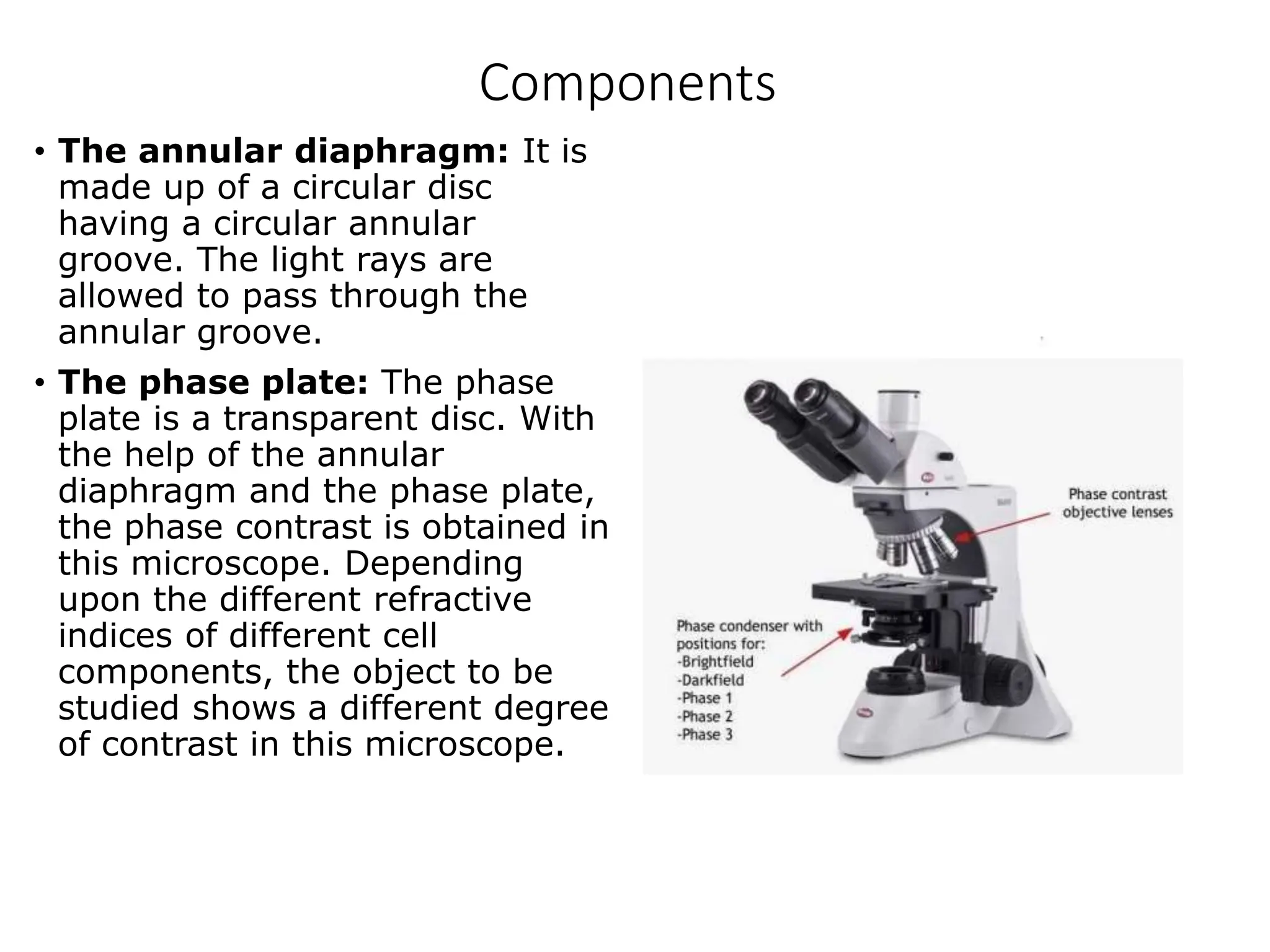
• The annular diaphragm: It is
made up of a circular disc
having a circular annular
groove. The light rays are
allowed to pass through the
annular groove.
• The phase plate: The phase
plate is a transparent disc. With
the help of the annular
diaphragm and the phase plate,
the phase contrast is obtained in
this microscope. Depending
upon the different refractive
indices of different cell
components, the object to be
studied shows a different degree
of contrast in this microscope.
Applications of Phase contrast
Microscopy
1.living cells (usually in culture),
2.microorganisms,
3.thin tissue slices,
4.lithographic patterns,
5.fibers,
6.latex dispersions,
7.glass fragments, and
8.subcellular particles (including nuclei and other
organelles).
•Advantages
• The capacity to observe living cells and, as such, the ability to examine
cells in a natural state.
• Observing a living organism in its natural state and/or environment can
provide far more information than specimens that need to be killed,
fixed or stain to view under a microscope.
• High-contrast, high-resolution images.
• Ideal for studying and interpreting thin specimens.
• Ability to combine with other means of observation, such as
fluorescence.
• Modern phase contrast microscopes, with computer devices, can
capture photo and/or video images
Disadvantages
• This method of observation is not ideal for thick organisms or
particles.
• Thick specimens can appear distorted.
• Images may appear grey or green, if white or green lights are used,
respectively, resulting in poor photomicrography
• Shade-off and halo effect, referred to a phase artifacts.
• Shade-off occurs with larger particles, results in a steady reduction of
contrast moving from the center of the object toward its edges.
• Halo effect, where images are often surrounded by bright areas,
which obscure details along the perimeter of the specimen.
Electron Microscope
• The electron microscope is a type of microscope that uses a beam of
electrons to create an image of the specimen.
• It is capable of much higher magnifications and has a greater resolving
power than a light microscope, allowing it to see much smaller objects
in finer detail.
• They are large, expensive pieces of equipment, generally standing alone
in a small, specially designed room and requiring trained personnel to
operate them.
• Two types of electron microscope used- Transmission electron
microscopy (TEM) & Scanning electron microscopy (SEM).
THE LIGHT MICROSCOPE v THE ELECTRON
MICROSCOPE
FEATURE LIGHT MICROSCOPE ELECTRON MICROSCOPE
Electromagnetic
spectrum used
Visible light
390nm (red) – 760nm
Electrons
app. 4nm
Maximum
resolving power
app. 200 nm or
0.2 micron
0.14 nm
Maximum
magnification
x1000 – x1500 X 5,00,000
Lenses Glass Magnet
Viewing of sample Eyepiece Fluorescent screen or digital
camera
Use of vacuum no yes
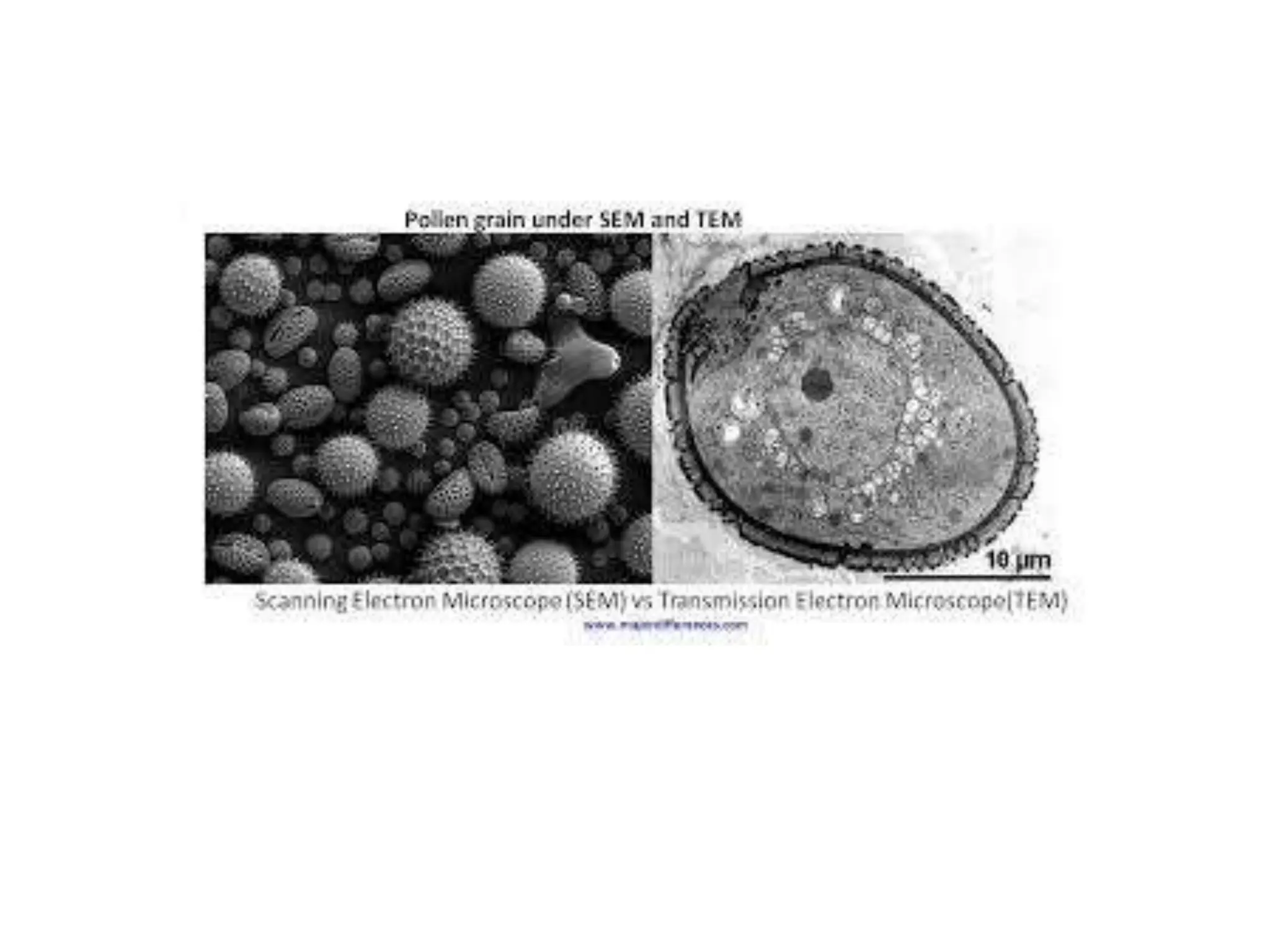
TEM
• TEM looks through a thin slice of a specimen.
• The basis of image formation in the TEM is the scattering of
electrons.
• The scattering results in a shadow on the viewing screen or
photographic film.
• Material with high atomic numbers will cause more scattering and
produce a deep shadow. Such material is termed "electron dense"
and has high image contrast.
• Biological material has low electron density and is known generally as
"electron transparent". Hence, an inherent low contrast image is
formed.
• BIOLOGICAL MATERIAL must, therefore, be STAINED with heavy metal
salts.
SEM
• To directly visualize the surface topography of solid unsectioned
specimens without staining.
• The first scanning electron microscope (SEM) debuted in 1938 ( Von
Ardenne) with the first commercial instruments around 1965.
• TEM – information is obtained from transmitted electrons
• SEM – majority is obtained from secondary, backscattered electrons
& from X-rays.
Smear & Staining
Few Terminology
• As microbial cytoplasm is usually transparent, it is necessary to stain
microorganisms before they can be viewed with the light microscope.
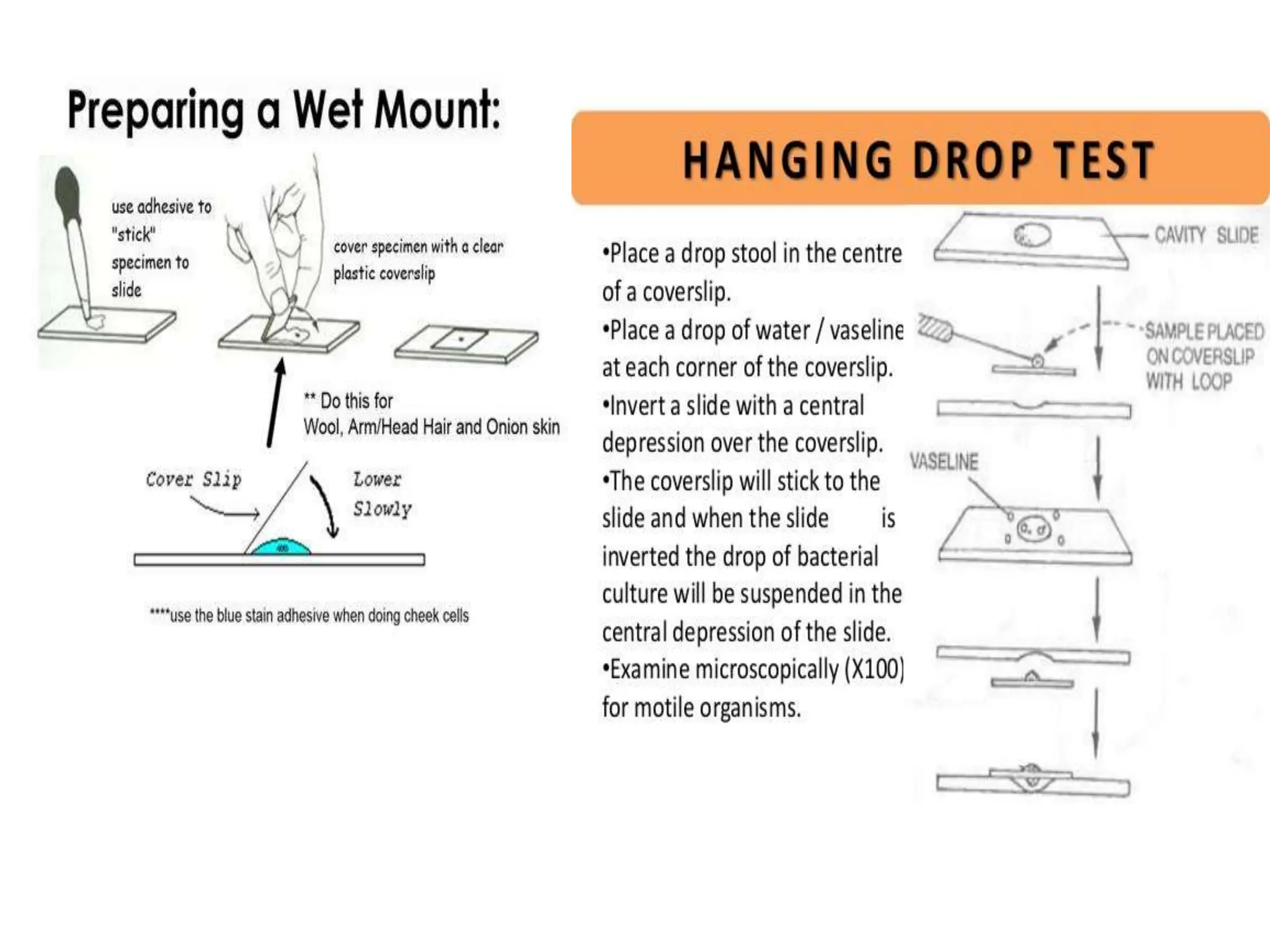
• Wet mount - When microorganisms are very large or when motility is to be
studied, and a drop of the microorganisms can be placed directly on the
slide and observed.
• Hanging drop - A wet mount can also be prepared by placing a drop of
culture on a cover slip (a glass cover for a slide) and then inverting it over a
hollowed out slide.
• Smear - is a distribution of bacterial cells on a slide for the purpose of
viewing them under the microscope.
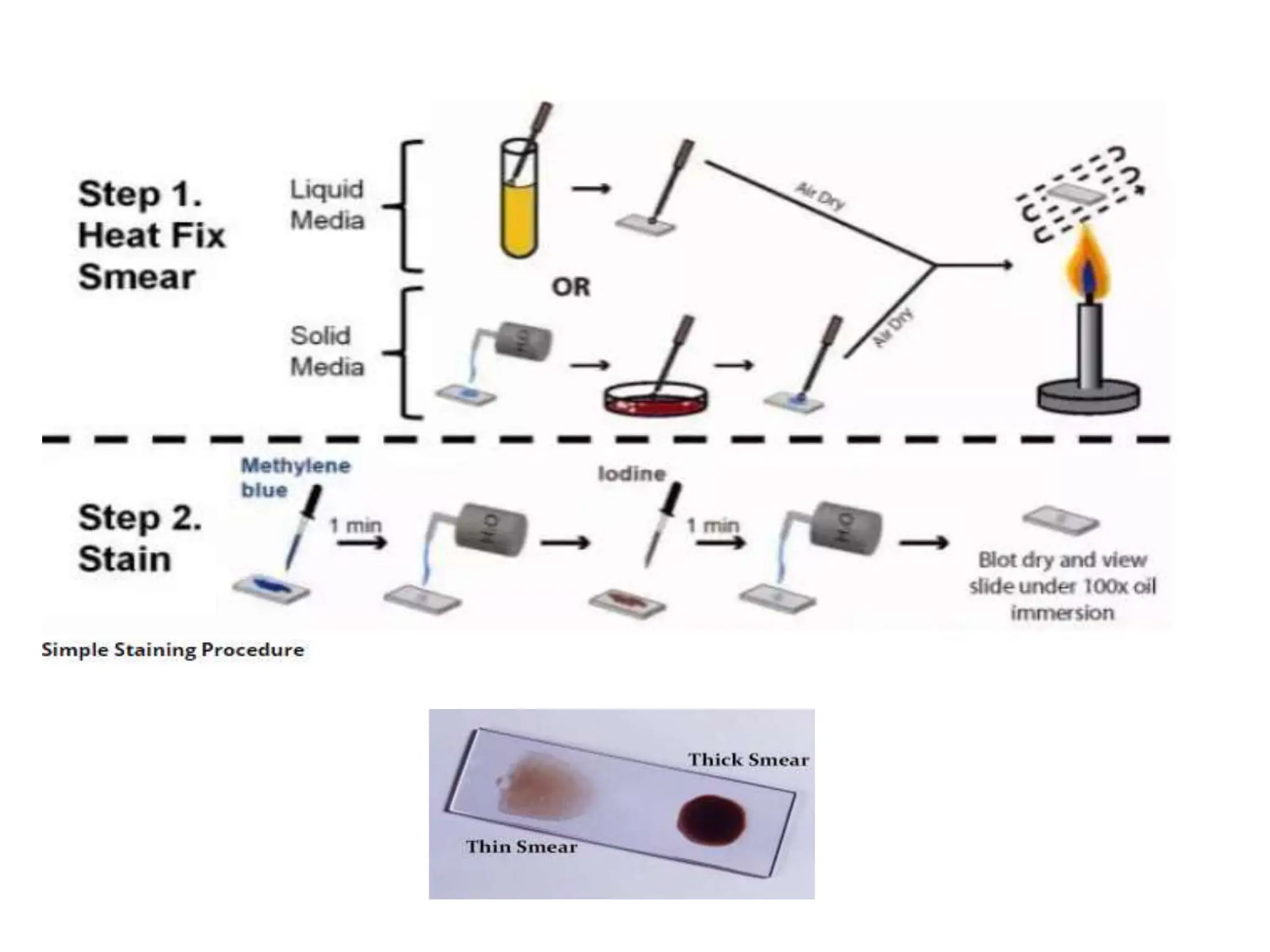
• The smear is heat fixed by quickly passing it over a flame. Heat fixing kills
the organisms, makes them adhere to the slide, and permits them to accept
the stain.
Microbial stains
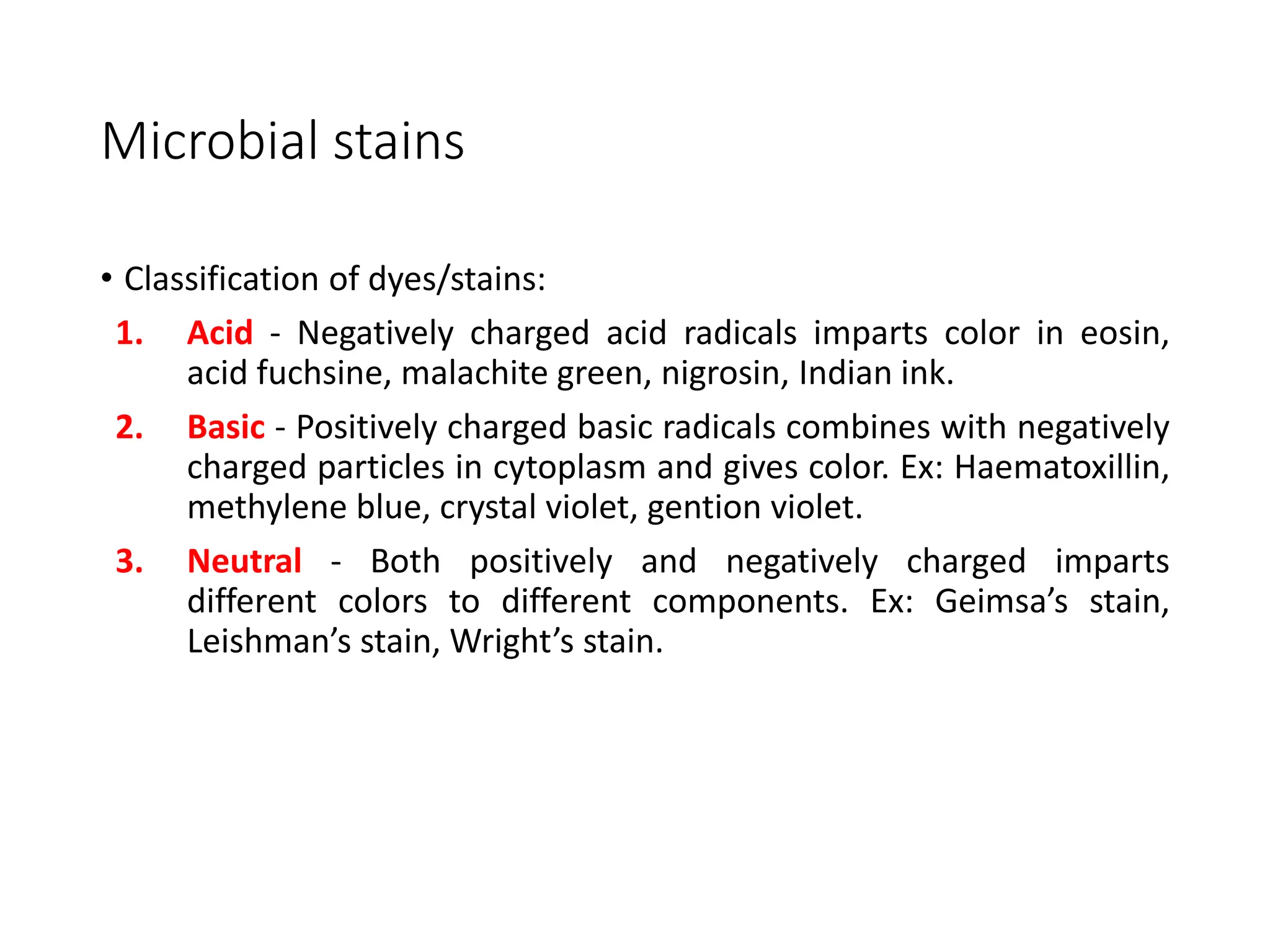
• Classification of dyes/stains:
1. Acid - Negatively charged acid radicals imparts color in eosin,
acid fuchsine, malachite green, nigrosin, Indian ink.
2. Basic - Positively charged basic radicals combines with negatively
charged particles in cytoplasm and gives color. Ex: Haematoxillin,
methylene blue, crystal violet, gention violet.
3. Neutral - Both positively and negatively charged imparts
different colors to different components. Ex: Geimsa’s stain,
Leishman’s stain, Wright’s stain.
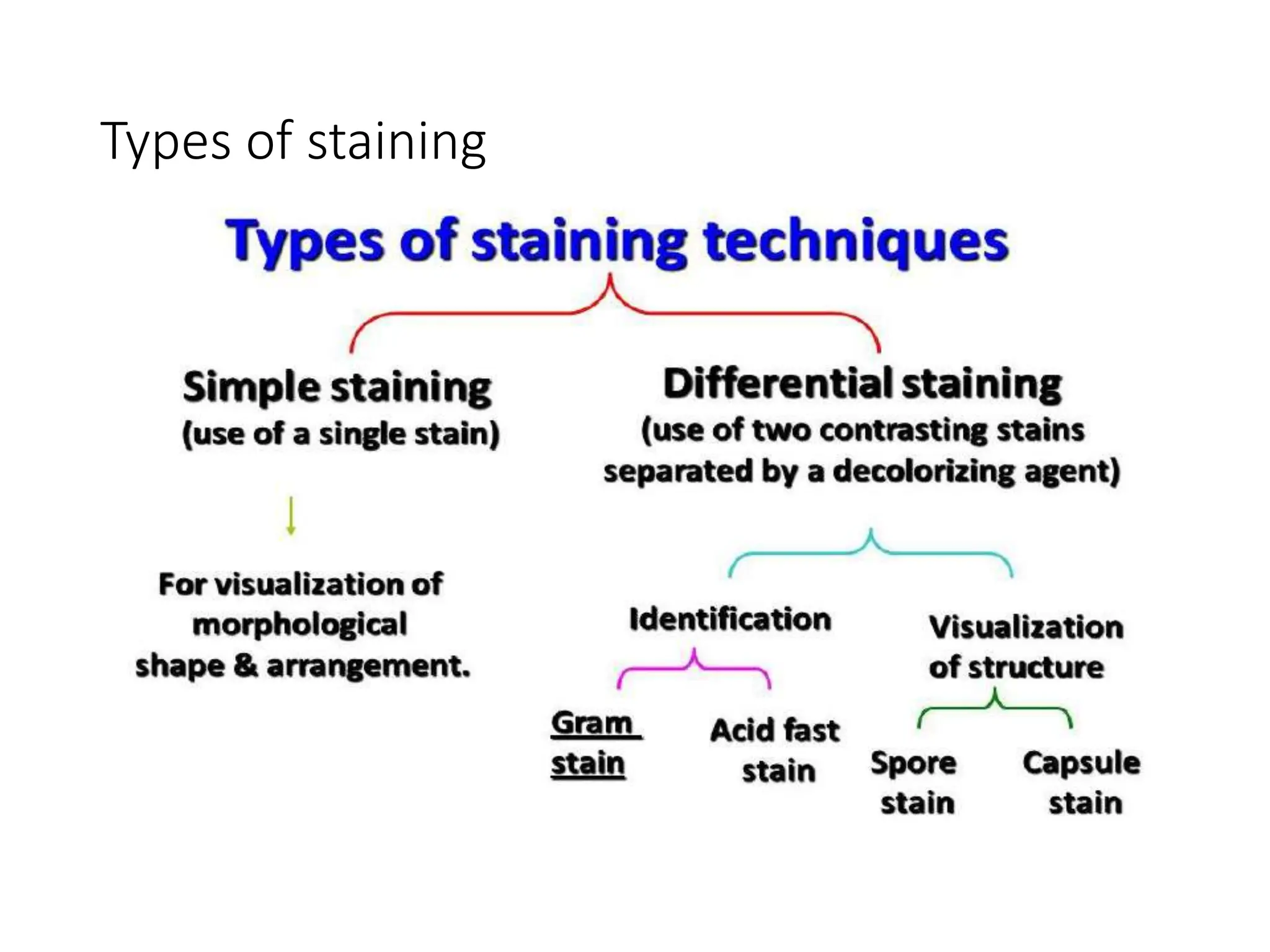
Types of staining
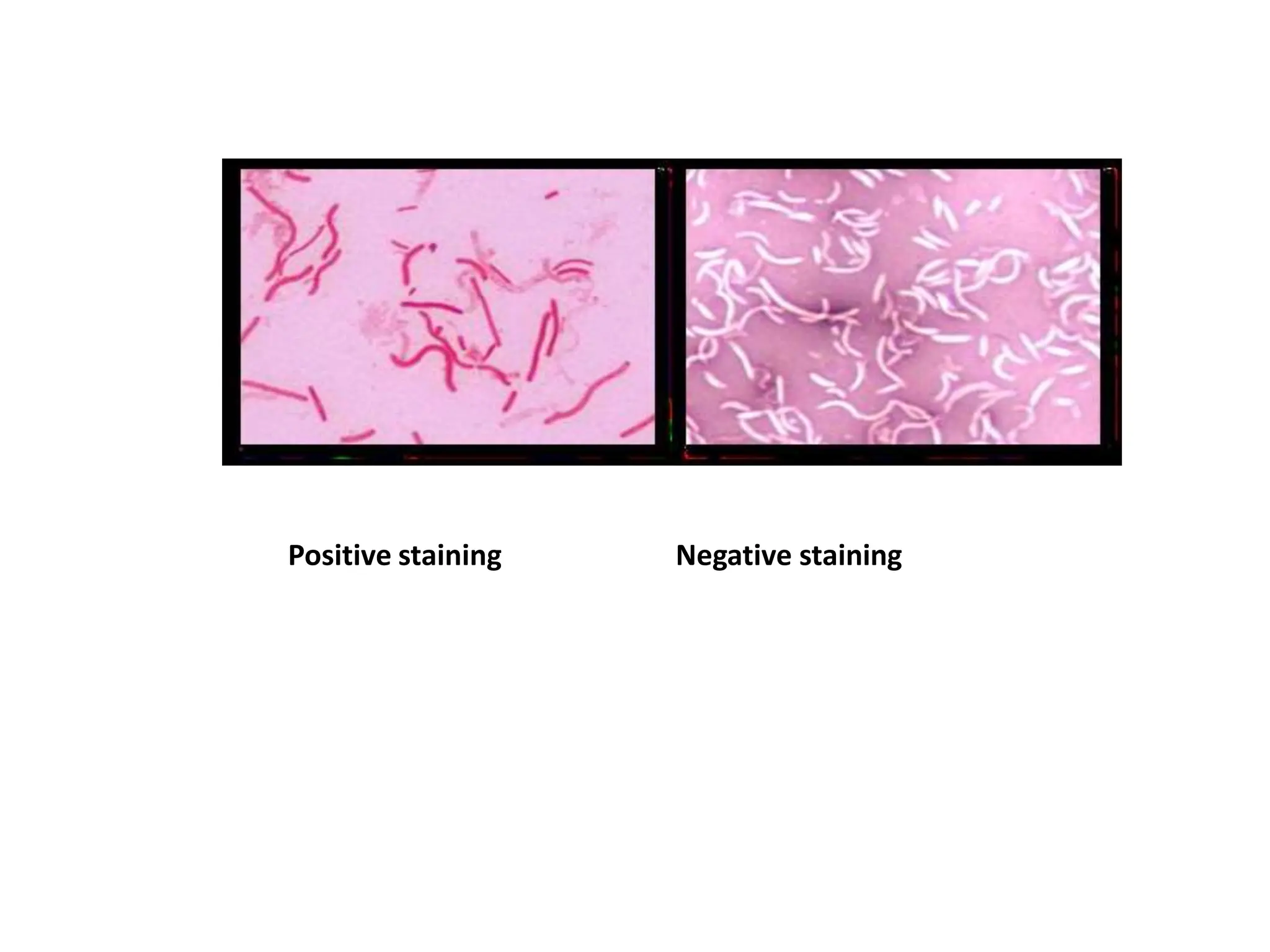
Simple staining
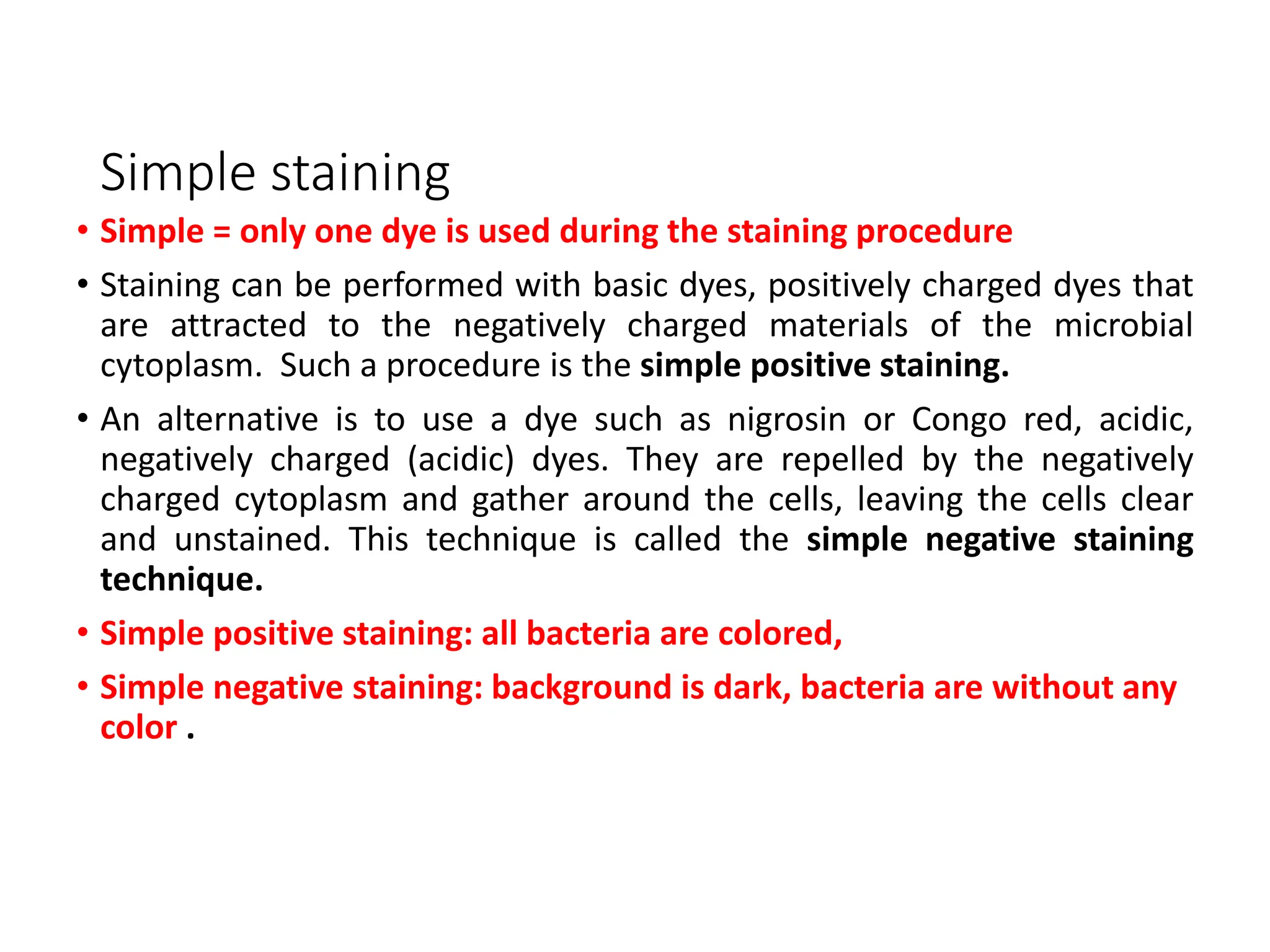
• Simple = only one dye is used during the staining procedure
• Staining can be performed with basic dyes, positively charged dyes that
are attracted to the negatively charged materials of the microbial
cytoplasm. Such a procedure is the simple positive staining.
• An alternative is to use a dye such as nigrosin or Congo red, acidic,
negatively charged (acidic) dyes. They are repelled by the negatively
charged cytoplasm and gather around the cells, leaving the cells clear
and unstained. This technique is called the simple negative staining
technique.
• Simple positive staining: all bacteria are colored,
• Simple negative staining: background is dark, bacteria are without any
color .
Positive staining Negative staining
Differential staining
• The differential staining techniques are based on the application of a
set of several different dyes which react differently with different
types of microorganism.
• they can be used to distinguish among them.
• Most widely used method is gram staining.
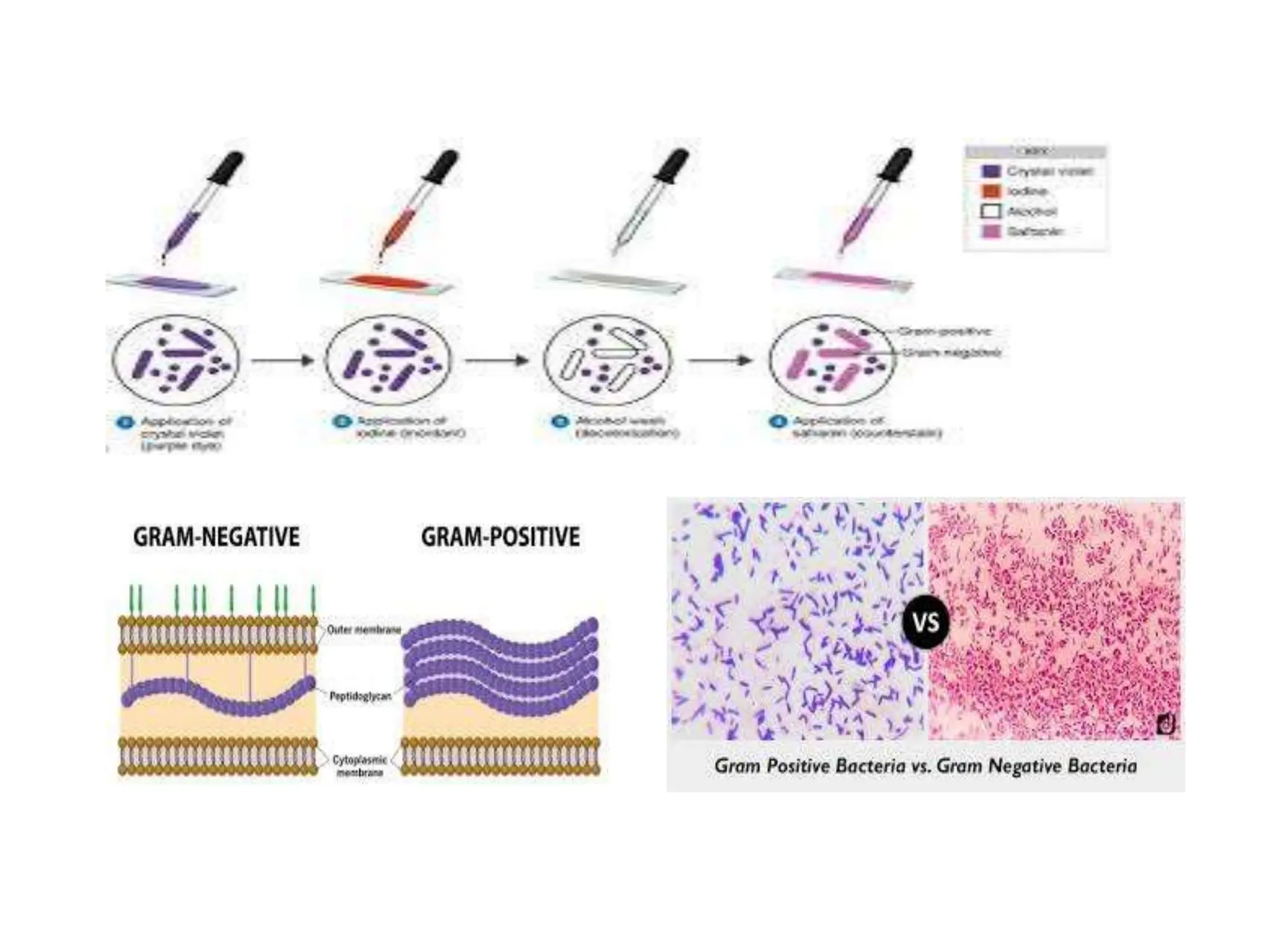
Gram staining
A very common stain to distinguish 2 bacterial types:
• Gram staining differentiates the bacteria into 2 groups:
• Gram positive.
• Gram negative.
• The Gram stain was devised by the Danish physician, Hans Christian
Joachim Gram, while working in Berlin in 1883.
• He laterpublished this procedure in 1884.
Gram positive
• In Gram positive bacteria, the crystal violet dye –iodine complex
combines to form a larger molecule which precipitates within the
cell.
• The alcohol/acetone mixture which act as decolorizing agent, cause
dehydration of the multi-layered peptidoglycan of the cell wall. This
causes decreasing of the space between the molecules causing the
cell wall to trap the crystal violet iodine complex within the cell.
• Hence the Gram positive bacteria do not get decolorized and retain
primary dye appearing violet.
• Also, Gram positive bacteria have more acidic protoplasm and hence
bind to the basic dye more firmly.
Gram Negative
• In the case of Gram negative bacteria, the alcohol, being a lipid
solvent, dissolves the outer lipopolysaccharide membrane of the cell
wall and also damage the cytoplasmic membrane to which the
peptidoglycan is attached.
• As a result, the dye-iodine complex is not retained within the cell and
permeates out of it during the process of decolourisation.
• Hence when a counter stain is added, they take up the colour of the
stain and appear pink.
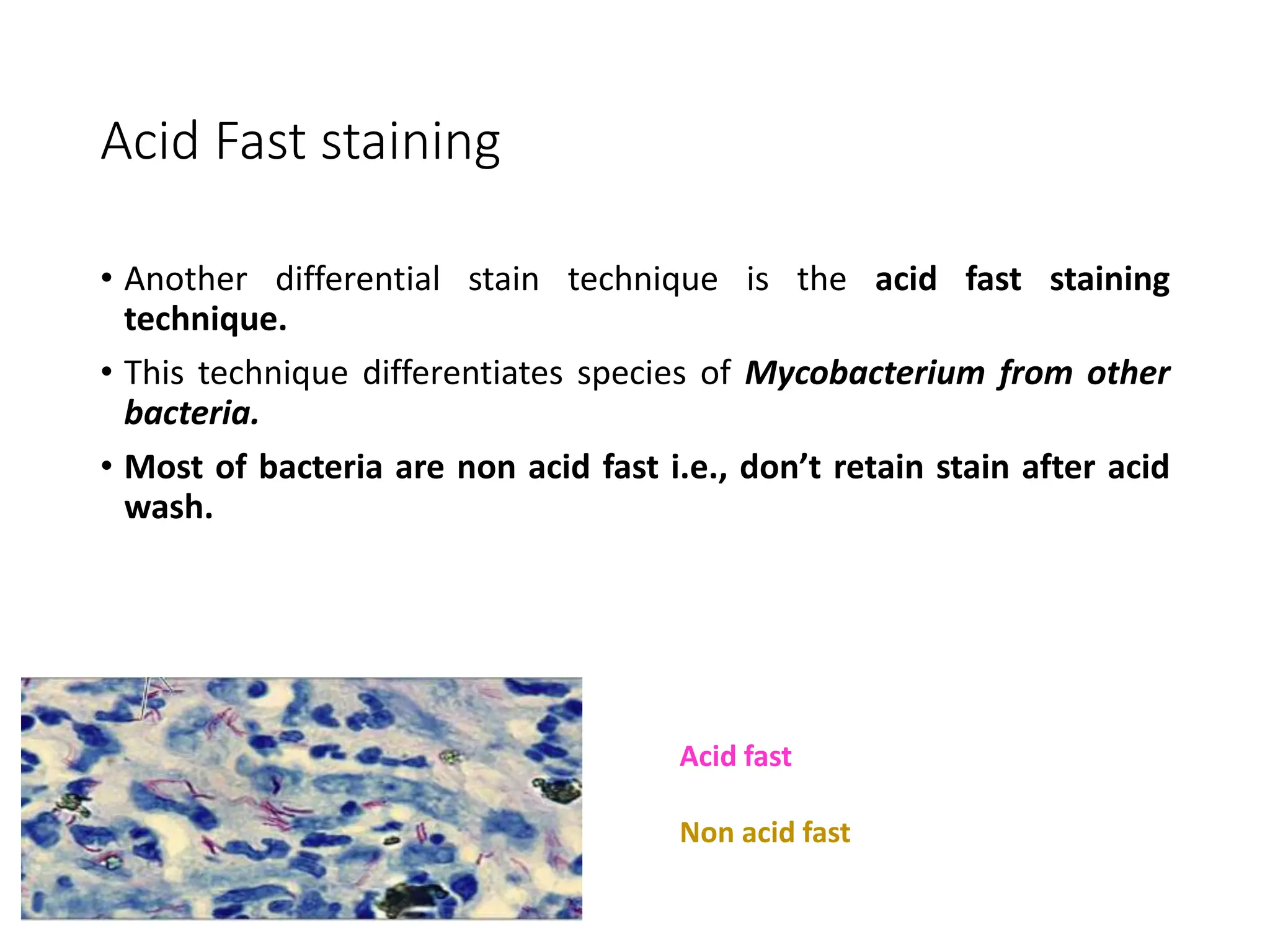
Acid Fast staining
• Another differential stain technique is the acid fast staining
technique.
• This technique differentiates species of Mycobacterium from other
bacteria.
• Most of bacteria are non acid fast i.e., don’t retain stain after acid
wash.
Acid fast
Non acid fast
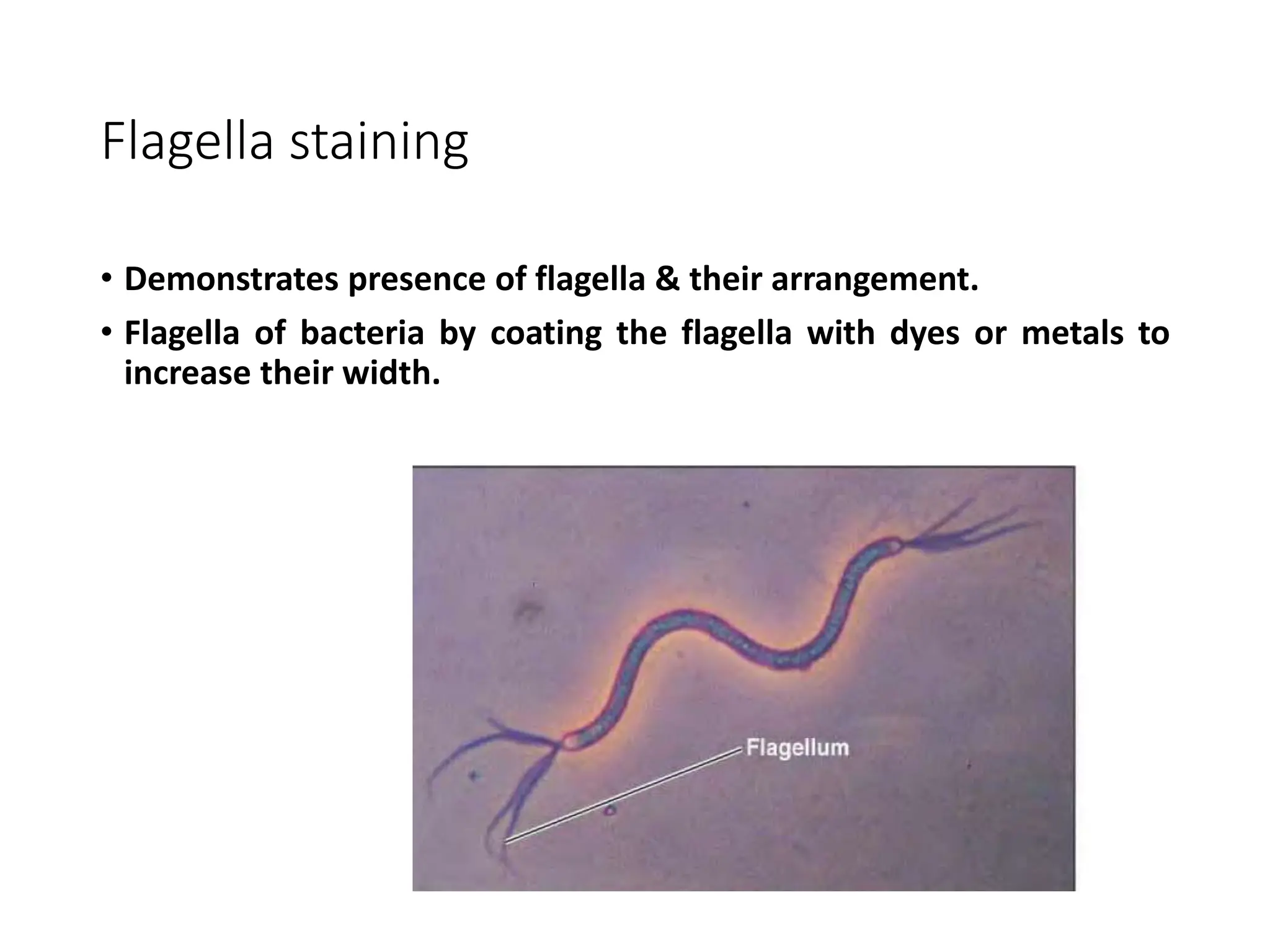
Flagella staining
• Demonstrates presence of flagella & their arrangement.
• Flagella of bacteria by coating the flagella with dyes or metals to
increase their width.
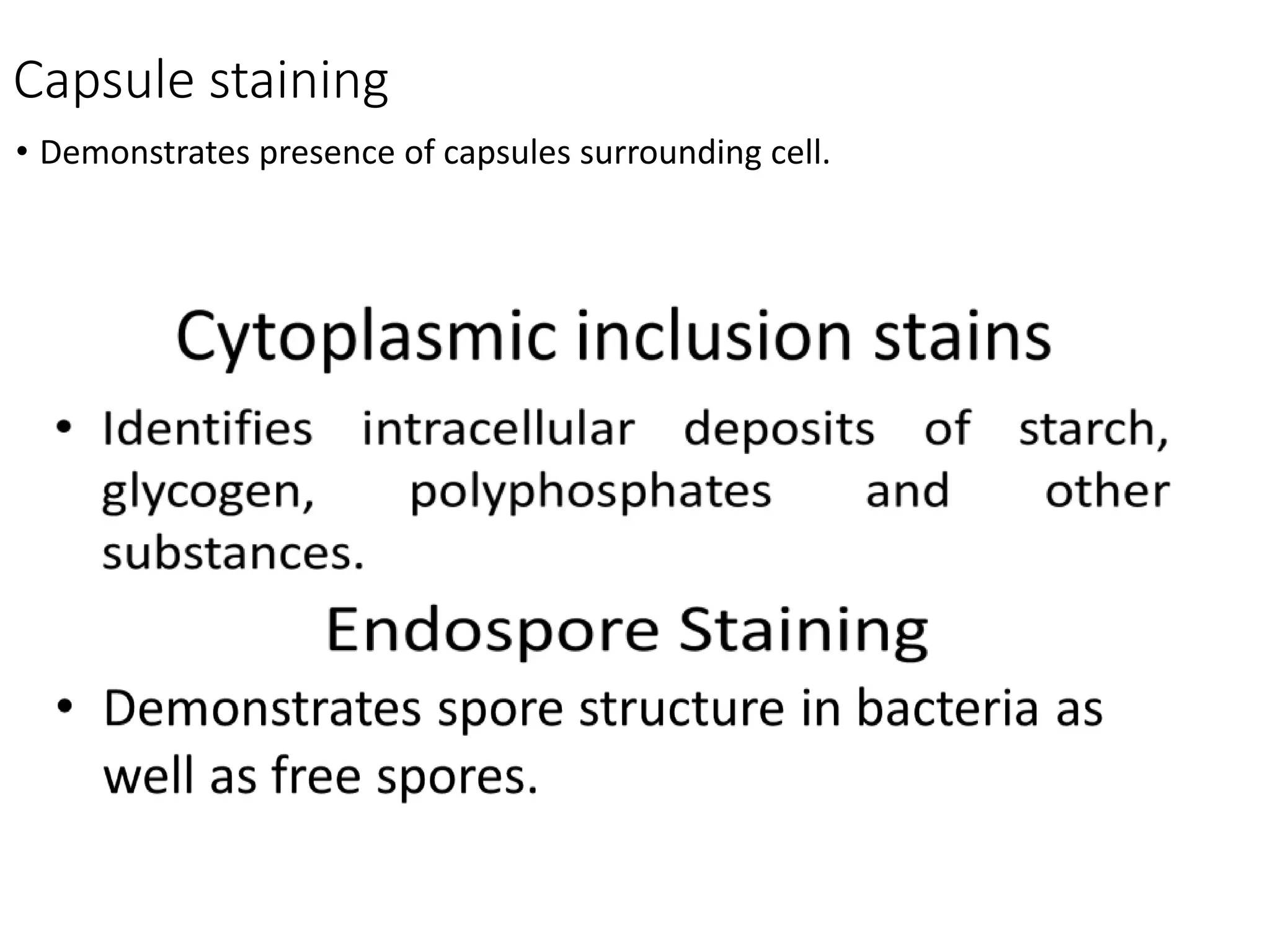
Capsule staining
• Demonstrates presence of capsules surrounding cell.
Bacterial Cell Morphology
Introduction
• Bacteria is unicellular, free-living, microscopic microorganisms capable
of performing all the essential functions of life.
• They possess both deoxyribonucleic acid (DNA) and Ribonucleic acid
(RNA).
• Bacteria are prokaryotic microorganisms that do not contain
chlorophyll.
• They occur in water, soil, air, food, and all natural environment.
• They can survive extremes of temperature, pH, oxygen, and
atmospheric pressure.
• Unit of measurement in bacteriology is the micron (micrometre, μm)
• Bacteria of medical importance (0.2 – 1.5 μm) in diameter (3 – 5 μm) in
length.
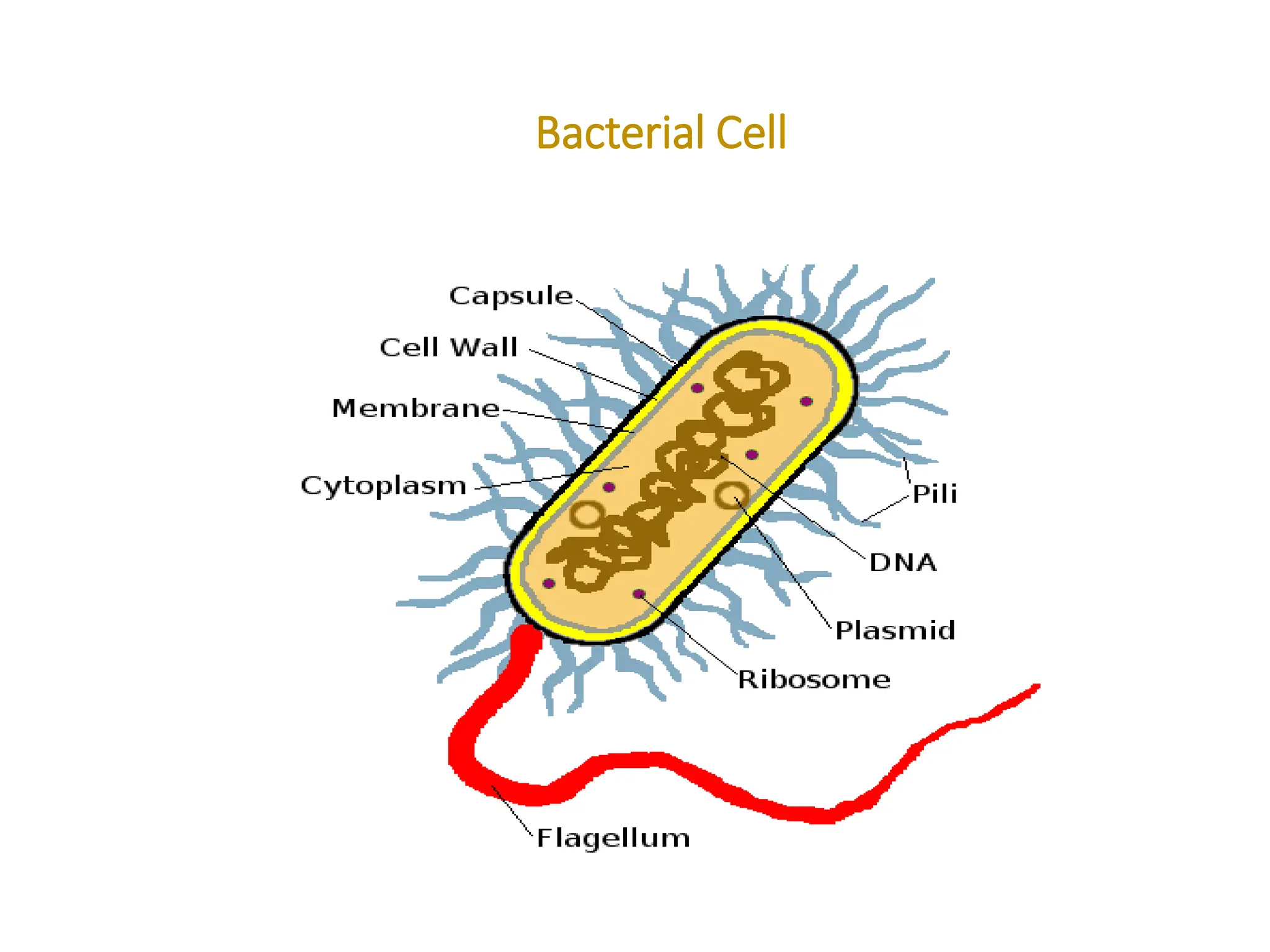
Bacterial Cell
Parts of a Cell
Cell envelope
• Cell wall
• Outer
• Cell membrane-plasma membrane,
cytoplasmic membrane
• Capsule
Cytoplasm
• Nucleiod
• Ribosomes
• Granules/inclusion bodies
• Mesosomes
Parts of a Cell
• Spores
• Plasmids
Appendages
• Pili
• Flagella
Cell wall
• Cell wall is rigid structure which gives definite shape to cell, situated
between the capsule and cytoplasmic membrane.
• It is about 10 – 20 nm in thickness and constitutes 20-30 % of dry weight
of cell.
• The cell wall cannot be seen by direct light microscopy and does not
stain easily by different staining reagents.
• The cell wall of bacteria contains diaminopimelic acid (DAP), muramic acid
and teichoic acid. These substances are joined together to give rise to a
complex polymeric structure known as peptidoglycan or murein or
mucopeptide.
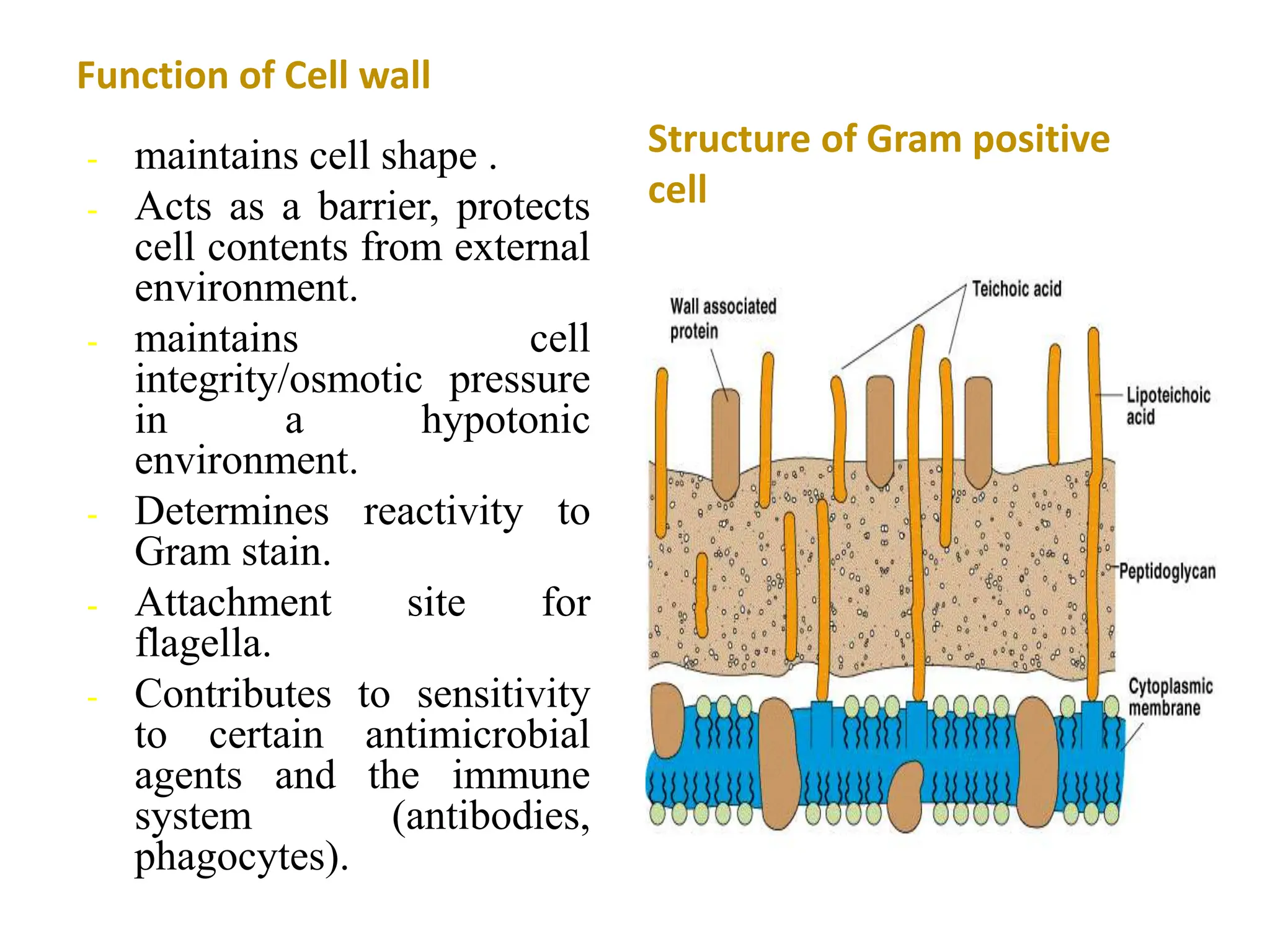
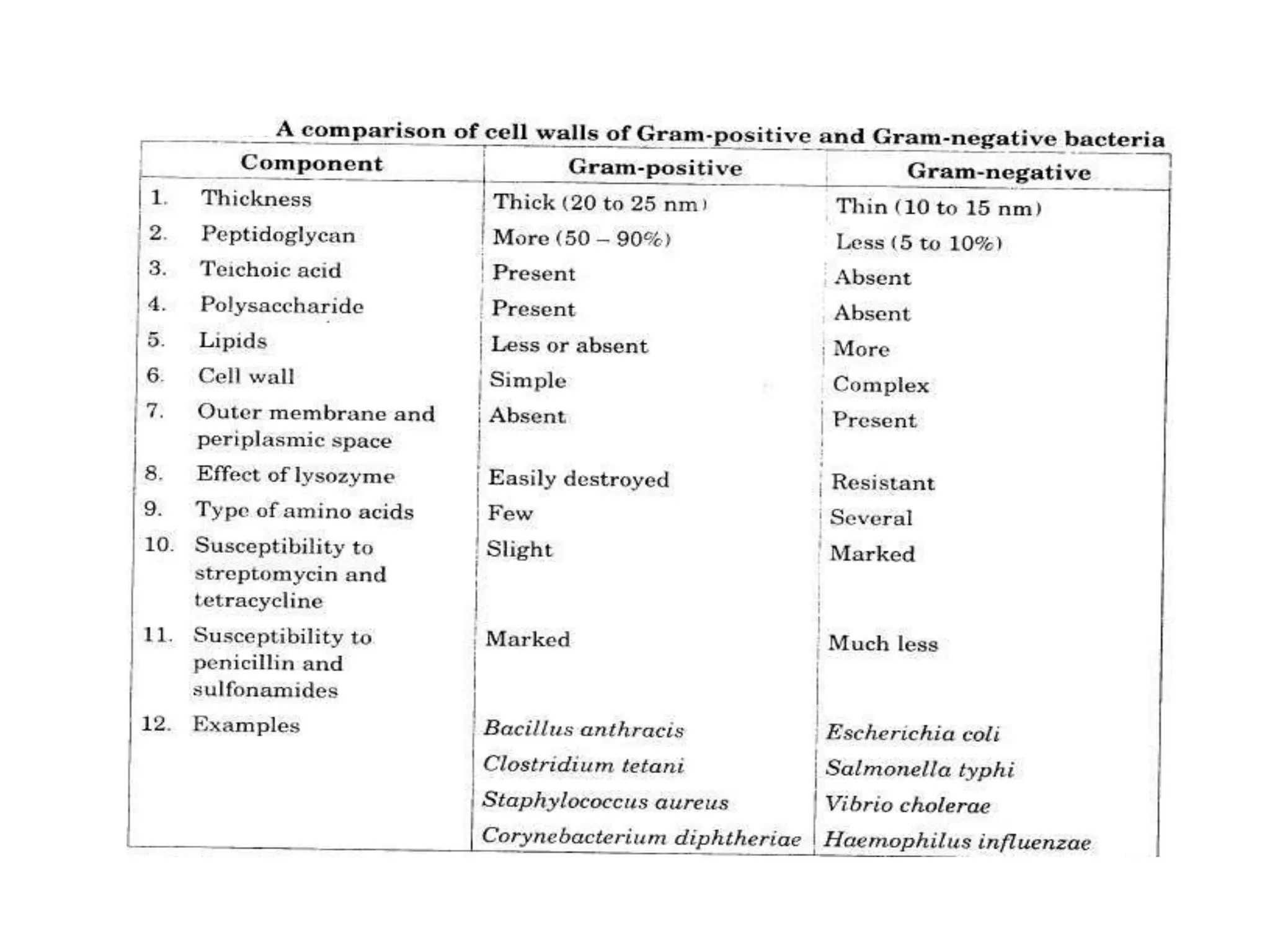
• Peptidoglycan is the major constituent of the cell wall of gram positive
bacteria (50 to 90 %) where as in gram negative bacterial cell wall its
presence is only 5 -10 %.
• Special components of Gram positive cell wall is Teichoic acid.
- maintains cell shape .
- Acts as a barrier, protects
cell contents from external
environment.
- maintains cell
integrity/osmotic pressure
in a hypotonic
environment.
- Determines reactivity to
Gram stain.
- Attachment site for
flagella.
- Contributes to sensitivity
to certain antimicrobial
agents and the immune
system (antibodies,
phagocytes).
Function of Cell wall
Structure of Gram positive
cell
Capsule
• Bacteria synthesize loose amorphous organic exopolymer which is
deposited outside and tightly to cell wall called capsules.
• Capsules may be composed of complex polypeptides or
polysaccharides.
• Water (98%) is the main component of bacterial capsule.
• Capsulated bacteria produces smooth colonies and non capsulated
bacteria produces rough colonies on the surface of agar media.
Functions
1. They protect the cell from drying.
2. They protects the bacterial cell against anti-bacterial agents and
phages.
Cytoplasm
• The bacterial cytoplasm is a suspension of organic, inorganic solutes in a
viscous water solution.
• The cytoplasm of bacteria differs from that of higher eukaryotic
microorganisms in not containing endoplasmic reticulum, Golgi
apparatus, mitochondria and lysosomes.
• It contains the ribosomes, proteins and other water soluble components
and reserve material.
• In most bacterial, extrachromosal DNA ( plasmid DNA ) is also
present.
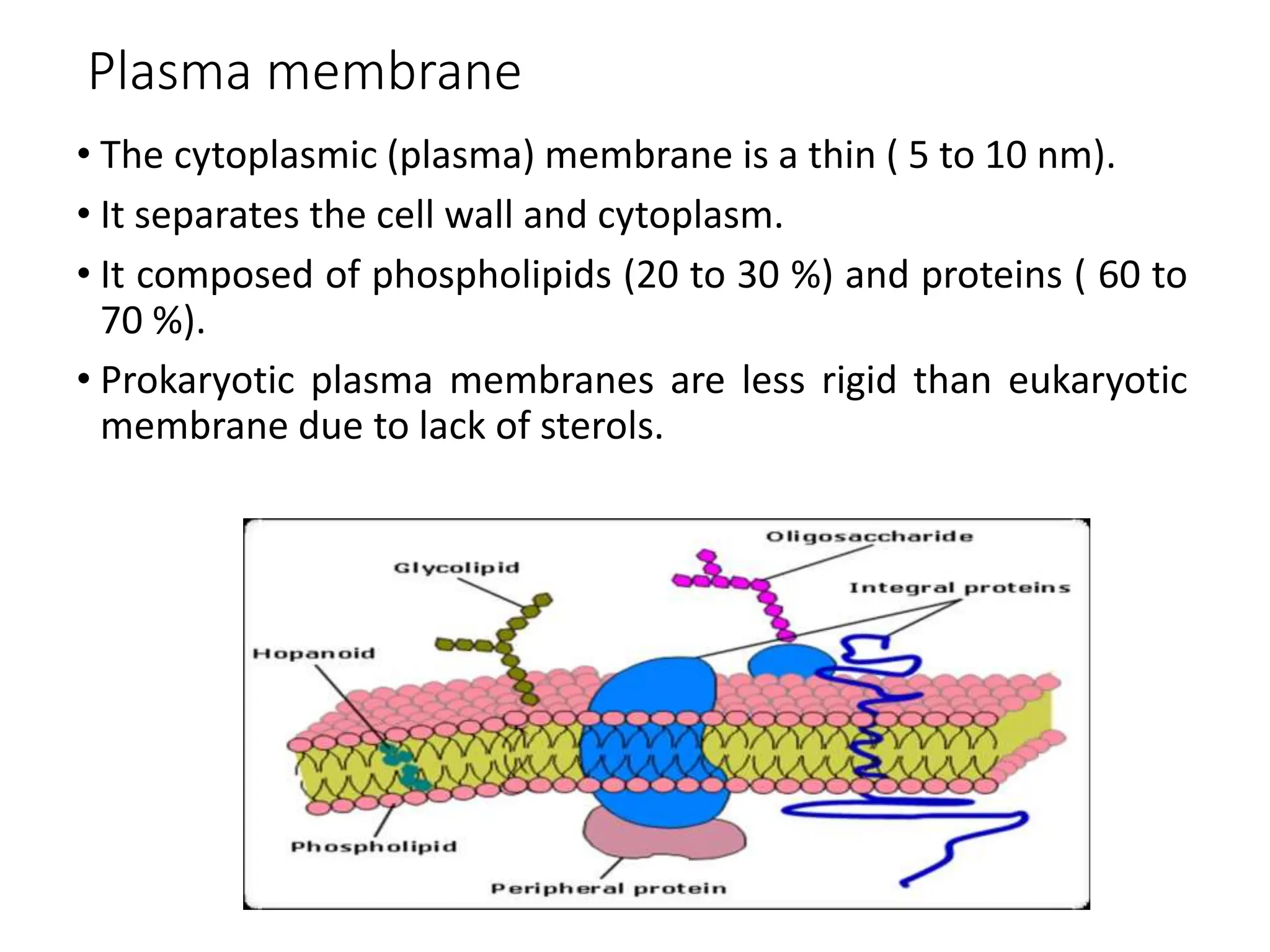
Plasma membrane
• The cytoplasmic (plasma) membrane is a thin ( 5 to 10 nm).
• It separates the cell wall and cytoplasm.
• It composed of phospholipids (20 to 30 %) and proteins ( 60 to
70 %).
• Prokaryotic plasma membranes are less rigid than eukaryotic
membrane due to lack of sterols.
Functions:
1. It acts as a semipermeable membrane controlling the inflow and
outflow of metabolites to and from the protoplasm.
2. It provides the mechanical strength to the bacterial cell.
3. It helps in DNA replication.
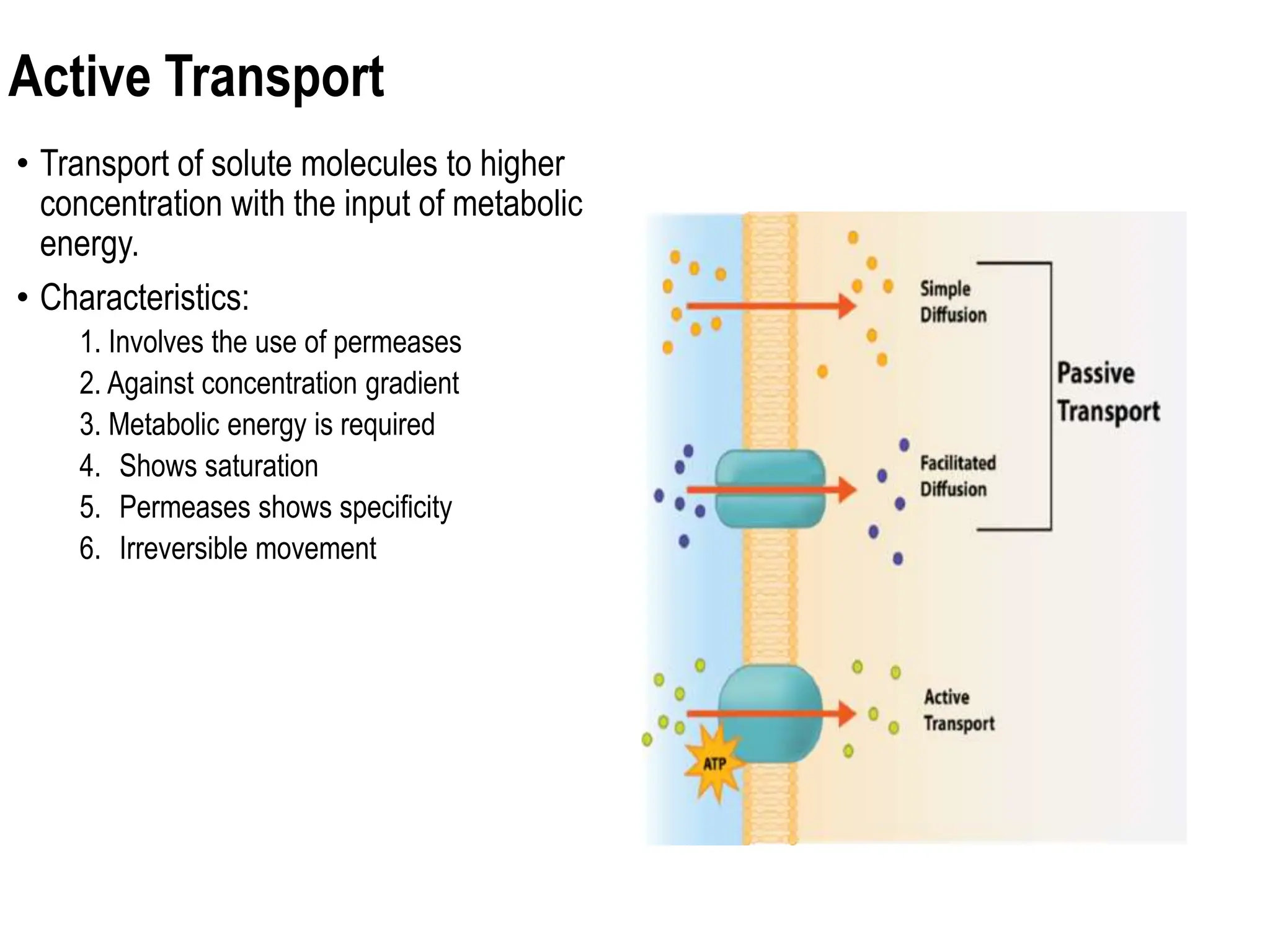
4. It contains enzyme, permease, which plays an important role in the
passage of selective nutrients through the membranes.
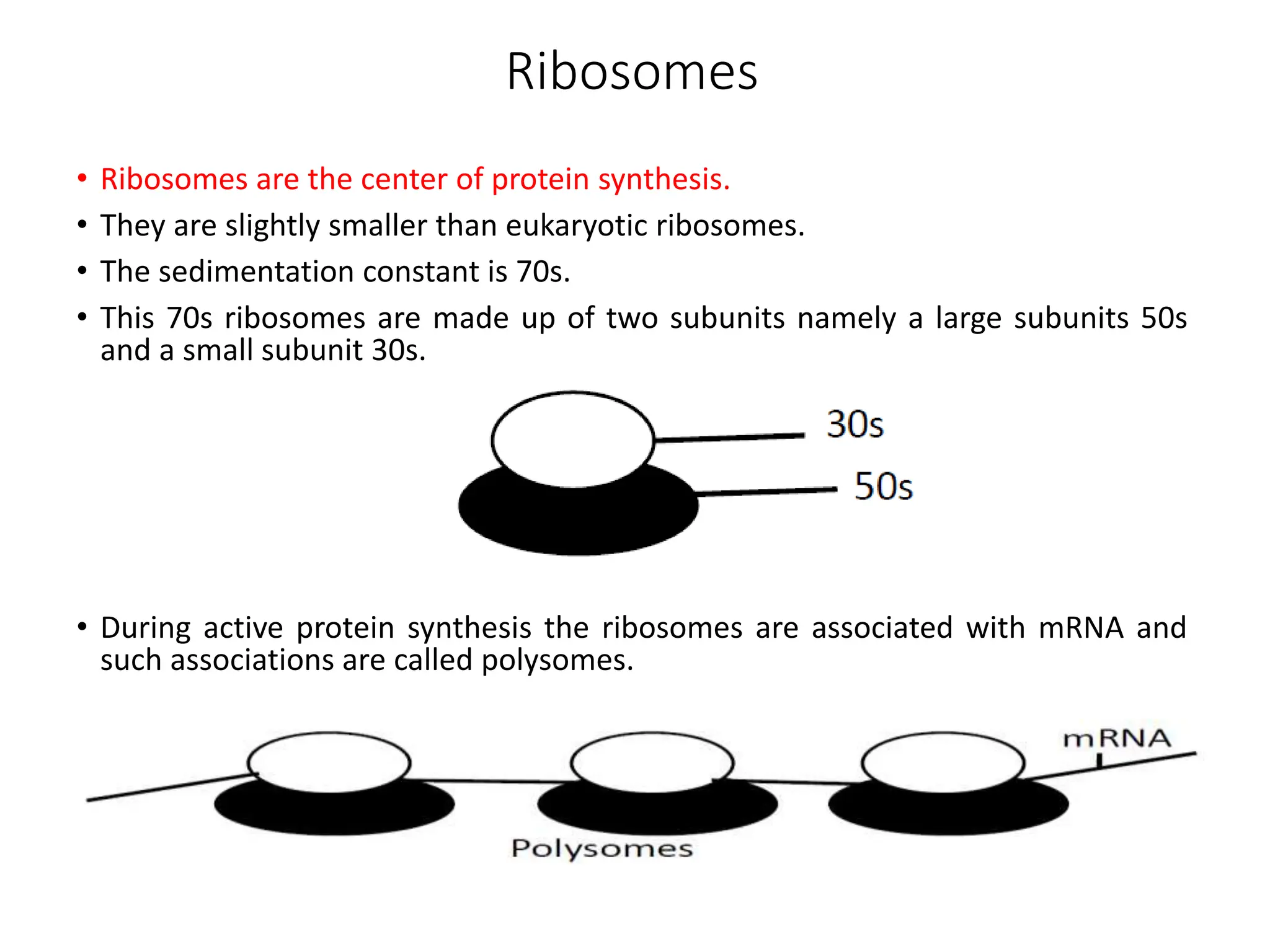
Ribosomes
• Ribosomes are the center of protein synthesis.
• They are slightly smaller than eukaryotic ribosomes.
• The sedimentation constant is 70s.
• This 70s ribosomes are made up of two subunits namely a large subunits 50s
and a small subunit 30s.
• During active protein synthesis the ribosomes are associated with mRNA and
such associations are called polysomes.
Mesosomes
• Mesosomes are respiratory sites of bacteria.
• The mesosomes are attached to the bacterial chromosomes and is
involved in DNA segregation during cell division.
• They are predominant in Gram positive bacteria.
Nucleoid
• The bacterial chromosomes is not surrounded by nuclear membrane so
it is called nucleoid.
• The bacterial chromosomes are made up of double strand circular DNA.
• Many species of bacteria produce cytoplasmic inclusion bodies which
appears as round granules.
• They are made up of either glycogen or starch.
• They appear reddish when stained with polychrome methylene blue or
toluidine blue.
Intra Cytoplasmic inclusion
Spore
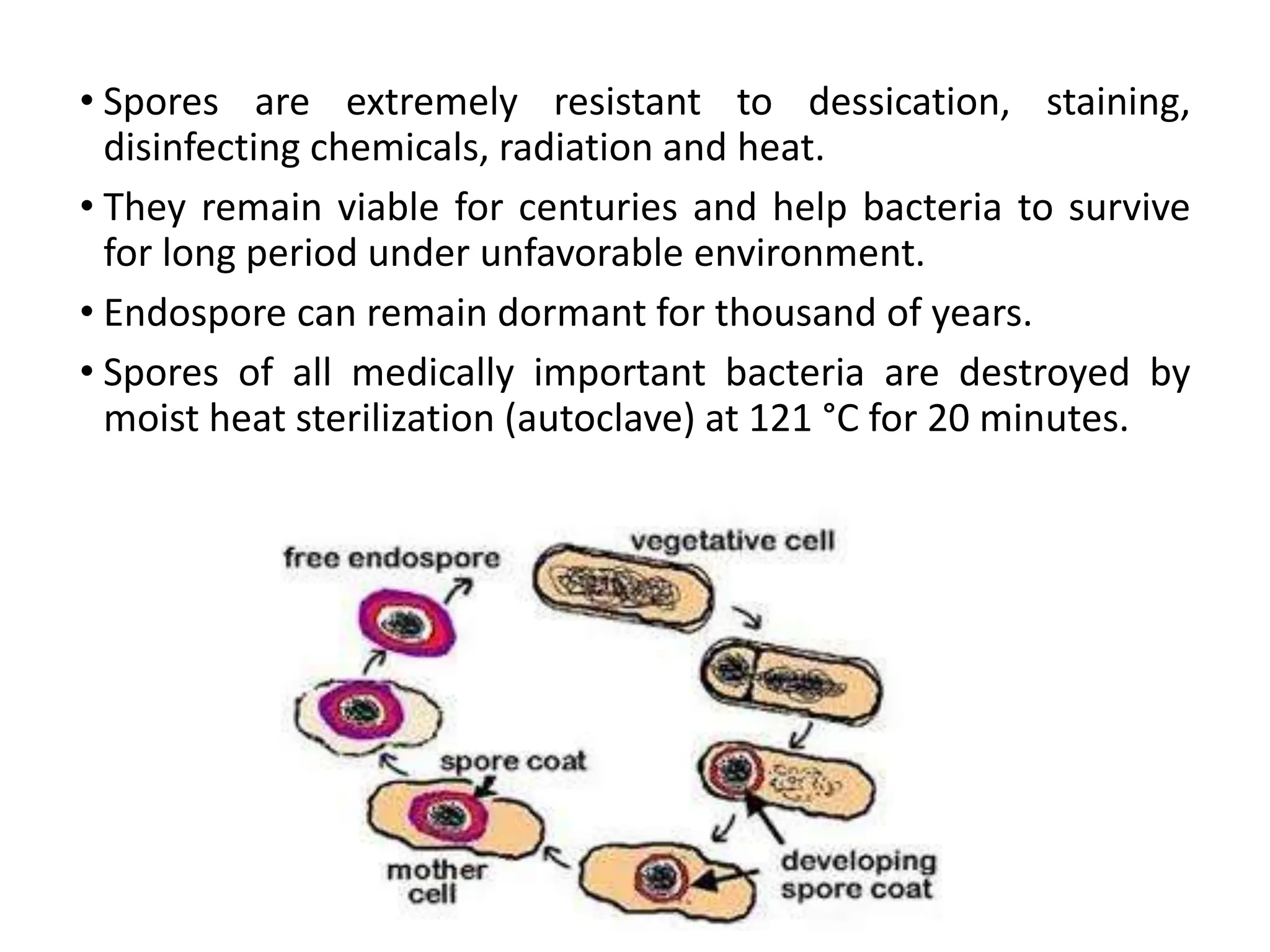
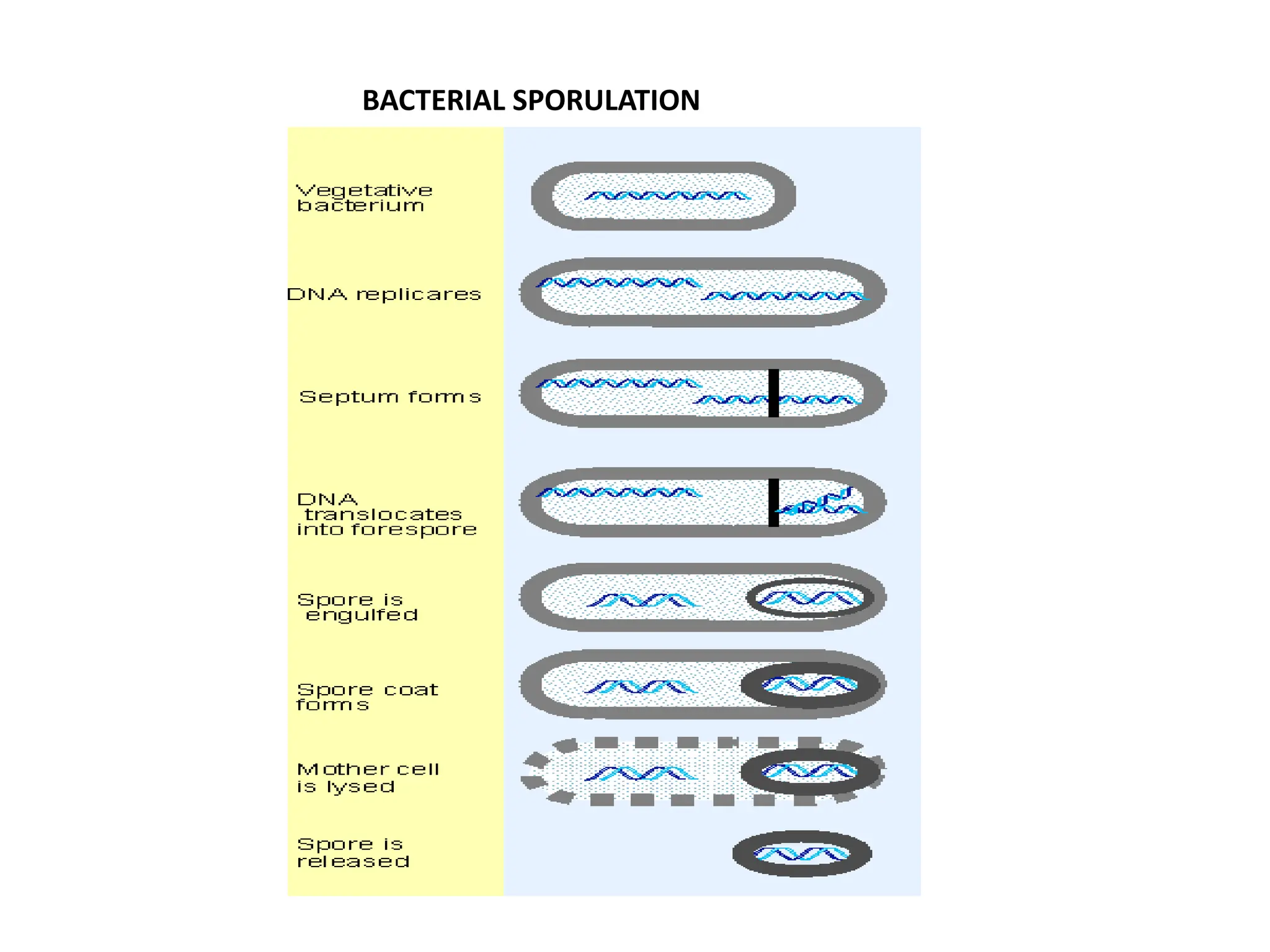
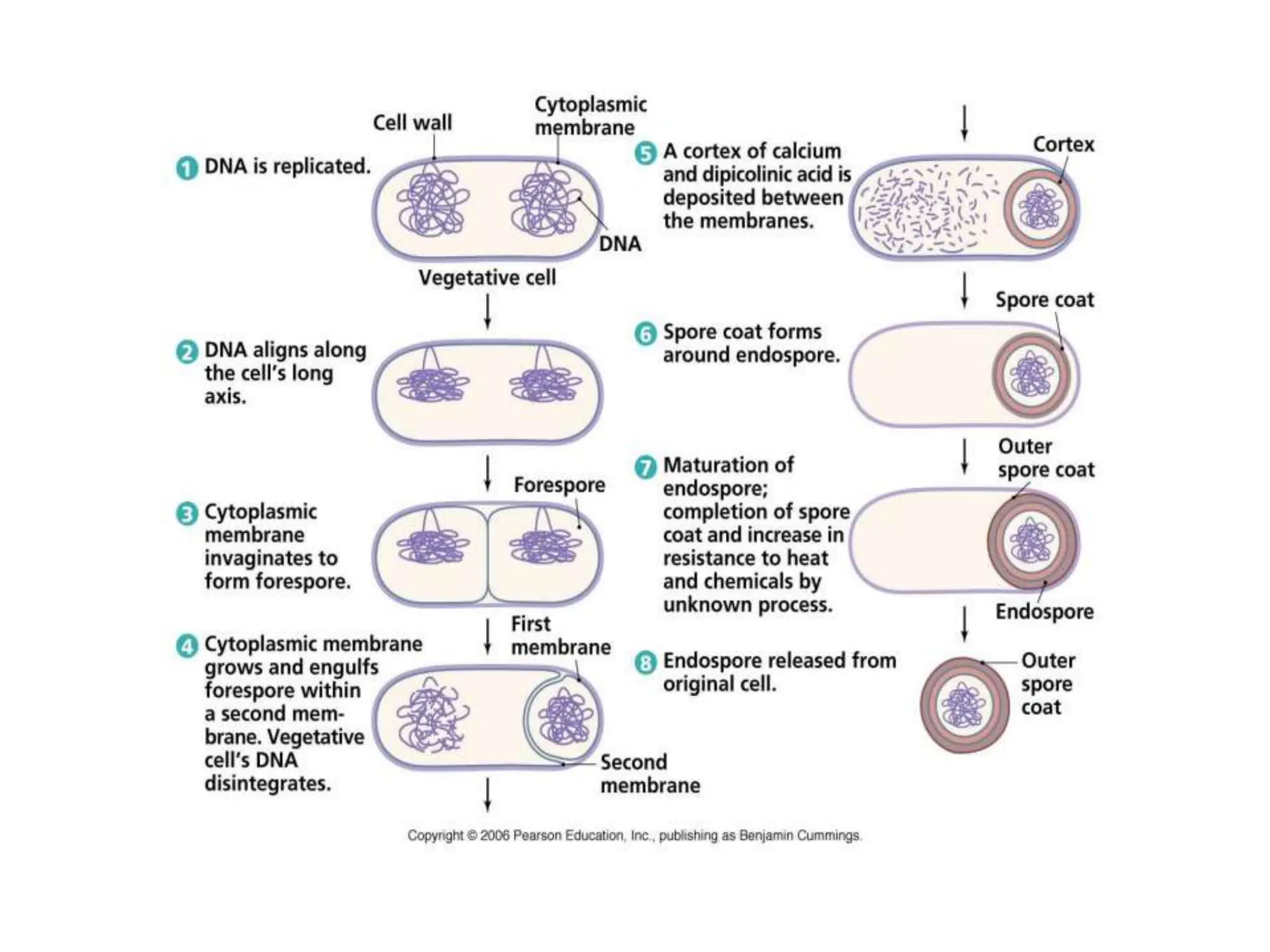
• The process of endospore formation is
known as sporulation and it may take 4 to
8 hours in a vegetative cell.
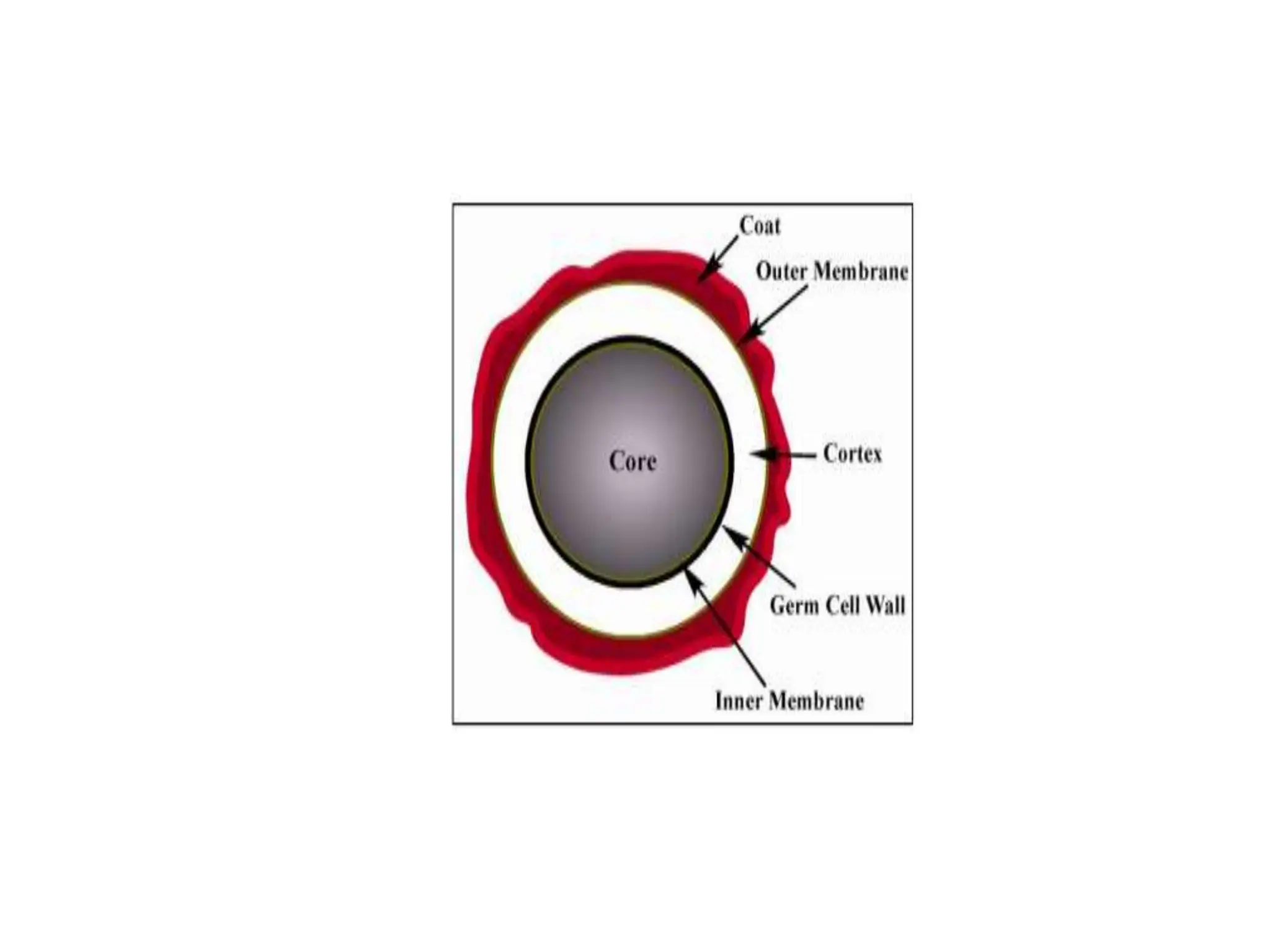
• Endospores are thick-walled, highly
refractile bodies that are produced one
per cell.
• Each bacterial spore on germination forms
a single vegetative cell. Therefore,
sporulation in bacteria is a method of
preservation and not reproduction.
• Spores are extremely resistant to dessication, staining,
disinfecting chemicals, radiation and heat.
• They remain viable for centuries and help bacteria to survive
for long period under unfavorable environment.
• Endospore can remain dormant for thousand of years.
• Spores of all medically important bacteria are destroyed by
moist heat sterilization (autoclave) at 121 °C for 20 minutes.
BACTERIAL SPORULATION
Plasmid
• Plasmids are small,circular/line,extrachromosomal,double-
stranded DNA molecules.
• They are capable of self-replication and contain genes that confer some
properties such as antibiotic resistance,virulence factors.
• Plasmids are not essential for cellular survival.
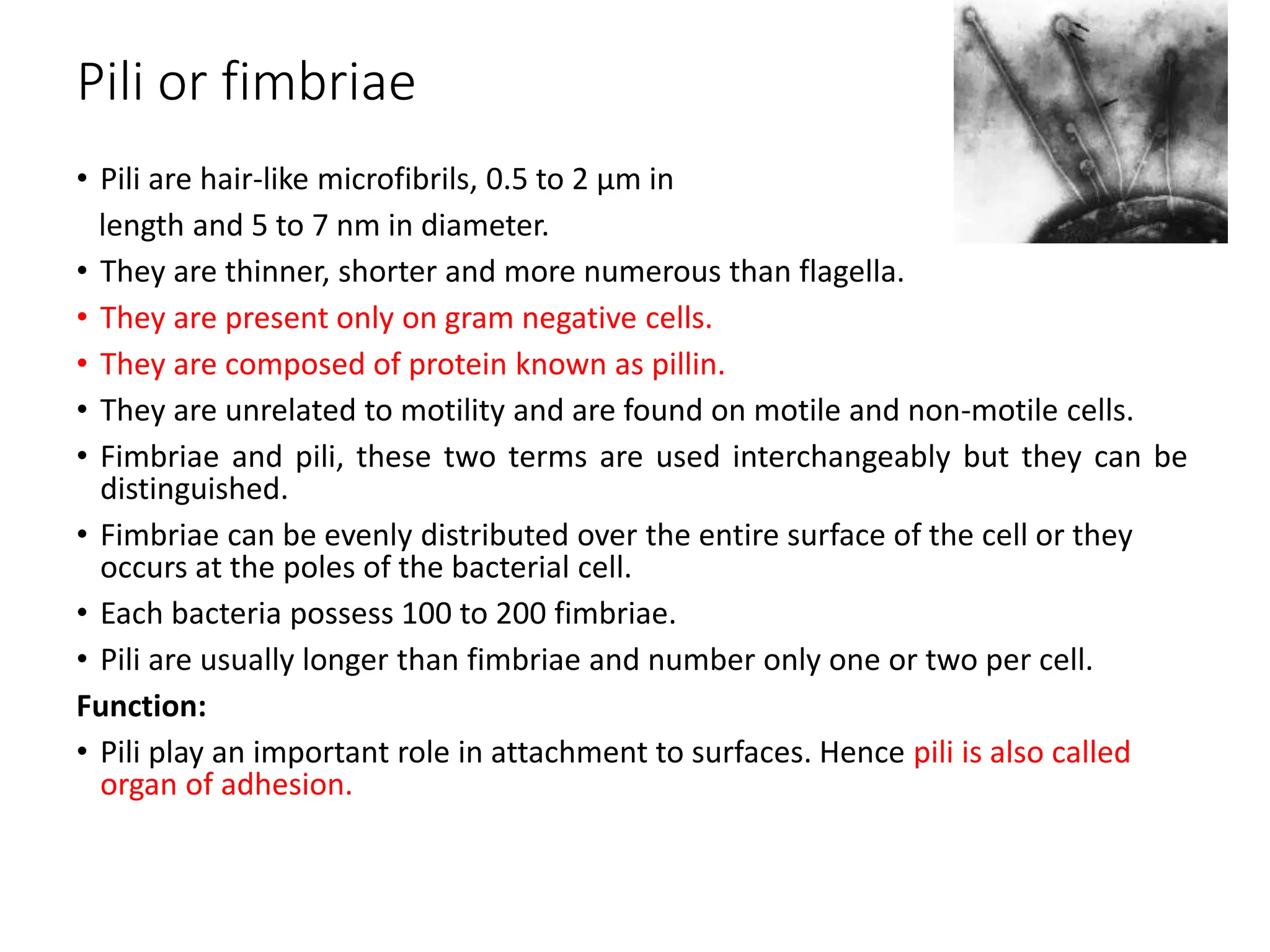
Pili or fimbriae
• Pili are hair-like microfibrils, 0.5 to 2 μm in
length and 5 to 7 nm in diameter.
• They are thinner, shorter and more numerous than flagella.
• They are present only on gram negative cells.
• They are composed of protein known as pillin.
• They are unrelated to motility and are found on motile and non-motile cells.
• Fimbriae and pili, these two terms are used interchangeably but they can be
distinguished.
• Fimbriae can be evenly distributed over the entire surface of the cell or they
occurs at the poles of the bacterial cell.
• Each bacteria possess 100 to 200 fimbriae.
• Pili are usually longer than fimbriae and number only one or two per cell.
Function:
• Pili play an important role in attachment to surfaces. Hence pili is also called
organ of adhesion.
Flagella
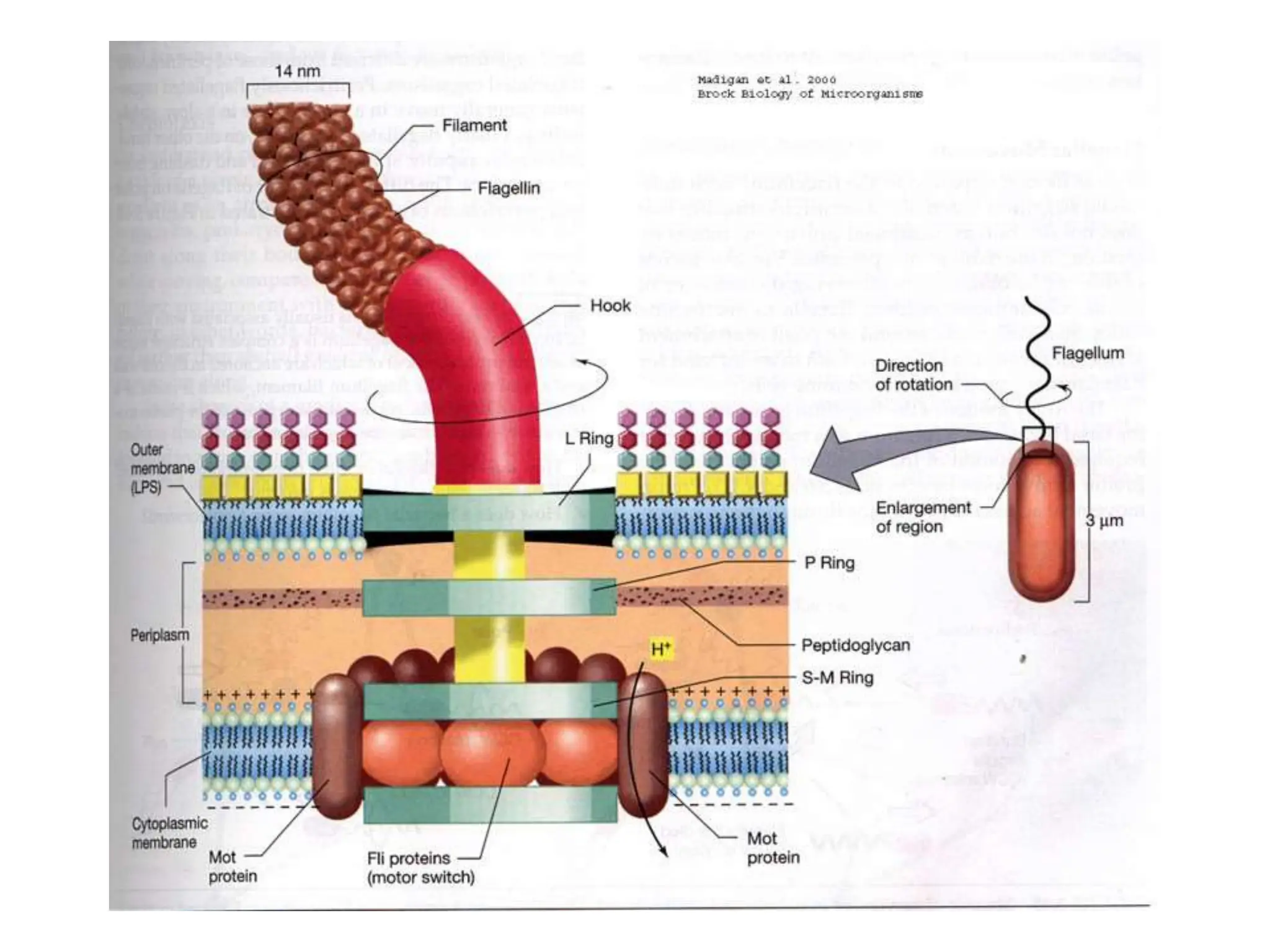
• Flagella are long, slender, thin hair-like cytoplasmic appendages, which are
responsible for the motility of bacteria.
• These are the organs of locomotion.
• They are 0.01 to 0.02 μm in diameter, 3 to 20 μm in length.
• Flagella are made up of a protein- flagellin.
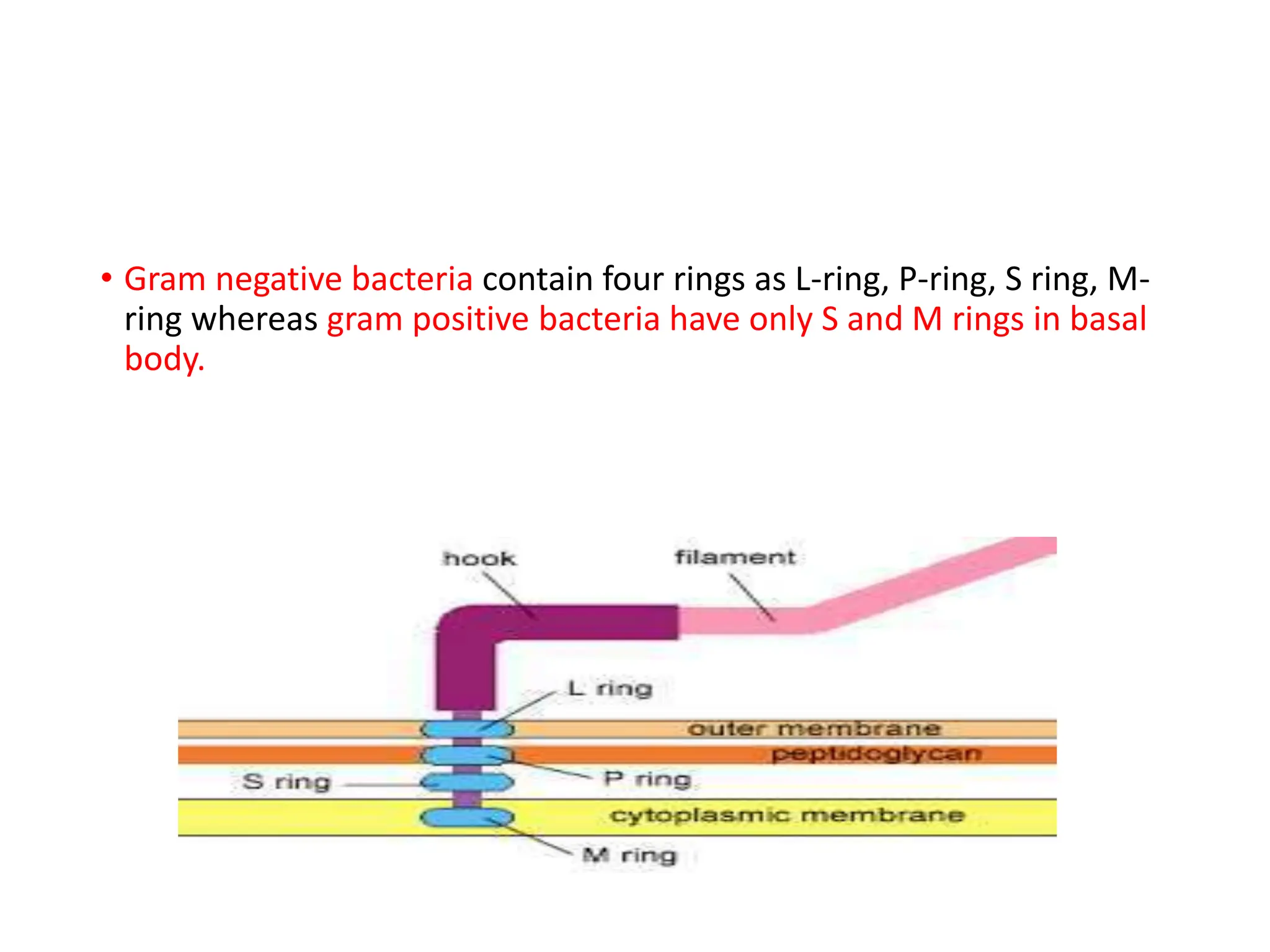
• The flagellum has three basic parts ,
1. Filament
2. Hook
3. Basal body
• Filament is the thin, cylindrical, long outermost region with a constant diameter.
• The filament is attached to a slightly wider hook.
• The basal body is composed of a small central rod inserted into a series of rings.
• Gram negative bacteria contain four rings as L-ring, P-ring, S ring, M-
ring whereas gram positive bacteria have only S and M rings in basal
body.
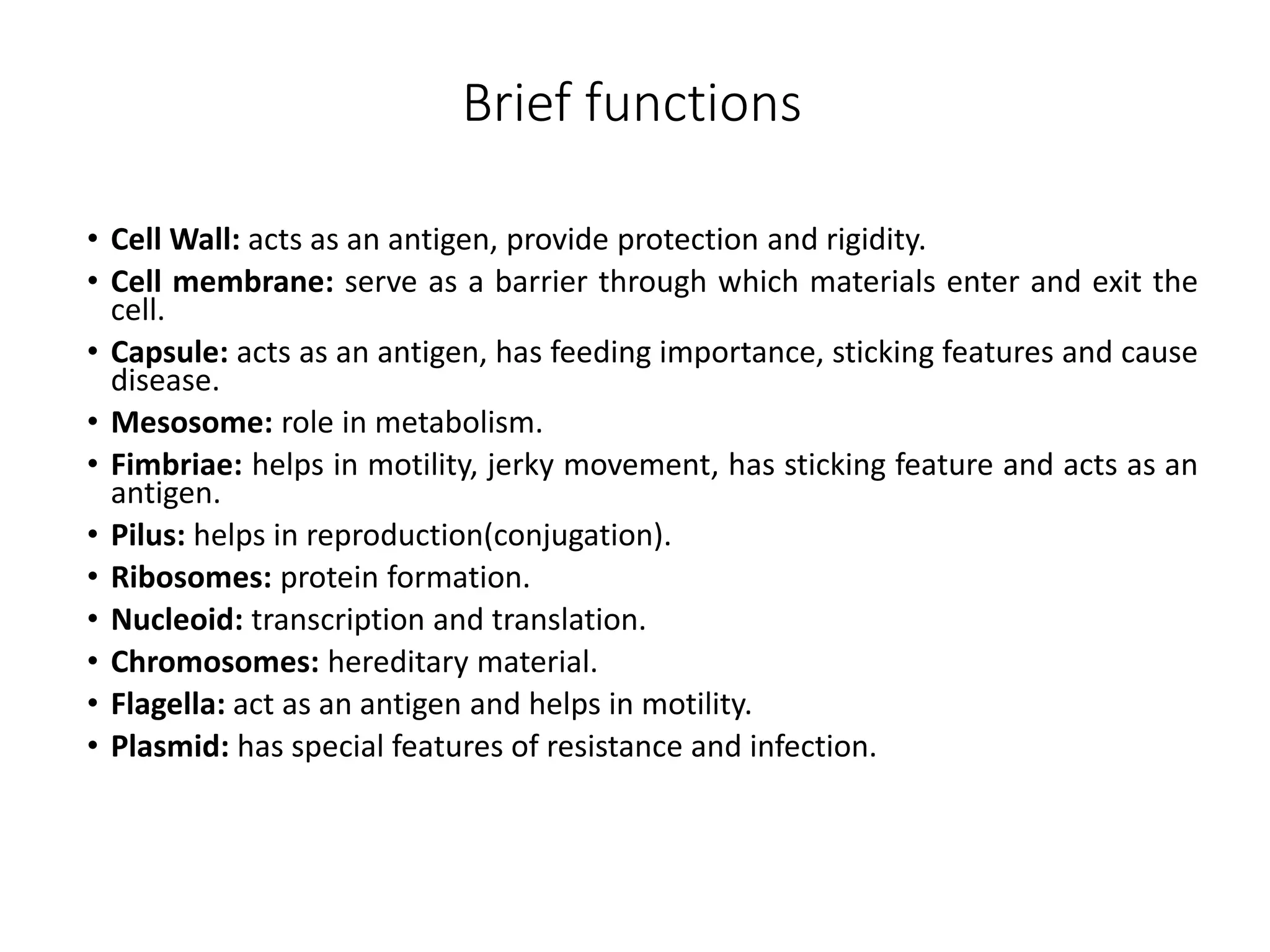
Brief functions
• Cell Wall: acts as an antigen, provide protection and rigidity.
• Cell membrane: serve as a barrier through which materials enter and exit the
cell.
• Capsule: acts as an antigen, has feeding importance, sticking features and cause
disease.
• Mesosome: role in metabolism.
• Fimbriae: helps in motility, jerky movement, has sticking feature and acts as an
antigen.
• Pilus: helps in reproduction(conjugation).
• Ribosomes: protein formation.
• Nucleoid: transcription and translation.
• Chromosomes: hereditary material.
• Flagella: act as an antigen and helps in motility.
• Plasmid: has special features of resistance and infection.
Growth & Reproduction of
Bacteria
The growth curve
• In nature, bacteria do not experience perfect environmental
conditions for growth.
• As such, the species that populate an environment change over
time.
• In a laboratory, however, optimal conditions can be met by
growing bacteria in a closed culture environment.
• It is under these conditions that the curve pattern of bacterial
growth can be observed.
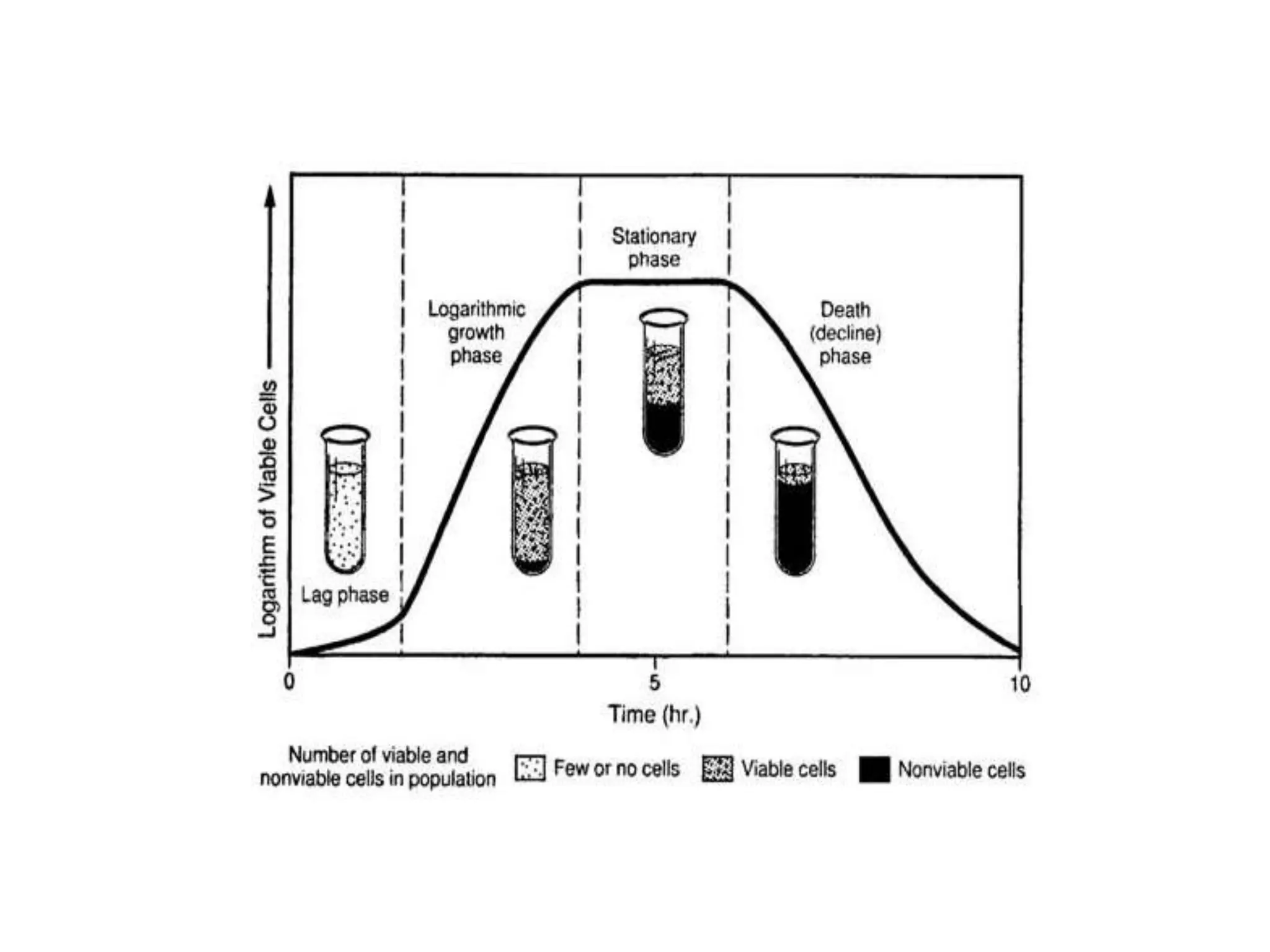
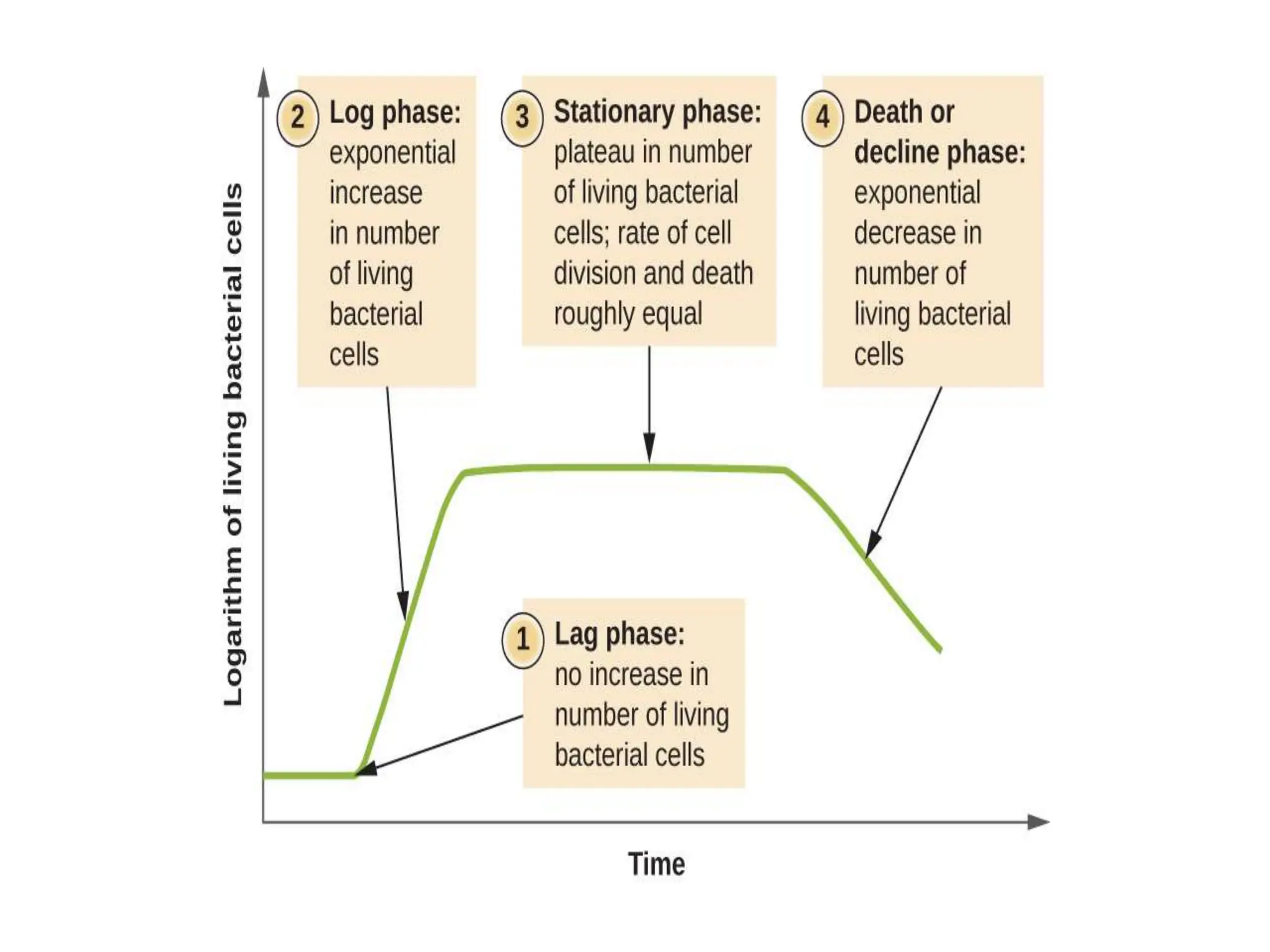
• The bacterial growth curve represents the number of live
cells in a bacterial population over a period of time.
lag phase
• In the first phase, called the lag phase, the population
remains at the same number as the bacteria become
accustomed to their new environment.
• The lag phase is an adaptation period, where the bacteria are
adjusting to their new conditions.
• This initial phase is characterized by cellular activity but not
growth.
• A small group of cells are placed in a nutrient rich medium that
allows them to synthesize proteins and other molecules
necessary for replication.
• These cells increase in size, but no cell division occurs in the
phase.
logarithmic phase/ Exponential
• After the lag phase, bacterial cells enter the exponential or log
phase.
• This is the time when the cells are dividing by binary fission and
doubling in numbers after each generation time.
• Metabolic activity is high as DNA, RNA, cell wall components,
and other substances necessary for growth are generated for
division.
• The exponential or log phase of growth is marked by
predictable doublings of the population, where 1 cell become 2
cells, becomes 4, becomes 8 etc.
• Conditions that are optimal for the cells will result in very rapid
growth (and a steeper slope on the growth curve), while less
than ideal conditions will result in slower growth.
stationary phase
• Eventually, the population growth experienced in the log phase
begins to decline as the available nutrients become depleted
and waste products start to accumulate.
• Bacterial cell growth reaches a plateau, or stationary phase,
where the number of dividing cells equal the number of dying
cells.
• This results in no overall population growth.
• Under the less favorable conditions, competition for nutrients
increases and the cells become less metabolically active.
• Spore forming bacteria produce endospores in this phase
and pathogenic bacteria begin to generate substances (virulence
factors) that help them survive harsh conditions and
consequently cause disease.
Death phase
• As nutrients become less available and waste products increase,
the number of dying cells continues to rise.
• In the death phase, the number of living cells decreases
exponentially and population growth experiences a sharp
decline.
• As dying cells lyse or break open, they spill their contents into the
environment making these nutrients available to other bacteria.
• This helps spore producing bacteria to survive long enough for
spore production.
• Spores are able to survive the harsh conditions of the death
phase and become growing bacteria when placed in an
environment that supports life.
Generation Time
• Time required for a cell to divide, and its population to double.
• Generation time varies considerably:
• E. coli divides every 20 minutes.
• Most bacteria divide every 1 to 3 hours.
• Some bacteria require over 24 hours to divide.
Reproduction in Bacteria
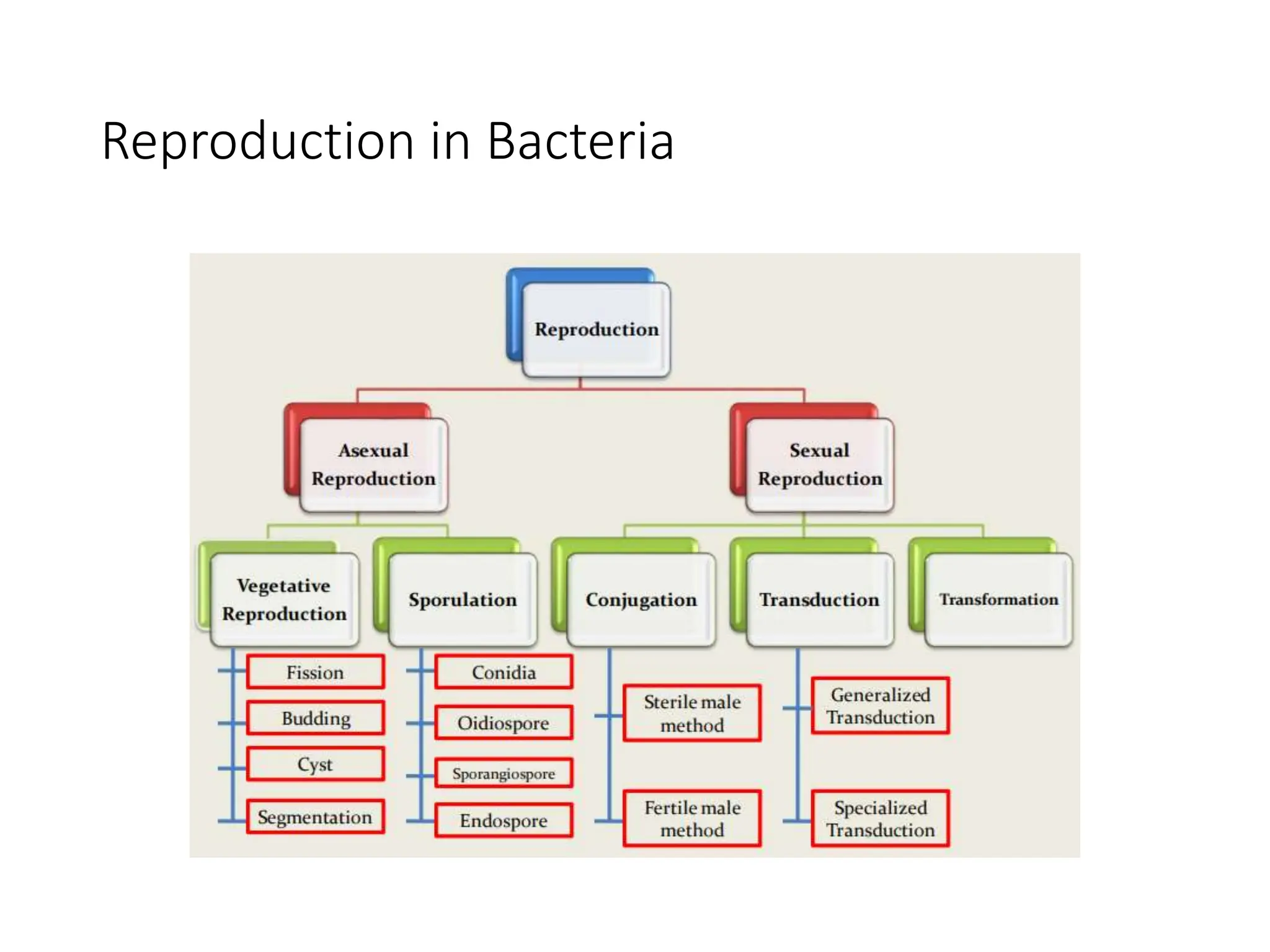
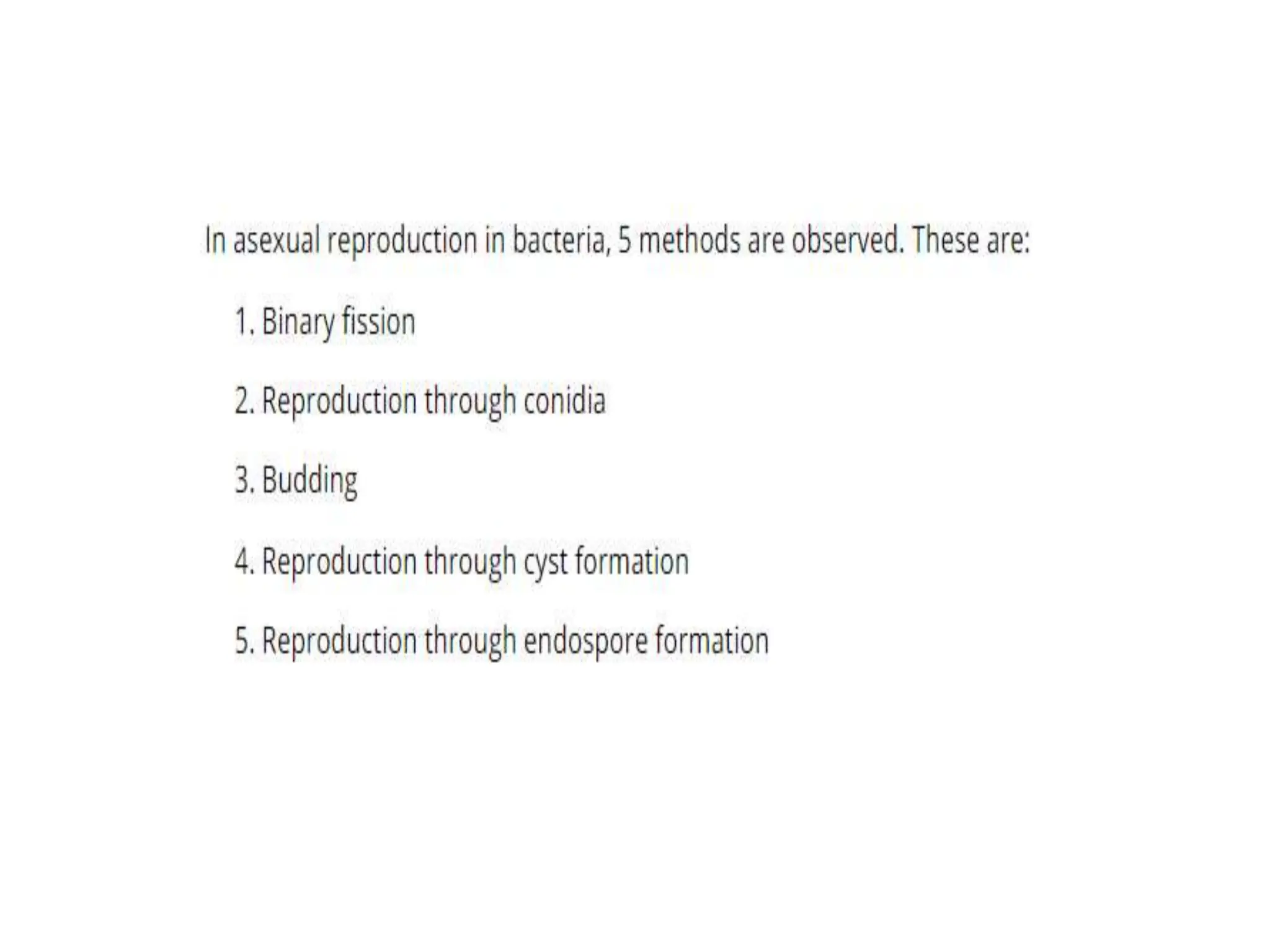
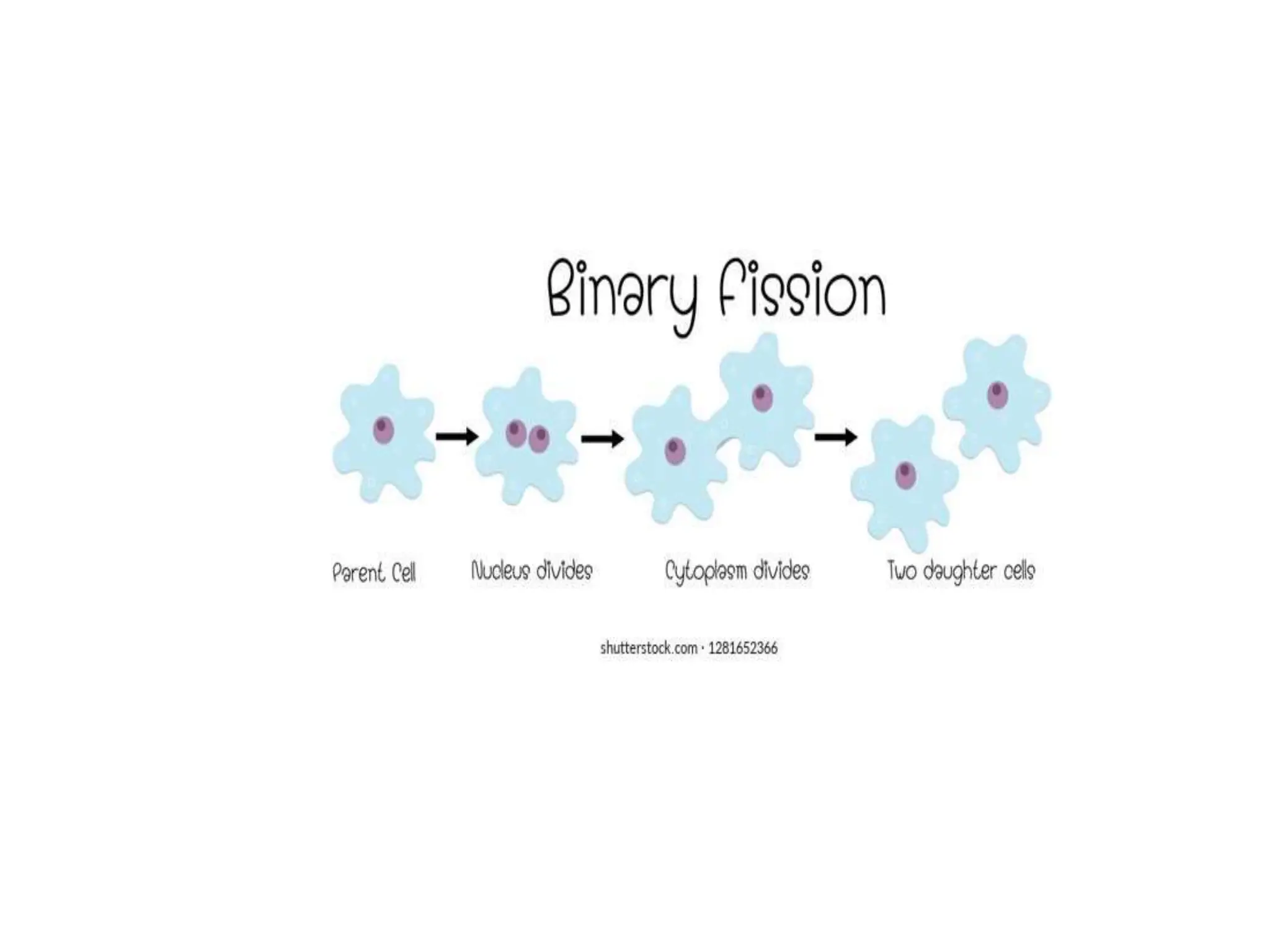
Binary Fission
• The most common way by which the bacteria reproduce itself is the Binary
Process.
• It is a process by which a single bacterial cell simply divides into two in half
an hour time.
• The various events of binary fission are as follows:
• The nucleoid gradually become elongated in size and form dumbel-shaped
structure.
• They still remain attached to the plasma membrane with the help of
mesosome.
• The duplication of DNA and mesosome takes place and get separate from
each other.
• The daughter mesosomes and nucleoids migrate towards the opposite poles.
• The plasma membrane invaginates at the center and the parent cell is
divided into two identical cells.
Budding
• The bacterial cell develops small swelling at one side which
gradually increases in size.
• Simultaneously the nucleus undergoes division, where one
remains with the mother and other one with some cytoplasm
goes to the swelling.
• This outgrowth is the bud, which gets separated from the
mother by partition wall, e.g., Hyphomicrobium vulgare,
Rhodomicrobium vannielia, etc.
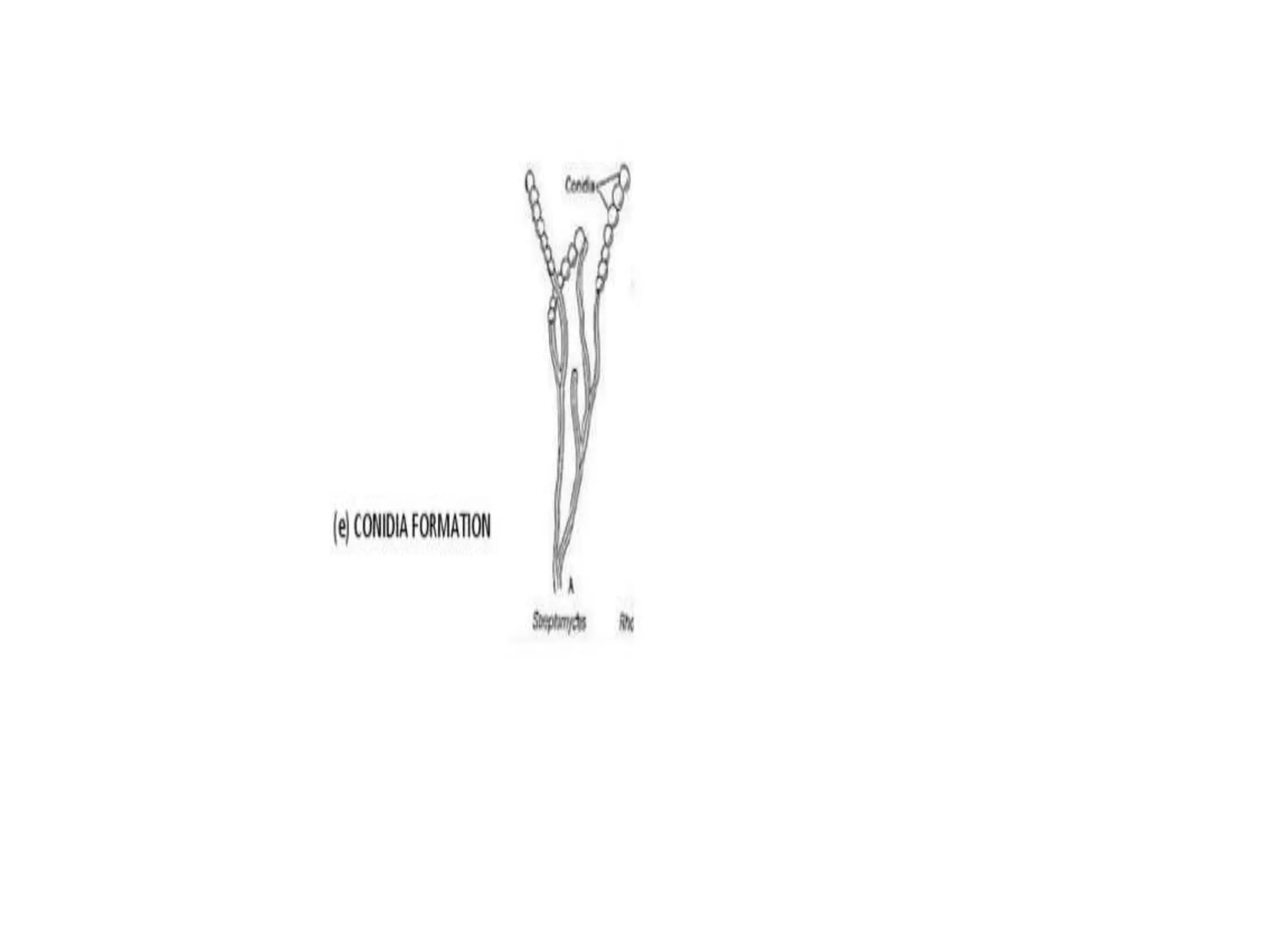
Reproduction by Conidia formation
• Conidia formation takes place in filamentous bacteria like
Streptomyces etc., by the formation of a transverse septum at
the apex of the filament.
• The part of this filament which bears conidia is called
conidiophore.
• After detachment from the mother and getting contact with
suitable substratum, the conidium germinates and gives rise to
new mycelium.
• This type of reproduction is also called as fragmentation.
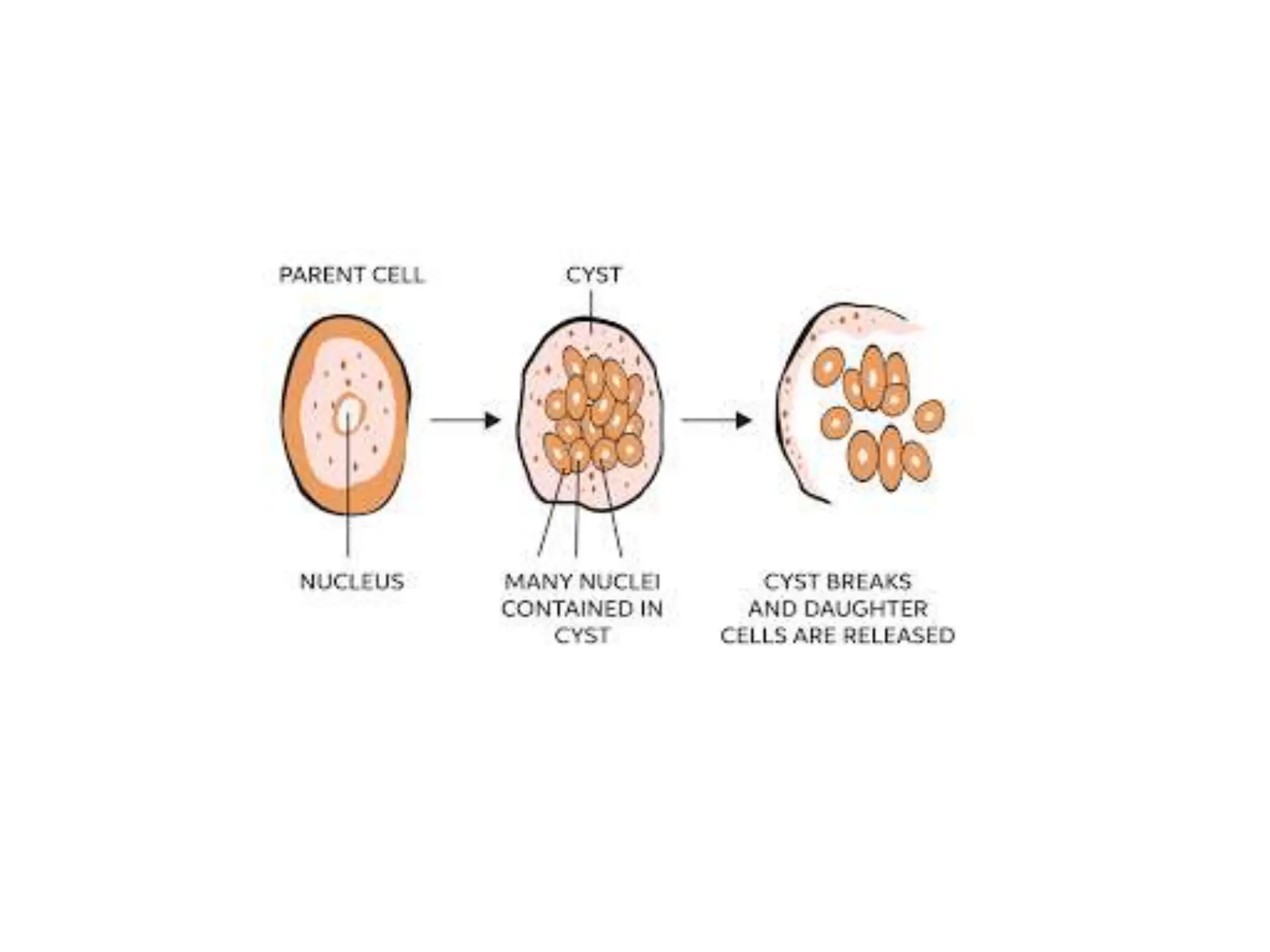
Reproduction through cyst formation
• Cysts are formed by the deposition of additional layer around
the mother wall.
• These are the resting structure and during favourable condition
they again behave as the mother, e.g., many members of
Azotobacter.
• In certain bacteria the entire protoplast of the cell recedes from the
cell wall and becomes rounded.
• A thick wall is then secreted around it to form resistant structure
somewhat similar to the endospore. It is called the cyst.
• These are formed in certain species of Azobacter.
• Under suitable environment conditions the cyst germinate to
produce the new bacterium.
Reproduction through endospore formation
• Spores are formed during unfavourable environmental condition like
desiccation and starvation.
• As the spores are formed within the cell, they are called endospores.
• Only one spore is formed in a bacterial cell. On germination, it gives rise to
a bacterial cell.
• In this state, the bacteria can tolerate exceedingly high and low temperatures,
acidic and basic conditions, and large amounts of radiation.
• Endospores are extremely hard to kill.
• Endospores can only be made by Grampositive bacteria.
• Within the endospore remains the bacterial DNA, but the cytoplasm has a
decreased water concentration.
• This is thought to help in protecting against high heat.
• The bacteria will take on a tough coating composed of calcium and dipicolinic
acid, creating a dense and impregnable barrier to stabilize the DNA within the
cell. DNA repair enzymes are also still active, aiding in the resistance of the
endospore.
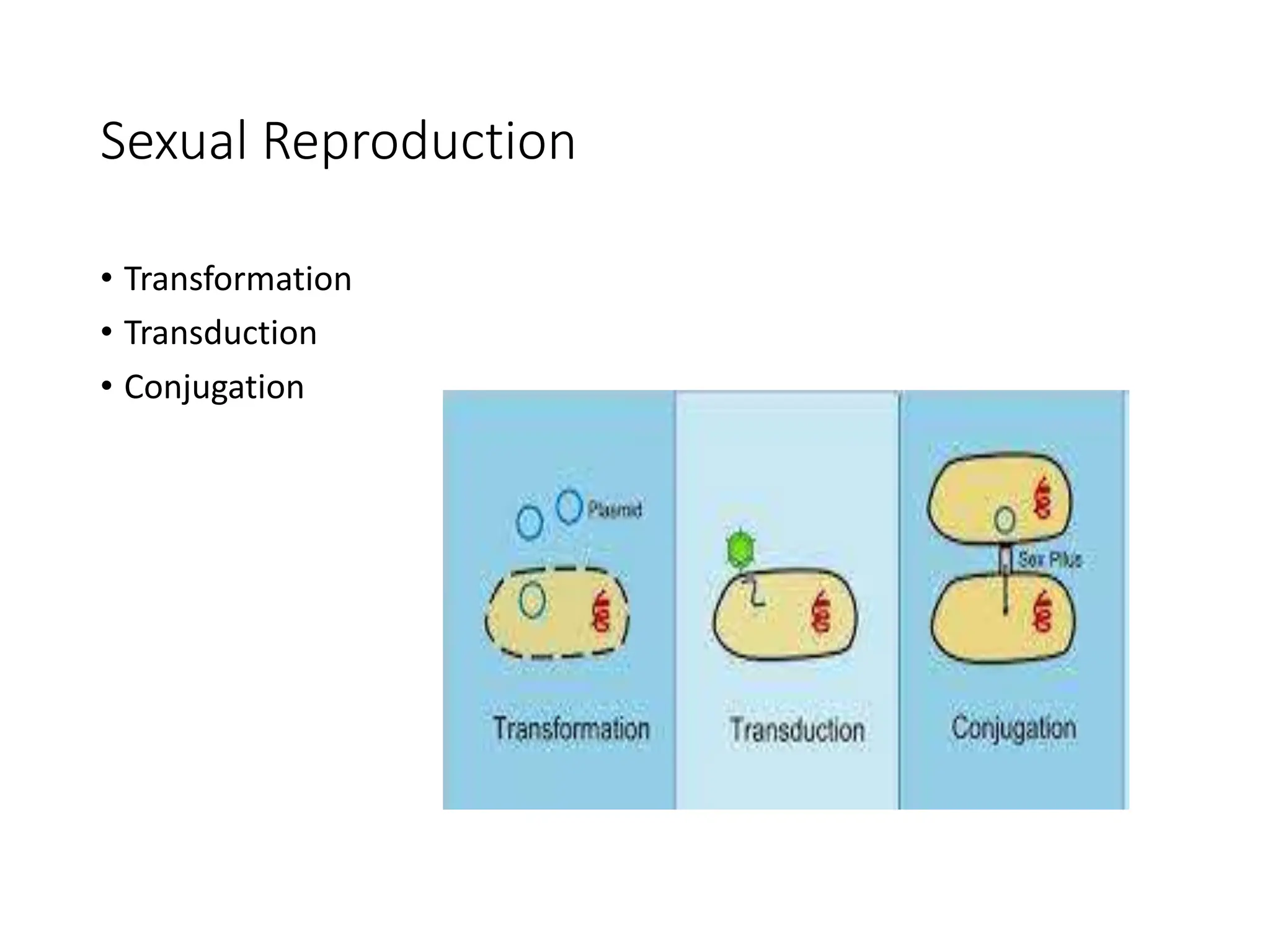
Sexual Reproduction
• Transformation
• Transduction
• Conjugation
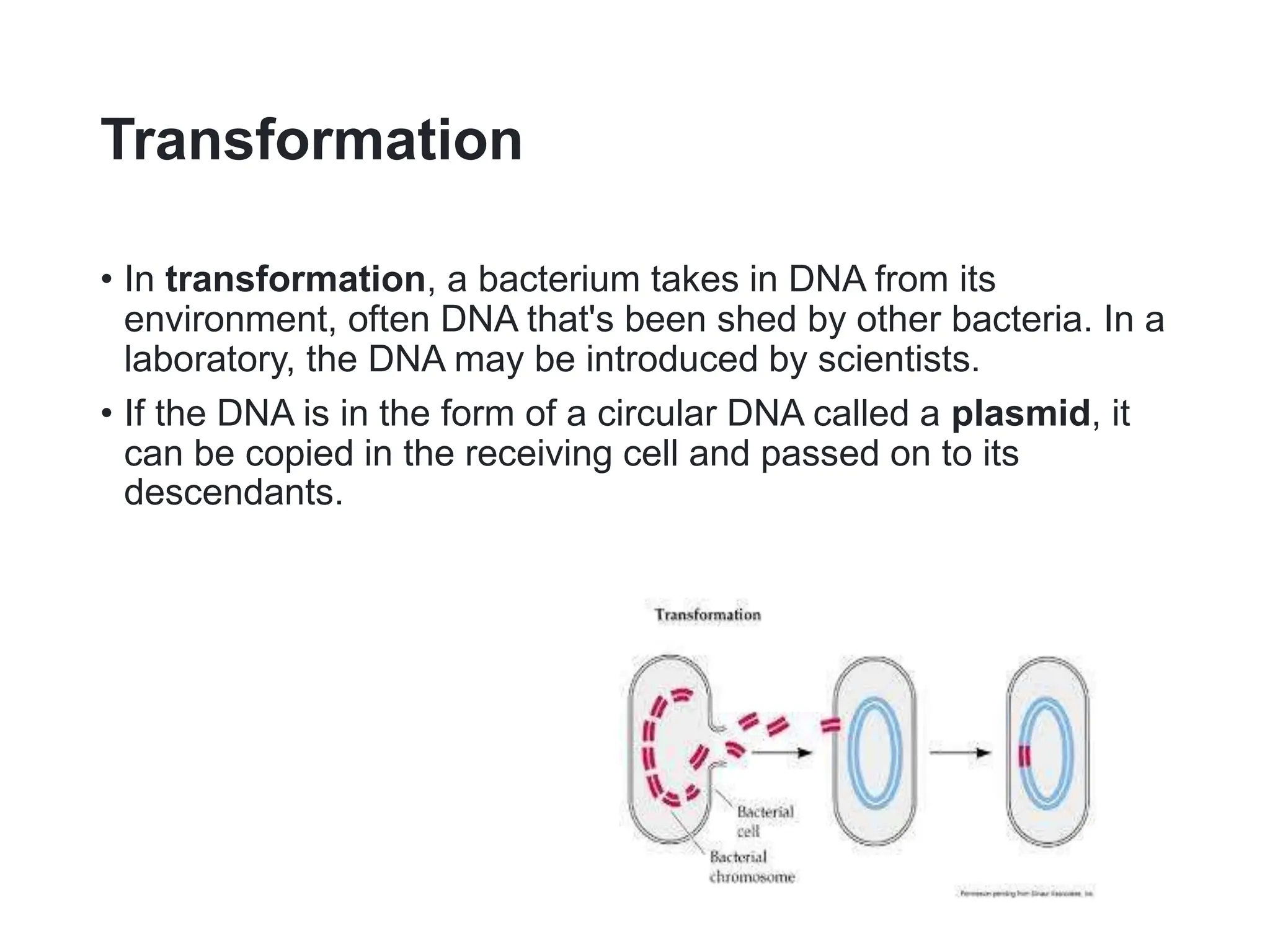
Transformation
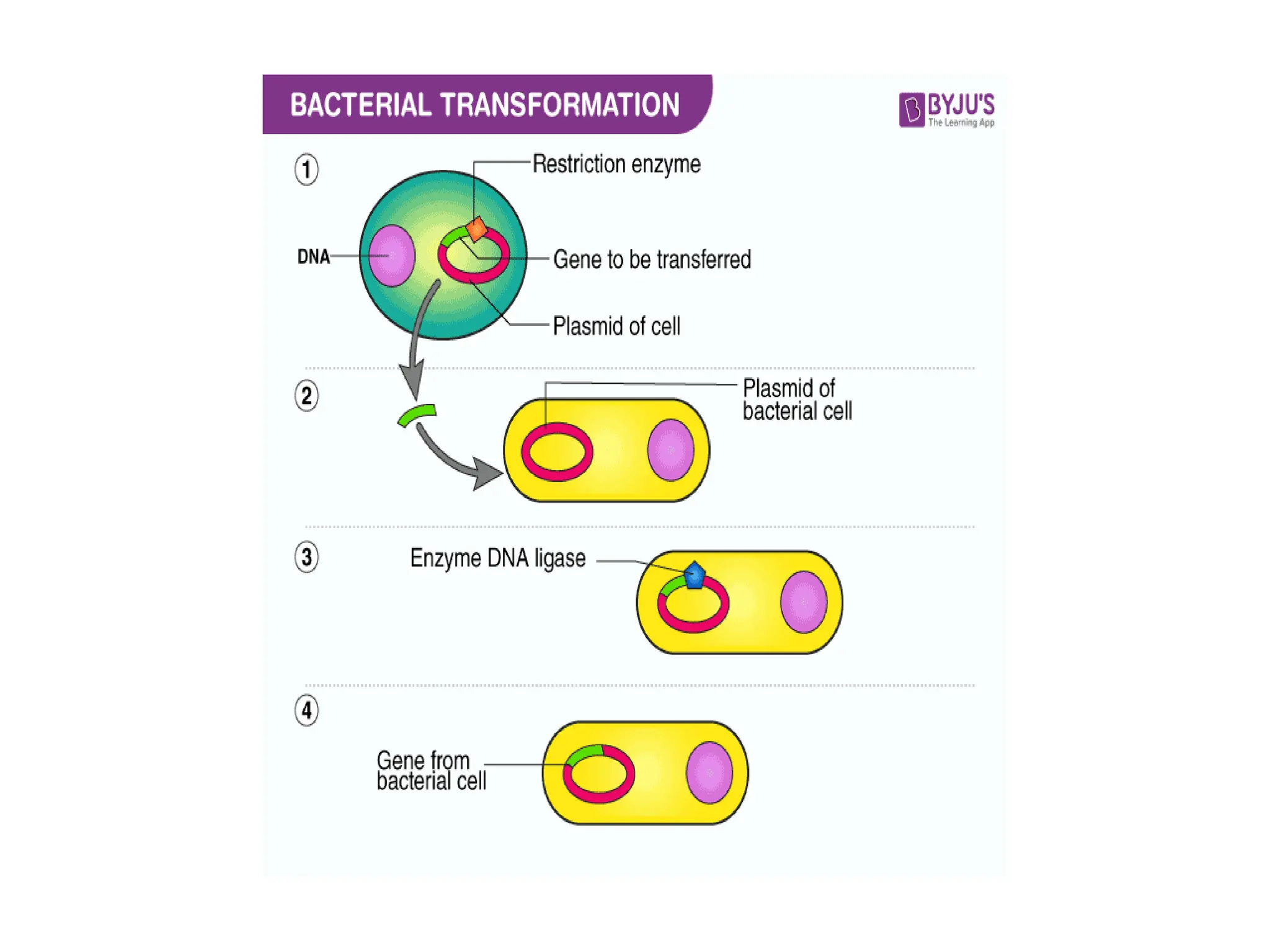
• In transformation, a bacterium takes in DNA from its
environment, often DNA that's been shed by other bacteria. In a
laboratory, the DNA may be introduced by scientists.
• If the DNA is in the form of a circular DNA called a plasmid, it
can be copied in the receiving cell and passed on to its
descendants.
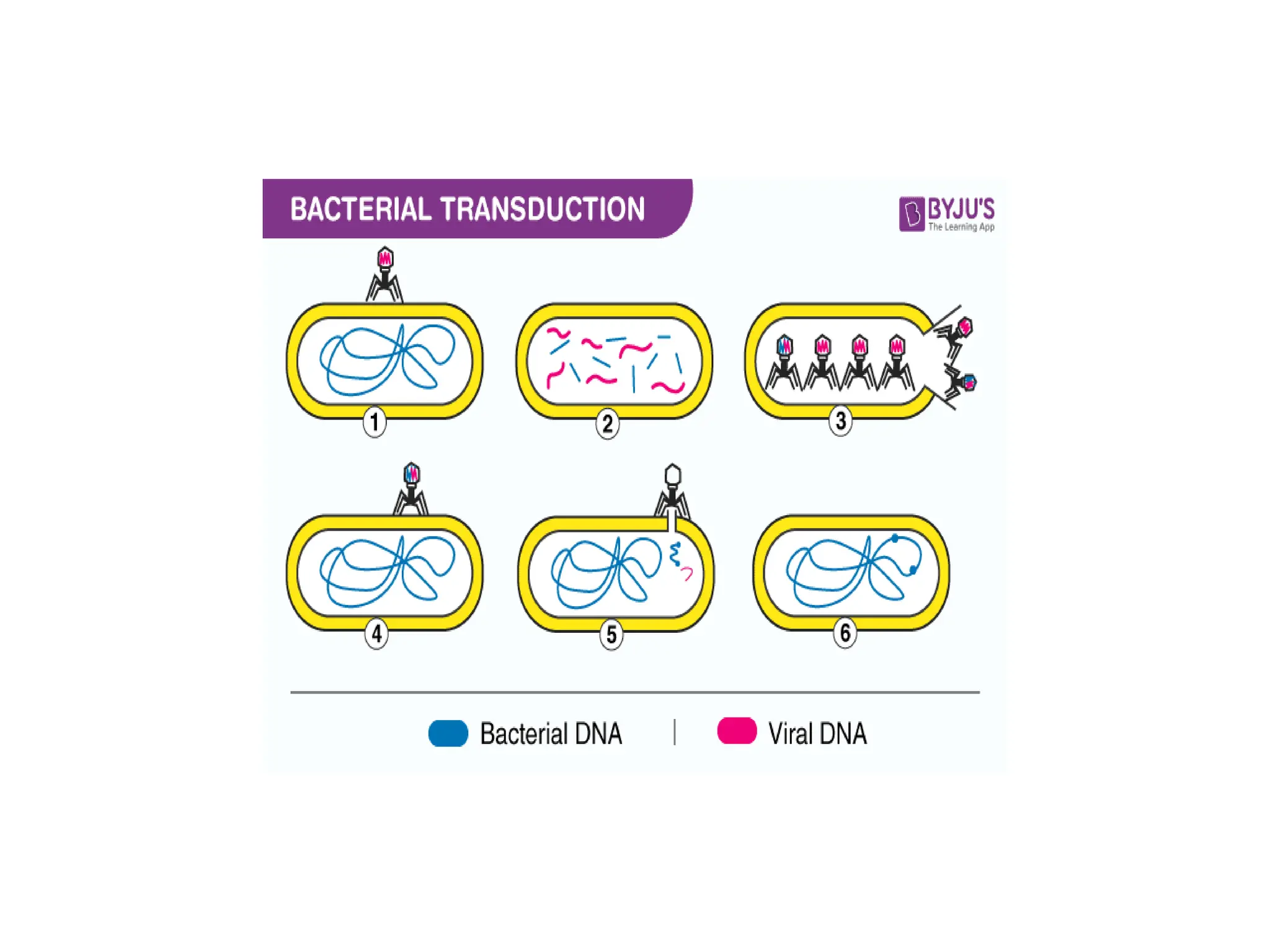
Transduction
• The genetic recombination in which genetic material is
transferred by phage virus between two bacteria is called
transduction. It has two forms:
• (a)Generalized transduction
• (b)Specialized transduction
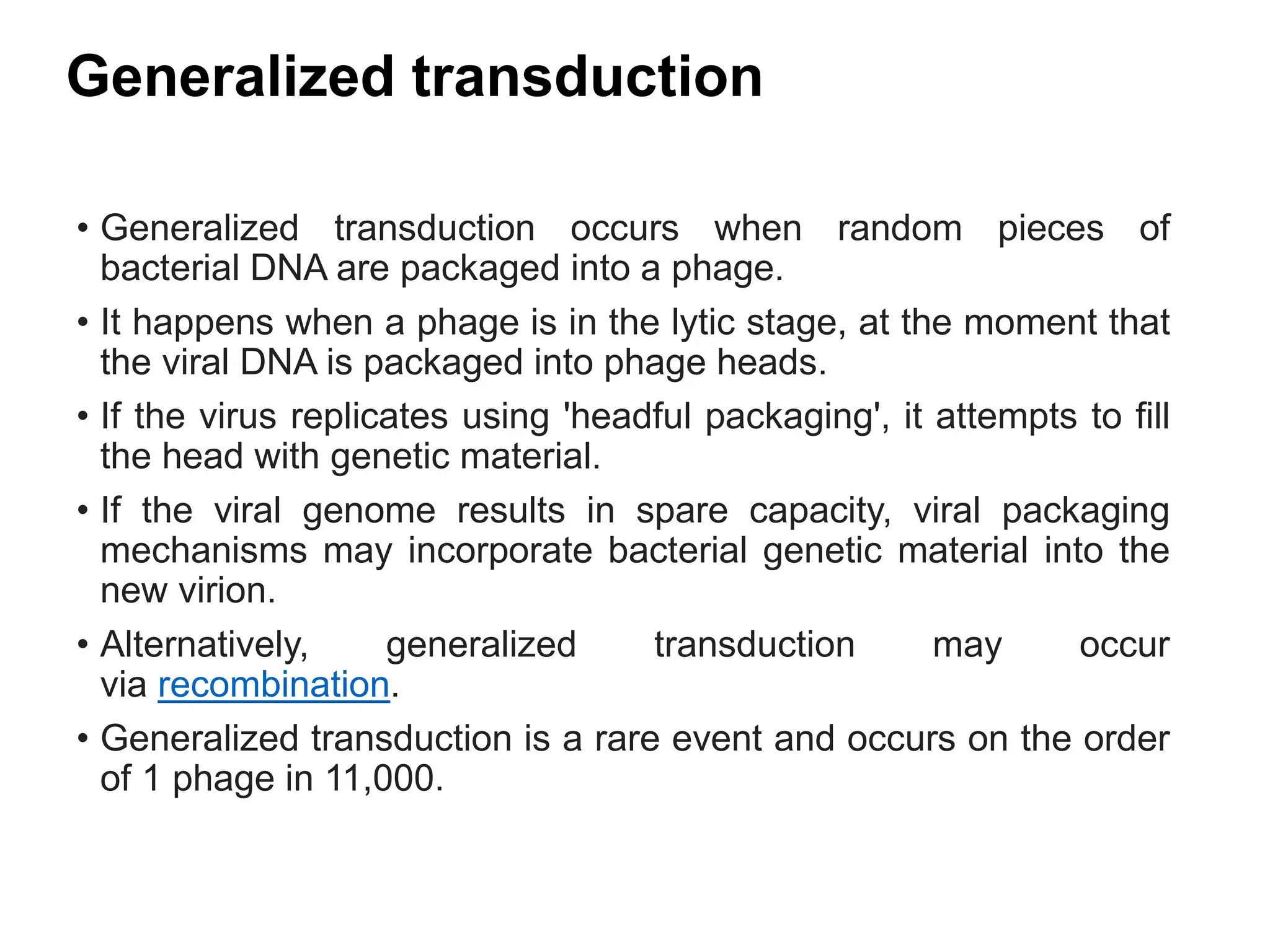
Generalized transduction
• Generalized transduction occurs when random pieces of
bacterial DNA are packaged into a phage.
• It happens when a phage is in the lytic stage, at the moment that
the viral DNA is packaged into phage heads.
• If the virus replicates using 'headful packaging', it attempts to fill
the head with genetic material.
• If the viral genome results in spare capacity, viral packaging
mechanisms may incorporate bacterial genetic material into the
new virion.
• Alternatively, generalized transduction may occur
via recombination.
• Generalized transduction is a rare event and occurs on the order
of 1 phage in 11,000.
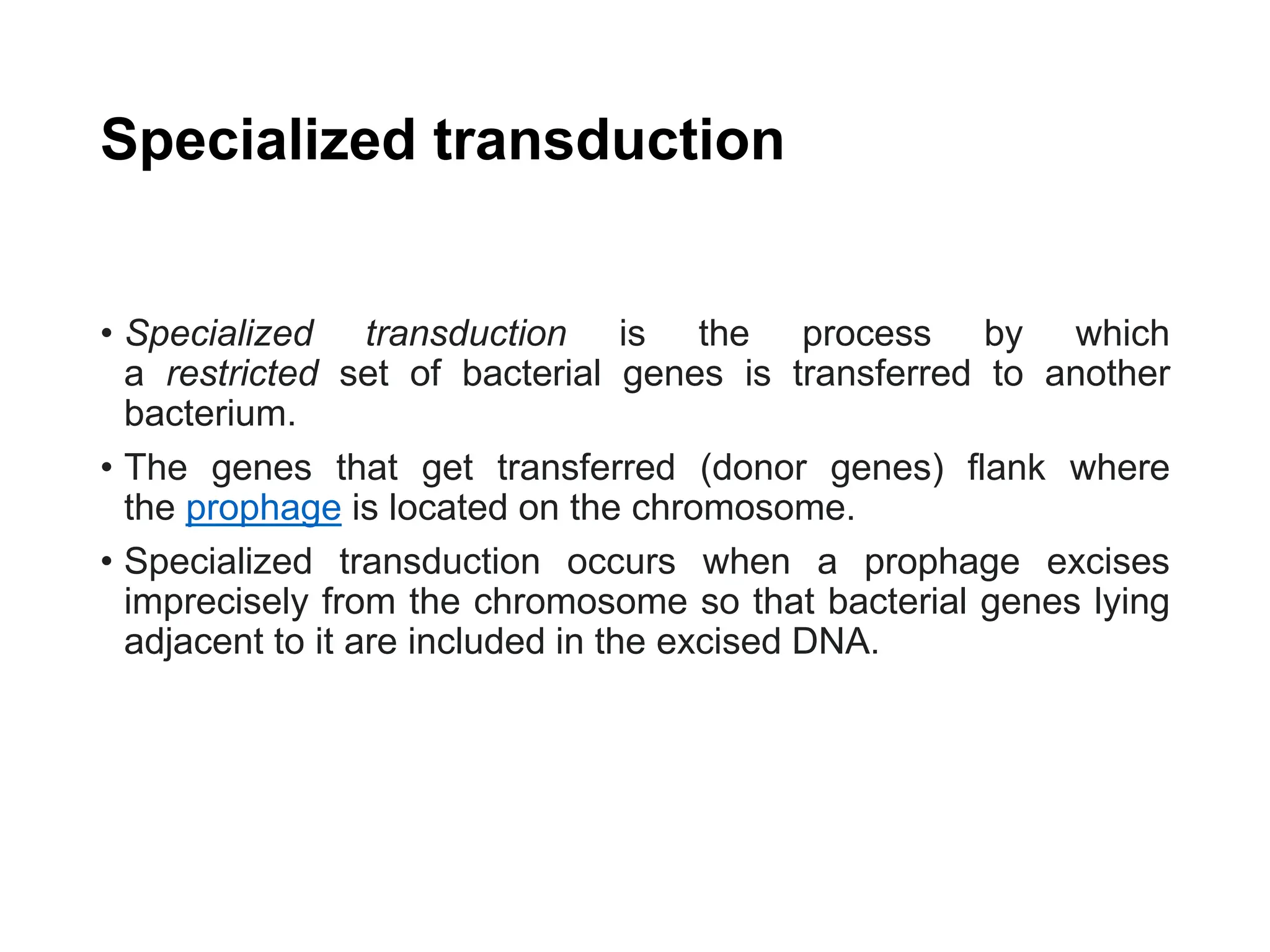
Specialized transduction
• Specialized transduction is the process by which
a restricted set of bacterial genes is transferred to another
bacterium.
• The genes that get transferred (donor genes) flank where
the prophage is located on the chromosome.
• Specialized transduction occurs when a prophage excises
imprecisely from the chromosome so that bacterial genes lying
adjacent to it are included in the excised DNA.
Conjugation
• It was first discovered in Escherichia coli by Lederberg and
Tatum (1946).
• Cell contact was required for this change.
• Bacteria showing conjugation are dimorphic, i.e., they have two
types of cells, male (F+) or donor and female (F-) or recipient.
• The male or donor cell possesses 1-4 sex pili on the surface and
fertility factor (transfer factor, sex factor) in its plasmid.
• Fertility factor contains genes for producing sex pili and other
characters needed for gene transfer.
• Both sex pili and fertility factor are absent in female or recipient
cells.
• If these two types of cells happen to come nearer, a piles of
male cell establishes a protoplasmic bridge or conjugation tube
with the female cell. It takes 6-8 minutes.
• Gene exchange can occur by two methods
Culture Media
Culture Media
• A culture medium is any material prepared for growth of an organism
in a laboratory setting.
• Microbes that can be cultured on a petri-plate or in a test-tube
containing media are said to grow under in vitro conditions ("within-
glass".)
• It was not until the era of Robert Koch and his coworkers
that Agar was introduced as a common medium for bacterial growth.
• Agar is a complex polysaccharide derived from a marine sea weed.
• Few bacteria possess enzymes capable of digesting agar and therefore
it is useful as a solidifying agent and for isolating microbes in pure
culture.
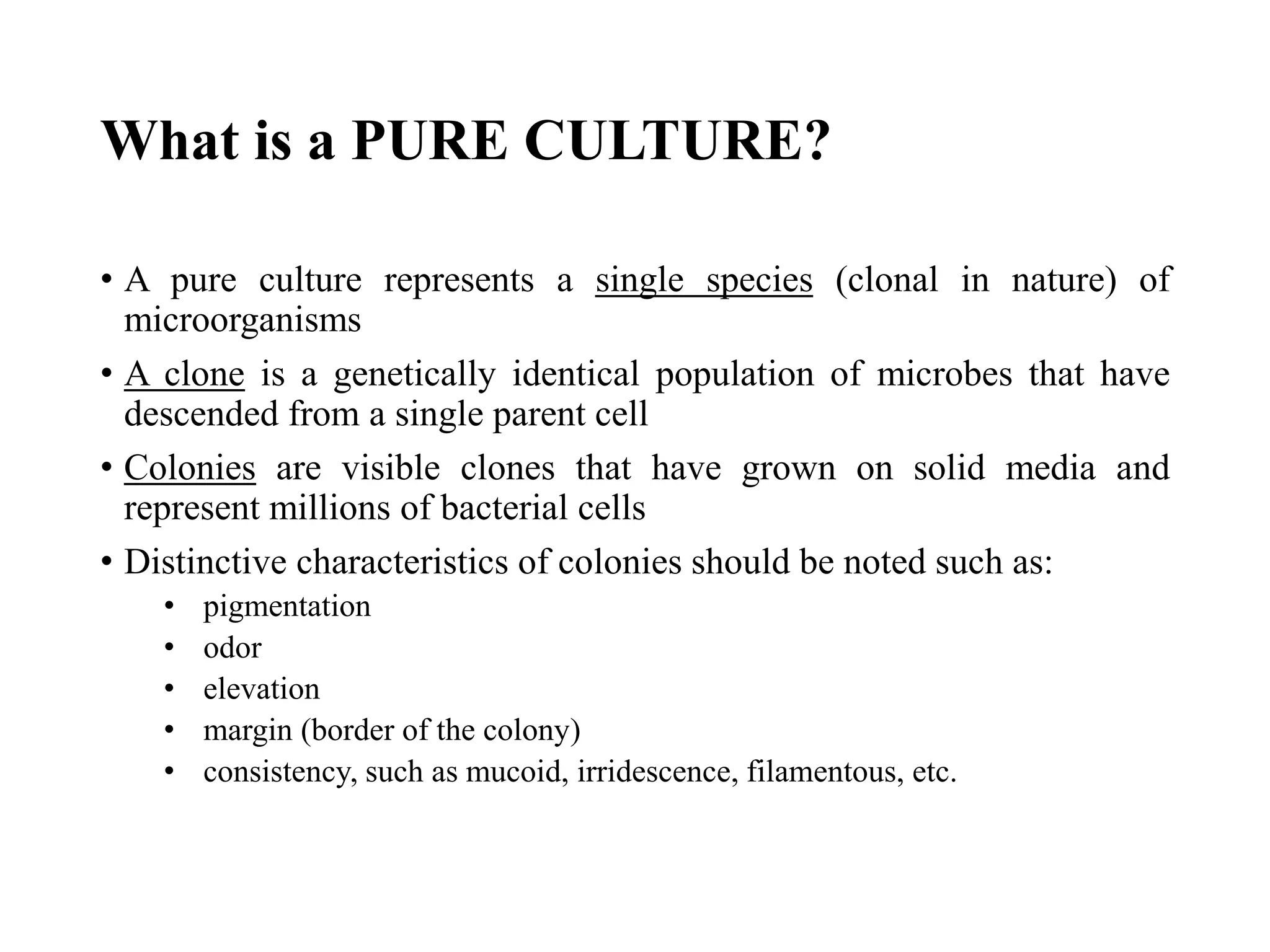
What is a PURE CULTURE?
• A pure culture represents a single species (clonal in nature) of
microorganisms
• A clone is a genetically identical population of microbes that have
descended from a single parent cell
• Colonies are visible clones that have grown on solid media and
represent millions of bacterial cells
• Distinctive characteristics of colonies should be noted such as:
• pigmentation
• odor
• elevation
• margin (border of the colony)
• consistency, such as mucoid, irridescence, filamentous, etc.
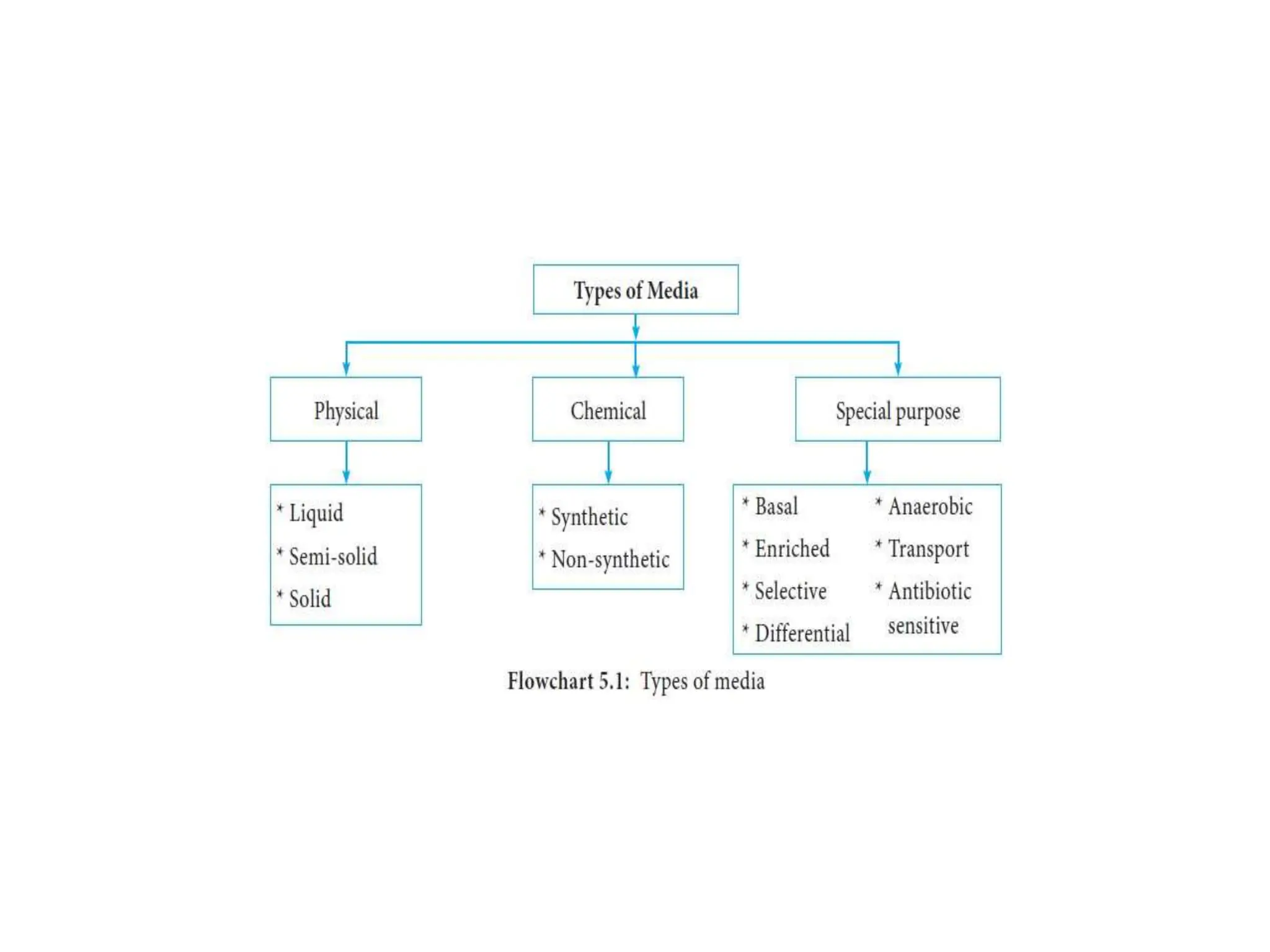
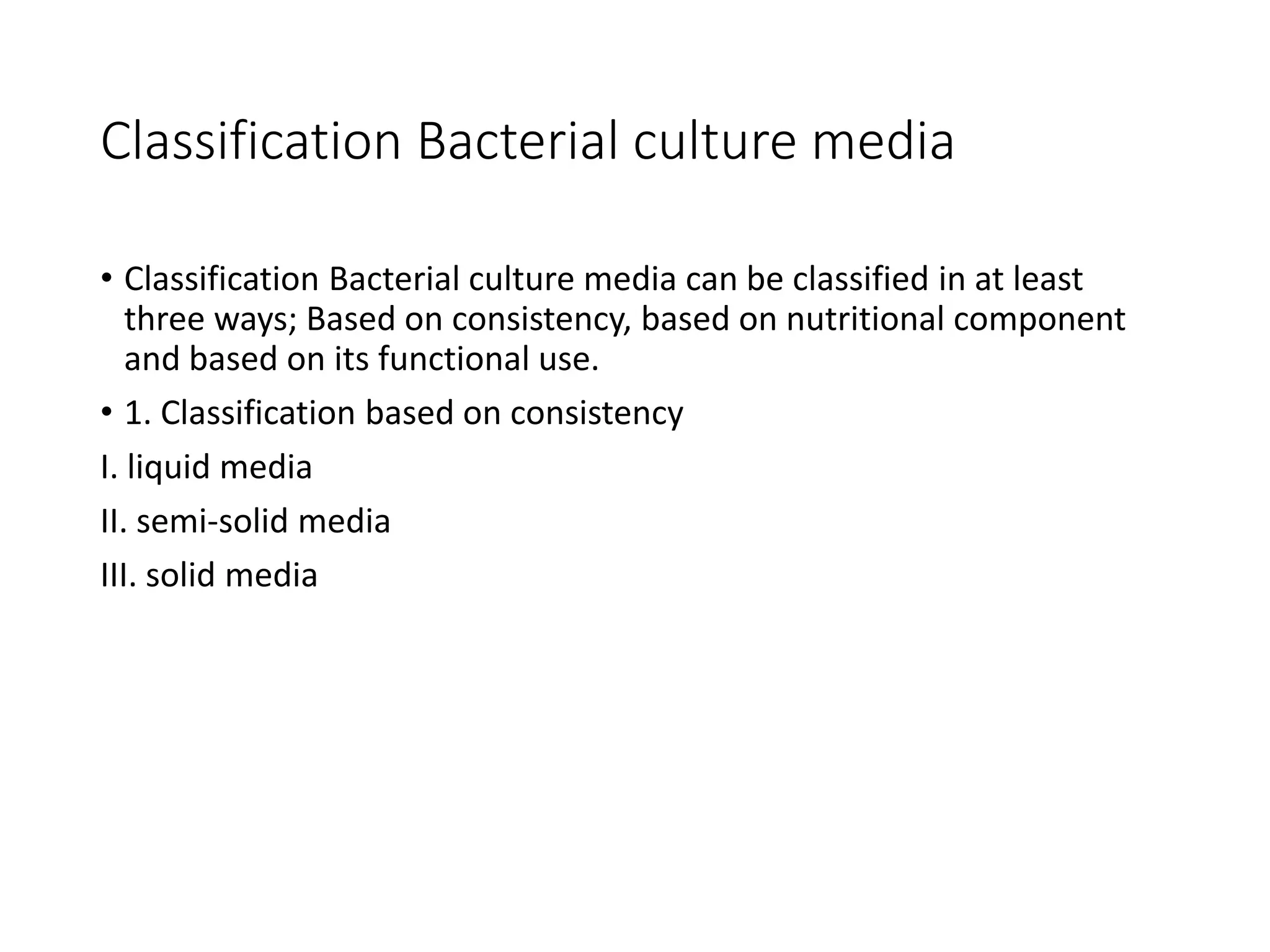
Classification Bacterial culture media
• Classification Bacterial culture media can be classified in at least
three ways; Based on consistency, based on nutritional component
and based on its functional use.
• 1. Classification based on consistency
I. liquid media
II. semi-solid media
III. solid media
2. Classification based on nutritional
component
• Those bacteria that are able to grow with minimal requirements are
said to nonfastidious and those that require extra nutrients are said
to be fastidious.
• Simple media such as peptone water, nutrient agar can support most
non-fastidious bacteria.
• Complex media such as blood agar have ingredients whose exact
components are difficult to estimate.
• Synthetic or defined media such as Davis & Mingioli medium are
specially prepared media for research purposes where the
composition of every component is well known.
Classification based on functional use or
application
• a) Chemically defined media: exact chemical composition is known.
Such media is often commercially prepared.
• b) Selective media. Contain chemicals which encourage growth of
certain types of microbes but inhibits the growth of others.
• c) Differential media allows different microbes to be distinguished on
the basis of various biochemical reactions. Fermentation reactions
involving the catabolism of various sugars are particularly useful
biochemical tests.
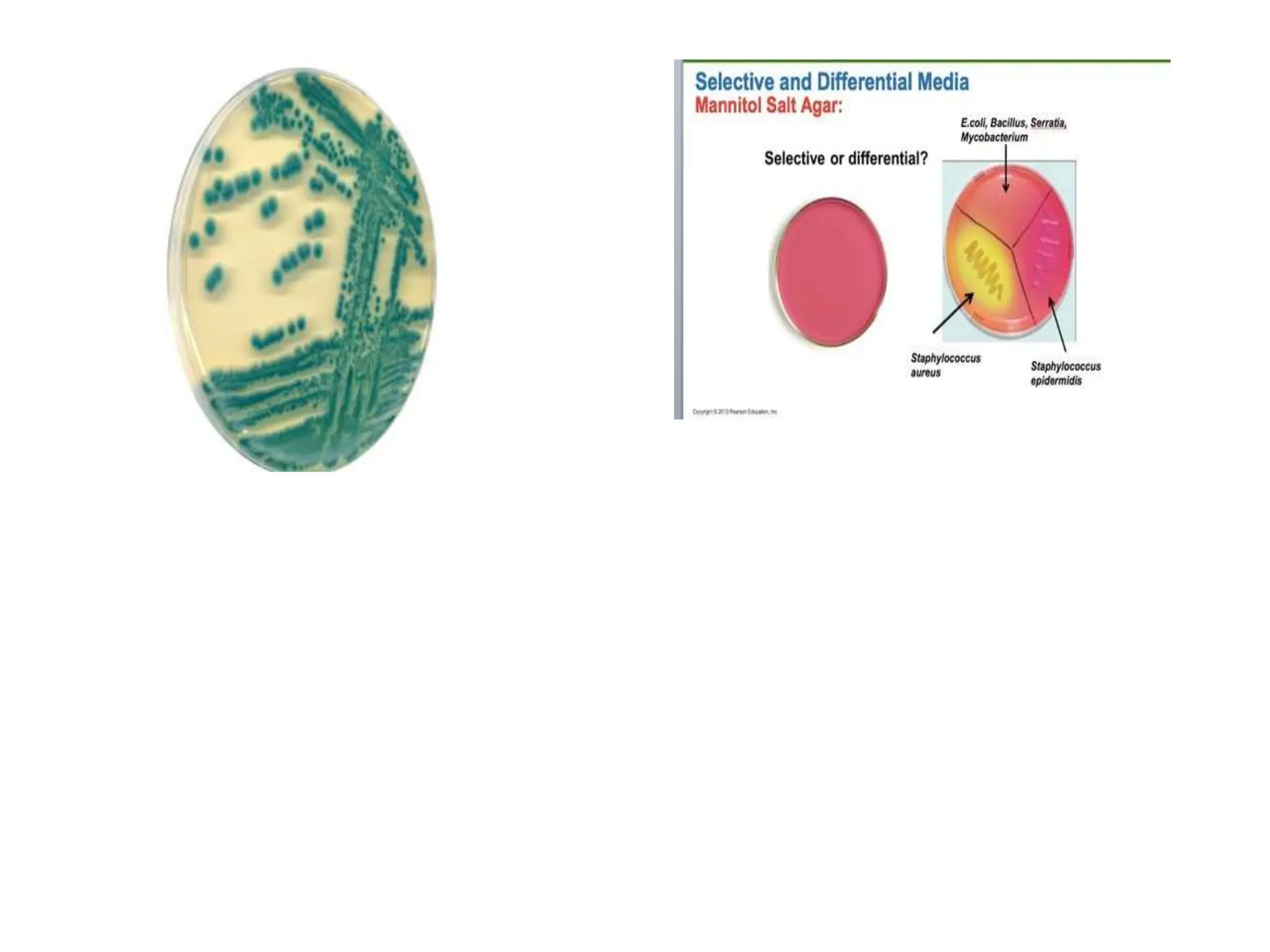
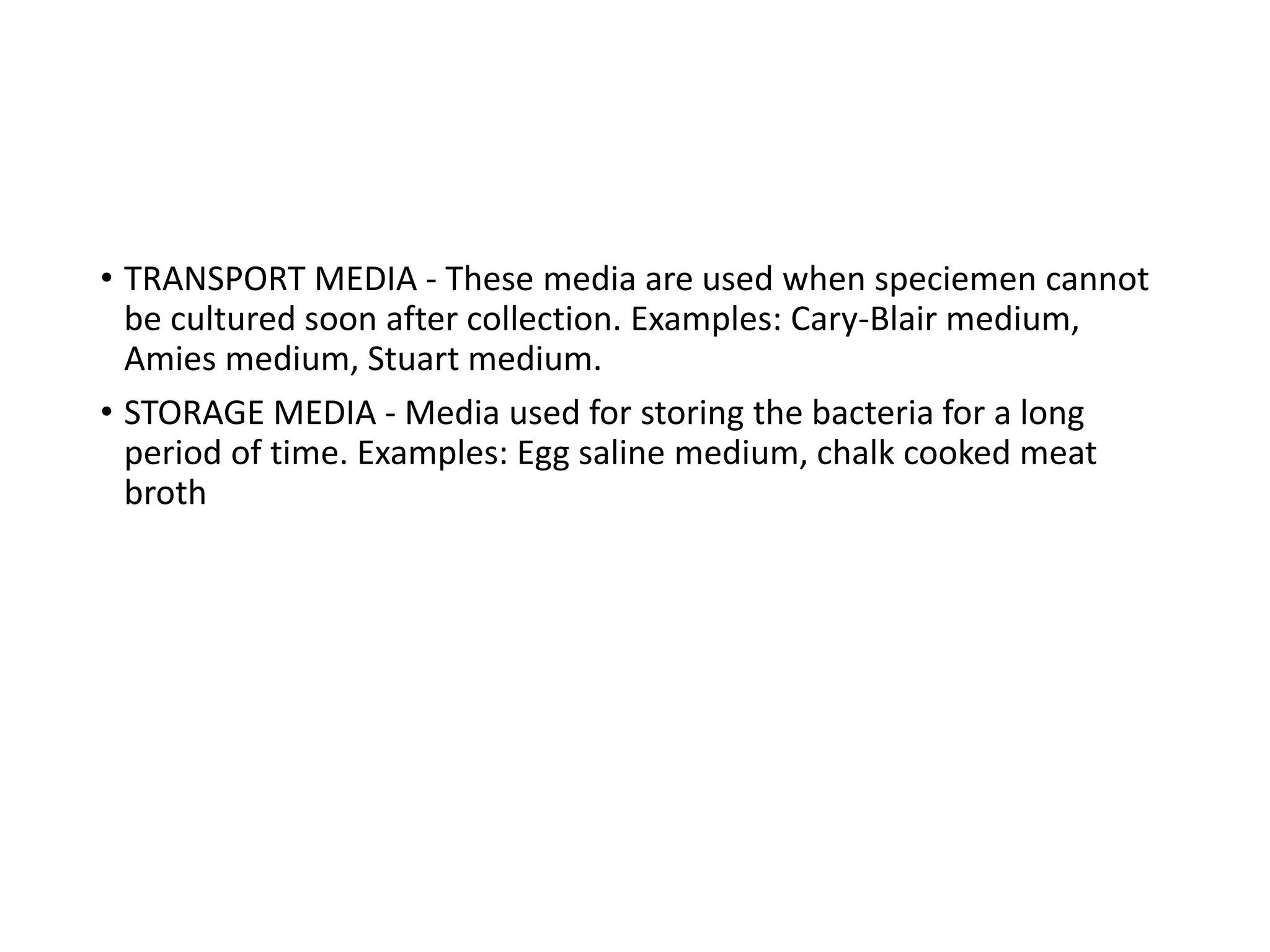
• Note: Many media are both selective and differential, such as MacConkey
(Mac) agar and Mannitol Salt agar (MSA).
• d) Enrichment media contains a rich supply of nutrients to encourage
the encourage growth of microorganisms. A commonly used enrichment
medium is blood agar. This medium is also differential and it permits
detection of different patterns of hemolysis.
• TRANSPORT MEDIA - These media are used when speciemen cannot
be cultured soon after collection. Examples: Cary-Blair medium,
Amies medium, Stuart medium.
• STORAGE MEDIA - Media used for storing the bacteria for a long
period of time. Examples: Egg saline medium, chalk cooked meat
broth
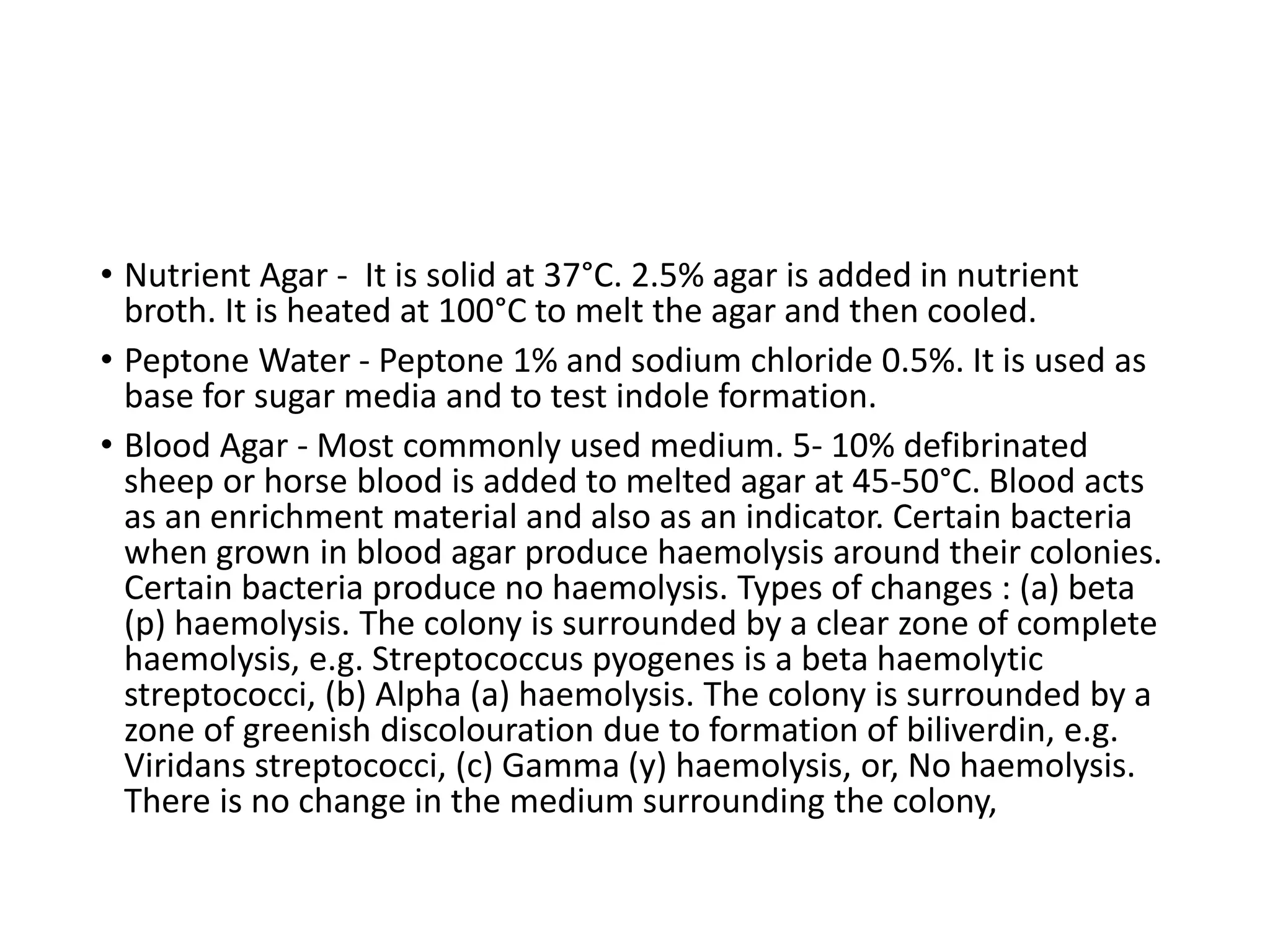
• Nutrient Agar - It is solid at 37°C. 2.5% agar is added in nutrient
broth. It is heated at 100°C to melt the agar and then cooled.
• Peptone Water - Peptone 1% and sodium chloride 0.5%. It is used as
base for sugar media and to test indole formation.
• Blood Agar - Most commonly used medium. 5- 10% defibrinated
sheep or horse blood is added to melted agar at 45-50°C. Blood acts
as an enrichment material and also as an indicator. Certain bacteria
when grown in blood agar produce haemolysis around their colonies.
Certain bacteria produce no haemolysis. Types of changes : (a) beta
(p) haemolysis. The colony is surrounded by a clear zone of complete
haemolysis, e.g. Streptococcus pyogenes is a beta haemolytic
streptococci, (b) Alpha (a) haemolysis. The colony is surrounded by a
zone of greenish discolouration due to formation of biliverdin, e.g.
Viridans streptococci, (c) Gamma (y) haemolysis, or, No haemolysis.
There is no change in the medium surrounding the colony,
• Chocolate Agar or Heated Blood agar - Prepared by heating blood
agar. It is used for culture of pneumococcus, gonococcus, meningo-
coccus and Haemophilus. Heating the blood inactivates inhibitor of
growths.
• MacConkey Agar - Most commonly used for enterobac-teriaceae. It
contains agar, peptone, sodium chloride, bile salt, lactose and neutral
red. It is a selective and indicator medium : (1) Selective as bile salt
does not inhibit the growth of enterobactericeae but inhibits growth
of many other bacteria. (2) Indicator medium as the colonies of
bacteria that ferment lactose take a pink colour due to production of
acid. Acid turns the indicator neutral red to pink. These bacteria are
called 'lactose fermenter', e.g. Escherichia coll. Colourless colony
indicates that lactose is not (3) fermented, i.e. the bacterium is non-
lactose fermenter, e.g. Salmonella. Shigella, Vibrio.
Preservation of Pure culture
Periodic transfer to fresh media
• i. Strains can be maintained by periodically preparing a fresh stock
culture from the previous stock culture.
• ii. The temperature and the type of medium chosen should support a
slow rather than a rapid rate of growth so that the time interval
between transfer can be as long as possible.
• iii. Many heterotrophs can remain viable for several weeks or months
on a medium like nutrient agar.
• Advantages
a. It is simple method. b. It is easy to perform. c. It is less expensive.
• Disadvantages
a. It fails to prevent changes in the characteristics of a strain due to the
development of variants and mutants
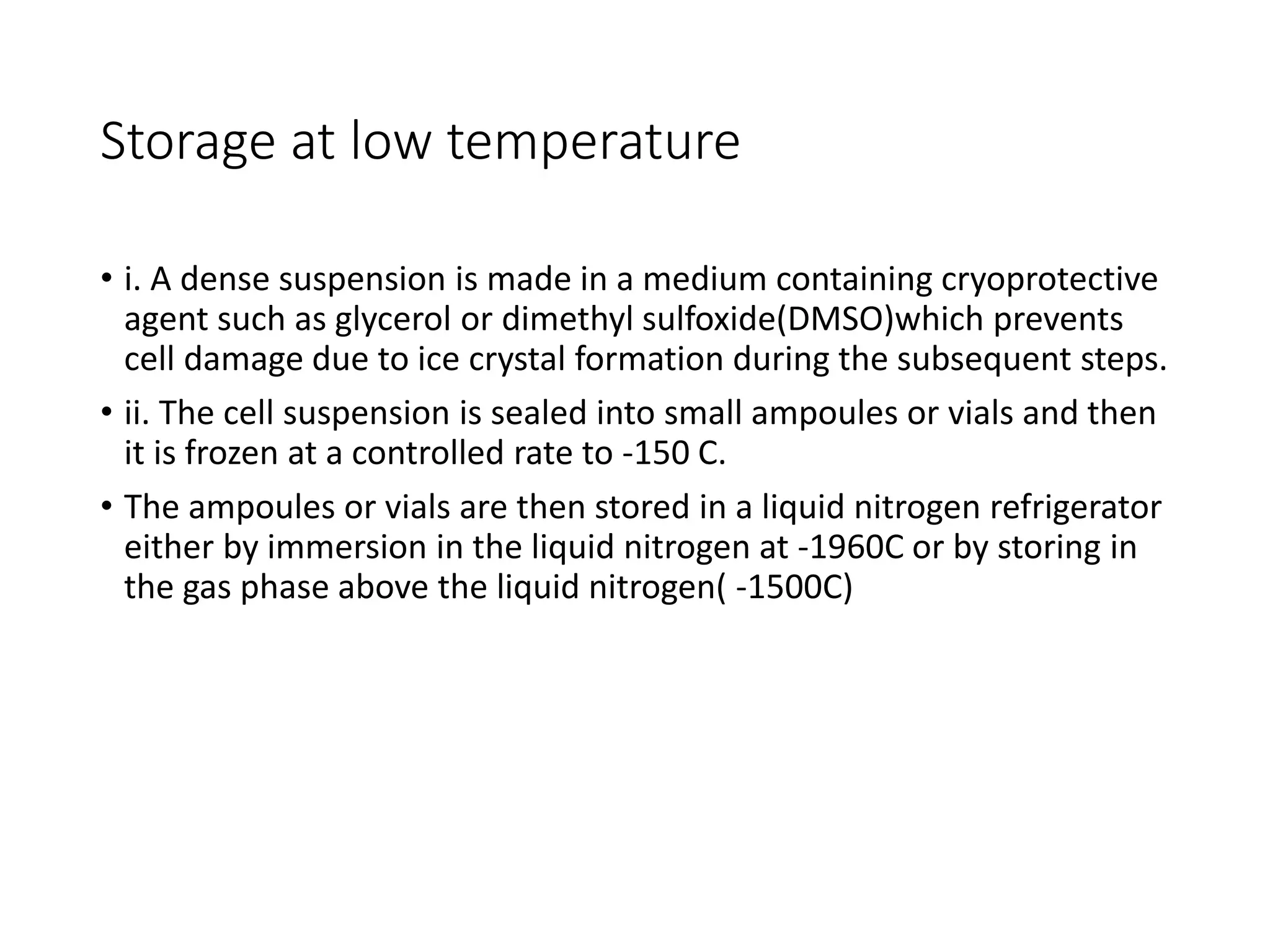
Preservation by overlaying cultures with
mineral oil
• i. Many bacteria can be successfully preserved by covering the
growth on a agar slant with sterile mineral oil.
• ii. The oil must cover the slant completely. The oil should be about ½
inch above the tip of the slanted surface.
• iii. Cultures can be maintained from 1 month to 2 years.
• Advantages
a. One can remove some of the growth under the oil with a transfer
needle and inoculate a fresh medium and still preserve the
original culture.
b. It is simple and less expensive method.
Disadvantages
a. It fails to prevent changes in the characteristics of a strain due to the
development of variants and mutants
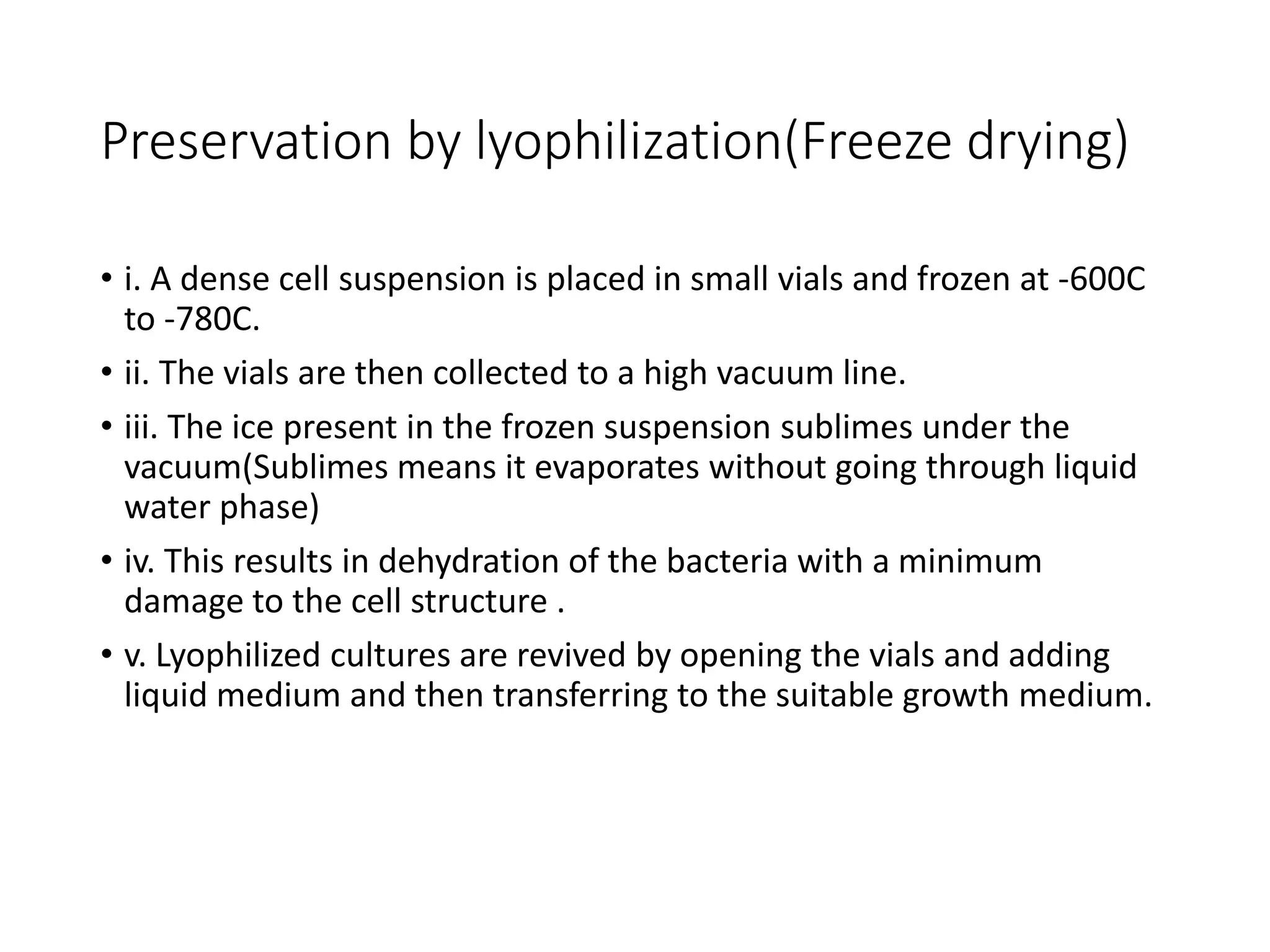
Preservation by lyophilization(Freeze drying)
• i. A dense cell suspension is placed in small vials and frozen at -600C
to -780C.
• ii. The vials are then collected to a high vacuum line.
• iii. The ice present in the frozen suspension sublimes under the
vacuum(Sublimes means it evaporates without going through liquid
water phase)
• iv. This results in dehydration of the bacteria with a minimum
damage to the cell structure .
• v. Lyophilized cultures are revived by opening the vials and adding
liquid medium and then transferring to the suitable growth medium.
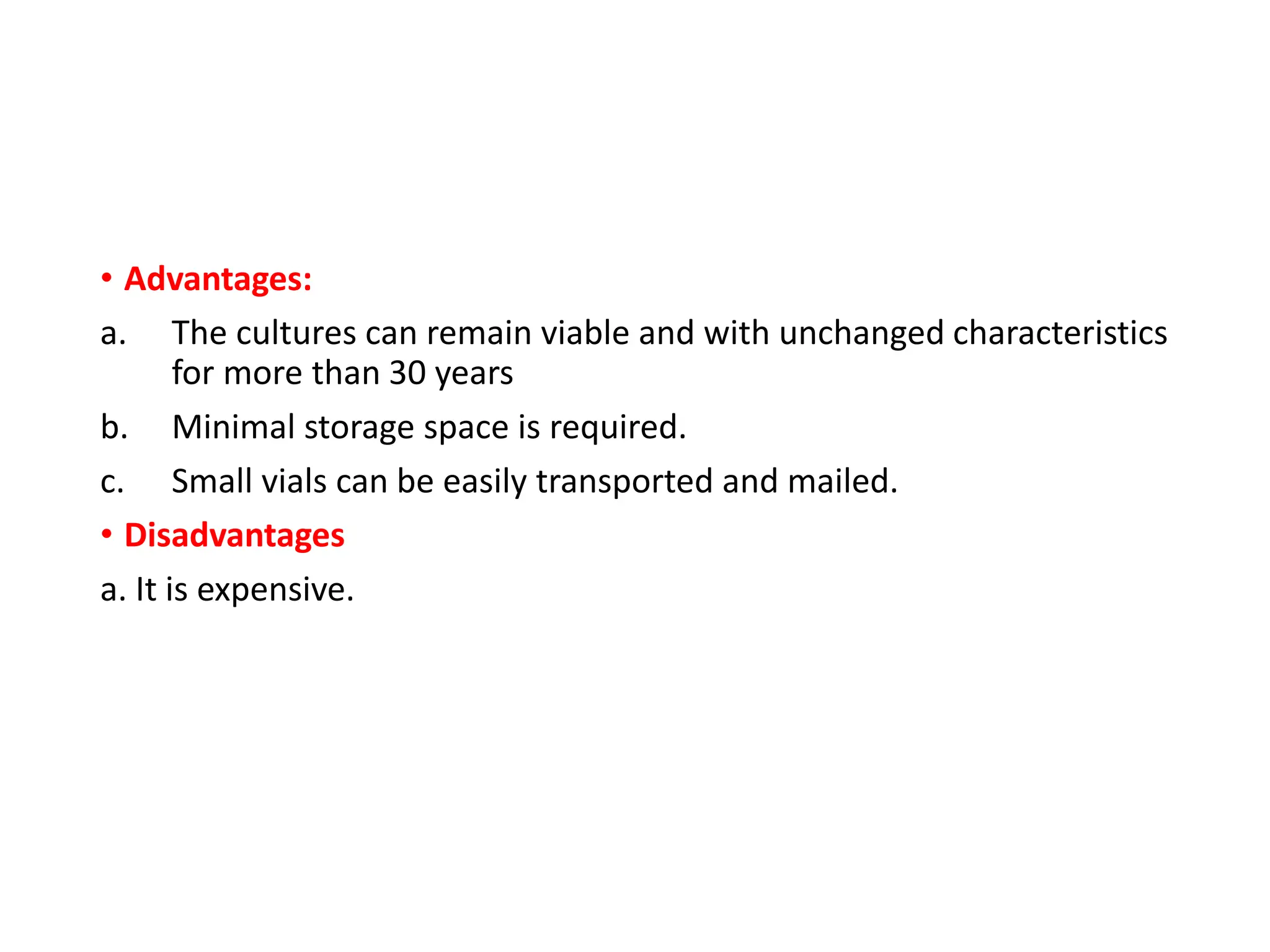
• Advantages:
a. The cultures can remain viable and with unchanged characteristics
for more than 30 years
b. Minimal storage space is required.
c. Small vials can be easily transported and mailed.
• Disadvantages
a. It is expensive.
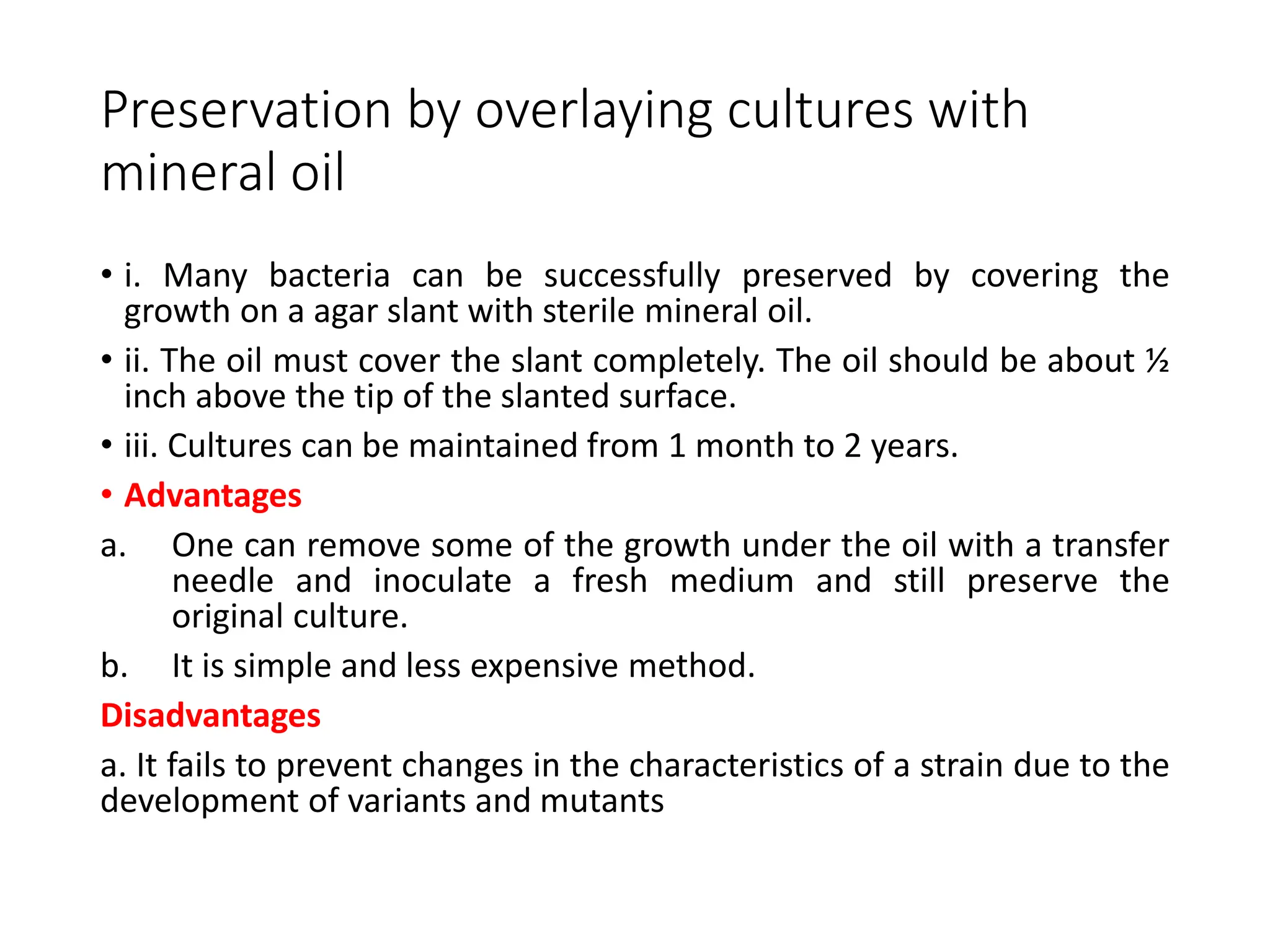
Storage at low temperature
• i. A dense suspension is made in a medium containing cryoprotective
agent such as glycerol or dimethyl sulfoxide(DMSO)which prevents
cell damage due to ice crystal formation during the subsequent steps.
• ii. The cell suspension is sealed into small ampoules or vials and then
it is frozen at a controlled rate to -150 C.
• The ampoules or vials are then stored in a liquid nitrogen refrigerator
either by immersion in the liquid nitrogen at -1960C or by storing in
the gas phase above the liquid nitrogen( -1500C)
• Advantages:
a. The cultures can remain viable and with unchanged characteristics
for 10 to 30 years or more.
b. Many species which can’t be preserved by lyophilization are
successfully preserved with liquid nitrogen method.
• Disadvantage:
a. It is relatively expensive method as liquid nitrogen in the refrigerator
has to be replenished at regular intervals to replace the loss due to
evaporation.
Culture collection centres
• Many countries have microbial culture collection centres whose main
function is to acquire, preserve and distribute authentic cultures of
living microorganisms. For examples:
• 1. MTCC: Microbial Type Culture Collection-Chandigarh, India
• 2. ATCC: American Type Culture Collection-Maryland, USA
• 3. National Collection of Type Cultures -London ,UK
• 4. Institute Pasteur-Paris, France
• 5. Institute for fermentation-Osaka, Jap
Plating Technique
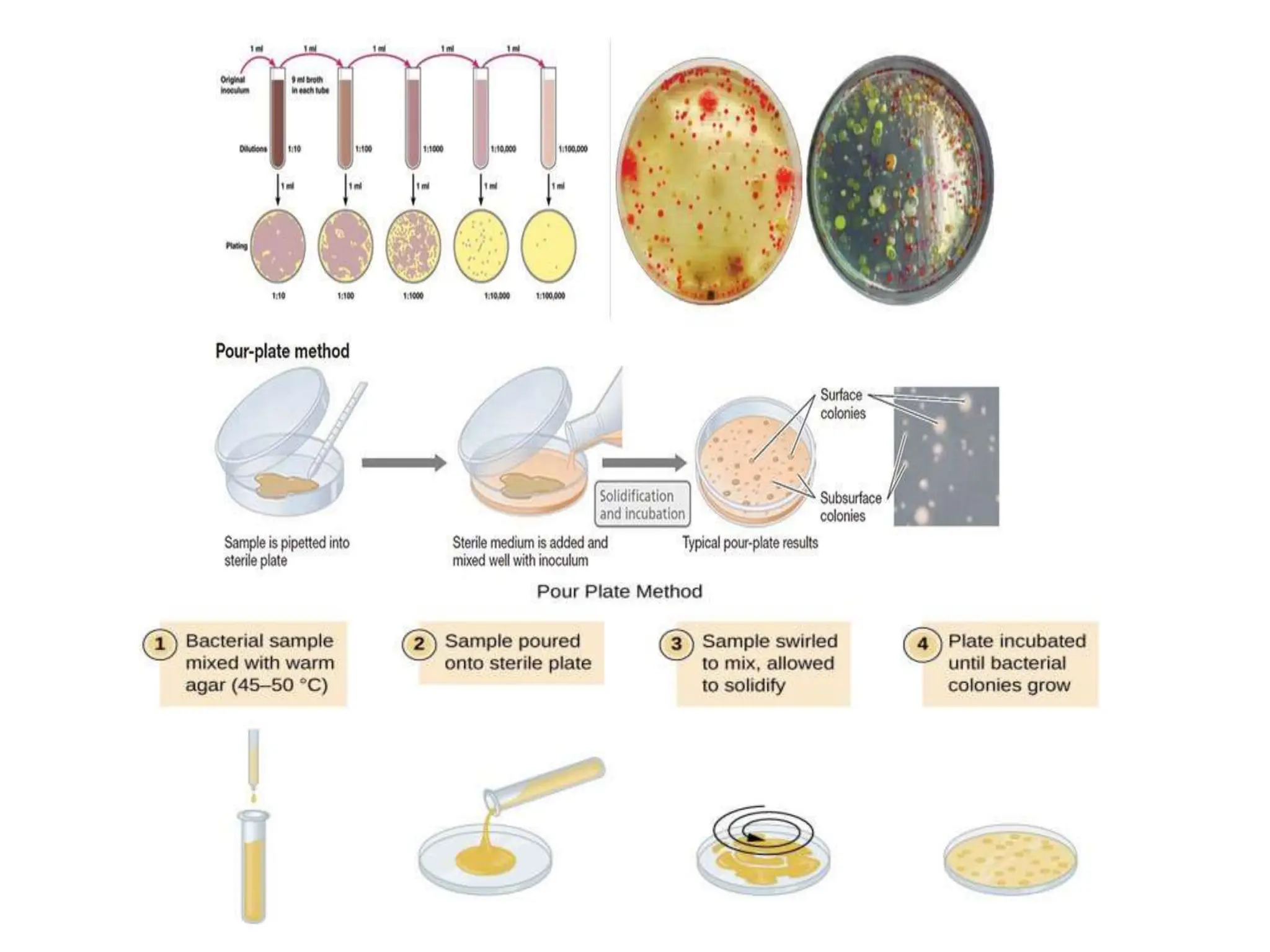
• 1. Pour plate method
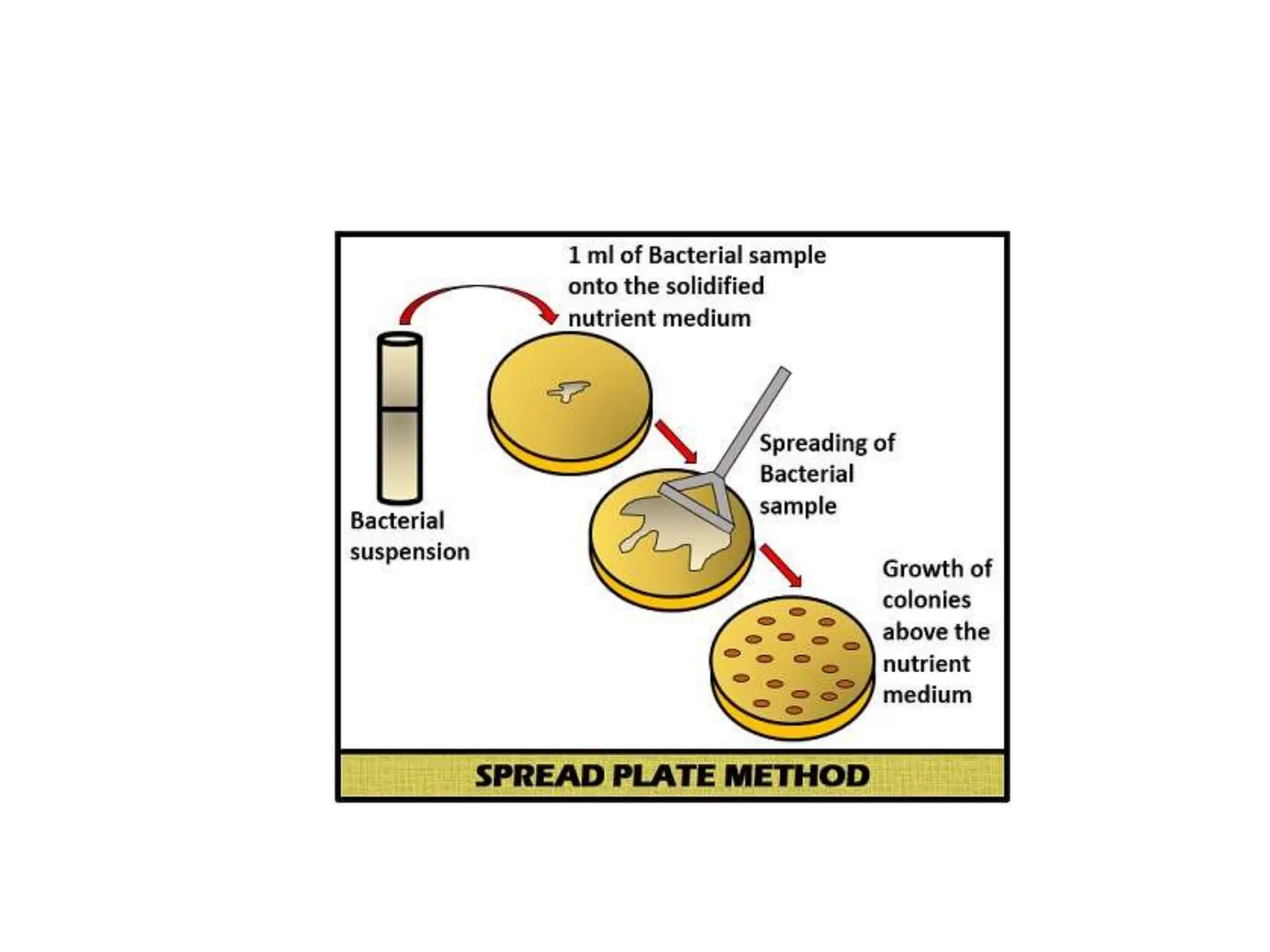
• 2. Spread plate method
• 3. streaking
Pour plate technique
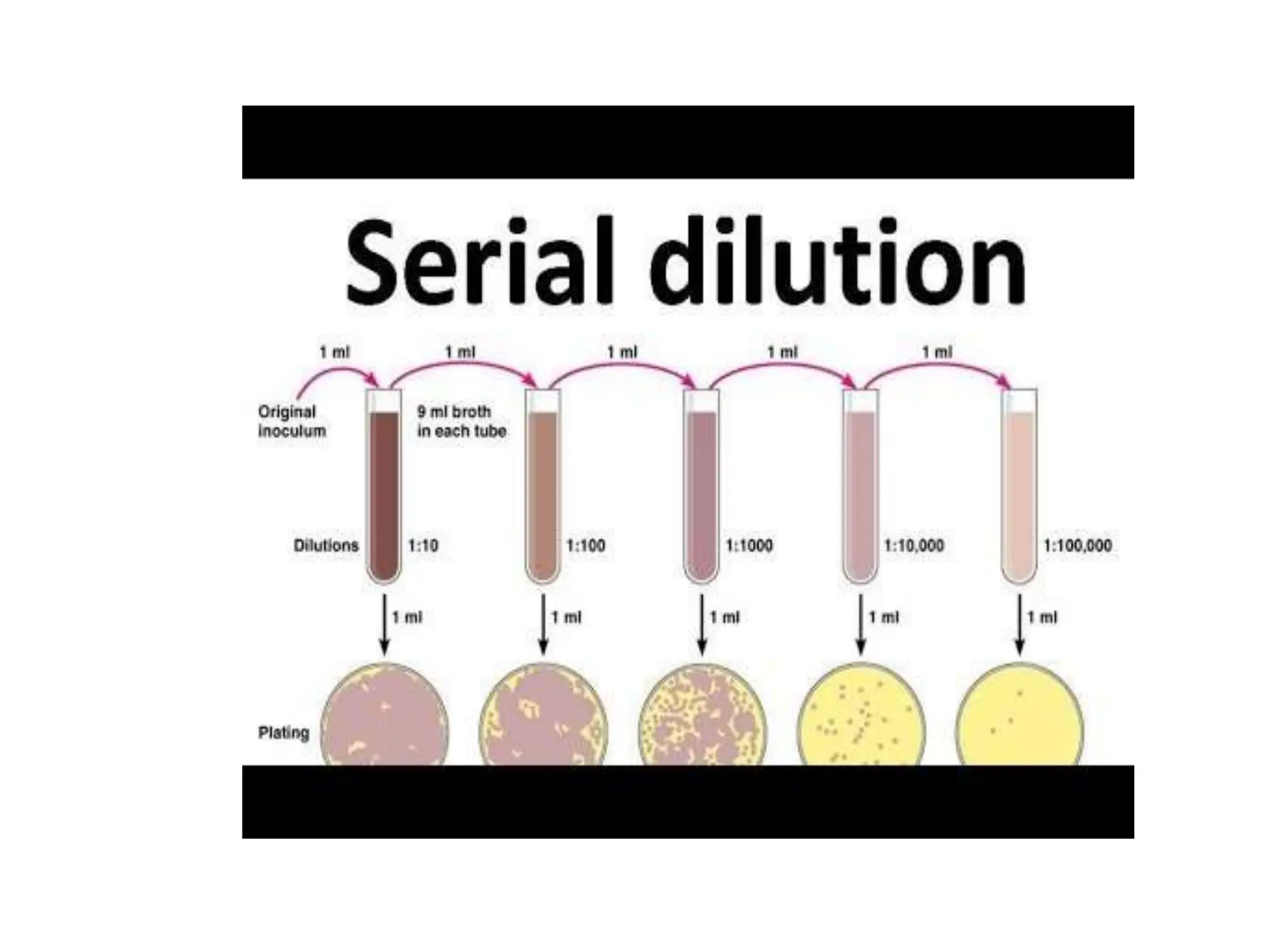
• This method often is used to count the number of microorganisms in
a mixed sample, which is added to a molten agar medium prior to its
solidification.
• Limitations - Some colonies may be hidden inside agar. Heat labile
organism will die.
Spread plate technique
• The spread plate technique is used for enumeration, enrichment,
screening and selection of microorganism.
• In this the culture is uniformly spread over the surface of an agar
plate, resulting in the formation of isolated colonies distributed
evenly across the agar surface if the appropriate concentration of
cells is plated.
• Advantage over other methods - Colony morphology can be seen
clearly. Can be used for screening and selection
• Limitations - Over growth may occur Micro aerophilic bacteria may
get affected
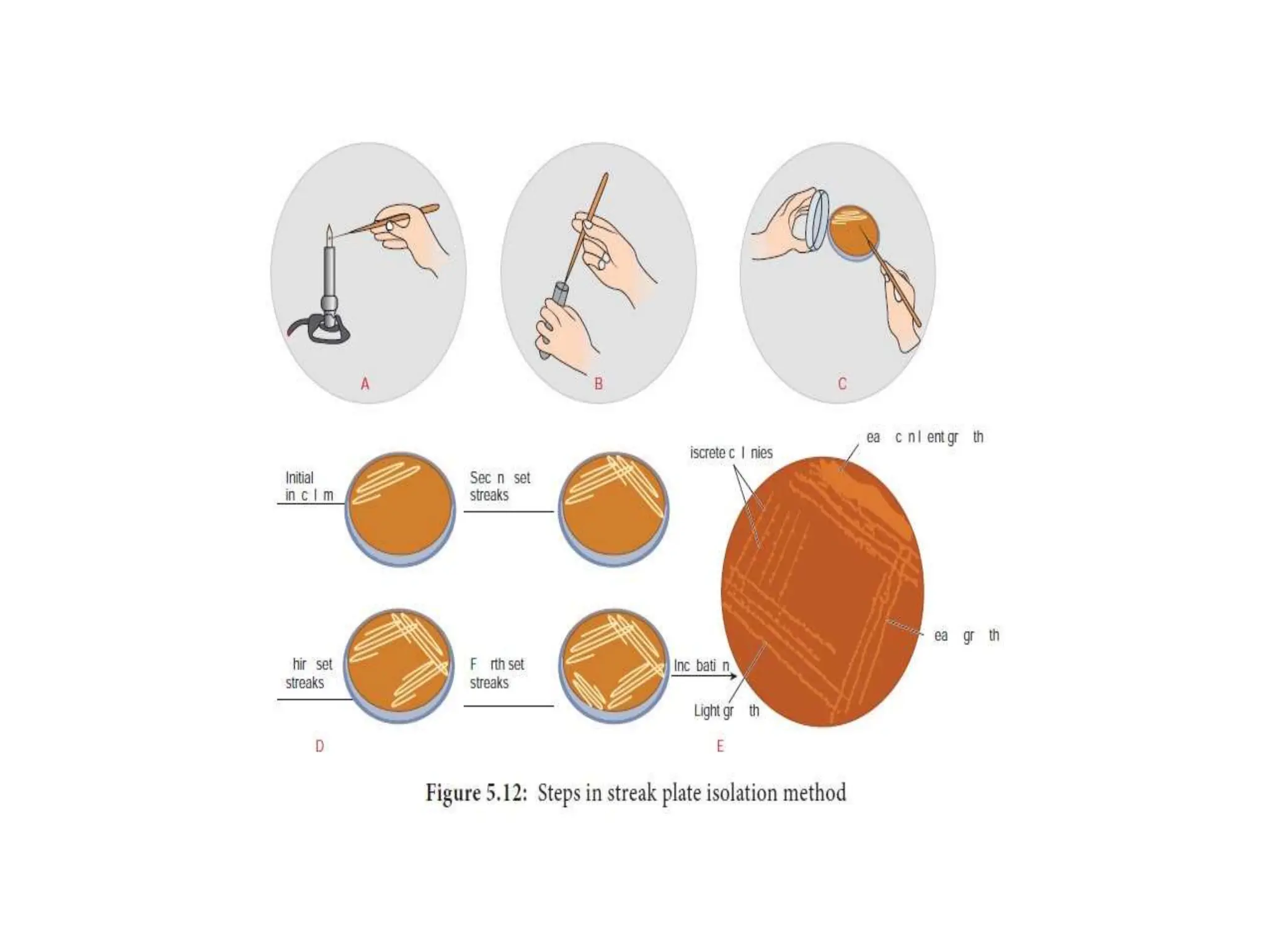
Streaking
• This method is used for obtaining pure culture from the mixed
culture.
• Quadrant streaking is done in the petri plate in such way that all four
corners are used for isolating a single bacterial colony
• Advantage over other method - Pure culture can be obtained. If
colony morphology is known contaminated cultures can be purified
• Limitations - Expertise required for getting individual colony in
streaking
FUNGI
FUNGI
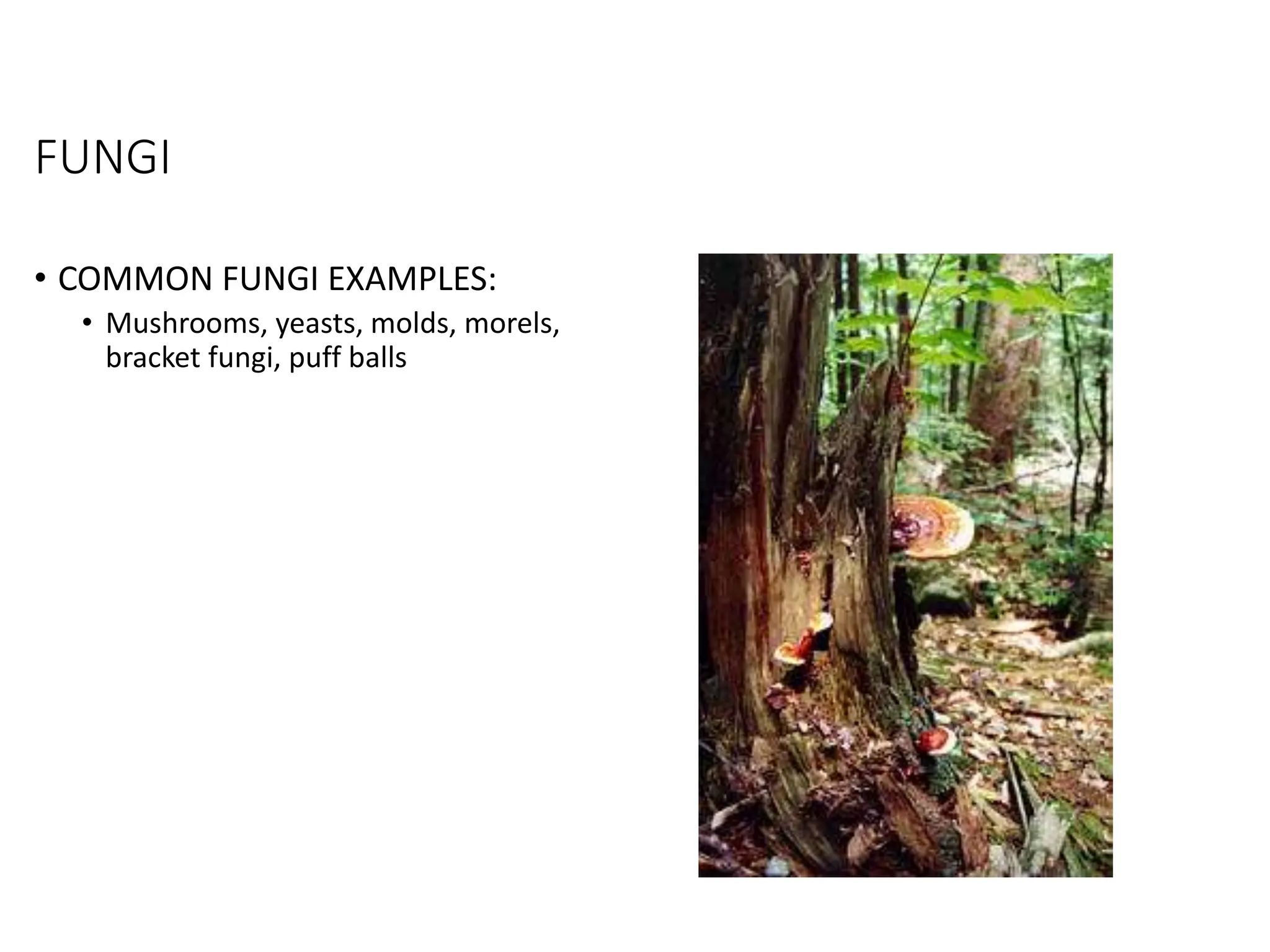
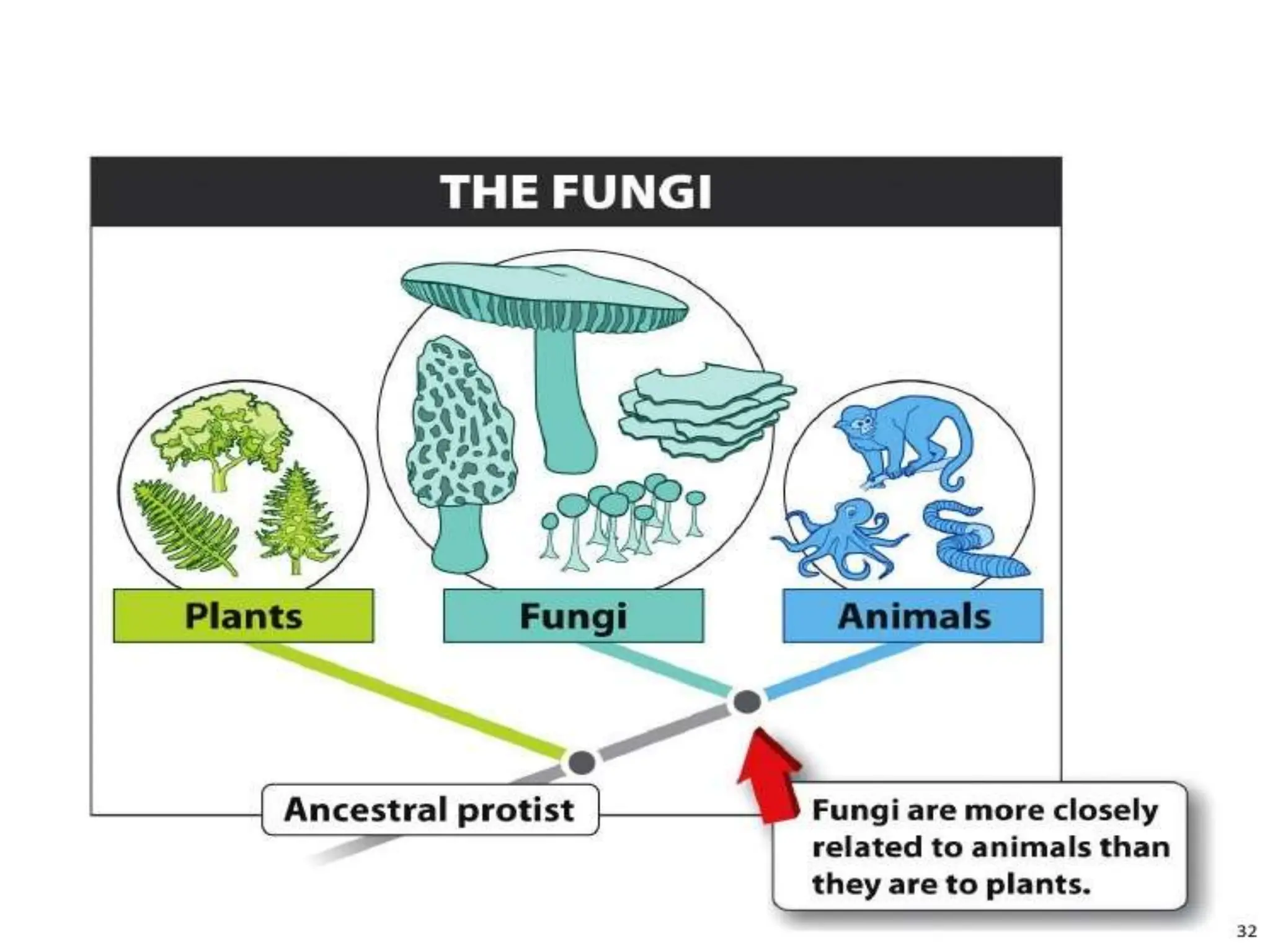
• COMMON FUNGI EXAMPLES:
• Mushrooms, yeasts, molds, morels,
bracket fungi, puff balls
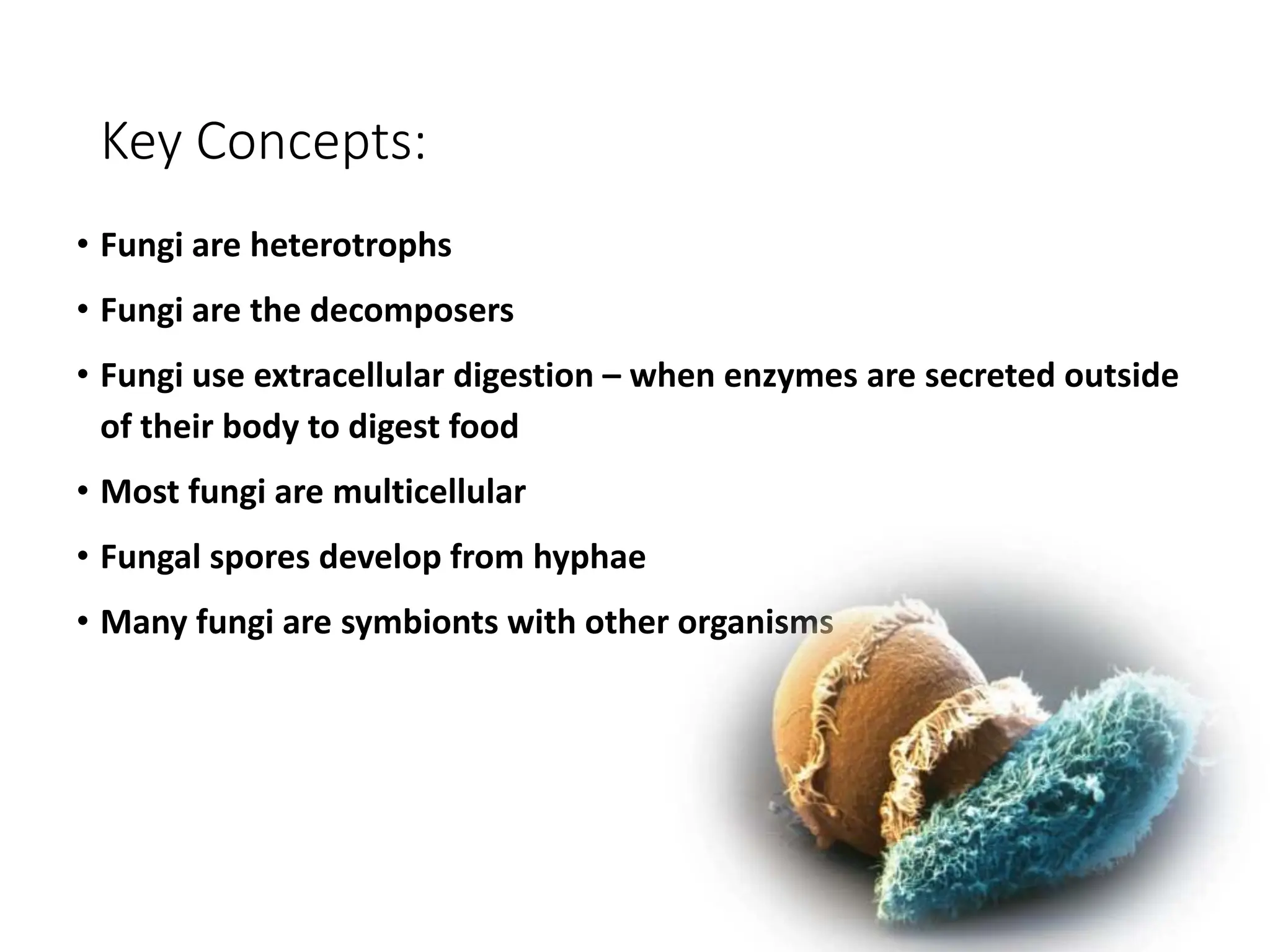
Key Concepts:
• Fungi are heterotrophs
• Fungi are the decomposers
• Fungi use extracellular digestion – when enzymes are secreted outside
of their body to digest food
• Most fungi are multicellular
• Fungal spores develop from hyphae
• Many fungi are symbionts with other organisms
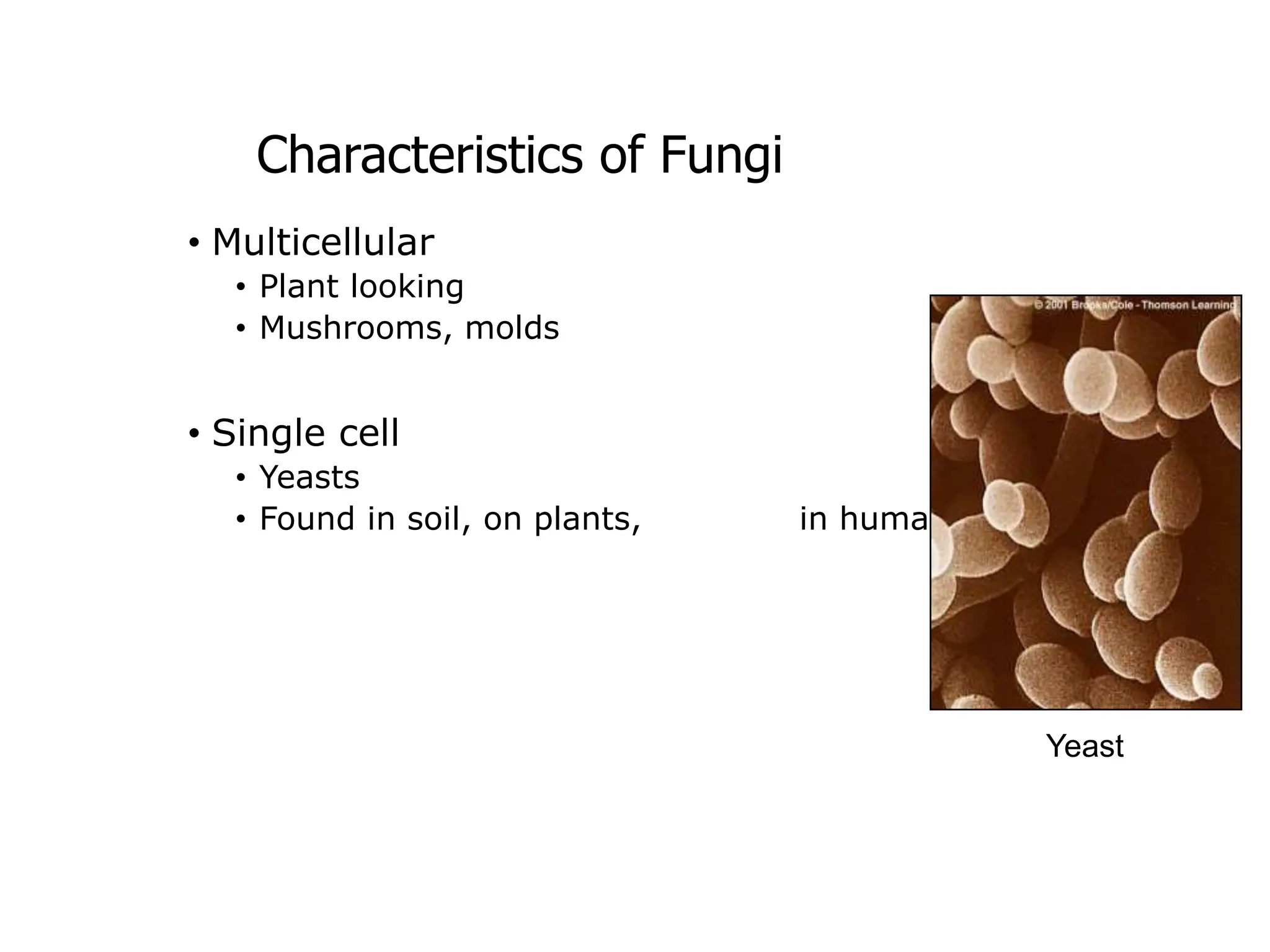
Characteristics of Fungi
• Multicellular
• Plant looking
• Mushrooms, molds
• Single cell
• Yeasts
• Found in soil, on plants, in humans
Yeast
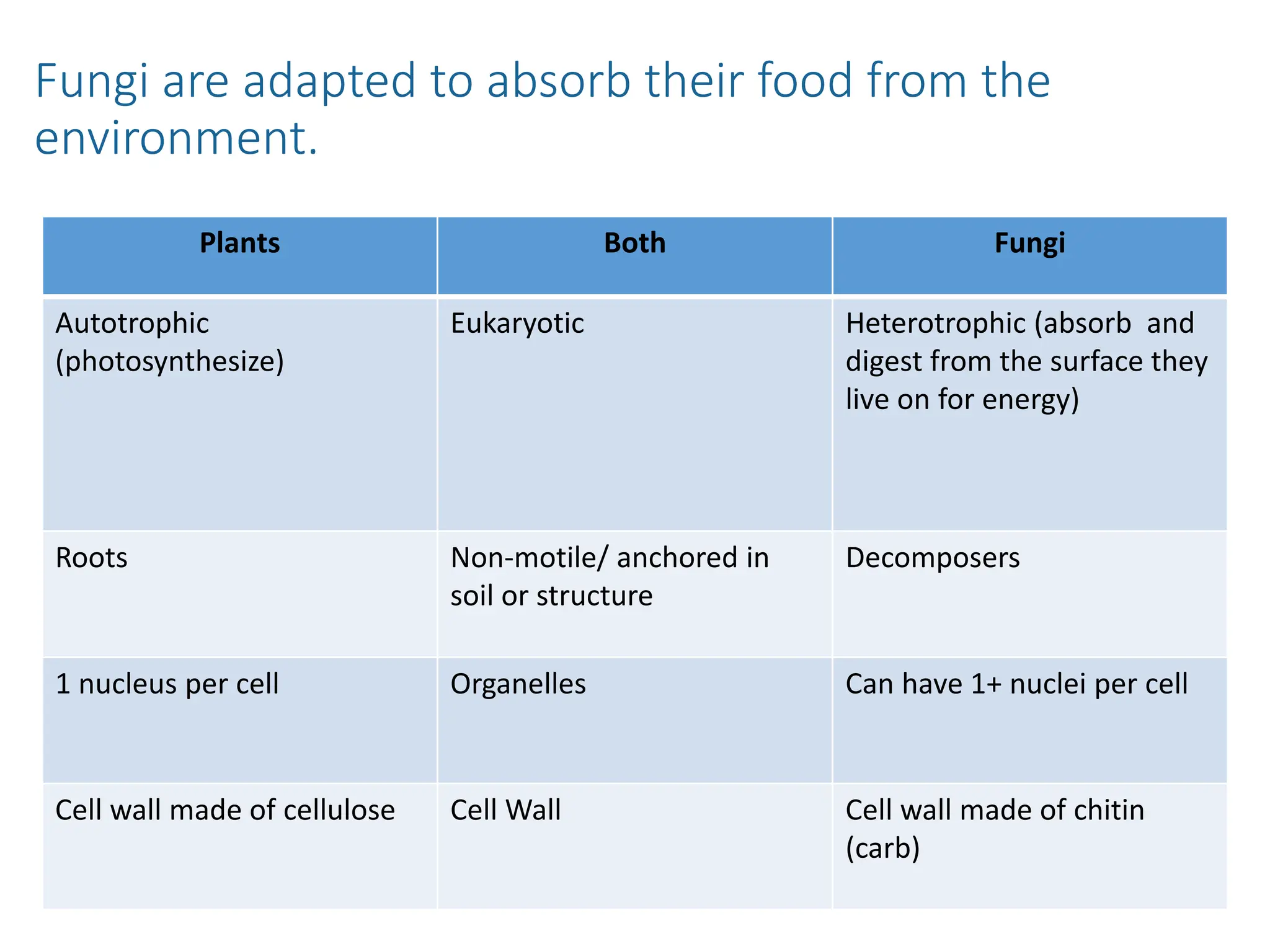
Fungi are adapted to absorb their food from the
environment.
Plants Both Fungi
Autotrophic
(photosynthesize)
Eukaryotic Heterotrophic (absorb and
digest from the surface they
live on for energy)
Roots Non-motile/ anchored in
soil or structure
Decomposers
1 nucleus per cell Organelles Can have 1+ nuclei per cell
Cell wall made of cellulose Cell Wall Cell wall made of chitin
(carb)
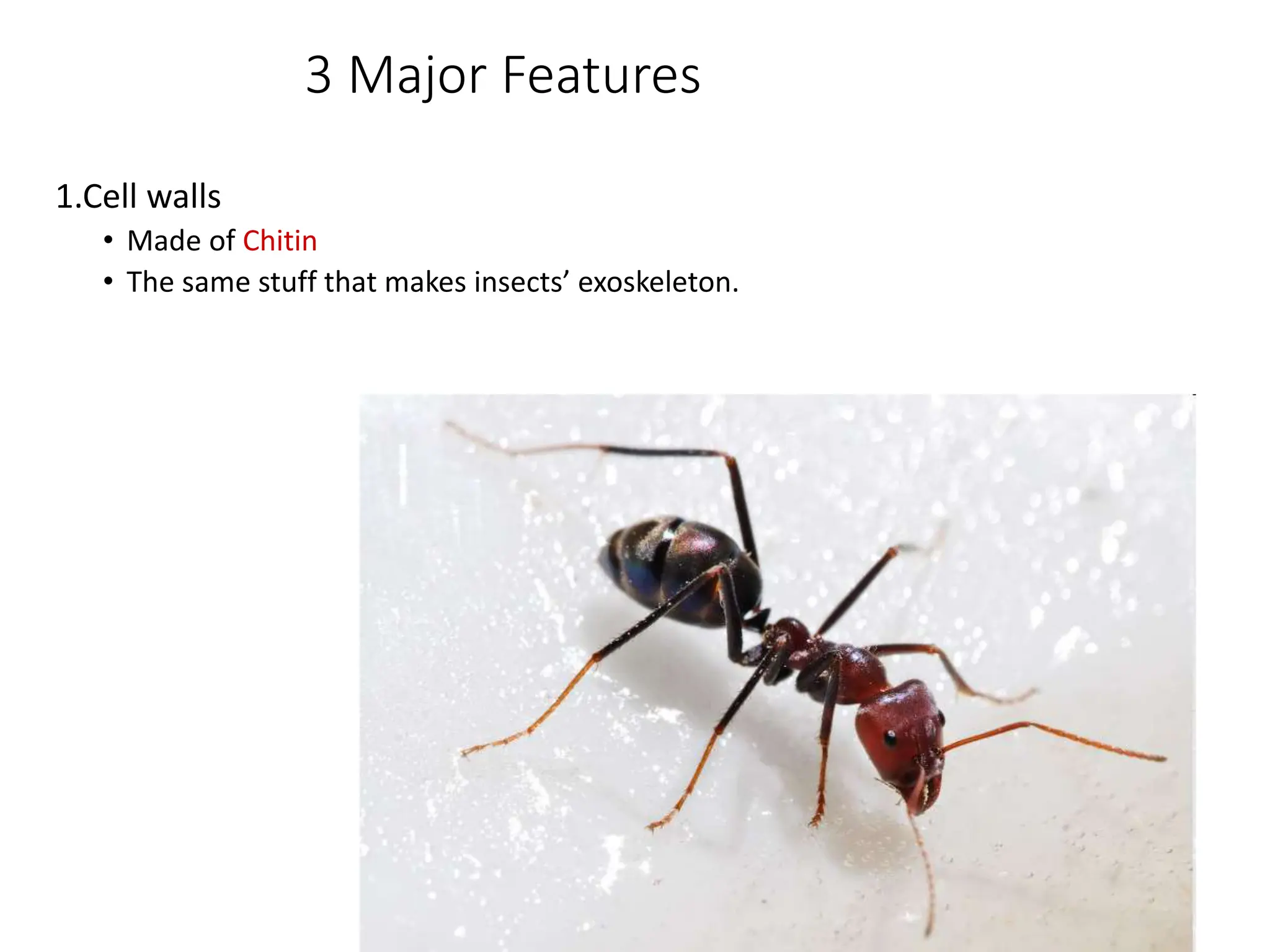
3 Major Features
1.Cell walls
• Made of Chitin
• The same stuff that makes insects’ exoskeleton.
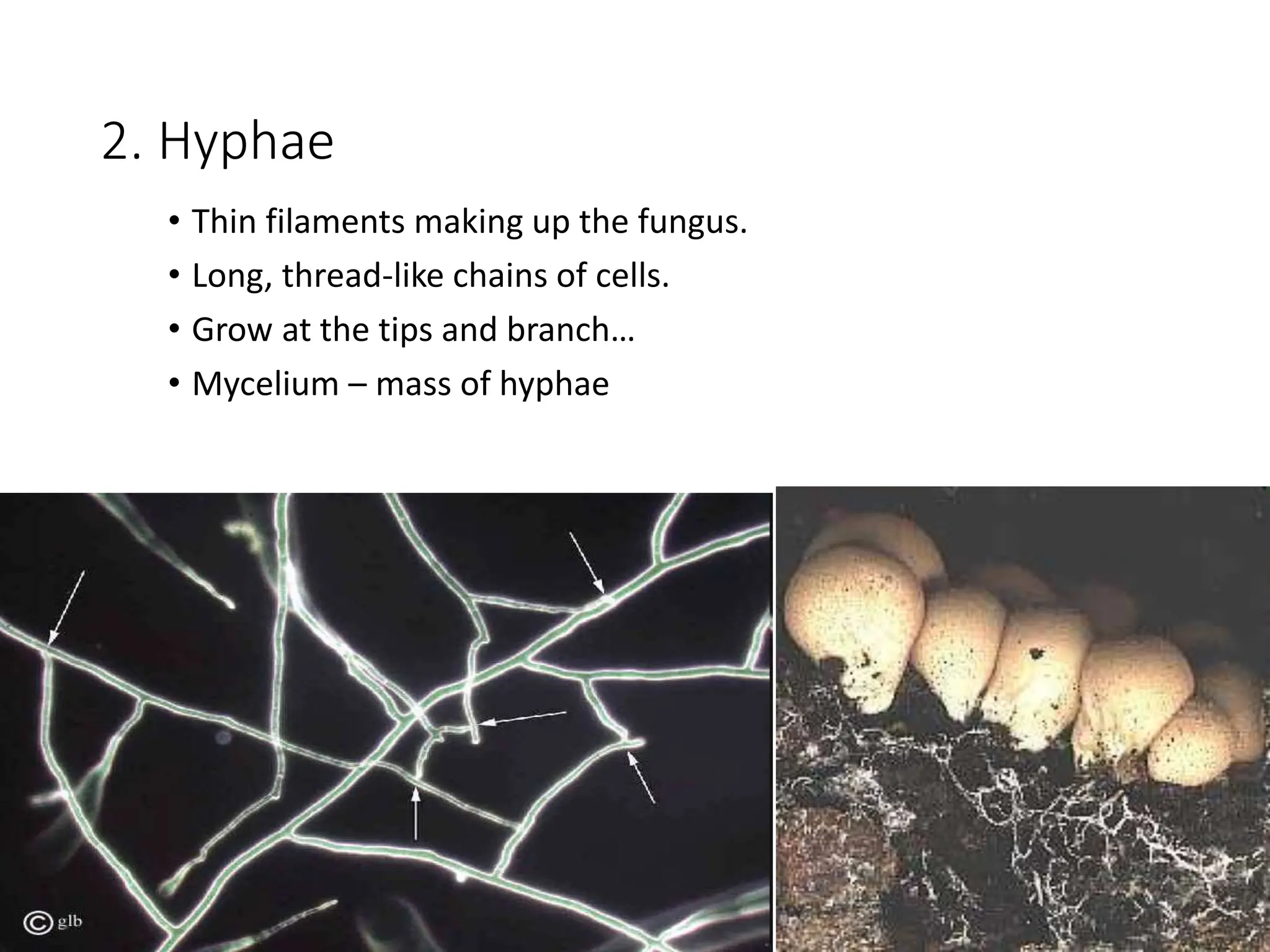
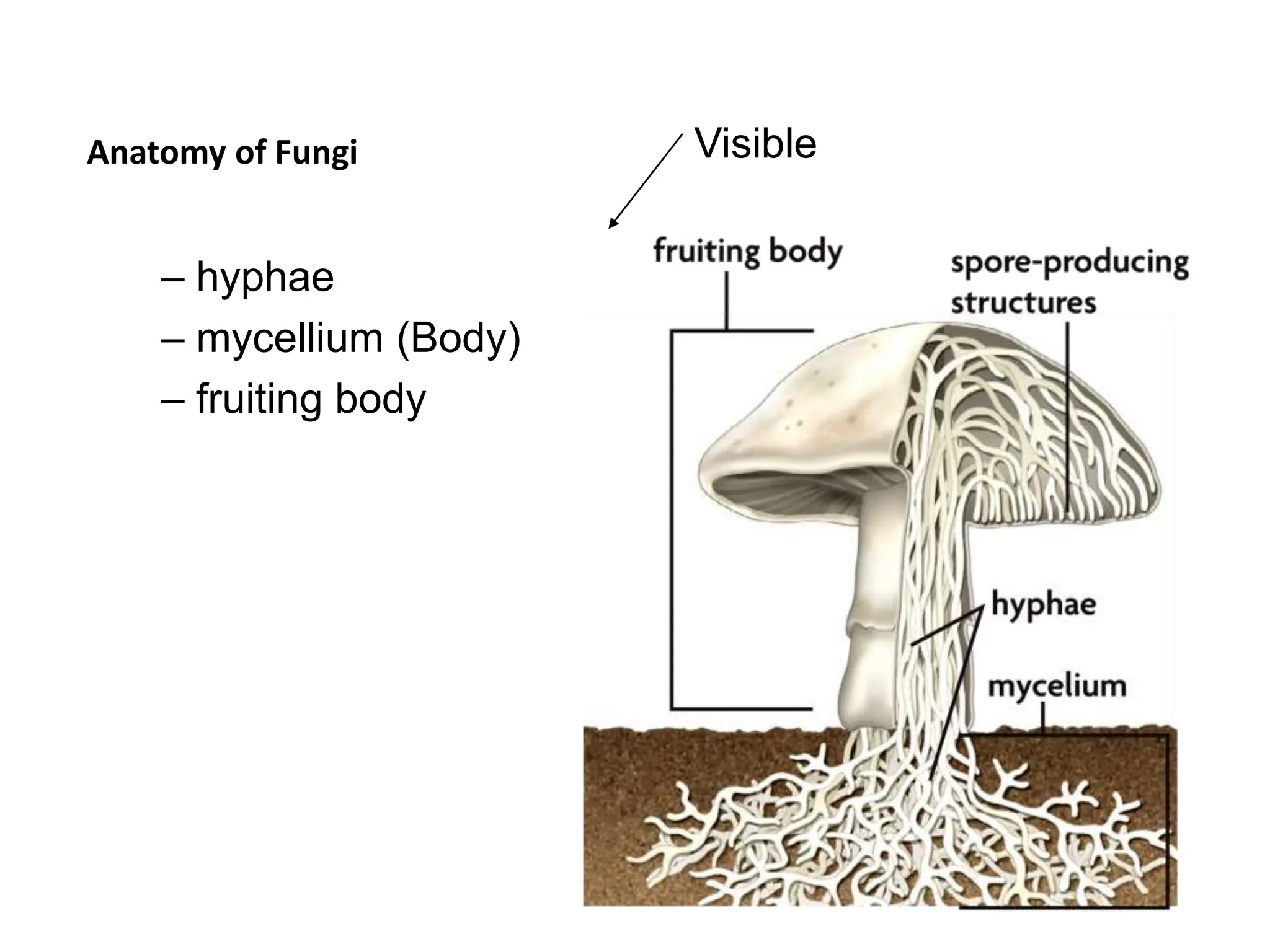
2. Hyphae
• Thin filaments making up the fungus.
• Long, thread-like chains of cells.
• Grow at the tips and branch…
• Mycelium – mass of hyphae
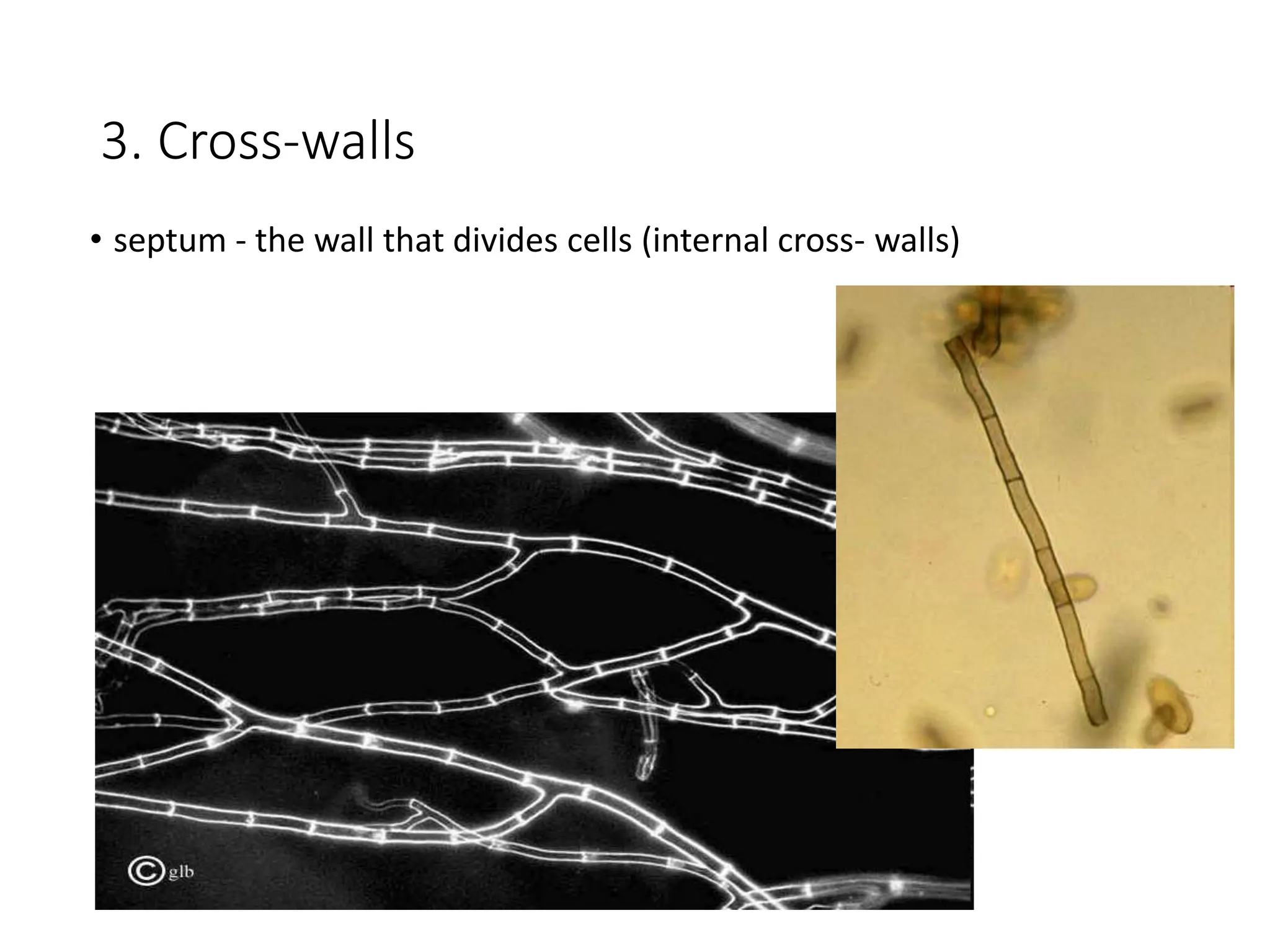
3. Cross-walls
• septum - the wall that divides cells (internal cross- walls)
Anatomy of Fungi
– hyphae
– mycellium (Body)
– fruiting body
Visible
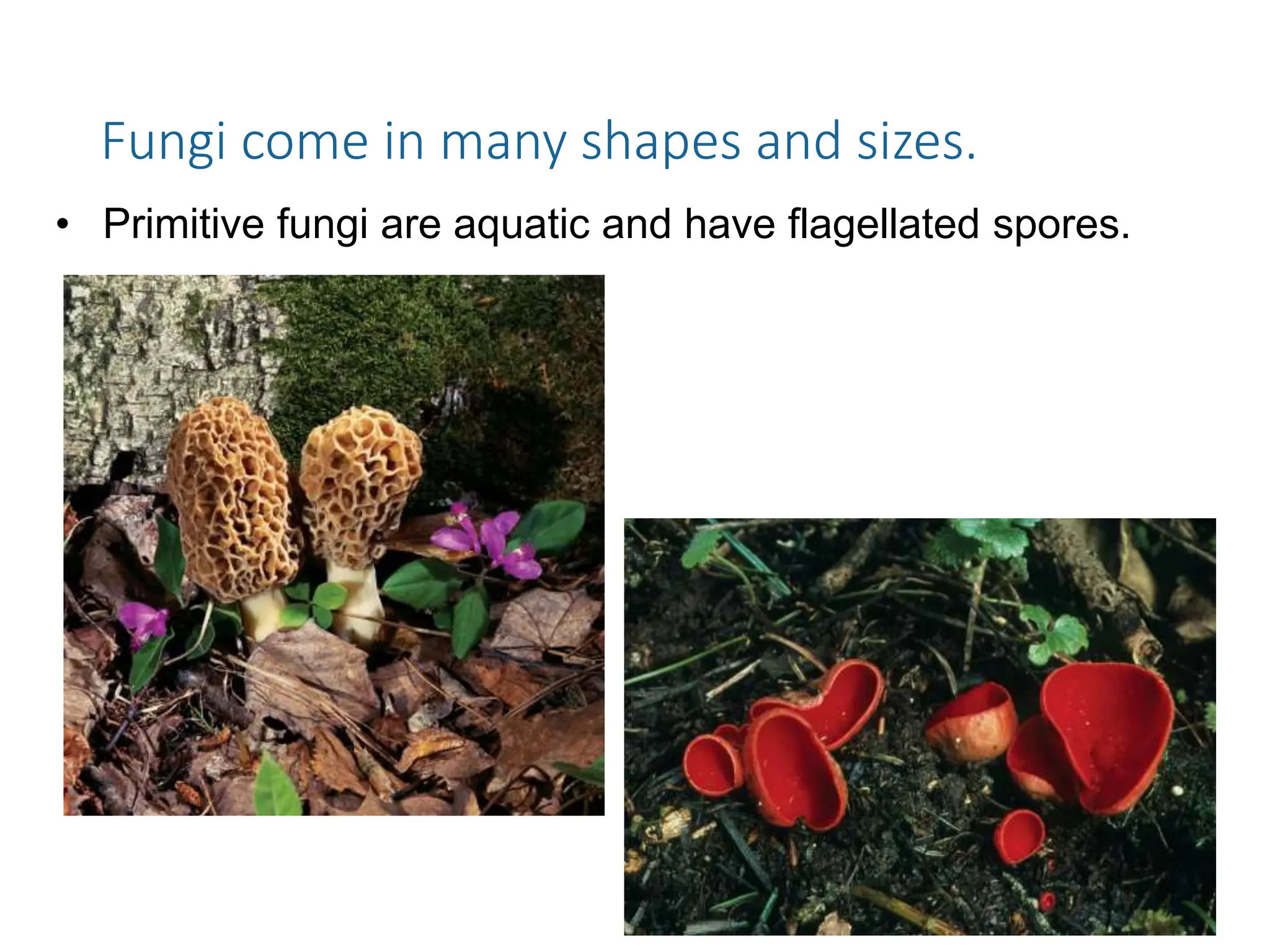
Fungi come in many shapes and sizes.
• Primitive fungi are aquatic and have flagellated spores.
5 Phyla of Fungi
1. Chytridiomycota - Chytrids
2. Zygomycota – Common Molds
3. Ascomycota – Sac Fungi
4. Basidiomycota – Club Fungi
5. Deuteromycota – Imperfect Fungi
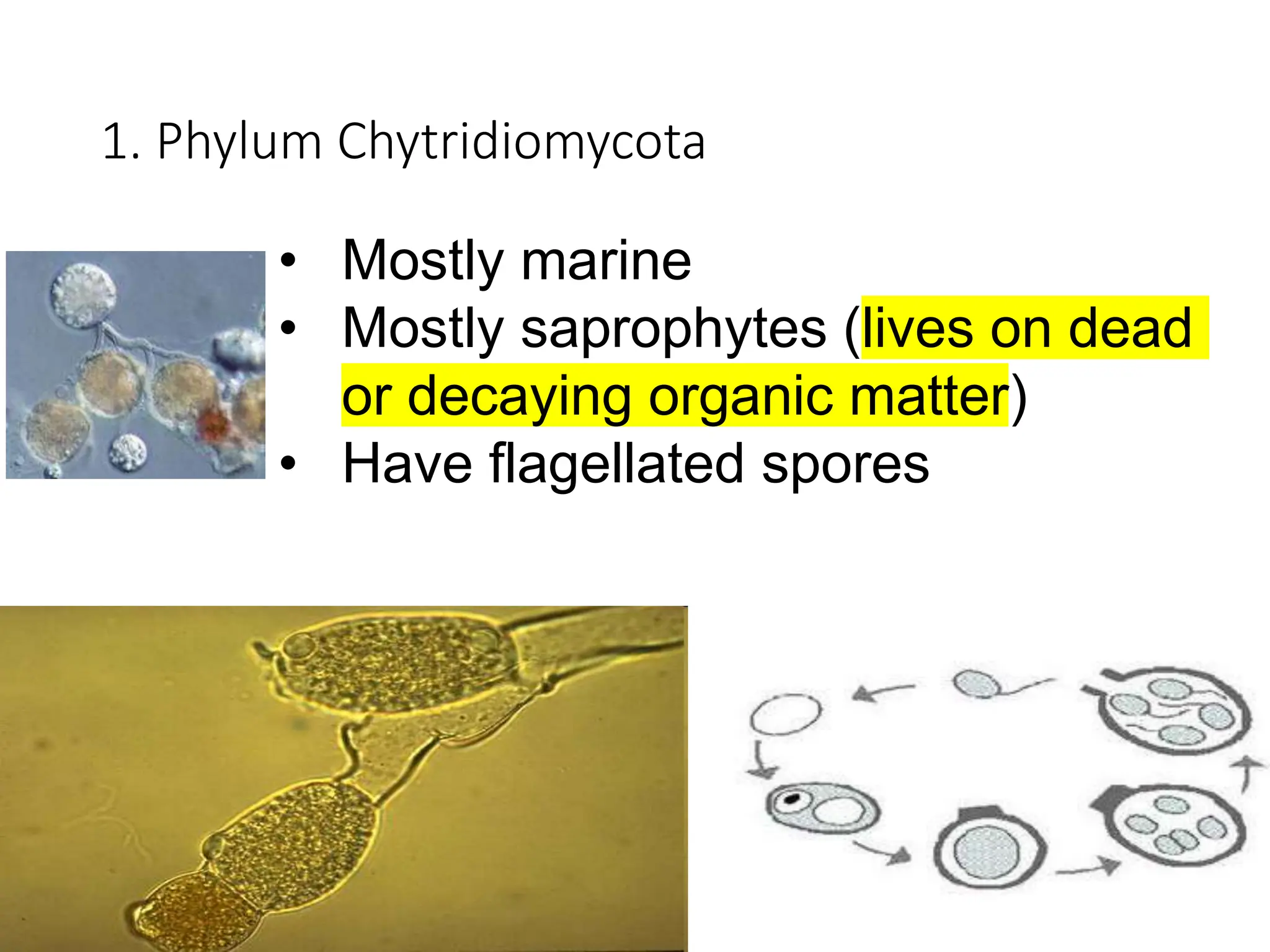
1. Phylum Chytridiomycota
• Mostly marine
• Mostly saprophytes (lives on dead
or decaying organic matter)
• Have flagellated spores
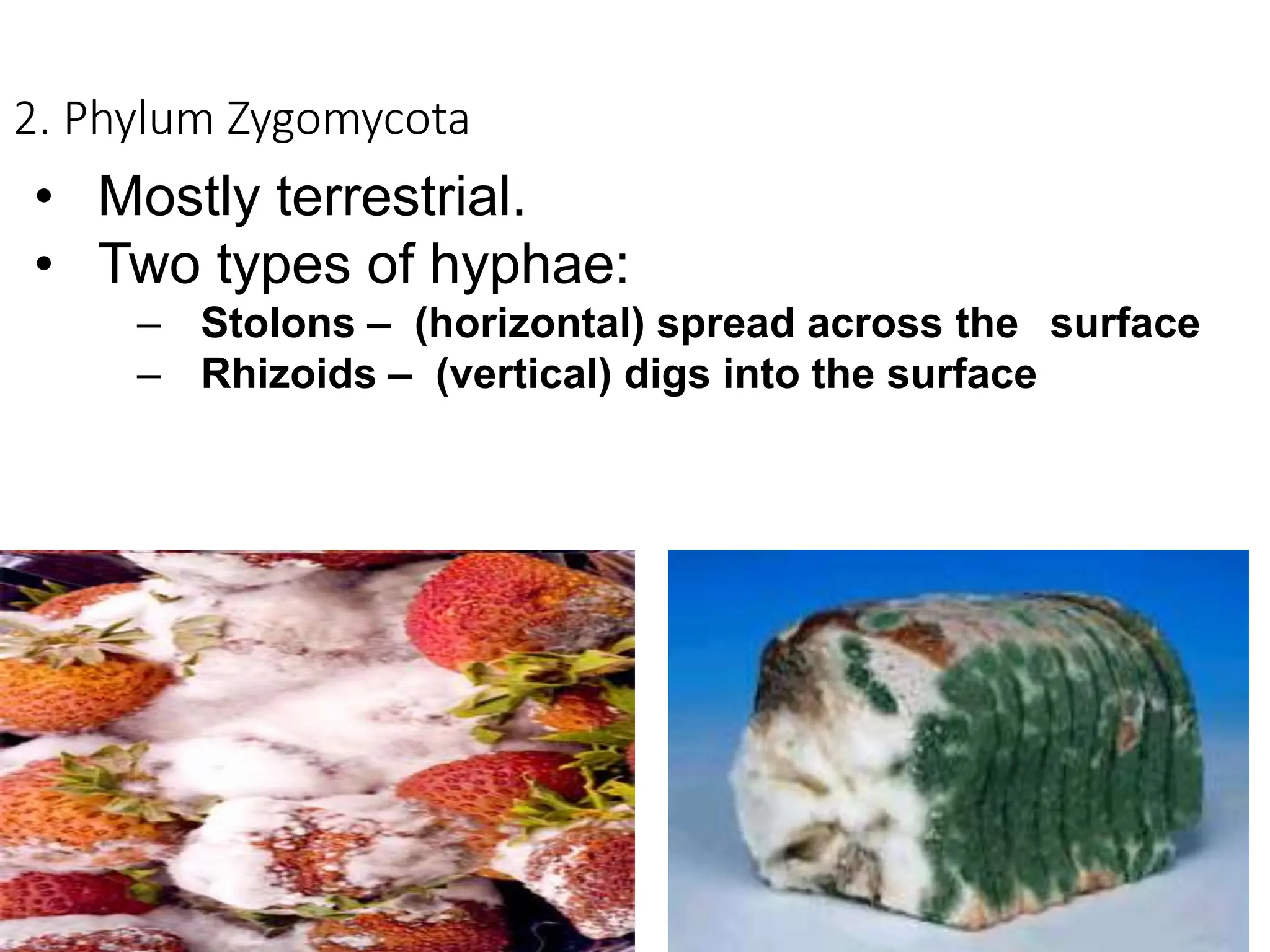
2. Phylum Zygomycota
• Mostly terrestrial.
• Two types of hyphae:
– Stolons – (horizontal) spread across the surface
– Rhizoids – (vertical) digs into the surface
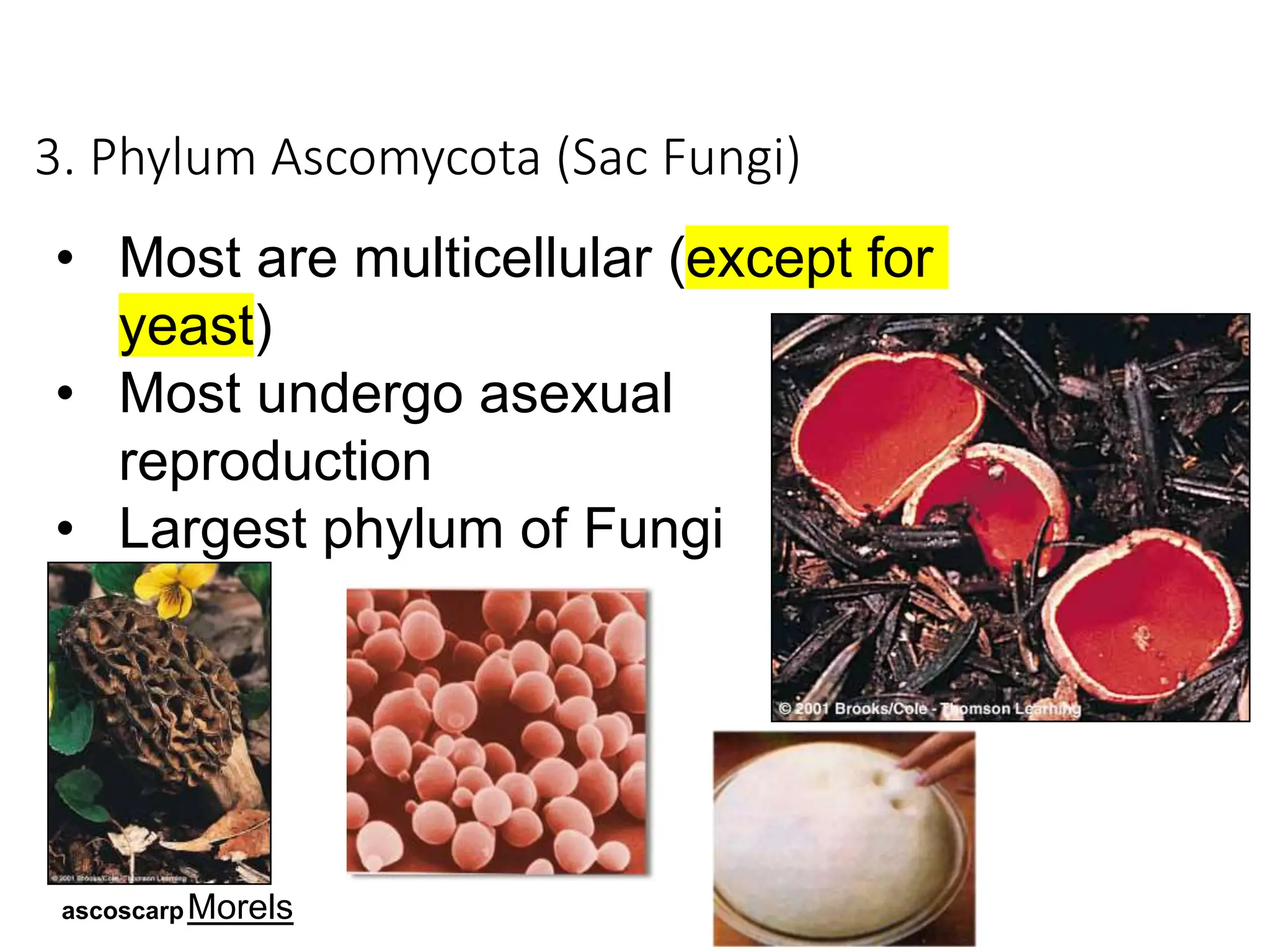
3. Phylum Ascomycota (Sac Fungi)
• Most are multicellular (except for
yeast)
• Most undergo asexual
reproduction
• Largest phylum of Fungi
ascoscarpMorels
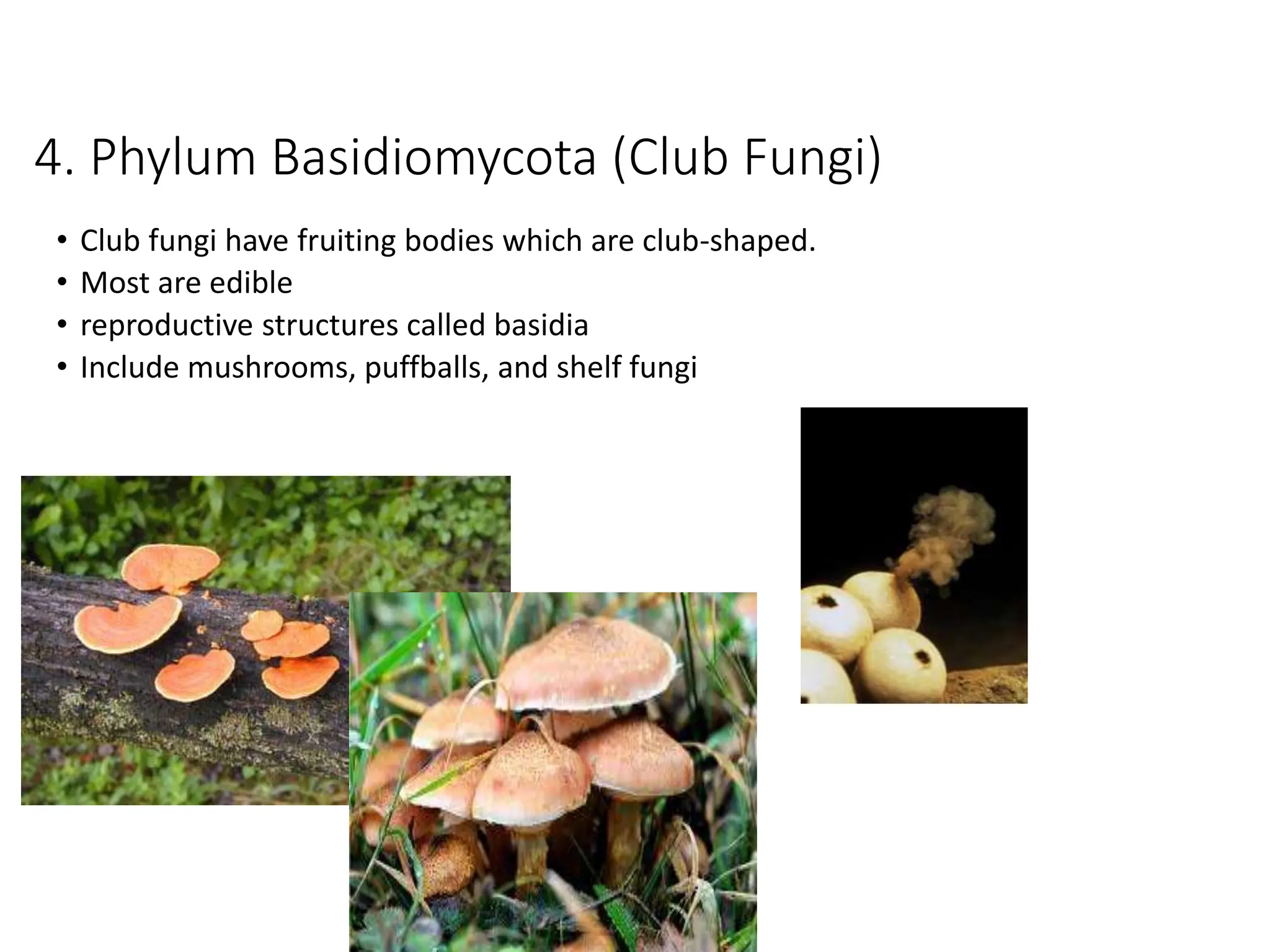
4. Phylum Basidiomycota (Club Fungi)
• Club fungi have fruiting bodies which are club-shaped.
• Most are edible
• reproductive structures called basidia
• Include mushrooms, puffballs, and shelf fungi
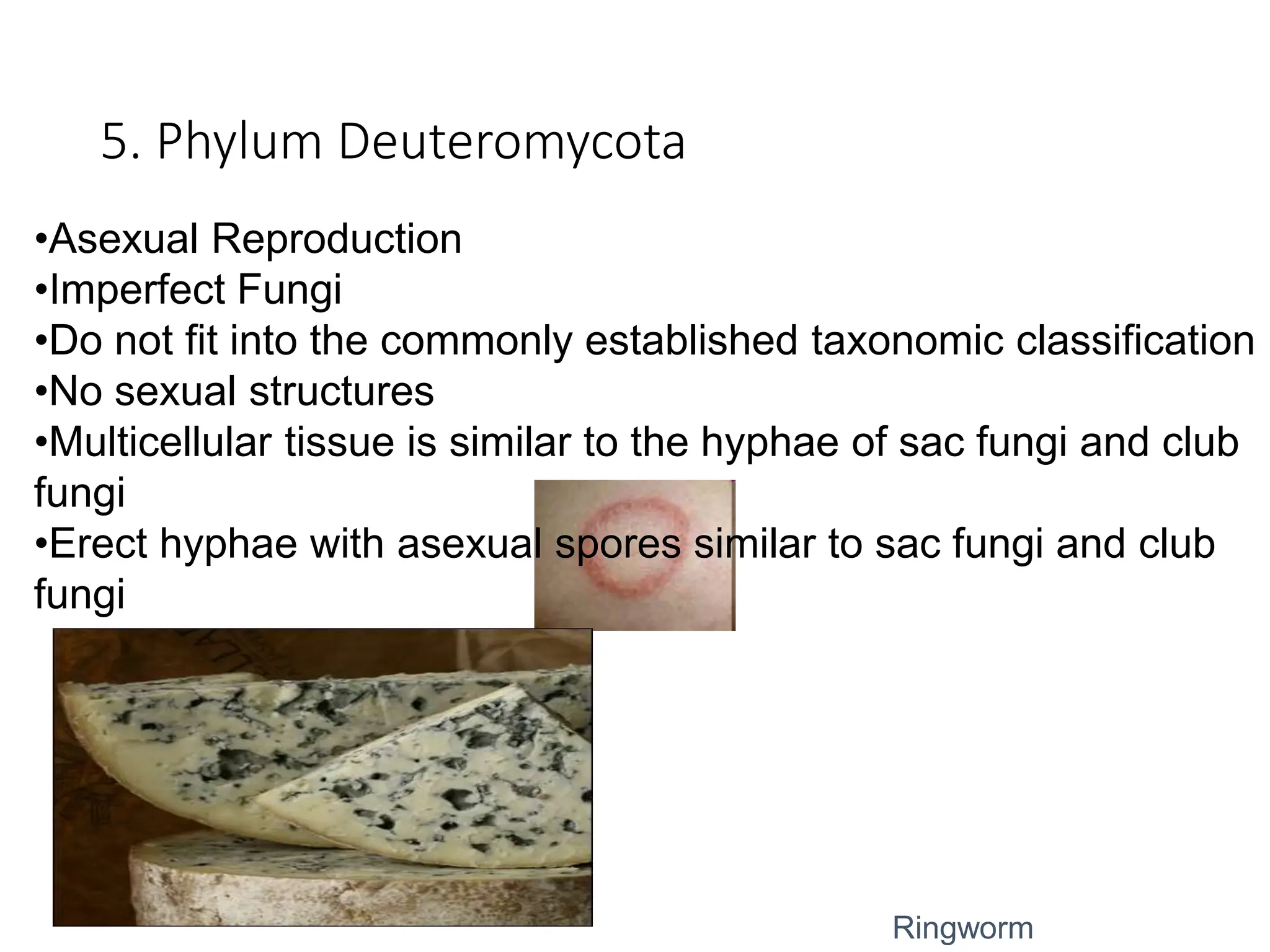
5. Phylum Deuteromycota
Ringworm
•Asexual Reproduction
•Imperfect Fungi
•Do not fit into the commonly established taxonomic classification
•No sexual structures
•Multicellular tissue is similar to the hyphae of sac fungi and club
fungi
•Erect hyphae with asexual spores similar to sac fungi and club
fungi
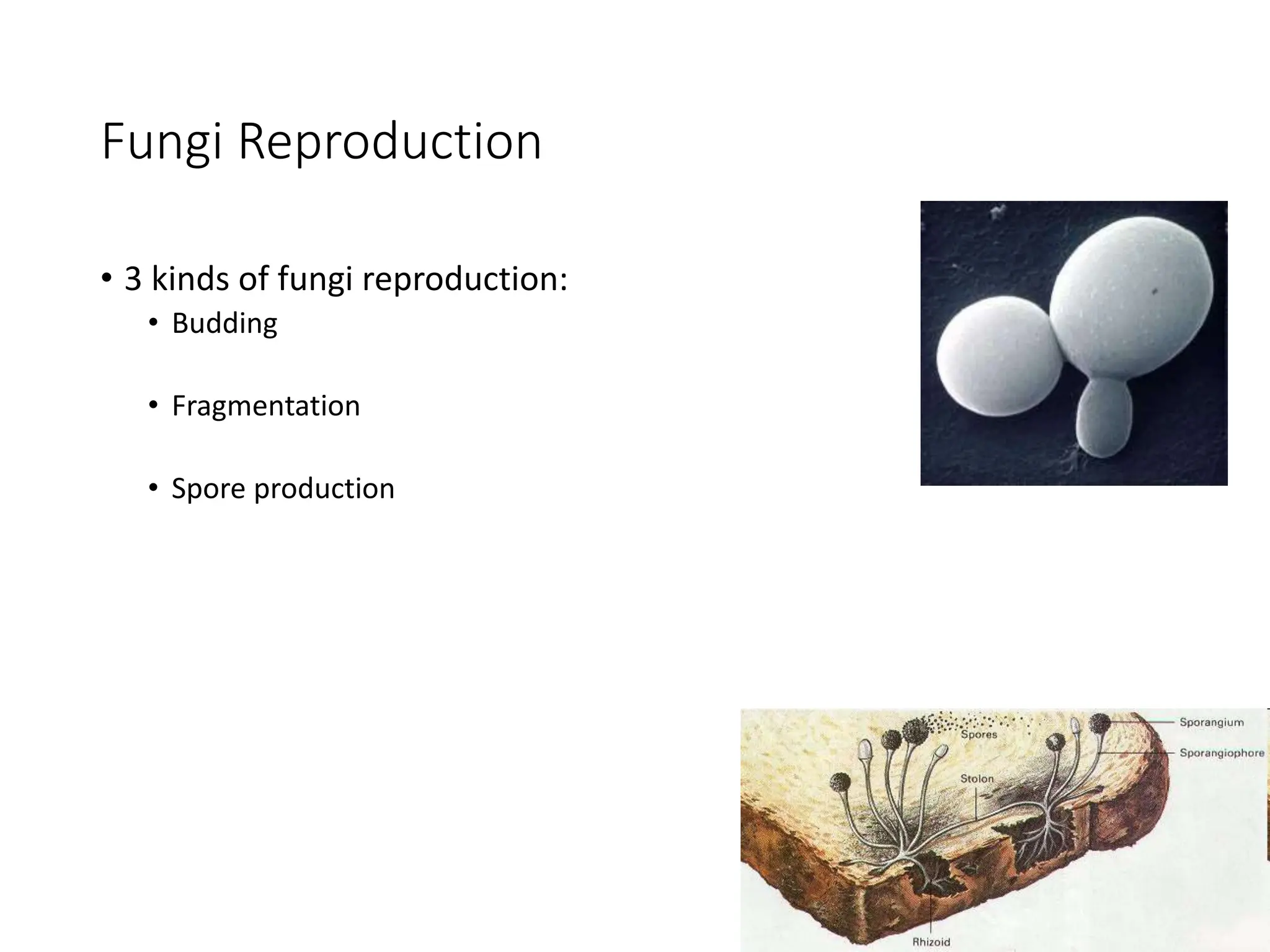
Fungi Reproduction
• 3 kinds of fungi reproduction:
• Budding
• Fragmentation
• Spore production
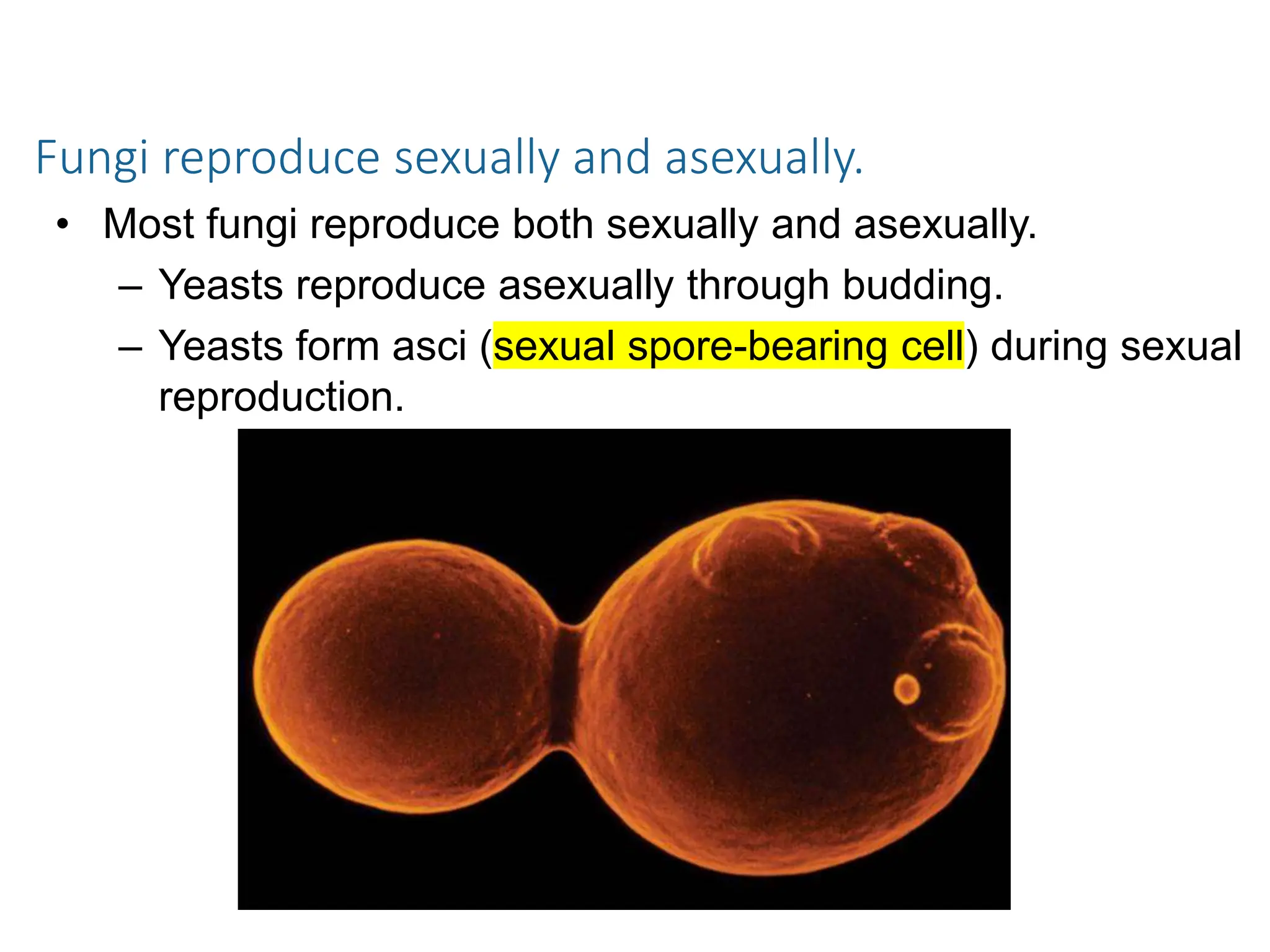
Fungi reproduce sexually and asexually.
• Most fungi reproduce both sexually and asexually.
– Yeasts reproduce asexually through budding.
– Yeasts form asci (sexual spore-bearing cell) during sexual
reproduction.
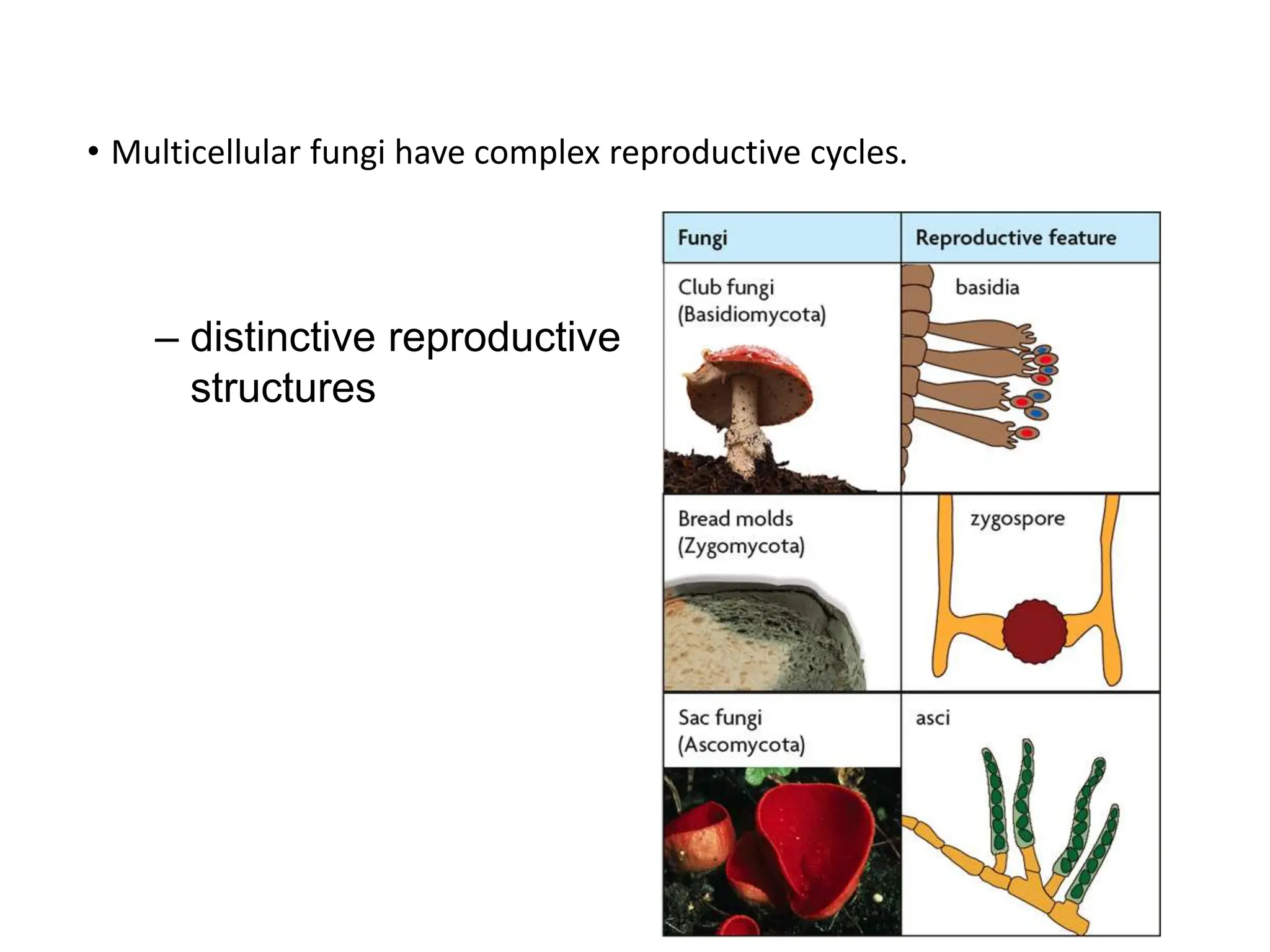
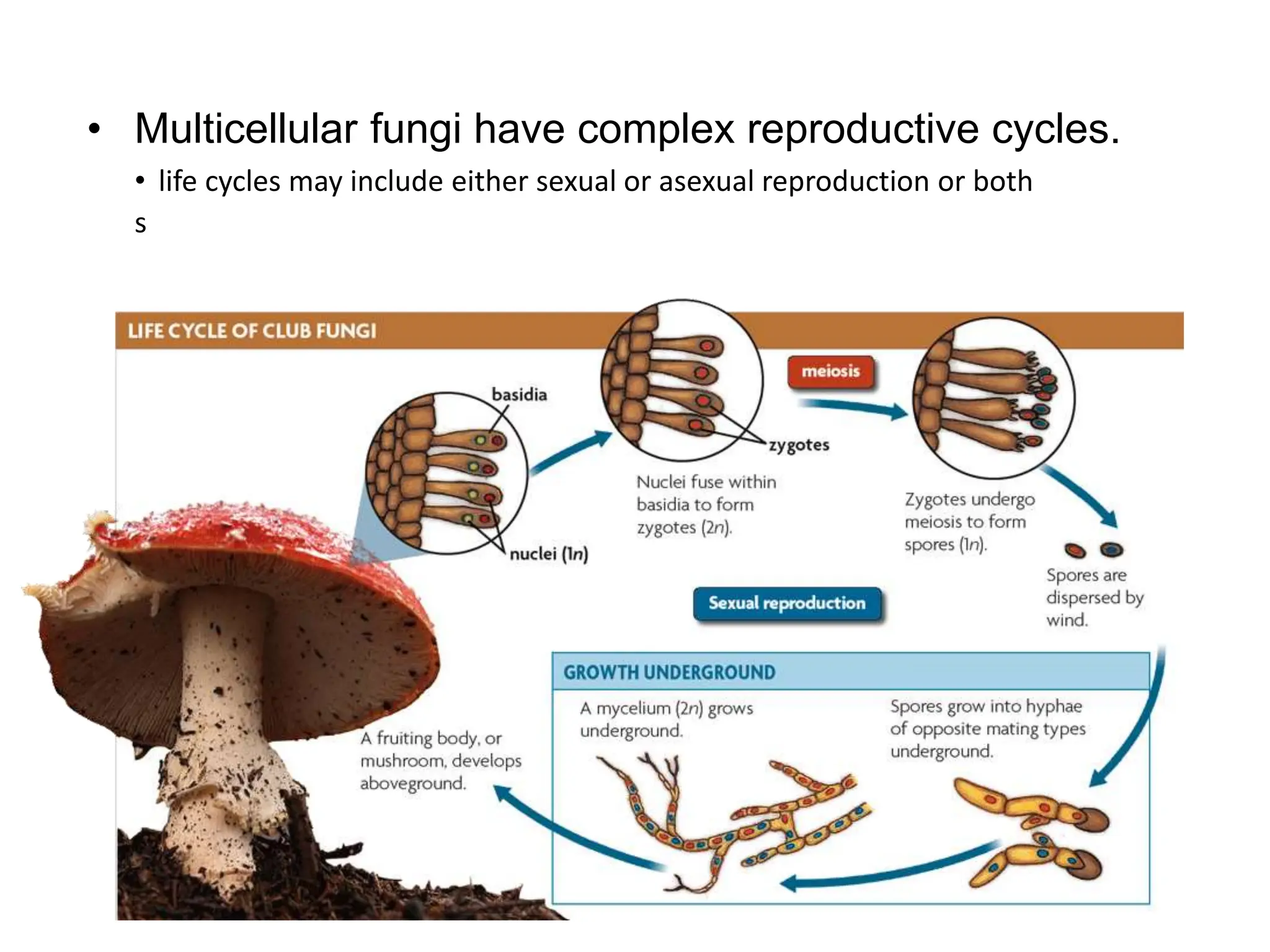
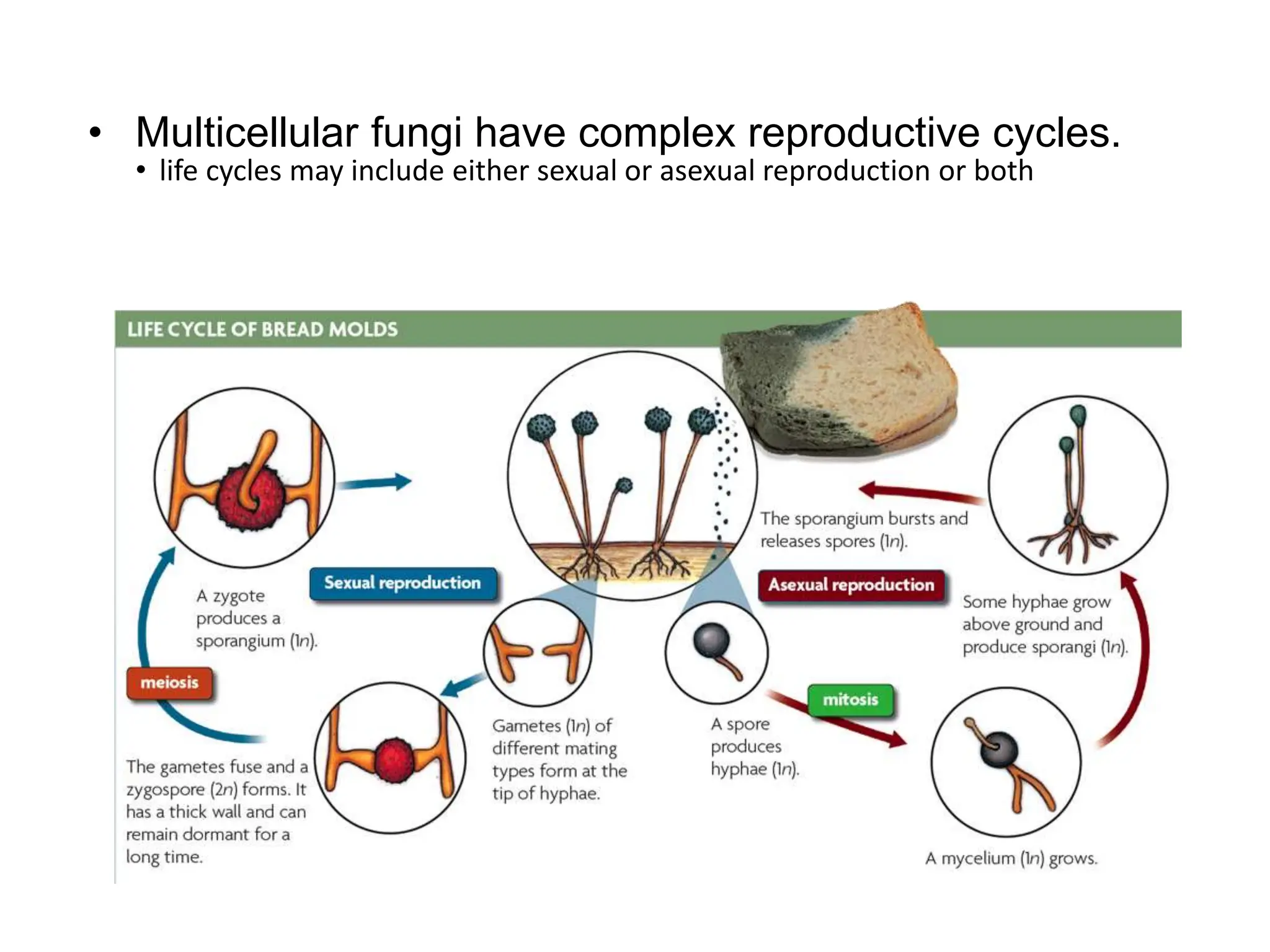
• Multicellular fungi have complex reproductive cycles.
– distinctive reproductive
structures
• life cycles may include either sexual or asexual reproduction or both
s
• Multicellular fungi have complex reproductive cycles.
• life cycles may include either sexual or asexual reproduction or both
• Multicellular fungi have complex reproductive cycles.
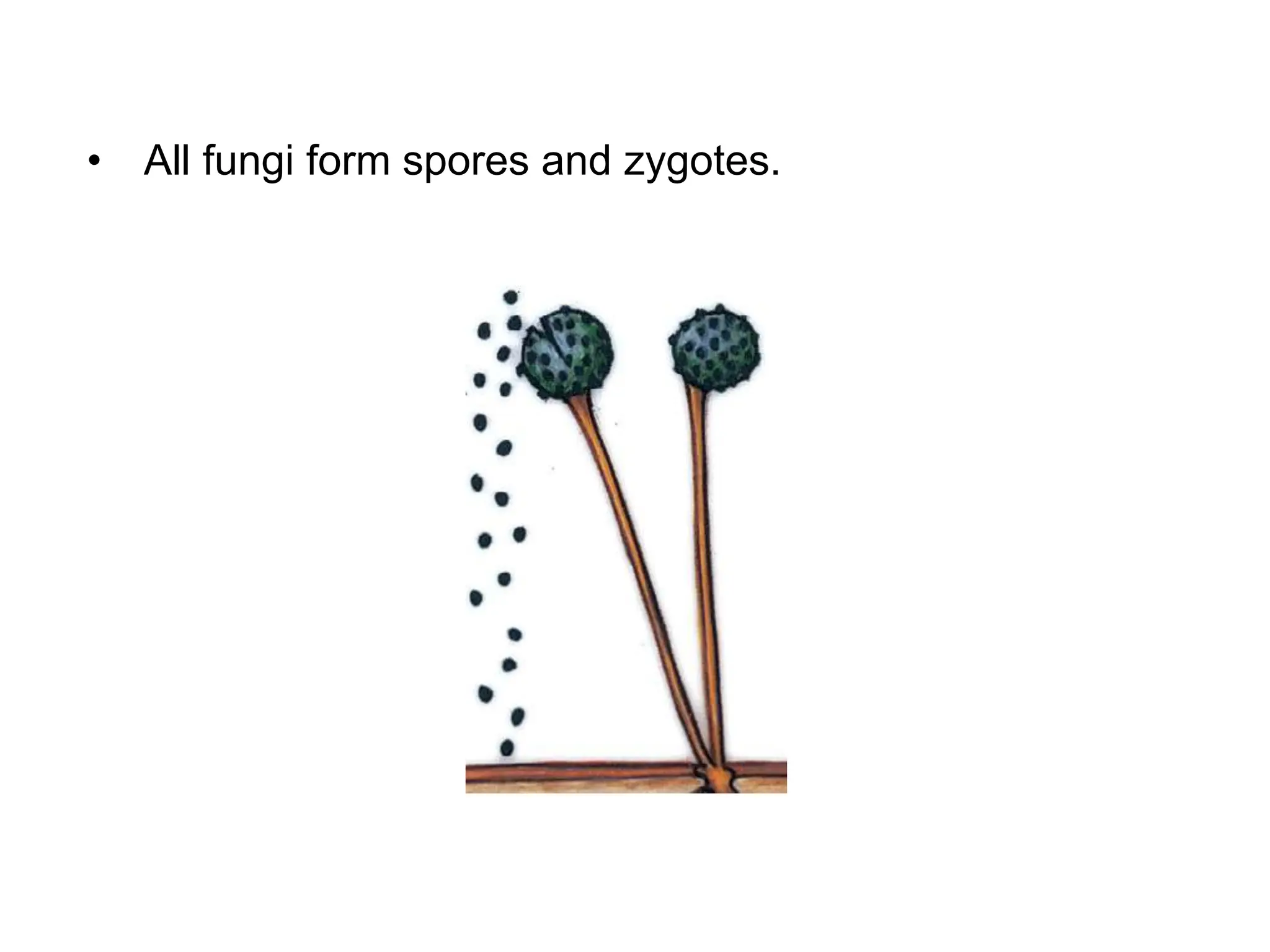
• All fungi form spores and zygotes.
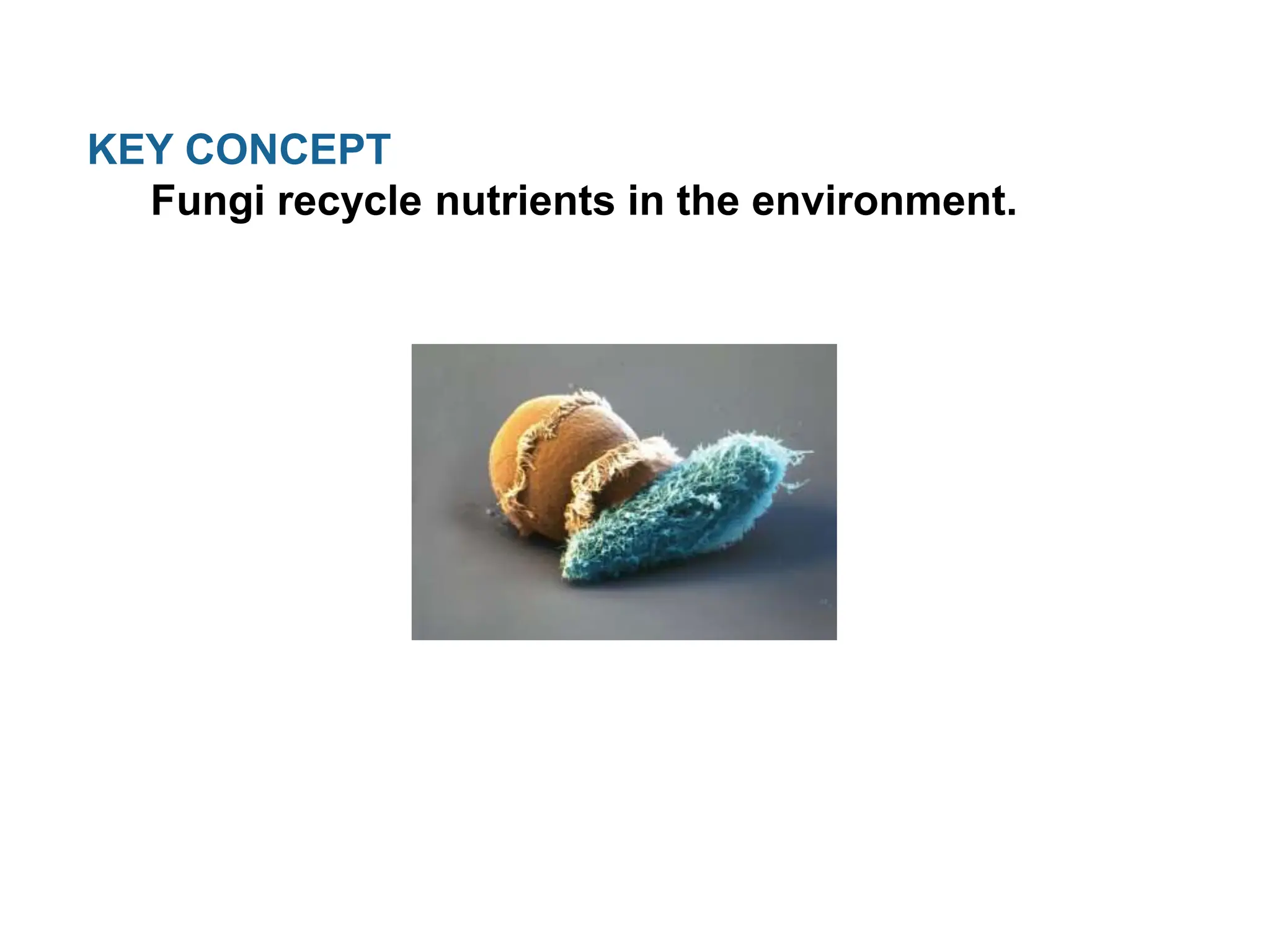
KEY CONCEPT
Fungi recycle nutrients in the environment.
Fungi may be decomposers, pathogens, or mutualists.
• Fungi and bacteria are the main decomposers in any
ecosystem.
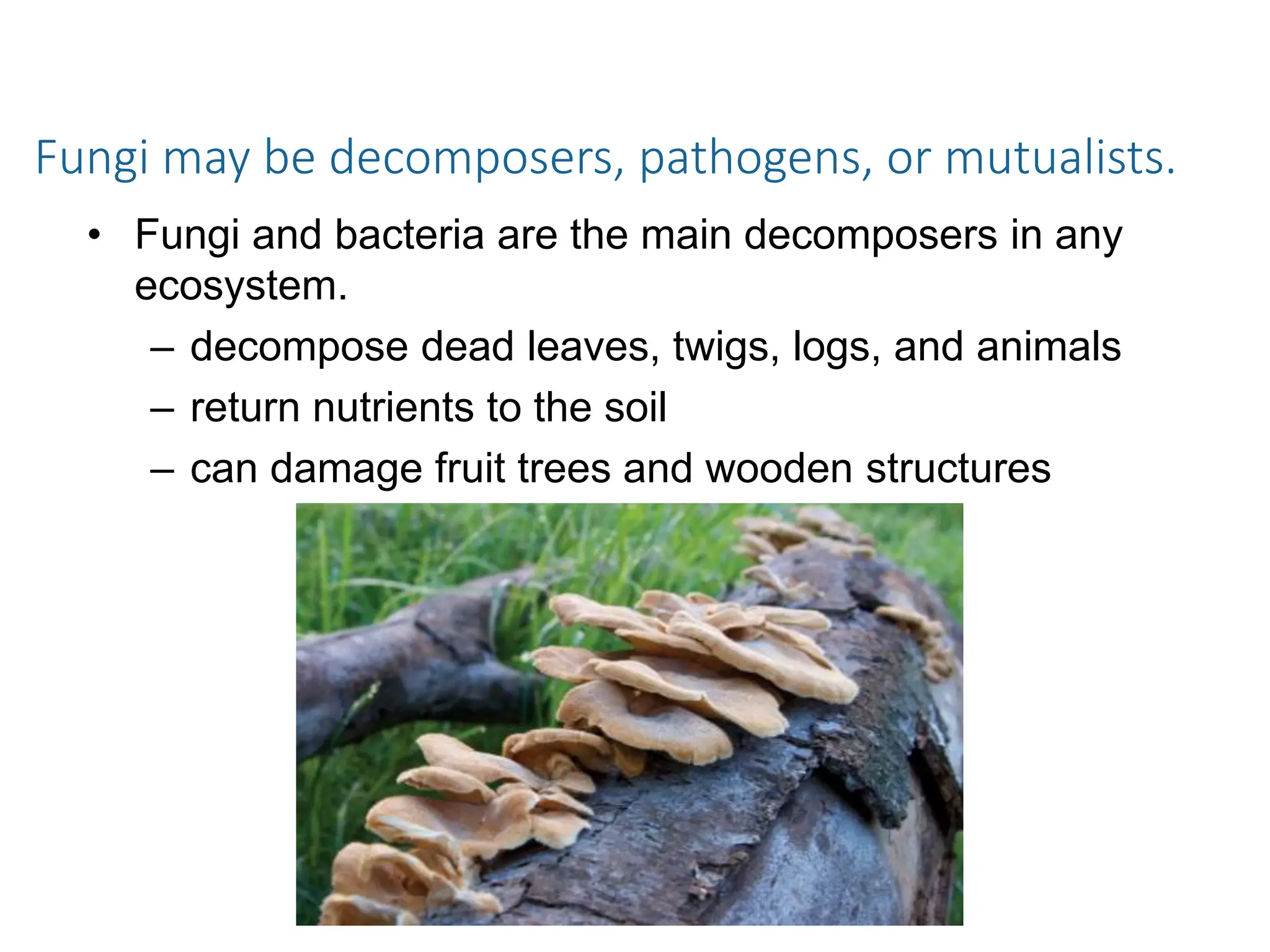
– decompose dead leaves, twigs, logs, and animals
– return nutrients to the soil
– can damage fruit trees and wooden structures
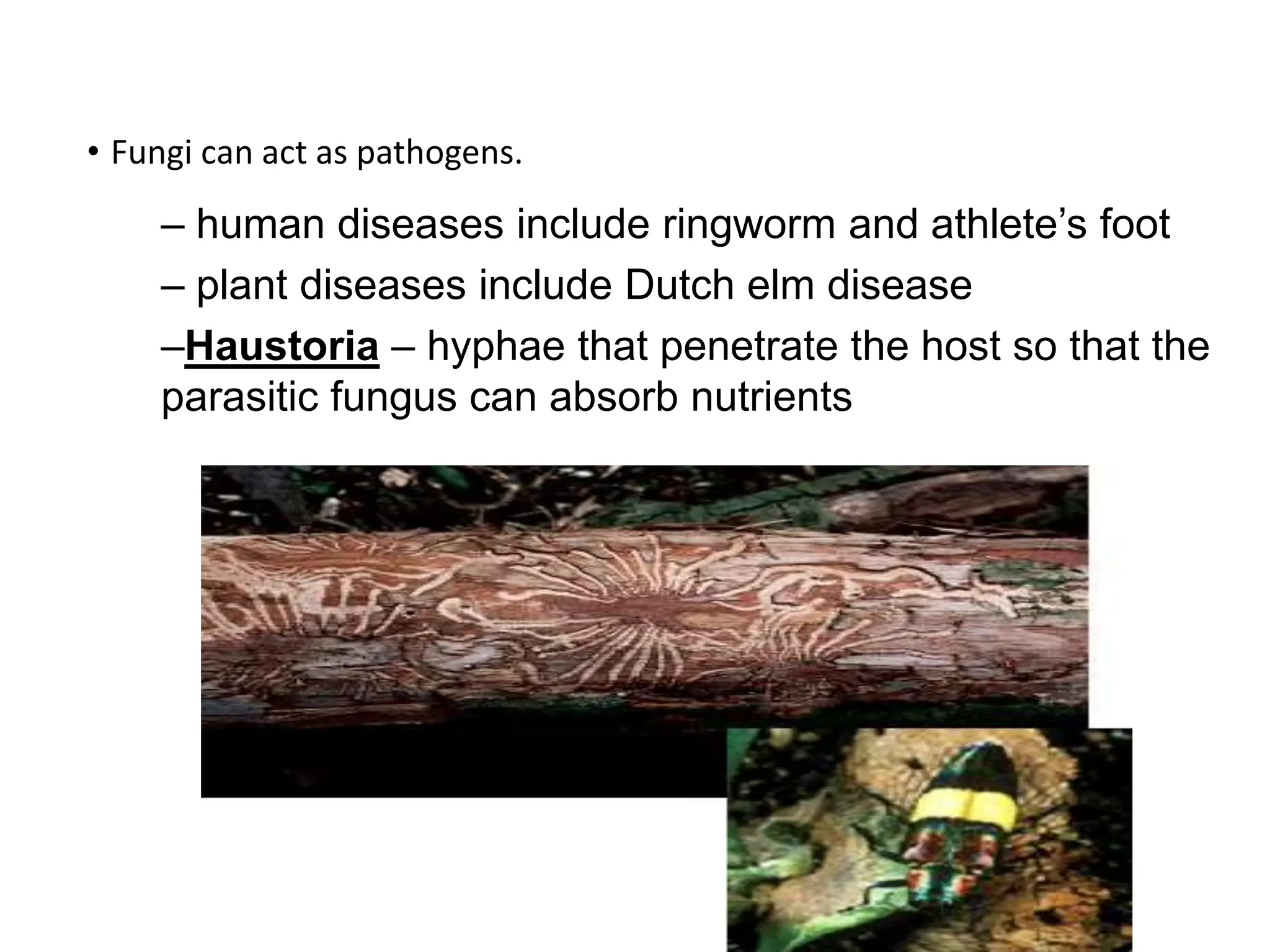
• Fungi can act as pathogens.
– human diseases include ringworm and athlete’s foot
– plant diseases include Dutch elm disease
–Haustoria – hyphae that penetrate the host so that the
parasitic fungus can absorb nutrients
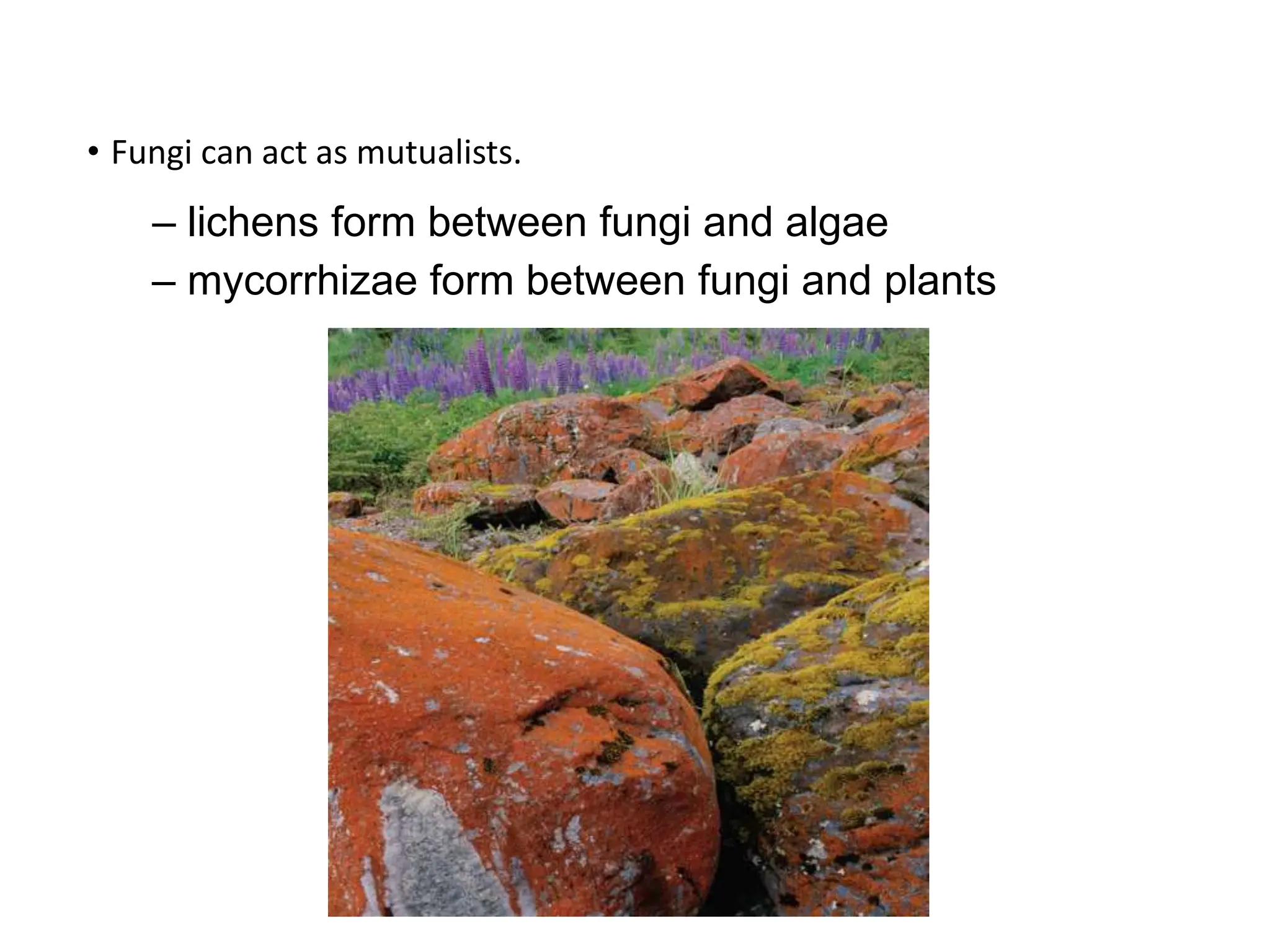
• Fungi can act as mutualists.
– lichens form between fungi and algae
– mycorrhizae form between fungi and plants
Lichens
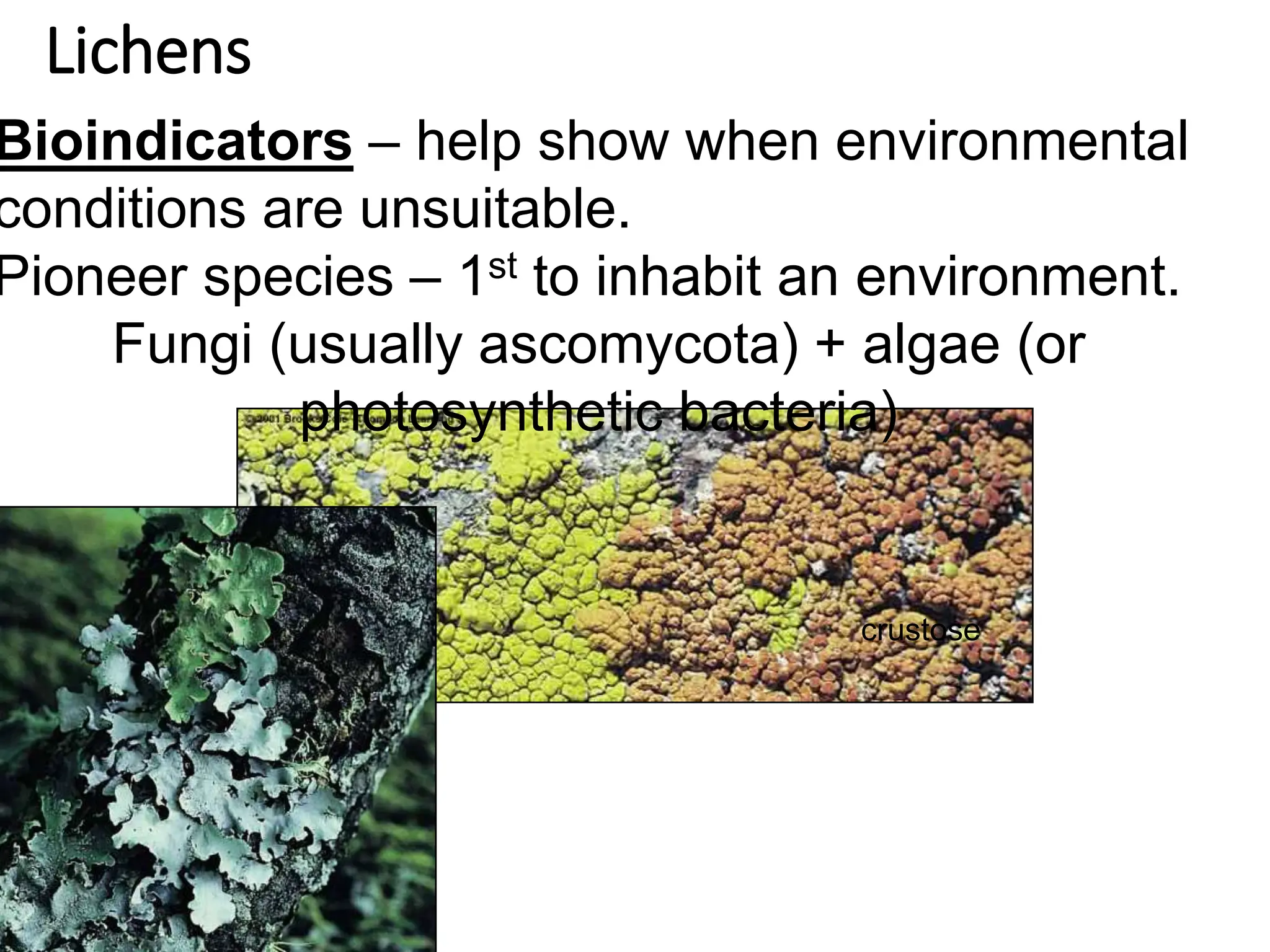
Bioindicators – help show when environmental
conditions are unsuitable.
Pioneer species – 1st to inhabit an environment.
Fungi (usually ascomycota) + algae (or
photosynthetic bacteria)
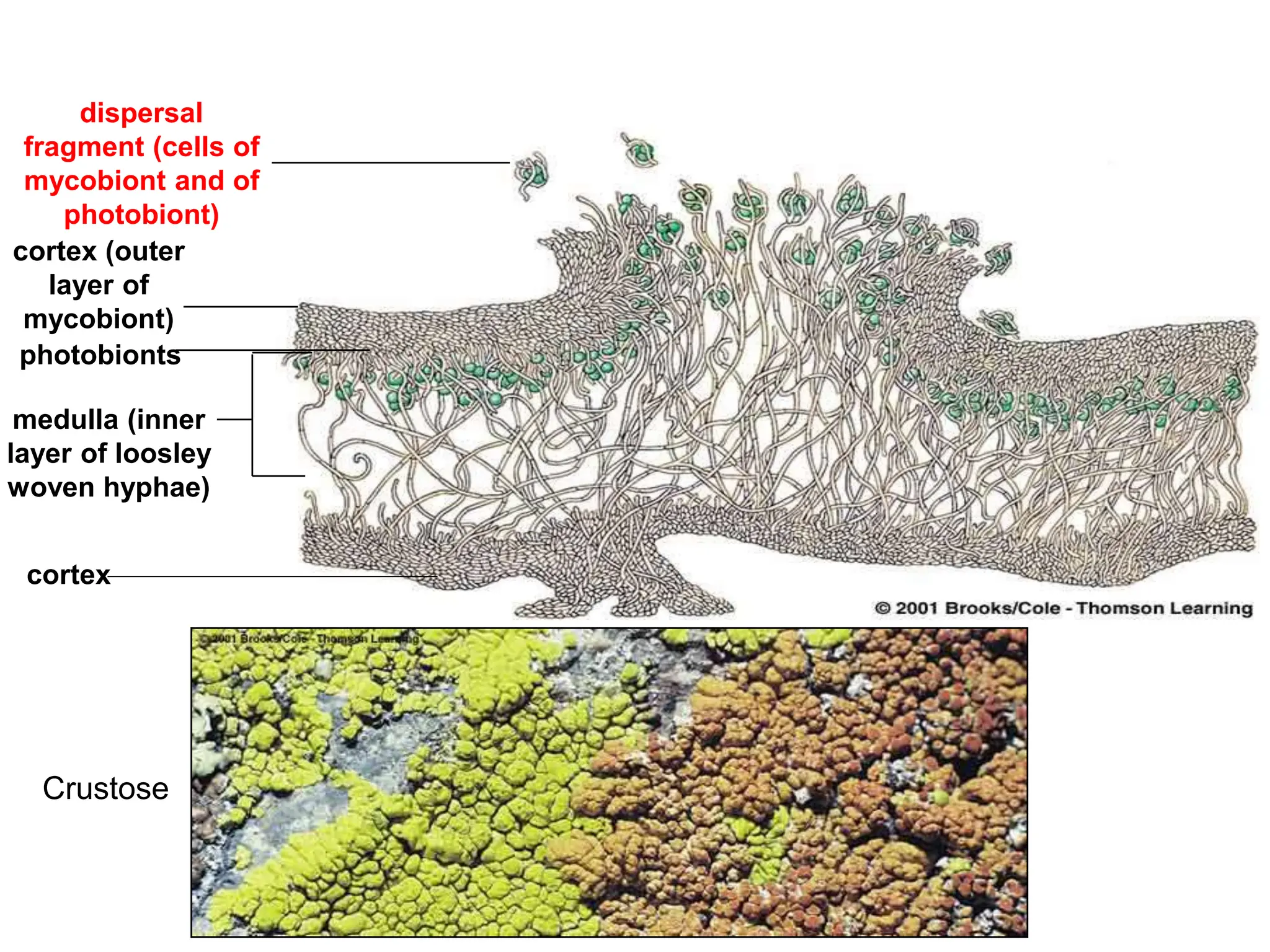
crustose
dispersal
fragment (cells of
mycobiont and of
photobiont)
cortex (outer
layer of
mycobiont)
photobionts
medulla (inner
layer of loosley
woven hyphae)
cortex
Crustose
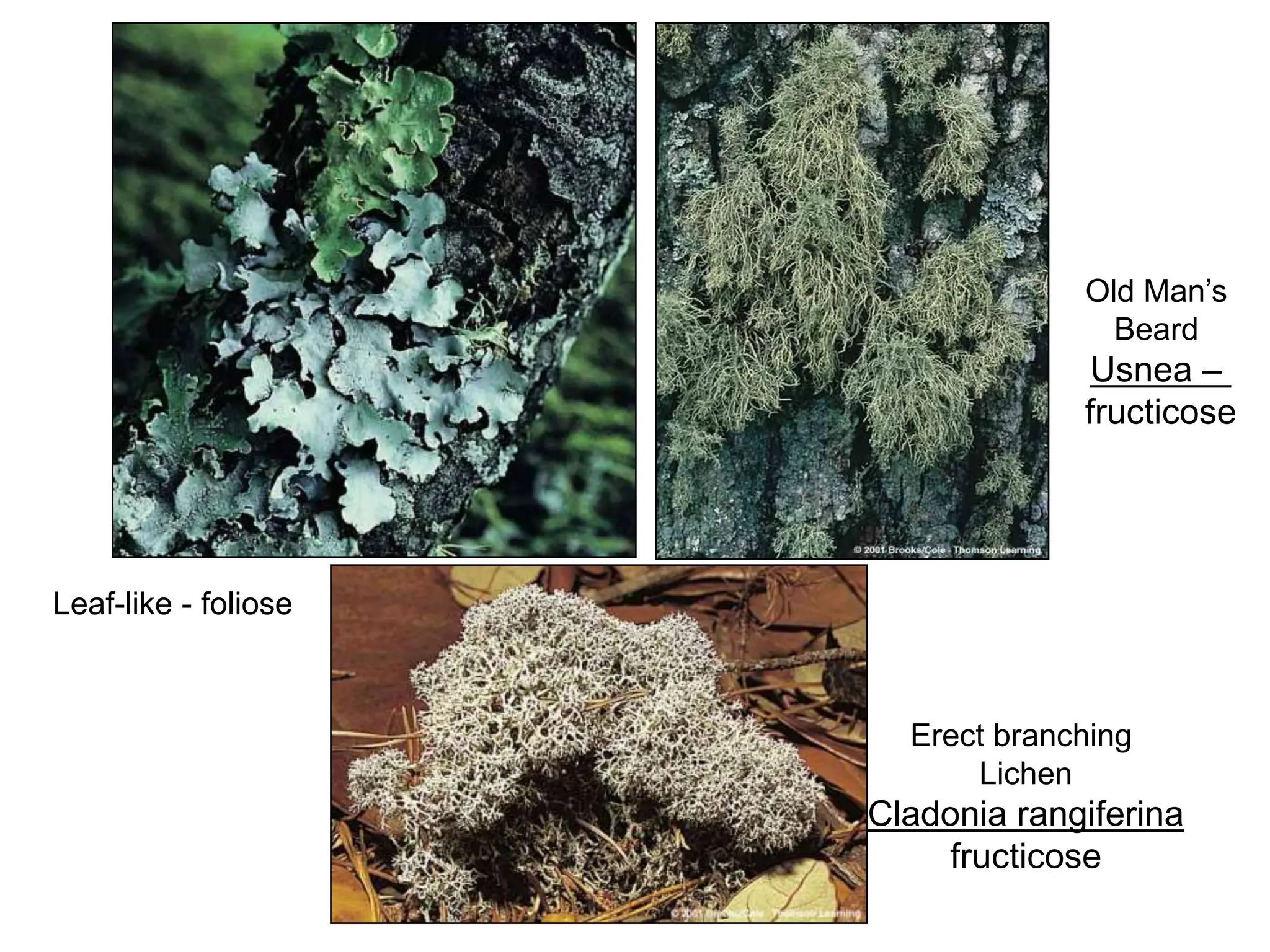
Leaf-like - foliose
Old Man’s
Beard
Usnea –
fructicose
Erect branching
Lichen
Cladonia rangiferina
fructicose
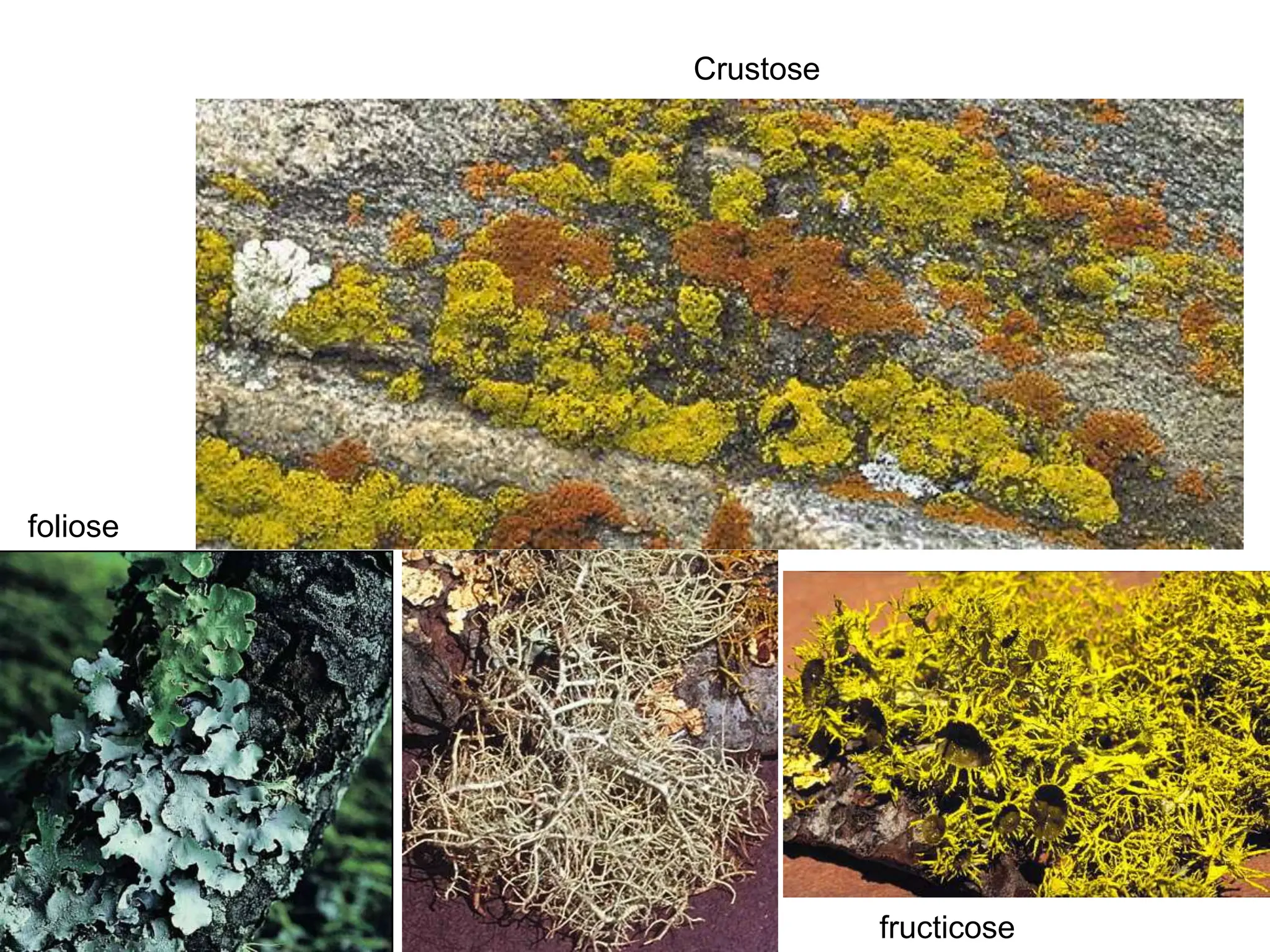
Crustose
foliose
fructicose
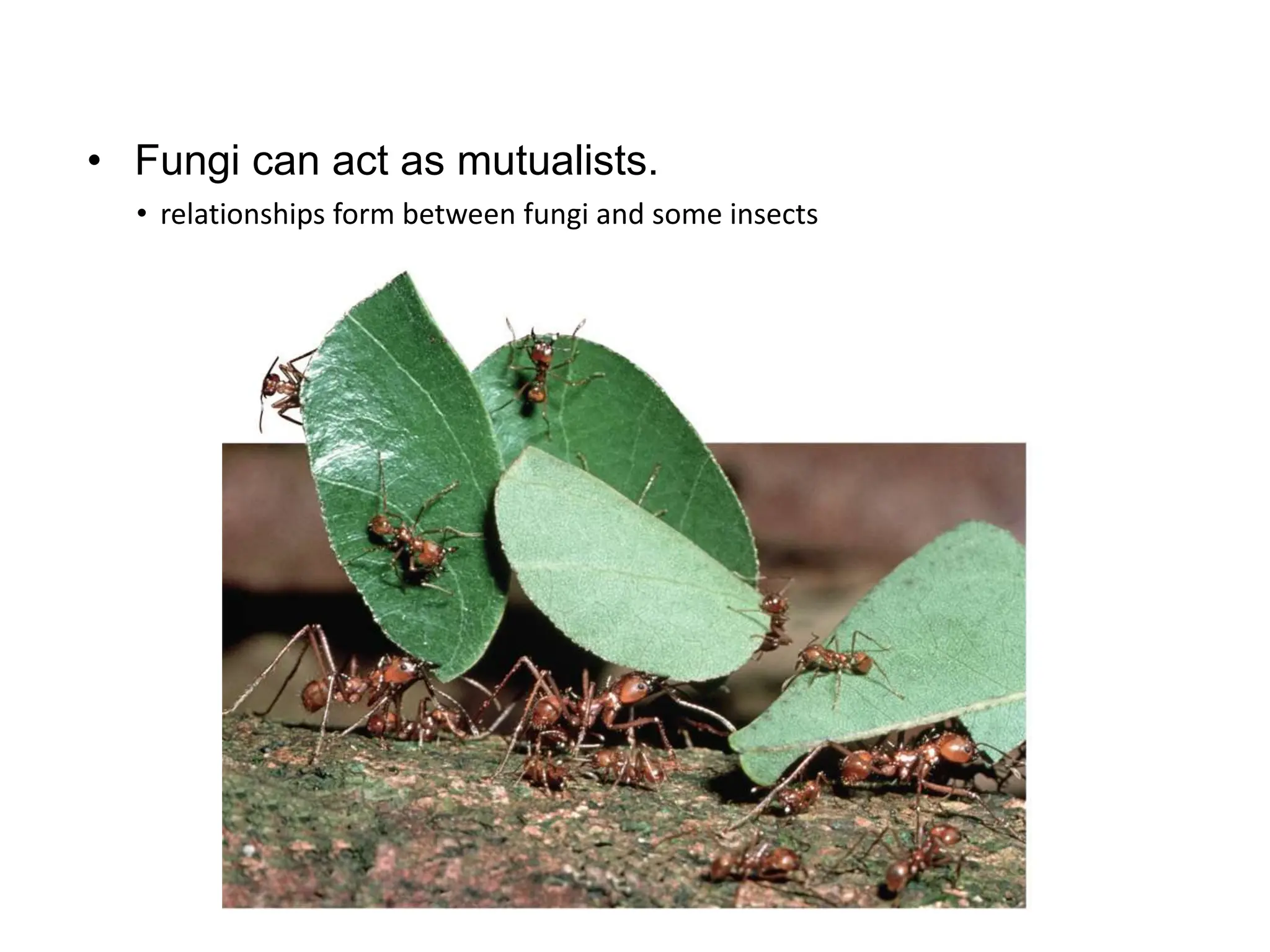
• relationships form between fungi and some insects
• Fungi can act as mutualists.
Fungi are studied for many purposes.
• Fungi are useful in several ways.
– as food
– as antibiotics
– as model systems for molecular biology
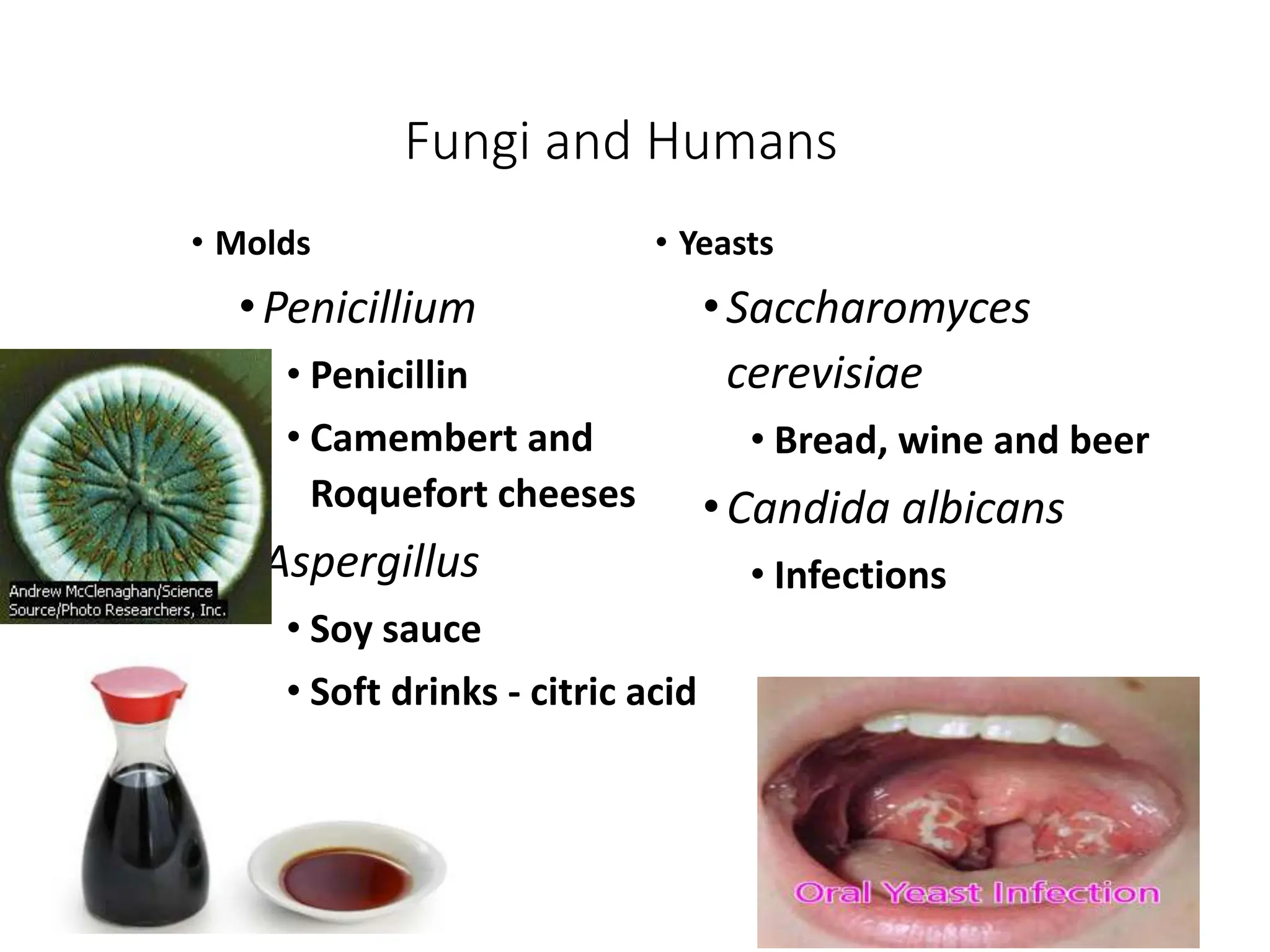
Fungi and Humans
• Molds
•Penicillium
• Penicillin
• Camembert and
Roquefort cheeses
•Aspergillus
• Soy sauce
• Soft drinks - citric acid
• Yeasts
•Saccharomyces
cerevisiae
• Bread, wine and beer
•Candida albicans
• Infections
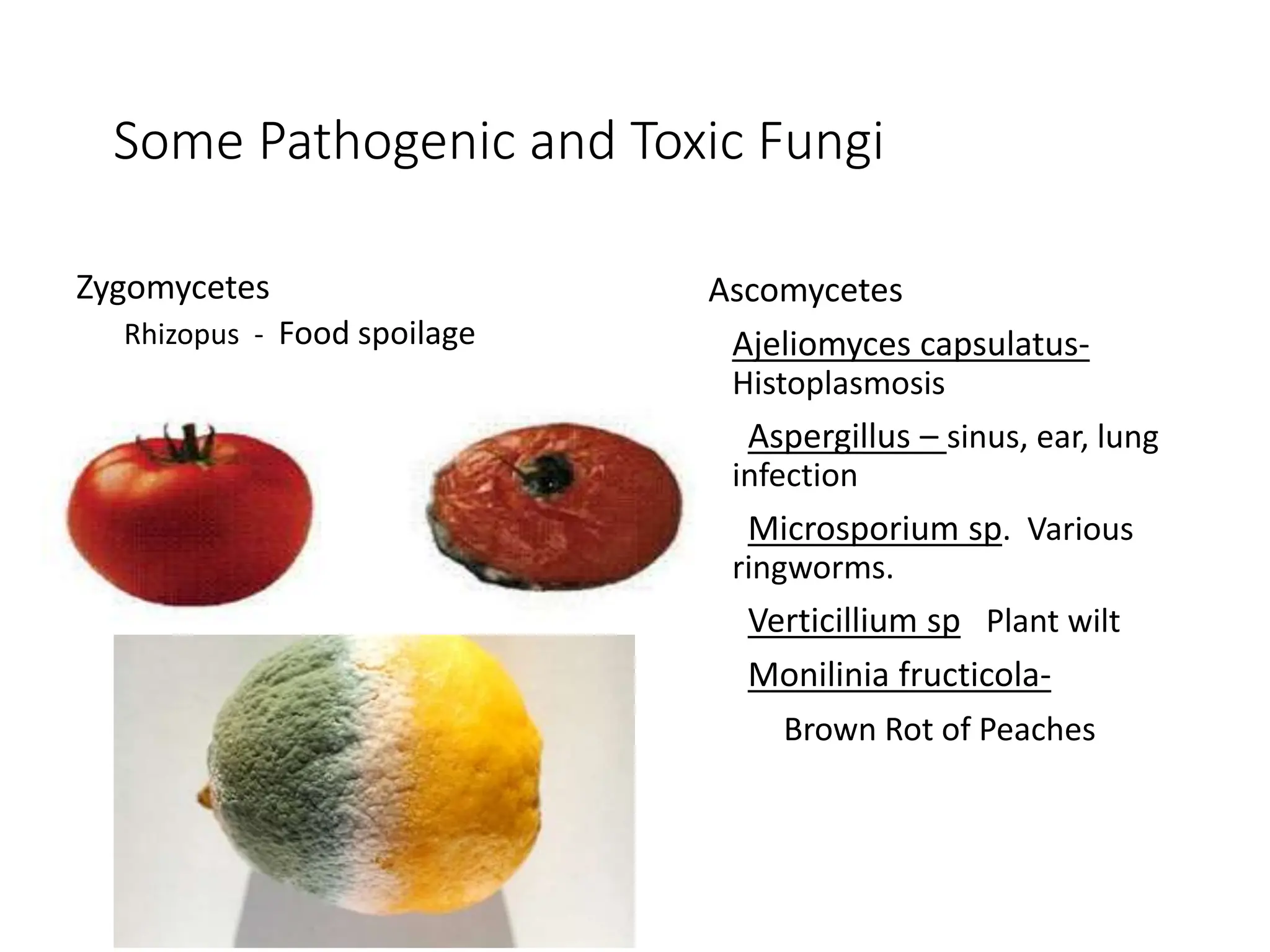
Some Pathogenic and Toxic Fungi
Zygomycetes
Rhizopus - Food spoilage
Ascomycetes
Ajeliomyces capsulatus-
Histoplasmosis
Aspergillus – sinus, ear, lung
infection
Microsporium sp. Various
ringworms.
Verticillium sp Plant wilt
Monilinia fructicola-
Brown Rot of Peaches
Algae
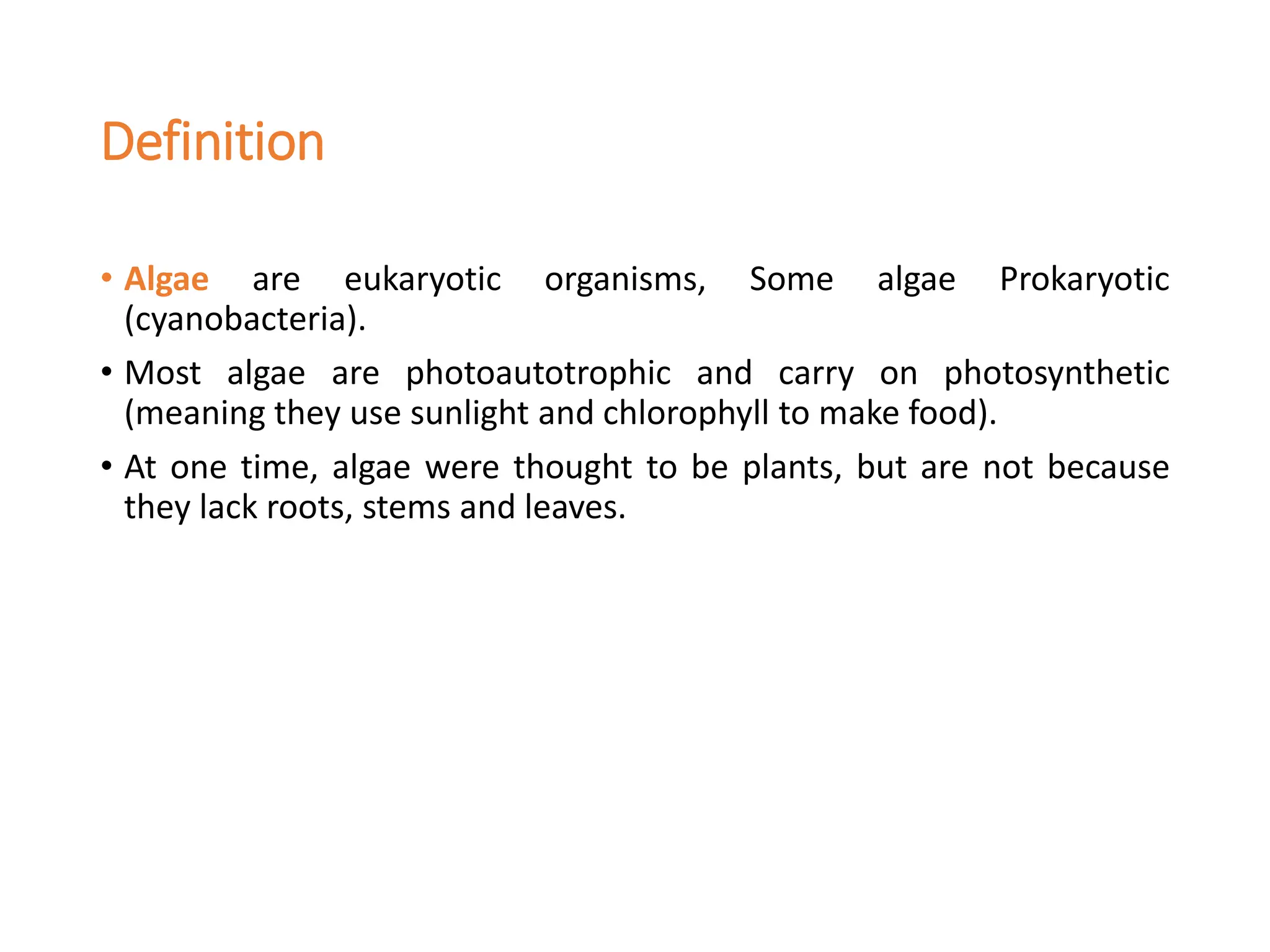
Definition
• Algae are eukaryotic organisms, Some algae Prokaryotic
(cyanobacteria).
• Most algae are photoautotrophic and carry on photosynthetic
(meaning they use sunlight and chlorophyll to make food).
• At one time, algae were thought to be plants, but are not because
they lack roots, stems and leaves.
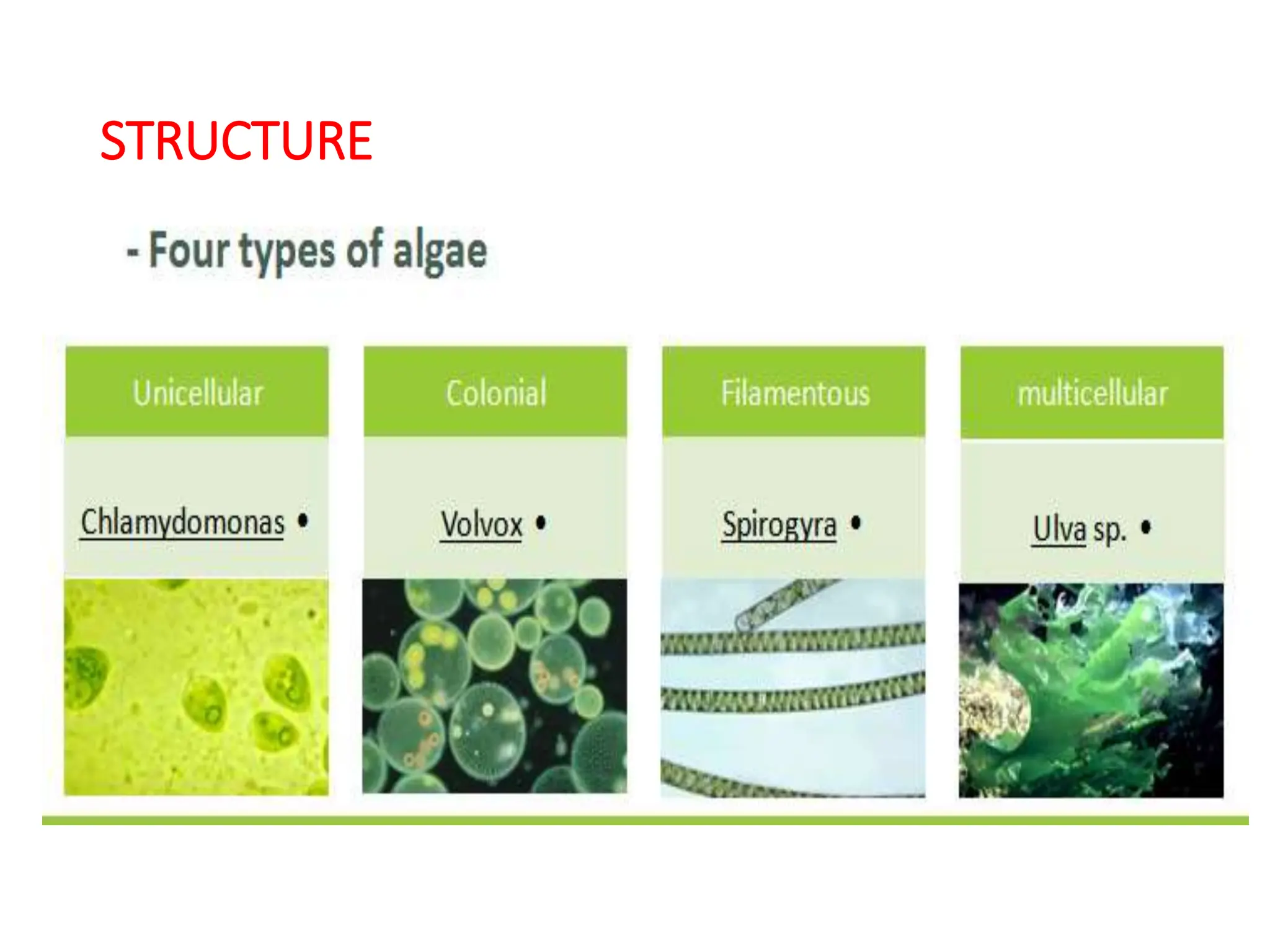
STRUCTURE
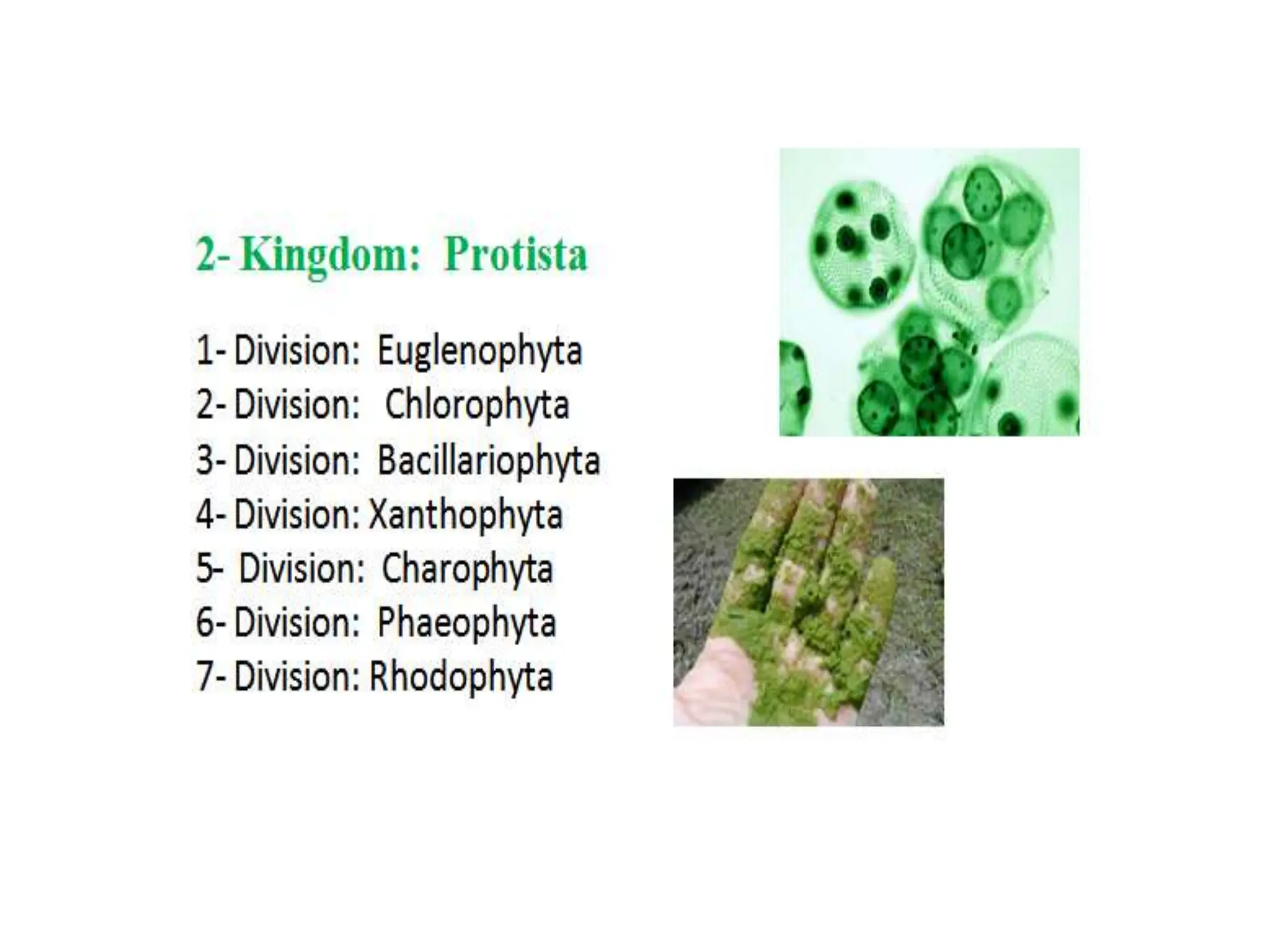
Algae Classification
• According to five kingdome classifiction system whish was suggested
by Ropert wittaker in 1969.
• The 5 kingdoms were (monera , protista , plants ,animals ,fungi).
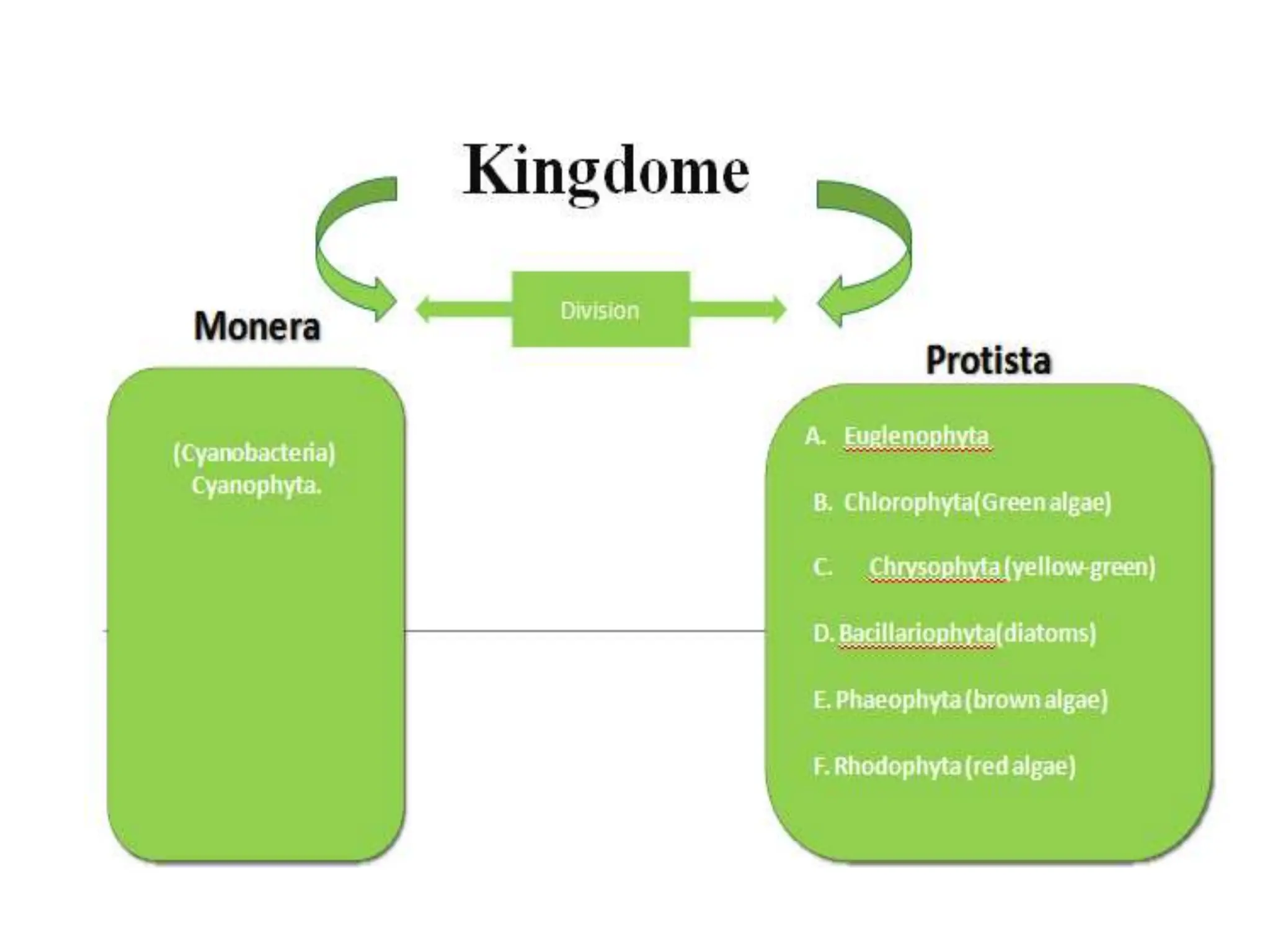
• So algae included in kingdome monera wich contains cyanophyta or
blue green algae and kingdom protista which contains all other groups
of algae.
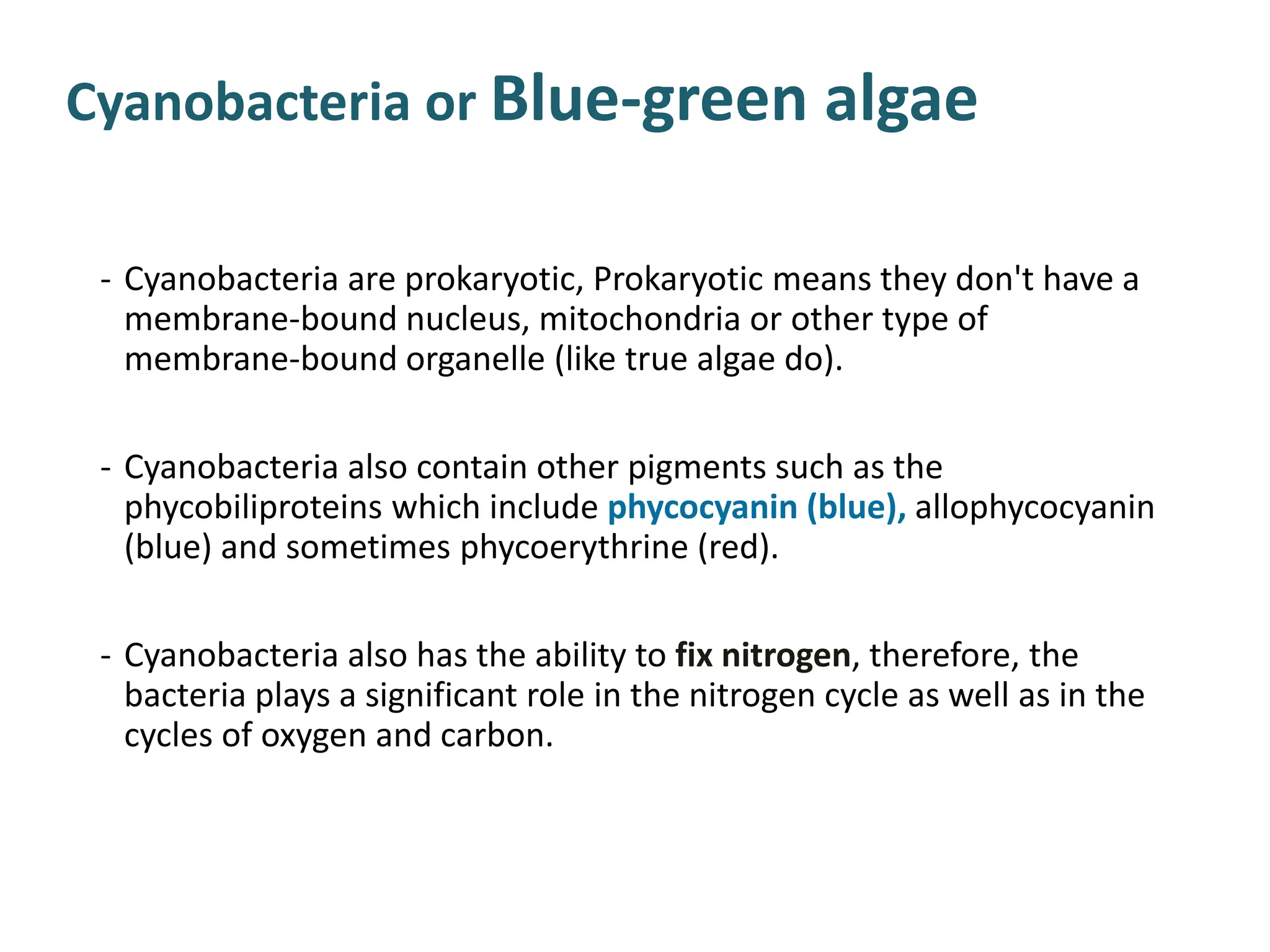
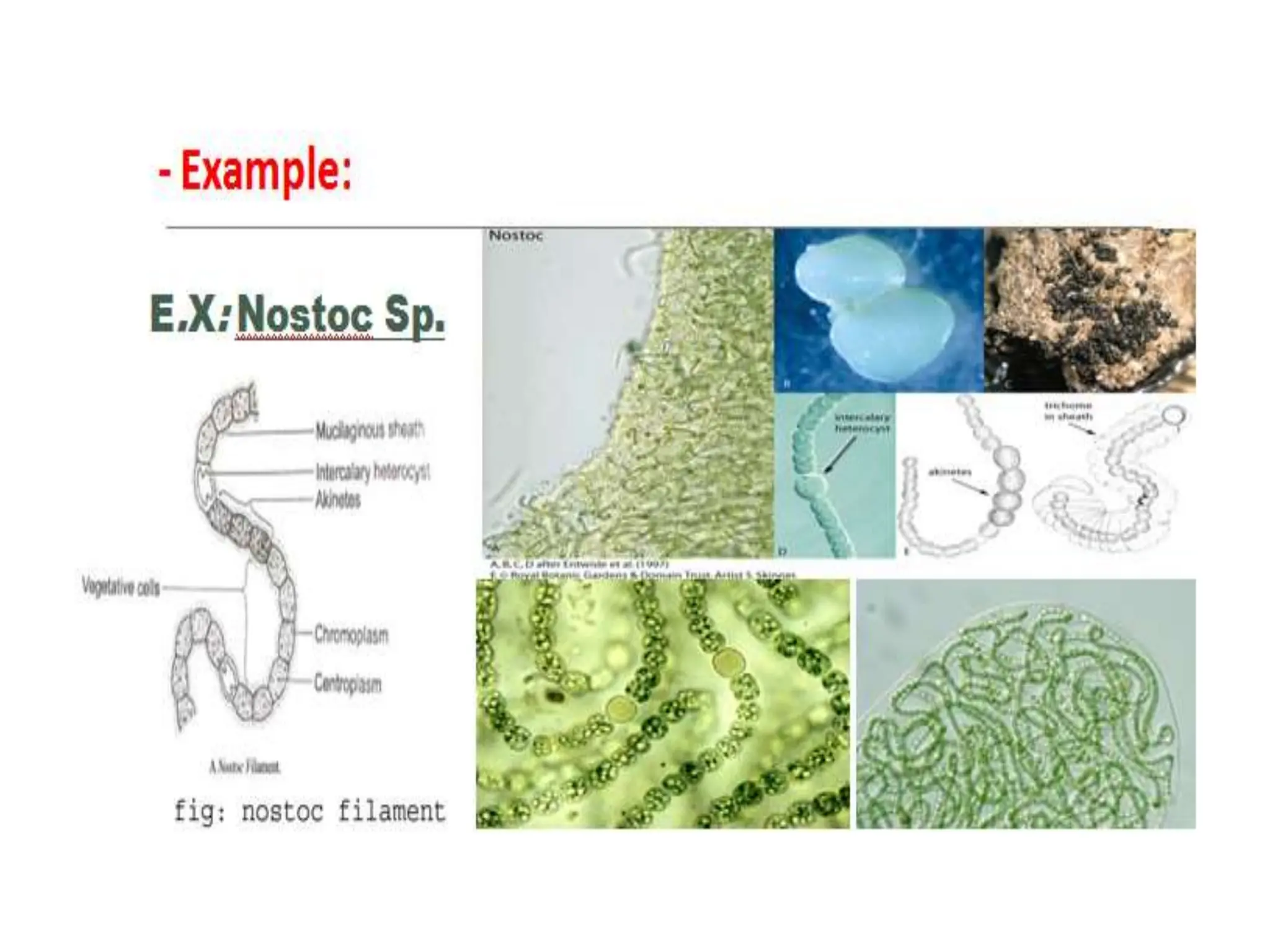
Cyanobacteria or Blue-green algae
- Cyanobacteria are prokaryotic, Prokaryotic means they don't have a
membrane-bound nucleus, mitochondria or other type of
membrane-bound organelle (like true algae do).
- Cyanobacteria also contain other pigments such as the
phycobiliproteins which include phycocyanin (blue), allophycocyanin
(blue) and sometimes phycoerythrine (red).
- Cyanobacteria also has the ability to fix nitrogen, therefore, the
bacteria plays a significant role in the nitrogen cycle as well as in the
cycles of oxygen and carbon.
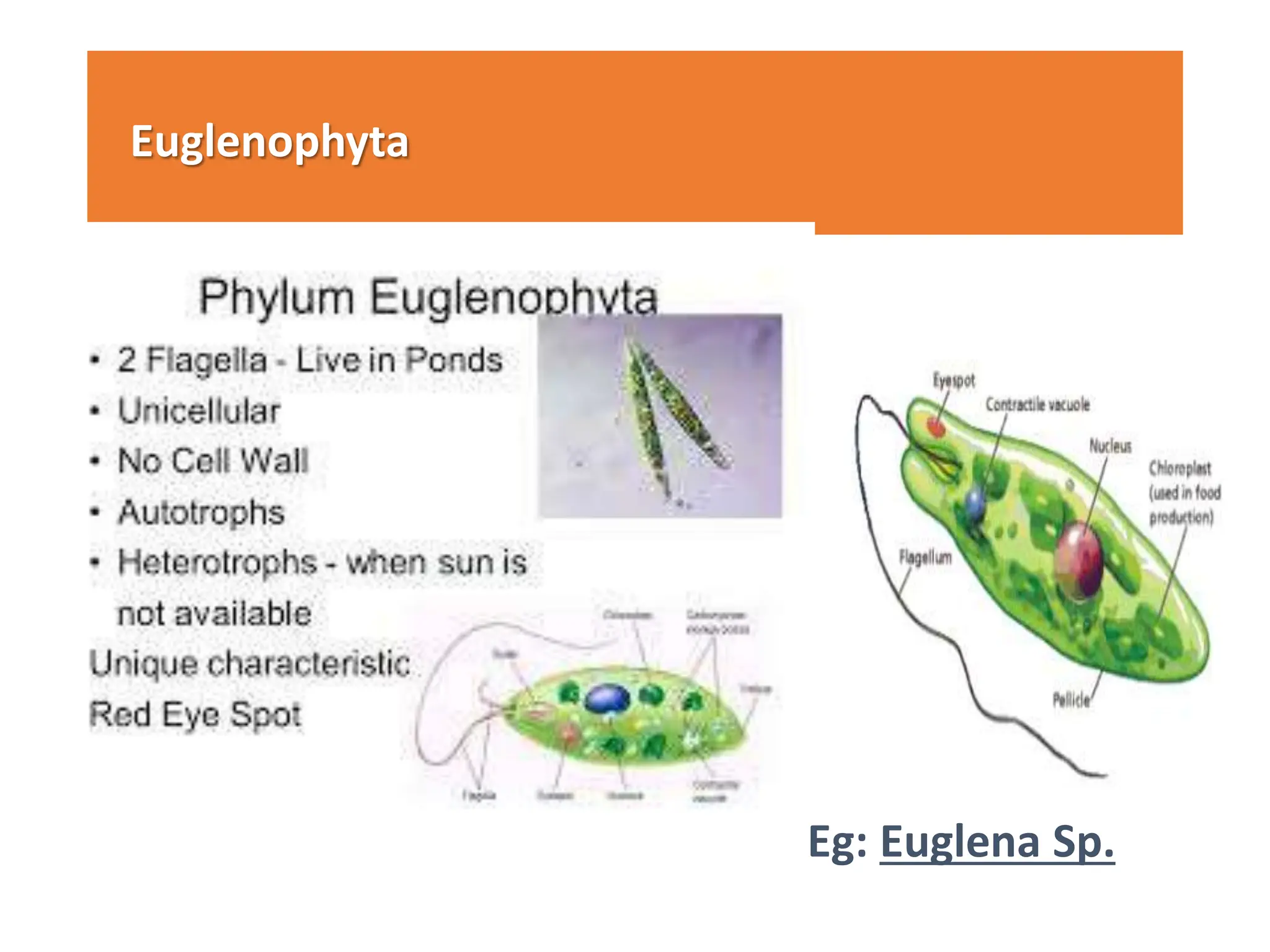
Euglenophyta
Eg: Euglena Sp.
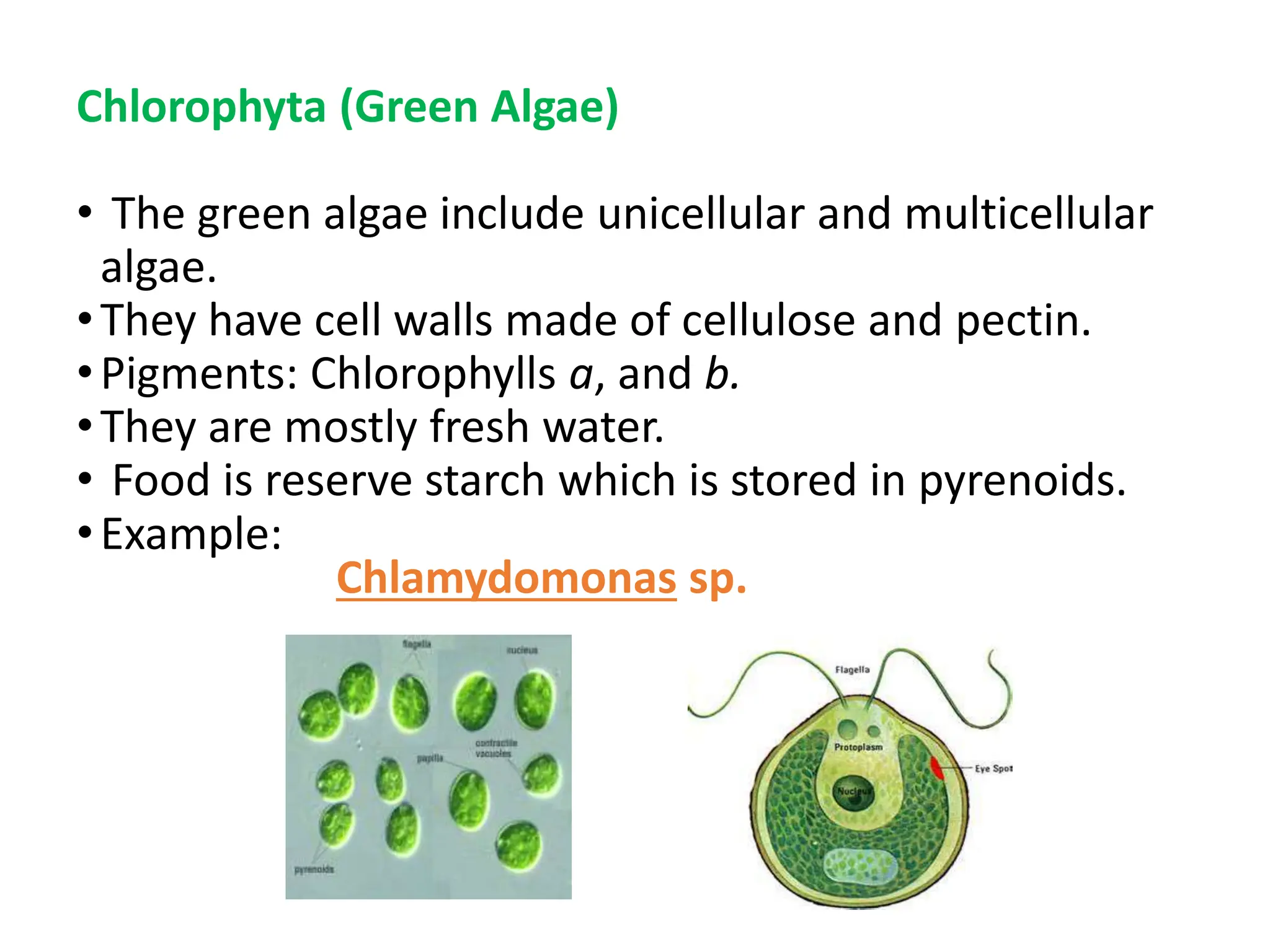
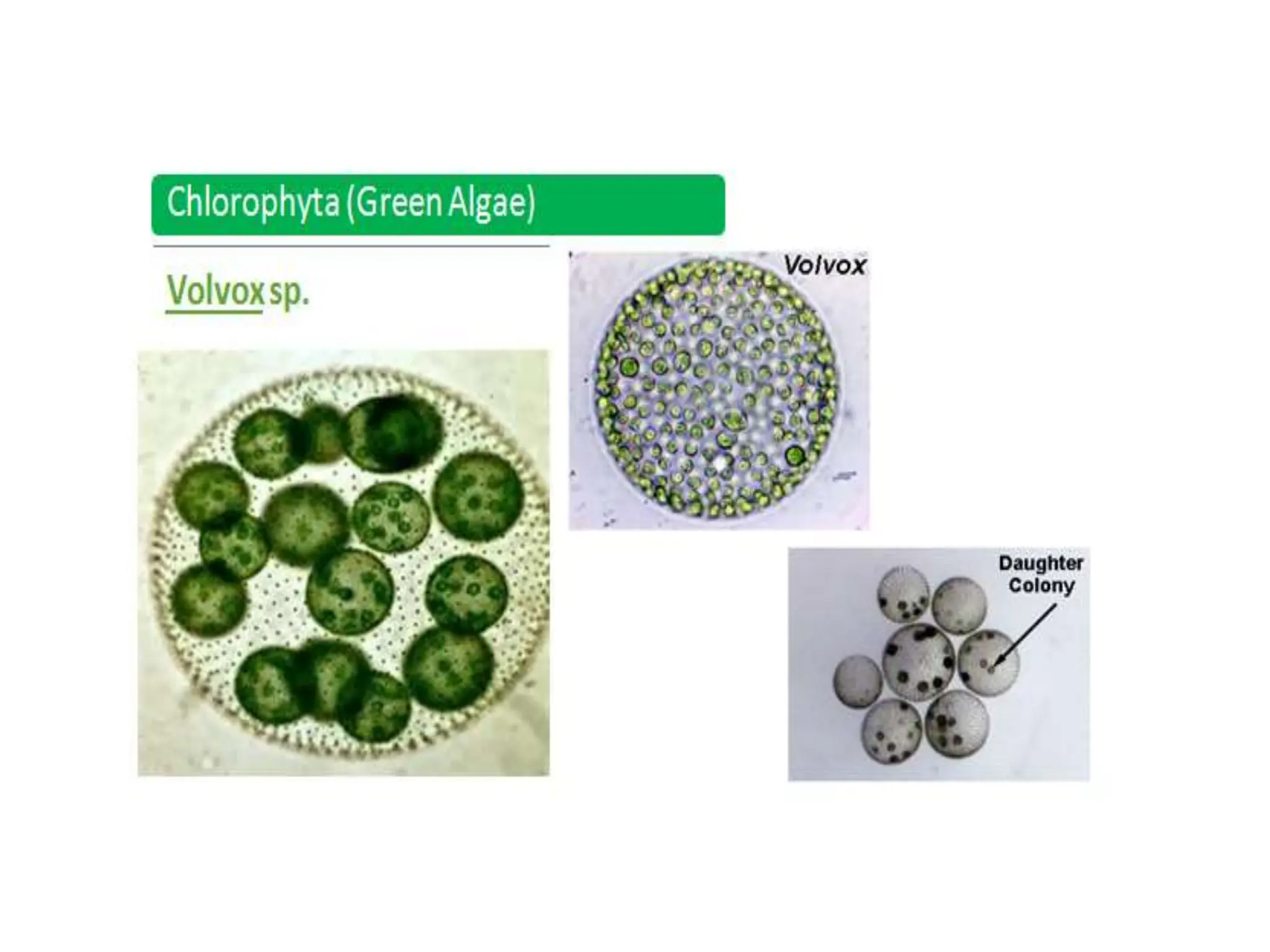
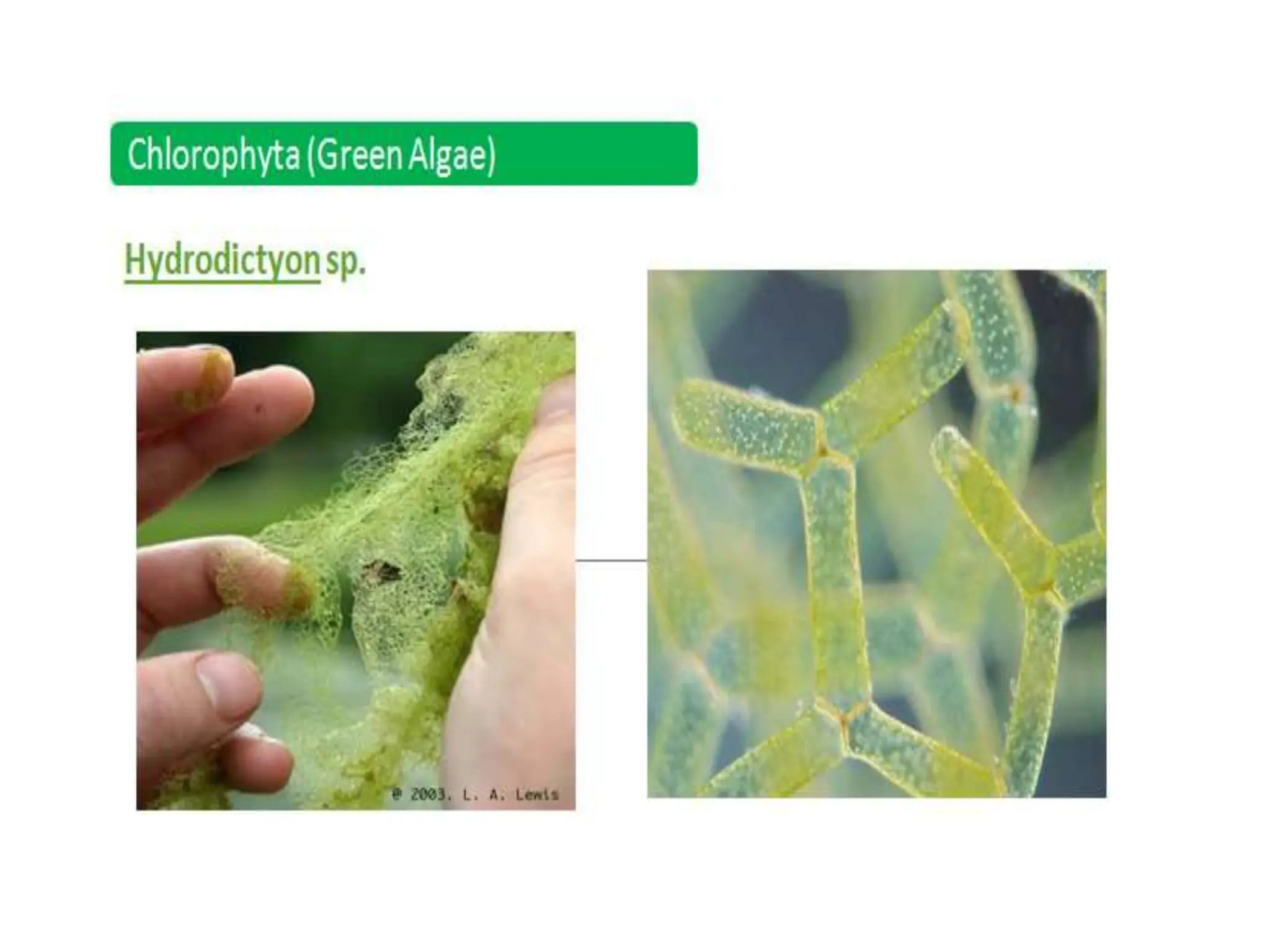
Chlorophyta (Green Algae)
• The green algae include unicellular and multicellular
algae.
•They have cell walls made of cellulose and pectin.
•Pigments: Chlorophylls a, and b.
•They are mostly fresh water.
• Food is reserve starch which is stored in pyrenoids.
•Example:
Chlamydomonas sp.
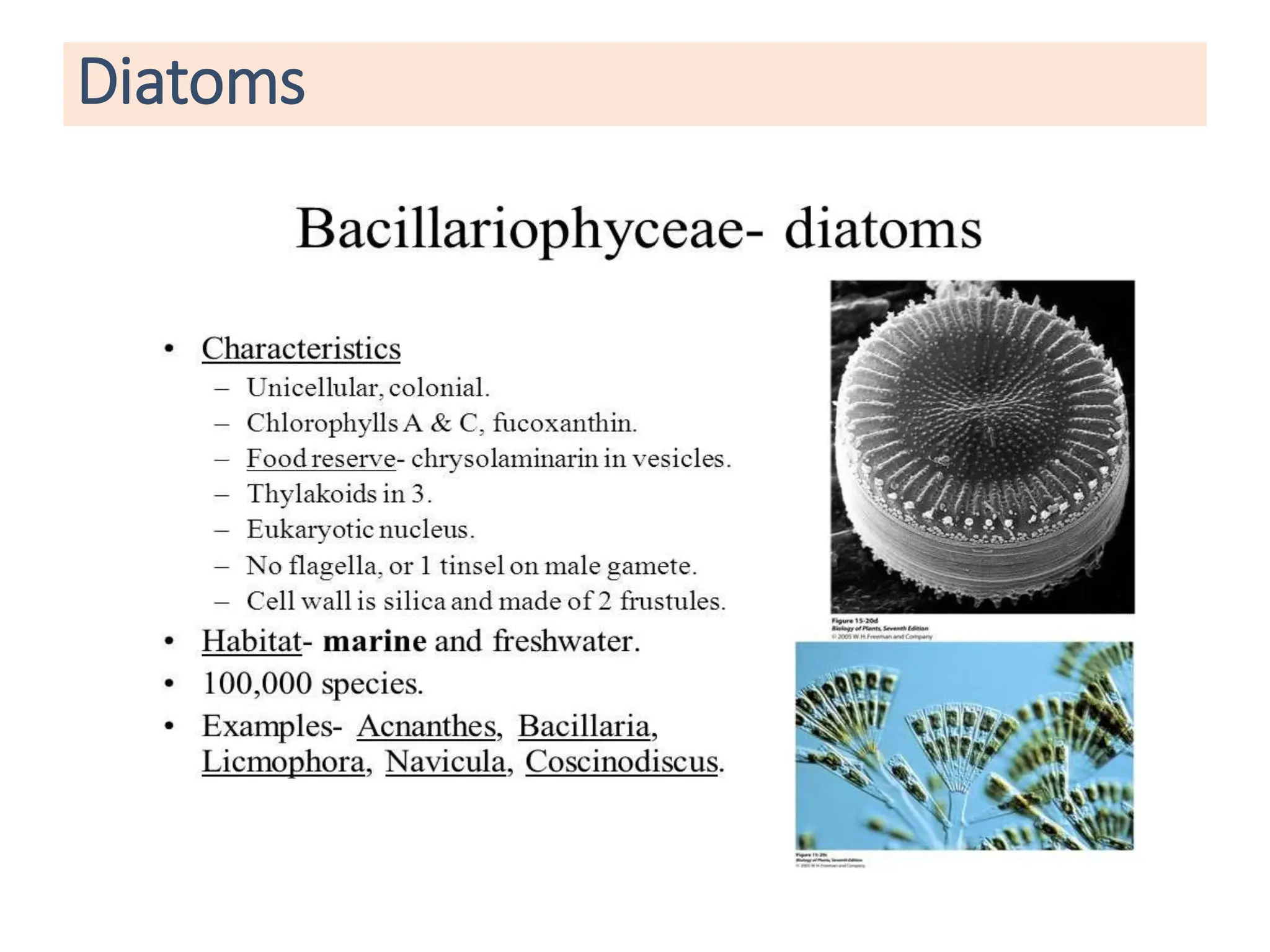
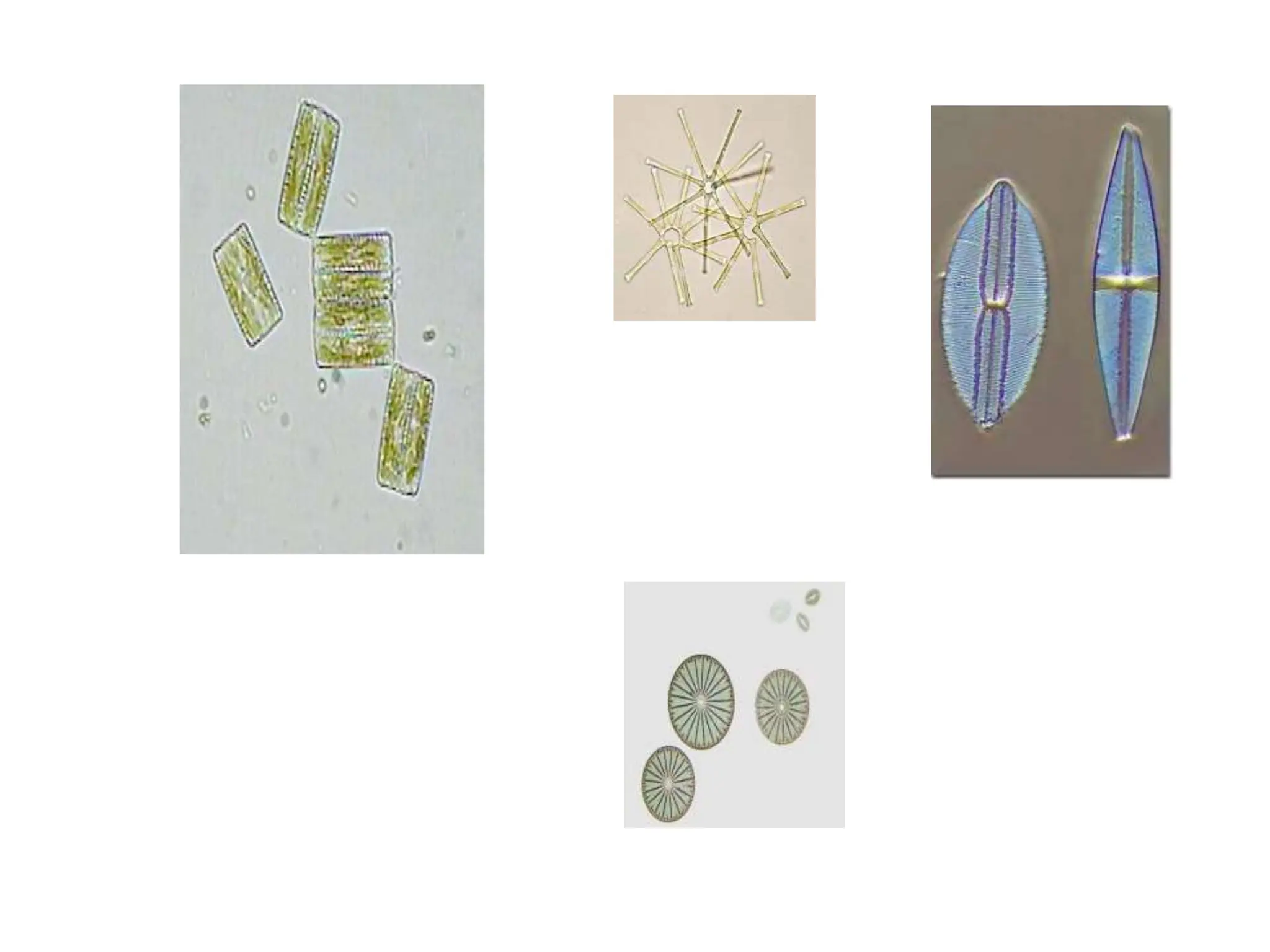
Diatoms
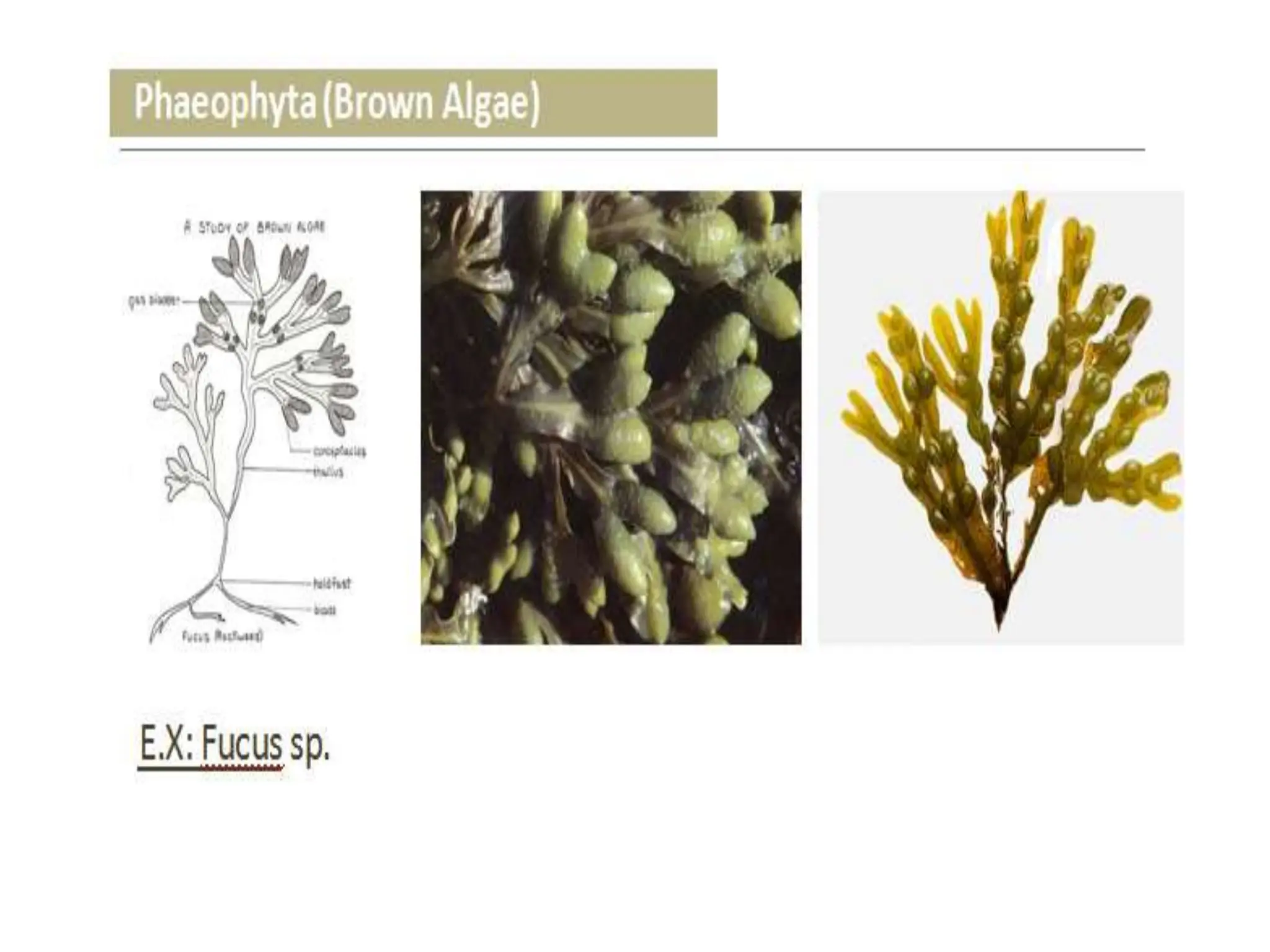
Phaeophyta (Brown Algae)
• Brown algae are multicellular.
• They grow on rocks in shallow water of the sea.
• Large brown algae are called kelps.
• Kelps may grow densely in the sea and form kelp forests.
• They form important food sources for fish and invertebrates.
• The brown algae growing on rocks are known as rockweed.
• Example of rockweed is Sargassum.
• Algin is a substance derived from some algae which is used in
making ice cream, lotion and plastics.
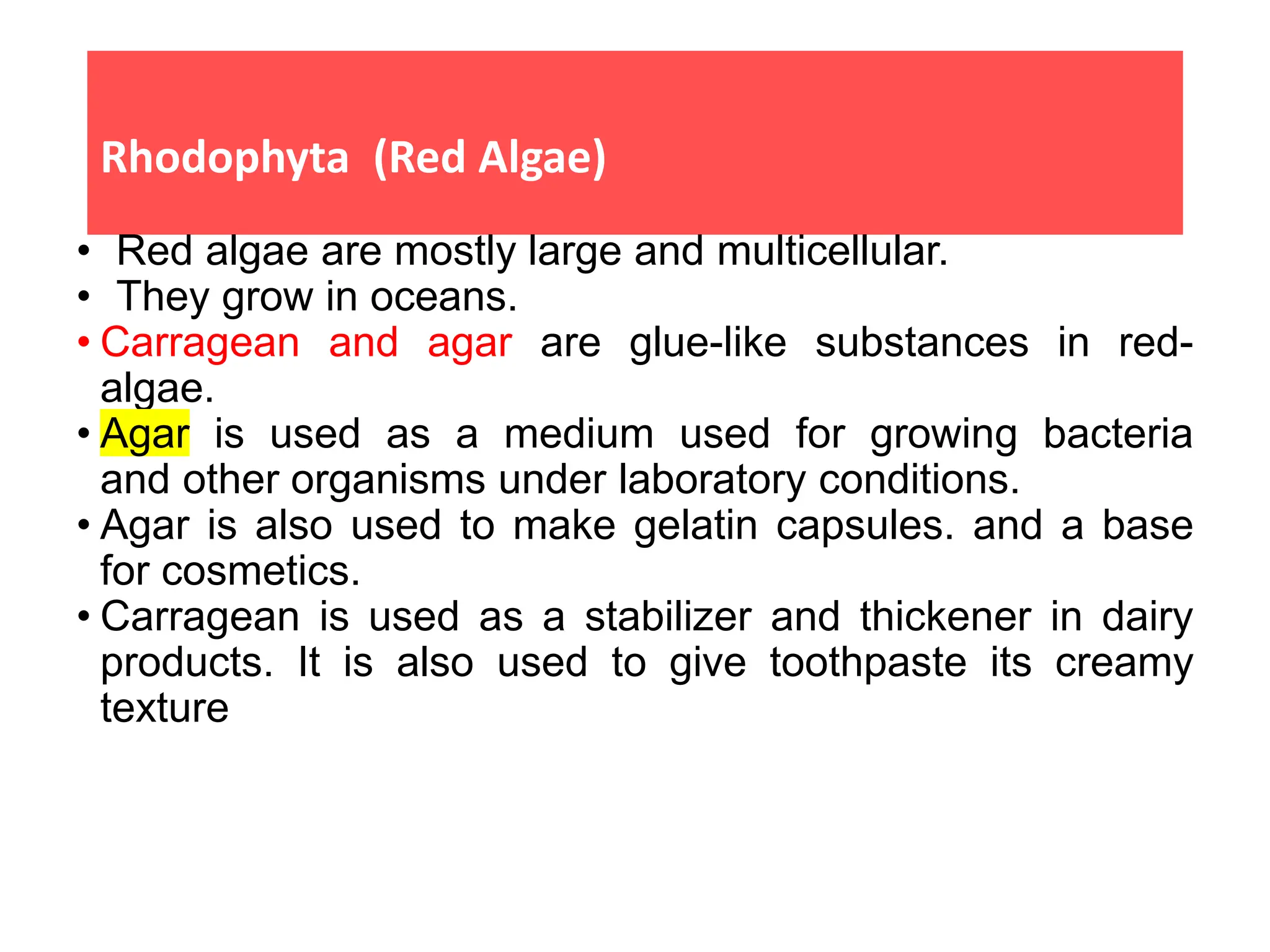
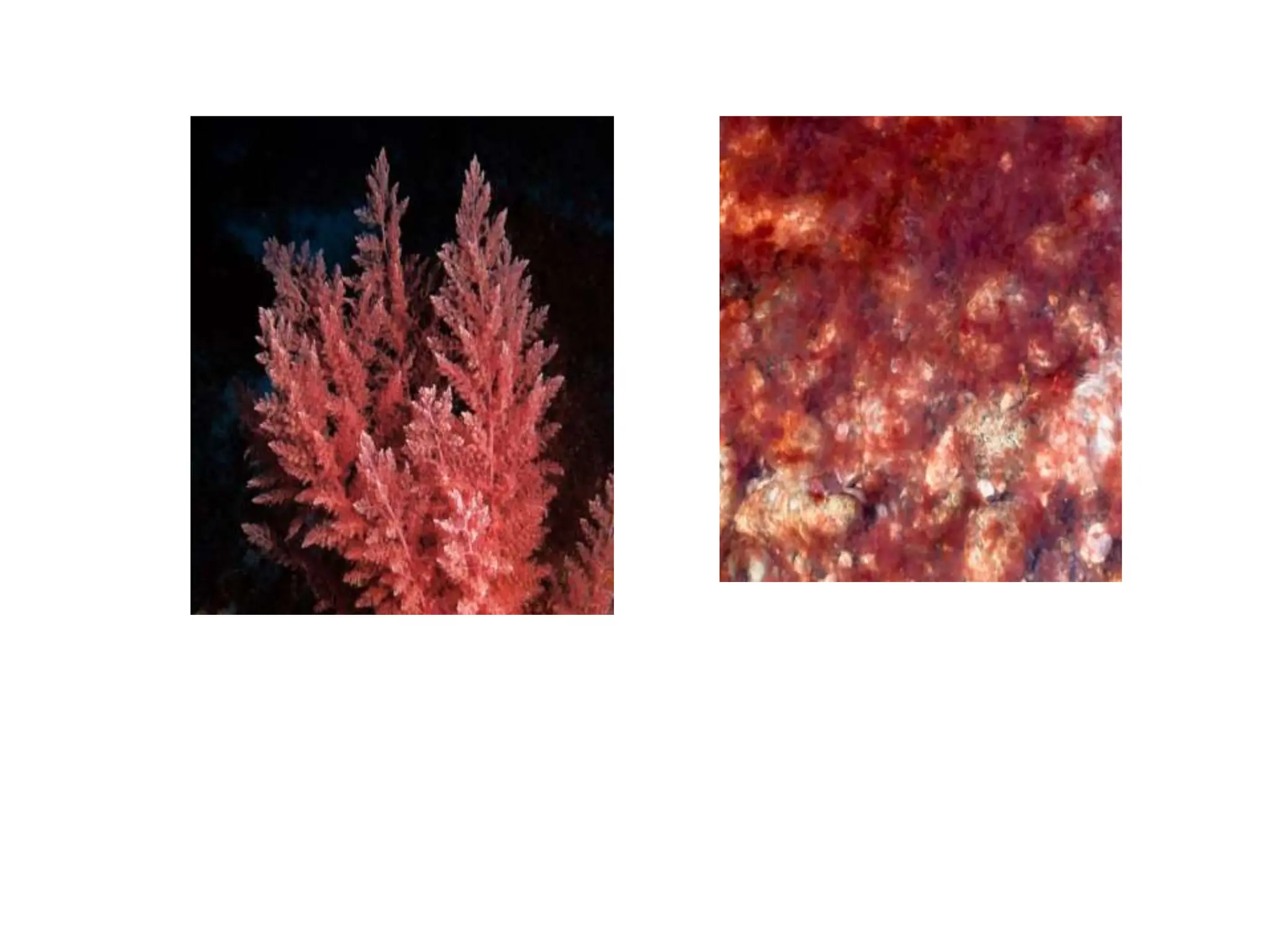
Rhodophyta (Red Algae)
• Red algae are mostly large and multicellular.
• They grow in oceans.
• Carragean and agar are glue-like substances in red-
algae.
• Agar is used as a medium used for growing bacteria
and other organisms under laboratory conditions.
• Agar is also used to make gelatin capsules. and a base
for cosmetics.
• Carragean is used as a stabilizer and thickener in dairy
products. It is also used to give toothpaste its creamy
texture
Protozoa
Introduction
• The word protozoa is come from Greek protozoon word meaning
“First Animal”
• Protozoa are a diverse group of unicellular (may be multicellular)
eukaryotic organisms.
• The word “protozoa” by coined by GEORG AUGUST GOLDFUSS in
1818.
• They are heterotrophic organisms and they donot have chlorophyll.
eg: Amoeba, paramecium, euglena.
Characteristics
• Mostly Unicellular organism with fully functional cell.
• Live freely, may be parasitic or symbiotic.
• Protozoa are chemo-hetrotrophs.
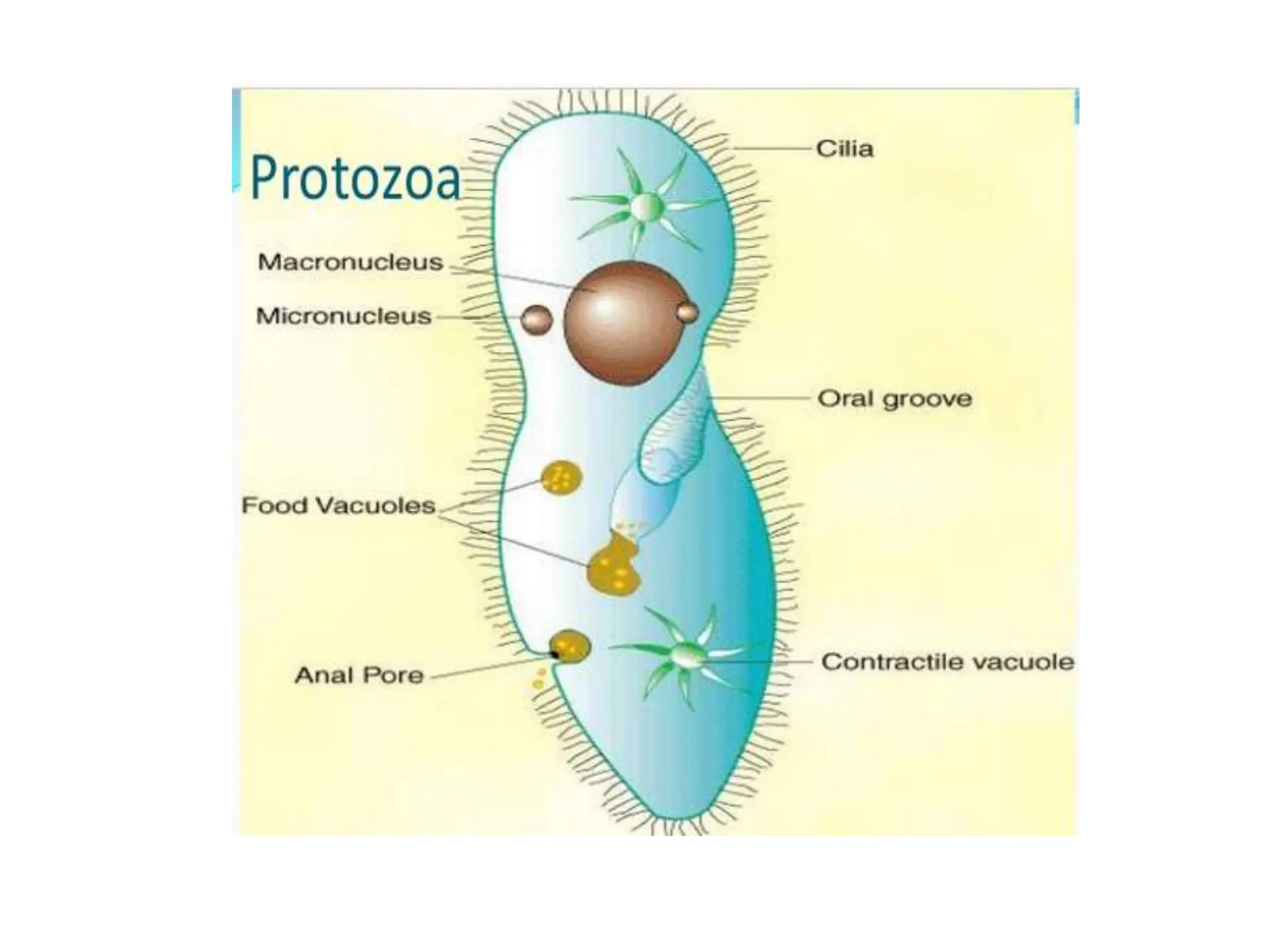
• They are motile have locomotive organelles. E.g. Flagella and Cilia for
movement
• A protozoan body consists of only mass of protoplasm, so they are
called acellular or non-cellular animals.
• HABITAT - mostly aquatic, either free living or parasitic.
• SIZE - most protozoans are in the size of 1 to 10 micrometer long, but
Balantidium coli may measure 150 micrometer.
• BODY- body of protozoa is either naked or covered by a pellicle.
• LOCOMOTION- locomotary organ are pseudopodia or cilia or absent.
• NUTRITION - nutrition are holophytic (like plant) or holozoic (like
animal) or saprophytic or parasitic.
• DIGESTION - digestion is intracellular, occurs in food vacoules.
• RESPIRATION - respiration occurs through the body surface.
• OSMOREGULATION – contractile vacoules helps in osmoregulation.
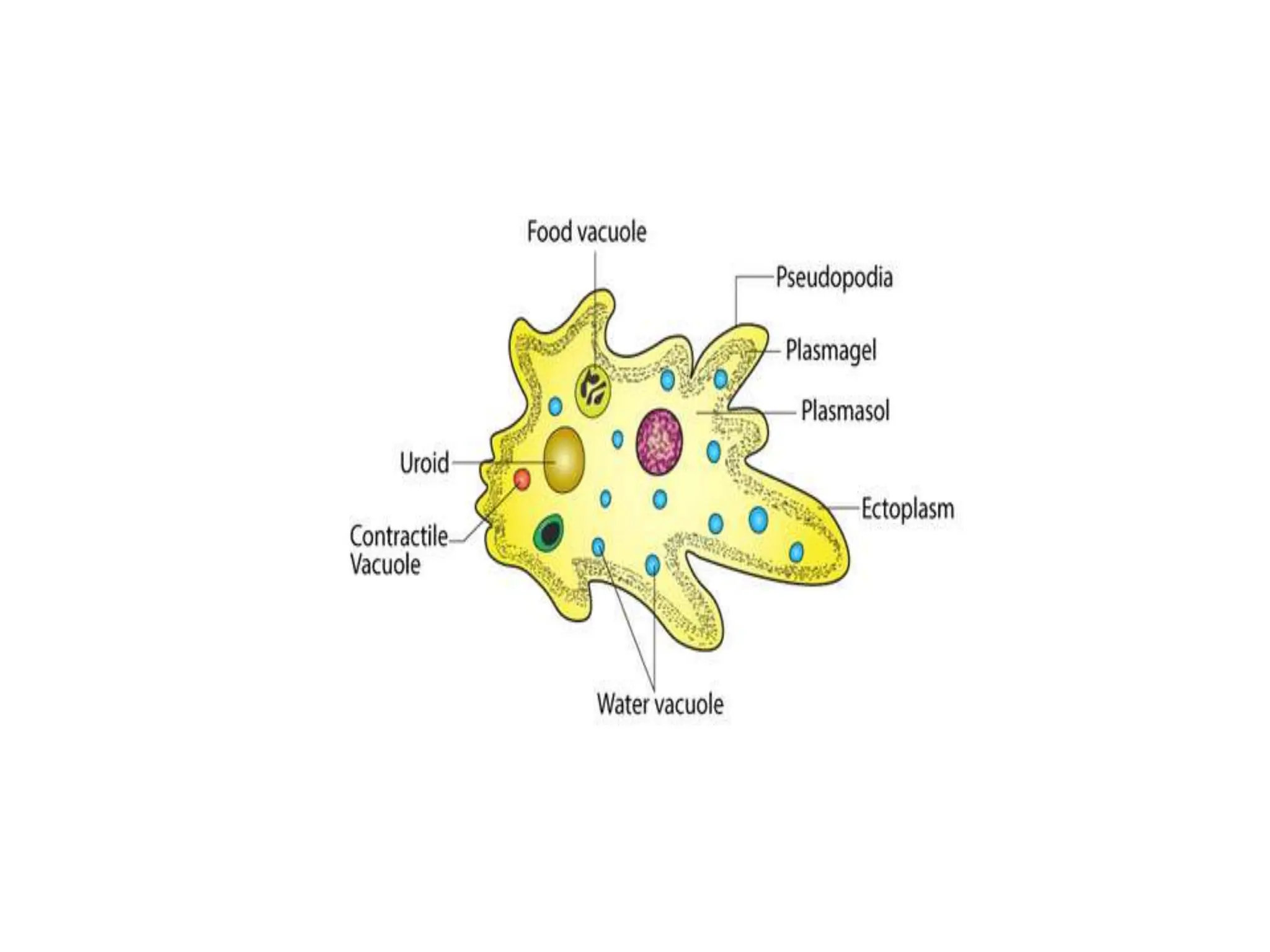
• In most protozoa, the cytoplasm is differentiated into ectoplasm (the
outer, transparent layer) and endoplasm (the inner layer containing
organelles).
• Ectoplasm helps in movement, feeding and Protection.
• Endoplasm houses Nucleus, mitochondria and food
• The structure of cytoplasm is mostly seen in species with projecting
pseudopodia, such as amoebas.
Classification of Protozoa
• Protozoa are classified on the basis of their motility and method of
reproduction
• They are classified into Four main types
1. Mastigophora or Flagellates
2. Ciliophora or Ciliates
3. Sarcodina or Amoeboids
4. Sporozoa or Sporozoans
Mastigophora or Flagellates
• They are parasites or free-living.
• They have flagella for locomotion
• Their body is covered by a cuticle or pellicle
• Freshwater forms have a contractile vacuole
• Reproduction is by binary fission (longitudinal division)
• Examples: Trypanosoma, Trichomonas, Giardia, Leishmania, etc.
Sarcodina or Amoeboids
• They live in the freshwater, sea or moist soil.
• The movement is by pseudopodia. They capture their prey by
pseudopodia
• There is no definite shape and pellicle is absent
• The contractile vacuole is present in the amoeboids living in
freshwater
• Reproduction is by binary fission and cyst formation
• Examples: Amoeba, Entamoeba, etc.
Sporozoa or Sporozoans
• They are endoparasitic.
• They don’t have any specialised organ for locomotion
• The pellicle is present, which has subpellicular microtubules, that
help in movement
• Reproduction is by sporozoite formation
• Examples: Plasmodium, Myxidium, Nosema, Globidium, etc.
Ciliophora or Ciliates
• They are aquatic and move actively with the help of thousands of cilia.
• They have fixed shape due to covering of pellicle
• They may have tentacles, e.g. in the sub-class Suctoria
• Contractile vacuoles are present
• Some species have an organ for defence called trichocysts
• They move with the help of cilia and the movement of cilia also helps in
taking food inside the gullet
• They reproduce by transverse division and also form cysts
• Examples: Paramoecium, Vorticella, Balantidium, etc.
Reproduction in Protozoa
• Protozoa can reproduce their off spring by both Sexual and Asexual
methods.
• Asexual methods of reproduction are: Budding, Binary Fission,
Schizogony or Multiple Fission
• Sexual Methods : Conjugation, Gametogony
Schizogony
• It is the method of multiple fission in which first the nucleus
undergoes multiple division, form many nuclei that a small portion of
cytoplasm concentrate around each nucleus and than protozoan cell
is divide into many daughter cells.
Sexual Reproduction
• Conjugation: Two protozoa meet together and exchange their genetic
material
• Gametogony: Union of two sexually differentiated cells
Diseases caused by Protozoa
Antiprotozoal Drugs
• Examples of antiprotozoal drugs include: Chloroquine Mefloquine
and Pyrimethamine.
• These are used in malaria treatment.
• Metronidazole was developed as an antiprotozoal drug. It induces
strand breaks in the DNA of sensitive organisms and also disrupts
membrane integrity.
• Other antiprotozoal agents are Sulphonamides and trimethoprim,
inhibit folic acid synthesis
Viruses
Introduction
• Virology is the branch of science that deals with the study of viruses.”
• Viruses are non-cellular, microscopic infectious agents that can only
replicate inside a host cell.
• made up of genetic material and protein that can invade and reproduce
only within the living cells of bacteria, plants and animals.
• For instance, a virus cannot replicate itself outside the host cell.
• Viruses can also be crystallized, which no other living organisms can do.
• viruses being classified in the grey area – between the living and non-
living.
Characteristics of Viruses
• They have no cell nucleus.
• Virion size range is ~10-400 nm.
• They do not have an organized cell structure.
• They typically have one or two strands of DNA or RNA.
• They are enclosed in a protective coat of protein called the capsid.
• They do not respire, do not metabolize and do not grow but they do
reproduce.
• They are considered both as living and nonliving things, as they are
inactive outside the host cell, and are active when present inside host
cell.
Classification based on the presence of nucleic acid
• DNA virus
The virus, having DNA as its genetic material. There are two different
types of DNA virus.
Single-stranded (ss) DNA virus: e.g. Picornaviruses, Parvovirus, etc.
Double-stranded (ds) DNA virus: e.g. Adenovirus, Herpes virus, etc.
• RNA virus
The virus, having RNA as its genetic material. There are two different
types of RNA virus
Double-stranded (ds) RNA virus: e.g. Reovirus, etc.
Single-stranded (ss) RNA virus. It is further classified into two Positive
sense RNA (+RNA) and negative sense RNA (-RNA).
Poliovirus, Hepatitis A, Rabies virus, Influenza virus are examples of
single-stranded RNA virus.
Classification based on the structure or symmetry
Complex virus. Eg. Poxvirus
Radial symmetry virus. Eg.Bacteriophage
Cubical or icosahedral symmetry shaped virus. E.g.
Reovirus, Picornavirus
Rod or Spiral shaped or helical symmetry virus.Eg.
Paramyxovirus, orthomyxovirus
Classification based on the replication properties
and site of replication
Replication within the cytoplasm of the host cell.
Eg. All RNA viruses except the Influenza virus.
Replication within the nucleus and the cytoplasm of the host cell.
Eg. Influenza virus, Poxvirus, etc.
Replication within the nucleus of the host cell.
All DNA viruses except Pox virus.
Replication of the virus through the double-stranded DNA intermediate.
Eg. All DNA viruses, Retrovirus and some tumour causing RNA virus.
Replication of the virus through a single-stranded RNA intermediate.
Eg. All RNA viruses except Reovirus and tumour-causing RNA viruses.
Classification based on the host range
1. Animal viruses These viruses infect by invading the
cells of animals, including humans. Prominent examples
of animal viruses include the influenza virus, mumps
virus, rabies virus, poliovirus, Herpes virus, etc.
2. Plant viruses These viruses infect plants by invading
the plant cells. Well-known examples of plant virus
include the potato virus, tobacco mosaic virus, beet
yellow virus, and turnip yellow virus, cauliflower mosaic
virus, etc.
3. Bacteriophage The virus which infects bacterial cells
is known as bacteriophage. There are many varieties of
bacteriophages, such as DNA virus, MV-11, RNA
virus, λ page, etc.
4. Insect virus The virus which infects insects is known
as Insect virus, also called the viral pathogen of insects.
These viruses are considered as a powerful biocontrol
agent in the landscape of modern agriculture.
Ascovirus virions and Entomopox virus, are best
examples for insect virus.
Classification based on the mode of transmission
Airborne infections – Transmission of the virus through the air into the respiratory tract.
Eg. Swine flu, and Rhinovirus.
Fecal oral route – Transmission of the virus through the contaminated water or food.
Eg. Hepatitis A virus, Poliovirus, Rotavirus.
Sexually transmitted diseases – Transmission of the virus through sexual contacts with
the infected person. Eg. Retrovirus, human papillomavirus, etc.
Transfusion-transmitted infections- Transmission of the virus through the blood
transfusion.
Eg. Hepatitis B virus, Human Immunodeficiency Virus, etc.
Zoonoses -Transmission of the virus through the biting of infected animals, birds, and
insects to human. Eg. Rabies virus, Alpha virus, Flavivirus, Ebola virus, etc.
List of Viral Diseases
• Following is a list of virus diseases that have made a significant
socioeconomic impact in the last few decades.
• AIDS (Acquired Immunodeficiency Syndrome)
• Ebola
• Influenza
• SARS (Severe Acute Respiratory Syndrome)
• Chikungunya
• Small Pox (Now eradicated)
Mutation
What Are Mutations?
• Changes in the
nucleotide sequence of
DNA
• May occur in somatic
cells (aren’t passed to
offspring)
• May occur in gametes
(eggs & sperm) and be
passed to offspring
• The term “mutation” was coined by Hugo de
Vries, which is derived from Latin word meaning
“to change”
• A mutation is a permanent alteration in the
sequence of nitrogenous bases of a DNA
molecule.
• Mutations can be spontaneous, or induced by a
mutagen in the environment.
• The process of mutation is called mutagenesis
and the agent inducing mutations is called
mutagen.
• Mutation in bacteria has some results such as
missense, nonsense, silent, frameshift, lethal,
suppressor and conditional lethal mutation
Are Mutations Helpful or
Harmful?
• Mutations happen
regularly
• Almost all mutations are
neutral
• Chemicals & UV
radiation cause
mutations
• Many mutations are
repaired by enzymes
Are Mutations Helpful or
Harmful?
• Some type of skin
cancers and leukemia
result from somatic
mutations
• Some mutations may
improve an organism’s
survival (beneficial)
Mechanisms of mutation
• a. Substitution of a nucleotide: Base
substitution, also called point mutation,
involves the changing of single base in the DNA
sequence. This mistake is copied during
replication to produce a permanent change. If
one purine [A or G] or pyrimidine [C or T] is
replaced by the other, the substitution is called
a transition. If a purine is replaced by a
pyrimidine or vice-versa, the substitution is
called a transversion. This is the most common
mechanism of mutation.
• b. Deletion or addition of a nucleotide:
deletion or addition of a nucleotide during
DNA replication also called frameshift
mutation. When a transposon (jumping
gene) inserts itself into a gene, it leads to
disruption of gene and is called insertional
mutation.
Quick Review: What is a
chromosome?
• A chromosome is a DNA molecule that
is tightly coiled around proteins called
histones, which support its structure,
to form a thread-like structures.
Types of Mutations
Chromosome Mutations
• May Involve:
– Changing the
structure of a
chromosome
– The loss or
gain of part of
a chromosome
Chromosome Mutations
• Five types exist:
– Deletion
– Inversion
– Translocation
– Nondisjunction
– Duplication
Deletion
• Due to breakage
• A piece of a
chromosome is lost
Inversion
• Chromosome segment
breaks off
• Segment flips around
backwards
• Segment reattaches
Duplication
• Occurs when a
gene sequence is
repeated
Translocation
• Involves two
chromosomes that
are NOT homologous
• Part of one
chromosome is
transferred to
another chromosome
Translocation
Nondisjunction
• Failure of chromosomes to
separate during meiosis
• Causes gamete to have too many
or too few chromosomes
• Disorders:
– Down Syndrome – three 21st
chromosomes
– Turner Syndrome – single X chromosome
– Klinefelter’s Syndrome – XXY
chromosomes
Down Syndrome
• Down syndrome (DS or DNS), also known
as trisomy 21, is a genetic disorder caused
by the presence of all or part of a third
copy of chromosome 21. It is typically
associated with physical growth delays,
characteristic facial features and mild to
moderate intellectual disability.
Turner Syndrome
• A condition that affects only females,
results when one of the X
chromosomes (sex chromosomes) is
missing or partially missing. Turner
syndrome can cause a variety of
medical and developmental problems,
including short height, failure of the
ovaries to develop and heart defects.
Klinefelter’s Syndrome
• A genetic disorder that affects males.
• Klinefelter’s syndrome occurs when a boy is born with one or more
extra X chromosomes. Most males have one Y and one X
chromosome. Having extra X chromosomes can cause a male to have
some physical traits unusual for males such as weaker muscles,
greater height, poor coordination, less body hair, and sterility
Chromosome Mutation
Animation
Gene Mutations
• Change in the
nucleotide sequence
of a gene
• May only involve a
single nucleotide
• May be due to
copying errors,
chemicals, viruses,
etc.
Types of Gene Mutations
• Include:
– Point Mutations
– Substitutions
– Insertions
– Deletions
– Frameshift
Point Mutation
• Change of a single
nucleotide
• Includes the
deletion, insertion, or
substitution of ONE
nucleotide in a gene
Point Mutation
• Sickle Cell
disease is the
result of one
nucleotide
substitution
• Occurs in the
hemoglobin gene
•The substitution of one
purine for another purine or
one pyrimidine for another
pyrimidine is termed as
transition type of point
mutation
•A transversion is the
replacement of a purine for
a pyrimidine or vice versa.
•B. Nonsense mutation: A
mutation that leads to the
formation of a stop codon is
called a nonsense mutation.
Since these codon cause the
termination of protein
synthesis, a nonsense
mutation leads to
incomplete protein products.
Frameshift Mutation
• Inserting or deleting
one or more
nucleotides
• Changes the “reading
frame” like changing a
sentence
• Proteins built
incorrectly
Frameshift Mutation
• Original:
– The fat cat ate the wee
rat.
• Frame Shift (“a” added):
– The fat caa tet hew
eer at.
Amino Acid Sequence
Changed
Gene Mutation
Animation
Substitution Mutation
•A substitution is a mutation that
exchanges one base for another (i.e.,
a change in a single "chemical letter"
such as switching an A to a G)
Insertion Mutation
•The addition of one or more
nucleotide base pairs into a DNA
sequence
Deletion Mutation
•A part of a chromosome or a sequence
of DNA is lost during DNA replication.
• Any number of nucleotides can be
deleted, from a single base to an entire
piece of chromosome
Normal Male
335
2n = 46
Normal Female
336
2n = 46
Male, Trisomy 21 (Down’s)
337
2n = 47
Female Down’s Syndrome
338
2n = 47
Klinefelter’s Syndrome
339
2n = 47
Turner’s Syndrome
340
2n = 45
Mutagen
• Classified under chemical & physical agents
• Physical – UV rays , heat, ionizing radiation
• Chemical – Base analogs, deaminating agents, alkylating
agents, intercatalyting agent.
• Mutagens can be chemicals such as nitrous acid, which alters
adenine to pair with cytosine instead of thymine.
• Other chemical mutagens include acridine dyes,
nucleoside analogs that are similar in structure to
nitrogenous bases, benzpyrene (from smoke and soot)
and aflatoxin.
• Radiation can also be a cause of DNA mutations.
• High energy light waves such as X-rays, gamma rays, and
ultraviolet light have been shown to damage DNA.
• UV light is responsible for the formation of thymine
dimers in which covalent links are established between
the thymine molecules.
• These links change the physical shape of the DNA
preventing transcription and replication.
Mutation repair
• Most cells possess four different
categories of DNA repair system :
• Direct repair systems, as the name
suggests, act directly on damaged
nucleotides, converting each one back
to its original structure.
• Excision repair involves excision of a
segment of the polynucleotide
containing a damaged site, followed by
resynthesis of the correct nucleotide
sequence by a DNA polymerase.
• Mismatch repair corrects errors
of replication, again by excising
a stretch of single-
stranded DNA containing the
offending nucleotide and then
repairing the resulting gap.
• Recombination repair is used to
mend double-strand breaks.
• Inducible or SOS repair is
process by which E. coli repairs
large amount of DNA damage.
Phenotypes of Bacterial Mutants
• Mutants that exhibit an increased
tolerance to inhibitory agents,
mostly antibiotics.
• Mutants that demonstrate an
altered fermentation ability or
increased or decreased capacity
to produce some end product.
• Mutants that are nutritionally
deficient.
• Mutants that exhibit changes in
colonial form or ability to produce
pigments.
• Mutants that show a change in
the surface structure &
composition of the microbial cell.
• Mutants that are resistant to the
action of bacteriophages.
• Mutants that exhibit some
changes in morphological
features eg. Ability to produce
spores, capsule
• Mutants that have lost a
particular function but retain the
intracellular enzyme activities to
catalyze the reactions of the
function.
• Mutants that yield a wild type
phenotype under one set of
conditions & a mutant phenotype
under another.
Destruction of
Microorganism
Introduction
• Control of microorganisms is essential in order to prevent the
transmission of diseases and infection, stop decomposition and
spoilage, and prevent unwanted microbial contamination.
• Microorganisms are controlled by means of physical agents and
chemical agents.
• Physical agents include such methods of control as high or low
temperature, desiccation, osmotic pressure, radiation, and filtration.
• Control by chemical agents refers to the use of disinfectants,
antiseptics, antibiotics, and chemotherapeutic antimicrobial
chemicals.
Terminology and Methods of Control
Sterilization – a process that destroys all viable microbes, including
viruses and endospores; microbicidal.
Disinfection – a process to destroy vegetative pathogens, not endospores;
inanimate objects.
Antiseptic – disinfectants applied directly to exposed body surfaces
Sanitization – any cleansing technique that mechanically removes
microbes.
Degermation – reduces the number of microbes.
Antiseptic: A mild disinfectant agent suitable for use on skin surfaces.
Germicide: “the agent kills” microbes. For example, a bactericide agent kills bacteria,
fungicide, virucide, sporocide.
Bacteriostatic: “the agent inhibits growth.” For example, a fungi static agent inhibits the
growth of fungi, but doesn’t necessarily kill it.
Antimicrobial Agent: Agent kills micro -organisms or inhibit their growth.
Cidal - An agent that is cidal in action will kill microorganisms and viruses.
Static - An agent that is static in action will inhibit the growth of microorganisms.
Factors That Affect Death Rate
The effectiveness of a particular agent is governed by several factors:
• Number of microbes
• Nature of microbes in the population
• Temperature and pH of environment
• Concentration or dosage of agent
• Mode of action of the agent
• Presence of solvents, organic matter, or inhibitors
Kinds of action of antimicrobial agents
• Damage to the cell wall or inhibition pf cell wall synthesis
• Alteration of the permeability of the cytoplasmic membrane
• Alteration of the physical or chemical state of proteins & nucleic acids
• Inhibition of enzyme action
• Inhibition of protein or nucleic acid synthesis
Heat Temperature Desiccation
Osmotic
Pressure
Filtration Radiation
Heat
• Kills microbes by denaturing enzymes.
• Heat resistance varies among different microbes.
• Thermal Death Point (TDP)- Lowest temperature to kill all the
bacteria in 10 minutes.
• Thermal Death Time (TDT)- Time required to kill all the bacteria at a
given temperature.
• Decimal Reduction Time (DRT)- 90% of a bacterial population killed at
a given temperature. Used in Commercial Sterilization.
• Microorganisms have a minimum, an optimum, and a maximum
temperature for growth.
• Temperatures below the minimum usually have a static action on
microorganisms.
• They inhibit microbial growth by slowing down metabolism but do
not necessarily kill the organism.
• Temperatures above the maximum usually have a cidal action, since
they denature microbial enzymes and other proteins.
• Temperature is a very common and effective way of controlling
microorganisms.
Moist heat
• Moist heat is generally more effective than dry heat for killing microorganisms
because of its ability to penetrate microbial cells.
• Moist heat kills microorganisms by denaturing their proteins (causes proteins
and enzymes to lose their three-dimensional functional shape).
• It also may melt lipids in cytoplasmic membranes.
Moist Heat
• Moist heat kills microbes by denaturing enzymes (coagulation of proteins)
1. Boiling (at 100°C, I.e., at sea level) kills many vegetative cells and viruses
within 10 minutes.
2. Autoclaving: steam applied under pressure (121°C at 15 psi for 15 – 20
min) is the most effective method of moist heat sterilization—the steam
must directly contact the material to be sterilized.
3. Pasteurization: destroys pathogens (Mycobacterium tuberculosis,
Salmonella typhi, etc.) without altering the flavor of the food—does not
sterilize (63°C for 30 seconds)
4. Higher temperature short time (HTST) pasteurization applies higher
heat for a much shorter time (72°C for 15 seconds)
5. An ultra-high-temperature, very short duration treatment (140°C for 3
sec.) is used to sterilize.
6. Fractional distillation (Tyndallization) – intermittent sterilization for
substances that cannot withstand autoclaving, which can be heated
upto 100 °C.
Dry Heat
• Dry heat kills microorganisms through a process of protein oxidation
rather than protein coagulation.
Dry Heat
• Direct Flaming – Burning contaminants
• Incineration – Destruction of microorganisms by burning performed
in laboratory.
• Used for
a. Needles
b. Inoculating Wires
c. Glassware
d. Body Parts
• Hot Air Sterilization – Oxidation 160° C for 2 Hours or 170° C for 1
hour
• Used for
a. Objects That Won’t Melt
b. Glassware
c. Metal
Low Temperature
• Low temperature inhibits microbial growth by slowing down
microbial metabolism.
• Decreasing temperature decreases chemical activity.
• Low Temperature are Not Bactericidal.
• Restrict enzyme activity.
• Ordinary Refrigerator Temperature 0° – 7°C .
• Do not Reproduce.
• Survive, Restrict rate of growth.
• Refrigeration at 5°C slows the growth of microorganisms and keeps
food fresh for a few days.
• Freezing at -10°C stops microbial growth, but generally does not kill
microorganisms, and keeps food fresh for several months.
DESICCATION
• Desiccation, or drying, generally has a static effect on
microorganisms.
• Desiccation of the microbial cell causes a cessation of metabolic
activity followed by a decline in the total viable population.
• Lack of water inhibits the action of microbial enzymes.
• Dehydrated and freeze-dried foods, for example, do not require
refrigeration because the absence of water inhibits microbial growth.
• Freeze-drying (Lyophilization) – remove water from specimen.
OSMOTIC PRESSURE
• Plasmolysis
• High zone of salt & sugar.
• Salt – Preservation of fish, meat, food.
• High osmotic pressure.
• Low availability of sugar solution to prevent microbial growth.
• Honey, high sugar content preserved.
• Loss of H2O.
• Microorganisms, in their natural environments, are constantly faced with
alterations in osmotic pressure.
• Water tends to flow through semipermeable membranes, such as the
cytoplasmic membrane of microorganisms, towards the side with a higher
concentration of dissolved materials (solute).
• In other words, water moves from greater water (lower solute)
concentration to lesser water (greater solute) concentration.
• The solute concentration within microbial cell is 0.95%
• The reverse process, passage of water from low solute concentration into
the cell is termed as plasmoptysis.
• The pressure built up within the cell as a result of this water intake is
termed as osmotic pressure.
Radiation
• Energy transmitted through space in a variety of forms is generally
called radiation.
• Energy of radiation is called photons, the particles in packet is called
quanta.
• Gamma rays & x-rays are called ionizing radiation.
Ionizing
• Destruction of DNA by gamma rays & high energy electron beams.
• Use – Sterilizing pharmaceuticals medical & dental supplies, Food
preservation and other industrial processes.
• More penetrating.
• Food is exposed to high levels of radiation to kill insects, bacteria and
mold.
Non – Ionizing
• Damage to DNA by UV light.
• Effective germicide wave length 260nm.
• Poor penetration
• UV radiation is only useful for disinfecting outer surfaces.
1. Ultraviolet Radiation
• The most cidal wavelengths of UV light lie in the 260 nm - 270 nm
range where it is absorbed by nucleic acid.
• In terms of its mode of action, UV light is absorbed by microbial DNA
and causes adjacent thymine bases on the same DNA strand to
covalently bond together, forming what are called thymine-thymine
dimers.
• 2. X-rays
• 3. Gamma rays
• 4. Cathode rays – when high voltage potential is established between
a cathode & anode in an evacuated tube, the cathode emits beam of
electrons called as cathode rays or electron beams.
Surface Tension & Interfacial Tension
• The boundary between liquid & a gas is characterized by unbalanced
forces of attraction between the molecules in the surface of the
liquid & in the interior.
• A molecule at the surface of the liquid-air interface is pulled strongly
toward the interior of the liquid this behaviour is alled as surface
tension.
• Surface forces also exist between two immiscible liquids & at the
interface between a solid & a liquid is referred as interfacial tension.
FILTRATION
• The passage of a liquid or gas through a filter with pores.
• small enough to retain microbes.
• Separate bacteria from suspending liquid.
• Filter – Nitrocellulose, acetate.
• Bacteria, virus large protein.
• High efficiency particulate air filters.
• Filterable viruses.
• Two types of Filters:-
1. Depth Filters – Fibrous or granular material.
• Thick layer filled with twisting channels.
• Microorganisms sucked through thick layer.
• Microbes removed by physical screening.
2. Membrane filters – Circular filters
• Porous membrane – 0.1 mm thick.
• Made of cellulose acetate, cellulose nitrate, polycarbonate.
• Variety of pore size.
HEPA filters - High-Efficiency Particulate Air Filters
• Filtration of small particles.
• Capture a minimum of 99.97% of 0.3 microns contaminants.
• Used in laminar air flow.
Chemical Agents
1. Phenols & Phenolic compounds
2. Alcohols
3. Halogens
4. Heavy metals & their compounds
5. Dyes
6. Detergents
7. Quaternary ammonium compounds
8. Aldehydes
9. Gaseous Agents
Phenols & Phenolic compounds
• Another Name for Carbolic Acid / Lysol / Pine-Sol
• Joseph Lister
• Exert Influence By
1. Injuring Plasma membranes
2. Inactivating Enzymes
3. Denaturing Proteins
• Use – Skin surface, Environmental surface, Instruments, Mucous
membranes.
• Common – Cresols, Hexachlorophene.
• Phenolics are Long Lasting.
• No Effect on Spores.
• Effective antibacterial agents, fungi and many viruses.
Chlorhexidine
• A surfactant and protein denaturant with broad microbicidal
properties
• Damages plasma membrane
• Operates in narrow pH 5-7
• Hibiclens, Hibitane
• Used as skin degerming agents for preoperative scrubs, skin cleaning
and burns.
Alcohol
• Ethyl, isopropyl in solutions of 50-95%.
• Denature Proteins and Dissolve Lipids.
• Evaporates
• Fast Acting
• Wet Disinfectants
• Methyl alcohol is less bactericidal than ethyl alcohol but is more
poisonous.
a. Aqueous Ethanol (60% - 95%)
b. Isopropyl Alcohol
• Not effective against endospore.
• Use – Thermometer, Instruments, before injection swabbing skin.
HALOGENS
• Can be Used Alone or in Solution.
• Inactivated by Sunlight
• Alter cellular component.
• Inactive enzymes.
Chlorine
• Forms an Acid - hypochlorous acid (Bactericidal nature).
• Chlorine gas reacts with water to form hypochlorite ions, which in turn
denature microbial enzymes.
• Chlorine is used in the chlorination of drinking water, swimming pools, and
sewage.
• Sodium hypochlorite is the active agent in household bleach.
• Calcium hypochlorite, sodium hypochlorite, and chloramines (chlorine plus
ammonia) are used to sanitize glassware, eating utensils, dairy and food
processing equipment, hemodialysis systems, and treating water supplies.
• Good disinfectants on clean surfaces.
• Inexpensive / Chlorox.
• Never Mix with Other Cleaning Agents
• Kills legionella species ( Legionella Pneumophila Bacteria ).
Iodine
• It is one of the oldest & most effective germicidal agent.
• It acts as oxidizing agent.
• It is also used in the form of iodophors.
• Least toxic of the disinfectants.
• Combines with Amino Acids.
a. Inactivates Enzymes
b. Tincture / Alcohol (2% solution of iodine and sodium iodide in 70%
alcohol)
c. Iodophor (iodine and an inert polymer such as polyvinylpyrrolidone)
• Betadine used in wound treatment.
Heavy Metals
• Heavy metals, such as mercury, silver, and copper, denature proteins.
• Mercury compounds (mercurochrome, metaphen, merthiolate) are
only bacteriostatic and are not effective against endospores.
• Used for burn treatment, denature protein.
• Selinium sulfide kills fungi and their spores.
• Silver, Mercury – germicidal or antiseptic.
• Silver nitrate – prevent gonococcal eye infections.
• Copper sulfate – Algicide
• Mercurochrome – Disinfects skin and mucus membrane.
• Mercuric chloride – Bacteriostatic.
• Copper sulphate – destroy green algae in reservoirs.
• Zinc chloride – ingredients in mouth washes.
• Zinc oxide – anti fungal in paints.
Dyes
• Two classes of dye: triphenyl methane & Acridine dyes.
• Triphenyl methane - includes malachite green, brilliant green, crystal
violet.
• Gram positive are more susceptible to these compounds than gram
negative.
• It affects by interfering with cellular oxidation processes.
• Acridine - Two compounds- acriflavine & tryptoflavine.
• Selective inhibition against bacteria.
Detergents
• It includes soap & detergents.
• Soaps are only mildly microbicidal. Their use aids in the mechanical
removal of microorganisms by breaking up the oily film on the skin
(emulsification) and reducing the surface tension of water so it spreads and
penetrates more readily. Some cosmetic soaps contain added antiseptics to
increase antimicrobial activity.
• Surface tension depressants, or wetting agents, employed primarily for
cleaning surfaces are called as Detergents.
• They may be anionic / cationic/ non ionic.
• Anionic (negatively charged) detergents, such as laundry powders,
mechanically remove microorganisms and other materials but are not very
microbicidal.
• Cationic (positively charged) detergents alter membrane permeability and
denature proteins. They are effective against many vegetative bacteria,
some fungi, and some viruses.
• Nonionic, do not ionize, do not have significant antimicrobial activity.
• Cationic detergents are regarded as more germicidal than anionic
detergents.
Quaternary Ammonium Compound
• Most compounds of the germicidal cationic detergent class are
quaternary ammonium salts.
• Mode of action: denaturation of proteins, interference with
glycolysis, & membrane damage.
• Used on floors, walls, surfaces in hospitals, nursing homes & other
public places.
• Used to sanitize food & beverage utensils in restaurants & certain
equipments.
Aldehyde
• Antimicrobial & have ability to kill spores.
• Inactivate Proteins & nucleic acid.
• Covalent crosslink formation.
• Formaldehyde – preserve biological specimens.
• Glutaraldehyde – Sterilize hospital instruments.
• Most Effective of all Chemical Disinfectants.
• Carcinogenic.
• Oxidize Molecules Inside Cells.
• Formaldehyde is also useful for sterilization of certain instruments.
• Formalin contains 37-40 % Formaldehyde.
• A solution of 2% of glutaraldehyde have wide range of antimicrobial
activity.
Ethylene oxide gas
• Ethylene oxide is one of the very few chemicals that can be relied upon
for sterilization (after 4-12 hours exposure).
• Since it is explosive, it is usually mixed with inert gases such as freon or
carbon dioxide.
• Gaseous chemosterilizers, using ethylene oxide, are commonly used to
sterilize heat-sensitive items such as plastic syringes, petri plates, textiles,
sutures, artificial heart valves, heart-lung machines, and mattresses.
• Ethylene oxide has very high penetrating power and denatures microbial
proteins.
• Vapors are toxic to the skin, eyes, and mucous membranes and are also
carcinogenic.
• Another gas that is used as a sterilant is chlorine dioxide which denatures
proteins in vegetative bacteria, bacterial endospores, viruses, and fungi.
Chemotherapeutic agents
Introduction
Antibiotics: substances produced as metabolic products of one
microorganism which inhibit or kill other microorganisms.
Chemotherapy: The treatment of disease with a chemical substance.
Chemotherapeutic agents: chemicals used in chemotherapy.
Some antimicrobial agents are cidal in action (e.g., penicillins,
cephalosporins, streptomycin, neomycin).
Others are static in action long enough for the body's own defenses to
remove the organisms (e.g., tetracyclines, erythromycin, sulfonamides).
Characteristics of antibiotic
• They should have ability to destroy or inhibit many different species
of pathogenic microorganisms (broad spectrum).
• They should prevent the ready development of resistant forms of the
parasites.
• They should not produce undesirable side effects in the host.
• They should not eliminate the normal microbial flora of the host.
Mechanism of action
• Inhibition of cell wall synthesis
• Damage to the cytoplasmic membrane
• Inhibition of nucleic acid & protein synthesis
• Inhibition of specific enzyme system
Inhibition of cell wall synthesis
• Penicillins, Cephalosporins, Bacitracin, Vancomycin, Cycloserine…etc
• Most bacteria have rigid cell walls that are not found in host cells
(selective toxicity)
• Cell wall inhibitors work by inhibiting the formation of peptidoglycans
that are essential in cell wall formation.
• Disruption of the cell wall causes death of the bacterial cell
(Bactericidal).
Penicillin
• Penicillin (PCN or pen) is produced by Penicillium notatum,
Penicillium chrysogenum & other molds.
• Penicillin antibiotics were among the first medications to be effective
against many bacterial infections caused
by staphylococci and streptococci.
• Derivatives of 6-aminopenicillanic acid (ß-lactam ring is important
structure)
• Mechanism of action: - Analogue of D-alanyl-D-alanine on peptide
side chain of peptidoglycan a inhibits transpeptidase from
crosslinking peptidoglycan, Binds penicillin binding proteins à
activation of autolysins
• Bactericidal
• Effective against gram + and gram -, depending on derivative
Ampicillin
• Ampicillin is a semisynthetic penicillin-type antibiotic used to treat
many different types of infections caused by bacteria, such
as ear infections, bladder infections, pneumonia, gonorrhea, and E.
coli or salmonella infection.
• Bactericidal
• Lacks toxicity but not resistant to penicillinases.
Cephalosporins
• Produced by the mold Cephalosporium.
• Cephalosporins are effective against a variety of Gram-positive and
Gram-negative bacteria.
• Mode of action – inhibition of the cross linking transpeptidase.
• Bactericidal
• Broad spectrum
• Four "generations" of cephalosporins have been developed over the
years in an attempt to counter bacterial resistance.
Cycloserine
• Produced by Streptomyces.
• Used to treat tuberculosis.
• Interfere peptidoglycan synthesis
• Inhibits alanine racemase & D-alanyl-D-alanine synthetase.
Bacitracin
 Produced by the bacterium Bacillus subtilis.
 Polypeptide.
 Bactericidal.
 Bacitracin is used topically against Gram-positive bacteria.
 Mechanism of action: inhibits dephosphorylation of bactoprenol
pyrophosphate
Vancomycin
• Vancomycin produced by Streptomyces orientalis.
• Made up of amino acids & sugars (Glycopeptide)
• Mechanism of action: prevents crosslinking of peptidoglycan
Damage to the cytoplasmic membrane
• Produced by Bacillus spp.
• Affect permeability of the cell membranes.
• leakage on intracellular
• Included in category are polymyxins, gramicidins & tyrocidines.
• Polymyxins are effective against gram negative organism while
tyrocidines & gramicidins are effective against gram positive
organisms.
• Another category is polyene. eg: nystatin, amphotericin.
• Nysatatin – Streptomyces noursei
• Amphotericin – Streptomyces nodosus
• Fungal drugs
Inhibition of nucleic acid & protein synthesis
Broad spectrum, toxicity problems.
Examples:
Chloramphenicol (bacteriostatic, active against gram
positive & gram negative, chemically it is nitrobenzene ring).
Streptomycin (produced by Streptomyces griseus isolated by
Bugie & Waksman, chemically as aminoglycosides).
Tetracyclines (Chlorotetracycline, oxytetracycline,
tetracycline, doxycycline & minocycline group is known as
tetracyclines, produced by Streptomyces, bacteriostatic).
Macrolides: Erythromycin (produced by Streptomyces
erythraeus, gram +ve used in children)
Inhibition of specific enzyme system
• Atovaquone interferes with electron transport system of protaozoa
and fungi.
• Heavy metals such as arsenic, mercury, antomony inactivates
enzymes
1) disrupting tubulin polymerization and glucose uptake.
• Sulfonamides and dapsone which act as structural analogs of para-
aminobenzoic acid (PABA) inhibit the synthesis of folic acid in many
microbes.
1) PABA is precursor for the synthesis of DNA and RNA
2) Sulfonamide compete with PABA molecules for the active site of
the enzyme involved in the production dihydrofolic acid.
• Trimethoprim binds to enzyme that converts dihydrofolic acid into
tetrahydrofolic acid a precursor for the synthesis of purine and
pyrimidine nucleotides
Mechanisms of action of antifungal drugs
• A. Selective toxicity problem
• B. Polyenes (Nystatin)
• Mechanism of action: inhibit synthesis of or interact with
ergosterol a causes Membrane permeability
• Fungicidal
• C. Imidazoles
• Mechanism of action: disrupt fungal membrane synthesis and
inhibit sterol synthesis
• Fungicidal
Griseofulvin
• Obtained from Penicillium griseofulvin
• Used in treatment of superficial fungus infection.
• Orally administrated
Nutrient Transport
Phenomenon
Introduction
• In order to support its’ activities, a cell must bring in nutrients
from the external environment across the cell membrane.
• In bacteria and archaea, several different transport
mechanisms exist.
• Diffusion – The net movement of molecules down their concentration
gradient by random thermal motion.
• Nutrient molecules frequently cannot cross selectively permeable
plasma membranes through passive diffusion and must be
transported by one of three major mechanisms involving the use of
membrane carrier proteins.
Passive Diffusion
• Passive or simple diffusion allows for the passage across the cell
membrane of simple molecules and gases, such as CO2, O2, and H2O.
• In this case, a concentration gradient must exist, where there is
higher concentration of the substance outside of the cell than there
is inside the cell.
• As more of the substance is transported into the cell the
concentration gradient decreases, slowing the rate of diffusion.
• Does not involve the use of carrier proteins
• Along the concentration gradient
• No metabolic energy is required
• If concentration gradient disappears, then net inward movement
ceases
• Reversible movement
• No specificity as there are no carrier protein involved
• Shows saturation
• Slow process
Facilitated diffusion
• The rate of diffusion across selectively permeable membranes
is greatly increased by the use of carrier proteins, sometimes
called permeases, which are embedded in the plasma
membrane.
• Since the diffusion process is aided by a carrier, it is called
facilitated diffusion.
• The rate of facilitated diffusion increases with the concentration
gradient much more rapidly and at lower concentrations of the
diffusing molecule than that of passive diffusion.
Facilitated Diffusion
• Characteristics:
1. Involves the use of permeases
2. Along the concentration gradient
3. No metabolic energy is required
4. If concentration gradient disappears, then net inward movement ceases
5. Reversible movement
6. Permeases show high specificity
7. Shows saturation
Group Translocation
• A process in which a molecule is chemically modified as it is brought into the cell.
• It is a type of active transport since it utilizes metabolic energy during uptake of the
molecule.
• One well known example is the PTS system (Phosphoenolpyruvate:sugar
phosphotransferase system).
• In this system, when a sugar is being taken up, it gets phosphorylated by using PEP as
the phosphate donor yielding pyruvate.
• Bacteria that possess this system include Escherichia, Salmonella, Staphylococcus,
Clostridium
• Most aerobes except Bacillus lack PTS system.
Active Transport
• Transport of solute molecules to higher
concentration with the input of metabolic
energy.
• Characteristics:
1. Involves the use of permeases
2. Against concentration gradient
3. Metabolic energy is required
4. Shows saturation
5. Permeases shows specificity
6. Irreversible movement

Full course PPT for General microbiology

  • 1.
    SHRAMSHAKTI COLLEGE OFFOOD TECHNOLOGY, MALDAD FMS-111 GENERAL MICROBIOLOGY Presented by SAIGAONKAR CHIRANTAN SANDIP (FTS/2020/41)
  • 2.
    Introduction & Scopeof Microbiology
  • 3.
    Microbiology • Microbiology isthe study of microorganisms / microbes which is visible only with a microscope. • Includes- Bacteria, fungi, algae, protozoa & viruses (act as infectious agents). • Most of the microorganisms are harmless.
  • 4.
    Spontaneous generation • Aristotleand others believed that living organisms could develop from non-living materials. • Rogen Bacon described that the disease caused by a minute “seed” or “germ”. • Antony Van Leeuwenhoek (1632 – 1723) • Descriptions of Protozoa, basic types of bacteria, yeasts and algae. • Father of Bacteriology and protozoology. • In 1676, he observed and described microorganisms such as bacteria and protozoa as “Animalcules”. • The term microbe is used by Sedillot in 1878. • Single lens microscope.
  • 5.
    Francesco Redi (1626- 1697) • He showed that maggots would not arise from decaying meat, when it is covered.
  • 7.
    Lazzaro spallanzai (1729– 1799) • He demonstrated that air carried germs to the culture medium. • He showed that boiled broth would not give rise to microscopic forms of life.
  • 8.
    Louis Pasteur • Heis the father of Medical Microbiology. • He pointed that no growth took place in swan neck shaped tubes because dust and germs had been trapped on the walls of the curved necks but if the necks were broken off so that dust fell directly down into the flask, microbial growth commenced immediately. • Pasteur in 1897 suggested that mild heating at 62.8°C (145°F) for 30 minutes rather than boiling was enough to destroy the undesirable organisms without ruining the taste of the product, the process was called Pasteurization. • He invented the processes of pasteurization, fermentation and the development of effective vaccines ( rabies and anthrax). • Pasteur demonstrated diseases of silkworm was due to a protozoan parasite. • He coined the term “microbiology”, aerobic, anaerobic. • He disproved the theory of spontaneous germination. • He demonstrated that anthrax was caused by bacteria and also produced the vaccine for the disease. • He developed live attenuated vaccine for the disease.
  • 9.
    Lord Joseph Lister(1827-1912) • He is the father of antiseptic surgery. • Lister concluded that wound infections too were due to microorganisms. • He also devised a method to destroy microorganisms in the operation theatre by spraying a fine mist of carbolic acid into the air.
  • 10.
    Robert Koch (1893-1910) •He demonstrated the role of bacteria in causing disease. • He perfected the technique of isolating bacteria in pure culture. • Robert Koch used gelatin to prepare solid media but it was not an ideal because • Since gelatin is a protein, it is digested by many bacteria capable of producing a proteolytic exoenzyme gelatinase that hydrolyses the protein to amino acids. • It melts when the temperature rises above 25°C.
  • 12.
    Alexander Flemming • Hediscovered the penicillin from penicillium notatum that destroy several pathogenic bacteria. Paul Erlich (1920) • He discovered the treatment of syphilis by using arsenic . • He Studied toxins and antitoxins in quantitative terms & laid foundation of biological standardization. Edward Jenner (1749-1823) • First to prevent small pox. • He discovered the technique of vaccination. Fanne Eilshemius Hesse (1850 - 1934) • One of Koch's assistant first proposed the use of agar in culture media. • It was not attacked by most bacteria. • Agar is better than gelatin because of its higher melting pointing (96°c) and solidifying (40 – 45°c)points.
  • 13.
  • 19.
    Applied fields ofMicrobiology Medical microbiology: the study of the pathogenic microbes and the role of microbes in human illness. Includes the study of microbial pathogenesis and epidemiology and is related to the study of disease pathology and immunology. This area of microbiology also covers the study of human microbiota, cancer, and the tumor microenvironment. Pharmaceutical microbiology: the study of microorganisms that are related to the production of antibiotics, enzymes, vitamins,vaccines, and other pharmaceutical products and that cause pharmaceutical contamination and spoil. Industrial microbiology: the exploitation of microbes for use in industrial processes. Examples include industrial fermentation and wastewater treatment. Closely linked to the biotechnologyindustry. This field also includes brewing, an important application of microbiology. Food microbiology: the study of microorganisms causing food spoilage and foodborne illness. Using microorganisms to produce foods, for example by fermentation.
  • 20.
    Environmental microbiology: thestudy of the function and diversity of microbes in their natural environments. This involves the characterization of key bacterial habitats such as the rhizosphere and phyllosphere, soil and groundwater ecosystems, open oceans or extreme environments (extremophiles). Water microbiology (or aquatic microbiology): The study of those microorganisms that are found in water. Aeromicrobiology (or air microbiology): The study of airborne microorganisms. Biotechnology: related to recombinant DNA technology or genetic engineering. Veterinary microbiology: the study of the role of microbes in veterinary medicine or animal taxonomy. Microbial biotechnology: the manipulation of microorganisms at the genetic and molecular level to generate useful products. Plant microbiology and Plant pathology: The study of the interactions between microorganisms and plants and plant pathogens. Soil microbiology: the study of those microorganisms that are found in soil.
  • 21.
  • 22.
    Characteristics of microorganism 1.Morphological characteristic 2. Chemical composition 3. Cultural characteristics 4. Metabolic characteristics 5. Antigen characteristics 6. Genetic characteristics 7. Pathogenicity 8. Ecological characteristics
  • 23.
    Taxonomy Taxonomy is thescience of the classification of organisms. Taxonomy is a system of orderly classification of organisms into categories called taxons. Taxonomy is based on the Linnaean binomial system. The basic taxon is species i.e. collection of strains having similar characteristics.
  • 24.
  • 25.
    Taxonomic groups ofhigher rank Kingdom – A group of similar division Phylum- Division – A group of similar class Class - A group of similar orders Order - A group of similar families Family - A group of similar genera Genus Species
  • 26.
    General methods ofclassifying bacteria • Three methods are used for arranging bacteria: • 1. Intuitive method • 2. Numerical Taxonomy • For more objective about grouping bacteria a scientist may determine many characteristics for each strain, giving each characteristics equal weight.
  • 27.
    Then % similarity(% S) of each strain was calculated by computer For 2 strains, % S = NS NS + ND Where NS= number of characteristics that are same for the two strain. ND = number of characteristics that are different for the two strain.
  • 28.
    • 3. Geneticrelatedness • Most reliable method. • Based on genetic material (DNA) of organism. • The basic principles is based on • i. DNA homology • ii. Ribosomal RNA homology • Iii. ribosomal RNA oligonucleotide cataloging.
  • 29.
    Nomenclature • The currentsystem of nomenclature (naming) has been in use since the 18thcentury. • every type of organism is referred by its genus name followed by its specific epithet(i.e., species name) Homo sapiens(H. sapiens) Escherichia coli (E. coli) • names are Latin (or “Latinized” Greek) with the genus being a noun and the specific epithet an adjective i.e., binomial (two words). • The first word is genus name & is always capitalized whereas second word is the specific epithet and never capitalized. • Both genus & specific epithet are given in italics (or underlined)
  • 30.
    Identification 1. Biochemical testing(morphology, differential staining, media required). 2. On basis of type of fermentation of sugar. 3. Serological (specific antibodies required). 4. DNA base composition 5. DNA hybridization 6. Polymerase Chain Reaction (PCR).
  • 31.
  • 33.
    Example of identificationof microorganism
  • 36.
    Nutritional Requirement & NutritionalBacterial Classification
  • 37.
    Classification of bacteria Onbasis of shape Mode of Nutrition Temperature requirement Oxygen requirement pH for growth Osmotic pressure requirement No. of flagella Spore formation
  • 40.
    Nutritional Requirement Source ofenergy Source of electron Carbon Nitrogen Oxygen, sulfur & phosphorus Trace elements Vitamins & vitamin like compounds Water
  • 43.
    Classification of bacteriaon the basis of mode of nutrition: 1. Phototrophs 2. Chemotrophs 3. Autotrophs 4. Heterotrophs 5. Obligate parasites
  • 44.
    Phototrophs • Those bacteriawhich gain energy from light. • Phototrophs are further divided into two groups on the basis of source of electron. • Photolithotrophs: these bacteria gain energy from light and uses reduced inorganic compounds such as H2S as electron source. Eg. Chromatium okenii. • Photoorganotrophs: these bacteria gain energy from light and uses organic compounds such as succinate as electron source.
  • 45.
    Chemotrophs • Those bacteriagain energy from chemical compounds. • They cannot carry out photosynthesis. • Chemotrophs are further divided into two groups on the basis of source of electron. • Chemolithotrophs: they gain energy from oxidation of chemical compound and reduces inorganic compounds such as NH3 as electron source. eg. Nitrosomonas • Chemoorganotrophs: they gain energy from chemical compounds and uses organic compound such as glucose and amino acids as source of electron. eg. Pseudomonas pseudoflava
  • 46.
    Autotrophs • Those bacteriawhich uses carbon dioxide as sole source of carbon to prepare its own food. • Autotrophs are divide into two types on the basis of energy utilized to assimilate carbondioxide. ie., Photoautotrophs and chemoautotrophs • Photoautotrophs: they utilized light to assimilate CO2. They are further divided into two group on the basis of electron sources. i.e. Photolithotropic autotrophs and Photoorganotropic autotrophs. • Chemoautotrophs: they utilize chemical energy for assimilation of CO2.
  • 47.
    Heterotrophs • Those bacteriawhich uses organic compound as carbon source. • They lack the ability to fix CO2. • Most of the human pathogenic bacteria are heterotropic in nature. • Some heterotrophs are simple, because they have simple nutritional requirement. • There are some bacteria that require special nutrients for their growth known as fastidious heterotrophs.
  • 48.
    Obligate Parasites • Anobligate parasite or holoparasite is a parasitic organism that cannot complete its life-cycle without exploiting a suitable host. • If an obligate parasite cannot obtain a host it will fail to reproduce. • This is opposed to a facultative parasite, which can act as a parasite but does not rely on its host to continue its life-cycle. • Obligate parasites have evolved a variety of parasitic strategies to exploit their hosts. • Holoparasites and some hemiparasites are obligate.
  • 51.
    Classification of bacteriaon the basis of optimum temperature of growth 1. Psychrophiles: • Bacteria that can grow at 0°C or below but the optimum temperature of growth is 15 °C or below and maximum temperature is 20°C are called psychrophiles • Examples: Vibrio psychroerythrus, vibrio marinus, Polaromonas vaculata, Psychroflexus 2. Psychrotrophs (facultative psychrophiles): • Those bacteria that can grow even at 0°C but optimum temperature for growth is (20-30)°C 3. Mesophiles: • Those bacteria that can grow best between (25-40)C but optimum temperature for growth is 37C • Examples: coli, Salmonella, Klebsiella, Staphulococci 4. Thermophiles: • Those bacteria that can best grow above 45C. • Thermophiles capable of growing in mesophilic range are called facultative thermophiles. • Examples: Streptococcus thermophiles, Bacillus stearothermophilus, Thermus aquaticus,
  • 53.
    Classification of bacteriaon the basis of optimum pH of growth 1. Acidophiles: • Those bacteria that grow best at acidic pH • The cytoplasm of these bacteria are acidic in nature. • Some acidopiles are thermophilic in nature, such bacteria are called Thermoacidophiles. • Examples: Thiobacillus thioxidans, Thiobacillus, ferroxidans, Thermoplasma, Sulfolobus 2. Alkaliphiles: • Those bacteria that grow best at alkaline pH • Example: vibrio cholerae: oprimum pH of growth is 8.2 3. Neutriphiles: • Those bacteria that grow best at neutral pH (6.5-7.5) • Most of the bacteria grow at neutral pH • Example: E. coli
  • 55.
    Classification of bacteriaon the basis of salt requirement 1. Halophiles: • Those bacteria that require high concentration of NaCl for growth. • Example: Archeobacteria, Halobacterium, Halococcus 2. Halotolerant: • Most of the bacteria do not require NaCl but can tolerate low concentration of NaCl in growth media are called halotolerant
  • 56.
    Classification of bacteriaon the basis of gaseous requirement 1. Obligate aerobes: • Those bacteria that require oxygen and cannot grow in the absence of O2 & carryout only oxidative type of metabolism. • Examples; Mycobacterium, Bacillus 2. Facultative anaerobes: • Those bacteria that do not require O2 but can use it if available. • Growth of these bacteria become batter in presence of O2 • These bacteria carryout both oxidative and fermentative type of metabolism • Examples: coli, Klebsiella, Salmonella 3. Microaerophiles: • Those bacteria that do not require O2 for growth but can tolerate low concentration of O2. • At atmospheric level of Oxygen growth of these bacteria is inhibited. • These bacteria only have oxidative type of metabolism • Example: Campylobacter 4. Obligate anaerobes: • Those bacteria that can grow only in absence of Oxygen. • Oxygen is harmful to obligate anaerobes • These bacteria have only fermentative type of metabolism • Examples: Peptococcus, Peptostreptococcus, Slostridium, methanococcus 5. Capnophiles: • Those bacteria that require carbondioxide for growth. • They are CO2 loving organism • Most of the microaerophiles are capnophilic in nature. • Example: Campylobacter, Helicobacter pylori, Brucella abortus
  • 57.
    Classification of bacteriaon the basis of Spore 1. Spore forming bacteria: Those bacteria that produce spore during unfavorable condition. These are further divided into two group i) Endospore forming bacteria: Spore produced within the bacterial cell. Bacillus, Clostridium, Sporosarcina etc ii) Exospore forming bacteria: Spore produced outside the cell Methylosinus 2. Non sporing bacteria: those bacteria which do not produce spore. Eg. E. coli, Salmonella
  • 59.
  • 60.
    MICROSCOPE • A microscopeis an instrument used to see objects that are too small to be seen by the naked eye. • Microscopy is the science of investigating small objects and structures using such an instrument. • Microscopic means invisible to the eye unless aided by a microscope. • Two categories: Light (optical) & Electron.
  • 61.
    Light Microscopy • Inwhich magnification is obtained by a system of optical lenses using light waves. • Types- 1. Bright field 2. Dark field 3. Fluorescence 4. Phase contrast
  • 62.
    Resolving power • Theability of an optical instrument or type of film to separate or distinguish small or closely adjacent images.
  • 63.
    Magnification • Magnification isthe ability to make small objects seem larger, such as making a microscopic organism visible. • Magnification is measured by multiples, such as 2x, 4x and 10x, indicating that the object is enlarged to twice as big, four times as big or 10 times as big, respectively
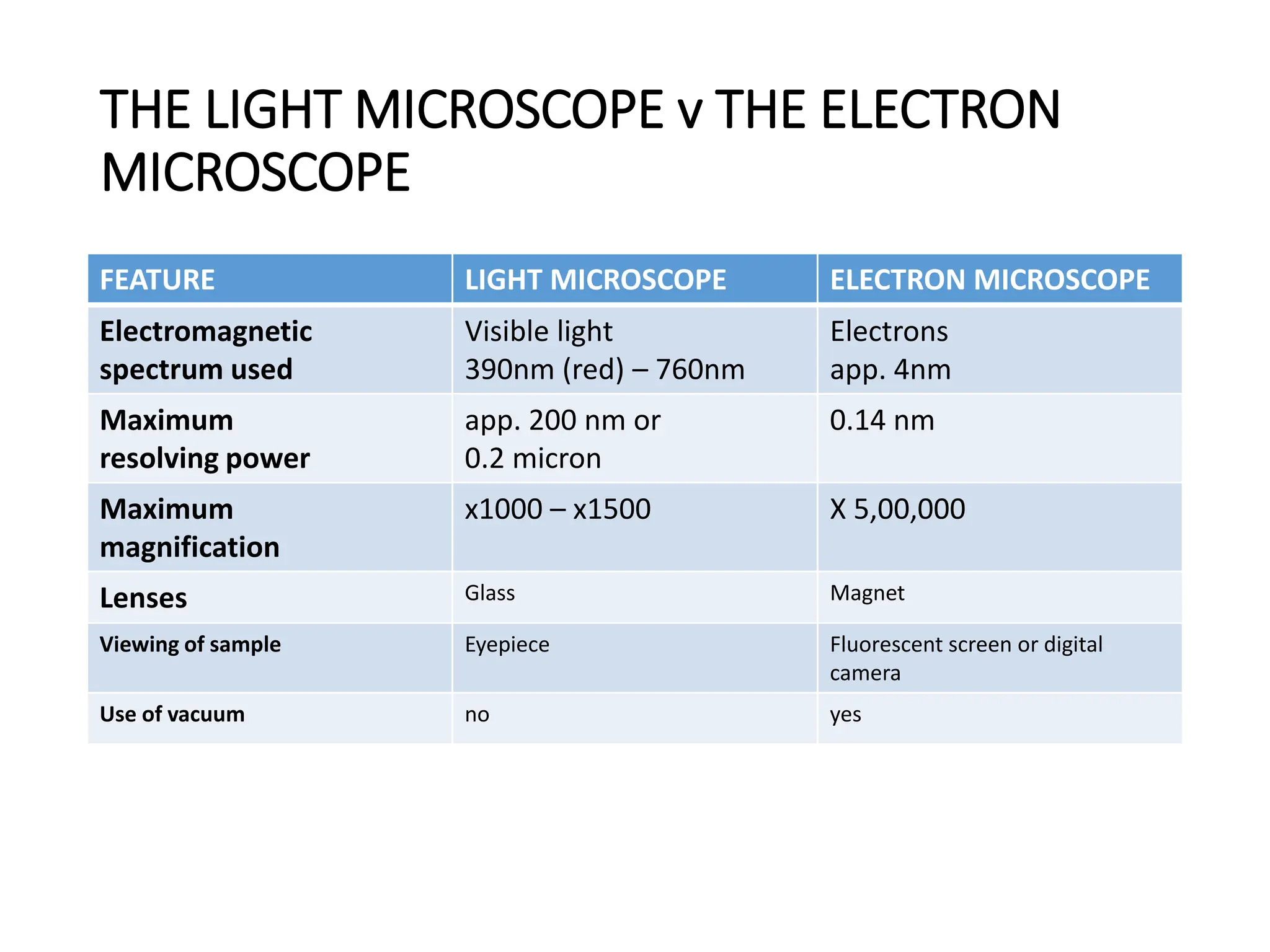
  • 65.
    Bright-field microscopy • Bright-fieldmicroscopy is a standard light-microscopy technique, and therefore magnification is limited by the resolving power possible with the wavelength of visible light. • Magnification is of about * 1000 to * 2000. • Brightfield microscopy is the most elementary form of microscope illumination techniques and is generally used with compound microscopes. • The name "brightfield" is derived from the fact that the specimen is dark and contrasted by the surrounding bright viewing field. Simple light microscopes are sometimes referred to as brightfield microscopes. Limitations • Very low contrast of most biological samples. • The practical limit to magnification with a light microscope is around 1300X. • Low apparent optical resolution due to the blur of out-of-focus material. • Samples that are naturally colorless and transparent cannot be seen well, e.g. many types of mammalian cells. These samples often have to be stained before viewing. Samples that do have their own color can be seen without preparation.
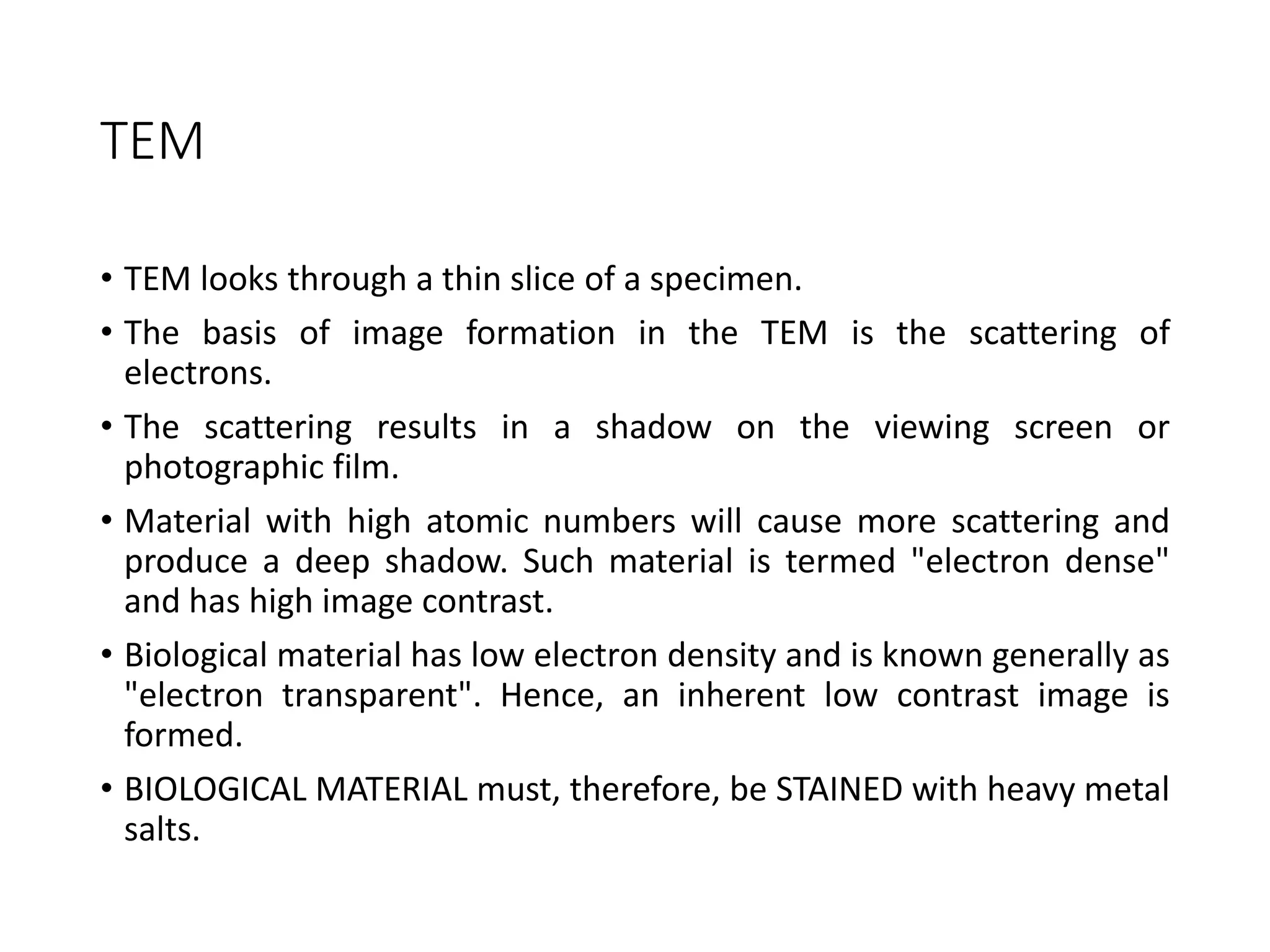
  • 67.
    Principle • The specimenmust pass through a uniform beam of the illuminating light. • The specimens used are prepared initially by staining to introduce color for easy contracting characterization. • The colored specimens will have a refractive index that will differentiate it from the surrounding, presenting a combination of absorption and refractive contrast. • The functioning of the microscope is based on its ability to produce a high-resolution image from an adequately provided light source, focused on the image, producing a high-quality image. • The specimen which is placed on a microscopic slide is viewed under oil immersion or/and covered with a coverslip.
  • 69.
    Advantages • Simplicity ofsetup with only basic equipment required. • Living cells can be seen with bright-field microscopes. Enhancements • Reducing or increasing the amount of the light source by the iris diaphragm. • Use of an oil-immersion objective lens and a special immersion oil placed on a glass cover over the specimen. Immersion oil has the same refraction as glass and improves the resolution of the observed specimen. • Use of sample-staining methods for use in microbiology, such as simple stains and differential stains. • Use of a colored or polarizing filter is especially useful with mineral samples.
  • 70.
    Dark field Microscopy •Darkfield microscopy shows the specimens bright on a dark background. • Brightfield microscopes that have a condenser with a filter holder can be easily converted to darkfield by placing a patch stop filter into the filter holder. • Instead of coming up through the specimen, the light is reflected by particles on the slide. • Everything is visible regardless of color, usually bright white against a dark background. • Pigmented objects are often seen in "false colors," that is, the reflected light is of a color different than the color of the object. Better resolution can be obtained using dark field as opposed to bright field viewing.
  • 71.
    Principle • A darkfield microscope is arranged so that the light source is blocked off, causing light to scatter as it hits the specimen. • This is ideal for making objects with refractive values similar to the background appear bright against a dark background. • When light hits an object, rays are scattered in all directions. The design of the dark field microscope is such that it removes the dispersed light so that only the scattered beams hit the sample. • The introduction of a condenser and/or stop below the stage ensures that these light rays will hit the specimen at different angles, rather than as a direct light source above/below the object. • The result is a “cone of light” where rays are diffracted, reflected and/or refracted off the object, ultimately, allowing the individual to view a specimen in dark field.
  • 74.
    Advantages • Dark-field microscopyproduces an image with a dark background • Dark-field microscopy is a very simple yet effective technique and well suited for uses involving live and unstained biological samples, such as a smear from a tissue culture or individual, water-borne, single-celled organisms. • Considering the simplicity of the setup, the quality of images obtained from this technique is impressive.
  • 75.
    Disadvantages • The mainlimitation of dark-field microscopy is the low light levels seen in the final image. • This means that the sample must be very strongly illuminated, which can cause damage to the sample. • However, the interpretation of dark-field images must be done with great care, as common dark features of bright-field microscopy images may be invisible, and vice versa.
  • 76.
    Bright Field MicroscopyDark Field Microscopy
  • 77.
    Fluorescence Microscopy • Afluorescence microscope is an optical microscope that uses fluorescence and phosphorescence instead of, or in addition to, reflection and absorption to study properties of organic or inorganic substances. • The specimen is illuminated with light of a specific wavelength (or wavelengths) which is absorbed by the fluorophores, causing them to emit light of longer wavelengths (i.e., of a different color than the absorbed light) and lesser energy. • Under UV light, dye fluoresces, only labeled cells or structures are seen
  • 79.
    Components • Fluorescent dyes •A light source: Xenon arc lamp or mercury-vapor lamp are common; power LED and lasers are used in more advanced forms. • The excitation filter: selects the wavelengths to excite a particular dye within the specimen. • The dichroic mirror: used to selectively pass light of a small range of colors while reflecting other colors. • The emission filter: serves as a kind of quality control by letting only the wavelengths of interest emitted by the fluorophore pass through. • Darkfield condenser: It provides a black background against which the fluorescent objects glow.
  • 81.
    Principle of Fluorescence Microscopy •Higher energy light shorter wavelength of lights (UV rays or blue light) generated from mercury vapor arc lamp passes through the excitation filter which allows only the short wavelength of light to pass through and removes all other non-specific wavelengths of light. • The filtered light is reflected by the dichroic filter and falls on the sample (i.e. fluorophore-labeled). • The fluorochrome absorbs shorter wavelength rays and emits rays of longer wavelength (lower energy) that passes through the emission filter. • The emission filter blocks (suppresses) any residual excitation light and passes the desired longer emission wavelengths to the detector. • Thus the microscope forms glowing images of the fluorochrome- labeled microorganisms against a dark background.
  • 82.
    Application • To identifystructures in fixed and live biological samples. • Fluorescence microscopy is a common tool for today’s life science research because it allows the use of multicolor staining, labeling of structures within cells, and the measurement of the physiological state of a cell.
  • 83.
    Advantages 1.Fluorescence microscopy isthe most popular method for studying the dynamic behavior exhibited in live-cell imaging. 2.This stems from its ability to isolate individual proteins with a high degree of specificity amidst non-fluorescing material. 3.The sensitivity is high enough to detect as few as 50 molecules per cubic micrometer. 4.Different molecules can now be stained with different colors, allowing multiple types of the molecule to be tracked simultaneously. 5.These factors combine to give fluorescence microscopy a clear advantage over other optical imaging techniques, for both in vitro and in vivo imaging.
  • 84.
    Disadvantages • Fluorophores losetheir ability to fluoresce as they are illuminated in a process called photobleaching. Photobleaching occurs as the fluorescent molecules accumulate chemical damage from the electrons excited during fluorescence. • Cells are susceptible to phototoxicity, particularly with short- wavelength light. Furthermore, fluorescent molecules have a tendency to generate reactive chemical species when under illumination which enhances the phototoxic effect. • Unlike transmitted and reflected light microscopy techniques fluorescence microscopy only allows observation of the specific structures which have been labeled for fluorescence.
  • 85.
    Phase contrast microscopy •Frits Zernike, a Dutch physicist and mathematician, built the first phase contrast microscope in 1938. • Unstained living cells absorb practically no light. Poor light absorption results in extremely small differences in the intensity distribution in the image. This makes the cells barely, or not at all, visible in a brightfield microscope. When light passes through cells, small phase shifts occur, which are invisible to the human eye. • This technique is based on fact that light passing through one material & into another material of a slightly different refractive index or thickness will undergo a change in phase.
  • 87.
    • These differencesin phase or wavefront irregularities, are translated into variations in brightness of the structure so they are detectable by eyes. • It uses a conventional light microscope fitted with a phase contrast objective & phase contrast condenser. • This special optical system helps to distinguish unstained structures within cell which differ only slightly in their refractive indices or thickness.
  • 88.
    When light passesthrough cells, small phase shifts occur, which are invisible to the human eye. In a phase-contrast microscope, these phase shifts are converted into changes in amplitude, which can be observed as differences in image contrast.
  • 89.
    Components • The annulardiaphragm: It is made up of a circular disc having a circular annular groove. The light rays are allowed to pass through the annular groove. • The phase plate: The phase plate is a transparent disc. With the help of the annular diaphragm and the phase plate, the phase contrast is obtained in this microscope. Depending upon the different refractive indices of different cell components, the object to be studied shows a different degree of contrast in this microscope.
  • 90.
    Applications of Phasecontrast Microscopy 1.living cells (usually in culture), 2.microorganisms, 3.thin tissue slices, 4.lithographic patterns, 5.fibers, 6.latex dispersions, 7.glass fragments, and 8.subcellular particles (including nuclei and other organelles).
  • 91.
    •Advantages • The capacityto observe living cells and, as such, the ability to examine cells in a natural state. • Observing a living organism in its natural state and/or environment can provide far more information than specimens that need to be killed, fixed or stain to view under a microscope. • High-contrast, high-resolution images. • Ideal for studying and interpreting thin specimens. • Ability to combine with other means of observation, such as fluorescence. • Modern phase contrast microscopes, with computer devices, can capture photo and/or video images
  • 92.
    Disadvantages • This methodof observation is not ideal for thick organisms or particles. • Thick specimens can appear distorted. • Images may appear grey or green, if white or green lights are used, respectively, resulting in poor photomicrography • Shade-off and halo effect, referred to a phase artifacts. • Shade-off occurs with larger particles, results in a steady reduction of contrast moving from the center of the object toward its edges. • Halo effect, where images are often surrounded by bright areas, which obscure details along the perimeter of the specimen.
  • 93.
    Electron Microscope • Theelectron microscope is a type of microscope that uses a beam of electrons to create an image of the specimen. • It is capable of much higher magnifications and has a greater resolving power than a light microscope, allowing it to see much smaller objects in finer detail. • They are large, expensive pieces of equipment, generally standing alone in a small, specially designed room and requiring trained personnel to operate them. • Two types of electron microscope used- Transmission electron microscopy (TEM) & Scanning electron microscopy (SEM).
  • 94.
    THE LIGHT MICROSCOPEv THE ELECTRON MICROSCOPE FEATURE LIGHT MICROSCOPE ELECTRON MICROSCOPE Electromagnetic spectrum used Visible light 390nm (red) – 760nm Electrons app. 4nm Maximum resolving power app. 200 nm or 0.2 micron 0.14 nm Maximum magnification x1000 – x1500 X 5,00,000 Lenses Glass Magnet Viewing of sample Eyepiece Fluorescent screen or digital camera Use of vacuum no yes
  • 96.
    TEM • TEM looksthrough a thin slice of a specimen. • The basis of image formation in the TEM is the scattering of electrons. • The scattering results in a shadow on the viewing screen or photographic film. • Material with high atomic numbers will cause more scattering and produce a deep shadow. Such material is termed "electron dense" and has high image contrast. • Biological material has low electron density and is known generally as "electron transparent". Hence, an inherent low contrast image is formed. • BIOLOGICAL MATERIAL must, therefore, be STAINED with heavy metal salts.
  • 97.
    SEM • To directlyvisualize the surface topography of solid unsectioned specimens without staining. • The first scanning electron microscope (SEM) debuted in 1938 ( Von Ardenne) with the first commercial instruments around 1965. • TEM – information is obtained from transmitted electrons • SEM – majority is obtained from secondary, backscattered electrons & from X-rays.
  • 101.
  • 102.
    Few Terminology • Asmicrobial cytoplasm is usually transparent, it is necessary to stain microorganisms before they can be viewed with the light microscope. • Wet mount - When microorganisms are very large or when motility is to be studied, and a drop of the microorganisms can be placed directly on the slide and observed. • Hanging drop - A wet mount can also be prepared by placing a drop of culture on a cover slip (a glass cover for a slide) and then inverting it over a hollowed out slide. • Smear - is a distribution of bacterial cells on a slide for the purpose of viewing them under the microscope. • The smear is heat fixed by quickly passing it over a flame. Heat fixing kills the organisms, makes them adhere to the slide, and permits them to accept the stain.
  • 105.
    Microbial stains • Classificationof dyes/stains: 1. Acid - Negatively charged acid radicals imparts color in eosin, acid fuchsine, malachite green, nigrosin, Indian ink. 2. Basic - Positively charged basic radicals combines with negatively charged particles in cytoplasm and gives color. Ex: Haematoxillin, methylene blue, crystal violet, gention violet. 3. Neutral - Both positively and negatively charged imparts different colors to different components. Ex: Geimsa’s stain, Leishman’s stain, Wright’s stain.
  • 106.
  • 107.
    Simple staining • Simple= only one dye is used during the staining procedure • Staining can be performed with basic dyes, positively charged dyes that are attracted to the negatively charged materials of the microbial cytoplasm. Such a procedure is the simple positive staining. • An alternative is to use a dye such as nigrosin or Congo red, acidic, negatively charged (acidic) dyes. They are repelled by the negatively charged cytoplasm and gather around the cells, leaving the cells clear and unstained. This technique is called the simple negative staining technique. • Simple positive staining: all bacteria are colored, • Simple negative staining: background is dark, bacteria are without any color .
  • 108.
  • 109.
    Differential staining • Thedifferential staining techniques are based on the application of a set of several different dyes which react differently with different types of microorganism. • they can be used to distinguish among them. • Most widely used method is gram staining.
  • 110.
    Gram staining A verycommon stain to distinguish 2 bacterial types: • Gram staining differentiates the bacteria into 2 groups: • Gram positive. • Gram negative. • The Gram stain was devised by the Danish physician, Hans Christian Joachim Gram, while working in Berlin in 1883. • He laterpublished this procedure in 1884.
  • 111.
    Gram positive • InGram positive bacteria, the crystal violet dye –iodine complex combines to form a larger molecule which precipitates within the cell. • The alcohol/acetone mixture which act as decolorizing agent, cause dehydration of the multi-layered peptidoglycan of the cell wall. This causes decreasing of the space between the molecules causing the cell wall to trap the crystal violet iodine complex within the cell. • Hence the Gram positive bacteria do not get decolorized and retain primary dye appearing violet. • Also, Gram positive bacteria have more acidic protoplasm and hence bind to the basic dye more firmly.
  • 112.
    Gram Negative • Inthe case of Gram negative bacteria, the alcohol, being a lipid solvent, dissolves the outer lipopolysaccharide membrane of the cell wall and also damage the cytoplasmic membrane to which the peptidoglycan is attached. • As a result, the dye-iodine complex is not retained within the cell and permeates out of it during the process of decolourisation. • Hence when a counter stain is added, they take up the colour of the stain and appear pink.
  • 115.
    Acid Fast staining •Another differential stain technique is the acid fast staining technique. • This technique differentiates species of Mycobacterium from other bacteria. • Most of bacteria are non acid fast i.e., don’t retain stain after acid wash. Acid fast Non acid fast
  • 116.
    Flagella staining • Demonstratespresence of flagella & their arrangement. • Flagella of bacteria by coating the flagella with dyes or metals to increase their width.
  • 117.
    Capsule staining • Demonstratespresence of capsules surrounding cell.
  • 118.
  • 119.
    Introduction • Bacteria isunicellular, free-living, microscopic microorganisms capable of performing all the essential functions of life. • They possess both deoxyribonucleic acid (DNA) and Ribonucleic acid (RNA). • Bacteria are prokaryotic microorganisms that do not contain chlorophyll. • They occur in water, soil, air, food, and all natural environment. • They can survive extremes of temperature, pH, oxygen, and atmospheric pressure. • Unit of measurement in bacteriology is the micron (micrometre, μm) • Bacteria of medical importance (0.2 – 1.5 μm) in diameter (3 – 5 μm) in length.
  • 120.
  • 121.
    Parts of aCell Cell envelope • Cell wall • Outer • Cell membrane-plasma membrane, cytoplasmic membrane • Capsule Cytoplasm • Nucleiod • Ribosomes • Granules/inclusion bodies • Mesosomes Parts of a Cell • Spores • Plasmids Appendages • Pili • Flagella
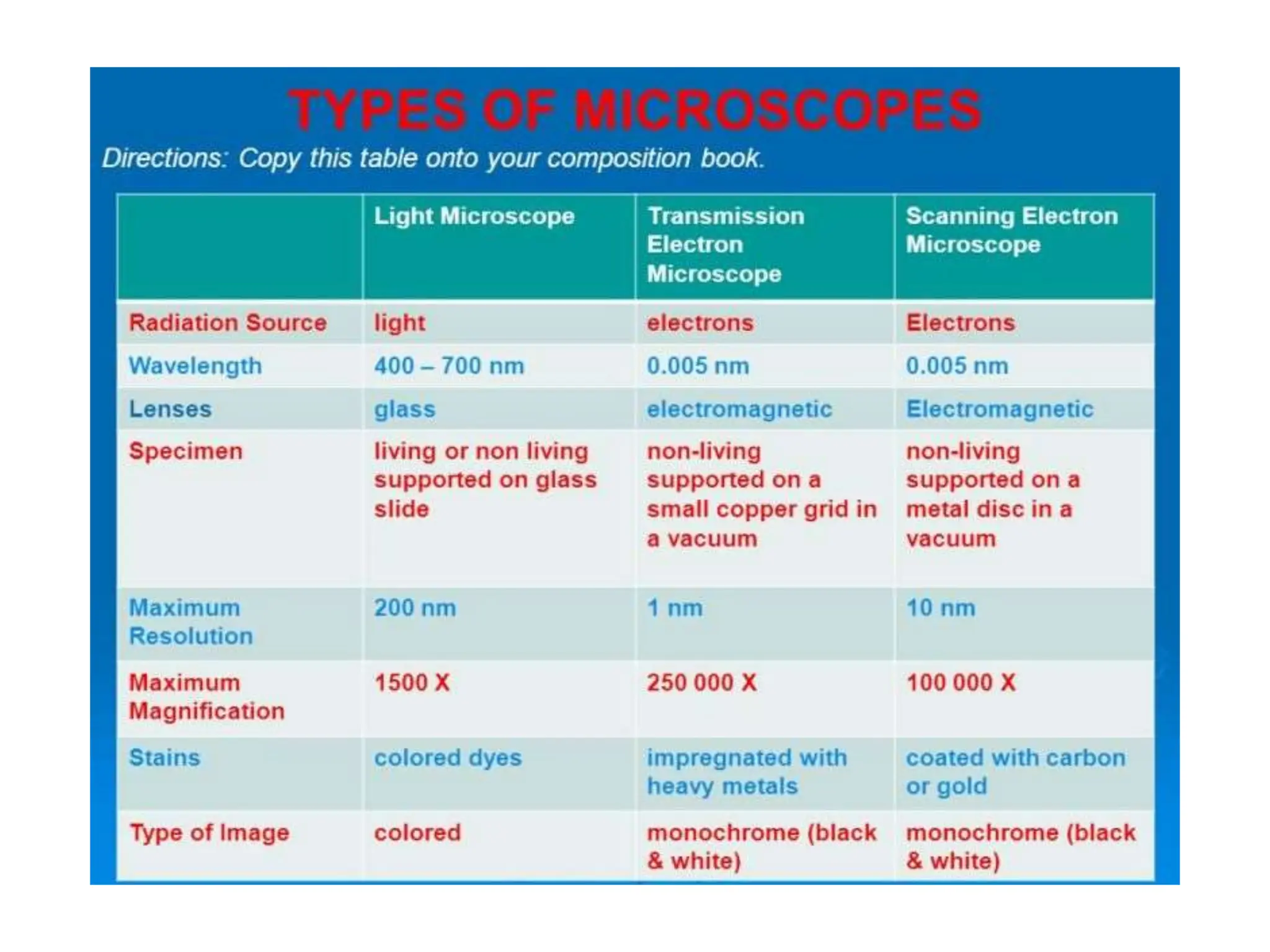
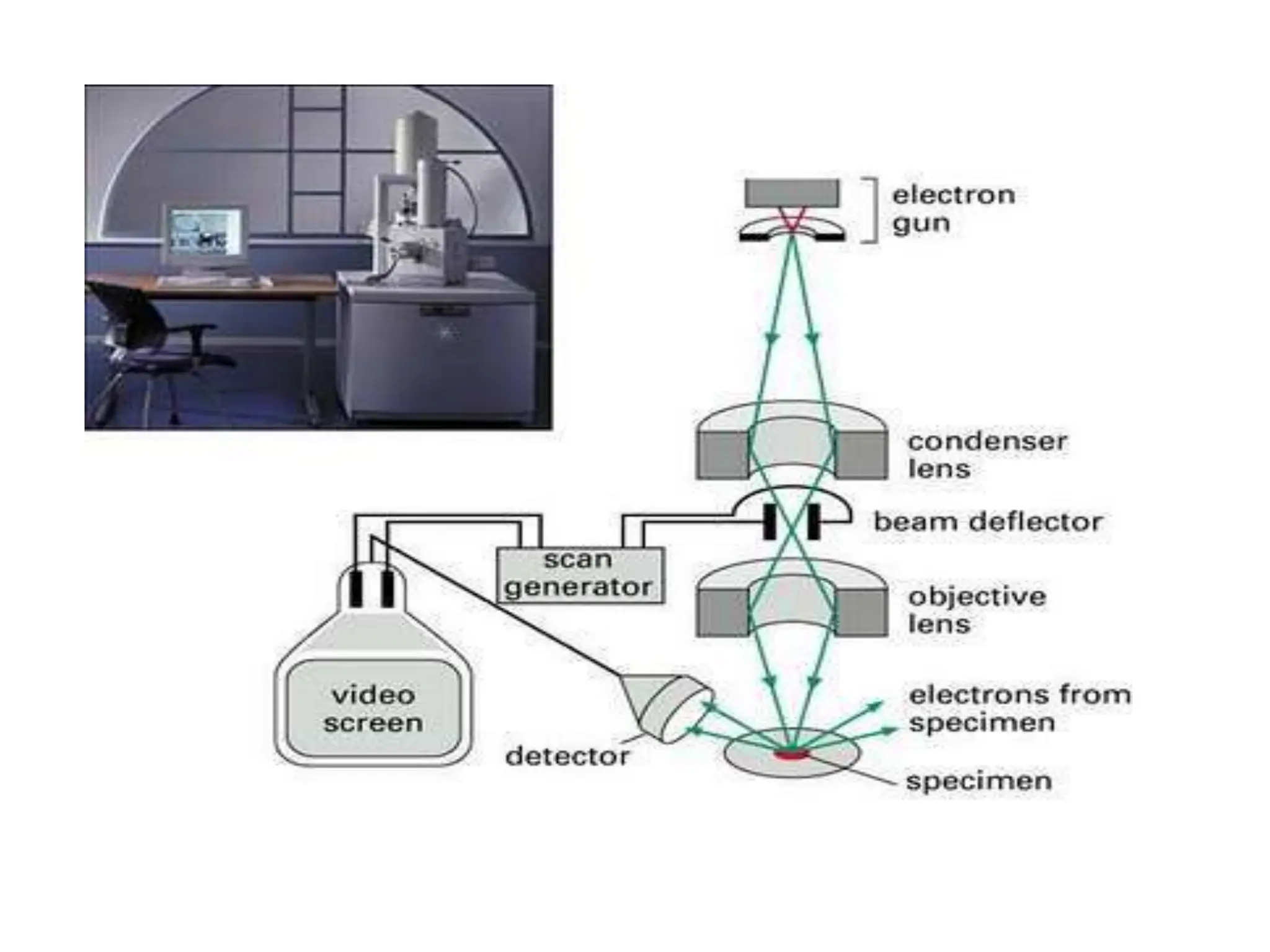
  • 122.
    Cell wall • Cellwall is rigid structure which gives definite shape to cell, situated between the capsule and cytoplasmic membrane. • It is about 10 – 20 nm in thickness and constitutes 20-30 % of dry weight of cell. • The cell wall cannot be seen by direct light microscopy and does not stain easily by different staining reagents.
  • 123.
    • The cellwall of bacteria contains diaminopimelic acid (DAP), muramic acid and teichoic acid. These substances are joined together to give rise to a complex polymeric structure known as peptidoglycan or murein or mucopeptide. • Peptidoglycan is the major constituent of the cell wall of gram positive bacteria (50 to 90 %) where as in gram negative bacterial cell wall its presence is only 5 -10 %. • Special components of Gram positive cell wall is Teichoic acid.
  • 124.
    - maintains cellshape . - Acts as a barrier, protects cell contents from external environment. - maintains cell integrity/osmotic pressure in a hypotonic environment. - Determines reactivity to Gram stain. - Attachment site for flagella. - Contributes to sensitivity to certain antimicrobial agents and the immune system (antibodies, phagocytes). Function of Cell wall Structure of Gram positive cell
  • 125.
    Capsule • Bacteria synthesizeloose amorphous organic exopolymer which is deposited outside and tightly to cell wall called capsules. • Capsules may be composed of complex polypeptides or polysaccharides. • Water (98%) is the main component of bacterial capsule. • Capsulated bacteria produces smooth colonies and non capsulated bacteria produces rough colonies on the surface of agar media. Functions 1. They protect the cell from drying. 2. They protects the bacterial cell against anti-bacterial agents and phages.
  • 126.
    Cytoplasm • The bacterialcytoplasm is a suspension of organic, inorganic solutes in a viscous water solution. • The cytoplasm of bacteria differs from that of higher eukaryotic microorganisms in not containing endoplasmic reticulum, Golgi apparatus, mitochondria and lysosomes. • It contains the ribosomes, proteins and other water soluble components and reserve material. • In most bacterial, extrachromosal DNA ( plasmid DNA ) is also present.
  • 127.
    Plasma membrane • Thecytoplasmic (plasma) membrane is a thin ( 5 to 10 nm). • It separates the cell wall and cytoplasm. • It composed of phospholipids (20 to 30 %) and proteins ( 60 to 70 %). • Prokaryotic plasma membranes are less rigid than eukaryotic membrane due to lack of sterols.
  • 128.
    Functions: 1. It actsas a semipermeable membrane controlling the inflow and outflow of metabolites to and from the protoplasm. 2. It provides the mechanical strength to the bacterial cell. 3. It helps in DNA replication. 4. It contains enzyme, permease, which plays an important role in the passage of selective nutrients through the membranes.
  • 129.
    Ribosomes • Ribosomes arethe center of protein synthesis. • They are slightly smaller than eukaryotic ribosomes. • The sedimentation constant is 70s. • This 70s ribosomes are made up of two subunits namely a large subunits 50s and a small subunit 30s. • During active protein synthesis the ribosomes are associated with mRNA and such associations are called polysomes.
  • 130.
    Mesosomes • Mesosomes arerespiratory sites of bacteria. • The mesosomes are attached to the bacterial chromosomes and is involved in DNA segregation during cell division. • They are predominant in Gram positive bacteria.
  • 131.
    Nucleoid • The bacterialchromosomes is not surrounded by nuclear membrane so it is called nucleoid. • The bacterial chromosomes are made up of double strand circular DNA.
  • 132.
    • Many speciesof bacteria produce cytoplasmic inclusion bodies which appears as round granules. • They are made up of either glycogen or starch. • They appear reddish when stained with polychrome methylene blue or toluidine blue. Intra Cytoplasmic inclusion
  • 133.
    Spore • The processof endospore formation is known as sporulation and it may take 4 to 8 hours in a vegetative cell. • Endospores are thick-walled, highly refractile bodies that are produced one per cell. • Each bacterial spore on germination forms a single vegetative cell. Therefore, sporulation in bacteria is a method of preservation and not reproduction.
  • 134.
    • Spores areextremely resistant to dessication, staining, disinfecting chemicals, radiation and heat. • They remain viable for centuries and help bacteria to survive for long period under unfavorable environment. • Endospore can remain dormant for thousand of years. • Spores of all medically important bacteria are destroyed by moist heat sterilization (autoclave) at 121 °C for 20 minutes.
  • 135.
  • 136.
    Plasmid • Plasmids aresmall,circular/line,extrachromosomal,double- stranded DNA molecules. • They are capable of self-replication and contain genes that confer some properties such as antibiotic resistance,virulence factors. • Plasmids are not essential for cellular survival.
  • 137.
    Pili or fimbriae •Pili are hair-like microfibrils, 0.5 to 2 μm in length and 5 to 7 nm in diameter. • They are thinner, shorter and more numerous than flagella. • They are present only on gram negative cells. • They are composed of protein known as pillin. • They are unrelated to motility and are found on motile and non-motile cells. • Fimbriae and pili, these two terms are used interchangeably but they can be distinguished. • Fimbriae can be evenly distributed over the entire surface of the cell or they occurs at the poles of the bacterial cell. • Each bacteria possess 100 to 200 fimbriae. • Pili are usually longer than fimbriae and number only one or two per cell. Function: • Pili play an important role in attachment to surfaces. Hence pili is also called organ of adhesion.
  • 138.
    Flagella • Flagella arelong, slender, thin hair-like cytoplasmic appendages, which are responsible for the motility of bacteria. • These are the organs of locomotion. • They are 0.01 to 0.02 μm in diameter, 3 to 20 μm in length. • Flagella are made up of a protein- flagellin. • The flagellum has three basic parts , 1. Filament 2. Hook 3. Basal body • Filament is the thin, cylindrical, long outermost region with a constant diameter. • The filament is attached to a slightly wider hook. • The basal body is composed of a small central rod inserted into a series of rings.
  • 139.
    • Gram negativebacteria contain four rings as L-ring, P-ring, S ring, M- ring whereas gram positive bacteria have only S and M rings in basal body.
  • 142.
    Brief functions • CellWall: acts as an antigen, provide protection and rigidity. • Cell membrane: serve as a barrier through which materials enter and exit the cell. • Capsule: acts as an antigen, has feeding importance, sticking features and cause disease. • Mesosome: role in metabolism. • Fimbriae: helps in motility, jerky movement, has sticking feature and acts as an antigen. • Pilus: helps in reproduction(conjugation). • Ribosomes: protein formation. • Nucleoid: transcription and translation. • Chromosomes: hereditary material. • Flagella: act as an antigen and helps in motility. • Plasmid: has special features of resistance and infection.
  • 143.
  • 144.
    The growth curve •In nature, bacteria do not experience perfect environmental conditions for growth. • As such, the species that populate an environment change over time. • In a laboratory, however, optimal conditions can be met by growing bacteria in a closed culture environment. • It is under these conditions that the curve pattern of bacterial growth can be observed. • The bacterial growth curve represents the number of live cells in a bacterial population over a period of time.
  • 147.
    lag phase • Inthe first phase, called the lag phase, the population remains at the same number as the bacteria become accustomed to their new environment. • The lag phase is an adaptation period, where the bacteria are adjusting to their new conditions. • This initial phase is characterized by cellular activity but not growth. • A small group of cells are placed in a nutrient rich medium that allows them to synthesize proteins and other molecules necessary for replication. • These cells increase in size, but no cell division occurs in the phase.
  • 148.
    logarithmic phase/ Exponential •After the lag phase, bacterial cells enter the exponential or log phase. • This is the time when the cells are dividing by binary fission and doubling in numbers after each generation time. • Metabolic activity is high as DNA, RNA, cell wall components, and other substances necessary for growth are generated for division. • The exponential or log phase of growth is marked by predictable doublings of the population, where 1 cell become 2 cells, becomes 4, becomes 8 etc. • Conditions that are optimal for the cells will result in very rapid growth (and a steeper slope on the growth curve), while less than ideal conditions will result in slower growth.
  • 149.
    stationary phase • Eventually,the population growth experienced in the log phase begins to decline as the available nutrients become depleted and waste products start to accumulate. • Bacterial cell growth reaches a plateau, or stationary phase, where the number of dividing cells equal the number of dying cells. • This results in no overall population growth. • Under the less favorable conditions, competition for nutrients increases and the cells become less metabolically active. • Spore forming bacteria produce endospores in this phase and pathogenic bacteria begin to generate substances (virulence factors) that help them survive harsh conditions and consequently cause disease.
  • 150.
    Death phase • Asnutrients become less available and waste products increase, the number of dying cells continues to rise. • In the death phase, the number of living cells decreases exponentially and population growth experiences a sharp decline. • As dying cells lyse or break open, they spill their contents into the environment making these nutrients available to other bacteria. • This helps spore producing bacteria to survive long enough for spore production. • Spores are able to survive the harsh conditions of the death phase and become growing bacteria when placed in an environment that supports life.
  • 151.
    Generation Time • Timerequired for a cell to divide, and its population to double. • Generation time varies considerably: • E. coli divides every 20 minutes. • Most bacteria divide every 1 to 3 hours. • Some bacteria require over 24 hours to divide.
  • 153.
  • 156.
    Binary Fission • Themost common way by which the bacteria reproduce itself is the Binary Process. • It is a process by which a single bacterial cell simply divides into two in half an hour time. • The various events of binary fission are as follows: • The nucleoid gradually become elongated in size and form dumbel-shaped structure. • They still remain attached to the plasma membrane with the help of mesosome. • The duplication of DNA and mesosome takes place and get separate from each other. • The daughter mesosomes and nucleoids migrate towards the opposite poles. • The plasma membrane invaginates at the center and the parent cell is divided into two identical cells.
  • 158.
    Budding • The bacterialcell develops small swelling at one side which gradually increases in size. • Simultaneously the nucleus undergoes division, where one remains with the mother and other one with some cytoplasm goes to the swelling. • This outgrowth is the bud, which gets separated from the mother by partition wall, e.g., Hyphomicrobium vulgare, Rhodomicrobium vannielia, etc.
  • 161.
    Reproduction by Conidiaformation • Conidia formation takes place in filamentous bacteria like Streptomyces etc., by the formation of a transverse septum at the apex of the filament. • The part of this filament which bears conidia is called conidiophore. • After detachment from the mother and getting contact with suitable substratum, the conidium germinates and gives rise to new mycelium. • This type of reproduction is also called as fragmentation.
  • 163.
    Reproduction through cystformation • Cysts are formed by the deposition of additional layer around the mother wall. • These are the resting structure and during favourable condition they again behave as the mother, e.g., many members of Azotobacter. • In certain bacteria the entire protoplast of the cell recedes from the cell wall and becomes rounded. • A thick wall is then secreted around it to form resistant structure somewhat similar to the endospore. It is called the cyst. • These are formed in certain species of Azobacter. • Under suitable environment conditions the cyst germinate to produce the new bacterium.
  • 165.
    Reproduction through endosporeformation • Spores are formed during unfavourable environmental condition like desiccation and starvation. • As the spores are formed within the cell, they are called endospores. • Only one spore is formed in a bacterial cell. On germination, it gives rise to a bacterial cell. • In this state, the bacteria can tolerate exceedingly high and low temperatures, acidic and basic conditions, and large amounts of radiation. • Endospores are extremely hard to kill. • Endospores can only be made by Grampositive bacteria. • Within the endospore remains the bacterial DNA, but the cytoplasm has a decreased water concentration. • This is thought to help in protecting against high heat. • The bacteria will take on a tough coating composed of calcium and dipicolinic acid, creating a dense and impregnable barrier to stabilize the DNA within the cell. DNA repair enzymes are also still active, aiding in the resistance of the endospore.
  • 168.
    Sexual Reproduction • Transformation •Transduction • Conjugation
  • 169.
    Transformation • In transformation,a bacterium takes in DNA from its environment, often DNA that's been shed by other bacteria. In a laboratory, the DNA may be introduced by scientists. • If the DNA is in the form of a circular DNA called a plasmid, it can be copied in the receiving cell and passed on to its descendants.
  • 171.
    Transduction • The geneticrecombination in which genetic material is transferred by phage virus between two bacteria is called transduction. It has two forms: • (a)Generalized transduction • (b)Specialized transduction
  • 173.
    Generalized transduction • Generalizedtransduction occurs when random pieces of bacterial DNA are packaged into a phage. • It happens when a phage is in the lytic stage, at the moment that the viral DNA is packaged into phage heads. • If the virus replicates using 'headful packaging', it attempts to fill the head with genetic material. • If the viral genome results in spare capacity, viral packaging mechanisms may incorporate bacterial genetic material into the new virion. • Alternatively, generalized transduction may occur via recombination. • Generalized transduction is a rare event and occurs on the order of 1 phage in 11,000.
  • 174.
    Specialized transduction • Specializedtransduction is the process by which a restricted set of bacterial genes is transferred to another bacterium. • The genes that get transferred (donor genes) flank where the prophage is located on the chromosome. • Specialized transduction occurs when a prophage excises imprecisely from the chromosome so that bacterial genes lying adjacent to it are included in the excised DNA.
  • 176.
    Conjugation • It wasfirst discovered in Escherichia coli by Lederberg and Tatum (1946). • Cell contact was required for this change. • Bacteria showing conjugation are dimorphic, i.e., they have two types of cells, male (F+) or donor and female (F-) or recipient. • The male or donor cell possesses 1-4 sex pili on the surface and fertility factor (transfer factor, sex factor) in its plasmid. • Fertility factor contains genes for producing sex pili and other characters needed for gene transfer. • Both sex pili and fertility factor are absent in female or recipient cells. • If these two types of cells happen to come nearer, a piles of male cell establishes a protoplasmic bridge or conjugation tube with the female cell. It takes 6-8 minutes. • Gene exchange can occur by two methods
  • 178.
  • 179.
    Culture Media • Aculture medium is any material prepared for growth of an organism in a laboratory setting. • Microbes that can be cultured on a petri-plate or in a test-tube containing media are said to grow under in vitro conditions ("within- glass".) • It was not until the era of Robert Koch and his coworkers that Agar was introduced as a common medium for bacterial growth. • Agar is a complex polysaccharide derived from a marine sea weed. • Few bacteria possess enzymes capable of digesting agar and therefore it is useful as a solidifying agent and for isolating microbes in pure culture.
  • 180.
    What is aPURE CULTURE? • A pure culture represents a single species (clonal in nature) of microorganisms • A clone is a genetically identical population of microbes that have descended from a single parent cell • Colonies are visible clones that have grown on solid media and represent millions of bacterial cells • Distinctive characteristics of colonies should be noted such as: • pigmentation • odor • elevation • margin (border of the colony) • consistency, such as mucoid, irridescence, filamentous, etc.
  • 182.
    Classification Bacterial culturemedia • Classification Bacterial culture media can be classified in at least three ways; Based on consistency, based on nutritional component and based on its functional use. • 1. Classification based on consistency I. liquid media II. semi-solid media III. solid media
  • 183.
    2. Classification basedon nutritional component • Those bacteria that are able to grow with minimal requirements are said to nonfastidious and those that require extra nutrients are said to be fastidious. • Simple media such as peptone water, nutrient agar can support most non-fastidious bacteria. • Complex media such as blood agar have ingredients whose exact components are difficult to estimate. • Synthetic or defined media such as Davis & Mingioli medium are specially prepared media for research purposes where the composition of every component is well known.
  • 184.
    Classification based onfunctional use or application • a) Chemically defined media: exact chemical composition is known. Such media is often commercially prepared. • b) Selective media. Contain chemicals which encourage growth of certain types of microbes but inhibits the growth of others. • c) Differential media allows different microbes to be distinguished on the basis of various biochemical reactions. Fermentation reactions involving the catabolism of various sugars are particularly useful biochemical tests. • Note: Many media are both selective and differential, such as MacConkey (Mac) agar and Mannitol Salt agar (MSA). • d) Enrichment media contains a rich supply of nutrients to encourage the encourage growth of microorganisms. A commonly used enrichment medium is blood agar. This medium is also differential and it permits detection of different patterns of hemolysis.
  • 186.
    • TRANSPORT MEDIA- These media are used when speciemen cannot be cultured soon after collection. Examples: Cary-Blair medium, Amies medium, Stuart medium. • STORAGE MEDIA - Media used for storing the bacteria for a long period of time. Examples: Egg saline medium, chalk cooked meat broth
  • 187.
    • Nutrient Agar- It is solid at 37°C. 2.5% agar is added in nutrient broth. It is heated at 100°C to melt the agar and then cooled. • Peptone Water - Peptone 1% and sodium chloride 0.5%. It is used as base for sugar media and to test indole formation. • Blood Agar - Most commonly used medium. 5- 10% defibrinated sheep or horse blood is added to melted agar at 45-50°C. Blood acts as an enrichment material and also as an indicator. Certain bacteria when grown in blood agar produce haemolysis around their colonies. Certain bacteria produce no haemolysis. Types of changes : (a) beta (p) haemolysis. The colony is surrounded by a clear zone of complete haemolysis, e.g. Streptococcus pyogenes is a beta haemolytic streptococci, (b) Alpha (a) haemolysis. The colony is surrounded by a zone of greenish discolouration due to formation of biliverdin, e.g. Viridans streptococci, (c) Gamma (y) haemolysis, or, No haemolysis. There is no change in the medium surrounding the colony,
  • 188.
    • Chocolate Agaror Heated Blood agar - Prepared by heating blood agar. It is used for culture of pneumococcus, gonococcus, meningo- coccus and Haemophilus. Heating the blood inactivates inhibitor of growths. • MacConkey Agar - Most commonly used for enterobac-teriaceae. It contains agar, peptone, sodium chloride, bile salt, lactose and neutral red. It is a selective and indicator medium : (1) Selective as bile salt does not inhibit the growth of enterobactericeae but inhibits growth of many other bacteria. (2) Indicator medium as the colonies of bacteria that ferment lactose take a pink colour due to production of acid. Acid turns the indicator neutral red to pink. These bacteria are called 'lactose fermenter', e.g. Escherichia coll. Colourless colony indicates that lactose is not (3) fermented, i.e. the bacterium is non- lactose fermenter, e.g. Salmonella. Shigella, Vibrio.
  • 189.
  • 190.
    Periodic transfer tofresh media • i. Strains can be maintained by periodically preparing a fresh stock culture from the previous stock culture. • ii. The temperature and the type of medium chosen should support a slow rather than a rapid rate of growth so that the time interval between transfer can be as long as possible. • iii. Many heterotrophs can remain viable for several weeks or months on a medium like nutrient agar. • Advantages a. It is simple method. b. It is easy to perform. c. It is less expensive. • Disadvantages a. It fails to prevent changes in the characteristics of a strain due to the development of variants and mutants
  • 191.
    Preservation by overlayingcultures with mineral oil • i. Many bacteria can be successfully preserved by covering the growth on a agar slant with sterile mineral oil. • ii. The oil must cover the slant completely. The oil should be about ½ inch above the tip of the slanted surface. • iii. Cultures can be maintained from 1 month to 2 years. • Advantages a. One can remove some of the growth under the oil with a transfer needle and inoculate a fresh medium and still preserve the original culture. b. It is simple and less expensive method. Disadvantages a. It fails to prevent changes in the characteristics of a strain due to the development of variants and mutants
  • 192.
    Preservation by lyophilization(Freezedrying) • i. A dense cell suspension is placed in small vials and frozen at -600C to -780C. • ii. The vials are then collected to a high vacuum line. • iii. The ice present in the frozen suspension sublimes under the vacuum(Sublimes means it evaporates without going through liquid water phase) • iv. This results in dehydration of the bacteria with a minimum damage to the cell structure . • v. Lyophilized cultures are revived by opening the vials and adding liquid medium and then transferring to the suitable growth medium.
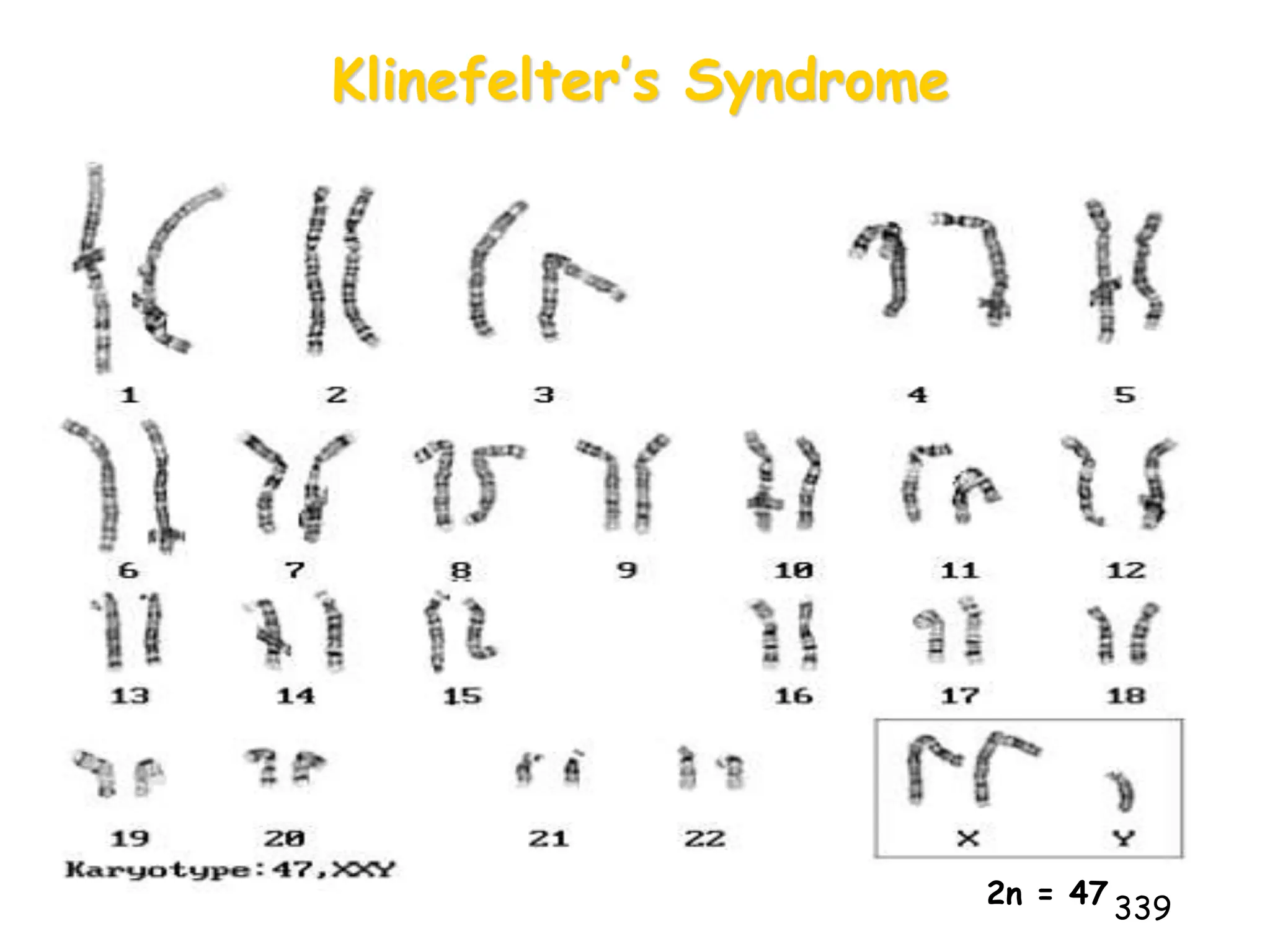
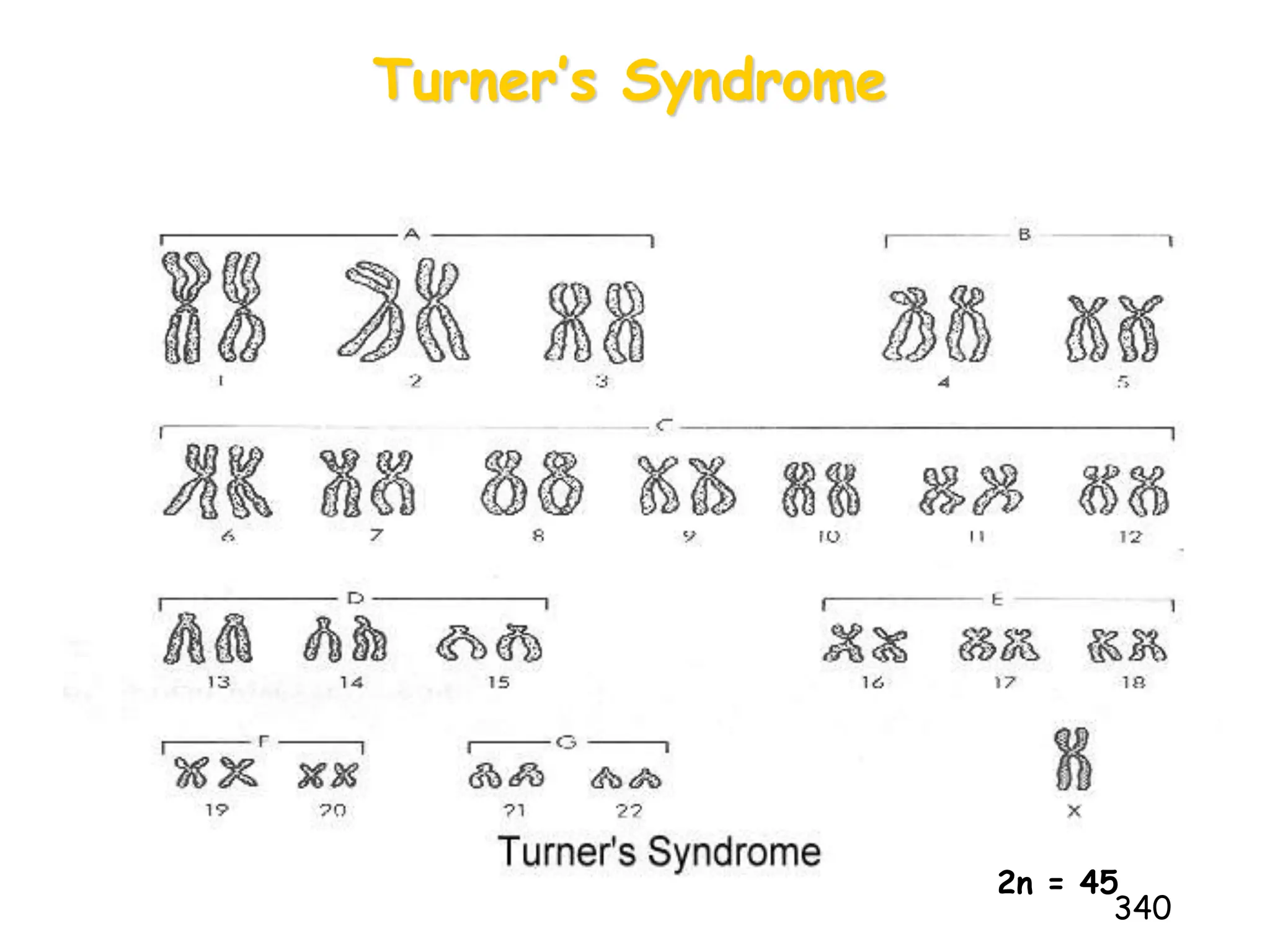
  • 193.
    • Advantages: a. Thecultures can remain viable and with unchanged characteristics for more than 30 years b. Minimal storage space is required. c. Small vials can be easily transported and mailed. • Disadvantages a. It is expensive.
  • 194.
    Storage at lowtemperature • i. A dense suspension is made in a medium containing cryoprotective agent such as glycerol or dimethyl sulfoxide(DMSO)which prevents cell damage due to ice crystal formation during the subsequent steps. • ii. The cell suspension is sealed into small ampoules or vials and then it is frozen at a controlled rate to -150 C. • The ampoules or vials are then stored in a liquid nitrogen refrigerator either by immersion in the liquid nitrogen at -1960C or by storing in the gas phase above the liquid nitrogen( -1500C)
  • 195.
    • Advantages: a. Thecultures can remain viable and with unchanged characteristics for 10 to 30 years or more. b. Many species which can’t be preserved by lyophilization are successfully preserved with liquid nitrogen method. • Disadvantage: a. It is relatively expensive method as liquid nitrogen in the refrigerator has to be replenished at regular intervals to replace the loss due to evaporation.
  • 196.
    Culture collection centres •Many countries have microbial culture collection centres whose main function is to acquire, preserve and distribute authentic cultures of living microorganisms. For examples: • 1. MTCC: Microbial Type Culture Collection-Chandigarh, India • 2. ATCC: American Type Culture Collection-Maryland, USA • 3. National Collection of Type Cultures -London ,UK • 4. Institute Pasteur-Paris, France • 5. Institute for fermentation-Osaka, Jap
  • 197.
    Plating Technique • 1.Pour plate method • 2. Spread plate method • 3. streaking
  • 199.
    Pour plate technique •This method often is used to count the number of microorganisms in a mixed sample, which is added to a molten agar medium prior to its solidification. • Limitations - Some colonies may be hidden inside agar. Heat labile organism will die.
  • 201.
    Spread plate technique •The spread plate technique is used for enumeration, enrichment, screening and selection of microorganism. • In this the culture is uniformly spread over the surface of an agar plate, resulting in the formation of isolated colonies distributed evenly across the agar surface if the appropriate concentration of cells is plated. • Advantage over other methods - Colony morphology can be seen clearly. Can be used for screening and selection • Limitations - Over growth may occur Micro aerophilic bacteria may get affected
  • 203.
    Streaking • This methodis used for obtaining pure culture from the mixed culture. • Quadrant streaking is done in the petri plate in such way that all four corners are used for isolating a single bacterial colony • Advantage over other method - Pure culture can be obtained. If colony morphology is known contaminated cultures can be purified • Limitations - Expertise required for getting individual colony in streaking
  • 205.
  • 206.
    FUNGI • COMMON FUNGIEXAMPLES: • Mushrooms, yeasts, molds, morels, bracket fungi, puff balls
  • 207.
    Key Concepts: • Fungiare heterotrophs • Fungi are the decomposers • Fungi use extracellular digestion – when enzymes are secreted outside of their body to digest food • Most fungi are multicellular • Fungal spores develop from hyphae • Many fungi are symbionts with other organisms
  • 208.
    Characteristics of Fungi •Multicellular • Plant looking • Mushrooms, molds • Single cell • Yeasts • Found in soil, on plants, in humans Yeast
  • 209.
    Fungi are adaptedto absorb their food from the environment. Plants Both Fungi Autotrophic (photosynthesize) Eukaryotic Heterotrophic (absorb and digest from the surface they live on for energy) Roots Non-motile/ anchored in soil or structure Decomposers 1 nucleus per cell Organelles Can have 1+ nuclei per cell Cell wall made of cellulose Cell Wall Cell wall made of chitin (carb)
  • 211.
    3 Major Features 1.Cellwalls • Made of Chitin • The same stuff that makes insects’ exoskeleton.
  • 212.
    2. Hyphae • Thinfilaments making up the fungus. • Long, thread-like chains of cells. • Grow at the tips and branch… • Mycelium – mass of hyphae
  • 213.
    3. Cross-walls • septum- the wall that divides cells (internal cross- walls)
  • 214.
    Anatomy of Fungi –hyphae – mycellium (Body) – fruiting body Visible
  • 215.
    Fungi come inmany shapes and sizes. • Primitive fungi are aquatic and have flagellated spores.
  • 216.
    5 Phyla ofFungi 1. Chytridiomycota - Chytrids 2. Zygomycota – Common Molds 3. Ascomycota – Sac Fungi 4. Basidiomycota – Club Fungi 5. Deuteromycota – Imperfect Fungi
  • 217.
    1. Phylum Chytridiomycota •Mostly marine • Mostly saprophytes (lives on dead or decaying organic matter) • Have flagellated spores
  • 218.
    2. Phylum Zygomycota •Mostly terrestrial. • Two types of hyphae: – Stolons – (horizontal) spread across the surface – Rhizoids – (vertical) digs into the surface
  • 219.
    3. Phylum Ascomycota(Sac Fungi) • Most are multicellular (except for yeast) • Most undergo asexual reproduction • Largest phylum of Fungi ascoscarpMorels
  • 220.
    4. Phylum Basidiomycota(Club Fungi) • Club fungi have fruiting bodies which are club-shaped. • Most are edible • reproductive structures called basidia • Include mushrooms, puffballs, and shelf fungi
  • 221.
    5. Phylum Deuteromycota Ringworm •AsexualReproduction •Imperfect Fungi •Do not fit into the commonly established taxonomic classification •No sexual structures •Multicellular tissue is similar to the hyphae of sac fungi and club fungi •Erect hyphae with asexual spores similar to sac fungi and club fungi
  • 222.
    Fungi Reproduction • 3kinds of fungi reproduction: • Budding • Fragmentation • Spore production
  • 223.
    Fungi reproduce sexuallyand asexually. • Most fungi reproduce both sexually and asexually. – Yeasts reproduce asexually through budding. – Yeasts form asci (sexual spore-bearing cell) during sexual reproduction.
  • 224.
    • Multicellular fungihave complex reproductive cycles. – distinctive reproductive structures
  • 225.
    • life cyclesmay include either sexual or asexual reproduction or both s • Multicellular fungi have complex reproductive cycles.
  • 226.
    • life cyclesmay include either sexual or asexual reproduction or both • Multicellular fungi have complex reproductive cycles.
  • 227.
    • All fungiform spores and zygotes.
  • 228.
    KEY CONCEPT Fungi recyclenutrients in the environment.
  • 229.
    Fungi may bedecomposers, pathogens, or mutualists. • Fungi and bacteria are the main decomposers in any ecosystem. – decompose dead leaves, twigs, logs, and animals – return nutrients to the soil – can damage fruit trees and wooden structures
  • 230.
    • Fungi canact as pathogens. – human diseases include ringworm and athlete’s foot – plant diseases include Dutch elm disease –Haustoria – hyphae that penetrate the host so that the parasitic fungus can absorb nutrients
  • 231.
    • Fungi canact as mutualists. – lichens form between fungi and algae – mycorrhizae form between fungi and plants
  • 232.
    Lichens Bioindicators – helpshow when environmental conditions are unsuitable. Pioneer species – 1st to inhabit an environment. Fungi (usually ascomycota) + algae (or photosynthetic bacteria) crustose
  • 233.
    dispersal fragment (cells of mycobiontand of photobiont) cortex (outer layer of mycobiont) photobionts medulla (inner layer of loosley woven hyphae) cortex Crustose
  • 234.
    Leaf-like - foliose OldMan’s Beard Usnea – fructicose Erect branching Lichen Cladonia rangiferina fructicose
  • 235.
  • 236.
    • relationships formbetween fungi and some insects • Fungi can act as mutualists.
  • 237.
    Fungi are studiedfor many purposes. • Fungi are useful in several ways. – as food – as antibiotics – as model systems for molecular biology
  • 238.
    Fungi and Humans •Molds •Penicillium • Penicillin • Camembert and Roquefort cheeses •Aspergillus • Soy sauce • Soft drinks - citric acid • Yeasts •Saccharomyces cerevisiae • Bread, wine and beer •Candida albicans • Infections
  • 239.
    Some Pathogenic andToxic Fungi Zygomycetes Rhizopus - Food spoilage Ascomycetes Ajeliomyces capsulatus- Histoplasmosis Aspergillus – sinus, ear, lung infection Microsporium sp. Various ringworms. Verticillium sp Plant wilt Monilinia fructicola- Brown Rot of Peaches
  • 240.
  • 241.
    Definition • Algae areeukaryotic organisms, Some algae Prokaryotic (cyanobacteria). • Most algae are photoautotrophic and carry on photosynthetic (meaning they use sunlight and chlorophyll to make food). • At one time, algae were thought to be plants, but are not because they lack roots, stems and leaves.
  • 244.
  • 246.
    Algae Classification • Accordingto five kingdome classifiction system whish was suggested by Ropert wittaker in 1969. • The 5 kingdoms were (monera , protista , plants ,animals ,fungi). • So algae included in kingdome monera wich contains cyanophyta or blue green algae and kingdom protista which contains all other groups of algae.
  • 249.
    Cyanobacteria or Blue-greenalgae - Cyanobacteria are prokaryotic, Prokaryotic means they don't have a membrane-bound nucleus, mitochondria or other type of membrane-bound organelle (like true algae do). - Cyanobacteria also contain other pigments such as the phycobiliproteins which include phycocyanin (blue), allophycocyanin (blue) and sometimes phycoerythrine (red). - Cyanobacteria also has the ability to fix nitrogen, therefore, the bacteria plays a significant role in the nitrogen cycle as well as in the cycles of oxygen and carbon.
  • 252.
  • 253.
    Chlorophyta (Green Algae) •The green algae include unicellular and multicellular algae. •They have cell walls made of cellulose and pectin. •Pigments: Chlorophylls a, and b. •They are mostly fresh water. • Food is reserve starch which is stored in pyrenoids. •Example: Chlamydomonas sp.
  • 257.
  • 259.
    Phaeophyta (Brown Algae) •Brown algae are multicellular. • They grow on rocks in shallow water of the sea. • Large brown algae are called kelps. • Kelps may grow densely in the sea and form kelp forests. • They form important food sources for fish and invertebrates. • The brown algae growing on rocks are known as rockweed. • Example of rockweed is Sargassum. • Algin is a substance derived from some algae which is used in making ice cream, lotion and plastics.
  • 262.
    Rhodophyta (Red Algae) •Red algae are mostly large and multicellular. • They grow in oceans. • Carragean and agar are glue-like substances in red- algae. • Agar is used as a medium used for growing bacteria and other organisms under laboratory conditions. • Agar is also used to make gelatin capsules. and a base for cosmetics. • Carragean is used as a stabilizer and thickener in dairy products. It is also used to give toothpaste its creamy texture
  • 264.
  • 265.
    Introduction • The wordprotozoa is come from Greek protozoon word meaning “First Animal” • Protozoa are a diverse group of unicellular (may be multicellular) eukaryotic organisms. • The word “protozoa” by coined by GEORG AUGUST GOLDFUSS in 1818. • They are heterotrophic organisms and they donot have chlorophyll. eg: Amoeba, paramecium, euglena.
  • 266.
    Characteristics • Mostly Unicellularorganism with fully functional cell. • Live freely, may be parasitic or symbiotic. • Protozoa are chemo-hetrotrophs. • They are motile have locomotive organelles. E.g. Flagella and Cilia for movement
  • 267.
    • A protozoanbody consists of only mass of protoplasm, so they are called acellular or non-cellular animals. • HABITAT - mostly aquatic, either free living or parasitic. • SIZE - most protozoans are in the size of 1 to 10 micrometer long, but Balantidium coli may measure 150 micrometer. • BODY- body of protozoa is either naked or covered by a pellicle. • LOCOMOTION- locomotary organ are pseudopodia or cilia or absent. • NUTRITION - nutrition are holophytic (like plant) or holozoic (like animal) or saprophytic or parasitic.
  • 268.
    • DIGESTION -digestion is intracellular, occurs in food vacoules. • RESPIRATION - respiration occurs through the body surface. • OSMOREGULATION – contractile vacoules helps in osmoregulation. • In most protozoa, the cytoplasm is differentiated into ectoplasm (the outer, transparent layer) and endoplasm (the inner layer containing organelles). • Ectoplasm helps in movement, feeding and Protection. • Endoplasm houses Nucleus, mitochondria and food • The structure of cytoplasm is mostly seen in species with projecting pseudopodia, such as amoebas.
  • 270.
    Classification of Protozoa •Protozoa are classified on the basis of their motility and method of reproduction • They are classified into Four main types 1. Mastigophora or Flagellates 2. Ciliophora or Ciliates 3. Sarcodina or Amoeboids 4. Sporozoa or Sporozoans
  • 271.
    Mastigophora or Flagellates •They are parasites or free-living. • They have flagella for locomotion • Their body is covered by a cuticle or pellicle • Freshwater forms have a contractile vacuole • Reproduction is by binary fission (longitudinal division) • Examples: Trypanosoma, Trichomonas, Giardia, Leishmania, etc.
  • 273.
    Sarcodina or Amoeboids •They live in the freshwater, sea or moist soil. • The movement is by pseudopodia. They capture their prey by pseudopodia • There is no definite shape and pellicle is absent • The contractile vacuole is present in the amoeboids living in freshwater • Reproduction is by binary fission and cyst formation • Examples: Amoeba, Entamoeba, etc.
  • 275.
    Sporozoa or Sporozoans •They are endoparasitic. • They don’t have any specialised organ for locomotion • The pellicle is present, which has subpellicular microtubules, that help in movement • Reproduction is by sporozoite formation • Examples: Plasmodium, Myxidium, Nosema, Globidium, etc.
  • 277.
    Ciliophora or Ciliates •They are aquatic and move actively with the help of thousands of cilia. • They have fixed shape due to covering of pellicle • They may have tentacles, e.g. in the sub-class Suctoria • Contractile vacuoles are present • Some species have an organ for defence called trichocysts • They move with the help of cilia and the movement of cilia also helps in taking food inside the gullet • They reproduce by transverse division and also form cysts • Examples: Paramoecium, Vorticella, Balantidium, etc.
  • 279.
    Reproduction in Protozoa •Protozoa can reproduce their off spring by both Sexual and Asexual methods. • Asexual methods of reproduction are: Budding, Binary Fission, Schizogony or Multiple Fission • Sexual Methods : Conjugation, Gametogony
  • 280.
    Schizogony • It isthe method of multiple fission in which first the nucleus undergoes multiple division, form many nuclei that a small portion of cytoplasm concentrate around each nucleus and than protozoan cell is divide into many daughter cells.
  • 281.
    Sexual Reproduction • Conjugation:Two protozoa meet together and exchange their genetic material • Gametogony: Union of two sexually differentiated cells
  • 282.
  • 283.
    Antiprotozoal Drugs • Examplesof antiprotozoal drugs include: Chloroquine Mefloquine and Pyrimethamine. • These are used in malaria treatment. • Metronidazole was developed as an antiprotozoal drug. It induces strand breaks in the DNA of sensitive organisms and also disrupts membrane integrity. • Other antiprotozoal agents are Sulphonamides and trimethoprim, inhibit folic acid synthesis
  • 284.
  • 285.
    Introduction • Virology isthe branch of science that deals with the study of viruses.” • Viruses are non-cellular, microscopic infectious agents that can only replicate inside a host cell. • made up of genetic material and protein that can invade and reproduce only within the living cells of bacteria, plants and animals. • For instance, a virus cannot replicate itself outside the host cell. • Viruses can also be crystallized, which no other living organisms can do. • viruses being classified in the grey area – between the living and non- living.
  • 286.
    Characteristics of Viruses •They have no cell nucleus. • Virion size range is ~10-400 nm. • They do not have an organized cell structure. • They typically have one or two strands of DNA or RNA. • They are enclosed in a protective coat of protein called the capsid. • They do not respire, do not metabolize and do not grow but they do reproduce. • They are considered both as living and nonliving things, as they are inactive outside the host cell, and are active when present inside host cell.
  • 289.
    Classification based onthe presence of nucleic acid • DNA virus The virus, having DNA as its genetic material. There are two different types of DNA virus. Single-stranded (ss) DNA virus: e.g. Picornaviruses, Parvovirus, etc. Double-stranded (ds) DNA virus: e.g. Adenovirus, Herpes virus, etc. • RNA virus The virus, having RNA as its genetic material. There are two different types of RNA virus Double-stranded (ds) RNA virus: e.g. Reovirus, etc. Single-stranded (ss) RNA virus. It is further classified into two Positive sense RNA (+RNA) and negative sense RNA (-RNA). Poliovirus, Hepatitis A, Rabies virus, Influenza virus are examples of single-stranded RNA virus.
  • 290.
    Classification based onthe structure or symmetry Complex virus. Eg. Poxvirus Radial symmetry virus. Eg.Bacteriophage Cubical or icosahedral symmetry shaped virus. E.g. Reovirus, Picornavirus Rod or Spiral shaped or helical symmetry virus.Eg. Paramyxovirus, orthomyxovirus
  • 291.
    Classification based onthe replication properties and site of replication Replication within the cytoplasm of the host cell. Eg. All RNA viruses except the Influenza virus. Replication within the nucleus and the cytoplasm of the host cell. Eg. Influenza virus, Poxvirus, etc. Replication within the nucleus of the host cell. All DNA viruses except Pox virus. Replication of the virus through the double-stranded DNA intermediate. Eg. All DNA viruses, Retrovirus and some tumour causing RNA virus. Replication of the virus through a single-stranded RNA intermediate. Eg. All RNA viruses except Reovirus and tumour-causing RNA viruses.
  • 292.
    Classification based onthe host range 1. Animal viruses These viruses infect by invading the cells of animals, including humans. Prominent examples of animal viruses include the influenza virus, mumps virus, rabies virus, poliovirus, Herpes virus, etc. 2. Plant viruses These viruses infect plants by invading the plant cells. Well-known examples of plant virus include the potato virus, tobacco mosaic virus, beet yellow virus, and turnip yellow virus, cauliflower mosaic virus, etc.
  • 293.
    3. Bacteriophage Thevirus which infects bacterial cells is known as bacteriophage. There are many varieties of bacteriophages, such as DNA virus, MV-11, RNA virus, λ page, etc. 4. Insect virus The virus which infects insects is known as Insect virus, also called the viral pathogen of insects. These viruses are considered as a powerful biocontrol agent in the landscape of modern agriculture. Ascovirus virions and Entomopox virus, are best examples for insect virus.
  • 294.
    Classification based onthe mode of transmission Airborne infections – Transmission of the virus through the air into the respiratory tract. Eg. Swine flu, and Rhinovirus. Fecal oral route – Transmission of the virus through the contaminated water or food. Eg. Hepatitis A virus, Poliovirus, Rotavirus. Sexually transmitted diseases – Transmission of the virus through sexual contacts with the infected person. Eg. Retrovirus, human papillomavirus, etc. Transfusion-transmitted infections- Transmission of the virus through the blood transfusion. Eg. Hepatitis B virus, Human Immunodeficiency Virus, etc. Zoonoses -Transmission of the virus through the biting of infected animals, birds, and insects to human. Eg. Rabies virus, Alpha virus, Flavivirus, Ebola virus, etc.
  • 295.
    List of ViralDiseases • Following is a list of virus diseases that have made a significant socioeconomic impact in the last few decades. • AIDS (Acquired Immunodeficiency Syndrome) • Ebola • Influenza • SARS (Severe Acute Respiratory Syndrome) • Chikungunya • Small Pox (Now eradicated)
  • 296.
  • 297.
    What Are Mutations? •Changes in the nucleotide sequence of DNA • May occur in somatic cells (aren’t passed to offspring) • May occur in gametes (eggs & sperm) and be passed to offspring
  • 298.
    • The term“mutation” was coined by Hugo de Vries, which is derived from Latin word meaning “to change” • A mutation is a permanent alteration in the sequence of nitrogenous bases of a DNA molecule. • Mutations can be spontaneous, or induced by a mutagen in the environment. • The process of mutation is called mutagenesis and the agent inducing mutations is called mutagen. • Mutation in bacteria has some results such as missense, nonsense, silent, frameshift, lethal, suppressor and conditional lethal mutation
  • 299.
    Are Mutations Helpfulor Harmful? • Mutations happen regularly • Almost all mutations are neutral • Chemicals & UV radiation cause mutations • Many mutations are repaired by enzymes
  • 300.
    Are Mutations Helpfulor Harmful? • Some type of skin cancers and leukemia result from somatic mutations • Some mutations may improve an organism’s survival (beneficial)
  • 301.
    Mechanisms of mutation •a. Substitution of a nucleotide: Base substitution, also called point mutation, involves the changing of single base in the DNA sequence. This mistake is copied during replication to produce a permanent change. If one purine [A or G] or pyrimidine [C or T] is replaced by the other, the substitution is called a transition. If a purine is replaced by a pyrimidine or vice-versa, the substitution is called a transversion. This is the most common mechanism of mutation.
  • 302.
    • b. Deletionor addition of a nucleotide: deletion or addition of a nucleotide during DNA replication also called frameshift mutation. When a transposon (jumping gene) inserts itself into a gene, it leads to disruption of gene and is called insertional mutation.
  • 304.
    Quick Review: Whatis a chromosome? • A chromosome is a DNA molecule that is tightly coiled around proteins called histones, which support its structure, to form a thread-like structures.
  • 305.
  • 306.
    Chromosome Mutations • MayInvolve: – Changing the structure of a chromosome – The loss or gain of part of a chromosome
  • 307.
    Chromosome Mutations • Fivetypes exist: – Deletion – Inversion – Translocation – Nondisjunction – Duplication
  • 308.
    Deletion • Due tobreakage • A piece of a chromosome is lost
  • 309.
    Inversion • Chromosome segment breaksoff • Segment flips around backwards • Segment reattaches
  • 310.
    Duplication • Occurs whena gene sequence is repeated
  • 311.
    Translocation • Involves two chromosomesthat are NOT homologous • Part of one chromosome is transferred to another chromosome
  • 312.
  • 313.
    Nondisjunction • Failure ofchromosomes to separate during meiosis • Causes gamete to have too many or too few chromosomes • Disorders: – Down Syndrome – three 21st chromosomes – Turner Syndrome – single X chromosome – Klinefelter’s Syndrome – XXY chromosomes
  • 314.
    Down Syndrome • Downsyndrome (DS or DNS), also known as trisomy 21, is a genetic disorder caused by the presence of all or part of a third copy of chromosome 21. It is typically associated with physical growth delays, characteristic facial features and mild to moderate intellectual disability.
  • 315.
    Turner Syndrome • Acondition that affects only females, results when one of the X chromosomes (sex chromosomes) is missing or partially missing. Turner syndrome can cause a variety of medical and developmental problems, including short height, failure of the ovaries to develop and heart defects.
  • 316.
    Klinefelter’s Syndrome • Agenetic disorder that affects males. • Klinefelter’s syndrome occurs when a boy is born with one or more extra X chromosomes. Most males have one Y and one X chromosome. Having extra X chromosomes can cause a male to have some physical traits unusual for males such as weaker muscles, greater height, poor coordination, less body hair, and sterility
  • 318.
  • 320.
    Gene Mutations • Changein the nucleotide sequence of a gene • May only involve a single nucleotide • May be due to copying errors, chemicals, viruses, etc.
  • 321.
    Types of GeneMutations • Include: – Point Mutations – Substitutions – Insertions – Deletions – Frameshift
  • 322.
    Point Mutation • Changeof a single nucleotide • Includes the deletion, insertion, or substitution of ONE nucleotide in a gene
  • 323.
    Point Mutation • SickleCell disease is the result of one nucleotide substitution • Occurs in the hemoglobin gene
  • 324.
    •The substitution ofone purine for another purine or one pyrimidine for another pyrimidine is termed as transition type of point mutation •A transversion is the replacement of a purine for a pyrimidine or vice versa.
  • 325.
    •B. Nonsense mutation:A mutation that leads to the formation of a stop codon is called a nonsense mutation. Since these codon cause the termination of protein synthesis, a nonsense mutation leads to incomplete protein products.
  • 327.
    Frameshift Mutation • Insertingor deleting one or more nucleotides • Changes the “reading frame” like changing a sentence • Proteins built incorrectly
  • 328.
    Frameshift Mutation • Original: –The fat cat ate the wee rat. • Frame Shift (“a” added): – The fat caa tet hew eer at.
  • 329.
  • 330.
  • 331.
    Substitution Mutation •A substitutionis a mutation that exchanges one base for another (i.e., a change in a single "chemical letter" such as switching an A to a G)
  • 332.
    Insertion Mutation •The additionof one or more nucleotide base pairs into a DNA sequence
  • 333.
    Deletion Mutation •A partof a chromosome or a sequence of DNA is lost during DNA replication. • Any number of nucleotides can be deleted, from a single base to an entire piece of chromosome
  • 335.
  • 336.
  • 337.
    Male, Trisomy 21(Down’s) 337 2n = 47
  • 338.
  • 339.
  • 340.
  • 341.
    Mutagen • Classified underchemical & physical agents • Physical – UV rays , heat, ionizing radiation • Chemical – Base analogs, deaminating agents, alkylating agents, intercatalyting agent. • Mutagens can be chemicals such as nitrous acid, which alters adenine to pair with cytosine instead of thymine.
  • 342.
    • Other chemicalmutagens include acridine dyes, nucleoside analogs that are similar in structure to nitrogenous bases, benzpyrene (from smoke and soot) and aflatoxin. • Radiation can also be a cause of DNA mutations. • High energy light waves such as X-rays, gamma rays, and ultraviolet light have been shown to damage DNA. • UV light is responsible for the formation of thymine dimers in which covalent links are established between the thymine molecules. • These links change the physical shape of the DNA preventing transcription and replication.
  • 343.
    Mutation repair • Mostcells possess four different categories of DNA repair system : • Direct repair systems, as the name suggests, act directly on damaged nucleotides, converting each one back to its original structure. • Excision repair involves excision of a segment of the polynucleotide containing a damaged site, followed by resynthesis of the correct nucleotide sequence by a DNA polymerase.
  • 344.
    • Mismatch repaircorrects errors of replication, again by excising a stretch of single- stranded DNA containing the offending nucleotide and then repairing the resulting gap. • Recombination repair is used to mend double-strand breaks. • Inducible or SOS repair is process by which E. coli repairs large amount of DNA damage.
  • 345.
    Phenotypes of BacterialMutants • Mutants that exhibit an increased tolerance to inhibitory agents, mostly antibiotics. • Mutants that demonstrate an altered fermentation ability or increased or decreased capacity to produce some end product. • Mutants that are nutritionally deficient.
  • 346.
    • Mutants thatexhibit changes in colonial form or ability to produce pigments. • Mutants that show a change in the surface structure & composition of the microbial cell. • Mutants that are resistant to the action of bacteriophages. • Mutants that exhibit some changes in morphological features eg. Ability to produce spores, capsule
  • 347.
    • Mutants thathave lost a particular function but retain the intracellular enzyme activities to catalyze the reactions of the function. • Mutants that yield a wild type phenotype under one set of conditions & a mutant phenotype under another.
  • 348.
  • 349.
    Introduction • Control ofmicroorganisms is essential in order to prevent the transmission of diseases and infection, stop decomposition and spoilage, and prevent unwanted microbial contamination. • Microorganisms are controlled by means of physical agents and chemical agents. • Physical agents include such methods of control as high or low temperature, desiccation, osmotic pressure, radiation, and filtration. • Control by chemical agents refers to the use of disinfectants, antiseptics, antibiotics, and chemotherapeutic antimicrobial chemicals.
  • 350.
    Terminology and Methodsof Control Sterilization – a process that destroys all viable microbes, including viruses and endospores; microbicidal. Disinfection – a process to destroy vegetative pathogens, not endospores; inanimate objects. Antiseptic – disinfectants applied directly to exposed body surfaces Sanitization – any cleansing technique that mechanically removes microbes. Degermation – reduces the number of microbes.
  • 351.
    Antiseptic: A milddisinfectant agent suitable for use on skin surfaces. Germicide: “the agent kills” microbes. For example, a bactericide agent kills bacteria, fungicide, virucide, sporocide. Bacteriostatic: “the agent inhibits growth.” For example, a fungi static agent inhibits the growth of fungi, but doesn’t necessarily kill it. Antimicrobial Agent: Agent kills micro -organisms or inhibit their growth. Cidal - An agent that is cidal in action will kill microorganisms and viruses. Static - An agent that is static in action will inhibit the growth of microorganisms.
  • 352.
    Factors That AffectDeath Rate The effectiveness of a particular agent is governed by several factors: • Number of microbes • Nature of microbes in the population • Temperature and pH of environment • Concentration or dosage of agent • Mode of action of the agent • Presence of solvents, organic matter, or inhibitors
  • 353.
    Kinds of actionof antimicrobial agents • Damage to the cell wall or inhibition pf cell wall synthesis • Alteration of the permeability of the cytoplasmic membrane • Alteration of the physical or chemical state of proteins & nucleic acids • Inhibition of enzyme action • Inhibition of protein or nucleic acid synthesis
  • 354.
  • 355.
    Heat • Kills microbesby denaturing enzymes. • Heat resistance varies among different microbes. • Thermal Death Point (TDP)- Lowest temperature to kill all the bacteria in 10 minutes. • Thermal Death Time (TDT)- Time required to kill all the bacteria at a given temperature. • Decimal Reduction Time (DRT)- 90% of a bacterial population killed at a given temperature. Used in Commercial Sterilization.
  • 357.
    • Microorganisms havea minimum, an optimum, and a maximum temperature for growth. • Temperatures below the minimum usually have a static action on microorganisms. • They inhibit microbial growth by slowing down metabolism but do not necessarily kill the organism. • Temperatures above the maximum usually have a cidal action, since they denature microbial enzymes and other proteins. • Temperature is a very common and effective way of controlling microorganisms.
  • 358.
    Moist heat • Moistheat is generally more effective than dry heat for killing microorganisms because of its ability to penetrate microbial cells. • Moist heat kills microorganisms by denaturing their proteins (causes proteins and enzymes to lose their three-dimensional functional shape). • It also may melt lipids in cytoplasmic membranes.
  • 359.
    Moist Heat • Moistheat kills microbes by denaturing enzymes (coagulation of proteins) 1. Boiling (at 100°C, I.e., at sea level) kills many vegetative cells and viruses within 10 minutes. 2. Autoclaving: steam applied under pressure (121°C at 15 psi for 15 – 20 min) is the most effective method of moist heat sterilization—the steam must directly contact the material to be sterilized. 3. Pasteurization: destroys pathogens (Mycobacterium tuberculosis, Salmonella typhi, etc.) without altering the flavor of the food—does not sterilize (63°C for 30 seconds) 4. Higher temperature short time (HTST) pasteurization applies higher heat for a much shorter time (72°C for 15 seconds) 5. An ultra-high-temperature, very short duration treatment (140°C for 3 sec.) is used to sterilize. 6. Fractional distillation (Tyndallization) – intermittent sterilization for substances that cannot withstand autoclaving, which can be heated upto 100 °C.
  • 360.
    Dry Heat • Dryheat kills microorganisms through a process of protein oxidation rather than protein coagulation.
  • 361.
    Dry Heat • DirectFlaming – Burning contaminants • Incineration – Destruction of microorganisms by burning performed in laboratory. • Used for a. Needles b. Inoculating Wires c. Glassware d. Body Parts • Hot Air Sterilization – Oxidation 160° C for 2 Hours or 170° C for 1 hour • Used for a. Objects That Won’t Melt b. Glassware c. Metal
  • 362.
    Low Temperature • Lowtemperature inhibits microbial growth by slowing down microbial metabolism. • Decreasing temperature decreases chemical activity. • Low Temperature are Not Bactericidal. • Restrict enzyme activity. • Ordinary Refrigerator Temperature 0° – 7°C . • Do not Reproduce. • Survive, Restrict rate of growth. • Refrigeration at 5°C slows the growth of microorganisms and keeps food fresh for a few days. • Freezing at -10°C stops microbial growth, but generally does not kill microorganisms, and keeps food fresh for several months.
  • 363.
    DESICCATION • Desiccation, ordrying, generally has a static effect on microorganisms. • Desiccation of the microbial cell causes a cessation of metabolic activity followed by a decline in the total viable population. • Lack of water inhibits the action of microbial enzymes. • Dehydrated and freeze-dried foods, for example, do not require refrigeration because the absence of water inhibits microbial growth. • Freeze-drying (Lyophilization) – remove water from specimen.
  • 365.
    OSMOTIC PRESSURE • Plasmolysis •High zone of salt & sugar. • Salt – Preservation of fish, meat, food. • High osmotic pressure. • Low availability of sugar solution to prevent microbial growth. • Honey, high sugar content preserved. • Loss of H2O.
  • 367.
    • Microorganisms, intheir natural environments, are constantly faced with alterations in osmotic pressure. • Water tends to flow through semipermeable membranes, such as the cytoplasmic membrane of microorganisms, towards the side with a higher concentration of dissolved materials (solute). • In other words, water moves from greater water (lower solute) concentration to lesser water (greater solute) concentration. • The solute concentration within microbial cell is 0.95% • The reverse process, passage of water from low solute concentration into the cell is termed as plasmoptysis. • The pressure built up within the cell as a result of this water intake is termed as osmotic pressure.
  • 368.
    Radiation • Energy transmittedthrough space in a variety of forms is generally called radiation. • Energy of radiation is called photons, the particles in packet is called quanta. • Gamma rays & x-rays are called ionizing radiation.
  • 369.
    Ionizing • Destruction ofDNA by gamma rays & high energy electron beams. • Use – Sterilizing pharmaceuticals medical & dental supplies, Food preservation and other industrial processes. • More penetrating. • Food is exposed to high levels of radiation to kill insects, bacteria and mold.
  • 370.
    Non – Ionizing •Damage to DNA by UV light. • Effective germicide wave length 260nm. • Poor penetration • UV radiation is only useful for disinfecting outer surfaces.
  • 371.
    1. Ultraviolet Radiation •The most cidal wavelengths of UV light lie in the 260 nm - 270 nm range where it is absorbed by nucleic acid. • In terms of its mode of action, UV light is absorbed by microbial DNA and causes adjacent thymine bases on the same DNA strand to covalently bond together, forming what are called thymine-thymine dimers.
  • 372.
    • 2. X-rays •3. Gamma rays • 4. Cathode rays – when high voltage potential is established between a cathode & anode in an evacuated tube, the cathode emits beam of electrons called as cathode rays or electron beams.
  • 373.
    Surface Tension &Interfacial Tension • The boundary between liquid & a gas is characterized by unbalanced forces of attraction between the molecules in the surface of the liquid & in the interior. • A molecule at the surface of the liquid-air interface is pulled strongly toward the interior of the liquid this behaviour is alled as surface tension. • Surface forces also exist between two immiscible liquids & at the interface between a solid & a liquid is referred as interfacial tension.
  • 375.
    FILTRATION • The passageof a liquid or gas through a filter with pores. • small enough to retain microbes. • Separate bacteria from suspending liquid. • Filter – Nitrocellulose, acetate. • Bacteria, virus large protein. • High efficiency particulate air filters. • Filterable viruses.
  • 376.
    • Two typesof Filters:- 1. Depth Filters – Fibrous or granular material. • Thick layer filled with twisting channels. • Microorganisms sucked through thick layer. • Microbes removed by physical screening. 2. Membrane filters – Circular filters • Porous membrane – 0.1 mm thick. • Made of cellulose acetate, cellulose nitrate, polycarbonate. • Variety of pore size. HEPA filters - High-Efficiency Particulate Air Filters • Filtration of small particles. • Capture a minimum of 99.97% of 0.3 microns contaminants. • Used in laminar air flow.
  • 379.
    Chemical Agents 1. Phenols& Phenolic compounds 2. Alcohols 3. Halogens 4. Heavy metals & their compounds 5. Dyes 6. Detergents 7. Quaternary ammonium compounds 8. Aldehydes 9. Gaseous Agents
  • 380.
    Phenols & Phenoliccompounds • Another Name for Carbolic Acid / Lysol / Pine-Sol • Joseph Lister • Exert Influence By 1. Injuring Plasma membranes 2. Inactivating Enzymes 3. Denaturing Proteins • Use – Skin surface, Environmental surface, Instruments, Mucous membranes. • Common – Cresols, Hexachlorophene. • Phenolics are Long Lasting. • No Effect on Spores. • Effective antibacterial agents, fungi and many viruses.
  • 381.
    Chlorhexidine • A surfactantand protein denaturant with broad microbicidal properties • Damages plasma membrane • Operates in narrow pH 5-7 • Hibiclens, Hibitane • Used as skin degerming agents for preoperative scrubs, skin cleaning and burns.
  • 382.
    Alcohol • Ethyl, isopropylin solutions of 50-95%. • Denature Proteins and Dissolve Lipids. • Evaporates • Fast Acting • Wet Disinfectants • Methyl alcohol is less bactericidal than ethyl alcohol but is more poisonous. a. Aqueous Ethanol (60% - 95%) b. Isopropyl Alcohol • Not effective against endospore. • Use – Thermometer, Instruments, before injection swabbing skin.
  • 383.
    HALOGENS • Can beUsed Alone or in Solution. • Inactivated by Sunlight • Alter cellular component. • Inactive enzymes.
  • 384.
    Chlorine • Forms anAcid - hypochlorous acid (Bactericidal nature). • Chlorine gas reacts with water to form hypochlorite ions, which in turn denature microbial enzymes. • Chlorine is used in the chlorination of drinking water, swimming pools, and sewage. • Sodium hypochlorite is the active agent in household bleach. • Calcium hypochlorite, sodium hypochlorite, and chloramines (chlorine plus ammonia) are used to sanitize glassware, eating utensils, dairy and food processing equipment, hemodialysis systems, and treating water supplies. • Good disinfectants on clean surfaces. • Inexpensive / Chlorox. • Never Mix with Other Cleaning Agents • Kills legionella species ( Legionella Pneumophila Bacteria ).
  • 385.
    Iodine • It isone of the oldest & most effective germicidal agent. • It acts as oxidizing agent. • It is also used in the form of iodophors. • Least toxic of the disinfectants. • Combines with Amino Acids. a. Inactivates Enzymes b. Tincture / Alcohol (2% solution of iodine and sodium iodide in 70% alcohol) c. Iodophor (iodine and an inert polymer such as polyvinylpyrrolidone) • Betadine used in wound treatment.
  • 386.
    Heavy Metals • Heavymetals, such as mercury, silver, and copper, denature proteins. • Mercury compounds (mercurochrome, metaphen, merthiolate) are only bacteriostatic and are not effective against endospores. • Used for burn treatment, denature protein. • Selinium sulfide kills fungi and their spores. • Silver, Mercury – germicidal or antiseptic. • Silver nitrate – prevent gonococcal eye infections. • Copper sulfate – Algicide • Mercurochrome – Disinfects skin and mucus membrane. • Mercuric chloride – Bacteriostatic. • Copper sulphate – destroy green algae in reservoirs. • Zinc chloride – ingredients in mouth washes. • Zinc oxide – anti fungal in paints.
  • 387.
    Dyes • Two classesof dye: triphenyl methane & Acridine dyes. • Triphenyl methane - includes malachite green, brilliant green, crystal violet. • Gram positive are more susceptible to these compounds than gram negative. • It affects by interfering with cellular oxidation processes. • Acridine - Two compounds- acriflavine & tryptoflavine. • Selective inhibition against bacteria.
  • 388.
    Detergents • It includessoap & detergents. • Soaps are only mildly microbicidal. Their use aids in the mechanical removal of microorganisms by breaking up the oily film on the skin (emulsification) and reducing the surface tension of water so it spreads and penetrates more readily. Some cosmetic soaps contain added antiseptics to increase antimicrobial activity. • Surface tension depressants, or wetting agents, employed primarily for cleaning surfaces are called as Detergents. • They may be anionic / cationic/ non ionic. • Anionic (negatively charged) detergents, such as laundry powders, mechanically remove microorganisms and other materials but are not very microbicidal. • Cationic (positively charged) detergents alter membrane permeability and denature proteins. They are effective against many vegetative bacteria, some fungi, and some viruses. • Nonionic, do not ionize, do not have significant antimicrobial activity. • Cationic detergents are regarded as more germicidal than anionic detergents.
  • 389.
    Quaternary Ammonium Compound •Most compounds of the germicidal cationic detergent class are quaternary ammonium salts. • Mode of action: denaturation of proteins, interference with glycolysis, & membrane damage. • Used on floors, walls, surfaces in hospitals, nursing homes & other public places. • Used to sanitize food & beverage utensils in restaurants & certain equipments.
  • 390.
    Aldehyde • Antimicrobial &have ability to kill spores. • Inactivate Proteins & nucleic acid. • Covalent crosslink formation. • Formaldehyde – preserve biological specimens. • Glutaraldehyde – Sterilize hospital instruments. • Most Effective of all Chemical Disinfectants. • Carcinogenic. • Oxidize Molecules Inside Cells. • Formaldehyde is also useful for sterilization of certain instruments. • Formalin contains 37-40 % Formaldehyde. • A solution of 2% of glutaraldehyde have wide range of antimicrobial activity.
  • 391.
    Ethylene oxide gas •Ethylene oxide is one of the very few chemicals that can be relied upon for sterilization (after 4-12 hours exposure). • Since it is explosive, it is usually mixed with inert gases such as freon or carbon dioxide. • Gaseous chemosterilizers, using ethylene oxide, are commonly used to sterilize heat-sensitive items such as plastic syringes, petri plates, textiles, sutures, artificial heart valves, heart-lung machines, and mattresses. • Ethylene oxide has very high penetrating power and denatures microbial proteins. • Vapors are toxic to the skin, eyes, and mucous membranes and are also carcinogenic. • Another gas that is used as a sterilant is chlorine dioxide which denatures proteins in vegetative bacteria, bacterial endospores, viruses, and fungi.
  • 392.
  • 393.
    Introduction Antibiotics: substances producedas metabolic products of one microorganism which inhibit or kill other microorganisms. Chemotherapy: The treatment of disease with a chemical substance. Chemotherapeutic agents: chemicals used in chemotherapy. Some antimicrobial agents are cidal in action (e.g., penicillins, cephalosporins, streptomycin, neomycin). Others are static in action long enough for the body's own defenses to remove the organisms (e.g., tetracyclines, erythromycin, sulfonamides).
  • 394.
    Characteristics of antibiotic •They should have ability to destroy or inhibit many different species of pathogenic microorganisms (broad spectrum). • They should prevent the ready development of resistant forms of the parasites. • They should not produce undesirable side effects in the host. • They should not eliminate the normal microbial flora of the host.
  • 395.
    Mechanism of action •Inhibition of cell wall synthesis • Damage to the cytoplasmic membrane • Inhibition of nucleic acid & protein synthesis • Inhibition of specific enzyme system
  • 396.
    Inhibition of cellwall synthesis • Penicillins, Cephalosporins, Bacitracin, Vancomycin, Cycloserine…etc • Most bacteria have rigid cell walls that are not found in host cells (selective toxicity) • Cell wall inhibitors work by inhibiting the formation of peptidoglycans that are essential in cell wall formation. • Disruption of the cell wall causes death of the bacterial cell (Bactericidal).
  • 398.
    Penicillin • Penicillin (PCNor pen) is produced by Penicillium notatum, Penicillium chrysogenum & other molds. • Penicillin antibiotics were among the first medications to be effective against many bacterial infections caused by staphylococci and streptococci. • Derivatives of 6-aminopenicillanic acid (ß-lactam ring is important structure) • Mechanism of action: - Analogue of D-alanyl-D-alanine on peptide side chain of peptidoglycan a inhibits transpeptidase from crosslinking peptidoglycan, Binds penicillin binding proteins à activation of autolysins • Bactericidal • Effective against gram + and gram -, depending on derivative
  • 399.
    Ampicillin • Ampicillin isa semisynthetic penicillin-type antibiotic used to treat many different types of infections caused by bacteria, such as ear infections, bladder infections, pneumonia, gonorrhea, and E. coli or salmonella infection. • Bactericidal • Lacks toxicity but not resistant to penicillinases.
  • 400.
    Cephalosporins • Produced bythe mold Cephalosporium. • Cephalosporins are effective against a variety of Gram-positive and Gram-negative bacteria. • Mode of action – inhibition of the cross linking transpeptidase. • Bactericidal • Broad spectrum • Four "generations" of cephalosporins have been developed over the years in an attempt to counter bacterial resistance.
  • 401.
    Cycloserine • Produced byStreptomyces. • Used to treat tuberculosis. • Interfere peptidoglycan synthesis • Inhibits alanine racemase & D-alanyl-D-alanine synthetase.
  • 402.
    Bacitracin  Produced bythe bacterium Bacillus subtilis.  Polypeptide.  Bactericidal.  Bacitracin is used topically against Gram-positive bacteria.  Mechanism of action: inhibits dephosphorylation of bactoprenol pyrophosphate
  • 403.
    Vancomycin • Vancomycin producedby Streptomyces orientalis. • Made up of amino acids & sugars (Glycopeptide) • Mechanism of action: prevents crosslinking of peptidoglycan
  • 404.
    Damage to thecytoplasmic membrane • Produced by Bacillus spp. • Affect permeability of the cell membranes. • leakage on intracellular • Included in category are polymyxins, gramicidins & tyrocidines. • Polymyxins are effective against gram negative organism while tyrocidines & gramicidins are effective against gram positive organisms. • Another category is polyene. eg: nystatin, amphotericin. • Nysatatin – Streptomyces noursei • Amphotericin – Streptomyces nodosus • Fungal drugs
  • 405.
    Inhibition of nucleicacid & protein synthesis Broad spectrum, toxicity problems. Examples: Chloramphenicol (bacteriostatic, active against gram positive & gram negative, chemically it is nitrobenzene ring). Streptomycin (produced by Streptomyces griseus isolated by Bugie & Waksman, chemically as aminoglycosides). Tetracyclines (Chlorotetracycline, oxytetracycline, tetracycline, doxycycline & minocycline group is known as tetracyclines, produced by Streptomyces, bacteriostatic). Macrolides: Erythromycin (produced by Streptomyces erythraeus, gram +ve used in children)
  • 406.
    Inhibition of specificenzyme system • Atovaquone interferes with electron transport system of protaozoa and fungi. • Heavy metals such as arsenic, mercury, antomony inactivates enzymes 1) disrupting tubulin polymerization and glucose uptake. • Sulfonamides and dapsone which act as structural analogs of para- aminobenzoic acid (PABA) inhibit the synthesis of folic acid in many microbes. 1) PABA is precursor for the synthesis of DNA and RNA 2) Sulfonamide compete with PABA molecules for the active site of the enzyme involved in the production dihydrofolic acid. • Trimethoprim binds to enzyme that converts dihydrofolic acid into tetrahydrofolic acid a precursor for the synthesis of purine and pyrimidine nucleotides
  • 407.
    Mechanisms of actionof antifungal drugs • A. Selective toxicity problem • B. Polyenes (Nystatin) • Mechanism of action: inhibit synthesis of or interact with ergosterol a causes Membrane permeability • Fungicidal • C. Imidazoles • Mechanism of action: disrupt fungal membrane synthesis and inhibit sterol synthesis • Fungicidal
  • 408.
    Griseofulvin • Obtained fromPenicillium griseofulvin • Used in treatment of superficial fungus infection. • Orally administrated
  • 409.
  • 410.
    Introduction • In orderto support its’ activities, a cell must bring in nutrients from the external environment across the cell membrane. • In bacteria and archaea, several different transport mechanisms exist. • Diffusion – The net movement of molecules down their concentration gradient by random thermal motion. • Nutrient molecules frequently cannot cross selectively permeable plasma membranes through passive diffusion and must be transported by one of three major mechanisms involving the use of membrane carrier proteins.
  • 412.
    Passive Diffusion • Passiveor simple diffusion allows for the passage across the cell membrane of simple molecules and gases, such as CO2, O2, and H2O. • In this case, a concentration gradient must exist, where there is higher concentration of the substance outside of the cell than there is inside the cell. • As more of the substance is transported into the cell the concentration gradient decreases, slowing the rate of diffusion.
  • 413.
    • Does notinvolve the use of carrier proteins • Along the concentration gradient • No metabolic energy is required • If concentration gradient disappears, then net inward movement ceases • Reversible movement • No specificity as there are no carrier protein involved • Shows saturation • Slow process
  • 414.
    Facilitated diffusion • Therate of diffusion across selectively permeable membranes is greatly increased by the use of carrier proteins, sometimes called permeases, which are embedded in the plasma membrane. • Since the diffusion process is aided by a carrier, it is called facilitated diffusion. • The rate of facilitated diffusion increases with the concentration gradient much more rapidly and at lower concentrations of the diffusing molecule than that of passive diffusion.
  • 415.
    Facilitated Diffusion • Characteristics: 1.Involves the use of permeases 2. Along the concentration gradient 3. No metabolic energy is required 4. If concentration gradient disappears, then net inward movement ceases 5. Reversible movement 6. Permeases show high specificity 7. Shows saturation
  • 416.
    Group Translocation • Aprocess in which a molecule is chemically modified as it is brought into the cell. • It is a type of active transport since it utilizes metabolic energy during uptake of the molecule. • One well known example is the PTS system (Phosphoenolpyruvate:sugar phosphotransferase system). • In this system, when a sugar is being taken up, it gets phosphorylated by using PEP as the phosphate donor yielding pyruvate. • Bacteria that possess this system include Escherichia, Salmonella, Staphylococcus, Clostridium • Most aerobes except Bacillus lack PTS system.
  • 419.
    Active Transport • Transportof solute molecules to higher concentration with the input of metabolic energy. • Characteristics: 1. Involves the use of permeases 2. Against concentration gradient 3. Metabolic energy is required 4. Shows saturation 5. Permeases shows specificity 6. Irreversible movement